57 F
Davis

Davis, California

Monday, December 22, 2025
Home Blog Page 156

UC Student Association, Unitrans give reports at April 20 meeting

Creative Media also gave a report, highlighting their plans for spring election promotion and Lawntopia


By SONORA SLATER — campus@theaggie.org


Vice President JT Eden called the April 20 Senate meeting to order at 6:11 p.m., before inviting UC Student Association (UCSA) President Alex Niles up to the podium for a presentation. 

The organization is an advocacy group with representatives across the UCs, and, according to Niles, some of their current priorities include student housing, basic needs initiatives, campus safety, removing punitive financial practices and disability student programs.

Next, Director Jeff Flynn gave the quarterly report for Unitrans. Its rider numbers have been very high, according to Flynn, which he attributed to the cold and wet weather. The unit continues to get closer to pre-pandemic staffing.

Its main challenge at the moment is dealing with the safety issues presented by the placement of the Silo bus terminal across the street from the relatively new Teaching and Learning Complex. This year is the first time that the building has been open while the number of students on campus has been equivalent to pre-pandemic numbers, and the high bike traffic in this area has made buses slower and more dangerous for riders, according to Flynn.

In the short-term, their solution is to implement a crossing guard system in the area from 8:30 a.m. to 7:30 p.m. on weekdays, which began on the week of March 21. The crossing guards were hired from Men in Black Security, a private contractor, but Flynn is hoping to make the position a student job in the fall. The crossing guards are currently costing ASUCD around $80,000 a quarter.

Longer term, he explained that there are discussions happening about moving the Silo bus station slightly down the road to a less-trafficked area. 

“[The crossing guards system] has been a bit bumpy so far,” Flynn said. “We’ve had feedback both positive and negative.”

He also gave an update on the progress of the near-zero emission bus project, saying that 11 out of 13 of the engines have been completed and noting that the project was funded by The Green Initiative Fund (TGIF), which is up for renewal in the ASUCD spring elections. 

Unitrans will be hosting a service change proposal feedback meeting on April 27 at 4 p.m. at the Davis Senior Center; the meeting is open to the public, and the focus will be on discussing slight route and schedule modifications and increasing service frequency consistency.

Next, former Environmental Policy Planning Committee (EPPC) Chairperson Mackenzie Field resigned from her position, and third-year environmental policy analysis and planning and sustainable environmental design double major Kelly Abey was confirmed as the new chairperson.

“I’ve really enjoyed my time here,” Field said. “It’s genuinely been a very swag time. Now that I have infinitely more free time, reach out to me if you want to hang out.”

Next, second-year cognitive science major McKenna Rangel, third-year sociology and Spanish double major Silvia Rodriguez and fourth-year biology major Zia Moore were unanimously confirmed as members of the DREAM Committee. Then, second-year international relations and economics double major Vrinda Vutukury and second-year psychology major Sanjana Gudivada were confirmed as members of the Sexual Assault Awareness Advocacy Committee.

“I come from a country where rape culture is prominent,” Vutukury said. “There are a lot of women on this campus walking around who have gone through sexual assault. I want to make campus a safe space for them and empower them to hold their perpetrators accountable.”

Creative Director and fourth-year history and English double major Isabella Chuecos gave Creative Media’s quarterly report. Chuecos said that Creative Media has been busy with merchandise orders for various units, election promotion projects and preparation for Lawntopia on April 28 and the ASCUD Pride Festival on June 2. 

Transfer Student Representative Logan Ueno gave the office of the TSR’s quarterly report. He said that the recent Student Lobby Day, which was held to advocate for increased student financial aid through Cal Grants, budget increases for disability services and protections for pregnant students, went well. Coming up later this quarter, the office will be focusing on welcoming new transfer student admits, including during Transfer Aggie Day on May 5 and at a transfer welcome panel later in May.

After a 15-minute break, the Senate moved into elected officer reports, where senators described their activities. They reviewed the status of previous legislation and then introduced new legislation.

New legislation included Senate Bill (SB) #93, which would limit Senate discussion to 40 minutes to increase the efficiency of meetings, SB #94, which would change the format of elected officer reports, also for the purpose of increasing meeting efficiency, SB #95, which would establish the ASUCD Pride Festival as a unit and SB #96, which would establish the ASUCD Innovation and Research unit, possibly replacing the current Research and Data Committee (R&DC).

All of these were assigned to the Internal Affairs Commission for review, with SB #95 also being assigned to the Gender and Sexuality Commission and SB #96 being assigned to R&DC.

There was no old legislation on the agenda, so the table approved past meeting minutes and then moved into open forum.

Daniel Mojica wanted to make the Senate aware of an upcoming protest against a public library event hosting an “anti-trans speaker.”

Another member of the Senate table asked the senators to consider turning off the lights for the beginning of their meeting next week and relying on natural light from the windows, in order to log extra points for the sustainability-based Cool Campus Challenge between UC Berkeley and UC Davis.

Senator Jacob Klein expressed his opinion that candidates for elections should not be allowed to have one-on-one meetings with the elections chairperson. Eden said that it was not against the bylaws, but the Senate could make changes in the future if it felt that it was necessary.

The meeting was adjourned at 8:57 p.m., nearly two hours ahead of schedule.

“Go team!” Eden said.

Written by: Sonora Slater — campus@theaggie.org
Arboretum project prepares campus landscape for climate change

The Texas Tree Trials, a research project created by the Urban Tree Stewardship, seeks to create a campus environment that is better suited to Davis’s changing climate


By LILY FREEMAN — campus@theaggie.org


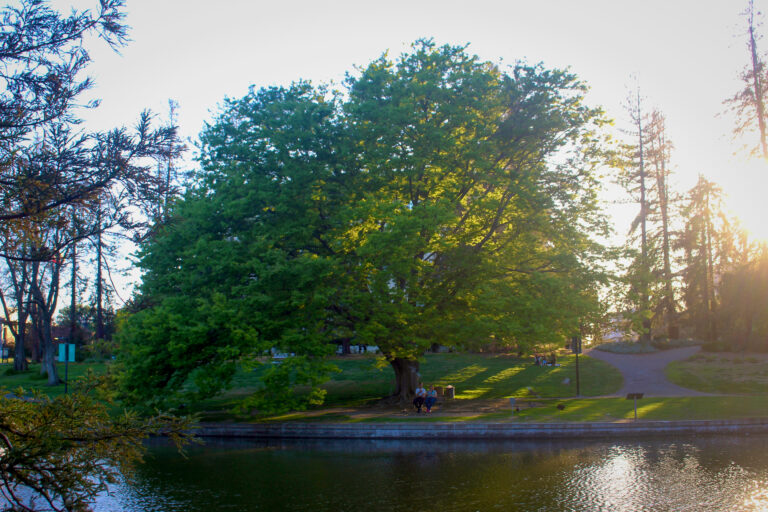
With hotter summers and wetter winters on the horizon, the UC Davis Arboretum and Public Garden is working toward adapting all trees on campus to Davis’s weather conditions. The Texas Tree Trials, a research project created by the Urban Tree Stewardship internship program, is an effort to improve the resilience of the UC Davis tree canopy, according to its website

Nurjannah Wiryadimejo, a fourth-year environmental science and management major and co-coordinator of the internship, provided more detail about the project. 

“Our trees on campus are not currently prepared for the climate that is oncoming, as many can see — with the recent storm event, a lot of the trees fell down on campus,” Wiryadimejo said. “Keeping that in mind, we came up with this idea of going to Texas and getting seeds of certain trees that match the changing climate in Davis. Our team brought those trees back here, germinated them in our nursery and planted these trees all around campus, which has become our living lab.” 

According to Wiryadimejo, Texas was the best place to collect seeds because the state shares a similarly expected future climate of Davis and is home to a wide range of trees that are well equipped to handle droughts, storms and certain soil types. 

Sam Vitt, a fourth-year environmental science and management major and the other co-coordinator of the internship, outlined the timeline of the project. The collection of tree samples took place in 2019 and since then, the group has been planting trees across campus and monitoring them each spring. 

“We [want to] see what we can take away from these trees, asking whether or not they can survive on our campus in our future urban tree canopy,” Vitt said. 

There are several plots located around campus, but the main research grove is near the Mondavi Center. 

Wiryadimejo explained the difference between the trees that have previously grown across campus and the ones that have been planted as part of the project. 

“Redwoods are very prevalent on our campus,” Wiryadimejo said. “If you look at our redwoods, they do not appear very healthy. If we’re being realistic, redwoods need so much water and they thrive on fog and constant irrigation, and that doesn’t work with our climate. With that, we’re leaning towards cypress [trees] that give off the feel of redwoods but are more drought tolerant and can handle acidic soils.” 

Vitt described the process of planting these cypress trees, noting that they recently planted a group of Arizona cypress trees between the stumps of redwoods that were recently cut down near Meyer Hall. 

“Now, there are all of these little baby trees that will hopefully one day cover up the ugly parking lot where the redwoods once stood,” Vitt said. 

To allow the community to learn more about the trees, according to Vitt, the internship program created a database that describes each tree, its potential on campus, why it is important for urban forestry and why it was chosen for the Texas Tree Trials. 

The Texas Tree Trials project is funded by both the Arboretum and Public Garden and The Green Initiative Fund (TGIF), according to Wiryadimejo. She said that a vast amount of the funding that has allowed them to transform the campus tree landscape has come from TGIF, which will appear on the ballot in the 2023 spring ASUCD elections in the form of a fee referendum that would provide continued funding for the project. 

The Urban Tree Stewardship, through the Texas Tree Trials, has planted over 250 trees this school year with the help of the internship team and several volunteer tree-planting events. 

Mara Feldman, a second-year environmental science major, described her experience as a volunteer for Urban Tree Stewardship. 

“It was a super rewarding experience since the trees we were planting were picked for their drought-resistant qualities,” Feldman said. “This is super important in the changing climate we’re experiencing. As an environmental science major, I know how critical it’s going to be in the coming years to adapt to climate change and do our best to help out where we can.” 

The project is ongoing, according to Wiryadimejo, and the Urban Tree Stewardship program plans to continue to monitor the growth of these trees until their full maturation, which could take anywhere from 20 to 50 years. 

“Our internship applications open up over the summer for the next school year and we will announce [them] on the Arboretum website and Instagram page,” Wiryadimejo said. “We also have a ton of community tree-planting events coming where you can volunteer to plant trees, typically during fall and winter quarter.”

Vitt concluded by saying that her experience with the project so far has been “so rewarding,” both personally and through seeing volunteers and interns enjoy themselves and their work.

“I just really enjoy that we get to see these trees that we planted and the impact that they are making […] both on students and for our changing campus climate,” Vitt said.

Wiryadimejo also described the joy she has in watching others get excited about the project. 

“It is so cool to be able to teach people something new,” Wiryadimejo said. “I love seeing the glitter in people’s eyes when they plant their first tree.” 


Written by: Lily Freeman — campus@theaggie.org

Man found dead in Central Park identified as David Henry Breaux

The death is being investigated as a homicide


By SONORA SLATER — city@theaggie.org


The man found dead on a bench in Central Park Thursday morning with multiple stab wounds has been identified as David Henry Breaux, commonly known as the “Compassion Guy,” according to the Davis Enterprise.

His body was discovered after police responded to a call for a welfare check in the area around 11:20 a.m. on Thursday, and the Davis Police Department is currently investigating the death as a homicide.

Police employees put up privacy screens around the body and crime-scene tape sectioning off the affected area upon arrival, but while they requested that people avoid the north side of the park temporarily, Lt. Dan Beckwith said that the park does not appear to be unsafe to visit.

When police arrived on the scene, they reported that the man had visible injuries, but did not immediately specify the nature of the injuries. According to the Davis Enterprise, the man was seated upright on a bench near the playground on the north side of the park when police arrived. He was pronounced dead at the scene.

As of late Thursday afternoon, the Davis Police Department has stated that the case is being investigated as a homicide and the man’s injuries were found to include multiple stab wounds. This is the first homicide in Davis since late 2019. The man’s identity was released on Friday morning.

Breaux has stood on the corner of Third and C Streets in downtown Davis for many years, well-known for his self-proclaimed compassion mission of collecting interpretations of what people believe the definition of compassion is. He began the collection in 2009 and released a book called “Compassion Davis, CA: A Compilation of Concepts on Compassion” in early 2010 that contained many of the interpretations he had gathered from community members.

The California Aggie’s arts desk wrote an article about Breaux in 2011, when he hosted a speaking event to talk about his compassion project. Since then, he traveled around the country to talk to people in 12 other cities about their own definitions of compassion and spearheaded the volunteer-led creation of the “Compassion Bench” functional art structure in Davis in 2013. 

If anyone has information regarding the case or sees anything suspicious, they are encouraged to contact the Davis Police Department at 530-747-5400. 


This story is developing, check back for updates. Last updated: April 28, 10:30 a.m.

Written by: Sonora Slater — city@theaggie.org

Aggies’ baseball comes out on top against UC Riverside

After a tough battle, the Aggies beat UC Riverside in first matchup of the series


By CAROLYN (CARI) FENN — sports@theaggie.org


After a tough 14-2 loss to Saint Mary’s on the Phil Swimley Field at Dobbins Stadium in Davis on April 18, UC Davis Head Coach Tommy Nicholson used the few days leading up to Friday’s matchup against UC Riverside to refresh the team after a long stretch of away games.

“We’ve been on the road for the past three weeks so we needed to regroup a little bit,” Nicholson said. “We had a couple of good days of practice and wanted to come out today with a lot of energy and just play hard.”

From the start of the game, it was clear that the Aggies weren’t going to let Tuesday’s result stunt their performance. After a home run by third-year infielder Alex Gouveia in the first inning, the Aggies came out swinging in the second inning, increasing their 1-point lead to 5.

Second-year infielder Nick Leehey started the Aggies’ impressive second-inning performance with a single down left center field. Directly following, first-year infielder Ryan Lee hit a double down left-center field, which allowed Leehey to reach home plate and score the Aggies’ first of four runs of the inning. Then, to top off these back-to-back hits, third-year infielder Jack Gallagher hit a homerun straight into left field, scoring two more runs for the Aggies. 

One more run came later in the inning when the bases were loaded. First-year outfielder Leighton Helfrick was able to score from Gouveia on a fielder’s choice. This resulted in second-year outfielder Mark Wolbert getting out at second base, but not before the Aggies obtained their fourth run. Due to the Aggies’ impressive performance on the plate during the second inning, they were able to fully cycle through their lineup, with Leehey both starting and ending the inning at bat. 

Despite a strong start to the game, the Aggies began to struggle in the fourth and fifth innings, allowing UC Riverside to take over the lead, 6-5.

Despite strong pitching in the first three innings, UC Davis’s second-year pitcher Bryan Green found himself in a bit of trouble in the fourth inning, walking three batters. With the bases loaded and two outs, UC Riverside’s second-year outfielder Jacob Badawi hit a single down the left-center field, resulting in two runs for UC Riverside.

Nicholson called Green’s performance on the mound “uncharacteristic. Bryan Green walked four guys and he typically is pounding the zone. That’s not like him.”

After this, Green was replaced by third-year pitcher Nate Freeman, who finished off the inning, striking out UC Riverside’s third-year utility player Tyler Weaver.

Despite Freeman’s strong start at the end of the fourth inning, he was not able to keep it going into the fifth. After allowing a single and two walks, Freeman let Riverside load the bases again after walking third-year infielder Mason Grace. UC Riverside’s first-year infielder Alfredo Capacete singled to the left side, allowing third-year infielder Anthony Mata to score and keep the bases loaded. 

Freeman was substituted for third-year pitcher Danny Carrion, but Riverside was not stoppable. They scored two more runs, once again off a walk due to the bases being loaded and a single down the left side. After the multiple walks and singles that had occurred in the fifth inning alone, the Highlanders were able to secure a 6-5 lead against the Aggies. However, the Aggies didn’t let them stay comfortable with their lead for long. 

While the Aggies did come back and tie the game against Riverside in the bottom of the fifth inning, they really came back to life in the sixth. After three back-to-back walks by UC Riverside’s second-year pitcher Corbin Barker, Gouveia singled up the middle, allowing both third-year outfielder Damian Stone and first-year infielder Joey Wright to score. Then, after Barker was replaced with first-year pitcher David O’Neill, UC Davis’s third-year infielder James Williams III singled to left field, allowing Wolbert to score. 

The Aggies weren’t slowing down after these three runs. With the bases loaded, Gallagher once again sent the ball flying into left field for another home run, gaining the Aggies another four runs for a total of seven in the sixth inning. 

“Setting up that inning, when Jack hit the home run, Leehey had called a timeout, and we put on a bunt sign with him, and it might’ve been one of the first times he ever got that bunt sign and he did a great job,” Nicholson said. “He got the bunt down and set it up where they had to play the infield in and Ryan Lee took his walk and got it to Jack and he was able to hit a home run down the left field line and open up the game a little bit.”

At the top of the seventh, the score was 13-6 for the Aggies. Despite the Highlanders’ attempt to come back in the last three innings, scoring two runs in both the seventh and eighth innings and one in the ninth, the Aggies had established too great of a lead. The combination of their impressive offensive performance and a couple of strong defensive plays, including a diving catch by Gouveia in the ninth inning, the Aggies were able to maintain the lead and beat the Highlanders, 13-11

“[We] came out like it was going to be an easy game, and you know, winning is never easy, but they did a really good job of hanging with it, getting some runs and nailing [it] down at the end when they didn’t have their best stuff and their best game,” Nicholson said when discussing the opposing team’s performance. “They kept the fight and they really willed it. Sometimes you just have to do it when you don’t have your best stuff.”

With two more games against the Highlanders, Nicholson says that he wants the team to “keep the fight [and] keep our mindset going.”

“We have a lot of young guys that haven’t been through a long season like this, it’s a longer season than they have played before,” Nicholson said. “We’ve played a lot more road games, so we have some guys that are tired and we just have to stay with it and keep our minds into it, so we don’t let ourselves go through the motions. We just [have to] stay sharp.”


Written by: Carolyn (Cari) Fenn — sports@theaggie.org


Weight measurements no longer required to receive care at Student Health and Counseling Services

New “Decline to Weigh” policy and other recent body inclusivity initiatives seek to increase patient comfort during appointments and reduce weight stigma on campus


By JADE BELL — campus@theaggie.org


A patient satisfaction survey conducted by Student Health and Counseling Services (SHCS) during the summer of 2020 revealed that one of the main deterrents of students seeking out medical care at the SHCS facility was the required weight measurement at appointments. As a result, SHCS created and implemented of a new policy that allows students to decline being weighed if it is not necessary to their appointment purpose.

Shantille Connolly, a health promotion specialist at SHCS, explained the details and results of this survey.

“We are tracking the number of people who have opted out of being weighed,” Connolly said. “So far, in this school year, 318 students declined to be weighed when they came in for an appointment. In fall quarter, we were using a card system […], but now we changed it to where the MA just asks, ‘Would you like to be weighed today?’ And then the patient can say yes or no.”

Connolly said that in February, before the change was implemented, only around 15 students took advantage of the card to decline to be weighed. By comparison, when the new practice was implemented in March, 137 students declined to be weighed. 

“It really shows that when you change the practices of an organization, it increases access and gives the patients more autonomy,” Connolly said.

Medically speaking, according to Connolly, it’s not always necessary to weigh a student if that’s not the main point of their appointment. However, she noted that in instances where an exact weight is necessary, it will now be recorded in a way that allows the patients to remain unaware of the number on the scale.

“Some medications are weight-based in order for them to effectively work, so we do have the option for a blind weight,” Connolly said. “[This] is where they turn their back toward the scale, so they don’t have to see the number. [The MA] would tell the patient that the medication they are in for is weight-based, so they need an accurate weight to prescribe the correct dosage.”

In addition to the measures being implemented by SHCS, Connolly said that similar steps are being taken across campus to “build and maintain a body-inclusive environment.” She attributed some of this to a response to student feedback collected via the free response survey that SHCS ran. 

“The bookstore, for example, was talked about a lot for not having a variety of sizes available,” Connolly said. “Keep in mind that this was in 2020, so things have changed — they have changed their clothing vendors specifically to go with clothing vendors who have a wide variety of sizes. The bookstore is trying to be more intentional about that […] as a result of the survey.”

SHCS also received feedback from students in regards to how they felt in classroom spaces, in particular, how lecture hall seating affected their mental health and academic performance.

“We just did a pilot [program] in Olson Hall,” Connolly said via email. “We wanted to know how classroom seating that was not size-inclusive was negatively impacting students’ mental health. And we found that students were really anxious and stressed about coming to class because they couldn’t find seats that fit their body [and] couldn’t focus because they were in seats that were digging into their sides or they couldn’t position their laptop or iPad to take notes appropriately. So it impacted their academic performance and just overall sense of belonging.”

Connolly addressed these issues by sharing what campus policy updates are being made to better accommodate all bodies in classroom seating.

“We did update the campus policy — all new furniture that is purchased should be at least 400 pounds in weight capacity, 22 inches wide and armless whenever possible,” Connolly said. “That policy was enacted before the Teaching and Learning Complex was complete, so all the furniture in there complies with that policy.” 

Written by: Jade Bell — campus@theaggie.org

Best Farmers Market Stall: Apple-a-Day

Students have selected the popular apple juice vendor as their favorite farmers market stall


By ALMA CULVERWELL features@theaggie.org


Apple-a-Day, a family-owned and operated business based in Sebastopol, was voted Best Farmers Market Stall by 41.9% of surveyed students at UC Davis. The stall is best known for its fresh-pressed apple juices and has been a staple at the Davis Farmers Ma

Apple-a-Day apple cider from the Davis Farmers Market. (Aggie File)

rket for at least 30 years.

The Apple-a-Day ranch is located in Sonoma County where it grows several apples, including the Gravenstein, Golden Delicious and Rome varieties. The ranch was first established in 1924 and has shifted management throughout the years but still holds the same values.

Mike Zarras, who has been running the ranch for the past 10 years, explained the process the ranch uses to create its juice.

“We usually blend a certain taste profile of apples, and we just press them, and it goes straight from pressing to bottle, and from bottling we don’t add anything or do anything to it,” Zarras said. “We freeze it right away, and basically that’s it — [a] very simple process. The only treatment we do is UV light treatment, and we do that treatment because it doesn’t heat it up and keeps a lot of the good enzymes alive. We try to keep it as close to nature as possible.” 

Zarras described his favorite part about running Apple-a-Day ranch.

“I love our product itself,” Zarras said. “I love pure apple juice like that, and I love being out where we are located in the rolling hills of Sonoma County [which is] just beautiful.” 

The Apple-a-Day stand has been popular among Davis students for many years due to the products’ affordability, taste and more. Lily Matthews, a first-year plant science major, talked about why she frequents the Apple-a-Day stall.

“I really liked the taste and thought that it was a fair price,” Matthews said. “It’s easy to carry with the handle if you’re walking to the farmers market, stores well in the fridge and doesn’t lose flavor after a few days. I would say that it’s a great way to support the farmers market without going out of your budget. The various sizes also make it great for larger groups or an individual to buy the product.”

Be sure to check them out at the Davis Farmers Market on Wednesday evenings and Saturday mornings year-round.

Written by: Alma Culverwell features@theaggie.org

2023 Spring Elections — Meet the Candidates

This spring, there are two executive tickets, and 13 candidates running for Senate, two candidates for International Student Representative, two for Transfer Student Representative, one for External Affairs Vice President and one for Student Advocate

By JADE BELL, SYDNEY AMESTOY, RACHEL GAUER, LEV FARRIS GOLDBERG, KAYA DO-KHANH, LILY FREEMAN AND SONORA SLATER — campus@theaggie.org 


The following candidates are running in ASUCD’s 2023 Spring Elections for elected official positions in student government. Two Senate candidates and the sole candidate for Student Advocate did not respond to a request for an interview.


Elections will take place from Monday, April 24 at 8:00 a.m. to Friday, April 28 at 8:00 p.m. Students can vote online at elections.ucdavis.edu.


Executive Ticket:

JT Eden (he/him/his), a third-year double major in environmental policy analysis and planning and international relations, said that he is running for ASUCD president because he wants to ensure students’ voices and needs are being met. His platforms include creating programs that advocate for mental health, addressing student-employee concerns like wage equity and expanding paid advocacy roles. Eden has extensive previous experience in various student-government positions, including as a senator, where he became familiar with administrative logistics like budgeting and event planning. In addition, he was previously the chair of the Internal Affairs Commission (IAC) and is currently serving as the internal vice president of ASUCD. A recent project he worked on was the initiative to increase pedestrian safety on campus by introducing crossing guards at the Silo bus terminal.

ThuyAnh Truong (she/her/hers), a third-year double major in philosophy and international relations, said that she is running for the vice presidential position because she believes that good change happens together as a community. She runs a shared platform with presidential candidate JT Eden, which includes advocating for student mental health, increasing student-worker satisfaction and increasing diversity efforts on campus. Truong is currently the internal vice president of the Internal Affairs Commission, where she oversees the legislative process and meets with administrators to discuss areas of improvement on campus.

Francisco Ojeda (he/him/his) is a second-year political science major running for president who previously served as senator alongside his running partner, Aarushi Raghunathan. He said that his reason for running was a lack of advocacy for undocumented students that he noticed and the lack of opportunities he has seen for some marginalized communities. During his time as senator, Ojeda worked with Chicanx and Latinx Student Success Center to provide snacks and worked on a spending bill. He hopes to improve the onboarding process, especially for undocumented students, as well as increase funding for the Entertainment Council and for training Bike Barn employees to repair wheelchairs. 

Aarushi Raghunathan (she/her/hers) is a second-year double major in political science and managerial economics running for vice president with the BLOOM slate. She has experience with ASUCD, serving as a staffer for Sergio Bocardo-Aguilar the summer before her senior year. She assisted with projects, wrote bills, did research and continued his project for free menstrual and safe-sex products into her own term as senator. Alongside her running partner, she hopes to work with the Entertainment Council to expand events for students, working toward fee transparency for students and expanding Bike Barn training for wheelchairs and other mobility devices. She also hopes to increase ASUCD outreach.


Senate:  

Dani Antonio (she/her/hers), a third-year political science and psychology double major, said that she is running with the MOOve slate because both her and the slate value addressing student fees and student labor. Antonio said that her campaign centers around creating safe spaces for students to embrace their individuality, advocate for their rights and learn without barriers. She plans to do so through her three-pronged platform of addressing gender and sexuality issues, increasing mental health awareness and resources and ensuring inclusive education. To achieve these goals, Antonio said that she wants to increase sexual harassment and assault prevention and create support systems for victims, establish a human resource department within ASUCD, expand the Pantry to have more locations on campus and lower equitable access fees for students. As an international student from the Philippines, Antonio said that she hopes to represent marginalized voices in student government.  Although Antonio has not been previously involved in ASUCD, she said that her four years of high school government experience, involvement in She’s the First, a nonprofit organization that advocates for girls’ rights and education and immersing herself into campus events has prepared her to be a senator.

Trinity Chow (she/her/hers), a first-year neurobiology, physiology and behavior major, said that she is running with the Launch! slate because her values of mental health and creating improved relationships between student organizations and ASUCD closely align with the slate. Chow has a three-pronged platform: increasing student fee transparency, addressing student burnout and mental health and expanding campus sustainability efforts. Within this platform, Chow said that she wants to create and expand peer support groups to build a community on campus as well as hold mental-health workshops through working with the Student Health and Wellness Committee and the Mental Health Initiative. Additionally, Chow said that she seeks to make composting more readily available on campus and hold more upcycling and flea market events to further promote campus sustainability. Chow said that she wants to address the financial burden that students face through fees. Chow served as a staffer for Senator Priya Talreja this past year, which she said has given her a better understanding of ASUCD and student needs and prepared her for the senator position.

Christine Do (she/her/hers), a second-year sociology and philosophy double major, said she is running with the Just Do It slate. She wants to increase awareness of ASUCD on campus and the organization’s involvement in student life. She has been involved in the Internal Affairs Commission for a year, and she is now running for Senate because she wants to represent students and advocate for their needs in a voting position. She wants to ensure that ASUCD funds are allocated in the ways that students want them to be. Her main platform is increasing professional opportunities and resources on campus, as she said that she has heard from many peers that there is a lack of recruiters actively looking to hire UC Davis students as employees and interns. She also wants to build the alumni network to help students make more professional connections. She is passionate about advancing the Asian American and Pacific Islander and immigrant communities, as she is a child of Vietnamese immigrants. She wants to work with the AB540 and Undocumented Students Center and provide immigrant communities resources and funding through ASUCD. She feels she is qualified for this position as she has previous experience in ASUCD and has a good understanding of the units and committees and how they operate. She has a background in public speaking, and said that she thinks that she would be able to connect with students and talk to people from many different communities on campus. 

Binh Do (he/him/his) is a second-year history and economics double major running with the Just Do It slate. He is currently serving as an Internal Affairs commissioner and after seeing the senate bill process and attending Senate meetings, he decided to try and make a change by running for senator. His platform focuses on three main values: increasing the efficiency of the use of Senate reserves, increasing autonomy for UC Davis subunits and increasing marketing for UC Davis resources. He said that he also has experience with event planning from his time in the Davis Economic and Business Student Association.

Gabriel Gaysinsky (he/him/his), a second-year international relations and Middle East/South Asia studies double major, said he is running for ASUCD Senate as an Independent. Gaysinsky has been involved in ASUCD as an Ethnic and Cultural Affairs Committee (ECAC) (ECAC) since fall quarter of this year. He is running for Senate because he said he feels he can make more substantial changes as a senator as compared to an ECAC commissioner. One of his main platforms is expanding Jewish representation on campus. He was involved with a Senate bill last quarter that aimed to institute a mandatory antisemitism training for ASUCD senators, which did not pass. He hopes to pass a bill that can provide education about antisemitism if elected. His second platform is environmentalism, as he wants The Green Initiative Fund (TGIF) to continue to exist and wants to provide services through ASUCD such as micro-grants to maintain a culture of sustainability on campus. His third platform is a focus on residents at Sol at West Village, because he sees a disconnect in that they do not receive on-campus amenities and still have to pay on-campus fees such as parking but are considered to live in campus housing. He wants to resolve that disconnect by working with the External Affairs Commission to ask the administration to either consider West Village residents on-campus residents and provide them with certain amenities or stop charging them the fees associated with being on-campus residents. He feels he is qualified for the position because he has been involved with ASUCD and is familiar with the legislation processes and bylaws. Additionally, he has participated in Model United Nations for about six years, so he is familiar with diplomacy and parliamentary procedures. He would also like for readers to vote for The Green Initiative Fund on this ballot.

Sam Hopwood (he/him/his), a first-year political science major, is running with the MOOve slate. He wants to focus on improving campus resources to better students’ quality of life by advocating for increased frequency, reliability and range of Unitrans services, increasing the hours of the Pantry and building better online resources such as a delivery service for the Pantry as well as an online internship-finder program. He also noted a commitment to student laborers, promising to work toward eliminating onboarding delays, converting stipend ASUCD positions to hourly ones, organizing monthly open meetings between senators and student workers and more. Previously, Hopwood has assisted in labor organizing and political education for high schoolers, which he believes has given him sufficient experience in organizing students in their schools toward fighting for the resources they want.

Zahar King (he/him/his) is a third-year transfer student majoring in English and design. If he is elected senator, King plans to prioritize improving identity-affirming resources for LGBTQIA+ students, extending assistance for students with disabilities beyond the classroom and uplifting student organizations. He has previously worked with ASUCD as a senate staffer where he had the opportunity to connect with several student organizations. King stated that as a transfer student who lost healthcare coverage, he was not given Student Disability Center accommodations while struggling with self-identity, so he wants to improve these programs so no other student will have to experience these struggles. 

Rahul Mukhopadhyay (he/him/his) is a first-year political science major who is running as an Independent. He noted that he did not want to be affiliated with any “big groups” or slates and preferred to run for himself and his constituents. Mukhopadhyay chose to run because he felt the issues on campus, particularly recent hate incidents, have not been responded to accordingly. He is running on a three-part platform. Mukhopadhyay hopes to improve campus safety, stop bigotry and hatred in all forms and increase the dining options for students on campus. Because Mukhopadhyay is a first-year student, he feels that he can provide the perspective of the current freshmen to the Senate table. Mukhopadhyay noted his lack of experience with ASUCD but said he believes that he makes up for it with passion and energy. 

Inbar Schwartz (she/her/hers) is a first-year international relations major running as an Independant. Schwartz’s platform includes three main goals. First, she hopes to improve housing support and services — especially for first-year students. Second, Schwartz wants to improve resources for students with disabilities, neurodiverse students, English-language learners, and study-abroad students and improve student involvement in ASUCD government. Schwartz aims to increase lecture recording for students who may not be able to attend class in person regularly. Obtaining proper captioning technology for recorded lectures is also key, the candidate said. She also hopes to increase student voter turnout, transparency from senators and face-to-face interaction between ASUCD and the student body. In her first year at Davis, Schwartz has been involved with the Student Advocate’s Office, a non-partisan office dedicated to assisting students in disputes with the university. She is also a member of Davis Women in Business (DWIB) and the Diversity, Equity and Inclusion Commission for the Design Department. Shwartz also worked with NYU last year to review curriculum materials to improve its level of cultural responsiveness. Schwartz is running for Senate because she wants to make a meaningful difference in the everyday lives of the student body.

Noblejot Singh (he/him/his) is a second-year political science public service and cinema and digital media double major running with the MOOve slate. Singh’s campaign slogan is “Don’t Vote Later, Vote N.O.W.” N.O.W. stands for “Nothing is negligible, Open the outdoors, We are Davis.” According to Singh, the first point in the acronym describes his goal to advocate for basic needs resources on campus, like free bike lights, laundry supplies and rent negotiation assistance, that are available to students but not well advertised. He hopes to collaborate with ASUCD media units to address this issue. For Singh, “Open the outdoors” is his idea to improve collaboration between centers on campus. For example, he notes that building pipelines between the Internship and Career Center, Alumni Center and Student Startup Center could create more opportunities for students. “We are Davis” is Singh’s vision to connect Registered Student Organizations (RSOs) with corresponding departments and faculty to create an exchange of ideas. As part of the MOOve slate, Singh is passionate about student-worker’s rights and fee transparency. He has five years of experience in student advocacy work. In high school, Singh worked with the Sikh Student Association to advocate to the local school board on education resolutions. He is also a part of Jakara Movement at Davis and has worked with its parent nonprofit organization. He is currently interning for a member of the U.S. House of Representatives, where he is engaged in advocacy for farmers in California’s Central Valley. Singh believes his organizing experience, campus organization involvement and background in advocacy could benefit ASUCD.

Chasa Monica (he/they) is a second-year double major in molecular and medical microbiology and philosophy running as an Independent. Monica chose to run for Senate because he wants to make campus a more welcoming and inclusive place for students, especially by increasing the availability of gender-neutral restrooms on campus. They noted that this ties in with their mental health platform, which is at the heart of why they are running for the position — they want to push for greater resources and funding for UC Davis’ counseling center and establish peer support groups to build a sense of solidarity and community in mental health struggles. He also wants to focus on community outreach and making sure students feel that their concerns are being heard and their needs are being met, and seeks to be a very approachable senator if elected. Monica is currently on the Japanese American Students Society Board, where he has helped organize several events, and has other experience in delegation, leadership and event planning.


External Affairs Vice President:

Celene Aridin (she/her/hers) is a third-year international relations major who is running for the position of the external affairs vice president as an Independent. Aridin said she chose to run independent to both mirror the position’s non-partisan quality in the “real world” and also because she feels the position works closely with all members of the Senate regardless of slate status. She held the position for the duration of the winter quarter and noted that her close involvement in organizing the Students of Color Conference was both difficult and rewarding work. Aridin noted several upcoming events that she feels particularly excited for. Aridin, alongside her legislative director and a selected group of students, plan to travel to Washington DC in May to participate in federal lobbying. Since she is running unopposed, Aridin plans to be reelected and is excited to continue to connect people to resources that pertain to their needs. She plans to hold her office hours outside due to the warmer weather and encourages all students to stop by, especially those who plan to lobby and are interested in collaborating with her office. 


International Student Representative:

Asif Ahmed (he/him/his) said that his main focus is strengthening the international student community on campus. The second-year economics major and coordinator at the Cross Cultural Center is an international student himself and engages with the community frequently in his current role. His plans if he is elected include numerous events to build that community and help international students adjust, such as hosting a job fair with companies looking to sponsor international students. Ahmed also stressed his availability, especially when it comes to answering questions an international student may have, as part of his qualifications. “If anything, even if I don’t get elected for the position, I’m always on campus,” Ahmed said, “I’m always willing to listen to people. And everyone can feel free to come up to me and say hi, just express any concern.”

Khaled Al Mutawa (he/him/his), a third-year mechanical engineering major, has had no previous ASUCD or political experience but feels that his collaborative work as an engineering student has given him the communication and people skills to work with others successfully. Al Mutawa previously tried to run as ASUCD president, but was unable to obtain the threshold of 400 signatures to begin the campaign. If elected, Al Mutawa has two goals he hopes to achieve: increase the amount of resources that ASUCD can provide to international students and specifically provide more information about internships and career opportunities for these students. He noted that from his own experience, it has been difficult to both find internships and know which ones accept international students. Al Mutawa also noted that he does not want to make any promises except to try his best and always take students’ suggestions. He also encouraged students to participate in elections because ASUCD is behind services such as the Bike Barn and the CoHo. 


Transfer Student Representative:

Erek Leschyn (he/they), a third-year political science major and transfer student, is running with the MOOve slate. He has served as an ASUCD senator since last fall, and worked with the Office of the Transfer Student (OTSR) throughout the year. He also has experience in leadership and management for nonprofit organizations outside of ASUCD. They plan to continue the work that the OTSR has been doing throughout the past year in terms of lobbying and advocating for transfer students, re-entry students, student parents, formerly incarcerated students and student veterans, as well as hoping to build a strong transfer-student community next year through in-person and online events.

Kaito Clarke (he/him/his), a third-year political science public service major, was initially not planning to run for the position; however, he was approached by current ASUCD senators who encouraged him to run. Clarke serves as the director of communications for the Executive Office and also has political experience as both a staffer for a county supervisor and later as the digital coordinator for a congressperson’s campaign. Clarke has three priorities for his campaign: increasing community-building for transfer and re-entry students, expanding access to resources and improving academic flexibility. He noted that as a transfer student himself, he faced issues adjusting to the quarter system and finding community and hopes to help other transfer students through similar issues. Though Clarke is aware he does not have much power to change the “Pass/No Pass” deadline, he wants to advocate for pushing back course drop deadlines as well as work with the Academic Affairs Commission to ensure that lectures are recorded and mandatory attendance is reduced when possible. He emphasized that the mental and physical health of students should be prioritized and that students’ basic needs of housing and food should be guaranteed. 

Editor’s note: A previous version of this article did not include the profile of Chasa Monica, a candidate for Senate, and the article has now been updated to include Monica’s profile. We apologize for the error.

Written by: Jade Bell, Sydney Amestoy, Rachel Gauer, Lev Farris Goldberg, Kaya Do-Khanh, Lily Freeman and Sonora Slater  — campus@theaggie.org

New Transportation Services parking program grants one-day grace period for parkers who forgot to pay

Instead of receiving a $55 parking citation, people will receive an invoice of $15 due at midnight the next day


By KAYA DO-KHANH — campus@theaggie.org


On April 3, UC Davis Transportation Services (TAPS) announced the new Parking Invoice Program that it will be piloting this quarter. The program, which is being put in place in response to community feedback, grants partial relief for people who forgot to pay for parking or do not have knowledge about parking payment options on campus. Instead of receiving a parking citation of $55, individuals will receive an invoice for the non-UC Davis affiliate rate of $15 if they do not pay for parking in a campus lot. If they pay the invoice fee by the following day at midnight, they will not receive a parking citation. However, if they do not pay the fee, they will receive the normal $55 ticket.

“The program was put into place in response to community feedback to provide a simpler and more affordable process for those who forgot to pay for parking or weren’t aware of their permit options,” TAPS Engagement and Marketing Specialist Shelby Slutzker said via email. “The goal of the program is to provide a convenient and less expensive process while educating customers on daily choice parking and improving compliance.”

Invoices are only issued in C, L, M and F zones without a permit and are not issued in A or C+ zones. Slutzker said that this is because the TAPS compliance team is unable to distinguish who qualifies for parking A and C+ zones when issuing an invoice and wants to protect access to such spaces for those who do qualify for them.

Affiliates and non-affiliates can receive two of these $15 invoices every 12 months. After two invoices, they will receive the normal parking ticket if they do not pay for parking. Additionally, invoices are not appealable and will automatically turn into a citation if an appeal is submitted. Slutzker said that the invoice program is also an attempt to remove the inconvenience of the appeal process. 

Valeria Cantor Mendez, a third-year community and regional development major, received a parking citation after forgetting to pay for parking and said that she is not in favor of the pilot program.

“As someone who parks regularly in C+ zones because it is so hard to find regular spots, this would not apply to me,” Cantor Mendez said. “Since [the invoices] are not appealable, it just forces you to pay the $15 without being able to explain yourself. The way that I was able to get out of my ticket was through an appeal, which resulted in me just paying the $3 I owed.”

Despite some hesitance, the pilot program has generally received positive feedback from the UC Davis community since its launch, and the decision of whether or not to permanently implement the program will be based on TAPS’s consideration of community input, program effectiveness and compliance and appeal rates, according to Slutzker. 

Second-year English major Cadence Cockrell, who has received two parking citations this school year, said that she sees the benefits the program offers people who forgot to pay or are unaware of their payment options.

“I think the new parking invoice program is a good grace period to implement for when people forget to pay or don’t realize the parking rules for the lot they’re parking in,” Cockrell said. “Fifty-five dollars is kind of a lot, especially for a college student parking on their own campus.”

In an additional effort to address parking citations issued to those who forget to pay, TAPS is currently working with the ParkMobile application to activate an alert when a user drives onto the campus area as a reminder to pay for parking, according to a recent press release

Written by: Kaya Do-Khanh — campus@theaggie.org

Nuclear power needs to be developed further

Nuclear energy has potential, but stigma and lack of funding are holding it back


By MAYA KORNYEYEVA — mkornyeyeva@ucdavis.edu


Upon hearing the word nuclear, images of devastating explosions, yellow and black hazard signs and massive cylindrical power plants come to mind. Nuclear energy is rarely discussed with positive connotations in everyday conversation, which is understandable considering humanity has experienced some catastrophic disasters related to nuclear warfare and reactor meltdowns. 

Most prominent among these are the two atomic bombs used against the Japanese cities of Hiroshima and Nagasaki during World War II, the meltdown of the reactor in Fukushima following the 2011 Japanese tsunami and the release of radioactive waste at the Ukrainian Chernobyl power plant in 1986. The large-scale impact of these nuclear disasters is the causal factor in the global fear of nuclear power, as power plants can be easily targeted by other countries during war and the resulting radioactive waste is extremely detrimental to the health of all living organisms.

However, if the proper time, funding and research are dedicated to pursuing safer nuclear energy development, I believe the world could benefit greatly from its utilization. For one, nuclear energy is virtually “carbon-free” — with the exception of facility construction, removal of radioactive waste and uranium extraction — meaning that it does not emit the greenhouse gas carbon dioxide into the atmosphere while generating electricity. 

Furthermore, nuclear energy has a small land footprint in comparison to renewable energies like solar and wind. While a nuclear power plant can produce 1,000 megawatts of electricity per square mile, wind turbines require 75 square miles to produce the same amount, and solar, 360 square miles. Nuclear energy also has a high power output and energy density and is relatively reliable as long as it is run and maintained. In other words, while the absence or presence of the sun, wind and water alter the ability of other renewable energy sources to function consistently, nuclear only relies on the presence of uranium inside the Earth’s crust. 

That being said, we cannot ignore the factor of nuclear waste. This is a major area that requires refining if we are to rely on nuclear energy as an alternative to fossil fuels in the near future. Currently, fuel that is used for five years at a power plant is designated as waste, sealed in canisters on-site, then transported to underground storage facilities without any recycling processes and left there for an indefinite amount of time. This exposes the steel and packaging material to corrosion and degradation over time, which can cause the radioactive plutonium, fission products and actinides to leak into the open environment. 

As a solution to this, scientists have tested the idea of stabilizing nuclear waste via vitrification — trapping the waste particles inside solid glass. Governments have also considered shooting the nuclear waste up into space, burying it in ice, isolating it in synthetic rock, relocating it onto isolated islands or drilling it deep into the Earth. Another approach, which I think is the most promising solution, is the development of fast neutron reactors which are able to make use of the high-level waste fuel produced from current reactors. 

Despite these attempts to determine the best solution for dealing with radioactive waste, no country has been successful in developing a deep repository. Looking at the progress mankind has made in the search for safe, clean energy, I have feelings of both hope and frustration. 

The time to act is now; whether it is pursuing another form of renewable energy such as hydropower, wind or solar or developing infrastructure and research on nuclear power. The climate is changing and the world with it, and we must put forth the necessary time, effort and funding to mitigate the negative effects of climate change as quickly and efficiently as possible. 

The goal of nuclear research should be about the future. Developing long-lasting, permanent solutions that don’t pollute the Earth is something that governments need to prioritize when creating climate policy and dedicating resources. Nuclear power has an immense amount of potential — we just need to unlock it.   


Written by: Maya Kornyeyeva — mkornyeyeva@ucdavis.edu

Disclaimer: The views and opinions expressed by individual columnists belong to the columnists alone and do not necessarily indicate the views and opinions held by The California Aggie.

Culture Corner

The Art Desk’s weekly picks for music, movies and more


By SARAH HAN — arts@theaggie.org


Song: “Little Bit More” by Suriel Hess (2022)

Suriel Hess is a rising artist whose songs are characterized by sounds of acoustic piano and guitar that create a calm atmosphere. One of his biggest hits is “Little Bit More,” which describes the process of falling in love. The song opens with strums of the guitar, soon followed by Hess’s calming voice. In my opinion, the repetition of the words “little bit more” creates a catchy melody to the chorus and makes it the best part of the piece. The rest of the track’s vocals do not fluctuate too much as Hess continues to sing in a relaxed voice. Whenever I listen to this song, I am reminded of laying on the grass in spring. Its overall ethereal vibe can be very soothing. If you are looking for a new song to listen to, I recommend checking this out.


Book: “The Book Thief” by Markus Zusak (2005)

“The Book Thief” is by far one of the most interesting yet touching books I have ever read. Zusak’s storytelling is incredibly unique. Narrated by Death, the readers follow Liesel Meminger as she grows up in Nazi Germany. Due to both the tragic passing of her brother and her mother’s inability to take care of her, Liesel’s life unfolds in an unexpected direction as she is taken in by the Hubermanns. The book touches on themes of familial love, cruelty, injustice and other poignant topics. Without spoiling too much more, I can say that “The Book Thief” is truly a moving piece of literature.


Movie: “The Hunger Games” film series dir. by Francis Lawrence and Gary Ross (2012-2015)

Although the first movie was released over ten years ago, I never get tired of watching “The Hunger Games.” Each part of the series complements the whole and perfectly tells the story of the main character, Katniss Everdeen. What I like about this film series is that the themes seamlessly apply to real life despite its setting in a dystopian reality. For example, themes of love between Katniss and her family, friends and allies can connect many of the viewers’ own experiences. Apart from Jennifer Lawrence’s fantastic acting, I have to give a shoutout to Stanley Tucci, Elizabeth Banks and Woody Harrelson — their acting was so natural that even in an interview, I only saw them as Caesar Flickerman, Effie Trinket and Haymitch Abernathy, respectively. Whether you want to revisit a childhood classic or have never seen the film series before, “The Hunger Games” movies are worth a watch.


TV Show: “The Glory” dir. by Ahn Gil-ho (2022)

The Glory” is a South Korean drama about Moon Dong-eun (played by Song Hye-kyo), a woman who seeks revenge on her former high school bullies. The first episode centers around Dong-eun’s traumatic experience with the main ringleader being Park Yeon-Jin. After contemplating dropping out, Dong-eun eventually graduates high school; however, she still has plans to seek revenge on Park Yeon-Jin. The following episodes detail Dong-eun’s revenge plot, and I have to say, Son Hye-kyo’s acting is quite impressive. I definitely recommend this series if you are on the lookout for a new thriller. 


Written by: Sarah Han — arts@theaggie.org

The Green Initiative Fund at risk of dissolving, posing a threat to campus sustainability projects

If the student-run sustainability initiative does not pass during spring 2023 ASUCD elections, it could be shut down after this year


By INDRANIL BASU — features@theaggie.org


Many students have seen the sheepmowers on the Wickson Hall lawn or the Freedges and compacting compost bins around campus. These projects are funded by The Green Initiative Fund (TGIF), a campus grant program housed in the UC Davis Sustainability office

According to its website, TGIF “promotes sustainable development by providing necessary funding to the UC Davis community” and empowers students to “develop, propose, and enact sustainable projects on campus.” The program runs across five UC campuses in addition to UC Davis and provides between $200 to $20,000 to undergraduate student projects that align with one of the United Nations’ 17 Sustainable Goals

Founded in 2016, TGIF was funded through student fees until its five-year term ended in 2021. Since then, a measure to renew the program has been on the ASUCD election ballot twice, in spring 2021 and fall 2022, but it has failed to pass both times. Currently, the program is not receiving any funding and is functioning off of reserve money. 

“Many students and campus programs rely on TGIF to jumpstart new initiatives and projects that improve campus for all of us to experience,” said Raquel Victoria Navarro, a former TGIF grantee in a testimonial for TGIF. “Without the renewal of TGIF, many students and other programs would have very limited funds to actualize their sustainability goals.”

In spring 2023, ASUCD Senate Bill #88, introduced by the Environmental Policy and Planning Commission (EPPC) and endorsed by the Internal Affairs Commission (IAC), put TGIF’s Sustainability Grant Program Renewal Undergraduate Referendum on the ballot. The measure will renew TGIF with a quarterly student fee of $3.50 and a $0.50 increase every year, capped at $8. Twenty-five percent of this fee would be used for Return to Aid.

To pass in the elections, the fee referendum needs at least 60% of votes in favor. In fall 2022, it received a 79.85% majority. However, student-voter turnout also needs to meet a 20% threshold, which is around 6,300 students. In the past two elections, turnout has only reached 5.58%

“It’s not that people don’t want these programs to exist,” said Daphne Crother, a third-year political science major and member of the EPPC. “We just need more people from the student body to vote.”

According to Kelly Abey, a third-year environmental policy analysis and planning and sustainable environmental design double major and the EPPC ex-officio representative on the TGIF committee, voter turnout for the referendum is low because many students don’t know about ASUCD elections or when they occur. 

TGIF and ASUCD have been working together to try to increase voter turnout, according to Annie Kanjamala, a second-year environmental science and management major and TGIF committee member

“We have been tabling at the MU for the entire quarter basically,” Kanjamala said. “And we’re putting out flyers and having a raffle, which you can enter if you have voted to win a gift card to Davis Food Co-op.” 

TGIF consists of 12 members in total, with nine student committee members: eight undergraduates and one graduate. Six of these members are voting members. Because of the initiative’s small size, its presence on campus is limited, which contributes to difficulties in getting large numbers of students to vote. 

The length of time ASUCD elections are open will increase from 72 hours to five days this spring in an effort to further increase the number of students who vote. Even with this change though, some have begun to question the voter-turnout requirement. While student fee referendums need 20% voter turnout to pass, elections for ASUCD senate don’t have a threshold. In the past election, only 3.87% of students voted for candidate positions. In fact, TGIF had the highest percentage turnout, with 1,499 votes for the referendum compared to 1,041 for senators. 

“Before TGIF, I never voted in elections because I never knew it was going on, or even if I did, I’d always have this mentality that I don’t know how to vote,” said Danielle Lowe, a second-year landscape architecture and design double major and committee member for TGIF. “Being part of TGIF, I learned how easy it is to vote, […] Take just 10 minutes just to educate yourself about who your student representatives are or what the measures are about, and that way, you can voice your opinions on campus.”

Two of the projects TGIF funded this year through reserve money were $20,000 each. Currently in the works is a rooftop garden on top of the CoHo which will grow produce that will be used in the kitchen. Surplus from the garden will be given to the Pantry. All current projects will continue to be supported by TGIF until they are finished successfully; however, if the fee referendum doesn’t pass, TGIF will no longer be able to fund new projects.

“The stakes are very high for this election,” said Madison Suoja, the TGIF grant program manager.  “We are pretty much at the last of our reserve funds. To be transparent with everybody, we don’t have the funds to cover operational expenses for next year. This is TGIF’s last chance. We don’t think we can necessarily pass again in the future if we’re not able to get enough people to vote now.” 

Abey and Lowe both believe TGIF benefits all UC Davis students, not just those who receive grants for projects or research. 

“One of the main things we look for while approving a project is that it somehow benefits the whole undergrad population,” Lowe said. “Even if you’re not involved with sustainability, you are still interacting with things TGIF does. People get to enjoy the sheepmowers because TGIF was able to fund them. Just seeing a bunch of sheep on campus can make your day, and affect your mental health positively when you’re tugged down with midterms. General things on campus that you can get small happiness from can be from TGIF.”

According to Kanjamala, not many other options are available to fund student sustainability and research projects aside from TGIF grants.  

“One of our grant recipients said it’s very hard to find funding for undergrad research […] without TGIF,” Kanjamala said. “I don’t know where else they would find that funding.”

According to Suoja, if the TGIF referendum passes in spring, the initiative will begin receiving funds in the fall and the student fee will last for another 10 years. 

“This is a really great funding opportunity for undergrad students to do sustainability on campus and have access to up to $20,000,” Suoja said. “It not existing on the UC Davis campus would be really sad and detrimental to students.”

Voting for the spring 2023 ASUCD elections will be open April 24-28 online at https://elections.ucdavis.edu/. Students can follow TGIF on Instagram at @tgifatucdavis and visit their website at https://tgif.ucdavis.edu/ to view the over 115 projects it has funded or apply for grant funding.


Written by: Indranil Basu — features@theaggie.org 


Correction: In a previous version of this article, two quotes were misattributed to Kelly Abey when they were said by Annie Kanjamala. It was also falsely stated that TGIF only funded two projects this year. The article has been updated to include the correct information.

ASUCD spring election endorsements: Consider the following

The Editorial Board endorses one executive ticket, four candidates for ASUCD senate, one candidate for Transfer Student Representative, one candidate for International Student Representative and the uncontested External Affairs Vice President candidate, along with The Green Initiative Fund (TGIF) fee referendum


By THE EDITORIAL BOARD 


ASUCD spring elections began on Monday, April 24, and voting will be open through Friday, April 28 at 8 p.m. This election cycle, there are two executive tickets for the positions of president and vice president as well as 13 candidates running for six available Senate seats. Additionally, there are two candidates each running for the position of international student representative and transfer student representative. The roles of external affairs vice president and student advocate each have one contender. The Editorial Board interviewed 11 of the 13 candidates running for Senate and all of the candidates running for the other positions, except for the candidate running for student advocate. Those who were not interviewed did not respond to the Editorial Board’s interview request.


Executive Ticket: 

JT Eden (he/him) and ThuyAnh Truong (she/her) — Launch!

Both second-year environmental policy analysis and planning (EPAP) and international relations double major JT Eden and second-year philosophy and international relations double major ThuyAnh Truong campaigned effectively and exhibited natural cohesive leadership capabilities. They highlighted many tangible ideas they will bring to the table if they win the election, including improving access to mental health resources on campus, expanding ASUCD worker rights and advocating for student organizations. Additionally, the pair has considerable experience within ASUCD, as Eden currently serves as the internal vice president and Truong currently serves as the Internal Affairs Commission (IAC) chairperson. All of these reasons make this executive ticket a compelling choice.


External Affairs Vice President: 

Celene Aridin (she/her) — Independent

Third-year international relations major and Arabic minor Celene Aridin is the sole contestant running for external affairs vice president (EAVP), and the Editorial Board wholeheartedly endorses her for a second term in the position. Having been elected last fall as EAVP after two years in the Office of the External Affairs Vice President, Aridin has been working to increase ASUCD involvement in the state Capitol and mobilize students to expand lobbying efforts. We were impressed with Aridin’s work as EAVP so far, and hope to see her continue to advocate on behalf of marginalized communities on campus.


International Student Representative:

Asif Ahmed (he/him) — ASPIRE

Second-year economics major and tech management minor Asif Ahmed impressed the Editorial Board with his notable platform ideas, such as streamlining the internship process for international students and making ASUCD resources more available through translation services. His plans to help international students on campus are pointed and realistic, and we believe that his experience with various student organizations on campus, including the Muslim Student Association, Pakistani Student Association and ASCEND UC Davis, will help him make these goals a reality if elected.


Transfer Student Representative:

Kaito Clarke (he/him) — ASPIRE 

Katio Clarke, a third-year political science major, has extensive experience in public service. Both his work in the ASUCD Executive Office and as part of a congressional campaign give him the experience necessary to excel in this position within ASUCD. Beyond his experience, Clarke’s platforms are compelling; if elected, he will seek to build community for transfer students, improve access to basic needs, advocate for student parents and more. The Editorial Board believes that Clarke has strong ideas and will be a powerful voice for transfer students at UC Davis. 


Senate:

Danielle Antonio (she/her) — MOOve

The Editorial Board was extremely impressed by third-year political science and psychology double major and gender studies minor Danielle Antonio. Her platforms, including destigmatizing mental health, taking action on reproductive health and sexual harassment issues and advancing inclusive education through the expansion of basic needs initiatives, all tackle issues that are extremely relevant to the UC Davis community. Along with these broader platforms, Antonio seeks to create an HR unit within ASUCD and unify Filipino students on campus. We believe that Antonio has the resolve and drive necessary to hit the ground running on these key issues if she is elected as a senator.


Gabriel Gaysinsky (he/him) — Independent

Second-year international relations and Middle Eastern/South Asian studies double major wowed the Editorial Board with his resolute goals. His main platforms focus on advocacy for Jewish students, ensuring stability of sustainability grants and eliminating fees for West Village residents. Gaysinsky’s experience working on issues pertinent to the Jewish student community, such as his involvement in the proposal of a Senate bill that, if passed, would’ve made antisemitism training required for the Senate table, prove him a compelling candidate for Senate. 


Sam Hopwood (he/him) — MOOve

The Editorial Board endorses first-year political science major Sam Hopwood on account of his experience and enthusiasm. We were impressed with Hopwood’s eloquent campaign for his platforms, such as expanding student resources and improving the reliability of Unitrans. Additionally, he has extensive experience with labor organizing, making Hopwood a qualified candidate for a Senate position, where he promises to have student interests at heart.


Noblejot Sandhu — MOOve

The Editorial Board was impressed by second-year political science major and film studies minor Noblejot Sandhu as a candidate for Senate. His legislative experience and organized campaign goals make him a strong choice for the position. His work in the nonprofit sector as well as his knowledge of ASUCD affairs also strengthen his candidacy. As a whole, we were very impressed with Sandhu’s resume, passion for both politics and creative media and his personable manner. 


Measures:

The Green Initiative Fund fee referendum

The Green Initiative Fund (TGIF) is a campus grant program housed in the UC Davis Office of Sustainability. It provides grant funding for many on-campus sustainability projects, such as the zero-emission Unitrans buses and the community freedges, and is funded by student fees. The measure will renew TGIF with a quarterly student fee of $3.50 and a $0.50 increase every year, capped at $8. The Editorial Board believes that this measure is beneficial to students and reflects the campus’s commitment to sustainability. The measure has failed in the last two ASUCD elections despite its popularity among students because it requires a 20% voter turnout to pass. 


Written by: The Editorial Board

Solve this, ChatGPT!


Drawn by: Sandhya Pfile — sbpfile@ucdavis.edu

Disclaimer: (This cartoon is humor and/or satire, and its content is purely fictional. The story and names of “sources” are fictionalized.)

UC Davis student wins $10,000 on Wheel of Fortune

The student, Chandra Pham, represented UC Davis during the game show’s themed “College Week” 


By RACHEL GAUER — campus@theaggie.org


UC D_ VIS  ST_D _ NT WINS ! 


Can you fill in the blanks? In case you can’t, here’s the news: 


On Thursday, April 6, the popular game show Wheel of Fortune aired an episode of their “College Week”’ series that was of particular interest to the Aggie community: UC Davis student Chandra Pham was one of the contestants on the show. Wheel of Fortune, which first premiered in 1975, is a word puzzle game show that relies on real-world contestants to compete in a series of contests for prize money. 

Pham, a fourth-year genetics and genomics major, was selected to be a contestant representing UC Davis and described the unexpected application process that ultimately led to her participation in the show.

“It was a totally random application — I literally got an Instagram ad that was [seeking] college students to be on Wheel of Fortune,” Pham said. “To be 100% honest, I applied for it thinking, ‘There is a 50/50 chance that the application was a scam’ and that I probably gave my email to a scammer.”

Pham submitted her application during finals week of fall quarter 2022. To her surprise, she was then asked to participate in a series of auditions. Over the course of a few weeks, Pham said that she participated in two Zoom interviews during which she completed Wheel-of-Fortune-esque puzzles with other potential contestants and spoke with the show’s producers. Pham said that when the interviews were over, she believed her television journey was over as well. 

“I didn’t hear from them for a couple weeks, so I thought that probably nothing would come from it,” Pham said. “I thought, ‘At least it had been a fun experience to audition.’” 

But in January, Pham received a call asking if she would be able to fly to Los Angeles, where the Wheel of Fortune studio is located, to film an episode. With only a week’s notice, she had to plan her trip, alert her friends and family and navigate a short absence from school. Pham described an amusing conversation with one of her professors regarding her absence. 

“For one of my classes I had mandatory attendance, so I talked to the professor and said, ‘Hey, I’m going to be on Wheel of Fortune. Is it okay if I miss class?’” Pham said. “And he was like, ‘Yeah, of course!! Whatever!’” 

Pham received the news on her birthday, which she noted was particularly fun because she had planned to celebrate with friends.

“[I found out] around two hours before dinner with all of my close friends at Davis, so I had to keep it to myself until then,” Pham said. “As soon as everybody got there, we were sitting in Red 88, and I said, ‘Hey everybody, kind of random…’ and told them. It was really fun to tell all of my friends at once in the same place. They were all really excited, and I even had a friend who thought I was joking.” 

Pham reflected on the experience of being involved in a television production. 

“It was super fun to see how TV is made,” Pham said. “Being a genetics [and genomics] major, I have never been involved in TV production or anything like that. It was really cool to [experience] ‘hair and makeup’ and see a soundstage and all of the other logistics that go into the production.”  

While at the studio, Pham briefly interacted with Pat Sajak and Vanna White, the co-hosts and “faces” of Wheel of Fortune. The pair has hosted the show together since 1982. Pham recounted her unexpected encounter with White prior to taping. 

“In the morning, they were having us contestants sign some contracts and they played a recording of a lawyer talking to us,” Pham said. “During the video, they paused it in the middle, and they told us someone wanted to say hi to us. So, this lady came in wearing sweatpants and a mask, and we were like, ‘Who is this lady?’ And then she took her mask off, and we [realized] it was Vanna White.”

The series that Pham was selected for is the College Week series, which means that Pham, as a representative of UC Davis, competed against two other students representing other universities. Although Wheel of Fortune airs only one episode per day, they recorded the entirety of the College Week episodes in one day. Pham described the experience of meeting other students and going through the filming process with others her age. 

“I got to spend the whole day with other college-student contestants from all across the country,” Pham said. “Going to college during COVID[-19], I haven’t been able to meet a lot of other college students outside of UC Davis. It was really fun meeting [people] from all different places that I didn’t even consider for college.” 

During her episode, Pham won $10,000 through the puzzles. She explained that she was able to obtain the prize money without technically winning during the standard Wheel of Fortune rounds. 

“I feel like every episode, there is a contestant who has a little bit of bad luck, and for my episode, I was that person,” Pham said. “I was spinning a lot of ‘Bankrupts’ on the wheel, so I didn’t make any money on the actual puzzles, but I did on the speed round.”

After the whirlwind experience, Pham returned to Davis and to classes, homework and midterms. She said that the day after she competed, she felt a similar feeling to what is often described as “post-concert depression,” or the sadness that comes after an event you’ve been looking forward to is over. 

“Honestly, it was such a blur,” Pham said. “The day after, […] I thought, ‘Aw man, that was definitely the coolest thing I’m going to do, maybe ever.’” 

Written by: Rachel Gauer — campus@theaggie.org

Aggies in the Area: Andrianna Pellini and Sarah Pando

These students are working to promote sustainable and free alternatives to fast fashion at the Aggie Reuse Store while building an inclusive community


By DANIELA DULA MEJIA — features@theaggie.org


The Aggie Reuse Store, a student-run organization, is making an impact by connecting students to an alternative to the fast fashion industry. Andrianna Pellini, a fourth-year managerial economics major and a social media and sales volunteer, and Sarah Pando, a fourth-year environmental policy analysis and planning (EPAP) major and the point director, are working hard to mitigate the effects of climate change through Aggie Reuse. 

Over the years, more people have become aware of fast fashion’s negative impact. Fast fashion is the mass production of trendy clothing sold at inexpensive prices. Brands like H&M, Zara and Shein are notorious for the negative environmental impact of fast fashion practices. While it’s hard to beat the affordable prices for many people on a budget, there is a larger cost at stake. 

Fast fashion has created ethical concerns starting with the production of the clothing and ending with its disposal — three-fourths of fast fashion clothing ends up in landfills or is incinerated. So what happens to the remaining fourth? It either ends up being donated to for-profit community thrift stores or, when the quality is too poor to be sold, the clothing is shipped to other countries where it ends up becoming trash. 

To solve this problem, places like Aggie Reuse are working to help eliminate clothing waste in a new way. Pando and Pellini said the store is a great alternative to for-profit thrift stores like Goodwill. 

“I like working here because I’m an EPAP major, so I care about the environment and not supporting fast fashion,” Pando said. “Stop buying from Shein.” 

In the past year, Aggie Reuse has shifted from its former location at the Silo to the first floor of the Memorial Union and transformed into a mutual-aid model which now offers all items for free, as noted on their website

“I think everyone should have access to clothes,” Pando said.

According to Pando, free clothing is an important part of providing for students’ basic needs. 

The zero-cost model not only helps to mitigate clothing waste but also helps create safe spaces for students to pick gender-affirming clothing without worrying about the cost. 

“Everyone should be allowed to experiment […], especially for people who are transitioning,” Pando said. 

Pando and Pellini both said the space is welcoming for all people, even community members who are not students. 

“Everybody is welcome to come in,” Pellini said. “It’s so open to the community.” 

Pando and Pellini both emphasized that they love working at the store because of the inclusive community they have gotten to know this past year. 

“I really get to see [other Aggie Reuse staff] as people instead of just somebody I’m volunteering with,” Pellini said. “Also, another highlight is just meeting cool people that come into the store, and they introduce themselves, and we start chatting.”

The staff at Aggie Reuse not only have environmental sustainability in mind but also want to create an inviting community space around this campus resource.  

“We have so much stuff; everyone will find something they like, hopefully,” Pando said. “If you feel like you don’t have your community yet, it’s okay. We’re always open to new people and very accepting, and we love meeting people and adding to our team.”

Written by: Daniela Dula Mejia — features@theaggie.org