61.7 F
Davis

Davis, California

Sunday, December 21, 2025
Home Blog Page 157

Professors Lucy Corin and Mary Ziegler are named 2023 Guggenheim Fellows

The UC Davis professors are being honored for their contributions to law and writing


By RUMA POUDELL — arts@theaggie.org 

Lea este artículo en español.


The University of California’s education system is notable for its faculty, who actively keep up their own research and other scholarly contributions in addition to teaching courses. This year, UC Davis professors Lucy Corin and Mary Ziegler have been recognized for their exceptional work by the prestigious Guggenheim Fellowship program. 

The Guggenheim Fellowship has been around for 98 years, established to honor Simon Guggenheim’s son who passed at an early age. Each year, 175 candidates are granted the Fellowship out of a pool of around 4,000 applicants, and the selected candidates are awarded $30,000-$45,000 to further pursue their scholarly passions. 

Corin is a writer and professor of English. Her fiction writing is experimental, informed by avant-garde traditions and elements of oral storytelling and adds fantastical aspects to the mostly realistic worlds that she writes about.

“I’m really interested in the history of artists who are making work that is trying to upend people’s expectations about what storytelling can be and what it’s for,” Corin said. “People with experimental tendencies tend to look at what people seem to like and think is cool and interesting and disrupt [or challenge it] in some way […] to get people to look at things they should be looking at.” 

Ziegler is an expert on the history of reproductive rights and conservatism in the U.S. and is a professor at the UC Davis School of Law. She began her research early in her career as a law student after her professor in a legal history course said there wasn’t much history behind reproductive rights.

Both professors are, as Corin would say, “shaking it up” in their fields by helping people look at issues and topics that they believe haven’t been adequately explored. Both recipients expressed how grateful they are for the awards. 

“It’s an incredible affirmation,” Corin said. “As a writer,  [I’m] always unsure about whether [I’m] really good at what [I’m] doing, [no matter how] long [I] work on it and as many times as somebody decides to publish [my work]. And so, having something official that’s run by people I know are extraordinary at what they do and care deeply about literature is deeply gratifying.” 

She plans to use the funding to work on her next book, “Les and Rae.” The work will reimagine how we can think of animals, asserting that they are sovereign and independent from human utility. 

As a historian, Ziegler emphasized how history “is driving what you’re seeing now [in the world or reproductive rights].” Granted this funding, she will now be able to research archives of conservative collections on fetal rights and publish a new book highlighting the invasive impacts of abortion law that don’t apply just to pregnant people.

Both Ziegler and Corin are busy with their responsibilities teaching and creating new pieces of work for the world. However, their active lifestyles are sustainable because of the passion they both have for what they do and their belief in the impact their work can have.

The professors offered some advice for students interested in either writing or law. For those interested in diving into writing, Corin recommends beginning by reading some great pieces of literary work (“The Swank Hotel” is Corin’s favorite pick, which she authors), and Zieger recommends that students intrigued by law should read up on history and stay up to date in the present world through journalism.  


Written by: Ruma Poudell — arts@theaggie.org

Las profesoras Lucy Corin y Mary Ziegler reciben la beca Guggenheim 2023

Las profesoras fueron premiadas por sus contribuciones a la ley y la escritura

Por RUMA POUDELL — arts@theaggie.org 

Traducido por los estudiantes de la clase SPA 178A “Spanish for the Professions”

Read this article in English.


El sistema educativo de la Universidad de California es notable por su profesorado, quienes se dedican a sus propias investigaciones y a otras contribuciones académicas además de enseñar cursos. Este año, las profesoras de UC Davis Lucy Corin y Mary Ziegler han sido reconocidas por el prestigioso programa de becas Guggenheim debido a su trabajo excepcional.

La Beca Guggenheim existe desde hace 98 años, se creó en honor al hijo de Simon Guggenheim que murió a una edad temprana. Cada año, se eligen 175 candidatos de un grupo de aproximadamente 4.000 solicitantes, y los seleccionados reciben entre 30.000 y 45.000 dólares para invertir en sus pasiones académicas. 

Corin es escritora y profesora de inglés. Su escritura de ficción es experimental, influida por tradiciones de vanguardia y narración oral, y añade aspectos fantasiosos al mundo realista sobre el que ella escribe.  

“Estoy muy interesada en la historia de artistas que se esfuerzan por cambiar las expectativas de lo que son las narrativas y la función que cumplen,” dijo Corin. “Las personas con tendencias experimentales suelen ver lo que a la gente gusta o piensa que es atractivo e interesante y lo interrumpen [o desafían] de algún modo […] para conseguir que la gente vea lo que debería estar viendo.”

Ziegler es experta en la historia de los derechos reproductivos y el conservadurismo en los Estados Unidos y es profesora en la escuela de leyes de la Universidad de California Davis.  Empezó su investigación temprano en su carrera como estudiante de ley, después de que el profesor de un curso de historia legal le dijera que no había mucha historia detrás de los derechos reproductivos.  

Ambas profesoras están, como diría Corin, “generando cambios” en sus campos al ayudar a la gente a ver los problemas y temas que ellas creen que no se han explorado adecuadamente. Las ganadoras expresaron que están muy agradecidas por los premios.    

“Es una confirmación increíble,” dijo Corin. “Como escritora, nunca estoy segura de que si lo que hago es bueno o no, sin importar cuánto tiempo haga que trabajo en este campo, ni cuántas veces haya podido publicar mi trabajo. Por eso, tener un reconocimiento oficial, dirigido por personas que sé que son extraordinarias en lo que hacen y a quienes les importa profundamente la literatura, es muy gratificante.”

Ella planea usar los fondos para trabajar en su próximo libro, “Les y Rae.” El trabajo reimaginará cómo podemos pensar acerca de los animales, declarando que son soberanos e independientes de su utilidad humana.

Como historiadora, Ziegler enfatiza que la historia “produce lo que vemos ahora [en el mundo o en el área de derechos reproductivos].” Con estos fondos, se dedicará a investigar archivos de colecciones conservadoras sobre los derechos del feto y publicará un libro nuevo destacando el impacto invasivo de las leyes relacionadas al aborto que no solo afectan a las personas embarazadas. 

Las dos, Ziegler y Corin, están ocupadas con sus responsabilidades en la enseñanza y la creación de nuevas obras para el mundo. Sin embargo, sus estilos de vida ajetreados se sostienen mediante la pasión que aportan a lo que hacen y su convicción en el impacto que tiene su trabajo.

Las profesoras ofrecieron consejos para los estudiantes interesados en la escritura o la ley. 

Para aquellos con ganas de sumergirse en la escritura, Corin recomienda empezar por leer grandes obras literarias (“The Swank Hotel” es el favorito de Corin, en cual es la autora), y Zieger recomienda que los estudiantes aficionados por la ley lean sobre historia y estén al tanto del mundo actual a través del periodismo. 


Escrito por: Ruma Poudell — arts@theaggie.org

Traducido por los estudiantes de la clase SPA 178A “Spanish for the Professions”

A brief history of nudity and censorship in art

How artists have challenged sexualized narratives of the human body over time


By CORALIE LOON — arts@theaggie.org 


Everyone is born naked — and yet, the discourse around the portrayal of the bare human body has remained fluid, shifting from acceptance to sexualization to even disgust. Some say that the European Renaissance was a celebration of the nude form that has since become increasingly censored and disrupted. In reality, however, there was no historical period where nudity in art went without challenge, and it seems the same holds true today.

The first known depiction of the naked body in art is widely accepted to be “Venus of Willendorf,” an 11 cm-tall figure created sometime between 28,000 and 25,000 B.C. in present-day Austria. After that, nude figures became prominent in ancient Greece, favoring the athletic male body or romantic idealizations of female goddesses.

Nudity in art is often associated with idealized or sexualized bodies. Through this lens, art is a medium through which to “perfect” and gloss over human flaws. This approach to nudity was common in Renaissance art, in which paintings such as Correggio’s “Danaë (1530) depict soft-skinned angels and Duke Federico II Gonzaga posing suggestively. However, even this single narrative fails to encompass the full picture of nudity during the European Renaissance. To say nudity in art is sexual is to say all depictions of nudity have the same purpose, which is grossly untrue. 

Despite modern Christian interpretations of nudity as something that should be avoided in art, some of the most religious messages were depicted in art through the naked body. Cranach’s 1526 “Adam and Eve” shows the biblical figures Eve and Adam with no clothing (save for a few conveniently-placed fig leaves), and paintings of an emaciated Christ such as Giambono’s “Man of Sorrows purposefully put his body on display to symbolize suffering. These paintings seem to show human bodies for reasons other than mere aesthetics: to symbolize strength or suffering. Within religious artwork, the “ideal” of the female form is not fixed, but changes drastically between regions and paintings.

In the present, nudity in art has continued to expand and challenge notions that the human body is inherently sexual. Artist Edgar Degas’s oil paintings of women bathing and cleaning show the mundanity and even awkwardness of unclothed movement. Hildegarde Handsaeme’s paintings and drawings show a variety of female body types in colorful, naked abstraction, each one emphasizing different shapes, contours and positions. These and countless other examples show a third purpose of the nude: to display the human body as natural and beautiful not only because of its sex appeal but because of its form and its ability to hold raw human experiences.

Art inherently pushes away from a single narrative of the body because seeing the human body as art is different than seeing it as a sexual object. The human body as art is composed of shapes, colors, curves, blemishes, stories, movements and identities. It can be sexual when it wants to be, but it is also intimate, revealing the parts of ourselves we’ve been told to hide or be ashamed of.

The vulnerability and perceived sexuality of the body have caused its presence in art to be disputed. Even in the Renaissance, nudity in art was controversial, and many of the paintings we see in museums today were only viewed by a small, elite audience, barred from public display. Today, while general nudity in art is constitutionally protected, it still causes controversy and has the potential to be censored in public places or on social media.

What makes today different from the past is the presence of social media and the algorithm’s ability to censor anything deemed indecent. As the Art Newspaper explains, despite Instagram’s assertion that nudity in art is acceptable, artists’ uploads are consistently censored and flagged for any content that remotely resembles nudity, often incorrectly. 

In an era where AI and art are merging, it is incredibly dangerous to censor human voices and human experiences. Growing coalitions of artists and creatives, such as the National Coalition Against Censorship (NCAC), are pushing to end artistic censorship, envisioning a freer and more equitable world for art.

Whether nudity in art has gained more public approval over time or not, one thing is certain: it has always been questioned, yet it continues to be made and viewed. Art’s job is to continue to break the boundaries placed before it, pursuing a vision of the human body free of shame and stigma. 

Written by: Coralie Loon — arts@theaggie.org

Davis music lovers insist on keeping it old school

Vinyl fans in Davis celebrate as vinyl records overtake CDs in sales for the first time in three decades, according to CBS News


By FAITH DEMEULENAERE — features@theaggie.org

Lea este artículo en español.


In the era of streaming, it’s no secret that physical music has taken a backseat. Yet, vinyl records have recently made a comeback, with CBS News reporting that vinyl sales have surpassed CD sales for the first time in 30 years in 2022. This resurgence of vinyl sales has had a significant impact on music communities across the country, including those in Davis.

Vinyl provides an experience that digital music doesn’t offer listeners, according to Leo Angelini, a second-year electrical engineering major and KDVS radio show host. 

“There is a special relationship between people and physical music that streaming can’t replace,” Angelini said. “People love to own their favorite albums, see the exclusive printouts in the sleeve [and] show off their favorite artists with the enormous cover. Vinyl creates a more intimate experience.”

Similarly, Mia Rosenquist-Synder, a third-year international agricultural development major and employee at Armadillo Music, said that digital formats often cannot replace the original technology. 

“A lot of it is the aesthetic of record players and just having the physical copies of music,” Rosenquist-Snyder said. “It’s kind of like when people buy books. It’s just really nice to hold a thing in your hands that represents something you like, and a lot of people get emotional about it.”

The resurgence of vinyl may stem from its vintage novelty and a desire to explore something new, according to Jack Sigler, a second-year electrical engineering major and KDVS radio show host.

“Our generation is bored of Spotify and CDs, so they look to past generations for something they haven’t experienced yet,” Sigler said.

Sigler and Angelini co-host the radio show “Organic Water” on Tuesdays on KDVS 90.3FM. In a world where streaming dominates, vinyl offers a physical and tangible connection to music that cannot be replicated, according to Sigler. For those who value this connection, the inconvenience of vinyl is a small price to pay for the rich and intimate listening experience it provides.

Ultimately, the debate over the merits of vinyl versus CDs or streaming is a matter of personal preference. However, the fact that vinyl sales continue to thrive despite the dominance of digital music suggests that there will always be a place for physical music formats in the hearts of music lovers.

“Vinyl will always fill the void that digital music can never fill,” Angelini said. 

Written by: Faith DeMeulenaere — features@theaggie.org

A pub needs to return to Downtown Davis, and fast

The hole in Davis’s nightlife remains unfilled, despite promises from would-be businesses


By OWEN RUDERMAN — opinion@theaggie.org


Back in 2022, I wrote a column about how there seems to be a hole in the downtown Davis nightlife — a hole that could only be filled by a pub. Near the end of the article, I mentioned that I was “cautiously optimistic” about a new modern American pub called the Bull ‘N Mouth that was supposed to be coming to the downtown area, and I genuinely was. I was eagerly awaiting the opening of the pub, which was slated for September 2022. I thought that the missing piece in downtown Davis had finally been found, that there could be a worthy successor to de Vere’s.

I was sadly mistaken. The Bull ‘N Mouth failed to open in September. November came and went, and the doors remained shut. 2023 rolled around, and still, nothing happened, besides “Help Wanted” signs appearing and then disappearing from the windows of the abandoned bar.

Now here we are, nearing the end of April — nearly eight months since the Bull ‘N Mouth was supposed to be in operation. But hey, I get it. I’m sure it’s hard to launch a restaurant and bar (even though the town is absolutely teeming with college kids). The least it could do, though, is keep us in the loop.

Every month or so, I Google the name of the would-be restaurant to check for any update. But the search results are always the same — all I find are articles from as early as July of 2022 detailing the first, and only, news about the new bar. I feel like the owners of the new bar could let us know what’s going on, and if the Bull ‘N Mouth will ever launch. Right now, it’s just stuck in limbo.

The lack of communication and the bar’s low chances of opening are a shame. I tried my best to build hype and support the Bull ‘N Mouth, but my efforts have been squandered. The worst part, though, isn’t that I feel betrayed, or even that communication is lacking — it’s that prime real estate in downtown Davis is being wasted.

The place where the Bull ‘N Mouth was supposed to open is incredibly central; you may have seen it when swinging by Raising Cane’s at 3 a.m. It’s located right next to the Kobe Mini Mart, across from Nick The Greek, which is the perfect downtown area — it’s about halfway between Central Park and all the bars on G Street.

If there really was a functioning bar/restaurant/hangout place there, I’m sure it would be a resounding success. It’s saddening that the space is currently occupied by the husk of a pub that could have been. 

We need an update, and we need it soon. A few more months and it will have been a year of waiting for some word from the owners of the Bull ‘N Mouth about the state of the business. I feel scammed. At this rate, I’m going to graduate from UC Davis without ever being able to frequent a local pub — and that is simply a travesty. The Bull ‘N Mouth should either step up or step aside.


Written By: Owen Ruderman — opinion@theaggie.org

Disclaimer: The views and opinions expressed by individual columnists belong to the columnists alone and do not necessarily indicate the views and opinions held by The California Aggie.

Los amantes de la música de Davis insisten en mantener una vieja tradición

Los fans del vinilo en Davis celebran el auge de los discos, los cuales sobrepasaron las ventas de discos compactos por primera vez en tres décadas, según el noticiero CBS


Por FAITH DEMEULENAERE — features@theaggie.org

Traducido por los estudiantes de la clase SPA 178A “Spanish for the Professions”

Read this article in English.


En la era de la emisión directa o streaming, no es un secreto que la música física ha experimentado una reducción de popularidad. Sin embargo, recientemente los vinilos han regresado a la industria musical; el noticiero CBS reporta que las ventas de los vinilos han sobrepasado las ventas de los discos compactos por primera vez en 30 años en 2022. El renacimiento de las ventas de vinilos ha tenido un impacto significativo en las comunidades musicales del país y también aquí en Davis.

El vinilo brinda una experiencia que la música digital no puede ofrecer a los oyentes, de acuerdo con Leo Angelini, un estudiante de ingeniería eléctrica en su segundo año de carrera y locutor de la radio KDVS.

“Hay una relación especial entre la gente y la música física que la música de streaming no puede reemplazar”, dijo Angelini. “A la gente le gusta comprar sus álbumes favoritos, ver las imágenes exclusivas impresas en la funda y presumir a sus artistas favoritos en la enorme envoltura. El vinilo crea una experiencia más íntima”

Asimismo, Mia Rosenthal-Snyder, una estudiante de tercer año que estudia desarrollo agrícola internacional y es empleada de Armadillo Records, dijo que los formatos digitales no pueden suplantar la tecnología original. 

“Mucho de esto tiene que ver con la estética de los tocadiscos y con tener copias físicas de la música.”, dice Rosenquist-Snyder. “Es como cuando la gente compra libros. Es genial sostener algo en las manos que representa algo que te gusta y mucha gente se emociona con esto”. 

El resurgimiento del vinilo puede provenir de su carácter vintage de otra época y un deseo de explorar algo nuevo, de acuerdo a Jack Sigler, un estudiante del segundo año de ingeniería eléctrica y locutor del programa de radio KDVS.

“Nuestra generación está aburrida de Spotify y los discos compactos, así que miran a las generaciones pasadas para buscar algo que no han experimentado todavía,” dice Sigler.  

Sigler y Angelini presentan el programa “Organic Water” los martes en KDVS 90.3FM. En un mundo en donde domina la transmisión en directo, el vinilo ofrece una conexión física y tangible a la música que no puede ser replicada, según Sigler. Para aquellos que valoran esta conexión, la inconveniencia del vinilo es un costo pequeño a cambio de la experiencia rica e íntima que provee.

En última instancia, el debate sobre los méritos del vinilo en relación a los discos compactos o la música de streaming es una cuestión de preferencia personal. Sin embargo, el hecho de que las ventas del vinilo continúan aumentando a pesar del dominio de la música digital sugiere que siempre hay un lugar especial para los formatos físicos de música en los corazones de los amantes de la música.  

“Los vinilos siempre llenarán un vacío que la música digital nunca puede llenar,” dijo Angelini. 


Escrito por: Faith DeMeulenaere — features@theaggie.org

Traducido por: los estudiantes de la clase SPA 178A “Spanish for the Professions”

IET acknowledges Wi-Fi issues on campus, explains proposed solutions

Associate CIO of Enterprise Infrastructure Services Neeraj Chauhan addresses student concerns regarding Wi-Fi issues on campus and what he and his team are doing daily to ensure full-functioning Wi-Fi


By JADE BELL — campus@theaggie.org


We’ve all had it happen to us — two minutes until an assignment is due, you finish it, go to Canvas to turn it in and then, at the critical moment, your device disconnects from Eduroam. In the digital age, and especially post-COVID, much of an education at UC Davis relies on technology — from Zoom lectures and online office hours to Canvas homework submissions and quizzes. So when this technology fails, it can be frustrating. But what does it really take to manage a Wi-Fi network that serves more than 50,000 people?

Neeraj Chauhan, the Associate CIO of Enterprise Infrastructure Services (EIS), explained the system of Wi-Fi management on campus — an effort to facilitate the connection of more than 40,000 devices.

“On average, it’s about 43,000 devices connected to our Wi-Fi networks,” Chauhan said. “We look at resolving Wi-Fi in multiple different ways. [When you report] Wi-Fi issues on campus, we narrowly focus on you and what is going on with your setup. We are very aware when you run into Wi-Fi issues, but most of the time people aren’t reporting it. We don’t blame you; you’re either in class or doing something important, so you just want to get going.”

Chauhan went on to say that students should feel free to contact IET (information and educational technology) support “for Wi-Fi connection issues big and small.”

“If you do report it, we will interact with you and figure out very specifically what is happening with your device,” Chauhan said. “We also constantly monitor this coverage proactively on campus. [If] our sensors are saying there is some fatal connection [in one area], we proactively try to look at what we can do.”

Chauhan said that in addition to any issues on their end, failed Wi-Fi connections can sometimes be due to device hardware — even new hardware.

“There can be multiple reasons for the [Wi-Fi] scenario to be happening,” Chauhan said. “It could be with Mac’s new M2 chip, which has a known issue with Wi-Fi. Apple is trying to get that resolved. We try to publish information like that through our service desk to get the word out. If you have the newer Macbook, you might run into an issue where it just drops your connection, or it shows you’re connected, but you have no internet.”

With the hardware issue in mind, Chauhan said that IET services has begun replacing old hardware in major campus locations.

“We’re constantly replacing hardware,” Chauhan said. “The library has been completely replaced, and we’ve added more access points to the library to increase coverage. The Student Community Center is next week because we know this is where the students congregate the most. The MU is the other one.”

In addition, Chauhan said that campus’s routers have been updated to help maintain user capacity. They also have a system of sensors that automatically and consistently check Wi-Fi connection on campus.

“With Wi-Fi, we look at multiple approaches,” Chauhan said. “One is keeping our gear up to date. We are doing a major refresh this year and then we should be good for most of the Wi-Fi routers on campus for the next five years. [Two] is us proactively monitoring. So if you experience an issue, we experience it. We’ve been deploying sensors; these little machines that connect to the nearest Wi-Fi over and over again. If they experience what you experience, it is recording it and going deeper and understanding what is happening.”

Chauhan said that EIS team tries to communicate with students, letting them know via email when there might be a long outage and providing suggestions for alternatives to utilize in the meantime. 

“The other connection you might use is your [phone] hotspot if you have it, but cellular coverage on campus isn’t great, especially if there are many people congregating in one area,” Chauhan said. “Our campus facilities are doing a study to see what we can do to make the cellular coverage more robust. Our job is always looking at what we can do to have reliable service.”

When Wi-Fi is being fixed, according to Chauhan, service changes must be done in certain windows of time to reduce class disruption; namely, between school quarters or over the summer.

“The issue is that we can’t interrupt teaching, learning and research,” Chauhan said. “So this summer, there will be a lot of buildings on campus with brand new gear. Having a lot of this gear replaced will make the experience better.”

Chauhan emphasized that he wanted to “give a big shout-out to the team who supports Wi-Fi.”

“These folks give up their weekends and work at night because they care about your experience,” Chauhan said. “This is their mission; a lot of them have been here working at UC Davis for 20-plus years. It’s just one team that keeps the Wi-Fi up, trying to make it better.”

For more information about IET’s Campus WiFi Refresh project, you can visit https://iet.ucdavis.edu/campus-wifi-refresh.

Kayla Lee contributed to this report.

Editor’s note: A previous version of this article incorrectly said that IET stood for “Integrated Education and Technology,” when it is actually “Information and Educational Technology.” 

Written by: Jade Bell — campus@theaggie.org

Is studying abroad worth it?

An enriched perspective vs. high costs — A balanced overview of this college experience according to UC Davis students


By KACEY CHAN — features@theaggie.org 


During freshman orientation, one of the most common questions asked during the small talk phase between potential friends is, “Are you thinking of studying abroad?” In movies and coming-of-age shows, fresh-faced 18-year-olds are seen traveling to Europe to have whirlwind romances and go to clubs in countries with lower drinking ages. But is studying abroad really worth it?

Some may consider studying abroad a pillar of the college experience, and global education can be extraordinarily valuable for college students. Sheyenne White, a fourth-year political science major, studied at the London School of Economics and Political Science in the United Kingdom and traveled to Italy to study Italian language. 

 “Going abroad definitely builds humility as you deal with many humbling experiences,” White said. “It teaches self-sufficiency and builds character.”

White said she was able to enhance her experience abroad through careful planning.

“It’s important to plan ahead and do your research,” White said. “I was able to complete four major requirements in London and fulfill Davis’s core language requirements in the other. I actually saved time by completing a year’s worth of Italian in 17 weeks.” 

Many students agree that studying abroad is beneficial, especially as our world becomes increasingly globalized. A poll conducted by CIEE, a non-profit that helps college students study abroad, found that 91% of students believe they are more aware of global issues because of their experiences abroad. 

Students who have not had the opportunity also emphasized the importance of global education.

“It teaches a greater appreciation for other cultures, and I’m sure you can gain that independence from the identity you are tethered to back home,” said Tori Hata, a fourth-year biology major at UC Davis. 

Isabella C., who requested her last name be excluded from the article, is a second-year aerospace engineering major. She also acknowledged the value of studying abroad, even for students in scientific fields who may not think it’s valuable for their degree. 

“It is important especially to have multiple perspectives when studying anything,” Isabella said. “A lot of STEM majors think it’s useless, but everything is interconnected, and it is important to include that in an education.”

However, some students are hesitant to go abroad because they don’t think the experience will be worth the difficult planning process. 

“It does seem like a lot of fun but […] it requires a lot of research, which makes me falter,” Hata said. “I’m a biology major, so there aren’t a lot of classes in the places I would want to go to.”

Money is also a major concern for students when deciding whether to go abroad. 

“I haven’t actively thought about study abroad mainly because of the cost,” Isabella said. “I assume it would be difficult for financial aid and I would consider it more if I knew of grants.”

According to the UC Davis study abroad website, the school recommends that students who study abroad should start the financial planning process six months to a year before enrollment.

The question of how many students are ultimately able to go is, perhaps, an important one. Statistically speaking, the largest demographic of college students who study abroad are wealthy, white women studying the social sciences. 

However, White firmly believes that the study abroad experience isn’t only for this typical audience, and is even an ambassador herself for CEA CAPA — a non-profit that caters to students studying abroad.

“You should talk to your financial aid advisors, apply to grants and work,” White said. “I paid for everything myself, and I was luckily able to receive the Gilman [Scholarship] and I worked jobs as well to save. When I had gone, I was surprised to see things were more affordable than I had realized.”

White said that one of her key takeaways from studying abroad was the cultural immersion. 

“I left with a richer, more expanded perspective,” White said.


Written by: Kacey Chan — features@theaggie.org 

New study visualizes how BRCA2 protein helps with DNA repair

Understanding its function helps explain how mutations in BRCA2 can lead to cancer


By LILLY ACKERMAN — science@theaggie.org 


A new study from researchers at UC Davis illustrates how the Breast Cancer Gene 2 (BRCA2) protein, crucial for DNA repair, functions and how BRCA2 mutations are linked to increased rates of breast and ovarian cancer. 

DNA repair is critical to maintain healthy cells and prevent cancer from developing. Cells have many pathways to prevent damaged DNA from being replicated, from direct DNA repair to programmed cell death if the damage is too severe. BRCA2 is part of a pathway that repairs damaged DNA. 

Understanding how BRCA2 works can help researchers determine what exactly links mutated proteins to increased ovarian and breast cancer rates. Ultimately, the researchers hope that their findings may pave the way for future research that clinicians can use to develop therapeutics against these diseases. 

Stephen Kowalczykowski, senior author on the study and distinguished professor in UC Davis’s Department of Microbiology and Molecular Genetics, said it was previously known that BRCA2 helps a different protein, RAD51, form a filament on DNA. RAD51 is another essential protein in DNA repair, and in order to function, many individual RAD51 proteins need to bind along a single strand of DNA as a filament. However, the way in which BRCA2 brings RAD51 to DNA had not been visualized prior to this study. 

“What we knew is that [BRCA2] acted to assist a protein called RAD51 to form a filament on DNA,” Kowalczykowski said. “So we were hoping we would see BRCA2 doing that. In a nutshell, we did.”

The authors of the study used a device called an optical trap to visualize a single DNA molecule interacting with a single BRCA2 protein. An optical trap uses a laser focused through a high-resolution lens to form a “trap” that catches particles and holds them in place so that they can be observed in very fine detail. 

By examining the interactions of BRCA2 and DNA, the authors were able to visualize just how BRCA2 helps a RAD51 filament form. 

“What we actually saw was that BRCA2 enabled RAD51 to form a nucleus,” Kowalczykowski said. “So it didn’t enable growth; it enabled nucleation. Nucleation is the hard part of forming a filament. You have to start it.”

As Kowalczykowski said, the nucleation phase of filament formation is the most difficult part. Nucleation is the first phase of growth, in which a few single molecules (monomers) of RAD51 find each other by chance and begin growing. The rate of nucleation, therefore, depends on the concentration of monomers floating around.

In order to bypass the concentration-dependence of the nucleation phase, the authors found that BRCA2 acts as a chaperone for RAD51, bringing at least six RAD51 monomers at a time to the DNA strand that is in need of repair. This helps them bind together without needing to rely on chance, immediately allowing a filament to start growing. 

“We propose that BRCA2 achieves this task by delivering […] a preassembled nucleus of RAD51 directly to the DNA,” the study reads. “The result would be a nascent RAD51 filament of up to eight monomers […] assembled by the chaperoning capacity of BRCA2.”

This discovery about how BRCA2 functions in the cell expands the knowledge base surrounding BRCA2 mutations and their implications for patients. While Kowalczykowski doesn’t work directly on therapeutics, this study provides insight for those that do, an important step in the advancement of treatments for cancer patients with BRCA2 mutations.

“Like anything that’s basic science, understanding the basis of the defect is step one,” Kowalczykowski said. “We personally don’t work on compounds that have therapeutic consequences, but Pharma and other labs are looking for ways to take advantage of sensitivities of BRCA1- and BRCA2-deficient cells.”


Written by: Lilly Ackerman — science@theaggie.org

The college experience is what you make it

Davis may not have been your dream school, but it’s important to give it a fair shot


By THE EDITORIAL BOARD


College admissions is a stressful time; the waiting is unbearable, and opening emails from the various institutions you applied to feels like a matter of life and death. And while it’s incredible to get accepted to your dream school, it can also feel like the end of the world if you get rejected.

If you’re anything like a majority of the members of the Editorial Board, you’ve experienced the latter. While some students at UC Davis considered the school their top choice, others saw it as a safety pick. Because of this, some students are bitter — they hate the school and they hate the town.

But if all you do once you arrive in Davis is sit around and fantasize about the school you didn’t get into, of course your experience here is going to be miserable. It’s a self-fulfilling prophecy — attending UC Davis with the mindset that it’s going to suck is going to make it suck. We know how easy it can be to become discouraged. It’s a common experience for many students, the Editorial Board included, to hear mixed opinions about UC Davis. When you tell people where you go to school, some react with amazement while others react with skepticism. But it’s important to not let the opinions of others affect the way you view the school — that’s an opinion you have to form for yourself.

The truth is, college is infinitely more about what you make of it than where you go. It’s up to you to have a good time; no institution can guarantee that you’re satisfied. And no matter where you end up, you have to make an effort.

Doing your best to make friends and connections, exploring the campus and town and getting involved in clubs and other activities are all ways to improve your time at any college. College will reward your effort with a better experience. But it’s equally important to not have unrealistic expectations.

Don’t put too much pressure on UC Davis, or any university, to be idyllic. Your college experience isn’t going to be perfect here, and it wouldn’t be perfect at your “dream school” either. It’s easy to fall into the trap of thinking you would be happier elsewhere, but the grass is always greener on the other side.

UC Davis is an amazing school. For one, we are much less competitive than some other top-rated universities, which makes our community feel more homey than a place like UC Berkeley. We also have excellent research opportunities with world-renowned professors, along with access to the entire UC system, which opens up all sorts of different opportunities.

In addition, if we’re going by the numbers, UC Davis is ranked among the best veterinary science and agriculture schools in the world, has been ranked the most sustainable university in North America for the last seven years in a row and is frequently placed in the top rankings of U.S. public universities overall. When you take a step back and actually look at the school you’re attending, you’ll be amazed at what it can offer you.

And besides, a college degree is a college degree — once you get your first job and start accruing experience, it’s less about where you went to school and more about what you’ve done in your career.

All that being said, if you remain convinced that UC Davis itself is the root cause of your unhappiness, transferring to a different university is always an option. But we strongly recommend you actually give it a chance. UC Davis is an amazing school filled with incredible people, and it would be a shame to accidentally ruin your college experience because you’re bitter over your rejection letter from Berkeley.


Written by: The Editorial Board

Amid staffing and funding struggles, students and faculty call Theatre and Dance Department essential

Community members share their concerns about the future of the performing arts on the UC Davis campus


By INDRANIL BASU — features@theaggie.org


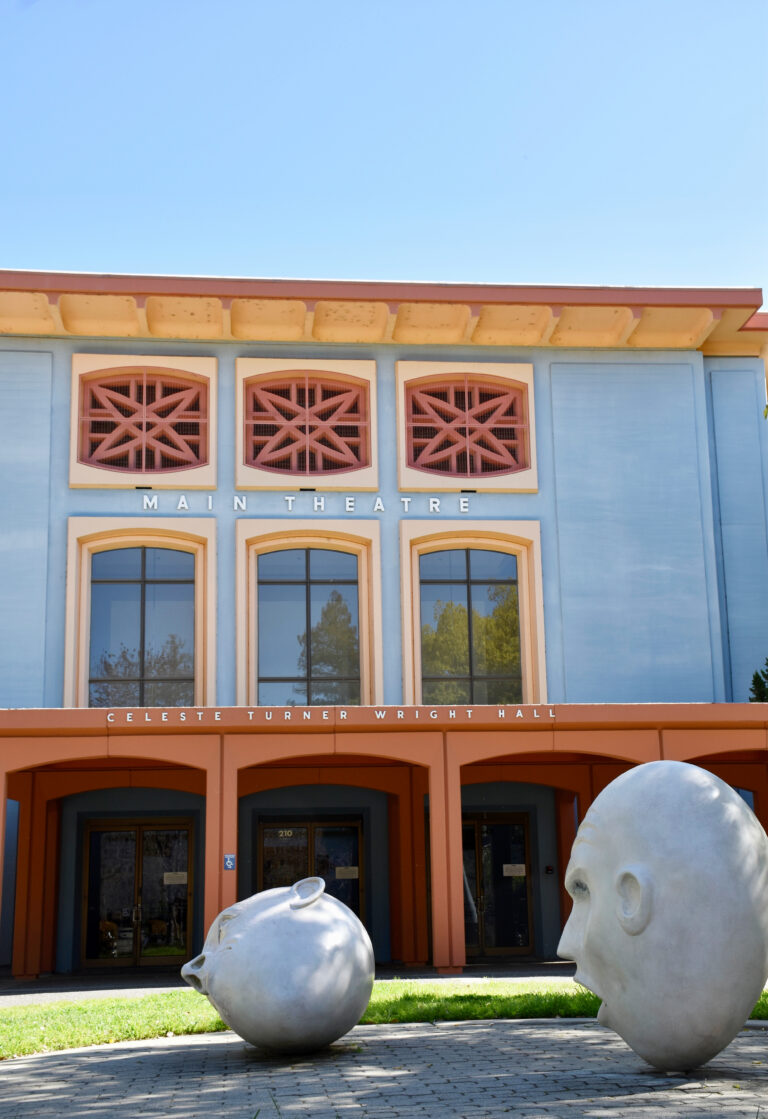
The Theatre and Dance Department at UC Davis houses the theatre and dance majors and minors, which include courses in acting, the history of theatre, dance and movement. These courses are offered to students affiliated with and outside of the department and typically take place at Wright Hall. Theatre and Dance is a comparatively small area of study at UC Davis, with about 120 registered undergraduate students majoring in dramatic art, 40-45 graduate students pursuing a Master of Fine Arts in dramatic art or a Ph.D. in performance studies, as well as five to 10 visiting professional artists and teachers each quarter, according to the department website. 

Undergraduate and graduate students taking classes in performance art say these courses have a significant impact on their personal and professional growth, as well as their mental health. However, at a department review conducted during winter quarter, the department staff and students determined that Theatre and Dance is highly underfunded and understaffed. 

Madeline Weissenberg, one of two theatre and dance company managers who facilitate communication between staff and students, said the arts often take a backseat at scientific research universities like UC Davis. 

“Being on a STEM-focused campus, it is very often that the arts can get lost, but it’s so important for the arts to be here,” Weissenberg said. “So often we get some students who want to get away from hard classes like [organic chemistry] for example, […] to perform and be creative, and you can find those creative outlets in theatre or music or art. Because without that, that creative outlet for them maybe gets lost and that can feel very stifling.”

Other than its academic offerings to students, the Theatre and Dance Department also holds many shows and events that are open to everyone, with special ticket rates for UC Davis students. Theater students dedicate much of their time preparing for a mainstage show every quarter, such as “The Fall Show” in fall 2022, “Refuge” held in winter 2022 and “Open, Stay” coming up at the end of this spring. 

These are the highlights of the department’s work, typically developed and directed by the Granada Artists-in-Residence, who are working professionals in the theatre and dance industry. They come to the department for a quarter and work on the show, as well as teach a class at the same time, giving students hands-on experience. Students also choreograph and perform a dance and movement show, “Outside the Lines,” in various academic quarters.

All shows produced by the Theatre and Dance Department are performed by students under the guidance of professors and staff. Students also play important roles in creative production teams such as with lights, sound, set design, projection design, dramaturgy and costumes.

Students and faculty in the Theatre and Dance Department worry about the future of performance art at UC Davis given the current situation. 

“Something the review showed is that we’re all very concerned about the department,” Weissenberg said. “We are underfunded, understaffed and underappreciated in a way no member of our Davis community should be made to feel. If things keep going the way they are currently, we will potentially be down to only having three professors in the entire department, which is unacceptable.” 

Despite struggling with staffing and funding, the department has been holding courses and putting on shows to its best capacity because of the passion, expertise and dedication of the students, faculty and staff. 

“It often feels like the school tends to forget us, and a lot of students don’t even know we exist, which can be very disheartening, but we are here and we are passionate about what we do,” Weissenberg said. “Our faculty, professors and lecturers are pushed and pulled in every which direction and are made to do everything under the sun, but they do it with a smile because they are so passionate and so supportive of our education. They deserve so much more appreciation than they receive.”

Weissenberg said that the lack of appreciation from both the University of California and the student body makes it difficult for the department to function at full capacity. Despite this, it hosts a community that both students and faculty have worked hard to build, as well as a place where aspiring performance artists and production designers at UC Davis can grow their skills in preparation for entering the entertainment field. According to second-year theatre and dance major Daxi Jiang, students are extremely involved and put tremendous amounts of work into their classes and the department and are largely inspired by the effort of the faculty and staff. 

“We don’t have many professors or lecturers, but the professors we have genuinely care about the students,” Jiang said. “They’ll give everything they have or known to help a student’s growth. They use their free time to answer students’ questions and help them go further in the industries if the students are passionate.”

Jiang said theatre and dance majors also uplift and support each other, reflecting the dedication of their instructors. 

“We are more so friends to each other than classmates,” Jiang said. “We were able to form such a strong bonding through working a show together, and I’ve never had such experience anywhere outside the theatre department. We respect each other’s boundaries, we genuinely care about each other’s feelings and both mental and physical health.” 

The Theatre and Dance Department is also an important resource for non-majors and minors. Teresa Arenas Salas, a graduate student in dramatic art at UC Davis, recently ran her Master of Fine Arts show, White Dancer Loops,” last week, and has been instructing an intro-level acting class. According to Salas, theatre classes offer a change of pace for students in traditional academic majors. 

Many students from outside the department come in and take this class and […] have said that [it] is so different from STEM-based classes,” Salas said. “Here, you cannot just sit around. You have to get on your feet and be completely engaged and involved the entire class duration.”

Salas said theatre classes often build camaraderie between UC Davis students as they require them to “collaborate […] at a more immersive level,” and can also have positive impacts on students’ health. 

“The department’s classes are beneficial to the body and mind and are some of the few ones where you can make mistakes and have fun, be silly and yet have meaningful experiences while learning,” Salas said. “I would invite students to try a class; people say it is always way better and more fun than anything they expected and it opens up their mind.”

First-year theatre and dance and psychology double-major Yi Zhu has experienced these benefits first-hand.

I love it when we can fully enjoy dancing, performing and creating arts because that helps me relieve a lot of stress and gain energy and confidence,” Zhu said. “Feeling the fluidity of my emotions and body and forgetting the crazy and swirling world outside is always the best.”

According to Salas, UC Davis may be a STEM-focused university, but this does not mean that its arts programs are of poor quality.

  “I chose this department at UC Davis as it was one of the few Master of Fine Arts programs in the field that was interdisciplinary, and I can work across dance, acting [and] singing here and collaborate with artists of various disciplines,” Salas said. “Art is absolutely essential in the world, and so is our department on the UC Davis campus.” 

Salas said that students and professors as well as Davis community members can get involved in supporting the Theatre and Dance Department by spreading awareness of the departments’ courses and events. Salas believes that art deserves a place on university campuses and within student communities for the ways it contributes to personal growth. 

“Art helps us understand our place in the world, like within interpersonal relations, about social issues, politics, the human condition and creativity and increases our sensitivity in different ways beyond academics, very practically,” Salas said. “Art is a vehicle for changing perspective and the Theatre and Dance [Department] does this while working with our most important instrument: the body and mind.

To stay updated on events and opportunities with the Theatre and Dance Department, visit their website at https://arts.ucdavis.edu/theatre-and-dance, follow @ucdtheatreanddance on Instagram or sign up to join the department’s listserv by emailing the company managers at kezaldumbide@ucdavis.edu.

Written by: Indranil Basu — features@theaggie.org

UC student organization Danzantes del Alma invites the community to experience annual performance

“Historias de Nuestra Tierra” will showcase the group’s dancing and share the importance of Latinx tradition and history


By MIA BALTIERRA — features@theaggie.org


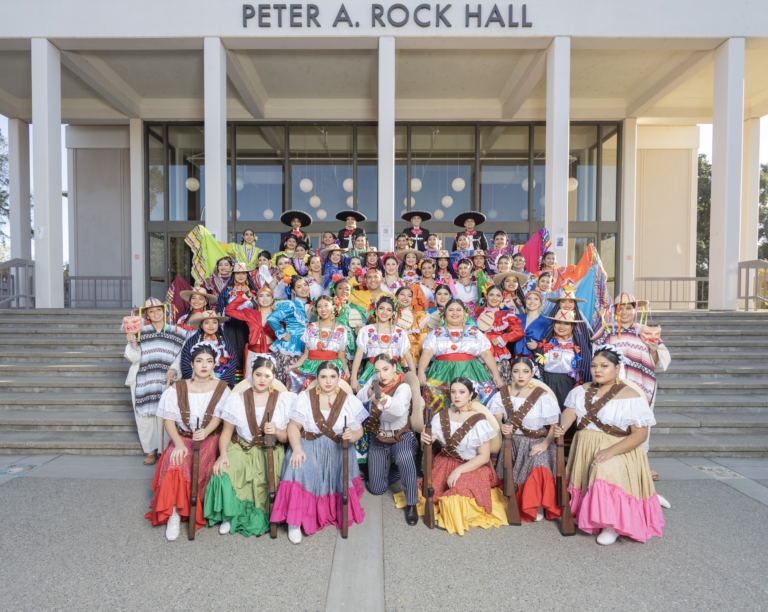
Danzantes del Alma, established in 1977, is a student retention program under the Cross Cultural Center that aims to foster student leadership and academic excellence through the traditional Mexican art of Ballet Folklórico. Over the years, the group has established a presence in the community of Davis, holding events year-round and providing resources for students to succeed artistically and academically.

“We do Mexican traditional dance,” said Fernanda Serna, a fourth-year statistics and economics double major and a student manager. “Some of our dancers learned from maestros in Mexico, and some learned from people here in the U.S. We are trying to stick to what they do in Mexico. We try to keep it authentic so people who know about it feel we are representing it the right way.”

Danzantes del Alma welcomes all skill levels to join their group, teaching basic movements in the beginning of fall quarter and building up to more technical steps as the school year progresses, according to second-year animal science major and student instructor Jat Cruz.

With the support of a non-student instructor, Danzantes del Alma is completely student-run. The organization has a board of 13 members who organize practices, foster a welcoming and successful community and prepare members for the group’s main event — their annual show.

The group is currently at full membership capacity at 63 students, but some members still feel Danzantes del Alma is not recognized on campus. Members, including third-year psychology and Spanish double major and this year’s annual show chair Christopher Lopez, hope the annual performance will bring attention to the organization and give students the opportunity to learn about Latinx traditions.

“It shows support to the minorities here on campus,” Lopez said. “It shows involvement and appreciation. It seems like our group gets pushed under the rug, so I think it’s important for the community to show up and show their appreciation and support […] and learn something.”

This year marks the 44th annual performance for the group but only the second annual performance that will be held in the Mondavi Center, a venue that the group fought hard to secure. 

“We are reclaiming the power we have in this campus and [showing] how our communities are so strong,” Serna said.

In preparation for the event, troupe members practice nine hours per week in fall and winter quarters and up to 20 hours per week leading up to the show. During practices, members learn dance steps as well as the history behind them. 

“There are different dances for each state in Mexico,” said third-year design and communications double major and dance troupe member Michelle Mendoza. “They all vary in different ways, but each one tells a specific story.”

Danzantes del Alma hopes to convey not only the stories in the dances but also the joyous spirit of Mexican culture, according to fourth-year aerospace engineering major and administrative chair Juan Carlos. The theme for this year’s performance is “Historias de Nuestra Tierra,” which directly translates to “history of our land.” 

“We are also trying to bring a piece of Mexico to this place,” Carlos said. “We are trying to bring people who haven’t been to Mexico in a very long time back. Their experiences, the colors, the music — it’s a way for them to be reminded of what home feels like.”

Lopez shared the goals of the organization in planning the show.

“We are trying to implement cultural values and the rebirth of Mexican culture in a way that represents who we are and what we stand for,” Lopez said. “Not only as a community, but as individuals who have a past, who have a heritage and who have a culture they long to represent.”

Members encourage all students to come see the show, regardless of background or major, as they believe everyone can get something out of the experience. 

“You don’t have to be a part of this community; you don’t have to speak the language or understand the dance even,” Mendoza said. “You are not just seeing and hearing the sounds. You are experiencing it, and we want people to connect with us as a bigger community more than just [individuals].”

Students can expect a colorful, joyous celebration of music and dance at the performance on April 22, including brightly colored costumes and props depicting a narrative. 

The performance will include “a lot of noises, a lot of skirt work and a lot of movement of the arms,” said second-year animal science major and student instructor Jat Cruz. “We have long skirts that go all the way down to your ankles, […and] a lot of olas [waves].”  

Doors to the annual show open at 5 p.m. and the performance begins at 6 p.m. Visit mondaviarts.com for more information and to purchase tickets.

Written by: Mia Baltierra — features@theaggie.org

The best student discounts, both in Davis and online

Everything from Amtrak to Amazon


By EMILIE BROWN — emrbrown@ucdavis.edu


Let’s face it, being a student often means living on a shoestring budget and mastering the art of stretching your last dollar. But eating instant ramen for every meal and counting pennies for pizza isn’t fun for anyone, so here is my guide to the best student discounts in Davis and online. From low prices on train tickets to savings on software and everything in between, get ready to become the ultimate thrifty student and show those bills who’s boss. 


Amtrak: Need a break from campus? Planning a weekend getaway or a trip back home? Amtrak offers a 15% student discount on train tickets for any train when you purchase through their website — and all you have to do is add your “.edu” email. If you’re a frequent traveler, Amtrak offers a 25% discount off a “6-Ride Pass” that can be used for an entire year after the purchase date.


Amazon Student: Amazon is your one-stop shop for everything from textbooks to late-night snack deliveries, but shipping costs and fees can add up fast. Luckily, with Amazon Student, you can enjoy six free months of Amazon Prime, followed by 50% off a regular Prime membership, which will get you Prime delivery times, as well as Prime Video, ad-free Prime Music, up to 90% discounts on rented textbooks and exclusive deals and discounts on a wide range of products. The service is free for six months and then $7.49 a month after that. 


Spotify: Need some tunes to get you through those all-nighters? Spotify offers a premium plan for students at a discounted rate. Get the first month free and then pay $4.99 a month. Oh, and your Spotify Premium Student account also comes with Hulu (unfortunately, with ads) and SHOWTIME (with no ads) for no extra cost. Enjoy unlimited ad-free and offline listening while keeping your wallet in tune. 


Regal Cinemas Davis: Both Regal Cinemas locations in Davis offer discounted movie tickets for students that show their student IDs at checkout. Take a break from the textbooks and indulge in some movie magic without breaking the bank.


Davis Bike Collective: Head over to Davis Bike Collective and let their volunteers help you fix your bike for much cheaper than other shops will. Sure, you might have to get your hands a bit dirty, but you’ll save money and learn how to fix future problems. 


The Pantry: This hidden gem on campus is a game changer for students on a tight budget. With shelves stocked full of non-perishable food items, fresh items, toiletries and other essentials, The Pantry makes it easy to save. Order non-perishable items ahead of time online or swing by MU 167 with your student ID to pick up fresh groceries for free!


Apple: Apple offers education pricing for all students who show proof of enrollment. From MacBooks to iPads to accessories, you can enjoy special pricing that’s easy on your budget.  


StudentUniverse: Dreaming of a summer adventure abroad? StudentUniverse offers exclusive discounts on flights, hotels and tours just for students. Pack your bags and let your wanderlust take flight without blowing your budget!


The New York Times: Staying informed about current events and news is essential. The New York Times offers discounted digital subscriptions for students — just $1 a week — giving you access to reliable and credible journalism, fun games and more at a fraction of the regular price. Additionally, access to The New York Times is free for UC Davis students, provided they sign up with their school email and specify their graduation date.


Unidays: Unidays is an online marketplace that offers discounts on a wide range of products and services, including fashion, technology, beauty and more. Simply sign up with your student email and unlock a world of savings! 


Woodstock’s Pizza: Tired of counting pennies for pizza? Woodstock’s offers 15% off any XL one-topping pizza to students that show their student ID. They also frequently have deals that can save you even more. Grab some friends and enjoy some pizza without worrying about your dough.


FedEx: FedEx offers a generous student discount of 30% off when sending documents with an envelope and 20% off when sending packages. Say goodbye to hefty shipping fees and take advantage of this great deal to save on your shipping needs while juggling student responsibilities. 


Chipotle: Show your UC Davis ID at checkout and receive a free drink — It’s really that simple.


Happy savings!


Written by: Emilie Brown — emrbrown@ucdavis.edu

Disclaimer: The views and opinions expressed by individual columnists belong to the columnists alone and do not necessarily indicate the views and opinions held by The California Aggie.

‘Normal People’ romanticizes the intricacies of everyday relationships

Sally Rooney’s characters come to life on both the pages of the novel and the TV screen


By ANA BACH — arts@theaggie.org


Sally Rooney’s gripping novel “Normal People” has taken the world by storm. In addition to the book, the show’s television adaptation starring Daisy Edgar-Jones and Paul Mescal blossoms on screen, bringing the story to life. 

For those who are unfamiliar, the story follows two high schoolers in Ireland who come from seemingly different worlds. Marianne, played by Edgar-Jones in the Hulu series, comes from an affluent background, while Connell, played by Mescal, comes from a single-parent household. The two originally meet because Connell’s mother works as a maid for Marianne’s family. 

The story distinguishes itself from a narrative that relies solely on class disparities to determine the social hierarchy of a show’s characters, though. Viewers see a role reversal among the star-crossed lovers. Connell is on the rugby team, deemed attractive and sociable and has many friends. Marianne, on the other hand, ostracizes herself from her peers. Most of the time, she has her head in a book to avoid conversations with her classmates, whom she tends to find dull. 

Despite their differences, the two find comfort in each other — and both Rooney’s novel and its television adaptation emphasize that this comfort isn’t purely physical. With every step they take towards a more physically intimate relationship, Connell and Marriane also move towards a more emotionally fulfilling connection. 

When the pair has sex for the first time, the moments that detail them undressing each other prior are portrayed as an endearing testament to their mutual feelings rather than just their physical attraction to one another. In the book, this scene is described more intimately than the actual sex, and Mescal and Edgar-Jones’s portrayal of the scene in the show captures those same feelings of gentleness and instant comfort. Their emotional bond creates a newfound beauty in how they view one another that surpasses the bodily closeness that sex provides. They seem aware that they are about to embark on a raw, emotionally intimate experience with one another.

Both the novel and the show emphasize the theme of communication in Connell and Marianne’s relationship. Their ability to connect with one another feels natural and seems to require little effort. Ultimately, however, the differences in their upbringing are responsible for the conflicts they face later in their relationship. 

One example of this occurs when the two discuss their college plans shortly after they start seeing each other. Marianne is convinced that Connell should attend Trinity College based on his interests in English — coincidentally, she is also planning on going there. Connell responds and says, “Then we would be in college, and I bet you would pretend to not know me.” In both the novel and the show, Marianne looks at him perplexed and says, “I would never pretend to not know you, Connell.” 

Ultimately, the two both end up at Trinity after not being in contact for a while. In college,  Marianne is thriving (both socially and academically) while Connell is struggling to find where he fits in. Attempting to get more socially acclimated, Connell attends a party with one of his friends from class, where he is reintroduced to Marianne. Instead of choosing to act as if she does not know him, Marianne instantly welcomes him amongst her friend group, knowing that he did not do the same for her when they were in high school. 

It’s beautiful to see that the potential of their relationship still exists at Trinity despite all of the trouble they have been through, and the show captures this moment almost exactly as the book describes it. 

Normal People” speaks to the younger generation through its depiction of mental health struggles, social pressures and the miscommunications that are so common within our relationships. Both the book and the show provide a realistic representation of these issues that readers and viewers alike can identify with. Perhaps the title says it best: “Normal People” romanticizes the interactions and relationships that all of us normal people experience, allowing us to resonate with the characters and grant ourselves the same grace that we give them. 


Written by: Ana Bach — arts@theaggie.org 

Recent sea otter deaths linked to a rare strain of parasitic infection

A parasitic strain of Toxoplasma gondii called the COUG strain has killed four California sea otters


By KATIE HELLMAN — science@theaggie.org 

A recent news release reported that four California sea otters have died from a severe form of toxoplasmosis, an infection that comes from the microscopic parasite Toxoplasma gondii. The initial research is published in the journal Frontiers in Marine Science.

“Our findings reveal a novel and concerning lesion pattern for southern sea otters with systemic toxoplasmosis that appears to be associated with an atypical T. gondii strain described in an aquatic animal for the first time,” the study reads. 

Although the particular strain of infection is rare, the parasite is relatively common, and sea otters are particularly vulnerable to infection due to their habitat’s location near the shoreline. Sea otters may consume marine invertebrates that expose them to the infection or come into contact with the parasite’s eggs through rainwater runoff. 

The strain of Toxoplasma was found through DNA testing to be one known as COUG, which was first identified in 1995. These findings raise concern about the strain’s potential to infect more sea otters and possibly other warm-blooded animals, including humans.

Devinn Sinnott of the UC Davis School of Veterinary Medicine co-authored the study and addressed this concern.

Toxoplasma gondii in general can affect any warm-blooded species, so humans are susceptible as well as many domestic and wild animals,” Sinnott said. “This particular strain has never been reported in humans, but that’s not to say that it couldn’t potentially infect humans.”

All four sea otters in the study were found to have steatitis, an inflammation of body fat, which was detected through microscopic analysis of the otters’ tissues. 

Melissa Miller of the California Department of Fish and Wildlife, who co-authored the study, commented on the virulence of the strain.

“We have seen that certain genetic strains of Toxoplasma in otters appear to be a little bit more pathogenic than others,” Miller said. “What’s astounding about the COUG strain is that it appears to be capable of killing adult otters that don’t have obvious pre-existing health conditions. I’ve been looking at otters for 25 years and I haven’t seen that before.”

This is the first time that the COUG genotype has been found in sea otters or anywhere along the California coast.

“Sea otters are a threatened species and they are already under a lot of pressure from different sources, including other diseases, toxins, their habitat and food limitations,” Sinnott said. “Finding this new strain that’s killing animals very rapidly is particularly concerning from a conservation standpoint.”

Scientists noted that the presentation of the parasitic infection in the otters exhibited unusual characteristics. For example, although large quantities of the parasites were identified throughout the otters’ bodies, none were discovered in their brains. In the case of deadly toxoplasmosis, the central nervous system is usually heavily affected.

“As a wildlife pathologist, I’m all about pattern recognition,” Miller said. “If you listen to [sea otters] and let them teach you about what’s happening in the environment, they’ll do it and they’ll do an extremely good job. They’re one of the finest environmental sentinels I’ve ever worked with in my career.”

Written by: Katie Hellman — science@theaggie.org