57 F
Davis

Davis, California

Monday, December 22, 2025
Home Blog Page 158

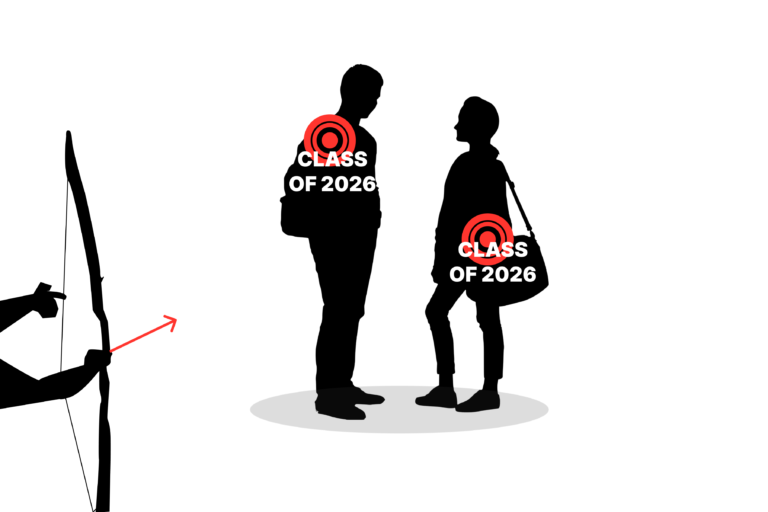
ASUCD Senate to vote on allowing hunting permits for freshman

Not, like, for freshmen. Hunting for freshmen. Yeah.


BY ANNABEL MARSHALL — almarshall@ucdavis.edu 


It’s Thursday again, and in the Mee Room gathered around the conference table, squabbling, monologuing and occasionally throwing pens, is UC Davis’s student government. Like most nights, there are more coffee cups than people. And like every night, 90% of the student body has no idea they exist. Tonight, however, there’s a good reason for UCD to pay attention.

In a controversial new bill last week, Senator Malcom Mann proposed the school grant 20 to 30 permits to UCD students and staff that would allow holders to hunt and kill one freshman each. 

Opponents of the bill have argued that permits are unfair to freshmen. To this, Mann said, “Freshmen, in exchange, will be allowed to forgo one final per quarter.” A poll by The California Aggie has shown that 68% of freshmen think this is a reasonable trade. Additional incentives may include a coupon for 20% off their first order from HelloFresh.

Surprisingly, the main controversy has been on the system used to hand out the permits. So far, the majority of the Senate has shown favor for a blind lottery, but tonight they’ve opened the floor to other proposals. 

Obviously, discrimination on the basis of race, religion, sex, etc. is unacceptable. However, Senator John Chu suggested prioritizing those who want to hunt either computer science majors or his ex-boyfriend’s new boyfriend. This was a popular suggestion.

Senator Jean Paul Francis argued that upperclassmen should have priority, and that permits should target freshmen with life-insurance policies.

Finally, Senator Eddie Cullen proposed giving the permits exclusively to other freshmen. This way, they could keep the slaughter contained within the dorms and have Aggie Studios shoot a “‘Hunger Games’-esque reality show, so that people finally think we’re more interesting than UCI.” Cane’s has already offered to sponsor the show. 

How has it come to this? How could a school that prides itself on diversity, equity and Turning Point speakers ever devolve into violence?

“Dr. Gross was running out of bodies,” Senator Mandy Lexus said. Gross was not available for comment, but sources suspect he may have been the heavily cloaked figure at the end of the Senate table who kept encouraging hunters to “keep the patella intact.”

Senator Arianna Chan said, “It was the only way we could think of to get people to buy AggieCash.” The permits can only be bought with UC Davis’s particular currency and will only be sold when the bike lanes get clogged.


Written by: Annabel Marshall — almarshall@ucdavis.edu 

Disclaimer: (This article is humor and/or satire, and its content is purely fictional. The story and the names of “sources” are fictionalized.)
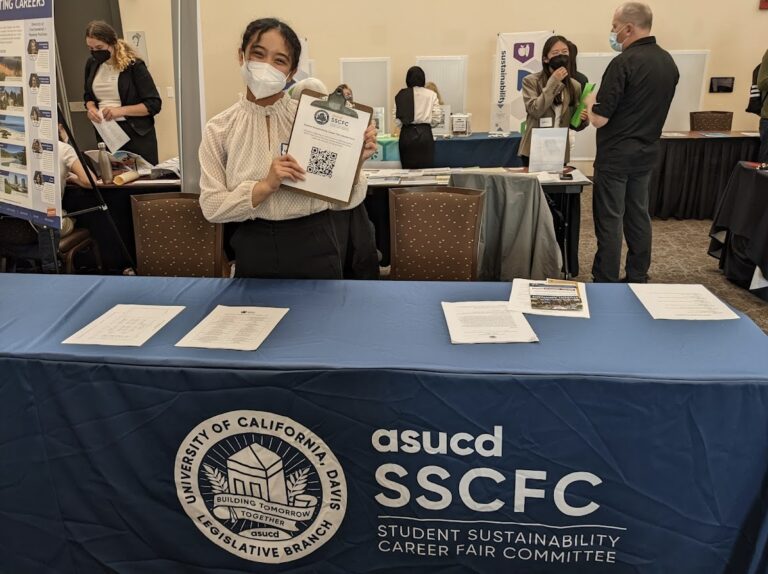

ASUCD event spotlights sustainable career opportunities for students

The event, known as the Student Sustainability Career Fair, will take place on April 26


By LEV FARRIS GOLDENBERG — campus@theaggie.org


Heads up, environmentally-minded Aggies. The Student Sustainability Career Fair (SSCF) will take place on April 26, from 10 a.m. to 1 p.m. in the ARC Conference Center. Registration for the SSCF is free and offers students an opportunity to connect with organizations, agencies and firms in the environmental field and explore positions for summer or post-graduation.

Created in 2019, the SSCF is an extension of the ASUCD Environmental Policy and Planning Commission (EPPC). SSCF chairperson Alana Webre, a fifth-year environmental policy analysis and planning major, was a member of the original initiative and is now in her second year as the head of the committee.

After conducting two virtual fairs in 2020 and 2021, this is the second in-person fair Webre has helped plan.

“I got a ton of feedback last year from people who would just come up to me or email SSCF saying ‘I got my summer internship or I got my summer job through SSCF and the career fair,’” Webre said. “This is at a really opportune time in April, where a lot of students are looking for what they’re going to do over the summer, and a lot of the organizations that come to our career fair offer internships, or for graduating seniors, jobs.”

The SSCF differs from the Internship and Career Center’s (ICC) Spring Internship and Career Fair, which took place on April 19 and catered to a more general range of majors and interests.

At the SSCF, students can connect with 28 groups this year, including California State Parks, CalTrans, Yolo Farm to Fork, the California Attorney General’s Office, Natural Resource Division, SMUD, Bay Area Air Quality Management District and many more.

We had a lot of returnees this year who said they got a really good crop of applicants last year and so they wanted to come back,” Webre said.

By inviting a wide variety of sustainable organizations, the committee hopes to make their fair helpful for students in all corners of the sustainability field. 

“We really wanted it to cover anyone who might be interested in a sustainable career,” Webre said. “It truly runs the gambit. […] It’s a super wide variety, so not only will it attract a lot of people and a lot of different majors, but also, if you’re a first or second year, you might get a look at some of the opportunities that you haven’t seen that are very promising.”

According to Webre, the majority of the organizations will be actively hiring. She encourages attending students who hope to apply for jobs or internships to dress business casual and bring copies of their resumes.

“A lot of times employers would ask for a resume if they really like you as a potential candidate for an internship or a job,” Webre said. “And I had a lot of students kind of caught off guard last year without a resume when they needed one.”

The committee had several goals following last year’s fair. It hopes to attract more underclassmen as well as third and fourth years. The committee also made a concerted effort to reach out to students of many backgrounds.

“We’re trying to attract a lot of students of color, because the environmental field is predominantly white,” Webre said. “My own committee is super diverse and I know that there are a ton of different backgrounds in the sustainability students here and we want to make sure that everyone has equal access to the fair and all these services we provide.”

Webre said that she, third-year sustainable environmental design major Vice Chair Jordyn Kosai, and the rest of the committee have been hard at work organizing and advertising the conference. 

Members have reached out to the transfer and cultural centers, tabled, put up flyers and made in-person announcements. They hope to attract sustainable majors of all kinds: landscape, design and architecture, sustainable environmental design, environmental policy and planning, environmental science and management and political science students.

SSCF is also partnering with the ICC to create virtual career fair prep workshops.

“I think something that we would really like to work on this year is that we had almost 300 people sign up to come last year and yet only around 100 actually attended. Which I think is very normal, but we would like to close that gap this year,” Webre said. “We hope that [the workshops] will incentivize people to not just sign up, but also attend because they will already have some of the resources available to them.”

Fourth-year environmental science and management major Mackenzie Field, chair of EPPC, works closely with Webre.

“SSCF has worked tirelessly on this event,” Field said. “Students always come out of it with great jobs and internships, so it’s an amazing opportunity for them to interact with organizations in the sustainable fields.”

UC Davis has long been known for its focus on sustainability, even being ranked the most sustainable university in North America for the last seven years in a row. This is one of the reasons why students interested in careers in this field choose to come to UC Davis, and if you’re one of these students, this April 26 career fair might be just the place for you.


Written by: Lev Farris Goldenberg — campus@theaggie.org


Senate discusses transfer student representation at April 13 meeting

They also heard from concerned activists seeking support for formerly incarcerated students and confirmed candidates for numerous ASUCD positions


By SYDNEY AMESTOY — campus@theaggie.org 


Vice President JT Eden called the April 13 Senate meeting to order at 6:10 p.m.

The first item on the agenda was the confirmation of a new Gender and Sexuality Commission (GASC) vice chairperson. Hailey Porterfield, a sociology major who previously did advocacy work for the Center for Advocacy, Resources & Education (CARE), was the only candidate. She was unanimously confirmed.

GASC also unanimously confirmed first-year wildlife, fish and conservation biology major Jay Chen and second-year English major Cindy Nguyen as new commissioners.

Former ASUCD President Ryan Manriquez then recommended seven new members of the Disability Rights Advocacy Committee. Six were confirmed unanimously. One candidate was not in attendance and therefore was unable to be confirmed during the meeting.

Public comments followed the confirmations, during which numerous members of the Underground Scholars organization at UC Davis voiced their concerns with the administration’s handling of funds. The Underground Scholars are a group that supports formerly incarcerated students and according to leaders in the organization, funding was recently given to public universities in California to support this demographic of students.

According to co-founder Axel Cominsky, the group has had conflicts with the University of California Office of the President (UCOP) and administrators from UC Davis, specifically Vice Chancellor Pablo Reguerin, who is in charge of allocating funding for this project at Davis.

“UC Davis was the only UC to not have formerly incarcerated representation at UCOP […] meetings,” Cominsky said. 

“We’d be happy to mediate [conversations with the Vice Chancellor] and ensure that the funding is appropriately allocated in a manner that meets student needs,” President Radhika Gawde said.

Following public comment was the quarterly report from the Office of the International Student Representative (OISR). Former Representative Keven Zhou announced his resignation from the role, which he officially left the day before the meeting. The report focused on how to contact the office in the transitional period between representatives — namely, through the OISR email

He also discussed the projects that the office worked on throughout the quarter. These include an Asian American Pacific Islander (AAPI) night market that will be held on May 19 and feature numerous AAPI clubs and the proposal of an LGBTQ+ international student support group.

Eden then gave quarterly reports on two committees within the legislative branch: the Scholarship Committee and the Volunteer Award Committee. Eden asked members of the Senate to encourage volunteers they know or work with to apply for the volunteer award, which will distribute 10 $250 awards to student employees during spring quarter. 

After the consideration of previous legislation, next on the agenda was elected officer reports. Senator Stephen Fujimoto met with The Pantry to discuss their system of supplying menstrual products for students. Senator Gaius Ilupeju met with Aggie Compass to work out a promotion strategy for the new UC Davis-sponsored Aggie Eats food truck launching later this month.

During the open forum, there was a long debate on where to hold the upcoming quarterly town hall meeting. While the meeting is typically held in the Coffee House, there was discussion about changing both the location and time in order to increase student attendance. 

The table considered having the meeting outside on the quad, but there is a 12 p.m.-1 p.m. limit on projected sound that prevented the change from passing. To limit discussion, a motion was made to decide a place through a quick vote at the end of the meeting.

Jahanvi Narwal, a fourth-year economics major and the chairperson of the Research and Data Committee, then gave the committee’s quarterly report, which summed up past and future projects, including surveys to see if UC Davis would benefit from a free textbook program and to measure student approval of the Equitable Access program.

Members of the Senate then moved to consider old legislation. 

Senate Bill (SB) #90, authored by Fujimoto, sought to allocate $7,000 to the CoHo as funding for free cookie coupons to incentivize student voter participation in the spring ASUCD elections.

Some members of the Senate table were concerned about scams, which would waste the money allocated through the bill. 

“How do we prevent students from duplicating the coupons?” Eden said. “I think it’s a fair concern. The only solution I can really think of is writing down their student ID number, but people were opposed to that because that’s a little weird.”

Other anti-fraud suggestions include writing students’ information on each coupon, making each coupon unique and asking CoHo employees to be on the lookout for fraudulent coupons.

“It’s a $1.25 cookie, and it’s a lot of effort to go through a duplication operation,” Senator Erek Leschyn said.

SB #90 passed unanimously.

SB #88 was next on the agenda; it sought to add a referendum to reinstate The Green Initiative Fund (TGIF) sustainability grant program fee to the spring ASUCD elections ballot, which passed unanimously.

Constitutional Amendment (CA) #83 sought to make major changes to the ASUCD voting system by consolidating all general elections to spring quarter. This would mean every Senate seat would be up for election in the spring. According to the amendment’s author, Eden, this would improve election competition and give new students more of a chance to adjust to campus before running for a position.

Many members of the table opposed the change, however, citing concerns about “excluding” the freshmen and transfer student populations.

“This amendment is that first years cannot run for office under this proposal,” Senator Jacob Klein, who is a first-year student, said. “So I’m going to start by saying that while constitutional amendments inherently make alterations to the constitution, excluding entire categories of students violate so many parts of our constitution, and directly goes against so much institutional precedent.”

 “I think what we’re dealing with here is that the pros outweigh the cons,” Eden said. “It’s not true that first-year students could not run for positions.” 

After a long debate, CA #83 failed with 2 yesses, 6 nos and 4 abstainments.

The next item on the agenda was CA #84, which sought to make minor language changes within the constitution to match bylaws. One section within the amendment would make the International and Transfer Student Representatives voting members of the Senate table. Many members of the Senate did not approve of this change in an amendment labeled as minor. 

Gawde, who was in support of the change, made a motion to split the house and get a show of hands on whether or not giving the International and Transfer Student Representatives the ability to vote in Senate meetings was “a slay.” 

There was a call for decorum.

“We literally just argued how it was important that transfer students have a voice at this table,” Gawde said. “People rejected the last amendment because it was thought it was a limit to the voice of transfer students on the table, I would ask that you guys stick to that commitment.”

When it was argued that this part of the amendment should be its own amendment, Gawde made a motion to do just that. Another motion was made to limit the debate to 17 minutes on this proposed amendment.

Gawde’s proposed amendment failed, with only Senators Ilupeju and Leschyn voting yes. 

“I do not support the specific amendment,” Senator Shrey Gupta said. “Just because this is not a minor change and I do not think that it should be done in an amendment to the amendment. There are so many questions to ask.”
CA #84 passed without Gawde’s amendment, 11-1.

Finally, the Senate, which had already gone over an hour past its scheduled end time, returned to their discussion on where to hold the next quarterly Town Hall meeting. Ultimately, it was decided to make the “Memorial Union (MU)” the location, so that a more specific location within the MU could be chosen in a later meeting.

The meeting was adjourned at 11:43 p.m.


Written by: Sydney Amestoy — campus@theaggie.org 

April 21: Welcome to The Aggie’s Weekly Roundup

This week’s stories include: the re-opening of Sudwerk Restaurant at the Sudwerk Brewing Co.’s Davis location, new initiatives to make the campus more body inclusive, TAPS’ new “Parking Invoice Program” and more!

Popular vegan restaurant, Burger Patch, closes in Davis

The Burger Patch location in Davis closes after three years of serving the community


By ALMA CULVERWELL — city@theaggie.org 


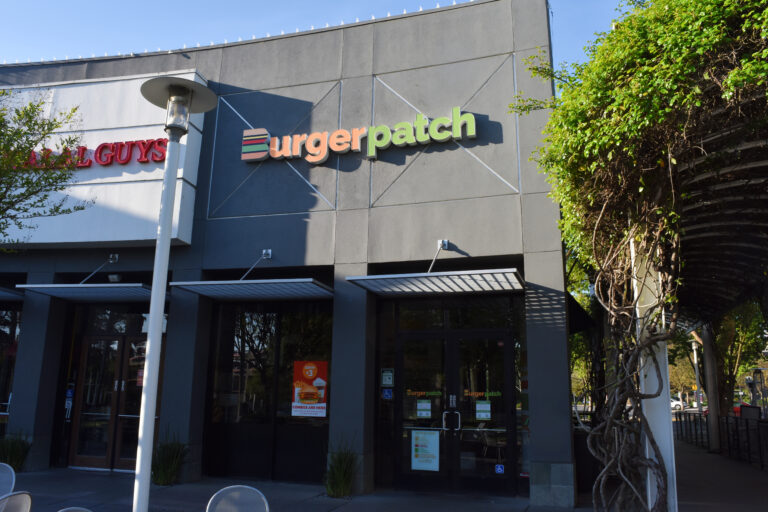
On March 31, the decision was made to close down the Davis location of the local vegan fast-food chain, Burger Patch. The Davis location had been serving students and Davis residents their popular vegan versions of burgers, shakes and more for the past three years. 

Burger Patch was founded in 2017 by Philip and Danea Horn, and began as a pop-up restaurant. In 2019, they opened their first brick-and-mortar restaurant in Midtown Sacramento. Since then, they opened two more locations in Davis and East Sacramento.

The business was created to provide plant-based options while still maintaining good taste and quality. Their menu contains a large variety of options to fit dietary restrictions, including vegetarian, vegan, dairy- and gluten-free options. 

With a wide range of vegan-friendly and affordable choices, Burger Patch was a staple for many students during the past three years, including second-year ecological management and restoration major Olivia Dobusch. 

“My favorite part about Burger Patch was the all-vegan menu,” Dobusch said. “I will miss being able to easily access a restaurant with so many good-quality vegan options.”

According to their website, the decision to close down both the Davis and East Sacramento locations was made due to a shift in diner habits and costs over recent years. Instead, the company plans to give more attention to the midtown location and to the development of a sister brand, Burrito Patch, according to a statement on its website. 

“We truly hope to continue to grow Burger Patch in the years to come and further our mission of feeding kindness for our planet, animals and communities,” the statement on their website reads. “This was a necessary, but painful step that we wrestled with for many months, but ultimately must take to ensure our long term success and the hope that we might be able to put a Burger Patch in a neighborhood near you again sometime in the future.”

Burger Patch in Davis will be missed by vegans and non-vegans, like Francesca Controneo, a second-year sustainable environmental design major, alike. 

“It’s a good vegan option,” Controneo said. “I’m not vegan, but it is good if you don’t want to eat a lot of meat products.”

Michell Valencia-Ortega, a second-year marine and coastal science major, is vegan and appreciated the choices she had at the restaurant. 

“I like the chicken burger,” Valencia-Ortega said. “I will miss the fact that there is accessible vegan food near me, it was a good safety food.”

Burger Patch brought back their popular breakfast menu on April 8 and extended the store hours at their midtown location according to the statement on their website. They will still be serving at their original Midtown Sacramento location at 2301 K St., Suite 101, and will have to-go options available.

Written by: Alma Culverwell city@theaggie.org

UC Davis must provide reliable Wi-Fi, technology infrastructure for students, staff

As most courses depend on technology, campus should provide the necessary resources


By THE EDITORIAL BOARD


It might seem counterintuitive to publish an article online about the lack of Wi-Fi on UC Davis’s campus, as you likely have internet access via Wi-Fi if you are viewing this article (unless you are one of the few who still picks up print newspapers). It also seems silly to receive an email from UC Davis explaining the poor campus Wi-Fi. It goes to show the almost sole reliance we have on being able to connect to the internet in order to go about our daily lives — to read the news, receive campus announcements, submit assignments and more. 

While we have never been more dependent on internet access, save for the days of online instruction, Eduroam, the on-campus Wi-Fi, has been worse than usual lately. Many Editorial Board members have found themselves connecting to the UC Davis Guest network (despite not being guests, but paying students) or resorting to their mobile devices’ hotspots, and in extremely desperate times, even pulling out a pen and paper to write lecture notes. In the words of a previous Aggie staff member: “Edu has not been roaming.”

This is not only inconvenient for students and staff, but it is simply unacceptable when so much of our day-to-day lives relies on access to the internet. Tasks necessary for almost all classes on campus, like taking notes, accessing course Canvas pages and even opening the Bookshelf e-books that many students borrow through Equitable Access, require Wi-Fi. And, while proactive students might download notes, textbooks and Canvas PDFs for times when internet access is lost, other necessary functions, like hosting or joining Zoom meetings and even some methods of lecture capture, require Wi-Fi to work at certain times.

Further, not all students have access to reliable Wi-Fi at home. Some might count on Eduroam to be the Wi-Fi network they use when they have a Zoom interview or meeting, need to download a lengthy document or upload an assignment by its due date. It puts students whose only option is Eduroam at an unfair disadvantage when they have to deal with intermittent and unexpected outages. 

UC Davis’s IET (Information and Educational Technology) support department has suggested that people experiencing Wi-Fi outages on campus either connect to their mobile devices’ hotspots or find a wired connection location on campus to use. While they acknowledge that not all students have access to hotspots, it seems unfair to suggest this as a solution, given many students don’t have unlimited data plans or even a hotspot connected to their phones. As for wired-connection locations, many students — including members of the Editorial Board — are unsure of where to find these outlets and do not have the correct cables to connect to them. There are also not nearly enough of these connectors to serve the whole campus community; IET estimates 40,000 devices connect to campus Wi-Fi networks each day.

Aside from Wi-Fi, this points to a larger issue as professors integrate more and more technology into their curricula. While almost every student in most lecture halls, as well as in Shields Library and the Memorial Union, is using some kind of electronic device to do their work these days, our campus’s infrastructure seems to be behind the times. Most spaces on campus, aside from recently constructed or renovated buildings, don’t have enough easily available outlets for students to charge their devices. As our education becomes more reliant on technology, UC Davis must do better to make the campus a space where students can easily use the technology they need.

Editor’s note: A previous version of this article incorrectly said that IET stood for “Integrated Education and Technology,” when it is actually “Information and Educational Technology.” 

Written by: The Editorial Board

Minor League Baseball players agree to first-ever collective bargaining agreement

Minor Leaguers receive pay increases and other benefits as a result of recent agreement with the MLB


By PATRICK FIGUEROA — sports@theaggie.org


On March 29, the Major League Baseball Players Association (MLBPA) and Major League Baseball (MLB) owners came to an agreement on the first-ever Collective Bargaining Agreement (CBA) for minor-league players. The agreement will last five years and includes various benefits for players, including pay increases at all levels of Minor League Baseball (MiLB). After decades of mistreatment and exploitation, this agreement marks a new era of MiLB. 

For decades, minor-league players say they have dealt with below-minimum-wage pay and overtime violations. In fact, minor-league players recently won a $185 million federal-class action lawsuit after MLB violated the Fair Labor Standards Act. 

Several stories from former minor leaguers have also exposed the unglamorous realities of being a MiLB player. 

In a Bleacher Report article from 2014, Dirk Hayhurst discussed his time in the minor leagues, detailing a time when, as a low-A minor-league player, he lived without a refrigerator and microwave because he could not afford the appliances. He claims that he ‘lived off of peanut butter and jelly sandwiches.’

Fox Sports MLB Analyst Ben Verlander also shared a similar experience in the minor leagues, saying the MiLB did little to ensure that players received proper nutrition. 

“Professional athletes need to fuel their bodies properly in order to compete at the highest level, and unfortunately, minor leaguers don’t have the money to make that happen on their own,” Verlander told Fox Sports

He also said that when players were provided with food, he felt it was not even enough to satisfy a middle schooler. He claimed that if players complained, they would be met with the same response: “If you don’t like it, play better.” 

Hayhurst and Verlander both pointed to one of players’ biggest issues in the MiLB: the living conditions. In the lower levels of MiLB, players live with a host family, but in the upper levels, players are on their own. This often means sharing a living space with other players; Verlander said that five or six players would sometimes live in a house meant for four people. 

Some players have also claimed that the minor leagues have not been as geared toward player development as they should be. However, with a new CBA, the conditions should be much improved.

One of the biggest issues that the new CBA addresses is minor-league pay. At all levels, players will receive significant salary increases: Triple-A players will receive a $17,500 to $35,800 increase, Double-A, a $13,800 to $30,250 increase, High A, an $11,000 to $27,300 increase, Low A, an $11,000 to $26,200 increase and Rookie, a $4,800 to $19,800 increase.

Players will also receive year-round payments, as opposed to the previous payment schedule, which did not include the off-season and forced many players to work second jobs

The new CBA will also address players’ housing. At higher levels of the MiLB, specifically Double and Triple A, players will now receive their own bedrooms. Lower-level players will have the choice of sharing a bedroom or receiving a housing stipend. This builds upon a previous agreement made in 2021 in which MLB required teams to provide all minor-league players with housing.

In regard to food and nutrition, players are now guaranteed both a pre- and post-game meal. Teams will also be required to provide cost-effective and nutritious snacks. To address future complaints, a joint clubhouse nutrition committee will be created.

Other noteworthy parts of the agreement include a requirement that players’ spouses and children receive access to MiLB housing; a new joint drug agreement and domestic violence policy; name, image and likeness (NIL) rights; guaranteed transportation to and from stadiums; access to language classes and new health benefits starting in 2024.

This CBA is not only a victory for minor-league players, but it also creates a recognized union that can continue to improve the conditions of MiLB.

In the words of MLBPA Executive Director Tony Clark, “The agreement represents a giant step forward in treating minor-league players as the elite professional athletes that they are. It’s a historic day for these players, their families and the entire player fraternity.”  


Written by: Patrick Figueroa — sports@theaggie.org


UC Davis men’s tennis beat Rainbow Warriors, extend winning streak

The team’s winning record makes them one of the most dominant teams in the Big West this season


By EVA MACHADO — sports@theaggie.org


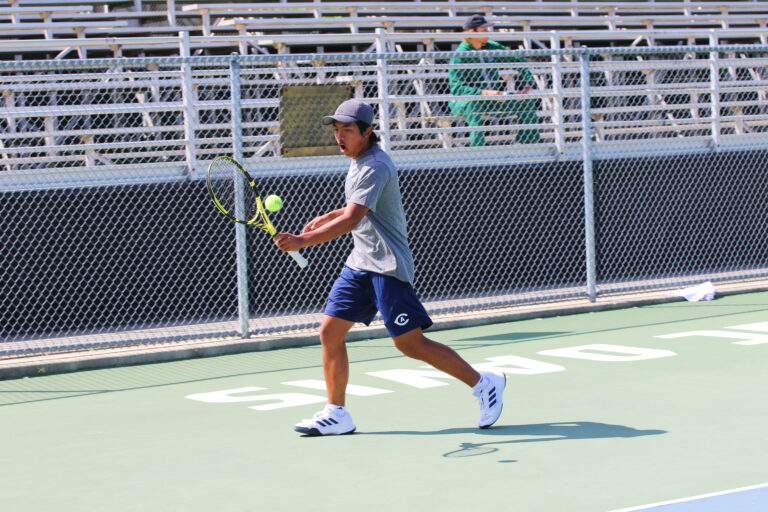
UC Davis men’s tennis faced the University of Hawai’i Rainbow Warriors on April 12 at the UC Davis Marya Welch Tennis Center, ultimately beating them with a final score of 4-3.

Starting strong, the Aggies opened with first-year Lucas Bollinger and fourth-year Coleton Hootman as the leading doubles team. Bollinger and Hootman defeated their opponents, third-year Votja Vlkovsky and second-year Karl Collins, 6-3. However, the remainder of the doubles sets did not go as well for the Aggies.

The Rainbow Warriors roared back in the doubles competition and the Aggies struggled, losing the remaining two doubles matches. The teams — fourth-years Andras Necz and Brett Brinkman and fourth-year Mitchell Davis and first-year Constantinos Djakouris — played strong matches, but the Rainbow Warriors defeated both pairs. 

Singles competition began with UC Davis’s second-year Sam De Vries, who handily beat his opponent, Guillaume Tattevin, in two straight sets with scores of 6-1 and 6-0, respectively. This win was Vries’ sixth singles win of the season and evened the overall score between the Aggies and Rainbow Warriors. 

In the next singles match, Rainbow Warriors’ fourth-year Andre Ilagan defeated UC Davis’s Djakouris in both sets (6-3, 6-3).

Then, Brinkman came back strong in the singles competition following a tough loss in the doubles competition. Brinkman beat the University of Hawai’i third-year Axel Labrunie in two sets (7-5, 6-2). 

Bollinger carried his excellent play in the doubles contest into the singles competition., beating his Rainbow Warrior opponent, graduate student Lucas Labrunie, in two sets (7-5, 6-1). Both of these matches showcased the power and skill that the Aggies are capable of.

These wins solidified the Aggies’ lead over the Rainbow Warriors. The Rainbow Warriors managed one more win during the single competition on court two with Hawaii’s Vlkovsky beating UC Davis’s second-year Ryan Torres in three sets (1-6, 6-2, 6-2). Torres’s inexperience seemed to hinder him against an experienced veteran like Vlkovsky who easily cruised through three sets.

Mitchell Davis sealed the deal for UC Davis by winning the last singles match of the day (4-6, 6-4, 6-3). Davis lost his first set against his Rainbow Warrior opponent; however, he came back fighting in the second and third sets. Davis’s match ended the day and secured the win for the Aggies.

The final score was 4-3 for the Aggies. This win extends UC Davis’s four-game winning streak and is the team’s seventh win of their past eight matches. 

Following this win, UC Davis’s Big West standing is 4-0, solidifying the group’s dominance over the Big West competition this year. The Aggies have showcased their capabilities throughout this strong season.

UC Davis was set to play UC Irvine on April 14 and hoped to continue their winning streak in that match; however, The Aggies ultimately lost the match 0-4 to the Anteaters. 

Despite the recent loss, the Aggies are still one of the strongest teams in the Big West Conference this season. With one more regular season game left on the schedule, UC Davis will seek to close out the season with a win against crosstown rival Sacramento State on April 19. 


Written by: Eva Machado — sports@theaggie.org


UC Davis baseball wins Causeway Classic against Sacramento State

After an eighth-inning rally, the Aggies beat the Hornets in extra innings


By CAROLYN (CARI) FENN — sports@theaggie.org


After a tough week with back-to-back losses against UC San Diego, the Aggies beat Sacramento State 4-3 in extra innings on April 11 at home on the Phil Swimley Field at Dobbins Stadium. Despite losing to the Hornets in a previous matchup four days prior, the team looked strong on Tuesday and defeated their cross-town rivals. 

Throughout the game, eight of the Aggies’ pitchers took the mound, beginning with third-year Nate Freeman. In the top of the first inning, the Aggies gained a one-run lead, which Freeman was able to hold for the three innings he pitched. Despite only allowing two hits in the three innings, Freeman was taken out before the fourth inning. Second-year Trevor Allen replaced him and began UC Davis’s constant pitching rotation that lasted for the duration of the game.

  Offensively, the Aggies were unable to score another run until the eighth inning. During the team’s seven scoreless innings, the Hornets gained a 3-1 lead over the Aggies, scoring in the fourth, sixth and eighth innings against three different pitchers.

While some of the eight pitchers who took the mound for UC Davis played well, a new pitcher was brought in each inning until the ninth inning. Fourth-year Nathan Peng pitched from the bottom of the ninth inning until the first out of the 11th inning. The constant rotation of relief pitchers on the mound — aside from Peng’s three-inning stint — could have been why Sacramento State was able to gain a lead. Luckily for the Aggies, the Hornets also substituted their pitchers quickly for a total of seven substitutions. 

While this number of substitutions isn’t the norm, both teams did so as to not overwork their pitchers in preparation for big weekends ahead, especially since this was not a conference game. Both teams had three-game series scheduled for last weekend; Sacramento State played UT Arlington and UC Davis faced UCLA. While UCLA isn’t a conference opponent for UC Davis either, the Aggies needed their bullpen at full strength to perform well against the PAC-12 team.

Going into the eighth inning, the game appeared to be nearing an end. Sacramento State had a 3-1 lead, and the Aggies hadn’t been able to score a run since the first inning. However, the momentum of the game shifted when the first UC Davis batter came up to the plate. 

To start the eighth-inning rally for the Aggies was second-year right fielder Mark Wolbert, who hit a home run straight out to right field. The Aggies then scored another run to tie the game 3-3, bringing hope to a game that seemed as good as over. 

The Aggies were able to hold the Hornets to a 3-3 tie at the end of the ninth inning and forced the game into extra innings.

The game remained tied through the ninth and 10th innings, in part thanks to impressive pitching by Peng and a strong defensive performance by UC Davis. The Aggie offense was less successful, getting a single hit in the two innings.

The 11th and final inning was probably the most intense of the game, with excitement in both the top and bottom. In the top of the 11th, Sacramento State loaded the bases with only one out against UC Davis. The Aggies were able to prevent the Hornets from scoring, with third-year pitcher Kaden Riccomini relieving Peng and finishing off the top of the 11th.

The Hornets’ defense had more trouble preventing UC Davis scoring runs. After pitching two hitless innings, Hornets’ third-year pitcher Wesley Harper ended up walking multiple batters.

The Aggies loaded the bases with one out; second-year outfielder Riley Acosta was on third, third-year outfielder Damian Stone was on second and first-year infielder Joey Wright was on first. After a deep fly ball by third-year infielder Alex Gouveia to left field, Acosta took advantage of the distance between the left fielder and the catcher and made a sprint for home plate, beating the throw by the left fielder and scoring the winning run for the Aggies.

Following the winning hit, the Aggies ran onto the field to celebrate their late rally against the Hornets. While UC Davis was down for most of the game, they were able to make an impressive comeback when they needed to the most.

Following their win, UC Davis traveled to Southern California, where they lost their series against UCLA 2-1.

Next up, UC Davis hosted Saint Mary’s on April 18 for one game. From April 21-23, the Aggies will host UC Riverside for a Big West Conference series.

Written by: Carolyn (Cari) Fenn — sports@theaggie.org

City of Davis introduces interactive Urban Forest Management Plan

The new feature on the city’s website hopes to engage the community in local forestry


By ALEX UPTON  city@theaggie.org 


The city of Davis introduced a new online format to engage the community in the city’s Urban Forest Management Plan, which is available on the city of Davis’s website. City council met on March 21 to discuss a number of proposals, including the Urban Forest Management Plan. The urban forest consists of all private- and city-owned trees and woody shrubs in Davis, excluding natural areas. The Urban Forest Management Plan page on the website provides easy and interactive access to updates on how the city is designing the urban forest to best benefit the community. 

Stan Gryczko, public works, utilities and operations director for the city, has been a part of the team for the Urban Forest Management Plan for the past year. He explained how the format that Davis is using is different from usual management plans. 

“This format really allows for direct community engagement at any time with the city’s progress,” Gryczko said via email. “With this online format, the community will have an opportunity to see regular updates on progress, changes to objectives and metrics on how the Urban Forestry Program is moving forward. This is a much different method of interaction versus a usual method of having a pdf document that is not updated as frequently.” 

The main goal of the format is to increase community engagement in city decision-making processes. The plan spans over 40 years, so changes will happen slowly, allowing the community to learn about it and understand how it will impact them directly. Gryczko shared how he expects the city’s implementation of the plan to affect community engagement and how his team has worked to engage community members. 

“As part of the development process, the team actively engaged community members through online forums, in-person events and submittals via email or online via the city’s website,” Gryczko said. “I expect the community and the tree commission will remain heavily involved as the city looks to move from development to implementation of the UFMP [Urban Forest Management Plan]. In Davis we have a community that is very actively engaged with the urban forest, and we are appreciative of the ongoing efforts to support our tree canopy.” 

This plan, which was just adopted by city council in March, is still new. Because of this, Gryczko said he does not expect to see major updates immediately but envisions a continual progression of efforts. 

“Staff is focused on preparing an implementation road map for the next number of years to begin achieving the goals and objectives within the plan,” Gryszko said. “This of course will be developed with the input of the tree commission and community. Once we have a recommendation on the road map, the city council will review and adjust if necessary before we move forward with implementation.”

UC Davis has discussed their plans to adapt the campus’s tree canopy to address climate change. After the extreme wind and storms throughout Davis this past winter, the university is making an effort to prepare the campus tree canopy for the future effects of climate change.

“Certainly, having a robust urban forest has a positive impact on climate change, as demonstrated in the Urban Forest Management Plan information,” Gryczko said. “While the rain received this winter is welcome, the reality is water will continue to be a finite resource for California. Having said that, the city does prioritize watering of the urban forest and young trees in order to combat climate change.” 

Updates and the full interactive Urban Forest Management Plan can be found on the city of Davis website

Written by: Alex Upton — city@theaggie.org 

Davis city council March updates

The council discussed housing funds, the Urban Forest Management Plan and the American Rescue Plan 


By ALEX UPTON  city@theaggie.org 


On March 21, the Davis city council held its last council meeting of the month to discuss current housing issues in relation to the city’s American Rescue Plan funding and the new Urban Forest Management Plan. 

Councilmembers began the meeting with a series of presentations, including taking time to recognize March as Colorectal Cancer Awareness Month, Developmental Disabilities Awareness Month and Red Cross Month. 

Vice Mayor Josh Chapman discussed the importance of screening for and increasing education about colorectal cancer. Mayor Will Arnold reflected on the history of Developmental Disabilities Awareness Month and praised the efforts of Team Davis, a non-profit organization established to enrich the lives of youth and adults with developmental disabilities. Council members Gloria Partida and Bapu Vaitla discussed the council’s Support of Human Rights and Women’s Rights in Iran and recognized Red Cross month. Misti Hawkins, a Red Cross nurse in Davis, thanked the council and city for their recognition of the Red Cross’s efforts. 

“It stirs my heart to know that health-related proclamations are coming out,” Hawkins said. “I want everyone to understand that when you donate to the Red Cross the money does go back to the community.” 

The meeting then turned to the issue of housing insecurity. The American Rescue Plan (ARP) allocated $1.37 million to the city of Davis to support the unhoused community and provide affordable housing. ARP funds can be used for rental assistance as well as supportive services for people who are or are at risk of experiencing homelessness. Currently, the city’s funds are allocated toward supportive services for Paul’s Place, emergency shelters and the development of affordable housing — specifically the Pacifico housing project in South Davis. While tenant-based rental assistance was recognized as an important need, no ARP funds have been allocated to it in the city. Kelly Stachowicz, the assistant city manager, explained why this is the case.

“It’s extremely staff-intensive to provide those funding sources and we are probably not the most efficient to do that,” Stachowicz said. “Yolo County Housing as a housing authority is really set up and structured to deal with that, so while we believe that there’s a need there — particularly as rents rise and folks are trying to stay put — we are not recommending this funding source for that particular type of programming.”

The council also discussed the city’s efforts to combat climate change through the Urban Forest Management Plan, an online-based plan that allows community members to stay updated with information about Davis’s urban forest and to increase engagement with city environmental policies and promote tree preservation and protection. The “urban forest” refers to all privately- and city-owned trees and woody shrubs in Davis. This plan is one of the first of its kind and is part of the city’s effort to adapt to climate change, according to its website. Its format takes advantage of technological improvements and new data analysis tools to provide frequent updates about changes in the city’s environmental landscape and easier access to the management plan for the community. Stan Gryczko, the director of public works, utilities and operations, said that community involvement is extremely important in this plan. 

“This allows for the investment of both casual and invested individuals, so you can play around in this plan and really get into the weeds if you’re interested in a specific aspect or functionality of the plan, but [it] also allows for people who are just tinkering around on the city’s website to get more invested and interested in the city’s urban forestry program,” Gryczko said.  


Written by: Alex Upton — city@theaggie.org 


Best Boba: iTea

iTea has become a Davis favorite due to its extensive menu and convenient location


By KATIE HELLMAN — features@theaggie.org

iTea has been voted the Best Boba in Davis for 2023, accumulating 38.1% of all votes for the category. Located right between campus and downtown at 236 A Street, iTea is easy to access from campus and is a popular hangout spot for students. The shop is open everyday from 11 a.m. to 9 p.m. 

iTea is known for its variety of tea flavors, which include fruit teas, milk teas and frosties. They also sell food items such as basil popcorn chicken, garlic chicken wings and ramen.

Yocelyn Ruiz, a second-year plant biology major, mentioned why she prefers iTea to other similar stores.

“I like their snack options more compared to other boba places,” Ruiz said. “I always go for their takoyaki and taro milk tea.”

At iTea, food can either be ordered through in-store kiosks or their app, which makes the process quick and easy. Students are drawn to the large variety of options and ability to personalize their order.

“iTea does its best to make sure the drink is customizable to the customer, with toppings, ice and sugar levels,” Elaine Contreras, a fourth-year communications major, said. “They make your perfect drink.”

Boba has risen in popularity over the last few years, and although iTea is one of many locations in Davis where people can buy it, iTea’s vast menu, fast service and convenient location have secured it the highest ranking.

Chasa Monica, a second year student double majoring in molecular and medical microbiology and philosophy, commented on their favorite thing to order.

“My favorite thing at iTea is the popcorn chicken. The portion is pretty good and I like the flavor a lot,” Monica said. “Their strawberry fruit tea is pretty good as well!”

Written by: Katie Hellman — science@theaggie.org

Best Tacos: Guads Tacos and Beer

The restaurant hits the spot on any occasion


By ANA BACH — features@theaggie.org


For the second year in a row, Guads Tacos and Beer takes the title of the Best Tacos in Davis, with 75.3% of surveyed students voting for the relatively new spot. Located on 3rd St., the restaurant’s convenient location within walking distance of campus makes it hard to miss on your way downtown. 

Talking to locals, many agree that not only is Guads delicious, but also a place where core Davis memories are formed. 

Carmela Evashchen, a second-year biotechnology major, discussed why Guads provides comfort food for her in Davis. 

“It was one of the first places I went when I moved here, so anytime I eat it, I’m happy,” Evaschen said. 

The street tacos provide just the right amount of flavor in every bite and the overall quality is great. By limiting the excess toppings, Guads focuses on the essential ingredients in a street taco and really enhances the flavor with simple add-ons like onions and cilantro. 

“The basic street tacos with the grilled onions on it…nothing beats [that] to me,” Evashcen said.

The tacos at Guads are also reasonably priced  — the menu shows street tacos priced at just $2.79.

“Especially in the spring when it’s hot, I know I can go get a large Coke and two tacos for a pretty good price,” Evashcen said. 

Along with its delicious and reasonably-priced food, Guads provides an environment where UC Davis students can come together off campus. Evachshen recounts an experience last year where she was at Guads Tacos after a tiresome day spent with friends. 

“We had all just finished having a great time at [Putah Creek]. It was hot out, we were hungry and we knew we had to go get Guads. It was the only acceptable thing to eat at that moment. It was the most refreshing meal to have after our day at the creek.” 

Kera Reinig, a second-year environmental science and management and economics double major, explained why she thinks Guads bridges the Davis community together. 

“Its close proximity to campus makes it a good meeting point to sit and catch up with others, not to mention their nachos are to die for,” Reinig said.

The restaurant also provides reliable, speedy service for students who might be in a rush and need a quick meal between classes.

Taner Karaaslan, a second-year biomedical engineering major, said that Guads is his preferred place for a quick taco fix in Davis. 

“Guads is the perfect place to stop by and get some quick grub between or after class,” Karaaslan said. “The variety of options and quality of service makes it one of my go-to spots in Davis. You can never go wrong with Guads.”


Written by: Ana Bach — features@theaggie.org


Best Date Spot: Davis Farmers Market

The local favorite once again won the vote for students’ favorite place to take that special someone


By SUN YIE — features@theaggie.org


The Davis Farmers Market is a place where you and your partner can take a leisurely stroll through the rows of local vendors, buy groceries or simply enjoy the Saturday morning sun. Often featuring live music from local bands during Wednesday evening markets, attendees can browse or buy a variety of goodies, such as baked goods, handmade crafts, fresh flowers, vintage clothes and more. 

48.2% of the survey participants chose this beloved market as their favorite date spot, which means it clearly holds a spot in many locals’’ hearts. 

Angelika Garcia, a fourth-year psychology major, is one of these locals. She explained that visiting the “farmar” is her Saturday tradition.

 “My partner and I love starting off the day with fresh apple juice from the farmers market and then making our way down to see all the other vendors,” she said. “We alternate in getting flowers for each other, and then we either end our morning that way or we check out the art market down the street.”

On Saturdays, the Davis Farmers Market and the Davis Craft and Vintage Fair experience an overlap; the Davis Farmers Market hours are from 8 a.m. to 1 p.m., while the Craft and Vintage Market hours are from 10 a.m. to 3 p.m. While the Davis Farmers Market hosts a variety of local businesses and restaurants situated in downtown Davis, the Craft and Vintage Fair presents an array of local vendors, many of which are fellow students or recent graduates. 

Jasmine Prado, a fourth-year biology major, affirms that there’s nothing that beats the farmers market and Craft and Vintage Fair combination on Saturdays. 

“My boyfriend and I love both of these markets and we try to go every week,” Prado said. “The Davis Farmers Market is a familiar comfort, and yet, I feel like we see something new each time, so it’s not boring either. I also love seeing crafts that my fellow students have made at the Davis [Craft and] Vintage Fair down the street.”

For those who are unable to enjoy the weekend markets or would rather unwind at the market after a hard day of classes, the Davis Farmers Market is also hosted on Wednesday evenings from 3 p.m. to 6 p.m., and has expanded hours from 4 p.m. to 8 p.m. starting mid-May. These Wednesday offerings are also known as “Picnics in the Park,” and they provide a great opportunity to do just that — local restaurants like Buckhorn to Raja’s often sell food at this market, although their menus can vary from week to week. Once you and your partner have grabbed a bite, you can find a spot to rest in the park, maybe enjoy live local music and watch the sun set on a perfect date. 

This is the way Daniella Ramirez, a fourth-year sociology major, chooses to enjoy the Davis market. 

“I love catching sunsets during dinner time with my partner on Wednesdays,” Ramirez said. “They make me feel appreciative of every day I spend with my partner.” 

The Davis Farmers Market is beloved by Aggies and locals alike. If you’re searching for a fun date idea, look no further —  not only will you take home fond memories of a sweet outing, you might leave with some yummy leftovers or a locally made sweater as well.


Written by: Sun Yie — features@theaggie.org


Best Trivia: Woodstock’s Pizza

Students voted Woodstock’s for the best place to do trivia in Davis


By CHRIS PONCE features@theaggie.org


Woodstock’s, the popular pizzeria in downtown Davis, was voted the Best Trivia by 60.6% of surveyed students. Their weekly trivia nights were the first event Woodstock’s hosted following the COVID-19 pandemic, according to assistant general manager Maudi Gloria, and students have been eager to attend since. 

Woodstock’s hosts many events other than trivia nights, such as pint nights, which feature discounted drinks, and “California Roots” events, which feature in-store giveaways. Gloria, who also used to work as the trivia lead, discussed the effects of the pandemic on hosting events at Woodstock’s. 

“[It was] super unsatisfying not being able to do the things throughout the pandemic; no inhouse, no late night, no music, no games,” Gloria said. “But bringing trivia back right away was super great.”

Trivia is held every Thursday night at 9 p.m. and is open to all ages. The event also sometimes features different themes, specials and prizes. Gloria shared that trivia is close to her heart and talked about the popularity of the event. 

“It just took off,” Gloria said. “We did a lot of theme nights — Harry Potter has always been our biggest theme night. It’s always been a big hit, it’s super fun. [There are] a lot of college students, it’s definitely like a good close-to-the-weekend, after-the-school-day thing.”

Gloria shared that Woodstock’s partners with a third-party trivia organization to help run the event.

“Now we do trivia through Trivia King,” Gloria said. “So we actually have a third party that we work with. The owner of Trivia King, actually, before they went off and started their own business, was a Woodstock’s employee.”

Jianna Martin, who attended trivia night on April 6, talked about what makes Woodstock’s trivia stand out to students. 

“It’s kind of like a Davis go-to spot [and] gem,” Martin said. “[It’s] a beloved hangout spot. It’s a little chaotic, but in a good way.”

Gloria discussed what makes trivia night so popular at Woodstock’s and how the staff help make the event special. 

“We have a great bar scene as it is,” Gloria said. “Our trivia hosts have good personalities, they know how to work a crowd, get them kind of bought in. Our music is always really fun, we have an app [that makes it so] you can choose the music while waiting for trivia to start. Once trivia starts, our trivia master takes over, [and] he’s really good at reading the room, really good at playing into the energy the people that are here are giving.”

Gloria gave some advice for students who are attending trivia night for the first time. 

“Get here early and pick a really good team name,” Gloria said. “Because honestly, that’s half the fun, is just having a good team name and a good group of friends. And [at] some trivias, you’re not going to do well, and at some trivias you are going to kill it — that’s okay.”

Natalie Jacob, an English major who also attended trivia night on April 6, encouraged students to check out the event during their time in Davis. 

“Undergrad is short and college is short, and I think we should all take advantage of the time we have.” Jacob said. 


Written By: Chris Ponce features@theaggie.org