

Drawn by: Veronica Then –– vjthen@ucdavis.edu
Disclaimer: (This cartoon is humor and/or satire, and its content is purely fictional. The story and names of “sources” are fictionalized.)
Drawn by: Veronica Then –– vjthen@ucdavis.edu
Disclaimer: (This cartoon is humor and/or satire, and its content is purely fictional. The story and names of “sources” are fictionalized.)

If you’re looking for something new, consider this composer’s unconventional musical theatre discography
By ADHITHI ANJALI — arts@theaggie.org
The idea of musical theatre alone summons to mind the weird: long-winded solos, absurd dancing and even more absurd sets. One of the most famous names in theatre, Andrew Lloyd Webber, has certainly set the tone for this, creating adaptations of a poetry collection about cats trying to get to the afterlife (“Cats”) and a musical about a steam engine train trying to prove itself (“Starlight Express”). So, the “weird” in the world of musicals is a welcome — if not aspired to — descriptor.
The composer highlighted here is not a stranger to atypical stories or mainstream acclaim. Dave Malloy is best known for “Natasha, Pierre, and the Great Comet,” an adaptation of a small segment of Leon Tolstoy’s distinguished 1869 novel, “War and Peace.” It won two Tony Awards for Best Scenic and Lighting Design in a Musical in 2016, but is overall widely perceived as a “flop” on Broadway.
Its spectacular fall and Broadway controversy is a multi-faceted one, bringing to light issues of commercial interests of Broadway as an industry and how this clashes with efforts to protect and offer roles for diverse actors. Overall, “Great Comet” was not likely to last and draw in a majority tourist audience — after all, nearly 63% of Broadway ticket sales are from tourists. Understandably, this demographic is hesitant to spend an exorbitant amount of money on a musical that has not won more prominent Tony Awards, such as those for Best Musical or Best Score.
However, I believe that Malloy’s musicals are examples of how we place too much trust in Broadway as an institution to tell us what amount of weirdness is permissible and marketable. Instead, we can think about some of his other musicals which revel in unapologetic experimentation and (in the best way possible) nonsense that reimagines what musicals aim to do.
Though he has written 19 musicals, his most prominent aside from “Great Comet” are “Ghost Quartet,” “Preludes” and “Octet.” Malloy’s unique style of lyricism shines through each of these, forgoing a strict structure to instead sprawl along the composition. There’s a sense that emotion barrels through the score, more intense than any demanding form or rules, but it is controlled in a mélange of classical music and electronic synth.
For example, the opening number of “Preludes,” Malloy’s musical about Russian composer Sergei Rachmaninoff’s hypnotism therapy after the failed premiere of his Symphony No. 1 in D minor, exemplifies Malloy’s approach to his songs. The transitions between singing and talking heighten Rachmaninoff’s turmoil and separation from reality. This is backed by a piano composition that grows more dissonant and sporadic as it is overlaid by the synthesized sound of strings.
The rest of the musical continues to play with classical sounds, including some of Rachmanioff’s work, but Malloy spins it into psychedelic, eccentric tunes that reflect Rachmanioff’s mind as he is brought to the edge through a phantasmagoria of bizarre and anachronistic hallucinations.
Passively listening to Malloy is a difficult task, even when he has a song that follows a common form. For example, “Starchild,” a song from “Ghost Quartet,” may have a simple alternating verse-chorus structure, but it stuns with its lyrics and Brittain Ashford’s smoky voice.
Among this selection of musicals, “Ghost Quartet” stands out for its writing. It’s a story that moves nowhere, across time and space, and in constant circles. Loosely put, it is a ghost story that draws from seven centuries of ghost stories, among them Edgar Allen Poe’s “The Fall of the House of Usher” and “Arabian Nights.”
Finally, “Octet” is one of Malloy’s most recent musicals, premiering in 2019. It follows an internet-addiction support group, exploring how technology mediates our relationships with people and how we relate to technology itself. It is largely a cappella, with its eight-person cast providing beautiful harmonies and even more intriguing disharmonies. “Monster,” a number at the show’s halfway mark, is wonderfully strange and heavy, choked with sinister and humorous lyrics that ultimately dissolve into uneasy repetition. “Octet” succeeds, overall, in presenting all the failures and sweet addictions of the online sphere in a surprising, non-condescending manner that so many other pieces fail to achieve.
None of these three made it on a Broadway stage, but they are inspiring in their creativity and astounding in their emotional resonance. Malloy’s concept and execution are tightly intertwined and his understanding of his craft is distinctly evident in the exuberant writing and composition. Check out his work for a surprising and unexpected ride that pushes your preconceived notions of just how weird musical theater can get.
Written by: Adhithi Anjali — arts@theaggie.org

A study of the 13-month-long policy reveals the outcomes of California Zero Bail in Yolo County
By MADELEINE YOUNG — city@theaggie.org
On Feb. 14, the expanded study of “California Zero Bail” was completed and reported that there was 163% more total crime and 200% more violent crime in Yolo County. Zero Bail refers to Proposition 25, or SB #10, which eliminates cash bail for certain suspects, meaning those suspects can be immediately released from custody without paying bail money or bonds.
In Aug. 2022, District Attorney Jeff Resig published a study and analysis of re-offense rates of individuals released on “Zero Bail” that found that out of the 595 individuals studied and released on Zero Bail in Yolo County, 70.6% were re-arrested and 20% were arrested for a violent crime.
The Yolo County District Attorney’s Office released the “Posted Bail vs. Zero Bail Analysis” on Feb. 6 which covered background on the study, methodology, recidivism and other information.
“In April 2020, the California Judicial Council imposed a statewide Emergency Bail Schedule, commonly referred to as Zero Bail. This allowed individuals accused of certain types of crime to be released from custody without the payment of bail money or a bond,” the analysis reads. “Yolo county Superior Court kept an emergency Zero Bail Schedule until June 2021, when a new bail schedule was enacted.”
Resig explained why the Zero Bail policy was introduced in California.
“The Zero Bail policy was implemented by the courts in California in order to address the concern of overcrowding in the jails during COVID[-19],” Resig said. “The rationale was that in order to protect human life from the spread of COVID[-19], courts should minimize the number of people being in locked and confined environments. The Zero Bail order was initially given by the California Supreme Court for several months and then counties individually decided to continue it after that. Yolo County had the policy in effect for 13 months.”
The report on Zero Bail is one of many bail reform studies the Yolo County DA’s office has published over the years. These studies are intended to report on the public safety impacts of the policy. Resig explained in part why he believes the report shows an increase in re-offenses.
“Those who were released on Zero Bail had little incentive to not re-offend,” Resig said. “As a result of the Zero Bail policy, individuals were immediately released from custody without any judicial risk assessment, supervision, ankle monitor, treatment, support, et cetera.”
The study collected information from The California Department of Justice records, including all arrests, date of first arrest following release, total number of arrests and if the individual was arrested on misdemeanor and/or felony charges, amongst other details.
The study found that out of the people who were arrested, the average number of days until they were re-arrested within 18 months was 185 for those who posted bail and 129 for those who were released under emergency bail.
“This study established that Zero Bail policies, without more [reform], resulted in significantly more crime and recidivism in Yolo County,” Resig said. “This study was not a complete assessment of all types of bail reform.”
Written By: Madeleine Young— city@theaggie.org

Home remedies to help beat the common cold
By MAYA KORNYEYEVA — mkornyeyeva@ucdavis.edu
Common colds suck — they just do. One day you’re feeling fine, and the next day you wake up with a headache, a stuffy nose and a sore throat. Nothing feels the same as you struggle through the next few days, getting by on painkillers and double the amount of sleep you’d usually allow yourself.
But what if I told you there were ways to make your cold go away faster? Ways to help your immune system fight it off through beneficial vitamins and restorative home remedies? Here’s a few of the many steps you can take to beat the common cold without taking a trip to a pharmacy.
The first thing to understand is what foods and vitamins are naturally advantageous to consume when you’re feeling under the weather. Here are my personal favorites:
Honey is smooth, sweet and has antibacterial and antioxidant properties. My favorite way to use honey is by adding it to hot drinks, like herbal tea or warm milk, to help soothe a sore throat.
Ginger is an ingredient that has been used for centuries in traditional Chinese medicine. Ginger can help with clearing up a headache, nausea or even a runny nose. Many stores sell lemon-ginger tea, or you can grate the root into salads or stir frys.
Vitamin C is also a crucial supplement that every person should take to make sure they stay healthy. Vitamin C gives your immune cells a boost when you’ve got a cold, strengthens cells to help prevent catching a cold in the first place, helps reduce blood pressure and prevents iron deficiency.
Garlic is another common household ingredient that contains the cold-fighting amino acid allicin, which eases inflammation and blocks harmful molecules. Eating garlic raw is the best way to get those fresh chemical compounds. I usually opt for a garlic spread or add it to soups and salads.
Besides helpful foods, there are also some practical steps to take when you’re sick. This includes sleeping as much as possible; studies show that during sleep, our body goes through many healing processes much faster than when we are awake, seeing as we are conserving energy through minimal movement. Thus, our immune system can function at a quicker rate and kill off the bacteria and viruses attacking our cells. This explains why we often feel fatigue or loss of energy when we are sick: it’s just our body telling us to find the nearest bed and have a long restful nap.
Drinking lots of hot fluids is another good action to take. When we are sick, our bodies can become dehydrated quickly, and we need to restore water to our system so that our cells have a proper membrane layer to deflect any unwanted bacteria. Hot drinks like tea or hot cocoa and hot liquids like chicken soup can make you feel both comfortable and warm inside while giving your body a way to keep its immune system up and running.
Finally, using a humidifier or vaporizer can help clear up congestion in your nose and lungs, ease a cough and stop the spread of influenza, which thrives in dry environments. Proper humidification is also hugely beneficial to stop irritation in the eyes and nose, which is why you will find one in just about every house you walk into. Pleasant scents like lavender, eucalyptus and mint can be added to make you feel more relaxed and keep the air fresh and pleasant.
With these home remedies, the duration of your cold is likely to shorten — or, at the very least, it won’t make you feel like you just took a sledgehammer to the face.
Written by: Maya Kornyeyeva — mkornyeyeva@ucdavis.edu
Disclaimer: The views and opinions expressed by individual columnists belong to the columnists alone and do not necessarily indicate the views and opinions held by The California Aggie.
College is the time to explore
By JENA TUFAIL — jjtufail@ucdavis.edu
When I transferred to UC Davis in the fall of 2021, I had many aspirations about what majors I wanted to study. I decided very quickly that I wanted to either change my major or add a double major or minor in another discipline. I also, however, wanted to graduate in two years, so I recognized that I may not have the time to do so.
By my third quarter, I had already changed my major twice and had contemplated a few different departments for a minor. I had a hard time deciding exactly what I wanted to major and minor in, as I was interested in so many different disciplines. It was always exciting for me to learn about each different major and apply what I learned to my real life. However, I simply did not have time to switch to a different major every quarter.
I remember looking at the major requirements page on the UC Davis website for each of my majors, trying to pick potential classes for the future, when I saw a section under each major requirement that said “alternative electives.” Up until that point, I had taken classes only within each of my majors and minors, but then I realized I could take classes from different majors that interested me. Instead of being upset that I wouldn’t be able to explore as many disciplines as I would like to during my undergrad, I was able to find a way to incorporate numerous classes from different majors while still meeting my degree requirements.
Many majors at UC Davis offer this option. Not only is it a great way to finish off your degree, but it is also a way to learn about different fields and be exposed to different views and ideas. The new skills you learn can not only be utilized throughout your time in college but also outside of class, in the future and in your career.
Last spring, I was able to take a social cognition course in the psychology department. I was fascinated by the material, and although I recognized that I did not want to major in psychology, I enjoyed learning information that was different from what I was used to in my other two majors. The information I learned in that class over a year ago is still relevant in my day-to-day life, and I use it not only when studying, but also when making daily decisions.
In addition to the course in psychology, I was also able to take classes in the Middle Eastern/South Asia Studies department, political science department, linguistics department and more. I believe that having the ability to take classes from several different majors has allowed me to become an even better student and a more well rounded individual. I learned information that I would have never learned within my own majors, and this has allowed me to gain an even wider view of the world around me.
If you have the opportunity during your undergrad to take classes in other majors or departments, I highly recommend it. Not only can it be fun to have a break from your major, but it is also exciting and highly beneficial as well.
Written by: Jena Tufail — jjtufail@ucdavis.edu
Disclaimer: The views and opinions expressed by individual columnists belong to the columnists alone and do not necessarily indicate the views and opinions held by The California Aggie.
Mental Health Initiative, ASUCD Committee on Engagement Initiatives give quarterly reports
By KAYA DO-KHANH — campus@theaggie.org
On Thursday, March 9, at 6:17 p.m., Vice President JT Eden called the Senate meeting to order. Eden called roll and recited the UC Davis Land Acknowledgement.
Travis Haskin, a third-year political science major, gave the quarterly report for the Student Advocate Office (SAO), first reciting the SAO mission statement: “The ASUCD SAO is […] dedicated to assisting students in disputes with the university, while also working to advance basic needs. The goal of the office is to ensure that student voices are heard […] in various issues, including cases with OSSJA, housing and other basic needs.”
Recent developments from the office include building their training program, expanding media outreach by creating a newsletter and developing relationships with OSSJA and other external partners.
Next, the senators moved to Donation Drive Committee confirmations. The Donation Drive Committee organizes and plans a donation drive and distribution event for unwanted furniture, home appliances and other miscellaneous items at the end of each academic year to support students’ basic needs and offer sustainable methods of disposal. First-year international relations major Jasmeen Kaur was confirmed as the Donation Drive Committee chair.
Third-year psychology major Lisseth Hidalgo was confirmed to the DREAM Committee with no objections. The DREAM Committee seeks to build awareness of resources available to the AB 540 and undocumented community, as well as the issues they face.
The Senate table then went over public comments submitted via their online form.
Next, the Mental Health Initiative gave its quarterly report. At the 2023 Mental Health Conference, there was a turnout of approximately 200 attendees per day participating in various workshops, caucuses, keynotes and healing spaces.
The Associated Students Dining Services gave its quarterly report, with updates that included optimizing office space and the hiring of a new executive chef.
Senator Gaius Ilupeju gave the Senate President Pro Tempore quarterly report. He went over specific legislation that increased his responsibilities, how he made speaking time public to members of the Senate table, how he attended Chancellor meetings to represent the Senate and his collaboration with external bodies on behalf of ASUCD, such as with AggieWorks.
Ilupeju also gave a quarterly report for the ASUCD Committee on Engagement Initiatives, which creates outreach activities to help ASUCD better engage with the student body. The committee’s goals include holding an employee retention event, like an association-wide gala, and focusing on marketing strategies ahead of the 2023 ASUCD spring elections.
The senators then moved into elected officer reports, during which they gave updates on their weekly schedules and progress on various projects. The status of previous legislation was addressed, and new legislation was introduced, all of which was sent to the Internal Affairs Commission.
There was a motion to pass the consent calendar, and SB #77, #78 and #85 all passed unanimously.
With the consideration of old legislation, SB #65, which would dissolve the ASUCD Donation Drive Committee, did not pass, with a 1-10-1 vote.
SB #76, which would increase the voting period to at least seven days for an ASUCD general election, did not pass, with a 5-4-3 vote.
An amendment for SB #80 was not adopted, but the bill, which grants ASUCD units, bodies and services increased freedom to publish and alter their own social media and websites, passed unanimously. A similar bill was introduced and passed previously but vetoed by President Radhika Gawde. SB #80 was edited to address concerns about potential violations of university policy.
Eden adjourned the meeting at 1:02 a.m.
Written by: Kaya Do-Khanh — campus@theaggie.org

How it uses apophenia and liminal space to create a “fear of the dark”
By CORALIE LOON — arts@theaggie.org
You may be surprised to learn that one of the “scariest films ever made” cost only $15,000 to produce, according to Independent. The indie horror film “Skinamarink,” which was released in theaters in January and is now streaming on Shudder, has received rave reviews and a flurry of conflicting viewer feedback for its unique and unsettling depiction of childhood fears. Whether responses to the film are positive or negative, “Skinamarink” has successfully made an impact despite its low production value. In fact, it may be the film’s visual simplicity, grainy film quality and lack of linear structure that make it so impactful.
“Skinamarink,” directed by Kyle Edward Ball, follows two young siblings, Kaylee and Paul, who wake up in the night to find that their father is gone. The rest of the film is a slow-paced, ominous unfolding of every child’s worst nightmare: being left alone in a dark house. This fear of the familiar becoming unfamiliar, of the home becoming a twisted distortion of itself, is manifested in the viewer not through a flashy plot but through prolonged stillness and silence.
In between zoomed-in shots of Kaylee and Paul huddling together on the couch or passing between rooms, much of the film is composed of long shots of dim hallways, staircases and empty spaces. In these moments of darkness, oftentimes the only visual movement is the speckled and constantly shifting film grain, which undulates with all the meaning of a low-lit home video.
By giving us something other than just stillness, and something more than just darkness, these shots reproduce a nightmarish, childlike imagination in which shapes in the dark develop their own meaning. This effect is often referred to as apophenia, which Merriam-Webster defines as “the tendency to perceive a connection or meaningful pattern between unrelated or random things” — essentially, to see things that aren’t there.
“Skinamarink” creates apophenia not only through visual techniques but also through sound. The silence in between the children’s anxious and barely decipherable whispers is more than just silence; it’s fuzzy white noise, a cheap microphone’s best attempt at capturing the subtle frequencies and air currents in a quiet room. Like a child staring into the dark corners of their bedroom, the viewer can’t help but pick patterns from the grain and fuzz, seeing or hearing things that don’t exist.
The film’s reliance on atmosphere and prolonged silence in lieu of action or a cohesive plot has not gone without criticism. Despite having a 71% on Rotten Tomatoes and a mostly positive Critics Consensus, the audience score sits at just 44%, with just as many viewers finding it terrifying as “frighteningly dull.”
It seems almost impossible that a film some claim to be one of the scariest of all time is also one that has bored so many to death. Yet, the expertise of “Skinamarink” lies precisely in its nonconformity and its refusal to exist in one space or another. It’s both mundane and terrifying, motionless and full of imagination, existing and making use of a type of liminal space.
“Liminal space” broadly refers to a transition or a threshold between things, whether conceptual or concrete. However, The Atlantic explains how the term has been popularized as a way to describe physical spaces that are often “devoid of humans and, in some cases, distinctly surreal.” Images of places such as abandoned shopping malls or long, empty hallways take up liminal space because of their unique combination of a familiar or recognizable place with “unnatural emptiness.”
Aesthetics Wiki, a subsection of Fandom Wiki, describes liminal spaces as feeling “frozen and slightly unsettling, but also familiar to our minds,” combining feelings of nostalgia with unexpected discomfort and eeriness.
Liminal space is possibly the best lens through which to understand the power of “Skinamarink.” The film uses shots of colorful Legos strewn on the floor and cartoons softly playing on the living room TV to disorient the viewer and strip them of their comfort. The toys are motionless, lying in a dark and empty room. The TV plays the same clip over and over again and no one watches it. Hallways that have been walked down a thousand times are suddenly empty, dark or even physically turned upside down.
“Skinamarink” is also a reconstruction of childhood. For the overly nostalgic viewer, it is a reminder of how our early memories are often more fantasy than reality. While we usually think of childhood as a time of familiarity and comfort, “Skinamarink” reminds us of its liminality, the discomfort of having to make sense of a world full of unknowns and uncertainties. Childhood as a lived experience is far from comforting; rather, it’s a time when the desire for comfort is so overwhelming that it will inevitably be unmet.
Perhaps those who failed to be swayed by the film’s unsettling atmosphere have outgrown such childish fears. But for the rest of us, “Skinamarink” is a harsh inversion of nostalgia, turning the vision of childhood as a place of familiarity on its head.
Written by: Coralie Loon — arts@theaggie.org
UC Davis students weigh in on whether the city should expand outdoor nighttime lighting
By KACEY CHAN — features@theaggie.org
Despite Davis’s reputation as a safe city, UC Davis students have concerns about how poorly lit many streets are at night.
Given the rainy weather over the past few months, many students say their worries have only intensified.
Hanni Sung, a second-year global disease biology major, pointed to many areas on the UC Davis campus where she feels it is hard to see in the dark.
“There’s definitely a lot of unlit places, like the Arboretum or Shields Library,” Sung said. “A lot of roads and bike pathways, too, like Sprocket Bikeway, feel quite scary at night.”
Many students who often stay late on campus feel unsafe at night due to inadequate street lighting. According to the Pedestrian and Bicycle Information Center, a site funded by the U.S. Department of Transportation, street lighting is important for improving pedestrian visibility and personal security, increasing safety for both pedestrians and drivers.
Sung said that it feels dangerous walking to the bus terminals to make her way home after dark. Makenna Yokoyama, a second-year communication major, agreed that the Memorial Union bus terminal is very dark at night.
“There are some smaller areas of the MU that are really unlit,” Yokoyama said. “Whenever I leave basketball practice at night to wait for the buses, it’s way too dark.”
Most of the student body lives off-campus and many rely on walking, biking and public transportation to get around campus and the surrounding areas. For those who do not have cars, traveling back to their homes from campus at night can feel really unsafe.
Alyssa Enriquez, a second-year linguistics major, said the lack of lighting in the city of Davis also makes it difficult to navigate in the dark.
“Literally all of the sidewalks and walkways along Anderson [Road] are dark at night,” Enriquez said. “Most surrounding areas by apartment complexes I’ve been to like Arlington Farm in West Davis or Temescal in North Davis are incredibly dark to get to at night.”
Enriquez said that she even had to memorize when she should pull the bus cord to signal the driver to stop on her commute home at night.
“There is only one bright landmark in the neighborhood, so I’ve learned to time it from there,” Enriquez said.
Another key concern for students is the downtown area.
“Some less popular streets downtown have almost no street lights,” said Amy Zhang, a second-year electrical engineering major. “The whole area next to Mishka’s Cafe is quite dark at night when compared to the rest of downtown.”
A possible reason for the lack of lighting might be to prevent light pollution or “light spill” — a concept which refers to the “presence of unwanted or misdirected light,” according to a report from the City of Davis. It goes on to mention that while street lighting is provided, they want to ensure that it does not become a “nuisance” or “diminish the view of the clear night sky […] and disturb wildlife in natural habitat areas.”
Furthermore, the report claims that the city “requires developers to install lights and dedicate them to the city.”
“[The City’s] standards dictate the type of lights and the spacing or mounting heights based on the classification of the road that is being lit,” Ryan Chapman, the assistant director for the Public Works — Engineering and Transportation Department at the City of Davis, stated in an email. “These standards are used when new subdivisions or streets are built and have changed over time so different parts of the City would have met the lighting standards that existed at the time they were constructed, which could be different than what exists today.”
Chapman said those who have concerns about lighting in specific locations can submit a service request online.
Similarly, for areas reported to be darker at night like the Arboretum, implementation of street lighting falls under the purview of school-specific departments like the UC Davis Arboretum and Public Garden.
The variation in responsibility for nighttime lighting may make student concerns about the issue difficult for one institution to address. Street lighting is left under the discretion of different institutions or enterprises and their varied obligations, making it challenging to coordinate a solution. However, many students hope they may see an expansion of outdoor and nighttime lighting throughout Davis in the future.
Correction: A previous version of this article was missing relevant information about the City of Davis’s lighting standards. It has been updated to include an additional email interview from the City’s Public Works Department.
Written by: Kacey Chan — features@theaggie.org

At least five nominees at Sunday’s Oscars failed the test, but all nine of these picks pass with flying colors
By THE EDITORIAL BOARD
The Bechdel Test is deceivingly simple. A passing movie must feature (1) two named women (2) who talk to each other (3) about something other than a man. However, many of our favorite childhood movies fail to pass (“Shrek”). While filmmakers today have gotten better at meeting this bare minimum requirement (“Shrek 2”), women are still severely underrepresented in modern cinema. Since March is women’s history month, we’ve compiled a list of some of our favorite Bechdel-test approved films to watch once you finish winter quarter finals.
Sophie Dewees — Editor-in-Chief
“Kiki’s Delivery Service” (1989) is one of my all-time childhood favorites. The film tells the story of Kiki, a 13-year-old witch who sets out to find a life of her own. She settles in a beautiful coastal town with her cat, Jiji, and meets several inspiring female role models including Osono, a friendly bakery owner who helps Kiki find her way, and Ursula, a young artist who lives alone in a cabin in the woods. The film offers a sweet coming-of-age story of a girl learning how to live an independent life that, typical of Studio Ghibli movies, features beautiful hand-drawn nature scenes and picturesque landscapes.
Katie DeBenedetti — Managing Editor
Content warning: sexual assault.
Based on the title, it’s no surprise that “Women Talking” (2022) passes the Bechdel Test. The entire movie is, quite literally, women talking (and one man taking notes of the women’s conversation, as it should be). The film, directed by Sarah Polley, is loosely based on a Mennonite community, and follows a group of women of all ages who discover that the men in their community have been abusing them. This group of women — the only people who know the truth — is tasked with deciding the fate of all of the women in the colony. They decide that they have three options: stay and fight, say nothing or leave.
Sonora Slater — Campus News Editor
“Dear old world,” she murmured. “You are very lovely, and I am glad to be alive in you.”
The 1985 film “Anne of Green Gables,” adapted from the novel of the same name, follows 11-year-old orphan Anne Shirley as she embarks on adventure (read: hijinks) in Avonlea after being adopted by middle-aged siblings Matthew and Marilla Cuthbert. Although the quote above is from the book, not the movie, it captures the imaginative romanticism, the love for life and the overdramatic nature of a girl who has captured the hearts of audiences for generations, with her story now having been adapted into all varieties of mediums. “Anne of Green Gables” celebrates female friendships (or “kindred spirits”), allows a young girl’s perspective and narration to take the forefront and serves as a love letter to girls everywhere who love using big words, sometimes act before they think and can’t shake the notion that, despite days when we’re “in the depths of despair,” there will always come again a time when we are grateful for the lovely world we live in.
Chris Ponce — City News Editor
Content warning: violence, suicide.
Sure, it’s not October. It’s actually not even close to spooky season, but that doesn’t mean you can’t get in the spirit early! And why not watch a horror movie to go with the recent rainy weather? “Midsommar” (2019) is the perfect spring horror movie. This hauntingly beautiful horror movie is unique in the aspect that the cinematography features bright and flowery colors. The film stars Florence Pugh who gives a powerful performance as her character Dani experiences the different stages of grief. “Midsommar” features many female characters who are essential to the plot’s progression. Throughout the movie, we see how the people in Dani’s life — her boyfriend and his friends — take advantage of her grief and how she learns to adapt to the horrific situation she is thrown into.
Owen Ruderman — Opinion Editor
Ok, sure, maybe the last couple weeks of school aren’t the best time to be sitting down and watching movies. But when you’re finally done, “The Menu” (2022) is the perfect final course; a delectable dessert to round out the quarter. Ralph Fiennes gives a stellar, haunting performance as Chef Slowik, a celebrity chef who seems to be… slipping, to say the least. The rest of the cast, including Anya Taylor-Joy and Nicholas Hoult, sail out to the private island where the restaurant is located for a night of once-in-a-lifetime courses and unforgettable fine-dining experiences. And the icing on the cake: the movie passes the Bechdel test. So if you love dark comedy and food (and women), I think it’s about time you perused “The Menu.”
Levi Goldstein — Features Editor
Content warning: domestic abuse, alcoholism, kidnapping, racism and racial violence, cannibalism.
If you’re looking for an emotional movie night, “Fried Green Tomatoes” (1991) is the perfect balance of hilarious and heart-wrenching. In this classic film, Evelyn Couch, who is unhappy with being a housewife, befriends Ninny Threadgoode in her nursing home, and throughout their developing friendship, Ninny tells Evelyn stories of family and friends from her youth. The movie switches narratives from the present time to flashbacks of Idgie Threadgoode, Ninny’s sister-in-law, and Ruth Jamison, who bond as they cope with the death of a loved one. As Ruth and Idgie fall in love, open a café together and deal with Ruth’s abusive ex-husband in the past, Evelyn gains confidence to make changes in her life and Ninny makes peace with her family history in the present. “Fried Green Tomatoes” is a heartwarming story of love and friendship between women that is woven with artful social commentary. It tackles difficult themes and is certainly a tear-jerker, but it also has humor that will make you laugh until you can’t breathe, which makes it one of my favorite movies of all time.
Clara Fischer — Arts & Culture Editor
Maybe it’s because the Davis rain has me missing summer or maybe it’s because I would rather be dancing on a Greek island than taking my finals next week, but either way, the movie on my mind right now is the iconic “Mamma Mia” (2008). This jukebox musical smash-hit is one of my all-time favorites. Not only does it feature Meryl Streep (a legend), but the ABBA songs that support the film’s plot have been a recurring feature in my life. These tunes have provided the soundtrack for countless road trips, karaoke nights and time spent dancing with friends. To that matter, the film is essentially a culmination of these moments, resulting in a true testament to the power of love, family and female friendships. It’s refreshing to see older actresses being cast in roles that showcase their vibrant personalities without limitations, and I can only hope that my friends and I are one day as cool as Donna and the Dynamos.
Marlon Rolon — Sports Editor
“M3gan” (2023) is the latest and greatest sci-fi horror flick to hit the big screen. The AI used in this film makes connections to our addiction to hand-held electronic devices and provides a sneak peek into the future of how life could be with smart toys that are built for companionship. M3gan is a lifelike doll that is programmed to be a child’s best friend and essentially is built to replace a parent. This movie gives off “Chucky” vibes and is relatable to the infamous killer doll that is adored by many who are into dark horror films — M3gan is creepy, deceiving, obsessive, and demonic (oh, and I can’t forget she has some dance moves too). Like Chucky, M3gan is hard to kill, whether she’s disfigured or cut in half, she always finds a way to come back. The supporting cast — Allison Williams plays Gemma, a super busy aunt who gains legal guardianship of her niece, and Violet McGraw plays Cady, an orphan who tragically lost her parents in a car accident. Gemma feels forced to look after Cady but takes on the responsibility even though she has no time to care for a child due to her job that requires her to create, develop and program smart toys. She then creates M3gan…
Brandon Ngyuen — Science & Tech Editor
Searching for a gentle, springtime movie to cozy up to and watch with your family and/or friends? Look no further than the well-renowned Studio Ghibli film “My Neighbor Totoro” (1988). This animated coming-of-age story follows two young sisters who move with their father into an old, rural house in the countryside as they wait for their hospitalized mother to recover from her illness. As they get accustomed to their new home, the sisters explore the farmland and nearby forest, befriending neighbors like the sweet old Granny and, most notably, the giant, cuddly, plush spirit Totoro. Just when you feel like you are getting older with yet another speedy end to the quarter, legendary director Hayao Miyazaki’s fantastical adventure story captures a heartwarming nostalgia that will make you reminisce on playful memories of your childhood and make you feel young again.
Written by: The Editorial Board

These tools have emerged to prevent academic use of ChatGPT, but how accurately can they detect the AI site’s work?
By RACHEL GAUER— campus@theaggie.org
On Nov. 30, 2022, OpenAI launched ChatGPT, a chat-based artificial intelligence (AI) tool that uses AI to respond to users’ questions and requests.
Although the platform has gained popularity due to the convenience of its capabilities, which range from answering simple questions to writing full essays, ChatGPT users have since learned of several downfalls of the site, including the service occasionally providing false information and writing produced by the platform being flagged for plagiarism. While universities and other academic settings have long dealt with plagiarism, as ChatGPT has rapidly become more popular, they have had to learn how to detect work authored by the program. Online detectors exist to check whether content was originally generated by AI, but some have publicly disclosed that their platforms are not always accurate.
One UC Davis undergraduate student was recently accused of using ChatGPT on an assignment. The student’s name has been kept anonymous per their request, as they are currently under investigation by the Office of Student Support and Judicial Affairs (OSSJA).
“My advice to professors would always be [to not] jump to using an AI classifier,” the student said. “First, do your own investigation and do it properly. Maybe try and compare the student’s writing to an example of their previous writing to see if the writing style remains relatively the same.”
The student also commented on the potential flaws of the AI detector technology that many professors have begun to use.
“The fact of the matter is that of the AI detectors available right now, none of them are accurate enough,” the student said. “As these Large Language Models become more and more advanced, the text-classifiers to combat them are always going behind them.”
Whitney Gegg-Harrison, an associate professor at the University of Rochester, recently published an article in which she outlined her stance against the use of AI detectors in screening student work, including via a platform called GPTZero. GPTZero is an artificial intelligence detection platform that was created by Edward Tian, who is a current undergraduate student at Princeton University.
“The main thing I want people to understand about ‘AI-detection’ tools is that false positives are far more frequent than people tend to imagine,” Gegg-Harrison said via email. “I honestly think that professors should try putting some of their own writing into GPTZero, because they’ll almost certainly find some of it flagged as ‘likely AI-generated.’ Experiencing that with your own writing makes the issue of false positives that much more visceral.”
Following the accusation, the UC Davis student said that their sister tested the accuracy of GPTZero. In doing so, she found several ‘false positives,’ or works that were not generated by AI but marked as containing AI-generated content. The student commented on their sister’s research.
“Chat GPTZero detected that the second chapter of the book of Genesis in the Bible was entirely written by an AI,” the student said. “Of the 247 documents [my sister] ran through GPTZero, 40% were falsely detected to have used AI.”
Hunter Keaster, who serves as the case director at the Student Advocate Office for OSSJA, commented on cases involving ChatGPT and the typical process that students face when referred to judicial affairs.
“While I cannot discuss case specifics, I can say that students involved in suspected plagiarism cases involving ChatGPT retain the same rights that they would have in any other plagiarism case,” Keaster said via email.
Fabienne Blanc, a UC Davis parent whose student was involved in a ChatGPT plagiarism accusation, said that she has concerns about what she described as the “premature use” of AI detectors.
“Some universities are starting to use AI detectors routinely even though experts are warning that those detectors are unreliable,” Blanc said. “Some universities plan on passing all entrance essays through AI detectors. OpenAI’s own detector has an 8% rate of false positives, so that could mean that thousands of students who honestly wrote their essays could have their applications rejected because of faulty technology.”
As ChatGPT has emerged in popularity, professors and academic workers have been met with the difficult task of deciding whether to use detection sites that aren’t 100% accurate yet or risk cases of academic dishonesty going unnoticed.
David Horsley, a professor in the Mechanical and Aerospace Engineering department at UC Davis, currently teaches ENG 190, which concerns professional ethics. Horsley commented on the future of AI, as well as its potential benefits within the classroom.
“There’s obviously a lot of potential for abuse,” Horsley said. “I do think there are some good use cases, such as creating model essays that can help students learn how to construct such an essay on their own. Frankly, AI isn’t going away, so we’re going to need to figure out how to live with it.”
Sofia Rhea, a second-year Ph.D. student and teaching assistant (TA) in the communication department, commented on the future of AI detection sites — including Turnitin, which many professors, TAs and others who grade student work currently use to detect traditional plagiarism.
“Turnitin has […] developed some AI detection that I believe will be launched wide-scale by April 2023,” Rhea said. “Their AI detection can successfully detect AI written work with high accuracy and has a rather low rate of false positives. As technology like ChatGPT continues to get more advanced, so will the technologies used to detect it.”
Written by: Rachel Gauer — campus@theaggie.org

Drawn by: Priscila Jiménez Corrales –– pjimenez@ucdavis.edu
Disclaimer: (This cartoon is humor and/or satire, and its content is purely fictional. The story and names of “sources” are fictionalized.)

Keeping track of deadlines is the key to being the best student you can be
By JENA TUFAIL — jjtufail@ucdavis.edu
Managing my time in high school was always easy for me. Remembering the set schedule of classes I had every year and knowing that, for the most part, every day would run on a similar schedule always put me at ease. I knew what my school days looked like, I knew what to expect after school and I knew what my weekends and breaks would be like too. However, coming to college, I didn’t realize how much this would change and how lost I would feel in the beginning of my undergraduate education.
I’m sure many of you also felt the same, and missed the consistency of high school life. When I had my first day of my first quarter a little over a year and a half ago, I remember feeling so lost and stressed. The system I had in high school could not work any longer, and that idea was difficult to comprehend at first. Everything was changing too quickly, and I felt like I wasn’t ready for it.
My first couple weeks at Davis I seemed to be managing fine, but by the time midterms came around I had so much on my plate that I was starting to forget everything. Long gone was that set schedule I had every day.
There was no such thing as “office hours” in high school, or club meetings that ran at different times. Not only do we have these activities to be on top of, but work and internships schedules, assignments and class times to remember too. I remember thinking that I needed to figure out a system of time management that worked for me, or I’d lose out on a lot of opportunities.
I started my journey of managing my schedule by printing out monthly calendars and writing my to-do list in the margins. It worked for some time, as writing my schedule and what I had to do helped me retain it better, but I quickly learned it wasn’t going to work well in the long term.
The next step I took was buying a planner and taking it along with me everywhere. I used this system in high school AVID (Advancement Via Individual Determination) and it worked well for me at the time, but as a college student I didn’t feel like the system was convenient or mobile enough. For days at a time I’d forget to open my planner and again relied on remembering things off the top of my head or consistently checking random notes I had written elsewhere or on random sheets of paper.
After this, I started by writing my to-do lists in the notes app on my phone, which worked well, but only if I remembered to check it. By then I had learned of Google Calendar, which was finally able to help me come up with a system that worked for me.
With Google Calendar, I was able to input tasks and to-do lists and check them off every day. What was even better is that I could upload my assignment due dates from Canvas onto my calendar, which helped me stay way ahead of my deadlines like never before. I was able to put information for meetings I needed to attend over Zoom as well. For the first time, I figured out a way to manage my time and schedule that worked for me.
It can be hard to find a system that works, and it can take a lot of trial and error to determine what’s best for you. It’s a journey that all students have to go through. College is a lot to handle, but figuring out a system to manage your time and the deadlines you have to meet is a great way to lessen your load and become the best student you can be.
Written by: Jena Tufail — jjtufail@ucdavis.edu
Disclaimer: The views and opinions expressed by individual columnists belong to the columnists alone and do not necessarily indicate the views and opinions held by The California Aggie.
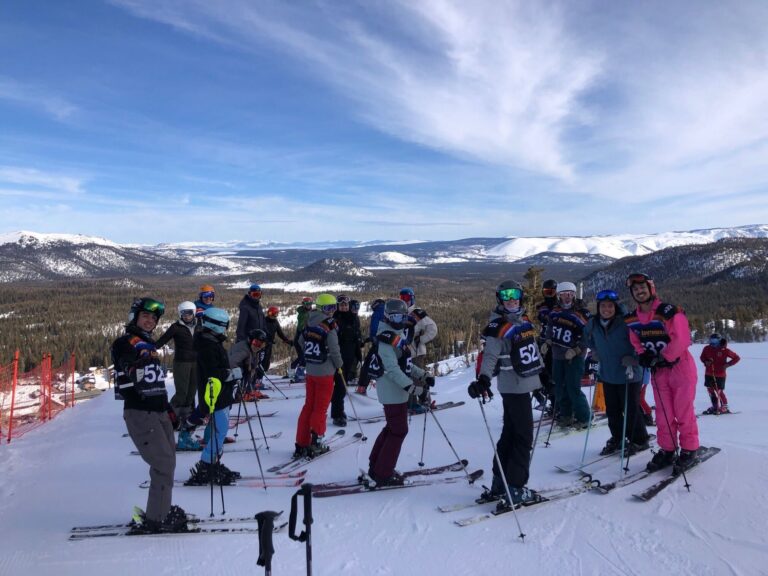
The Davis Alpine Ski and Snowboard Club is looking forward to nationals this month
By FAITH DEMEULENAERE — features@theaggie.org
The Davis Alpine Ski and Snowboard (DASS) competition team’s recent performance at the regional championships is a shining example of how the power of hard work, perseverance and teamwork can bring home a win.
On Feb. 20 and 21 in Mammoth Lakes, California, DASS went head-to-head with other collegiate club teams in a slalom and giant slalom race, which consisted of sharp turns around obstacles down a steep hill.
DASS placed first in men’s ski giant slalom, second in men’s ski slalom, second in women’s snowboard giant slalom, third in women’s ski giant slalom and slalom and took home almost every ranked place in rail jam, a timed run on a rail course judged by best overall and best trick.
After a successful first day at the race, the second day was full of high-speed winds. Lauren Bryant, a third-year human development major, snowboards for the DASS team and raced for her first time at regionals this year. Bryant said regionals were “stressful with a storm coming in.” However, the DASS team prevailed and brought home some high scores.
“Shredding” like this cannot be done without practice, but members of DASS all prepare differently for the races. Some try not to think about it too much, like Preston Longley, a fourth-year genetics and genomics major, who said his routine consists of “intensive sleep and a bagel.”
Others, like Justin Wallasch, a fifth-year managerial economics major, have tight rituals.
“I have been racing for around 20 years, so I’ve definitely got a routine down,” Wallasch said. “It consists of a lot of boot skiing and leg swings to keep me warm and my muscles active when waiting before a race. I don’t like to overthink a course, so I try not to focus too much on the race before I go. I think it’s important to have a clear and good headspace.”
DASS Team Captain, Yaz Wadhwani, a fourth-year neurobiology, physiology and behavior major, has been a member of DASS for four years. Though she sadly could not race due to medical reasons, she helped the UC Davis team prepare in every other way she could.
“Skiing is my absolute favorite thing to do, and although I can no longer race, there’s nothing like being on the mountain to support my team,” Wadhwani said. “For them, I make sure I have a backpack with a fully-stocked medical kit, a radio down to base, a full water bottle and extra race bibs. At regionals this year, I had to give out my poles and gloves to my team when theirs got stolen. After the race, I’m the last down the mountain and carry all the jackets my team left behind when they ran the course.”
Wadhwani said she thinks that the most important part of a race is that everyone is comfortable and has as much fun as possible.
DASS collectively expressed that they cheer each other on, even when the racing gets tough. Bailey Sokol, a second-year political science and economics double major, said she’s excited to go to nationals with her team and “will always help others try to improve their racing abilities and always cheer on [her] teammates while racing.”
Though teamwork and skill are essential to the DASS team, it is quite an expensive hobby due to all of the equipment and travel necessary to compete. Currently, the team is fundraising through GoFundMe to help send members to nationals.
The club’s success at the regional championships is a testament to the dedication and perseverance of these student-athletes. Through hard work, teamwork and love for the sport, they overcame the harsh weather and brought home high scores.
But the team’s achievements extend beyond just the race course. For the DASS team, snow sports have the power to bring people together and foster personal growth. Members say that skiing and snowboarding are more than just hobbies; they are passions that they’re willing to work hard for and invest in. With nationals on the horizon, which will be held on Mammoth Mountain in California from March 6 to 11, the team is looking forward to representing UC Davis with pride. With the support of their fellow students and the wider community, they’re sure to achieve great heights.
Written By: Faith DeMeulenaere — features@theaggie.org

With future public health crises potentially on the horizon, public trust in science needs to be restored
By THE EDITORIAL BOARD
Almost three years ago on Mar. 11, the World Health Organization (WHO) declared the COVID-19 outbreak a global pandemic, and just last week, Gov. Gavin Newsom announced the end of California’s COVID-19 State of Emergency. With an official ushering in of a return to normalcy, public discussion of the origins of COVID has begun in the U.S. House of Representatives, even raising the possibility that the virus was human-made and leaked from a lab in Wuhan, China.
However, some doctors invited so far to testify at the hearing have been hesitant to support this lab-leak theory without any conclusive evidence. They have so far maintained that the origins of the virus came about naturally by chance since many highly infectious variants evolved from the initial strain after spillover to humans from bats.
Yet, continued skepticism from the government officials leading the hearings has steered what should be a purely scientific discussion towards one that is politically charged. The U.S.-China relationship has already been strained with the recent UFO events, and despite these political tensions, it’s important to put the well-being and best interests of the country first by scientifically understanding the origins of the virus.
This mistrust among political leaders, health professionals and the public is a persistent problem — one that is often considered a contributing factor to the U.S.’s poor public health response and management throughout the pandemic. The conflicting information surrounding health guidelines by the government combined with misinformation espoused by anti-vaccination movements only exacerbated the distrust of science.
Furthermore, Asian American Pacific Islander (AAPI) communities suffered repercussions amid prevailing racist, xenophobic sentiments egged-on by former President Donald Trump when he labeled COVID the “Chinese Virus.” Since the start of the pandemic, there have been over 9,000 reported incidents of anti-AAPI hate. To put it in different terms, between 2020 and 2021, hate crimes against Asian Americans rose 339% nationally. Those in the House should keep these numbers in mind when investigating the origins of the virus and ensure that they are not reaching conclusions prematurely.
It’s clear that the pandemic was mishandled on a national scale; over 300,000 deaths out of the one million from COVID-19 recorded in 2022 could have been prevented (which does not account for the additional deaths due to anti-AAPI hate).
So will the U.S. government learn from its mistakes during the COVID-19 pandemic?
Trust and bipartisanship in scientific discussions are more important now than ever with the rampant avian influenza virus H1N5 that has affected over 55 million birds. Spillover to mammals like minks has already been observed, and an 11-year-old girl in Cambodia died after her father was infected with a variant of H1N5 that was different from the strain circulating among birds in the U.S.
While there is no evidence of human-to-human transmission and the risks of infection by the current bird flu virus are low, we can’t yet rule out the possibility, as much as we would like to ignore it.
Complex scientific phenomena like COVID-19 and climate change are unpredictable and often require significant research and preparation to combat. Delayed initiative on climate change policies, for example, has led to extreme weather events and irreversible changes to the planet. It can be similarly said that the U.S.’s slow public health response during the pandemic worsened the situation and led to detrimental consequences that could have been avoided.
History may repeat itself if the U.S. follows on a trajectory of hesitancy in addressing H1N5. Given the highly infectious and severe state of the avian flu in bird populations, the government’s approach to policy surrounding the virus should be bipartisan and guided by experts.
While it is important to investigate the origins of COVID in order to prevent future pandemics, U.S. government officials should also prioritize collaboration with scientists and other countries to develop robust, preventative measures against future public health emergencies based on scientific evidence now. They need to be transparent about the process and, more importantly, let the science and experts inform and educate the public.
Written by: The Editorial Board
ASUCD SB #72, which would require antisemitism training for the ASUCD Senate table, was tabled due to concerns about the organization providing the training
By LILY FREEMAN — campus@theaggie.org
ASUCD Senate Bill #72, which, according to the bill language, would require antisemitism training for members of the Senate table, was introduced and subsequently tabled indefinitely at the March 2 meeting. The bill was authored by Senator Jacob Klein, who explained that his experiences with antisemitism led to the creation of the bill.
“Antisemitism often comes from well-meaning individuals who do not realize how their language is problematic,” Klein said. “This fundamental lack of awareness results in antisemitic tropes, such as dual loyalty and the misrepresentation of Jewish people as being too powerful. In my eight weeks as an ASUCD senator, I have faced both of these vile tropes.”
Klein went on to say that he would like to believe that none of this conduct toward him was intentional, and because of this, he believes that the only solution is education.
If it had been passed, the training would have required all ASUCD Senate members to attend an hour-and-a-half training that covered topics related to antisemitism, according to Klein. The training would focus on the Jewish identity and experience, historical and contemporary manifestations of antisemitism and antisemitism on college campuses.
Prior to the introduction of SB #72, according to Klein, the bill was passed by the External Affairs Commission and the Gender and Sexuality Commission. However, the bill was rejected twice by the Ethnic and Cultural Affairs Commission (ECAC).
Gabriel Gaysinsky, a second-year international relations and Middle Eastern/South Asia Studies double major and an ECAC commissioner, was one of two ECAC commissioners who voted in favor of SB #72 out of nine total. Gaysinsky spoke about various occurrences of antisemitism at UC Davis, which he said justifies the necessity for ASUCD antisemitism training.
“The rockets fired […] towards Israeli civilians were gleefully drawn on the UC Davis quad last month,” Gaysinsky said. “Jewish and Israeli groups on campus have been shouted down and verbally harassed, with our events at times being shut down out of fear for our safety. This all works in tandem with […] the banners displaying antisemitic messages in the summer and swastika graffiti in the fall make the campus an extremely unsafe space for its Jewish students.”
Once SB #72 reached the Senate floor, it was tabled. According to Klein, this was due to unforeseen issues with the organization that was going to run the training, the Academic Engagement Network (AEN).
Interim Senator Shrey Gupta discussed these issues and his reasoning for wanting to table the bill.
“AEN as an organization is not the right choice for UC Davis,” Gupta said. “I don’t have the specifics on hand, but it was revealed they were tied to or receiving funding from the Israeli government. Working with an organization with such a partisan stance in world politics opposes the beliefs of our Palestinian students, which wouldn’t be a very good thing.”
Gupta outlined that the goal now is to find an organization to conduct the training that does not take a stance on the matter, in order to present all perspectives.
Now that SB #72 has been deliberated on and tabled, Klein said that he is currently working on re-submitting the bill with a different training organization.
Klein concluded with his final thoughts on the need for antisemitism training through this bill.
“People should be aware of the impact of their words and of what, historically, these sentiments have resulted in,” Klein said. “Ultimately, having an hour-and-a-half training can cover a lot of these nuances and a lot of these miscommunications to make sure that in the future we all have enough of an understanding to move forward together.”
Written by: Lily Freeman — campus@theaggie.org

©2021, ASUCD. Designed by Creative Media.