58.6 F
Davis

Davis, California

Monday, December 22, 2025
Home Blog Page 171

To tip or not to tip

The social phenomena that has people doubting their own morality


By MAYA KORNYEYEVA — mkornyeyeva@ucdavis.edu


You’re standing at a counter, waiting to pay for your large iced chai. The price totals to $5.50, and you shrug off the nagging voice telling you to go make your own chai to save money.

The barista smiles at you, prompting you to insert your credit card. You do so and wait, only to realize your payment isn’t going through… there’s a question on the screen. It asks, “Add a tip?” Suddenly, your world implodes.

You can’t figure out what to do. On the one hand, you’ve got to look out for yourself: there’s no denying you’re broke. On the other hand, what’s an extra dollar if it helps the barista earn a liveable wage? You sigh, knowing that you would feel guilty the rest of the day for not leaving a tip, and click the suggested 15%.

This social concept of tipping is an immense part of the restaurant and service industry. There’s something morally ambiguous about tipping; it is not technically mandatory, but many companies structure their wage systems in such a way that not tipping would essentially be taking money from the servers. Many restaurant staff have hourly wages of just $2.13, relying on luck and generous tippers to make ends meet.

Thus, it seems to me that the very convention of tipping raises ethical questions and is, in itself, exploitative. Relying on a customer’s kindness is a stressful and unstable situation for a minimum wage worker to be in, since multiple factors affect tipping, including the customer’s mood, the server’s behavior, the atmosphere in the restaurant and even the weather.

It is also important to consider the financial situations of buyers — many are already stretched thin and can’t afford to tip, leaving them feeling as though they committed an immoral action when unable to.

As a minimum-wage barista myself, tips are definitely a substantial part of my income. However, I sympathize with the pressure that is felt by customers. Online and credit card tipping in particular is a relatively new development and is harder to avoid than simply leaving a few coins in the tip jar. Moreover, there’s an added psychological weight of the barista or server watching you “skip the tip.”

In our current economic climate, prices for consumer goods are steadily rising, and with it, the inability of many individuals to tip. I argue that now, more than ever, we need to refine or completely eliminate the tipping system, modifying wages to remove workers’ dependence on freely given bonuses. It is a reality that there exists a “tipping bias;” men are generally tipped more than women, and white individuals more than minorities. There’s also a bias in terms of beauty and aesthetic appeal. 

Removing the tipping practice can also hold employers accountable. Rather than depending on the customer to pay their staff — a concept that is neither fair to the customer nor to the employee — restaurant management should pay a liveable wage from the get-go.

Many other countries have successfully achieved this standard; in fact, there is quite a culture shock for many foreigners who visit the U.S. and are asked to leave a large tip. For example, a customary tip of just 5-10% is all that is necessary in the Netherlands and Portugal. Other countries like Singapore and Japan include gratuity costs in the bill, with a tip considered unnecessary and even impolite.

At the end of the day, there’s a lot to be explored within the tipping practice. Tipping affects us in innumerable ways, making us question the philosophical concepts of duty and obligation and feel a form of psychological dissonance created by being put on the spot. I firmly argue that tipping has negative consequences on consumers and employees and only a few positives that can easily be replicated through the installation of a fair wage.

So when you’re at the counter waiting for your iced chai or thanking a restaurant worker, keep in mind that, while tipping is currently customary, it doesn’t have to be. Large-scale reform and a joint effort from both minimum wage earners and consumers is necessary to create a more equitable compensation system.


Written by: Maya Kornyeyeva — mkornyeyeva@ucdavis.edu

Disclaimer: The views and opinions expressed by individual columnists belong to the columnists alone and do not necessarily indicate the views and opinions held by The California Aggie.


UC Davis and Chile leaders sign agreement for collaborative agricultural research

The agreement seeks to strengthen academic collaboration through the exchange of research findings


By SYDNEY AMESTOY — campus@theaggie.org

UC Davis and the Chilean Ministry of Agriculture signed an agreement on Jan. 26 that seeks to strengthen the collaboration between the school and the Republic of Chile in terms of agricultural development and research, according to a press release.

The agreement was signed by Chancellor Gary May and the Minister of Agriculture of Chile Esteban Valenzuela in Santiago, Chile at a conference put on by the UC Davis Chile Life Sciences Innovation Center (UC Davis Chile), according to the release. The agreement seeks to encourage collaboration between the entities through the exchange of research findings.

Executive Director of UC Davis Chile Dario Cantu said that he currently works closely on the research conducted through the center and believes the agreement will only strengthen the connection between UC Davis and Chile.

The agreement signed […] is meant to strengthen and formalize the already close collaboration with the Chilean government in areas that are of priority for both UC Davis and Chile, such as climate change, drought, development of rural areas and farmers’ wellbeing, sustainability and technological innovation, among others,” Cantu said.

This is not the first time an agreement of this nature has been signed between UC Davis and a Chilean entity. In 2017, UC Davis Chile signed a collaborative agreement with the Universidad del Desarrollo in Chile. 

“[UC Davis Chile] facilitates the exchange of knowledge and expertise from California, which is highly relevant to Chile due to their similarities in terms of geography, climate, industries and universities,” Cantu said. “We work closely with Chilean government agencies, universities and industry partners on a range of projects, such as, for example, pest and disease control, development of bioproducts to improve plant health and productivity, improved water management practices, environmental quality monitoring and conservation and development of extension programs in viticulture, fruit production [and] irrigation management.”

UC Davis Chile opened in 2015 with the sponsorship of the Chilean government, after a long history of previous collaboration, according to Cantu. 

“UC Davis has a long tradition of working closely with institutions in Chile, which probably started in as early as in the 1960s when several Chilean students studied agronomy and related fields enrolled in UC Davis and later made significant contributions to the modernization of Chilean agriculture,” Cantu said.

Written by: Sydney Amestoy — campus@theaggie.org

Print vs. Digital

Is print still preferred in a digital society?


By EMILIE BROWN — emrbrown@ucdavis.edu


The debate between books and textbooks in either print or digital format has been a hot topic for quite some time, especially in academic circles. While some students prefer to stick with traditional print, others find the convenience of a digital format to be a better fit for their needs. So which format is better? Should we be heading to Shields Library or praising Top Hat and Canvas Bookshelf?


The argument for print:

I’ve noticed two main arguments when discussing the benefits of print. One: a print textbook makes it much easier to write in the margins, highlight and mark and review the information. And two: studies have shown that we are able to focus better when reading print. When you sit down at a laptop to read a textbook, you’re fighting email notifications, Discord messages, Netflix temptations and more. But if you are looking at the book in front of you, for the most part, you’ll only be focusing on the reading. Additionally, print textbooks save us the eye strain of staring at a computer for hours. 


The argument against print:

Print books are cumbersome and expensive. No one wants to carry around a hefty 1,000-page textbook all day while walking and riding between classes. Printed textbooks are also usually expensive to buy new, and when you’re taking three to four classes in a quarter, textbook costs can add up fast. It’s true that we can borrow our textbooks from the library or rent them instead, but I’ve noticed that in most cases, those options are still more expensive than their digital alternatives.


The argument for digital:

Digital-format textbooks offer easy access. With e-books, you can read anywhere and at any time, as long as you have a laptop or smartphone. And with UC Davis’s Equitable Access option, you don’t even have to download or find books; they are already uploaded on Bookshelf, connected to Canvas. Digital textbooks are also more sustainable because they do not require all the paper, ink, tools and shipping resources that print textbooks need.


The argument against digital:

Some e-books can be hard to interact with, making it difficult to review the material and understand it. Studies have shown that reading digital-format textbooks can lead to increased eye strain, headaches and sleep issues, and students usually end up distracted, multitasking and scanning the material rather than reading it. According to the same study, 85% of the tested students were more likely to multitask when reading in an online environment. In comparison, only 26% of students multitasked when reading print. From this, it seems that it can be harder for students to focus when they use digital-format textbooks. 


In the end, using print textbooks or digital ones really comes down to individual preference. Personally, I love flipping through the old pages of textbooks and being able to focus on what I’m reading without being distracted by my laptop. However, both sides have convincing arguments, and students should weigh the pros and cons of each format before choosing which best suits their learning needs.


Written by: Emilie Brown — emrbrown@ucdavis.edu


Disclaimer: The views and opinions expressed by individual columnists belong to the columnists alone and do not necessarily indicate the views and opinions held by The California Aggie.
Graduating senior class plans to install mental health awareness mural

The mural will serve as an opportunity for the class of 2023 to leave their mark on campus and encourage mental health advocacy


By LILY FREEMAN — campus@theaggie.org


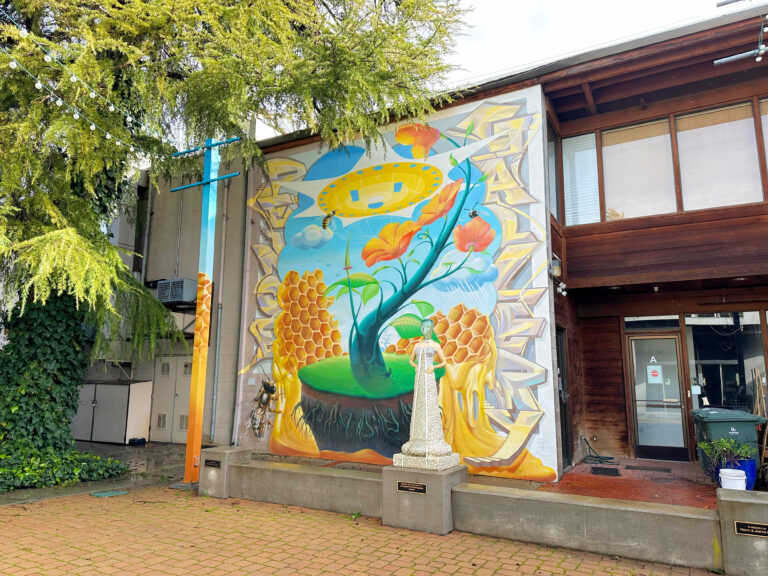
Aggies Helping Aggies — also known as the UC Davis Student Foundation — in partnership with Aggie Mental Health, has challenged members of the class of 2023 to make a donation of $20.23 to fund their “Murals for Mental Health” project. According to the initiative’s Crowdfund website, Murals for Mental Health is this year’s opportunity for the UC Davis graduating class to leave a lasting mark on campus through the installation of a public art mural that promotes mental health awareness

Barry Nguyen, a fourth-year biochemistry and molecular biology double major and the president of Aggies Helping Aggies, described the project.

“Every year, we launch a senior class challenge, where we challenge the graduating class to donate to a cause that they are passionate about,” Nguyen said. “This year, we are partnering with Aggie Mental Health to tackle the issue of poor mental health.” 

According to Nguyen, the mural is set to be painted on the Sprocket bike and pedestrian tunnel, located near the intersection of the ARC and the University Credit Union Center, which thousands of students pass through daily.

Chelan Tolentino, a third-year economics major and the finance and allocation chair of Aggies Helping Aggies, talked about her passion for mental health awareness.

I’ve seen how the COVID[-19] pandemic affected students,” Tolentino said. “Like many of my peers, my mental health declined drastically due to the pandemic. Mental health is super important, as it affects our overall health greatly.”

Tolentino went on to explain why working on the Murals for Mental Health project has been important to her.

With this project, I’d like to raise awareness on mental health and how it makes such a difference in someone’s life,” Tolentino said. “Personally, art helps draw me into a part of my mind that sort of allows me to forget about the stressors in my life. It’s relaxing in some way. Through this mural, I want students to receive the message that we’re all in this together and that they’ll be able to find support and comfort.”

Shannon Yi, a third-year food science major and the marketing and stewardship committee chair of Aggies Helping Aggies, shared similar thoughts.

“To me personally, the Murals for Mental Health project represents the acknowledgment and initiative to support the mental well-being of our UC Davis community and beyond,” Yi said. “Similar to how taking in my surroundings gives me a breath of fresh air from stress and pressure, taking in the beauty of this public art mural would also be a calming presence.” 

According to the Crowdfund website, Aggies Helping Aggies has worked to raise $3,500 for the creation of the mural. Senior class donations are being accepted through Feb. 28, after which Aggies Helping Aggies will begin to take the next steps toward the final design process and painting of the mural. As of February 26, the initiative had raised $1,096.

Nguyen concluded with his final thoughts on the impact he hopes that the mural will have on students.

“We hope this mural will serve as a therapeutic instrument for students going through poor mental health and normalize mental health discussions,” Nguyen said. “It will bring awareness to such a prevalent matter plaguing not only UC Davis students, but students nationwide.” 

If you want to donate to the project, you can do so on their website until 11:59 p.m. on Feb. 28. 


Written by: Lily Freeman — campus@theaggie.org

Review: ‘Severance’ is an interesting thought experiment from the mind of Dan Erickson

The show provides an example of how avoiding problems can backfire 


By RUMA POUDELL — arts@theaggie.org


Content warning: This article mentions suicide, which some readers may find distressing.  


Dan Erickson’s 2022 science-fiction and psychological-thriller TV series follows the lives of people who have surgically divided their brains into parts to separate professional work from personal life. “Severed” individuals essentially lead two lives — that within work and that outside of work.

Balancing life is the main driver behind the idea of severing oneself. Once individuals undergo the surgery, they no longer have to recollect what goes on in their work life when they are off duty, or, when working, who they are outside of work. 

This creative thought experiment poses an interesting question: would you want to be completely oblivious to parts of your life if it meant possibly enjoying each part more in the moment?

Personally, since work takes up such a big chunk of our lives, I wouldn’t want to remain unaware of what goes on there — especially if I don’t know what exactly it is that I’m doing. On the other hand, if you despise work or have a troubled home life, there may be a logical reason to become severed. For example, the series’ main character, Mark, became a severed worker in order to get a break from grieving the loss of his wife while on the job. 

The series begins with Mark training a newly hired and severed employee named Helly. She wakes up on a table discombobulated and soon realizes she doesn’t know who she is or what her name is. This is the beginning of her “innie’s” life — “innie” refers to the individual she is within work. 

Upon realizing that she is stuck at work for life, Helly’s innie immediately looks for a way out. She writes letters to her “outie” (the version of herself outside of work), relentlessly looks for an escape out of her job’s buildings and even attempts suicide. 

What I loved most about this show was its absolute eeriness — from the intro video, shots of characters trapped in buildings and experiencing their world melting, to an alarmingly bizarre dance of animal-headed strippers toward the end of the first season. 

As the show unfolds, we gain insight into each of the main severed employees as they slowly realize their lack of personal autonomy. This realization results in a struggle between boss and employees, but the struggle isn’t necessarily a physical, violent war. Instead, the severed employees devise a plan to connect with their outies, and viewers are left on the edge of their seats by the end of the season as they learn more about the lives of each character outside of their work. 

I remember the moment my jaw first dropped while watching the series — when Ms. Cobel, another prominent character on the show, realizes Mark’s innie has taken over. If you haven’t watched the series yet, there are plenty of jaw-dropping moments like this to digest in its short, nine-episode runtime. 

The most important takeaway from the show is that severing one area of life from another won’t necessarily serve as a repellent for problems that arise in each respective area. “Severance” has been confirmed for a second season, so now is a good time to begin watching if you haven’t already.


Written by: Ruma Poudell — arts@theaggie.org


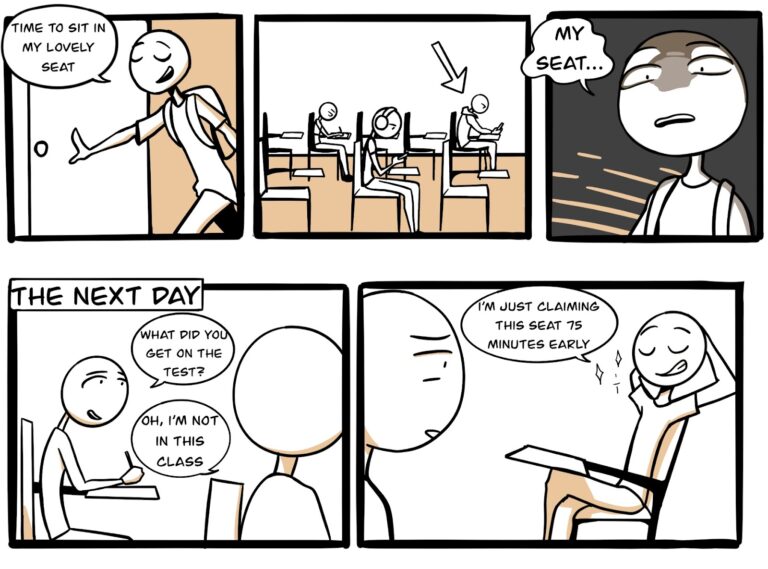
Seat Stealing

Drawn by: Lidya Shcherbakova –– lvshcherbakova@ucdavis.edu

Disclaimer: (This cartoon is humor and/or satire, and its content is purely fictional. The story and names of “sources” are fictionalized.)

Are TikTok challenges to blame for increases in vehicle theft throughout Yolo County?

0

Davis law enforcement cites a TikTok challenge as the reason for increase in vehicle theft, but students are divided over whether the social media app is responsible


By ANTHONY W. ZAMMIKIEL  — city@theaggie.org 


Law enforcement authorities in Yolo County have cited a TikTok challenge from the summer of 2022 as a possible reason for the increase in thefts targeting Kia and Hyundai vehicles. This comes as law enforcement nationwide has reported increases in vehicle theft, with similar comments being made about how this trend originated from the TikTok content creator, Kia Boyz. 

Videos on the popular social media app showcase how specific models of Kia and Hyundai vehicles are more vulnerable to vehicle theft. The original videos published by Kia Boyz, which are now unavailable, feature the content creator teaching viewers how to easily break into cars or steal their parts. 

However, despite local law enforcement agencies citing the TikTok challenge as being the inspiration for some of these thefts, Davis students remain divided over whether the increase in theft can be attributed to the challenge.

Fourth-year student Will Roberts said that considering how many videos are still publicly available on the social media app, those content creators could be responsible for providing inspiration for the criminal activities being committed here in Davis.

“You just have to type Kia Boyz into your TikTok feed, and there you go, you have all of these videos which pop up of people doing the same thing,” Roberts said. “And there aren’t any restrictions on these videos at all. […] That information being publicly available is really a big problem.”

However, other students disagree. Mia Kim, a third-year student, said that there are other factors law enforcement should consider when investigating the crimes and what their motivations were.

“There may have been a few incidents that you could rightly attribute to this ‘TikTok challenge’ from last summer,” Kim said. “However, it is not likely that the police could sit down and say, ‘Hey, with all the evidence we have on these thefts, we can unequivocally say that this challenge was to blame.’ I think there should be some restraint in all the news about how TikTok challenges are responsible for all these things going on across the country, and instead really wait and see what are the reasons behind all the thefts that have been going on.” 

The Davis Police Department operates an online feature called Citizens RIMS that shows the latest reports on criminal activities in the city. On the website, the Davis Police Department has a section dedicated to stolen vehicles, which lists important information about the vehicles that have been stolen, including the date when the vehicle was stolen.

“If you see any of the stolen vehicles listed on this page DO NOT TAKE ACTION YOURSELF,” the Police Department states on the website. “Contact the Davis Police Department at 530-747-5400. If the vehicle is occupied, call 9-1-1.” 

If you have information concerning Yolo County car thefts, the Yolo County Sheriff’s Office recommends calling 530-668-5248 to report any suspicious or criminal activity that you witness and 911 if there is an emergency. 


Any individual in the Davis community who has information on any incident of vehicle theft is encouraged to contact local law enforcement with the information provided above. 


Written By: Anthony W. Zammikiel  — city@theaggie.org


Go check out the Saturday Art Market

The 3rd Street market is a wonderful display of Davis’s artistic community


By YASMEEN O’BRIEN — yjobrien@ucdavis.edu


A stroll through the Saturday Art Market is a feast for your eyes, ears and soul. Jewelry glistens in the early sunlight and intricate art pieces adorn tables and boards. Vendors smile warmly at the passersby, hoping their items will be intriguing enough to warrant a sale. The crowded sidewalk is filled with sounds of inviting conversations, laughter and music. 

The Art Market is community-organized and self-sustaining. It runs from 10 a.m. to 2 p.m. every Saturday at the corner of 3rd and B St., where UC Davis students and community members alike come together to sell a large variety of items, usually created or sourced by the vendors themselves. This includes things like clothing, jewelry, pottery, prints, knitwear, shoes, tote bags and much more. You can even have your future told in a tarot card reading. 

It started out with just a few friends selling their art on the street and has grown to be an important part of our town’s Saturdays. Depending on the day — and weather —  it spans anywhere from one to three blocks of vendors’ tables. This informal setting allows Davis students and community members to meet fellow artists, make some money and support their passions.

What makes it stand out from similar markets, such as Sunday’s Vintage Fair, is that there’s no one to ask permission from: the vendors are not required to pay or sign up in advance. No matter who you are or what you’re selling, the art market welcomes you with open arms. 

This has, unfortunately, led to some controversy. The Davis Business Association threatened the market due to complaints from the local businesses and Saturday’s Farmers Market, which concerned many Art Market artists and vendors. However, California State Senate Bill 946 (SB-946) protects vendors selling on sidewalks, which means that the city does not have a right to shut down the market.

The Art Market is about finding a creative community that will support you. Its vibrancy comes from the lack of formal organization and the fact that it happens simply because people decide to come. It is not about the profit; it’s about celebrating creativity and building community.

So go check it out this Saturday! You won’t regret it. I’m sure that the experience will encourage you to meet new friends and local artists and learn more about the Davis community. You might even find that one-of-a-kind piece you’ll cherish forever.


Written by: Yasmeen O’Brien — yjobrien@ucdavis.edu


Disclaimer: The views and opinions expressed by individual columnists belong to the columnists alone and do not necessarily indicate the views and opinions held by The California Aggie.



California’s roads are consistent source of mountain lion mortality

Report from UC Davis calls for more wildlife crossings and mountain lion-safe road projects


By LILLY ACKERMAN — science@theaggie.org 


A recently published California Wildlife-Vehicle Conflict Report from the UC Davis Road Ecology Center showed that vehicles kill mountain lions at least one to two times per week in California. 

Unlike previous wildlife-vehicle conflict reports from the center that covered all California wildlife, this year’s report focused specifically on mountain lions. It includes maps of mountain lion mortality across the state’s highways and explores regional issues that might make some areas more dangerous than others. 

According to Winston Vickers, a veterinarian with UC Davis’s Wildlife Health Center, Orange County’s mountain lions for example are most at risk for being struck on medium-sized roads, rather than large freeways or small country roads, due to the county’s infrastructure.

“We have some toll roads in Orange County that were the dominant area where mountain lions would get killed,” Vickers said. “[T]he toll roads were in that bad place where they were not so busy that the mountain lions didn’t try to cross [at all], but they were just busy enough.”

Roadkill has consistently been a cause of death for mountain lions and other California wildlife. However, according to Vickers, significant mountain lion mortalities also come from livestock owners, who obtain permits to shoot mountain lions to prevent them from killing other animals. 

“Vehicle strikes have always been — at least in part of our study area, the Santa Ana Mountains — the No. 1 cause of death, causing around half of all the mortalities of collared mountain lions,” Vickers said. “Also, a lot of mountain lions there were lost to depredation permits — when mountain lions would kill livestock. So the two together were pretty substantial causes of death.”

The report’s five main talking points explain the frequency of mountain lion fatalities via collisions with vehicles, as well as the threats to mountain lion populations that these killings pose, especially in hotspots like Southern California and the Bay Area. 

“Southern California has deservedly received the lion’s share of focus for conservation of the puma [mountain lion],” the report reads. “Despite the recent ground-breaking for the Wallis-Annenberg wildlife over-crossing, many other highways in the region need similar structures and, as importantly, fencing to prevent mortality and increase connectivity.”

Besides mountain lion mortalities caused directly by vehicle collisions, roads also pose threats to populations’ genetic diversity. Busy, loud freeways usually deter mountain lions from even attempting to cross, keeping small populations separate from one another. 

“Quite a few [populations of mountain lions] are [isolated] in California,” Vickers said. “There are 10 documented separate genetic populations, and several of them […] are definitely isolated enough to be suffering potentially from some inbreeding effects.”

Consistent killings from vehicle collisions, coupled with reproductive isolation caused by roads, pose a significant risk for California’s mountain lion populations into the future. More research is needed to encourage funding of mountain lion-safe road projects and wildlife crossings that address both of these obstacles.

“For those projects proposed or under construction in mountain lion habitat, wildlife crossings and fencing should be included in project planning and implementation, or the projects should be avoided,” the report reads. 

Vickers hopes that continued research and reports on mountain lions will raise awareness to the public that substantial action needs to be taken to protect these animals. 

“I think the biggest impact is increasing the realization on the part of the public that these animals […] are not okay,” Vickers said. “And we actually could lose some of these groups, especially in the smaller mountain ranges.”


Written by: Lilly Ackerman — science@theaggie.org

LeBron James breaks NBA all-time scoring record

0

Recapping a historic night and fans’ reactions to one of the biggest milestones in NBA history


By PATRICK FIGUEROA — sports@theaggie.org


On Tuesday, Feb. 7, LeBron “King” James and the Los Angeles Lakers were set to play against the Oklahoma City Thunder at the Crypto.com Arena. James needed 36 points to break the NBA all-time scoring record, previously held by Hall of Fame center Kareem Abdul-Jabbar with 38,387 points. It would take a great performance from James if he wanted to break the record that night, and fortunately for fans, it was a special night for the 38-year-old small forward from Akron, Ohio. 

James scored eight points in the first quarter, but he began to pick up the tempo quickly, scoring 12 more points in the second quarter. He needed 16 points in the second half to break the all-time scoring record. The third quarter was his best — he scored 15 points with 30 seconds still remaining in the quarter. With the crowd screaming his name and 10.9 seconds left in the third quarter, LeBron shot his signature post fadeaway 14 feet away from the basket and made history

After 20 years in the NBA, James accomplished a feat that many thought was impossible. Upon doing so, the officials stopped the game for a ceremony to honor the historic moment. During this ceremony, Abdul-Jabbar handed James the basketball that James had broken the record with to symbolize the passing of a torch. James also took a moment to speak to the Crypto.com Arena crowd and the national audience on television. 

“I just want to say thank you to the Laker faithful,” James said. “You guys are one of a kind. To be able to be in the presence of such a legend and great as Kareem, it means so much to me. It’s very humbling.” 

He took the time to thank his family, friends and anyone who had been on the journey with him for the past twenty years. He also thanked the NBA, its commissioner Adam Silver and the previous commissioner, the late David Stern. He ended his speech by acknowledging how unreal the moment was. 

“I would never ever in a million years dreamt this even better than what is tonight so […] thank you guys,” James said before he left the microphone.

Since James entered the league in 2004, he was expected to be the heir to Michael Jordan as the greatest player of all time. The pressure and high expectations to be the best ever began in St. Vincent-St. Mary High School, where he was dubbed “The Chosen One.” While the debate about who the greatest basketball player of all time is continues, there is no doubt that LeBron has surpassed even the lofty expectations set for him. Since he was drafted by his hometown team, the Cleveland Cavaliers, in 2004, LeBron has accomplished many impressive accolades.

My favorite LeBron moment is ‘The Witness’ buzzer beater over the Orlando Magic in the 2009 Eastern [Conference] finals,” said basketball enthusiast Myles Roach. “That’s one of my earliest basketball memories, and I remember screaming when his three-pointer went down.”

“The easy answer is the 2016 Finals; that was historic, but I would go with game one of the 2018 Finals against the Warriors,” Omar Navarro, an NBA fan and previous sports editor for The Aggie, said. “The game gets overshadowed because of what happened with JR Smith at the end of regulation and because the Cavs lost, but that might be the best game I’ve ever seen any basketball player play.”

James already broke the NBA record for most combined points in the regular season and playoffs, as well as the all-time playoff scoring record, and his incredible performances in playoff games are definitely a highlight of his career. For instance, he averaged 34 points, 9.1 rebounds and nine assists per game during the Cleveland Cavaliers’ 2018 playoff campaign. He was also integral to one of the most iconic plays in NBA Finals history: a chase-down block in game seven of the 2016 NBA finals that propelled the Cavaliers to win the game and complete an unfathomable 3-1 series comeback. 

James has also made a significant impact off of the basketball court as an activist. He founded the ‘I Promise School’ Foundation in his hometown, Akron, Ohio, to serve at-risk, inner-city children.

“I think his impact off the court is something that will also be talked about a lot by the time he retires,” Navarro said. “Whether it’s his foundation or just how outspoken he is, he’s been as involved as any athlete we’ve seen. We’ve seen him make such an impact, and I think that’s something we can’t take for granted either.” 

“LeBron’s ‘I Promise School’ is probably the best thing I’ve seen a professional athlete do outside of their profession,” Roach said. “LeBron is using his immense wealth to help children from the community have access to a fully-funded school education with support for families in need.”

Almost as soon as LeBron broke the scoring record, NBA fans began to discuss whether it could be broken again. While the answer is uncertain, there is speculation that if LeBron continues to play for a few more years, the record might become untouchable. 

“I think as close as I can get to 100% without fully guaranteeing it,” Navarro said. “[The] only reason I’m not saying it’s a certainty is because I’m sure when Kareem retired they felt that it was never going to get broken. But I feel confident saying, by the time LeBron retires, he’s going to get it high enough that it’ll take something incredible to ever break the record again.” 

Roach disagreed — though he did acknowledge that depending on how long Lebron continues to play for, it could become impossible. “I think the record will be broken, but it will take a player that matches at least some of LeBron’s longevity with a shot profile centered around threes and free throws. However, I think it’s also very possible LeBron defies father time and plays five more years making his scoring record unimpeachable.”  

Even if the scoring record is broken again, James reminded everyone that he is a generational talent. With unprecedented longevity, he has the opportunity to continue adding to his legacy during this season and beyond. One can only wonder what he will accomplish next as the “King” continues to solidify his legacy as the best ever. 


Written by: Patrick Figueroa — sports@theaggie.org


La comunidad de Davis muestra apoyo para niñxs transgénero después de un evento local de un autor

La Universidad de Padres de Davis organizó un evento en línea que recibió protesta y reacciones; la comunidad respondió con apoyo para personas de género expansivo


Por CHRIS PONCE — city@theaggie.org

Traducido por JOSÉ HERNANDEZ

Advertencia de contenido: este artículo contiene discusión sobre la transfobia. 

Read this article in English.


El 11 de enero, La Universidad de Padres de Davis (DPU) por sus siglas en inglés organizó un evento presentado el coautor de “El niñx transgénero,” Rachel Pepper. El libro fue escrito como una guía para padres, familias y educadores quienes están tratando de apoyar y entender los niñxs que son transgénero, no-binarios, no binarias y de género expansivo. El evento fue originalmente programado para llevarse a cabo en persona pero fue cambiado en línea debido a preocupaciones de seguridad. 

Jenny Canfield es la copresidenta de la Universidad de Padres de Davis. Ella dijo que la organización, la cual fue fundada hace 14 años, tiene el objetivo de proteger a todos los niñxs y su educación.  

“La misión de DPU es otorgar excepcionales lecciones y programación a la comunidad de padres de Davis, cuidadores, maestros y administradores,” Canfield dijo. “Nos esforzamos en ayudar [Asociación de Padres y Maestros] y [Organización de Padres y Maestros] en su misión, inspirando y educando padres, para el bienestar de cada niñx.”

La copresidenta de la Universidad de Padres de Davis, Abby Koenig, discutió como el evento presentado por Rachel Pepper tiene un mensaje importante para los padres. Ella también habló sobre las reacciones que el evento recibió y cómo la comunidad respondió. 

“Esperábamos que fuera un tema controversial, porque cualquiera que lea las noticias sabe que el género es un tema delicado, y ha habido una gran cantidad de incomodidades y mucha conversación nacionalmente,” Koenig mencionó.  “Había un pequeño grupo de padres, algunos de los cuales no son de nuestro distrito escolar, quienes protestaron por el evento de Rachel Pepper. Pero en general, estamos muy agradecidos que la comunidad de Davis, ha expresado mucho apoyo para Rachel y su mensaje principal acerca del amor y la aceptación para todos los niñxs sin importar su identidad de género.”

Koenig dijo que no estuvo presente para presenciar las noticias por su cuenta, pero escuchó de las reacciones y cómo estas protestas afectaron a los estudiantes y padres. 

“Fue muy conmovedor como miembro de la comunidad, y como DJUSD [Distrito Escolar Unificado Conjunto de Davis] padre, leer acerca del impacto que los protestantes tuvieron en los estudiantes de DHS [Escuela Secundaria Superior de Davis],” Koenig dijo. “Yo pienso que puedo hablar por todos los miembros de la comunidad DJUSD, nuestros corazones están con cualquiera de los estudiantes que se sintieron atacados.”

A pesar de estas protestas, Koenig quería enfatizar el apoyo que los padres y la comunidad han demostrado a los niñxs transgénero y hablar acerca de cómo las respuestas de las personas la han inspirado. 

“Hemos estado muy inspirados por nuestra comunidad trabajando juntos con personas jóvenes de género expansivo que están constantemente marginalizadas,” Koenig dijo. “Ha sido muy conmovedor mirar tantos padres y educadores de Davis incorporando la hermosa declaración de DJUSD, ‘Todos pertenecemos.’”  

En la reunión del 19 de enero de DJUSD, padres, familias y miembros de la comunidad vinieron a mostrar su apoyo para niñxs transgénero, no binarios, y género expansivo. De acuerdo con un video publicado por Coalición Fénix de Davis en Facebook, esos que asistieron tenían anuncios que decían “Davis dice no a transfobia, no odio en nuestro pueblo” y “escuela para todos significa todos.” Otros anuncios incluyeron los colores de la bandera transgenero (azul, blanco y rosa) que decían las palabras, “nosotros existimos.”

Koening habló acerca de cómo ella espera que los niñxs transgénero y no binario en la comunidad sientan apoyo de los que están a su alrededor. 

“Espero que cada persona jóven transgénero o no binario que se sintieron atacados por cualquiera de las protestas experimenten la profunda afirmación y afecto de amor y apoyo en la junta escolar,” Koening dijo. 

Negocios locales también han mostrado su apoyo para la comunidad transgénero y niñxs en Davis. El Avid Reader llevó a cabo una recaudación de fondos de tres semanas para “The Trevor Project” que terminó después del 14 de febrero. Holly Thompson, directora de eventos para el Avid Reader, explicó a través de correo electrónico como el evento de DPU inspiró la recaudación de fondos. 

“Colaboramos con la Universidad de Padres de Davis para vender libros en el sitio en sus eventos,” Thompson dijo. “Pero porque el evento de enero de Rachel Pepper necesitó ser cambiado a un evento virtual (debido a protestas y la seguridad de la comunidad)  queríamos sacar lo mejor de la situación donando las ganancias de las ventas a ‘The Trevor Project.’”

“El niñx transgénero” animan a los lectores a educar niñxs transgénero, no binarios y género expansivo y deconstruir nociones previamente sostenidas con el propósito de proteger a todos los niñxs. 

“El primer [paso] es explorar a fondo lo que actualmente se sabe y se entiende acerca de género,” el libro menciona. “Una vez que nos eduquemos acerca del pensamiento actual sobre el género, el próximo gran paso es liberarnos de nuestras creencias heredadas, y por eso permitirnos a nosotros mismos mirar el hermoso espectro que es el género.”


Escrito por: Chris Ponce — city@theaggie.org

Traducido por: José Hernandez

The Davis community shows support for transgender children following local author event

Davis Parent University hosted an online event that received protest and backlash; the community responds with support for gender expansive people


By CHRIS PONCE — city@theaggie.org

Content Warning: this article contains discussions of transphobia. 

Lea este artículo en español.


On Jan. 11, Davis Parent University (DPU) hosted an event featuring the co-author of “The Transgender Child,” Rachel Pepper. The book was written as a guide for parents, families and educators who are trying to support and understand children who are transgender, non-binary and/or gender expansive. The event was originally scheduled to be held in person but was moved online due to safety concerns.  

Jenny Canfield is the co-chair of Davis Parent University. She said that the organization, which was founded 14 years ago, aims to protect all children and their education. 

“DPU’s mission is to provide high-caliber lectures and programming to the Davis community parents, caregivers, teachers and administrators,” Canfield said. “We strive to assist [Parent Teacher Associations] and [Parent Teacher Organizations] in their mission, inspiring and educating parents and advocating for the well-being of every child.”

Co-chair of Davis Parent University, Abby Koenig, discussed how the event featuring Rachel Pepper has an important message for parents. She also talked about the backlash the event received and how the community responded. 

“We were expecting that this would be a controversial topic, because anyone who’s reading the news knows that gender is a sensitive issue, and there’s been a lot of discomforts and a lot of conversation nationally,” Koenig said. “There was a small group of parents, some of whom are not from our school district, who protested Rachel Pepper’s event. But overall, we’re very grateful that the Davis community has expressed overwhelming support for Rachel and her core message of love and acceptance for all children regardless of gender identity.” 

Koenig said she wasn’t present to witness the protest first-hand, but heard of the backlash and how these protests affected students and parents. 

“It was very poignant as a community member, as a DJUSD [Davis Joint Unified School District] parent, to read about the impact that the protesters had on students at DHS [Davis Senior High School],” Koenig said. “I think I can speak for all of the DJUSD community members, our hearts really went out to any of the students who felt targeted.”

In spite of these protests, Koenig wanted to highlight the support parents and the community have demonstrated for transgender children and talked about how people’s responses have inspired her. 

“We’ve been so inspired by our community standing shoulder to shoulder with gender-expansive young people who are so often marginalized,” Koenig said. “It’s been very moving to see so many Davis parents and educators just embodying DJUSD’s beautiful statement, that quote, ‘We all belong.’”

At the Jan. 19 DJUSD meeting, parents, families and members of the community came to show their support for transgender, non-binary and gender expansive children. According to a video posted by the Davis Phoenix Coalition on Facebook, those in attendance held signs that read “Davis says no to transphobia, no hate in our town” and “school for all means all.” Other signs included ones painted in the colors of the transgender flag (blue, white and pink) that read the words, “we exist.”

Koenig talked about how she hopes transgender and non-binary children in the community feel support from those around them. 

“I hope that every transgender or non-binary young person from the community that did feel targeted by any of the protest experience the really profound affirmation and outpouring of love and support at the school board meeting,” Koenig said. 

Local businesses have also demonstrated their support for the transgender community and children in Davis. The Avid Reader held a three-week fundraiser for The Trevor Project that ended after Feb. 14. Holly Thompson, the outreach and event manager for The Avid Reader, explained via email how the DPU event inspired the fundraiser.

“We partner with Davis Parent University to sell books onsite at their events,” Thompson said. “But because the January Rachel Pepper event needed to be moved to a virtual event (due to protests and community safety) we wanted to make the best of the situation by donating proceeds of the book’s sales to The Trevor Project.”

“The Transgender Child” encourages readers to take steps to nurture transgender, non-binary and gender expansive children and to deconstruct previously held notions in order to better protect all children. 

“The first [step] is to thoroughly explore what is currently known and understood about gender,” the book reads. “Once we become educated about the current thinking around gender itself, the next big step is to release ourselves from our inherited beliefs, and thus allow ourselves to see the beautiful spectrum that gender really is.” 


Written by: Chris Ponce — city@theaggie.org

Highlighting some of New York City’s underrated museums

The cultural hotspot houses a diverse plethora of museums — not just MoMA and the MET


By Sarah Han — arts@theaggie.org


New York City is known as a melting pot of art from around the world, making it home to many renowned museums. Although the Museum of Modern Art (MoMA) and the Metropolitan Museum of Art (MET) are two of the most famous ones, there are other underrated institutions that certainly live up to the hype. Here is a list of some other museums to check out in NYC.

Solomon R. Guggenheim Museum (a.k.a. The Guggenheim)

The Guggenheim was founded in 1937 and opened on Oct. 21, 1959. The museum showcases a diverse range of art types, including ones from the impressionist, modern and contemporary periods. The most notable feature is the building’s design: the entire structure is open, and the floors swirl all the way to the top floor. Designed by architect Frank Lloyd Wright, the building is definitely exciting to look at. I recommend checking this museum out if you want to see artwork in addition to unique architecture.


Neue Galerie New York

Founded on Nov. 16, 2001, the Neue Galerie is one of the youngest museums on this list. It specializes in German and Austrian art created between 1890 to 1940, showcasing paintings, sculptures, portraits, photographs and more. In addition to being one of the youngest, it’s also a smaller museum, so it takes no more than thirty minutes to tour. Located near the MET, the Neue Galerie is perfect for those who want a cozier experience.


Brooklyn Museum

The Brooklyn Museum is considered the second-largest museum in New York City, just behind the MET. Located in Brooklyn, the museum is home to more than 1.5 million pieces, including paintings, sculptures, portraits and more. Moreover, the museum showcases artworks from different countries, including Africa, Asia, the Americas and the Islamic World. If you’re looking for a big museum to diversify your art knowledge, I definitely recommend checking out the Brooklyn Museum.


New York Transit Museum

Probably the most modern and eccentric museum on this list is the New York Transit Museum. It sheds light on the history of New York subways, buses and other transit by showcasing the ordinary artifacts of these transportation methods. The museum focuses on the “history, sociology, and technology” of New York’s urban transportation system, making it one of the most unique and educational museums in New York City.


The National Museum of Mathematics (a.k.a. MoMath)

Last but not least, the National Museum of Mathematics, also known as MoMath, showcases mathematical exhibits. Arguably the most specialized museum on our list, MoMath aims to educate the public about mathematics and, hopefully, change the public’s perception of the field. Whether you’re a math fanatic or interested in learning about the history and intricacies of mathematics, I definitely recommend visiting here at least once.


Written by: Sarah Han — arts@theaggie.org

Amid political chaos, Biden stood strong

Five key takeaways from the 2023 State of the Union Address


By CLAIRE SCHAD — cfschad@ucdavis.edu


As the house chamber filled on Feb. 7, many were unsure of how President Joe Biden would perform in his second State of the Union address. Amid political chaos, would he be able to stand out and make a case for his reelection campaign or would he fall flat? Here is a list of what I found to be most important in this year’s address.


President Biden’s focus on working-class issues could help him in 2024


In its entirety, the State of the Union address provides a platform for the current president to tout the accomplishments of their administration. Often, they will highlight areas that they know are relatable to the American public and avoid other, larger — or more controversial — issues. 

This is especially true for presidents seeking reelection in upcoming years and was exactly the case in Biden’s 2023 address, where a majority of the speech was spent on topics that affect the everyday American. Some of these issues included “junk fees” tacked onto airline tickets, credit card late fees and access to broadband internet. After all, these are all issues that are difficult to argue against, which could help Biden’s approval ratings. 


America first was a constant theme


It was clear that Biden was targeting working-class Americans. Much of the speech was spent discussing efforts to reduce the dependence on foreign nations in the manufacturing industry. “Made in America” was a recurring theme throughout the speech. This targeted approach was a clear attempt to gain votes in a region critical for his reelection. 

So, was this effective? I think so. By including topics that many Americans have some experience and knowledge about, he was able to appeal to a broader audience. Often, many Americans can be put off by politics because it feels like elite-level issues are prioritized over those of the common working class. I am not saying that Biden was fully successful in this, but he did a fairly good job of speaking to the American people about issues they care about. 


Per usual, guests were used as political props


This brings us to the next issue of the State of the Union that I think myself and many others find somewhat awkward — the use of presidential guests as talking points throughout the speech.

Each year, the president and their administration carefully select individuals to invite to the address. These people have ranged from the family members of shooting victims to widows of army sergeants to cancer survivors. While not all of the guests are explicitly brought up during the speech, many of them receive the spotlight as the president offers remarks on relevant policy issues.

This year, some of the notable guests included the parents of Tyre Nichols, an unarmed Black man who died at the hands of multiple Memphis police officers, Brandon Tsay, the man who courageously disarmed the shooter in the Monterey Park mass shooting and Paul Pelosi, who was violently attacked in his home by a politically motivated intruder. While I see how it can be effective to humanize some of America’s worst problems and highlight proposed solutions, the use of guests felt superficial and unnatural. 


Biden handled hecklers better than expected


Despite the previously mentioned awkward use of guests throughout the speech, Biden was able to effectively touch on some more controversial topics. With the mention of issues such as divestment from big oil, Medicare and Social Security, the president received large waves of “boos” and heckling from GOP members

However, he didn’t let these outbursts derail his speech, instead responding in a way that encouraged unanimous agreement on the protections of Medicare and Social Security — two issues that were under attack from some GOP members. Biden’s ability to go off script and engage with his opponents was a refreshing and very successful addition to his address. 

Additionally, he used restraint amid chants and loud outbursts from members of Congress and kept the spotlight on himself. This ensured that members from the opposing party received minimal airtime, maximizing the impact of the president’s words. 


Biden made a strong case for his reelection


Despite frequent criticisms from members of both parties, Biden took advantage of the platform and demonstrated why he remains a viable candidate for reelection. The phrase “finish the job” was repeated nine times throughout the address, all but explicitly confirming the president’s intentions to run for reelection in 2024. 

Biden is preparing to ask voters to keep him in office until he is 86 years old, so it was crucial that he came in with energy that proved he was capable of continuing in this role. He accomplished this by handling heckling from his opponents, engaging at the appropriate moments and showing up with vigor and a sense of relatability. 


Written by: Claire Schad — cfschad@ucdavis.edu 


Disclaimer: The views and opinions expressed by individual columnists belong to the columnists alone and do not necessarily indicate the views and opinions held by The California Aggie.
Elijah Pepper’s 32 points help UC Davis triumph over CSU Northridge

With five games remaining on the schedule, the Aggies look to close out the season strong as they eye the Big West postseason


By MARLON ROLON — sports@theaggie.org


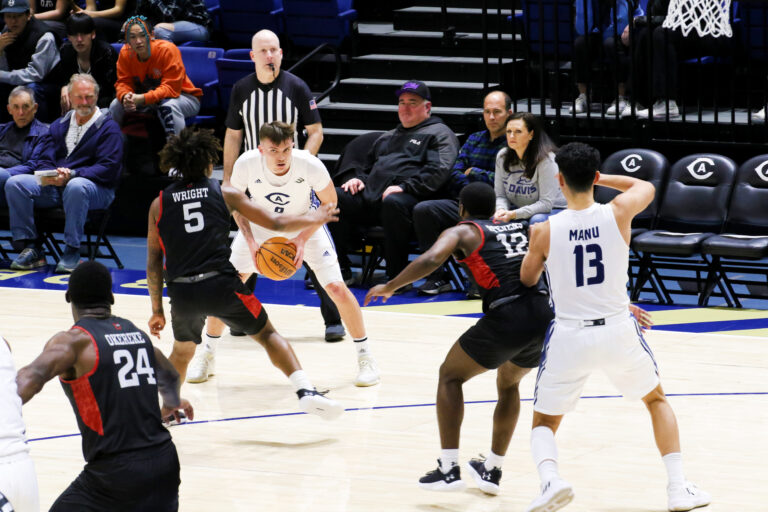
The Aggies struggled against Big West Conference foe CSU Northridge but ultimately tamed the Matadors late in the game (73-62) in front of the home crowd Wednesday night at the University Credit Union Center. The team struggled in part because they were without second-year starting point guard Ty Johnson due to a one-game suspension, but Head Coach Jim Les said that a lackluster performance by the team’s defense also contributed.

“I wasn’t pleased overall,” said Les. “Our defensive effort just wasn’t there. At the end of the day, you have to show some pride and some desire. We had some spurts, but we have to get better.”

The Matadors (6-20 overall, 3-12 in conference play) threatened the Aggies’ defense with their scoring abilities, particularly from second-year guard Atin Wright, who set a division one scoring record for CSU Northridge’s basketball program. Wright scored 28 points in the first half, shooting 6-for-8 from the three-point line. He finished with 42 points, shooting 14-for-25 from the field and 7-for-11 outside of the paint.

“Atin shot the ball well, he was efficient,” said CSU Northridge Head Coach Trent Johnson. “For us, we had a great opportunity, two of their best players, Beasley and Johnson, didn’t play. As a team, we didn’t defend very well.”

Wright wasn’t the only player who had the hot hand though. UC Davis third-year Elijah Pepper recorded his third consecutive game with more than 30 points. Two other Aggies finished the game with double figures — third-year guard Kane Milling scored 15 points, and fourth-year forward Christian Anigwe had a nice night with a double-double, 15 points and 10 rebounds. Subbing in in place of Johnson, second-year point guard Leo DeBruhl added eight points and six rebounds in a strong effort that helped the offensive flow. 

“I thought he did a really nice job,” Les said of DeBruhl. “We have a lot of confidence in him.”

UC Davis opened the first half with a 6-0 run within the first three minutes, but Wright immediately got going, scoring two three-pointers to tie the game at sixes. 

“We gave him two wide-open looks, and that got him going,” Les said.

A few plays later, the Matadors took the lead, capitalizing on a five-point run. Wright added to that run with another three-pointer as Northridge took command of the game with an 11-8 lead. 

After a jumper from Pepper that cut the deficit to one, Wright hit another three-pointer which added to their 14-4 run. Wright was responsible for hitting four three-pointers within the first six minutes of the game, and just like that, Northridge led 14-10. 

The Aggies did not expect the outburst from Wright, who seemed to score every ball he shot. This prompted the Big West’s leading scorer — Pepper, who is averaging 22.1 points per game — to respond.

Pepper is known for his three-point shooting abilities, but uncharacteristically bull-rushed his way inside the paint, scoring over Northridge’s big men in the first quarter. Then, a few plays later, the Aggies took the lead with three-pointers from Milling and Pepper that put the home team up 21-8.

But of course, Wright would not let off the gas, scoring a pair of free-throws and a jumper that cut the deficit to one with just over four minutes remaining in the first half. 

Both offenses traded buckets, giving the UC Davis fans a spectacle. Milling once again pulled up from downtown and splashed a three-pointer that energized the home crowd as Milling put his team up by four points. The Aggie defense held off the Matadors in the following play and rebounded the ball, allowing Pepper another shot. He was fouled in the process and converted both free-throw attempts, helping the Aggies quickly build a six-point lead, 30-24. 

With two-and-a-half minutes remaining on the clock, Wright quickly hit a three-pointer that kept his team within striking distance, but Pepper seemed to be motivated by Wright’s offensive onslaught, hitting two three-pointers, one of which was a four-point play, as he was fouled during the shot. 

The Aggies appeared to run away with the game at this point, as they were up 37-29 with over a minute remaining in the first half, but Wright would go on a 5-0 run himself. Luckily for The Aggies, who did not have a strong defense, Anigwe closed the half with a monstrous dunk that got the crowd on their feet and brought UC Davis into the second half with a 39-34 advantage. 

Astonishingly, Wright scored 28 of the 34 points scored for the Matadors in the first half. Pepper scored 20 of UC Davis’s points in the half, while Anigwe scored 10 points. The difference in the first half was the Aggies’ ability to control the paint, grabbing 20 rebounds compared to Northridge’s 13. Another eye-opening stat: UC Davis’s bench produced 18 points while Northridge’s only produced four.

UC Davis opened the second half with a 9-4 run, and they finally seemed to have an answer for Wright, who didn’t score a bucket within the first six minutes of the second half. However, the Matadors were able to produce a 6-0 run that cut the Aggie lead 48-44. 

The Aggies immediately responded, scoring 11 straight points that put them up by 15 points as they pulled away 59-44. UC Davis tightened up their defense and Wright stopped scoring. Without him, Northridge lacked offensive rhythm and could not hit any shots. 

With just eight minutes left on the clock, Wright broke through the Aggie defense when the Matadors needed him most. The visiting team went on a 14-2 run, bringing them within three points of the lead.. Wright contributed to 12 of those 14 points scored. 

The swing in momentum seemed to favor Northridge, and Pepper’s rhythm appeared to be off, but Milling and DeBruhl kept the Aggies’ offense going. Both players combined for 11 straight points and once again the Aggies were in control, 70-58 with only two-and-a-half minutes remaining in regulation. 

The Matadors could not recover with such little time on the clock and Pepper put the game to rest, scoring the last six points for UC Davis and closing the show, 73-62.

A few days later, on Feb. 18, the Aggies traveled to Southern California to face off against the top team in the conference, UC Irvine, and lost in a closely contested battle, 78-76. Once again, Pepper shined with 32 points, making it his fourth consecutive game with at least 30 points. Anigwe contributed with 17 points, as he continues to impress in his best season under the UC Davis logo. 

On Monday, Feb. 20 UC Davis hosted UC San Diego and defeated the Tritons, 76-66. The Aggies now improve to 16-2 overall and 9-7 in conference play. In their next outing, they will travel to Cal State Fullerton on Feb. 23. 

Written by: Marlon Rolon — sports@theaggie.org