57 F
Davis

Davis, California

Monday, December 22, 2025
Home Blog Page 170

Nuevos dispensadores de sexo más seguros instalados en los baños de Memorial Union

Las organizaciones de la salud en el campus colaboran en un esfuerzo de promover sexo más seguro y mejor educación sexual en el campus


Por RACHEL GAUER — campus@theaggie.org

Traducido por JOSÉ HERNANDEZ

Read this article in English.


A principios de este trimestre, el Laboratorio de Amor de UC Davis (UCD Love Lab) y el Comité de Salud y Bienestar Estudiantil (SHAW) de los Estudiantes Asociados de UC Davis (ASUCD) instalaron dispensadores de sexo seguro en el campus como parte de un proyecto colaborativo. Los cuatro dispensadores que se encuentran en los baños de hombres y mujeres en el segundo piso del Memorial Union (MU), contienen condones, diques dentales y dos variedades de lubricantes. 

Hibah Shafi, una estudiante de cuarto año estudiando economía y la actual presidenta de SHAWC, habló sobre las metas que impulsaron este proyecto y el concepto general de los dispensadores. 

“Solo queríamos distribuir productos gratis de sexo seguro y hacer[los] más accesibles,” Shafi dijo. “Tenemos una gran variedad de productos de sexo seguro para que los estudiantes escojan […] y queríamos asegurarnos que fueran tan inclusivos como pudiéramos.” 

El proyecto empezó el año pasado cuando SHAWC recibió una donación de Planificación Familiar. Shafi explicó cómo esta donación condujo a las etapas principales del proyecto. 

“Recibimos muchos artículos de sexo seguro de la Planificación Familiar y pensamos, ‘¿Que queremos hacer con estos articulos?” Shafi dijo. “Pensamos que probablemente lo podíamos convertir en una cosa más grande, [entonces] consideramos muchas ideas y pensamos en [poner] los artículos en dispensadores.”

Sergio Bocardo-Aguilar un estudiante de tercer año estudiando Ciencias Políticas, ex senador de ASUCD y actual miembro de SHAWC, señaló que productos gratis de sexo seguro estaban disponibles en el campus incluso antes de este proyecto, pero la colaboración tiene el objetivo de alcanzar una variedad más amplia de estudiantes. 

“La intención era hacer que estos artículos estén disponibles lo más posible,” 

Bocardo-Aguilar dijo. “Tenemos artículos gratis para los estudiantes que van al Laboratorio de Amor en el Centro para Bienestar y Salud Estudiantil, pero no muchos estudiantes saben eso, así que queríamos hacerlo más público.” 

El equipo inicialmente quería instalar los dispensadores en los baños para género inclusivo en el primer piso del MU, porque creían que sería más traficado. Sin embargo, los dispensadores finalmente fueron instalados en el segundo piso debido a las barreras físicas que prohibía la instalación. 

“Era un problema con el azulejo en los baños,” Bocardo-Aguilar dijo. “En el primer piso, hubieran tenido que romper el azulejo para instalarlos, en comparación con los [paneles de yeso] en el segundo piso […] donde simplemente podríamos adjuntarlos a la pared.”

Blake Flaugher, quien supervisa el Laboratorio de Amor y sirve como especialista en promoción de la salud y el bienestar en la Consejería de Servicios de Salud Estudiantil, explicó cómo los equipos pudieron obtener los dispensadores. 

Fondos contra el SIDA de la Ciudad Capital en Sacramento de buena gana donaron los dispensadores como parte de su misión de aumentar el acceso a productos de sexo seguro alrededor de California del Norte,” Flaugher dijo por medio de correo electrónico.

Flaugher también señaló los aspectos educativos de los dispensadores. 

“Una pieza importante [del proyecto] era relacionar los estudiantes con recursos de salud sexual a través de códigos QR en los dispensadores porque sabemos que la salud sexual es más que solo condones y diques dentales,” Flaugher dijo. “Se trata de pruebas de STI/VIX, consentimiento y comunicación saludable, salud reproductiva, reducción de daños, equidad en salud y mucho más.”

En cada dispensador hay dos códigos QR: uno lleva a recursos adicionales de salud sexual y el otro a una encuesta de retroalimentación para que los estudiantes den consejos de cambio para el proyecto. Shafi explicó la guía de salud sexual que los estudiantes pueden ingresar escaneando el código. 

“Creamos una guía más segura de sexo para el campus que es un mapa [mostrando] donde puedes conseguir productos gratis de sexo-seguro alrededor del campus,” Shafi dijo. “Esta guía se ha convertido en un recurso oficial del campus […]  donde puedes conseguir recursos de salud sexual.” 

Aunque los dispensadores fueron instalados a principios del trimestre, rápidamente se han hecho populares. Bocardo-Aguilar habló de esta popularidad inesperada y acerca de los pasos que el equipo espera tomar en el futuro para expandir el proyecto. 

“Nuestros suministros se están terminando, más rápido de lo que esperábamos,” Bocardo-Aguilar dijo. “En dos días, se terminan. Pienso que tenemos que enfocarnos para el próximo año en obtener muchos fondos para que este proyecto almacene constantemente el dispensador.”

Con un presupuesto mayor, Shafi dijo que los equipos extenderían los dispensadores a otros sitios con mayor tráfico en el campus, como el Silo o las residencias estudiantiles. Flaugher dijo que los estudiantes que quieren que la expansión del proyecto tenga éxito se pueden involucrar con organizaciones sexuales en el campus. 

“Los estudiantes pueden hacer que esto suceda— involúcrate,” Flaugher dijo. “Estamos reclutando un nuevo equipo de bienestar sexual y estudiantes coordinadores en la primavera. Puedes seguir @ucdlovelab en Instagram para la información más reciente.”


Escrito por: Rachel Gauer — campus@theaggie.org

Traducido por: José Hernandez

New safer-sex dispensers installed in Memorial Union restrooms

Campus health organizations collaborate in effort to promote safer sex and better sex education on campus


By RACHEL GAUER — campus@theaggie.org

Lea este artículo en español.


Earlier this quarter, the UCD Love Lab and ASUCD’s Student Health and Wellness Committee (SHAWC) installed safer-sex dispensers on campus as part of a collaborative project. The four dispensers, which are located in the men’s and women’s restrooms on the second floor of the Memorial Union (MU), contain condoms, dental dams and two varieties of lubricant. 

Hibah Shafi, a fourth-year economics major and the current chairperson for SHAWC, spoke about the goals that drove this project and the general concept for the dispensers. 

“We just wanted to distribute free safer-sex products and make [them] more accessible,” Shafi said. “We have a good variety of safer-sex products for students to choose from […] and we wanted to make sure that we were as inclusive as we could be.”

The project began last school year when SHAWC received a donation from Planned Parenthood. Shafi explained how this donation led to the early stages of the project. 

“We received a ton of safer-sex items from Planned Parenthood and we thought, ‘What do we want to do with these?’” Shafi said. “We thought that maybe we could turn it into a bigger thing, [so] we bounced ideas back and forth and then we thought of [putting] them in dispensers.”  

Third-year political science major Sergio Bocardo-Aguilar, a former ASUCD senator and current member of SHAWC, noted that free safer-sex products were available on campus even before this project, but the collaboration aimed to reach a wider variety of students. 

The intention was to make sure that these items are as accessible as possible,” Bocardo-Aguilar said. “We have free items for students who go to the Love Lab in the Student Health and Wellness Center, but not a lot of students know about that, so we wanted to make it more public.”  

The team initially wanted to install the dispensers in the gender-inclusive bathrooms on the first floor of the MU, which they believed would be more heavily trafficked. However, the dispensers were ultimately installed on the second floor due to physical barriers that prohibited the installation. 

“It was an issue with the tile in the bathrooms,” Bocardo-Aguilar said. “On the first floor, they would have to break the tile to install them, compared to the [drywall] on the second floor[…] where we could just attach them to the wall.” 

Blake Flaugher, who oversees the Love Lab and serves as the well-being health promotion specialist at Student Health and Counseling Services, explained how the teams were able to obtain the dispensers.  

“Capital City AIDS Fund in Sacramento graciously donated the dispensers as part of their mission to increase access to safer sex products throughout Northern California,” Flaugher said via email.

Flaugher also noted the educational aspect of the dispensers.

“One important piece [of the project] was linking students to sexual health resources through QR codes on the dispensers because we know that sexual health is about more than condoms and dental dams,” Flaugher said. “It is about STI/HIV testing, consent and healthy communication, reproductive health, harm reduction, health equity and so much more.” 

On each of the dispensers, there are two QR codes: one leads to additional sexual health resources and the other to a feedback survey for students to recommend any changes or advice for the project. Shafi explained the sexual health guide that students can access by scanning the code. 

“We made a safer-sex guide for campus, which is a whole map [showing] where you can access free safer-sex products around campus,” Shafi said. “That guide has become an official campus resource for […] where you can access sexual health resources.” 

Though the dispensers were just installed earlier this quarter, they have quickly grown in popularity. Bocardo-Aguilar talked about this unexpected popularity and about the steps the teams hope to take in the future to expand the project. 

“Our supply is going out really quick, faster than we expected,” Bocardo-Aguilar said. “Within two days, it’s all gone. I think something we need to focus on next year is getting a lot of funding for this project to be able to consistently stock the dispenser.” 

With a larger budget, Shafi said the teams would expand the dispensers to other highly trafficked locations on campus, such as the Silo or student residence halls. Flaugher said that students who want the expansion of the project to succeed can become involved with sexual health organizations on campus. 

“Students can make things happen — get involved,” Flaugher said. “We are recruiting a new team of sexual well-being student coordinators in the spring. You can follow @ucdlovelab on Instagram for the latest info.” 


Written by: Rachel Gauer — campus@theaggie.org

Celebrations for Holi are a colorful way to welcome the spring season

The Hindu tradition is a way for everyone who celebrates to spread love


By RUMA POUDELL — arts@theaggie.org


Winter quarter finals are just around the corner, we’ve already begun registering for next quarter’s classes and the gloomy days of winter will soon be in the past — clearly, spring is approaching. 

The beginning of spring, while technically marked by a specific date on the calendar, is also signified by different environmental markers which vary across cultures.

The Western, or Gregorian, calendar marks the start of spring based on when the hours of daylight in a given day surpasses the number of hours of darkness, a phenomenon called the vernal equinox. 

In contrast, the Hindu calendar marks the start of the seasons by the full moons of the year. It recognizes the start of spring on the last day of Phalguna Purnima — Purnima meaning “full moon” and Phalguna being the name of a month on the Hindu calendar. 

 “Whatever quality you establish on a full moon, in our culture, it’s believed that [specific] quality becomes enhanced,” Keshav Sharma, an engineer in the Sacramento community, said.

Holi is a festival that marks the start of spring according to the Hindu calendar. This year, Holi, which features many rich traditions that are revisited this time each year, will be on March 8. 

On the auspicious holiday, you will find community members chasing each other as they try to throw gulal, or colored powder, and light jets of water at each other. This is a part of Holi called Rangwali Holi. A fun way to highlight the colors of the festival and all of the colors that get on you as you participate in Rangwali Holi is to wear white clothes while this occurs. Throughout the celebration, bonfires are also lit, traditional folk songs are sung and people come together to dance and eat yummy sweets.

“It’s a holiday that feels like a game,” Smarika Neupane, a first-year student at American River College, said. “Everyone gets together, you’re throwing water balloons and it’s almost scary how intense it gets. In Nepal, the corridors would be filled with everyone running at each other.”

Religiously, these traditions hold significant weight as well. For example, the chaos of throwing gulal represents how love is like war. In the Vrindavan, the deities Radha and Krishna take opposing sides on this topic — despite being partners — to see whose love will ultimately conquer. The essence of Bhakti and Hinduism is just that — surrendering to love. Seeing devotees celebrate this tradition as they show love to each other is an offering to Krishna himself, as it spreads this message. 

“Krishna used to play the flute and have everyone dance on Holi and the full moon because the experience is enhanced and carried throughout the season,” Keshav said. 

Holi is predominantly celebrated in the South Asian countries of Nepal and India. However, you don’t need to be of South Asian descent or practice Hinduism to celebrate. According to Vir Khanna, a second-year computer science major at UC Davis, the festival is a celebration of love, regardless of where you are from. 

“For me, Holi has been some of the most fun parts of my childhood looking back — and if anyone wants to join in on that and have a lot of fun, they should be allowed to,” Khanna said. 

If you want to join in on the fun, there is a Holi celebration happening here in Davis courtesy of Project Rishi and the campus’s Indian Student Association. Join your friends on the Hutchinson Intermural Field on March 4 from 11:00 a.m. to 4:00 p.m. for food, dancing and more.


Written by: Ruma Poudell — arts@theaggie.org


Upcoming events in March

Find time to enjoy the art scene here in Davis as spring comes around


By ADHITHI ANJALI — arts@theaggie.org


Women of Northern California: Making Meaning for Yesterday, Today, & Tomorrow (The Natsoulas Gallery, March 4)

The John Natsoulas Gallery will be featuring women artists across Northern California and highlighting the particularities of feminist experience and politics of the region this March. The exhibit will be open from March 1 to April 2, but on Saturday, March 4, the gallery will hold a public opening reception from 7 p.m. to 9 p.m. Refreshments will be provided, and Allison Fall, a featured artist in the exhibition, will perform.


“REFUGE — an immersive theatrical installation” (Wright Hall, March 2-6 and 9-10)

Created from the autobiographical experiences of Victoria (Vita) Tzykun as a Ukrainian refugee, “REFUGE” follows the displacement of a family and the reforming of identity and belonging. Co-created with David Adam Moore, “REFUGE” is an immersive walk-through experience that intends to reveal how we carry the history of land in all that we do, despite displacement and removal. The installment will be presented in Wright Hall. Ticket prices and more information is available at the UC Davis Department of Theatre and Dance’s website.


Platform: An Evening of Student Voice (Manetti Shrem Museum, March 2) 

From 4:30 p.m. to 7:00 p.m., the Manetti Shrem Museum will be hosting a showcase of student art with Taller Arte del Nuevo Amanecer (TANA) and music by KDVS DJ Oliver Lucky Maes. Head over to see student zines, screenprinting and the current exhibition on display at the museum — “Mike Henderson: Before the Fire, 1965-1985.”


Ballet Preljocaj: “Swan Lake” (Mondavi Center, March 4-5 at 2:00 p.m.)

Angelin Preljocaj’s ballet company returns to the Mondavi Center with the iconic “Swan Lake,” merging the classical and contemporary to reimagine the well-known original story with modern themes of familial conflict. See the Mondavi’s website for more details and ticket prices.  


Artist Lecture: Rina Banerjee (Manetti Shrem Museum, March 9)

The Manetti Shrem Museum will host visual artist Rina Banerjee to give a talk about her focus on diasporic experiences of immigrants. Banerjee has been recognized internationally, participating in 14 international biennials such as the 57th Venice Biennial, Yokohama Triennale and Kochi Biennial. The Artist Lecture will be held from 4:30 p.m. to 6 p.m. 


Art History Lecture Series: Dr. Mya Dosch (March 11 over Zoom)

Dr. Dosch joins us over Zoom to discuss images of protests from Mexico City in the 1970s. Dr. Dosch is currently working as an assistant professor of art history at California State University, Sacramento. To register for this event, please visit the Pence Gallery’s website


Bike Collective Workshop: Mechanic Series (​​4th and L St., March 16)

If you’re interested in developing some hands-on technical skills and learning about the mechanics of your bike, join the Davis Bike Collective during their Mechanic Series. They will focus on one area of the bike and teach you its functions and more. It will be held from 5 p.m. to 7 p.m. in the courtyard at the corner of Fourth St. and L St. 


Tap Dance Rehearsals in the Park (Central Park, March 19 at 8:00 a.m. – 11:00 a.m.)

After you’re done perusing the Craft and Vintage Fair over in Central Park, join choreographer Ann Dragich during her public rehearsals. Learn about choreography and have some fun dancing in the park.


Meow Meow (Mondavi Center, March 31 at 8:00 a.m. – 11:00 a.m.)

The Mondavi Center will end March with cabaret performer Meow Meow dazzling the stage. With a signature mixture of comedy and insecurity, the performance — complete with physicality and sonorous singing — will surely enchant the audience. For more information, see the Mondavi’s website.

Written by: Adhithi Anjali — arts@theaggie.org

World Baseball Classic preview

After a six-year hiatus, which country will win the 2023 title?


By CAROLYN (CARI) FENN — sports@theaggie.org


For the first time since 2017, baseball stars will be given the chance to represent their countries and attempt to lead their teams to the World Baseball Classic title. In the last World Baseball Classic, Team USA was crowned champion, and with a team full of MLB stars, Team USA is looking to defend that title this year. However, with a six-year hiatus and many other teams full of MLB talent, is a repeat victory achievable?

The three teams predicted to have the best chances of winning the title are the Dominican Republic, the United States and Japan. Each team is headed by MLB all-stars and each has won a title in previous years, so their chances to win it are looking somewhat even between the three teams. Here’s a breakdown of how their rosters stack up.


Dominican Republic

The Dominican Republic is favored by many to win the World Baseball Classic in 2023. After winning the title back in 2013 and then getting knocked out in the second round in the 2017 tournament, they are motivated to have a major comeback this time around.  

And with a team full of MLB stars, their chances are looking pretty strong. Just in the 2022 season alone, their MLB stars racked up a Cy Young, Home Run Derby and Rookie of the Year award, as well as an MVP runner-up title. 

Taking a look at the roster, it is clear just the amount of talent they have wearing the Dominican uniform. Some of the major stars they have in the infield include Houston Astros’ Jeremy Peña, San Diego Padres’ Manny Machado and Toronto Blue Jays’ Vladimir Guerrero Jr. With some of the best names in baseball in their infield, they will be difficult to defeat. 

And their outfield is no different, with stars including San Diego Padres’ Juan Soto and Seattle Mariners’ Julio Rodríguez. While Rodríguez is not as seasoned as some of his veteran teammates, he won American League (AL) Rookie of the Year in 2022, proving his strong talent coming into the Dominican team. 

Meanwhile, up on the mound, the Dominican Republic has a plethora of talent, with 20 pitchers currently on their roster. Some of the talents include Astros’ Cristian Javier and Florida Marlins’ Sandy Alcantara who won the National League (NL) Cy Young Award in 2022. 

On the offensive side, the team also has a ton of skill and talent that will be hard for any opposing pitcher to go up against. With 2022 Home Run Derby winner Soto and runner-up Rodríguez, the team is bound to hit at least a few home runs against their opponents. 

With so much talent on one team, they are going to be tough competition for the other countries vying for the title.


United States

With a lineup that is not-so-shockingly full of many MLB stars, it makes sense why Team USA is another favorite to win the World Baseball title for the second time in a row. 

This star-studded lineup for Team USA includes 21 all-stars, four MVPs, 11 Silver Slugger Award recipients, three Rookies of the Year, one Cy Young Winner and four Gold Glove Winners, making this roster the most star-studded in World Baseball Classic history. With Los Angeles Angels’ Mike Trout leading Team USA as team captain, it is clear that the team is going to be tough to beat.

The infield of Team USA includes New York Mets’ Pete Alonso, Chicago White Sox’s Tim Anderson, Philadelphia Phillies’ Trea Turner and Boston Red Sox’s Nolan Arenado and Paul Goldschmidt. Arenado and Goldschmidt were a part of Team USA back in 2017 when the team first won the World Baseball Classic title. 

The outfield is just as strong, if not stronger than the infield. With Dodgers’ Mookie Betts, Angels’ Mike Trout and Phillies’ Kyle Schwarber, there are plenty of powerful players in the backfield. Trout and Betts are two of the biggest stars in baseball at the moment, and Schwarber is coming out of this past season the NL home run champion, so there is not much that can top these star-studded outfielders.

Team USA also features the best group of catchers in the tournament, with three-time all-star and two-time Gold Glove winner J.T. Realmuto leading the way. 

While the team’s pitching lineup does not have an absolute advantage over the other teams, they are still looking strong. Star pitchers Clayton Kershaw and Nestor Cortes had to drop off of the roster, but their rotation is still full of many MLB stars, including Padres’ Nick Martinez, White Sox’s Lance Lynn, Cardinals’ Adam Wainwright and Pirates’ David Bednar.

With hall-of-famer and 13-time all-star Ken Griffey Jr. as the hitting coach for Team USA, they will be a danger at the plate. Griffey Jr. will have a ton of talent to work with, including two-time Home Run Derby winner Pete Alonso, Trea Turner, Mookie Betts and Mike Trout.  Team USA is sure to be a threat to their competition on both the offensive and defensive sides of the field. 


Japan 

Rounding out the teams with the best chances to win the World Baseball Classic is Japan. With two championships already under their belt — back-to-back in 2006 and 2009 — it’s no surprise that they are another favorite to win the title.

While Japan does not have the same amount of MLB all-stars as the Dominican Republic or the United States, they do have one player that these two teams don’t have: Shohei Ohtani.

The Angels’ Shohei Ohtani is the current best two-way player in the MLB — and possibly one of the best of all time. With strong power both hitting and on the mound, he will be a challenge to all the countries Japan competes against. 

Other MLB Stars joining Team Japan include Padres’ Yu Darvish, Cardinals’ Lars Nootbaar, Cubs’ Seiya Suzuki and soon-to-be Red Sox’s Masataka Yoshida. The majority of the MLB talent for Japan is in the outfield with Nootbaar, Suzuki and Yoshida.

Most of Japan’s talent comes from the Nippon Professional Baseball Organization (NPB), which is the highest level of baseball in Japan.

Japan’s infield features NPB player Munetaka Murakami. At only 23 years old, he is one of the best hitters in Japan, shattering Sadaharu Oh’s single-season NPB record for most home runs by a Japanese-born player. Some players to keep an eye on are Sosuke Genda and Kazuma Okamoto

Japan’s biggest threat to other teams vying for the World Baseball Classic title is their pitching. While they have Darvish from the MLB, they also have NPB players Yoshinobu Yamamoto and Roki Sasaki. With Yamamoto’s status as the best pitcher in Japan and young Sasaki’s 100-miles-per-hour fastball, it will be hard for any team to face off against this pitching trio — in addition to Ohtani. 


With so many powerful rosters, it is hard to predict who will win the 2023 World Baseball Classic. While many think that the Dominican Republic has the best odds of winning the tournament, there is a ton of talent and skill on all three of these teams — and many others competing in the tournament.

Will the Dominican Republic, United States or Japan win the World Baseball Classic title? Or will another country snag the title from one of these top contenders? On March 7, the battle for the title will begin, and on March 21, the new reigning champion of the World Baseball Classic will be declared. 


Written by: Carolyn (Cari) Fenn — sports@theaggie.org

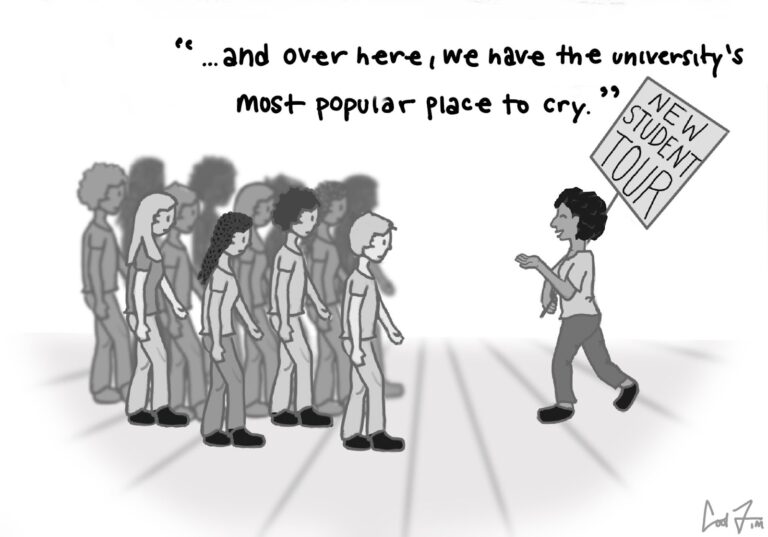
Campus tour

Drawn by: Sandhya Pfile –– sbpfile@ucdavis.edu

Disclaimer: (This cartoon is humor and/or satire, and its content is purely fictional. The story and names of “sources” are fictionalized.)

University, legislators must do more to ensure students have access to affordable housing

Recent years have seen a housing shortage that is impacting students across UC campuses


By THE EDITORIAL BOARD


The time has come again — planning for next year’s housing is underway. Not only does this come at one of the most inopportune times in the year (the latter half of winter quarter is not exactly known for being a crowd pleaser), but it has become increasingly difficult to find a place to live in recent years. The housing market seems impossible to navigate, and the incredible amount of pressure placed on students to find accommodations adds additional stress on top of already busy schedules.

Recently, this pressure has even caused UC Davis students to camp out in below-freezing conditions in the hopes of securing a lease at an off-campus apartment complex. When an academic institution sees students putting themselves at risk of frostbite in order to secure a living situation months in advance, there is clearly an issue at hand that isn’t being adequately addressed.

It may be easy to place blame on our local city government for these problems, but it’s important to acknowledge the limitations that the city council finds placed upon them in this area. The city is responsible for providing sufficient land to meet state housing requirements, not for actually building said housing. This caveat means that the council can only do so much in terms of actual legislation. Accordingly, they have adopted a revised plan that outlines how the city will meet these housing needs by the end of 2029.

Several city council members have supported building higher-density housing, which would need approval in order to go above city ordinances limiting the amount of stories that buildings are allowed to have. In turn, this sometimes faces public opposition from so-called NIMBY groups (NIMBY being an acronym for “Not In My Backyard”). Such groups are responsible for preventing housing developments in places like Berkeley, often citing environmental regulations such as the California Environmental Quality Act (CEQA) as an argument against housing more students. This has prompted criticism from larger governmental entities, including CA Governor Gavin Newsom, who has publicly stated that “this law needs to change.”

A player with real power in this case is the university administration. While the state has cut funding for cities that used to go towards construction of affordable housing, the university has the capacity to budget for increased housing units. Some of these are already under construction, including the newly minted Green housing complex and redevelopments to the Orchard Park apartments. However, not all students will be able to afford to live in these new developments. The university must do significantly more in terms of affordable housing to mitigate the magnitude of the crisis as it stands.

Additionally, UC Davis must not admit more students than the campus and city have the resources to house. A surge in student admissions, as well as skyrocketing market prices, have essentially created a “captive market” of students that the UC has long failed to accommodate.

And the situation in Davis isn’t even the most severe of the UC campuses; at UC Santa Cruz, for example, roughly 9% of students reported experiencing homelessness in 2020. At Davis, this statistic lies around 6% — a smaller percentage, yes, but any amount of students lacking a place to live while they attend school is reason for concern.

Ultimately, the city and the university must work together to address housing concerns for its residents and students. In addition to avoiding over enrollment, UC Davis must provide the resources and plans for such construction, and the city must work to protect these plans and ensure that they go through. Otherwise, there exists the possibility of a situation occurring here along the lines of the controversial litigations happening in Berkeley.

So, what can students looking for housing do? In the short term, take advantage of the housing resources that are available to you. Consider keeping tabs on ASUCD’s Community Housing Listings Homepage, checking housing/class Facebook groups to find others seeking roommates, looking into other community housing options and getting an early start on house hunting. 

On a more fundamental level, the best way to address the student housing crisis is through advocating for political change. On campus, you can vote in ASUCD elections and support candidates who are pushing for more affordable housing in Davis. Also, if you are registered to vote in Davis, vote for those who will support measures that create higher-density housing around the university. It’s worth educating yourself on these issues — if not for yourself, for future students who will likely be impacted even more extensively if a solution doesn’t present itself soon.  


Written by: The Editorial Board

UC Davis Health discovers new compound for treatment of resistant prostate cancer

LX-1 molecule targets two different mechanisms of prostate cancer progression 


By LILLY ACKERMAN — science@theaggie.org 


Researchers at UC Davis Health are studying a new compound that has the potential to target two known sources of prostate cancer, showing promise for treatment of the disease. 

Dr. Allen Gao, director of Urology Research at UC Davis Health, says that prostate cancer is the most frequently diagnosed cancer in males, and it is the second leading cause of cancer deaths in this population. 

The main mechanism for prostate-cancer development is via androgens, or male sex hormones. Androgens bind to androgen receptors in prostate cells, which, in turn, stimulate the growth of more prostate cells. However, this cell growth can become uncontrolled, leading to a tumor. 

Current treatment for prostate cancer targets the androgen pathway by blocking androgen signaling and tumor cell proliferation. 

“[The androgen pathway is] usually responsive initially because […] [it] is a major driving force of prostate cancer progression,” Gao said. “If you block this pathway, you’ll block cell proliferation and then tumor growth, and patients will be much, much better.”

However, improvements in treatment are still needed; according to Gao, androgen blockers are usually only effective for one-and-a-half to three years before the tumor becomes resistant. 

Resistance can arise from mutant androgens that can still bind receptors even when blocked or from androgen receptors that mutate to become constitutively active (always active without needing to bind an androgen at all). 

“They gradually become resistant and the treatment fails so the patient will progress very fast,” Gao said. 

This resistance is why a new compound, LX-1, is being researched as a solution. LX-1 has the ability to target two different mechanisms of prostate cancer progression. 

“There are two major pathways,” Gao said. “One is the androgen receptor variant; another one is AKR1C3, and this one is involved in androgen synthesis. And currently, there is no drug to target AKR1C3.”

Targeting the androgen-receptor pathway and androgen synthesis in the first place both show promise as possible ways to prevent tumor cell proliferation. 

“We test[ed] in vitro and then test[ed] in animal models, and it seems to work by blocking these two pathways,” Gao said. “It can inhibit resistant tumor growth, and it can also synergize — it already has — [with the] current anti-androgen drug.”

Combining LX-1 with the current anti-androgen drug improves response and appears to slow tumors’ ability to develop resistance.

“We hope, by our work — we don’t know how long it will take — but hopefully we can develop some oral compound and test in animals, do some other future tests in clinical [settings] and see if we can treat advanced prostate cancer,” Gao said.  

Written by: Lilly Ackerman — science@theaggie.org

UC Davis students organize community and mutual aid event “No Fash Fest”

The event is a direct counterprotest to the Proud Boys’ appearance on campus in recent months


By DANIELA DULA MEJIA — features@theaggie.org


Editor’s note: The names of two sources in this article have been changed or removed at their request to protect their safety and privacy. 


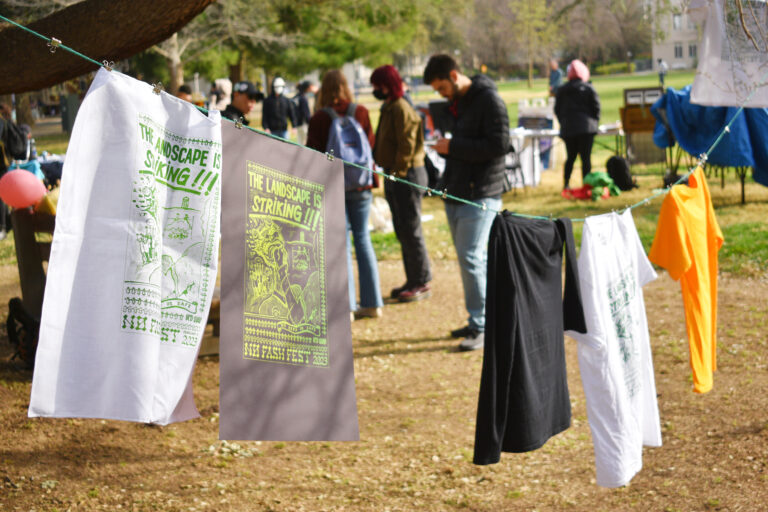
On Thursday, Feb. 16, a coalition of local groups gathered for the “No Fash Fest” event on the campus quad. One of the community attendees, who goes by the name DJ Odette on UC Davis’s radio station KDVS 90.3, said these groups were gathered “in solidarity with approaching anti-fascism together.” 

It was an enthusiastic event with free screen printing, a cookout-style potluck, energetic music and numerous free educational and mutual aid resources. 

Third-year international agricultural development major Gaia Bouyssou said No Fash Fest’s presence on campus is important because of a recent Turning Point USA event that ended in a violent altercation.

On Oct. 25 of last year, Turning Point USA (TPUSA), a national conservative political group, hosted an event in which they invited speaker Stephen Davis, also known as “MAGA Hulk,” to campus. The talk was canceled when protests outside turned violent after a group wearing Proud Boys attire allegedly pepper sprayed students. 

“The Proud Boys are an openly fascistic group who have been on our campus [before],” Bouyssou said. “Even without a direct connection to [the Proud Boys], the hate that is happening from these speakers and from TPUSA may not be overtly fascistic and may just be very right-wing and hateful, but it leads towards fascistic tendencies.”

The intention of “No Fash Fest” was to create space for UC Davis community members to come together and show the power of mutual aid support, according to Bouyssou. She said attendees also wanted to raise awareness about TPUSA’s upcoming speaker event. The Davis TPUSA chapter posted on its Instagram page that there will be another talk on campus on March 16 at 6 p.m. featuring the group’s founder and conservative radio show host Charlie Kirk. 

Both on- and off-campus groups showed support for No Fash Fest by participating in the event. Bouyssou was one of the tabling participants was the Davis chapter of United Students Against Sweatshops Local 143 (USAS). Other groups in attendance that day included UC Davis Cops off Campus, Decarcerate Sacramento, Sacramento Valley Industrial Workers of the World (IWW) and numerous local artists. These groups came together because they wanted to help educate and empower students about the importance of creating an anti-fascist presence on campus, according to DJ Odette.

Bouyssou said she thinks students should care about events like these on campus in part because of speakers like Davis and Kirk, who she said: “deny systemic racism and have generally hateful views.”  

“[No Fash Fest] is a public demonstration and a form of counterprotest that is less physically dangerous,” Bouyssou said. “It allows for networking, connection, communication, visibility and also [is] a fun, beautiful, welcoming space that is an alternative to the […] things happening on the other end.”

At 11:45 a.m., before the event began, two people arrived with a camera and microphone. An event attendee who saw them arrive, but requested to remain anonymous for safety reasons, said that “they told students they were part of an independent podcast and began trying to interview students repeatedly despite lack of interest.” The source said that students consistently asked the two not to film them.

The attendee asked them to respect people’s space, to which the men allegedly started to yell, “Are you trying to take away our right to roam in any given area?” 

The attendee said that they felt that the men were “asking questions in bad faith […] The tone, you could tell, [was] disingenuous.”

“Eventually [they] changed their narrative and told the mic ‘This is how Antifa thinks of free speech, and this is all funded by George Soros,’” the anonymous source said.

The agitators allegedly left the scene after saying ‘so much for the tolerant left.’ The event eventually ended and no physical altercations occurred.

Bouyssou said that she doesn’t feel like conservative political views don’t have a lot of “traction” in Davis and not a lot of people seem interested in the campus’s TPUSA chapter, “but they exist, so this [event] is to show how popular, fun and welcoming the progressive and proud left-leaning side of campus is.” 

This will likely not be the last event thrown by this coalition of students. They expressed that so long as there continue to be ‘hateful opinions’ on campus, they will continue to work against those hateful forces at events like this one. 

“There is a really beautiful community of people who won’t stand for [fascism] at UC Davis,” Bouyssou said. 

Written by: Daniela Dula Mejia — features@theaggie.org

Letter from the editor

Lea esta carta en español


Dear readers,


I’ve always loved the idea of speaking another language — learning the nuance and subtlety of different words and recognizing how language can change the way we think and see the world. 

I began my study of Spanish as a freshman in high school, which, if you ask any language expert, is a bit late to become fluent. However, I’ve continued to seek out opportunities to practice the language over the past eight years, from studying abroad in Spain to minoring in Spanish here at UC Davis. While I am still not a fluent speaker and am always looking for ways to improve, I have finally reached a point where I can read, speak and listen to others in Spanish, and I have come to appreciate what a beautiful language it is. 

As editor-in-chief of The Aggie this year, one of my primary goals was to do more than maintain regular operations and contribute something new to the paper that would, hopefully, last for years to come. It seemed only natural to me to combine my love for language with my passion for journalism. And thus, the idea to translate articles into Spanish was born. 

Each week, The Aggie will publish a translation of an important news or features article on our website at theaggie.org/category/espanol/. Articles currently available include a city news piece on the Davis community expressing support for transgender children after a local author event and a features article on the campus initiative Taller Arte del Nuevo Amanecer which fosters Chicanx/Latinx community empowerment through artistic expression. 

Beyond my personal interest in the link between studying languages and journalism, providing translations of articles into Spanish, to me, seems somewhat logical. UC Davis is an incredibly diverse campus; in 2021, it was ranked highest in inclusiveness, diversity and internationalization among U.S. universities. Further, among the undergraduate population alone, 24% of students identify as Hispanic/Latinx as of 2021. In a community with such a large population of individuals who may be Spanish speakers, and given my experience with the language, it seemed natural that we should begin translating articles into Spanish. These articles will allow The Aggie to widen our audience to those who may prefer to read articles in Spanish or those who have stronger language skills in Spanish than English.

The Aggie is also not the first to publish articles in Spanish. CalMatters, a publication focusing on California politics and policy, offers translations into Spanish for many of their important news pieces. UC Berkeley’s student-run newspaper, The Daily Californian, also recently came out with a Latine/Hispanic Heritage Month issue with one article written in Spanish. We are, to my knowledge, however, the first UC student-run publication to offer article translations in the language.

I am so excited to continue to work on this project, and I would like to specifically thank José Hernandez, César Hoyos Álvarez and Agustina Carando, who have made this possible. Additionally, as I will only be serving as editor-in-chief until June, I plan to introduce the position of “Translation Director” to our managing staff next year to ensure that this project continues. 

If you are a Spanish speaker hoping to read more about local news and campus developments in Spanish, I encourage you to check out the articles available. I hope they bring you as much joy to read as they did for me to edit. 


Sincerely,

Sophie Dewees

Editor-in-Chief


If you are interested in translating articles into Spanish, please contact me at editor@theaggie.org.

UC Davis to host Georgetown University expert on Uyghur crisis

The talk, led by James Millward, will be held on the afternoon of March 2 and will provide background and perspective on controversy in this region


By SONORA SLATER — campus@theaggie.org


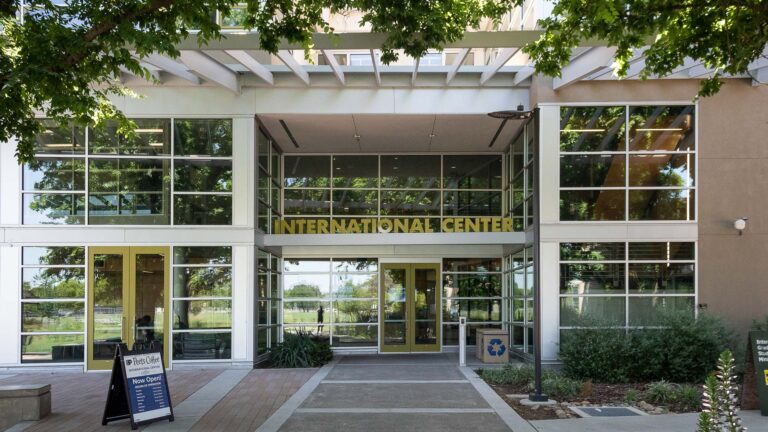
James Millward, a professor of intersocietal history at Georgetown University, is coming to speak at UC Davis on March 2 from 3-5 p.m. on the topic of the Xinjiang crisis. The free event will take place in the International Center’s multipurpose room, according to a recent press release, and will seek to offer background and perspective on the topic of “colonialism and control in the Uyghur region in China.”

The Uyghur population is predominantly Muslim, and the press release states that these people have “been subject to imprisonment, surveillance, religious intolerance, forced labor and forced sterilizations […] by the Chinese government since 2014.” According to an article by the BBC from May 2022, several countries, including the United States, have previously accused China of committing genocide in this region. However, the Chinese government continues to deny all allegations of abuse. 

The controversy was brought into the public eye with the 2020 release of Disney’s live-action Mulan, part of which was shot in Xinjiang, according to Amanda Aguilo, who is the program coordinator for the East Asian Studies department at UC Davis. Aguilo went on to say that part of the reason the department made the decision to host this event was to ensure the conversation surrounding the issue continues, rather than letting it fizzle out with the media cycle. 

“Especially as students, there’s a lot of compassion fatigue, because there are so many worldwide issues that we grab on to and then forget about and move on,” Aguilo said. “So we thought it was important to bring up this issue and continue the conversation with an expert.”

Millward teaches Qing, Chinese, Central Asian and world history, and his specialties include historical and contemporary Xinjiang, as well as broad knowledge of China-U.S. relations. Aguilo explained that she believes having an academic expert like Millward speak on the topic will give students a different kind of perspective than the one they might receive on social media platforms.

“I’m sure we’re all very familiar with [how] social media news networks are all used to convey ulterior motives,” Aguilo said. “I think coming from a professional who researches this stuff and studies similar topics, it’s nice to hear from someone who isn’t going into this with an objective but is just trying to report on it. We can’t be expected to be experts on everything we hear about, so having a professor come gets rid of that barrier.”

According to Aguilo, since this topic is controversial, the department has dealt with people removing posters for the event. However, she believes that just because a topic is controversial, “that doesn’t necessarily mean to stop talking about it.”

“Because there are a lot of efforts to silence the voices speaking out against this, it’s important for us to elevate those voices,” Aguilo said.


Written by: Sonora Slater — campus@theaggie.org

Congressperson Mike Thompson speaks to the Davis community

As part of a larger listening tour, Representative Thompson and his staff held two events in Davis last week


By CHRIS PONCE — city@theaggie.org


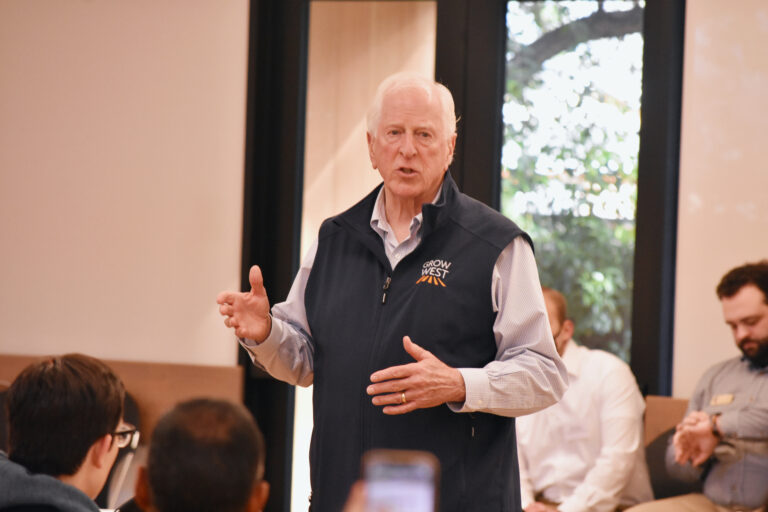
On Feb. 14, Rep. Mike Thompson and both his California- and Washington-based staff hosted two events in Davis to connect with the local community. The first event was held on campus and the second was at the Davis Veterans Memorial Center. Neither of the events was open for the general public to attend, but university leaders, community members and members of the press were invited. 

These events were a part of Rep. Thompson’s “listening tour” during which the congressperson visited communities throughout the district, including Dixon, Vacaville and Woodland. Thompson previously represented California’s 5th Congressional District, which did not include Davis and these surrounding areas, but now represents California’s newly drawn 4th Congressional District following the 2020 census which includes the city of Davis and Yolo County. At the start of the second Davis event, Thompson expressed the purpose of the event and how he hoped it would help build bridges throughout the community. 

“It’s been fantastic, all of the communities we’ve visited are extremely participatory, they’re glad we’re doing this,” Thompson said. “You can see right here how people are meeting with the staff, they figured out which staffer works on their issue […] [and are] introducing themselves. I think it’s going to be very beneficial to their district and to my office.”

During the event on campus, Thompson said that he was grateful to meet so many new people and reconnect with some people he has worked with before in the UC Davis community.

“There were professors and deans that I had worked with over the course of the last 10 years,” Thompson said. “Even though Davis wasn’t in my district, we worked on issues like tax policy, [agricultural] issues and things of that nature.”

Jack Stelzner, the communications director for Thompson’s Washington office, described the effort that was put into the events, which took “non-stop” work from the staff. Moreover, he described the events and addressed common questions and concerns. 

“I would say that [for] the first half we’ve been in the new areas, so the Northern Solano County and Yolo [County], both of which are more agricultural focused,” Stelzner said. “Water’s been a huge topic. Same thing with just disaster relief — so wildfires, droughts, floods [and] the work we’re able to do with that. In general, we’ve been hearing about people interested in D.C., so we’ve had some questions about how we’re going to get stuff done under the Republican majority.”

Sergio Bocardo, a third-year student and the assistant director of the Pantry at UC Davis, inquired about Thompson’s ideas regarding the issue of food insecurity and CalFresh during the event. 

“At the Pantry, we work a lot in serving students and making sure they have food on the table. Particularly there’s a bill coming up called the ‘Farm Bill.’ And the Farm Bill’s a bill where they focus a lot on agriculture [and] CalFresh,” Bocardo said.

Bocardo also asked Thompson if he would support legislation that would help make the CalFresh application process easier for students by eliminating certain procedures that cause students to drop their applications. 

“I think his answer was mediocre at best,” Bocardo said. “He talked about supporting those things but the big issue is, a lot of people have been talking about supporting these things all the time but it’s whether he’s going to get the members of Congress to do it. That’s the real thing: how much influence is he going to have to make these changes?” 

Oliver Snow, a recent UC Davis alumn and assistant deputy for the Yolo County Supervisor Jim Provenza talked about his impression of the event at Davis Veterans Memorial Center.. 

“I thought it was great,” Snow said. “I appreciate how much [Thompson] was invested in the district and visiting the district, so I’m excited to have him here and [am] excited to work with him.”

At both events, Thompson also discussed the divisive tensions in the federal government following the recent State of the Union address. He said that despite these polarized times, he has a lot of hope.

“We’ve had divisive times in the past and we’ve got through all of them,” Thompson said. “America is very resilient and the American people are incredible. We’re going to get through this tough spot too.”

Written By: Chris Ponce city@theaggie.org

Culture Corner

The Arts Desk’s weekly picks for movies, music and more


By VIVI KIM — arts@theaggie.org


Album: “D>E>A>T>H>M>E>T>A>L” by Panchiko (2020)

Contrary to its name, which suggests something close to heavy metal or noise pop, this album is a perfect collection of shoegaze tracks that combines lo-fi aesthetics with Radiohead-esque rock sounds. Although it was originally released as a four-track EP in 2000, it wasn’t until 2016 when someone found a CD copy of the album in a thrift store that the band started to gain recognition. The remastered album, released in 2020, even includes “rotted” tracks — versions of songs from their old CD that had deteriorated over time. The album not only contains an incredible set of tracks for its genre but has a unique history tied to its origin. The songs themselves are a perfect blend of distorted instrumentals and soft vocals. 


Movie: “La La Land” dir. Damien Chazelle (2016)

Though I speculate that many people have already seen it, Damien Chazelle’s dazzling romantic musical “La La Land” remains a must-watch even seven years after its release. It is a colorful, alluring and sentimental film that pays homage to modern romance in the city of Los Angeles. The film is abundant with beautiful landscapes, vibrant color palettes and bold musical sequences that present a dreamlike and theatrical feel. Apart from its stunning visual quality, the film itself is an endearing and classic tale about pursuing love and individual passion.


Book: “The Hitchhiker’s Guide to the Galaxy” by Douglas Adams (1979)

This sci-fi comedy novel is the first in a five-part book series that was originally based on a radio broadcast from the 1970s. The novel is an adaptation of the first four parts of the radio series and depicts the adventures of a man exploring outer space after surviving the destruction of planet Earth. Due to the popularity of the original series, the story itself has also been adapted into other forms of media, including television and film. The novel is a classic sci-fi read and has contributed many notable references to pop culture, making it a must-read for anyone versed in the zeitgeist. 


Artist: David Fullarton

David Fullarton is a San Francisco-based artist known for his mixed-media work that combines art with written text. His main mediums are prints, paintings and sketchbooks, tied together by a unique combination of scribbles, sketches and random memorabilia. His art most closely resembles something you would find in a carefully pieced scrapbook. Fullarton receives inspiration from the smallest details of daily life; as a result, his art emulates the theme of finding “meaning in the minutiae.” His series of paper works is especially fascinating — these artworks combine different colors and types of media that force the viewer to make sense of a sea of details.


Written by: Vivi Kim — arts@theaggie.org


The city of Davis adopted the second version of it’s housing element, and students camped overnight in attempts to secure housing

Amidst the housing crisis Davis students camped overnight at Almondwood apartments to secure a lease


By MADELEINE YOUNG — city@theaggie.org


On Jan. 31, Davis City Council adopted the second version of its proposed Housing Element. The previous proposal was adopted last August but had to be updated as the element was not compliant with a State Housing Law. On Feb. 2, the updated version of the element was sent to the California State Department of Housing and Community Development (HCD) and now awaits approval.  

But as new leasing contracts begin opening up for next fall’s school year, UC Davis students are experiencing effects of the city’s housing crisis. The price of rent has even forced some students to camp overnight to secure a lease, including Breanna Colonese-Dibello, a first-year environmental science and management major.

“We were looking for a three bedroom apartment at Almondwood,” Colonese-Dibello said. “It was one of the few that was in our budget and close enough to campus to bike. We heard that people were going to campout because spots fill up fast so we got there at 7:30 p.m. the night before leasing. We were able to get the last three bedroom apartment available, but camping out was not ideal. We had one sleeping bag for the three of us and it got to 35 degrees. I had a midterm the next day and the two girls who camped out with me had to skip most if not all of their classes the next day.”

According to the Davis Vanguard, there were another 30-40 students camping hoping to secure a lease for the 2023-2024 school year. Colonese-Dibello shared how urgent this problem is to students like her. 

“Before coming to Davis, I had no idea this would be an issue and our experience goes to show how big of a problem it is,” said Colonese-Dibello. “It almost seems like getting housing off campus second year is like an unsaid gift. The school should be more transparent and guarantee housing for first and second year students”. 

To accommodate students, UC Davis has partnered with The Michaels Organization to develop Orchard Park—comprising 11 four-story residential buildings for graduate student housing and family housing according to a survey report from Jan. 31.

“While the vacancy rate is lower than we hoped, we remain positive that our recent additions to student housing are having an impact,” Michael Sheehan, the associate vice chancellor for housing in student affairs, said in the report. “Lending to our optimism are the 1,500 new beds coming available this fall at the Orchard Park apartment community and plans for a new 400-600-bed residence hall.”

The effects of the housing crisis are immediate as third-year transfer student Samantha Li addressed her fear that they might not be able to find housing. 

“We’ve been trying to find a house for months, but every one we’ve looked at has been taken off the market within a week, were out of our budget or they are only leasing for immediate occupancy,” Li said. “It’s been really stressful not knowing if we’re even going to be able to find housing.”

Commentary: On the virtues of buying your music again

Why you should consider options beyond streaming services in support of your favorite artists 


By ADHITHI ANJALI — arts@theaggie.org


The days of compact discs and physical music are undoubtedly coming to an end. Today, over 50% of the music we listen to is through streaming, a practice that has truly revolutionized the music industry. Whether through Youtube, Spotify or Amazon, subscription services and advertisements have become integral to our listening habits. 

Professionals in the industry now think about how to get more streams than CD or vinyl sales, what will clip well on social media and which sounds will gain traction on largely visual mediums. The newest and most popular laptops, such as the MacBook Air or Chromebook, are no longer even equipped with a CD player. The goal of our devices. as well as our media, has become to be more compact and less physically involved. 

The loss of physical media and drastic growth of streaming has become associated with a disregard for the rights and incomes of musicians, though. We have all heard it thrown around that artists are paid less than a cent — more accurately, less than half a cent — per stream. 

The disproportionate market share of streaming services and this measly profit for artists instigated a 2021 report from the UN through the World Intellectual Property Organization (WIPO). The report discussed the failings of streaming services to establish a fair method of payment to artists. 

A massive discrepancy is apparent. Spotify tripled in value during the pandemic, but artist revenue stalled at the half-dollar mark. Last year, these economic challenges even brought about global protests against Spotify. These were organized by the Union of Musicians and Allied Workers (UMAW) and demanded not only fair compensation but also increased transparency of their royalty revenues per stream.

So, if streaming comes with this economic baggage, what can we do about it? We won’t be getting our CD players back anytime soon, but purchasing music is still an option for those artists you really want to directly support. UMAW lists some resources, such as pay-as-you-play co-op services like Resonate and Ampled, which are owned by artists and ditch the subscription price.

One of the most popular downloading services is Bandcamp. The company is very transparent with their payment, with 80-to-85% going directly to artists and the rest being collected as Bandcamp’s revenue share. However, if you want to bypass that share and send your dollar directly to the artist, look out for “Bandcamp Fridays,” where Bandcamp waives its revenue share and sends more to the artists instead. The next one is on March 3, so if you have a favorite artist or just want to support a friend in the music industry, make sure to find them on Bandcamp. 

Both Bandcamp and Resonate have clear paths for you to also own the music you pay for — another lost relic of physical media. Of course, the biggest difference between Bandcamp and Spotify is that you are no longer renting out your favorite songs for nearly $10 a month. 

Additionally, if data privacy is a concern for you, buying your music leaves a smaller trace than streaming. Spotify, for example, collects more than just your listening habits. It can collect your name, email address, phone number, date of birth, gender, address, GPS location and more. Services like Resonate do not need this data and are not attempting to curate a chamber of ads and music that will keep you in an app. 

Disconnecting from streaming services has also personally pushed me to engage with journalism and blogs to expand my music taste. Relying less on algorithms and curated spaces of my favorite genres has led me to more exploration and experimentation. It brings back the sense of browsing a bookstore with no intention involved, just looking for that overwhelming feeling of discovery. 

Streaming is undoubtedly here to stay and provides benefits of its own that consumers have grown to love. But while artists attempt to renegotiate the playing field, consumers can also look for ways to directly reach the art that impacts them instead of allowing streaming services to dictate where their money goes. 


Written by: Adhithi Anjali — arts@theaggie.org