57 F
Davis

Davis, California

Monday, December 22, 2025
Home Blog Page 169

Culture Corner

The Arts Desk’s weekly picks for music, movies and more


By ANA BACH — arts@theaggie.org


Book: “Just Kids” by Patti Smith (2010)


In her lustful memoir of the epochal days set in the late 60s and 70s New York City, American artist Patti Smith recounts her extraordinary relationship with photographer Robert Mapplethorpe. Smith writes what feels like her own personal diary, sharing her experiences with the public. She reminisces on her days at the Chelsea hotel, her Catholic upbringing, meeting Mapplethorpe at Brentano’s bookstore and even Mapplethorpe receiving his AIDS diagnosis while at the height of his career in 1986. After reading, all I wanted to do was experience this era. The authenticity and the rawness behind Smith’s writing leave readers feeling like they too have shared in the same experiences. “Just Kids” is one of my favorite memoirs, perfectly capturing the essence of the era and setting the bar extremely high for friendships. 


Song: “Chronic Sunshine” by Cosmo Pyke (2017)


With a fusion of melodic blues flare, a multi-instrumentalist sound and a hint of reggae, Cosmo Pyke’s “Chronic Sunshine” leaves you overstimulated with noise in the best way possible. The British-bred singer-songwriter makes his accent a part of his musical persona, putting an emphasis on his lyrics with his own curated sound. This unique style creates an orchestra of melody and rhythm that culminates in the most beautiful musical experience. As it’s a stellar mood booster, study tune or even background noise to simulate a main character complex, I wouldn’t be surprised if this song is on the leaderboard for my next Spotify Wrapped. 


Movie: “Booksmart” dir. by Olivia Wilde  (2019)


It’s safe to say that Olivia Wilde has created a true cinematic masterpiece. Two academic overachievers, Amy and Molly, thought that if they buried their noses in books all of high school, they would have tremendous success over their party-loving peers. The night before their graduation, they realize that they haven’t had the quintessential “high school experience,” so they attempt to fit it all into one night. What some have dubbed as the “female ‘Superbad’” will leave you peeing your pants during one moment and sobbing the next, The cinematography, soundtrack, casting and dialogue are simply unmatched. I watch this movie at least once a month and never have heard anything less than great reviews from people that I recommend it to. “Booksmart” is a must-see and a timeless representation of our generation. I want to live inside this movie. 


TV Show: “Fleabag” (2016) 


Phoebe Waller-Bridge is one of my favorite television personas. Her witty disposition, lack of filter and effortless use of humor to cope with trauma are truly gifts. The one-woman show sitcom stars Waller-Bridge as the titular character, Fleabag, who navigates her sex and love life after experiencing a tragedy. Waller-Bridge frequently breaks the fourth wall, where most of her dialogue comes from interacting with the audience. Season two has to be my favorite, especially when the “Hot Priest” is introduced. The two couldn’t be more opposite, but as Fleabag and the priest grow closer, they come to recognize that they resonate with each other’s insecurities. The format of the dialogue is extremely transparent and the viewers act as an outlet for Fleabag to express her internal monologue. The show is extremely relatable to a wide audience and manages to carry so much weight in such a short amount of time, with each episode being just 20 minutes long. An easy rewatch and one that I always circle back to. 


Written by: Ana Bach — arts@theaggie.org


When will it stop?

The constant fear of school shootings haunts an entire generation


By CLAIRE SCHAD — cfschad@ucdavis.edu


Content warning: this article contains discussions of gun violence that some readers might find disturbing.


I was in fifth grade when I heard about 26 people being killed at an elementary school in Newtown, Connecticut. I remember watching my parents as then President Barack Obama gave a teary address on national television. I had been doing lockdown drills at school for many years, but I hadn’t really understood what we were hiding from — Sandy Hook made it clear. 

I was a sophomore when a gunman shot and killed 17 people at a high school in Parkland, Florida. I remember getting in the car after softball practice and listening to the news on the radio as tears filled my mom’s eyes. This time it was a high school; those killed were my age. This could happen to me, I thought.  

The fear among students at my high school was painfully apparent in the weeks and months following the shooting in Parkland. One morning, the fire alarm was pulled, and instead of evacuating to the football field, we all rushed to the nearest classroom and our teachers frantically locked their doors. We were scared the fire alarm was being used to lure us outside; we had heard that the fire alarm went off as the shooting unfolded in Parkland. Although no one was harmed, it was traumatic, and many students went home early because they felt unsafe. 

A few months later, we were ushered into an assembly where we were taught about the “run, hide, fight” philosophy. We were shown videos depicting a staged active shooter event and told what to do. To the backdrop of daunting music you would find in a horror movie, we were told where we should run and how we should fight: act aggressively, throw textbooks and improvise weapons, the videos instructed us.

The lessons we were taught in elementary school about hiding and staying quiet were no longer good enough. Now, we had to be prepared to fight too.

Mid-February, three students were killed and five were wounded by an active shooter at Michigan State University (MSU). Again, we were reminded that our campuses are no longer safe.  

As the event unfolded at MSU, students were sent a campus alert instructing them to “run, hide, fight.” Many people were shocked that this was the message being sent to students going through an active shooter situation. However, the instructions given to MSU students and the concepts I learned during an assembly my sophomore year are part of a larger framework created by the Department of Homeland Security and promoted by other federal groups. 

The problem is being acknowledged — students are being taught to fight back. And yet, the shootings continue. When will the root of the problem be addressed? Damage control is understandable, but not without real action being taken to eliminate the constant threat. 

Of the students who went through the trauma at MSU, there were multiple for whom it wasn’t their first school shooting. Some had been students at Oxford High School, just 80 miles east, where four students were killed 14 months earlier. Another student was in sixth grade at Sandy Hook when the deadly shooting occurred in 2012.  

We have gotten to a point where children are going through multiple school shootings before they have had the chance to graduate college. When will this stop? 

 We are the generation constantly looking for places to hide and exit routes out of our classrooms. As we sit through our lectures some of us think about what we would do if a person with a gun came in. We have sat in classrooms shoulder-to-shoulder with our peers, unsure if it’s just a drill or the “real deal.” We send our loved ones texts that we are on lockdown and tell them we love them. This is what life is like for the school-shooting generation. 

We have watched these horrific events increase in frequency over the course of our lifetimes. Sandy Hook, Michigan State, Parkland, Uvalde, Oxford, University of Virginia. I could keep going, but the list would take multiple pages. How many more have to happen for real and effective change to be made? When will it stop?


Written by: Claire Schad — cfschad@ucdavis.edu 


Disclaimer: The views and opinions expressed by individual columnists belong to the columnists alone and do not necessarily indicate the views and opinions held by The California Aggie.

Pickleball is a big ‘dill’ at UC Davis

How the beloved, beginner-friendly sport captured the hearts of students and community members in Davis 


By REBEKA ZELJKO — features@theaggie.org 


Pickleball’s appeal has reached Davis, and it’s here to stay. This sport has grown in popularity both on and off campus and shows no signs of slowing down.

According to the USA Pickleball website, pickleball is a sport that “combines many elements of tennis, badminton and ping-pong” and is played “both indoors or outdoors on a badminton-sized court and a slightly modified tennis net.”

Ed Ju, a UC Davis Class of 2016 alumnus and social media manager for @davispickleball, said that pickleball is a sport for everyone. 

“When people start a new sport, you usually suck at it,” Ju said. “It’s frustrating, even if you practice a sport for years, and it’s still hard. But with pickleball, you try for your first time, you hit the ball around with some friends, and you’re like, ‘Wait a minute. I can actually be pretty good at this sport.’ I think that’s the real charm.”

Ju was introduced to pickleball by his friends, and he instantly fell in love with it. 

“I found a community center near me that had open play at the courts every morning,” Ju said. “I showed up just to see a bunch of older people, and I thought it would be an easy win. I got my butt kicked by a bunch of 70-year-olds. Ever since then, I’ve committed my time to learning strategies and practicing whenever I can.” 

After finding pickleball a few years ago, Ju was able to combine his profession and passion into spearheading pickleball in the Davis community. 

“I moved back to Davis, and I noticed there weren’t a lot of young people playing,” Ju said. “So I wanted to grow that aspect and get UC Davis involved, and now it’s my full-time job. Every month, we do tournaments; we do weekly classes; we are getting involved in the senior center. I love the pickleball community here at Davis.” 

Even more recently, there has been a surge of involvement on campus. Sam Glick, a third-year managerial economics and statistics double major, founded the Pickleball Club at UC Davis at the start of winter quarter, which has quickly popularized the sport. 

“Young people love the casual competitiveness,” Glick said. “If you want to go crazy, you can, but you don’t have to. It’s also nice because people who aren’t traditionally super good at sports can still have a lot of fun, score points and win games. You can still be really good at it.”

Glick said the welcoming nature of the sport is one of its main selling points. Anyone of any age and physical ability can enjoy it. 

“It’s great because you can have a group of people who meet through a common interest and also get some new people out there,” Glick said. “I think the idea that it’s more casual attracts a lot of people because they can be comfortable on the court, and they can be comfortable making mistakes. The inclusivity of the whole deal is a lot of fun.” 

The club quickly caught the attention of many students, including Melanie Albert, a fourth-year evolution ecology and biodiversity major.

“I feel like the pickleball club is first and foremost a great way to meet new people,” Albert said. “I’ve met so many through this club, and I wouldn’t have had that opportunity otherwise. It’s also a great way to exercise and get off the schoolwork grind.”

Albert said that the appeal to college students is the range of people who can partake in the sport and find a place in the club. 

“Everyone is definitely encouraged to get involved, especially those who have never played,” Albert said. “I know it can be scary to get out there and try new things, but it’s so easy and fun to play despite experience or skill level.”

The club is also a great way to up your pickleball game, Albert said. 

“Another thing to look forward to is every now and then, we have a professional pickleball coach out there on the court with us,” Albert said. “It helps us grow our skills, strategies and become stronger players.”

These perks are just the beginning of what the pickleball club hopes to offer. The future of pickleball in Davis is actively being grown, according to Glick.

“I have a lot of big ideas for the club,” Glick said. “I want to do more socials, tournaments and have more practices. We also want to register next year as a club sport, do more drills and, the biggest goal of all, get a pickleball court on campus.”

Glick said a campus pickleball court would be the next, most impactful step to solidifying the sport’s presence on campus. 

“It’s such a great sport for college kids, and we don’t have anywhere to play on campus,” Glick said. “We have 12 tennis courts but not a single pickleball court, so my goal is to talk to the NCAA [National Collegiate Athletic Association] tennis coordinators and get one of the tennis courts converted to four pickleball courts.”

Glick shares these ambitions with Ju, who said he wants to continue pickleball’s presence and growth in Davis, especially among younger people. 

“One of my big visions is collegiate pickleball,” Ju said. “We are starting to see this sprout up around the country, where teams can compete with other colleges. And so that’s one of my goals is to grow the community here.”

Ju said there are many ways that pickleball has successfully been popularized to younger demographics. 

“I think word of mouth and social media really spread the word,” Ju said. “I mean, LeBron James, Kevin Durant and Tom Brady all bought pickleball teams. And so it’s starting to catch on that it’s not just a fad, but it’s an actual legitimate sport that is not only really great at the recreational level but also at the professional level.” 

The Pickleball Club at UC Davis meets Tuesday nights from 8 to 10 p.m., and Saturdays at 12:30 to 3:30 p.m. at Redwood Park. You can follow the club on Instagram @pickleballatucd — or almost certainly count on finding a Davis pickleball member at the courts as well.

“The club grows every week,” Albert said, “and we look forward to getting people involved.”


Written by: Rebeka Zeljko — features@theaggie.org 

Review: ‘The Glory’ is an unnerving depiction of revenge and resurfacing trauma

Part one of Netflix’s new K-drama sets the stage for an action-packed part two


By VIVI KIM — arts@theaggie.org


Content warning: this article contains discussions of violence that some readers may find disturbing. 


One of Netflix’s latest K-dramas, “The Glory,” is a thrilling revenge story that depicts the uncensored horrors of school violence and trauma. Set to release as a two-part series, the first half of the show was released last December, leaving viewers anticipating the second half’s release in March.

Actress Song Hye-kyo delivers a praise-worthy performance with her subtle and intimidating portrayal of the show’s main character, Moon Dong-eun. The protagonist and narrator is a teacher who was a victim of violence during her high school years. Growing up poor with an absent mother and no one to turn to for help, Dong-eun drops out of high school and dedicates the next 17 years of her life to plotting revenge against her classmates. The show wastes no time revealing this character’s tragic backstory, as the audience sees several flashbacks of brutal bullying scenes from the very first episode. 

One aspect of the show that made it especially interesting was how it dropped subtle cues to portray the protagonist’s disturbing past, instead of telling the full story right from the exposition. The narration is from Dong-eun’s perspective, as she reads letters that she has written about her life. In an interview with Netflix, Kim Eun-sook, the writer of the series, explained that the letters were a way for Dong-eun’s character to keep a record of her life and remember her plans to seek revenge. 

In the same interview, director Ahn Gil-ho discussed the design choice for Dong-eun’s room, which features a single mattress, no bed frame and barely any props. The only decor that stands out is a picture collage of Dong-eun’s bullies taped all across her walls and window. It was designed to look as lonely as possible, in order to show that she had been living only for revenge. 

The burn marks covering Dong-eun from head to toe serve as a visual reminder to both herself and the audience of the irreparable pain and physical torture inflicted on her by her bullies. Dong-eun scratches these scars constantly throughout the show — there is even a scene where she collapses in panic after hearing the sound of grilling meat, showing just how deep her trauma runs, despite the confident and almost fearless adult version of Dong-eun that is shown up until this point. 

Another significant part of the show, both with respect to the plot and as a stand-alone symbol, is the game of Go, an old Chinese board game where two players compete to possess more territory than their opponent. Dong-eun is determined to learn this game, as it serves as an important part of her grand revenge scheme. 

Not long after the first episode begins, Dong-eun meets a character named Joo Yeo-jeong, an aspiring doctor who claims to be an expert at the game of Go. After agreeing to teach her, Yeo-jeong explains the rules: “While building your own territories, you destroy your opponent’s, tightening the boundary slowly.” He describes the game as “a battle fought fiercely, in silence.” This small but impactful line describes Dong-eun’s entire story and character motivation. Enduring 17 years of isolation, poverty and strenuous work for the sake of revenge represents her own silent battle. 

The unsettling visual imagery depicted alongside elements of action, thriller and mystery make this series worth watching so far. Everything that happened in the first half of the show seems to be a subtle buildup for more heightened action scenes to come in part two, when Dong-eun’s plan for revenge might finally comes to fruition. 

Written by: Vivi Kim — arts@theaggie.org

UC Davis Police receives bike and pedestrian safety grant

The grant from the Office of Traffic Safety will fund new and current safety programs on campus


By SYDNEY AMESTOY — campus@theaggie.org


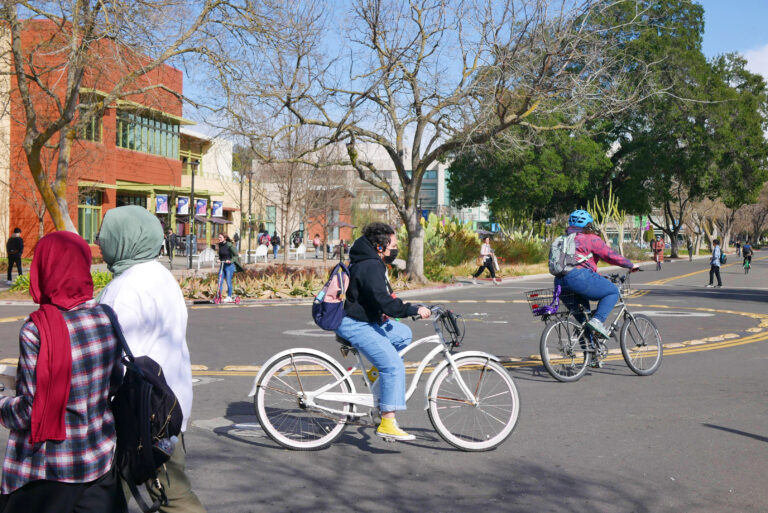
The UC Davis Police Department (UCDPD) has received a $71,250 grant from the California Office of Traffic Safety (OTS) to be used to enhance bike and pedestrian safety on campus, according to a recent press release

UCDPD applied for the grant through the OTS last year, according to one of the department’s lieutenants, Joanne Zekany.

With so many people using bicycles and other personal vehicles on campus, we want to make sure people can get around campus efficiently and safely,” Zekany said via email.

According to the OTS, the purpose of the grant is to reduce the increasing number of pedestrian and bicyclist accidents and deaths, especially among the younger population.

The grant will allow UCDPD to provide bike and pedestrian safety training for students, as well as fund initiatives to give out helmets and other safety equipment, according to the release. The grant program will also help fund current bike safety initiatives and programs on campus. 

While the grant was addressed to UCDPD, it will be used in collaboration with UC Davis Transportation Services (TAPS), according to Zekany, to create these training opportunities and safety equipment handouts.

UCDPD has worked with TAPS on bike and pedestrian safety programs in the past. According to Zekany, UCDPD previously collaborated with TAPS’ Bicycle Education and Enforcement Program (BEEP) before its dissolution in 2016.

Jeffrey Bruchez, the bicycle program coordinator for TAPS, said that BEEP included a citation system for bicyclists, which TAPS has no intention of reinstating. Instead, it is now focused on building other transportation programs and initiatives, as well as “[promoting] the available education on campus.”

Some of these available sources of education include theCyclingSavvy” and “Helmet Hair Don’t Care” programs, according to Bruchez. A new program called “Lit not Hit” is also in development, which will provide free bike lights to bicyclists on campus. 

TAPS has also applied for the OTS grant for the next grant cycle, independently of their collaboration with UCDPD, according to Bruchez.

“We [also] worked together to update the grant applicability for the next cycle, with hopes that if we are awarded, we can launch some really radical new programming,” Bruchez said via email.

Written by: Sydney Amestoy — campus@theaggie.org

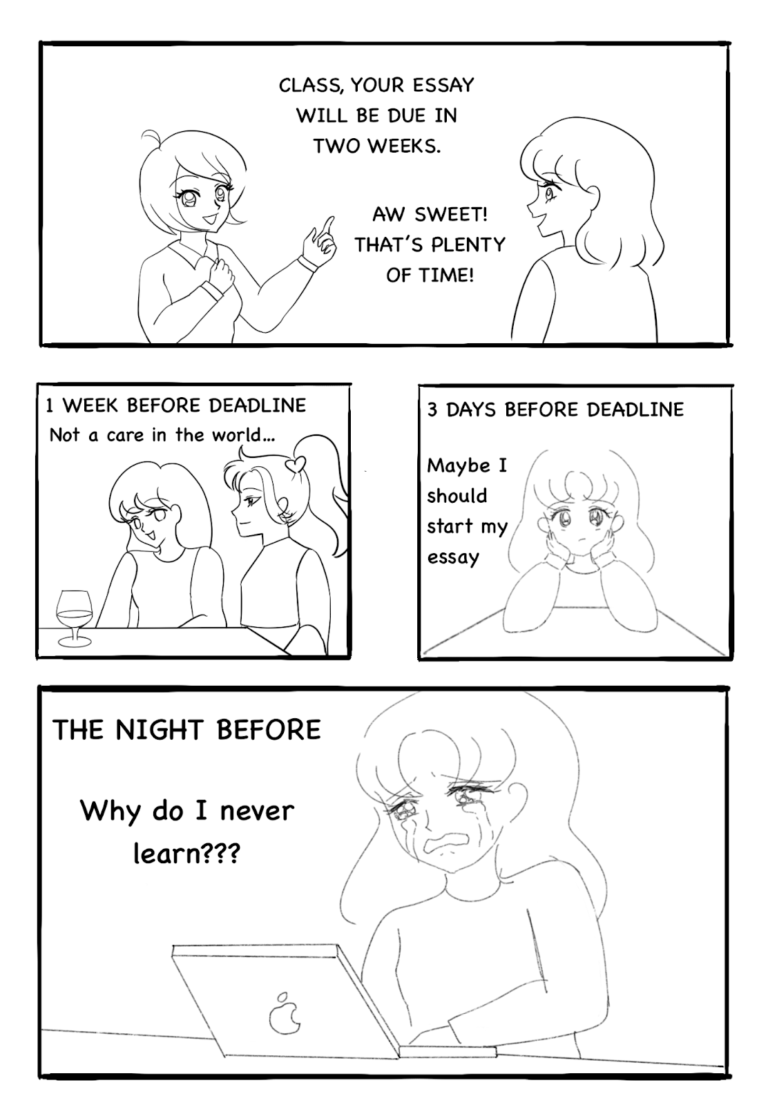
Procrastination

Drawn by: Veronica Then –– vjthen@ucdavis.edu

Disclaimer: (This cartoon is humor and/or satire, and its content is purely fictional. The story and names of “sources” are fictionalized.)

The Davis community weighs in on new Woodstock’s Pizza location

Woodstock’s Pizza, a downtown Davis staple, re-opened in new location last December


By ALEX UPTON — city@theaggie.org


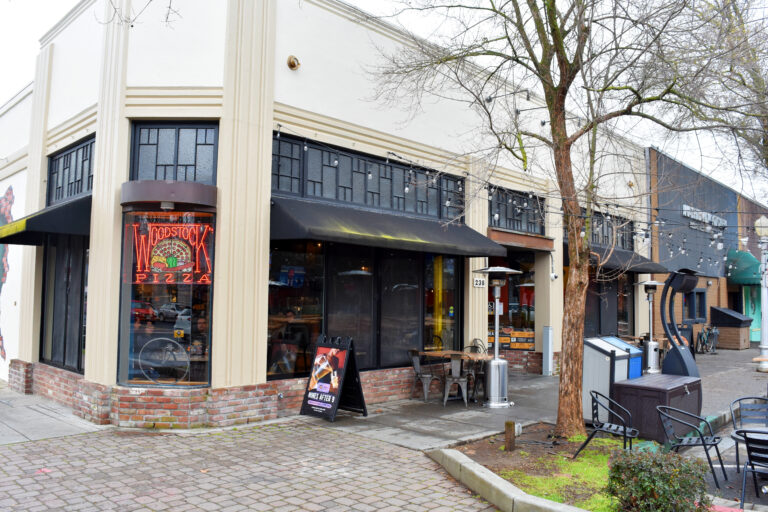
In December 2022, Woodstock’s Pizza opened a new location at 238 G Street, just down the block from their previous storefront at 219 G Street. Woodstock’s is a popular location for Davis locals and students alike but the new location has been met with mixed reviews.

Brooke Douma, a third-year political science major, said that she prefers the new location because it has more space, which means there’s less overcrowding and more available seating.

“I’ve had amazing times with my friends there,” Douma said. “I’m going to go to [the new] location more because it feels less crowded.”

The new location has two levels as well as outdoor seating. Outside there are electric heaters and inside there is a small electric fire at one of the larger tables. Douma appreciates the seating options at Woodstock’s as well as the exposed ceilings. 

Some Davis locals had different reactions to the new location. Korinne Labourdette, program specialist for development and alumni relations at UC Davis, grew up in Davis and shared that while she likes the new location, she still feels nostalgic for the original spot.

“I love it,” Labourdette said. “I think it’s really great, but also as a ‘Davisite,’ Woodstock’s in its original place was kind of like a staple in the town.” 

The change in location is an spacial upgrade from the smaller old location. Loud music plays in the background while customers enter the restaurant and a large mural of Davis spans one of the walls, combining elements of the city and of the university’s campus. 

Woodstock’s attracts a variety of customers, from students to families and Davis. The restaraunt hosts a variety of weekly events, including karaoke, “bingo and brews,” trivia night every Thursday at 9 p.m. and live music featuring local bands. 

On Feb. 21, Woodstock’s hosted their first live music event since the reopening. “The Moon Howlers,” featuring Hattie Craven and Jessica Malone, performed. Craven grew up in the area and loved going to Woodstock’s as a kid. 

“We were so honored to be the first live music at the new location,” Craven said. “We can’t wait to see what comes next.” 


Written by: Alex Upton — city@theaggie.org

How to watch sports as a person who hates sports

Picking the team with the prettiest colors ain’t gonna cut it


By CARMEL RAVIV — craviv@ucdavis.edu


We may have thought we were free from the clutches of football the day after the Rihanna concert, but I have bad news for the non-sports fans out there. Basketball. Soccer. Hockey. Formula 1. March Madness. Cricket. Competitive bass fishing. The torture doesn’t end. We have to pretend to be engaged with this incessant ball play for the sake of the sports lovers in our lives for who knows how long. That is why I put together a list of tips and tricks on how to seem interested in sports, in order to help you fit in at your weird uncle’s super bowl party. . Soon, you’ll be able to bet two-game parlays and debate who’s the ‘GOAT’ of whatever sport faster than you can say, “Ice Spice is the mother of modern philosophy.”


  1. Memorize at least five players’ names and their position from the current team, and then do so for five random players from 10 years ago. Everyone will be LIVING for your ball knowledge.


  1. Instead of jerseys, show team spirit through t-shirts to not seem too obvious. You have to be sneaky and subtle with your fan allegiance, plus they’re way cuter.


  1. Have these following phrases on hand to yell out throughout the game:


If your team is flopping: 

“The other team definitely paid the ref.”

“This game is rigged.”

“My grandma can play better than that!”

“Next season is our comeback era.”

“It’s okay, we have good draft picks next season.”

“Thank god I didn’t bet on this game.”


If your team is slaying:

“Oh my god he scored again? That’s why he’s the GOAT.”

“We’re smoking that <other team’s name> pack tonight.”

“I used to pray for times like these.”

“<player that is doing well> IS HIM!”

“I’m so glad I bet on this game.”


  1. Search up the team name on Twitter for random stats to bring up in conversations. It’s giving informed girlboss.


  1. Don’t mention how hot the players are.


  1. Don’t bring up women’s sports. TAs at UC Davis probably make more than them.


Written by: Carmel Raviv — craviv@ucdavis.edu

Disclaimer: (This article is humor and/or satire, and its content is purely fictional. The story and the names of “sources” are fictionalized.)

Quick! Aliens in Davis: Encounters UFO Xperience offers pop-up museum exhibit and dance club

 An inside scoop on the new family-friendly supernatural attraction in Davis


By KACEY CHAN — features@theaggie.org 


There has been renewed interest in UFOs, or Unidentified Flying Objects, in the news due to the U.S. Department of Defense shooting down three such phenomena earlier this month. Davis, however, was ahead of the UFO game with the arrival of a new attraction located in the University Mall. The normally quiet shopping center recently saw the opening of “Encounters UFO Xperience” — a new immersive exhibit and museum encouraging its visitors to “enter the world of aliens, UFOs and the Paranormal right next to UC Davis,” according to their page on Eventbrite

The man behind the unique attraction is Michael Sawicky. The 73-year-old Brooklyn native and U.S. Air Force veteran has believed in aliens all his life. 

“I’ve seen a couple of UFOs in my lifetime,” Sawicky said. “I saw one in Thailand in the service and then again in an oval-saucer shape in New Jersey 20 years later.” 

He worked in marketing in the entertainment industry throughout most of his career before settling in Vallejo, CA. Sawicky came up with the idea for the attraction after having seen another alien exhibit 10 years ago. While that exhibit was strictly focused on proving the existence of aliens, UFO Xperience takes a different approach. 

“I wanted to make it family-friendly,” Sawicky said. “I don’t want some kid coming in here only to be terrified by voice recordings or photos of alien abductions.” 

Sawicky said that there have been challenges of opening an attraction like this in Davis. 

“It’s a college town, so it can be tough during school breaks, and the University Mall isn’t a particularly popular site,” Sawicky said. 

However, he said he is optimistic about the exhibit’s stay anyway, citing the proximity to Trader Joe’s as a plus, along with the exhibit’s weekly EDM rave nights on Fridays and Saturdays. 

In the curation of the museum, Sawicky’s idea was to create an intersection between UFO and sci-fi pop culture. Visitors entering the museum will see this choice through displays of extra-terrestrial life alongside movie props from popular science fiction movies such as “The Terminator” and “E.T.” 

A unique display at the UFO Xperience is a giant, saucer-shaped UFO in the middle of the museum which visitors can climb into and take photos in. According to Sawicky, the UFO was actually a commission from a friend of his, who acquired a grant to have middle schools make the display by hand. These students also helped make other exhibits in the museum, including two amazingly large robot models located next to “The Terminator” weapons. The interactive UFO is a central part of the museum and is a nod to Sawicky’s all-ages approach. 

Another eye-catching display at the museum is one where visitors can stick their hand into an alien body’s abdomen to feel its “guts.” In reality, there is only a squishy toy at the bottom, but reaching into the dark hole provides a realisticly slimy sensation.

Sawicky understands the fanatical reputation alien culture has, but he said that he wants to remedy this through UFO Xperience by simply trying to encourage visitors to “broaden their minds.” 

“Would I want visitors to be convinced of UFOs after this exhibit? Yes, of course,” Sawicky said. “Sure, if the skeptics are convinced, that’s great, but I want to make people think about the plausibility of aliens and question what they know.” 

The UFO Xperience may also help bring out intrigue and curiosity amongst visitors — even if it doesn’t convince them that aliens exist.

“While I wouldn’t say I believe in aliens now, I loved being able to learn something new, and the exhibit is certainly something I have never seen before,” said Annanya Jain, a second-year biomedical engineering major. 

Initially planning to stay until February, UFO Xperience recently extended their contract until April 30. Until its closure, the museum has many events planned, such as a competition to earn a trip to Roswell, New Mexico, a city with a history of supernatural and alien activity. Tickets to enter the UFO Xperience are currently $15 a piece, but if fortunate enough, Davis residents can catch Sawicky standing outside the museum handing out “Buy one, get one free” deals on occasion. 

 Referencing the 1951 science-fiction film “The Day the Earth Stood Still,” Sawicky said he ultimately hopes for a benevolent encounter with aliens where they actually help human civilization work out their issues. 

“I think they’re there,” Sawicky said. “I think soon enough there will be a presence.” 

Written by: Kacey Chan — features@theaggie.org

Davis Fire Department to continue training at former Hibbert Lumber site

Davis Fire Department asks nearby residents to be aware of ongoing training 


By ANTHONY W. ZAMMIKIEL  — city@theaggie.org


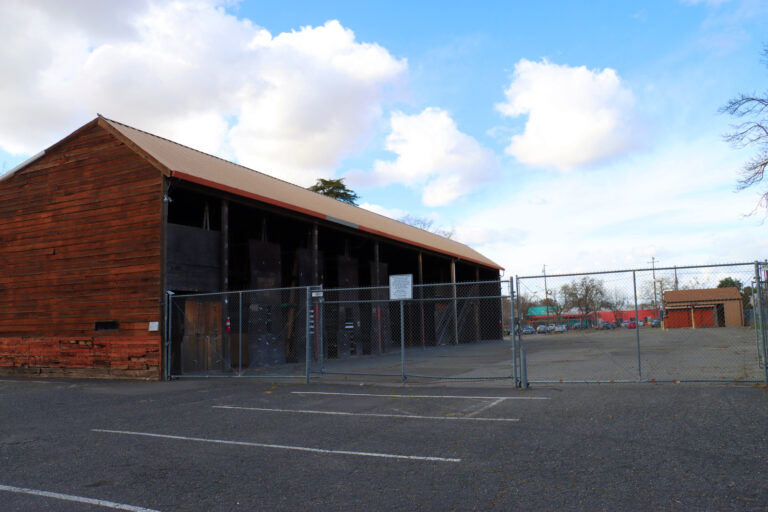
On Feb. 14, the Davis Fire Department (DFD) began conducting training exercises at the former Hibbert Lumber site located at 500 G St. in downtown Davis. The training exercises will continue until Mar. 17.

“The Davis Fire Department will be training at the old Hibbert Lumber site and simulating various fire situations to improve service delivery and effectiveness,” according to an announcement released by the city. “As a result, you may see fire trucks, firefighters, fire hoses or theatrical smoke around this area. Please know that this is only training and that the property owners have given the Fire Department approval to use this site for non-destructive exercises.”

The DFD asks that nearby residents refrain from contacting the Fire Department dispatch if they notice the presence of DFD vehicles or if smoke is seen coming out from the location. 

Tim Jackson, a nearby resident, said that he appreciates how the DFD is dedicating time and resources towards these training activities.

“It makes me feel much more safe and much better about how the fire department is really listening to the community and doing everything they can to always improve themselves,” Jackson said. “I really appreciate everything they do for the community, and I really commend them for always wanting to go out and make sure that people can get the best service possible.”

Debra Johnson, another Davis resident, said that she appreciates how involved the DFD is in the Davis community, and that she appreciates how responsive the DFD is in emergency situations. 

“I know that they are going out and making sure that they can do all these good things for the city in the future,” Johnson said “I’m hoping that the fire department gets all the funding from the city that they need to make sure they can keep doing as good a job as they’ve been doing.” 

Hibbert Lumber formerly occupied the building located at 500 G St., on the corner of G St. and Fifth St. The historic location was opened by Jack and Carol Hibbert in 1947 at I St. and Third St., before moving to the location on G St. and Fifth St. Hibbert Lumber closed during the summer of 2019, but the Hibbert family still operates the Door Shop, which is located at 517 Rowe Plaza.

In a statement, Mayor Will Arnold expressed his appreciation for the DFD, as well as for the Davis community for respecting the training activities being done despite possible inconveniences. 

“We appreciate the preparedness of the Davis Fire Department as they train for various fire situations at the old Hibbert Lumber site this month,” Mayor Arnold commented. “Thank you to the public for its understanding as these exercises take place downtown, and we value and respect our Davis firefighters’ service to the community.” 

The DFD is headquartered at 530 Fifth St., and members of the public are encouraged to contact the department with any questions or concerns. The DFD can be contacted through the non-emergency dispatch number at (530) 747-5400, and emergency calls should be directed to the emergency number at (530) 756-3400 or 911. 

Further information about the DFD can be found online on the Davis city website. The department is also active online on various social media applications, such as Facebook, Twitter, and Instagram, where members of the Davis public can find DFD updates.

Written By: Anthony W. Zammikiel  — city@theaggie.org

UC Davis doctoral student researches the science behind large earthquakes

Alba Rodríguez Padilla studies the physics and geology of earthquakes, focusing on off-fault deformations and earthquake gates


By KATIE HELLMAN— science@theaggie.org

Alba Rodríguez Padilla, a doctoral student in UC Davis’s Department of Earth and Planetary Sciences, has studied earthquakes in the lab of Geology Professor Michael Oskin for the past five years. 

“In the lab, we do data analysis, [… and] data collection in the field; we will map things, we will excavate for samples, we will measure how things have been deformed, and sometimes we’ll dig quite extensive excavations across faults to understand their history,” Oskin said.

Under Oskin’s mentorship, Rodríguez Padilla has worked on multiple projects involving the physics and geology of earthquakes. These include a project about off-fault deformations that focuses on the cracks that build up in the Earth with each new earthquake, as well as another project concerning zones of geometrical complexity along faults called earthquake gates.

“The first [direction of research] is trying to understand what causes earthquakes to stop,” Rodríguez Padilla said. “So how the shape of a fault helps or doesn’t help an earthquake. The other line of work that I pursue is looking at how much of the deformation during an earthquake is accommodated over really, really large volumes of the crust of the Earth, like how far cracks extend from a fault during an earthquake.”

Rodríguez Padilla utilizes remote sensing technology and geological records, funded by a $90,000 fellowship from NASA’s Future Investigators in NASA Earth and Space Science and Technology (FINESST) program, to generate probabilistic models. These models predict whether an earthquake will be stopped by analyzing the geometric complexity of faults. Her research is utilized in multiple career fields, from policymakers creating earthquake insurance policies to engineers developing safer infrastructure.

During her time earning a bachelor of arts in human ecology at Maine’s College of the Atlantic, Rodríguez Padilla studied under the mentorship of Earth Science Professor Sarah Hall.

“We were looking a lot at fractures and faults, so we’d go out in the field with a compass and GPS and use tools for mapping,” Hall said. “My Ph.D. research and work that [Rodríguez Padilla] was a part of was in the Andes and mostly in coastal Peru where there are active faults. In that work, we were using a lot of surveying equipment to make high-resolution maps of surface features that were offset, and we could measure how much offset there was along a fault during an earthquake.”

During that time, Rodríguez Padilla explored geological landforms like glaciers and volcanoes and realized that she was passionate about the physics driving these natural processes. She decided to come to UC Davis after graduation, in part because its location in California provided her the opportunity to study in the U.S. state that has historically had the most earthquake damage, according to the United States Geological Survey (USGS).

Aside from doing her own research, Rodríguez Padilla is a mentor for the Southern California Earthquake Center, a research organization funded by the National Science Foundation and the USGS. Rodríguez Padilla has also participated in UC Davis’s GEL 199, an advanced research course for undergraduates, as a mentor to students in the same way that she was supported by her own mentors and other geologists. Looking forward, Rodríguez Padilla hopes to focus her research on the warning signs of future earthquakes.

“We’re realizing that the time in between earthquakes is not a time of silence,” Rodríguez Padilla said. “Faults are doing things during that time, so I want to start looking at really, really subtle signals of faults during the period leading up to earthquakes. There may be information there that helps us understand a little bit better how faults get ready for a big earthquake.”

Written by: Katie Hellman — science@theaggie.org

Commentary: Is contemporary fashion evolving or deteriorating?

21st-century fashion designs might be on a downward trajectory


By SARAH HAN — arts@theaggie.org


Fashion is viewed through a subjective lens: some people might view one design as revolutionary while others simply do not understand it. However, beyond subjectivity, recent fashion designs seem to overwhelmingly garner the latter opinion, and the following examples are a reflection of these unfavorable sentiments. 

An example of some of the most impractical designs is Viktor & Rolf’s Fall 2007 Ready-to-Wear collection. Most of the models in the show wore clothing attached to lighting rigs, making it difficult to balance and walk. Although I’m all here for artistic originality, these designs left me wondering about the designers’ intent and concerned for the models’ safety. Rather than amplifying ordinary clothing by incorporating a personal spin, I feel like the designers are competing to obtain the “most original” or “most eccentric” title.

Indeed, creating extraordinary designs is one goal of the fashion industry. However, I feel like some current designs are only prioritizing this aspect over others, like practicality. There is a fine line between what’s original and what’s too much, and unfortunately, many contemporary fashionistas do not seem to care if they cross it.

Another example is the beloved 2017 Commes des Garcons designs. This brand became popular from its collaboration with Converse, which was a huge hit: the well-known heart decals added a quirky spin to the classic sneakers. However, on the runway, the brand’s designs did not resemble clothes: they looked like casts that were molded into wavy blobs, and the shoes looked like bedazzled ankle stabilizers. 

Maybe these fashion designers are not thinking about practicality at all — I mean, it would be unfathomable to categorize these designs as clothes you could wear to brunch or the grocery store. I don’t think many of these looks would even be appropriate for formal events aside from those that clearly establish that practicality is out of the picture, like, for example, the Met Gala.

Though it is a fundraising event, one of the central aspects of the gala is to showcase creative and unusual designs that are not meant to be worn in everyday life; in fact, the Met’s chairwoman, Anna Wintour, announces a unique theme before the annual gala each year. Events like these are specifically designed to celebrate outside-of-the-box fashion, and even at these, I feel like many of the designs are more wearable than ones we often see on runways.

Despite this trend, many contemporary fashion designs do still value practicality in addition to originality. Recent Ralph Lauren, Versace and other collections all incorporate the designers’ unique tastes to ultimately amplify the garments themselves. 

While the fashion industry champions artistic freedom and creativity, designers seem to push the boundaries solely to obtain attention and clout. However, it’s up to the designers if they want to continue creating impractical designs or make their clothing more wearable.

Written by: Sarah Han — arts@theaggie.org

We should stay ‘W.O.K.E.’ about our future

Recent censorship bills passed in Florida should serve as a reminder to combat policies, even if they don’t directly affect us


By MICHELLE MENDOZA — mimendoza@ucdavis.edu


I couldn’t believe my eyes when I read the headline “Why Florida is getting rid of books in their libraries” in my morning newsfeed. Some videos included in the article featured shelves and shelves in a school’s library, usually full of books, all completely empty. However, upon further research, I learned that the books weren’t even the biggest issue at hand. 

The governor of Florida, Rob DeSantis, passed House Bill (HB) 1467 last July to make purchased instructional material available to students and transparent to the public. The bill itself is designed to give more power to officials who are looking to ban books and other instructional materials containing “objectionable” content deemed harmful to minors. But what exactly is harmful to minors? Many conservatives seem to think that any material related to LGBTQ+ identities, sexuality, diversity or racism falls under that category.

  Recently, Florida has mounted other efforts to take control of education. One example is HB 1557, dubbed the “Don’t Say Gay” bill, which prohibits instruction that discusses sexual orientation or gender identity for students from kindergarten to third grade. HB 7, a sister bill to HB 1557, called the “Stop W.O.K.E.” Act, was also passed last year and prohibits educational institutions from teaching students anything that would cause them psychological distress due to their race or other identities. 

These bills have played a large part in the many restrictions on books. According to ABC News, more than one million books in Duval County, Florida are under review because they potentially violate one or more of these bills. The process of reviewing books can take a long time, and they must be covered or removed while under review, which can completely alter an instructor’s lesson plans. For now, teachers and students have no choice but to comply.

The bills together form a trifecta of censorship — and the politicians who passed them know it. Ron DeSantis, a Yale alumnus, graduated with a degree in history Magna Cum Laude, all while working and playing baseball. He knows the inside and outs of policy, and how to write it effectively. 

Francine Prose put it best in The Guardian, “[DeSantis] learned what a good education is, what it means to be taught to think — and that is precisely what he is denying students who are less privileged than he and his Yale classmates.” If you don’t want people to question the institutions in place for them, then you don’t teach people to think critically about them. 

Why is this especially important? DeSantis is currently gearing up to run for president in 2024. 

Additionally, while Florida lawmakers have made successful attempts at controlling curricula, it’s not just happening in red states. As blue or progressive as California may seem, school districts in Southern California like Placentia-Yorba Linda Unified and Temecula Valley placed bans on teaching critical race theory last year. 

But DeSantis’s campaign has met resistance, as have these Southern California towns. Young students see through this agenda, and it is clear that taking away books does not erase their stories or identity. It is important for us, as well, to be aware of the laws that may not affect us directly. If we aren’t it could lead to us ending up with another president who tries to undo progress.


Written by: Michelle Mendoza — mimendoza@ucdavis.edu

Disclaimer: The views and opinions expressed by individual columnists belong to the columnists alone and do not necessarily indicate the views and opinions held by The California Aggie.

UC Davis women’s beach volleyball dominates against USF

The Aggies sweep San Francisco 5-0 in season-opening doubleheader


By EVA MACHADO — sports@theaggie.org


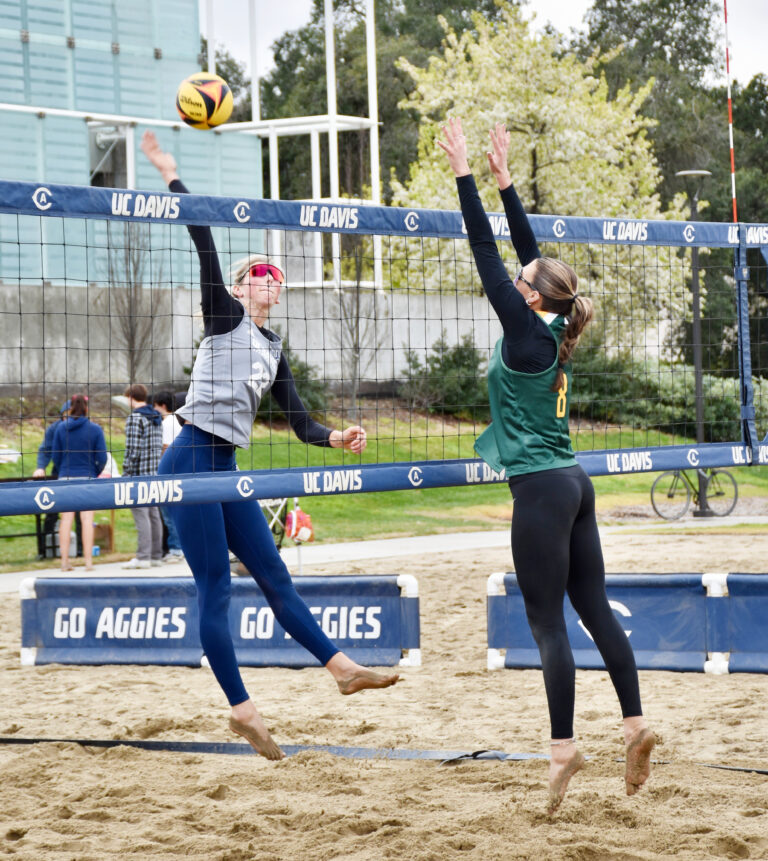
UC Davis women’s beach volleyball opened the 2023 season with a doubleheader against the University of San Francisco on Feb. 25. The Aggies started the season strong once again, with a season opener reminiscent of their 2022 match-up against the San Francisco Dons, winning both matches overall. 

The Aggies opened the morning with a scrimmage against Monterey Peninsula College before moving into the double-header with USF at the UC Davis Beach Volleyball Courts.

Both contests consisted of five matches, each featuring different pairs. Each match was won by winning two of three sets. In the first contest, the Aggies shut out the San Francisco Dons, winning five matches to none. All five pairs also won in straight sets, with the lineup of Aggies’ pairs consistently holding the lead over the Dons’ pairs. Throughout the sets, scores remained close, but UC Davis was able to gain the necessary 21 points first every time. 

Third-year Colleen McGuire and second-year Kylie Miller fought especially hard to maintain their lead during their two sets in the first match. San Francisco’s opposing pair held up strong; however, McGuire and Miller’s powerful and consistent opposition ultimately led them to victory. During their first set, both teams played strong offense, trading the lead back and forth, until McGuire and Miller ended the set on top, winning 21-19. 

With a close win, the second set was full of anticipation from the crowd, as McGuire and Miller took the lead early. The Aggies held a powerful leading position throughout, and McGuire ended the set with a punishing spike indicative of the set’s energy.

The Aggie fans’ presence was also apparent throughout the morning. As the match carried on, support for the home team amplified alongside the Aggies’ domination over the Dons. The crowd’s energy was focused yet ecstatic —reflecting that of the players. 

Opening the season with an overall win against the Dons, the UC Davis women’s beach volleyball team has a strong entrance into an exciting season. On March 1, the Aggies will face the Pacific Tigers and the Sacramento State Hornets, their first Big West opponents of the season, on the UC Davis Beach Volleyball Courts at  2 p.m and 4 p.m. respectively.

With a powerful start to the 2023 season, one can only anticipate the power these pairs and the entire team will possess. 

Written by: Eva Machado — sports@theaggie.org

Student picks: Inside scoop on the best restaurants in town

UC Davis students give insight into the best places to eat in Davis


By FAITH DEMEULENAERE — features@theaggie.org


Some students may be tempted to flock to the chain restaurants they recognize from their hometowns, but the locally owned restaurants of Davis are the ones that really capture the attention of adventurous foodies. If you’re new to town, or just want to try something new, UC Davis students can give you some top-tier recommendations. From hole-in-the-wall cafes to under-the-radar eateries, get ready to explore the food scene of this bustling college town.

Jordan Rouleau, a third-year English and art history double major, said there are a few places in Davis with unbeatable charm.

“A place that I really like that isn’t talked about enough is Four Seasons Gourmet Chinese Restaurant,” Rouleau said. “Their food is some of the best I’ve had anywhere. Their prices are super worth it for the portion sizes. I definitely recommend giving it a try.”

Liam Swenson, a second-year physics major who lived in Davis even before attending college, said some spots in town have “become staples” for him. He emphasized one of his favorite places for a morning pick-me-up.

“A really great coffee shop in town is Pachamama,” Swenson said. “They have really great coffee that is completely organic, sustainable and 100% farmer-owned.”

Swenson said his favorite restaurant in Davis is Open Rice Kitchen.

“They have incredible food and boba with unique daily specials,” Swenson said. “They are one of the most affordable places in Davis.”

As more and more people turn toward plant-based diets, the demand for vegan restaurants is on the rise. Lauren Toyne, a third-year wildlife, fish and conservation biology major, said her favorite vegan food place in Davis is the Three Ladies Cafe.

“It is a super cute restaurant with a cool staff and amazing vegan options,” Toyne said. “I would highly recommend the lavender lemonade.”

Some may find that dining options on campus get repetitive after a while, including fourth-year communication major Emma Brockman, who has developed a few favorite locales for a delicious and unique meal experience.

“My favorite go-to spot in Davis at the moment is Red 88,” Brockman said. “They have great noodles and things such as loaded fries that you can’t necessarily find anywhere else in town. I am also a new fan of the Cloud Forest Cafe for breakfast and brunch on the weekends. It has a really nice ambiance and super friendly employees.”

With so many hidden gem eateries to choose from, Davis is bursting with delicious and diverse options.

Whether you’re a student on the hunt for a tasty and affordable meal between classes or a visitor wanting to explore the local culinary scene, these recommendations from college students might lead to some of the best eats in town.

Correction: A previous version of this article was missing links to restaurants’ websites. It has been updated accordingly.


Written by: Faith DeMeulenaere — features@theaggie.org