57.6 F
Davis

Davis, California

Tuesday, December 23, 2025
Home Blog Page 177

Aggie Icons: The history of UC Davis campus architecture that students know and love

How our agricultural roots and ever-changing history are reflected in our campus buildings 


By REBEKA ZELJKO — features@theaggie.org


The UC Davis campus has grown tremendously since its founding in 1908, according to the UC Davis website. Over the last century, the campus has developed from a small agricultural branch of UC Berkeley to a leading university with over 35,000 students.

All of this history can be seen in glimpses throughout our campus, with many original buildings retaining the character and iconography that students still resonate with today.

One of these many iconic buildings is the UC Davis water tower. Kevin Miller, head of archives and special collections and the university archivist, said he thinks the symbolism of the water tower is crucial to the Davis identity. 

“Before other things were built, it was really the only thing people would see that would signal there is a university there,” Miller said. “The water tower is like a beacon, you can see it for miles, and that symbolism goes back to our original university history.”

Miller says that the water tower iconography goes hand-in-hand with the Aggie identity. The imagery of the water tower was always embraced by students and the campus culture.

“It was sort of at the center of our campus,” Miller said. “One of the most popular activities during Picnic Day was to climb the water tower and get a 360 view of the campus. There was another time — I think it was around 1928 — when a few students got together in the dead of night […] and painted the Cal Aggie block symbol. It was this unofficial logo, kind of created and embraced by the students.” 

The water tower is a symbol that has followed UC Davis students for generations. Miller said that the structure has always been interconnected with student life on campus. 

“All of the college experience was happening under the watch of this water tower,” Miller said. “Students were really attached to the symbol; it became an icon and a point of pride. It was just part of the UC Davis experience.” 

Over the last century, three iterations of the water tower were built. According to the water tower exhibition website, the original tower stood from 1908 to 1928, standing at 84 feet tall. In 1922, the mid-century water tower stood at 103 feet tall until it was taken down in 1960. In 1957, the modern towers were built and still stand today at 155 feet tall. 

The university’s origins are reflected in other parts of campus as well. Bree Hernandez, a third-year pharmaceutical chemistry major, said she still feels the history around campus. 

“You can drive past the vineyards or drive past fields and say hello to the animals on campus,” Hernandez said. “And there’s also a mix of architecture on campus. A lot of it has a very NorCal and agricultural feel. Dutton Hall has the cool wooden facade next to North and South Halls, which also look like wooden cabins.”

These cabin-like buildings, known as North and South Hall, are among the earliest built on the UC Davis campus. North Hall and South Hall were built in 1908 and 1912, respectively, according to the UC Davis library website. Both originally served as dormitories until they were converted into office buildings in the 1960s. 

America Negrete, a fourth-year wildlife, fish and conservation biology major, said that the architecture of the original halls is cleverly mirrored in nearby Dutton Hall. 

“I really like the look of Dutton Hall and North Hall and how the more modern buildings kind of match the style,” Negrete said. “The outside is very cabin-like and quite different from the other building on campus. It definitely gives off that NorCal feel.”

Negrete appreciates the character of the older structures and the quality it adds to the campus. 

“The fact that we still have original buildings on campus is something that I love,” Negrete said. “They really stand out and cause students to reflect on how small the university used to be, and how much it’s changed since we were founded.”

The Silo is also original and unique to the campus. Hernandez said these buildings are characteristic of the agricultural background that UC Davis is known for.

“The Silo has such a Davis feel,” Hernandez said. “And it’s close to the barns, which all feel like a nod to our agricultural founding, which I like. It makes the campus feel uniquely Davis.”

Originally built in 1909 as a dairy barn, The Silo was one of the first buildings to be constructed on the university campus, according to the UC Davis website. It was later converted into the dining area we are familiar with in 1965.

“Next time you are in Peet’s Coffee, you can think about our origins,” Miller said. “It’s interesting how we have retained characteristics of certain buildings and reimagined them.”

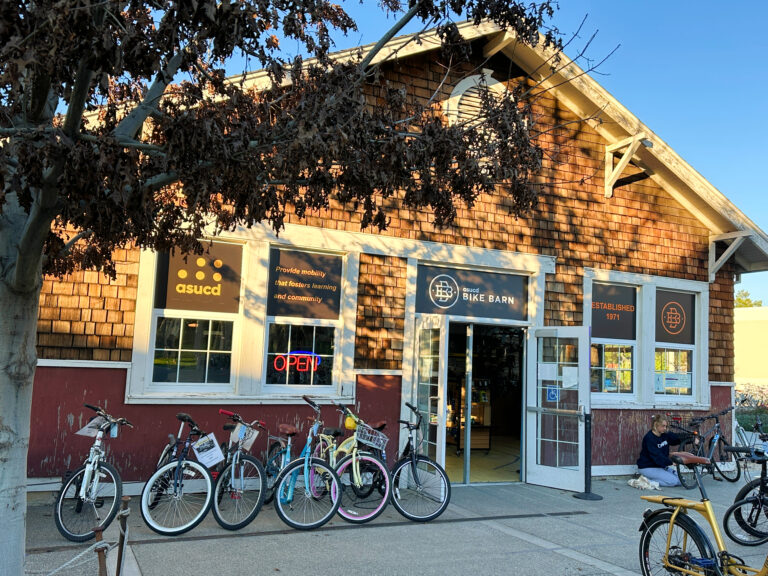
Other reimagined buildings on campus are The Barn and the Bike Barn, located near The Silo. The Barn was built in 1914 to house beef cattle and was converted into an office space in 1968-1969, according to the UC Davis library website. The Bike Barn was originally constructed in 1916 as a judging pavilion but was later changed into a student repair shop for bikes.

“Since its inception, the Bike Barn has grown and changed with the needs of the growing campus community,” the ASUCD Bike Barn website states. “In the early 1980s, the Bike Barn invested in a small fleet of rental bikes to cater to campus visitors and exchange students. Over the past three decades, this fleet has grown and evolved from cruisers to hybrid Biria citi bikes with over 115 straight and drop bar frames available.”

One of the most observable examples of Davis’s growth over time is the architecture of Shields Library. 

“It’s a huge building that’s a Frankenstein of architectural styles, but it’s reflective of our history,” Miller said. “Depending on what side of the library you are standing outside of, you’re faced with a completely different architectural style.” 

The library was built over the course of several decades, according to a timeline on the UC Davis Library website. The first part of the building was completed in 1915 and was replaced by the Reading Room in the 1940s. It was later utilized for training U.S. Army personnel during World War II. The current north wing was completed in 1940. This was followed by the completion of the east wing in 1964, the south wing in 1967 and finally the west wing in 1990. 

Matthew Conner, a librarian in the Student Services Department and author of “The New University Library: 4 Case Studies,” said the library’s architecture has changed over time based on the campus’s needs. 

“While the Shields Library retains its traditional core of the Reading Room, which sits in the library’s original footprint […], the rest of the building has followed a more modern vision that influenced library buildings post-war,” Conner said in an email. “Looking to a more dynamic future, libraries were built to be modular and repurposable with partitions that can be added or removed to create new spaces. The library is actively engaged in this continual revision to continue serving the campus in the future.”

The decades of change and transition that the library has experienced are translated into its architecture.

“There’s a sort of art-deco facade facing the quad and a more modern style in other wings,” Miller said. “There’s this sort of square pane motif at the front of the building and in the windows, which coincides with the design style at the time it was built. All of the wings that were added sort of came together in this beautiful area surrounding the quad, with a beautiful turkey oak tree at the center.”

The UC Davis campus as it stands today is rich with tradition, history and diverse style, reflecting our founding and the generations of students that came before us. 

Written by: Rebeka Zeljko — features@theaggie.org

Senior Bowl preview

The Senior Bowl features a new coaching staff format and an opportunity for NFL draft prospects to impress scouts


By PATRICK FIGUEROA — sports@theaggie.org


The Senior Bowl is a college football all-star game, as well as the first stage in the NFL draft process. Players who have completed their college eligibility are invited to compete in front of NFL scouts from all 32 teams. Notable players that participated in the Senior Bowl include Dallas Cowboys quarterback Dak Prescott, Los Angeles Chargers quarterback Justin Herbert and UC Davis alum Keelan Doss. 

This year, the Senior Bowl has changed the format for its coaching staff. Instead of having two full NFL coaching staffs for each respective team in the Senior Bowl, NFL operations is implementing a “coach up” format. This means that NFL coordinators and assistant coaches from around the league will be coaching in elevated positions to promote professional development. 

Chicago Bears offensive coordinator Luke Getsy will be the head coach for the American team. On the other side, Las Vegas Raiders defensive coordinator Patrick Graham will be coaching the National team. They will be joined by assistant coaches from various NFL teams, as well as four coaches from historically Black colleges and universities in honor of the Senior Bowl’s Minority Coaching Fellowship Program. 

Senior Bowl Executive Director Jim Nagy spoke on the new coaching format with NFL reporter Ari Meirov. 

“What I do like about [the new coaching format] is the opportunity that these coaches now have,” Nagy said. 

He elaborated that Graham and Getsy both will likely have future head coaching opportunities with what they have done in their careers so far, and the paths they seem to be on for the coming years.

Nagy also adamantly expressed his excitement for the players participating in this year’s Senior Bowl. 

“I’m really excited for our players,” Nagy exclaimed. “[The coaching staffs’ teams are] drafting in the top half of the draft so they’re going to have the top picks in each one of the rounds
 [it’s] just a great experience for the players behind the scenes with half the league now.” 

Between the two Senior Bowl rosters, there are nearly 120 players expected to participate. Not only will these players have the opportunity to impress scouts during the game, but also during practices and behind the scenes, as Nagy mentioned. 

One of the players that is expected to participate in the Senior Bowl is Texas Longhorns running back Roschon Johnson. Part of the National team roster, Johnson is a powerful athlete, but he played behind one of the best running backs in college football, Bijan Robinson. This limited Johnson’s number of touches during the 2022 college season. The Senior Bowl provides Johnson with a better opportunity to impress scouts with increased reps. 

Georgia Bulldogs running back Kenny McIntosh is part of the American team roster. Similarly to Johnson, McIntosh had a limited workload because he was part of a crowded backfield at Georgia. However, with good pass-catching and rushing skills, McIntosh has the potential to be a three-down running back in the NFL. Showcasing his three-down skill set at the Senior Bowl could improve his draft stock. 

Tennessee Volunteers quarterback Hendon Hooker was one of the most productive quarterbacks in college football, totaling 27 touchdowns and 3,135 yards thrown. However, he tore his ACL near the end of the season in a game against South Carolina. Despite the injury, Hooker accepted his Senior Bowl invite and will have the opportunity to interview with multiple NFL teams.

TCU Horn Frogs quarterback Max Duggan will also be in the Bowl. Duggan was productive throughout his 2022 season, throwing 3,698 yards and producing 32 touchdowns. He was the runner-up for the 2022 Heisman Trophy and led his team to the College Football National Championship. 

Iowa State Cyclones wide receiver Xavier Hutchinson had the third-most catches in college football this past season. He is the most productive wide receiver attending the Senior Bowl and is currently projected to be a second-round pick by the Draft Network. If Hutchinson has good athletic testing at the Senior Bowl, he could improve his draft stock. 

With a long history and national coverage, the Senior Bowl is an opportunity for both coaches and players. For players, there will be other opportunities and events along the way, such as the NFL Combine and College Pro Days, that will guide their paths to the NFL draft.


Written by: Patrick Figueroa — sports@theaggie.org


Artificial intelligence is the future, but is it a threat to education?

With the rise of chatbots like ChatGPT that feature essay writing technology, student academic integrity and creativity need to be preserved


By THE EDITORIAL BOARD


In November of last year, OpenAI, an artificial intelligence (AI) lab in San Francisco, released a new chatbot called ChatGPT — which stands for “generative pre-trained transformer.” The tool’s launch has revolutionized automation of information and Generative AI, a field that enables its users to hold human-like conversations with a computer software and receive desired content generated by a bot.

From asking the AI software to develop business proposals in a matter of seconds to requesting it to “explain AI Alignment, but write every sentence in the speaking style of a guy who won’t stop going on tangents to brag about how big the pumpkins he grew are,” the chatbot seems like it can do it all. Some have even gone so far as to attest that similar chatbots like Google’s LaMDA have developed sentience, an awareness of emotions and their own existence.

While many tech gurus of Silicon Valley have praised ChatGPT’s introduction and advancements, educational institutions have raised ethical concerns regarding the threat that AI poses to education for both its students and teachers. Professors from colleges like the University of Northern Michigan have already caught students using the AI to cheat on essay assignments and have been forced to alter their curricula, incorporating more oral exams, first drafts handwritten in the classroom and on-campus restrictive browsers that prevent the use of the chatbot to write responses for them. 

In addition, ChatGPT can bypass safeguarding programs like Turnitin designed to detect plagiarism, since the chatbot generates its own content as if a student had written it. Using programs like this further appeals to students because it can save time and effort on class assignments, emails and even job applications. 

While it might be tempting to have your paper written on demand, reliance on AI would mean that skills such as crafting original, meaningful essays, developing cohesive arguments and expressing oneself authentically through writing would all be rendered useless in the classroom and out. This can also stifle nuanced thought and progressive discourse in education that may further jeopardize students’ intellectual development and success in future careers.

AI is also a threat to journalism. Because the chatbot has access to a large database and can closely imitate human writing styles, it can easily mass produce and quickly spread falsified narratives through public media. Misinformation on vaccines in the U.S. during the COVID-19 pandemic, for example, endangered the lives of millions, having sparked steadfast opposition to vaccination; imagine what ChatGPT can do on a global scale with time.

Search engines like Google and many who put out original content are at risk of being displaced by generative AI programs. And the field will only continue to grow, with investors and tech giants like Microsoft funding OpenAI and expecting $1 billion in revenue by next year. 

So with the rise of AI technology, could this mean the end of creativity and integrity in the public sphere?

The answer is no — as long as it is used responsibly. Regulations need to be put in place to prevent misuse of AI. On Jan. 30, Senator Bill Dodd introduced California’s first-ever AI-drafted resolution, showing that AI can be applied appropriately while expressing the state’s commitment to developing legislation and policies to ensure its safe use. 

Furthermore, Edward Tian, a student from Princeton majoring in computer science and minoring in journalism, developed a free program called GPTZero in response to the chatbot. It can detect whether a human or AI like ChatGPT wrote an essay. Over 30,000 teachers have reached out to him to use the platform and have only returned positive feedback upon testing it. Likewise, OpenAI plans on watermarking any of ChatGPT’s output to make plagiarism easier to spot, and Turnitin recently introduced its AI Innovation Lab as a countermeasure to AI-assisted work submitted by students.

While moves are being made to regulate AI usage, this does not mean we should completely reject the tool. We can still appreciate the technological advancement of ChatGPT, with its ability to draw relevant information from an abundance of datasets in the digital web and cater to a user’s needs immediately.

Just be responsible with how you use generative AI programs. Rather than blindly relying on it, improve and coexist with it. Be conscious and critical of the content you consume and produce. It may be tempting to let AI quickly write an essay or news article. But think about what you would lose out on and what risks you would be taking as you progress through your education or career — letting a chatbot do the work for you and worse, be you.


Written by: The Editorial Board

Peet’s Coffee in North Davis becomes the first location to unionize

After historic union vote, North Davis organizers say that the movement continues


By ANTHONY W. ZAMMIKIEL  — city@theaggie.org 


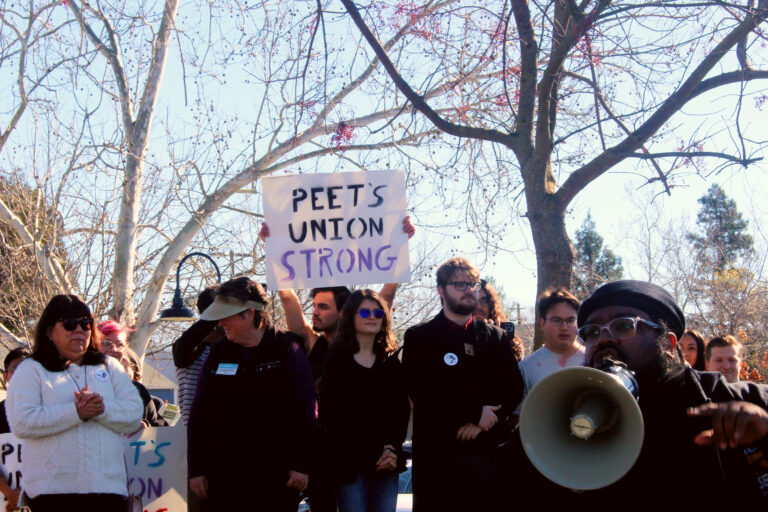
On Jan. 23, the North Davis Peet’s Coffee location announced in a press release that the employees at the location voted 14-1 in favor of unionization. The National Labor Relations Board certified the election, making the location the first of the chain to unionize. 

The news comes nine months after workers at the North Davis location began collaborating with Service Employees International Union (SEIU) Local 1021 and Workers United, a pro-union organization that has contributed to Starbucks unionizations throughout the nation, according to the press release. 

The release states that “The election, overseen by the National Labor Relations Board, takes place against a backdrop of renewed union organizing, alongside regional victories like unionized Starbucks Corporation stores in San Francisco, Berkeley, and Santa Cruz.”

In the press release, Trinity Salazar, a barista at the North Davis Peet’s location, shared what unionizing means to them.

“This is the first time in my entire life that I feel I can stay in a job and be happy,” Salazar said. “We are all struggling, and we came together. Now, we’re more united. We have every right to be able to say how much we’re being paid, or at least negotiate it. If you’re sick, you’re sick. The company does not decide it. I don’t want my body to be destroyed when I am twenty-one years old. I’m literally twenty-one with back problems because of coffee.”

Alyx Land, a shift lead with the North Davis location, also discussed the difficulties of working without union representation in the press release.

“It’s the norm in the coffee business to have bare-bones staffing,” Land said. “Management puts the minimum amount of people they can get away with on the floor. Then we have to do a difficult job when we have a line out the door and mobile-order stickers down the counter. It’s really exhausting. I’m excited at what unionizing could do for our entire industry. I want to see our work become more sustainable because I am passionate about what I do and want to keep doing what I do. However, I cannot realistically keep doing this without having more protections and a more sustainable workplace.”

Organizers have shared that success with their election will not conclude organizing efforts for other Peet’s Coffee locations. Peet’s union leaders held a rally on Saturday, Jan. 28 at the North Davis location to help gain momentum. 

 Employees at the North Davis location continue to encourage community involvement with organizing efforts, and for community members to come into the store to express their support. The union plans to conduct member surveys to determine what workers’ needs are and to elect representatives for the location during future negotiations with Peet’s management. 


Written By: Anthony W. Zammikiel  — city@theaggie.org


Correction: A previous version of this article state that the North Davis Peet’s Coffee joined Service Employees International Union (SEIU) Local 121. The correct local number for SEIU is 1021. The article has been updated to reflect this error.

One UC Davis advisor’s role in establishing the student retention and community centers

0

How Kayton Carter advocated for cultural centers that today provide community and resources to underrepresented students


By MARIA MARTINEZ CASTRO  — features@theaggie.org 


Student community and retention centers on campus are communal spaces where students of color, often the most underserved and underrepresented populations in higher education, can access resources to succeed as scholars and prioritize their well-being. 

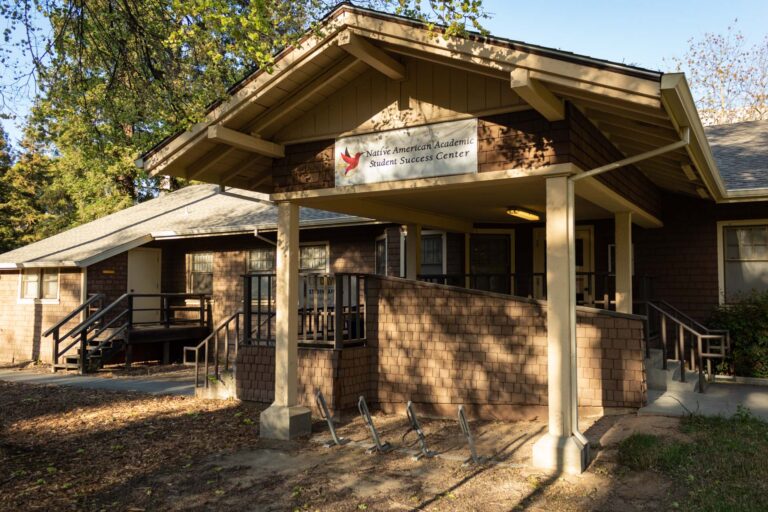
While centers like the Center for African Diaspora Student Success (CADSS), the Native American Academic Student Success Center (NASSC) and the Center for Chicanx Latinx Academic Student Success (CCLASS) are now part of the normal and natural makeup of UC Davis, that has not always been the case. Their development and establishment is fairly new, as none of the centers have yet to meet their 10-year anniversary.

The journey to establish retention centers for underrepresented students started in 2015 with the opening of CADSS. Kayton Carter, now the Executive Director of Academic Advising Enrichment at UC Davis, is the founding director of CADSS, the campus’s first retention initiative targeting underrepresented student populations. 

According to Carter, CADSS was the initial “seed” planted to continue to grow centers to serve other underrepresented communities such as the Chicanx/Latinx, Asian Pacific Islander and Native American communities. Carter is the seed-bearer for CADSS’s establishment and gave the initial push for the establishment of CCLASS and NASSC. 

Carter joined UC Davis in 2012 as an academic advisor for the African American Studies Department, but he said that the expectations of this position prevented him from fully addressing student needs. 

“In my previous position as an academic advisor for African American Studies, only 50% of my job was dedicated to the major,” Carter said. “So I’m 50% advisor, 50% Student Affairs Officer. The 50% Student Affairs Officer role entailed maintaining a pulse on the retention of the Black student population. And I realized that a task of this magnitude needed to be more than 50% of someone’s position description.” 

According to Carter, that is when he began having conversations with colleagues from Native American Studies, Chicanx Studies and Middle East/South Asian Studies about the declining rates of retention of these student populations. 

Carter says that as a graduate student at Michigan State University, he remembered the Office of Minority Student Affairs. He began to question why UC Davis did not have that model for underrepresented students, too. 

“The centers have to have a mission,” Carter said. “They have to be, in my opinion, addressing a gap in services, addressing a need within the student population. That gap [is] support services for underperforming students of color to increase [their] retention and graduation rates.” 

Carter said that before establishing the physical centers for students to congregate and receive services, he first had to write the African American Strategic Retention Initiative. 

“The initiative is what drives the operation of the center,” Carter said. “The center is that communal space where folks can gather, but what you’re doing in that space is informed by the retention initiative […] and so the idea in creating those spaces was to designate an office with staff whose sole responsibility was keeping a finger on the pulse of underrepresented populations on this campus.” 

In order to meet the goal of providing services for students to grow and thrive academically and personally, centers such as CADSS and CCLASS collaborate with other resource groups on campus to provide services such as tutoring, academic advising and counseling. 

“These retention centers are not supposed to do it on their own,” Carter said. “The idea is that when they collaborate, they form a web. The retention centers are at the middle of that web and all of its tentacles, touch the resources on campus, bring them to this space to centralize them so that when a student comes, they can get chemistry tutoring, they can get writing instruction, they can get a mentor [or] they can get food.” 

Carter said that centers catered to minority students in higher education can give them a sense of familiarity and communal understanding. 

“Some of our underrepresented students are in majors where they don’t see a lot of people that look like them,” Carter said. “So if we could devise a mentoring program, such that, when they’re in those classes of 200 or 300 — and it’s only like four or five of them — they can still come back to a center concept for a place of refuge to kind of regroup, rejuvenate and to collaborate, cross reference, share information, maybe gain some insight.” 

Nyla Modeliste, a third-year forensic chemistry major, said that CADSS has been an important aspect of her academic career in gaining community and resources. 

“I feel like it’s important because coming to a PWI [predominantly white institution], it’s kind of hard to find people that look like you,” Modeliste said. “Sometimes, that pressure can be so overwhelming to the point where you feel like you can’t really answer questions or can’t ask for help because you feel like, ‘I need to prove myself.’ […] You have to work twice or thrice as hard. So with those centers, they’ll help you find resources that not many professors will give you right then and there.” 

Francisca Dogbe, a third-year neurobiology, physiology and behavior major, said CADSS has been a space where she feels supported and encouraged throughout her higher education journey. 

“I also do think that it’s a good way to have a safe space,” Dogbe said. “It’s nice to have people that you are surrounded by that kind of know or have gone through similar experiences. It’s very empowering that I can be able to achieve greatness and have all of these people that are cheering me on. It’s all coming down to having a really strong support system.”

According to Carter, students are not monolithic and support within higher education goes beyond the academic; it must encompass the full human experience. 

“There are no limitations to supporting students because we never know what the students’ needs are,” Carter said. “Your ability to go above and beyond, I think, caters to the success of supporting students. And I think students know the difference. They do.” 


Written by: Maria Martinez Castro — features@theaggie.org

Student-run organizations present plans to combat housing insecurity

ASUCD senators, chairpersons and other campus leaders highlight their focus on promoting housing affordability as the search for next year’s housing begins


By LILY FREEMAN — campus@theaggie.org


As next year’s impending search for student housing quickly approaches, several student-run organizations have placed an emphasis on promoting housing advocacy campus-wide. 

The re-establishment of the Aggie Housing Advocacy Committee (AHAC), an external ASUCD committee, marks major ASUCD efforts to increase affordable housing for students, according to their mission statement. ASUCD Senator Priya Talreja, a fourth-year environment policy analysis and planning major, explained the goals of AHAC, as she is currently spearheading the revival of the organization.

“The AHAC aims to address housing insecurity in the city of Davis,” Talreja said. “[It] will serve as a hub for all housing advocacy on campus, organize student voices at the university, city, county and state levels of government and will partner with other local housing advocates, such as Aggie House.” 

Talreja went on to detail AHAC’s past projects before it became inactive in fall 2022. Previously, the organization wrote legislation, such as ASUCD Senate Resolution #28, which called on the city of Davis to implement plans to make housing more affordable. She also described their efforts to increase pedestrian-, cyclist- and transit-friendly infrastructure in Davis. 

AHAC is currently in the process of hiring its new chair, according to Talreja, but once the position is filled, the organization plans to find more ways to increase housing affordability as the time to sign leases for the next school year approaches. 

Mehalet Shibre, a third-year political science and cinema and digital media double major and chairperson of the Ethnic and Cultural Affairs Commission at UC Davis, has also been at the forefront of revitalizing AHAC. 

“After deliberations with the past Housing Committee Chair, Chairperson Lopez, Senator Talreja and I determined the committee needs a more precise focus,” Shibre said. “This new housing committee will pay special attention to effective transportation along with housing advocacy.” 

Shrey Gupta, a first-year computer science major and an interim ASUCD senator, said that increasing housing advocacy is a goal on every senator’s mind. 

“We need to work with student housing and third-party apartment complexes to make living on or off campus more affordable,” Gupta said. “I want to work with student housing to improve amenities like increased water bottle fillers or more reliable laundry services. These are concerns that need to be addressed, and we are hoping to fix them through future legislation.”

In addition to the re-establishment of AHAC, members of Davis College Democrats (DCD) have also been increasing their lobbying efforts for legislation that addresses local housing issues. Zaid Arroyos, a third-year political science major and a member of DCD, explained the organization’s goals when it comes to affordable housing. 

“We were lobbying for Senator [Scott] Wiener’s Senat Bill (SB) #4,” Arroyos said. “This bill essentially streamlines the process of building affordable housing.”

Arroyos highlighted UC Berkeley’s housing crisis last year, explaining that the school had to freeze thousands of admissions because of a lawsuit in which residents sued the university for violating the California Environmental Quality Act (CEQA). SB #4 would override CEQA, according to Arroyos, so that universities have fewer hurdles to jump through when it comes to creating more housing. 

“I feel like what happened in Berkeley last year would’ve been a living nightmare for most college students, and that’s what makes this bill so personal to us,” Arroyos said. “It might seem scary to go talk to your representatives, but at the end of the day, that is literally their job, and they’re more than happy to hear from you. Making sure your voice is heard directly should really be treated as normally as any other civic duty.” 


Written By: Lily Freeman  — campus@theaggie.org

Virtual veterinary visits: increasing access to cat care

UC Davis researchers find cats are less stressed during video appointments than in-person visits


By LILLY ACKERMAN — science@theaggie.org 


Animal welfare epidemiology researchers in UC Davis’s Department of Animal Science are studying telemedicine for cats as a way to increase ease of access to veterinary appointments. 

Virtual doctor’s appointments have grown increasingly popular in recent years as a convenient option for healthcare, and cats might benefit from this option for their veterinary visits as well. 

Grace Boone, an assistant specialist at the Animal Welfare Epidemiology Lab at UC Davis, explained that some barriers to cat care can be overcome via telemedicine. 

“[Cats] don’t tend to see the veterinarian as often as dogs do, and part of that can be due to their perceived or actual stress levels when seeing a veterinarian as compared to dogs,” Boone said. “Some of it might also be a perception that cats are an easier pet and don’t need as much care, but they do need regular veterinary visits just like dogs do to keep them healthy.”

According to Boone, telemedicine can be an especially helpful option for cats whose owners have a disability, live far away from a veterinarian or are otherwise unable to make it to frequent in-person appointments. Cats can also be more difficult to transport than other pets, making telemedicine an appealing choice. 

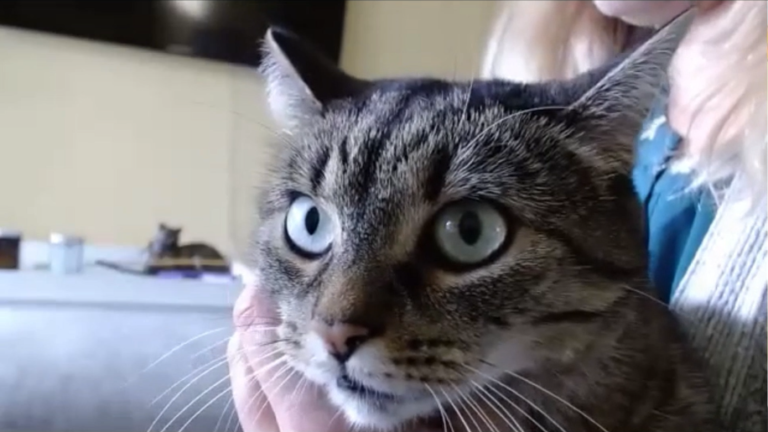
In order to determine whether telemedicine might be a less stress-inducing option for cats, researchers examined pupil dilation, respiration rate, ear position and lip-licking behaviors in 30 cats at mock virtual and in-person appointments. 

The researchers found that cats’ pupils were less dilated, respiration rates were lower and ears were in more relaxed positions at home as opposed to when they visited the mock in-person clinic. All of these results were significant and indicate a less stressful experience for cats when seen virtually, opening the door for further research into veterinary telemedicine. 

“It does look like — based on our results — cats were calmer at home, which is what you would expect, so that’s good,” Boone said. “We have these validated stress measures, and we see that the cats are calmer at home according to those measures, so that’s really helpful to build off of.”

According to Boone, telemedicine can be used for follow-up appointments after a procedure, check-ups for cats with monitored ongoing health issues and even for emergencies; veterinarians can provide instruction when the owner is too far away to make it to a clinic in time. 

After virtual appointments, owners expressed increased interest in telemedicine for their cats in the future. They also tended to rate their cat’s experience with in-person appointments lower than with virtual appointments, highlighting the difference in stress levels the cats experienced between the two. 

The findings provide a baseline that can be expanded to involve more cats, real clinic appointments and even other animals. 

“Based on owners’ responses and also based on the cats’ responses, it looks like [telemedicine] could be a really really good tool for increasing access to care for these animals,” Boone said. 

Written by: Lilly Ackerman — science@theaggie.org

Studying local flora can strengthen your connection to Davis

Native Yolo County plants and their unique features


By MAYA KORNYEYEVA — mkornyeyeva@ucdavis.edu


Davis, California and its surrounding area are situated in a unique location for plant diversity. Located predominantly in the Central Valley, the region boasts a warm climate and an abundance of wetlands, making it a diverse site for both flora and fauna. 

Each and every species has a unique beauty, which adds not only ecological value to Davis, but is a constant reminder of something intrinsically special in the world we often take for granted. Below, I will share with you some of my favorite native Davis plants that I have come across in the past few months and how to identify them. 


Black Willow

These trees are similar to the famous “Weeping Willows,” with long, pointed leaves and a rich brown-black bark. The Black Willow can grow up to 60 feet tall, and its branches stretch upward rather than droop down. Due to their dependence on water, Black Willows thrive near water sources and have long-reaching root systems that prevent erosion and help with soil stability. You’re sure to spot one on a hiking trail near a river, such as Putah Creek in Davis.


Blue Elderberry

This shrub is a species that thrives in hot climates and relies on regular exposure to sunshine for optimal growth. Its dark blue berries are a primary food source for many small animals, birds and insects in the Central Valley. The tiny cream-colored flowers of the Blue Elderberry are scentless and look similar to Jasmine blooms. These bushes can be found in the fields on the outskirts of central Davis. 


Gumweed

Like the name suggests, Gumweed is a quick-growing plant with distinct sticky buds filled with resin. Upon flowering, Gumweed has bright yellow flowers with a sweet smell that makes you stop and search for its source. Despite its prickly appearance, this native California flower has a long history of medicinal use, from curing inflammation to easing coughing and asthma when brewed as a tea or made into a tincture. Gumweed plants are quite common, and you can find plenty in flat open fields. 


Purple Needlegrass

This plant can grow to be quite tall and sharp. It spreads its seeds by dropping them in the soil, where the pointy, needle-like ends burrow into the ground and secure the seed. Purple Needlegrass is excellent for preventing soil erosion, and its fluffy, purple tips are unmistakable. The plant has adapted to grow best in dry soil, making it a common staple in Davis parks and along highways.  


These are just four of the many species that are native to Northern California. Next time you’re out and about, I encourage you to seek out native plant species and try to identify them. Learning a little more about Davis vegetation has not only made me more appreciative of the land we live on, but also a more keen observer of the natural world. 

As broadcaster and natural historian David Attenborough famously says, “An understanding of the natural world is a source of not only great curiosity, but great fulfillment.”


Written by: Maya Kornyeyeva — mkornyeyeva@ucdavis.edu

Disclaimer: The views and opinions expressed by individual columnists belong to the columnists alone and do not necessarily indicate the views and opinions held by The California Aggie.

Senate table takes extended break to attend community vigil during Jan. 26 meeting

The meeting also featured quarterly reports from the Whole Earth Festival Committee, Picnic Day Board and SHAWC


By RACHEL GAUER— campus@theaggie.org


Vice President JT Eden called the meeting to order at 6:14 p.m. on Thursday, Jan. 26. Senate recorder Rose Kazempoor took roll call, and Eden recited the UC Davis Land Acknowledgement. 

Next, the Senate confirmed Christina Smith, a second-year political science public service major, to be the new External Affairs Commission (EAC) vice chairperson. During the questioning portion of the confirmation, Senator Stephen Fujimoto reminded Smith that their position is a paid role and asked them how they plan to treat unpaid volunteers who work below them. 

“I’m not here for money; I am just here to be here,” Smith said. “[As for] the volunteers who are working with us who are unpaid, I’ll give whatever I can give and more to make sure their jobs are easier as volunteers and that they are enjoying the job.” 

Smith was unanimously confirmed. 

The meeting was running ahead of schedule, so the Senate pushed quarterly reports back until committee members arrived to present them. They instead gave elected officer reports, where members of the Senate table discussed their recent work and updates. 

Next, Carla McEwen and Maddie Dei Rossi, the directors of the Whole Earth Festival (WEF) Committee, gave the organization’s quarterly report. 

“Our staff is fully hired and we are in the process of getting [them] fully onboarded,” McEwen said. “We’re really proud of all of them.” 

McEwen and Dei Rossi also said that they have decided on this year’s theme but are keeping it confidential until the official announcement that is coming soon.

“[Now] that the theme is decided, it means that the poster contest is going to happen really soon so people will be able to submit their designs for posters and t-shirts,” McEwen said. 

Next, Student Health and Wellness Committee (SHAWC) Chairperson Hibah Shafi presented their quarterly report. 

“We currently have a super exciting project that has been in the works for over a year now,” Shafi said. “We are getting safer sex dispensers put up around the MU in the second-floor bathrooms.”

Shafi went on to note that though the committee wanted the dispensers to be in the first-floor bathrooms, which are typically more trafficked, the downstairs bathrooms had “physical restrictions” that prohibited the installation. However, they are planning to place signage in the first-floor restrooms informing students about the upstairs option.

The Senate then decided to break to allow members of the Senate table to attend the community vigil being held in Central Park in memory of recent mass shooting victims. There was a unanimous vote in favor of adding this extended break to the schedule. 

Next, the Senate confirmed two new members of the Research and Data Committee, first-year data science majors Maya Wiegand and Surangjana Sooraj, via Zoom.

After the confirmations, Picnic Day Chairperson Jesse Goodman presented the Picnic Day Board’s quarterly report. 

Following a break, the Senate introduced new legislation, including SB #50, SB #51, SB #52, SB #53 and SB #54. Each bill was assigned to at least one committee for further review.

Then, they moved into consideration of the consent calendar; SB #46 was removed from the calendar, but the rest of the content was passed with no objections. 

Next, they moved into the consideration of old legislation.

SB #46, which requires the Senate President Pro Tempore to present a quarterly report,  was amended and then passed unanimously. 

Next, the Senate discussed SB #47, which would allow non-controversial confirmations for members or chairpersons in unpaid positions to happen via the consent calendar, meaning that certain candidates would bypass the typical process of introduction and questioning at a Senate meeting before being confirmed. 

Senator Aarushi Raghunathan expressed why she is against the bill.

“I think that meeting people during confirmations is honestly very important,” Raghunathan said. “I have met so many great people from confirmations, and I don’t want that to go away.” 

Senator Zeph Schnelbach also opposed the bill, explaining that they feel it is important for the whole table to evaluate each confirmed member of a committee. 

“When we confirm [new members], we are making sure that we know that we are putting people in those positions that know what they are doing,” Schnelbach said. “I am all for speeding up minutes in meetings; however, I think that there [has] to be another way we can do that.” 

Fujimoto called for the Senate to consider other factors that this bill could improve. 

“I urge this table to consider not only the student fees that are going into the time that we meet but also that we respect the time of our unpaid volunteers,” Fujimoto said. 

SB #47 was passed 5-2-0. 

Then, the Senate approved past meeting minutes before moving into public discussion.

During this time, Fujimoto mentioned a future event involving Turning Point USA, whose last event on campus in October 2022 turned violent. 

“Turning Point USA has announced an event with their CEO Charlie Kirk on March 14,” Fujimoto said. “I think it’s really important that we prepare ourselves for this upcoming event [because] I don’t think it will be surprising if members of our community decide to protest. ”  

Eden adjourned the meeting at 10:37 p.m. 


Written By: Rachel Gauer  — campus@theaggie.org

STEM Majors vs. Mental Math

0

Drawn by: Lidya Shcherbakova –– lvshcherbakova@ucdavis.edu


Disclaimer: (This cartoon is humor and/or satire, and its content is purely fictional. The story and names of “sources” are fictionalized.)

A guide to Pakistani food

The best South Asian foods to try other than the “basics” 


By JENA TUFAIL — jjtufail@ucdavis.edu


Growing up, all I ever ate was Pakistani food. I used to be jealous of my friends who ate lunch in the school cafeteria or brought what I considered “normal foods” like Lunchables. It wasn’t until I got older that I realized how unique South Asian cuisine truly is. 

South Asia is an incredibly diverse place, full of not only a wide assortment of people, but of dishes too. From North Pakistan to North India, South India, Bangladesh and so on, recipes and methods vary. South Asia is not just made up of “tandoori chicken,” “buttered chicken” or “kheer.” As a Pakistani, I am here to give you some food and dessert recommendations that are different from the dishes you may have heard of.

South Asia is home to an array of desserts, including ice creams and fried treats. Some that I really like are kulfi, jalebi, gulab jamun and rasmalai. However, my favorite has to be “falooda” with ice cream, a cold dessert made of rose syrup, vermicelli noodles and milk. Perfect for a hot summer day, it is not only refreshing but a perfect mixture of flavors.

If you like mangos, “mango lassi” is also a great cold drink to have in the summer. Made of mangos, milk, yogurt and ice, mango lassi is a perfectly refreshing drink that is also easy to make from home. 

Another favorite of mine is Pakistani zarda. The sweet rice dessert, different from kheer, is made up of almonds, coconut and raisins. It is a blend of sweets and spices that many enjoy on a cold day. 

When it comes to savory dishes, one of my favorites is “biryani,” typically made with meat, potatoes, saffron and Indian spices. A great appetizer is also a “pakora,” a fried potato fritter that can be made with vegetables, or even with chicken. Gholgappe, or pani puri, is another one of my favorite South Asian foods known as typical street food and is made of crispy “puris” filled with boiled potatoes, vegetables and chutney.  

As someone who is from Northern Pakistan, I can only speak of dishes that I have grown up eating. However, there are even more that I haven’t mentioned. If you have the chance, talk to your friends, do some research and try different dishes from all over the continent.


Written by: Jena Tufail  — jjtufail@ucdavis.edu

Disclaimer: The views and opinions expressed by individual columnists belong to the columnists alone and do not necessarily indicate the views and opinions held by The California Aggie.

Remembering Tyre Nichols: A father, a son, an artist, a skateboarder, a friend

It’s important to celebrate Black lives, not just remember victims of violence


By THE EDITORIAL BOARD


Content warning: this article contains discussions of police brutality and race-based violence, which may be sensitive topics for some readers.


On Jan. 7, five police officers in Memphis, Tennessee, pulled Tyre Nichols, a 29-year-old Black man, from his car during a traffic stop and beat him severely. Three days later, he succumbed to his injuries in the hospital.

Tyre Nichols’ murder has sparked national outrage and inspired continued discussions of police reform and ending state-sponsored violence against Black people. But amid protests and political action, Tyre’s family and friends have said that they mostly wish to celebrate who he was when he was alive rather than focus on his death.

Tyre grew up in Sacramento, California, and spent much of his time skateboarding with friends at the Regency Community Skatepark. He had a close relationship with his mother, RowVaughn Wells, and had a tattoo of her name on his arm. Tyre was also a father to a four-year-old son and he was always striving to be a better dad. Tyre loved taking photos of the sunset and had a website, called This California Kid, where he shared his photography. People who knew him describe him as sweet, kind, positive and a good person.

Accounts of Black men being brutally murdered by the police make headlines too often, and they tend to outweigh the number of positive stories celebrating Black lives in major publications. Black people are often only shown in the media in reports of violence or racial justice movements. Bringing awareness to police brutality and racial justice activism is important, but these should not be the only stories that are told about Black communities.

Contributing to this one-sided depiction is a horrifying video of Tyre’s murder, which has been circulating the internet since it was released on Jan. 27. While video footage is important for understanding police violence and making sure police officers are held accountable, it also deeply traumatizes Black communities who already have to face tremendous feelings of grief and fear. Tyre’s mother had to look away when she was shown the video, and according to a CBS News article, Lora Dene King, the daughter of Rodney King, who was killed by police in 1991, said the video and Tyre’s death “brought tears all over again.”

Sharing details of Tyre’s murder is not a substitute for political activism, nor is it contributing in a meaningful way to the conversation. Instead, if you wish to spread awareness, consider sharing his photography or videos of him skateboarding to remember him for more than just his death. If you want to get more actively involved, join protests, sign petitions and urge your local representatives to support police reform.

Beyond this, we need to uplift Black communities and celebrate Black lives. February is Black History Month, but some prefer to call it Black Futures Month, a time to envision a better society and celebrate Blackness by “loving ourselves and each other, and basking in our excellence,” according to The Movement For Black Lives website. The celebration of Black Futures and Black History Month calls on us to spotlight stories of happiness and resilience in addition to reflecting on Black history in the U.S.

For the many Black men murdered by police every year, we are told to say their names, but we need to remember that means to celebrate their lives, too. We need to show up for the Black community all the time, not just when acts of violence occur. Be angry for Tyre and mourn his death, but don’t let racial violence be the only stories that you read about Black communities.


Written by: The Editorial Board

UC Davis dominates CSU Bakersfield in third straight win

The Aggies sweep the season series 2-0 against the Roadrunners


By MARLON ROLON — sports@theaggie.org


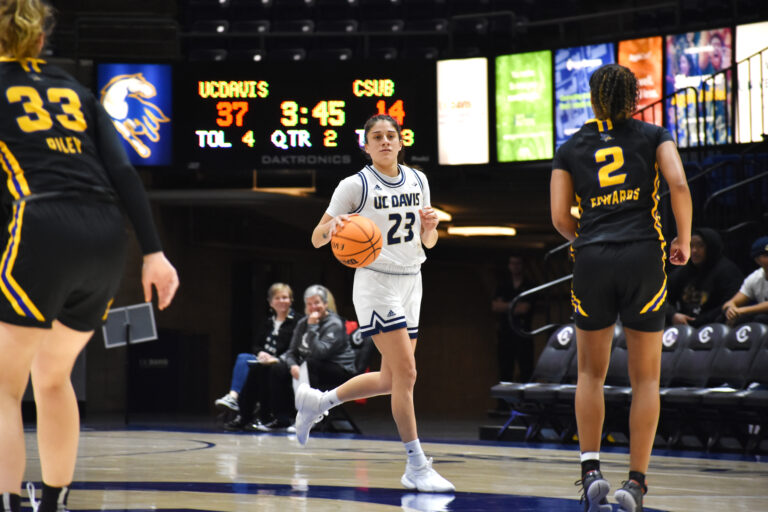
The UC Davis women’s basketball team is starting to gel together at the midpoint mark of the season, winning three straight Big West Conference games. On Thursday night at the University Union Credit Center, the Aggies cruised past CSU Bakersfield 79-57. 

“We’ve had our ups and downs for sure,” said UC Davis Head Coach Jennifer Gross. “With so many new players, it’s really taking time to gain chemistry. The only way you can get it is by playing together and we just needed more time, and we are starting to see the chemistry take hold.”

Redshirt first-year guard Victoria Baker was a standout in the game, with 16 points off the bench in just 15 minutes of action. Another notable player was redshirt first-year Megan Norris, who has reached double figures in three straight games. She scored 15 points and grabbed five rebounds.

Her efficiency inside the paint and her gritty defense in the post have been turning heads in the crowd recently. Gross praised Norris postgame. 

“I think she is really starting to gain confidence,” Gross said. “She’s getting comfortable playing with her teammates. The number one thing she’s doing when she’s getting the ball is she’s just being patient.”

The Aggies opened the first quarter with five straight three-pointers, jumping out to a 15-5 lead over the Roadrunners early on. Forward Tess Sussman had a hot hand, draining three of those five three-pointers; she had nine points in eight minutes in the opening quarter. 

“To see [Sussman] come out and hit shots right from the start was great,” Gross said. “She had a really, really solid day today.”

The Aggies ended the quarter with a three-pointer from second-year guard Sydney Burns, which put them up 20-7. Five Aggie players scored in the first quarter, and UC Davis had control of the game from start to finish. 

“We have a ton of threats from this team, inside and out,” Norris said. “So it really opens it up for anyone to get the shot up. We have a ton of good three-point shooters.” 

UC Davis continued to dominate offensively in the second quarter, with two threes from the second unit, including two 30-foot shots from first-year guard Nya Epps and redshirt fourth-year guard Makaila Sanders. Gross utilized the rotational players throughout the entire quarter, allowing Baker to shine with seven points.

Within the first two quarters of play, the UC Davis bench scored 27 points compared to Bakersfield’s 17. The Aggies shot eight for 20 from the three-point line. 

“Everybody contributed; the majority of our points in the first half were from our bench,” Gross said. “To have different people being able to come in and step in and take some of the scoring load is really nice. A lot of different people stepped up today.”

Although the home team scored 43 points in the first half, the leading scorer in the Big West, third-year guard Evanne Turner, was scoreless. However, Turner opened the third quarter with a layup to mark her first bucket on the score sheet. 

A few plays later, Norris went on a scoring spree, scoring six straight points, that put the Aggies up by 27. With three minutes remaining in the third quarter, Turner hit her first three-pointer of the night. The Aggies were rolling with a score of 61-36. 

In the fourth quarter, Gross gave the second unit valuable minutes and let most of her starters rest. With such a large lead, there was no need to risk injuries. The Aggies relaxed in the final quarter, only scoring 11 points, but they were significantly ahead on the scoreboard, winning by 22 points, 79-57.

“When we step on the floor every day and we believe in our team and believe in ourselves, we give ourselves a great chance to win,” Gross said of her team’s performance. 

UC Davis made 13 out of 30 three-pointers along and 14 out of 15 from the free-throw line. The bench scored 45 points and the offense dished out 18 assists. 

Two days later, on Saturday, Jan. 28, The Aggies’ three-game win streak was snapped by Long Beach State, 66-45 at the University Credit Union Center. Turner scored 20 points and made a team-high of six three-pointers, but no other Aggie player reached double figures. 

UC Davis (9-11 overall, 5-5 in conference play) will travel to the University of Hawai’i on Feb. 2 to take on the Rainbow Wāhine (8-11 overall, 6-4 in conference play).  


Written by: Marlon Rolon — sports@theaggie.org


UC Davis’s annual ‘Beer-for-a-Butterfly’ contest is back

Professor Arthur Shapiro’s contest, which contributes to climate change research, has returned again after a two-year halt due to the pandemic


By KAYA DO-KHANH — campus@theaggie.org


A UC Davis professor in the Department of Evolution and Ecology (EVE), Arthur Shapiro, has hosted an annual Beer-for-a-Butterfly Contest, which contributes to climate change research, since 1972. After a two-year hiatus due to the pandemic, the contest has resumed this year. 

Shapiro started the contest as a part of his long-term studies of butterfly life cycles and climate change. He has been collecting data on butterfly population trends across 10 sites in California for approximately two-week intervals since 1972, according to his research website. 

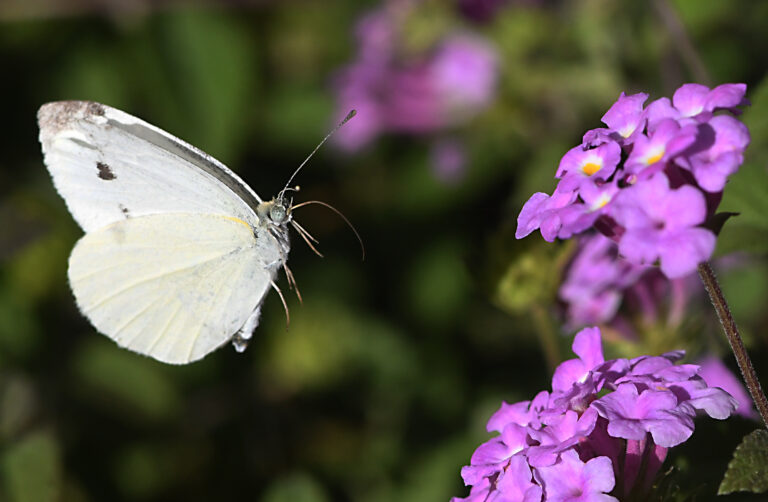
The contest is open to the public, and the participant who finds and collects the first Cabbage White butterfly of the year in central California is awarded a pitcher of beer (or its equivalent) as a prize. The contest rules state that the butterfly must be brought in alive to the Department of Evolution and Ecology office at 2320 Storer Hall with complete data about the date, time and location of its collection. The butterfly also has to be an adult with no caterpillars or pupae and be found outdoors.

Shapiro said that since 1972, the first flight of the Cabbage White butterfly has occurred between Jan. 1 to Feb. 22, with Jan. 20 being the average first flight date, according to the UC Agriculture and Natural Resources website. 

However, due to the recent heavy storms in Northern California during the first two weeks of January, Shapiro said that he expects the butterflies to come out later this year. He noted that the recent weather patterns, which are not suitable for butterflies to fly in, are “unusual but not unique,” and based on his studies of climatological data, the butterflies have come out later than usual in similar weather patterns over the years. Meteorology is a hobby of his, and he does weather forecasting. He has been predicting that the current weather pattern would end on Jan. 19 and that butterflies would start to come out with a “sustained period of warm, dry weather.” 

A Los Angeles Times article from 2019 described Shapiro’s difficulty articulating why butterflies fascinated him as a boy. Despite his trouble articulating the root of his interest in butterflies, he shared that what began as a niche interest within his studies has developed over the years. 

 “When I started this [study], there was no perception of global warming [
] and as time has gone by, it has become clear that there is a phenomenon of directional climate change,” Shapiro said. “This project is a small part of my research program, but it has acquired new significance in the context of global climate change because it has become an indicator of the biological consequences of climate change.” 

He said that he sometimes goes out for hours searching for butterflies after teaching class in the morning. He has a lot of different places where he looks, as he has learned where the butterflies will most likely come out over the years. 

“I joke that I understand butterflies much better than I understand my wife, and we got married in 1969,” Shapiro said with a laugh.

After several decades of holding the contest, Shapiro has won all but four times, losing solely to UC Davis graduate students. One recent winner is Jacob Montgomery, a 2017 master’s graduate in ecology who is currently the project manager for California Trout in the Central Valley Region. 

Montgomery found the Cabbage White butterfly on his way to the farmers market in 2016, even though he was not searching for it. He knew about the contest and decided to save it and turn it in to see what would happen.  

“I didn’t know that I had won the contest when I found the butterfly,” Montgomery said. “I didn’t realize the full magnitude of the impact of me finding it at the moment.”

Montgomery was able to collect his prize and share a pitcher of beer with Shapiro while talking butterflies at The Davis Graduate, a bar and grill that used to be located in the University Mall shopping center, but is no longer open.

“That was by far one of the coolest things I’ve ever done,” Montgomery said. 

Shapiro does not have any graduate students anymore, adding that he is 77 years old and is almost ready to retire. After asking him if he would continue the contest after he retires, he replied, “Sure, why not, it’s fun. I like drinking beer.” 

Written by: Kaya Do-Khanh — campus@theaggie.org

Upcoming Events in February

Check out a clothing swap, live music, art exhibits and book clubs before midterms roll in


By RUMA POUDELL — arts@theaggie.org


Clothing Swap (Davis Night Market, 9–11 p.m. on Feb. 9)

Bring pieces of clothing you don’t wear anymore and swap them to renew your closet sustainably. For each item you bring, you can take another home. The swap includes a wide variety of styles, so you’re bound to find something you like. Meet with other swappers at Central Park and find more information on the Davis Night Market Instagram.

2nd Friday ArtAbout (Pence Gallery, 6–9 p.m. on Feb. 10)

Browse various art exhibits and connect with Davis-based artists at Pence Gallery’s art reception. The monthly event celebrates traditional and fine arts, specifically focusing on realism and craftsmanship. There will be live music and free wine for those 21 and older. The event is a self-guided walk — perfect for a casual stroll as you explore different pieces.

Folk Jam Session (UC Davis Arboretum and Public Garden, 12–1 p.m. on Feb. 17)  

Come enjoy acoustic freestyles and expose yourself to a new genre of music. Musicians of all different levels and instruments will be playing Celtic, Klezmer and other styles of folk songs. Players will be freestyling, and anyone is welcome to hop in and play at the UC Davis arboretum. More information can be found on the UC Davis Calendar.


Romance Reader’s Book Club (The Avid Reader, 8–9:30 p.m. on Feb. 28)

To keep the Valentine’s Day spirit alive all month long, join other readers to discuss your picks for the best romantic books. Gain a recommendation or two and make new bookworm friends. The Avid Reader hosts monthly book clubs welcoming readers of all levels and will be organizing this Valentine’s Day-themed meeting at their downtown store to celebrate the holiday. 


Written by: Ruma Poudell –— arts@theaggie.org