58.4 F
Davis

Davis, California

Tuesday, December 23, 2025
Home Blog Page 178

UC Davis collaborates with NASA on two projects

UC Davis played a role in the Artemis I Mission and was chosen for NASA’s CubeSat Launch Initiative


By KAYA DO-KHANH — campus@theaggie.org


UC Davis has recently worked with NASA on two projects: the Artemis I Mission and NASA’s CubeSat Launch Initiative. These are just the most recent partnerships in a long history of collaboration with the national organization, including working on the Mars rover Curiosity in 2012 and the Mars rover Perseverance in 2018 as well as researching  genetically-modified lettuce that could protect astronauts’ bones on long space flights in 2022. 

The McClellan Nuclear Research Center (MNRC), which is owned and operated by UC Davis, played a part in the moon mission that was completed on Dec. 11 when the Artemis I’s Orion capsule made a splashdown after 26 days of orbiting the moon. The Orion spacecraft, which was designed for human deep space exploration, embarked on an uncrewed flight that traveled 280,000 miles from Earth and flew farther than any spacecraft for humans has ever flown, according to NASA.

The MNRC facility carries out nondestructive testing with neutron radiography. For the mission, NASA performed neutron imaging of critical equipment at the MNRC to make sure that it would operate correctly in flight. 

The director of MNRC, Wesley Frey, said that the neutron imaging is done on a reactor that works similarly to X-ray radiography, but it is able to capture images of explosive material encased in metal and produce better-contrasted images. The tests image pyrotechnic devices called “frangible rings” that control the stage separation of a rocket, according to a recent press release

“There’s about 20 to maybe two dozen small research reactors like this in the country, and not all of them are set up to do any kind of imaging,” Frey said. 

The research center is one of the few centers set up to do neutron imaging for projects that require lots of images and have to meet certain quality standards. This ability makes the MNRC special, according to Frey.

“[The MNRC] was purposely built to do neutron radiography on a commercial scale, and we were really the only reactor in the United States that was ever built specifically for that purpose,” Frey said.

Frey said that the MNRC is sent equipment parts two to three years before an actual mission occurs. He explained that right now, the center is working on imaging parts for the Artemis III mission. 

“It’s exciting,” Frey said. “We got a lot of the parts that we will test for the Artemis III [mission] where they’re actually planning on putting people on the surface of the moon. Most of that equipment has already come and gone.”

Once the team at MNRC images the equipment, the engineers will examine the critical pieces and give them a stamp of approval. 

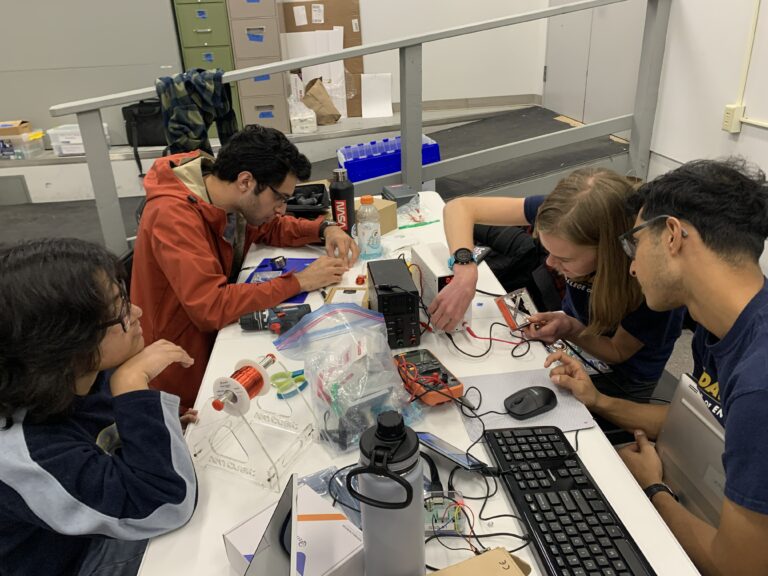
The MNRC isn’t the only UC Davis group that is working with NASA though. The Space and Satellite Systems (SSS) club’s student-built satellite will be going to space in 2023 as a part of NASA’s CubeSAT Launch Initiative (CSLI). The CSLI presents low-cost access to space for educational institutions and aims to “inspire […] the next generation of scientists, engineers and technologists,” according to NASA.

SSS’s satellite is the product of the work of more than 300 undergraduate students that was reviewed, scored and selected by NASA. The satellite is small and cube-shaped, according to a recent press release, and is known as the Remote Experimentation and Analysis of Low Orbit Phenomenon mission (REALOP 1). 

Vice President of SSS and second-year aerospace engineering major Yuvraj Jadav said that the project started when one of the club’s members realized there could be an improvement in the spinning wheel technology currently used to orient satellites. Spinning wheels are expensive and have a difficult manufacturing process, as they require a high degree of precision and need to be balanced properly. Computer hard disk drives have almost the same characteristics as space-going reaction wheels, but are less expensive.

“Our REALOP I mission is a proof of concept satellite with the goal of using a computer hard disk drive and a manufactured reaction wheel to point itself at the Earth once in orbit and send a picture of it back down,” Jadav said via email. “We will also collect telemetry data and compare the performance of the reaction wheel against the performance of the hard disk drive. In order to get ourselves to orbit, we have partnered with NASA’s CubeSat Launch Initiative.” 

Jadav said that the project has been the effort of a large group of students, explaining that there are four teams working on the project, each with five to seven subteams under them. 

According to a statement by SSS co-president and fourth-year aerospace engineering major Aashay Vartak, “REALOP is the product of many people and many hours of work, and I’m really excited that we’re finally going to be able to launch it.” 

Written by: Kaya Do-Khanh — campus@theaggie.org

Culture Corner

The Art Desk’s weekly picks for movies, music and more


By SARAH HAN — arts@theaggie.org


Book: “When Breath Becomes Air” by Paul Kalanithi (2016)

“When Breath Becomes Air” is the memoir of neurosurgeon Paul Kalanithi, who is dying of lung cancer. The book begins with his journey to find the answer to the question “What makes human life meaningful?” As he goes through his life, he experiences moral dilemmas in medicine and ultimately faces a medical condition of his own. I felt that this book tied together  pure curiosity with the reality of life: Kalanithi wanted to know an answer to a question, but after searching for it, was challenged with his own health and found his own life at risk. Truly, I don’t know how to do this book justice — but all I can say is that it will leave you with a different perspective of the world. Whether you’re pursuing medicine or not, I highly recommend this book if you need to take a step back and appreciate life.


Song: “Chicken Tendies” by Clinton Kane (2022)

Clinton Kane debuted with his song “I Guess I’m in Love,” but “Chicken Tendies” is my personal favorite. The song is about his late mother, with whom he had a difficult relationship, and the lyrics certainly convey Kane’s anger, sorrow and hope. Although the title initially seems silly, the song has a deeper message. The entire song has a sorrowful tone but Kane also sings very passionately. I recommend this song as well as Kane’s other songs if you’re looking for new music to listen to.


Movie: “Parasite” dir. by Bong Joon-ho (2019)

“Parasite” is a South Korean film about social class and how it’s affected by human desires. The story is centered around the wealthy Park family and the poor Kim family who cross paths, resulting in bumpy relationships. Bong utilizes a lot of thematic elements to convey how money and society can transform humans into selfish and helpless beings. However, he also emphasizes the vulnerability of humans when they are at their lowest. I felt that this film opened my eyes to the challenges of social inequality and human nature, and more specifically, how social inequality brings out greed in people, ultimately triggering an inescapable cycle of wanting more and more. If you’re interested in these topics, I highly recommend checking out this film.


TV Show: “Modern Family” by Christopher Lloyd (2009-2020)

Ending this list with something a bit more lighthearted, “Modern Family” is a classic sitcom to enjoy with your loved ones or on your own. It portrays the life of the Pritchett family and how they handle the challenges of raising families of their own. This show, which ran on ABC for over 10 years, has too many episodes to pinpoint a favorite; however, it’s safe to say that any episode will leave you laughing. Whether you’re wanting to try out a new show or revisit a classic, I recommend adding “Modern Family” to your list.


Written by: Sarah Han — arts@theaggie.org

Commentary: ‘Acting accordingly’ isn’t the same as being ‘fake’

Sometimes acting can promote growth over conflict


By RUMA POUDELL — arts@theaggie.org


Do you know about Leonardo DiCaprio — the guy who dies in “The Titanic?” I’m sorry for spoiling that. But really, you should’ve watched that movie by now. Maybe Nicolas Cage? He was the lead actor in the movie “National Treasure.” If these stars don’t ring a bell, don’t worry about it. That just means you don’t know some of my past celebrity crushes, which saves me embarrassment (especially that second one). 

The beautiful thing about acting is that you can mold yourself into a new character and snap out of it once you have finished playing your role. 

Many real-life scenarios require you to adopt that same kind of versatility. It’s critical to infuse your personality into social and personal situations in such a manner that is congenial while still authentically expressive.

For example, when you don’t have the best relationship with someone, sometimes it is best to present yourself pleasantly in their presence, as to avoid causing drama or being deceitful.

What I call “acting accordingly,” or putting on a performance to some degree, is necessary to function in certain social situations. Being fake and two-faced is entirely separate from presenting yourself in a manner that matches what you want to emanate, even if doing so doesn’t reveal everything about you with pure transparency. 

To me, having that versatility is important to fulfilling the many demands of life. And, being versatile in nature to fit into any scenario at hand doesn’t make you “fake.”

You already play different roles in your everyday life — teacher or student, parent or child, speaker or listener, doctor or patient, to name a few. Each role you play requires careful consideration of what outcomes you want and how to present yourself to get them. This is not to be manipulative, but rather to promote harmony in all aspects of life. This is where the art of acting comes into play.

In my life, my biggest role has been the role of Nepali-Fijian daughter. Growing up in America but raised by a culturally-acquainted family, I grappled with what it meant to be a daughter. Serving tea to guests, learning how to cook before my older brother, interacting with elder relatives — all of it took a certain level of performance that felt awkward at first.

But as I grew older, I realized that this role, and each time that I have performed it, has taught me valuable life skills.

As I grew into the role of “daughter” put into place in my family, I also learned to stand my ground in a dignified way when conflict arose and to connect with others authentically, all while being socially graceful.

All of this is to say that while “acting accordingly” is a useful framework to operate within as you perform your roles, it should not be placed above your needs. If you neglect serious emotions and views or abandon your personality in the name of promoting peace, that defeats its purpose. As you star in the movie that is your life, act to build character, not diminish it.


Written by: Ruma Poudell — arts@thaggie.org


Planned Parenthood hosts ‘Remembering Roe’ Rally in downtown Davis

The 50-year anniversary of historic Supreme Court decision reflected reality of post-Roe America 


By: MADELEINE YOUNG  city@theaggie.org 


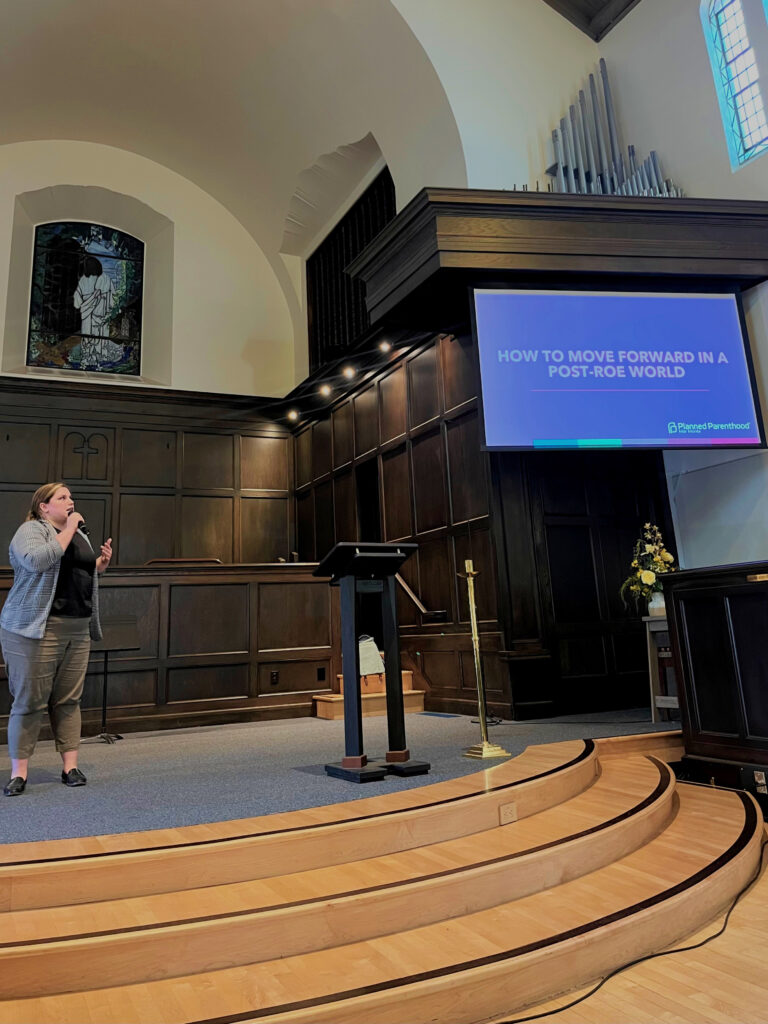
On Jan. 21, the weekend of what would be the 50-year anniversary of the landmark Supreme Court case Roe v. Wade, Planned Parenthood Mar Monte hosted a “Remembering Roe” rally at the Davis Community Church downtown. The rally was used as a decompression space for attendees, with speakers discussing the new realities of the reproductive rights movement in a post-Roe America.

“We’re really excited to be partnering with Planned Parenthood Mar Monte because, as everyone is aware, the issues that have occurred recently that are attacking our most vulnerable populations are very relevant to our groups,” Davis District 4 Councilmember Gloria Partida said at the rally. “When you begin to take away rights from those folks, it affects everyone, so we are very concerned about the direction that our nation is going in.” 

Maiya De La Rosa, an organizer with Planned Parenthood Mar Monte, talked about what Planned Parenthood is doing to ensure they can continue to provide abortion access.

“We’re contacting additional abortion providers because of an influx of people who are coming out of state and that’s going to continue going forward,” De La Rosa said. “We’re continuing to train providers as well as developing new health centers. Right now we are one of the first affiliates to do behavioral health and provide federal centers as well as primary care. We’re expanding our primary care services throughout the Central Valley and Sacramento.”

 De La Rosa was accompanied by California State Assemblymember Cecilia Aguiar-Curry, who represents District 4, which includes Davis. She also spoke about the state of reproductive rights in post-Roe America.

“We’re here to fight for our rights because our rights have been taken away by the Supreme Court,” Aguiar-Curry said. “Last year’s draft opinion overturning Roe was leaked and it was a gut punch to every single one of us. I kept saying to myself ‘It can’t be happening, it can’t be happening,’ and I’ve been fighting for this. […] When the final decision dropped, we weren’t surprised, but that morning, we woke up to a new America.”

Many UC Davis students attended the event, including first-year Sia Patel, who is a political science public service major. 

“I thought it was really inspiring and honestly kind of emotional,” Patel said about the event. “It’s sad to think about how much has changed since Roe was overturned and how we’re almost receding.” 

Aguiar-Curry discussed the importance of educating people about reproductive services that are still available. 

“We should be doing more of these kinds of events where people can get educated,”  Aguiar-Curry said. “I don’t think people understand the whole conversation about abortion, so it’s really important that we do these events. It takes brave men and women to come and do these because not everybody agrees and they feel like they’ve been left out so many times, so I think it’s the more we get out and educate people, the more we show that we have compassion and understanding. That is what’s going to change the world.” 

Aguiar-Curry encouraged people to get involved and protect abortion access for all those affected. 

“As the late Ruth Bader Ginsburg said, ‘The decision whether or not to bear a child is central to a woman’s life, to her well-being and her dignity. It is a decision she must make for herself,’” Aguilar-Curry said. “If you’re as angry as I am, and I don’t get mad very often, but I get organized. And let’s get ruthless, let’s fight this. This is the fight of our lives, not just for us, but for future generations.”


Written by: Madeleine Young city@theaggie.org

Seven popular New Year’s resolutions you’ve definitely already ditched

Good luck canceling your gym membership


By ANGIE VELARDE — avelarde@ucdavis.edu


New Year’s resolutions — most of us make them; nobody you know has actually kept one. Here are seven resolutions I know you’ve given up on already:


  1. Going to the gym

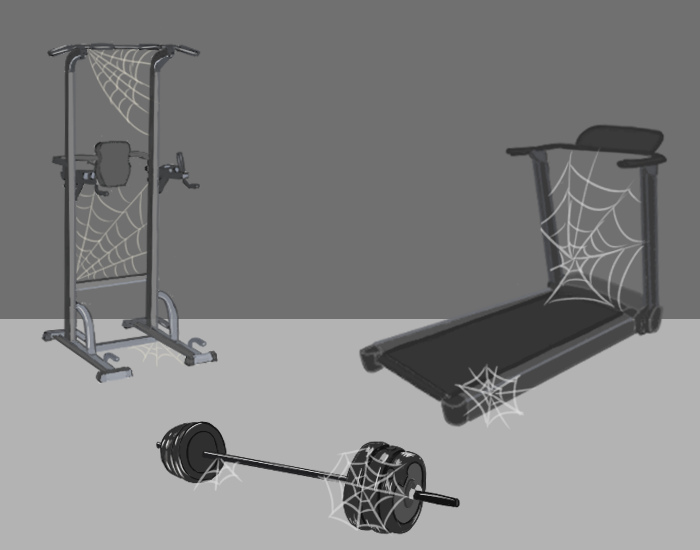
Let’s be honest: if this was not already part of your long-standing routine, it’s probably never going to be. Maybe it’s the fact that working out in most gyms evokes the same feeling of being half-naked and vulnerable in the middle of a Target the week before Christmas. Maybe it’s because the ARC is located at the farthest corner of campus, and walking there twice was already more exercise than you did in the entire month of December. Either way, it’s probably fair to say that your new workout clothes will be gathering mothballs for the next 11 months. 


  1. Drinking more water

You bought a water bottle that sends an alert to your phone when you haven’t picked it up recently. You finally bought a replacement filter for the Brita you purchased a year ago. But then the phone alerts started to blend into the background. Seems like remembering to fill your water bottle every morning before you left the house was a little too much to expect of your future self.


  1. Eating healthier

You were prepared this time. You bought food prep containers and stocked up your pantry. Your fridge was filled with something other than half a can of chili and a jar of mayonnaise. But now it’s full of slimy containers of old salad and your freezer is overflowing with frozen burritos. All is normal in the world again.


  1. Learning to knit

Nope. 


  1. Drinking less caffeine

You bought replacement beverages. Your cabinet is now full of herbal tea, and you were using your dusty kettle every day for a whole week. But the first couple of weeks of classes were a little more tiring than you anticipated. Now, you’re sitting in the corner of your room shame-chugging energy drinks and trying to finish the reading for your physics class before lecture tomorrow. It was a good idea, in theory. 


  1. Deleting your food delivery apps

The plan was practical. You’d save a lot of money. Probably eat a little better. But then you realized that cooking takes time, and so does grocery shopping, and let’s be honest: nothing you’ve ever cooked has ever been as good as a pizza from Woodstock’s. And then you thought to yourself, “Why should I deny myself the simple pleasures like a little burrito now and then or a gallon of Baja Blast?” Life is short. Order the panini. 


  1. “The Resolution” resolution

You made a few. You decided to throw a handful at the wall to see which ones would stick. You heard that most resolutions are abandoned by the end of the first week of the new year, but your friend told you about a guy they knew who made a resolution to exercise and now he’s a professional athlete, so it gave you some hope. “Fine,” you thought, “maybe I won’t keep them all, but if I keep even one, it will be better than nothing.” But weeks went by (not that many, admittedly), and keeping track of which ones you had and had not already abandoned got too difficult. Don’t worry. You can always try again next year. 


Written by: Angie Velarde — avelarde@ucdavis.edu

Disclaimer: (This article is humor and/or satire, and its content is purely fictional. The story and the names of “sources” are fictionalized.)

Lecturers file Unfair Labor Practice charge after UC changes grade deadline to Feb. 13

The union is demanding compensation for what they view as additional labor required of lecturers due to fall UAW strike


By Lev Farris Goldenberg — campus@theaggie.org


The UC-AFT lecturer’s union filed an Unfair Labor Practice (ULP) charge against UC Davis on Dec. 30 in response to the university’s extension of fall quarter’s grade submission deadline.

“UC-AFT supported our UAW siblings in their strike and we are holding the UC accountable for any ramifications their inability to negotiate a fair contract with UAW had on our members,” Katie Arosteguy, communications coordinator for the Davis chapter of UC-AFT and a lecturer in the UWP department, said.

The ULP charge alleges that the UC violated the Higher Education Employee Relations Act (HEERA) when they extended the grading periods at multiple campuses, an action that the union says “required lecturers to work through their scheduled holidays.”

With academic workers on strike for higher wages and better labor practices during fall quarter finals, a backlog of ungraded student work built up. As a result, the university initially pushed the grade deadline to Dec. 28 before later extending the date to Feb. 13, according to an email to UC Davis staff and faculty sent by Provost and Executive Vice Chancellor Mary Croughan.

According to Croughan’s email, a majority of instructors of record were able to submit grades by the initial deadline of Dec. 28. However, not all lecturers were able to submit grades, and instead submitted a ‘No Grade’ (NG) for their students.

Courtney Caviness, a professor in the Sociology department, told students in an email that she would likely be unable to submit fall quarter grades by the Feb. 13 date.

“I have 250 students across two classes, and it would be impossible […] for me to grade the backlog for both my courses while also fulfilling my teaching contract for Winter quarter,” Caviness wrote in the email.

The lecturer union’s charge also alleges that lecturers were coerced into doing “struck work,” which, according to Arosteguy, lecturers have a right under HEERA to refuse. 

Struck work is “a product which is produced by an employer during the period of a labor dispute with his employees,” according to the International Brotherhood of Teamsters.

In response, UC-AFT filed a Demand to Bargain and is currently engaged in effects bargaining with the university. 

Arosteguy, who has been a lecturer at UC Davis for 13 years, is part of the team of UC-AFT bargainers. According to Arosteguy, the team is asking for two things: that the UC give lecturers the ability to remove fall 2022 student evaluations from their review files, and compensation for what they view as additional labor due to the strike.

According to UC-AFT, “the disruptions caused by the strike caused some undergrads to evaluate lecturers more harshly than they would have under ordinary circumstances.”

The second demand is in response to a survey conducted by UC-AFT of 260 members, in which 66% responded that they felt compelled to perform additional labor due to the strike, as the work normally done by TAs or graduate students became their responsibility. 

“We are asking for fair compensation for this extra work,” Arosteguy said. “We have passed a proposal to the university and are awaiting their response.”

He went on to say that their next step is working towards the California Public Employment Relations Board (PERB) — which administers and enforces HEERA — issuing a complaint in this case.

“Once we receive the complaint, the normal process is to enter into settlement conferences with the university where we can come to a fair agreement over the outstanding issues,” Arosteguy said.

As part of the grade deadline extension, Croughan’s office offered funding for lecturers who need support to complete grading.

“I am extending my offer to provide funding for hiring extra grading help to assist instructors of record impacted by the labor stoppage,” Croughan said in her email. “Instructors of record who would like to request support should contact their department chair or supervisor to coordinate with their dean’s office immediately.”

“It is unclear whether there are enough of these readers to cover all of the remaining work, which is another reason we are asking for fair compensation for any lecturer who ends up doing this extra work,” Arosteguy said.

Meanwhile, many students still have not received their grades.

​​Ashton Yeremian, a third-year sociology major, has one NG outstanding from fall quarter in his political sociology class. Due to this, he did not meet the unit requirement for the quarter.

“Most people in the class were supportive of the strike,” Yeremian said. “Because many of us are going to be grad students, we understood that sometimes people have to suffer some inconveniences in order to get proper living conditions.”

Once the strike started, Yeremian said that his professor started holding classes on the picket line.

“For me, I’m not very affected by [the late grades], so it’s easy for me to say that,” Yeremian said. “I can be understanding that the grades are taking a while, but I can see how if you’re already on academic probation and there are no grades coming up, that would be pretty scary for a lot of people.”

Written by: Lev Farris Goldberg — campus@theaggie.org

‘The Sex Lives of College Girls’ normalizes the quirkiness of sex

People from all backgrounds can find joy in the show that captures a shared college experience


By ANA BACH — arts@theaggie.org


Mindy Kaling’s hit HBO series “The Sex Lives of College Girls” has left Gen Z hysterical with laughter and has been deemed a “warm-hearted romp on campus” by Rotten Tomatoes, scoring a 97% on the Tomatometer.

  Kaling’s witty writing wonderfully — and realistically — uses sex as a form of comedic relief throughout the show. Oftentimes, the media portrays sex in an idyllic way, but it is also often accompanied by the overwhelming pressure to make the moment “measure up” to certain expectations for college students, which the characters in Sex Lives of College Girls display.  “Euphoria,” another HBO original, comes to mind when thinking about exaggerated, intense sexual moments between characters. 

A reason why many shows may capture an unrealistic intensity and dramatization in sex scenes is for the beauty of the cinematography, but this can be a reason why the sex seems so performative. “The Sex Lives of College Girls,” on the other hand, shows its characters in sexual situations without exaggerating the performance for the viewer, which leads to some awkward, but more relatable, moments.

  Eileen Wang, a fifth-year nutrition major at UC Davis, said that the portrayal of sex in the show represents intimacy in a positive way. 

“Because the four main characters are navigating life as first-year college students, the show does a really good job of breaking down platonic sex lives for women that are new to this lifestyle,” Wang said. 

Wang also highlighted the specific ways in which the characters challenge social stereotypes based on their external characteristics in the show. For example, Reneé Rapp’s character, Leighton Murray, is a preppy, elitist white woman, but she still struggles with embracing her sexual identity.

“Leighton’s attributes are a great addition to the show because [they] dismiss college lesbian stereotypes,” Wang said. 

As a viewer who is also in the process of shaping her identity in college, Wang expressed her gratitude for Leighton’s character. 

“I appreciated this show because I feel like I could resonate with every character, especially Leighton having trouble coming out while worried about how this would define who she is when it’s just sexuality,” Wang said. 

“The Sex Lives of College Girls” manages to bridge the gap between women from all walks of life — not just its Gen Z target audience — by depicting realistic sexual scenarios without pressure to uphold any social expectations. If you are looking for a new show full of sitcom humor, heartfelt moments and awkward sex, this show might be right up your alley. 


Written by: Ana Bach — arts@theaggie.org


This year, try being ‘unrealistically realistic’

Don’t let uncertainty or fear of failure hold you back — dream big


By JENA TUFAIL — jjtufail@ucdavis.edu


When I was younger, I used to only imagine what I could do from a “realistic” standpoint. What I thought I could do was always limited by what I deemed realistic for myself. Recently, however, I’ve been trying to implement a different approach — being “unrealistically realistic.”

Being realistic, of course, has its benefits when having goals and recognizing what’s possible and what’s not. However, how are you supposed to achieve your dreams and aspirations if what you work toward is always within your limits?

Growing up we are always told to “dream big,” and I think, as adults, most of us tend to forget this saying and instead begin to limit what we think we can do. We begin to be okay with settling with the best options that seem feasible at a given time. I recently recognized that in the last couple of years, I too have been settling. Thinking about this, I decided that my goals might be more achievable if I started to believe in myself. 

I asked myself, would the goals I once labeled as “unrealistic” become possible if I started to believe in them? I began keeping a positive daily mindset and recognized that I have the ability to try to do anything as long as I work hard for it. 

This shift has really helped me recognize that things in the past that I had deemed “unrealistic” for myself can become realistic with due time. As we age, it’s important to remember that we can never dream too big. 

Sometimes, things only seem far-fetched because we are scared of the failure we may endure in the process. Fear of failure is an obstacle many of us need to get past, and recognizing that failure will never be a setback, but merely a redirection, is the shift in mindset that I needed in order to go after some of the dreams I’ve always had for myself but was too scared to work towards. 

Even though some dreams we have may be unrealistic at certain times in our lives, breaking down goals into smaller parts can help us reach that big milestone over time.

While it is always good to try to achieve our dreams, even those we deem “unrealistic,” it is also important to incorporate some realism within our goals. Believing in dreams will always be worth it, but we need to recognize which are worth fighting for, and which may not always work out. 

This year, I challenge each of you to come up with a wild, or even “normal” dream, and to pursue it, even if you are afraid of rejection. Never give up on your dreams or your passions just because they feel too far away. Even if you experience failure during the journey, you will end up just where you need to be on your path. Believe in the unbelievable and, most importantly, yourself.


Written by: Jena Tufail — jjtufail@ucdavis.edu

Disclaimer: The views and opinions expressed by individual columnists belong to the columnists alone and do not necessarily indicate the views and opinions held by The California Aggie.

An argument for lecture recordings

We should not leave behind pandemic-era teaching methods that made education more flexible


By CLAIRE SCHAD — cfschad@ucdavis.edu


As the winter quarter continues to ramp up, there seems to be a steady increase in the number of sick students in my classes. The constant phlegmy coughs and stuffy noses seem to surround me in lecture halls and classrooms. I do my best to distance myself from those who seem the most audibly ill, but no matter what I do, I still overhear people discussing how terrible they feel.

And I know, I know, getting sick is pretty much inevitable as a college student, but it sucks nonetheless. But what makes it worse is having to attend classes while sick. But if I do decide to miss class and stay home and rest, I’m stressed about missing important course content. It feels like it’s only a matter of time before I face this dilemma again.

At the onset of the pandemic, everyone stayed home if they had any symptoms of illness. For the first time ever, many people were not plagued with the extreme guilt or anxiety of missing school or work when they were sick. It was almost as if people were finally seen as humans who needed to rest and put their health above all else. Despite how horrific this period was for many reasons, there was an understanding of the struggle we were all facing and the restructuring of priorities was refreshing.

Fast-forward to almost three years later, and most of these norms have been forgotten or abandoned completely. With college students back on campus during the height of seasonal illnesses, this is painfully apparent. Each time I sit in a crowded lecture hall surrounded by people who are obviously sick, I think about how it doesn’t have to be this way. We learned that there are ways to ensure students can access lecture material or employees can continue to work from home when they are ill.  There are ways to limit the need to sit shoulder-to-shoulder with sick people.

With each deep cough I hear, the solution seems simpler and simpler — all lectures should be recorded, eliminating the need for students to come to class sick. Despite its obvious appeal, it seems that many professors choose to no longer offer recorded lectures, leaving students to suffer the consequences of circumstances they can’t control. 

That said, I do understand that this opinion to increase the frequency of lecture recording is divisive — and with reason. 

Often, students become disengaged and fall into a pattern of not attending class if the lecture is available to them to watch at their leisure. I’m sure we have all had that one lecture that seems endless and focuses on a topic you couldn’t care less about. To be honest, if it’s offered in a video or audio format online it’s a no-brainer — you’re not going to go. You’ll tell yourself you will watch it later, but that might not happen, and if it does, it might not be until you need to write a paper or study for an exam. 

Low class attendance is a legitimate risk, but this too can be remedied; I’ve witnessed it in some of my courses. If attendance is encouraged through graded in-class activities, which can take the form of low-stakes free writes or answers to questions based on lecture material, lecture attendance can stay pretty high while still providing recordings after class. 

By making these in-class activities worth a small part of the student’s grade, it incentivizes attendance without making it impossible for students that miss a class or two to do well. Throughout the pandemic, I had many professors that gave one or two “freebies” per quarter, meaning that if you missed a class or two, your grade would not be affected and anticipated absences were built into your grade. This allowed people to stay home when they were sick or had any other emergency, while still keeping up with the course content and doing well.

Not only do the options mentioned above take away some of the stress associated with being sick during college, but they also work to provide more resources for students to do well in their courses. If you are unsure about a specific topic or if you wanted to rewatch an example of a math problem completed in a lecture, a recording can be a great addition to your learning process. As long as lecture recordings aren’t provided as a replacement for in-class learning, they can be a great way to help students succeed.

The university already has a lot of infrastructure in place to support lecture recordings. There are over 120 classrooms across campus equipped with the lecture capture feature and directions on how to implement similar practices in the unequipped classrooms are available.

We all went through the dark days of Zoom chaos in the spring of 2020, but over the last three years, we have adapted and learned new ways to make learning easier for all. We must not abandon these useful tools we gained but rather continue to improve them and use them to increase the flexibility of higher education for all.


Written by: Claire Schad — cfschad@ucdavis.edu

Disclaimer: The views and opinions expressed by individual columnists belong to the columnists alone and do not necessarily indicate the views and opinions held by The California Aggie.

Our favorite dwarf planet and why we’re so attached

Pluto has been at the heart of years of astronomical debate


By EMILIE BROWN — emrbrown@ucdavis.edu


Feb. 18 will mark the 93rd anniversary of the discovery of Pluto (the dwarf planet, not the cartoon dog). There’s no denying that the little planet holds a special place in many people’s hearts. To understand why we are so attached to a tiny rock on the outer edges of our solar system, we have to go back to the beginning.

In the early 1900s, astronomers noticed that Neptune had a slight wobble in its orbit and thought that there may be a ninth planet causing it. After years of unsuccessful searching, Clyde Tombaugh discovered the mysterious object we call Pluto in 1930. From that day on, Pluto’s classification as a planet became a highly-debated topic within astronomy. 

In 2006, Pluto was officially reclassified as a dwarf planet for two main reasons: it had not cleared all the objects in its region, and it was much smaller than other planets. As astronomers made more discoveries following 1930, it became clear that there were many more Pluto-sized objects in our solar system. The International Astronomical Union (IAU) officially recognizes five dwarf planets but estimates that there could be thousands of others waiting to be discovered. Despite this, Pluto continues to stand out.

Following Pluto’s reclassification, the public demanded that it be reinstated as our ninth planet. Famous astronomers received angry letters; people gathered at the IAU’s headquarters and started petitions. Debates about Pluto continue to this day. But why do so many people care about this dwarf planet?

People have a tendency to root for the underdog, and Pluto is absolutely an underdog. Pluto is far smaller than any of the planets, and it’s even smaller than some planets’ moons (only three-fourths the size of ours). In a row of gas giants and massive rocky planets, Pluto seems out of place, and many people say they empathize with it. 

Others say they love Pluto because everyone does. We all have opinions about its planetary status; we immortalize it in pop culture, we hold festivals in its honor, we created a national holiday for it. No other object in our solar system gets that kind of attention. So many people care about this little icy rock, and that inspires many others to take an interest in astronomy. Pluto is the farthest well-known object from our sun, and it represents all that is left to be discovered at the edge of the solar system.

While Pluto isn’t necessarily unique scientifically, the fact that so many people are so attached to it makes it a tool to get more people interested in our solar system and all the mysteries left to discover within it. Pluto is a symbol of the unexplored, the distant, the mysterious. 

While you may have your own views regarding Pluto’s planetary status, there is no denying that we have an unbelievable connection to an icy rock 3.3 billion miles away.


Written by: Emilie Brown — emrbrown@ucdavis.edu


Disclaimer: The views and opinions expressed by individual columnists belong to the columnists alone and do not necessarily indicate the views and opinions held by The California Aggie.

‘Alice in Borderland’ delivers intensity in shocking series finale

The live-action Japanese thriller’s second season is a fast-paced, action-packed watch


By VIVI KIM — arts@theaggie.org


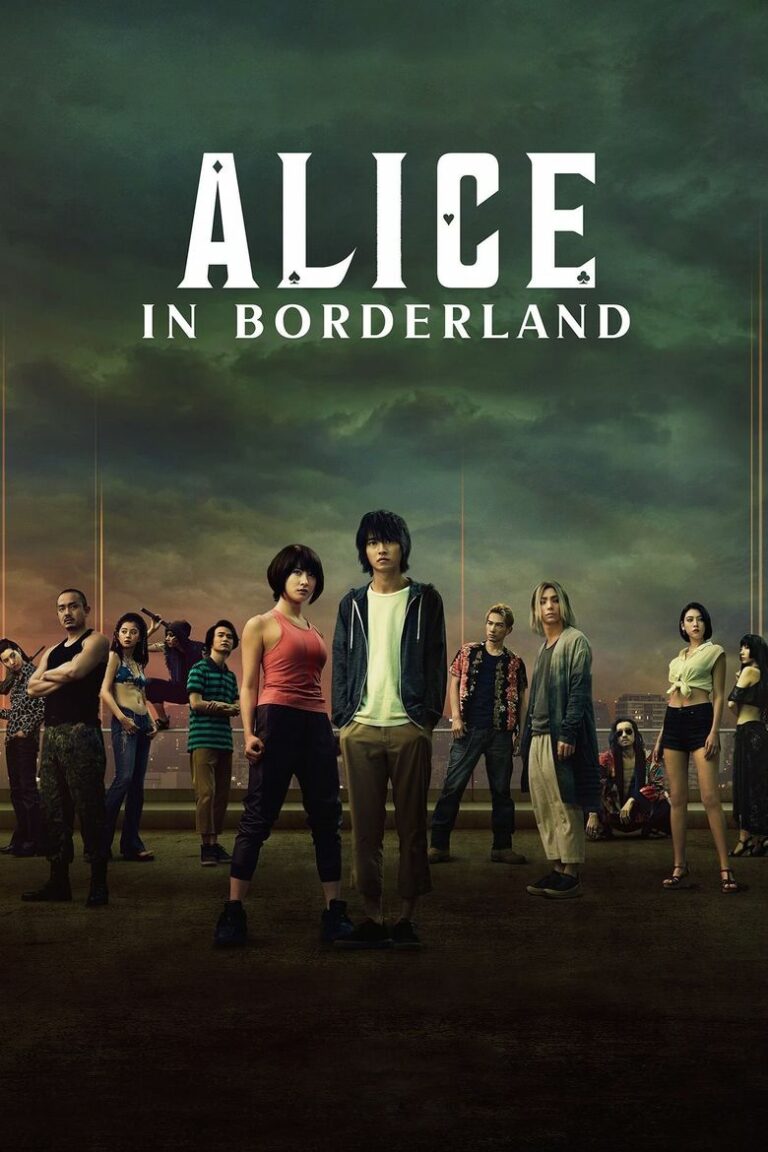
Last December, the highly-anticipated second season of “Alice in Borderland” was officially released on Netflix. The Japanese thriller series, originally based on a manga, depicts a boy named Arisu who is stuck in apocalyptic Tokyo, where he is forced to survive on life-threatening games.

During season one, Arisu and his two best friends, Chota and Karube, emerge from a public restroom after hiding from the police, only to find that Shibuya Crossing, a street that was bustling with people mere seconds ago, had been completely deserted. 

After wandering the city, Arisu and his friends stumble upon a building that turns out to be a game arena, where they must gamble for their lives in a game of luck. Although Arisu’s quick wit helps them to win the game just in time, they ultimately realize a more disturbing truth. Everyone remaining in Tokyo is essentially a “player” in the “Borderlands” — a dystopian parallel of Tokyo — and in order to survive, they must continue to compete in a series of deadly challenges scattered around the city. 

Each game is represented by a playing card. The category and difficulty level of the games is hinted at by the suit of the card. The more a player collects, the longer they have to survive before they are automatically killed by a laser beam shooting directly from the sky. 

Up until the very last episode of the series, there doesn’t seem to be a human antagonist, since the challenge of most episodes is sheer survival. However, the playing cards play a crucial role in understanding how the Borderlands work. It is revealed in season one that in order to escape the Borderlands completely, a player must defeat every single game, collecting the card that comes with it.

Throughout the season, Arisu meets several new and interesting players who end up appearing in season two as well. Usagi, a flexible mountaineer, Arisu’s love interest and the main heroine of the show, is introduced just after Chota and Karube die sacrificing themselves for Arisu. Chishiya, who Arisu meets in a deadly game of hide-and-seek, is as cunning as he is intelligent and seems to prefer operating as a loner for most of the show.

While season one focused primarily on the survival aspect of the series, season two dives much deeper into each character’s backstory through far more intense games. Throughout, a struggling Arisu also begins to be haunted by survivor’s guilt and all of the uncertainty surrounding the origin of the Borderlands. 

Since season one ended with the players collecting all forty numbered cards, season two focuses on the collection of the face cards, each of which is represented by a real person. Two of the most notable face cards are the King of Spades and the Queen of Hearts. The King of Spades is a skilled mercenary who has been hunting down players since the first episode. Arusi and several other characters have nearly died at his hands and later end up fighting him in a final showdown during the last few episodes of season two. 

The Queen of Hearts, or Mira, who some deem the central antagonist of the show, is the very last face card that Arisu and Usagi must defeat in order to escape the Borderlands. This final game takes up a whole episode and is definitely the most confusing yet. Rather than a game of physical endurance or intelligence, Mira simply requests that Arisu finish a game of croquet with her. During this game, however, Mira manipulates Arisu by cornering him into a state of existential dread and despair. As she feeds him multiple fake stories of how the Borderlands came to exist, Arisu begins to hallucinate that he is a mental hospital patient mourning the death of his friends. 

Though there were countless complex mind games, intense battle scenes and philosophical conversations that make season two worth the watch, the most intriguing part was the final episode, which revealed the true origin of the Borderlands. While most survival-themed television shows and movies often have supernatural or dystopia-related causes, the ending of “Alice in Borderland” had neither, which made it pleasantly surprising. 

Many parts of the show incorporated a theme of life and death, both in a literal and figurative sense, and the final ending is no exception. It also explained the meaning behind the show’s title, which in retrospect, acted as a subtle clue to the plot twist itself. Looking closely enough, the victory of one character in season one led to numerous subsequent victories in season two, all of which made Arisu’s survival possible and in turn, ensured the survival of the remaining characters. The cyclical nature of life is portrayed this way throughout the show. As a result, what the series lacks in subtle plot development and pacing, it makes up for with deep-rooted themes and characters. 


Written by: Vivi Kim — arts@theaggie.org

Davis secures state funds for agricultural conservation easements

The Yolo Land Trust and Solano Land Trust easements will protect agricultural land acquisition for years to come


By LA RISSA VASQUEZ city@theaggie.org


On Dec. 15, 2022, the city of Davis, Yolo Land Trust and Solano Land Trust received nearly $4 million in grant funds from the Sustainable Agricultural Lands Conservation (SALC) program, a division of the California Strategic Growth Council’s Affordable Housing and Sustainable Communities Program. The grants will fund the city of Davis’s purchase of two agricultural conservation easements. 

Shanna Atherton-Bauer, a senior environmental planner with the California Department of Conservation and the program manager for land conservation programs, explained the purpose of easements. 

“The theory is that you can’t just construct housing; you also need to protect the agricultural land surrounding communities,” Atherton-Bauer said. “Regional parks and open space districts work with landowners who are interested in conserving their lands. They help develop applications and then they bring those applications to us, so we don’t work directly with landowners. We work with intermediaries who will ultimately hold the easements and ensure that the land is not developed.”

Reynolds talked about concerns regarding negotiating zoning and developer contracts, but that easements can preserve critical resources “in perpetuity.” 

“What the conservation easement does is it says you have to keep this in agriculture forever,” Reynolds said. “Even if this is annexed into the city someday, it would still stay agriculture; [it] can’t be rezoned for something else, and so there’s a value on it. Yolo County has some of the best farmland in the world, and so there’s also a desire to preserve that farmland because we also need food.”

According to Tracie Reynolds, the city manager of the Davis Open Space Program, the city is working to execute the easements by Feb. 2023, and both are expected to be completed by the end of 2023 or early 2024. The grants are described in a document that Reynolds provided.

The first grant awards $915,000 to help the city purchase an agricultural conservation easement on 120 acres of farmland located near the intersection of County Roads 104A and 30, according to the document. The second grant, for $2.9 million, will help purchase an easement on 217 acres on the city of Davis’s southern border with Solano County. 

Reynolds talked about Measure O and how the parcel tax plays an important role in securing funds for land easements. 

“Measure O is a parcel tax; it’s small like for your typical house,” Reynolds said. “I think it’s $24 a year. It’s a small amount of money, but it generates about $700,000 a year. It’s not always easy to come up with $500,000 or something for matching funds. The point is that in 2000, because of Measure O, it became easier to preserve more farmland because we had this ready source of funds.”

 Reynolds’ work will continue to focus on promoting Measure O as a cost-effective and efficient way for the city to secure acquisition grants.

The Open Space Program and  Open Space Commission consult with property owners and land trusts to establish guidelines for priority land acquisitions so that preservation occurs without halting urban growth and property development.

According to a comment provided by John Currey, the executive director of the Yolo Land Trust (YLT), the organization has been a longtime Open Space Program partner, and they have plans to continue to work with Open Space this year.

“We’ve partnered with the City of Davis on agricultural conservation easements since 1995,” the statement reads. “Both staff and the City Council of Davis have been strong partners with YLT, and the city has provided much-needed funding to accomplish our mission of conserving farmland in and around Davis. To date we have completed 21 conservation easements with Davis, and we have a potential easement forthcoming in 2023.”


Written by: La Rissa Vasquez city@theaggie.org

Grand reopening of Aggie Reuse marks store’s major transformation

On-campus thrift store Aggie Reuse transitions to a zero-cost resource for students


By LILY FREEMAN — campus@theaggie.org

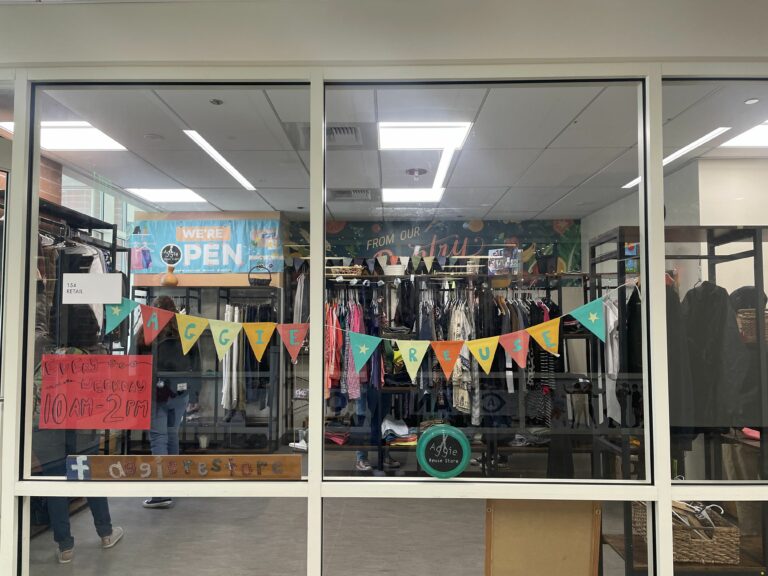
Jan. 17 marked the grand reopening of the Aggie Reuse Store, an ASUCD student-run unit known as the “on-campus thrift store,” according to their website. Their mission is to promote sustainable fashion and creative upcycling while providing basic resources for the community.

Aggie Reuse holds a variety of items donated by the community, such as second-hand clothing, school and craft supplies, bike helmets, shoes, fabrics and more, according to their website. 

Paloma Casillas, a fourth-year English and Chicano studies double major and member of the Aggie Reuse team, detailed the store’s transformation before its reopening. 

“We have moved from a thrift-store model to a mutual-aid model,” Casillas said. “This means that where we used to sell our goods for about a dollar or two, everything is now free. It’s pretty amazing to see it actually happen, but it would not be possible without donations from the school and the student body.” 

Casillas also noted that the store has moved from the Silo to Memorial Union (MU) room 154, a larger space that can accommodate more donations and make the store easier for students to access. The store is located near the Pantry and directly next to the Information Desk and the MU. 

Max Isensee, a fourth-year political science major, described his experience as a customer on the day of the reopening. 

“Aggie Reuse is clearly a great opportunity to give help to those in our community that need it the most, especially now that everything is completely free,” Isensee said. “As a college student trying to save money, it is really great to see the selection of styles and sizes for everyone’s needs.” 

Antonio Delgado, a second-year communication major and customer at the reopening, expressed similar thoughts. 

“I was really impressed to see all of the clothing they had to offer,” Delgado said. “I was shocked to learn that all of that was free and saw a big transformation from the store that they were in the past. I really think that there could not be a better place for students to thrift affordably.”

Curtis Pan, a fourth-year economics and statistics double major and current sales team lead at Aggie Reuse, outlined the various ways students can get involved with the organization.

“It’s really easy,” Pan said. “You can sign up for our email list through our website or [the link in our] Instagram bio to hear about upcoming events and opportunities. Also, feel free to stop by, and anyone working will get you in contact with the team that you want to join on Aggie Reuse.” 

The Aggie Reuse organization is composed of sales, design, marketing, social media and data analytics teams, according to their website, providing a diverse variety of ways for students to get directly involved with the cause. 

Pan also explained that any member of the Davis community can now bring donations directly to the store on Fridays during store hours. 

Casillas said that students should take advantage of all of the benefits that Aggie Reuse has to offer. 

“Everything is free,” Casillas said. “We know that with the reopening, Aggie Reuse has become a much more accessible, affordable and sustainable resource for everybody and anybody. We are here for you, and it’s a completely free resource on campus, so why not take it?” 


Aggie Reuse is open Monday through Friday from 10 a.m. to 2 p.m. in MU 154.


Written by: Lily Freeman — campus@theaggie.org

Experts, students shed light on tech user privacy concerns and online safety measures

0

Learn more about invasive technologies, how they manifest in your day-to-day and how to make informed decisions about your data 


By REBEKA ZELJKO — features@theaggie.org


Researchers say that many are unaware of the ways technology companies utilize our personal data. According to LegalJobs, “67% of internet users in the U.S. are not aware of their country’s privacy and data protection rules.” But just because users don’t know how their data is being used, that doesn’t mean they aren’t concerned. 

Another study conducted by the Pew Research Center reported that as many as 79% of Americans on the web worry about companies infringing upon their online privacy. This is because people are noticing the ways their data is used to shape the media they receive.

It is common for people to come across a well-targeted advertisement while using their tech devices. Daniella Mejia, a fifth-year political science major, says she frequently encounters media personalized to her interests.

“It happens all the time,” Mejia said. “In my Portuguese class, my phone can hear me talking about it because I started getting Portugal travel suggestions on my Pinterest, and it’s pretty cute, but it’s also like it’s always intuitively listening.”

Andy Jones, Ph.D., a continuing lecturer in UC Davis’s University Writing Program and an academic associate director for academic technology services at UC Davis, says that audio collection can occur in technologies with voice-activating features, but tech companies lack transparency about how the data is utilized.

“The newer technologies are problematic, but sometimes for different reasons,” Jones said. “Alexa, for instance, collects snippets of audio from overheard conversations all the time.  Amazon tells us that that information is regularly deleted, but that is not a transparent process, and we don’t know how that information is being used or what private conversations are being monitored.”

Audrey Ino, a third-year cognitive science major, says that she feels these examples of data collection in her day-to-day life. 

“I feel like technology is invasive in the sense that it’s used as a tool to market and sell things to me,” Ino said. “I feel like it doesn’t give me free thought, and it invades my subconscious and the decisions I make.”

Some view technology as a trade-off. According to Jones, there is the reward of convenience and information in exchange for information.

“A lot of people don’t think or worry much about entities such as corporations or the government knowing about their location or their activities,” Jones said. “Most people see themselves as law-abiding citizens, and therefore they aren’t concerned with how they use their technologies or how their locations are being tracked. I think a larger group of people […] are aware their information is being tracked, but they see the trade-off and that these conveniences outweigh.”

Ino says some might not be aware of the way their information is utilized.

“I think the biggest threat is the fact that many people are uneducated about technology, and companies use that aspect of vulnerability to take advantage,” Ino said. “I also feel that the power of technology and social media doesn’t allow people to have freedom of thought.”

To some, data collection feels inevitable. Mejia says that tech companies give us the illusion of privacy.

“I can request to keep my information private, but it’s frustrating because it’s smart and it can adapt,” Mejia said. “It feels like I have no autonomy. Sometimes, it gives you the option to opt out of ‘cookies,’ but a lot of times, it won’t actually let you move forward on the site without clicking ‘accept.’ So you basically have to give them access anyway.”

Other similar features that claim to ensure privacy can have flaws.

“One can do a web search in incognito mode, and then different websites would not know necessarily where the queries are coming from,” Jones said. “However, an employer can track its employees’ activities in incognito mode, just the same as a UC Davis student visiting a website from the dorm can have that information being tracked, even in incognito mode.”

Several solutions have been suggested to avoid data collection and ease anxiety about internet privacy.  But Mejia says most solutions aren’t realistic.

“You can go completely offline, but then you just end up isolating yourself in another way,” Mejia said. “There’s also VPNs, but the thing about VPNs is that they usually cost money. It’s just an obvious equity gap with money and also with information. Not everyone can afford a VPN or knows what a VPN is in the first place.”

Jones suggested a rule of thumb to identify areas of concern. 

“If you’re not paying for the product, you are the product,” Jones said. 

Others turn to the government to regulate tech companies and mitigate data collection.

“I think there needs to be more transparency and regulation,” Ino said. “Individuals who use technology have the right to fully understand what happens to their information when they submit it. There should be some legal initiatives that ensure companies only use personal data for what users consent to.”

Ino says that solutions feel out of reach, and the presence of invasive technology will inevitably continue.

“It seems like tech giants are just so much smarter than the officials in our government so they can use these loopholes and access the information that they want,” Ino said. 

Jones said that he predicts that we will become increasingly indifferent to how our data is used in the future.

“I think we will continue on the trajectory we are on,” Jones said. “And that trajectory it’s moving on now is with the increased concern with convenience and decreased concern with transparency.”

Written by: Rebeka Zeljko — features@theaggie.org 

The California Aggie’s NFL All-Pro Team

0

The Aggie spotlights some of the best NFL players from the 2022 NFL season, including Patrick Mahomes, Justin Jefferson and Nick Bosa


By PATRICK FIGUEROA — sports@theaggie.org


With the end of the 2022 National Football League (NFL) regular season, the NFL Associated Press (AP) selects the top players from their respective positions to be members of the All-Pro first and second teams. In addition, 2022 was the first season in which the National Football League Players Association (NFLPA) revealed its own All-Pro teams. The Aggie will introduce its own All-Pro team that includes players that are on both the AP All-Pro team and NFLPA All-Pro team.


Quarterback: Patrick Mahomes, Kansas City Chiefs

Mahomes continues to add to his impressive resumé as he led the NFL in passing yards, passing touchdowns and quarterback (QB) rating. He also helped the Chiefs win 14 games, granting them a first-round bye in the playoffs. This is the third time that Mahomes has made the AP All-Pro team in his career, a notable achievement. 


Running Back: Josh Jacobs, Las Vegas Raiders

Jacobs earned his first career AP All-Pro nod after rushing for 1,653 yards and 12 touchdowns. He is slated to be a free agent this offseason after the Raiders declined his fifth-year option prior to the 2022 season. Jacobs will likely be one of the most sought-after running backs during free agency. 


Wide Receivers: Justin Jefferson, Minnesota Vikings and Davante Adams, Las Vegas Raiders

Jefferson has made the AP All-Pro team every season since he entered the league three years ago. This was his first time making the AP All-Pro first team after leading the NFL in both receptions and receiving yards this season. The Vikings plan to start negotiating a contract extension with the star wide receiver this offseason. 

Adams continues to be one of the NFL’s best wide receivers, even after being traded by the Green Bay Packers to the Raiders prior to this season. He made his third All-Pro team after he had 1,516 receiving yards and led the NFL in receiving touchdowns with 14. Even with the expected departure of former college teammate and friend, quarterback Derek Carr from the Raiders, Adams will likely stay in Las Vegas for the upcoming season and beyond.


Tight End: Travis Kelce, Kansas City Chiefs 

For the seventh consecutive season, Kelce has made the AP All-Pro team. He led all tight ends in receiving yards, receptions and touchdowns. With another impressive season at 33 years old, Kelce continues to add to his Hall of Fame resumé. 


Center: Jason Kelce, Philadelphia Eagles

Jason Kelce, the brother of Travis Kelce, made his fifth AP All-Pro team in his career this year. Kelce was the second-highest-graded center according to Pro Football Focus. The 35-year-old center has considered retirement in the past, but he continues to play at a high level. 


Offensive Guards: Joel Bitonio, Cleveland Browns and Zach Martin, Dallas Cowboys

Bitonio has earned his fifth consecutive AP All-Pro team nod. He earned an 89.0 player grade from Pro Football Focus as the Browns had one of the best-rushing offenses in the NFL. 

Martin has the most AP All-Pro team selections out of anybody that made it this year with eight selections. He was also a member of the 2010s All-Decade Team. With this resumé, Martin is a near lock for the Pro Football Hall of Fame. 


Offensive Tackles: Andrew Thomas, New York Giants and Lane Johnson, Philadelphia Eagles

Thomas made the AP All-Pro second team this season after posting Pro Football Focus run-blocking and pass-blocking grades above 80 this past season. The fourth overall pick in the 2020 draft class appears to be living up to expectations. 

Johnson was named to his third All-Pro team. Johnson did not allow a QB hit throughout the entire season according to Pro Football Focus, which helped Eagles’ young QB Jalen Hurts have one of the best seasons in his career. 


Edge Rushers: Nick Bosa, San Francisco 49ers and Micah Parsons, Dallas Cowboys

Bosa had his first AP All-Pro selection after leading the NFL in sacks. He also tied for first place with 90 quarterback pressures according to Pro Football Focus. Bosa wreaked havoc for the 49ers all season and has a chance to win the NFL Defensive Player of the Year Award. 

Parsons has played in the NFL for two years and has already made two AP All-Pro first teams. He had 13.5 sacks and tied Bosa for most QB pressures. He will be competing with Bosa to win his first NFL Defensive Player of the Year Award this playoff season. 


Interior Defensive Linemen: Chris Jones, Kansas City Chiefs and Dexter Lawrence, New York Giants

Jones had 15.5 sacks this season, earning a spot on the AP All-Pro team for the fourth time in his career. He also contributed to the Chiefs’ defense in other ways, including getting 17 tackles for loss and 29 quarterback hits. 

One of the premier nose tackles in the NFL, Lawrence earned his first AP All-Pro nod. He led all defensive players in QB pressures when lined up as a nose tackle with 29. The second-closest player, Miami Dolphins’ nose tackle Raekwon Davis, only had eight. 


Linebackers: Fred Warner, San Francisco 49ers and Roquan Smith, Baltimore Ravens

Warner continues to be one of the best linebackers in the NFL after racking up 130 combined tackles, an interception and a forced fumble. He is a force in both pass coverage and run defense with the ability to cover the whole field. It explains why he is a two-time AP first-team All-Pro. 

Smith made his third straight AP All-Pro team during a season in which he was traded from the Chicago Bears to the Baltimore Ravens. In nine games as a Raven, Smith had 86 combined tackles, seven tackles for loss and an interception. As a result, he earned a five-year contract extension worth $100 million for his performance. 


Cornerbacks: Sauce Gardner, New York Jets and Patrick Surtain, Denver Broncos

The only rookie to be selected to the AP All-Pro team, rookie Gardner had a historic season. He was a lockdown corner, giving up just 452 yards and 46 completions. He also led the NFL in passes broken up with 20. 

Second-year corner Surtain made his first AP All-Pro team after a season where he only gave up 468 yards and 45 completions. He also intercepted two passes to help the Broncos have one of the best passing defenses in the NFL. 


Safeties: Derwin James, Los Angeles Chargers and Minkah Fitzpatrick, Pittsburgh Steelers

The leader of the Chargers’ defense, James made the AP All-Pro team for the first time since he was a rookie. He made plays everywhere on the field this past season with 64 solo tackles, four sacks, two forced fumbles and two interceptions. 

After receiving a contract extension prior to the season, Fitzpatrick made his third AP All-Pro team. He tied with three other defensive players for most interceptions this season, and he also improved his tackling with 17 defensive stops, according to Pro Football Focus


Written by: Patrick Figueroa — sports@theaggie.org