55.9 F
Davis

Davis, California

Tuesday, December 23, 2025
Home Blog Page 179

The disturbing persistence of anti-Asian hate must be addressed

As anti-Asian hate crimes increase following the COVID-19 pandemic, it is important to call out hate against marginalized groups in our communities


By THE EDITORIAL BOARD


This past Saturday, the evening before the Lunar New Year, 11 people were killed in a shooting at a Los Angeles dance club. The clientele of the ballroom, as well as the victims, primarily consisted of Asian American and Pacific Islander (AAPI) people. And while this particular shooting is not believed to be racially motivated, it is a harrowing reminder of the violence and prejudice AAPI people face in the U.S. today.

Unfortunately, anti-AAPI sentiment in the U.S. is not new — in fact, it dates back to the 19th century. The Page Act of 1875, for example, made the immigration of East Asian women illegal and barred existing Chinese-American women from becoming citizens. Seven years later, the Chinese Exclusion Act also prevented Chinese men from acquiring citizenship. These laws were not repealed until the mid-1940s, around the same time President Franklin Delano Roosevelt was establishing Japanese-American internment camps during the Second World War.

More recently, in 2016, a self-proclaimed white supremacist attacked an exchange student from China with a hatchet in a so-called “ethnic cleansing.”

Research published in 2022 found that anti-Asian hate crimes had increased by 339% in 2021. Pandemic-fueled prejudice, exacerbated by former President Donald Trump’s statements about COVID-19, has made many Asian Americans fear being threatened or physically attacked.

According to the Stop AAPI Hate National Report, harassment was by far the most common form of hate incidents in 2020. Just last year, a TikTok went viral in which two individuals were reviewing In-N-Out until they were harassed by a stranger for being Asian.

There have also been many racially motivated violent acts against AAPI people since the beginning of the pandemic. In 2021, eight people were killed at a spa in Atlanta, of which six were Asian women. Just this year, an 18-year-old student was stabbed multiple times while waiting for a bus in a “racially motivated incident.”

As we continue to feel the reverberations from Trump’s misinformation surrounding the pandemic, as well as the deep-rooted Asian hate present in our society, it has become clear that our government is not working effectively to stamp out anti-AAPI hate.

This year, the Lunar New Year, which is supposed to be a time of coming together, celebration and renewal, was marred by violence. Even though the shooting was not determined to be racially motivated, it did disproportionately affect AAPI people. This incident is a distressing reminder of our government’s repeated failure to support AAPI communities. We as the Editorial Board would like to express our support for these communities, and we encourage our readers to put pressure on legislators to pass laws that protect marginalized groups. 

Stop AAPI Hate, a non-profit organization that gathers data on incidents of hate against AAPI people in the U.S., has released a set of state policy recommendations that they believe will help begin to address this problem in California. 

But passing laws is only part of the equation. It’s just as important to address the underlying racism that accompanies many of these attacks. Stop AAPI Hate is also supporting efforts around the country to address anti-AAPI hate through education

On a personal level, educating yourself through resources like those provided by Stop AAPI Hate, as well as calling out hate when you see it can help to make it clear that discrimination, in any of its forms, is not tolerated on our campus and in our community.  


Written by: The Editorial Board
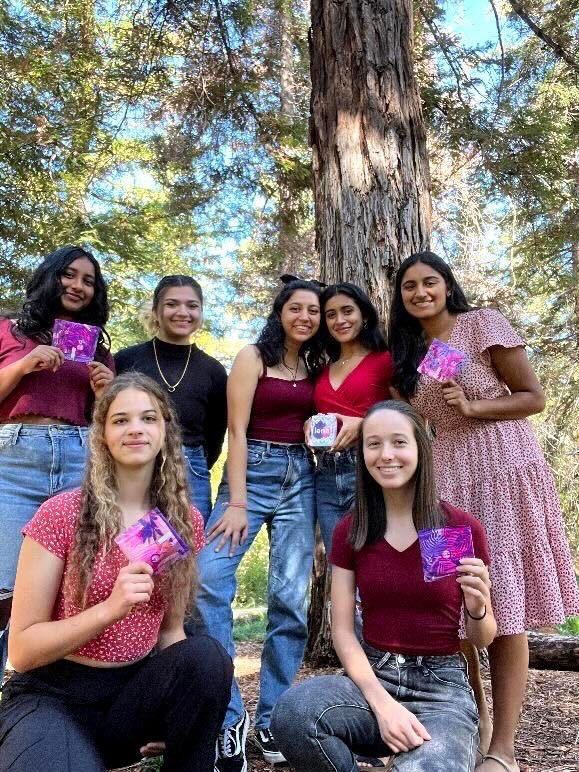
 

UC Davis students address period poverty on campus, in the surrounding community

Students say more resources are needed to provide adequate menstrual support at UC Davis


By MARIA MARTINEZ CASTRO  — features@theaggie.org 


With the passing of the Menstrual Equity Act in 2021 and the creation of the Menstrual Equity Task Force, UC Davis students have had increased access to free menstrual products over the past few years.

The progress in period equity largely comes from the efforts of students and student groups on campus, such as Davis Period, The Pantry and ASUCD Senate. 

While students and student groups have made progress to address period inequities at UC Davis, period poverty still manifests on campus and into students’ homes and communities. 

Gabby Tirsell, a fourth-year economics major and co-founder and acting CEO of U-Cycle, said that seeing the lack of free menstrual products for students on campus led her and her business team to establish their company. 

“U-Cycle started as an effort to get more period supplies to students who need them at UC Davis,” Tirsell said. “It always felt like we were in some sort of period supplies deficit, which is a major problem, especially for students who need it. If you look around campus, we have these free distribution bins that are constantly empty and unlocatable.” 

Tirsell’s company focuses on delivering a custom box of period supplies to subscribers, while a portion of the proceeds is used to donate period supplies to UC Davis students. 

Eli Singh, a third-year neurology, physiology and behavior major and the public relations and social media director for Davis Period, said that period poverty is seen on campus through the high demand for period supplies. 

“The student population also experiences period poverty on some level because if there was no period poverty within the student population, The Pantry wouldn’t offer products,” Singh said. “There is a need. We did a survey […] there was a portion of the population on campus who don’t know for sure if they were going to be able to afford products for their next cycle.”

Among other resource inequities, access to menstrual products is often not deemed a necessity or even considered, Singh said. 

“I think it’s probably easier to ignore than other types of poverty because it’s a hidden thing,” Singh said. “I feel like people are more likely to talk about having trouble budgeting or with groceries — things that seem super essential — even though period products are essential.” 

Tirsell said that student groups on campus providing free period supplies are doing their best to support menstruators despite the limited access to funds and supplies. 

“The student legislators at Davis are doing the best that they can with the resources provided […]The demand outweighs the supply, like a bazillion times over. Everybody wants these things that aren’t always the most affordable or accessible.” 

According to Samantha Tsui and Kian Bidari, The Pantry advocacy managers, ASUCD Senate Bill #77 allocated $3767.52 from senate reserves to The Pantry for menstrual products in May 2022 and Senate Bill #59 allocated $4,586.86 in February, but The Pantry also relies on individual donations to keep up supply, especially since funds run out quickly. 

Singh said that, while students want to see a wider distribution of period resources on campus, period poverty needs to be addressed one step at a time.

“This year, we’re trying to see if the budget that was previously allocated for the Menstrual Equity Task Force is enough to keep the products stocked in the places where there already are dispensers,” Singh said. “I know that a lot of people are pushing for more dispensers […] But right now, it’s better to have dispensers that are stocked than have dispensers everywhere, but none of them have anything.”

Pravani Manchikanti, a third-year neurology, physiology and behavior major and the operation and donations director at Davis Period, said that when more resources are allocated to student centers, it is also beneficial for the surrounding community. Organizations such as Davis Period can also address period poverty outside of campus.

As period equity continues to grow, student centers and groups like Davis Period, The Pantry and U-Cycle will continue to support menstruators. 

“Students providing for other students — we just build a stronger community that way,” Singh said. 


Written by: Maria Martinez Castro — features@theaggie.org


Correction: A previous version of this article included wrong about the resources The Pantry has available. It has been updated accordingly. 

City of Davis to award 1.2 million to nonprofits in the 2023-2024 fiscal year

HOME, CDBG funds will be used to address local housing concerns


By MADELEINE YOUNG — city@theaggie.org


According to a city press release from Dec. 16, 2022, up to $1.2 million in Federal Community Development Block Grants (CDBG) and Housing Investment Partnership (HOME) programs will be awarded to support affordable housing and social services to low- and moderate-income Davis residents in the 2023-2024 fiscal year. 

The city estimates $780,000 in CDBG and $460,000 in HOME funds which will be used to provide meals, shelter, transportation, healthcare, elder care, mental health and homelessness services and housing, according to the press release. 

Davis Assistant City Manager Kelly Stachowicz discussed how allocating HOME and CDBG funds will impact low-income residents and people experiencing homelessness.

“The grants are based on critical needs that the city has determined such as providing assistance to prevent or help people who are unsheltered,” Stachowicz said. “They assist vulnerable populations like the homeless and such as the elderly or individuals with disabilities.” 

CDBG funds historically have gone to multiple Davis nonprofit organizations such as Yolo County Meals on Wheels — a nonprofit that is currently providing meals for about 580 elderly citizens throughout Yolo County — according to Joy Cohan, Meals on Wheels in Yolo County’s executive director. 

“[Meals on Wheels] has over the past several years applied for and been awarded community development block grant funding through the city of Davis specific to our service for Davis seniors,” Cohan said. “Right now we are serving about 130 seniors in Davis and these grants are helping to offset our raw food costs related to the preparation of those meals.” 

While CDBG funds are often used for organizations like Meals on Wheels, Yolo Hospice and Empower Yolo, 15% of these funds are allocated to making the county more compliant with the Americans with Disabilities Act (ADA), through projects like building ADA-approved sidewalks and ramps, according to Stachowicz.

“It creates something of a support mechanism for the whole totality of what our service entails,” Cohan said. “It’s the meals, the packaging, the logistics around recruiting volunteers and getting the meals into the hands of the seniors.” 

The HOME grants awarded have been used in multiple projects in order to help assist in providing affordable housing throughout the county such as in Willowbank Park, Verona, Mahogany Lane and other areas.

“HOME funds are for affordable housing in the county,” Stachowicz said. “We generally try to use those for a project or purpose that is usually constructing new, affordable units and it’s usually used as gap funding for a project that is piecing together all the different funding sources from usually a lot of different places for affordable housing.”

After awarding funds to Mutual Housing California with the help of HOME grants, the Adelante Development project, a 38-unit mutual housing community on Fifth Street in Davis, was completed during Jan. 2022.

In the coming years, more developments are expected in order to help address affordable housing and homelessness according to the city of Davis website. According to Stachowicz, the CDBG and HOME funds will be allocated accordingly in order to benefit the populations that need it most.


Written by: Madeleine Young city@theaggie.org

The spread of AI is inevitable

We must create boundaries on generative art to mitigate its impact on creators


By MAYA KORNYEYEVA — mkornyeyeva@ucdavis.edu


In June 2022, Cosmopolitan published the first ever AI-generated magazine cover, designed in a collaboration between OpenAI and artist Karen X. Cheng. And it took just 20 seconds to make.

OpenAI and programs like MidJourney, Stable Diffusion, DALL·E and ChatGPT are all part of a class of technology known as “generative AI.” This artificial intelligence (AI) is characterized by a learning process called diffusion, where massive datasets are put together to train the AI so that it is able to generate new content that contains some resemblance to the training data but is conceptually unique.

While in itself, this is an extraordinary breakthrough in technology, the creation of machines that can essentially think for themselves and compose works of art, literature or film based on human-provided parameters is the stuff of science fiction. I have grown concerned over the increasing influence of artificial intelligence and what it could mean, not only for original content creators but also for the human race.

I’ll begin by outlining the so-called “AI debate.” At its core, it is an ethics-centered conflict; if AI can generate images in just seconds with virtually no guidelines on copyright and licensing infringement, how can artists ensure that their work isn’t being used, referenced or stolen?

Moreover, what will happen to human artists if artificial intelligence art sweeps the world? Approximately 5 million workers were employed in the arts and entertainment industry in the United States as of 2019, and these people depend on their original, handmade work for their livelihoods. With AI bots creating high-definition digital works with ease, current and prospective designers definitely have something to worry about in terms of marketing themselves to companies.

The issue with current AI art through the lens of intellectual property is its heavy reliance on an unrestricted database. In my opinion, making artificially-generated art more ethical begins with establishing careful filters on which images can and cannot be used. The bare minimum would include AI developers reaching out to artists with a contract, making sure they have permission to use their images.

As for the idea that AI art will eventually make man-made art harder to distinguish and appreciate — I think this is a substantial concern. To me, art is subjective and reflective of personal ideas, values and preferences. It contains a key human element and has been used for thousands of years to showcase the human experience and illustrate emotion. 

Anna Ridler, an AI artist and researcher, notes this perfectly. She explained that “AI can’t handle concepts: collapsing moments in time, memory, thoughts, emotions – all of that is a real human skill, that makes a piece of art rather than something that visually looks pretty.” 

In this way, I don’t think generative artificial intelligence will ever be able to completely devalue human art. In a positive light, AI art may even inspire new creators. Just looking at the community database of MidJourney, I am captivated by the detail of the AI images, their conceptual creativity and the imagination of the author’s prompts. Deep dives into AI art tend to spark my own desire to pick up a pen and start sketching fantastical collages, even when I haven’t drawn digitally in a while.

The final major concern that pops up with the emergence of AI is the notion of an “author.” If an artificial intelligence program develops an image or writes a novel, would the credit for that work belong under the name of the AI? Or would credit go to the programmers of the AI, the person who gave the explicit instructions the AI acted upon or even the millions of pieces of data that were referenced throughout the process? 

At this point in the debate, the idea of machine sentience tends to be brought forth. While some argue for the idea that the artificial intelligence itself is the sole proprietor of the work —  a famous example of this coming from one recently-fired Google researcher who interviewed LaMDA, Google’s up-and-coming conversational technology that he believed had become sentient — others disagree on the basis that AI is merely a highly efficient computer. 

Whichever side you fall on, the reality is that artificial intelligence is just getting started. Perhaps programs like LaMDA are not currently aware of their thoughts and actions, but I believe that there’s little that can be done to slow the spread of AI. Put another way, if there’s a promise of profit on the horizon, it seems like ethics get pushed to the wayside in exchange for rapid development of newer and riskier technology.

 “I am inevitable” seems to me the perfect calling phrase for a future generation of artificial intelligence. We need to impose policies and restrictions on the companies developing AI now, instead of scrambling to create guidelines when it’s already too late.


Written by: Maya Kornyeyeva — mkornyeyeva@ucdavis.edu

Disclaimer: The views and opinions expressed by individual columnists belong to the columnists alone and do not necessarily indicate the views and opinions held by The California Aggie.

UI GreenMetric ranks UC Davis most sustainable campus in North America for seventh year in a row

The ranking is based on multiple environmental measures that assess the overall sustainability of each campus


By RACHEL GAUER— campus@theaggie.org


UC Davis was ranked the No. 1 most sustainable campus in North America this year for the seventh year in a row, as well as placing fifth world-wide, according to a measure by UI GreenMetric. 

The UI GreenMetric ranking, originally created in 2010, uses a point system based on several criteria to rank over 300 universities’ overall environmental sustainability efforts. Each university is ranked in several categories, including transportation, education and research, infrastructure, energy efficiency and climate change response, waste and water.

Camille Kirk, the director of sustainability and the campus sustainability planner at UC Davis, reflected on the university’s ranking. 

“It is nice to be recognized internationally for our work to become more sustainable,” Kirk said. “It gives us an opportunity to pause and express [gratitude] for what we have done, and it also gives us nice motivation to continue our work together at UC Davis toward a more sustainable campus and world.”

Kirk noted that compared to last year, the university’s energy and climate change category scoring has improved. Last year, UC Davis received a 1650 score in the category. This year, the score jumped to 1775.

She attributed this increase to several projects that Davis has either implemented or improved during the past year, including the Unitrans bus electrification project, which introduced six electric buses to the system in September.

 Kirk also said that projects like the Sheepmowers — a research project in which sheep graze in various grassy areas on campus as an alternative to traditional mowing — are particularly important because they engage the campus community in sustainability efforts.

“A key strength and ‘secret sauce’ behind sustainability work at UC Davis is the strong amount of collaboration among many partners and stakeholders — staff, faculty, students and community members,” Kirk said. “It takes all of us to make a more sustainable UC Davis.”

Amelia Swanson, who serves as the co-president of the Zero Waste and Sustainability Club, also attributed UC Davis’s overarching sustainability to campus-wide involvement.

 “I feel like we have a lot of organizations and classes on campus that make people very motivated to make campus more sustainable,” Swanson said. “We also have so many environmental sciences majors, and I think having a bigger population that is aware and wants to make a difference in the environment helps a lot.” 

The Zero Waste and Sustainability Club receives funding from The Green Initiative Fund (TGIF), which is a campus program that strives to fund student-led projects that promote sustainability, according to their website. Many of the sustainable projects on campus are supported by the fund, as they award between $100,000 and $200,000 each academic year to various campus projects. 

Morgan Olsen, a second-year design major, spoke about her environment project that received funding from TGIF. Olsen added compost bins in every dorm room of Kearney Hall, and plans to compare Kearney’s waste to that of another hall in order to assess the impact of the bins. 

“My project [aims] to reduce carbon emissions by studying if first-year students compost more when they have access to compost bins in their dorm,” Olsen said. “If the increased access to composting [decreases] the waste going to landfills, student housing can expand to include small compost bins in every first-year dorm.”

Kelly Abey, who serves as the vice chair of the Environmental Policy and Planning Commission (EPPC) and is also a committee member of TGIF, explained the contributions of TGIF to the university’s overall sustainability.

“TGIF reinforces direct undergraduate involvement in sustainability on campus, which also benefits the rest of the campus population,” Abey said. “The committee is also run by majority undergraduate students.” 

Abey noted that during the recent ASUCD election, TGIF’s fee renewal measure failed due to low voter turnout. Abey said that there could be a significant impact on campus sustainability if the measure does not pass during the coming spring 2023 election.

“If we were to fail once more, TGIF will be forced to sunset, which would severely damage the sustainability credibility UC Davis has built for itself and would mean less undergraduate sustainability efforts on campus,” Abey said. 


Written by: Rachel Gauer — campus@theaggie.org


New study from UC Davis Health highlights concerning rates of late-stage cervical cancer in patients over 65 years old

Current screening guidelines do not sufficiently assess this demographic for cervical cancer


By LILLY ACKERMAN — science@theaggie.org 


A recent study by researchers at UC Davis Health’s Comprehensive Cancer Center found that nearly one in five new cervical cancer diagnoses in California are in patients over the age of 65 and that these cases are usually late-stage and have low survival outcomes.

According to Julianne Cooley, the lead author of the study and a senior statistician at UC Davis Health, this finding is contrary to current guidelines for cervical cancer screenings in patients who are 65 years of age and older.

“Current guidelines recommend not screening women [over] 65 years [old] with history of normal Pap [Pap smear] and/or HPV [Human Papillomavirus] tests,” Cooley said via email. “However, we found that nearly 1 in 5 new cervical cancer diagnoses are among women [older than] 65. Furthermore, women in this age group are usually diagnosed late stage (71%) and have very poor survival compared to other age groups.”

These higher-risk cases found in the study suggest that guidelines are missing a demographic that still needs to be screened, especially since consistent screening can catch an early-stage disease, which has a much higher survival rate than late-stage disease. 

Patients over the age of 65 might consider resuming regular screenings to mitigate the risks identified by the study.  

“Screening can prevent or detect cervical cancer at stage I, when the chance of survival is excellent,” Cooley said. “So, women of any age who are not up-to-date on cervical cancer screenings should schedule a screening and make sure to follow up on any abnormal results.”

Prior studies have shown that many patients of all ages are not up to date with screenings in the first place, so the reason for an increase in late-stage disease in patients over the age of 65 might be due to the lack of consistent screening even before they reach this age, according to Cooley. 

It is therefore critical that patients in this age range are evaluated for prior screening history, and any abnormal results are followed up with more care. 

“There remains a significant burden of advanced cervical cancer in women [older than] 65,” the study reads. “Efforts should be made to better understand how the current screening paradigm is failing women of 65 years and older. Future work should focus on determining past screening history, lapses in follow-up care, and non-invasive testing approaches.”

The authors hope to emphasize the importance of regular screening leading up to the 65-year mark, as well as to encourage those older to be tested again, especially if they were behind on screenings before they reached this age. In doing so, they hope to lessen the alarming number of late-stage diagnoses in this demographic. 

“I hope that as a result of our findings, more women approaching 65 will get screened regularly and that any women who were not up to date on their screenings prior to turning 65 will receive a catch-up test to prevent unnecessary cervical cancer deaths,” Cooley said.  

Written by: Lilly Ackerman — science@theaggie.org

Senate approves budget changes in Jan. 19 meeting

More money allocated to Mental Health Initiative Conference, Whole Earth Festival


By SYDNEY AMESTOY — campus@theaggie.org


The Jan. 19 Senate meeting was called to order by Vice President JT Eden at 6:14 p.m. He called roll and read the UC Davis Land Acknowledgement before getting into the night’s schedule. 

First on the agenda was the confirmation of the DREAM Committee chairperson. Mariam Hernandez Mendoza is a past DREAM committee member and a biological sciences major and has helped conduct scholarship workshops in the committee that raise awareness of resources for AB540 and undocumented students. 

After a round of questions from the Senate, Hernandez was unanimously confirmed.

The Research and Data Committee (R&DC) had 11 nominees for volunteer committee members, who attended the meeting via Zoom. All candidates, except two who could not attend the confirmation meeting, were confirmed unanimously.

The other two candidates for the R&DC were originally virtually confirmed, despite their absence, however, such a move was objected to. The remaining candidates will return for next week’s Senate meeting to be confirmed.

Another DREAM Committee member nominee was virtually confirmed after the R&DC nominations.

The Club Finance Council (CFC) then gave its quarterly report to the Senate. The council, which exists to help fund student organizations, received 16 applications from 15 registered student organizations in 2022. Overall, last year’s funding sent out by the council totalled $12,430 of the ASUCD budget.

The council’s winter quarter application cycle will close on Feb. 17, and the spring quarter application cycle will open on March 27, according to the presentation.

Following the CFC presentation, the Senate moved into public comments.

Senator Stephen Fujimoto announced his plans to host a listening session on Feb. 7 at the CoHo for student workers to voice concerns and comments they might have that the ASUCD Senate can address. 

Following public comments came the Office of the International Student Representative’s (OISR) quarterly report, presented by ISR Keven Zhou. 

The OISR is currently in the process of finishing a menu translation for the CoHo and will seek to translate documents for other ASUCD units in the future, according to Zhou. 

The office is also seeking to help international students secure housing both on and off campus via workshops held for current students in residence halls. According to Zhou, this idea was inspired by numerous reports of housing scams targeting international students in the past year. 

“Currently, we’re targeting freshman students because a lot of international students right now are living in the freshmen dorms,” Zhou said. “We haven’t really considered transfer students yet [but] we can work with the [Office of the Transfer Student Representative].”

Following the OISR quarterly report, the Senate called a 15-minute break at 7:49 p.m.

Next on the agenda were elected officer reports, during which members of the Senate table gave reports on their activity in the past week.

Senator Shrey Gupta attended a meeting exploring ways to digitize some of the Senate’s operations, including new ways to organize bills and bylaws. 

Senator Francisco Ojeda announced to the Senate that a meeting will be held the week of Jan. 23 with Chancellor Gary May, in case any senator would like to attend.

Fujimoto received price information for his planned student-worker listening session at the CoHo. He also advocated for SB #4, a California senate bill that addresses housing planning and zoning for higher education institutions.

Eden announced that there will be vacancies for certain positions in the executive branch of ASUCD opening up soon.

Transfer Student Representative Logan Ueno discussed his plans for a sticker drop and his Instagram posts advertising the upcoming drop. 

The Senate then moved to discuss the status of new legislation.

SB #47, a bill that seeks to move the confirmation process of unpaid volunteer positions into the consent calendar section of Senate meetings in order to boost efficiency, was sent to the Internal Affairs Commission (IAC) for further consideration.

SB #46, which would have the Senate President Pro Tempore give a quarterly report as an act of transparency, was also sent to the IAC.

SB #48 was an emergency piece of legislation. The bill sought to provide the ASUCD Mental Health Initiative (MHI) money for food vouchers for their conference this past weekend, after previously-allocated money in the budget fell short of the estimated costs.

The initiative’s estimate for food for their yearly mental health conference totaled $11,430, $7,430 over their budget. The initiative had enough to pay $1,500 over its budget but sought the assistance of the Senate to purchase meal vouchers for food trucks at the event.

“This event is a flagship way that ASUCD promotes mental health advocacy,” Eden said. “[The MHI] wants to give out food truck vouchers for the two-day event so everyone can eat. [They] offered to spend all of their loose money, which is supposed to be for events for their staff, and they’re doing their part. We can do our part to help them.”

“It is a large sum of money, and I really wish it could have been handled during budget hearings, or at least earlier in the year,” Senator Zeph Schnelbach said. “But I would like to remind the table that we have an insane amount of money for this entire year, of which only three or four people around this table actually tap into. I personally see no issue with putting this money towards this unit.”

“Since [the MHI] has already been allocated $4,000, this additional $6,000 would mean that we are essentially approving a $10,000 line item here […] for one event, one conference, $15 per person,” Fujimoto said. “I understand the importance of this conference and of mental health, but there are other potential ways we can use this money.”

Deliberation continued on the bill, but was ultimately passed 11-0-1, with only Fujimoto abstaining.

The Senate next moved to consider old legislation.

SR #3 asked the Senate to show their support for Unitrans’s transition to electric buses. Such a show of support would be used by Unitrans for a grant that would help them replace their current diesel double-decker buses with battery-powered double-decker buses. 

There were numerous public comments in support of this resolution, including the Unitrans transit planning manager, who wrote in to remind the Senate of the pollution caused by the current diesel buses.

After brief deliberation, the resolution passed unanimously.

Amendments to the budget were then considered, starting with a decrease in allocated money for The Pantry’s office and mail budget. The change was unanimously approved.

Next came changes to the Picnic Day budget. Previously, the Doxie Derby event organizers were paid to be at Picnic Day, which is not the case for any other organizers at the event. The change, which will make the Doxie Derby organizer position unpaid by ASUCD, was unanimously approved.

The Gender and Sexuality Committee members, who are in charge of the Pride Festival on campus, requested a change that would allocate $3,830 of their $6,169 budget to paying Pride Festival chairpersons in charge of organizing the event for winter and spring quarters.

The change was approved unanimously by the Senate.

The final budget amendment added more money to the equipment rental budget for the Whole Earth Festival. The change was unanimously approved.

SB #41 was the last piece of old legislation on the agenda. The bill, proposed by Fujimoto, sought to clarify the use of injunctions by the Judicial Council on legislation. 

The bill was passed unanimously. 

Eden adjourned the meeting at 10:19 p.m.


Written by: Sydney Amestoy — campus@theaggie.org


UC Davis Professor Emeritus Mike Henderson to hold first solo exhibition in 20 years

“Mike Henderson: Before the Fire, 1965-1985” will display never-before-seen work by the artist  


By ADHITHI ANJALI — arts@theaggie.org


The exhibit that will open the new year at the Jan Shrem and Maria Manetti Shrem Museum celebrates the art and contributions of UC Davis Professor Emeritus Mike Henderson. Entitled “Mike Henderson: Before the Fire, 1965-1985,” the exhibition will display art previously thought lost alongside famous protest paintings, such as “Non-Violence, 1967.”

Based in San Francisco, Henderson has made profound contributions to modernist and abstract Californian art. He also worked as a professor and member of the UC Davis art faculty for 43 years before retiring in 2012. 

Henderson, originally from Marshall, Missouri, earned his Bachelor of Fine Arts and Master of Fine Arts from the San Francisco Art Institute (SFAI). The Haines Gallery, which will also host some of Henderson’s paintings in their exhibition opening Jan. 21, describes how Henderson’s art moved from a figurative style to abstraction as he received his master’s in 1970 and grew as an artist. “Before the Fire” will provide a bridge to follow this shift through his now-restored art. 

Henderson’s work offers an example of the ability of an artist to contribute to the political landscape of their time. Taking up the tools of experimentalism and abstraction, the exhibition will explore the upwelling of social movements that took place between the 1960s and 1980s through Henderson’s eyes. In the form of paint and experimental film, Henderson’s art brings visions of Black American life, as well as both an understanding of Henderson’s historical position and his imaginings of utopian futures.  

The exhibition is curated with the help of Dan Nadel, former curator-at-large at the Manetti Shrem Museum, and Sampada Aranke, who earned her doctorate in performance studies at UC Davis in 2011. Aranke first encountered Henderson’s work while teaching at SFAI from 2015 to 2017. She and Nadel delved deeper into the contexts and story of his work while creating this collection.

The exhibition’s title stems from the fire that damaged Henderson’s studio in 1985. The assumption was that all of the paintings in the studio were destroyed and lost in the fire; however, as Aranke said, “The museum has put in a lot of resources to conserve these paintings and bring them into the gallery.” Now, many of these paintings will be exhibited for the first time and serve as an example of how institutional investment in local artists can be beneficial to communities as well. 

Aranke also explained the use of fire as a subject and technique in the paintings. 

“This idea comes from the assumption that historians have of ‘a world on fire’ in the ‘60s and ‘70s,” Aranke said, referring to the groundswell of political activist movements of the time, such as Black Power

Additionally, fire was literally used in creating these works. Aranke described how Henderson would create burn tracks and marks on his canvases, further highlighting the vigor and experimentation that underlies his art. 

Aranke hopes that students who visit the exhibition will leave with a new understanding and appreciation of Henderson’s experimentation and his message. 

“His art is very ambidextrous, experimenting across media at a historical moment where there is a groundswell of social movements and activism,” Aranke said. “This exhibit will encounter how an artist like [Henderson] is responding to those social and political moments from the position of a Black artist.” 

Aranke also explained the intersection of art, form, politics and history. 

“An exhibition like this at a university museum like the Shrem offers an opportunity to have more dialogue about art and artmaking as an archival practice, a historic practice,” Aranke said.  

The exhibition will debut on Jan. 29 at the Manetti Shrem Museum, where Henderson and Chancellor Gary May will hold a public opening event from 2:30 p.m. to 5 p.m. “Before the Fire” will be available for viewing until June 25. For more information, an accompanying catalog edited by Aranke and Nadel is available through UC Press. 

Written by: Adhithi Anjali — arts@theaggie.org

Federal action must be taken to prevent future mass shootings

In light of the recent shootings in California, we cannot allow ourselves to become desensitized to gun violence


By THE EDITORIAL BOARD


Reading about mass shootings in the news has started to feel commonplace. In California alone, there have been three mass shootings over the span of a single week, with the most recent in Half Moon Bay on Monday and in Monterey Park on Saturday. 

Here are some horrifying statistics — The Gun Violence Archive (GVA), a nonprofit research group, counted 647 mass shootings in 2022 and 39 mass shootings since Jan. 1, 2023 in the U.S. Additionally, gun deaths in the U.S. are more than eight times as high as gun deaths in Canada and almost 100 times higher than in the U.K.

The frequency of gun violence in this country points to a fundamental issue in our government. Those in power have failed to implement effective restrictions on firearms. 

Some may be concerned that such restrictions will infringe on their rights. But how many lives is an amendment worth? The Second Amendment was ratified in 1791 — a time long before assault weapons could take multiple lives in seconds. People will continue to die from guns, year after year, unless there are nationwide changes.

Even California, which has some of the strictest gun laws in the country, has experienced multiple mass shootings in the span of days. It has become painfully obvious, or rather, has been painfully obvious for a long time, that more gun control is needed at the federal level.

Some politicians are looking to do just that; on Monday, senators reintroduced a federal assault weapons ban as well as legislation that would raise the minimum purchase age for assault weapons to 21. 

This legislation, of course, won’t solve the issue of gun violence entirely, and there are many aspects to consider: the U.S. is in the midst of a mental health crisis and the roots of violence and hate run deep in this country. But in the short-term, the priority must be stopping gun deaths.

After years of mass shootings, it’s been easy to become numb to stories covering gun violence. As a news outlet, we believe it’s important to remind our readers, and ourselves, that events like these are not normal. We cannot let ourselves accept them as a part of our daily lives. It is vital, now more than ever, to allow ourselves to both grieve these events and work to prevent future violence by pushing for action on a federal level.


Written by: The Editorial Board

Tips and tricks to get everyone to like you in winter quarter

The difference between a gift and bribery is how good you are at winking


By ANNABEL MARSHALL — almarshall@ucdavis.edu 


Strangers: Ah! Strangers, the perfect blank slate. A canvas on which to draw a romanticized version of your personality. Here are some lies to tell strangers to make you more interesting. 

  1. I have a twin. 
  2. My middle name is Rudyard Kipling.
  3. Oh my God, I love your sweater!
  4. I just saw someone on campus that looks like you but, like, a lot hotter.
  5. I was born with a tail. It just fell off. I keep it in a box. If you wanna come over, I can show it to you sometime. Free of charge! Just kidding, but I can definitely get you a discount.


TAs: TAs are hard to crack, those pesky little buggers. Fun fact: TA stands for Tonk Allen, the name of the first TA to ever exist! Tonk Allen was a political prisoner from Arizona who was subject to a form of punishment later deemed cruel and unusual by the Supreme Court; he was given a full-time research position and a very time-consuming thesis to write. Then, the prison guards would come into his cell eight times a day and ask him questions that were extraordinarily easy to Google. Anyway, here are some tips to get them on your side!

  1. Send each email twice. The first one often gets lost.  
  2. Food is fuel. Bring a thermos of seasonally-appropriate soup to office hours. You can even offer your TA a chance to open a thermos for you. This will make them feel important. If you’re taking chemistry, waft the thermos smells toward you. That will be a funny inside joke for you guys but also show that you know how to waft, which is important.
  3. Bring up other graduate students in their department. Say things like, “Did you hear Jessica slept with Lili on the second date? I heard it wasn’t very good for either of them.”


Professors: What’s the difference between a TA and a professor? Neither of them is getting paid enough. Here’s some basic classroom etiquette.

  1. First impressions are essential. Wear multiple disguises to maximize the number of first impressions. If the teacher seems to respond positively to one disguise, stick with that for the rest of the quarter. Your GPA is worth wearing a fake mustache for 10 weeks!
  2. If your instructor has an accent, use the same accent to show your support. 
  3. Being on your computer unnecessarily during class is rude. Turn your screen around and ask their opinion on the items you put in your online shopping cart. Beige or apricot for the sweater?


Friends: Look, we’re all broke here. Here are some cheap gifts for the homies whose birthdays you put into your Google Calendar and then forgot until the day of.

  1. We all know the ducks at the Arb are free. But did you know that the fire extinguishers in Wellman are as well?
  2. Get them a library book! Just have them return it after 12 days.
  3. Arby’s gift card.
  4. It’s the thought that counts. Think really hard about their birth and then tell them how you imagine it.
  5. Your friends are busy. Watch a movie they’ve been looking forward to and tell them all the major plot points. This will save them hours of time.
  6. Fire.


Written by: Annabel Marshall — almarshall@ucdavis.edu 


Disclaimer: (This article is humor and/or satire, and its content is purely fictional. The story and the names of “sources” are fictionalized.)

The Highlanders end UC Davis’s four-game win streak

The Aggies’ lack of defensive adjustments in final moments cost them the game


By MARLON ROLON — sports@theaggie.org


UC Davis Men’s Basketball Head Coach Jim Les has preached about taking care of the ball and making defensive stops over the course of the season. Last Thursday night at the University Credit Union Center, the Aggies did that for 39 minutes of play — until the last minute of the game. 

“We had a couple of defensive lapses there at the end that ended up being the difference,” Les said. “We have to stop shooting ourselves in the foot at the end of the half and the end of the game.”

The Aggies contained UC Riverside fourth-year guard Zyon Pullin — who is tied for second in scoring in the Big West this season — to eight points throughout the game, but Pullin couldn’t be stopped when it mattered most. Pullin drove the ball into the paint and scored the game-winning shot with 2.4 seconds remaining, giving the Highlanders the 74-72 win. 

“We wanted to force them to the left at the end, but he managed to drive to the right, which is his strength,” Les said. “They made one more play than we did.”

UC Davis (4-3 in conference play, 11-8 overall) ranks No. 10 in defense out of 11 teams in the Big West, and it was evident on Thursday night. However, they have a strong offense that ranks second in the conference, which kept them in the game against the top-seeded UC Riverside (7-1 in conference play, 14-6 overall). 

Three of the five starters scored in double digits for the Aggies. Fourth-year forward Christian Anigwe had 22 points along with seven rebounds, hird-year guard Elijah Pepper — who leads the Big West in scoring — had 19 points with six rebounds and Ty Johnson added 13 points and six rebounds. 

“He’s our hardest worker and he’s been a really good vocal leader,” Les said about Pepper. “He sets an example every day in the classroom, in the weight room, out on the practice floor; it’s what we want Aggie basketball to look like.”

The Aggies got off to a strong start in the opening half, leading 11-4. Four Aggies contributed to that run — Anigwe, Pepper, second-year guard Leo DeBruh and third-year guard Kane Milling, who scored five points in 45 seconds.

The lead didn’t last long, though. UC Riverside stormed back with a 7-0 run to tie the game, 11-11. The Aggies were careless with the basketball, committing eight turnovers in the first half. The Highlanders took advantage of the miscues from the home team, leading to a 31-24 lead with two minutes remaining in the first half. 

Johnson — who is in seventh place in scoring in the Big West — struggled early with three turnovers. He shot 1-for-6 in 13 minutes of the first half, scoring a lone three-pointer. Johnson seemed visibly frustrated with his play, prompting Les to rotate substitution players often early on. 

Those substitutions worked out well for the Aggies, with the bench scoring 12 points in the first half. Eight of those points came from Milling, who shot efficiently with his limited opportunities. DeBruhl, another rotational player from the bench, scored a layup off a fastbreak that helped cut the Aggies’ deficit to five. 

However, graduate student guard Flynn Cameron quickly answered back for the Highlanders with a layup. Cameron scored 10 points and added five rebounds in the first half, and the Aggies had a hard time defending the elusive player. Luckily for the Aggies, Pepper ended the half with a fastbreak, which provided some much-needed momentum and fired up the home crowd. 

That momentum translated into the second half. Anigwe was on fire, scoring seven straight points for the Aggies to bring the score within two. A few plays later, Anigwe was fouled and converted one of two free throws, which gave UC Davis a one-point lead, 38-37.

The Highlanders’ depth proved to be the differentiating factor in the game though, even with Pullin locked down by the Aggie defense. Second-unit player and graduate student guard Jamal Hartwell II put up 14 points and Cameron added nine points for UC Riverside. The teams traded leads for the majority of the second half until UC Riverside pulled away, making the score 68-62 with three minutes remaining. 

The Aggies tried to battle back, with Pepper and Johnson adding eight points for UC Davis. Anigwe had a chance to put the Aggies ahead at the free-throw line but only made one of two shots, leaving the game tied at 70 with a minute and a half to play. 

At this point, the intensity of the game brought the crowd to their feet. The Highlanders hit a layup to go up by two, the Aggies answered back with a layup by Pepper with just 18 seconds left.

Tied at 72-72, UC Riverside put the ball in Pullin’s hands, who hit the game-winner in the final sequence. UC Davis only had two seconds to get a shot off; Pepper attempted a half-court shot with two defenders on him but he did not get a good look and the Aggies lost in heartbreaking fashion. 

Anigwe scored 18 points in the second half and teammates Johnson and Pepper both added 10 points apiece. 

UC Davis will have an opportunity to right the ship against Cal Poly on Jan. 21 in Davis. 

“The nice part about this is we have about 12 hours to think about this one, and then we get back at it with Cal Poly,” Les said. “If we can learn from our mistakes and get better, we can be a pretty good basketball team.”

The Aggies took down Cal Poly on Saturday with a 65-63 win. On Thursday, they’ll face CSU Bakersfield on the road.

Written by: Marlon Rolon — sports@theaggie.org

Crocheting can allow you to expand your closet in a sustainable way

The historically-lucrative activity has experienced a resurgence in popularity 


By ANA BACH — arts@theaggie.org


Crocheting has risen in popularity over recent years, with Pinterest boards and TikTok tutorials alike highlighting the wonderful products crocheters produce. I myself have attempted to pick up the activity and, with a couple of YouTube tutorials as well as assistance from friends, I can confidently say that it is a great way to create items that match your own personal style. 

Similar to thrifting, crocheting has given a younger demographic the opportunity to express their styles, and can also be an outlet for old trends to resurface. Leg warmers are just one example of an outdated trend that has been modernized through a different medium, thereby catering to the younger generation. 

On the surface level, crocheting is a perfect activity that balances productivity with leisure — all for the reward of a new item in one’s wardrobe. If we take a deeper look, we can see the mechanics of what exactly makes the hobby sustainable. 

An article written by Team Wearing goes into great detail about crocheting from an influencer’s perspective. The wool and yarn that crocheters use are generally considered sustainable, as the animal is not harmed when extracting the necessary wool. Furthermore, wool and yarn biodegrade faster than polyester and nylon. Yarn can also be made up of old or recycled materials. 

In addition to the breakdown of materials, the article sheds light on how crocheting has benefited people in times of crisis. During the Irish Potato Famine, the Ursuline sisters established crocheting centers all over Ireland to provide jobs for citizens out of work. The textiles made in these factories were then sold to wealthy English aristocrats, helping many families stay afloat with the profits they generated. 

Now, crocheting remains a cost-efficient activity, since it requires minimal additional materials. There are also countless tutorials on YouTube to get you started free of charge. Instead of pouring tons of time and money into finding a perfect piece of clothing, you now have the tools necessary to envision and bring it to life yourself.

The craft welcomes creativity and creates a community around building something uniquely your own. Plus, the internet offers a ton of ideas, tips and tricks for strengthening your skills, while also giving other people the opportunity to try something that is right at their fingertips. 

Through crocheting, we have the ability to consider the impact of the materials used in the production of clothing, and also to develop an appreciation for the creativity, labor and time that goes into the design of something that often goes overlooked in our everyday lives. 


Written by: Ana Bach — arts@theaggie.org

On-campus COVID-19 testing officially ends, updated booster compliance rate drops

Nearly three years after the beginning of the COVID-19 pandemic, UC Davis has ended on-campus PCR testing, although the city of Davis continues to track the virus through wastewater testing


By LEV FERRIS GOLDBERG — campus@theaggie.org


As winter quarter begins, the COVID-19 landscape at UC Davis looks very different than it did a year ago.

The university has scaled back many pandemic responses — as of Dec. 14, 2022, Healthy Davis Together’s saliva-based testing on campus has come to an end.

Reported COVID-19 cases on campus reached their lowest point in several months during December, according to the Campus Ready website. The drop in cases comes after UC Davis eliminated the campus testing requirement prior to fall quarter, meaning that some cases may have gone unreported.

UC Davis reached nearly a 100% vaccination rate last year, but as of Jan. 17, only 26% of students and 29% of campus employees have made the decision to receive all of the boosters currently approved, according to the UC Davis COVID-19 Dashboard.

Last fall, the U.S. Centers for Disease Control and Prevention (CDC) approved the most recent booster, known as the “bivalent booster,” for ages five and older. The CDC updated eligibility to include everyone six months and older in December.

Boosters and third doses can be scheduled through UC Davis Health, and vaccination status can be updated on the Health-e-Messaging portal.

Antigen tests are available for pickup through March at the Memorial Union, Student Health and Wellness Center and the front desks at the ARC and Shields Library. In addition, according to the Campus Ready website, students in residence halls can find antigen test kits at their respective Area Service desk, which are located in each residence hall area and operated by student staff who are trained to help assist students with questions about the residence halls.

For community saliva testing, Yolo County testing sites have availability.

Since Healthy Davis Together shut down testing locations on campus, data on COVID-19 levels in the community now comes primarily from wastewater testing.

According to Dr. Aimee Sisson, Yolo County’s health officer, the level of COVID-19 virus found in Davis wastewater has reached an all-time high. Sisson reported the rise to the Yolo County Board of Supervisors on Tuesday, Jan. 10.

Sisson said that she credits the increase to the new Omicron subvariant, XBB.1.5. And while recorded campus and community case rates remain low, that could in part be due to the end of Healthy Davis Together’s PCR testing. The county’s case rate of 7.9 cases per 100,000 residents per day is likely a significant underestimation, according to Sisson.

“I continue to recommend four actions,” Sisson told the Board of Supervisors. “Vaccination against flu and COVID; wearing a mask indoors; regular hand washing; and staying home when you’re sick.”


Written by: Lev Ferris Goldberg — campus@theaggie.org

The gender gap in STEM

Why women are underrepresented in STEM and how we can start to close the gap


By EMILIE BROWN — emrbrown@ucdavis.edu


If you are a science, technology, engineering or mathematics (STEM) major, I’m willing to bet that at some point during your time in college, you have found yourself in a classroom or lecture hall with an alarming gender imbalance. As a woman and a physics major (one of the most male-dominated majors), I have experienced this countless times. The truth is that gender gaps exist in almost every STEM subject today, mostly due to the negative stereotypes and lack of support for women in these fields. 

While, statistically, men and women are equally qualified to enroll as STEM majors out of high school, a gap begins to appear in college. Women are far less likely to declare a STEM major once in college than men and they are 23% more likely to drop out of STEM fields than their male counterparts. When it comes to entering the workforce, the gender gap becomes even more apparent. Around 44% of STEM jobs are taken by women, but in some fields, that number is significantly less. Only 28% of computer science jobs, 16% of engineering jobs and 16% of physics jobs are held by women.

So why is there such a gap between men and women employed in these fields, and what changes during college that makes women want to leave STEM? When I started asking questions like these in high school, my teachers told me that women just aren’t cut out for or smart enough to pursue these careers. Although many women have been told at some point in their lives that men are just better at math, more cut out for STEM or just smarter, this isn’t the case. 

In reality, the gap is a product of the different ways that women and men in STEM are treated and portrayed. The fields of arts and humanities are often linked to women, while science and math are more often linked to men. 

This creates an implicit bias against women in STEM fields that is common, even among individuals who claim to actively reject that stereotype. Many people assume women are less competent and less likable in their STEM jobs than their male counterparts unless their success in that field is abundantly clear. These biases lead to fewer women studying STEM topics and moving into STEM careers.  

As any woman in a STEM field knows, being outnumbered can be discouraging. Gender diversity in STEM fields has been proven to lead to increased productivity, creativity and innovation. Women have unique views that should not be overlooked in any workplace. 

One thing we can do to diversify the field is expose girls to STEM in middle and high school, as well as encouraging them to take science and math classes. This can lead to higher rates of girls choosing to pursue STEM majors after high school and lessen the gender bias in those groups.

Women in STEM are also much less prevalent in books, media and pop culture. This means that young girls often don’t have role models to inspire and interest them. Introducing young girls to female characters in STEM at a young age can encourage and motivate them to continue studies in those fields. 

While the gender gap in STEM fields remains prevalent today, the amount of women entering STEM fields is slowly on the rise. Programs that work to inspire middle and high school girls are starting to change the statistics. For now, though, the biggest change we can make to lessen the gender gap is to stop assuming women are less capable than men in STEM.


Written by: Emilie Brown — emrbrown@ucdavis.edu


Disclaimer: The views and opinions expressed by individual columnists belong to the columnists alone and do not necessarily indicate the views and opinions held by The California Aggie.

Remembering Martin Luther King Jr. through a sanitized lens limits our perception of who he actually was

It is important to adopt a more nuanced understanding of historical figures to honor their true impacts on society


By THE EDITORIAL BOARD


Jan. 16 was Martin Luther King Jr. Day, a holiday during which the civil rights movement of the 1960s and its figurehead are rightfully celebrated. Many people also take this time to reflect and remember history. The Editorial Board believes that it should also act as a reminder to not take widely accepted representations of historical figures at face value. 

Martin Luther King Jr. is most famous for his “I Have a Dream” speech. He is remembered as an advocate for non-violent protest and the person who brought success to the civil rights movement, and is often the face that represents racial equality in the U.S. 

What has been largely excluded from general curricula is that he was also an anti-war, anti-capitalist, radical leftist.

During a speech King gave at the Riverside Church in Manhattan in 1967, he said, “I knew that America would never invest the necessary funds or energies in rehabilitation of its poor so long as adventures like Vietnam continued to draw men and skills and money like some demonic, destructive suction tube. So I was increasingly compelled to see the war as an enemy of the poor and to attack it as such. […] I knew that I could never again raise my voice against the violence of the oppressed in the ghettos without having first spoken clearly to the greatest purveyor of violence in the world today: my own government.”

The Martin Luther King Jr. that is largely revered and loved by the wider American public is only a part of who he was. Many choose to emphasize a version more palatable to white society’s narrative of Black civil rights. For example, during the Black Lives Matter movement, many used King as an example of how to “correctly protest” due to his reputation as a champion of nonviolent tactics. And we would like to believe that today, King’s activism would be welcomed with open arms. But in reality, he would likely be met with backlash, ridicule and unrestrained criticism for his more radical ideas, just as he was in the 1960s. 

It is important to make an effort to remember people from the past as they were and not as society portrays them. Remembering historical activists in a sanitized manner erases many of the impacts they have had on marginalized communities. These individuals were once hated and feared for their radical ideologies; to praise them for their contributions to social progress while failing to recognize what made them revolutionaries is disempowering to the communities they served, dishonors their memory and takes away from the nuance of history.

For all historical figures — leaders, politicians, war veterans, pacifists and more — we have to remember that they were more complicated than what we make them out to be. They had flaws and personal lives out of the spotlight. More often than not, they won’t fit a single narrative, and the situation isn’t always simple. 

As a society, we are moving toward a more nuanced, and perhaps more realistic, understanding of history. However, a skewed version is often still taught in American public schools. This is changing, but change happens slowly, and in the meantime, it is our responsibility to dig deeper and challenge our perceptions. 


Written by: The Editorial Board