55.9 F
Davis

Davis, California

Tuesday, December 23, 2025
Home Blog Page 180

Why are eggs so expensive now?

The cause of our “egg-flation” and what we can do about it


By MICHELLE MENDOZA — mimendoza@ucdavis.edu


I never expected to struggle to find eggs. On average, Americans consume roughly 285.7 eggs per year, and per capita consumption of eggs has increased by 15% in the past 20 years, totaling 96.9 billion eggs in 2020. Eggs are a staple in Americans’ diets due to their low cost, their “egg-cellent” protein content and their versatility. It did not seem too long ago when I could pick up a pack of a dozen eggs for roughly $2 or $3, but it seems that, overnight, prices skyrocketed to more than $10. 

In early 2022, a flu outbreak infected an immense amount of chickens across America. This disease, which is causing the current “egg-flation,” is called avian influenza. This Highly Pathogenic Avian Influenza (HPAI) virus can infect poultry such as turkeys, quail, domestic ducks and, in this case, chickens. 

Avian flu is very contagious among birds. Birds can shed avian influenza A viruses in their saliva, nasal secretion and feces, and chickens become infected through contact with contaminated waterfowl or surfaces. The virus can cause respiratory and digestive problems that result in swelling, which can be fatal. Due to its highly contagious and deadly nature, any possible flock contamination must be stamped out quickly, or it can be detrimental to the community. In just the last year, HPAI has killed roughly 60 million birds. 

Even though this event has been considered one of the deadliest U.S. bird flu outbreaks in history, similar outbreaks have been frequent over the past 10 years. The virus has been detected in many places around the world, including Thailand, Europe and Canada. In this case, the rapid spread of the bird flu may be due to the cramped conditions many chickens live in due to factory farming. 

Factory farming is the primary method that the United States and other countries use to raise animals and produce food products. Farmers sometimes go to extreme lengths to make a profit, including confining a large number of chickens in the smallest of cages, debeaking them to prevent natural behavior and physically manipulating them to produce more eggs, either through genetic mutation or artificial daylight. 

People are becoming more aware of their food’s living conditions. As of Jan. 1, the state of California passed Proposition 12, also known as the Farm Animal Confinement Initiative, which requires that animals sold and produced must be held in cage-free housing. “Cage-free” refers to farm environments where chickens that produce eggs live in open indoor spaces that can increase their quality of life. Even in these environments though, many animals are still confined in windowless buildings that are overcrowded. They still endure harsh and cruel lives. 

But what can we do? Even if the chicken’s treatment may not matter to some, the environmental impact of factory farming may concern you. Gas emissions from chickens make up a considerable chunk of the total greenhouse gas emissions in the agriculture sector. Chicken farms can also affect local ecosystems; drinking water, air and soil are all impacted by the overfarming of chickens. As long as factory farming remains popular, “egg-flation” will still be an issue. 

It is hard to dismantle the systems in place for us, but we can still do our part by showing that the food we eat matters to us. The best and most difficult resolution is cutting down or cutting out chicken or meat options. However, another resolution is to buy locally and get to know your farmers. Some locally-sourced and raised eggs can be found at our local Davis Farmers Market. The next time you can’t find any eggs at the store, try to think of the bigger picture.


Written by: Michelle Mendoza — mimendoza@ucdavis.edu

Disclaimer: The views and opinions expressed by individual columnists belong to the columnists alone and do not necessarily indicate the views and opinions held by The California Aggie.

Student dies in Segundo residence hall

UC Davis released a statement regarding the death that occurred on Jan. 24


By RACHEL GAUER— campus@theaggie.org


On the morning of Jan. 24, first-year computer science major Arhan Vyas died in Miller Hall, according to a recent press release. The cause of death had not been released as of Jan. 24. First responders were present at the scene, according to the statement, and “did all they could for the student.” 

The UC Davis Fire Department responded to the student’s address once at 1:46 a.m., and then again at 5:05 a.m., according to an article by the Davis Enterprise, although it has not been disclosed why there were multiple responses. 

“Our hearts go out to the family, friends and others who knew and loved him,” the press release reads.

UC Davis shared several mental health resources for grieving students and faculty to contact, including Student Health and Counseling Services (SHCS) for students and the Academic and Staff Assistance Program (ASAP) for faculty. 

 Miller Hall is a freshman residence hall located in the Segundo residence hall area that houses over 200 students. 


Written by: Rachel Gauer — campus@theaggie.org


This is a developing story, check back for updates.


New year, new transportation updates

Some of this quarter’s changes include month-to-month selection for employee parking passe options and a reminder notification system for drivers through ParkMobile


By RACHEL GAUER— campus@theaggie.org


As of Jan. 1, Transportation and Parking Services (TAPS) at UC Davis has implemented several new changes for winter quarter. According to a recent press release, the changes include a new option for employees to choose each month between daily parking fees from ParkMobile or a monthly parking permit. 

Previously, employees had to choose between paying on a monthly or daily basis at the beginning of the fiscal year and were then locked into a year-long commitment to their choice. Now, employees can choose at the beginning of each month whether they want to pay for parking for the whole month or pay only on the days they come to campus. 

Perry Eggleston, the executive director of TAPS, discussed the potential benefits of allowing employees to choose between these options monthly instead of annually.

“Our team is hoping to provide more flexibility so affiliates can choose the commute that works best for them,” Eggleston said. “Now, those who have a monthly permit are not locked into buying a monthly permit for the entire fiscal year. Instead, they can look at their commuting needs in the month ahead and decide whether a monthly permit or daily permits best meet their needs.” 

ASUCD Senator Jacob Klein, a first-year political science major, gave his opinion on the benefits of this new system. 

“I think that switching to month-to-month permits would give greater flexibility to anyone using the parking lots in that they will not be tied into anything,” Klein said. “This will enable them to ultimately save money in the long run.”

The other significant update is a new ParkMobile notification system that will alert drivers when they are located in a parking zone to help them remember to pay. The system will rely on GPS technology to send a notification to a driver as soon as they enter a parking area. As of now, the introduction of these reminders has been delayed, but they are set to begin this quarter. Eggleston explained why the new system is delayed as well as why it is so important that it becomes available.

“ParkMobile just needs to turn [the notifications] on,” Eggleston said. “We’re pushing for these alerts to go live as soon as possible because we know it will help customers remember to pay for parking when they come on campus and possibly avoid a citation.”

ASUCD Vice President JT Eden, a second-year environmental science and policy major, discussed how he thinks these notifications can assist those who may need an extra reminder. 

“[The system] will definitely be of use to students — and me personally,” Eden said. “It won’t be a perfect fix, but it could certainly help forgetful people, like me, to avoid citations.”

According to the update, other changes that are set to be implemented this month include price reductions in event-parking fees for employees as well as several improvements to the TAPS website. Later in the year, Eggleston said the team hopes to introduce even more parking improvements. 

“[One] of the biggest changes we expect to roll out this quarter [is] a new parking-availability app called Just Another Parking App (JAPA),” Eggleston said. “This will allow drivers to see in real-time where parking spots are available on campus, so they can make a more informed decision about where to park or whether to drive at all.”


Written by: Rachel Gauer — campus@theaggie.org


Northern California repeatedly struck by intense storms and power outages

UC Davis professors and alumnus explain the weather pattern hitting the Bay Area and Central Valley


By BRANDON NGUYEN — science@theaggie.org 


To begin the new year, high-impact rainstorms have struck the northern coasts of California, leading to seemingly endless precipitation in the Bay Area and Central Valley. Daniel Swain, a climate scientist at the Institute of Environment and Sustainability at UCLA and a UC Davis alum, highlighted the unanticipated intensity of the storm despite the weather forecasts on news media in a recent blog post. 

“A strong storm on New Year’s eve brought very heavy 24-hr precipitation accumulations to a relatively narrow but highly populated swath of NorCal, from around San Francisco in the central Bay Area eastward to the Central Sierra foothills,” the blog read. “Here, some locations actually came close to (or even exceeded) all-time 24-hour precipitation records. This was pretty unexpected.”

Dr. Matthew Igel, an assistant adjunct professor in the Department of Land, Air and Water Resources at UC Davis, discussed the cause for the forecasted heavy rainfalls and flood warnings issued this past week.

The storm from a couple of days ago, forecasted for this past Wednesday [Jan. 4], was the one that was referred to as a ‘bomb cyclone’ in popular media,” Igel said. “This was, itself, a very strong storm, but I think the really interesting thing meteorologically right now is the fact that we’ve been getting repeated storms hitting California; the expectation is that we would be getting about three weeks of essentially continuous rain here in Northern California. And although we’ve had some exceptionally strong storms associated with this [rainfall], the story really is just the fact that it’s just been storm after storm after storm.”

A “Bomb cyclone,” also known as an extratropical storm, is a low-pressure system that intensifies rapidly, according to Igel. The center of the storm must meet a specific metric where its atmospheric pressure decreases at a specific rate to be classified as a “bomb cyclone,” and this type of storm typically occurs just outside of the tropics during the winter season.

Dr. Ian Faloona, an associate professor and bio-micrometerologist in the Department of Land, Air and Water Resources at UC Davis, explained how the bomb cyclone facilitated the heavy precipitation observed the past few days. 

“What these cyclones, or these storm systems, are doing is they’re pulling air from the warm, humid tropics, where most of the water vapor on Earth lies,” Faloona said. “And so I think of it [the bomb cyclone] like a paddle wheel that’s coming along, and they [the storm systems] move generally from west to east because of how the winds generally move in our latitudes, and a lot of times they hit the coast, bank up along it and move poleward.”

The movement of water vapor in the atmosphere is also known as an “atmospheric river,” and the circular motion of winds created by the storm systems recently have helped direct these atmospheric rivers toward the coasts of Northern California. According to Igel, California’s unique topography also plays a role in the heavy precipitation observed. The mountain ranges like the Sierra Nevada mountains cool and condense the warm water vapor into rainfall due to the higher altitude of the landscape.

“Atmospheric rivers are essentially long regions of water vapor in the air,” Igel said. “They tend to be just above your head, in the first one mile of the atmosphere, so the term ‘Pineapple Express,’ specifically, is used to describe an atmospheric river that draws its moisture from the area around Hawaii. But an atmospheric river in general is just really tapping into all of that moisture in the warm, moist tropics and bringing it up here to the west coast of California, or really, the west coast of any continent.”

Both Faloona and Igel said that they could not pinpoint just one single causal factor as to why the severe weather patterns observed and forecasted are occurring. 

“You see a lot of things that you’ve never seen before in weather, and it’s just kind of luck,” Igel said. “It’s tempting as a scientist to try to go back and really find root causes, and I’m sure that there will be some assessment in the coming years on this sequence of storms. It’s unlikely that the storms are directly due to climate change. At this point, it’s hard to describe a proximate cause other than that weather just happens, and sometimes it doesn’t happen. Winter storms are more intense to begin with, and we just happen to be at the peak intensity of storms at this time of year.”


Written by: Brandon Nguyen — science@theaggie.org


Culture Corner

The Arts Desk’s weekly picks for music, movies and more 


By CLARA FISCHER — arts@theaggie.org


Song: “(Sittin’ On) the Dock of the Bay” by Otis Redding (1982)

I first heard this song in high school, and it has stayed with me as a reliable piece of music that I can listen to when I’m stressed and in need of some relaxation. Redding’s smooth, soulful vocals combine beautifully with the lyrics, prompting inner reflection and a peaceful state of mind. I love listening to this song when I’m actually near water, but since that can be hard to come by in Davis, I would highly recommend listening to this song on a long walk, preferably in the arb at golden hour.  


TV Show: “Phineas and Ferb” (2008-2015)

Arguably one of the best-animated series in recent years (if not one of the best series altogether), “Phineas and Ferb” excels in combining wit, intelligence and childish antics masterfully. The writing is top-notch and truly holds up with age; if anything, I can appreciate some of the more complex cultural references more now that I’m older. On top of that, the soundtrack is superb and still sometimes pops up in my head at random times. 


Album: “To Pimp a Butterfly” by Kendrick Lamar (2015)

One of the greatest albums of all time, “To Pimp a Butterfly,” is a stunning example of true artistry in music. Throughout the album, Lamar is essentially crafting a poem with each progressing song, which gives listeners something to think about as they are internalizing his message. This unique concept combined with his expertly crafted rhythmic prose makes “To Pimp a Butterfly” an album with immense influence and, hopefully, even greater longevity. 


Movie: “Bullet Train” dir. by David Leitch (2022)

A star-studded cast takes viewers for a ride on a high-speed train in Japan, where tensions run high as passengers’ paths collide in unexpected ways. At the center of the intersecting plotlines is an unlikely assassin who’s gotten in over his head, played by none other than Brad Pitt. The action and engaging plot make for an easy but thrilling watch that’s perfect to take your mind off of real-life tensions. 


Written by: Clara Fischer — arts@theaggie.org

The many benefits of fostering animals

Having a kitten can improve your life — who knew!


By JENA TUFAIL — jjtufail@ucdavis.edu


In college, it can be hard to find fun experiences outside of school when most of your time is filled with attending classes and studying. Last summer especially, I felt it difficult to find things I enjoyed while taking summer classes. 

You can imagine my surprise, then, when I found a random box of kittens sitting in my backyard three weeks into the summer quarter. My family and I were used to the many cats roaming around our neighborhood but had never seen kittens left alone for so long. That day was the beginning of my family’s experience fostering kittens over the last year. 

At first, it was difficult getting used to the whirlwind of fostering animals. While most people foster only a few animals at a time, our total kept increasing, from five to 10 to 15 to 20 kittens over the span of a few months. But the one thing never changed was the feeling of fulfillment that came along with helping these kittens adapt to their new world and find their forever homes. 

Getting to know each kitten individually, helping them become adjusted to life indoors and supplying them with the love and care they needed ultimately helped relieve a lot of the stress in my life, and the compassion and fulfillment that I felt always made it worth it. 

If you ever have the opportunity to foster an animal, I highly recommend it. Even as a college student, I think it is a great opportunity to make a difference. Not only are you having a huge positive influence on the foster’s life, but they can help you too. Since fostering animals, I feel as though my stress levels have gone down, and I feel grateful to be able to be a part of their lives, even if it is only for a short amount of time until they get adopted.

I also think fostering animals is a great way to “test-run” what it would be like to have a pet if you have not had one before. It gives you the ability to completely understand the responsibility of caring for an animal, gain the experience that comes along with it and also potentially adopt a pet that needs a home in the future.

Not everyone has the ability to adopt a pet long-term, so helping a shelter animal adjust to living with others until they find their forever home is a great alternative. Fostering allows you to feel both fulfilled and excited that you’re helping these pets by fostering an environment of love and happiness for them.

Although fostering has many benefits, there can be some downsides, including getting too attached. I’ve experienced firsthand how difficult it is to know that you cannot keep your foster forever. However, the happiness that you feel when seeing your foster animal thrive is worth all the sadness of having to give them away. 

I recognize that fostering is also not always a walk in the park, but if you feel passionate about wanting to help animals, I think it is a great opportunity and experience. And who knows? You might just find a new best friend.


Written by: Jena Tufail — jjtufail@ucdavis.edu

Disclaimer: The views and opinions expressed by individual columnists belong to the columnists alone and do not necessarily indicate the views and opinions held by The California Aggie.

What Davis’s new city council plans to achieve after November election

Newcomer Vaitla and incumbent Partida sworn into office on Jan. 15


By MADELEINE YOUNG — city@theaggie.org


On Dec. 1, the Davis City Council election results were released, with ​​Bapu Vaitla and Gloria Partida winning districts one and four with 59.7% and 62.4% of the total votes, respectively.

Both Vaitla and Partida shared similar platforms advocating for affordable housing, as well as addressing homelessness and climate change. Vaitla spoke about his goals for the city, which include building new housing units to address housing issues in the district.

“What I hope to achieve is [that] we have a target for affordable housing,” Vaitla said. “By the end of the decade, we need to build this housing unit. So over the next four years, I want us to get at least halfway toward that target. I also want to arrive at zero functional homelessness by the end of four years.” 

Jackson Mills, a third-year student and the director of political affairs for the Davis College Democrats talked about his experience working for Partida.

“It was a pleasure to work with Councilmember Partida this past election cycle,” Mills said. “She was facing a challenger, so we really tried to go all-in with our support. Even though the atmosphere surrounding the election was often quite tense, Ms. Partida and her campaign did their best to foster a positive environment for everyone involved in her reelection efforts, and I think it clearly paid off.”

Similarly to Vaitla, Partida campaigned with a strong emphasis on housing policies. Mills talked about how he believes Partida is prepared to address the housing issue in Davis. 

“Her policy beliefs and actions on housing and homelessness demonstrate her compassion for the community, particularly for its most vulnerable and marginalized groups,” Mills said. “She understands that these problems are linked and must be dealt with as such. The cries of a vocal group of Davis residents trying constantly to stymie necessary homelessness prevention measures and affordable housing development are no match for Ms. Partida’s commitment to building a more inclusive, affordable and restorative community.”

Siyona Roychourdhury, a first-year political science major who interns at the Davis Journal of Legal Studies, also shared her excitement to have Partida reelected. 

“The city of Davis, California may seem small or insignificant sometimes,” Roychourdhury said. “Therefore, we may not believe that its politics are important to the grand scheme of things. However, Gloria Partida, the first Latina mayor of Davis, has had more of an impact than most know. She represents the advancement of women of color in modern politics; she has paved the way for more to come after her.”

Vaitla, who won his election against incumbent Councilmember Dan Carson, shared what he’s looking forward to while in office. 

“You’re working together to show people that no matter how chilled with despair we might be about the state of our world or our country, that we can make powerful change here at home and be a model for innovation,” Vaitla said. “That kind of cooperative work with folks in the community that I haven’t even met yet. I think is what I’m most excited about.” 


Written by: Madeleine Young city@theaggie.org

Commentary: Why you don’t need to wait for the New Year to change your life

Use your ever-growing nature for self-improvement throughout the year, not just in January  


By RUMA POUDELL — arts@theaggie.org


The New Year has started and a new chapter has begun to unfold for all of us. It’s that time for setting and following through with New Year’s resolutions. While New Year’s resolutions are a great way to bring about change in your life, remember that as the year goes on, the opportunity to facilitate growth is always available to you.

When people set their New Year’s resolutions, it usually goes a couple of ways: they lose commitment within two weeks, quit altogether or see results by maintaining intention. If you’ve already folded on your goals, don’t quit. And if you haven’t set any goals yet, set them now.

Whether it’s over the course of a year, a month, weeks, a day or mere moments, we are constantly transforming in some kind of way. Your hair is ever-so-slightly growing. Your layers of skin are rebuilding themselves. Your height may still be increasing. Changes are occurring right before your eyes even if you can’t see it — and those are just physical attributes. 

Now, think of when you were six years old. You were, without a doubt, a completely different person. Every interaction, every thought and every action you have is playing a part in who you become tomorrow, whether it has a big bang or the smallest ripple effect. 

Transformation is constantly underway, so how much of an agent of change do you want to be? In order to make actual progress toward your goals, set small intentions monthly, weekly or even daily if you have to.

Depending on the types of goals you have, it’ll take different amounts of time and resources to accomplish. Write down what it takes to accomplish your goals and what you will do to ensure that you meet them. The second part is key — that is what you will have to focus on to elicit progress. 

Another thing to keep in mind is consistency. Even if you find that you are not seeing progress, continue putting in effort and you will see the fruits of your labor in one way or another. 

Let’s say your goal is to go to the gym consistently. Missing two weeks of gym sessions won’t diminish all of your progress. But will you get back to work, or will you stop going entirely because of those two missed weeks? Or even if you miss gym sessions for a longer period of time and do see your gains regress, are you going to stop altogether or are you going to work for them to come back?  It’s more effective to consistently take active action toward your own improvement throughout the year than only at the start of it.

One lesson we were taught in school was to never give up. That can apply to goals too.

When growing a seed, you have to first put it into the soil and water it for days before you even see it sprout. And once the sprout has sprung up, it is only with consistent soil, sun and water that it will continue to grow and eventually reap nectar. 

Setting forth on the journey to conscious self-improvement can be daunting when your dreams are large. But just as the snake’s skin sheds, the flower blooms and the caterpillar becomes a butterfly, you too will grow and transform. Transformation is inevitable.


Written by: Ruma Poudell — arts@theaggie.org


Commentary: Create your own story with tabletop role-playing games

If its recent resurgence has not convinced you to try out Dungeons and Dragons, there are still plenty of reasons to explore the role-play genre 


By ADHITHI ANJALI — arts@theaggie.org


The Dungeons and Dragons (D&D) resurgence has just begun to taper off after capturing the interests of mainstream culture in 2016. There aren’t many new sources of media concerning the topic rising in popularity, but the ones that already exploded into fame have since become staples of the genre — shows like “Critical Role,” “Not Another D&D Podcast,” “The Adventure Zone” and “Dimension 20” all crop up as the best D&D live-play shows to watch. According to ScreenRant, D&D saw sales jump by 33% in 2020.

However, though few new shows of the like are surging into the mainstream and sales have not hit quite as high since their peak, it is worthwhile to note that the reasons for its popularity remain. Even further, these reasons show how other tabletop role-playing games (TTRPGs) might provide a better platform for unique storytelling.

TTRPGs are, essentially, live-action games in which players take on the role of a character and act as such. Their appeal seems to stem from the amassing of friends around a table to participate in creating a wholly unique experience. Looking to D&D as a popular example, another one of the draws of TTRPGs is the friendly side conversations and antics that usually ensue while playing, leading to uproarious laughter and a sense of community bonding. 

However, on an individual level, TTRPGs have allowed people a new sense of agency over storytelling. In comparison to mediums like film, books or traditional video games — all of which have varied, but more static, senses of closeness with the audience — TTRPGs allow for more audience influence on their plot, as they step into the roles of writer and player. 

The players are the first and final decision makers, exemplified by the idea of “homebrewed” rules and items. “Homebrewing” is the addition of anything not from the original source material that is added into an individual game, allowing for even more creative control. 

The unique level of player agency in TTRPGs allows you to design stories you desire to see within the confines of a game system that prompts development. This differs from other media, such as video games, where the advertised player agency can feel too fabricated or meaningless. For example, games by prominent company Telltale have often succumbed to a singular ending, despite promoting themselves as dependent on player choice. Ultimately, many of these game designers had a complete story to tell that would exist with or without player influence. 

On the other hand, because the story of a TTRPG cannot exist without active player participation, they can be the perfect medium for those of us who feel the stories around us are lacking; whether it be in diverse representations of race, gender and sexuality — or simply not featuring enough dragons. 

For “Coyote & Crow” creator Conner Alexander, the medium allows for a sandbox-like approach to a highly unique and futuristic Indigenous world. In an interview with Mojo Nation, Alexander sees a shift in the way people interact with TTRPGs today, saying “People don’t just want mechanics anymore; they want theme […] it’s bringing people closer to [role-playing games] in a way that they’re comfortable with and the idea of telling stories around a table speaks across all cultures.” 

Here we see the effect of the merging audience-creator relationship, where the function of the game itself has been altered in order to cater to the stories of marginalized communities. The popular dynamics of a D&D game can still fail to allow your story to flourish, but hopefully, its resurgence has opened the space for exploration into the world beyond D&D.

D&D has made it seem as if all TTRPGs require seven different dice and a hankering for strict rules and mechanics, but not all subscribe to this method of play. If the barrier to entry seems a little daunting, another popular game is the gothic “Vampire: The Masquerade,” which only uses one ten-sided die to tell the story of the eternal conflict between human and beast. For a short rulebook, “Honey Heist” is a fun alternative where you play as bears vying for the ultimate prize: honey. For fans of “Redwall” as a child, “Mouse Guard” provides a fantastical backdrop of wondrously tiny proportion.

If you still cannot find a play style that suits you, the world of TTRPGs is no stranger to mixing and matching rulebooks as you and your party see fit. The confines of the system only rule the game as long as you let them; truthfully, there are an incredible amount of ways for all of us to take advantage of our creativity at our own dining tables. 


Written by: Adhithi Anjali — arts@theaggie.org

It may be time to ditch your New Year’s resolutions

If you find New Year’s resolutions stressful, try setting goals in a different way 


By CLAIRE SCHAD — cfschad@ucdavis.edu

Eat healthier, lose weight, minimize your screen time — these are all goals that tend to be shoved in our faces sometime in late December or early January. Whether it is through TV commercials, social media posts or annoying spam emails, people are obsessed with the idea that the new year must be a time of change and intense self-betterment.

While I understand the benefit of setting goals and wanting to make this year better than the last, too often these resolutions only serve to create more stress heading into the new year.

So how should we combat this? Should we stop crafting new year’s resolutions altogether? Should we set more modest goals? For me, the answers to these questions are still unclear and something that I struggle with. However, one thing I have found to be helpful is taking off the pressure that Jan. 1 is the day that everything must shift. 

After all, we all have lives, many of which don’t heavily revolve around the first of the year. As a college student, I find it easier to break up my year with the academic schedule and view each quarter as a time for new opportunities and experiences. 

However, this idea isn’t only useful for those of us involved in academics. Maybe you’re a working professional that schedules your year around your annual family vacation, or a parent whose child’s schedule largely dictates your life or maybe your life changes with the seasons. Whatever the case may be, for a lot of us, the Jan. 1 deadline is largely arbitrary.

So if New Year’s resolutions tend to add to the stress of the season and make you anxious, try setting your goals separate from any unnatural schedule. If you do want to set some goals in the new year, however, consider making smaller resolutions that are less daunting. Maybe this looks like setting more time aside for self-care this quarter or trying a few new recipes that look exciting to you this month. One of the common reasons that New Year’s resolutions add stress is that they are too drastic and its easy to fail to achieve them.

Try adding new things to your life that spark joy, but don’t force yourself to do something a set number of times. Focus on adding things that enrich your life, not cutting out or fixing things that you feel are “bad.” If you leave out the frequency parameters from your goals, you may feel more inclined to achieve them because you actually want to rather than because you have a fear of failing.    

No matter how hard you try, you won’t be a different person on Jan. 1, so don’t expect yourself to be able to instantly flip a switch and adopt a new lifestyle. Free yourself from the unrealistic goals society tells us we need to set and don’t feel bad doing it. 

We have all been through a lot in the past few years and we must give ourselves grace. If New year’s resolutions cause you stress, ditch them. Find new, better ways to craft goals that add to your life, focusing on joy, not restriction. 


Written by: Claire Schad — cfschad@ucdavis.edu

Disclaimer: The views and opinions expressed by individual columnists belong to the columnists alone and do not necessarily indicate the views and opinions held by The California Aggie.

Senate finalizes unit adoptions, debates naming legislation at Jan. 12 meeting

The Senate also heard quarterly reports from R&DC, HAUS, SSCF and Aggie Mentors


By SONORA SLATER — campus@theaggie.org


On Thursday, Jan. 12, at 6:14 p.m., Vice President JT Eden called the first Senate meeting of the year to order. He then called roll and recited the UC Davis Land Acknowledgement. 

First on the agenda was swearing in International Student Representative Keven Zhou, a third-year managerial economics major, and Judicial Council member Gustavo Pichardo Villasenor, a fourth-year political science major. 

The Senate then moved on to the election of the Senate President Pro Tempore for winter quarter. The President Pro Tempore, elected by members of the Senate at the beginning of each quarter, serves as the presiding officer in Senate meetings if the vice president is absent. 

Senator Zeph Schnelbach nominated Senator Gaius Ilupeju for the role, and Senator Stephen Fujimoto then nominated Senator Priya Talreja in the spirit of encouraging competitive elections. 

Fujimoto said that he nominated Talreja for her “passion and emphasis on fostering collaboration among table members and building relationships within the Senate and the student body.”

The Senate then voted, ending with a 7-5 vote in Ilupeju’s favor. Ilupeju was thus elected and took his new seat beside Eden. 

They then moved into senators’ unit and committee adoptions. At the start of each quarter, senators choose a few of each to work with more closely throughout the term.

Fujimoto asked to be assigned to the Election Reform Committee in order to share his ideas on how to make elections more competitive and increase voter turnout

Moving into public comments, Schnelbach reminded the table to check in with their assigned committees regularly and establish connections with them. 

Next, Chairperson Jahanvi Narwal gave the quarterly report for the Research and Data Committee (R&DC). The committee is currently working on building a website and administering a survey to allow students to help choose the name and design of the new ASUCD cow mascot

Looking forward to the rest of the quarter, Narwhal said that the committee is planning to create data visualizations and infographics from past research in order to make their research “more digestible and shareable.”

Annette Gutierrez, a second-year gender, sexuality and women’s studies major, then gave the quarterly report for Housing Advising for Undergraduate Students (HAUS). This quarter, Gutierrez said their main goal is to host a successful Housing Fair in February. 

Student Health and Wellness Committee (SHAWC) chairperson Hibah Shafi then recommended third-year political science major Sergio Bocardo-Aguilar, second-year human development major Julia Miller, fourth-year psychology and sociology double major Emily Gavidia and first-year biological sciences major Simone Subedi to be SHAWC members. They were all confirmed. 

Fifth-year environmental policy and planning major Alana Webre gave the Student Sustainability Career Fair (SSCF) quarterly report, after being confirmed as the chairperson of the committee.

SSCF aims to highlight career paths within the environmental field, and according to Webre, they plan to hold a career panel during week seven of the quarter featuring three to five professionals who will share their experiences in environmental careers. 

The committee is also considering holding a professional headshot photoshoot opportunity in collaboration with Aggie Studios and a professional clothing drive in collaboration with Aggie Reuse. 

Next, Brooke Isrow, a fourth-year psychology major, gave the quarterly report for the Aggie Mentors Committee, of which she is the founder and current chairperson. The committee is meant to provide freshmen and transfer students with supplementary mentors to help them find resources and navigate UC Davis. 

This year, the committee, which was created as a fully-remote program in 2020, switched to more in-person programming. However, according to Isrow, many people still seem more receptive to remote mentoring. In addition to this potential complication, Isrow said that the committee’s main challenge this year has been attracting members. Several senators suggested ideas for advertising.

Eden then gave a short presentation about how bills pass to help new members of the Senate better understand the ASUCD legislative process.

After taking a short break, the Senate table moved into elected officer reports, during which Eden mentioned that they are making progress toward getting microphones for the Senate room. 

There was no new legislation, so they next moved into passing the legislation on the consent calendar unanimously, including SB #43, SB #44 and SB #45. The consent calendar includes legislation that is considered uncontroversial and therefore doesn’t require discussion at Senate meetings before voting. 

SB #43 offers funding for three one-time stipends of $1,000 plus $88.80 in fringe benefit costs to three UC Davis undergraduate students upon completion of a new ASUCD Senate Fellowship pilot program. 

SB #44 allocates $11,988 to the creation of an Inclusive Fellowship. 

SB #45 allocates $5,220.59 to a social event called ‘Destination: Wakanda (A Celebration of Blackness brought to you by ASUCD),’ that will be held in the ASUCD Coffee House on Jan. 27.

The Senate then moved into consideration of old legislation, beginning with SB #37, which sought to change the Advisory Board on Engagement and Outreach into a committee. 

Fujimoto expressed concern about the creation of a new committee, citing the historic difficulty of fully staffing committees, and the unreliability of sufficient return on their goals. However, Schnelbach said that they “don’t think that staffing [the] committee will be an issue,” given that an outreach-centric committee would tackle “one of [their] biggest issues as a Senate table,” as they currently are facing historically-low voter turnout and low engagement. 

After further discussion, SB #37 passed unanimously.

SB #41 was tabled by the Internal Affairs Commission, and SB #40 was withdrawn. 

Constitutional Amendment (CA) #79, also known as the “Fujimoto Amendment,” sought to create an improved recall process to allow the student body to vote for a replacement candidate in conjunction with a recall vote.

The constitutional amendment was reintroduced after initially being up for discussion in the fall. The amendment now includes an exemption for the recall of the ASUCD President or Internal Vice President, in which case the replacement for the position will be filled through the typical line of succession, and an added turnout requirement for the recall election results to take effect. 

The changes to CA #79 were adopted, and it passed unanimously; it will be on the ballot in the spring election. While the document for the legislation was being modified, several members of the Senate table discussed the pros and cons of naming legislation such as the “Fujimoto Amendment.”

“A small gripe,” President Radhika Gawde said. “Why are we naming bills? And why are we naming amendments?”

Schnelbach said that he somewhat agreed with Gawde’s concerns when it came to internal legislation, but thought that public-facing legislation such as constitutional amendments could benefit from being named, as it makes them more digestible. 

“Naming legislation that we see on the table that’s a little more internal kind of takes away from the integrity of what it’s doing, in my humble opinion,” Schnelbach said. “I just think that legislation that we see, internal bills, should be straight, to the point, and silly names aren’t really needed. But I’m all in favor of said names for constitutional amendments to make them more digestible for the general public.”

Fujimoto said that he understood the concerns and appreciated the feedback, but noted that naming legislation is aligned with the bylaws. 

Senator Aarushi Raghunathan said that she also supports tnaming legislation in order to engage the public in what the Senate is doing.

“If I told my friends about ‘ASUCD Constitutional Amendment #79,’ they would tell me to shut up,” Raghunathan said. “If I tell them what it specifically is and have a fun name, they’re actually going to pay attention and possibly vote for it.”

The Senate then moved into approving past three meetings’ minutes after having adjourned early in the agenda during the last meeting of fall quarter because, according to Fujimoto, “it was getting late, and people were getting weird.”

Then, they moved into open forum, during which Gawde suggested continuing the tradition of passing a resolution asking UC Berkeley’s student government to change their name from “ASUC” to “ASUCB,” and Fujimoto requested that all quarterly reports be made public. Schnelbach suggested each senator additionally create “bite-sized” reports of their weekly activities to share publicly on social media in a more digestible format. 

Eden adjourned the meeting at 9:47 p.m. 

Written by: Sonora Slater — campus@theaggie.org

UC Davis professor Ting Guo fired after being accused of sexually assaulting a high school student

An external investigation into the university’s handling of the matter is underway 


By KAYA DO-KHANH — campus@theaggie.org


On Thursday, Jan. 19, UC Davis Professor Ting Guo was dismissed from the faculty of UC Davis after being accused of sexually assaulting a high school student in 2010. The decision was made by the Board of Regents at the request of UC Davis Chancellor Gary S. May and at the recommendation of UC President Michael Drake, according to a statement by UC Davis

“We are grateful that the regents agreed with our recommendation to terminate the employment of Dr. Guo effectively immediately,” May said in the statement. “Sexual misconduct is not tolerated at UC Davis. We encourage people to report abuse and seek support.”

The chemistry professor, who was employed by the university for more than two decades, was placed on academic leave in early 2021 after an investigation by the UC Davis Title IX found that he had sexually assaulted a high school student who had worked in his laboratory. The investigation began after a 2018 civil lawsuit against Guo alleged that in 2010, the professor sexually assaulted the student multiple times at his home, according to a recent press release

Court documents state that Guo’s accuser grew up in the Davis area and met Guo when she was 18 years old while completing an AP chemistry assignment that involved shadowing a working chemist. She began shadowing him in January 2010, according to an article from the San Francisco Chronicle

Guo was a mentor in the Young Scholars Program, a summer program in which high school students complete a research project in a campus lab and work one-on-one with research faculty, until 2019. The university said in another statement that the woman involved was never enrolled as a student at UC Davis and was not a part of the Young Scholars Program.

“Due to issues related to student and employee privacy laws, we are unable to address or confirm specific details of the process,” the statement from the university reads. “We can confirm that the internal processes remain ongoing, and appropriate UC policies and procedures are being followed to address this serious matter.”

The university said that by request of Chancellor May, an external investigation into UC Davis programs involving youth will be conducted.

Written by: Kaya Do-Khanh — campus@theaggie.org

Medication abortions are now available through UC Davis Student Health

California Senate Bill 24 further protects students’ reproductive rights amid the overturn of Roe v. Wade


By MARIA MARTINEZ CASTRO  — features@theaggie.org 


The new year has brought a new wave of laws to California, some of them pertaining to reproductive rights. 

As of Jan. 1, in conjunction with Senate Bill (SB) 24, which passed in 2019 and went into effect at the start of 2023, University of California (UC) and California State University (CSU) campuses are required to provide medication abortion to students in their student health centers.

Medication abortion is a safe and effective way to terminate an early pregnancy by taking two pills less than 11 weeks into a pregnancy.  

Indira D’Souza, a fourth-year global disease biology major and president of Students for Reproductive Freedom (SRF) at UC Davis, said SB 24 is impactful on students’ reproductive rights.

“SB 24 [is] a really awesome bill [that] passed in 2019, requiring CSU and UC campuses to provide medication abortion or abortion pills for students at their student health centers,” D’Souza said. “There was a study at UCSF that found that implementing this bill will impact about 6,000 students. So, I think that makes a huge difference across all of our campuses.” 

Stephanie Ha, a fourth-year human development major and sexual well-being student coordinator at the UC Davis LoveLab, said that SB 24 allows students to make decisions about their bodies and reproductive health. 

“We think it’s very important to be inclusive and credible resources for all UC Davis students so that they can make decisions that are best for themselves in their own bodies and in their own lives,” Ha said. “For Student Health and Counseling Services (SHCS) to provide medication abortion allows students to make these decisions for themselves.” 

The LoveLab, a mobile cart located on the third floor of the Student Health and Wellness Center, provides safer sex products such as condoms and dental dams. Additionally, the LoveLab focuses on sharing educational information, as well as promoting reproductive health services, such as those in the SHCS center. 

Students can access long-acting reversible contraceptives such as the ring and IUDs at the SHCS center, according to Blake Flaugher, a sexual well-being specialist in health education and promotion within student health and counseling. There is an additional cost to contraceptives for students not insured by SHIP. 

Both the LoveLab and SRF acknowledge that conversations around sexual health and reproductive rights are often deemed taboo. However, as supporters of bodily autonomy and sexual well-being, both entities understand that having these conversations is crucial in creating a safe environment for students, according to Alison Khan, a fourth-year human development major and LoveLab sexual well-being student coordinator.

“We say to just talk about it,” Khan said. “Everyone can learn about sexual and reproductive health and the barriers and stigmas surrounding these topics through reliable sources such as the LoveLab. By learning more and talking about these [topics], we can bring awareness to reproductive rights issues and support students and reproductive rights.”

SRF starts these conversations in weekly meetings and at tabling events. 

“We definitely want to make people not just aware but feel comfortable talking about abortion and sexual health in their everyday life,” D’Souza said. “It doesn’t have to be like this taboo, forbidden thing that someone has to be ashamed about.”

In light of the overturn of Roe v. Wade in June 2022, people have started to wonder about the future of reproductive rights across the country, as it is changing state by state. 

“We have seen an increase in the number of students who reach out with questions about birth control and abortion access,” Ha said. 

D’Souza says having medical abortion access on campuses for students is highly beneficial. While at universities, many students face more responsibilities and restrictions than they are used to. Some students might have multiple jobs or have unreliable access to transportation that could prevent them from accessing abortion services outside campus boundaries.

 “The first [benefit] is that students get access,” D’Souza said. “Many students at universities, especially at UC Davis, don’t have cars. We bike everywhere […] so, [SB 24] creates access within really close distance. While people are going about their lives, they can also go to the health center and receive abortion and necessary healthcare if they need it.” 

SB 24 implementation also creates a benefit for individuals that have been denied access to abortion services in other states. 

“[Medication abortion on campuses] also frees up some of those appointments for people who are coming from out of state,” D’Souza said. “Because of the fall of Roe v. Wade, we’re seeing an influx of people coming from other states into California, Oregon and Washington. It’s really important that we expand access, like on UC campuses, so that we are accessing abortions here.” 

While SB 24 does make medical abortion more available to students at UC Davis, D’Souza explained that given the university’s resources, UC Davis could do even more to expand their abortion services.

“I think offering medication abortion on campus is good […] but if you’re not providing transportation to students, if you’re not providing small grants to students to cover costs, I don’t think that’s doing enough,” D’Souza said. “It’s up to organizations like us to offer the rides and offer cost support.”

UC Davis and SHCS do offer grants for out-of-pocket medical costs through the Health Equity Fund, including for transportation to and from medical services. According to the website, students can complete a grant application through the Health-e-Messaging system. 

 D’Souza also says offering surgical abortion could be a further improvement on the part of the UC.

“We’re connected to a world-class health system,” D’Souza said. “UC Davis Health definitely has the resources. It just needs to be more inclusive of the UC Davis community as a whole.” 

Groups and resources such as SRF and the LoveLab are central in the efforts to provide students with information and access to safe sex and reproductive rights and services on campus. According to student activists and educators, universities should continue the path of fully protecting students’ reproductive rights as well as making abortion and sexual health education more equitable and accessible for all. 


Correction: A previous version of this article incorrectly stated that UC Davis does not offer financial assistance for transportation to healthcare services. The article has been updated to include the correct information about services provided. 

Written by: Maria Martinez Castro — features@theaggie.org

NFL Playoff Preview

The NFL’s best teams are set to compete for a chance to win the Super Bowl


By PATRICK FIGUEROA — sports@theaggie.org


With the 2022 NFL regular season finished, the playoff picture is set with 14 teams ready to compete. There are seven teams from each of the respective conferences, the AFC and NFC. They will compete among conference opponents, and the last two remaining teams from each conference are set to face off against one another for the Lombardi trophy. 


AFC No. 1 Seed: Kansas City Chiefs (14-3)

Finishing with the best record in the AFC, thus granting them a first-round bye week, are the Chiefs. Led by MVP-favorite quarterback Patrick Mahomes, the Chiefs have one of the best offenses in the league, despite trading away star wide receiver Tyreek Hill this past offseason. With a team that features tight end Travis Kelce and defensive lineman Chris Jones, they have the talent to win their second Super Bowl in five years. 


AFC No. 2 Seed: Buffalo Bills (13-3)

The Bills lived up to their preseason expectations, finishing with one of the best records in the NFL. Quarterback Josh Allen accounted for over 5,000 scrimmage yards, while wide receiver Stefon Diggs had over 1,400 receiving yards. They are a must-watch duo for this postseason as the Bills look for their first Super Bowl appearance since 1993.  


AFC No. 3 Seed: Cincinnati Bengals (12-4)

The Bengals won the AFC championship last season and will now have a chance to repeat this year. Quarterback Joe Burrow has been one of the best quarterbacks in the NFL, throwing for 4,475 yards and 35 touchdowns this season. The Bengals also have two wide receivers who account for over 1,000 receiving yards — Ja’Marr Chase and Tee Higgins. The well-rounded team is definitely in the running for another Super Bowl appearance. 


AFC No. 4 Seed: Jacksonville Jaguars (9-8)

After having the first overall pick in the NFL draft last offseason, the Jaguars went from worst to first this season as they won their first division title since 2017. Their young quarterback, Trevor Lawrence, bounced back in his second season as he threw for 4,113 passing yards and 25 touchdowns. The Jaguars will need Lawrence to play at a high level if they want to win games this postseason. 


AFC No. 5 Seed: Los Angeles Chargers (10-7)

Even thought the Chargers lost several key players to injury this season, they still managed to make the playoffs for the first time since 2018. Quarterback Justin Herbert will make his playoff debut after having the second-most passing yards in the NFL (4,739) this season. The Chargers will also get players back from injury, including as edge rusher Joey Bosa and potentially offensive tackle Rashawn Slater


AFC No. 6 Seed: Baltimore Ravens (10-7)

The Ravens made the playoffs after a one-year hiatus, but it is questionable whether quarterback Lamar Jackson will play. Jackson suffered a knee injury in week 13, and has not played a game since then. The Ravens have a great defense that features linebacker Roquan Smith, but they will need Jackson to play if they want to make it to the Super Bowl. 


AFC No. 7 Seed: Miami Dolphins (9-8)

The Dolphins are another team whose quarterback situation is up in the air. It was an impressive season for first-year head coach Mike McDaniel, but quarterback Tua Tagovailoa suffered three concussions this season. With rookie-quarterback Skylar Thompson preparing to start, it will be difficult to win a playoff game — even with star wide receivers Tyreek Hill and Jaylen Waddle. 


NFC No. 1 Seed: Philadelphia Eagles (14-3)

With a roster full of star talent, the Eagles clinched a first-round bye and home-field advantage for the postseason. Their quarterback, Jalen Hurts, is one of the top MVP candidates, despite missing two games this season due to a shoulder injury. With many talented players, such as center Jason Kelce, wide receiver A.J. Brown and cornerback Darius Slay, the Eagles have an opportunity to win their second Super Bowl since 2017. 


NFC No. 2 Seed: San Francisco 49ers (13-4)

Despite two of their starting quarterbacks — Trey Lance and Jimmy Garoppolo — suffering season-ending injuries, the Niners still had one of the best records in the NFL. Seventh-round rookie quarterback Brock Purdy helped out by throwing for 1,374 yards and 13 touchdowns in seven regular season games. Defensive end Nick Bosa was also a key contributor for the team, as he led one of the best defenses in the NFL with 18.5 sacks. 


NFC No. 3 Seed: Minnesota Vikings (13-4)

In a season where the Vikings had the greatest comeback in NFL history, they also won their first division title since 2017. In addition, star wide receiver Justin Jefferson broke the Minnesota Vikings’ single-season receiving yards record, previously held by Randy Moss. The Vikings look to carry this momentum throughout the postseason. 


NFC No. 4 Seed: Tampa Bay Buccaneers (8-9) 

There are three inevitable things in life: death, taxes and quarterback Tom Brady making it to the postseason. The Buccaneers are the only team with a below 0.500 winning percentage to make it to the playoffs, likely due to their weak division, the NFC South. However, with Brady and other talented players like wide receiver Chris Godwin, defensive tackle Vita Vea and safety Antoine Winfield Jr., they can make some noise in the postseason. 


NFC No. 5 Seed: Dallas Cowboys (12-5)

The Cowboys have returned to the postseason after losing in the wild-card round last year against the 49ers. Despite some injuries earlier in the season, such as losing quarterback Dak Prescott from week two through six with a finger injury, they still finished with one of the best records in the NFL. With star linebacker Micah Parsons and wide receiver CeeDee Lamb, the Cowboys have a chance to make a run. 


NFC No. 6 Seed: New York Giants (9-7-1)

Despite hiring a new head coach and general manager earlier this year, the Giants made it to the postseason for the first time since 2016. Running back Saquon Barkley, who had over 1,600 scrimmage yards this year, is one of the reasons why they reached the playoffs. Even if the Giants do not win a playoff game this year, the organization is moving in the right direction with their new staff. 


NFC No. 7 Seed: Seattle Seahawks (9-8)

The Seahawks snuck into the playoffs after winning their week 18 matchup against the Los Angeles Rams and the Green Bay Packers losing to the Detroit Lions. This season, long-time NFL backup quarterback Geno Smith stepped in as the starting quarterback and played the best football of his career. In a season where he threw for 4,282 yards and 30 touchdowns, Smith and the Seahawks are fan favorites this postseason.


Written by: Patrick Figueroa — sports@theaggie.org


Cleanup begins on campus after an onslaught of heavy storms

Flooding, downed trees affect UC Davis campus as storms continue


By SYDNEY AMESTOY — campus@theaggie.org


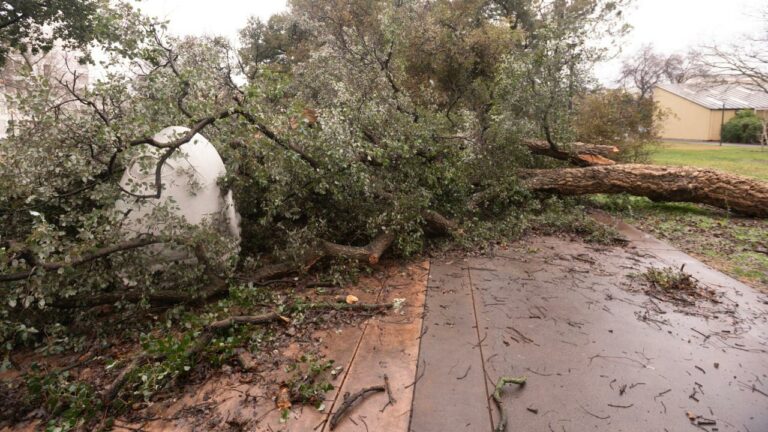
The UC Davis campus and surrounding area sustained damage as a result of heavy storms in Northern California throughout the first two weeks of the new year, and cleanup efforts are now underway.

Seventy-four trees had fallen on campus as of Jan. 9, according to Katie Hetrick, the communications director for UC Davis Grounds and Landscape services. A large eucalyptus tree fell and caused damage to Kemper Hall, and three cork oaks came down on Mrak Hall.

“Winds came through the campus from the east, a direction unusual in this area,” Hetrick said. “Our winds usually come from the south, a condition our trees have grown up experiencing and preparing their roots for.”

UC Davis Grounds and Landscape Services, in collaboration with groundskeepers for the Arboretum and Putah Creek Riparian Reserve, are currently leading the cleanup efforts across campus. According to Hetrick, this effort will likely take months to complete.

Clearing efforts are happening simultaneously [with the storms],” Hetrick said. “Before the majority of students arrived back on campus, downed trees and large messes of debris were cleared from student housing areas, major pathways and storm drains. But the overall cleanup effort is going to take months and will include irrigation system restoration where uprooted trees have damaged infrastructure and landscape renovations.”

Minor flooding in parts of the Arboretum did occur, according to Hetrick, but there was not any significant damage to the area because groundskeeping teams prioritized clearing storm drains of debris during and after storms.

According to a recent UC Davis press release, many student residence halls lost power sporadically during the first couple weeks of January, including all of the Cuarto buildings. The Green also experienced power outages and some smaller downed trees, but no other major damage, according to The Green’s Director Marshall Walters.

“One of our buildings lost power on two separate occasions, for about 15 hours each occurrence,” Walters said. “The electricity outage, in turn, caused residents to lose hot water, WiFi and power to the exterior doors.”

Power has since been restored to all residence halls as well as at The Green, according to the release. Hetrick said that campus facilities largely retained power throughout the storms because their power lines run underground and are therefore protected from the risk of falling trees.

Despite not losing power at any point during the storms, the Memorial Union (MU) did experience some water damage as a result of the rain. 

We did have spots of isolated leaking in the east hallway, the Coffee House dining [area] and by the door leading to the MU South Patio,” Janna Tolla, the director of the MU, said. “[We] will therefore need ceiling tiles replaced and likely some patches sealed up on the roof.” 

According to Tolla, the MU weathered the storm well in part due to preventative measures taken to clear leaves from its drains and gutters during fall quarter by Facilities Management.

“I can’t emphasize how much we rely on them and how thankful I am that they were here in between storms to care for campus and the Memorial Union,” Tolla said.

Over the past few years, the UC Davis Campus Planning office and the Arboretum and Public Garden team have jointly created a long-term plan known as the UC Davis Living Landscape Adaptation Plan (LLAP) to help prepare campus landscaping for extreme weather events and environmental changes in the future, according to Hetrick. 

“Students in the Arboretum and Public Garden’s Learning by Leading program are already at the center for many of these efforts, including helping with the planting of 200 trees last year,” Hetrick said.

According to the Arboretum website, the LLAP includes “strategies to transition our tree canopy, enhance the biodiversity of our landscapes [and] secure sustainable water sources.” Hetrick said that this plan was created with extreme weather events like the ones the past few weeks in mind.


Written by: Sydney Amestoy — campus@theaggie.org