52.4 F
Davis

Davis, California

Tuesday, December 23, 2025
Home Blog Page 181

Natalie Corona Committee holds tabling event at Davis Farmers Market

The committee will share updates about the design and construction of Corona’s memorial splash pad


By LA RISSA VASQUEZ city@theaggie.org


  On Jan. 21, the Natalie Corona Committee will be tabling at the Davis Farmers Market from 9 a.m. to 12 p.m. to share design and construction updates about the memorial splash pad, Natalie’s Corner, in Central Park. 

The Natalie Corona Committee is a community-based organization formed by Davis City Council to discuss, plan and build a memorial for Officer Natalie Corona who was shot and killed on duty on Jan. 10, 2019.

Brett Lee, a former city council member and liaison for the committee for three years, explained how the splash pad idea came about.

 “The idea was [to] make sure whatever’s proposed to remember Officer Corona is kind of in sync with what the community is interested in,” Lee said. “There were a variety of different ideas that came forward and the one that seemed to be the most popular, both a few years ago [and then] the committee reconfirmed, was [to plan a] splash pad feature in Central Park.” 

The splash pad will be the latest design in water efficiency and sanitation by UC Davis Civil and Environmental Engineer Dr. Bassam Younis. Younis explained how his design works to clean the water that will be in the splash pad. 

“I provide the technology for disinfecting the water produced by this splash pad before it is applied on landscaping,” Younis said. “The water produced in this splash pad contains pathogens; these pathogens have to be inactivated before the water can be safely reused. There are many technologies to inactivate pathogens. One of them is using ultraviolet light and I have a new system developed with my graduate students at UC Davis in order to inactivate pathogens using UV light. It’s a unique design feature of how to treat water with ultraviolet light and it will be installed at the splash pad.”

Younis will be showing a model of the system at the tabling event. 

Jenny Tan, the community engagement director for the city of Davis, oversees all public communications about construction activities for the installation of the splash pad. She said that as of now, the construction of Natalie’s Corner is set to begin in Oct. 2023.

“The committee is looking for monetary donations and construction materials [and] services related to the project,” Tan said. “We recommend that residents stop [by] the Farmers Market table to learn more about the effort.”

Lois Wolk, a retired state senator and former Davis mayor, is now the chair of the committee. He explained how the project is being funded and carried out.

 “We were very fortunate in that we got a state grant for $2.7 million, and that was really a wonderful thing, so [the city is] obligated by the state grant [to] participate with some funding,” Wolk said. “One of our jobs is to get volunteers and to get in-kind contributions and monetary contributions from the city, from people in the city [and] ordinary citizens who want to help.”

According to Wolk, community input into the development of Natalie’s Corner is an opportunity for the design of the splash pad to reflect Officer Corona’s personality and legacy of service to the Davis community. 

 “Right now we’re in the process [of talking] about design and fundraising, like the benches or the tables or the ceramic tiles where people can put their names,” Wolk said.“The idea was that the splash pad [should be] something that would reflect families, would be free to the community, it would highlight friendship, and […] be open to the community. It should reflect [Officer Corona’s] personality. For example, she loved sunflowers, and with the splash pad, there’s a real opportunity for a design that reflects sunflowers.”

The community can learn more about the project at www.cityofdavis.org/r/splash-pad or by contacting Committee Chair Lois Wolk at lgwolk@dcn.org or Committee Member Brett Lee at brett2001@gmail.com. To donate to the Corona remembrance feature, visit sacregcf.org/nataliescorner.  

Written by: La Rissa Vasquez city@theaggie.org


UC Davis’s McClellan Nuclear Research Center helps send NASA spacecraft beyond the moon

The center’s large-scale imaging abilities at the facility contributed to rocket testing and completion of the Artemis I mission


By LILLY ACKERMAN — science@theaggie.org 


UC Davis’s McClellan Nuclear Research Center (MNRC) played an important role in NASA’s recent Artemis I mission, which launched the unmanned Orion spacecraft into space to test its safety. In part, it will serve as the foundation for future human deep-space travel and moon exploration. 

The MNRC, located in Sacramento, is capable of neutron radiography, a type of non-destructive imaging that utilizes a neutron beam to generate images. Neutron radiography is particularly useful for imaging explosives and looking for elements that might clog jet engines. 

According to Sandra Warren, a research and development engineer for the MNRC, this center is unique in its capability to image objects of very large size — even as large as rocket parts — which is why it was a good choice for NASA. 

The MNRC imaged separation joint assemblies for NASA’s new Space Launch System (SLS) rocket, which launched the Orion spacecraft. These elements use precise explosives to “kick off” the initial boosters for the rocket, leaving the Orion spacecraft to begin its journey to orbit Earth and eventually to venture to the far side of the moon. 

“[The separation joint assemblies] are sent into space attached to different segments that are later on going to separate,” Warren said. “It’s very important that they work at the moment they’re supposed to work.”

The explosion needed to be perfectly timed  both for the sake of the Artemis I mission and the human crew that will be manning the spacecraft during future missions. 

After extensive testing at the MNRC and many other research centers throughout its development, the SLS rocket was launched, and the Orion spacecraft successfully made a nearly 26-day trip into space. It returned to Earth with a splash into the Pacific Ocean on Dec. 11, 2022, after traveling around the far side of the moon. 

Wesley Frey, director of the MNRC, explained the importance of the mission for the public. 

“An enormous amount of our computer technology, communication technology, energy technology — a lot of it has its roots in the Apollo program, and [the] Gemini and Mercury [programs] before that,” Frey explained. “They are very expensive, but the benefit to the public is often very substantial, and it ends up being a good investment.”

This is only the beginning for NASA’s Artemis program; the next steps include sending humans back to the moon and establishing a base camp to allow for further exploration and research, as well as working toward sending the first humans to Mars. 

UC Davis’ MNRC will likely remain in collaboration with NASA, as it is uniquely able to image the large parts that they use to build spacecrafts. 

“To see the progress of the program is really exciting,” Warren said. “And I hope that there will be more excitement when we actually land on the moon again.”


Written by: Lilly Ackerman — science@theaggie.org

UC Davis women’s basketball team cruises past CSU Northridge for second straight conference win

The Aggies’ three-point shooting and bench were integral to the team’s success


By MARLON ROLON — sports@theaggie.org


The Aggies continue winning streak

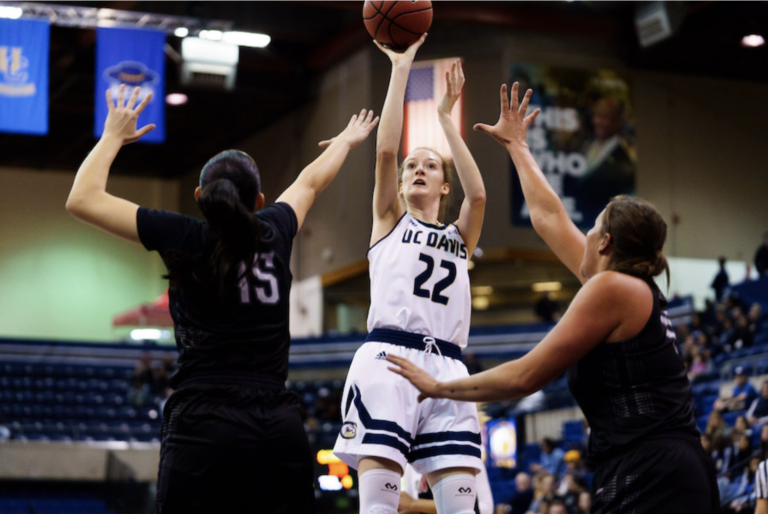
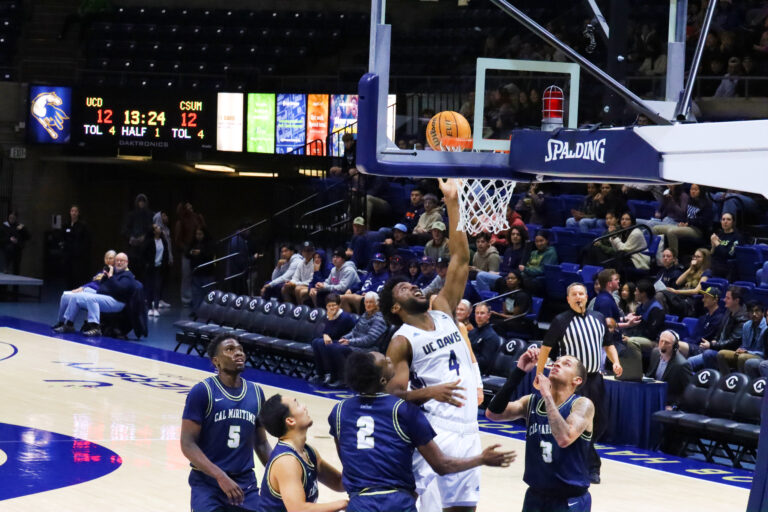
Graduate student forward Tess Sussman and third-year guard Evanne Turner proved to be too much for Northridge to handle on Wednesday night, as the duo combined for 28 points en route to an 83-73 victory at the University Credit Union Center. 

The Aggies, who have now won two straight conference games, started the season 0-2 in conference play, losing to the top two ranked teams in the Big West — Hawaii and UC Irvine. With the win against the Matadors, UC Davis moves into sixth place in the conference. 

“We’re just trying to focus on getting back to the things that we can control, which is the effort and the mindset of having fun and staying confident,” UC Davis Head Coach Jennifer Gross said. “That’s how we want to be all the time and it’s not always gonna go our way — we know that — but if we can stay together, stay bought into our improvement and keep having fun we’re going to be a tough team to beat.”

Sussman was on fire, with a career high of 19 points along with 10 rebounds — her second ‘double-double’ of the season. Sussman was also nearly perfect from the three-point line, going 4-for-4, until late in the third quarter, and finishing the game 5-for-7 from beyond the arc. 

“Her leadership has been so consistent,” Gross said of Sussman. “It’s been great the last two games just to see her having fun and taking the pressure off. We have a team where everybody believes in each other.’”

Turner matched Sussman’s scoring total, tagging 19 points along with five three-pointers. The Aggies made a season-high 14 of 26 three-pointers in the game, which proved to be one of the contributing factors to the win.

“We’re really a pretty good three-point shooting team,” Gross said. “It’s been really frustrating that we haven’t seen the ball go into the basket. We’ve been talking about this last week, about playing a little bit more freely, having fun and being confident. I was really happy to see our team step up and be ready to shoot the open shots. It was nice to see them go down.”

Another contributing factor was strong offensive performance from the bench. The team’s second unit scored 42 points, including 11 points with five assists from redshirt first-year center Megan Norris, who had 19 minutes of play. 


How it happened

CSU Northridge opened the game with a five-point run, surprising the home team. That lead wouldn’t last though, as Turner scored five straight points to tie the contest. Sussman and second-year point guard Sydney Burns each added three-pointers to that run, giving UC Davis the lead. The home team outscored the Matadors 17-13 in the first quarter. 

The Aggies extended that lead in the second quarter with an offensive barrage. Sussman continued to make her presence known, knocking down a three-point shot that put UC Davis up by five points. A few plays later, first-year guard Nya Epps added another three-pointer  to put the Aggies up by eight. Epps made the most out of her minutes on the floor, scoring five points in six minutes in the quarter. The home team went into cruise control late in the second quarter, leading by 18 points at the end of the half.

The Aggies shot 8-for-13 from the three-point line, compared to the Matadors’ 1-for-8. Davis also out-rebounded the visitors 21-14, and the bench proved to be pivotal, scoring 20 points compared to Northridge’s four. The Aggies’ one downfall was that they were sloppy with the ball, leading to seven turnovers. 

Sussman opened the third quarter scoring from beyond the three-point line; however, Northridge got hot and traded baskets with the Aggies. By this point, Sussman had 14 points, but cooled off and didn’t score for the rest of the quarter. In some instances, the Matadors doubled-teamed Sussman, which left Turner open. This was costly for the visitors, as Turner buried two three-pointers. Northridge outscored the Aggies 21-20 in the third quarter, but the visitors still trailed by 17. 

In the fourth quarter, Northridge rallied back with a 27-point outburst, which cut the deficit to 10 points. But UC Davis kept their opponent at bay with Sussman, Turner and Norris leading the way. In the end, the home team’s offense proved to be too strong to defeat.

“Credit Evanne Turner, because every time they were about to cut [the lead] to single digits, she seemed to hit a big shot,” Gross said. “And we really needed that.” 

 Gross’s bench was also integral to the win at home, adding 22 points in the second half.

UC Davis lost to Cal State Fullerton on the road last Saturday (1/14) and lost to UC San Diego at home on Monday (1/16). The Aggies will then be back on the road to take on UC Irvine on Thursday (1/19) and Cal Poly on Saturday (1/21).

“Anytime you go on the road, you have to bring that chip-on-your-shoulder mentality,” Gross said of the upcoming away games. 


Written by: Marlon Rolon — sports@theaggie.org


Debate over free speech versus hate speech on college campuses raises censorship concerns

0

Self-censorship and fear of social retribution may be hindering conversations in the classroom


By REBEKA ZELJKO — features@theaggie.org


On Oct. 25, 2022, Turning Point USA, a student-led conservative group, organized an event hosting speaker Stephen Davis on the UC Davis campus. However, the event was canceled before it started after protests and counter-protests outside turned violent

Protestors “fought among themselves, used pepper spray, knocked over barricades […] and beat on the glass of the UC Davis Conference Center,” according to a statement released by UC Davis.

The university’s statement also emphasized its commitment to upholding free speech on campus, saying, “We affirm the right of our students — in this instance, Turning Point USA at UC Davis — to invite speakers to our campus, just as we affirm the right of others to protest speakers whose views they find upsetting or offensive.”

A 2022 study from the Knight Foundation published findings regarding college students’ views on free speech on campus. “A growing majority believe their school’s climate stifles free expression,” according to the study. In 2021, 65% of students “strongly [or] somewhat agree that the climate at their school or on their campus prevents some people from saying things they believe because others might find it offensive.”

Joel Landis, Ph.D., a lecturer for the UC Davis Political Science Department, has been paying close attention to this issue. 

“It does not feel like these are isolated incidents,” Landis said. “It does feel as if, particularly during the Trump administration, passions ran high, and things got worse. At the same time, violence against conversations we don’t like is something we have always seen. Toleration for the ideas we hate is an unnatural virtue that must be developed in every generation.”

Many students feel the virtue of toleration is hard to come by. Megan Acarregui, a fourth-year civil engineering major and chair of the UC Davis College Republicans, noted her experience at UC Davis with ideological intolerance. 

“I was afraid I wouldn’t have acceptance from my peers because of my political beliefs,” Acarregui said. “I lost friends over it even though I didn’t really do anything. I mean, if someone asks my opinion I’m not going to lie about it, but it feels like they didn’t even try to understand my point of view.”

The growing concern is that this attitude of intolerance for dissenting views is trickling into the classroom. Jonathan Dahlsten, a third-year graduate student in political science, said that he believes intolerance negatively impacts the quality of education on college campuses. 

“There is an amount of freedom of speech that is required to have these discussions imperative for a robust, liberal education,” Dahlsten said. “If we can’t have these discussions here, we cannot have them anywhere. That doesn’t mean putting up with direct hate speech, but we should have discussions about hate speech and consider the arguments on both sides.”

Some students call for the regulation of “hate speech,” defined by the American Library Association as “any form of expression through which speakers intend to vilify, humiliate, or incite hatred against a group or a class of persons on the basis of race, religion, skin color sexual identity, gender identity, ethnicity, disability, or national origin.” 

Maximilian Isensee, a fourth-year political science major, said that the presence of hate speech and the negatives that come with it outweigh the positives of having diverse views in the classroom. 

“Schools are a place for learning, and every student should be given the same level of safety and comfortability in that environment,” Isensee said. “But hate speech deters the learning process, and does a disservice to the students affected by it, so universities should make a point to prevent and punish those who participate in any speech that harms fellow students.”

On the other hand, some students think that labeling dissenting views as hate speech can diminish productive conversation and reduce the quality of education. 

“You are here to learn how to think and speak effectively and how to think critically,” Acarregui said. “If people say you can’t even talk about it because you will spread a hateful message, you are silencing opinions and history that could be repeated.”

Acarregui said she feels that the polarized nature of our conversations is damaging and fosters more extremism. 

“If you’re not allowed to talk about these things, it can become reactionary,” Acarregui said. “People should learn why we don’t tolerate certain things, not just that we shouldn’t.”

The subjectivity of the term hate speech and its varying definitions are a point of concern for some students.

“Just because someone doesn’t agree with the majority opinion on campus doesn’t mean they are spreading hate speech,” Dahlsten said. “Deeming something as hate speech states that that’s the end of the conversation. It’s a condemnation, and it can be well-warranted, but you need to be very careful about what you deem as hate speech.”

Landis argues that the utility of hate speech laws necessarily varies from one context to the other. 

“I would not apply the same rules for the classroom that I would the quad or the street corner,” Landis said. “One of the ideas behind hate speech codes is to foster an environment in which everyone can feel equal in the community. Minorities and majorities can be equal participants in discovering the truth. I don’t think the classroom is the appropriate place to say we cannot discuss the idea because it’s controversial. Every idea is subject to inquiry.”

However, these stigmatized conversations that many think ought to take place in a university have been stunted in recent years, according to a Campus Expression Survey from Heterodox Academy. Student hesitancy to express political perspectives for fear of retribution has been increasing. 

According to the survey, “60% of college students expressed reluctance to discuss at least one controversial topic,” the category with the highest reluctance being politics. Additionally, “Republican and Independent students were more reluctant to discuss controversial topics compared with Democrat students.”

This self-censorship is undercutting the educational process and hindering productive conversation in appropriate settings, according to Landis. But not all students believe forms of censorship are okay.

“In my opinion, hate speech should be shunned by the general public,” Isensee said. “But it is still within a person’s right to use those words if they so choose. We cannot as a society completely ban and silence people just because we disagree with them and what they are saying.”

The social consequences of being part of an ideological minority have affected the behavior of students, both on and off campus. Acarregui said her personal experiences caused her to feel socially isolated. 

“I lived in a sorority house full of girls who thought completely the opposite of me politically, which I was used to,” Acarregui said. “But it was really frustrating when they didn’t reciprocate the respect I gave them.”

Acarregui said that she felt like she was experiencing constant social retribution for her beliefs, which ultimately led to her leaving the sorority. 

Landis said that self-censorship and censorship should be differentiated and that self-censorship is the “problem” we are seeing more and more in social and academic institutions. 

“I would say that it has become increasingly apparent that students are self-censoring in the classroom and the ‘spiral of silence’ has gotten worse,” Landis said.

Landis suggests that the quality of classroom conversation is reduced because of this hesitancy to be a part of the dissent.

“The perceived majority becomes more and more entrenched and becomes more popular, and it’s particularly fatal for the classroom,” Landis said. “When the only students speaking are the ones speaking the orthodox opinions of the day, you destroy the classroom.”


Written by: Rebeka Zeljko — features@theaggie.org

The origin and traditions of the Lunar New Year

How the holiday is traditionally celebrated in different countries


By VIVI KIM — arts@theaggie.org


Although in western culture, we are accustomed to celebrating the new year on Jan. 1, several countries celebrate the Lunar New Year instead, according to the lunisolar calendar. It is not just a day that marks the start of another year, but a holiday filled with unique customs and rich history.

Lunar New Year is a holiday marking the first day of the lunar calendar. The standard Gregorian calendar, also known as the Western calendar, is a solar calendar. This means that the dates are based on the Earth’s position relative to its proximity to the Sun and point to the seasonal year of 365 days. Many western cultures operate on this calendar and celebrate New Year’s on the first of January.

The Lunar Calendar is based on the monthly moon cycles. Lunar New Year begins on the first new moon and ends on the first full moon of the year, thereby lasting 15 days and completing half of a full moon cycle. The official date of the holiday varies, but it typically falls somewhere between Jan. 21 and Feb. 20. In 2023, Lunar New Year happens to fall on Jan. 22.

This holiday is also commonly referred to as Chinese New Year due to its origins in ancient China, with the earliest Chinese lunar calendar dating back to the 14th century B.C. Chinese people are the largest population that celebrates Lunar New Year and it is considered the most important holiday in China. 

Though the names are often used interchangeably, it is important to note that the two are not the same. Lunar New Year is celebrated by several other East Asian and Southeast Asian countries including Taiwan, South Korea and Vietnam, all of which hold their own traditions and festivities. Chinese New Year, also commonly referred to as the Spring Festival, is the Chinese celebration of the Lunar New Year.

There are several Chinese myths and legends tied to the origin of the Lunar New Year festival, one of the most famous being the legend of Nian. Derived from the name “Nianshou” meaning “the yearly beast,” Nian was a mythical beast that would cause destruction every new year by eating humans and their livestock. Its fear of loud noises and the color red is what inspired the tradition of using red paper decorations, lanterns and firecrackers. 

There are several traditions marking both the beginning and end of the Chinese celebration. Many families like to clean their houses before the start of the new year to remove “huiqi” or bad luck. The reunion dinner (Tuan Nian) is the family celebration dinner that takes place on New Year’s Eve. It is filled with many symbolic dishes including a fish that symbolizes abundance and long noodles that symbolize a long life. Taking place on the final day, the Lantern Festival is celebrated by decorating houses with lanterns and eating traditional foods. Some of the most popular foods include tangyuan, a dessert made of glutinous rice flour, and fagao, a steamed sponge-like pastry that is also known as the “prosperity cake.”

Traditionally, the Vietnamese Lunar New Year, or Tet, can last between three days to a week. During the one or two weeks leading up to New Year’s Eve, the streets are bustling with shoppers and adorned with red and yellow, the colors of good fortune. Many families also decorate their houses with peach blossoms and kumquat trees to bring prosperity and wealth into the new year.

Similarly, Korean New Year, or Seolnal, lasts three days. The celebration starts a day before New Year’s Day and ends the day after. The most common tradition of Seolnal is playing a game called Yut Nori, which consists of four marked sticks and dice. People also eat rice cake soup, as it is believed that a person grows one year older only after eating the soup.

Though there are many similarities between Asian celebrations of the Lunar New Year, such as having family dinners, receiving money and offering respects to ancestors, there are also many cultural traditions that are uniquely celebrated by each.


Written by: Vivi Kim — arts@theaggie.org

Itzhak Perlman brings wit and brilliance to the Mondavi stage

The renowned violinist joined forces with pianist Rohan De Silva for the center’s first performance of 2023


By SARAH HAN — arts@theaggie.org


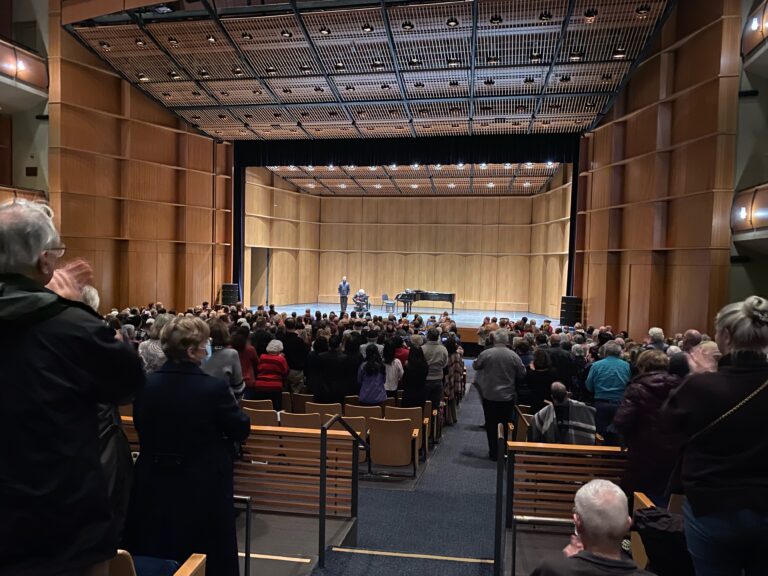
On Jan. 14, world-class violinist Itzhak Perlman and distinguished pianist Rohan De Silva performed at Jackson Hall, located in the Mondavi Center on UC Davis’s campus. From Beethoven to John Williams, Perlman and De Silva played phenomenally and entertained the audience throughout the show.

This concert wasn’t Perlman’s first appearance at the Mondavi Center. He first performed in 2003 and has been a regular since.

“We always get a big turnout for him. Tonight, we filled 1,800 seats, so [we] pretty much sold out,” said Don Roth, the executive director of the Mondavi Center. “It’s great to see a high turnout — definitely more than average.”

The performance began with Violin Sonata in D Major, Op. 9, No. 3 by Jean-Marie Leclair. Throughout the piece, Perlman played a consecutive set of double-stops followed by a handful of trills. The “Un poco andante” and “Sarabande: Largo” movements established a sorrowful tone, which contrasted nicely with the “Allegro” and “Tambourin: Presto” movements. 

Minami Kato, a fourth-year philosophy student at UC Davis, offered remarks on Perlman’s performance, particularly noting his skills.

“I just thought the way that he plays is beautiful, [especially with] the dexterity of his hands,” Kato said. “My favorite moment was Leclair’s [violin sonata]. 

Following the Leclair piece, Perlman and De Silva performed Ludwig van Beethoven’s Violin Sonata No. 9 in A major, Op. 47 “Kreutzer.” The piece consisted of three movements: the “Adagio sostenuto — Presto,” “Andante con variazioni” and “Presto.”

The “Adagio Sostenuto” movement highlighted both the violin and piano, with both instruments having solo moments sprinkled throughout. Mimicry, playing in unison and build-ups all brought the piece to life as many people in the audience found themselves moving their heads to the beat of the music. 

The peak of audience engagement, though, was in the third movement, “Presto.” During this movement, Perlman made momentary eye contact with the audience, mostly when he played fast, springy notes.

After the piece by Beethoven, Fantasiesücke, Op. 73 by Robert Schumann was next on the setlist. Interestingly, De Silva closed the lid of the piano before playing; nonetheless, the piece was brilliantly performed, beginning with a melancholic but passionate melody and ending with a rampage of fast, short notes. Perlman also played a fair amount of glissandos, which are continuous glides between two pitches, and are a distinguishing feature of the piece.

The next section of the concert featured additional works not listed on the program. During this time, Perlman talked with the audience, communicating his dry yet witty sense of humor.

“I’m only playing this piece because I like it,” he said. “I made a point to play songs I like, so hopefully you like it.”

The song he was referring to was “From my Homeland” by Bedřich Smetana. Perlman and De Silva played a sweet but prominent melody, and as he played, Perlman made eye contact with the audience here and there, which created an overall proud but humorous tone.

The highlight of the concert was John Williams’s “Schindler’s List.” The song is Perlman’s “go-to piece,” and his extensive experience was evident in his playing. The notes were crystal clear, and Perlman played delicately and so emotionally. Even the bow changes were subtle and meticulously controlled, certainly making this piece an audience favorite.

The concert ended with two additional pieces, including Johannes Brahms’s Hungarian Dance No. 1, or, as Perlman likes to call it, “a piece by ‘Brahm’” since it’s a “single dance.” Following this witty remark, Perlman remained playful while performing, jolting here and there when playing accented notes.

Overall, the performance was lighthearted and engaging. Perlman masterfully balances showing off his capabilities while maintaining a lighthearted environment for the audience to enjoy. De Silva was a respectful accompaniment, allowing Perlman to shine but also displaying his own immense skills.

With Perlman and De Silva kicking off the new year at the Mondavi Center, many other renowned artists are on the way to entertain the Davis and greater Sacramento community.

“Next, we have the Cécile McLorin Salvant Quintet and Emanuel Ax, Leonidas Kavakos, Yo-Yo Ma,” Roth said. You can learn more about upcoming performances at the Mondavi Center’s website


Written by: Sarah Han — arts@theaggie.org

Students, university must be proactive in the face of extreme weather events

 Recent winter storms spark important conversations around climate change preparedness


By THE EDITORIAL BOARD


From flooded roads and homes to downed trees to extended power outages to sinkholes and landslides, California can’t seem to catch a break from the barrage of storms that began after Christmas and is only now letting up. According to CNN, several areas across the state have registered more than half of their average annual rainfall just in the past month, and more locally, Davis has received nine inches of rain in January alone, compared to less than one inch in January of last year.

Californians have experienced heavy rain in the past, but lately, every weather-related headline seems to include the word “historic,” and that’s not likely to change any time soon. One of the effects of climate change warming the atmosphere is that the warmer air can hold more moisture, leading to wetter and more intense storms.

In the long run, of course, we urge you to support climate protection legislation and sustainable initiatives — but in the short run, all that we can do is adapt to the weather coming our way. Being prepared is something that happens on both the large and small scale, from the university prioritizing durable infrastructure and keeping up with maintenance to individual students gathering the supplies necessary to stay safe during a power outage.

Although more than 70 trees fell on campus and various buildings sustained water damage, much of the potential for flooding and power outages was mitigated by pre-storm preparation and hard work by facilities and grounds crews. 

The Editorial Board extends their gratitude to Grounds and Landscape Services workers for clearing green waste and trimming dangerous tree branches, Building Maintenance Services workers for keeping roofs and gutters working, Utilities workers for clearing storm drains and PG&E workers for doing their best to restore power as soon as possible. 

The city of Davis and many residents experienced sporadic power outages during the storms, but central campus retained power due to underground lines that are more protected from weather. Because of this, campus facilities were able to remain open for students. However, much of Davis still employs above-ground power lines that are affected by falling trees, which led to traffic lights being out for days on end and prevented some businesses downtown from opening their doors.

While UC Davis is working on long-term plans such as the Living Landscape Adaptation Plan to adapt to a warmer, drier climate, it would also be beneficial to implement infrastructure that would protect the campus and surrounding areas from heavy rainfall, which is also a result of climate change.

Students and Davis residents can also individually prepare for extreme weather events by creating an emergency plan and staying up to date on the latest information through trusted Facebook, Twitter or Instagram accounts. If a power outage is likely to occur sometime soon, make sure to fully charge your cell phone and any other devices you might need, and think about building a small emergency kit with items like candles, power charging banks, water, canned food and batteries. For a comprehensive list of ways you can prepare for heavy storms, see the Davis City Facebook page.

During an outage, disconnect electronics in case of damage from electrical surges, keep your refrigerator closed as much as possible and don’t use a gas stove to heat your apartment. Because central campus tends to retain power during widespread outages, UC Davis generally opens up areas like the ARC Ballroom, Shields Library and the Memorial Union as warming and charging centers.

If you are without power for more than 48 hours due to storms, according to the PG&E website, you may be eligible to receive automatic compensation through the Safety Net Program in accordance with the length of the outage.

Long-term sustainable policies are making a difference, and there is hope that the state of the world isn’t just going to be getting worse and worse for the remainder of human existence. Recent news confirms that the ozone layer is healing and is on track to be restored to 1980 levels in the next two to four decades, England is banning some single-use plastics and the new president of Brazil plans to end deforestation in his country. Additionally, scientists recently created a nuclear reaction that generates more energy than it consumes for the first time, research that could eventually create a huge source of clean energy.

But even so, two to four decades is a long time, and it’s a time in which we will most likely be dealing with extreme weather events like the heavy rainstorms that the beginning of this year brought to Davis. We’re going to have to learn to adapt and be prepared, and the university will have to do the same in order to keep students safe and allow our education to continue. 


Written by: The Editorial Board

Think before you buy

Clever marketing tactics and how to avoid them


By MAYA KORNYEYEVA — mkornyeyeva@ucdavis.edu


Over the course of your life, you’ve probably made a few — or maybe more than a few — regrettable purchases. Perhaps it was a pair of jeans that were trending that just didn’t fit or something you bought on sale and never touched again. 

Often, money slips through our fingers before we have a chance to consider what we are spending it on. Impulsive purchases are becoming increasingly common for college students and are especially problematic for those of us who want to save money or don’t have a lot to begin with. If you’re growing more worried about protecting yourself from clever marketing schemes, fear not: I am here to explain exactly how to navigate and successfully avoid the traps of a salesperson. 

First, it is important to be aware of how much human psychology plays a role in what you decide to buy. Companies tend to appeal to emotion, specifically our natural desire for comfort and our pursuit of happiness. In my experience, people generally respond well to kindness, and many sales are made based on human connections, not statistics. 

This is why the concept of “customer connections” is such a crucial part of customer service. Having worked at Starbucks for nearly two years, this idea of connecting and reconnecting with regular customers has been drilled into my daily routine — each shift I say “Hello” as someone walks through the door, “Thank you” as they leave and inquire about their day when taking an order. 

True, I do this mainly to be friendly and to hopefully make someone’s day. But the fact still remains that Starbucks continues to prioritize this type of customer interaction because getting personal with a customer is the single most effective way to secure a sale. This draws from the idea that you’re likely to revisit that location and make another purchase, if only to catch up with your favorite barista.

Thus, when a salesperson asks for your name or encourages you to share information about your day or personal life, they are likely searching for a piece of information to create a relationship that they can use to their advantage. Behold, the psychological concept of reciprocity — you give what you get.

Another key aspect of selling a product comes from streamlining a buyer’s train of thought in order to keep a given product or service at the top of their minds. Priming, or the careful introduction of specific words or images, creates a filter through which a consumer unconsciously examines another concept or product. For example, a car advertisement featuring a red background and words like “fire” and “speed” can direct a customer to check the safety ratings, while a groovy, colorful background can have the buyer browsing car models and styles. 

Selective attention, or confirmation bias, is another way marketers strategically influence your thoughts. The Baader-Meinhof Phenomenon, coined in 1994, illustrates how discovering a new thing, word or idea causes you to notice it more frequently, and each time you see it you begin to treat it as additional proof that the product or service is everywhere.

But wait, there’s more. Free trials are a common and very effective method to hook a customer on a product, for fear of losing access to what they quickly grew accustomed to using. The reason links back to the findings from a 1990 study conducted by Nobel Prize-winning Psychologist and Behavioral Economist Daniel Kahneman and his colleagues. The group ultimately found that people are more likely to act when they have something to lose, rather than when they have something to gain. 

Finally, humans are social animals. However introverted some of us may be, we crave the company of others and regularly conform to social norms and expectations. When choosing to purchase something, the first thing many of us do is check the ratings: “What did other people think? Did they like it? Did they not like it? What were the issues with the product, and would I have issues with it as well?” We rely constantly on the recommendation and criticism of others, so when we see people readily purchasing something, we purchase it too. 

On the other hand, it is important to keep in mind that people can also be unreliable. Often, companies over-exaggerate or misrepresent data in order to convince buyers of a product’s scarcity or excellence. Some stretch the numbers on their graphs, falsify comparisons or don’t add units altogether. Critically examining any data a company presents is crucial. 

With knowledge of these psychological tricks in your back pocket, you can, at the very least, recognize when a salesperson is trying to manipulate you and avoid purchases you haven’t fully decided on. All you need is some practice!


Written by: Maya Kornyeyeva — mkornyeyeva@ucdavis.edu


Disclaimer: The views and opinions expressed by individual columnists belong to the columnists alone and do not necessarily indicate the views and opinions held by The California Aggie.

UC Davis sociology lecturer shares experience being LGBTQ+ in the United States military under Don’t Ask, Don’t Tell

0

Living in an environment that perpetuates homophobia and gender inequality, Courtney Caviness had to hide her identity in fear of retaliation, until she decided to leave 


By LEVI GOLDSTEIN — features@theaggie.org


Courtney Caviness, a lecturer of sociology at the University of California, Davis, has a commanding presence in the classroom. For each word she speaks, each syllable is distinctly pronounced. Her firm, authoritative voice projects across the rows of students. 

“I hate the military,” Caviness said. 

She is also a veteran.

Caviness joined the intelligence branch of the United States Army in 2006. After obtaining her bachelor’s degree in English at the University of Iowa, Caviness was feeling directionless. She was indecisive about what she wanted to get a degree in and had changed majors a few times. 

“I’m a serial dabbler,” Caviness said. “I like to know something about almost everything.”

Additionally, she had navigated multiple unhealthy relationships that left her with a shaky sense of self.

“I was in a place in my life where I really needed to do something drastic, to change my geographic location and disrupt all facets of my life, just have a big change,” Caviness said.

For her, this change was joining the military. It was exactly the kind of challenge she needed to push her forward.

It was also an opportunity to escape the Midwest, where she said she never fit in. Caviness explained growing up feeling like an outcast because she presented in a more masculine manner than her peers. Still today, she wears button-up shirts with the sleeves rolled up that stay tucked in during her work days and a pair of neutral-toned dress pants. 

“I’ve always been, in terms of gender, someone who didn’t fit the traditions of what a girl or a woman is, in relation to those expectations or my appearance or any of that,” Caviness said. “I had no desire to do hair or nails or play […] those hand-slapping games.”

But the army didn’t feel like home to her, either. Caviness said she felt like the odd one out from the beginning. 

“I had a reputation, jokingly, from one of my basic training drill sergeants […] for being the person who thought differently and who didn’t politically align; that’s for sure,” Caviness said. 

Caviness was already enlisted when she began coming to terms with her sexuality. 

“It was confusing and isolating, especially being in the military and knowing as I was working through it that there was this added layer of needing to keep some level of secrecy, […] that [it] could potentially be used against me or could be aired,” Caviness said. 

Caviness’s fears were not unfounded. 2006 was five years before “Don’t Ask, Don’t Tell” was repealed. 

The “Don’t Ask, Don’t Tell” policy, implemented in 1994 by the Clinton administration, allowed gay, lesbian and bisexual citizens to serve in the military as long as they did not disclose their sexuality. This meant that if the military were to find out that Caviness was not heterosexual, she could potentially be dishonorably discharged, which would result in a complete loss of veterans’ benefits, according to TIME Magazine

The justification for the “Don’t Ask, Don’t Tell” bill was that LGBTQ+ persons in the military “​​create an unacceptable risk to the high standards of morale, good order and discipline, and unit cohesion that are the essence of military capability.” 

In an article published in the Journal of Homosexuality in 1995, Dana Britton and Christine Williams, sociology professors at the University of Texas at Austin, explained that heterosexuality, masculinity and misogynistic conduct are emphasized in the military in order to encourage and preserve strong bonds among male soldiers, which is thought to be central to an army’s success in armed conflict. 

LGBTQ+ members of the army are believed to threaten that, according to Britton and Williams. Thus, the military actively discourages homosexuality through bans on service like “Don’t Ask, Don’t Tell” and, according to Britton and Williams, the use of force and discipline.

Caviness said she experienced a culture of “hegemonic masculinity” during her time in the military, one that perpetuates gender inequality and reinforces men’s dominant position in society. She also identified the sense of unity characteristic of military life. 

“There’s certainly a lot of emphasis placed on camaraderie and building those relationships and supporting one another and having some level of loyalty,” Caviness said. 

Caviness was able to form strong friendships with other service members. 

“Having some level of bonding with people that I was in that situation with became a very important thing,” Caviness said. “I think it’s easy to connect with people when you’re all in the same situation where you don’t have outside influences and you can’t get away.”

Despite this, Caviness often felt isolated. Her queer identity made her an outlier and a direct challenger to the military’s homogenous culture, which meant that she could potentially be targeted. 

“The people that I knew, myself included, just had a sense that it was possible or had this looming cloud,” Caviness said. “So we would do our best to sort of manage information about ourselves or manage what we said about various activities to help avoid any potential [incident].”

Caviness said her experience differs from many other LGBTQ+ members of the army. She rarely encountered blatant homophobia. Caviness acknowledged that her privilege may have contributed to her feeling safer than others in the same situation. 

“I had identity categories and attributes about myself that I think were more palatable to the military, that were less threatening,” Caviness said. “I think being a white woman who is cisgender sort of fits into the military mold in terms of appearance and demeanor and ability to adhere to or conform to its standards. That made me sort of an ideal worker in some ways for the military.” 

Despite this, the stress of having to hide a part of herself and of having to keep a relationship a secret eventually led her to the decision to disclose her sexuality to the military. 

“It felt like not just a burden to me; […] it felt like I was also putting [my partner] through that situation as well,” Caviness said. “My sense was that I couldn’t really do the sorting out in terms of identity that I needed to do in the confines of the military — in terms of mental health, for example.”

But the process for being discharged was not an easy one. Caviness had to first answer a series of questions in front of military leadership. She said they were looking for proof that she was telling the truth about her sexual orientation. But she was careful to give very few details. 

“I had done enough research to know that disclosing certain specifics would be more likely to […] grant me a dishonorable discharge or something other than honorable,” Caviness said. “I refused to answer those questions because that felt really invasive and could be used against me.”

Caviness said she was told the military would be ignoring her claims and would allow her to continue to serve, which she wasn’t willing to accept. 

“I continued to push the issue. I wrote a letter to the commander and said, ‘I understand that you choose not to discharge me on this basis, which is fine, but you will know that I will serve openly.’”

After this, the military moved forward with her discharge. But Caviness said she faced retaliation because of her coming out. She was put on two 24-hour security shifts in a row when it would normally be on rotation, and she said she wondered if that was intentional. She also, for the first time, experienced an act of violence, which she said she suspects came from a place of hate or homophobia. 

“After I had disclosed to the military and my separation had begun or was in the works, I was living in the barracks, and my car was vandalized,” Caviness said. “It was bashed with a blunt object and there was something sprayed all along the side. […] Maybe soda or something? But it was like this sticky mess all over the side of the car.” 

When “Don’t Ask, Don’t Tell” was repealed, Caviness said she felt relieved that others would not have to experience the same challenges that she did. But unfortunately, despite LGBTQ+ members of the military being able to openly serve, the culture that creates a hostile environment for them still remains. For example, in a New York Times article, Necko Fanning describes receiving death threats from and being called slurs by fellow service members shortly after coming out. 

Moreover, it is still possible for policies restricting military service for LGBTQ+ people to be implemented. In 2019, Trump instated a ban prohibiting transgender people from enlisting, according to NBC News. The policy is no longer in effect as of 2021.  

It was only after Caviness left the military that she was able to be fully herself. She recalled a sense of freedom and relief because she no longer felt the constant anxiety that was part of her military experience. 

After Caviness completed her master’s degree at Texas State University, her partner at the time, to whom she is now married, helped her move to California to complete her Ph.D. at UC Davis. 

“We drove my little hatchback from Texas to California almost straight through,” Caviness said. “I think it took two days, and we had two cats in the back. That was wild.”

Caviness went on to become a lecturer at UC Davis. In her classes, Caviness shares a message of hope with her students. 

“You don’t have to have it figured out,” Caviness said. “Things will not necessarily get easier […] but everything is temporary. And there does seem to be some sort of light at the end of the tunnel in a way, even though it doesn’t seem like it. And one day you’ll care so much less about what other people think, and it’s the most freeing feeling.”


Written by: Levi Goldstein — features@theaggie.org

UC Davis School of Law withdraws from US News and World Report rankings

The decision follows other schools’ leads, citing concerns over the methodology of the rankings


By SYDNEY AMESTOY — campus@theaggie.org


The UC Davis School of Law will no longer submit data such as post-graduation employment rates and LSAT scores to the U.S. News and World Report’s annual law school ranking, according to a letter from Dean Kevin Johnson issued Nov. 28.

Three other UC law schools, including those at UC Berkeley, UC Los Angeles and UC Irvine have also announced decisions to stop providing data for use in the rankings, according to an article on law.com, along with the law schools at Harvard, Yale, Stanford and Columbia, among others. Cornell Law School and University of Chicago Law School have decided to continue to provide data for the rankings.

Johnson’s letter cited concerns about the rankings not involving diversity in their methodology, as well as a preference towards private schools with more resources.

“We really were frustrated that the rankings didn’t consider things […] that are particularly important to what we’re trying to do, and important goals for our school,” Johnson said. “[There is] no attention paid to quality of teaching, no attention paid to diversity of the student body [and] faculty, and really [there is] a bias toward private schools with many resources that public universities don’t have.”

Concern with the U.S. News and World Report’s handling of diversity within law schools has been central to the discussion around the UC Davis School of Law’s decision to leave, according to Johnson. 

“Last year, [the U.S. News and World Report] was talking about doing a diversity index for the student body,” Johnson said. “But their initial index would not have included mixed race people [or] Asian Americans as people of color. […] It seems to many people that when U.S. News came up with this [diversity index], they didn’t know what they were doing.”

The U.S. News and World Report ranking’s emphasis on scoring high on the LSAT, a standardized test taken by prospective law school candidates, was another concern for faculty, according to Johnson. 

“There’s been a great deal of concern for a number of years that standardized tests aren’t fair, and maybe biased against particular groups,” Johnson said. “In fact, that concern with the use of standardized tests is one of the reasons that the University of California doesn’t use them anymore in admissions decisions for undergraduates. We have similar concerns with the way that the LSAT is used.”

According to Johnson’s letter, the decision to withdraw came after long deliberation between the law school’s faculty and the alumni board, as well as the students attending the school of law.

Hon. Nancy Wieben Stock, a retired judge from the UC Davis class of 1976 and president of the alumni board at the UC Davis School of Law, has been involved in the process leading up to this decision since it was proposed by Dean Johnson.

“Our law school has been climbing those rankings for many years, thanks largely to our success in producing successful lawyers,” Wieben Stock said. “But we realized that pursuit of higher rankings could come at a cost to other factors that make the law school successful, [such as] promoting diversity, equity and inclusion in the law school admissions process and [the] recruitment of a diverse faculty.”

Admissions was a big part of the internal conversation leading to the decision to withdraw data, according to Johnson, because the U.S. News and World Report rankings are considered a powerful indicator to prospective law students. This means that withdrawing from submitting data for the rankings could have a negative impact on admissions.

“If I have a roomful of prospective law students, and ask them how many people have looked at the U.S. News rankings, I can almost guarantee that everybody will raise their hand,” Johnson said. “So they are important.”

However, despite the potential drawbacks of the decision, and some dissent from a few faculty and alumni, Johnson said that over 90% of feedback he received was in favor of not participating anymore. 

  The U.S. News and World Report’s official statement on several law schools leaving the rankings states that the ranking will include all accredited law schools, including schools not submitting data. These schools will be ranked using publicly available data, whether or not the schools respond to their annual survey with more in-depth information. 

The U.S. News Best Law Schools rankings are designed for students seeking to make the best decision for their legal education,” the statement reads. “We will continue to pursue our journalistic mission of ensuring that students can rely on the best and most accurate information, using the rankings as one factor in their law school search.”

On Jan. 2, the U.S. News and World Report published a letter to law school deans announcing modifications to the 2023-2024 ranking system based on feedback they’ve received.

According to the letter, some of the main changes include an increased weight on outcome measurements, such as bar exam pass rates and employment outcomes, as well as increasing the weight given to school-funded full-time long-term fellowships in order to encourage public service careers.

The letter also cited concerns that they have not addressed in this year’s modifications, including loan forgiveness, diversity and need-based aid, saying that these areas “require additional time and collaboration to address,” and that they will continue to collaborate on “metrics with agreed upon definitions.” 

The U.S. News and World Report went on to directly ask the law schools that have pulled out of submitting data to reverse their decision.

“We call on all law schools to make public all of the voluminous data they currently report to the [American Bar Association] but decline to publish, so that future law students can have fuller and more transparent disclosure,” the letter reads.


Written by: Sydney Amestoy — campus@theaggie.org


Three weeks of winter storms roll through Davis

Yolo county faces power loss, flooding and falling trees following California’s record rainfall


By MADELEINE YOUNG city@theaggie.org


On Jan. 4, Yolo County issued an emergency proclamation order in a press release following Governor Gavin Newsom’s declaration of emergency in California. This came after  record storms in California left Davis, and much of Northern California, grappling with fallen trees, flooding and power outages. 

“The winter storm will bring strong winds and heavy rainfall along the coast and will impact interior Northern California,” the press release reads. “Downed trees, widespread power outages, and difficult driving conditions are expected.” 

High wind speeds and rain have significantly affected electricity on a city-wide scale, leaving many without power for hours on end, affecting the lives of students and staff of UC Davis along with residents in the city.

“I came in for my shift, and the entire perimeter was cleared. We had to throw all of our perishables away because it all got spoiled,” said Thomas Jovalis, a crew member at the Trader Joe’s in University Mall, which lost power during one of the storms. “Right as I came in, the power came back on, but we still had to toss all of our salads, juices, milk and eggs.”

With winter quarter beginning, the effects of the storm have stood as an obstacle for Davis students.

“Among the many challenges my peers and I experienced, the cold showers were probably the worst,” said Danielle Nguyen, a first-year in the Cuarto dorms. 

Due to city-wide power outages following the January 7th and 8th storms, the city of Davis announced in a statement released on Jan. 11 that there would be charging centers, restrooms and water available at the Veterans Memorial Center from 10 a.m. to 7 p.m. while they resolve power issues. 

Yolo County expects the extreme weather to continue into next week and will continue to update its Current Emergencies and Incidents page on its website. Current charging station locations and storm updates can be found on the city website


Written by: Madeleine Young city@theaggie.org


Has academic censorship gone too far?

The recent firing of Adjunct Professor Erika López Prater at Hamline University points to a lack of support for educators’ autonomy over their curriculum


By THE EDITORIAL BOARD


Last week, The New York Times released an article about Adjunct Professor Erika López Prater, who lost her job after showing an image of the Prophet Muhammad in her art history course at Hamline University this past fall. After giving both written and verbal warnings and explaining why she chose to include this image in her course, no students expressed concerns. But after the class, a student complained to the university’s administration, which ultimately resulted in López Prater losing her job.

The article states that this particular image is “shown regularly in art history classes,” and similar images have been displayed in the Museum of Modern Art and even the Supreme Court. Although there is a precedent for these images being publicly displayed, they have also sparked controversy in the past, which seems to indicate that the situation has a degree of nuance and warrants a conversation. The circumstances surrounding the professor’s termination could have been used as a moment for learning instead of discipline.

Freedom of speech in education has been central in the news in recent years — from Florida’s “Don’t Say Gay” Bill to the banning of various books. Many scholars have suggested that students’ (and parents’) censorship is getting in the way of quality education and hurting educators who often have good intentions. A lot of this may be explained by the lack of support for educators when controversies arise, both from students and the administration, as we can see in López Prater’s case.

That said, there are times when educators do need to be reported to administration and held accountable for their actions, but it’s important to consider these situations on a case-by-case basis. Often, they could actually be used to teach the educator how to make students feel more comfortable in class, and many times, professors will be receptive and open to learning.

Arguably, most educators are not in the field for money or prestige — both of which are sparse — but because of passion. And while this, of course, doesn’t mean they are exempt from making mistakes or behaving offensively, assuming good will of your teachers can be helpful, both for you and for them. 

The discourse that has followed López Prater’s dismissal from Hamline has been divisive, even among the Muslim community. Some Muslims said that they find showing images of the Prophet Muhammad Islamophobic, while others believe that it is simply “un-Islamic” and even others say that they don’t subscribe to the image restrictions at all. But all of this nuance was lost when the university’s administration held a forum on Islamophobia in response to the event, at which they shut down questions or comments alluding to López Prater’s intentions and their legitimacy, saying it “wasn’t the time” for that conversation. 

When administrators shut down discussions like this, maybe because they legitimately believe it doesn’t belong in the conversation, or, perhaps more likely, to avoid backlash on the internet, incidents like this continue to happen. And on the flip side, some educators stay on the side of caution, censoring their material because they don’t feel they can make a mistake or controversial decision, since they aren’t sure they’ll get support from their administration.

Administrations’ lack of support for their educators is a larger issue in higher education, and one we have seen here at UC Davis. When teaching assistants and other academic workers went on strike in the fall, much of students’ frustration fell on professors — whether they chose to take over grading and lecturing for their striking staff members, or chose to “not cross the picket line” in solidarity. And while students criticized professors for either putting in grades or not, holding lectures or canceling them, the administration did little to support them. 

While this situation is of course very different, it seems to stem from a similar place. Students are often quick to jump on their professors when they feel they’ve made a mistake, and administrators can be slow and hesitant to support them. This is especially true for younger or adjunct professors, who are members of “higher education’s underclass of teachers, working for little pay and receiving few of the workplace protections enjoyed by tenured faculty members,” according to the article. While tenured professors aren’t likely to be removed, newer, less experienced ones seem not worth the backlash the administration would get if they defended them.

All in all, it is important to remember that our professors are just people, and for the most part, they really do want to do the right thing. In many cases, our education could be made better by having conversations about what to include in the curriculum to ensure that academia is not overly censored. Trying to assume good will of those educating you and having respect for them can go a long way toward actually learning from nuanced situations like the one at Hamline.


Written by: The Editorial Board


UC Davis loses second straight conference game

Elijah Pepper’s 27 points not enough for the Aggies to beat UC Irvine 


By MARLON ROLON — sports@theaggie.org


Despite strong offensive performances from third-year guard Elijah Pepper and second-year guard Ty Johnson, UC Davis lost last Thursday night’s contest against UC Irvine  (88-83) in conference play at the University Credit Union Center.

The Aggies started the game with a five-point run led by fourth-year forward Christian Anigwe, who scored inside the paint, and Johnson, who scored a three-pointer. UC Irvine, who has the top-ranked offense in the conference, traded baskets with the home team for the entire first half. 

UC Davis led by as many as six points in the half after going on another five-point run in the first half. Anigwe appeared once again on the score sheet, putting up a three-pointer, and second-year guard Leo DeBruhl hit two free throws to put the home team up 17-11. 

The Anteaters answered with a seven-point run and took the lead 18-17. The battle of the top-two ranked offenses did not disappoint. UC Davis stormed back with a seven-point run of their own and once again took the lead. 

UC Irvine would not give up though, hitting two three-pointers and a layup in an eight-point run, taking control of the game and leading 26-24. However, Aggies’ second-year forward Niko Rocak and third-year guard Kane Milling gave UC Davis the lead 28-26, but that was the last time the Aggies led.

In less than a minute, the Anteaters scored nine straight points, including seven straight points from third-year guard Dawson Baker. With three minutes and 34 seconds left in the half, UC Irvine led 35-28.

The half came to a close with UC Davis trailing 42-35. Pepper had 10 points and four assists while Anigwe had nine points. The Aggies shot 56% from beyond the three-point line, compared to UC Irvine, whose team shot 45% from the three-point line. However, the Aggies committed 11 turnovers while the Anteaters only had seven. In addition, the Aggies were outrebounded 14-13. UC Irvine’s bench also outplayed UC Davis’s 14-8 points. UC Davis also had trouble defending the paint, as the Anteaters easily scored 16 points, while the Aggies only scored six. 

The second half was similar to the end of the first half, as UC Irvine continued scoring and extended their lead to 12 points, 51-39.

Johnson kept the Aggies in the game, scoring 20 points in the second half, shooting 7-11 from the field and 5-6 from the free-throw line. Another Aggie who had a big half was Pepper, who scored 17 points late in the half. Midway through the half, a layup by Pepper cut the deficit to just one point. 

However, UC Irvine’s offense was too much to overcome; they led by as many as 16 points in the final minutes of regulation. Pepper scored back-to-back three-pointers in the final seconds of the game, but it was too late as the Anteaters grabbed a road win. 

Pepper finished with an impressive 27 points and seven assists, and his teammate Johnson finished with 25 points, while Anigwe had solid spurts throughout the game, scoring 13 points and grabbing five rebounds. Second-year center Bent Leuchten dominated the paint, adding 31 points in 19 minutes. 

In the end, UC Davis committed 17 turnovers which lead to 27 points for UC Irvine. Although the Aggies outrebounded the Anteaters 30-29, they were outplayed in the paint as UC Irvine scored 38 points, compared to UC Davis’s 22 points. 

With the loss, the Aggies fell to 7-7 overall and 0-2 in the Big West Conference, leaving them in 10th place in the league. 

After starting the season 6-2, and beating UC Berkeley for the first time in program history, UC Davis has lost four games in a row and is struggling defensively. They rank 11th in defense in the conference. However, the Aggies are the second top-ranked offense, with Pepper leading the Big West in scoring with 20 points per game and Johnson averaging 16.4 points, good for sixth place.

Since Manjon’s departure, Pepper has stepped up as the leader of the team. His statistics have improved from last season, during which he averaged 15.1 points per game. The addition of Johnson has also turned UC Davis into a scoring powerhouse in the Big West; however, their defense has regressed. Last season, the Aggies ranked fifth. There is still time for the Aggies to turn their season around, but they must come together as a group and give a better effort defensively to do so.

Pepper and the Aggies did get their first conference win of the season against ninth-place CSU Bakersfield, who are 1-3 in conference play, on Jan. 7 at the University Credit Union Center. Next, they will take on Cal State Northridge on the road on January 11th.

Written by: Marlon Rolon — sports@theaggie.org

Rethinking New Year’s resolutions

How to approach the new year thoughtfully and with self-compassion


By THE EDITORIAL BOARD


With the start of a new year, it’s easy to feel pressure to set an overly ambitious goal, whether it be finally getting that six-pack or trying harder to get that elusive A in ochem. And while there’s nothing inherently wrong with trying to exercise more or improve your academic performance, putting pressure on yourself to achieve perhaps unreasonable goals will only create added stress rather than promote healthy, long-term habits. 

If you’ve never worked out before, maybe try going to the gym three times a week rather than every day. And if one week you only end up making it to the ARC twice, that’s okay. Partially meeting your goals isn’t failing, and you’re still getting stronger in the process. 

Goals can also be fluid — they don’t have to stay the same all year. If something unexpected comes up and you can no longer go on that hike you were looking forward to or cook that healthy recipe you’d been hoping to try, it’s okay to change your plans to ensure that goals that should be improving your life aren’t doing the opposite.

Additionally, New Year’s resolutions often revolve around external achievements such as learning new skills, traveling or getting a new job. Sometimes what we need, however, is not to focus on what we can physically do but rather carve out time to think about what would make us happiest. Setting goals that focus on making internal changes rather than external ones might be better for you and your mental health.

A better year is not necessarily one where you can check off a list of your accomplishments. It might just be one where you were happier because you found time to meditate, took more walks outdoors or sang really loudly in the car on the way home. Even if there’s no way to externally show what you accomplished, as long as you’re better off that’s what matters. 

By 2024, we won’t magically have found the time to do everything we’ve always wanted, even if we complete all of our resolutions. We need to accept where we are and realize that each year that brings us a little more joy and fulfillment is a step toward self-improvement. 

If resolutions are helpful to you, make them, and if they’re not, don’t. And whether it’s the new year or not, try to set goals that will make you happy. They don’t have to be long-term or drastic as long as you feel they will somehow improve your everyday life. As one Editorial Board member put it: “One day at a time.”


Written by: The Editorial Board

UC Davis professor disputes claims that funding from the livestock industry biases his research on methane emissions

A recent New York Times article questioned Professor Frank Mitloehner’s funding from and connections to the livestock industry


By RACHEL GAUER— campus@theaggie.org


On Oct. 31, 2022, “Unearthed,” Greenpeace UK’s environmental-based journalism project, published a piece titled, “How the livestock industry funds the ‘greenhouse gas guru.’”

“Guru” refers to UC Davis Professor Frank Mitloehner, who has built a public platform on Twitter with over 30,000 followers under a similar name – @GHGGuru

Mitloehner works as both a professor and researcher in the Animal Science Department and is the director of the Clarity and Leadership for Environmental Awareness and Research (CLEAR) Center, which, according to its website, strives to “help the animal agriculture sector operate more efficiently in order to meet the demands of a growing population while it lessens its impact on the environment and climate.” 

Much of the research the center and he conduct concerns methane emissions from livestock. Methane is a greenhouse gas that has a warming potential more than 28 times that of carbon dioxide but is much shorter-lived, according to an article on the CLEAR Center website.

The Greenpeace UK article is an exposé written by journalist Zach Boren which describes close relations between the CLEAR Center and leaders in the livestock industry. The article argues that this relationship influences CLEAR’s research related to the industry’s impact on the environment. Following the article’s publication, The New York Times (NYT) published a separate piece on Oct. 31 about Mitloehner titled, “He’s an Outspoken Defender of Meat. Industry Funds His Research, Files Show.”

The CLEAR Center website’s “About” page explains in detail what the center believes is the value of receiving funding from and having relations with the livestock industry.

In an interview with The California Aggie, Mitloehner emphasized the transparency that both he and the CLEAR Center maintain in regard to their funding. 

“All of our funding was publicly disclosed,” Mitloehner said. “Every time I publish something, the funding source is disclosed. There is nothing fishy about it; this is standard operating procedure.”

The NYT article and associated investigation, according to Mitloehner, did not find him or the center to have violated any funding disclosure requirements set forth by university agencies. Mitloehner emphasized that this adherence to disclosure requirements is something he and the center focus on and what he believed to be at the heart of the NYT investigation.

However, Caspar Donnison, a postdoctoral student who researches climate change mitigation at UC Davis, said that he believes there is a more serious issue than simply funding disclosure rules. Mitloehner currently has Donnison blocked on Twitter following what Mitloehner described as “personal attacks” from Donnison. 

“Many scientists work with industry and receive industry funding — that is not the central issue,” Donnison said. “The important thing is to manage that relationship to ensure that science is done objectively. However, this investigation found that Dr. Mitloehner and the CLEAR Center have a close relationship with agribusiness funders who provide input on the research and communication priorities of the industry. It’s a clear conflict of interest.”

While writing the “Unearthed” article, Boren used Freedom of Information Act requests to gain access to several documents that Donnison said reveal a more complex relationship between the CLEAR Center and the industry. 

“Some [of the documents Boren received are] published online and I’ve seen them,” Donnison said. “This is more than industry-funded scientific research: there are extensive communication activities and a social media approach which is consistently pro-industry.”

In the “Unearthed” article, Boren concluded that based on the documents, the center’s structure was formed through collaboration between UC Davis and an offshoot of the American Feed Industry Association (AFIA).  

“The documents show how, under the terms set out in this agreement, industry groups have committed millions of dollars of funding for CLEAR’s work,” the article reads. “The centre has [also] committed to maintaining an ‘advisory board’ of 12 of its agribusiness.”

Mitloehner, however, said that his communication and involvement with the industry is standard practice for positions like his. 

“I’ve found it just disheartening that an outlet like The New York Times criticized me for working with the very industry that I seek to improve,” Mitloehner said. “That is my job — to study the impacts of livestock and ways to reduce them [… and] communicate those findings with the sector and with the public at large. It has really personally hurt me a lot because they make it sound as if there is something wrong for an agricultural scientist to work with agriculture to reduce emissions.”

Following the publication of the recent articles, a petition was created by a group of climate activists from People for Climate Change Truth. The online petition, which has over 600 signatures, calls for a third-party investigation of Mitlohner’s research. 

Donnison expressed similar sentiments to the petition, stating that the university should more carefully examine Mitloehner’s research practices.

“I think this is a really important issue for our university because it challenges our integrity and I think it also risks undermining the actions needed to address climate change,” Donnison said. “I do think the university leadership needs to take a close look at this because it is our university name attached to activities at the CLEAR Center.”


Written by: Rachel Gauer — campus@theaggie.org