53.5 F
Davis

Davis, California

Tuesday, December 23, 2025
Home Blog Page 183

Senators discuss executive overstepping of powers, hear quarterly reports and farewell comments at Dec. 1 meeting

Several new officers were sworn in and seated for winter quarter 2023


By LILY FREEMAN – campus@theaggie.org


Vice President JT Eden called the meeting to order at 6:13 p.m. on Thursday, Dec. 1. After roll call, he read the UC Davis Land Acknowledgement.

Next, Senators Celeste Palmer, Alexis Reyes and Vaneza Gonzaga and External Affairs Vice President Shruti Adusumilli all gave their farewell comments as their time on the Senate floor was up at the end of the quarter. 

“Being a part of student government and ASUCD has really shaped a lot of my college experience,” Adusumilli said. “Being on ASUCD, you truly gain a lot of learning experiences that other people would not have at such a young age while in college.” 

The seating of new officers, as well as judicial council member and interim senator confirmations, followed these farewell comments. 

Stephen Fujimoto, Jacob Klein, Zeki Xu, Aarushi Raghunathan and Erek Leschyn were all sworn in and seated as senators. 

Shrey Gupta, a first-year computer science major, was sworn in and seated as interim senator. 

Celene Aridin, a third-year international relations major, was sworn in and seated as external affairs vice president.

Logan Tatsuya Ueno, a fourth-year political science major, was sworn in and seated as the transfer student representative. 

Next, President Radhika Gawde gave the State of the Association Address. 

“People just don’t feel that ASUCD is a value,” Gawde said. “I want us to be reminded that while our wins this quarter are something to take pride in, we must do more to proactively communicate toward the student body about the important work that we do.” 

Following the address was a presentation by Jenny Vaccari, an assistant at Ombuds UC Davis, who explained how this office supports the student community. Ombuds assists UC Davis community members by listening to and helping resolve conflict, according to Vaccari, whether that be through individual meetings with Ombuds assistants or group workshops. 

Next, the Senate moved to public comments. First, Senate President Pro Tempore Gauis Ilupeju spoke about his authority in the Senate.

“Since I was elected in week six, [Eden] has been performing duties that are the responsibilities of [the President Pro Tempore],” Ilupeju said. “I have approached [Eden] on several occasions to remind him of what my responsibilities are [and] to achieve a diplomatic resolution to the matter. Altogether, he was dismissive of the comments I raised, [and] it has become increasingly apparent that the executive branch has overstepped its bounds.” 

Responding to Ilupeju’s comment directly, Eden publicly apologized for the overstepping of bounds that Ilupeju put forth, and said that he hopes to improve this partnership throughout both of their terms. Ilupeju then publicly accepted this apology. 

Next, Klein publicly commented on a different subject.

“I have heard […] that various members of the table, who I am not going to name […] have accused me of holding dual loyalty to Israel, which is an antisemitic trope,” Klein said. “I want to mention on the official record that I found it very disheartening. I do open this up for anyone [to] identify yourself as being one of these people who asked if I was holding dual loyalty. I invite you to say what you have to say now.” 

While senators did publicly apologize for what Klein has experienced, no individual identified themself as someone who made these accusations against him. 

Following public comments, several quarterly reports took place. The Campus Center for the Environment, the Mental Health Initiative, the Office of the International Student Representative, the Research and Data Committee, the Judicial Council and the Unit Relocation and Space Allocation Committee all gave presentations on the work that their respective organizations have completed over the quarter. 

The Mental Health Initiative specifically outlined that they collaborated with MannMukti to raise awareness for National Men’s Mental Health Awareness month in November and that they are looking forward to their upcoming Mental Health Conference, which will take place on Jan. 21-22, 2023. 

The Office of the International Student Representative said that this quarter, they hosted an international student welcome panel, orientation and roundtable. They also completed translations of Unitrans bus-boarding directions in Japanese and Korean. These translations are published on the Unitrans website. They plan to continue their translational work for ASUCD units in the coming quarter. 

The Judicial Council highlighted current challenges that they are facing as a body, which primarily involve understaffing. According to the report, they need a clerk and more members to more efficiently get through all legislation in the future. 

Following quarterly reports, the Senate table moved on to consider legislation. With the vacancy on the Judicial Council finally filled, a vacancy which had delayed the consideration of legislation in previous meetings, several pieces of legislation were voted on. 

SB #39, which clarifies the scope of the Aggie Housing Advocacy Committee, was assigned to Ethnic and Cultural Affairs Commission and the Internal Affairs Commission (IAC) for review.

SB #41, which clarifies the fair use of injunctions by the Judicial Council on legislation and actions, was assigned to the IAC for review. 

Emergency SB exempts The California Aggie from submitting a quarterly report. It was passed via a 9-1-2 roll call vote.

SB #35, which amends the Elections Code to specify the roles and responsibilities of the election officer, was passed unanimously.

SB #36, which ensures compliance with the Constitution on the timeline of spring elections, was passed unanimously. 

Because the meeting was running an hour and a half behind schedule, Senator Stephen Fujimoto moved to amend the agenda so that the considerations of SB #37, SB #40 and the DRIP II amendment were postponed to the next regularly-scheduled Senate meeting. 

“People are tired,” Fujimoto said, “I do not think that in this state of mind [we] should be considering bills.” 

With seven members voting in favor of amending the agenda, two voting in opposition and three abstaining, the motion was approved. 

Eden adjourned the meeting at 12:42 a.m.

Editor’s Note: This article has been updated to include corrected information about SB #39 and SB #41, as well as Emergency SB. A previous version of this article stated that all three of these pieces of legislation passed unanimously; however, SB #39 and SB #41 were only introduced, not voted on, at the Dec. 1 meeting, and Emergency SB passed, but not unanimously.  

Written by: Lily Freeman — campus@theaggie.org



Coffee houses encourage intellectual thought

How changing your study space to a local coffee shop can increase focus and encourage creativity


By MAYA KORNYEYEVA — mkornyeyeva@ucdavis.edu


Historically, coffee shops have served as a place for the gathering and birth of creative thought. In London, they were a site for aristocrats to gather and muse about the latest scientific progress or the English political sphere. In Paris, coffee houses can be credited for the rise of contra-government ideas that spread throughout France and lit the fire known as the French Revolution. And in the Ottoman Empire, coffee was a unifying beverage enjoyed by both the elite and the lower class, melting social structures and bringing great thinkers together. 

Although, admittedly, the coffee houses of the past were organized quite differently from the modern Starbucks or Peet’s Coffee, I believe that the nature of coffee as a social phenomenon still remains. Over the course of fall quarter, I paid a visit to quite a few local coffee shops in downtown Davis, including Mishka’s, Black Frog Coffee and Philz. The atmosphere inside each and every one was phenomenal, and I believe, quite difficult to find and enjoy elsewhere. 

As I walked into Mishka’s for the first time, the scent of freshly-brewed coffee enveloped me and the bustle of intellectual conversation met my ears. Bits of sentences wafted through the air in my direction; I picked up an argument about what was the best way to solve an equation, a student passionately explaining a new concept they learned in physics and a couple laughing over a mutual joke. A wall of packaged coffee with origins in Sumatra, Peru and Ethiopia was on display behind the counter, and an old typewriter by the door added to the ambiance and decor of the shop. 

Standing in line, I watched as one, two, then three of the open seats in the café were taken by students precariously balancing their lattes and laptops. The shop was busy, but in the very best way, fostering creativity and lighthearted discourse. 

As I took my seat at Mishka’s, or any other coffee house in Davis, my mind was clear and focused on the task ahead of me. Whether I had work to complete for my psychology professor or a paper to write, the gentle music, bright open windows and neat tables were incredibly inviting and thought-provoking. Perhaps it was the history of the coffee shop as an intellectual crossroads that helped me focus, or maybe it was just the change of scenery that made the difference. I like to think it was both. 

Not to mention, what better tool to help you study than a delicious cup of coffee? While coffee beverages can be rather expensive if you purchase them consistently, a nice boost of caffeine is exactly what I, and many others, need to focus during a long study session. So, bought sparingly, coffee is an excellent beverage to keep you wakeful and energized for several hours at a time. 

That being said, regularly changing the environment you are studying in has been proven to increase memory retention and improve concentration. Choosing to study in a coffee shop once or twice a week can help bring variety into your academic life and expose you to experiences and individuals that you wouldn’t normally encounter on campus. Not only this, but just observing the baristas efficiently preparing drinks and managing such a busy environment motivates me to remain focused and work hard on whatever assignment I have at hand. 

At the end of the day, if you’re looking for a change of pace, some inspiration or a few like-minded individuals to converse with, look no further than your nearest coffeehouse. 


Written by: Maya Kornyeyeva — mkornyeyeva@ucdavis.edu

Disclaimer: The views and opinions expressed by individual columnists belong to the columnists alone and do not necessarily indicate the views and opinions held by The California Aggie.

Educators with the Davis Teachers Association rally in downtown Davis

0

Amid ongoing negotiations between DTA and Davis Joint Unified School District, community rallies for better funding


By JILLIAN MARCH — city@theaggie.org


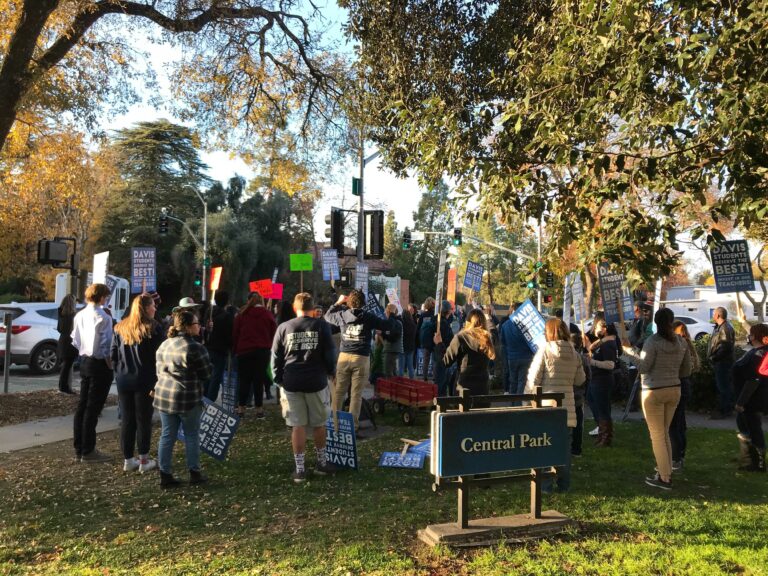
After the school day ended on Nov. 30, parents, teachers and community members gathered at the intersection of 5th and B Street to demonstrate their support for teachers, paraeducators and other school faculty within the Davis Joint Unified School District (DJUSD). 

With their rallying call “Davis Students Deserve the Best!printed across their signs, the crowd assembled in front of Central Park before occupying all four corners of the intersection, including the corner in front of Davis City Hall. 

The main goal for the Davis Teachers Association (DTA) in organizing this event was to promote stronger community solidarity and support for Davis educators during the ongoing contract negotiations process between the DTA and DJUSD. In addition to garnering community support, the DTA and California School Employees Association (CSEA) set out to further pressure the school board to accept their most recent proposal and prevent an impasse in bargaining. According to a media advisory email released by the DTA, this proposal includes a salary increase for all bargaining unit members, a one-time bonus and 100% coverage of the lowest single-member health plan.

This is not the first instance of a gathering for this cause; recent DJUSD board meetings have seen a public comment section often consisting of parents and teachers advocating for the DTA and the CSEA in their pursuit of reasonable negotiations with the district. 

At the Nov. 3 DJUSD Board Meeting, over three weeks prior to the rally, a large crowd of parents, teachers and community members convened to advocate the same message with the same rallying call.

Educator and DTA President Victor Lagunes claimed at the rally that the best way to support and invest in the district’s students is to better allocate resources and funding to faculty who have been chronically underpaid for years. 

“We’re talking about this huge influx of money that’s come in from the state in the last governor’s budget,” Lagunes said. “What we really want to do is make sure that we’re providing our students with the best, and the real way to do that is through attraction and retention. We want to make sure that we can do that at all levels, at all years of service and all levels of experience as well.” 

Retention for teachers in the district has been a large part of the recent conversation surrounding negotiations. According to DJUSD educators, there is not enough incentive and compensation for educators, causing many to seek employment in neighboring districts as the cost of living goes up. 

“We think that our current proposal addresses that [attracting and retaining quality educators]. We’re hopeful that today demonstrates exactly where we want to end up, which is providing our students with the best and that [way] we can reach a settlement soon,” Lagunes said of the event.


Written by: Jillian March city@theaggie.org

Disease-resistant corals can save nearby susceptible ones from infection

Mixing DNA genotypes at coral nurseries can help prevent disease outbreak and spread


By LILLY ACKERMAN — science@theaggie.org 


A recent study from the UC Davis Department of Evolution and Ecology has found that placing corals of different genotypes together at a nursery can improve the population’s overall resistance to disease. 

The study researched the prevalence of white band disease, which has been affecting corals in the Caribbean for several decades, in both resistant and susceptible corals at a nursery offshore of the Central Caribbean Marine Institute in the Cayman Islands. It found that disease-resistant corals can prevent the spread of disease to susceptible corals they are attached to. 

The staghorn corals (Acropora cervicornis) at this nursery are crucial reef-building corals in the Caribbean, but their populations have seen steep declines due to disease outbreaks since the 1970s, according to Dr. Anya Brown, an assistant professor in the Department of Evolution and Ecology at the UC Davis Bodega Marine Laboratory and lead author of the study.

“[White band disease] is still present today and affecting the acroporid corals in the Caribbean, and often, the acroporid corals are the ones that are used in reef restoration,” Brown said. 

Nurseries are a crucial part of reef restoration, as they grow corals of a variety of genotypes, but they are subject to disease outbreaks just as wild corals are, according to the study.

The authors compared disease prevalence on a variety of plastic frames that the nursery used to hold growing corals; some held coral fragments of mixed genotypes, while others contained corals of only one genotype. The study found that frames with mixed genotypes experienced less infection with white band disease. 

“Some of the corals that are vulnerable to disease can be ‘rescued’ by resistant genotypes, likely because resistant genotypes prevent the transmission of the disease between fragments,” the study reads. “In fact, when the resistant genotype was present on a frame, disease prevalence […] tended to be lower than on other mixed genotype frames when the resistant genotype was absent.”

This finding is critical so that nurseries can encourage the maintenance of both resistant and susceptible corals in the population and manage disease spread among them. 

“Disease is one of the many different factors that are impacting corals negatively right now, so [a coral] that might be susceptible to disease may have other traits that are helpful for other types of stressors,” Brown said. “Keeping the genes of both susceptible and resistant corals in the population or on the reef will be important for future stress experiences.”

According to Dr. Brown, the study also provides insight into effective nursery design and the mechanisms of disease spread, both of which need to be taken into account when raising corals for reef restoration. 

“Thinking about how you arrange the corals intentionally can influence their survival or their ability to be diseased or not diseased,” Brown said. “This is giving us also just a better idea of…the processes that influence disease spread on reefs; what might limit disease spread and what might not limit disease spread.”

In the effort to solve the coral conservation puzzle, this study is a step in the right direction. 

“I think there’s a lot we don’t know about coral diseases and their spread on reefs, and so this is a start for our understanding of these population-level processes,” Brown said. “It’s nice that not everything is doom and gloom.” 


Written by: Lilly Ackerman — science@theaggie.org

MLB free agents are signing record-breaking contracts

0

MLB stars including Aaron Judge and Jacob deGrom receive huge contracts during free agency


By PATRICK FIGUEROA — sports@theaggie.org


The 2023 Major League Baseball (MLB) offseason is shaping up to be one of the most memorable in MLB history, featuring a star-studded free agency class that is signing new contracts quicker than in recent years, and these signings will most definitely have an impact on the future of MLB. 

Starting pitcher Jacob deGrom was one of the first star free agents to sign. He signed a five-year contract worth $185 million with the Texas Rangers. The Rangers want to compete among other American League (AL) contenders, and by signing deGrom, they added an ace to their pitching rotation that can help them do so.

Outfielder Aaron Judge bet on himself earlier this year, rejecting a seven-year, $213.5 million contract offer from the New York Yankees before the 2022 regular season began. Judge seems to have made the right choice, as he has now signed a nine-year contract worth $360 million with the Yankees this offseason. 

Judge’s services were in high demand after a phenomenal 2022 season. The San Francisco Giants and San Diego Padres were among the other bidders for Judge. The Giants reportedly offered around the same amount of money as the Yankees while the Padres offered a 10-year contract worth $400 million. Ultimately, Judge decided to re-sign with his former team. 

Shortstop Trea Turner will return to the East Coast after signing an 11-year contract worth $300 million with the Philadelphia Phillies. Turner will be able to provide the team offensive support, while their star outfielder, Bryce Harper, is not expected to return until after the 2023 all-star break due to Tommy John surgery. Once again, the Padres were among the other bidders for Turner, reportedly offering $342 million. 

After striking out on two free agents, the Padres landed a star free agent, signing shortstop Xander Bogaerts to an 11-year contract worth $280 million. A longtime member of the Boston Red Sox, Bogaerts has won two World Series titles and five Silver Slugger awards. He will join a lineup that features other star players including outfielder Juan Soto, third baseman Manny Machado and shortstop Fernando Tatis Jr. 

After originally signing with the Giants, shortstop Carlos Correa signed a 12-year contract worth $315 million with the New York Mets. The Giants had given Correa a 13-year contract worth $350 million but backed out due to injury concerns. It will be worth watching Correa’s tenure with the Mets if injury concerns arise. When Correa is healthy, he has proven to be one of the best shortstops in MLB. 

The Mets have also made several other signings. They shattered the payroll record, currently nearing $500 million due to luxury taxes. They have signed starting pitcher Justin Verlander, starting pitcher Kodai Senga and outfielder Brandon Nimmo to sizable contracts. Mets’ owner Steve Cohen has said that his goal is to win the World Series within five years of purchasing the Mets back in November 2020. Like a college student with an essay due at midnight, Cohen is doing everything he can to meet that deadline. 

The Yankees also signed free-agent starting pitcher Carlos Rodon. Rodon agreed to a six-year contract worth $162 million. Rodon joins a rotation that features Gerritt Cole and Nestor Cortes Jr.  While Rodon was non-tendered by the Chicago White Sox in 2020 due to injury concerns, he is now one of the highest-paid pitchers in MLB. 

In addition to adding Judge and Rodon, the Yankees also signed first baseman Anthony Rizzo to a two-year contract worth $40 million. The offer has the potential to become a three-year contract worth $51 million if the Yankees exercise a club option after 2024. 

The Chicago Cubs signed outfielder Cody Bellinger to a one-year contract worth $17.5 million. Bellinger was the 2019 National League (NL) MVP, but he has struggled mightily at the plate for the past two seasons. His one-year contract gives him a chance to prove that he can still play at a high level. 

The Cubs also signed shortstop Dansby Swanson to a seven-year contract worth $177 million. Swanson was a key player in the 2021 Atlanta Braves’ World Series title. He also won a Gold Glove award in 2022. Now, he will be a centerpiece for the Cubs as they work their way through a rebuild. 

The St. Louis Cardinals had to find a new catcher to replace franchise legend Yadier Molina who retired after the 2022 season. They decided to sign catcher Willson Contreras to a five-year contract worth $87.5 million. While Contreras may not have the same defensive abilities as Molina, his offensive abilities are certainly an upgrade. 

Other notable signings include the Phillies adding starting pitcher Taijuan Walker on a four-year contract worth $72 million, the Cleveland Guardians signing first baseman Josh Bell to a two-year contract worth $33 million, the Red Sox signing outfielder Masataka Yoshida to a five-year contract worth $90 million and the Houston Astros signing first baseman José Abreu to a three-year contract worth $58.5 million. 

So far, MLB teams have spent over $3.5 billion combined during the 2023 offseason. This is already more than what all teams combined spent during the 2021 offseason, which totaled close to $2.9 billion. This can likely be attributed to the newly agreed-upon 2022 Collective Bargaining Agreement, as well as new TV deals worth billions of dollars. The future is bright for MLB, its players and its fans. 


Written by: Patrick Figueroa — sports@theaggie.org

Lost in translation: A missed opportunity in “1899”

Despite interest in multilingualism, Netflix’s newest international foray fails to make an impact 


By ADHITHI ANHJALI — arts@theaggie.org


From the creators of “Dark,” a surprise German hit that arguably opened Netflix’s door to more international media, Jantje Friese and Baran bo Odar return with “1899.” Best described as opaque, dreary and guarded, the show’s most intriguing aspect — beyond the sci-fi time-weaving — is its international cast and multilingualism carried throughout.

 Aboard the Kerberos, the show follows a large cast of immigrants seeking a new life in the United States. Twenty years prior to the famously tragic sinking of the Titanic, the Kerberos sets sail only four months after its sister ship, the Prometheus, has seemingly vanished from the face of the Earth. The echo of the lost ship haunts the cast and conversations in French, Spanish and German center around this topic. In the bellows of the ship, viewers hear Danish and Polish, while in first class we see a Geisha whisper in Cantonese, signaling the first of many false identities on board. 

Focusing on the use of language, the story initially presents itself as a fundamentally new and exciting experiment — how many other shows have recently appeared on Netflix’s Trending Top Ten that incorporate more than two languages? 

Combining the inability to effectively communicate with the unease of a mystery bolsters the thrills of secrecy and staves off resolution for the characters. Amidst the backdrop of the massive immigration from Europe into America at the turn of the 20th Century, the funneling of diverse languages onto one ship also represents the universal understanding of the American mythos of freedom from the past. 

Consistent with the style of other dramas that feature large casts, each episode focuses primarily on one character’s life on the Kerberos and the sordid past that has led them there. Repeated ad nauseam by Spanish playboy Ángel, played by Miguel Bernardeau, everyone on the ship is wearing a mask, either forced upon them or taken up to protect themselves. 

However, the force of language is a superficial one, despite its potential. The other aspects of the show are quite well done; the cinematography is eerily effective, using close-ups of fine details to urge the audience to question the tangible truths about the characters. The story itself, though at times trawling through its required screen time, is engaging enough that the truth unravels in a satisfying way, all the clues clicking into place and making a rewatch an enjoyable experience. But, in a sci-fi drama so concerned with the function of the brain and its ability to comprehend, even opening with Emily Dickenson’s “The Brain—is wider than the Sky—,” the opportunity to accentuate the power of language as equally a bridge and a wall for the mind was sorely missed. 

Rather than exploring language as the construction of the human mind, by the time the assorted characters group up, barriers are overcome by individual translators. This undermines the challenges posed by such a unique set-up, where the inability to translate their reality into shared words would have supported its fundamental concern: whether or not there is a certain, discernable truth. 

The producers of “1899” could have chosen to touch on more topics to give the show more depth. For example, linguistic theories of generativism, which argue for a universal grammar that would allow for easier language acquisition, and cognitivism, which claim that language is a conceptual system based on its use, could have played an interesting role. 

It would be misleading to argue that “1899” is primarily about language. It is about grief and time, and the dangers of trapping yourself by trying to escape them. Ultimately, the show leaves viewers questioning the inclusion of the broad display of languages in the first place, given that the whole cast eventually yields to the language of Maura (Emily Beecham) as the protagonist. 

Unfortunately, the distinctive decision to incorporate so many languages feels like a gimmick in its first season. Hopefully, if renewed for a second season, “1899” takes advantage of the boundaries it chooses to set. 

Written by: Adhithi Anjali — arts@theaggie.org

Fun holiday tunes to spice up the season

From Vivaldi to Mariah Carey, this selection is sure to get you through the colder months 


By SARAH HAN — arts@theaggie.org


“It’s the Most Wonderful Time of the Year” by Andy Williams (1963)

Ringing in the list is Andy Williams’ quintessential song for the holidays. Certainly, the holiday season is one of the most wonderful times of the year, making this song a great way to start (and end) the season. It’s undoubtedly nostalgic and heartwarming, especially with the wholesome lyrics about mistletoes and marshmallows. This tune is perfect for keeping you in the holiday mood through the new year.


“12 Days of Christmas” by Frederic Austin (1909)

If you want to keep in mental shape during the holiday break, this song not only tests your counting skills but also your memorization skills. Several groups have sung covers of this carol, from Straight No Chaser to Pentatonix. This song is a classic holiday tune that never gets old, and although it may not have a steady beat, it’s certainly a more novel tune to add to your holiday playlist.


“Jingle Bell Rock” by Bobby Helms (1957)

“Jingle Bell Rock” is a modern twist on the classic “Jingle Bells.” It incorporates a more upbeat tune and features my favorite part, a guitar jingle, at the beginning. This song is perfect for a holiday party where everyone can dance. It’s short, simple and sweet but nonetheless perfectly captures the cheery spirit of the holidays.


“Feliz Navidad” by José Feliciano (1970)

There’s such a jolly vibe to this song — whenever I listen to it, I feel like all my worries go away. It’s bright, cheery and lighthearted, which may be what gives it such longevity and worldwide popularity. Much like “Jingle Bell Rock,” it’s a great song to play during a holiday party or when you need to wish someone a merry Christmas (hence the lyrics). 


“Christmas Time Is Here” by Vince Guaraldi (1965)

The nostalgia from this song is unmatched. “Christmas Time is Here” is from the television special “A Charlie Brown Christmas,” and it’s perfect for when you want to sit by the fireplace and drink hot chocolate. It has a very subtle melody, making it suitable for when you need to relax during the holiday season. 


“Winter” by Antonio Vivaldi (1723)

I couldn’t leave out the classical realm of music when making a roundup of holiday tunes. Whenever I listen to “Winter” from Vivaldi’s “The Four Seasons,” I imagine wrapping last-minute holiday gifts: the first section represents frantically assembling pieces of wrapping paper, the second section represents the relief of finishing wrapping all gifts and the third section represents the sudden despair of realizing you’ve forgotten to buy a gift entirely. To truly understand what I’m saying, listen to the piece; it’s a perfect tune to encapsulate the holiday vigor.


“The Nutcracker” by Pyotr Ilyich Tchaikovsky (1892)

Continuing with the classical music theme, “The Nutcracker” always reminds me of the scene in Chris Columbus’s iconic 1997 flick, “Home Alone,” where all of the family members are frantically getting ready for their flight. There seems to be a running theme of franticness and panic in all these classical pieces, which I think is because these emotions can play a big part during the holiday seasons. Beyond this, Tchaikovsky’s enduring ballet also has many other exciting movements for the holiday season.


“Last Christmas” by Wham! (1984)

Moving on to pop songs, “Last Christmas” captures the unfortunate breakups of the season. Many popular artists such as Ariana Grande and Taylor Swift have produced covers of this song, but I strongly recommend listening to Wham’s version because it has a cozier sound to it. Whether you are going through a breakup or you simply want another holiday jam, this song is the way to go.


“All I Want For Christmas Is You” by Mariah Carey (1994)

The icon, the representative and the spirit of the holidays — it’s Mariah Carey. “All I Want For Christmas Is You” is a modern yet classic tune that encapsulates the romantic side of the season. It’s a perfect song to jam to in your car, even if you don’t care about the presents underneath the Christmas tree. Its upbeat rhythm combined with its catchy melody is certain to get you in the holiday spirit. 

Written by: Sarah Han — arts@theaggie.org

Beyond the imagination: How Imagining America is working toward a better future

0

Community is at the forefront of Imagining America’s Mail Art Project and annual National Gathering  


By MARIA MARTINEZ CASTRO  — features@theaggie.org 


In addition to being home to some of the world’s top scientific research, UC Davis also hosts Imagining America, a consortium of diverse individuals working in the humanities and across disciplines to nurture better communities and create a better future. 

“Imagining America is one of several different professional associations with a strong focus on community engagement,” said the membership director for Imagining America Trina Van Schyndel. “In particular, we’re really interested in how universities and the individuals that work in universities, whether they’re faculty, staff or students, engage with and work alongside community members and community organizations to address important social, environmental [and] economic issues.”

As a group, Imagining America calls on people’s unique senses of creativity and encourages them to harness those tools and interests to promote community engagement and social change. 

“We’re very interested in folks who see the value and are interested in the methods that come from the arts or the humanities or the design fields,” Van Schyndel said. “I think that’s kind of what makes us unique across these multiple associations that all focus on community engagement.” 

Ariana Abtahi, a fourth-year communication major and social media intern at Imagining America, shared why she believes having an art- and humanities-based hub tackling current and pressing social issues is important. 

“I think that Davis has a lot to be proud of in terms of research [and] obviously leading in vet sciences,” Abtahi said. “But I do think that sometimes that can lead students who are in the humanities programs to feel not as important or not as heard […] It can lead to people not thinking that they’re enough to be where they are at Davis. A whole institution that is for those who study [the humanities] provides a safe space for not only the communities they want to help but for the people who are part of it to know that they’re heard [and] their work is appreciated.”

Marisa Raya, a second-year Ph.D. student in the Geography Graduate Group and an Imagining America PAGE (Publicly Active Graduate Education) Fellow, said that Imagining America’s focus on social change through community engagement has been important to her academic and professional journey. 

“I’ve always tried to seek out better ways of elevating disadvantaged community voices in government,” Raya said. “Part of my Ph.D. research, which is on land reparations and land use in California, revolves around how different communities define land reparations and land access and property rights. I really wanted to have an academic home and a group that prioritized community engagement as the driving force behind our research. And I wanted to be connected to a cohort of other fellows, as well as the scholars who are affiliated with Imagining America.” 

Both Abtahi and Raya attended Imagining America’s annual National Gathering, an event during which individuals share and celebrate their findings, personal paths and art to promote community and social progress. This year, the National Gathering took place in New Orleans from Oct. 14 to 16. The theme was Rituals of Repair and Renewal.

“That was a very transformative weekend for me,” Abtahi said. “I was only there for four or five days, but I left a different person. And I’m not just saying that, I really did learn so much.” 

Raya said that the National Gathering inspires attendees to create their own unique ways of sharing and building knowledge to work toward a more just society. 

“I think probably the part that was most eye-opening was [that] the types of engagement showcased at the conference are very often not determined by a western United States perspective or a white hegemonic perspective,” Raya said. “There’s engagement through music, through listening to the land, through art or clay […] That was really exciting, to have all of these different forms of engagement and knowledge production recognized.” 

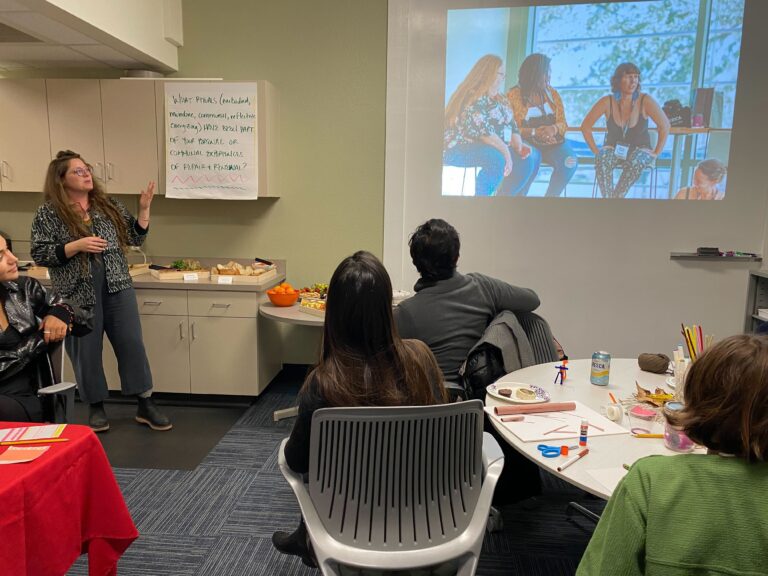
Inspired by the theme of this year’s National Gathering, Rituals of Repair and Renewal, Imagining America is hosting its second Mail Art Project. Registration to participate in the Mail Art Project is open from Nov. 10 to Dec. 16. Participants will then have until April to create their art pieces. The Mail Art Project encourages participants, as they create their art, to reflect on the question: “What rituals (embodied, mundane, communal, reflective, energizing) have been part of your personal or communal experiences of repair and renewal?”

From April 15 to 30 in 2023, participants will submit photos of their art in addition to a description and their reflections. The artistic efforts and participation of community members will be showcased and celebrated online by June 2023. 

“I’ll just share a quote that I think really gets at, ‘Why now, why this topic?’” Van Schyndel said. “The quote is from bell hooks … ‘Rarely, if ever, are any of us healed in isolation. Healing is an act of communion.’ I think this idea of healing was an important one. Whether we’re talking about healing from the trauma of the pandemic, healing from the racial violence across multiple racial groups […] there’s been a lot of trauma that folks have experienced over the last several years. It felt important to think about the ways we are trying to heal.”

UC Davis staff, students and community members are all welcome to participate in the Mail Art Project. According to Van Schyndel, the event is an opportunity for people to engage with art with a collective goal of community healing and growth. 

“I think it’s important for us to tap into the creative parts of ourselves,” Van Schyndel said. “Art-making as a way of generating new knowledge, new insights, new reflections about a topic is really powerful.” 

Written by: Maria Martinez Castro — features@theaggie.org

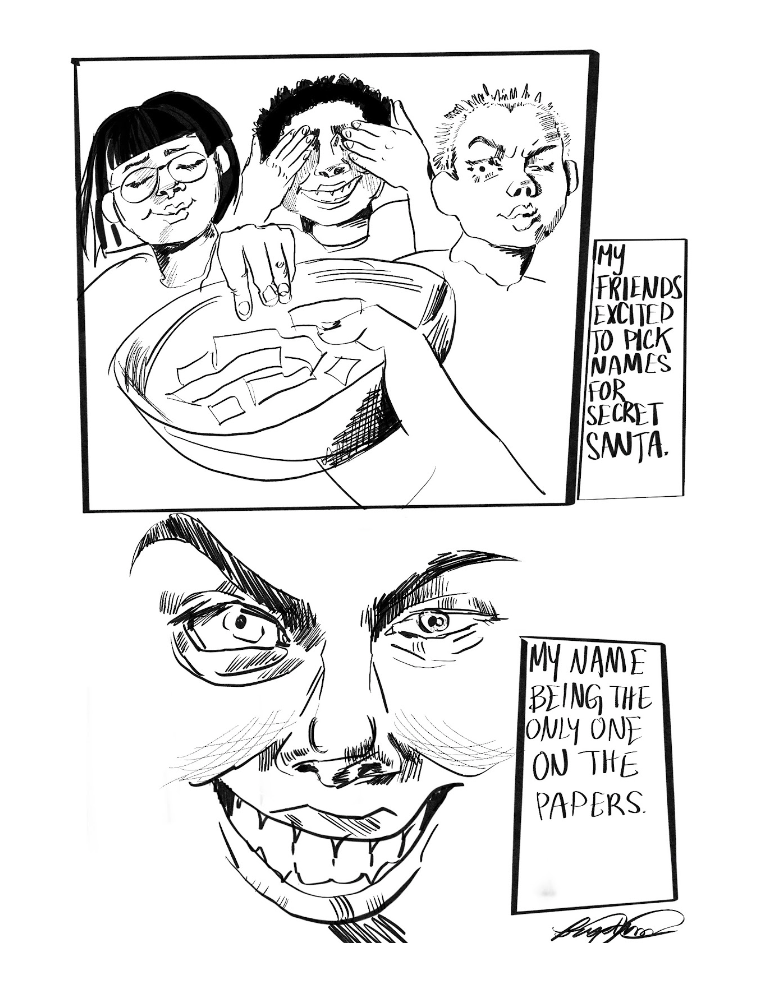
Secret Santa

0

By PRISCILA JIMÉNEZ CORRALES — pjimenez@ucdavis.edu


Drawn by: Priscila Jiménez Corrales — pjimenez@ucdavis.edu


Disclaimer: (This cartoon is humor and/or satire, and its content is purely fictional. The story and names of “sources” are fictionalized.)

Secret Santa

Drawn by: Priscila Jiménez Corrales — pjimenez@ucdavis.edu

Disclaimer: (This cartoon is humor and/or satire, and its content is purely fictional. The story and names of “sources” are fictionalized.)

Taylor Swift and the Ticketmaster monopoly

0

The ticket sale disaster for Swift’s upcoming tour is evidence that change is needed in the live entertainment industry


By CLAIRE SCHAD — cfschad@ucdavis.edu


When Taylor Swift announced her 15th studio album, “Midnights,” I was thrilled. As a lifelong Swiftie, I have loved everything that Swift has released. Her debut album “Taylor Swift” was the first CD I ever owned, and I would play it on repeat in my bedroom at the age of seven. Now, my Spotify account is loaded with every song from her 15 albums and I listen to her daily. 

So, when Swift announced her “Eras” Tour that would include songs from all of her iconic phases, I was ecstatic. I had to be there. Immediately after the announcement, I signed up for Ticketmaster’s Verified Fan Presale, which gives select fans early access to ticket sales. 

Luckily, on the morning of Nov. 14, I received the golden ticket — I had been selected for the presale and would have an opportunity to purchase tickets the next morning. 

So, the following day, I sat at my kitchen table with my laptop, wallet and phone all ready in front of me. Having read the instructions sent by Ticketmaster many, many times, I felt ready. Spoiler alert: I was not. 

I thought selecting and purchasing tickets would take me, at most, 45 minutes. I ended up spending close to four hours on Ticketmaster’s website. 

After an alarming number of error messages, website crashes and one presale being rescheduled, I was luckily able to purchase the tickets for myself and a few others. However, due to the site’s many issues, thousands of other Taylor Swift fans can’t say the same. Many more never even had the chance to purchase tickets because the public sale, set for two days later, was canceled by Ticketmaster

The site claimed that all of the presale issues were due to “historically unprecedented demand.” The high demand, however, should not have been surprising due to the popularity of Taylor Swift, whose fan base is one of the largest in the world with over 82 million monthly listeners on Spotify alone. In addition, her popularity and fame are well known and acknowledged by the music community — she has collected 11 Grammys and 43 nominations. As such, Ticketmaster should have fully been aware of the expected demand and prepared accordingly before the sale began. 

If you were one of the lucky few to make it into the presale, then you probably experienced dynamic pricing, a feature Ticketmaster utilizes that drives ticket prices up as more people view them. This causes prices to increase exponentially in the minutes after tickets are released. Due to the mass numbers of people in the “Eras” Tour presale — unless you were one of the first people to be let in — you were not going to pay face value for your ticket. Because of dynamic pricing, I ended up paying $109 plus fees for upper bowl tickets that were sold for $49 plus fees at the beginning of the presale

Ticketmaster claims that dynamic pricing helps deter bots from purchasing tickets to resell, but at what cost? Is it really fair that fans are forced to pay inflated ticket prices because a company with a net worth of over $16 billion can’t figure out a better way to limit bots? After all, Ticketmaster is able to profit off of the additional price difference on all tickets, making me doubt their motives for dynamic pricing.  

Despite their justification for this pricing system, the company released a statement saying the website received over 3.5 billion requests from users around the world on the day of the sale, many of which were bots. If Ticketmaster is going to justify dynamic pricing by claiming it gets rid of bots, it better actually do so.  

Finally, after almost four hours, when I made it to the point of checking out on Ticketmaster, I was hit with another slap in the face — the outrageous fees tacked on to each ticket. These came in the form of a service fee ($24.65 per ticket), a facility charge ($8 per ticket) and an order processing fee ($4.75 per order). For my four tickets, I paid over $130 in fees alone. 

When Live Nation merged with Ticketmaster in 2010, the conglomerate took control of the entire live entertainment industry. Now, smaller entertainment ticketing companies have no shot at competing with Ticketmaster due to the sheer power they hold. This allows Ticketmaster and Live Nation to continue to tack on fees and raise ticket prices without worrying about the possibility of entertainers shifting their ticketing contracts elsewhere. 

Ticketmaster’s mishandling of ticket sales for Taylor Swift’s upcoming tour has led politicians to call for the breaking up of the Ticketmaster-Live Nation monopoly. Rep. Alexandria Ocasio Cortez tweeted that the merger “should never have been approved” and called on lawmakers to “reign in” the power of the conglomerate. 

While I am very grateful that I was able to secure tickets for Swift’s “Eras” Tour, I feel for those who never had a chance. Ticketmaster, with the continuous issues and fees, acts as a barrier to live entertainment for many. 

Live entertainment is a place where people can go to feel connected to both the entertainer and their craft. Artists, politicians and consumers must work together to make it more available to all. 


Written by: Claire Schad — cfschad@ucdavis.edu 

Disclaimer: The views and opinions expressed by individual columnists belong to the columnists alone and do not necessarily indicate the views and opinions held by The California Aggie.

The best places to travel in-state during the holidays

Winter break is a perfect time to explore Northern California and its amazing sites


By JENA TUFAIL — jjtufail@ucdavis.edu


Winter break is the perfect time for students to relax without the stress of coursework, midterms and classes. With the holiday season, many students will be returning to their hometowns or going on vacation, where they might be able to spend quality time with their family and friends (possibly) for the first time this academic year. 

However, many other students, such as those who are international or who do not have the ability to travel back to their families or hometowns this break, will be in Davis or the surrounding area. As UC Davis students, we are lucky in terms of traveling in-state — we live in a town that is located near many of the gems of Northern California.

If you are interested in visiting the northern coast, Big Sur and Carmel-by-the-Sea are two beautiful destinations located about three-and-a-half hours away from Davis. These areas are filled with scenic views, coastlines, hidden beaches, trails, camping and more. There are so many beautiful sites to see, and the towns are perfect for those who enjoy exploring local shops in a relaxing atmosphere. 

Another coastal town that I visited quite recently is Mendocino. Full of forests, beaches, wildlife, galleries and more, the town and surrounding area is a perfect get-away. Along with all the local shops, make sure to check out Point Cabrillo Light Station and Russian Gulch State Park, and stop by Fort Bragg if you’re in the area. 

As we are in the Christmas season, Lake Tahoe is the perfect place to go to enjoy the snow and other winter-related activities. Located about two-and-a-half hours away from Davis, the town is full of ski resorts and cabins. However, Tahoe is also incredibly versatile — it’s a great place for camping, as well as visiting beaches, lakes and state parks. 

Northern California is also home to many national forests and parks. One of my favorite destinations, Mount Lassen Volcanic National Park, is located near Redding. The park is a wonderful destination for those of you who enjoy nature or are interested in geology, plant science and the natural world. Mount Lassen is full of meadows, trails, lakes, campsites, forests, geysers, waterfalls and much more. I personally was able to visit during late spring, but I would love to go back during winter, as the volcanoes are known to fill up with snow.

Winter break is a great time to explore parts of California you may never have been to before. If you have time to explore I highly recommend it, especially for those of you who may be in the area in the coming weeks. Before traveling, make sure to research your destination well, pack as needed and create an itinerary to make sure your trip is as memorable as possible.


Written by: Jena Tufail — jjtufail@ucdavis.edu


Disclaimer: The views and opinions expressed by individual columnists belong to the columnists alone and do not necessarily indicate the views and opinions held by The California Aggie.

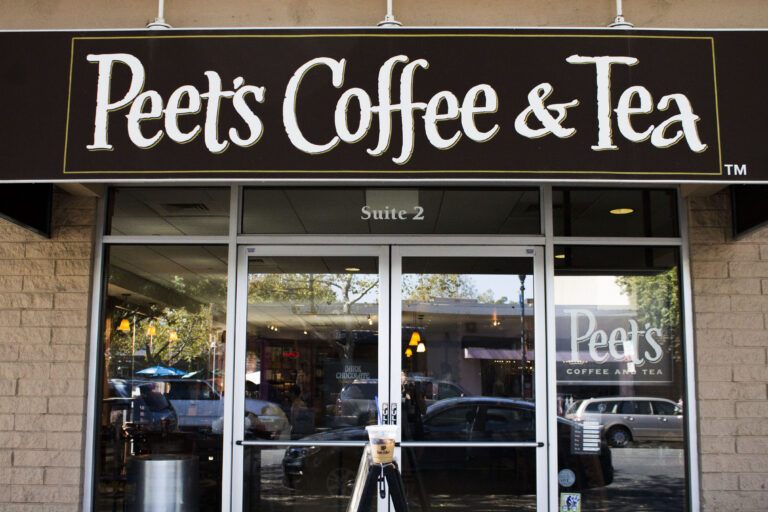
Peet’s Coffee locations in Davis file to hold election to organize union

0

If attempts to unionize are successful, Downtown Davis and North Davis locations will be the first Peet’s Coffee cafes to unionize


By ANTHONY W. ZAMMIKIEL city@theaggie.org


On Nov. 29, two Peet’s Coffee locations in Davis, one in Downtown Davis and another in North Davis, announced in a press release that they had filed a motion with the National Labor Relations Board (NLRB) to hold an election to decide if the two locations would unionize.

According to the press release, there are a total of 208 Peet’s Coffee locations throughout the U.S., and if the election attempts are successful, the Davis locations will be the first in the country to have unionized. 

 “A vast majority of the stores [are] located in the state of California,” the official press release reads. “If successful, the North Davis and Downtown Davis locations will be the first corporate Peet’s cafes to successfully unionize.” 

The decision to hold an election comes after multiple high-profile elections to unionize throughout the nation, with corporate coffee chains seeing an increase in voting to unionize. The press release stated that the Peet’s Coffee locations were inspired by other coffee-chain unions like Starbucks. 

“Peet’s workers are filing their locations with Workers United-SEIU, the same union that represents Spot Coffee and the Starbucks Workers United campaign,” according to the joint official press release from Workers United Western States Regional Board (WSRJB) and Peet’s Workers United. “Workers cited being inspired by organizing Starbucks workers as a key motivation for their organizing efforts.” 

Throughout the press release, organizers and employees shared their reasons for organizing and why they believe a union is necessary. Schroedter Kinman, an employee at the Downtown Davis location and the location’s media contact, made a statement in the press release explaining the need for union protections in the workplace. 

“For me, I am organizing because we deserve a say in how our workplace is run and we deserve to be fairly compensated for the value we create,” Kinman said in the press release. “It is also about having a support system and a set of procedures if we are mistreated by our company.”

Alyx Land, an employee at the North Davis Peet’s location, stated in the press release that a union would provide benefits not only for current employees but future employees as well. 

“Unionizing is important to me because I’m passionate about my job and want it to be sustainable and fun for me, my current and even my future coworkers!” Land said in the press release. 

Trinity Salazar, another employee from the North Davis Peet’s and the media contact for that location, also shared their reasons for supporting a union in the press release. 

“In a union, I feel protected as a worker,” Salazar said in the press release. “Therefore I no longer feel like the best option is to leave the business I work for but instead improve it. Not just for myself, but for everyone I work with.”


Efforts to unionize are developing and ongoing, and additional information will be covered as it is provided. 


Written By: Anthony W. Zammikiel  — city@theaggie.org


The University of California, academic workers reach tentative agreement

A tentative agreement between parties was reached after engaging with third-party mediator Darrell Steinberg 


By KAYA DO-KHANH — campus@theaggie.org


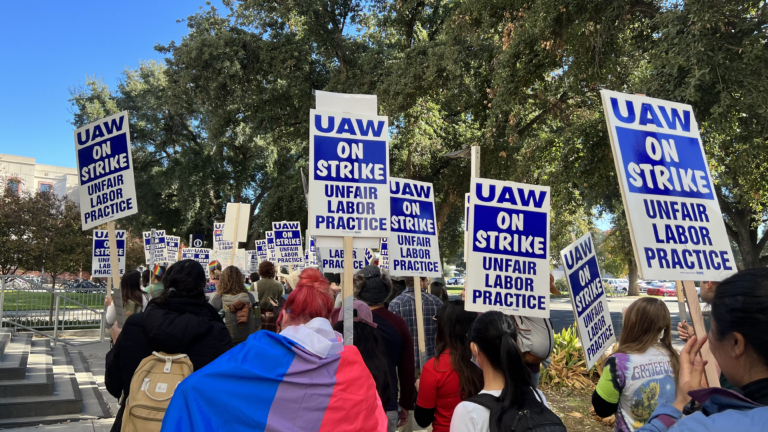
After a month-long strike that began on Nov. 14, the University of California (UC) and academic workers, including academic student employees (ASEs) and graduate student researchers (GSRs), reached a tentative labor agreement on Friday, Dec. 16. The agreement will go to the union’s membership for a ratification vote in the next couple of days, according to a recent press release from the United Auto Workers (UAW).  

On Dec. 12, the UC Office of the President came out with a statement announcing that both parties welcomed the UC Davis School of Law alumni and Sacramento Mayor Darrell Steinberg as a third-party mediator in the negotiations. 

The UC also released a statement about the ratification of new five-year contracts for postdoctoral scholars and academic researchers on Dec. 12. The approved contracts will be effective through September 30, 2027, and include multi-year pay increases, transit benefits and improved paid family leave. 

“These agreements honor our employees’ important contributions and uphold the University’s longstanding practice of providing these employees with some of the best compensation and benefits packages in the country,” the UC Executive Director of Systemwide Labor Operations Letitia Silas said in the press release

Steinberg’s direct communications with UC President Michael Drake have led to tentative agreements for academic student employees and graduate student researchers that include record-setting wage increases, which would make the UC graduate student workers the highest paid at any public university in the country if the contract is ratified, according to the UAW. Across the UC campuses, there would be 55-80% increases in annual pay for ASEs, who currently make around $24,000 in an academic year, and 25-80% increases for GSRs by 2024. The agreements feature the first contractual transit benefits at UC and developments in terms of job recognition and classification; each campus would be able to implement higher-paid TA job titles, which creates more opportunities for increased salaries. 

According to an article from the New York Times, California Governor Gavin Newsom said that he was “relieved” by the deal. He also said that a state budget agreement made this year includes a minimum of five years of annual increases to UC funding that will most likely be applied to the additional costs of the contract. 

The President of UAW 2865 Rafael Jaime told the New York Times that the agreement is “a huge deal, and it will go a long way toward addressing the high cost of living near U.C. campuses.” 

The ratification votes by the union for the tentative agreement will take place from 8 a.m. on Monday, Dec. 19 to 5 p.m. on Friday, Dec. 23.

Written by: Kaya Do-Khanh — campus@theaggie.org

Negotiations continue after first week of UC worker strike

Progress was made in negotiations between UC officials and UAW, but current UC offers regarding pay increases still do not meet the Union’s demands


By KAYA DO-KHANH — campus@theaggie.org


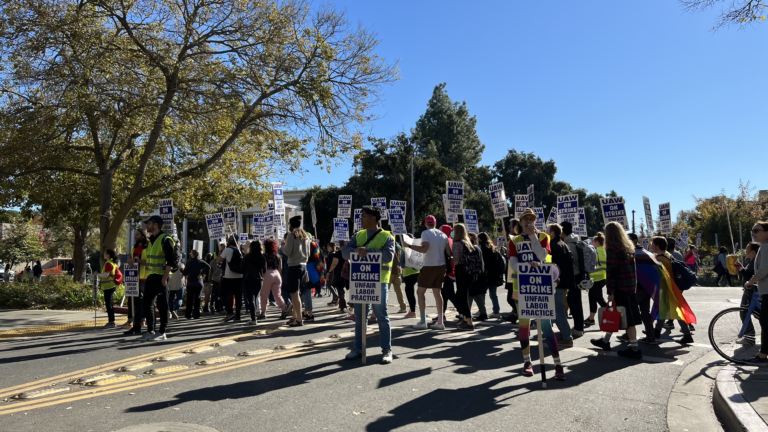
The largest strike in higher education history, which began on Nov. 14, has continued into its second week. Academic workers have set up picket lines on Russell Boulevard and College Park/Howard Way, as well as on Hutchison Drive and La Rue Road from 9 a.m. to 1 p.m. and from 12 p.m. to 4 p.m. every day of the work week since the strike began. 

In addition to the picket lines, other protest activities have been planned and enacted throughout the duration of the strike, including rallies, speakers and more. On the first day of the strike, there was a midday rally in front of Mrak Hall, where Chancellor Gary May’s office is located. The rally featured speakers from the Teamsters Local 2010, which represents the University of California’s (UC) skilled trades workers. There was also a sit-in inside the hall from 10 a.m. to 4 p.m. on Nov. 18. 

The picketers have been fed daily by a self-organized group of academic strikers and undergraduate students, according to a recent press release, with the “strike kitchen” serving food purchased with donations and cooked on a camp stove, as well as baked goods, fruit and vegetables that community members have dropped off. 

The unions, United Auto Workers (UAW) 2865, Student Researchers United (SRU-UAW) and UAW 5810 are demanding an annual pay increase from $24,000 to a minimum of $54,000. Students on the picket lines at UC Davis, such as fourth-year physics Ph.D. candidate Samantha Abbott, said that their wages do not support the growing cost of living, as most academic workers are spending 50% to 60% of their monthly paycheck on rent.

“I hope to see a fair contract,” Abbott said. “We have been underpaid for a long time. I hope to be able to pay less than 30% of my paycheck to rent […] I want to be able to come home everyday and feel like the work that I am doing is actually valued and that I don’t have to spend my time and energy outside of school trying to keep my life in order because I have the proper resources from the school that controls almost every aspect of my life. I want them to empower me to be able to do the things that they ask of me.” 

Since the strike began, a number of classes have been canceled or moved online, disrupting undergraduate education. There have been disruptions to the Unitrans Memorial Union bus terminal, due to the picket line on Russell Boulevard and College Park/Howard Way, making it difficult for some students to arrive to class on time. However, there has still been undergraduate support on the picket lines, according to Abbott. 

“I had some anxiety, to be honest, that some students would think that I was betraying them,” Abbott said. “But they were all extremely supportive. They wanted to see me and all of the other TAs be actually paid for what we do.” 

On Nov. 18, ASUCD released a letter acknowledging the impact that strike action has had on undergraduate education and asking administrators to make emergency changes to typical policy as a result.

The statement calls upon the Executive Council of Academic Senate, which, according to the letter, is charged with “[taking] measures to cope with [emerging problems] before they become urgent,” to convene an emergency session in order to consider an extension of the Pass/No Pass grading option and a recommendation to faculty to utilize virtual exams and waive attendance-based components of final grades for the remainder of the quarter.

“The largest work stoppage at any academic institution in history and the impact thereof on the undergraduate student body surely constitutes an urgent circumstance,” the letter reads.

On Nov. 15, Provost and Executive Vice Chancellor for Academic Affairs in the UC Office of President Michael Brown sent a letter to inform faculty of the university’s latest updates on negotiations and information on significant areas of disagreement. 

“Under our current proposals, our academic student employees would be among the highest compensated among public universities in the Association of American Universities (AAU), with compensation similar to what top private institutions offer,” the letter from Brown reads. 

Brown said that the university has reached tentative agreements with the UAW on areas such as work environment and health and safety matters, but there are still areas that separate them from the union’s proposal. Areas of separation include the proposal to tie compensation directly to local housing costs and waiving out-of-state tuition for international and other non-resident graduate students. 

“Tying compensation directly to housing costs […] could have overwhelming financial impacts on the University,” the letter from Brown reads. “One review of the Union’s proposal predicts an annual unfunded obligation of at least several hundred million dollars, with inflationary pressure and no cap.”

On Nov. 17, the union representing academic workers said there was progress made in negotiations with UC officials on issues of parking and transit, job security provisions and paid time off, but the UC’s slight increase in terms of compensation does not meet their demands, according to an article from the Los Angeles Times

The new offer indicates a raise of around $132 per month for student researchers, which would result in the average worker paying 56% of their income on rent. 

“We still think this is far from sufficient,” President of UAW 2865 Rafael Jaime said in a statement to the Los Angeles Times. 

On Nov. 28 at 11:31 p.m., the University of California (UC) and UAW 5810, the union representing two of the striking units, academic researchers and postdoctoral students, reached a tentative agreement on contracts for the two parties. 

However, the members of UAW have decided to continue to strike in solidarity until the two remaining units, academic student employees and student researchers, come to an agreement with the UC.

The UC proposed that the university and unions engage with a third-party mediator as they move forward in negotiations, according to Brown, and in the evening of Dec. 9, the UC Office of the President sent out a letter officially announcing that after “multiple requests […] the UAW has accepted our invitation to join us in mediation with a neutral third party.”

The most recent offer to academic student employees and graduate student researchers as of Dec. 9, according to the letter, includes salary increases totaling 12.5% to 48.4% over three years, and also addresses child care reimbursements, transit subsidies and health care premiums. 

Mediation is confidential, according to the letter, and during the process, neither party will be allowed to speak publicly about the negotiations. The letter went on to say that a timeline for mediation will be decided on soon. Until then, the strike of 48,000 UC academic workers persists. 


Written by: Kaya Do-Khanh — campus@theaggie.org


This is a developing story, check back for updates. This article was last updated on Dec. 10 at 11:38 p.m.