57.6 F
Davis

Davis, California

Tuesday, December 23, 2025
Home Blog Page 214

Ukrainian immigrants, refugees, relatives bring local visibility to the war 

Davis Slavic community shows support for Ukranians both in Sacramento area and overseas 


By MAYA SHYDLOWSKI — features@theaggie.org 


When President Joe Biden told NBC in February that Americans living in Ukraine should leave immediately, James Alderson and his family packed up small backpacks of their belongings and left Lviv, eventually winding up in Davis, CA. 

They drove over 500 miles to Romania, where they awaited news of the conflict. Just days later, Russia began firing missiles at major cities in Ukraine. Alderson and his wife made plans to re-enter the U.S. with their three young daughters — a task that was easier for them than many people displaced by the war in Ukraine since they are American citizens, so they were able to come back to family and friends in the Sacramento area.

With them was Jane Mokhava, a young Ukrainian woman who also hoped to escape the violence. Mokhava, who is not an American citizen, had to take a different path to the U.S. but also ended up in the Sacramento area. After traveling to Spain from Romania, she flew from Barcelona to Mexico City, then to Tijuana. At the border to the U.S., she waited for eight hours before she could show her documentation. She had identification, an address of her final destination and three letters that vouched for her care. 

This granted her status of humanitarian parole, which allows temporary entry into the U.S. without a visa for those with an “urgent humanitarian reason,” like fleeing a war. 

By coming to the U.S., Mokhava had to leave family and friends, some of whom are still in Ukraine. She said that some of her friends and family either couldn’t, or chose not to, leave their homes.

Mokhava’s brother stayed in Ukraine, where he is driving people from the eastern to the western part of the country, out of the areas of severe conflict and to the border where they can escape to neighboring countries. 

Her older sister is in Russia spreading anti-war sentiment — an act that Moklava said could get her arrested. Another sister is in Germany. Mokhava’s parents and youngest sister found refuge in Poland, where they have said they were accepted with open arms.

According to the United Nations Refugee Agency, of the more than five million people believed to have fled Ukraine, Poland has accepted 2.8 million as refugees. Romania has accepted the second largest number, totalling 750,000 as of April 19. Moldova, a small country that shares 759 miles of border with Ukraine, has taken in 427,000 refugees, which is nearly one-fifth of the size of its entire population.

Biden said that the U.S. would accept 100,000 Ukrainian refugees, though Dr. Josephine Andrews, a UC Davis associate professor in the Department of Political Science, said that there’s little infrastructure to allow many people in. Andrews, whose research and studies have been focused on Eastern European politics for many years, said that few refugees have been accepted into the U.S. other than through dire or indirect methods like that of Mokhava. 

Many of the refugees that enter the U.S. through Tijuana go to the Sacramento area because Sacramento is home to one of the largest Ukrainian populations in the country, according to an article by the Sacramento Bee. Alderson and his family came to neighboring Davis. 

Alderson and his wife met in Davis, working for the Christian group Intervarsity. They moved to Ukraine seven years ago, where their three daughters were born and where they lived up until a few months ago. Alderson said that the months leading up to the Russian invasion of Ukraine felt surreal. 

“It’s one of those things where you’re living in stress, you feel it every day, you hear it on the news, but then it’s like, it’s just politics, right?” Alderson said. “It doesn’t affect real life.” 

Then, he said, he heard Biden’s call for Americans to return to the U.S. and the whole situation suddenly felt more real. Though Ukraine and Russia have had a history of conflict since the fall of the Soviet Union, Alderson said that until the first invasion, a war seemed impossible. Andrews explained that though the countries have a history of conflict, they are also quite interconnected. 

“Ukrainians and Russians are very close, historically and culturally,” Andrews said. “Hundreds of Ukrainian families live in Russia and vice versa. You meet so many Russians whose grandmother or aunt or parent is Ukrainian. It’s crazy that this war is happening.”

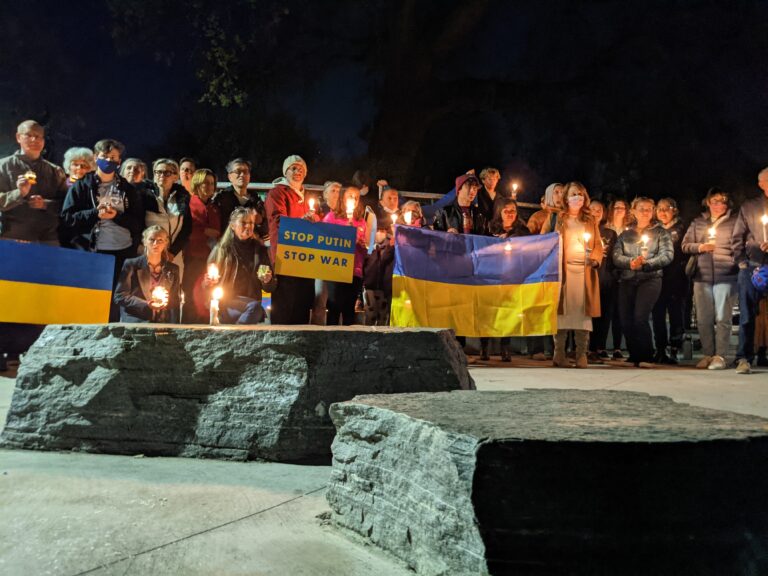
For now, Alderson and Mokhava are staying in Davis. They have joined a group that meets every Wednesday in Davis’s Central Park for a vigil where they light candles, share stories and pray for the people of Ukraine. 

The group, which plans to raise funds and help find housing in Davis for Ukrainian refugees, is led by Irina Okhremtchouk, a resident of Davis and a professor at San Francisco State University. Many who are volunteering their time for the efforts are Slavic, and some also have family who are either still in Ukraine or who have fled to nearby countries. They shared their worry and sadness at one of the Wednesday night vigils. 

Dmitri Iacovlev, a first-year undeclared major and member of the Student Slavic Association at UC Davis, was born in Moldova and has a brother who lived in Ukraine for almost 20 years before recently leaving during an invasion. Iacovlev expressed his concern for his brother and also his anger at the lack of conversation and action by people in the U.S. — especially his feeling of isolation when trying to discuss the events with friends in Davis who aren’t part of the international community. 

Alderson said that it’s difficult for him when people tell him that they’re happy he’s back in the U.S. because it reminds him of his friends in Ukraine and the danger they’re facing. Mokhava said that she is also struggling thinking about the events she saw before leaving Ukraine and the stories she’s heard from people still there. Iacovlev said that he, and many with connections overseas, are overcome with worry and a longing to be with their family and friends again.

“I have family in Moldova and Ukraine, but physically I’m here,” Iacovlev said. “It’s a sort of isolation because in my mind I’m with them. And when people are not thinking or talking about this [war], it feels very much like the barrier between people grows.”

Alderson and Okhremtchouk said that one of the most impactful ways to show support is by “showing up.” Whether this is by donating money, volunteering at fundraisers, having conversations about the conflict, providing housing for refugees or going to these weekly vigils, they said that showing up for those affected means a lot for the Slavic community in Davis and abroad. 

“At the end of the day, we’re glad that people know where Ukraine is on the map,” Alderson said, “but we want them to continue to care.”


Written by: Maya Shydlowski — features@theaggie.org
 

Davis Cherry Blossom Festival seeks to honor Japanese hanami

Student organizers share what the festival means to them


By SUN YIE — arts@theaggie.org 


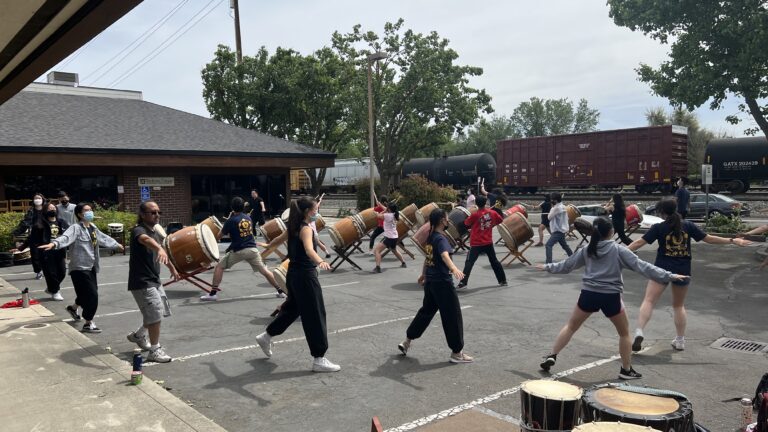
On April 9-10, the Davis Cherry Blossom Festival was held at Sudwerk Brewing Co., where community members came together for performances and traditional Japanese activities.

Cherry blossoms, also known as “sakura” in Japan, are a symbol of spring, a time of renewal and the ephemerality of life. Though their blooms are beautiful, they are also short-lived, and within this fleeting season, Japanese people celebrate the tradition of “hanami,” or flower-watching. During hanami, people will often commemorate the beauty of the blossoms by throwing parties, where they gather together to eat food and participate in traditional performative activities.

The Davis Cherry Blossom festival was developed as a way to honor this Japanese custom. The event gained momentum through the collaborative effort between Japanese and other Asian American student organizations at UC Davis and members of the Davis community, but it was first produced and founded by the UC Davis taiko group, Bakuhatsu Taiko Dan

Taiko” is a type of Japanese drumming that can be traced back to the fifth century and has been incorporated as a performance in a variety of contexts, ranging from military endeavors to religious ceremonies to modern socio-political movements. Bakuhatsu Taiko Dan is a fitting group to lead the revelries of the Davis Cherry Blossom Festival, as they seek to share their love for the Japanese traditional performative art through their explosive and expressive performances within the campus and the community. Additionally, they seek to revive taiko by blending modernity with its traditional and cultural roots. 

Ashley Shen, a fourth-year microbiology major and festival director, shared her passion for Bakuhatsu Taiko Dan and its involvement in this event, explaining that the opportunity to lead this project has enabled her to explore a community outside of school. 

“Taiko, especially, has a history of providing voices to marginalized communities, so it means a lot for people to come out and support us in our artistic expression,” Shen said. 

Bakuhatsu Taiko Dan is one of many organizations at UC Davis that participate in the Davis Cherry Blossom festival. SoNE1, N​​ā Keiki O Hawai’i and the Video Game Orchestra (VGO) are all UC Davis-affiliated groups listed on the event lineup that can be found on the Davis Cherry Blossom Festival’s Facebook page

Kyle Chuang, a fourth-year environmental science major and the president of VGO, elaborated on his collaboration with Bakuhatsu Taiko Dan. 

“Many video game composers draw inspiration from traditional forms of music,” Chuang said. “Although VGO seems like it won’t work well with taiko, they actually blend seamlessly together.” 

Additionally, the festival included artists all throughout California, such as Hear in Color and Yuppie Liberation Front. It also offered a number of activities that can be traced back to Japanese culture, such as mochi pounding, Japanese lantern painting and writing in Japanese characters. The diverse array of artists and activities reflects the diversity in Davis, as the community coalesced to celebrate a festival that pays homage to the Japanese custom of hanami. 


Written by: Sun Yie — arts@theaggie.org


What Ramadan means to me  

A month where one of our basic needs becomes an avenue for deep gratitude 


By NADIA ANEES — nsanees@ucdavis.edu 


As a kid, I used to feel a weight on my chest every time Ramadan rolled around. But with age, I slowly gained more appreciation for the month. I started to warm up to the idea of the holy month approaching, the month when Muslims across the globe come together to fast from food or drink from sunrise to sunset for 30 days. 

With age, I learned to recognize that fasting in this month is about so much more than putting your body through physical hunger. In this month, Muslims who are able to fast abstain not just from food, but also from habits of overconsumption and overstimulation.

The most basic element of survival is food — the item always on my mind. But for 30 days, the object that is a subconscious part of my routine is something I go about most of my day without. From an outside perspective, 30 days of fasting sounds intense and borderline impossible — and admittedly it is a challenge. However, the trust that there will be food on the table when sunset rolls around brings people who are fasting great ease. 

Every family’s Iftar table looks different, but often mine would be adorned with my mom’s crispy samosas, pockets of spiced ground meat coated in layers of a thin wrapper and fried to perfection, fruit chaat, a bowl of fruits mixed with citrus and spices that burst on your tongue and kebabs, grilled patties of tender meat that melt in your mouth. 

There is a different kind of joy that happens when we sit with the ones we love and bite into the hot food that Mom (or the designated cook of the night) spends time laboring away at, all after a long day of fasting. Ironically, in just 10 minutes we can reach satisfaction and fullness after hours of fasting — showing just how fleeting some of our desires can be. 

This month helps us abstain from over-consumption and over-stimulation, something hard to practice in a fast-moving capitalist society that constantly has us looking to have more, more, more. For a month out of the year, Ramadan helps lots of Muslims recenter, focus on their core values and practice deep gratitude for the small and big things in life. 


Written by: Nadia Anees — nsanees@ucdavis.edu


Disclaimer: The views and opinions expressed by individual columnists belong to the columnists alone and do not necessarily indicate the views and opinions held by The California Aggie.


Stop being so nice on peer review

Sugar-coating your feedback does more harm than good


By OWEN RUDERMAN — opruderman@ucdavis.edu 

UC Davis offers a variety of majors and classes. In some classes, students submit their work directly to the professor and receive their grade. But other times, students’ work gets vetted by their peers before the final submission. A student might, for example, give a first draft of an essay to their classmates for feedback. This feedback can be extremely helpful for honing in on a better thesis, catching grammar and spelling mistakes or getting advice on structure and style. Unfortunately though, peer feedback isn’t always utilized to its full potential.

I’ve only been at UC Davis for a few quarters, but I’ve already noticed that peer review is sometimes not taken as seriously as it should be. Yes, it’s nice to be complimented on my work, but that’s not the point of these exercises. Peer review is a space to be honest and let your classmate know what parts of their work can be improved.

Being too nice on a peer review can negatively affect your classmate’s grade. If the only feedback you leave is something like, “I love how you make this point!” or, “Super interesting!”, then your classmate has no idea how to improve the quality of their paper. Peer review is an opportunity to get fresh eyes on a piece of work. Being too nice defeats the purpose.

I’m not saying to be mean, though. There is a difference between constructive feedback and negative criticism. Don’t just say, for example, “Your paper is weak and needs some serious work,” even if that’s what you’re thinking. Instead, provide specific examples of the things they can work on to address the issues and make their work better. You might say, “I like your topic sentence, but this part of the paragraph is slightly confusing. Consider rewording this sentence and expanding a little on your definitions.” Concrete examples of what needs improvement are always helpful.

One reason I think students might not give honest feedback is because they’re afraid that their classmates will start to dislike them. To avoid this, they give feedback that is mostly praise. Don’t you think, though, that if your peers’ paper goes through peer review and nobody points out any issues, that the student will be more frustrated when they get back a poor grade? It’s important to give your fellow classmates the helpful, constructive feedback they deserve.

In my experience, the most engaging and effective feedback I’ve received came from peers who weren’t afraid to ask questions and tell the truth. If something confused them, they would tell me. If a sentence sounded awkward, they would suggest a revision. If they felt like a body paragraph should be organized differently, they would tell me why.

While genuine peer feedback can be extremely helpful, it’s important to remember that it’s just your classmate’s opinion. You are not required to integrate their feedback, and you should take their suggestions with a grain of salt. Don’t sacrifice your own writing style or a point you feel strongly about just because one of your peers suggested you change it.

In the end, though, I think we would all rather have someone make too many comments than not enough. And no matter the amount of comments, if all they are is praise, the value of a peer review is lost. So next time you’re reviewing the work of your classmates, remember to be honest and constructive instead of showering them with praise. No one will be upset that you secured them a better grade.

Written by: Owen Ruderman — opruderman@ucdavis.edu 

Disclaimer: The views and opinions expressed by individual columnists belong to the columnists alone and do not necessarily indicate the views and opinions held by The California Aggie.


Restorative justice, diversion programs provide alternatives to incarceration in Yolo County

The District Attorney’s office and the Health and Human Services Agency are seeking state grant funding for mental health and substance abuse treatment 

By LEVI GOLDSTEIN city@theaggie.org

This month, the Yolo County District Attorney’s office (DA) and the Health and Human Services Agency (HHSA) are seeking state grant funding in accordance with Proposition 47 to allocate toward local crime prevention as well as mental health and substance abuse treatment programs, according to a Yolo County press release

Prop 47, a state bill that passed in November 2014, reduced the severity of prison sentences for non-violent offenses such as theft, fraud and drug possession from felonies to misdemeanors. State funds that were previously spent on incarcerations costs have been directed to community-based programs to reduce the risk for criminal offenses and provide alternatives for imprisonment that focus on support and recovery. 

Nicole Kirkaldy, the program coordinator for the DA’s office Restorative Justice Partnership (RJP), is responsible for organizing and directing local Yolo County programs. The county is seeking funding for two different projects, according to Kirkaldy. The first, headed by the HHSA, will help individuals involved in the criminal justice system engage in treatment and receive support. The second, headed by the DA’s office, will help divert misdemeanor offenders to alternatives other than incarceration, specifically those for whom it is suspected that a mental health condition will prevent them from standing trial.

“Instead of going through the traditional court process, they are given the option to engage in treatment and get connected to some supports that would allow them ideally to stabilize across four areas: housing, behavioral health, physical health and income,” Kirkaldy said. “That engagement maintained over a period of time would allow their case to be diverted away from traditional prosecution so that engagement would be prioritized over any kind of punitive approach.”

Prop 47 programs collaborate with local organizations, such as CommuniCare Health Centers and Empower Yolo, to ensure that those at risk for offense, such as individuals experiencing homelessness, become more stable and self-sufficient.

“It’s a target population that has a lot of needs and is dealing with various challenges,” Kirkaldy said. “But for those who were able to really engage with their treatment, engage in the process, and follow that through, they were able to make some pretty significant strides as far as their own stability. And in a lot of ways, […] move forward without some of those burdens that the traditional system can place on a person.”

Throughout April, Yolo County hosted four public meetings to get feedback from the community about previous programs and identify existing areas of need, such as Steps to Success that ran from 2018 to 2021. Ultimately, the results from those meetings will inform the grant funding proposals and guide the programs, according to Kirkaldy. 

Kirkaldy said she is faithful that restorative justice and diversion are significantly more effective and beneficial to the community than traditional incarceration. 

“To me, it’s an approach that focuses on making the community whole,” Kirkaldy said. “It’s not focused on punishment, it’s focused on identifying the impacts […] of a crime, and really looking at ways to address it that will return the community, those involved [and] those affected, victims, participants or offenders, to a place of wholeness, to a place of being able to move forward in a positive direction […] When we really commit to it, I think that it leaves everyone involved in a better position.”

Written by: Levi Goldstein — city@theaggie.org


Utah youth transgender athlete ban contributes to debate in athletics

Lia Thomas has faced adversity from competing with cis women, and in the following weeks, Utah overrides a veto a bill to ban trans athletes

By KATHERIN RAYGOZA – sports@theaggie.org 

Lia Thomas is a transgender athlete who is currently on the women’s swimming team for The University of Pennsylvania after competing for the men’s team for three seasons. In her first year competing this past season, she has set numerous records including school and Ivy League conference records. 

“I just want to show trans kids and younger trans athletes that they’re not alone,” she said to Sports Illustrated. “They don’t have to choose between who they are and the sport they love.”

Around the same time as Thomas was ready to compete in the NCAA swimming championships, Utah’s state legislature voted this March to override Governor Spencer Cox’s veto of a bill banning transgender girls from participating in female school sports. Cox, an LGBTQ ally who has been outspoken about his suport for LGBTQ rights in the past, vetoed the bill almost immediately after it passed. But, after a debate and protest, the state legislature voted to override the veto. This has re-entered the news amid the nationwide battle over transgender rights.

This new law, H.B. 11, will begin in full effect on July 1 but legislators said there is a high possibility of it being challenged in court. Legislators are aware of the fact that they will most likely face lawsuits, meaning that they will have to examine individual cases and evaluate each student’s physical characteristics, such as height, weight, testosterone levels and wingspan to determine eligibility.  

The ban — before the veto — received support from the majority of Utah lawmakers but fell short of the two-thirds needed to override it. 

“We are deeply disappointed and saddened at today’s votes by the Utah Legislature to discriminate against transgender youth to exclude them from participating fully on sports teams,” read a statement issued by the American Civil Liberties Union of Utah. “Litigation to stop HB11 from taking effect is now both necessary and inevitable to ensure Constitutional promises of equal protection for all Utahns.”

On Wed. April 6, a walkout was organized by students at West High School in protest of H.B. 11. Before the walkout, students asked for and were granted permission from the school administrators to gather outside the school’s main building.

“Trans kids get kicked out of their homes for being who they are,” non-binary West High School student Mar Arellano said to ABC 4. “They deal with hate crimes at school by teachers, by students.”

Their school’s only gender-neutral bathroom was vandalized and the faculty and students conducted a walkout in support for K-12 transgender students in Utah.

Some individuals, including cisgender NCAA athlete Riley Gaines, a University of Kentucky swimmer who tied fifth place with Thomas in the 200-yard freestyle NCAA championship last month, have expressed support for Thomas’ participation.

“I know I can’t speak for everyone but I’m almost certain that I’m speaking for a large majority of female athletes and this is just not okay. And it’s not fair,” Gaines said to the media. “It doesn’t suppress going through puberty as a male. Especially Lia who swam for three years as a male. It’s completely unfair and it’s a matter of equity really.”

After having taken a year of treatment to lower her testosterone levels to meet the requirements that the NCAA implements, Thomas was eligible to compete and win the women’s 500 meter freestyle final. The NCAA ruled that it wouldn’t be a good idea to include new rules midseason back in February, which is why they allowed Thomas to compete. 

“I don’t know exactly what the future of my swimming will look like after this year, but I would love to continue doing it,” Thomas says. “I want to swim and compete as who I am.”

According to the Movement Advancement Project, so far, 10 states in the U.S. have executed laws banning trans athletes from participating in school. Twenty-one other states have considered passing similar bills. With the recent headlines of Thomas, organizations and supporters on an international level are entering a crucial time in the fight for transgender athletes.

Written by: Katherin Raygoza — sports@theaggie.org  

Resident assistants voice mental health concerns 

According to four RAs, the job offers little work-life balance 


By JENNIFER MA — campus@theaggie.org


Resident Assistants (RAs) are student staff members that live in the dorms; they work in exchange for free housing and meals. Their duties include providing advice and support to those living in the residence halls, organizing weekly programs and more. 

According to Alessandra Beelen, a third-year biochemistry and molecular biology major and an RA, these duties are extremely demanding; the hours are round-the-clock, and there is a lack of work-life balance.

RAs have made significant effort to inform UC Davis Student Housing that they are expected to complete too many weekly tasks, Beelan said.

“We have to have programs every single week,” Beelen said. “And on top of that, we do bulletin boards, we do occupancy checks. We also do facility checks. They’ve been very adamant on keeping the similar work structure despite multiple complaints from all of us […] I think it’s just the lack of trying to improve on things that’s kind of disheartening to hear.” 

A third-year neurobiology, physiology and behavior major who requested to remain anonymous due to concerns about workplace repercussions also mentioned the taxing nature of weekly programs. 

“They made us do programming once a week,” she said. “And last year, they said that was for COVID, so that residents would have the opportunity to be able to interact with other people. But then they just continued that this year.”

Priyal Thakral, a fourth-year international relations and managerial economics double major and an RA for two years, stated that the university could be more receptive to feedback from its RAs to address RA grievances.

“I think one thing UC Davis can do better to support RAs is perhaps implement more of the feedback and suggestions we give, as I believe these suggestions could help improve the mental health of RAs,” Thakral said. 

Beelen echoed this sentiment.

“[UC Davis’ Student Housing department does] very little to ensure that our mental health is doing well,” Beelen said.

In addition to UC Davis Student Housing, Thakral shared that residents could be more supportive of RAs by making sure to follow the rules and respond to the emails they receive.

A third-year clinical nutrition and psychology double major who also requested anonymity agreed with Thakral’s statement that students can make an effort to help RAs.

“Some of us struggle with getting responses from students on their emails that they send out,” she said. “It’s kind of like we’re talking to a wall. I feel like I get it though. Everyone’s busy, especially as a first year. The last thing I was doing was going to my RA’s events and stuff, so I don’t really take that personally. I think it’s more on the university to do stuff [regarding mental health].”

According to Assistant Director of UC Davis Student Housing Lisa Papagni, UC Davis Student Housing puts in a significant amount of work to ensure that RAs have appropriate work-life balance.

“We restructured the positions such that they work in shifts, averaging 14 to 15 hours per week of shifted time with four to five hours of unscheduled time for things that come up and are unplanned,” Papagni said via email. “We schedule their work around their class schedules, and we have accommodated both academic and outside commitments.” 

Papagni further elaborated on the steps UC Davis Student Housing has taken to address mental health concerns.

  “All of our student staff members have regular meetings with professional staff members who support them with both academic and mental health resources as needed,” she said. “In partnership with the Student Health and Counseling Service department, we are in the process of hiring a Clinical Psychologist that will directly serve Student Housing and Dining students as well as the Community Advisors.”

According to Papagni, since restructuring, they have not had complaints regarding long shifts or mental health concerns. 


Written by: Jennifer Ma — campus@theaggie.org   


UC Davis wins primate research lawsuit filed by PETA

The Superior Court of California for Yolo County ruled in favor of UC Davis in January


By ISABELLA KRZESNIAK campus@theaggie.org


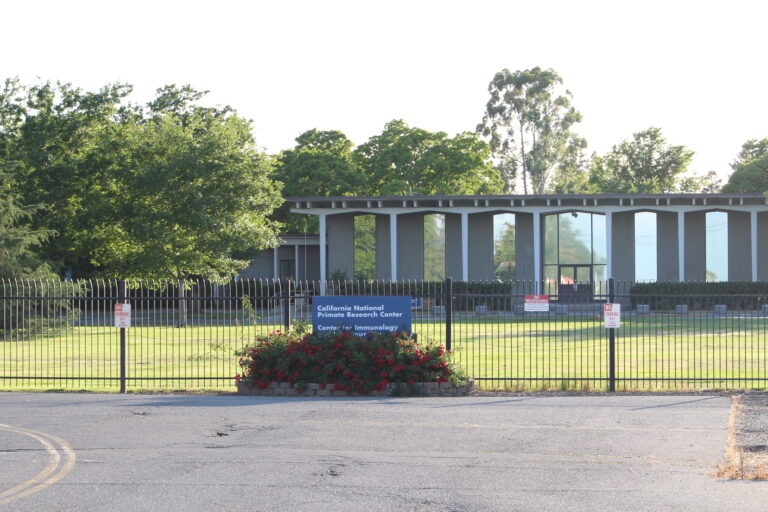
In January, the Superior Court of California for Yolo County ruled in favor of UC Davis in a lawsuit filed by People for the Ethical Treatment of Animals (PETA), according to a UC Davis press release issued on April 11. PETA requested the release of video documentation of primate research at the California National Primate Research Center (CNPRC) pursuant to the California Public Records Act (CPRA) in January 2019 and said that the requested footage should be available to the public. 

PETA argued that the university’s refusal to release the footage is not protected by the CPRA.

“The university withheld all but four of those videographic records, asserting what we feel is a nonexistent researcher’s privilege that is referenced nowhere in the public records law,” said Caitlin Hawks, an attorney for PETA. “We don’t think that the exemptions that it raised were applicable in this circumstance.”

Some states have exemptions in public records legislation in order to protect researchers, according to Karen Bales, a UC Davis primate researcher. Given that California law lacks these, the issue surrounding researcher’s privilege needed to be adjudicated, according to Bales.

“The court very clearly ruled in our favor,” Bales said.

The press release follows a lawsuit filed by the Physicians Committee for Responsible Medicine in February 2022, which requests that the university publicize primate research documentation that the CNPRC conducted with Elon Musk’s company, Neuralink. 

“We’ve seen a pattern of inadequate veterinary care for their monkeys exposed by the Physicians Committee before Neuralink was involved and after,” said Amy Meyer, the manager of primate experimentation campaigns at PETA. “There’s certainly some overlap there in terms of how UC Davis is clearly afraid of the public seeing what’s happening inside their labs.”

PETA originally filed a similar lawsuit pursuant to CPRA in November 2017 after reviewing published papers detailing primate experimentation at the CNPRC. In response, the university released several video records in May 2018. According to the lawsuit, PETA found it “highly unlikely” that UC Davis provided the organization with all the records they sought. As a result, PETA submitted another CPRA request in 2018.

“Any information that we obtain through the public records act is a tool by which we can make the public aware that UC Davis has consumed hundreds of millions of dollars and produced almost nothing to benefit taxpayers,” Hawks said.

The CNPRC failed to comply with the Animal Welfare Act on at least 24 occasions, the lawsuit allleges.

According to Meyer, 95% of novel drugs deemed successful in preclinical experiments using animals fail in human studies, citing the National Institutes of Health (NIH).

“This claim is deliberately ignoring the large majority of human treatments that originated in animal research,” Bales said. “Pretty much every available human treatment, as well as every veterinary treatment, originated in animal research.”

PETA has proposed alternatives to animal experimentation in its Research Modernization Deal. Among these are sophisticated computer simulations and microchips which contain human tissue. 

“[It’s] being shown that [these alternatives] are more accurate than crude and lethal animal experiments,” Meyer said. “It’s just a matter of time before we start seeing these replacements.”

The CNPRC is one of the seven national primate research centers funded by the NIH that PETA wants to shut down.

According to Bales, however, primate research can be greatly impactful. 

“The motivation behind keeping […] primate research centers open is that they are all conducting potentially life-saving research,” Bales said.

To Meyer, the experiments are abuses that would bring animal cruelty charges if they took place outside the laboratory.

“There’s no such thing as an illegal experiment on animals in the United States, and it doesn’t matter how ridiculous it is or how cruel it is,” Meyer said.


Written by: Isabella Krzesniak — campus@theaggie.org


Reflecting on the COVID-19 pandemic as college students

Loss and gratitude can come in many different forms


For freshmen, sophomores and juniors, this is their first in-person spring quarter ever in Davis, and for most seniors, this is their second and final one. It’s a joyous time; not only is spring quarter known to be the best in Davis, but it feels celebratory to return to the activities that students haven’t been able to engage with for two years. There is a glorious sense of relief as the world starts to function a little bit closer to how it did before.

Yet this return back to “normal” life can feel painful too, especially when it contrasts with what we lost in the pandemic. Young people have faced a unique set of challenges these last few years: Many have juggled financial burdens from pandemic shutdowns, cared and provided for sick family members and learned how to survive a pandemic while being full-time students and handling issues that come with being young adults. 

Many students — seniors especially — are reflecting on their time spent in Davis and mourning the little things lost in the past two years. Meeting up with friends for pho at the MU, bumping into an old acquaintance outside of Wellman, cramming for midterms with classmates in the Reading Room — these little life events, no matter how insignificant they may have seemed a few years ago, are finally becoming normal again. It’s bittersweet, though, since we couldn’t experience these things fully during our entire four years of college.

People have endured varying levels of loss during this pandemic. The small social interactions that many lost for the past two years, while minute in comparison to the much larger tolls the pandemic has left on human life and health, are still valid to mourn. It’s okay to feel excitement about returning to old habits and experiences while also feeling melancholy that we have to return to them at all. 

That being said, there are things that might not ever change now that we’re emerging from the pandemic — some for the better. This includes flexibility with hybrid courses, more openness to remote work and wearing masks when sick. 

Additionally, a number of students have found new directions in life, as the pandemic led them to reassess their values and prioritize personal well-being. For some, this could look like a new career path or hobby. For others, it could be feeling burnt out from virtual learning and ready to take a break from classes. 

Every year, seniors face some sort of apprehension about the future, but it can be even scarier to enter a world when the future has seemed so uncertain in the last few years. Moving on from a place, while feeling like you weren’t able to fully experience it, can create many conflicting emotions, feelings some of us on the Editorial Board have right now. 

But with five weeks left of spring quarter, it’s time to soak up every bit of Davis you can, whether you’re graduating or returning for school in the fall. Walk through the Arb on a warm evening, lay in the grass at the Wednesday farmers market and enjoy biking at night without a sweatshirt because if there’s anything the pandemic has taught us, it’s that moments like these, shared with those you love, are finite and best celebrated in the present.


Written by: The Editorial Board


UC Davis students discuss ‘dream jobs’ growing up, whether they are pursuing them now

Childhood dreams don’t always come to fruition, but for many of these 12 students, they inspired their future careers

By JALAN TEHRANIFAR — features@theaggie.org
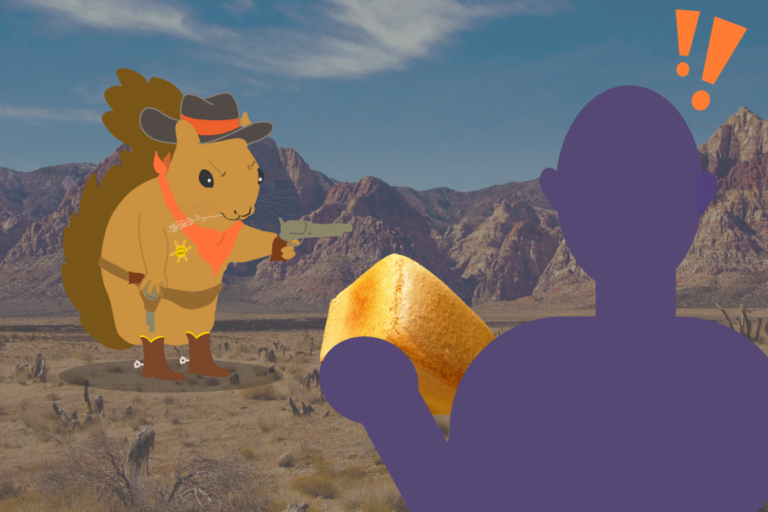
This story will be showcased on The Aggie’s social media. Check out our Instagram account to see the students behind these dreams and current career paths. 

Most children grow up with an idea of a career they want to pursue when they get older — oftentimes something inspiring and far-fetched, like being the first astronaut to land on Mars or being a rock sensation. As wonderful as these ideas may be, life doesn’t always go as planned, and people often change their minds about what they want to do in terms of work.

​​Many students attend college to study in order to qualify for a good job, be successful at their desired work, learn new things and grow as a person. Part of this is deciding whether or not to pursue your childhood dream job or find a new one.

Savina Bouathong, a fourth-year nutrition major, grew up with the hopes of becoming a chef. Although she didn’t pursue cooking as a career, she still enjoys it as a hobby and finds herself working in the food industry.

Bouathong talked about how her experiences growing up inspired her to take on cooking. “My dad was always sick, so I wanted to go into a profession that prevents chronic diseases,” she said. Bouathong would study ingredients and chemicals in food products. “I’m not a chef, but I do cook on my downtime,” she said.

Sarah Hull. Photo by Jalan Tehranifar / The Aggie

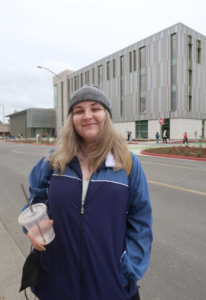
Sarah Hull, a third-year psychology and human development double major, said when she was in fifth grade, she wanted to be a veterinarian.

“Animals, I love ‘em,” Hull said. “But now I am interested in psychology, and I want to be a social worker maybe. I guess I didn’t want to be a vet anymore because you have to go through a lot of schooling. With psych and human development, you still get to help people, but you don’t have to go through the years of science.”

Jessica Bracken.
Photo by Jalan Tehranifar / The Aggie

Jessica Bracken, a third-year communications major, grew up wanting to be an artist but now sees art as a hobby.

“[Communications] seemed interesting,” Bracken said. “I’m trying to go into editing now. I’d rather have [art] as a hobby, it’s more fun that way.”

Selena Yepez Alanis, a first-year design major, wanted to be a teacher as a child but changed her mind when she realized she would have to work with children all day, every day.

“I don’t like kids that much,” she said. “I like artistic things, and I fell in love with art.”

Brian Kumar.
Photo by Jalan Tehranifar / The Aggie

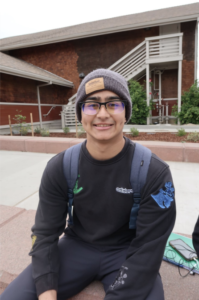
Brian Kumar, a fourth-year human biology major, grew up with the dream of becoming a firefighter but chose a different path, still with the hopes of saving lives.

“Someone said to me that I could be a pediatrician, and that they saw me in that area, and I guess I took that and ran with it,” Kumar said. “I feel like I’m letting my younger self experience the world how he wanted to.” 

Gabrielle Peralta. Photo by Jalan Tehranifar / The Aggie

Gabrielle Peralta, a fifth-year neurobiology, physiology and behavior major, said her childhood dream was to become a professional ballerina, but her dreams were crushed by her flat feet. 

“I couldn’t tiptoe,” Peralta said. “My feet were very fat, and I just couldn’t dance. I don’t have a sense of rhythm. I don’t feel like I let my younger self down though; I think I just grew up.”

Brianna Fu, a fourth-year human development major, wanted to become a teacher as a child and though she’s considering giving up teaching as her dream, she’s still passionate about working with children.

“I might minor in education, so I’m still thinking about it, but I kind of want to go into healthcare for kids,” Fu said.

Rishi Thakkar (left), Alexander Korobkov (middle), Vincente Valdenbenite (right)
Photo by Jalan Tehranifar / The Aggie

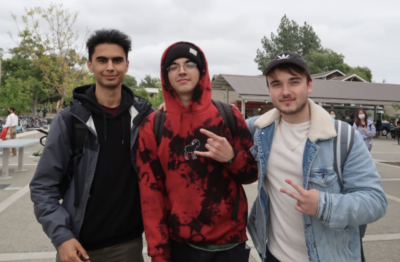
Rishi Thakkar, a third-year computer science major, gave up on his dream of becoming an astronaut because of his height but fell in love with computer science and the world of technology.

“I’m studying computer science — but that’s because I was too tall to become an astronaut,” Thakkar said. 

Alexander Korobkov, a second-year sustainable landscape design major, dreamed of becoming a rockstar, and he has yet to let that dream go. 

“I’d say I’m on the way there,” he said. “I’m a musician studying architecture now so I’m an artist, I guess. I’m studying architecture so I can have a job and then I can go play [music].” 

Vincente Valdenbenito, a third-year sustainable environmental design major, wanted to be a NASCAR driver and design his own cars. However, he is currently studying a different type of design.

“As a kid, I wanted to be a racecar driver,” he said. “I wanted to pimp out cars and stuff. Now, I’m not really doing that. I don’t know what I’m doing honestly. I’m trying to figure out what I want to do.” 

Briana Fedwik (left) and Alex Ikuma (right).
Photo by Jalan Tehranifar / The Aggie

Briana Fedwik, a first-year computer science major, dreamed of going to space as a child but grew up and found a different dream.

“I wanted to be an astronaut like everyone else,” she said. “I love space, and I really wanted to go to space, but it was just a dream job. I’m studying computer science, because now I want to make video games instead of going to space. I’m fulfilling my dreams in a different way because now I can make games about space. “

Alexandria Sato Ikuma, a first-year physics major, didn’t have an idea of what career she wanted to pursue as a child.

“I didn’t know then, and I still don’t know,” Ikuma said.

Written by: Jalan Tehranifar — features@theaggie.org
 

Stop motion animation: How the original CGI came in, out of fashion

And what makes this technique so sentimentally special 


By CORALIE LOON — arts@theaggie.org


During the first screening of “The Lost World” in 1925, audience members watched a shockingly realistic T-rex tower above a group of human explorers, seemingly unphased by the humans’ gunshots. The whole thing was enough for a journalist of the New York Times to suggest that the “monsters of the ancient world or of the new world which he has discovered in the ether, were extraordinarily lifelike.” When the person screening the film refused to explain how the images were created, some speculated about the filmmaker’s spiritualist abilities.

But it wasn’t an elaborate magic trick that materialized the dinosaurs: In fact, the film in question was a black and white silent film, and the dinosaurs were created by stop-motion animation. 

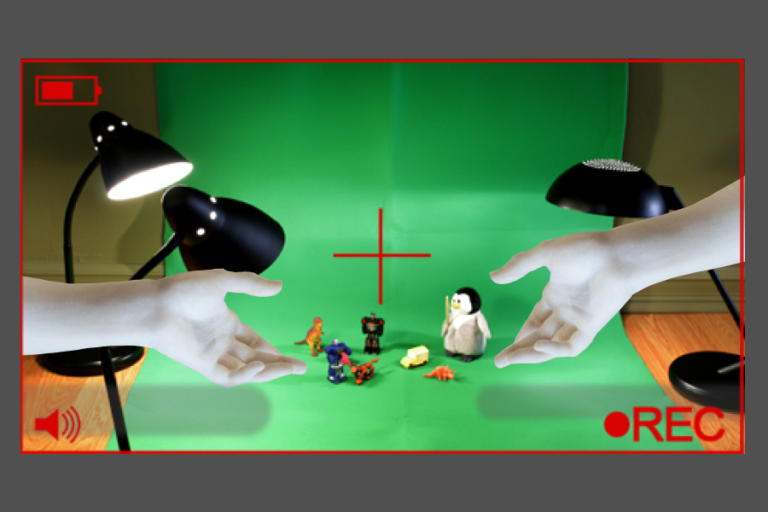
Stop motion, a technique that is now seen as more quaint or nostalgic than visually impressive, is a relatively simple process: take a series of photographs, each one slightly different from the last, and play them together at a rate of 24 frames per second. Although typically performed with clay figures or puppets, stop motion can involve any object from the real world, including kitchen utensils, paper drawings or even people.

Despite taking hours of manual labor to produce a few seconds of animation, the technique has lost much of its early prestige and respect, seeming to slip farther and farther from the public spotlight.

Today’s discourses about animation tend to pit computer-generated imagery (CGI) animation against hand-drawn, but these conversations often forget about stop motion, or place it on the backburner. Compared to both CGI and hand-drawn animated films, stop motion films haven’t done nearly as well in the box office. According to databases of box office earnings, every one of the top 50 CGI animated films made at least twice as much as the highest-earning stop-motion film, “Chicken Run” (2000), which made almost $225 million worldwide.

Even traditional hand-drawn animation outpaces stop motion in the box office. The original “The Lion King” (1994) made $968 million worldwide, with the next three most successful films all grossing more than $500 million. Despite being a pop cultural staple, “The Nightmare Before Christmas” (1993) only grossed $91 million worldwide in the box office, comparable to the $90 million in earnings of the promiscuous “Fritz the Cat” (1972) that no one seems to remember watching.

Considering the meager-to-moderate success stop motion films have had compared to their counterparts, it’s easy to forget just how important stop motion has been in the history of animation. After all, stop motion in many ways served as the original CGI. Though special effects artists may laugh about it now, “The Lost World” (1925) was an impressive display at the time of how stop motion could be used to bring mythical creatures to life and create elaborate (but affordable) sets.

Stop motion animation techniques were used in the original Star Wars trilogy. Those seemingly miles-tall AT-ATs at the infamous Battle of Hoth? Those were really constructed for the film, although they stood maybe a foot tall.

In movies and especially TV shows, stop motion animation was used because of its relative cost-effectiveness. Before CGI offered quicker and cheaper ways to create fictional worlds, stop motion sets were a great alternative to building life-sized sets that could cost much more. According to Stop Motion Magazine, stop motion as the “most utilized visual effects technique” peaked in the 1970s and 1980s, but after this point was when things went downhill.

Pixar’s “Toy Story” (1995) was the first solely CGI-animated feature film, made possible by huge technological improvements that, as the years went on, only continued to improve. CGI made much possible that hadn’t been possible before. However, it also “improved” (or else mimicked) what stop motion animation had been doing the whole time.

While it may seem like stop motion animation has been discarded in favor of more efficient animation techniques (because, let’s face it, it has), it still holds a place in popular culture. The production studio Laika, for example, has been consistently releasing stop motion films, including “Missing Link” (2019) and “Kubo and the Two Strings” (2016). Considering the “impracticalities” of stop motion, it should already be dead and gone: Why waste time creating expensive and elaborate sets, all the more elaborate as the world’s expectations and standards for visual effects increase every year?

The very fact that stop motion is still bringing in enough money for prominent production studios to release stop-motion films is evidence of its pervasiveness in culture. There is something unique about the half-real worlds of “Coraline” and “Fantastic Mr. Fox” that is simply not captured in CGI films. 

While people’s love of stop-motion perhaps used to rely more on the thrill of realism, it seems that the appeal of this animation technique is its more natural or “hand-made” appearance. An opinion article by Kim Taylor-Foster theorizes that a societal-wide love for stop motion is due in part to “the massive market for nostalgia” that “goes hand in hand with a move towards a rediscovery and reappraisal of the handmade.”

In a way, this could be a promising outlook. If stop motion used to be valued as the best that could be done with what was available, its success alongside modern CGI technology could show a love for the artform that is deeper and more honest, that appreciates not its ability to mimic something, but to take up space as a unique art form and style. It is the style and sensation of stop motion, its existence somewhere between the real world and the fictional, that no technological improvement has been able to replicate. 

So, what is the future of stop motion animation? Whatever it is, it will surely not let up without a fight.


Written by: Coralie Loon — arts@theaggie.org


A UC Davis squirrel threatened me

Hi, stop feeding them Oreos and half-smoked joints


BY ANNABEL MARSHALL — almarshall@ucdavis.edu 


Picture this. You’re alone at a table in the Memorial Union. It’s one of those black tables, the kind typically occupied by a pre-health fraternity or some club that wants you to try underwater calisthenics or something equally unhinged. You open your laptop, a symbolic nod to the fact that you have four missing assignments. You reach into the smallest pocket of your backpack, digging between Rite Aid receipts and empty granola bar wrappers, searching for the birdnest tangle of your headphones. It rustles like the crushing of dry leaves and empty granola wrappers. This is your mistake.

Look up. You’re face to face with a squirrel. But for the look in its eyes, you might as well be face to face with a WWE wrestler, muscles plump with testosterone and vanquished childhood dreams. The squirrel, who considers your specific life a hilarious accident of God, twitches its tail, which is simultaneously wormy like a rat and linty like a dryer filter. It pities you.

Freshmen have been feeding it pizza crusts. It resembles a water balloon that’s been filled with chili. Its walk is more of a lazy lumbering crawl. Unlike you, it has no biology midterms. Its girlfriend has not been harassing it about its lack of a bedframe. This squirrel’s sole purpose is coercing innocent students into handing over food. And their feeling of safety on campus. 

You have no offerings. You don’t even have food for yourself, despite the fact that your last meal was 4 a.m. coffee. The squirrel does not care. It creeps closer, closer until it is four inches from your knee. It is daring you to move. 

People are walking by. You have a choice. Keep calm, hope that this bush-tailed vermin doesn’t hop in your lap and give you the gift of rodent rabies. Or you can run, make a scene and inevitably face plant in front of your English TA.

This is your future. If it hasn’t happened yet, it will. Your torment awaits patiently.

Side note: Have y’all been seeing those two ducks? I want to pick them up and take them home. I want them to sleep in my bathtub and protect me from evil spirits and vengeful TAs. One time I was walking through the Quad and a duck offered to help me with my anthropology homework and mend my relationship with my mother. I never want to hear the words “relationship goals” unless they are being applied to those ducks.

Anyway, back to the squirrel. This quivering hell beast will maintain eye contact for a solid 40 seconds until someone walks by and says, “Oh, how cute!” and you have to pretend you’re not in the fight of your life. Eventually, you’ll realize there’s only one thing you can do. Leave. Abandon your things, run. Your laptop belongs to him now. There’s nothing you can do. Maybe he’ll learn R Studio. 


Written by: Annabel Marshall — almarshall@ucdavis.edu 


Disclaimer: (This article is humor and/or satire, and its content is purely fictional. The story and the names of “sources” are fictionalized.)


Early snowmelt in the Sierra Nevada causes snowpack to fall to seven-year low

Experts say that the effects of climate change are impacting mountain lake ecosystems


By RACHEL SHEY city@theaggie.org


The Sierra Nevada snowpack is one important source of water in California. This year, it’s melting much earlier than usual. Only a small amount of snow fell this past winter, and now this meager snowfall is melting much earlier than it typically would, according to Central Sierra Snow Laboratory Lead Scientist Andrew Schwartz. 

“We are currently sitting at about 27% of what we would normally have at this point in time,” Schwartz said of the snow levels around the laboratory in Soda Springs. “We have about one to two feet at absolute most, and it is melting incredibly fast.”

Scientists determine the level of the snowpack by heading out in teams to determine the snow level. By comparing the snow depth and the snow water equivalent, scientists can predict whether it will be a drought summer. 

“Throughout California, there’s about 265 snow courses, where people go out with big hollow tubes and push them into the snowpack,” Schwartz said. “Once a month, from February through May, teams go out and measure those courses and compare them to previous years. A lot of those records go back to the 1920s and 1930s, and some even go back to the 1910s.”

Another technology that’s been used to find out snow levels in a more comprehensive manner is an airborne snow observatory, which makes use of Light Detection and Ranging (LIDAR). Using these observatories, scientists fly over an area both when the ground is bare and after a snowfall and compare the two measurements to determine snowpack levels. 

“Recently, there’s been a new project called the Airborne Snow Observatory, that flies over very large areas, what we call catchments, where all the water flows into one river or stream,” Schwartz said. “They go out with this airplane with LIDAR and fly these catchments to get a better, more comprehensive view of snowpack that they can compare to previous years.”

UC Davis Postdoctoral Fellow Adrianne Smits explained that the early snowmelt is causing changes in Sierran mountain lakes and is altering the water temperature. Because the mountain lakes are poorly understood, it’s unclear exactly how they will be affected. However, mountain lakes around the world are changing in similar ways, thanks to climate change. 

When you get a really low snowpack, you also end up getting an early melt, and you tend to get really warm water temperatures in the summer,” Smits said. “You also tend to get higher algal productivity in lakes. We tend to think of all these beautiful, clear, pristine mountain lakes, but what we’re seeing is that, in these dry years with less snow, water clarity is going down. We’re seeing more algal growth.”

Not all of these changes are necessarily bad. The greater algal growth can lead to the lakes becoming more productive. Historically, the lakes have been very cold, which has rendered them incapable of supporting a large ecosystem. 

“It’s not necessarily going to be the same species that are there now that will be contributing to higher productivity,” Smits said. “We’re definitely also seeing a bit of a change in terms of where productivity is happening in the lakes. We’re seeing more attached algal growth, these thick, filamentous algal blooms, and that’s not really the same historical algal community that was there.”

The historical algal community which flourished in these mountain lakes was typically composed of a clear slime made up of mostly diatoms that coated the rocks and substrate. Despite being lesser in quantity than the new algal blooms, the slime was more nutritious, according to Smits. 

“The filamentous algae, it’s not actually just happening in Sierra Nevada lakes,” Smits said. “It’s something we’ve noticed in lakes globally that historically had extremely clear water and pristine. They’re starting to show more of these big algal blooms along the shoreline, so it’s actually kind of a global phenomenon. One issue associated with them is that they can be less nutritious for other organisms in the lake.”

These mountain lakes used to lack fish. They were typically rich in amphibians until people introduced trout, which formed stable communities and outcompeted some amphibian species, which are now endangered. 

“These lakes used to support a lot of amphibians, like the now-endangered mountain yellow legged frog, which used to be the most abundant animal in these lakes,” Smits said. “Trout were introduced to the majority of Sierran lakes, and that caused a pretty serious decline in amphibians. A lot of these lakes also support garter snakes, insects and invertebrates that are actually really important food for things like birds and bats.”


Written by: Rachel Shey — city@theaggie.org


Committees provide quarterly reports, senators passed multiple bills, resolutions

Unitrans, Whole Earth Committee and Fair Trade Committees provided quarterly reports, and the Senate table passed SB #68, #69, #71 and #72, along with SR #27 and #28


By ISABELLA KRZESNIAK campus@theaggie.org


Internal Vice President Juliana Martinez Hernandez called the meeting to order on Thursday, April 14 at 6:10 p.m. and recited the UC Davis Land Acknowledgement.

Andrew Lee, who previously worked in the External Affairs Commission, was nominated for the controller position. After deliberation among senators, his nomination was rejected.

Lee was contacted for comment and provided a brief statement via email for The California Aggie regarding the confirmation process.

“I regret the decision of the Senate not to confirm my nomination for the position of Controller,” part of Lee’s statement reads.

J.T. Eden, an Internal Affairs commissioner, was confirmed as the commission chair, replacing Kabir Sahni.

Michael Logoteta, who had previously been involved in ASUCD’s Executive Office, was confirmed as the Donation Drive chairperson.

Jeff Flynn, the Unitrans general manager, provided the transit system’s quarterly report. Unitrans aimed to expand service during winter and spring quarters to pre pandemic levels, but this was hindered by a surge in the omicron COVID-19 variant, according to Flynn. He discussed the implementation of the V Express and V Limited services to West Village during winter quarter. Flynn anticipates the system’s driver shortage will continue through fall 2022. In response, Unitrans is ramping up recruitment efforts, he said. 

Flynn spoke about the university hiring process through UC Path and said that Unitrans employees have experienced confusion about the procedure.

“People get impatient during the hiring process and just get lost,” Flynn said. “It’s just really complicated, and I don’t quite know why.”

Three of six electric buses as part of the Capital Program have arrived. Additionally, Unitrans is soliciting feedback for service change proposals for the 2022-2023 school year, which include modifications to the V, P and Q lines. All proposals are available online.

Fair Trade Committee (FTC) Organizer Itzel Gallardo provided the organization’s quarterly report. The committee is seeking to hire new members and a chair for next year, as many members are graduating this spring. The committee will finish a guide for the role of chair in order to ensure a smooth transition. In addition, FTC will finalize its 2022-2023 budget.

Unit Directors Cozette Ellis and Nancy Marshall gave a quarterly report for the Whole Earth Committee. Ellis and Marshall expressed the need to work with ASUCD in order to expand recruiting efforts for the event. They discussed how cultural appropriation was an issue at the event in the past. In response, the committee has sent a statement to potential attendees to set a standard of mutual respect. They also expressed frustration with the Unit Relocation and Space Allocation Committee (URSAC), which, according to Ellis, has not been cooperative or attentive to the Whole Earth Committee’s needs. 

“From our perspective as unit directors, it’s one of the most important committees for us,” Ellis said. “And now, we’re facing making the festival happen when it hasn’t happened at full scale for two years, and then immediately after, moving our unit into a completely new space.”

Officers provided their weekly reports and Election Committee members were confirmed remotely. 

SB #71, which allocates money to the Donation Drive Committee, was proposed as new legislation and was passed.

Senator Harris Razaqi drafted the emergency bill SB #72 in response to concerns expressed by the unit directors of the Whole Earth Committee. The bill modifies the structure of URSAC. The bill was passed unanimously.

SB #68, authored by a member of the public, Calvin Wong, was passed unanimously. The bill places the Elimination of the Intercollegiate Athletics Portion of the Campus Expansion Initiative Fee (CEI) Referendum on the Spring 2022 ballot which, if passed, would eliminate the portion of student fees that funds athletic scholarships.

SB #69, also authored by Wong, was passed unanimously. Similarly, this bill places the Elimination of the Intercollegiate Athletics Portion of the Student Activities and Services Initiative (SASI), a ballot measure that would eliminate student fees that fund team travel and sports equipment, among other things.

SR #27 recognizes challenges some students face regarding their mental health and pushes faculty to take these into consideration. The resolution was passed unanimously.

SR #28 urges the City of Davis to increase housing availability and affordability. This resolution was passed unanimously.

Past meeting minutes were approved. 

The meeting was adjourned at 10:29 p.m.


Written by: Isabella Krzesniak — campus@theaggie.org


2022 NFL Draft guide

Major storylines, top players and more as we approach one of the most unpredictable drafts in recent memory


By OMAR NAVARRO — sports@theaggie.org


With the NFL Draft inching closer, the only thing we know at the moment is where the teams are picking — and even that is subject to change. Despite this year’s class not having that elite quarterback name that could change the trajectory of a franchise, it is a draft that will almost certainly provide teams with incredible players at other positions that can have a major impact from day one. From who’s getting drafted first overall to will there even be a quarterback drafted in the first round, this is the first draft in recent memory that there seems to be no consensus on who’s going where.


Who’s No. 1?

With the Jaguars holding the No. 1 pick again this year, their selection isn’t as set in stone as it was last year. After picking quarterback Trevor Lawrence last year, the Jaguars are looking to add a high-impact player to a team that needs a lot of rebuilding. Although Oregon DE Kayvon Thibodeaux was ranked as the No. 1 prospect throughout the fall, the consensus has changed. As it stands, Michigan DE Aidan Hutchinson has the best odds to be the first overall selection. The 2021 Big Ten Conference Most Valuable Player, Defensive Player of the Year and Defensive Lineman of the Year had a dominating season that saw him finish second in the Heisman Trophy voting. 

With 14 sacks and 16.5 tackles for loss, the standout defensive end gained momentum as the season went on — non more than a dominating performance against Ohio State. Whether it’s Hutchinson or an offensive tackle like North Carolina State’s Ikem Ekwonu or Alabama’s Evan Neal, 2022 will be only the second time since 2015 a quarterback is not selected with the number one overall pick — the last being Browns DE Myles Garrett in 2017. 


Where will the quarterbacks go?

This is the question that a lot of people have speculated about, but none know for sure. Headlined by Liberty QB Malik Willis, Pitt QB Kenny Pickett and Cincinnati’s Desmond Ridder, this year’s quarterback class doesn’t have a guarantee on who will be the first quarterback selected. If you search between different mock drafts, you are likely to find that everyone has their own opinion on who will go in the first round — if they even think anyone will. 

According to Vegas Insider, Willis is favored to be the first quarterback selected. Even if some analysts believe that no quarterback in this year’s draft is a top 10 overall player, need will always trump that — especially at the most valuable position in the sport. Looking at the teams with the first 10 picks, the Carolina Panthers (#6), Atlanta Falcons (#8) and Seattle Seahawks (#9) standout as the teams that might roll the dice and select a quarterback. What these three teams have in common is no quarterback of the future. What they decide to do here can have ripple effects on the entire draft as the Washington Commanders (#11), New Orleans Saints (#16, #19) and others might be in the running for a new man under center if a player they like were to fall. 


Wide receivers at a premium

After the record-setting deals given to WR’s Davante Adams and Tyreek Hill this offseason, the wide receiver market has changed forever. This may have a ripple effect for this year’s draft, as it has now become another position (like a quarterback) where a team must take advantage of their rookie contract. As it stands, the belief is that five wide receivers will be taken in the first round. Ohio State’s Garrett Wilson has a slim odds advantage over USC’s Drake London for being the first WR selected with Jameson Williams, Treylon Burks and Chris Olave behind them. 

After teams like the Green Bay Packers and Kansas City Chiefs traded their star receivers this offseason, they will surely be in the running to select at least one of them on Day One. With multiple first round picks and other draft capital, both teams will also be able to trade up if they feel great about one in general. Even outside of the top five, the position is loaded this year with Jahan Dotson, Christian Watson and Skyy Moore continuing to rise on some boards. The WR position has been one that has gotten more and more talented as the years progressed. With the passing game being such an important part of modern NFL offenses, the position is more important than ever — and the 2022 draft will continue to show it. 


Who’s rising and who’s falling?

Going back to a previous point about quarterbacks based on need, players like Ridder and Ole Miss’ Matt Corral have an opportunity to sneak into the first round if a team really wants them. WR Christian Watson from North Dakota State is another player who has gotten some momentum recently as his size, athleticism and quickness are all traits that teams around the league feel like they could mold. While other players who were projected in the late first round have risen to the middle like WR Jameson Williams, CB Ahmad “Sauce” Gardner and QB Malik Willis, none have risen to the level of Georgia DE Travon Walker. Since March 1, Walker has seen his name in mock drafts rise from 17-20 position to almost a lock to be a top five pick — even No. 1 overall in some. His versatility, great tape and pre-draft testing has a lot of people thinking he will be one of the first names called in 2022. 

In terms of those who might be slipping, none have gone to the degree of Oregon’s DE Kayvon Thibodeaux. As mentioned, he went from likely No. 1 overall pick to maybe getting chosen at the end of the top 10 or even outside of it. Whether it was injuries late in the season or questions about his passion for football, he has fallen a considerable amount for the player he is. On tape, Thibodeaux deserves to be one of the top three players selected in this draft so his fall has been interesting to see. Another player who saw their name in the top five and now is falling is Notre Dame safety Kyle Hamilton. His testing numbers not being good plus his position has many having second thoughts on where he might be selected. It remains to be seen where teams rank him, but having him fall outside the top 10 now seems to be a realistic possibility. 


Most draft capital, least draft capital

This draft is interesting due to the fact that many teams hold multiple first round picks. Both New York teams, the Giants and the Jets, hold two top 10 picks respectively. This allows them to have a lot of flexibility, as they could pick two premier players in the top 10 or trade down and accumulate more draft capital. A rare occurrence, eight different teams hold two first round picks in this year’s draft. Seven teams hold five Top 100 picks, including contenders like the Chiefs and Green Bay Packers.

On the flip side, after a huge offseason highlighted by the acquisition of WR Tyreek Hill, the Miami Dolphins hold only four picks in the entirety of the draft — and they don’t pick until the bottom of the third round. They can always use future draft capital if needed, but they will have to nail these picks. The Raiders have five picks, but do hold some in the middle of the draft while the Super Bowl Champion Rams don’t late third round. However, the Rams do hold eight total picks and have more of a possibility to move around if needed. While these picks may not seem like much, the later rounds of the draft are what elevates contenders and also what can hurt some waiting to get over the hump.


Expect the unexpected

This year more than others in recent memory, there is no such thing as a guarantee. With teams doing their final due diligence, things may change and it feels like the majority of people do not know what to expect. Whether it be by trades, players going earlier or later than expected, it is shaping up to be a surprising draft filled with a lot of storylines. The NFL Draft is where the elite teams reinforce and the bad teams stay bad and with so many impact players available this year, there’s a great chance a lot of the players that hear their name called will have a major impact every Sunday from the beginning. 


Written by: Omar Navarro — sports@theaggie.org