57.9 F
Davis

Davis, California

Monday, December 22, 2025
Home Blog Page 219

Commentary: The ongoing, awry adaptation of ‘Avatar: The Last Airbender’

Netflix neglects to fulfill its promises of improved inclusivity efforts with the live-action cast of “Avatar: The Last Airbender”

By SUN YIE — arts@theaggie.org 


Nickelodeon’s “Avatar: The Last Airbender” (AtLA) is an acclaimed and beloved show that became popular in part due to its incorporation of multiculturalism. The show is centered around a team of “benders” — people who can manipulate the four elements of earth, fire, wind and water — who use their powers to stop the aggressive, imperialistic fire nation from its barbaric conquest of neighboring countries and tribes. 

When Netflix announced in 2018 that it was going to produce a live-action adaptation of this show with the creative oversight of Bryan Konietzko and Martin DiMartino, the original show creators, fans began to look forward to this show, anticipating a much more diverse cast that reflected the show’s multiculturalism in a way that M. Shyamalan’s “The Last Airbender” failed to accomplish.

However, fans were soon met with Konietzko and DiMartino’s announcement in 2020 that they would be departing from Netflix’s creative team. Though the creators didn’t elaborate further upon their reason to separate from the large production company, DiMartino pointed to irreconcilable “creative differences” as their main source of conflict. “Netflix’s live-action has the potential to be good… but… it will not be what Bryan and I had envisioned or intended to make,” DiMartino claimed in a Tumblr post addressed to eager AtLA fans. 

Since this announcement, other news outlets, such as FandomWire, have claimed to have dug deeper into the cited creative differences by speaking exclusively to sources within Netflix and have since revealed a few reasons for the creators’ departures — one of which concerned issues about cast diversity. 

Reportedly, Netflix had wanted to extend their casting process to include white people — an idea that was met with vitriol by Konietzko and DiMartino, who had promised their fans an all-diverse cast to accurately reflect and honor the assortment of Asian cultures that inspired the show’s origins, especially since the last live-action adaptation of the beloved show had whitewashed the characters and erased the cultural influences of the story. 

Despite the public break up between Netflix and the original AtLA show creators a few years ago, the new casting list of characters that the production company released a year ago seemed to respect the original creators’ intent in producing a diverse team composed of ethnic minorities.

When asked about his vision, Albert Kim, AtLA’s showrunner, claimed that his casting decision process was influenced by his desire to portray Asian and Indigenous characters as real people, especially since there was still little media representation of the two minority groups. He claimed to have pushed for “authenticity to the story… and the cultural influences” in the casting process. 

However, it has since come to light that Ian Ousley, the actor who plays Sokka, an Indigenous character hailing from the Southern Water Tribe, has lied about his Cherokee heritage. Though his management listed him as an actor from the Cherokee tribe, fans have discovered that he is not affiliated with any of the governmentally recognized Cherokee tribes. A Google search also identifies Ian Ousley as Caucasian, further dismantling this narrative that both Ousley and his management have pushed forth about his ethnic heritage.

Though both fans and the Cherokee Phoenix have reached out to Netflix and have demanded a deeper background check on Ian Ousley’s heritage, their requests have gone unanswered, leaving AtLA fans questioning the credibility of their promise of inclusivity a year ago, in which they claimed they were “committed in… inspiring change within [their] industries – so more people can feel seen, heard, and supported.” 


Written by: Sun Yie — arts@theaggie.org



Dzokerayi Minya, founder of TESE Foundation, wins 2022 Ruby Award

TESE foundation works to increase access to education

By SHRADDHA JHINGAN city@theaggie.org


Dzokerayi Minya, the founder of TESE Foundation, won the 2022 Ruby Award. The Ruby Award was given by the organization Soroptimist International Davis. 

According to its website, “Soroptimist International is a global volunteer organization working to improve the lives of women and girls.” Soroptimist International was founded by Violet Richardson in 1921 in Oakland, CA. Richardson also came up with the phrase “service club.”

Eda Chen, a board member of Soroptimist International Davis, explained in a video the goals of the organization. Chen also highlighted Soroptimist International’s core values. 

“We are Soroptimist International Davis and our mission is to improve the lives of women and girls through programs leading social and economic empowerment,” Chen said. “Our name Soroptimist means best for women and though we may be known locally for a beer booth at the Davis Farmers Market, our organization makes a big impact internationally.”

Chen highlighted that the organization has clubs in 120 countries across the world, and they have “the core values of gender equality, empowerment, education, diversity and fellowship.”

The Ruby Award acknowledges women who made significant contributions to the lives of girls and women, “through professional or personal efforts.” The nomination for the 2022 Ruby Award was due on Feb. 15 and consisted of a form and a statement of a maximum of 750 words describing the reasons why the nominee should get the award. 

This year’s winner, Dzokerayi Minya, who lives in Davis, is involved in the community in multiple ways. Alongside running an organization called TESE Foundation, participates in the Yolo Committee for Diverse and Inclusive Elections, and is the founder of Zim Cuisine, with her husband. 

According to its description, TESE Foundation is working to help increase access to education to communities that are underrepresented. Though outreach efforts generally occur in Yolo County, the organization has also collaborated with students in the Bay Area, African countries, Sacramento County and Solano County. 

“The TESE Foundation arose from the urgency to provide quality and relevant education to underrepresented communities while providing career opportunities that BIPOC teens were not privy to,” the description reads. “Every year, many students drop out of school because they do not have the mentorship and financial means to continue with their education.”

The description also highlights the effect of the pandemic on students from underrepresented communities, including the fact that students of color and students from lower-income families may be impacted by access to technology, classes and information. Food insecurity also poses a problem, and thus the description includes things such as food insecurity, and contains a list of items that can be donated or will be helpful.

“After a decade of working with underprivileged youth, we realize the path to their success is supporting the whole family so that the youth’s needs are met,” the description reads. “For example, we cannot provide a path to education when there is dire food insecurity. When tackling food insecurity, we must focus on the entire family.”

In an interview, Minya further described the TESE foundation, including the fact that it is volunteer-driven. 

“It’s 100% volunteer driven and the planning team takes hours and hours,” Minya said. “It’s just an amazing amazing thing to see and so my goal for five years from now — I want to see all these students in college. I don’t want them to end in high school because high school is just the beginning. What about college? What about post-grad?”

Minya added that she would like to see the students “enjoying the life and really making an impact,” instead of in places where they had limited access to water. 

Ultimately, the work that Minya and the organization are doing will help increase access to education and other opportunities for underrepresented communities.

Written by: Shraddha Jhingan — city@theaggie.org

UC Davis Health adopts portable MRI system for timely assessment, diagnosis of patients

Swoop Portable MRI system is the first FDA approved portable MRI device that can be driven to the patient bedside for quick MRI scans

By BRANDON NGUYEN — science@theaggie.org


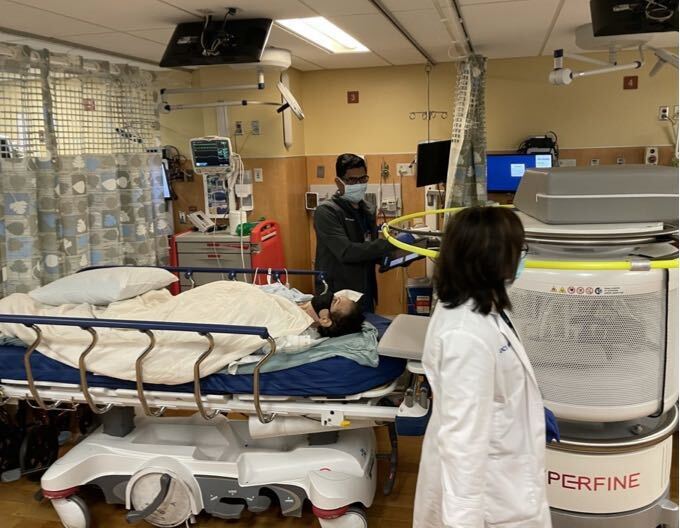
This past month was National Brain Trauma Awareness Month, recognizing the unique life-changing narratives of patients who have undergone brain injuries and the need for support for these individuals. Fortunately, UC Davis Health has adopted a new portable magnetic resonance imaging (MRI) system that can quickly scan a patient for any major health concerns or brain trauma to help health providers make timely critical decisions. 

The Swoop Portable MRI system, created by Hyperfine based in Connecticut, is the first portable MRI device nationally cleared by the Food and Drug Administration, and UC Davis Health is the first to adopt this machine in Northern California. 

Dr. Matthew Bobinski, the chair of Clinical Operations and chief of the Division of Radiology at UC Davis Medical Center, described how Swoop has changed hospital operations, especially for very sick patients.

“Instead of this old paradigm where the patient is brought to the scanner in a hospital setting for our inpatient clinic, bringing them from one floor to another part of the wing of the hospital, we bring this scanner to their room,” Bobinski said. “Often, you would say there’s no need for this kind of reverse in roles, but in this case, the target patient population involves very sick patients in the ICU. These patients are connected to multiple devices and monitors, and as such, their transportation becomes logistically very difficult.”

Transportation of a patient can be not only difficult, but dangerous. According to Bobinski, 40% of patients with brain injuries experience complications during transport to the fixed MRI scanner room. Moving a patient requires four different health providers tending to the patient and the patient’s tubes, devices and monitors while moving between floors in a hospital setting, and in a busy hospital, transportation can put the patient at higher risk for adverse outcomes.

Dr. Jennifer Chang, a neuroradiologist and assistant professor in the department of radiology at UC Davis Medical Center, described what the Swoop Portable MRI system looks like.

“The Swoop is a very compact machine, and it has less magnet strength compared to the fixed MRI which has a strength of 1.5 Teslas or 3 Teslas depending on which room we use,” Chang said. “But Swoop is really incredibly powerful in terms of its usage and just attaches sort at the end of the patient’s bed and comes on like a magneto helmet on the patient’s head.”

Dr. Elizabeth Morris, the chair of radiology at UC Davis Health, further described the ease of use with regards to Swoop in a hospital setting.

“What’s exciting about this product is that you can literally drive it to a patient’s bedside, plug it into a standard wall outlet, control it with an iPad and get images of the patient’s brain in minutes,” Morris said. “This reduces the time it takes to make a diagnosis and is less stressful on the patient.”

The ability to make a quick diagnosis is key to Swoop’s revolutionizing technology, and Bobinski added on with some insight into how this portable MRI system will impact the future of healthcare.

“With time, I presume relatively quickly, these scanners will provide much better quality and they will be also approved for not only the brain but also the cervical spine,” Bobinski said. “I would like to make it very clear that it will never be the replacement of the fixed MRI system as Swoops does not image the little details but only the major details needed for a quick assessment. This also has an additional benefit of improving our workflow by opening up time slots for patients who really need the fixed MRI scan, such as children with brain tumors and so on, improving our ability to provide timely care to our sick patients in a timely fashion.”

The saying “time is brain,” which refers to the rapid degeneration of brain tissue during a stroke, is especially relevant in providing urgent care to patients who need it, and Chang abides by this saying in emphasizing the importance of the distribution of health resources in a timely fashion. 

“UC Davis is like the county hospital, so we get a lot of the patients who don’t have insurance, and we have to take them all,” Chang said. “We have to figure out who actually needs acute care. Swoop can really be used as a tool to filter out very acute things that are going on in the emergency department and then triage those patients more appropriately, so that either people can get seen more in a timely fashion, or people will be sent to an outpatient setting if it’s not an acute injury.”

Written by: Brandon Nguyen — science@theaggie.org

The sheep mowers make their debut on UC Davis’ main campus this spring

Sheep, used as natural lawn mowers, return to campus in the hopes of lowering students’ stress and boosting morale

By MAYA SHYDLOWSKI — features@theaggie.org 


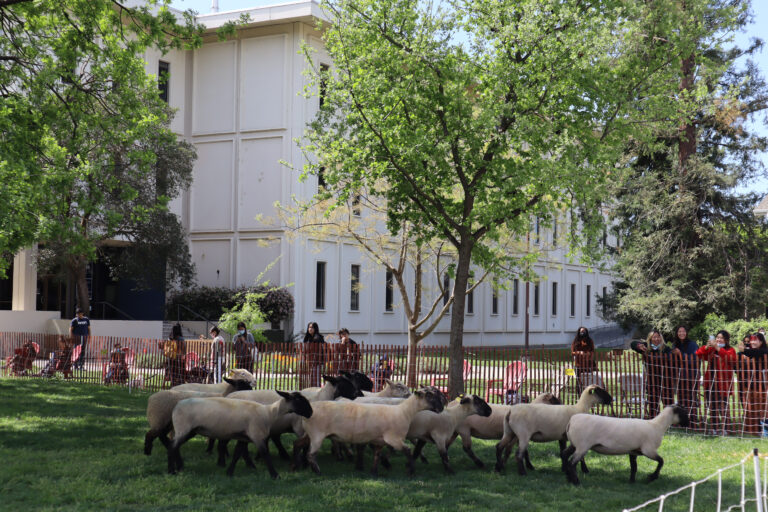
At 10:30 a.m. on Wednesday, March 30, 25 freshly sheared sheep rushed the grassy mounds in between the Chemistry Annex and Bainer Hall on campus — where they will take on their next natural lawn mowing task.

Haven Kiers, an assistant professor of landscape architecture, is leading a project that studies how grazing sheep can improve a landscape ecosystem as well as the well-being of the humans that interact with that land and the sheep. The project, called “Sheepmowers,” has been in progress at the university for about a year, but this is the first time that the sheep are stationed on the main UC Davis campus. 

Last year, the sheep were located in a field between Old Davis road and Arboretum Drive, by the Environmental Horticulture building. They weren’t very easy to stumble upon, unless you happened to be walking by the somewhat remote part of campus. But on the morning of March 30, students lined up with their phones to take photos and videos of the sheep arriving at the pen that they will graze for three days in a row every three to four weeks until the end of spring quarter. Sidled up next to the Silo, the new location is visible for students coming out of class and visitors touring the main campus alike. 

Kiers is excited about the implications of being so centrally located, since the project aims to use sheep as mechanisms of a multifunctional landscape, which includes their effect on the people who see them.

“We want to understand how to create landscapes that do more than just look pretty,” Kiers said. “We’re interested in this concept of urban grazing because it reduces operational costs and hopefully improves sustainability. The part that we’re going to look at more this quarter is if the sheep help make people happier — if they help reduce stress and anxiety.”

The team invites students and other passersby to enjoy the presence of the sheep in lawn chairs set up around the sheep’s fence. The chairs are a part of a program by the campus planning and environmental stewardship department called “Chair Share,” which invites students to sit, relax and enjoy nature on campus. These chairs can also be found in locations around the arboretum. 

As the sheepmowing team began this project, they developed activities that would aid in the accomplishment of their goal to improve well-being and lower stress of community members. Last year, they hosted events like watercolor painting, knitting and felting with the sheep’s wool, that took place next to the sheep’s pen. This year, they hope to host similar events, which will be announced on their website and on Instagram

Lucy Yuan, a fourth-year landscape architecture major, is a student shepherd with the project and spends the grazing days at the sheep pen. She is in charge of keeping track of the number of people who visit the sheep and surveying people’s responses to the sheep. Her senior thesis focuses on the benefits of sheep in urban areas. 

I’m studying more the overall effects of bringing sheep into urban spaces,” Yuan said. “Right now, this is specifically on UC Davis’s campus, but what would it be like if you brought sheep onto other campuses or other public places?”

Included in her project is a guide detailing the process that the sheepmowing team went through to get the sheep on campus, their research goals, sheep management and the challenges that came with the project. Yuan is also focusing on explaining all the benefits of sheep in urban areas, including lawn mowing and the impact on humans. 

“I think sheep [seem] pretty easy to handle because they spook easily,” Yuan said. “Everyone seems to think that it’s super fun and easy at the end of the day to get them back into the trailer, but the black-faced sheep are especially gregarious. Matt Hayes, the sheep manager, knows which ones are the troublemakers who try to run away.”

The 25 sheep that graze the chemistry mounds are typically the same every day, with a few exceptions. Of the 25, most are black-faced breeds, though the project utilizes four different sheep breeds — dorset, hampshire, suffolk and southdown. All of these breeds are bred for their meat, as opposed to other sheep breeds that are raised for their wool. There’s even one completely black sheep, which is Yuan’s favorite of the flock because of his big personality. 

“He has a twin that’s a female,” Yuan said. “He was going to be sent off to auction for his meat, but he kept escaping. Every time [the sheep managers] tried to load him up, they thought he was the sister, and didn’t load him into the trailer to be sent off. He avoided it so many times that they decided to keep him here.”

Yuan is not the only student to enjoy spending time with the sheep. Jasmine Marquez is a fourth-year animal science major who has worked with campus sheep before. 

“I just love seeing them,” Marquez said. “It’s kind of cool that everyone’s just here together watching the sheep. The sheep facilities are outside the [main campus], so most people don’t really get to see them, but when they bring them here, you get to watch what they do.”

Abigail Segal is a third-year animal science major who has already been out to visit the sheep multiple times this week. When asked if she thinks the sheep have the potential to lower stress levels in students who interact with them, she said she definitely thought so.

“Oh, I think 100%, as long as you’re an animal person,” Segal said. “And they’re right on campus. Even though sheep don’t particularly like to be pet, it’s still fun to just watch them.”

Segal used to visit the sheep last year when they were located closer to the edge of campus, and she said she thinks the project is a great idea. 

“I think this is a really smart project,” Segal said. “I know in Orange County, they did this with goats. It’s cheap labor — you don’t have to pay for people to landscape and use machinery. You just have animals.” 

This is certainly not the first instance of using forage animals for urban grazing, as Segal described. Previously, sheep have been used in various public spaces in Paris to maintain grass growth in a more eco-friendly manner than traditional machinery. Since 2014, West Sacramento has utilized the help of goats to munch on excess vegetation for fire prevention. This year, they’ve brought in 400 goats. 

Using these forage animals not only reduces the fossil fuel energy required for grass and vegetation maintenance, but they also provide a source of organic fertilizer through their waste. Many vineyards and orchards use sheep and goats to graze cover crops that are grown between their vines and trees. Kiers mentioned that they can be used to graze between solar panels too because the small animals are able to walk beneath and around the narrow spaces. 

Kiers also noted that the wool from the sheep’s stomach, which is typically too low quality to be used in production, can be used as a soil amendment. The wool can be incorporated into soil as a way to increase water retention because of its ability to absorb liquids.

“We’ve definitely learned that we’re not going to replace lawn mowers, but this is something different,” Kiers said. “With all of the other factors that the sheep are contributing, there’s a lot of potential for many places.”


Written by: Maya Shydlowski — features@theaggie.org


Davis Community Meals and Housing’s hopeful projection for 2022

Davis Community Meals and Housing faced changes during the pandemic, but officials are optimistic about the future

By CHRIS PONCE  — city@theaggie.org


The effects of the pandemic have repercussions for both the local area and businesses alike. Because of their general demographics, people experiencing homelessness (PEH) are at a very high risk for contracting COVID-19. A study conducted by BMC Public Health concluded that those experiencing homelessness in the U.S. are especially vulnerable to impacts of the pandemic.

“The particular vulnerability of PEH and consequently the increased risk for PEH to contribute to community transmission of COVID-19 should have prioritized these populations in pandemic response and relief efforts,” the authors of the study stated.

Davis Community Meals and Housing is a local non-profit organization that aims to provide housing and meals for people in need, according to a statement on their website. Davis Community Meals and Housing has been operating since 1990. Throughout the pandemic, Davis Community Meals and Housing had to uniquely adjust its outreach and guidelines to further aid the local Davis community. 

One of the first major changes Davis Community Meals and Housing observed during the pandemic was not being able to provide a dinner on Thanksgiving 2020. In a statement made on the Davis Community Meals and Housing website, the organization urged high-risk volunteers to avoid participating. “We request that all volunteers who are deemed to be in a vulnerable class of individuals or for any other reason to stop volunteering at this time. Your health and safety is very important to us,” the website stated. Davis Community Meals and Housing Executive Director Bill Pride commented on these changes. 

“The biggest change during the pandemic was we had to switch from indoor seating and dining for the folks coming to eat with us to actually handing out sandwiches and that type of thing,” Pride said. “We’re transitioning back to the sit-down dinners hopefully by May or June this year [2022].” 

Pride also commented on how the pandemic affected outreach for the organization. 

“It’s certainly affected the number of folks we’ve had and a few other things, but we still managed to feed a lot of people every week,” Pride said.

Davis Community Meals and Housing heavily relies on volunteers. Its volunteers work in a variety of programs offered by Davis Community Meals and Housing, such as the Meal Program, Resource Center and the Shelter and Transitional Housing Program. Pride said that the pandemic also had an impact on volunteer outreach. 

“Soon it affected our volunteer base quite a bit because many of the volunteers working there were older and [were] a highly vulnerable population, so some of those folks have not volunteered probably for a year or year and a half,” Pride said. “Some of them have come back, and some of them still haven’t come back. It affected our ability to have the number of volunteers we’ve had there in the past. I usually have, every week, probably about 50-60 volunteers there on various days, and that’s probably down to less than 50 at this point.”

 In spite of having to make some adjustments, Davis Community Meals and Housing has still managed to keep most of its operations and projects open and ongoing. Its Resource Center has remained open and still has around 35-40 people visiting each day, according to Pride. Its Transitional Housing program is still running and functional. The Street outreach program is still at work multiple days a week as well. 

During May 2020, Davis Community Meals and Housing was involved in the addition of the new Creekside Permanent Supportive Housing. This housing has 90 units total, surpassing the 52 units provided by the Cesar Chavez Plaza Permanent Supportive Housing. Davis Community Meals and Housing will continue to aid current residents and help those experiencing homlessness find housing in these locations. A support service coordinator will be on site full time. 

Aside from the transition from the pandemic, Davis Community Meals and Housing has set its sights on the future. The organization has been in the process of building a new project. Pride outlined the group’s plans for an older building that has been in the works for years.  

Davis Community Meals and Housing has operated a site at 1111 H Street since 1994. It has served as a daily resource center and as living quarters. Over the last few years, the group has been raising money to rebuild the site and include 18 apartment units, according to Pride.

“We managed to get the approval from the city, get a building permit, and it’s kind of right now about 50-60% complete,” Pride said. “And it’s supposed to open for occupancy probably by about September/October this year.”

The BMC Study suggested the importance of shelters and volunteers during the pandemic. The study emphasized that there is no “one-size-fits-all” approach that can be taken when handling the situation of homelessness and COVID-19. 

The authors of the BMC study (Rodriguez, Lahey, MacNeil, Martinez, Teo and Ruiz)  concluded that, “Community-based organizations, including homeless shelters, are uniquely qualified to inform, and should be included in planning efforts for, pandemic response.”

Written by: Chris Ponce — city@theaggie.org

Culture Corner

The Arts Desk’s weekly picks for television, movies, books and music

By JACOB ANDERSON — arts@theaggie.org


Movie: “Sexy Beast” dir. Jonathan Glazer (2000)

Jonathan Glazer’s debut feature was a far cry from the film he is most known for nowadays, 2013’s “Under the Skin,” which was a vexing, unpleasant and partially improvised film notorious for its depiction of Scarlett Johansson as a man-murdering alien. While less bewildering than that film, “Sexy Beast” still manages to transform the well-worn heist movie into something almost unrecognizable. It follows a retired safe-cracker, Gal, who is importuned by his old boss into doing one more job. The film has a familiar enough plot, but Ben Kingsley’s performance as said boss elevates the film into something of interest: He’s socially unaware, grating, violent and a proper whirlwind whose impending presence elicits an almost physical despair in Gal and company. The film largely deals with the building antagonism between Gal and his boss — it’s basically a heist movie where the heist is an afterthought, almost irrelevant compared to the complex personalities involved. It’s thrilling and leagues better than “Under the Skin,” in my humble opinion.


Book: “The Master of Go” by Yasunari Kawabata (1951)

Definitive representative of the Japanese postwar novel and Nobel-prize winner Yasunari Kawabata called “The Master of Go” his greatest work: a meaningful statement on its own, but magnified by the degree to which the book separates itself from the meticulous, spiritual novels that compose the rest of his best-known works. “The Master of Go” is a semi-fictional account of the final game between Go master Honinbo Shūsai and challenger Minoru Kitani prior to the former’s death — a marathon showdown that lasted almost half a year. Interlaced between diagrams of the board and Kawabata’s discussions of strategy with others in attendance are the histories and thoughts of the players, who are both aware that this will probably be the final, defining game of the master’s career. The game itself is of course fascinating, but it serves mostly as a form through which the master’s stoic, melancholic beauty is demonstrated. At the core of the novel is the sweetness of decline, one life determined and finally ended by a tradition that stretches thousands of years into the past. 


Album: “Day Trip” by Pat Metheny (2008)

One of the better entries in his discography, “Day Trip” is Pat Metheny at his most evocative. Here, Metheny’s guitar jazz is bustling and intricate while creating a casual atmosphere suggestive of sprawling cities and warm days. The best tracks, like the opener, “Son of Thirteen,” feel as if lunch hour in San Francisco were rendered in musical form. The sound is lush and ever-changing, and the album is definitely one of several high-water marks in the career of a classic jazz guitarist.


TV Show: “Mad Men” (2007)

“Mad Men” deserves recognition for achieving the rare status of “show longer than six seasons that remains good the whole way through.” That’s not an easy feat, especially when you consider that not a single member of the cast gets a lackluster arc over the show’s seven seasons. The show charts the changing mores of 1960s America through the lives of employees at an advertising agency, with pivotal moments in history that the passage of time is felt in every level of the show. “Mad Men” is most famous, though, for its iconic protagonist Don Draper, whose mysterious mien slowly recedes to reveal the self-destructive tendencies engendered by early 20th-century America — a development that mimics the identification and abandonment of failing tradition that the 1960s are known for. Few other shows can claim the quality of writing found in “Mad Men,” with other comparable prestige dramas like “Breaking Bad” and “The Sopranos” floundering for stretches. Most of the credit probably belongs to showrunner Matthew Weiner, whose brilliantly structured pilot sets up much of the show’s arc from its first moments.


Written by: Jacob Anderson — arts@theaggie.org


Governor Newsom proposes gas rebate

Proposal comes while the U.S. is inflicting economic sanctions against Russia

By SOFIA BIREN — city@theaggie.org

  The repercussions of global sanctions against Russia, due to the ongoing conflict in Ukraine, is affecting local economies. Most notably, the national average price of gas has peaked for the first time since 2008 at $4.33. In California, the price of gas has risen to an average of $5.28.

Sanctions against Russia are not the only factor that is influencing the rise in gas prices. The pandemic has also influenced the increase of gas prices vis-à-vis the decrease in demand of gasoline at the beginning of the pandemic. When the pandemic first hit the U.S., demand for gasoline decreased, thus barrels of oil for a short period of time valued less than $0. In turn, oil production decreased dramatically to match consumer demand, and when Americans began driving again, production levels have not reached pre-pandemic levels although driving has. 

To combat this, California Governor Gavin Newsom has proposed a plan that would help offset the financial burden felt by Californians. In a press release published on March 23, Newsom’s Office stated that “Registered vehicle owners in California will be eligible for at least $400 per vehicle, totaling $9 billion in direct payments to millions of Californians.”

The plan proposed by Governor Newsom is estimated to cost a total of $11 billion, with nine billion dollars of that budget being allocated to gas rebate. The other two billion dollars is proposed to go toward “relief for free public transportation for three months, pausing a portion of the sales tax rate on diesel, and suspending the inflationary adjustment on gas and diesel excise tax,” according to the press release.

However, although some Californians see the benefits of Newsom’s proposed plan, they question its social and environmental impacts. If passed the plan would disperse the rebate universally regardless of income. This would mean that anyone with a registered car would receive the rebate, including the wealthiest residents. Abby Ortgea, a second-year psychology and human development major, is reluctant about the way the money is planned to be dispersed. 

“Newsom should alter his plan to make it more equitable,” Ortega said. “The majority of people who need financial relief are not the people who can afford cars. The state should disperse the money to Californians regardless of vehicle ownership status, that way it would benefit the people who need it most.”

Others are also concerned about the environmental impacts of this plan. In 2018, California passed Senate Bill 100, which is aimed to completely end carbon emissions by 2045. Kyla Standard, a second-year psychology major, says that Newsom’s bill is a step back from California’s 2018 commitment to clean energy. 

“The bill only plans to give a small portion of the budget to promote clean energy,” Standard said. “Instead of incentivizing driving through covering the cost of gas they could invest that money into rebates for electric vehicles or climate research.”  

Other states such as Georgia and Connecticut are taking measures to achieve the same means, however these states are trying to offset the economic burden in their states by temporarily decreasing or temporarily waiving the gas tax in their state. 

The taxon gasoline is used primarily to fund projects that would increase the efficiency of the nation’s roads. Primarily, this is done by maintaining the roads and highways in that state, and through other smaller projects. California has the highest gasoline tax in the country at $0.51 per gallon. 

Newsom’s proposed plan is different compared to that of other states because it is aimed at giving people a rebate as opposed to partially or fully waiving the tax on gasoline. Regardless, the plan comes as a relief to UC Davis students. Some students who do have cars say that the $400 rebate would help ease the financial burdens many of them already face.

“I try to not use my car as much as I did last quarter because it would really be difficult for me to get as much gas as I did before,” Ortega said. “I feel like the rebate will definitely help students.”

Mark Soto, a second-year mechanical engineering major, says that during spring break he noticed the difference in the price of gas. He says that while on a road trip, he not only saw the overall increase in the price of gas, but he also saw the difference in gas at different stations.

“We drove to a small town in Southern California, and the gas cost around $5.50,” Soto said. “Then a few miles down there was another gas station selling gas for around $6.50.”

Some say Newsom’s plan is complex by design and was written by him and his administration to bring relief to Californians. If passed, the plan will bring relief to millions of California residents, and some UC Davis students are excited to see what impact will have on them. 


Written by: Sofia Biren — city@theaggie.org


Police investigate three gun-related incidents on Hutchinson Drive

UC Davis police are investigating three crimes that occured on campus in early March

By SYDNEY AMESTOY — campus@theaggie.org


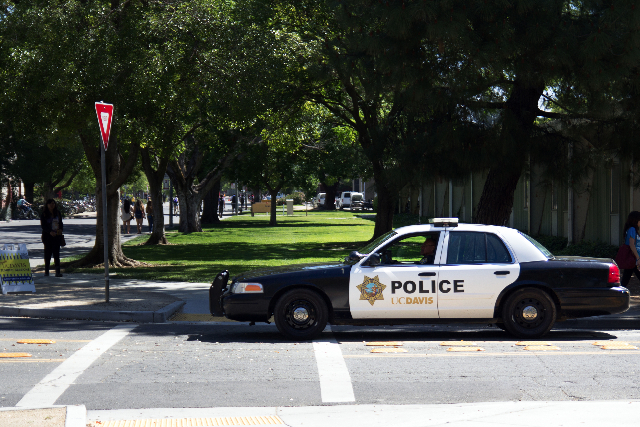
UC Davis Police are investigating three crimes involving a gun that occured on campus over the past few weeks.  

On March 8, at 8:20 p.m. on Hutchinson Drive near the traffic circle at Hutchison Place, there was an incident involving a handgun. According to the report published by Andy Fell, a UC Davis’ news and media relations specialist, the victims came across a silver Nissan Sentra parked in the road and proceeded to honk at the suspect. The suspect, believed to be a white man in his 40s, then got out of the car and pointed a handgun at the victims before leaving the scene. The suspect was wearing an unbuttoned baseball jersey and drove off toward Highway 113.

The suspect in this case was known by UC Davis Police on March 11, but could not be found until March 29, when they were taken into custody.

“The suspect then [threatened another driver] again on the 29th, this time with a baseball bat […] which then led to him being taken into custody,” said Chief Joseph Farrow of the UC Davis Police Department of the brandishing suspect.

The second incident, also on March 8, involved a BB gun, a type of air gun, on Hutchinson Drive. Thirty minutes after the first incident, a silver SUV of unspecified make or model drove by a bicyclist riding on Hutchinson near Extension Center Road. The passenger of the SUV then pointed the BB gun at the bicyclist and fired, hitting the victim in the leg. The victim of this incident did not require medical attention, but no description of the two suspects were given on the official statement.

There have been no arrests in the BB gun case, and the investigation is ongoing.

“We are going to find them, it’s a matter of time,” Farrow said. “We take these things very seriously, especially when a student is harmed. We have two detectives on the case.”

The third incident involved a carjacking with a handgun in the campus parking lot off of Extension Center Road on March 13. The victim, a student, had just gotten into their car at around 7 p.m., when a suspect approached the window with a handgun and demanded the victim get out of the car. The suspect got into the victim’s car and drove off westbound Hutchinson Drive towards Highway 113, followed by a white sedan believed to be a second suspect. 

The suspect who pointed the handgun at the victim was described as a white man in his 20s, and was wearing a dark colored hoodie and a surgical mask. The second suspect, who drove the white sedan had no description provided, and the white sedan was of an unspecified make and model.

The victim’s car, a 2018 gray Dodge Challenger R/T, was recovered by Woodland Police on March 15. The first suspect was caught in a collaborative effort by UC Davis, City of Davis and Woodland Police on March 29. The second suspect was taken into custody the following day on March 30.

A suspect has been identified in the brandishing case, and the case is being reviewed by the District Attorney,” Fell said of the carjacking incident.

The three incidents occurred in relatively the same area, in such a small time frame, and involving some type of gun; however, according to Fell, these cases are not thought to be related.

According to Farrow, this series of incidents in such a short period of time is not typical of Davis.

“I think it is [unusual], but it’s a good reminder that these things do happen even here in Davis,” Farrow said.

UC Davis Police are still working on investigating the incident involving the BB gun and advise anyone with any kind of information to contact their non-emergency line at (530)-752-1727.

“Always be alert and aware of your surroundings,” Farrow said. “I hate saying it but it is true: if you see something, say something. We are your partners for the safety of the community, and the more communication we have, the better we can serve.”


Written by: Sydney Amestoy — campus@theaggie.org


Pea plant product shows promise for Parkinson’s disease treatment

UC Davis researchers partnered a synthetic drug with a new plant product to reduce neuroinflammation

By MONICA MANMADKAR — science@theaggie.org

Kurarinone, a plant product derived from a pea plant, was combined with an enzyme inhibitor to create a method to alleviate neuroinflammation in Parkinson’s disease. Partnered with researchers at the Dalian Medical University in China, a team of UC Davis researchers at professor Bruce Hammock’s Laboratory published their findings in a paper in the Proceedings of the National Academy of Sciences. 

Around six years ago, Hammock’s team discovered that the inhibition of an enzyme called soluble epoxide hydrolase through kurarinone could potentially be beneficial to Parkinson’s disease, as it helps reduce neuroinflammation. 

“We found [that the enzyme] controlled a branch of the arachidonate cascade, where aspirin and Advil work, and it increases pain and inflammation,” Hammock said. “So when we inhibit this enzyme it controls pain and inflammation.”

After their discovery, the team pursued this finding by developing a synthetic drug through a Davis biotechnology company, Eicosis. In addition, they found a natural inhibitor of the targeted enzyme from plant metabolites from plants around the world. 

“The breakthrough for this project has been a collaboration with Professor Cheng-Peng Sun in China,” said Dr. Christophe Morisseau, an associate research scientist in the Department of Entomology.]. “[Sun], an expert in natural products from traditional Chinese Medicine, got the idea to test a chemical from a plant used in Chinese medicine to treat inflammation-related diseases.”

Based on previous research, the natural compound which is derived from the dried root of Sophora Flavescens, a shrubby sophora plant, is known to reduce inflammation. The researchers knew that decreasing neuroinflammation is necessary to reduce the advancement of Parkinson’s disease. 

With further testing, the researchers were able to find that this plant product was able to reduce neuroinflammation in an animal model with Parkinson’s disease. Working with the team from China, Morisseau hopes that their work may lead to an effective therapy against Parkinson’s disease, with either a natural or synthetic compound. 

“This involves a lot of money and time to determine that the compound is not toxic and efficient in human and animal models are not the same as people,” Morriseau said. 

He continued to state how it is not easy to give medicine to a person suffering from Parkinson’s disease. Hence, with a nature-based product, it could be easier to treat the patient by incorporating the medicine into food or a drink.

Written by: Monica Manmadkar — science@theaggie.org

Who won the MLB lockout?

Why Major League Baseball was almost canceled this year

By ALEX MOTAWI — almotawi@ucdavis.edu


Baseball is America’s sport. The country has been running the bases since 1846 and has spread the sport all across the world. It has been integrated into many cultures, which have created their own rich baseball histories. The pinnacle of baseball achievement in the U.S. is winning the World Series by being the best team in Major League Baseball (MLB), the primary league in the U.S. since 1876. Old-time baseball stars like Babe Ruth and Ted Williams are some of the most famous people in the U.S. Let’s be honest — lots of people today (including me) know more about them than even presidents from the same period. In my eyes, one of the only things as deeply ingrained into American culture as baseball and the MLB is capitalism. This winter, when those two societal mainstays collided in the form of the lockout, who won?

Some quick context to get us rolling: The players and their union make what’s called a Collective Bargaining Agreement (CBA) with the MLB (team owners and commissioner). The CBA is essentially the league’s constitution; it covers the rules of the game, both on and off the diamond. But unlike a governmental constitution, it expires every few years and has to be renegotiated, which happened last winter. Since 1993, every time the CBA has reached the verge of expiring, the parties have reorganized the pact to accommodate the changing times. But this year, the two parties were so strongly divided that the owners and the players couldn’t reach a labor agreement, so the players effectively were put on strike almost all winter, and the MLB “locked them out” of playing games.

The disagreements between the two parties came down almost entirely to compensation (i.e. capitalism). The MLB has been extremely profitable, with a majority of the profit going straight into the coffers of team owners instead of the players. Player salaries have been going down for the last few years even as league profits have increased, and the lockout began because players were negotiating for better compensation. During the lockout, most of the communication and bargaining between the groups was about trying to raise the salary for the players, specifically the younger players on rookie contracts.

The lockout played out like the Cold War. The sides couldn’t come to an agreement with threats constantly looming, even though both sides would lose if they couldn’t reach an accord. Thankfully, they did reach an agreement and were able to avoid more cancellations, but who won? And who caved?

As a current fan and someone who loves to cheer for unions taking what they deserve from greedy employers, I think the players got scammed. I believe the MLB was in a position of power from the start, as the billionaire owners could afford to skip games while the players (with a previous minimum salary of $570,500 a year which was changed to $700,000 as part of the agreement) can’t afford to spend the prime of their careers without getting paid. 

Let’s look at the final voting totals. The MLB presented the final deal to the union first, and once the players agreed to it, the owners ratified it unanimously with a vote of 30-0. On the union side, it was accepted with a 26-4 vote by the players and a 0-8 vote by the executive subcommittee responsible for the union’s side of the negotiation. The players caved in and wanted to play, even though the people they paid to advise them all voted against the proposition.

Can I blame them? No. It’s their money, not mine, and they did get better treatment than they were receiving previously. Could they have gotten closer to the amount they deserved if they held out longer? Probably.

I’m super excited to watch baseball this season, but the lockout and monetary dispute that almost ruined the season are going to be in the back of my mind — as well as some regret that the billionaire owners have won yet again.


Written by: Alex Motawi — almotawi@ucdavis.edu

Disclaimer: The views and opinions expressed by individual columnists belong to the columnists alone and do not necessarily indicate the views and opinions held by The California Aggie.


The Editorial Board shares tips for being a thoughtful participant in the classroom

Talking, notifications and inappropriate tangents distract others and take away from the learning experience

With over a year of school exclusively over Zoom, some of us developed some chaotic habits during the “school day.” Whether it was loudly eating a bowl of cereal during discussion or scrolling through Instagram, it probably worked out alright from behind a computer other than that one time you accidentally unmuted yourself. But now that we’re completely back in person this quarter, it’s time to uphold an ever-so-slightly elevated level of decorum. Having been college students pre-pandemic, the members of the Editorial Board wanted to share a non-exhaustive list of suggestions for being conscientious classmates during this never-ending transition. 


  1. This one seems straightforward — don’t talk to others during class. It’s distracting. It’s not like you’re muted like when school was via Zoom; more likely than not, everyone, including your classmates and instructors, can hear you. If you absolutely need to communicate during lecture, send your peers a text or write them a note a la middle school.
  2. And on that note, keep your phone on silent. 
  3. Some instructors are still extending the flexibility that they added to syllabi during COVID-19, including recording lectures (which should be required in any case). For courses that don’t require attendance or participation, you should be present if you are choosing to attend. And as we’ve noted in previous editorials, college is an inequitably stressful experience, but to get your money’s worth, it’s probably a good idea to attend and be engaged in class (while prioritizing your physical and mental health, of course).
  4. There may not be such a thing as a dumb question (according to many instructors, at least), but there is such a thing as an appropriate question. If you’re in a large lecture and your question involves a lengthy tangent before getting to a point unrelated to the topic at hand, maybe it’s best to keep your comment for office hours or after class. Being a student is for your own educational growth, but it’s important that you respect the time of your classmates and instructors.
  5. In general, be respectful when talking about your instructors. Members of the Editorial Board have seen students make some particularly harsh comments about TAs who may not have control over what classes they are teaching. Treat people with the grace you would expect for yourself if you were thrown into an unexpected situation. If you do have concerns with teaching skills, raise them in a respectful manner in a non-disruptive setting.


Obviously, this is a list of suggestions and there are circumstances that may mean one or more of these shouldn’t be followed. But we encourage students, especially those who only returned to in-person school after beginning college, to consider the above. It has taken and will continue to take some adjustments to be comfortably back in the classroom, but together we can make it work. Go Ags!


Written by: The Editorial Board


Behind Kenedi Brown’s arm, the Aggies’ offense blasts past CSU Bakersfield

UC Davis rides a five-game win streak after sweeping Bakersfield in three-game series

By MARLON ROLON — sports@theaggie.org


 UC Davis second-year star pitcher Kenedi Brown continues to impress on the mound striking-out 17 batters, a career high, shutting down Cal State Bakersfield in the process of the first game of the double header on Saturday afternoon. The Aggies’ dormant offense reemerged in the fifth inning, scoring five-runs to pull away 8-1 and came from behind in game two, scoring three-runs in the fifth to win 7-4.

“When I feel comfortable on the mound and the defense has my back, I feel like I can throw my best,” Brown said. “That is a big factor, records are meant to be broken so I’m looking to one up myself sooner or later.”

In game one, Brown pitched her 11th complete game of the season. The second-year threw 115 pitches, 85 of which were strikes, allowing one unearned run on just one hit. The star pitcher is ranked first in the conference in ERA and 35th in the country.

“[Kenedi Brown] had a great year last year and she had a target on her back coming into this year,” said UC Davis Softball Head Coach Erin Thorpe. “She just went after it today, she just really had a good command over her pitches and her pitches were very successful against her batters.”

The Aggies fell behind at the top of the fifth off an unearned run. Bakersfield’s one run lead did not last, UC Davis let their bats fly on the bottom of the fifth scoring five-runs off six-hits. 

“We started off slow, and then we got a couple things rolling and we kept going,” Thorpe said. 

Fourth-year shortstop Claudia Kim got the party started with a big hit that singled to left field. The next batter, third-year infielder Alyssa Ito let it fly to left center field as the Aggies were gaining confidence at the plate. Then, second-year Anna Dethlefson loaded up the bases with a power swing that drove the ball down the right side. At this point, the Aggies scored from hits by Sommer Kisling, Sarah Starks and Libbie Mcmahan. 

“I think the difference maker was when Claudia Kim came in and started off the rally, and Alyssa Ito came in and got the next hit and I think that’s big from our eight, ninth batters to go in and start an inning like that,” said Thorpe.

The hits didn’t stop there. In the bottom of the sixth, first-year Reese Mattley bombed a pitch to center field near the wall giving her enough time to reach second-base. After Mattley, fourth-year Delaney Diaz hammered a line drive to the left side that brought the speedy Mattley home. As if things couldn’t get any worse for Bakersfield, they did when Dethlefson swung for the fences, blasting the ball out the field into the street, giving UC Davis the lead 8-1 and eventually closed the show. 


Game two 

Second-year pitcher Taylor Fitzgerald started the game on the mound for UC Davis. The second-year pitcher was off to a rough start, allowing two hits, a home run and two runs scored. 

Through the first two innings, the Aggies hitting inconsistencies left two runners stranded on base. That is until Dethlefson stepped up to the plate blasting a homer down left center field.

Being down 2-1 in the fourth inning, Fitzgerald found herself in a bit of trouble allowing four hits and two runs and the Roadrunners took a commanding lead 4-1. Mattley and Diaz answered back with a pair of hits and Mattley scored off an error. 

After a pitching change made by UC Davis, the ball game changed but not because of the pitching — the change came on the plate. Again the fifth inning proved to be pivotal for the offense. First-year Grace Kilday hit her first career home run to get the offense flowing. It was the same narrative as in the earlier game, the Roadrunners had no answers to stop the runs allowing four hits and three runs. In a game where it looked like Bakersfield was going to run away with it the Aggies stormed back to take the 5-4 lead.

“We’ve been working hard on trying to put more balls in play. I think we’ve been struggling with swinging big and just not putting balls in play,” Thorpe said. “I was really happy with us that we were able to do that today, but still in both games our adjustments came later in the game, and so I think that’s something that we’re focusing on now. We’re putting the ball in play, we’re doing well there, but we want to start making those adjustments to the pitchers earlier in the games.”

The successful pitching continued for UC Davis when second-year Sara Reineman, who relieved Fitzgerald earlier in the game, did not allow a hit in a crucial sixth inning.

In the bottom of the sixth, however, the Aggies’ Kilday and Dethlefson would hit doubles, scoring two more runs putting the home team up 7-4. Reineman would close the show with her strong pitching effort in the seventh inning, shutting out the batters to end the game earning her second win of the season. She allowed one hit in three-innings. 


Game three

 The next day, Brown pitched her 12th complete game of the season and once again was phenomenal, earning her 10th win of the season. The second-year allowed one hit, coming off a bunt while keeping the Roadrunners scoreless throughout the contest and striking out 12 batters.

UC Davis defeated Bakersfield 2-0 off RBI singles by Nakahara and Kim in the fifth-inning. Bakersfield had no answer at bat against Brown, they resorted to bunting for the most part to try and get on base. After two games the Roadrunners figured their best chance of winning against one of the best pitchers in the conference in Brown, was to bunt instead. It worked to avoid a hitting shut out, but that was the most action the offense could generate. The star pitcher for the Aggies adapted to eventually shut them out from the scoreboard. 

 With this win UC Davis softball team improves their overall record to 17-16 (5-4) in conference play. 

“It really is a roller coaster of a season, we want to keep trending upwards every game we get,” Thorpe said.

Being a very young team with seven freshmen and 10 sophomores, many would think the growing pains during the season would have this team towards the bottom of the standings. That is not the case, the Aggies are in fifth place in the Big West, one game behind UC San Diego for fourth.

“It’s been really cool to see us moving from [being] nervous to having a little bit more confidence in ourselves and also in understanding the game,” Thorpe said. “When we’re very young you have to learn the speed of play at this level, you have to learn what other teams are capable of doing and really the rules matter at this level.”

 “It’s a big learning curve when you get to college, we’re really proud of how our team is really trying to focus and learn and be constant learners through the season and we think that’s going to help them grow into the game and be competitive quicker,” Thorpe said.

Thorpe’s team looks composed and comfortable around each other and their overall chemistry looks far better than earlier in the season. The amount of positive reinforcement they provide to each other when they do good things on the field looks like they’ve been together for years. Even when mistakes are made, they’re picking each other up and high fiving each other.  

The batters are coming alive mid-game, however, one problem that the Aggies struggle with is being consistent at the plate to start games. They leave players stranded on base at times leaving points on the field. As of late though, players like Dethlefson and Mattley have stepped up big offensively to give this team a spark. Other players have also contributed to their recent success, such as shortstop Kim, Kilday, McMahan, Nakahara, Starks, Diaz, Kisling and Ito have come alive as of late helping this team ride a five-game win streak. 

The strength of this team seems to be the pitching, as the Aggies hold a top-two pitcher in the conference. Their rotation includes the likes of starter Brown, Grace Tangen, Mia Hildebrand, Reineman and Fitzgerald who seem to keep UC Davis in the ballgame. 

The group is led by Brown who has shown leadership qualities on the mound. The standout pitchers’ confidence on the mound is evident as she seems to get better throughout the game. Over the summer, Brown worked on two new pitches and worked on gaining strength through weight training. Her mid-game adjustments have helped sharpen her skillset.

“It’s helped for sure but also the chemistry between me and all of my teammates has allowed me to be the best pitcher I can be for this team,” Brown said after breaking her previous record in strikeouts.

“I feel like I’ve learned a lot this season. I learned a lot last season because we had a limited amount of girls and it was super small. I feel like I learned how to pick up myself and pick up my teammates when things weren’t going well. I think that has helped everybody know that everything’s going to be okay and have them feel comfortable, so just learning how to lead my team better than I did last year I feel like is a big help.”


A look ahead

UC Davis will travel to Riverside on April 8-9, to face the Highlanders for a three-game series, an opponent who is behind them in the standings. 

They come back home on April 15-16, to face Cal State Northridge to continue their Big West play.

The Aggies will then take a break from their conference play and will travel to Berkeley to play the Golden Bears on April 19. 

On April 22-23, they will go on the road to play UC San Diego. The Aggies then close out the season with nine Big West games against UC Santa Barbara at home (April 29-30), on the road against Cal Poly (May 6-7) and back home against Hawaii (May 13-14). 

If UC Davis can take care of business in their upcoming games against Riverside and Northridge, who are behind them in the standings, they’ll be within striking distance to finish near the top of the standings. The Aggies have a favorable schedule to their advantage. However, their last series of the season is against Hawaii, who is tied with Cal State Fullerton for first place.


Written by: Marlon Rolon — sports@theaggie.org


Genetically modified lettuce could protect astronauts’ bones on long spaceflights

The transgenic lettuce contains a fusion protein that can counteract the loss of bone density in microgravity

By SONORA SLATER — science@theaggie.org


Our bodies were made to interact with Earth’s gravitational pull. When astronauts take part in long spaceflights and encounter extended microgravity, there are side effects that occur — specifically, loss of bone density. 

Human bones are balanced between growth and resorption, or breakdown, which allows the body to react to injury or other outside factors. Spending time in microgravity disrupts this balance and causes astronauts to lose bone mass. Scientists have tried to solve this problem in several ways, such as by promoting exercise in space, supplementing astronauts with calcium and regularly injecting parathyroid hormone (PTH).

However, each of these methods have their limitations. Exercise isn’t enough to prevent bone loss on its own, calcium does not absorb well into the astronauts’ bodies and injections of any type are difficult in space because of low gravitation.

According to a recent press release, researchers at UC Davis in collaboration with the Center for the Utilization of Biological Engineering in Space (CUBES) have developed a new potential solution that avoids the limitations of the past: genetically modified lettuce.

Kevin Yates, a fourth-year Ph.D. student in the Department of Chemical Engineering at UC Davis and one of the researchers on the project, explained how they made genetically modified lettuce. 

“We modified regular wild lettuce to produce the fusion protein PTH-Fc by inserting this gene into the lettuce,” Yates said. “The lettuce now, because it’s transgenic, produces [the fusion protein] in every cell of the plant.” 

Yates went on to explain what exactly a “fusion protein” like PTH-Fc is.

“Essentially it’s two parts of two proteins,” Yates said. “The first is a part of the human parathyroid hormone, and we linked that to a part of a human antibody protein.”

According to Karen McDonald, a professor in the Department of Chemical Engineering at UC Davis, fusion proteins like PTH-Fc serve multiple purposes, including making the protein more stable when it’s produced in the plant and when it enters the bloodstream, as well as making the drug easier to purify from plant extracts. 

So, with this purpose and functionality in mind, why lettuce?

“As far as transgenic plants are concerned, lettuce has never been a great platform,” said Somen Nandi, an adjunct professor in the UC Davis Department of Chemical Engineering and one of the researchers on the project. “But they are currently growing lettuce in the International Space Station, so this way we don’t have to reinvent the wheel because transgenic lettuce doesn’t necessarily have to grow any way different. That’s why we’re piggybacking off of a known thing that astronauts are familiar with.” 

According to Yates, the researchers are hopeful that astronauts can acquire PTH-Fc orally by simply eating the lettuce, so the dynamic of how lettuce grows is another benefit of using the plant.

“Lettuce, as soon as it emerges from the soil, it’s edible,” Yates said. “You don’t have to wait for it to grow a fruit or something like that. Most of the plant, when it’s younger like that, is edible.”

Astronauts dosing themselves with the drug by eating lettuce leaves is the ideal scenario, but if that doesn’t end up working, there’s a plan B: extracting and purifying the drug from the plants.

“Plan B would be that we would grind up the lettuce and extract our fusion protein,” McDonald said. “Then we could take it through the traditional chromatography and filtration steps that occur here on Earth — small scale, of course.” 

Even if eating the lettuce directly doesn’t work, purifying the drug from transgenic lettuce still provides a variety of benefits as a solution, according to the press release. For one, a mission to Mars could take several years, and growing food apart from prepackaged meals can be good for the mental health of astronauts.

“It gives a lot of morale boosters or psychological boosters if the astronauts see the green growing and they can use that as a food,” Nandi said.

Looking forward, research may move toward evaluating how much of the drug the plants can produce, which leaves contain the most product and the best time to harvest the leaves, as well as experimenting with growing other crops like tomatoes, rice and potatoes in low-resource space conditions.

Nandi explained that while their research is focused on the goal of space travel, the information they learn about resource utilization in low-resource conditions could be used to help solve problems on Earth as well.

According to Nandi, if medicinal drugs like PTH-Fc can be shown to successfully enter the bloodstream through consumption, other forms of transgenic crops could potentially be developed to carry other medicines. Seeds from these crops could then be sent to low-resource countries to be grown, distributed and eaten.

McDonald elaborated on the broader applicability of biological solutions.

“Obviously, Mars is the extreme in low-resource environments,” McDonald said. “But using plants is a really valuable approach even on Earth, because many parts of the world are very proficient at growing plants, and it doesn’t necessarily require a very highly trained workforce.”

As NASA prepares to send people to the moon again, potentially in 2024, and to Mars, potentially in the 2030s, Yates said that various groups in CUBES are also working on other biological solutions to the challenges astronauts who undergo long spaceflights face.

“It’s not just lettuce on its own,” Yates said. “It’s other plants, it’s microbes, it’s all sorts of really cool things. I think that you’re going to need biological solutions, and particularly those based on plants, in order to eliminate or mitigate a lot of the serious challenges that humans are going to face in deep space.”

Written by: Sonora Slater — science@theaggie.org 


The Aggie recognizes influential women in the UC Davis community

Three women share their proudest career moments, inspiration and hopes for future generations

By ALINA ISSAKHANIAN — features@theaggie.org


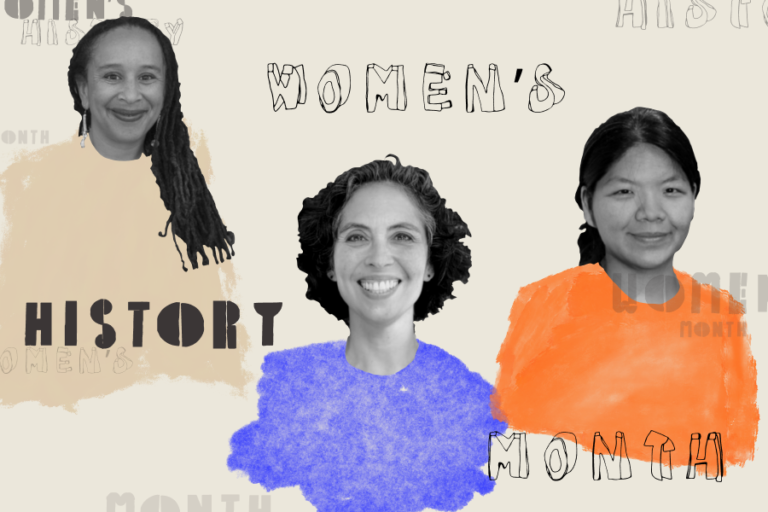
In honor of Women’s History Month which ended on April 1, The California Aggie interviewed a few of the many women who have attended UC Davis and gone on to make great impacts in their careers and personal lives. Beth Rose Middleton Manning, Andrea Gaytan and Julie Sze discuss their accomplishments, current projects and offer wisdom to young women everywhere. 


Beth Rose Middleton Manning — Native American studies professor and associate director of climate and environmental justice for UC Davis’s Institute of the Environment


As an undergraduate student at UC Davis from 1997 to 2001, Beth Rose Middleton Manning studied nature and culture and explored her interests in the environment, landscape stewardship and the connections between communities and cultures. After graduating in 2001, Middleton Manning went to work for the Sierra Institute for Community Environment in Taylorsville, CA. She earned a Ph.D. in environmental science policy and management at UC Berkeley in 2008 and completed her post doctorate in environmental policy and management at UC Davis in 2010. Since then, she has been a faculty member in the Native American studies department at UC Davis.

Middleton Manning said that her passion for the environment and justice as well as her background encouraged her current focus on native environmental policy, activism, coloniality of power, indigeneity, community development, political ecology and participatory methodology. 

“I grew up in a rural area of the central Sierra,” Middleton Manning said. “I grew up without electricity. My father’s family is Afro Caribbean and my mother’s family is Eastern European Jews. They actually met at a big-time California native event, but neither of them are Native Americans. They moved to the Sierra foothills, which is where I grew up. I spent a lot of time outside, and I was also one of the very few people of color in that area, so I think both those experiences of really feeling close to the environment and also being aware of racism pushed me toward my current focus.” 

Middelton Manning attributes her passion for her work to her love of the land and of people, as well as her desire to address hidden injustices in our communities and environment. She said that she works to promote and positively impact the health and healing of human beings, landscapes and waterscapes. 

Middleton Manning teaches NAS 165, Keepers of the Flame, a course in the Native American studies department that focuses on cultural burning as a land care technique, land stewardship and land restoration strategies practiced around the world by Indigenous peoples — specifically those that were subject to colonial suppression and oppression. With her class, she meets with native tribes to learn more about their practices using fire, their restoration of plants and soil, their preservation and work tending gardens and other traditions that help create a connection between communities and the environment. 

“I love being out, hands on the land with people and learning from one another and finding that shared space of connection that’s rooted in caring for our places and caring for our communities,” Middleton Manning said. “And at the same time, I’m really aware of the injustices that have led to the exclusion of people from being able to care for their homelands, so a lot of my work is geared toward looking at land rematriation and repatriation for this bringing back this type of traditional stewardship that can be done and in a way that includes broader community members also.”

Middleton Manning’s book “Trust in the Land” also focuses on conservation easements and land trust structures to improve access, stewardship and protection of culturally important places by Native people and how people can use these cultivation tools for cultural conservation and justice goals. 

“I always just hope that my work is useful in bringing parties together to see where they have common ground, to accomplish something that’s healthy for communities and the environment,” Middleton Manning said. 

Currently, Middleton Manning is working on a dam removal project called Removing Dams and Restoring Tribal Homelands Without One. This initiative specifically focuses on tribal leadership and its role in dam removals that have been supported by the Open rivers Fund and the resources legacy farm. She hopes that through her work and writing, she can help get water back in some of the many watersheds that have been dewatered for hydro development. 

Middleton Manning is also working with the Environmental Health Sciences Center and faculty in Environmental Engineering on the Yurok tribe environmental program. This project studies contaminants in the Klamath river and its tributaries in Oregon, examining the water and soils in the old timber processing sites within the Yurok reservation to assess the water quality and potentially dangerous contaminants that have been allowed to enter the water stream. 

“This project to me is really focused on responding to a need identified by the community and supporting tribal health,” Middleton Manning said. “I like the idea of bringing resources we have at the university to help analyze [an] ordinarily not necessarily accessible [process]. I am excited about this project because I am able to assist in responding to a question in the community, and then a native nation will use that information to advocate for and support community health.”

In addition to being a leader in her career, Middleton Manning is also a mother, and hopes that, in the future, more resources will be available for mothers who work in all fields to help them balance these roles. She looks back on all of her female role models, her mother, her grandmother, women in academia, as well as the native women she works with every day and appreciates them for their advice, encouragement, support, and inspiration.

“Sometimes you can’t do it all — you can’t be publishing all the time and also be the best parent and also serve on budget committees and be the best mentor,” Middleton Manning said. “Many of us really push ourselves really hard to be perfectionists, and you kind of have to give yourself that grace […] Just be aware of that ebb and flow of what you can do, because I think there’s a lot of pressure to be the best in all areas — research, teaching service, collaborations, parenting. You have to find that balance, knowing that you can’t always be the best in all the areas. There’s just one of you.”


Andrea Gaytan — founding director of AB540 and Undocumented Students Center at UC Davis


Andrea Gaytan is the Dean of the Davis Center of Sacramento City College and the founding director of the AB540 and Undocumented Student Center at UC Davis.

Gaytan graduated from UC Davis in 1992 with a master’s degree in sociology. In 2009, she returned to UC Davis to serve as the assistant director of the Cross Cultural Center, founding the undocomunted students center on campus in 2013. She credited the political change happening on state and federal levels at that time, as well as strong student leadership on campus, for helping make that happen.

“That was a really exciting time to see students working toward defining goals and talking to other campus constituencies and really advocating to create a center dedicated to serving undocumented students,” Gaytan said. “There were exciting things happening on a state and national level as well around that time with the implementation of the California Dream Act and the rollout of the Deferred Action for Childhood Arrivals (DACA) executive order. Those two things sort of dovetail with the student advocacy for a center on our campus. […] It was really an opportune time for that advocacy.”

Gaytan explained that when setting up the undocumented students center, also called the AB540 and Undocumented Students Center, she wanted to create a space where those who utilized the center could feel at home on campus and have all the resources they may need. She said that the students were her biggest motivation throughout the center creation process. 

“It was really important for me to be quiet and listen and to really include students in decision-making processes about what the center should be, and how we would operate,” Gaytan said. “I tried my best to honor that and to make space for students to design the center to be the space they wanted it to be.”

Gaytan said that serving as the Director of the AB540 and Undocumented Students Center has been her proudest moment in her career. 

“I think being able to present and share the information of how the center was created, the sorts of programs that we were able to offer,” Gaytan said. “Also being able to co-present with our students. […] That was really exciting to be able to share that experience alongside students and to see them presenting on their own about the work that they’ve been doing based on the programs we created. It was also just knowing that the work that we did at the center has a life-changing impact for students.”

Gaytan currently works with UC Davis and Sacramento City College on the California volunteer service grants project. She said that this project will connect students to volunteer opportunities with different nonprofit and public agencies in the sustainability, basic needs and K-12 education sectors. For their work, students would receive living stipends. Gaytan said that working on this project feels like a culminating moment in her career.

“There’s also a large percentage of AB540 students that are taken into account for this as well,” Gaytan said. “That feels very full circle for me, in terms of continuing to support and advocate for the AB540 undocumented student community and provide continued professional development opportunities, as well as supporting our local communities in Sacramento and Yolo counties. We’re in the planning phase right now, but implementation will start in the fall quarter.”


Julie Sze — American studies professor and founding director of the Environmental Justice Project


Julie Sze, a professor of American Studies at UC Davis for 19 years as well as an environmental justice researcher and the founding director of the Environmental Justice Project for UC Davis’ Institute for the Environment, said that her interest in environmental justice was spurred by an undergraduate course she took at UC Berkeley on race, poverty and the environment. 

“I was so angry when I learned about everything that I didn’t learn before,” Sze said. “I’m angry at racism and I’m angry at the killing of Indigenous people and I’m angry at the exploitation of the land. What motivates me is to know that we have to be outraged, but we can’t be nihilistic. […] I try to understand how people feel and understand my own feelings about the state of the world and go someplace else within.”

The Environmental Justice Project builds partnerships with Black, Indigenous and people of color (BIPOC) communities, industry leaders, local government and multidisciplinary researchers to inform public policy and prepare students to conduct research and address environmental justice. 

Using this strong passion as motivation, Professor Sze has been researching in the field of environmental justice for many years. Currently, Sze is writing “Climate Justice as Freedom,” a book that discusses climate justice as a freedom struggle. She hopes that this book will be a way to educate others on climate justice movements and motivate people to get involved in the climate justice movement. She has previously written “Environmental Justice in a Moment of Danger”, in which she discusses what she calls “non-naive, radical hope,” which she feels is necessary when facing these complicated issues.

“What I want to do through my writing is to cultivate that culture of non-naive radicalism,” Sze said. “We have to be radical, we have to be hopeful, we have to believe that change is possible. We have a lot of information, but where do we go from knowing that these problems exist to motivating people to do something about it — not to just be overwhelmed.”

Sze said that a lot of the women in the environmental justice movement, as well as those bringing awareness to Asian American communities are role models for her. 

“Environmental justice is a feminist movement,” Sze said. “The fight for environmental justice is led by women. There’s so much work to be done, and these movements and these women have been working for their whole lives. All I can do is try to contribute and support and build. That’s all that I want to do for the rest of my life.”


Written by: Alina Issakhanian — features@theaggie.org


‘From Moment to Movement’: art and protest

The Manetti Shrem Museum’s new installation challenges dominant power structures through video art

By SIERRA JIMENEZ — arts@theaggie.org

“Why here, why now? Why Davis, why this moment?” 

These are questions that Susie Kantor, the curator of the Manetti Shrem exhibition “From Moment to Movement,” asked herself in the summer of 2021 when considering what the museum’s next art installation should highlight. Wanting to curate an exhibition that spoke to the current social and political moment, she chose to focus on protest. 

“[This exhibition] shows the relevance of art and the power of art and artists,” she said. 

A six piece exhibition with works drawn from the Bay Area-based Kramlich Collection, taking real world events to display moments of protest and resistance around the globe through video art. 

“From Moment to Movement: Picturing Protest in the Kramlich Collection” is on display at the Manetti Shrem Museum of Art from Jan. 27 to June 19. 

Located on campus for students, faculty and community members alike to enjoy, this exhibition utilizes UC Davis professors and students to help create this beautifully-executed, collaborative installation.

Kantor worked closely from start to finish with the exhibition design team, composed of UC Davis undergraduate design students — Ama Benkuo Bonsu (‘20), Marcus Dubois (‘20), Jen Piccinio (‘21), Alejandra Valladares-Alvarez (‘20), Zoey Ward (‘21), Jovita Lois Wattimena (‘21) and Genevieve C Zanaska (‘21) — supervised by Brett Snyder, an associate professor of design at UC Davis. 

These students not only helped design the complicated layout and display of the video-based exhibition, but also designed the opening title piece, catching the attention of viewers from the first step into the exhibit. 

The student’s colorful sign which changes from “FROM MOMENT” to “TO MOVEMENT” depending on where the viewer stands, suggests a glimpse of hope that there can be change despite the taxing content. 

This exhibition is particularly unique because of its video-based art installations rather than traditional two-dimensional artwork. This sensory experience allows the viewers to fully immerse themselves into the artwork and into these representations of real life moments of resistance. 

Through video, a medium so relevant in our everyday lives — especially for students and younger generations — “we hope [the video art] is something that students would connect to” on a different level of familiarity, Kantor said. “Video art allows you to live with [the art] in a different way.”

Although all six pieces in the installation are video works, the artists all use the medium “wildly different[ly],” Kantor said. The different viewer experiences mirror the ways in which “we receive media and how we understand events.” 

There is a recommended viewing order of each piece through the installation, starting with Dara Birnbaum’s “Tiananmen Square: Break-In Transmission,” (1988-90). This five-channel video installation with four channels of audio leads the viewer to an active role in experiencing this grandiose piece. 

The sound of the Taiwanese students singing “The Wound of History” immerses the viewer as if they were in Tiananmen Square, Beijing in solidarity with the students.

With snippets of real news clips from the student-led protests, the video and sound are overlapped, with some synchronicity from a hidden surveillance camera, picking certain footage to display on a larger monitor, representative of how and what we intake from media.  

The exhibition text, written by Kantor, points out, “in this work, Dara Birnbaum zeroes in on the way that the media plays a crucial role in our understanding of the event… the installation mimics the haphazard and creative ways that information was transmitted in the moment: through television footage, audio clips and even fax machines.” 

On a much smaller monitor, Mikhael Subotzky’s “CCTV” (2010) displays a single-channel silent video of unedited police footage from Johannesburg, South Africa in 2009 and 2010. Subotzky left the videos unaltered except for deliberately timing the ending so that all suspects look directly into the camera all at once — as if they were all being examined by the viewer. 

Stated in the exhibition text, “By turning the subjects’ gazes back on the viewer, Subotzky underscores the way that surveillance practices are used for social control and how these tactics are normalized.”

As you turn the corner of the exhibition, UC Davis professor and established artist, Shiva Ahmadi’s newest animation, “Marooned” (2021), visualizes the impacts of former president Former President Donald Trump’s 2016 Muslim ban through the digitalization of 5,172 rich watercolor paintings. 

“This film is an allegory of the labor and determination required to immigrate to a new country and the setbacks so many immigrants face, challenging the myth of the United States as a path to a better life,” as stated in the exhibition text. 

Additionally, Ahmadi’s personal correspondence on the exhibition text states, “My practice examines the intersection of religion and politics through storytelling… I was inspired to create Marooned after seeing an image of a young child watching cartoons from behind a table during the bombing of Gaza, a reminder of my own childhood.” 

Continuing into the darkest section of the exhibition, the red room of Nalini Malani’s “Unity in Diversity” (2003) lures the audience into the cozy environment to create the physical illusion of being in a middle-class post-independence Indian home. 

This single-channel video projection is supported with ornate living-room style components such as black and white framed photographs of Gandhi, furniture and lights. Made as a response to the riots in the province of Gujarat, India in 2002, “Malani points to how the reality of democracy often fails to live up to hard-won principles,” stated in the exhibition’s description. 

When you thought the exhibition couldn’t get any darker, the viewer walks blindly into Theaster Gates’ “Dance of Malaga” (2019) — a single-channel larger than life projection with six solid wooden stools fixated in their respective spaces. 

This large-scale video art is overwhelming; the content is difficult to watch yet beautifully executed. Meant to illustrate a possible future of what could have been from the small island of Malaga in Maine in the 19th century, Gates utilizes various elements of dance, music, commercials, home videos, historical texts and scenes from the 1959 film “Imitation of Life,” to represent a world void of systemic racism. 

“That’s the reason why making art is my political and social platform, and my spiritual and emotional platform…I want my protest to be in the labor of my artistic practice,” stated Gates in the accompanying exhibition text. 

Probably the most recognizable gesture of protest for modern Americans is Kota Ezawa’s “National Anthem” 2018 — a single-channel video composed of digitized water colors that represents the monumental kneel of former San Francisco 49ers quarterback, Colin Kaepernick, during the 2016 NFL season. 

With an instrumental version of “The Star Spangled Banner” playing in the background of the muted visuals, Ezawa spotlights the gravity of communal protests without comment.

“As a sports fan, I understood the civic courage that the players displayed in that moment, risking their careers for the benefit of a social cause. It highlighted the connection between patriotism and protest — or that protest can be a form of patriotism,” stated Ezawa in a personal correspondence displayed in the exhibition text. 

“From Moment to Movement” is a challenging yet authentic exhibition, drawing attention to the social inequalities, racism and failures of democracy around the globe. The images presented in the film art elicit an emotional response from the viewers. 

“I think there are a lot of different ways that exhibitions and artwork can make us feel and make us react,” Kantor said.

Kantor hopes that this exhibition will help bring a glimmer of hope to students and other viewers amidst current socio-political distress. 

Working with art has helped shape the way Kantor views and appreciates the world, and she hopes this exhibit will influence viewers in similar ways. With a campus that is heavily research-based, Kantor emphasizes the significance of the arts, and that they are “just as important” in our understanding of the world. 


Written by: Sierra Jimenez — arts@theaggie.org