58.6 F
Davis

Davis, California

Monday, December 22, 2025
Home Blog Page 218

Arina Nemchuk’s tattooing business combines her academic, artistic passions

UC Davis student discusses her therapeutic connection to tattooing and artistic inspiration

By MONICA ROBERTS — features@theaggie.org


Arina Nemchuk, a third-year psychology major, does not have a typical student job. Instead, her job as a tattoo artist combines her passions for therapy and art to create permanent body murals with just a needle and ink. 

Nemchuk said that her parents, who immigrated from Russia and raised her in San Francisco, support both her academic and artistic careers. 

Her first experience with tattooing was as an experiment with her friend when she was still living in San Francisco at age 18. It was not until a year later that she developed an interest in tattoo work, but she said that she cannot remember a time when she was not making art in some form. 

Nemchuk described her first original tattoo as life-changing. She had always been creating art, but it was an entirely different experience seeing it on skin. 

“There was a shift from when I was making art on paper to when I had someone wear my art,” Nemchuk said. “I felt like my art was immortalized.”

Once she began tattooing, she scraped up as much money as she could for a tattoo machine and began practicing on artificial skin. Six months later, she began tattooing as a profession.

Nemchuk said that her friends were many of her first clients — leading to an explosion in referrals. She said that the uptick in business was overwhelming at first, but she managed her stress well as she transitioned from tattooing friends for fun to having a packed schedule of appointments. 

Nemchuk started taking incall tattoo appointments in San Francisco and has now been working for over two years. After moving to Davis, she began working professionally in a tattoo shop in Sacramento, but she also takes incall appointments in her home in Davis and does outcall appointments in clients’ homes.

Nemchuk said that a lot of her original work is concentrated on surreal concepts. When creating original art, she said that she focuses on lines, line weight and the overall flow of the design. 

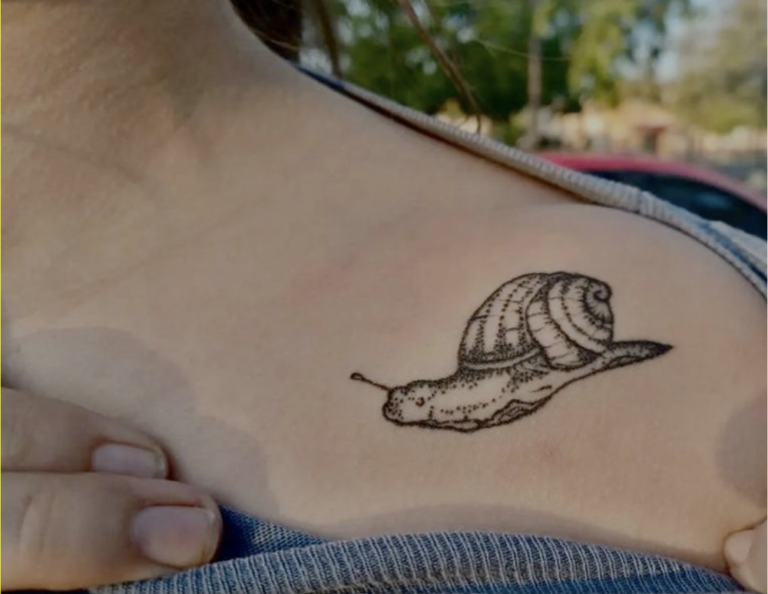
“I love tattooing mushrooms and snails and curved patterns the most,” Nemchuk said. “Most of my art is abstract and surreal. Nature and meditative states bring [me] the most inspiration.” 

Nemchuk creates mostly psychedelic pieces that she feels are healing and uplifting. She believes that trauma can be healed through artistic expression and personally uses art as a form of therapeutic release. 

As a psychology major, Nemchuk feels as though she is combining her academic interests with her artistic interests through her tattooing. 

“When you’re tattooing, you are both emotionally and physically close to that person,” Nemchuk said. “I find it liberating to decorate your body. It can be a way to celebrate an accomplishment or cherish a memory.” 

Nemchuk described tattooing as great practice for her future career as a therapist. She loves listening to her clients’ stories about the meaning behind their tattoos as she works, and she sees her work as a release of emotional pain through physical pain. 

After graduation, Nemchuk plans to get a license in Marriage and Family Therapy (LMFT), focusing on psybicilin therapy for anxiety and depression. 

“Even though I want tattooing to be a side career to therapy, I want to tattoo my whole life,” Nemchuk said. 

Although Nemchuk is content with holding two very different careers, she hopes that one day she can combine both worlds, maybe even by practicing art therapy. 

Currently, Nemchuk is donating 50% of her freelance tattooing proceeds to Sunflower of Peace, an organization that supports Ukranians affected by the Russian military invasion. She explained that this cause is meaningful to her because of her Ukrainian heritage. The majority of her family resides in Eastern Europe, and many have been personally affected by the war. 

Her artwork and bookings can be found on Instagram (@art_snaail). 


Written by: Monica Roberts  — features@theaggie.org



Developing Pap test alternatives will save lives

Pap tests are highly effective for detecting cervical cancer, but many find the procedure uncomfortable

By EDEN WINNIFORD — opinion@theaggie.org


Once someone with ovaries turns 21 in the U.S., it is recommended they receive routine cervical cancer screening, commonly known as the Pap test, every three years. Regular Pap tests save lives by detecting cervical cancer at an early stage, which is usually caused by HPV. Although Pap tests are important and effective, the process of completely undressing and having a doctor insert a swab into the vaginal canal and collect a sample from the cervix can feel invasive and uncomfortable.

Some patients also have little choice about when to get a Pap test. Medical providers can (and do) withhold birth control from patients who are overdue for their Pap smears, which takes reproductive autonomy away from people and can make patients feel forced to undergo the test when they are not mentally prepared. This practice ignores that for many, birth control is essential medication. People should be able to make their own reproductive choices no matter what, and using birth control as a bargaining chip is disrespectful toward patients and their bodily autonomy. 

Pap tests can be uncomfortable for anyone, but they can be especially upsetting for transgender individuals, people who have experienced sexual assault and people who have a disability. Body shame also discourages many people from getting regular Pap smears. As of 2019, 23% of women were overdue for Pap tests, compared to 14% in 2009. A different study found that only 27% of transgender men who required cervical cancer screening had one in the past year. Additionally, people of color, low-income individuals, people from rural areas and those without health insurance have limited access to Pap tests. The Pap smear is highly effective for detecting a treatable cancer, but many people still aren’t getting it. 

There are, however, alternatives to the Pap smear and ways to reduce risk for cervical cancer. The HPV vaccine is effective at decreasing HPV transmission rate — although only people with a cervix can get cervical cancer, everyone can spread HPV and should get vaccinated. Some countries have also transitioned to using HPV tests for cervical cancer screening instead of the Pap smear, which can be done at home but also involves vaginal insertion

Additionally, an alternative to the Pap test that does not involve insertion is finally being studied. Research published in 2021 suggests that testing menstrual blood from sanitary pads for high-risk HPV had a higher accuracy rate than the Pap test. Although doctors also tend to perform physical examinations in conjunction with the Pap test, the option to mail or walk in menstrual samples would give people more agency about their bodies. It could also increase the number of people who receive life-saving HIV screening, especially for those who feel uncomfortable about Pap tests.  

There are better ways to encourage regular Pap tests than holding a patient’s birth control hostage. More research should be done on menstrual blood testing, and U.S. hospitals should offer at-home HPV tests as a more comfortable alternative for their patients. The Pap test has already saved countless lives, but expanding care options will save even more.


Written by: Eden Winniford — opinion@theaggie.org

Disclaimer: The views and opinions expressed by individual columnists belong to the columnists alone and do not necessarily indicate the views and opinions held by The California Aggie.


It’s never too late to learn an instrument

There are a variety of benefits, too!

By OWEN RUDERMAN — opruderman@ucdavis.edu 

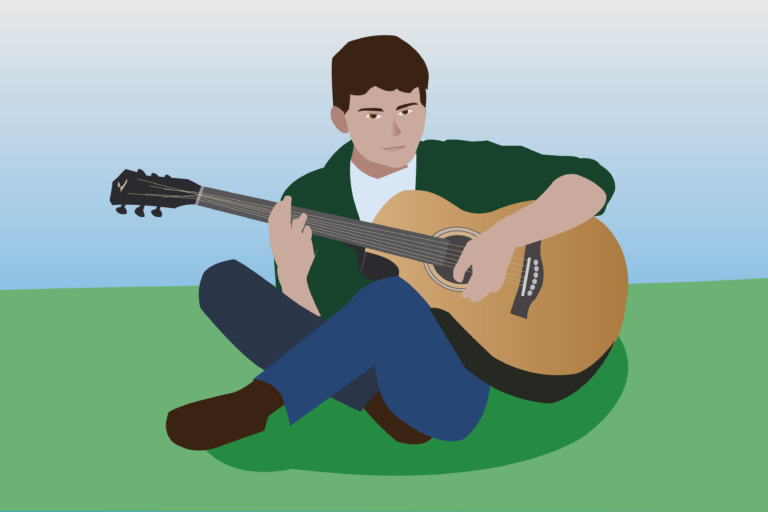
Many of us can remember a time when we first learned a musical instrument. For me, it was middle school, where I learned to play the recorder. I don’t remember much of the lessons — all I know is that when I learned “Hot Cross Buns,” I would have rather been trading Pokémon cards out in the quad. Many of my friends have shared this experience as well.

Interestingly, people often express to me that they wish they had continued their music lessons when I ask. When they were younger, though, they couldn’t focus enough, or they hated their teacher or their parents forced them to learn. But now they look back and wish they continued learning to play.

My question is: If you want to learn how to play an instrument, why not give it a try? Although buying a brand new instrument can be expensive, it is possible to find used instruments for a good price from online marketplaces like eBay, Craigslist and Facebook Marketplace. Anyone with access to an instrument can teach themselves how to play with the amount of free teaching material on sites like YouTube. A quick search turns up results for guitar, piano, bass and banjo lessons, to name a few. All it takes to learn is a healthy amount of self-discipline and time. 

If you’re like me, though, it can be difficult to keep yourself motivated. Having a teacher can help immensely with reducing procrastination and establishing routines. You can actually get one-on-one lessons with a music instructor through UC Davis. The UC Davis Department of Music offers “intermediate to advanced music lessons” that all UC Davis students are eligible to sign up for. This is more pricey than teaching yourself, however, as it costs $300 a quarter for 10 sessions of 30-minute lessons.

I opted to take piano lessons from a different program back in my hometown. At first, I was worried that I might not be able to ever play very well, considering I was already an adult when I started. There seems to be this idea that you will never be good at an instrument if you don’t start learning when you’re a toddler. This is simply not the case. There are people over 60 years of age learning in my program and are at the same skill level as me. These folks are living proof that it’s never too late. 

Over the two years I’ve been playing the piano, I’ve steadily improved. Now I have the tools to play most of the songs I want to. But if learning how to play your favorite songs still is not enough motivation, it turns out that there are actually a variety of benefits to learning an instrument. Playing an instrument can actually increase the capacity of your memory, improve your reading and comprehension skills and more, according to various studies.

As long as you have access to an instrument and an internet connection, you can start learning an instrument right now. If you’re interested, why not give it a try? Even if you don’t get around to learning your favorite songs, you might just end up reaping some of the benefits of learning an instrument. And there’s no time like the present to get started.

Written by: Owen Ruderman — opruderman@ucdavis.edu 

Disclaimer: The views and opinions expressed by individual columnists belong to the columnists alone and do not necessarily indicate the views and opinions held by The California Aggie.


Manetti Shrem Museum of Art receives recognition as one of the 25 best museum buildings of the past 100 years

The space integrates values of the Davis community at the core of its mission

By CLARA FISCHER — arts@theaggie.org

UC Davis’ very own Jan Shrem and Maria Manetti Shrem Museum of Art was recently named one of the 25 best museum buildings of the past 100 years by ARTnews. The distinction becomes especially poignant considering that only four museum spaces located in the U.S. made the list.

“The Manetti Shrem Museum was really born out of a dream of lots of people who thought it was important to have contemporary art on the university’s campus,” said Randy Roberts, deputy director of the Shrem. “There was a spirit of experimentation and innovation in art that’s very much aligned with a lot of the work that continues to come out of UC Davis.” 

The space, created by architectural design firms SO-IL and Bohlin Cywinski Jackson, as well as contractor Whiting-Turner, was designed with the values of the university and its surroundings in mind. The design was inspired by and was meant to emulate the Davis landscape, with “elements of interior and exterior fluidity [that were chosen] because of where we are,” as described by Roberts.

The mission of the Shrem is multifaceted and designed with visitors in mind every step of the way.

“It’s really about centering art experiences in the ways that people are finding their place in the world,” Roberts said. “The notion being that art is about ideas, and that artists are asking questions that are of importance to all of us.”

Roberts cited the Grand Canopy as an example of these integral aspects of the museum’s design. As the main spectacle of the Shrem, not only is the massive 50,000-square-foot aluminum structure visually stunning, but it also “creates shade in a place that’s very hot. It’s very much about being here, serving students, but it also is of a building that ranks among the top in the world for seeing art.” 

This duality is exactly what makes the museum so special. Both intended as a place to view art and as a place for the community to come and unleash its creative side, the Shrem was created with purpose in mind from its conception. 

“One of the important things about the Manetti Shrem is that we are here to serve all disciplines,” Roberts said. “Like the library or the Mondavi Center for the Performing Arts, the idea that we bring forward is that art is central to all of our lives and can be a way that we are all exposed to new ideas and new questions and learn how to look in different ways.”

This all-encompassing approach to education and art appreciation is what sets the space apart from traditional informal educational settings — perhaps this is what made the Davis institution stand out from its more world-renowned peers.

“It isn’t the biggest museum; it doesn’t have the largest collection, but what this museum does is put education at the center of what we’re doing,” Roberts said. “There’s a third of the museum space dedicated to education, and the exhibitions themselves are positioned as a way for people to interact with art as a way to open their lives.”

Given that UC Davis prides itself on being a well-established research institution, it logically follows that the Shrem would build on this hands-on method of learning.

“Art makes sense when somebody is connecting and interacting with it,” Roberts said. “Everything is built around the idea of people in the space, which is different than a lot of art museums.”

For example, the Community Education Room has a glass door that opens up and recedes into the ceiling, allowing for the room to be transformed from a traditional classroom setting into a larger space where communities can come together.

Through collaboration with the Design Construction Management Unit at UC Davis, the Shrem was conceptualized with sustainability in mind. The building is LEEDv3 NC-Platinum certified and has achieved both a 57% reduction in irrigation water use and a 44% reduction in general water use through efficient fixtures. It also hosts a cutting-edge light system that is both environmentally friendly and in service of the best art-viewing experience.

“We have a very advanced LED lighting system where we can adjust the brightness from one piece of art to the next — we can show all different kinds of work,” Roberts said. “Who knows what the next form of media will be? [The architects] wanted to tie in as much flexibility as possible so that we could show whatever comes next.”

Above all, the Shrem is a place meant to be available for everyone. Describing museums as “holders of shared culture,” Roberts emphasized what is truly special about the unique space on campus.   

“We really want people to leave feeling like museums are for them,” Roberts said. “It’s important that people see that the museum is for all of us — regardless of whether you’re an artist or not an artist or an art historian.”

Admission to the Shrem is free for all — as per the museum’s mission — which is made possible by the university and a variety of donors. 

While traveling to far-off places with a rich offering of museums and galleries alike is no doubt worthy of its own merit, it is certainly exciting that one of the most well-lauded sites of the past century is so near to home. The Shrem has a multitude of exciting offerings hosted by the museum for students and non-students alike to take advantage of, all from the comfort of this very own little town.  

Written by: Clara Fischer — arts@theaggie.org


Davis Triceratops community offers new ways to socialize through scavenger hunts

The online community crochets tiny dinosaurs and hides them in discrete locations around campus for students to find.

By KRISTIN TRENT — campus@theaggie.org


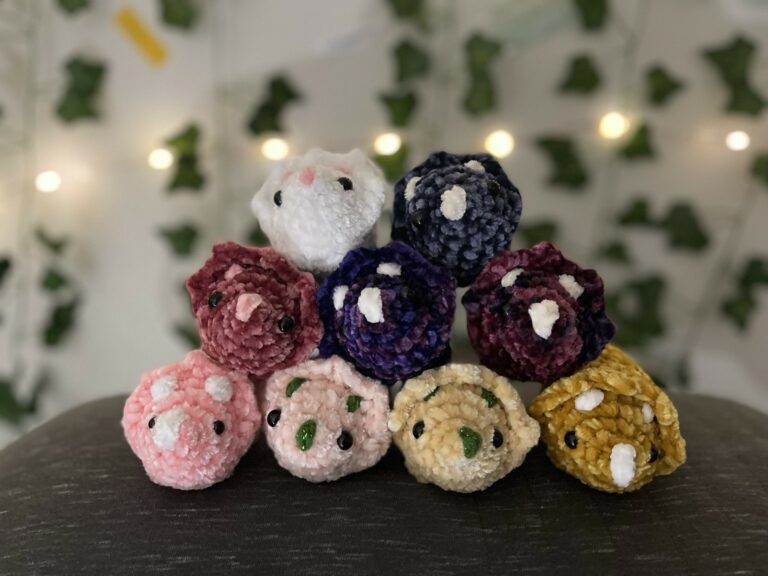
Despite the extinction of dinosaurs 66 million years ago, triceratops have been popping up around the UC Davis campus. Crocheted by hand, these fuzzy and colorful triceratops are the work of a community known as Davis Triceratops. Formed over winter break in 2021, founder Jennine Eng, a second-year animal science major, found herself with spare time and got to work crocheting different animal patterns she found online. 

The simplicity, cuteness and efficiency of the triceratops pattern encouraged Eng to make many triceratops and hide them in a scavenger hunt format. Through this idea, the Davis Triceratops community has been bringing students together through hunting for these stuffed animals hidden around campus ever since. 

Gaining 2,150 members to their Discord as of April 8, Eng found herself needing help managing the group and invited her friends Ada Lei and Sebastian Carpinter, first-year students majoring in biology and managerial economics respectively, to help organize future scavenger hunts.

“I didn’t expect it to grow this quickly,” Carpinter said.

Originally advertised in the Discord for those living at The Green, the managing team quickly created its own Discord for Davis Triceratops. The group has been active for the past three months, and hosted its first drop on Jan. 6.

The community attributes some of its success to the collectability of the triceratops. The crocheted dinosaurs themselves have an exclusivity that keeps students and community members hunting, according to Lei.

“The horn colors change every month so after the month, you can’t get the previous colors anymore […] that way it has a collectible aspect,” Lei said.

Drops, which happen multiple times per day, work similarly to a scavenger hunt, in which triceratops are hidden ahead of time for hunters. The triceratops are wrapped in cellophane bags and hidden in a place like the Silo or the Memorial Union. A close up picture and general location information is sent to the Discord and Instagram to give hunters an idea of where to look.

“When we were walking out there, we saw so many groups staring at their phones trying to figure out where [the triceratops] could be based on the photo hints,” Lei said. “I think it’s so much fun for so many people because we have a great community, and it’s a way for people to get out of the house. Because we started during pandemic times, [hunters] told us they used [the drops] to go outside.” 

The Davis Triceratops Discord has a channel called “hunting together” that allows students to meet up and look for triceratops as a group. 

“A lot of people have met through the server creating new friendships which is so nice to see,” Carpinter said.

Once a triceratops is found, the new owner is asked to assign themselves a role of “triceratops parent”’ which helps them make connections with other triceratops owners on the server. 

According to Eng, the online platform paired with in-person events has helped students, particularly those that transferred to UC Davis during the year of online schooling, form a sense of community on campus despite pandemic conditions.

“Transfer students already have a limited amount of time on campus and online classes limit our ability to meet new people and make new connections,” said fourth-year computer science major and discord moderator for Davis Triceratops Arthur Poggenburg. “This community offers a way to meet people [despite those barriers].”

Davis Triceratops has plans to establish a chapter of Davis Triceratops at UC Berkeley. This is planned to take place fall 2022, with the team gearing up to provide supplies for the community. 

The community is looking for more members for their production team and welcomes new hunters to join the Discord.

Written by: Kristin Trent — campus@theaggie.org


Getting the most out of our education means being as present as possible

Students and professors must prioritize in-person attendance while still accommodating those who need access to virtual education

By THE EDITORIAL BOARD 


Despite the fact that in many ways we’ve returned to life as it was before the pandemic (social gatherings, in-person classes and the like), there are some ways our culture has shifted away from prioritizing being physically present. Members of the Editorial Board have noticed that some classes are being canceled with recorded lectures posted as replacements. Additionally, some of us have had classes where professors reuse lectures from previous years instead of holding classes in person.

And while we now have online methods of learning and professors generally have valid reasons for canceling class or shifting lectures online, it is essential that instructors do not use these platforms in a way that detracts from students’ educational experiences. Not only is there so much to be gained from physical attendance, but also instructors must respect that attending UC Davis requires both funds and effort and with the fast-paced quarter system, each lecture is crucial. 

Many UC Davis students have had a year and a half of college fully online and now that the campus is reopened and most classes are once again taught in person, students should have the opportunity to be physically present in their courses. 

That being said, after more than a year of virtual meetings and lectures, the members of the Editorial Board understand that it can often feel taxing to attend every scheduled event in person. It may seem easier to move in-person meetings to Zoom or to watch a recorded lecture after the fact, and it’s going to take time for everyone to once again feel obligated to be physically present. It is, therefore, the role of both students and instructors to normalize in-person attendance and create a productive and interactive learning environment.

While in-person lectures can help students feel more engaged, we’ve gained extensive knowledge from our time functioning fully online that can be incredibly useful in terms of increased accessibility. Office hours held virtually and lectures recorded through lecture capture allow students easier access to education and assistance with their classes. 

It can be difficult, however, to have an engaging live class if simultaneous Zoom options are provided, since those on Zoom may miss out on opportunities to ask questions and it’s more difficult for everyone to interact with classmates when some are virtual and others are in person. Some students have important reasons for not attending in person, but others may attend on Zoom simply because it is more convenient — something we’ve all done on occasion. But as we safely continue our transition back toward normalcy, we need to realign our priorities back to being present in person. Learning together is better, and the Editorial Board encourages students to attend class in person whenever possible. 

Students and instructors must collaborate and be open to providing and receiving constructive feedback as we navigate new approaches to education in a (not quite) post-pandemic world.


Written by: The Editorial Board


Community members discuss effect of COVID-19 on disordered eating, eating disorders

Students share how the pandemic has impacted their mental and physical health 

By MAYA SHYDLOWSKI — features@theaggie.org 


Content warning: This article discusses eating disorders and disordered eating.


The long-term effects of COVID-19 extend beyond what scientists call “long COVID.” There’s also the myriad mental health struggles, including disordered eating, that have been triggered by different aspects of the pandemic.

Although it may sound like the same expression, disordered eating is slightly different from the more commonly known phrase, eating disorder. Disordered eating is a more inclusive term that extends beyond the three eating disorders defined by the Diagnostic and Statistical Manual of Mental Health (DSM). 

This manual is the standard for information in psychology and psychiatry, according to the American Psychiatric Association. It categorizes psychological struggles with eating into three disorders: anorexia nervosa, bulimia nervosa and binge eating disorder, the last of which was only added to the DSM in 2013 and is less well-researched.

Dr. Debbie Fetter, an assistant professor in UC Davis’ Department of Nutrition, said that disordered eating is more common than formally diagnosed eating disorders, and that, often, the narrow scope of eating disorders identified by the DSM limits people’s perception of what may be signs of disordered eating.

Teaching about eating disorders in a more inclusive manner is critical for identifying signs and getting help for people who need it, Fetter said. 

Right now a lot of the resources and support aren’t very inclusive when it comes to eating disorders and are not targeting all communities that are affected by eating disorders,” Fetter said. “That’s something that we need to see: we need better materials, better diagnostic tools, better awareness and better support.”

Fetter explained that, during the pandemic, many people, especially young people, have experienced disordered eating, whether their patterns are included in the DSM or not. 

Surveys of hospital records show that by August of 2021, the number of adolescents admitted to hospitals for eating disorders had increased 25% since March 2020, the beginning of the pandemic in the U.S. The National Eating Disorder Association (NEDA) reported a 40% increase in calls to their helpline in the first year of the pandemic as well. 

Another survey reported that 70% of people previously diagnosed with anorexia nervosa experienced an escalation of symptoms during the first stages of the pandemic, while, at the same time, 46% of these people had less doctor visits.  

A lot of research has been published on how the pandemic may increase the risk of disordered eating, including major stressors that may induce eating disorders and reduce access to recovery aid. Across both research studies and news articles, a few patterns for the major causes of this epidemic have been identified. Some of these patterns include isolation from support systems, distress about the future, increased health-related anxiety, more time on social media and food insecurity.  

An anonymous student shared her story about how the pandemic has affected her mental well-being and has given rise to an unhealthy pattern of eating. She wished to remain anonymous because, while she believes this is an important topic to discuss, she wasn’t comfortable attaching her name to some of the personal details shared in her story. 

She explained that her eating disorder stemmed from severe anxiety that affected her appetite. She was previously diagnosed with anxiety and obsessive compulsive disorder (OCD), which heightened during the pandemic, especially during 2020. Isolation from friends and the removal of many social outlets led to an increase in her symptoms of anxiety and caused her to experience panic attacks.

As pandemic restrictions were lifted and COVID-19 vaccination rates increased, she was able to be more social, which helped reduce her anxiety, but the transition posed different challenges, she explained.

“My OCD is more about thought rumination and feelings of guilt,” she said. “I think as restrictions were lifted and people were starting to see each other more, the moral dilemma became a little difficult because I would get really in my head about potentially exposing somebody. Then I would get stuck on that idea for a long period of time, and my mind would always go to the worst-case scenario.” 

This contributed to her distress, which had negative impacts on her physical health, she said. She started feeling constantly nauseous, which resulted in a “complete loss of appetite.”

Talking to someone about your feelings or the symptoms you may be experiencing is one piece of advice that she suggested for anyone struggling with mental health issues. She said that she found an outlet with her mom, whom she would call whenever she was having an especially tough time. However, talking to a professional was also important for her.

“I’m a huge therapy enthusiast,” she said. “I think anyone can hugely benefit from talking to a professional, even if you don’t have a diagnosed mental health problem.”

Makena Diehl, a fourth-year nutrition major, said that she also experienced disordered eating that stemmed from a high-stress environment. She said that she experienced periods of disordered eating throughout high school because of her involvement in ballet, among other factors. Diehl said that ballet is known to support a culture of intense competition and can lead to disordered eating among many dancers as they strive toward the image of the “perfect” ballet body and endure hours of demanding exercise.

She found that some difficult college courses fostered a similar competitive environment. Diehl said that she was so focused on doing well in school that the competitive and comparative mindset that had fueled some of her earlier disordered eating returned. 

“It’s never about the food,” Diehl said. “It’s always something else that turns into an eating disorder.”

Unlike some others’ stories, Diehl said that the pandemic probably saved her. She struggled with disordered eating throughout her second year in 2019 and early 2020, before the pandemic forced her to return home in March 2020. She said that going home allowed her to “look in the mirror and actually see the difference” in her appearance and patterns.

“When it was happening, I had no idea that I was struggling,” Diehl said. “But then when I could take a step back and actually focus on myself, it was like that time [at home] made me realize what I had to prioritize.”

Part of what forced her to face her struggle with disordered eating was her parents’ involvement. 

“It’s so hard for a friend to say to you, ‘Are you okay?’ but your parents are going to say it straight-up,” Diehl said.

After going home, Diehl was diagnosed with an eating disorder and began seeing a therapist and a nutritionist to help in her recovery. Diehl said that she saw changes to her energy, mood and relationships once she began her recovery journey. 

“I saw more people gravitate toward me because I was smiling again, and I had my personality back,” Diehl said. “I feel like that just pushes you to want to heal and be better.”

Now, Diehl said that as she is further along in her recovery process, she is able to enjoy her life more by fueling her body and finding balance. Something that has stuck with her throughout her recovery is the phrase, “Every body’s different.”

This has a dual meaning, she said — it can mean everybody or every body. Regardless, she finds it a helpful reminder for herself and anyone else who may be struggling with body image issues. 

Fetter tries to teach this message in her nutrition classes. She said that she gets a lot of students in her classes that say they want to lose weight or cut body fat, but she tries to teach them that there’s “more to food than calories,” and that food is necessary to fuel everyday activities.

“I really try to talk about size diversity,” Fetter said. “All of us are built differently. We’re all meant to look differently, and we have a different optimal body composition for our own unique needs.”

Fetter said that one of her goals is to identify students who may be struggling with disordered eating and refer them to resources on campus, including registered dieticians and counselors in UC Davis Student Health and Counseling Services, that offer help. The university also offers individual or group therapy for students experiencing disordered eating and has information online about eating disorders and weight stigma for anyone who wants to learn more.

There are also anonymous ways of getting help, such as NEDA’s helpline, which includes options for calling, texting or messaging online. All of these resources offer life-saving help for those experiencing disordered eating. Fetter said that anyone who believes that they or someone they know might be struggling with disordered eating should reach out to these resources.

“My number one piece of advice would be to talk to a trained professional,” Fetter said


Resources can be found embedded throughout the online version of this article. 

Written by: Maya Shydlowski — features@theaggie.org


UC Davis Student Farm hosts Farmstand grand opening

The Farmstand will be open every Monday this quarter

By ISABELLA KRZESNIAK campus@theaggie.org


The UC Davis Student Farm held its Farmstand grand opening on April 4 from 12 – 4 p.m. at Extension Center Drive. The farmer’s market-style event offered fresh produce, tea tastings, educational demonstrations and live music. The Farmstand will be open from 12 – 3 p.m. every Monday at the same location during school sessions.

The Farmstand is primarily organized by members of the Market Garden, an academic program under the Agricultural Sustainability Institute. It intends to foster community engagement and provide an educational experience for students, according to Emma Torbert, the Student Farm and Market Garden manager.

“Coming out of the pandemic, we really wanted to have more engagement with the community and to have more connection with the Student Farm,” Torbert said.

Earlier this school year, the Farmstand was limited to members of the Community Supported Agriculture (CSA) program, a subscription service that provides prepackaged produce to UC Davis students and faculty. This subscription program lacked community interaction, according to Kelly Weihrauch, a third-year environmental science major and a lead student farmer.

“It never felt that personal,” Weihrauch said. “It didn’t feel like I had a connection with the CSA members.”

Now, the Student Farm also offers produce to the public at the Farmstand, where shoppers can choose the items they want. Weihrauch said that this reduces food waste.

“A lot of the time, we would get emails saying, ‘I didn’t use all of my produce’ or ‘My fennel has been sitting here for weeks,’” Weihrauch said. “Now, people can pick what they want and leave what they want, so that way we can donate the rest of the produce […] or keep it for later use in our coolers.”

Much of the produce from the Student Farm is donated to programs like Fruit and Veggie Up! and Fresh Focus.

The transition from creating and selling prepackaged baskets to hosting a farmstand was a process of trial and error, according to Weihrauch.

“People weren’t used to coming and picking out their own produce,” Weihrauch said.

Sarai Acosta, a lead student farmer and second-year graduate student studying international agricultural development, helped organize the tea tasting table at the Farmstand grand opening. Acosta, who has studied international trade policy, believes buying local produce has far-reaching benefits. 

“In Central America, there are a lot of studies around people not being able to eat the corn that they grow themselves,” Acosta said. “They have to buy imported corn from the United States. So, by diversifying your diet and being OK with changing what you eat based on the season, you ironically end up helping people from all over the world.” 

Mateo Alliende, a third-year environmental policy major and a lead student farmer, tabled for the grand opening at the Memorial Union. The Student Farm teaches the community about sustainable agriculture through hands-on experience, according to Alliende.

“How to do agriculture in a sustainable and community-based way is [a] really cool goal to have, and it’s a big part of the UC Davis experience,” Alliende said.

Weihrauch hopes that the event raised awareness about the farm.

“[The farm] is tucked away in this tiny little corner of campus,” Weihrauch said. “We want to bring people to the student farm and show them how much there is to enjoy with fresh produce.”

Written by: Isabella Krzesniak — campus@theaggie.org

Dos Coyotes Border Cafe celebrates 31st anniversary

The restaurant features anniversary special and jobs for undergraduates

By RACHEL SHEY city@theaggie.org


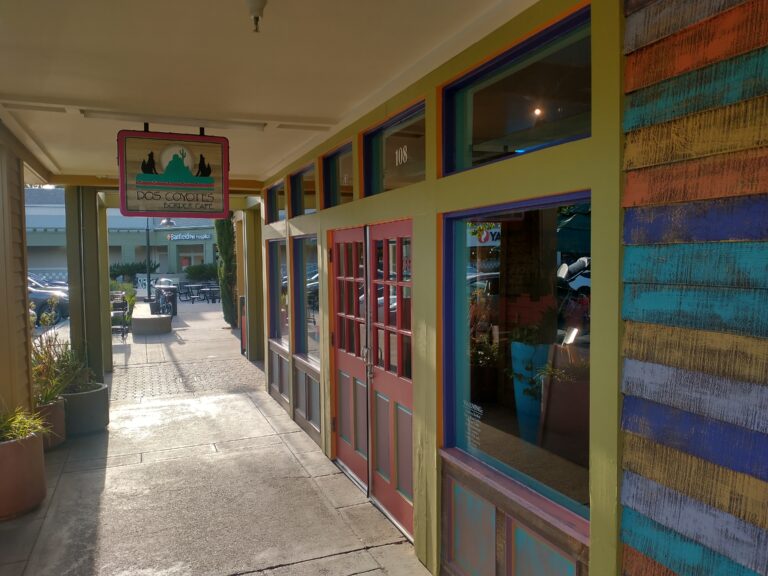
Dos Coyotes Border Cafe, a Southwestern-inspired “people’s restaurant,” is commemorating 31 years of business this year. Dos Coyotes started in Davis, but is now a 10 store chain across Northern California, with the Market Square at Arden Fair location reopening soon after closing for COVID-19. However, the founder of the chain, Bobby Coyote, is originally from Southern California, where he began his restaurant career. 

I ran a restaurant, a very very high volume restaurant, in West Hollywood, for about 12 years,” Coyote said. “It was a lot of fun in my twenties, but then I ended up getting married, and had a baby on the way, and it wasn’t really going to be conducent to starting a family.” 

Dos Coyotes was inspired by Coyote’s love of the red and green chiles of Southwestern cuisine. Coyote envisioned a more casual, affordable restaurant, where it would be mostly self-serve but also feature good quality food. 

“One of my ideas was to do this New Mexican inspired, quick casual, restaurant quality people’s restaurant,” Coyote said. “It would be more on the affordable side, people might have to do a little work, for example, with the salsa bar, with getting their own drinks. The food was gonna come out on really nice plates with really nice glassware and it was gonna be really restaurant quality food and not fast food, so to speak.”

Coyote chose Davis as his location for the first Dos Coyotes, after his sister who was living in Davis told him about the marketplace where the restaurant is currently located. Thinking that it would be good business to open a restaurant near a high concentration of college students, Coyote decided to move to Northern California. 

“Living out in LA, I didn’t want to be a little guppy in a big ocean,” Coyote said. “My wife had family up north, and we were looking in the Sacramento area but my sister came upon a marketplace and told me about it. She said it was really cool, has a lot of artwork. She said it could be a really good area for students because there were a lot of apartments and homes around it.” 

The first Dos Coyotes was significantly different from today’s Dos Coyotes. It had a much shorter menu, according to the website.  

“The first Dos Coyotes opened in The Marketplace in North Davis on January 5th, 1991,” the website reads. “The menu was a little smaller than it is today. Our original tacos were – literally – two warm corn tortillas, tender, flame-broiled steak or chicken, onions, cilantro, a charbroiled cebollita green onion and whatever salsa you liked.”

Coyote said he experienced a bit of culture shock from Southern California to Northern California. Since he first arrived, Davis has changed immensely “for the better,” according to Coyote, who described it as “still on the verge of being a cowtown” in 1990. 

“It was pretty scary, the only thing that was up there was Safeway and Long’s, which became CVS,” Coyote said. “A lot of places weren’t open yet. It was definitely culture shock. Back then it was mid 1990 when I left civilization, so to speak. I came to Davis and I just remembered that things were a lot different. Way more birkenstocks up here.” 

Coyote also noted that Dos Coyotes has provided leadership experiences and gainful employment to many UC Davis students. Some students work at Dos Coyotes for their entire undergraduate experience, eventually becoming assistant managers.

“Once they figure out they are managers, they’re leaders, not followers,” Coyote said. “There’s something that rings with that and has propelled people into their careers. Maybe they’ll go into management in whatever field they’re studying, and they end up being leaders instead of just followers. So it’s very good for the character and we’ve had a lot of students who’ve done that.” 

Coyote is also proud of his profit share program at Dos Coyotes, which has helped out many employees when they retire or leave the restaurant. Former employees have received over a hundred thousand dollars after leaving the restaurant through plans from the Employee Retirement Income Security Act of 1974 (ERISA).

“It’s an ERISA plan and we usually fund about 5% every year of payroll,” Coyote said. “There’s stipulations, like you’ve got to be 21 and you’ve got to work X amount of hours. It’s a voluntary retirement plan that we do, kind of like an IRA, [and] we usually have done about 5% every single year. I’ve had a lot of really big payouts to people, a hundred thousand, one person just got 163,000, another person just got a little over a hundred thousand.”


Written by: Rachel Shey — city@theaggie.org


Winning mural for UC Davis Climate Raising Challenge painted on local barn

Civil and environmental engineering Ph.D. student Rachael Dal Porto’s submission to the Climate Raising Challenge was selected to be painted on a local barn

By KAYA DO-KHANH — campus@theaggie.org


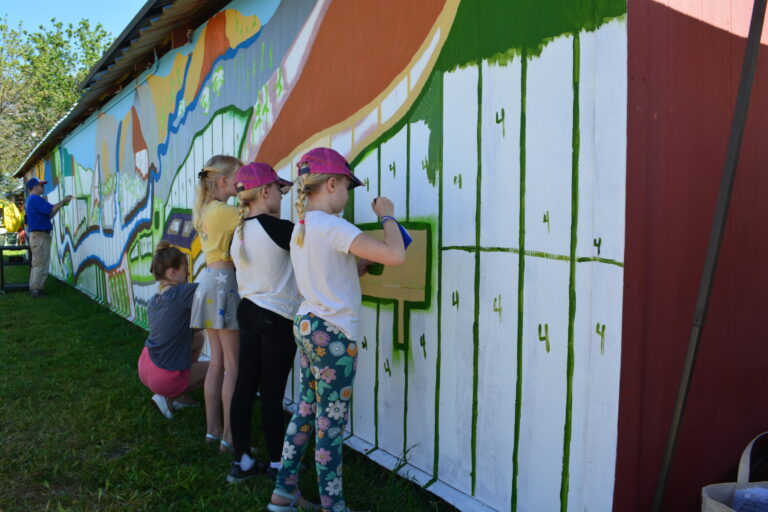
This past fall quarter, UC Davis Sustainability partnered with the UC Davis Institute of the Environment and the One Climate Initiative to launch the Climate Raising Challenge, a mural design competition open to undergraduates and graduates identifying a climate-related agricultural issue in the Valley. The winning mural, “Hungry for Connection” created by civil and environmental engineering Ph.D. student Rachael Dal Porto, was awarded a prize and painted on the side of a local barn off the frequently traveled County Road 102 between Davis and Woodland on March 26. 

“It was about getting students and the youth more involved in climate change and activism,” said Director of Development, Strategic Initiatives Ashley Green. “It was a different way to engage students and also to engage the community as a whole.”

The winning painting was selected by a group of 15 jury members, which consisted of artists and climate activists. Their evaluations were based on five criteria: accessibility, feasibility, connectivity, defensibility and engagement. Dal Porto’s winning mural was inspired by the Sacramento River, as she wanted it to illustrate ways to make use of natural landscapes in a climate-friendly way. 

“I hope people can take away a positive view on the world we could live in if we adequately, appropriately and feverishly address climate change,” Dal Porto said. “It will take serious action immediately, and many are already feeling the negative impacts of climate change.” 

Emily Schlickman, an assistant professor of landscape architecture and environmental design, led the project, and she hosted a webinar series in the fall that brought in artists and local experts to speak about climate change and agriculture in the region. At the end of fall quarter, students were invited to submit proposals that conveyed the message about agriculture being a part of the climate solution.

UC Davis students and members of the community gathered on March 26 to help paint parts of the mural on former UC Davis Professor Mike Russell’s barn. Local muralist Leon Willis guided the mural painting and had members of the public contribute in a way similar to painting by numbers. 

“We thought instead of a poster competition, let’s do it on the barn,” Schlickman said. “Let’s actually put this message on the landscape that we’re talking about so that we can go beyond the campus and start to raise awareness in the larger community and have that be situated in the agricultural landscape.”

Around 250 people attended the event and enjoyed a live band, a lemonade stand and food catered from Guads. According to Schlickman, people from ages 2 to 80 contributed to the painting. There were also some UC Davis departments in attendance that spoke about different aspects of agriculture and the environment. 

Schlickman said that there were future plans of adding a component such as a hashtag to the mural for anyone interested in understanding the origins of the project and where it might go. She views the project as a starting point and hopes to have other barns in the Central Valley painted to eventually have a trail where people can learn about climate activism and agriculture across the state. 

“There are so many cool, progressive things that are happening in the realm of agriculture that maybe aren’t visible to the general public, and I think by using art as a medium to elevate those initiatives that are already happening serve to increase visibility,” Schlickman said.

Written by: Kaya Do-Khanh — campus@theaggie.org


Immerse yourself in Jim Henson’s magical worlds

“The Jim Henson Exhibition: Imagination Unlimited” at the Contemporary Jewish Museum is everything any fan of his work could ask for (and more)

By ANGIE CUMMINGS — arts@theaggie.org


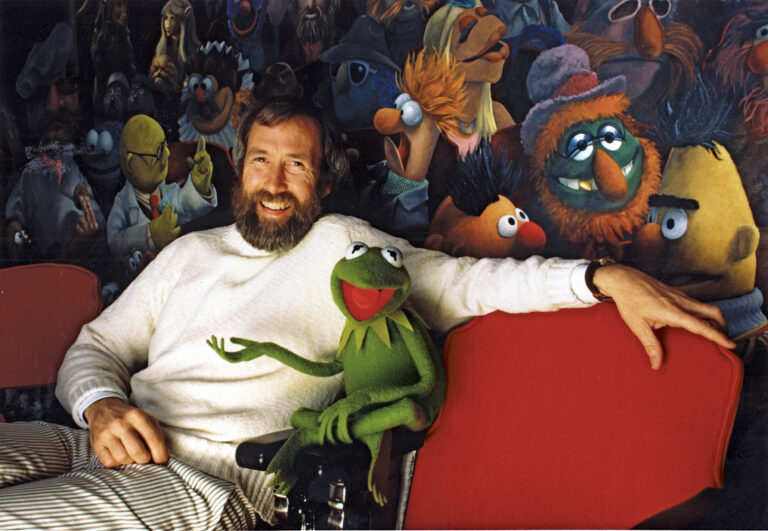
The Contemporary Jewish Museum (CJM) in San Francisco exalts Jim Henson’s various fantastic and vibrantly colored puppet-populated worlds in their current exhibition, “The Jim Henson Exhibition: Imagination Unlimited,” on view now through Aug. 14. The show is a part of a traveling exhibition made by the Museum of the Moving Image that has been put on across the country for over four years now — the CJM being the penultimate stop along the national tour. 

At first look, the exhibit just seems to be a comprehensive chronology of Henson’s life and career, from his humble beginnings as a cartoonist in high school and college, and through his incredibly successful career as a puppeteer and filmmaker. Once you are within the technicolor walls of this exhibition, it is abundantly clear that Henson and the legacy he set was so much more than an amalgamation of psychedelic felt animals, monsters and aliens. As Head Curator Heidi Rabben puts it, “[Henson] went into the space of television and saw how to make it successful and was really innovative, but he retained an element of artistry that he really continued to push.”

Whether your main interest in visiting this show is simply seeing some of Henson’s most famous puppets in person, checking out the early sketches for these iconic characters or learning how Kermit was able to ride a bike, you will come out the other end of the exhibit having a new (or renewed) appreciation for Henson’s bright and joyful story of success. Henson is what seems to be a rare case in the world of Hollywood and commercial entertainment — there is no point in his career that he lost sight of the reasons why he began in the first place. At his core he was an experimental artist, always pushing what was possible in television through his puppets and later much more sophisticated animatronics. 

While the CJM often features varied contemporary artists regardless of their faith, “[Henson] is the first major pop culture figure that is not Jewish that we have ever presented at the museum,” Rabben said. As is noted on the museum website and introductory wall of the exhibition, there really is no question about why this show belongs in the CJM. “It’s actually not about Jewish identity, it’s about the values that are more important and the ways in which those continue to transcend and live on,” Rabben said.

From the educational and social topics tackled on Sesame Street to help children learn and grow in enjoyable ways, to the visually and temperamentally diverse ensemble that makes up The Muppets, “Henson shared characters and stories that represent diverse identities and abilities, allowing people of all backgrounds to see themselves reflected on screen,” as the main title wall of the exhibition states, making it crystal clear as to why his creations have been (and continue to be) adored by fans of all walks of life for over 50 years. 

A second part to the show, titled “Jim Henson: Making a Difference,” functions as a perfect complement to the main exhibition, created entirely by the curatorial team at the CJM. In a smaller room on the same floor as “Imagination Unlimited” there is a continuous screening of selected clips, episodes and films by Henson and his team that especially highlight how his legacy aligns so well with the museum’s core values. With just the large projection screen and cushioned benches in the center of the beautifully designed room, it is a great way to unwind and reflect after going through the exuberant main show. 

At his core, Henson was a creative force with no fear of what was new or different: “that element of play and experimentation that was with him from such a young age, and that is such a credit to how successful he was,” Rabben said. Although Henson’s life was sadly cut short at the age of 53, so many of his creations live on, both in the hearts of his fans and on screen.

From learning to count with Elmo, or singing along with Kermit, to entering the magical worlds of “Labyrinth” (1986) and “Dark Crystal” (1982), Henson has been the man behind so many favorite childhood characters — all of them imbued with his joyful and creative vision of the world. 

Considering Henson’s innovative and inclusive forms of entertainment and his place in pop culture, Rabben reflected on the artist’s life: “He already has such an incredible legacy that continues, had he lived long what else would he have done?”


Written by: Angie Cummings — arts@theaggie.org

Current students share advice for prospective class of 2026

UC Davis students share their favorite parts of the university and tips for high school seniors making college decisions

By JALAN TEHRANIFAR — features@theaggie.org

Months after the application submission deadline, UC Davis released admissions decisions to students of the upcoming Class of 2026 on March 11. Newly admitted students have until May 1 to submit their commitment to attend the university next fall.

Current students — whether they’ve attended UC Davis for just a few months or multiple years — have gathered college insight and advice for newly admitted students to help them choose their university and thrive upon arrival.

UC Davis’ campus is known for its agriculture and campus animals, according to Vaidehi Gupta, a third-year cell biology major. She recommended that new students check out the entirety of the campus when touring or arriving next fall.

“Explore UC Davis because the campus has so much to offer,” Gupta said. “It’s a really unique, cool, beautiful campus.”

Gupta also said that Davis has a lot of resources for new students and students who are struggling to adjust to campus, which she recommended. 

Curtis Dong, a second-year environmental policy analysis and planning major, emphasized the importance of community at Davis. Dong also said that, when he was choosing his university, he found that Davis had the perfect mix of focused classes and fun.

“I think that Davis is the perfect place to focus on your education while still having those ‘college experiences’ because I think the town really encourages it,” Dong said. “There’s stuff to do, but not so much that you’re overwhelmed, where you can’t focus on school.” 

Jessica Chan, a second-year design major, said that she’s found Davis to be pretty small but encouraged students to take advantage of the areas surrounding Davis during their time here. 

“[Davis] is a small town, but you can branch out and take the bus to Sacramento or San Francisco,” she said. 

For students who have decided on attending Davis next fall, Elisha Aguirre, a second-year neurobiology, physiology and behavior major, said that her biggest piece of advice for new students is to branch out of their comfort zones.

“Really try new things,” Aguirre said. “Try to be outgoing and open-minded, [and] try to introduce yourself to new people. [That’s a good way to] maybe make some really great connections and friends.”

Nik Childers, a third-year political science major, said to be wary of reading too much about professors and courses online before arriving on campus. 

“Don’t trust what you read on Rate My Professors,” he said. “A lot of the professors I have taken have got ‘meh’ reviews, but I haven’t had a single bad professor here.”

Grace Heller, a third-year design and economics double major, said that her biggest advice for incoming students is to be open to new experiences and friends as a first year. 

“There’s definitely a place for everyone to fit in, and you definitely find your group,” Heller said. “I know high school can be really small, but Davis is really big, and within it you can find your community and a lot of similar people with similar interests who will make it feel a lot smaller.”

Cynthia Fernandez, a molecular, cellular and integrative physiology (MCIP) graduate student, agreed that building a community in Davis is super important freshman year.

“Try to enjoy your first few quarters here, and make some friends, and just definitely get comfortable with the campus,” she said. “Definitely dive into your academia, and it’s really important to establish a support system here in Davis, especially if you’re not from the area. Just get involved with many clubs and activities, which obviously will help with making friends and establishing that support system too. Also, take advantage of the resources they have here on campus, because it really will help you if you’re lost in any way.”

Written by: Jalan Tehranifar — features@theaggie.org

Review: Avril Lavigne’s ‘Love Sux’ and the pop-punk problem

What does it mean to say that the pop-punk princess has returned?

By CORALIE LOON — arts@theaggie.org

It’s the year 2002: Mount Nyiragongo Volcano erupts, a new type of black hole is discovered and — clearly most important of all — Avril Lavigne’s debut single “Complicated” hits the streets along with its accompanying album, “Let Go” (2002).

It’s difficult to pinpoint exactly what it is about Lavigne that makes her so iconic — besides being a central emblem of pop-punk music in the early 2000s, her presence in the public spotlight led to her becoming a fashion icon for grunge and skater-girl styles. Whether or not any of these facts interest you, you have still likely bobbed your head to a radio broadcast of “Complicated,” and for many of us, her early songs remain poignant and nostalgic touchstones of musical eras within our lives.

Her latest album “Love Sux” (2022) was released on Jan. 25 of this year, serving as a reminder of the pop-punk icon of my generation’s early years. Many have viewed her newest album as a return to her roots. But what does it mean for the pop-punk princess to be back?

In my opinion, what makes Lavigne iconic was always her ability to explore different dimensions of music. Even the label “pop-punk” can be limiting; Lavigne herself has rejected the term “punk” to describe her music. “You can’t label people, give them a word and say ‘this is what you are,’” she said in a MIX iT interview.

 Lavigne’s older work — consisting of the period between “Let Go” and “Under My Skin” (2004) — combined electric guitar and punk elements with the more easy-going vocals and acoustics of early 2000s pop. Then came “The Best Damn Thing” in 2007, which paired an exaggeration of sassy lyrics in songs like “Girlfriend” and “The Best Damn Thing” with the album cover, characterized by a pink and black palette.

This clash between “bubblegum pop” and more traditional pop-punk eventually sided more with the pop side in her newer albums,particularly “Goodbye Lullaby” (2011) and “Head Above Water” (2019). The sappy and often slow pop, griddled with piano and acoustic guitar, led some to retract the title of “pop-punk princess,” such as a Spinditty article that claimed “she’s completely changed her sound.” The contrast between this era of Lavigne and the edgy pizzazz of “Love Sux” was enough to warrant The Guardian’s vibe check of her newest album: “Party like it’s 2002.”

But is there a cost to devaluing her newest work to a simple “throwback” whose value lies only in its subjective nostalgia? Is “Love Sux” really just a modern version of “Let Go”?

I would argue that this mentality strives to separate the artist from the artwork, or else to suggest that Lavigne has somehow returned to her old self or, even more problematically, to her “true self,” suggesting that a prominent era of her existence as an artist was somehow fraudulent.

To dismiss one era of Lavigne in favor of another compromises the idea of an artist’s journey. In an article by Nancy Hillis, she suggests that artists “move through developmental cycles much like the stages of human development.” In a continuous stage of evolution, “Love Sux” is nothing like a new version of “Let Go,” because Lavigne is fundamentally a different person than she was in 2002.

More than a throwback to a specific era, “Love Sux” is a culmination of everything Lavigne has explored between then and now. The snappy lyrics of “Bite Me” are reminiscent of “Girlfriend”-era songs, while the fast-paced electric guitar in “Bois Lie” takes me back to heavily punk-inspired “Sk8er Boi.” Even “Avalanche” and “Dare to Love Me” seem to give a shoutout to her more mainstream pop moments in “Head Above Water” (although with a good extra dose of electric guitar).

All in all, “Love Sux” is a bold collection of songs that takes elements of Lavigne’s older music to new (but also nostalgic) heights, once again showing us that she has not forgotten her artistic journey. Reliant on many moments of her past, “Love Sux” is both a time capsule of musical growth and an example of a new moment in Avril Lavigne’s career.

So, party like it’s 2022!

Written by: Coralie Loon — arts@theaggie.org

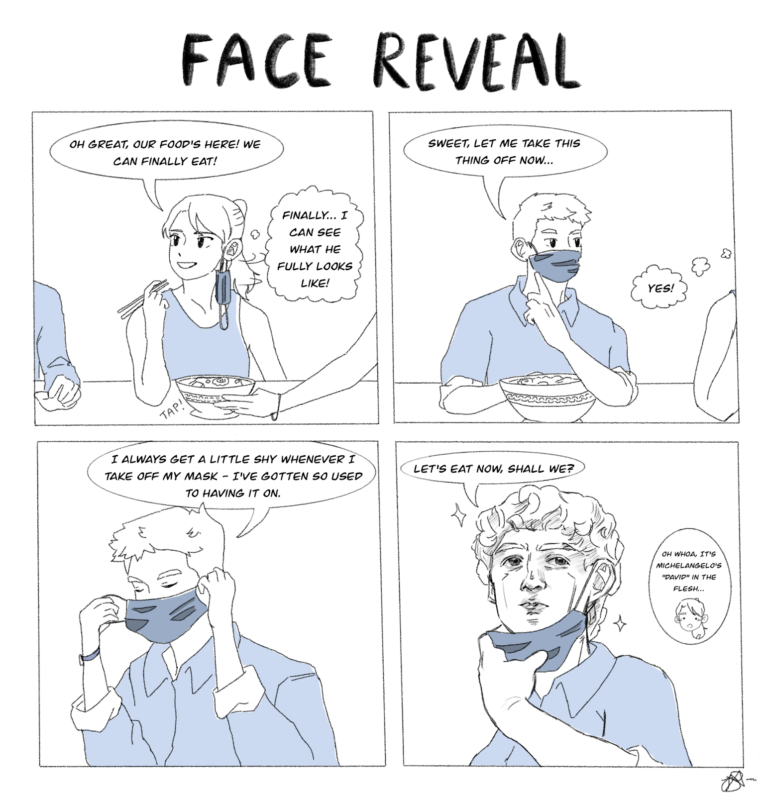
Cartoon: Face reveal

Whenever someone says something like “You don’t look like what I expected,” I never know how to take it. It’s a super neutral remark, but I can’t help but wonder if they mean it as a compliment or not. This cartoon is just a little play on that thought.

Drawn by: SEANNE JAVIER –– sajavier@ucdavis.edu 

Disclaimer: (This cartoon is humor and/or satire, and its content is purely fictional. The story and names of “sources” are fictionalized.)

Virtual Information Sessions held by Yolo County allow individuals to learn more about apprenticeship opportunities

Apprenticeships are focused on building trades and construction industries

By SHRADDHA JHINGAN city@theaggie.org


In a press release published on Feb. 28, Yolo County announced that people searching for jobs would have the opportunity to participate in Virtual Information Sessions, which would expose them to training for the building trade and construction industry.

There were two information sessions. The first was on March 8, and the second was held the following week on March 16. 

The orientation course covers a variety of topics, according to the press release. These range from introduction to the industry to skills needed to excel in the role.

“The general orientation course includes construction industry structure and the construction process; orientation to apprenticeship; tools of the various trades; the safe handling of both hand and power tools; and industry standards of work responsibility and craft excellence,” the press release reads. 

The apprenticeship program uses what is known as the Multi-Craft Core Curriculum (MC3). MC3 was created under “California Workforce Development Board’s High Road Construction Careers” and funded by Senate Bill 1 (SB1). 

The description of the event further describes what SB1 is, stating that it is “a statewide initiative that puts dollars to work to advance careers in the building and construction trades as a reliable pathway to the middle class for disadvantaged Californians via multi-craft pre-apprenticeship training.”

Brian Peabody from Plumbers and Pipefitters Local Union 286 explained in a webinar that, in the field of construction, no previous experience is needed. 

“I had a little bit of construction experience coming in, but the MC3 program is kind of designed to show folks that don’t really know a whole lot about the apprenticeship programs that are available to them,” Peabody said in the webinar.

By participating in the curriculum, people will gain more exposure to and learn about various fields. Peabody also highlighted this in the webinar.

“[…] It’ll give you an opportunity to look at each of the different trades that have an apprenticeship program and kind of decide for yourself which one interests you the most,” Peabody said in the program.

Additionally, the course is the result of a collaboration between various organizations. These include the Yolo County Health and Human Services Agency Workforce Innovation and Opportunity Act, People Working Together, California Workforce Development Board, Highlands Community Charter School, Sacramento-Sierra’s Building & Construction Trades Council and Yolo County Workforce Innovation Board.

In Yolo County, besides the Virtual Information sessions, there are also other opportunities and resources for jobseekers to gain skills and to help them with their job search. These include, but are not limited to organizations such as Yolo Employment Services and YoloWorks!, alongside events such as career fairs.

For example, recently the Yolo County Health and Human Services Agency, Yolo County Workforce Innovation Board, the California Department of Public Health (CDPH) and Yoloworks! hosted a Virtual Career Fair to enable jobseekers to learn more about different opportunities in eight programs at CDPH, according to a press release from Yolo County.

“Job seekers can learn about entry level to senior level career opportunities, chat with staff from multiple CDPH programs, and get questions about the State of California’s hiring process answered by CDPH recruitment team,” the press release reads. “Participating CDPH programs are  General Administration & Operations, Emergency Preparedness, Research and Data, Medical Professionals (Physicians & Nurses), Scientific Career Fields, Information Technology, and Administration of Public Health Programs.”

Ultimately, the apprenticeship program and other such programs will help connect more people to more jobs while allowing them the opportunity to explore different careers. In a TED Talk, Plastics industry Vice President and General Manager Matt Poischbeg described the benefits of apprenticeships.

“We can close the skills gap; we can support our economy,” Poischbeg said. “Apprenticeships can become the backbone of the middle class in America.”

Written by: Shraddha Jhingan — city@theaggie.org