57 F
Davis

Davis, California

Monday, December 22, 2025
Home Blog Page 228

Can the human body predict the weather?

0

A deep dive into barometric pressure and the human body

By ALEX MOTAWI — almotawi@ucdavis.edu

The human body is capable of many amazing things. Take a moment to think about it: The successful creation of the human body, with so many different moving pieces working together perfectly in union, is a miracle in itself. With new developments constantly hitting the forefront, our understanding of the human body has never been better. With many scientific advances, have we finally found the answer to one of those age-old “myths” about humans — that the human body can predict the weather?

Everyone has heard the stories. People who “always” get a migraine slightly before the storm hits their front door. The choice individual who “always” gets an ache in their pinky toe the day before their windows get pelted with rain. We used to file these myths and legends with other old adages that have never been tested or proven. These theories were considered folklore, like using persimmons to predict the weather by examining the shapes inside their seeds. The persimmon theory is based on really interesting research and worth exploring but ultimately false; not all secrets in nature have a true known purpose. However, as science continues to advance, we can truly analyze these stories that were often considered unbecoming. The results made the rest of us look silly. While not applicable to everyone, it is true that certain individuals do have the “power” to predict the weather through their aches and pains, and it all boils down to barometric pressure.

Time for a quick crash course in barometric pressure for the people like me who aren’t scientific geniuses. If we were scientists, I could probably just show you the formula (which contains 10 letters and zero numbers) and everyone would understand, but instead, I’ll take the word approach. Barometric pressure, also called atmospheric pressure, is a measure of air pressure in the atmosphere. It’s highly variable and while not relevant to this discussion, Davis is typically just above 30 inHg (inches of mercury), which is slightly above average. 

As barometric pressure measures how much pressure is exerted on the air, it is a quality weather predictor when used in conjunction with previous data. It works consistently as a predictor of inclement weather in the U.S. In most regions of the U.S., low barometric pressure will mean that air in the atmosphere is rising; therefore, the air is cooling, eventually enough to form clouds followed by possible rain due to the increased humidity. Something to note is that in some more tropical climates, barometric pressure doesn’t work as well as an indicator, but otherwise, it’s a pretty solid method of weather prediction.

Most humans are unable to feel changes in barometric pressure, but not all. If a person is capable of feeling changes in barometric pressure, it’s a very short jump to theorize that they could then apply the knowledge to predict rain, even if it’s done subconsciously at first, which science supports. It’s one of the closest things we have to having superpowers. However, having superpowers is never easy. The people best able to sense changes in barometric pressure are people with arthritis. In the most comprehensive study we have so far (205 patients), it was confirmed that a lowering of barometric pressure (and therefore ambient temperature) increased pain for a significant amount of people suffering from knee osteoarthritis. It makes sense that someone suffering from arthritis would be able to predict some weather patterns based on aches and pains in their more susceptible joints.

The human body being able to predict the weather is not a myth. While I sincerely hope people are not subjected to the storm of factors leading to this ability, the fact that it exists is truly exceptional. We are discovering more marvels that our body is capable of all the time, thanks to science!

Written by: Alex Motawi — almotawi@ucdavis.edu

Disclaimer: The views and opinions expressed by individual columnists belong to the columnists alone and do not necessarily indicate the views and opinions held by The California Aggie.


Professors, students must both address cheating on homework

Grading assignments on completion can reduce the incentive to cheat

Why do students cheat? Typing this question into Google yields a wide variety of answers ranging from peer pressure to stress to meeting an important goal such as graduating from high school or college. These answers may apply to many students but fail to fully address the situation students may find themselves in when they resort to cheating. 

College students agree to codes of academic conduct before taking classes and most believe that cheating is wrong. According to a feature in the American Psychological Association, however, when extrinsic motivation (to pass a class or get a high grade) overcomes intrinsic motivation (to learn and benefit intellectually from the class), cheating increases. And with our current education system that emphasizes grades over learning and where students must seek out help rather than be approached by their instructors when they are struggling, it’s not hard to understand why students may not always feel intrinsically motivated to learn. 

Furthermore, grades simply cannot be equated with learning. Anecdotally, members of the Editorial Board have taken classes where test averages were between 50-60%, and students who earned as low as a D had their grades curved to a B — a nearly failing score curved to a grade that should represent having learned the material fairly well. 

This begs the question: If education is truly about students learning material well, why is it possible to pass a class with a 50% in the gradebook? Shouldn’t classes be designed in such a way that students come out of the course with a strong knowledge base rather than with a grade that is semi-meaningless? Additionally, when students have what would be a failing grade based on their overall percentage and are still able to pass, this teaches students not to learn but to earn a high enough grade to move on to their next course. Having such unpredictable grades can add to student anxiety, which can make them feel the need to achieve very high scores on assignments to maximize their grades. 

Also, assignments graded on correctness rather than completion can influence cheating, especially with increased technology use and the rise of “homework help” websites that have only made it easier for students to access tools that allow them to cheat. Chegg, for example, is a $12 billion company that, according to a Forbes article, is “getting rich off of students cheating,” with subscriptions to the service spiking during online learning. 

This news is incredibly discouraging for faculty since these sites allow students to perform well on assignments and in classes without really learning the material. Additionally, the members of the Editorial Board find the fact that the service requires payment particularly problematic. Students who can’t afford to pay for Chegg may feel disadvantaged, given how many of their peers use it. Sites that not only allow students to cheat but also require payment for cheating only encourage elitism in education. 

Chegg “refutes the idea of the company being a mass-spreader of cheating,” according to a Chegg representative. However, professors can upload test questions in advance of administering exams to prevent them from being answered in a given time period, suggesting that the company is well aware of the way in which their site is used.

When it comes to cheating, it’s easy to blame students for simply being too lazy to study or having no desire to learn. Professors, however, should understand that many students cheat out of desperation; perhaps they are failing a class that’s required for their major and cannot afford to retake it. While this doesn’t excuse cheating, it can help professors and those outside of this predicament understand students’ mindsets when they cheat. Having homework that is graded for submission and providing answer keys after the assignment’s deadline could be a solution to help students feel less stressed and more encouraged to learn.

Essentially, the burden to stop cheating is both on students and professors. Students must subscribe to academic honesty and take initiative to learn, but professors can also put in effort to create assignments that focus on learning, rather than correctness.


Below is a list of free tutoring resources for UC Davis students courtesy of the Student Affairs website:


Campus location: 

Bainer Hall — Drop-in Tutoring (Engineering)

Dutton Hall — Workshops, Classes, Content Reviews, Individual Writing Appointments (Chemistry, Math, Physics, Writing)

Sciences Lab Building — Drop-in Tutoring (Biology)

Shields Library (Lower Level) — Drop-in Tutoring (Chemistry, Math)

South Hall — Drop-in Tutoring (Economics, Physics, Statistics)

University House Annex — The Writing Studio: Drop-in Tutoring (Writing)  

Center for Chicano and Latinx Academic Student Success — Office Hours (Statistics, Physics, Math, Chemistry)

Cuarto, Segundo and Tercero Academic Advising Centers — Drop-in Tutoring (Chemistry, Math)


Subject-specific tutoring:

Biology — BIS 101, BIS 102, BIS 103, BIS 104, BIS 105 (Drop-in Tutoring)

Chemistry — CHE 10/WLD 41C, CHE 2ABC, CHE 8AB, CHE 118ABC (Drop-in Tutoring); CHE 2A Content Review, CHE 2C, CHE 8A Content Review, CHE 8B, CHE 118A, CHE 118C (Workshop)

Economics — ECN 1A, ECN 1B, ECN 101 (Drop-in Tutoring)

Engineering — ENG 102, ENG 103, ENG 105, Python, EME 106, EME 165 (Drop-in Tutoring)

Math — WLD/precalc, MAT 12, MAT 16ABC, MAT 17ABC, MAT 21ABC, MAT 21AD, MAT 22AB (Drop-in Tutoring); MAT 21D, MAT 22A, MAT 22B (Workshop)

Physics — PHY 7, PHY 9 (Drop-in Tutoring); PHY 7A, Math Review for PHY 7A, PHY 7B, PHY 7C, PHY 9A Content Review (Workshop)

Statistics — STA 13, STA 100 (Drop-in Tutoring)

Writing — All

Written by: The Editorial Board

Highlights from this year’s Black History Month

The Davis community hosted an array of events celebrating Black History Month

By CHRIS PONCE — city@theaggie.org

As Black History Month comes to an end, the Davis community organized many events to empower Black voices this month. These events, both on and off-campus, ranged from film premieres to celebrations of beauty and art. As the last few days of February approach, more events are still occurring towards the end of the month. 

The UC Davis African American Faculty and Staff Association (AAFSA) held events and meetings throughout the month that were advertised on their website. On Friday, Feb. 18, Dr. David Cooke, the vice chair for faculty development and wellness and chief for the Division of General Thoracic Surgery, spoke about lung cancer’s effect on the Black community. 

On Wednesday, Feb. 23, there was a digital screening of “100 Years From Mississippi” along with a Q&A hosted by AAFSA. On Thursday, Feb. 10, AAFSA hosted an event with Dr. Candice Price on her groundbreaking findings regarding insulin sensitivity linked to sex and racial differences. 

A long list of non-UC Davis organized events also occurred this month. On Sunday, Feb. 20, The Old Sugar Mill hosted its third annual Black History Month Art & Crafter’s Show. The event showcased multiple Black artists and featured live music and food. Event Director Rachelle Wiggins spoke on the event being back in person following the pandemic.

“We are back and really are focused on making this event bigger and better than ever,” Wiggins said. “We have over 25 artists that will be showcasing their art.” 

When asked what people should take away from this year’s Black History Month, Wiggins said, “the beauty in the artists and the unity,” and “the unity of all of us coming together to showcase and put together a people presentation.”  

In partnership with Black Lives Matter Sacramento, Our Streets Coalition will be hosting a celebration titled “Black History (every) Month Celebration!” on Saturday, Feb. 26. This socially distant celebration will feature “music, food, and activities,” according to a Facebook post made by the group. The event, located at 3229 Martin Luther King Jr Blvd in Sacramento, will last from 4:00 PM – 6:00 PM. Masks are required. 

Freddie Griffin, a U.S. Army 101st Airborne combat veteran who served in the Vietnam war, organized “Salute with Honor and Respect – Black History Month.” The event is detailed in an Eventbrite post, “Join us to Salute and Honor our Black Veteran Heroes.” A long list of respected veterans will be speaking and in attendance. This free event is open to the public as long as registered via the eventbrite post. 

On Sunday, Feb. 27, a film premiere of “The Talk” will occur at The Guild Theater, with a discussion following the film. The premiere is hosted by Journalist Ed Fletcher. In addition to the film, a Black media panel and live Q&A with the cast and crew will occur. 

“The Talk” showcases an African American family giving their child a talk about their race and how the world can view them. Director D’Adonis Moquette described how this film is relatable for many Black individuals in the U.S. 

“This intimate moment between a parent and their African American son about how to be safe in the world when it deals with race,” Moquette said. “Living as an African American in America a lot of people that are in that kind of situation can relate to this talk. I believe it is something that the majority of minority children, possibly African American children specifically,  go through with their parents. For me personally, I’ve had this talk several times throughout different times of my life.” 

Moquette said he wants audiences to “Come in and leave with an open mind. This film was made specifically for everyone,” Moquette said. “One thing we’re kind of missing right now in the world is empathy,” and his films seek ”to close that gap.”

Tickets for the premiere can be purchased on Eventbrite. When asked what Moquette wants people to take away from this year’s Black History Month, he focused on the diverse contributions Black people have made to the U.S. 

“We are more than just Dr. Martin Luther King and Malcom X [in] that we have contributed to society more than our hardships that we’ve had,” Moquette said. “We are inventors, creators, more than just entertainers as well.”

Written by: Chris Ponce — city@theaggie.org

UC Davis alumni couple donates $8 million

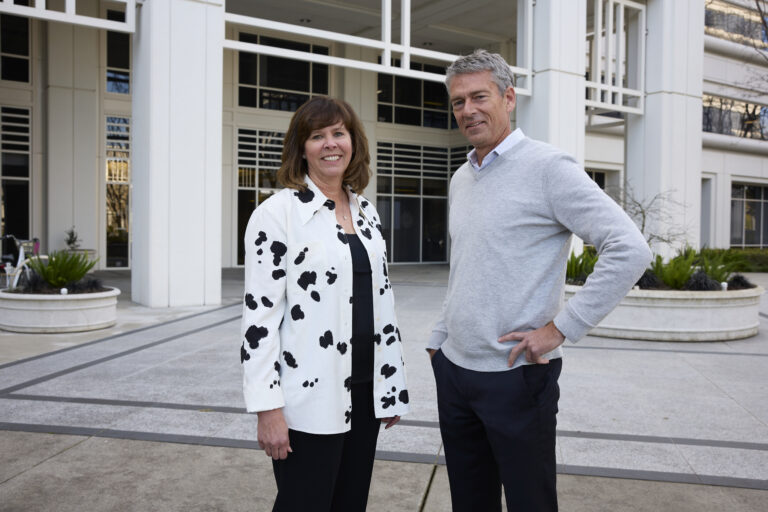
Long-time donors and alumni, Joelle and Michael Hurlston, gift UC Davis $8 million to support two colleges, the Graduate School of Management and Aggie Compass

By JENNIFER MA — campus@theaggie.org 

Joelle and Michael Hurlston recently gave $8 million to UC Davis’ fundraising campaign, Expect Greater: From UC Davis, for the world. Their contribution will not only go toward students’ academic and career success but also toward a program working to eliminate food insecurity. 

Joelle Hurlston is a 1989 College of Agricultural and Environmental Sciences graduate and Michael is a 1988 College of Engineering alumnus. He has also received an MBA and master’s degree from UC Davis, in 1990 and 1991, respectively. 

The donation will be split between the Graduate School of Management, the College of Engineering and the College of Agricultural and Environmental Sciences as well as the Aggie Compass Basic Needs Center. 

“We’ve tried to reach as many students this time and not just specific to our colleges,” Joelle said. “Whatever [anyone’s] interested in, if it’s pre-law, pre-med, engineering, environmental science, whatever it is, hopefully our gift will be able to touch students.”

According to the couple, they are giving the Dean of Student Affairs discretion regarding the specifics of the Aggie Compass contribution. They believe the university will use the funds as best as they can. 

The Graduate School of Management will receive its first endowed deanship, which provides funds for teaching, research and outreach.

In the College of Engineering, the gift will go toward the Diane Bryant Engineering Student Design Center. This center will provide all students, not just engineering majors, with hands-on experiences and opportunities through creating prototypes, welding and more.

“The College [of Engineering]’s innovation ecosystem sets the Aggie engineering experience apart from other programs and the new Diane Bryant Engineering Student Design Center is the central hub where it all comes together,” Richard Corsi, the dean of the College of Engineering, said via email. “If it weren’t for generous alumni and friends, like Michael and Joelle Hurlston, we wouldn’t be able to build this state-of-the-art facility, so we are tremendously grateful to them for their investment and support.”

Lastly, the donation to the Internship and Career Center for agricultural and environmental sciences students will help foster programs and services for career development. 

Shaun Keister, the vice chancellor of Development and Alumni Relations and the president of the UC Davis Foundation, said that he appreciates the holistic nature of the donation.

“It’s really important to [Joelle and Michael] to help all students; that was their real, ultimate goal,” Keister said. “One part of the gift was to support basic needs and food insecurity of students at Davis. So that’s an especially gratifying and impactful piece of the gift. But everything they’re doing is helping students, it’s just in different ways.”

 As of Feb. 16, the Expect Greater campaign has garnered $1.5 billion, but this is only 75% of its target goal of $2 billion. 

“We want to inspire other people to give back,” Michael said. “We’ve both received tons of messages from our friends, colleagues, saying how inspirational it is. And we hope that inspiration translates into other people doing similar things.” 

Joelle echoed this statement with a call to action for new alumni. 

“We want to encourage new graduates, new alumni to maybe not go out to dinner twice in one year and [instead] give $100 a year,” she said. “If everybody gave $100 a year, that would [have] a huge impact on the university. Our gift is a lot, but it doesn’t need to be that much to donate to the university.”

Written by: Jennifer Ma — campus@theaggie.org  

Earth BioGenome Project plans to sequence genome of every known eukaryotic organism

The project’s administrative office is located at the UC Davis Genome Center, and it will seek to sequence the genomes of 1.8 million species over the course of 10 years

By SONORA SLATER — science@theaggie.org

It took 13 years and three billion dollars to sequence the human genome — but over the next 10 years, the Earth BioGenome Project (EBP) plans to sequence the genome of every other known eukaryotic organism on earth for a fraction of the comparative cost.

EBP was launched in November 2018, and is now entering a new phase, as it shifts from “pilot projects” to beginning the full-scale sequencing of the 1.8 million named plants, animals and fungi that make up Earth’s eukaryotes, according to a recent press release. The information will then be made available in the form of an open-access digital library.

The project’s administrative office is located at the UC Davis Genome Center, and Harris Lewin, a distinguished professor in the Department of Evolution and Ecology at UC Davis, acts as the chair of the EBP Working Group. Lewin also co-authored four papers that were included in a 10-part special feature published in Proceedings of the National Academy of Sciences on Jan. 17 that describe the project’s goals, challenges and future plans. 

“This set of papers, the special feature, represents sort of a series of milestones of where we are, or even where we were one year ago when we started putting these papers together,” Lewin said. “It is a representation of the work that includes 43 institutions around the world.” 

The papers include information about why the project matters, ethical, social and legal challenges that the project has faced, how the genome library will contribute to the conservation of endangered species and reflection on how credit will be attributed, according to Lewin.

“There [are] a lot of ethical issues around […] how the benefits accrue,” Lewin said. “Let’s say there’s Indigenous knowledge about the medicinal properties of a plant. […] how would the benefits be shared with those peoples who might have shared the basic information pointing toward the medicinal qualities of the plant?” 

Jacob Sherkow, a professor of law at the University of Illinois, is the lead author of a paper for the special feature that detailed ethical, legal and social issues in the Earth BioGenome Project. He talked about one of the challenges detailed in the paper.

“The library is going to be open-access, and open-access usually means free,” Sherkow said. “But we also have to make sure that we’re compensating countries for their work sequencing genomes. What we’ve learned in the last 20 years is that the value of genetic data is improved the more that it’s shared, […] so even though it’s a very complex and difficult issue, it’s worth solving, and I believe that the EBP will find a solution to allow open-access.”

Carolyn Hogg, the science lead for the Threatened Species Initiative in Australia and the lead author of the EBP paper investigating how genomic resources can empower conservation action, described how the genomic work they’re doing is especially important when it comes to endangered species.

“Some of our animals are technically extinct in the wild, they’re only found in captivity,” Hogg said. “So the value of those samples is exceedingly high. And the sequencing guys have one chance to get it right. If somebody makes a misstep, there’s no other opportunity to get more samples.” 

Katherine Belov, a professor of comparative genomics at the University of Sydney and one of the co-authors of the same paper, elaborated on the value of gaining genomic information on endangered species. 

“In the worst case – the project will provide us with a blueprint of the genetic diversity that existed in species that are now extinct,” Belov said via email. “I hope it won’t come to that. In the best case, we will find ways to use the EBP genomes to better lobby for conservation of species that are at risk of extinction. Having their genome sequence won’t save them – only preservation of habitats will. But genomes provide information [that can] directly inform economically sound management decisions using scarce conservation dollars.”

This kind of translation from information to action is being incorporated into the goals of the EBP, as they build partnerships between academia and those who work in policy and management spaces, according to Belov.

“The critical step that cannot be forgotten is the importance of empowering conservation managers to be able to use this data to manage animals on the ground,” Belov said via email. “Otherwise, the data just sits in the cloud and gathers dust.” 

The benefits of the EBP aren’t only given to those species being sequenced for the first time. There are also direct benefits to humans, as it relates to agriculture, human health, renewable energy technologies in the form of biofuels and more, according to Hogg.

“Genomes are an exceedingly powerful tool,” Hogg said. “If you think about human medicine, we published the human genome back in 2001. Think about the changes in human medicine back in 2001 versus now — we can do targeted cancer therapy, work against Alzheimers.” 

Hogg said that the foundation of most pharmaceuticals — such as Advil — is found in nature, from plants with medicinal qualities or the venom of certain animals, before they’re synthesized and made more active. Additionally, the productivity and the type of food available in supermarkets is also dependent on biodiversity.

“People [need] to understand that losing biodiversity is not just losing the nice stuff in the forests,” Hogg said. “It’s all interrelated. It’s not just a bunch of scientists trying to shoot for the moon.”

Elaborating on the moon analogy, Hogg referenced a photograph called “Earthrise” taken in 1968 by Bill Anders from Apollo 8. 

“It’s been declared as one of the most environmentally significant photos of all time, because it was the first time we saw our planet from space,” Hogg said. “So part of what Harris and the people who set up Earth BioGenome wanted to do is a ‘moonshot.’ This is the next greatest moonshot.” 

Lewin offered some final thoughts on what the impact of this moonshot could be.

“This is going to be the basis of advances in agriculture, in human health, in animal health, in environmental health and how climate change influences biodiversity,” Lewin said. “Having this knowledge is going to give us the fundamental scientific knowledge to make further advances and decisions and develop policies that are going to be effective in dealing with the major problems that are facing the world today.”

EBP has been built on collaboration, with work being done in 22 countries on every continent except Antarctica. Hogg explained how essential she believes this is to the project’s hopeful success. 

“I think the global challenges we face today are unsolvable by any one person, or any one research group, or any one university,” Hogg said. “I think we will only be able to address the challenges that we face as a species and that the planet faces by working collaboratively and cooperatively. So I think that EBP really is a testament to what can be achieved when everyone comes to the table with the same mindset of what is for the greater good.” 

Written by: Sonora Slater — science@theaggie.org

Jazz is here to stay

The genre revels in rhythm and social relevance

By CLARA FISCHER — arts@theaggie.org

Chances are, you’ve heard of jazz. Whether it’s through an appreciation for the music or a United Airlines commercial, most people have heard at least a couple songs from the wide-ranging genre.

Jazz has a rich and varied background. With roots in the blues and a shifting focus on big band, bebop, crooning and countless sounds in between, this musical style is a true chameleon. On top of its diversity in terms of melodic and rhythmic styles, a key component of jazz is its roots in BIPOC (Black, Indigenous and people of color) culture. 

The music style originated in New Orleans as a form of resistance music in the era after Emancipation. Scholars have claimed that “… the music we know as jazz is Black American music, and its very soul is tied to the Black resistance to injustice…” — it’s clear that the influence Black culture has had on the genre cannot be understated. 

One of the most well-known vocal jazz musicians is Ella Fitzgerald. Dubbed “The First Lady of Song,” Fitzgerald has one of the most distinctive sounds in vocal history. She rose from humble beginnings after being discovered at an amateur night hosted by a local concert hall, and from there quickly became a master of her craft. Fitzgerald had the opportunity to perform with countless other legendary musicians such as Louis Armstrong (the duo has been lauded as a “perfect partnership”), Billie Holiday, The Ink Spots and Duke Ellington.

More than just a stunning voice, however, Fitzgerald also played a very important role in social issues of the time.

 Her endearing nature and velvety vocals allowed her to be well-liked by a largely diverse crowd of people. Armed with the love of the public, she was able to create momentum in the desegregation efforts of the American Civil Rights Movement by playing at many venues and shows that previously did not allow Black performers. Her undeniable success and adoring fans spoke volumes, even at such a hostile time in history.

As to be expected with a music style so deeply rooted in cultural origins, there are many more examples of jazz artists who played an important role in such social reform. 

Louis Armstrong famously penned a letter to former president Dwight Eisenhower following the politician’s initial response to the Little Rock Crisis. Billie Holiday’s cover of “Strange Fruit” has been cited as one of the most important connections between popular music and political messaging, with its groundbreakingly jarring lyricism and unapologetic performances by Holiday and other artists.

“That is about the ugliest song I have ever heard… ugly in the sense that it is violent and tears at the gut of what white people have done to my people in this country,” Nina Simone once remarked about “Strange Fruit.” The song has always been incredibly powerful, so it makes sense that it is to this day used as an unmistakable hallmark of protest songs, providing yet another example of the impact jazz music has on the cultural landscape it occupies.

Though jazz is an incredibly diverse genre with clear significance pertaining to various social issues, many worry that the genre has peaked, with trumpeter Nicholas Payton even declaring that it was “… cold, like necrophilia.”

One well-known representation of this pessimistic perception of jazz is displayed in the 2016 Oscar-winning film “La La Land.” In the film, one of the lead characters laments the loss of love for traditional jazz. 

However, “La La Land” has been critiqued for its lack of nuance when it comes to the wellbeing of modern jazz, as well as its disregard for the important influence of BIPOC on the genre.

While jazz as a style has definitely evolved, its characteristic spontaneity gives it longevity; Musicians are able to adapt to rhythmic changes on the spot. Why should the music style be any less adaptable?

There are so many remarkable artists, past and present, who represent their craft in a way that words on paper never could. Take a listen, and explore the genre that enthralls fans with its dizzying intricacy and soulful harmonies. 

Written by: Clara Fischer — arts@theaggie.org

Polar Pedal program encourages elementary school students to walk, bike

Through the program, students can earn points toward adopting a polar bear for their school

By SHRADDHA JHINGAN city@theaggie.org

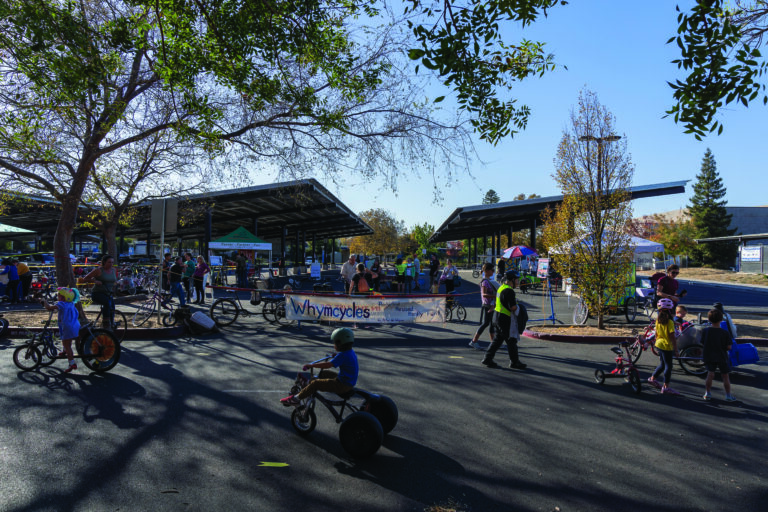
On Jan. 28, the City of Davis announced in a news release that the Polar Pedal program organized each year by the Safe Routes to School program will be starting for 2022. Throughout the month of February, elementary school students in the Davis Joint Unified School District (DJUSD) will be able to earn points for their school that will go towards adopting a polar bear by walking or biking to school. 

The goal is ultimately to amass enough points to be able to adopt 20 polar bears. This will be done through Polar Bear International, an organization that helps protect polar bears.  One polar bear will be adopted when 500 walking or biking trips are made. In total, the program is aiming to reach 10,000 trips by biking or walking in February.

Safe Routes to School Coordinator Daniela Tavares said that biking or walking reduces the amount of traffic near schools. In order to promote these efforts, there is a group of parents helping out. 

“As the Safe Routes to School Coordinator I am fortunate to have an amazing group of Parent Volunteers at all 8 DJUSD Elementary schools that encourage and support students to walk/bike/roll / even get dropped off a block away and walk to school […], allowing the City of Davis to have less car congestion and traffic in front of each school in the morning,” Tavares said via email. 

To participate in the program, students have to “scan in” upon reaching school using the Active4me program, which they can register for online. The program was developed and donated to schools in Davis by Tim Starback, a resident of the City of Davis, Tavares said. 

Tavares also said that when students reach school and scan in, parents get notified on their devices that their students have safely reached school. The scan can also keep track of mileage, trip quantity and carbon offsets. 

“This program is active at each elementary school site and used to record rack counts at secondary schools,” Tavares said. 

The program is a collaboration between various members and organizations in the local community: A Kaiser Permanente grant partly funded the initiative, Tim Starback developed Active4me and Tara Parker-Essig, who attended UC Davis, designed promotional items for the program such as stickers, pledges, banners and the goal chart for the program. 

Parker-Essig explained that the designs for the program were inspired by sketches from Loretta Moore’s son. Moore is the Street Smarts/Safe Routes to School Program Coordinator for the City of Davis.

Parker-Essig said that the sketches from Moore’s son were incorporated into simplified designs that allow “a way to track students’ progress in adopting polar bears.”

Parker-Essig also used to be a bike mechanic, and thus there were accurate depictions of bikes in the designs, as well as reflective stickers.

Jeffrey Bruchez, the bicycle program coordinator in the Department of Transportation Services, said that there are various benefits to biking in Davis, such as the fact that the city is flat, only around six miles wide and dry for specific seasons.

“Davis is a wonderful place to bicycle for a multitude of reasons, but the single most influential reason is likely that the city (and campus too) was very clever with bike-forward policies which insured that the city was built to be incredibly friendly to bicycling (see the 1977 Bike Plan),” Bruchez said via email. 

The main benefit, however, is being able to enjoy local environments and sceneries from a bike, which can only be matched by being a pedestrian, Bruchez said. Having a bike allows individuals to access nature and other sites that may not be accessible by motorized vehicles.

“A bike affords you access to the numerous greenbelts, quick convenient transportation, and a vehicle which is impervious to road congestion,” Bruchez said. “Yes, we have bike traffic on campus, but on average the slow down you experience in bike congestion only changes the entire journey by seconds, not minutes or hours like you can be delayed in a car. From a car, or a bus, you can’t smell the flowers, watch the birds, and enjoy things like the Arboretum.”

The Polar Pedal program also helps reduce the amount of fossil fuels, Tavares said. By biking or walking instead of driving, students are doing their part to reduce carbon dioxide in the atmosphere. 

“The link to polar bears is direct, because most vehicles burn fossil fuels, which create CO2,” Tavares said. “And the more CO2 in the atmosphere, the warmer the Earth will be. Students help by biking and speaking up for a bike friendly community.”

Bruchez said there is a course called CyclingSavvy on Canvas to get people used to biking alongside traffic. Bruchez also noted that many cyclists have been following the things that were taught in the education platform at Aggie Orientation, such as yielding to pedestrians and signaling. In addition to ensuring bikes are properly maintained, having working brakes (which the Bike Barn has been helping with) and locking up bikes correctly, Bruchez said it is important to get bikes registered. He said that registered bikes are more likely to be returned, and though thousands of bikes are stolen every year, only a few hundred are reported.

Ultimately, Tavares said that the Polar Pedal program received such positive recognition that it was showcased on Polar Bear International (PBI)’s website. 

The idea for the program and resources were shared with Safe Routes to School partners in the area. North Natomas also created their own, inspired by the one in Davis, Tavares said.

“We are proud to continue to find innovative solutions to support student health and wellness goals, and to empower students and their families to support global environmental health and sustainability,” Tavares said. 

Written by: Shraddha Jhingan — city@theaggie.org

SB #46, #47, #49 pass unanimously at Feb. 10 ASUCD Senate meeting

Senators debated SB #47 and SB #49 which proposed establishing and funding a committee to provide vouchers for community needs

By CAROLINE VAN ZANT — campus@theaggie.org

Internal Vice President Juliana Martinez Hernandez called the meeting to order at 6:18 p.m. Following roll call, she recited the UC Davis Land Acknowledgement. 

Four members of various ASUCD commissions were randomly selected for service on the Elections Committee. 

Vice Chancellor of Finance, Operations and Administration Kelly Ratliff presented an overview of UC Davis’ budget and income. Her presentation was followed by a debate about whether students should have more say in the campus budget. 

“From buildings, to infrastructure, whatever you want to say […] every single dollar affects us,” Senator Sergio Bocardo-Aguilar said.

Next, the STEM Committee provided its quarterly report, focusing on transparency in grade curving.

“We are working on a resolution to address the toxic environment created by curving,” Committee Co-Chair Aaron Wright said.

Omar Flores was confirmed as the chairperson of the DREAM Committee. Flores is a fourth-year political science major with experience working with on-campus organizations such as La Familia. Alice Deloise Atiegar, a fourth-year neurobiology, physiology and behavior major, was confirmed as a member of the DREAM Committee. 

Following a short break, the Entertainment Council presented its quarterly report, focusing on adapting to COVID-19 with outdoor events and its goals regarding advertising and investment in new equipment. 

Each official gave an overview of the work they did over the past week during elected officer and ex-officio reports. 

During Public Announcements, Jackson Gould, the CALPIRG pledge captain, spoke about the organization’s campaign to end plastic use and its goal to get 1,000 signatures on its petition by the end of the week. International Student Representative Keven Zhou announced the Global Learning Conference on April 2. 

Next, the table moved into Public Discussion. ASUCD President Ryan Manriquez brought up the news that Yolo Country plans to end its mask mandate on Feb. 15. While no legislation was passed, senators were in agreement that UC Davis must keep its mandate in place until positivity rates decrease. Senator Celeste Palmer argued for a more stringent mask mandate.

“If you want to have a truly effective mask mandate you need to start insisting on either surgical masks or N95s,” Palmer said.

SR #23, SB #45 and SB #48 were introduced through regular parliamentary procedure. SR #23 is a resolution in support of the movement to make the UC Davis mascot a cow, SB #45 is a proposal to create an exploratory committee for an ASUCD gala and SB #48 would allocate around $2000 for marketing materials in support of the movement for a cow mascot. SB #47, SB #49 and SB #51 were considered as emergency legislation. SB #47 and its partner bill SB #49 would set up and fund an exploratory committee to provide vouchers based on needs that arise within the UC Davis community, while SB #51 would raise the pay of ASUCD commission chairs. SB #46 was also considered. SB #46, SB #47 and SB #49 all passed unanimously. 

There was considerable debate surround SB #47 and SB #49. Bocardo-Aguilar took issue with the bills because of the potential for overlap with services already provided by units like the ASUCD Pantry, though Senator Rashita Chaudan noted that food insecurity was only one need the vouchers could address. 

Meeting minutes from Jan. 27 and Feb. 3 were approved. 

The meeting ran almost over an hour and a half overtime. The meeting was adjourned by Martinez Hernandez at 11:49 p.m. 

Written by: Caroline Van Zant — campus@theaggie.org


A UC malaria initiative program receives grant for work researching genetically engineered mosquitoes

The $10.2 million grant, awarded by Open Philanthropy, will go toward research aiming to find a way to eliminate malaria from Africa

By SONORA SLATER — science@theaggie.org

Malaria, a mosquito-borne infectious disease, was discovered in 1880, and has remained widespread in tropical regions around the equator including parts of Africa, Asia and Latin America, resulting in thousands of deaths and a significant blow to economic development in these regions. 

Many of the attempted strategies to eliminate malaria in the past have planned to do so by eliminating mosquitoes entirely — but according to a recent press release, the Vector Genetics Laboratory (VGL) at UC Davis, in collaboration with a UC malaria initiative program that originally started at UC Irvine, and with the financial support of a $10.2 million grant from Open Philanthropy, is taking a different approach.

“Mosquitoes are a part of the ecosystem,” Greg Lanzaro, project principal investigator and director at VGL, said. “Our strategy does not eliminate mosquitoes. The mosquitoes will still be there, they’ll just be incapable of transmitting malaria. In every sense these mosquitoes are normal mosquitoes, except for the fact that they can’t transmit malaria.” 

The idea is called a “population modification strategy,” Lanzaro said, explaining that groups at UC Irvine and Johns Hopkins University genetically engineered mosquitoes that are incapable of transmitting the malaria parasite. 

“The way that malaria is transmitted is that the mosquito bites a person who has malaria and it picks up the parasite in the blood that it feeds on,” Lanzaro said. “Then the parasite develops in the mosquito so that when the mosquito bites the next person, they spread the parasite. Our mosquitoes have been engineered with a couple of genes that kill the parasite inside of the mosquito, so they’re not able to transmit.”

The plan is to eventually release these genetically modified mosquitoes into natural populations of mosquitoes, and allow the new genes to be passed down into the natural mosquito population. However, according to Lanzaro, having a malaria-proof mosquito isn’t enough to make this happen — they also need to develop a “gene drive.” 

“The gene drive basically alters the way that our beneficial genes are inherited, so that they will very rapidly move through the natural population,” Lanzaro said. 

According to Lanzaro, the necessary gene drive was developed at UC San Diego. Now that the science is ready, the UC Davis component of the project, which the grant was awarded for, has begun — to move the technology from the laboratory to the field.

“There’s basically two big components to that,” Lanzaro said. “There’s the biology, and there’s the social science aspect. For the biology, the idea is that we want to do trials, and see if this will work.” 

Lanzaro said that the team spent a year looking at potential places to attempt a release before eventually selecting two small islands off the coast of Africa, São Tomé and Príncipe, for their initial trials. This decision was based partly on the convenience of the islands being “isolated contained systems.”

“Once we’ve selected the site, we have to study the ecology of the mosquitoes at the site, the genetics of the mosquitoes at that site, we have to look at the environment, we have to look at non-target organisms, all in preparation,” Lanzaro said. “All before we would ever think about doing a release.” 

Ana Kormos, an engagement program manager at VGL, said that the decision to use these two islands as potential trial sites was made through direct involvement and discussion with the country’s government and communities.

“The model that we’re using puts our collaborators in the driver’s seat,” Kormos said. “That was really important to us […], that they are the ones who are actively participating in and making the decisions about what we’re doing, how we’re doing it, how we’re taking it to the next step. [We are] developing the strategy, developing the plan so we aren’t walking in with any preconceived ideas; we aren’t forcing an agenda. It’s really being directed by the end user.”

Kormos elaborated that apart from making the final decision about whether or not to release the transgenic mosquitoes, locals have also driven communication and informational efforts surrounding the project.

“We have hired local engagement professionals and community educators and local leaders to develop that strategy with their communities and then implement it,” Kormos said. “They are implementing a strategy that’s been designed and developed by them. They know their community, they understand what the education level looks like, how people prefer to receive information and how people feel the most comfortable sharing information back about what they think and feel about a particular subject.” 

Lanzaro said that the team will spend the next three years assembling all the information they can on the genetics and biology of the mosquitoes, at which point they will present the data, potential benefits and potential risks to the authorities of São Tomé and Príncipe. The regulatory authorities will then make a decision about whether or not they’ll allow the release of the mosquitoes. 

He explained another potential benefit of this project, aside from the hopeful elimination of malaria from Africa.

“In the old days people described malaria as a disease of poverty, but more contemporary analyses have shown that malaria actually creates poverty,” Lanzaro said. “And it does that by keeping such a high proportion of the population ill that they’re unable to show up for work, they’re unable to take care of their crops, they’re unable to attend schools. […] It also has an economic impact on tourism.” 

Lanzaro concluded with another reason why this solution is structurally different from others proposed and implemented in the past.

“The thing that we really like about our program is that it’s sustainable and it’s cost-effective,” Lanzaro said. “Diseases that impose the heaviest burden on economically less developed countries is that you might get a country or an agency to put a bunch of money in to pay for nets, and insecticides, and it’s fine, it’s great, it works, but when the money dries up, malaria comes back. Our program is not only cost effective, they really only need to be released once and it’s done — the mosquitoes do the work themselves, really.”


Written by: Sonora Slater — science@theaggie.org

Studio Ghibli depicts destruction to promote peace

Though not explicitly anti-war, the studio’s more harrowing films advocate for hope and nonviolence when highlighting the devastation of human conflict 

By SUN YIE — arts@theaggie.org 

Animation plays a pivotal role both in shaping people’s experiences and in delivering deeper and more thought-provoking messages where other forms of media fall flat in comparison. Studio Ghibli’s “Grave of the Fireflies” (1988), directed by Isao Takahata, is an example of a successful animation film that explores scenes of hardship, war and loss under the setting of World War II, denoting the company’s broader anti-war sentiments that are also present in their films “Castle in the Sky” (1986) and “Princess Mononoke” (1997).  

“Grave of the Fireflies” follows two Japanese siblings who struggle to survive in the midst of a war; although this alone is harrowing enough, the opening scene of the film depicts a dying Seita, who elaborates upon their story in the structure of episodic flashbacks. “Castle in the Sky” positions itself against the introduction of atomic power, as the film also occurs in the historical context of World War II and the bombings of Hiroshima and Nagasaki, while “Princess Mononoke” explores the shifting role of nature in relation to human settlement and innovation. “Princess Mononoke” possesses rather meticulous, nuanced ideas about war and is more a critical analysis about the boundaries between nature and human exploitation and destruction. Contrastingly, both “Grave of the Fireflies” and “Castle in the Sky” adopt a more translucent position against war through the lens of their characters. 

Takahata explained he doesn’t consider “Grave of the Fireflies” to be an “anti-war film,” because he felt it didn’t incentivize people against war or contribute to world peace. However, it can be said that the film’s depiction of the impact war has on innocent civilians, such as the scene where fishermen are forced to watch the city of Kobe be consumed by flames, is impactful enough for people to adopt a more humanistic and empathetic perspective — which leads them away from violent pursuits. In fact, Takahata leaves room for hope in the face of hopeless loss and devastation through his poignant use of fireflies, which can be recognized as symbols of both the fire bombs that have destroyed the civilians’ homes and human perserverance. 

In its production of “Grave of the Fireflies” and “Castle in the Sky,” Studio Ghibli juxtaposes the conventional use of animation — often associated with children and thus considered to be more lighthearted — with heavier tones. In doing so, Studio Ghibli exhibits mastery over the art form of animation entirely, as it demonstrates the capacity to appeal to children through its more joyful films, like “My Neighbor Totoro” (1988), and yet address more haunting topics like war, violence and exploitation to audiences of all ages in “Grave of Fireflies” and “Castle in the Sky.” 

Written by: Sun Yie — arts@theaggie.org

Yolo County sponsors weekly virtual discussions, screenings of documentary “The Cost of Darkness” hosted by activist Sandy Holman

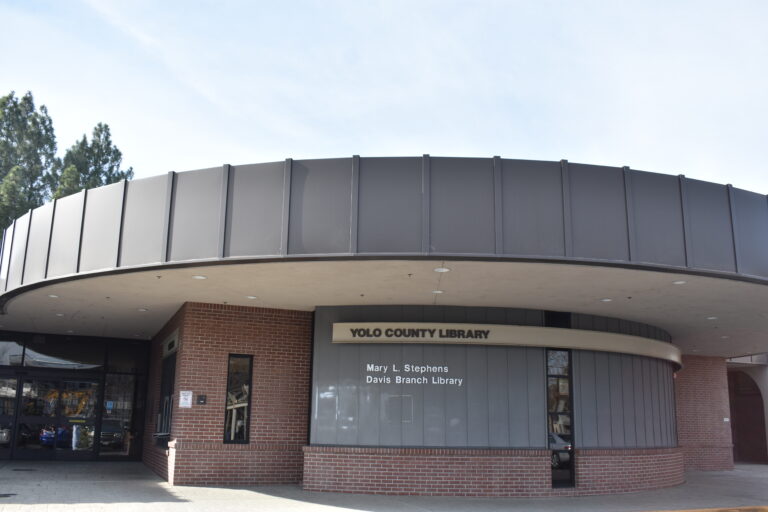
Yolo County Library has hosted several events for Black History Month

By LEVI GOLDSTEIN city@theaggie.org

During the month of February, which is Black History Month, Friends of the Davis Public Library, Yolo County Library and the Yolo County Health & Human Services Agency are jointly sponsoring a series of virtual discussions and viewings of ”The Cost of Darkness,” a documentary that reveals the depths of white supremacy and systemic racism in America. The series, hosted Wednesday evenings from 6 p.m. to 8:30 p.m., was announced in a Yolo County press release published on Jan. 26. 

The Cost of Darkness” was created by the organization The Culture C.O.-O.P. to “envision strategies for interventions and impact from a holistic and systemic perspective,” according to their website

The Culture C.O.-O.P.’s founder and host of the discussions, Sandy Holman, is an activist, educator and author. She also founded The Culture C.O.-O.P.’s sister organization, United in Unity

Holman is faithful that “The Cost of Darkness” will play an important role in the fight for racial justice. 

“The documentary is part of a paradigm for transforming individuals, communities, systems and beyond,” Holman said. “The goal is ultimately to create a mindshare among people so they understand root causes and historical happenings and structures that have built what we’re seeing today.”

The discussion series is serving as a training. Employees of the Health & Human Services Agency and other organizations are receiving professional development credit for attending, according to Katrina Laws-Ewald, a Youth Services Librarian of the Mary L. Stephens Branch of the Yolo County Library. However, the series is open to the public as well, and Holman believes that it is valuable for all.

“When individuals are exposed to the true information and the root causes of what we’re experiencing in each of our institutions, they’re often more likely to come up with better interventions and strategies,” Holman said. 

Holman intends for the film to be just one part of the education that The Culture C.O.-O.P. provides and prepares citizens to advocate for systemic change. 

“It may be tough, […] but it’s the foundation of being able to be more strategic in our policy making, our interventions, our strategies,” Holman said.

Yolo County Library, eager to host these events, is fully invested in acting as a center for cultural education. 

“I’m part of the Black History Month work group,” Laws-Ewald said. “The Black History Month group is basically creating content or activities or advertising to celebrate that heritage.”

The non-profit organization Friends of the Davis Public Library, one sponsor of the program, is also highly involved. According to their website, they “make substantial donations to the library […] [to] ​develop the Library’s book collection, encourage reading programs for children, and to promote the Library as a cultural center for the city of Davis.”

“It creates a unity within the community,” Rory Osborne, president of the organization, said. “It provides a place where people come together and have dialogue. […] You have opportunities for kids to come together to learn about things they have no experience in prior to that, and in doing so they integrate with other children from around the community.”

Funding for donations comes from regular book sales events and Logos Books, a non-profit bookstore in downtown Davis, according to Osborne.

The Yolo County Library also published a list of books with Black authors and stories representing Black youth, according to Laws-Ewald. The Library has chosen the book “We All Have A Heritage” written by Holman as this month’s Dial-A-Story reading. Families with young children can call (530) 298-9990 to listen to an audio recording of the story in Spanish, read by Ruby Buentello, the outreach and programming librarian, or in English, read by Tessa Smith, Diversity, Equity and Inclusion Coordinator with Yolo County. 

Smith and Buentello both attend the discussion series as facilitators. Those who are interested in attending can find the Zoom links in the press release, on the Yolo County Library’s website or on The Culture C.O.-O.P.’s website. 

Written by: Levi Goldstein — city@theaggie.org

UC Davis launches Lecture Capture Student Assistant program

The program allows students to record in-person lectures for those who cannot attend class 

By ISABELLA KRZESNIAK campus@theaggie.org

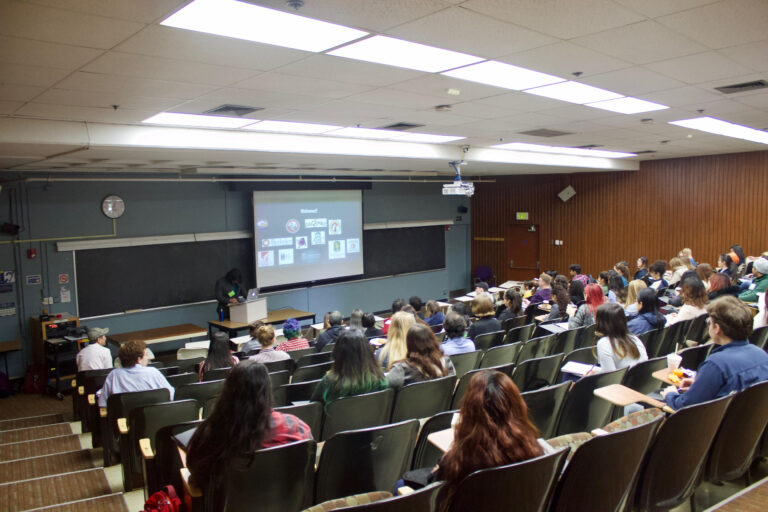
In response to requests from students and faculty, several units of the campus administration are working to implement the Lecture Capture Student Assistant (LCSA) program, which hires student employees to record lectures for instructors. The program was first briefly mentioned in Chancellor Gary May’s email to students about returning to in-person instruction on Jan. 24. One-hundred-seventy lecturers have requested lecture capture assistants, and an employment survey has been sent to over 13,000 students, as of Feb. 1.

Fourth-year animal biology major Kimberly Aguirre applied for the job after seeing a survey for one of her classes.

“I wanted to do it because I thought it would be a good way to make a little more money,” Aguirre said. “I’m going to be starting grad school in the fall, so I won’t be able to work as much as I am able to right now.”

Students are expected to attend class, record lectures and upload their recordings at an hourly rate of $15.25.

Gabriela Tsudik, the chair of the Academic Affairs Commission, feels that implementing the program is a critical action item for ASUCD.

“If professors catch [COVID-19 or] students miss class […] and there’s no option for lecture recording, that can be up to two weeks of them not having access to lectures,” Tsudik said. “It’s definitely going to be a problem.”

Tsudik discussed lecture capture with the Academic Senate.

“Basically, we’re under-resourced, and we can’t require professors to record lectures even if they do have lecture capture available in the classroom,” Tsudik said.

After completing a short training course, students can start working. Since Aguirre applied, she said she has received little information on the work she will be doing.

“They were lagging a bit in getting back to us in terms of when onboarding was going to start and what to expect,” Aguirre said. “The expectations are a bit vague in general, which I didn’t really like.”

Physics professor Erfan Nourbakhsh opted in to the program but has yet to work with any student assistants to record lectures.

“I actually started recording everything myself because I didn’t have access to that program,” Nourbakhsh said. “Someone who can take care of this separately would be very helpful.”

According to Jason Stewart, the assistant director of Budget and Institutional Analysis for UC Davis, LCSA has been a collaborative effort.

“Many people in multiple offices are working as quickly as possible to get this new program up and running,” Stewart said.

Tsudik said she believes that, ideally, lecture capture would be mandatory for all instructors.

“I think […] the general student population does wish it was required,” Tsudik said. “Obviously it’s not feasible if lecture capture is not available, [or] professors catch [COVID-19], it’s going to be difficult. I think students are realizing this is a big issue.”

Written by: Isabella Krzesniak — campus@theaggie.org

Davis Austrian pastry cafe closing on Feb. 26 after 32 years of business

3

Konditorei owners plan to relax and enjoy their oncoming retirement

By RACHEL SHEY city@theaggie.org

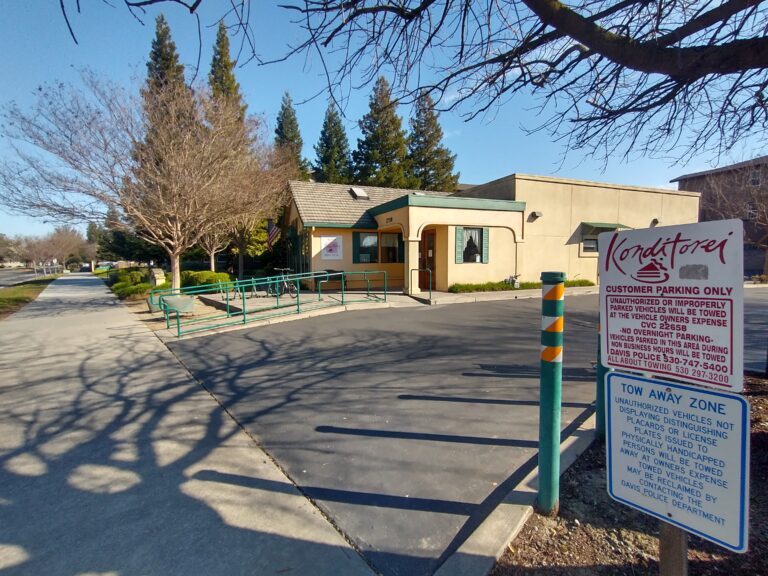
Konditorei, a Davis mainstay for the past 32 years, is closing on Feb. 26. The pastry shop is an Austrian establishment, founded by Albert and Gloria Kutternig. The Kutternigs are retiring after decades of working at the pastry shop. They are looking forward to relaxing during their retirement, particularly attending evening concerts, an activity that was largely restricted during their pastry-making days due to early morning starts. 

“It would be nice just to say that I’m not doing anything today, tomorrow,” Gloria said. “Yes, it’s kind of like reclaiming our freedom just to do things to concentrate on ourselves. For 32 years we dedicated our lives to the business and the community. We’ve been a part of Davis, weddings, birthdays, reunions, just get-togethers. We were always there for everyone’s dessert needs.”

Konditorei is actually a descriptive name for a type of business, according to Albert. Like how a boulangerie in France bakes bread and a patisserie bakes pastries. Konditoreis bake pastries only, not bread. 

“In the German language, Konditorei is a pastry shop,” Gloria said. “It literally means sugar bakery. A Backerie would only sell bread. We go by the European standards. In German speaking countries, the Backerie is different from the Konditorei.”

Albert started training as a pastry chef when he was 14 years old. In Austria, students train for four days of the week as pastry chefs and go to school for two days, making up a six day workweek. Afterwards, he worked at many other locations before coming to America and founding Konditorei. 

“I worked at Hilton and Intercontinental and then I ended up in America,” Albert said. “I pretty much worked all over the world. Austria is a small country, and I just fell in love with America.” 

The Kutternigs came to California because Gloria’s parents lived in San Francisco, but Konditorei was founded in Davis because that was where Albert found his opportunity. 

“My wife, her parents lived in San Francisco and when we got our green card in Austria, we moved to California because of our parents, but we ended up in Davis, this was not planned really,” Albert said. “If you’re not from America, you have no credit history. I couldn’t get a loan to open my shop. This means I was teaching for three months and in the school I met somebody who wanted to sell his little shop in Davis.” 

The Kutternigs transformed a French bakery into an Austrian Konditorei. Contemplating the success of the business, Albert emphasized that the process is more important than the actual ingredients. 

“To work in a pastry shop or to produce something, it’s not only important what you produce, it’s also important how you produce it, to make money,” Albert said. “When you open a business, or to work, it’s actually more important, how you produce, how efficiently you work, and how you manage everything, than to have a good recipe.”

Gloria’s favorite dessert is the Layla Torte, which is named after the couple’s youngest daughter. It is a cake made out of marzipan cream and pure marzipan. Albert is a fan of Eric Clapton; both the cake and the daughter are named after the Eric Clapton song. 

The Kutternigs are proud of their success in Davis and are happy to have been able to serve the community for so long. Coming to America unlocked many opportunities for them. 

“It has been for myself and Albert and Konditorei staff, it has been an honor to serve the Davis community for 32 years,” Gloria said. “Most of all, a big thank you to this country, the United States of America, for giving us this opportunity. Being immigrants from two different countries — I was born and raised in the Philippines, and Albert was born and raised in Austria — and having come to America as immigrants, I cannot thank the USA enough for giving us this fantastic opportunity.”

Written by: Rachel Shey — city@theaggie.org

Review: ‘And Just Like That…’ proves not everything needs resuscitation

A critique of the forced diversity and unnecessary existence of the new “Sex and the City” reboot

By ANGIE CUMMINGS — arts@theaggie.org

Watching all 10 episodes of “And Just Like That…” Season One was perhaps the most intense form of investigative journalism — it really was that bad. As happened for most people, headlines about the show piled so high right from the beginning that it was easy to avoid watching it, as almost everything that occurred on the show was torn to shreds by media outlets and everyone on the internet. Be warned, the show itself is far worse than just the numerous forced and inconsistent storylines everyone has heard about; it is entirely unenjoyable. 

The easiest way to understand why “And Just Like That…” was so bad is to remember why “Sex and the City” (SATC) was good in the first place. Premiering over 20 years ago, SATC was regarded as a part of the “golden age of TV” and a huge step in the right direction for the representation of both close female friendship and the portrayal of sex on TV. Now, the show is not so much regarded as a revolutionary feminist representation of sexuality and friendship, but as an enjoyable (and equally problematic) show about four rich white women having fun in their upper-class bubble of New York City. 

Rewatching the original show, you are confronted with tokenistic characters of almost every marginalized group, offensive remarks by all of the leading ladies and a general lack of awareness of the real world. The issues with SATC are as clear as day, and are exactly what showrunners are slowly learning from. 

The bottom line is that a reboot trying to fix all the issues of the original show was never going to work. Not to mention, a reboot without Samantha Jones (Kim Cattrall), arguably the backbone of the show’s entertainment value, already set it up for failure. In the process of “woke-washing” the show, the creators lost sight of really the only redeemable aspects of the original — an accurate presentation of friendship and a light-hearted, fantastical display of the world around the characters. 

From the first five minutes it was clear the writers searched for trending topics from the last three years and jammed them into the script. Everything felt wrong, from the cringeworthy fake post-COVID jokes to Carrie’s logic-defying podcast. In all honesty, there were scenes in which the show felt like a training video for old people on how to not be offensive in public, made complete by Charlotte’s education in pronouns, Carrie’s introduction to cultural appropriation vs. appreciation and Miranda’s “white-savior” education. 

Perhaps the only actually open-minded aspect of “And Just Like That…” was having a non-binary character, Che Diaz — but they’re entirely unlikable, showing that anyone can be annoying, regardless of their sexuality or gender expression. Che, played by the incredibly talented Sara Ramirez, is an unfunny stand-up comedian that Miranda Hobbes falls head-over-heels for after having about two-and-a-half conversations with them. 

While sapphic representation is something that should always be fought for in Hollywood, this particular relationship maybe isn’t worth the effort. Not only did the show completely change Miranda’s character — with the only explanation being “people change!” — but it also made her a horrible friend (and wife, sorry Steve). One consistency in this show was Charlotte’s borderline conservative outlook on the world, which is shaken to its core by her first close Black friend (there are multiple scenes where this causes her some serious strife) and her child coming out as gender non-conforming. 

Perhaps a show about extremely wealthy, privileged and late-middle-aged white women is not the one to deal with these serious, deeply rooted socio-political issues surrounding race and identity — of which these women are essentially just spectators. Oftentimes, it felt as if the showrunners were playing some twisted game of diversity bingo. Despite creating pockets of space for underrepresented groups within this show, they failed to correct (or even show how they have learned from) the wrongs of the past. 

I’m no expert, but I do feel that the solution to the issue of representation and diversity of experience in TV is to create a completely different show starring those who have been excluded from narratives all these years, not to simply stick them alongside the old white women who have been in the spotlight all along. 

Written by: Angie Cummings — arts@theaggie.org

Students using Chegg spark discussion within computer science department

Computer science faculty have expressed irritation about students using Chegg and other related sites to cheat on coding homework and exams

By JENNIFER MA — campus@theaggie.org 


With the shift to online learning during the pandemic, hundreds of reports of academic dishonesty have been made by faculty to the Office of Student Support and Judicial Affairs (OSSJA) each quarter, according to director of OSSJA Stacy Vander Velde.

Although academic misconduct occurs in every major and department, the computer science faculty have stated that they have been especially irritated by instances of cheating and have had intense discussions about homework-help websites. 

“Being computer science, I think we find more of [academic misconduct],” Associate Professor in the Department of Computer Science Christopher Nitta said. “I don’t think that we’re necessarily worse than any of the other disciplines but just I think we have better tools of detecting it.”

According to most faculty in the Department of Computer Science and Vander Velde, this academic dishonesty does not only stem from the switch to virtual instruction. Vander Velde said that there are a variety of reasons that students engage in academic misconduct. 

“Some of these reasons include pressure (self-imposed or from others) to get a good grade, fear of failing, poor time management, and misunderstanding about types of actions that constitute academic misconduct,” Vander Velde said via email. “Additionally, they may struggle to understand the course material and think it’s unlikely that they’ll get caught. Students often tell us how hard they worked to understand the material and they just couldn’t get it.”

Chegg, an online academic help company worth $12 billion, is a commonly used site to cheat, particularly for science and math courses. Computer science instructor Dale Fletter explained specifically the takedown process for questions on Chegg.

“I take down one [question and answer]; a student searches for the question,” Fletter said. “They don’t find it. They submit it and ask for an answer and then within 24 hours, another answer is up. So you see that it’s a whack-a-mole problem.”

However, Chegg refutes the idea of the company being a mass-spreader of cheating. 

“We take any attempts to misuse our platform extremely seriously, and we also cooperate fully with official university investigations into allegations of cheating,” a Chegg spokesperson said via email. “We also launched Honor Shield which allows professors to confidentially, and without charge, pre-submit exam or test questions, preventing them from being answered on the Chegg platform during a time-specified exam period.”

Instead of cheating on homework and exams, Matthew Butner, a continuing lecturer in computer science, encourages reaching out to instructors for assistance.

“As your instructors, we want to see you succeed; we want to see you learn,” Butner said. “And it is very frustrating when we put all the effort to try to teach you and you decide for whatever reason to still cheat because it’s not benefiting you, even if it makes your GPA higher. When you’re struggling as a student, the priority is kind of on you to reach out for help if you need it. Because if you do it early, we have a lot more tools at our disposal to assist you.”

Written by: Jennifer Ma — campus@theaggie.org