57 F
Davis

Davis, California

Monday, December 22, 2025
Home Blog Page 229

Tom Brady: The story with many perspectives

The unbelievable journey of the 6th round quarterback has come to an end after 22 years — forever changing football in the process

By OMAR NAVARRO — sports@theaggie.org

By now, the story has been told countless times. But this story has been the story of the NFL for the last 22 years.

“Poor build, skinny, lacks great physical stature and strength, and gets knocked down easily,” a scouting report of a quarterback’s combine performance after the 2000 NFL Draft reads.

How did this unimpressive, lightly regarded quarterback prospect go from 6th round pick and 4th string quarterback of the New England Patriots to the greatest quarterback of all time? The career of Tom Brady never seizes to amaze not only football fans but fans across all sports.

After 22 seasons in the NFL, Brady officially announced his retirement from football. A ride that seemed endless, came to an end in a decision that was somewhat unexpected. 

“This is difficult for me to write, but here it goes: I am not going to make that competitive commitment anymore. I have loved my NFL career, and now it is time to focus my time and energy on other things that require my attention,” Brady said in his Instagram announcement. “I’ve done a lot of reflecting the past week and have asked myself difficult questions. And I am so proud of what we have achieved. My teammates, coaches, fellow competitors, and fans deserve 100% of me, but right now, it’s best I leave the field of play to the next generation of dedicated and committed athletes.”

A 15x Pro-Bowler, 3x MVP, the player with the most touchdown passes, regular and postseason wins, passing yards, Super Bowl appearances and most importantly, the most Super Bowls (7) in NFL history, the accolades throughout Brady’s career can stretch across multiple pages. He single-handedly rewrote the NFL record book in 22 years — while also becoming the NFL’s all-time biggest villain.

Sports thrive the most when there is a “bad guy” or a villain. A person everyone loves to hate. You either love him and his team or you hate them and hope they lose. It happens to every great player across all sports but for some reason, this felt different. For Brady, his time, controversy and winning with the Patriots produced one of the greatest, if not the greatest, evil empire in sports. Just like in movies, almost everyone wants to see the bad guy lose. The problem with that is, in this situation, it seemed like the villain always won. 

“What do we do about the haters? We love ‘em,” Brady said prior to Super Bowl LIII. “We love ‘em back. Because we don’t hate back.”

Whether it was Brady and his dynasty Patriots beating basically everyone in front of them or the cheating scandals they were involved in (and yes those will never be forgotten), everyone who disliked Brady felt they had a reason to do so. 

The hate didn’t stay in New England though, it just followed him to Tampa Bay as he joined the Buccaneers. According to a social media study done by BetOnline in 2021, Brady was the most disliked player in the NFL in 36 of the 50 states in the country.

Throughout his career, Brady continued to break through even when he wasn’t supposed to. Even being drafted in the 6th round, he had little to no expectations on his NFL career. In his rookie season, the late-round pick made his way up to #2 on the depth chart behind Patriots’ starting quarterback at the time, Drew Bledsoe. In Brady’s second year, a hit occurred that changed the NFL as we know it. While scrambling for a first down, Bledsoe was hit hard by New York Jets linebacker Mo Lewis and suffered a lung injury that would keep him out a month. That meant the second-year QB would take the reins — and he never looked back. 

Brady and the Patriots went 11-3 the rest of the regular season after he took over and rode it all the way to the Super Bowl (after the infamous “Tuck Rule” game), where they were 14-point underdogs to a high powered and all time offense of the St. Louis Rams. After over 58 minutes of gameplay, it came down to one drive. Tied at 17, and despite not having impressive offensive numbers, Brady led a game-winning field goal drive with 1:30 left in the game — the start of something we would see for years on end. 

Brady and the Patriots would miss the playoffs the following year after their Super Bowl win but come back to win two straight, back to back, in 2003 and 2004 — the last team to ever do that. The Patriots would not see the Super Bowl again until the 2007 season, where Brady won his first MVP; they went a perfect 16-0 in the regular season and looked to cement themselves as the only team to never lose a game in a 16 game season. New York Giants quarterback Eli Manning, though, had other ideas. After a circus catch labeled the “Helmet Catch” extended the game for the Giants, Manning led a touchdown drive to bury the Patriots, end the dream of a perfect season and deny Brady a perfect Super Bowl record. 

In 2008, Brady suffered a season-ending ACL injury that almost entirely bashed New England’s Super Bowl hopes. Although they went 11-5, they missed the playoffs entirely. His return in 2009 saw him throw for almost 4400 yards and 28 touchdowns — but suffer a first round playoff loss to the Baltimore Ravens. In 2010, Brady won his second MVP award, throwing 36 touchdowns and just four interceptions and leading the Patriots to the #1 seed in the AFC. But again, Brady would go on to lose the first playoff game against the New York Jets.

2011 saw another dominant season and a familiar foe in the Super Bowl — Eli Manning and the Giants. Not only was the result similar, the way it happened was identical as Manning did it to them again. After 2012 and 2013 ended with no Super Bowl once again and Brady now 36, everyone thought we might never see him win another again. Like he always did, he broke through.

In one of the most criticized play calls in NFL history, the Seahawks decided to throw the ball near the goal line with 26 seconds left. This moment in history gave Brady his 4th Super Bowl — and the floodgates opened. He would go on to win his 5th in 2016 — with one of the greatest comebacks in sports history that saw his team be down by a score of 28-3 — and his 6th in 2018 with another MVP sandwiched in 2017. He now had more Super Bowl titles than all but one team. 

His 20-year tenure came to an end in 2020, as the quarterback signed with the Tampa Bay Buccaneers — a franchise that holds the worst winning percentage in NFL history. That didn’t matter, as he won a record-breaking 7th Super Bowl with Tampa Bay, and as a player held more titles than any other team in the NFL. In 2021, what would be his last year, he put up another MVP-caliber season at age 44, but fell in what would be the final game of his career to the Los Angeles Rams. He always talked about playing until age 45, but he ended it one year short. 

“I had an equipment manager in college — he had been at Michigan for 25 years or so — he’s got so many Big Ten rings, he doesn’t have enough fingers for all the rings he’s got,” Brady said in a voiceover of a video prior to the 2015 season. “He said, ‘You know what, Tom? You know what my favorite ring is?’ I said, ‘Which one’s that?’ He goes, ‘The next one.’ And that’s what I think: ‘The next one.'”

Brady always looked toward the next one. It’s what drove him to play 22 years in a brutal sport like football and what gave him the motivation to continue to get better and put in the time and work into the age of 44. 

The thing is, this wasn’t supposed to happen. The NFL is set up in a way where parity is the standard and given the violent nature of the sport, almost no one will be physically capable of staying long enough while playing at a high level. Even if they were, the little things that have to break a team’s way every year are not guaranteed. He broke all of that. Brady dominated a sport and league that isn’t supposed to be like that. He changed football forever. 

For the first time since 2000, the NFL will start a season without Brady on a roster. Teams no longer have to worry about the guy wearing #12 on the other side or have to worry about having to get through him to compete for a Super Bowl. It is the beginning of a new era. 

The league is still in great shape. There are a multitude of young quarterbacks around the league that will continue to push the NFL forward. But, the most intriguing part of Brady’s retirement is that he went out with all of us still thinking he could still play. Brady didn’t go out on a decline, he went out still playing at an MVP level at age 44. We have never and maybe will never see that again. That is only one of the many things that we took for granted throughout his illustrious career. We will likely never see a Tom Brady ever again. Arguably the NFL’s greatest quarterback of all time — and the greatest villain of all time.

It’s hard to imagine football without Brady. Those who loved him or most who hated him now sit back and realize what they just witnessed. This type of greatness is not something that comes around often — it’s rare. 

In hindsight, getting to 10 Super Bowls and winning seven is absurd, but it happened. From the start to the finish, it’s been a marvelous ride no matter what side you were on. Even though in the future we and other generations might look back at what happened and be in awe, we’re all just lucky to have experienced it in real time. From his rise to becoming a starter, the thrilling wins and losses to the spectacular individual performances, that’s the story of his career — unbelievable. 

“When you talk to all these people, you realize, ‘Now I know why this guy’s done what he’s done.’ You can see why. There’s a competitiveness, there’s a spirit about them,” Brady said in a 2002 interview that is now a part of history following his first Super Bowl win. “John Elway makes people feel like that. And he made his teammates feel like that, and his coaches. Everyone else believed in him, and everyone else was like, ‘Hey man, if I’m on your side, we’re gonna win.’ When you’re around people like that, you just kind of feel like, you know, man, I’m sitting next to the man.”

“I got a lot of years to catch up to those guys,” he said.

That, you did, Tom Brady. That, you did.

Written by: Omar Navarro — sports@theaggie.org
UC Davis endocrine surgeons are the first to perform a ‘scarless’ thyroidectomy in the Central Valley region

“Scarless” thyroidectomy is a promising alternative that leaves no visible scar on the patient’s neck

By BRANDON NGUYEN — science@theaggie.org 

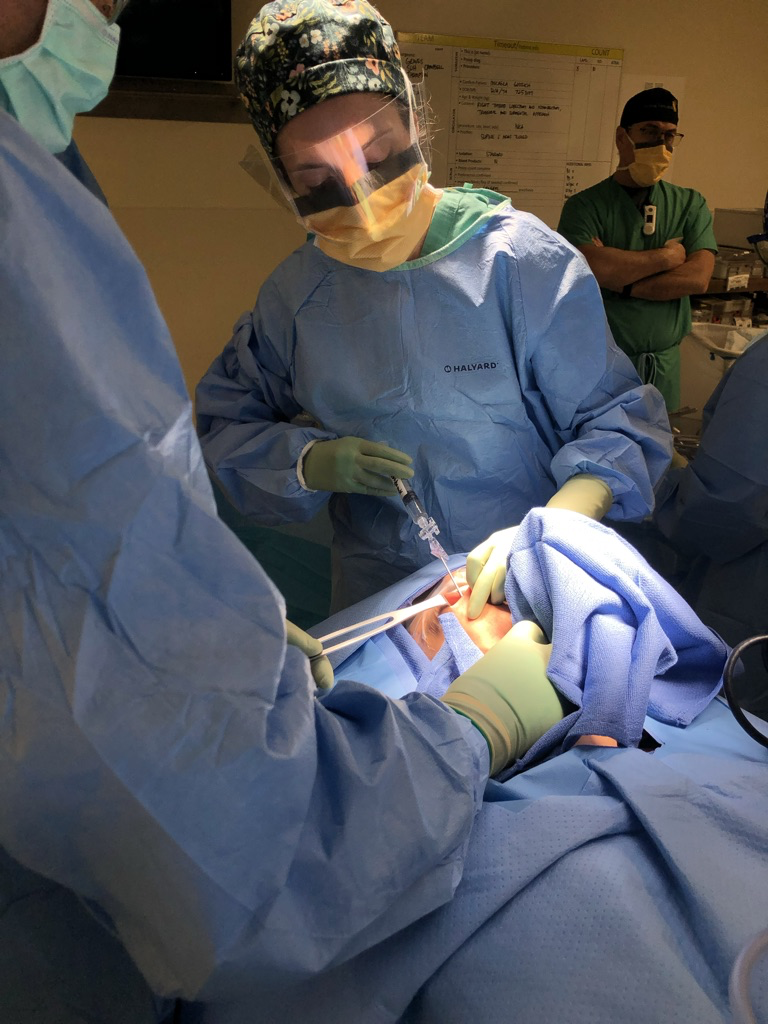
UC Davis Medical Center became the first institution in California Central Valley to perform a “scarless” thyroidectomy, a surgical procedure that removes the thyroid gland. The procedure is performed through a technique called transoral thyroidectomy, which was first pioneered by recognized surgeons in Thailand. 

Thailand’s leading international hospital, Samitivej Hospital, provided the foundation for many surgeons around the world to offer the choice of a scarless thyroidectomy to their patients. “The scar-free thyroid surgery technique through the mouth has dramatically improved the quality of life and increased the confidence of patients with thyroid conditions,” their website reads. “People are now becoming more health conscious and if the detected mass is not too large, it can be removed more safely and easily with no visible scar using this technique.”

The thyroid is a butterfly-shaped gland in the neck area that produces thyroid hormones, which affect bodily functions including metabolism, heart rate and sensation. 

Dr. Claire Elizabeth Graves, an endocrine surgeon at the UC Davis Medical Center, gave an example of when a scarless thyroidectomy may be performed.

“Thyroid nodules are very common, so if we were to stick an ultrasound probe on everyone walking around, about half of the people we test would actually have some thyroid nodule,” Graves said. “But it’s actually rare for the nodules to indicate thyroid cancer, as the vast majority are benign; over 90% of nodules are benign. Nodules are common in cancer, and thyroid cancer is rising in frequency, being within the top 12 most common cancers in the U.S. right now.”

In addition to the growth of thyroid nodules, overproduction of hormones from the thyroid gland as well as abnormally large thyroid glands are two other reasons for performing a scarless thyroidectomy. 

“When we say transoral, our access sites are going to be on the inside of the lower lip, where we make our little incisions so we can stay close to the skin and sort of come up and under the jaw and then get down to the thyroid that way,” Graves said. “And we can either do it with usually three incisions: one incision for our camera, two incisions for our hands to control the long instruments to be doing things.”

The transoral method is key to the “scarless” thyroidectomy, as no visible scar is left on the patient. Many of the steps of a traditional thyroidectomy — which involves a direct incision through the neck to access the thyroid gland — are retained. According to Graves, the success rate of the transoral method is largely the same as the traditional method.

“From the data that we have so far, the risks of the surgery are similar and the benefit is avoiding having the scar in the visible spot, which can be really bothersome to patients,” Graves said. “And it’s also things we don’t necessarily think about, like it’s not attractive to have a scar there, and if you have a patient that had thyroid cancer, they now have this scar that they’re looking at every day in the mirror. It’s a reminder of the event that they went through, which can be triggering to them and an invasion of privacy, so I think more than just being cosmetically pleasing, it has other effects as well.”

Dr. Michael Campbell, an endocrine surgeon at the UC Davis Medical Center, says that although this procedure is revolutionizing, not all institutions will offer the “scarless” thyroidectomy as an option, and it will not overtake the traditional method of incision at the neck. 

“This [scarless thyroidectomy] is really a procedure that is really only done by high-volume thyroid surgeons at high-volume centers,” Campbell said. “It will continue to grow at high-volume centers but will likely not take over the traditional surgery just because there is a very small group of surgeons that possess the skill set to be able to do this.”

Written by: Brandon Nguyen — science@theaggie.org

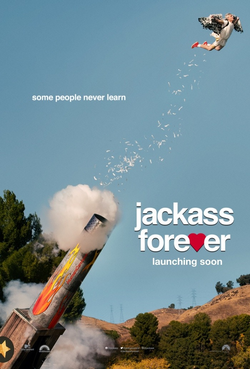
Review: ‘Jackass Forever’ dazzles and nauseates

The newest film in the series is among the best

By JACOB ANDERSON — arts@theaggie.org

Content warning: Some of the topics discussed in this article may be sensitive to readers.

The fame of the first few “Jackass” movies seems quaint now. Besides presenting theatrical audiences with a smattering of events dangerous, crude and extraordinary, the films have strangely prefigured the type of content that would eventually prove to dominate large parts of the internet: gregarious personalities smashing one another in the nuts, electrocuting themselves or ambushing their portly parents with live alligators. Stuff of that sort. The antics that go around in a “Jackass” film resemble the type of thing that — in a less produced, organized form — might sit comfortably on YouTube alongside a view count in the single-digit millions.

It’s somewhat anachronistic to see one of these movies in theaters, then, two decades after their invention, in a world where its content has already borne another generation of itself online. It’s like seeing adult films in theaters well after the dawn of home video. And like vintage adult films, the primary difference between it and its internet children is that the former has a professional pretense: an opening scene to introduce the characters, a coherent logic of assembly, professional (or at least semi-professional) lighting, editing and directing. But in spite of that pretense, largely what people are coming to see is the “meat” — the intimate, embarrassing bodily interactions of performers willing to denude themselves for the world.

This comparison shouldn’t be misconstrued to suggest that “Jackass Forever” is pornographic. It’s (mostly) not, but there is something sort of instinctual or libidinal about how it’s enjoyed. When a cast member lets a wild animal bite their penis, the audience seizes in belly laughter that originates in parts of the brain that the conscious mind has no power over. That’s what it feels like, at least. This type of humor, which may as well be called “body humor,” bears little resemblance to the type of comedy one expects to see at a commercial theater and tends to elude intelligent discussion. After all, it’s difficult to sound smart when discussing the appeal of watching strangers drink glasses of pig semen. Whether it can be made intellectual or not, the appeal is indisputable: Few other movies come to mind after which, when leaving the theater, one hears complaints of facial soreness from laughing too much.

One ingredient that places “Jackass” in a position above the viral videos that share its core appeal is the fact that, despite its violent, often revolting nature, the series manages to pretty much avoid feeling mean-spirited. “Jackass Forever” in particular — despite some of the most heinous pranks and probably the worst on-screen injury in the series’ lifetime — makes every pointless danger and mutilation feel like a triumph and a celebration of the joy brought by the series hitherto. Helping to create this impression is the clear reverence with which the new cast members treat “Jackass,” brandishing tattoos of the iconic skull and crossed crutches and being heard just out of frame chatting about how excited they are to injure themselves for the film. One might be uneasy at hearing the news that younger faces have joined the crew (despite how justified the move is — just look at Johnny Knoxville’s completely white, wizard-like hair), but all the new additions prove worthy of the mantle.

And anyway, it’s not just the new cast members. The film itself is saturated with an almost religious energy. Everyone’s at the peak of their game; the stunts are more intense than ever before, despite all the returning stars hovering around 50 years of age — a dubious stage of one’s life to be getting hit in the nuts as a profession. The new film is no worse for the cast’s age, and in fact, this may be the best “Jackass” yet, with the possible exception of the second film.

Written by: Jacob Anderson — arts@theaggie.org

Culture Corner

The Art Desk’s weekly picks for movies, books, music and television shows

By CORALIE LOON — arts@theaggie.org

Movie: “Harold and Maude” dir. by Hal Ashby (1971)

This little film, which first presents itself as a dark comedy, transforms into a soulful and unconventional romance that has earned its spot as one of my favorite films. Maybe it’s the joy of its soundtrack, made up entirely of Cat Stevens songs, or the lovability of Maude, an eccentric old lady who reminds me of the person I hope to be when I age. The simplicity of its plot and excessive on-the-nose-ness of its dichotomy between pessimism and optimism have drawn complaints from critics. However, the movie doesn’t claim to be big, flashy or structurally complex. It luxuriates in its smallness and its conviction to portray the capabilities (and limits) of human connection in a way that struck me as incredibly real. After watching this film, it’s hard not to feel inspired to live your best life. After all, Cat Stevens said it best: “If you want to sing out, sing out.”

Book: “After Dark” by Haruki Murakami (2004)

This is a lurid, dreamlike and eerie novel that slowly explores an array of characters in Tokyo, each who brings their own layers of darkness into the picture. As someone who was disappointed by how Murakami handled issues of sexual violence and misogyny in his 2002 novel “Kafka on the Shore,” “After Dark” felt like a welcome redemption. While many of the same themes are as clear and glaring as ever, Murakami embraces and acknowledges this darkness rather than glossing over it, sweeping the reader into a world that is purposefully chilling and leaves as much said as unsaid. While not his most popular piece of fiction, “After Dark” displays Murakami’s talent at bending reality and creating an atmosphere that is equal parts poetic and sensational.

Album: “Songs from the Sunroom” by Field Medic (2017)

Field Medic, the pseudonym for solo artist Kevin Sullivan, released his album “Songs from the Sunroom” in 2017. Since then, he has released two more albums, including his latest “Floral Prince,” which explores sobriety and self-healing, a contrast to the slightly darker themes of his earlier music. His songs, composed of a guitar base and unharmonized vocals, are a hybrid between folk and bedroom-pop, or perhaps “bedroom-folk.” The soft and muffled sound of acoustic guitar (and the occasional electric beat) invites a sense of nostalgia and solitude that complements the vulnerability of his lyrics. They are painfully honest poems that ruminate on loneliness, drug use and the spaces between desires and reality. Some songs, such as “do a little dope,” invite the audience to laugh and brush off the tediousness of life, while others dive deeper into his pain. “me, my gibberish, & the moon” is one such song with a powerful ending: “I stalk the streets alone now / just me, my gibberish and the moon / for I speak a different language / if I cannot speak with you.”

TV Show: “The Righteous Gemstones” (2019)

This unique dark comedy follows the lives of a wealthy family of “televangelists,” the Gemstones, who are famous for their over-the-top church service broadcasts. Filled with crime, spunk, excessive family drama and lots of love for Jesus, “The Righteous Gemstones” is a fresh and fun show that has captivated me and kept me on my (metaphorical) toes. Adam DeVine, Danny McBride and others deliver forceful performances as members of a family whose lives behind the scenes are not as glorious as they may seem. The show is currently in its second season and is available on HBO Max. 

Written by: Coralie Loon — arts@theaggie.org

Worried about climate change? We are too.

Make the environmentally friendly decisions you can, and don’t shame yourself or others for what is not feasible

Davis has seen some pretty idyllic days in the past few weeks — it’s been perfect weather to go for a walk in the Arboretum, get some work done in the Kemper Courtyard or take a nap on the Quad. But for many, including the members of the Editorial Board, this unseasonable pleasantness has been accompanied by a consistently increasing anxiousness about what our future and the future of our planet will look like.

We see and react to information about climate change all the time. And our reactions are not limited to anxiety, according to a Pew Research Center survey from 2021. The survey indicated that social media users who are millennials or Gen Z are not only more likely to engage with content about climate change but are also more likely to express anger in addition to anxiousness. There was a higher percentage of both millennials and Gen Z motivated to learn than any of the three categories of older generations, but a higher percentage of people from younger generations are anxious about the future than are motivated to learn more about climate change issues.

The time has come (it in fact came a while ago) for there to be significant action at national and global levels. Despite COP26 being deemed the “last best hope for the world to get its act together” by the U.S.’ climate envoy, the climate conference frustrated many, including the Editorial Board. A Nature article even led with the headline, “‘COP26 hasn’t solved the problem’: scientists react to UN climate deal.” 

With such news along with recent weather, a longer fire season in California and the heat waves and extreme floods last summer, it is no surprise that young people are anxious and angry about inaction. The climate change narrative has evolved in recent years to identify the culpability of corporations and large institutions, but we recall our elementary education focusing on individual action like “reduce, reuse, recycle.”

Nihilistic outlooks about climate change are on the rise — this isn’t surprising, according to climate writer Mary Annaïse Heglar, because individual actions can feel meaningless against the emissions from corporations. Living through COVID-19 hasn’t helped either; due to the pandemic, young people reported significant degrees of stress surrounding academic or career goals, dating and even “having fun.” 

Climate change is scary, and we all have every right to be terrified. But along with that, we need to recognize that though systemic change is the only way to guarantee a livable future, there are actions we can take. 

Individual actions such as minimizing meat consumption (even if it’s just on certain days), choosing public transit over driving and opting out of fast fashion can also help; some action is better than no action, and doing what you can within your means is an excellent starting point. These actions can also help people feel more in control through overwhelming circumstances, and that is not an insignificant benefit. Judging yourself and others harshly for not committing to impractical change, however, helps no one and is counterproductive to finding lasting solutions.

At this point, many of us are fully aware of the outsized role corporations play in emissions — we cannot and should not ignore that. That being said, it’s not just the individual versus the corporation. It seems like there’s a lot we can’t do, but for some peace of mind what we can do is help educate others about sustainable habits and support community efforts to foster an attitude of environmental consciousness. Experts recommend community support to help push for long-term solutions while allowing people to share the burden of climate-related despair. 

Donating to local mutual aid organizations in the form of time or money, organizing within one’s community, attending marches for climate activism and participating in “Buy Nothing” groups (in which people exchange goods and services for free) are a few other ways to build and strengthen community while advocating for sorely needed change.

In processing the assorted emotions that come with climate change, it’s also important to consider how climate change disproportionately impacts (and will continue to disproportionately impact) those already facing socioeconomic inequalities. Organizations such as the NAACP’s Environmental and Climate Justice Program exist to address harmful practices that exacerbate environmental injustice.

The idea of consumer-driven sustainability is inherently flawed, but where we can, we should try to make changes with regard to companies we support. Voters should make their voices heard at the ballot. There are ways for us to push for the institutional change the planet desperately needs.

As we make our way through these stressful times, it’s critical that we take care of ourselves and those around us — we can’t push for an upheaval of climate-destroying institutions if we are burnt out. The members of the Editorial Board are trying, and we encourage you to as well. 

Written by: The Editorial Board

UC Davis Softball 2022 season preview

The Aggies throw out the first pitch of the season with big goals in mind

By MARLON ROLON — sports@theaggie.org

For the first time in two years, fans were in attendance at La Rue Field to cheer for the UC Davis softball team. The season opener didn’t go as planned, as the Aggies fell 3-0 to Santa Clara, but it has been a long journey to get here. 

“We have fans in the stands which didn’t happen for us last year. So we’re just very excited,” UC Davis Softball head coach Erin Thorpe said.

Standout second-year pitcher Kenedi Brown started the game for the Aggies. Brown, who was named to the Big West Conference first team and first team all conference during her freshman year, started the game well, striking out three batters and did not allow a hit until the third inning. 

The home team’s offense did not do Brown any favors, going hitless until the fourth inning. UC Davis was battered with ground outs, pop flies and strikeouts for the majority of the game. Trouble started in the sixth inning for the Aggies with Brown allowing three hits and three runs. On top of that, three errors committed by UC Davis extended Santa Clara’s inning. 

UC Davis remained scoreless throughout seven innings with their bright spot at bat coming from second-years Leah Polson and Tatum Wentworth, combining for two hits. Rising prospect Brown finished the game with a loss earned and allowed three runs and seven hits with four strikeouts. 

Although the Aggies looked out of sync, this can be expected after a long offseason, as it has been nine months since their last game. 

“We’re very young; we only have seven offensive players who played on last year’s team on this [current] team,” Thorpe said. “We’re going to have some growing pains. But we’re all super excited to get started with it and start building on those things because it’s a long season.” 

New generation of players 

The softball program has revamped their roster this season, composed of seven first-years, 10 second-years, two third-years and three fourth-years. Typically, like most young teams, they will go through growing pains. The trials and tribulations of a season will garner experience that can only benefit this unit. 

“We have so many new people on the roster feeling what this means, what D1 softball means, how it works and how we play because our prep travel teams are very different from what they’re going to experience here at the collegiate level,” Thorpe said. “A lot of it is just kind of getting the feeling and how they can be the most beneficial to help the team win.” 

This young team is led by seniors Claudia Kim, Delaney Diaz and Sierra Hillman. One of the best prospects of the team is Kenedi Brown, who last season as a freshman made an impact on the mound. She started 24 games in 29 appearances going 13-11 posting 2.69 ERA. 

“I have actually been working on two new pitches because there’s a lot of film out there that people watch, and people see your tendencies so if you can come up with something every season it makes you unpredictable it makes you really good,” Brown said. 

Like Brown, great players take the extra step to better their craft. Brown said she worked on her strength in the weight room over the summer. She said it’s not a requirement to do so but took the extra step to improve her game. Sometimes it’s the little things that create separation from the good players and the great players. 

“I’ve learned to connect with my defense and the hitters, and I feel like when we’re all connected, when we’re all talking together, it allows us to feel like one team like I’m not out there by myself,” Brown said. “I have so many people behind me so it’s just really supportive.” 

First-years Reese Mattley, Grace Kilday, Grace Tangen, Sophia Eftekhari, Mia Hildebrand, Bella Holtz and Ale Mota will look to cement their place within the program.

“It’s going to be a lot of learning curves and we’re already seeing some really good things and we’re seeing some things that we know that we want to be better for tomorrow,” Thorpe said. “We’re expecting to come in and be ready to go by conference and really excited to bring it to the Big West.”

The new generation of players and second year prospects brings excitement to the program’s culture. The UC Davis softball program has high standards embedded within their culture and playing for a prestigious university can maximize the new prospects’ potential. 

“I think our energy is awesome, we love being out here, everyone loves each other and we push each other. It’s a really healthy environment to grow and build as a team,” Brown said. 

A look ahead

UC Davis finished the 2021 season with 19 wins and 24 losses and went 13-11 in conference play. A turbulent season in the midst of COVID-19 and no fans in attendance affected the team’s performance. 

This season will feature a full 53-game schedule as it stands. The Aggies will participate in the NorCal Kickoff and Mary Nutter Collegiate Classic tournament, in addition to their conference play in the Big West.

On Feb. 12, the Aggies will host Saint Mary’s and Montana. On Feb. 13, Davis will host Saint Mary’s again. UC Davis will travel to Fresno to play Fresno State in a three-game series between Feb. 19-20. The Mary Nutter Collegiate Classic tournament will be held in Cathedral City, between Feb. 24-26. The Aggies will face great teams from around the nation like Tennessee, San Diego State, Arizona, Utah and California Baptist.

UC Davis returns home on Mar. 1 to face Northern California rival Stanford. On March 5, they will host Dixie State and rivals Sacramento State back to back. On March 6, they will travel to Sacramento to play Sacramento State and Dixie State. 

The Aggies will then travel to Santa Clara on March 11 to play two back to back games against Utah State and Santa Clara. On March 12, the Aggies will travel to San Jose to play Utah State and San Jose State on the same day. Then, on March 13, UC Davis will play Idaho State. 

From March 19-20, Davis will host Cal State Fullerton in a three game series to start Big West play. Boise State comes into town on March 23 to play the Aggies.

Long Beach State will host UC Davis on March 26-27 in a three game series. On March 29, the Aggies will travel to Stockton to play University of the Pacific. On April 2-3, UC Davis will host CSU Bakersfield. The Aggies will travel to Riverside on April 8-9 for a three game series. Then, on April 15-16, CSU Northridge will travel to Davis for a three game series. April 19 will feature UC Davis vs. UC Berkeley. 

The Aggies will travel to San Diego on April 22-23 to play UC San Diego in a three game series. On April 29-30 the Aggies will host UC Santa Barbara in a three game series. 

As the season winds down, the Aggies will travel to San Luis Obispo from May 6-7 for a three game series against Cal Poly. Lastly, UC Davis will close the season, May 13-14, hosting Hawaii in a three game series. 

UC Davis has a long season ahead but the team is confident that they can collectively put the pieces together to make a run at a conference championship, a feat that has not been accomplished since 2010. Although the roster is composed of mostly first-years and second-years, they are well coached by Erin Thorpe who led the Aggies to their first ever winning season in 2018 since the merger to Division 1. The program has a rising star in the making, Kenedi Brown, who in her second season is the team’s starting pitcher and their best player. If the Aggies can get past the growing pains throughout the rigorous season then they could really make some noise in the postseason. 

“Our common goal as a unit is, we all want to be Big West champs,” Brown said. “I think this year, seeing what we had last year and seeing what we have now, I think it’s really, really achievable.” 

Written by: Marlon Rolon — sports@theaggie.org

UC Davis program for students with intellectual disabilities completes first quarter

The Redwood SEED Scholars Program, launched in the fall of 2021, is a four-year inclusive college program for students with intellectual disabilities

By KAYA DO-KHANH — campus@theaggie.org

The UC Davis Redwood SEED (Supported Education to Elevate Diversity) Scholars Program is the first four-year inclusive college program with a residential area for students with intellectual disabilities in California. Beth Foraker, an instructor for the School of Education, and Leonard Abbeduto, the director of the Medical Investigation of Neurodevelopmental Disorders (MIND) Institute, are co-directors of the program. 

“[The purpose of the program is] to provide a full college experience that leads to competitive integrated employment for young people with intellectual and developmental disabilities,” Abbeduto said via email. “This is important since so few people with intellectual and developmental disabilities have the opportunity for post-secondary education and the personal growth that it promotes and few end up with jobs that pay a living wage and are in inclusive environments.”

Since the 1960s, there have been programs for students with intellectual disabilities from preschool through 12th grade in the Davis area, according to Foraker. The addition of the Redwood SEED Scholars Program makes Davis the first city in the state with preschool to four-year college inclusion. 

“We have data from other places, and we know that if you finish our program, a four-year program, you have between a 65-80% chance of getting a living wage at graduation,” Foraker said. “We know that building these skills — independent living, employment skills, communication skills and academic skills — will launch them into a real chance at living in their community on their terms and having a job that pays them enough to pursue their hopes and dreams.”

The program welcomed its first group of 12 students in the fall of 2021. Nine of these students continued with the program for the year and engaged in on-campus dormitory living, college courses, social activities and internship opportunities. 

 “We had 23 that we thought would be a good fit for our program, and of those 23, two-thirds of those people had never even spent one night away from home,” Foraker said. “The nine were very successful, and they grew so much. Their emotional growth, communication skills, ability to deal with complex problems and sticking with the classes that they were taking — all of it has been really beautiful.” 

This year, the students are taking their first college course, NUT 10: Discoveries and Concepts in Nutrition, which is a popular course among UC Davis students. 

“It is amazing the ripple effect it has, not only for our scholars and their mentors, but for typical UC Davis students all around who are getting to see, ‘Oh, look, there’s somebody here that looks a little different from me, but they are part of this campus community.’ That is a very important aspect,” Sarah Barnes, the program’s academic director, said. 

The Redwood SEED Scholars Program has access to mentors who assist the students with residential living, academics, health and wellness and social inclusion. There are a total of 50 mentors, and a majority of them are volunteers.

“What happens when you make it a volunteer position is you get people who are very interested in this,” Foraker said. “They just really care about this effort, and it becomes an effort of the heart instead of an effort of the checkbook.”

The SEED Scholars Program is facilitated by campus-wide collaboration and support. UC Davis Continuing and Professional Education have aided in the creation and management of the program, UC Davis Health has helped in finding internships for the SEED scholars and the MIND Institute has shared its research and skill sets to launch the program.

“I think the program is rather unique nationally because it is embedded in a campus-wide unit — the Office of Diversity, Equity, and Inclusion — rather than being the responsibility of a single college or school or center,” Abbeduto said.

Abbeduto expressed hopes of expansion and increased exposure for the future of the program. 

“The program will expand in terms of [the] number of students [that will] interact with, get to know, and learn from the SEED scholars,” Abbeduto said. “I also want the program to serve as a model for the other UC campuses and we look forward to working with other campuses to create their programs.”

Written by: Kaya Do-Khanh — campus@theaggie.org

Meatless meat options in Downtown Davis

Descriptions and reviews of various local food joints that offer vegan meat options

By SIERRA JIMENEZ — arts@theaggie.org

The rise of meat substitutes in the food industry has skyrocketed in popularity in recent years with options on many menus and shelved in most grocery stores. Stanford University Professor Dr. Patrick O. Brown, who founded the Impossible Food phenomenon, “wanted to make the global food system sustainable by recreating meat, fish and dairy foods, from plants, with a much lower carbon footprint than their animal counterparts,” as stated on the Impossible Foods website

Animal meat production uses about half of the world’s land resources, creates at least 15% of global greenhouse gas emissions and uses 25% of the world’s freshwater supply. By making meat out of plants, the use of the land, water and energy is reduced “so people can keep eating the foods they love, without harming the planet they love,” according to the Impossible website. 

In Davis, there are a variety of meatless meat options for those non-meat eaters out there who don’t want to miss out on the fun. I have tried an assortment of options available in the Downtown Davis area in hopes to help non-meat eaters (and meat eaters!) to pick their new favorite food spot. 

Ike’s Love and Sandwiches

Notorious for its eccentric choice of combinations to stuff in between two pieces of bread, Ike’s seems to never fail in popularity 一 or taste. Limiting myself to the “Sometimes I’m a Vegetarian” on a Dutch Crunch roll, I was hesitant to dip my toes into new territory from the overwhelming menu. How many odd combinations could Ike come up with? Over 500 sandwich combinations apparently! I played it safe with the “Meatless Mike,” which People for Ethical Treatment of Animals (PETA) considers the “best vegan meatballs in America.” I must admit, I am not well-acquainted with vegan meatballs (for it is quite the niche food category), but I can attest that these meatless meatballs exceeded my expectations. Compared to other meatless meats I have consumed, these meatballs actually looked like meat. They were fluffy and, well, meaty looking! Thick and texturous, these meatballs not only looked like they had substance but tasted the part as well. Although a little bland, the seasoning of fennel added a peppery spice to the beefy-looking vegan meatballs. Picking out the meat to taste it on its own, the texture ripped apart like real meat would. It had the gristly texture but with the satisfaction that it was not actually animal cartilage. In the completeness of the sandwich, the pepper-jack and banana peppers added to the spicy moistness of vegan meat. I would not only recommend these meatballs for those meat-less meat-eaters out there, but also the whole sandwich (I would hope that you’d go to Ike’s for the sandwich and not solely a meatball!)

Burgers and Brew

Parents weekend? Date night? Burgers and Brew is a hot spot to take the ‘rents or go out for a nice night out in Downtown. One of the more high-end food joints in Davis, their burgers may be a little pricey, but trust me, it’s worth it for their impossible burger. A “1/3lb vegan patty with roasted garlic and olive oil, lettuce, tomato, onions, pickles, and vegan mayo on a sesame bun” — they sold me with the description. The moist, meat-y volume and substance, taste and texture is incredibly similar to a meat patty. It has the grainy, gristley texture red meat has, and has the dark grilled look of a barbequed patty. There are remnants of a smokey flavor and juicy tender deliciousness with every bite. This may be the best impossible burger I have ever tried. I had an extremely hard time finding critiques for this burger because of its remarkable resemblance to a real meat burger, so I would recommend it for those non-meat eaters who still miss the delicacy of meat. 

Burger Patch 

Allegedly, Burger Patch is known for being a vegan spin on classic fast-food joints with its “nostalgic taste,” and that description could not fit better. The Patch Burger looks like a classic McDonalds happy meal with its plastic-ey cheese and iceberg lettuce, but vegan! The signature Patch Sauce seeps into the sweet grilled onions, tomato, lettuce and patty making it messy and fun like good ol’ road trip fast food. The patty itself has a mushroom-ey taste with slight hints of smokiness from a grill and slightly spicy undertones. The patty is obviously fake meat just from looking at it, but it does have a similar texture to real meat. It does not taste like a garden burger, but more so like they wanted to make sure the consumer knew they weren’t eating meat. Not the best beyond burger I have ever had, but I think that is the point 一 fast n’ easy to go food. I also sampled the non-GMO Beyond Chicken tenders which surprised me to the fullest. They were golden brown crispy on the outside and soft and juicy on the inside. They remind me of the Trader Joe’s Chicken Drumellas, which I’m sure many meat-eating Davis folk have had at least once in their lifetime. The Beyond Chicken tenders left crumbs of breaded chicken stuck to my fingers to lick off like I did as a child. I also dabbled with a bac’n strip. Its appearance follows the suit of the fake burger meat and definitely does not resemble real bacon. It’s floppy and has a rubbery, oily texture, but has a nice hint of barbeque to cover the beyond meat blandness. While the bac’n did not exceed my expectations, the chicken was by far my favorite item on the menu. 

The Hotdogger 

For those vegetarians and vegans out there, maybe you’ve seen them at the Davis Farmers Market Saturday mornings or Wednesday evenings but were dissuaded because of the meat heavy content of a typical hotdog. But, do not fret. The Hotdogger partakes in popular culture and offers a Veggie Tofu Dog for those non meat eaters. Not to mention all of their buns are made vegan! The Veggie Tofu Dog can be as extravagant or minimal as you like with a variety of delicious toppings and condiment options (I personally added the Hawaiian Pineapple mustard and *chefs kiss*). The hot dog itself took me back to baseball games in my childhood, waving down the hot dog vendors in the stands for the simple deliciousness of sports food. The Veggie Tofu Dog has the illusion of a classic Oscar Mayer wiener we all know and love. The plastic-ey look and simple yet extremely satisfying taste paired with the classic combination of ketchup, mustard, relish, onions and tomatoes hide the tofu part of the tofu dog. By itself, it was not that different from a regular hotdog! If I were to not have known it was a tofu dog, I would have a hard time telling the difference from a regular meaty hotdog. The nostalgic tastiness of this Veggie Tofu Dog will send vegetarians and meat lovers alike into shock at the flavor of this hotdog. 

Written by: Sierra Jimenez — arts@theaggie.org

Unveiling the science behind relationships, romance

UC Davis professors explain the science behind romantic relationships in humans and other monogamous animal relationships 

By MONICA MANMADKAR — science@theaggie.org

With the weather warming up and spring on the horizon, stores are filled with candy hearts and life-sized teddy bears. On Feb. 10, UC Davis psychology professors Paul Eastwick and Karen Bales talked about the science behind falling for someone, both physically and emotionally, on UC Davis LIVE, an ongoing series showcasing the intersections between research and current events

Eastwick runs the Attraction and Relationships Research Laboratory and studies romantic relationships and the psychology of commitment and long-term happiness. 

Bales investigates the neurobiology of pair-bonding and biparental care in prairie voles and titi monkeys, who commit to long-lasting monogamous relationships. She also leads the Neuroscience and Behavior Unit at the California National Primate Research Center. 

Science plays an important role in determining the strongest predictors of the quality of a relationship, Eastwick explained. Within a speed-dating study, it is easy to see who the popular people will be. However, as people get to know each other over time, apart from the initial attraction, the popularity begins to wear off. 

“Popularity is like a drug, which matters less and less over time, as you begin to form a deeper connection with the other person,” Eastwick said. “Desirability changes over time and is based more on compatibility, so if you are a desirable person, then use your 15 minutes of fame to amaze that person.” 

While addressing a question about whether there is a magic formula for long-term committed relationships, he said that all couples have to go through the same process to get to the stability that they want. Oftentimes, couples go through fights and disagreements to get to that desired endpoint and build that needed compatibility. 

“There are average styles of conflicts or support that will be more likely in people who will be better fitted for a committed relationship than others; however, figuring out the structure of your relationship and daily life is what everyone needs to go through together,” Eastwick said. 

When comparing humans’ successful relationships to titi monkeys, Bales found many analogues. For example, in relationship models that were set up similar to a speed dating paradigm, animals who were given three choices versus none tended to interact better with their partner over time. This experiment helped the researchers look into certain variables that affect the relationship between the two monkeys. 

“[These experiments] allow us to look at the pair-bonds with controlled variables and allow us to bring in certain independent variables like changing hormones and other invasive procedures,” Bales said. 

By looking at the differences between hormones and other variables, researchers like Bales can better understand the influences of evolution on romantic relationships and look into why humans approach romance the way they do. 

While addressing an audience question, Bales and Eastwick both explained how valid the ‘one true love’ concept is for both humans and animals. While Eastwick said that there is not one true love, Bales said that once a mammal has formed a pair-bond with another animal, it is unlikely that they’ll ever form that bond again. 

You may not hit it off with your one true love at a certain time in your life versus another time,” Eastwick said. “[You need to] take into consideration the situational factors that help you build a good relationship.” 

Eastwick also described the idea of settling in romantic relationships. He said that most people stop looking when they are captivated by their significant other. They begin to degrade the alternatives and, although to other people it may seem like settling, it doesn’t to the person in love, Eastwick said. 

Bales said that in pair-bond formation, animals and people tend to be so invested in each other that everything else begins to look really dull and uninteresting. 

“I found the presentation really interesting and was able to debunk many of the myths that I had about romantic relationships,” Ruhaan Juyal, a first-year computer science major, said. 

Although Valentine’s Day may be a reminder to some people of something that is missing in their lives, Eastwick and Bales assure everyone that with due time, romance blooms and lightens up lives. 

Written by: Monica Manmadkar — science@theaggie.org

During Black History Month, The Aggie recognizes Black alumni

0

Tiana Williams discusses having a platform in filmmaking and uplifting communities of color

By MAYA SHYDLOWSKI — features@theaggie.org 

This article is the third in a four-part series in honor of Black History Month in which The California Aggie interviews a few of the many distinguished African American UC Davis alumni. These alumni discuss their achievements, how they’re uplifting underrepresented communities and offer their wisdom to Davis students. 

The first line of Tiana Williams’ short film “Alexis Brown: Taking the Knee,” which she produced as an undergraduate at UC Davis, features Aggie gymnast Alexis Brown saying, “I take a knee because I have the platform of gymnastics.” Williams explained that similarly, she has found that her platform — documentary production — allows her to highlight the struggles of underrepresented communities and has become a forum for her own social justice activism. 

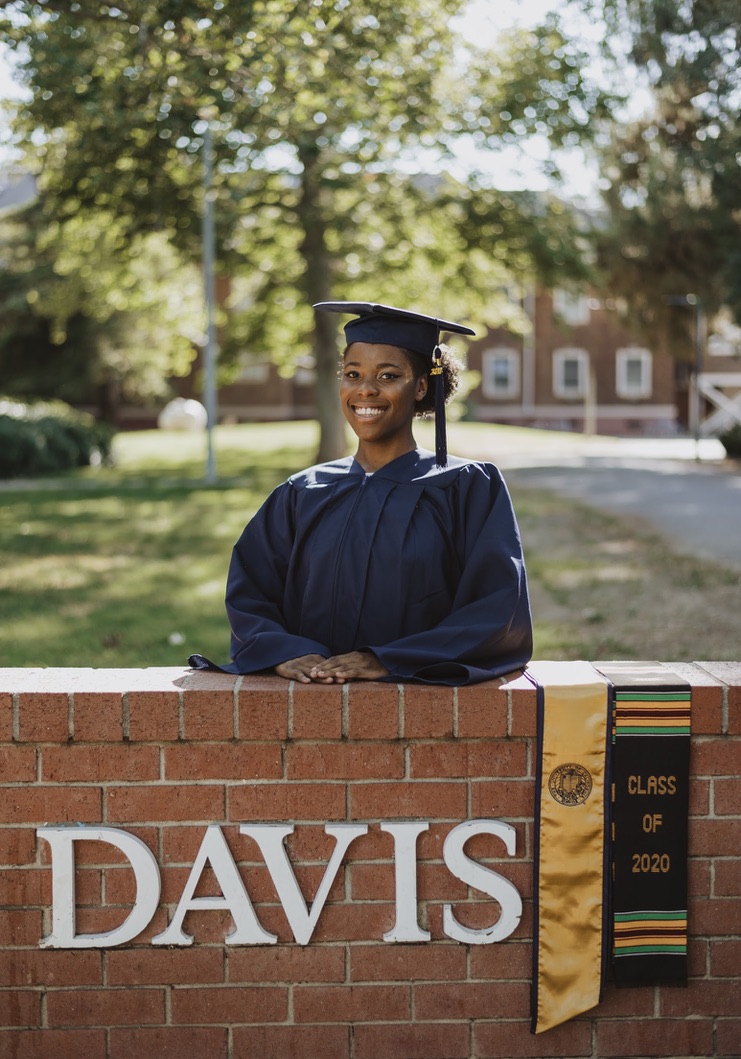
Williams graduated from UC Davis in 2020 with degrees in cinema and digital media (CDM) and African American and African (AAAS) studies. She is now pursuing a master’s degree in cinema and media studies at the University of Southern California (USC) and works as an archival production assistant for Campfire Studios in Los Angeles. 

Throughout her time at UC Davis, Williams pursued her interests in filmmaking and African American studies, and found that the two could be woven together. At Davis, Williams was part of the McNair Scholars Program, which supports undergraduates from typically underrepresented groups in their areas of study pursue research opportunities and apply to graduate schools. In the McNair Program, scholars produce a final research paper in their area of study; Williams’ focused on the history and current status of the prisoners’ rights movement. She said that while the movement, which began in the 1970s, led to some positive changes, it also produced more systemic repression that continues to impact the criminal justice and prison systems today.

While working on this research, Williams used her experience from working at KDVS, the student-run radio station at UC Davis, to conduct interviews and tell stories. She also volunteered at the Solano State Prison to get more acquainted with the community she was writing about, and ended up working with the Uncuffed project while conducting her research. 

“I transitioned to having a connection working in Solano State Prison in Vacaville, for a program called Uncuffed, which is a podcast made by men on the inside,” Williams said. “Because of my experience in digital storytelling courses at UC Davis, it was a really good fit for me. I have experience working in different communities and asking questions like ‘What’s your story? How can we find your story?’” 

Williams said that her McNair mentor, Jesse Drew, helped her get more comfortable applying for fellowships and grants for her research, and using different research methods, both of which have allowed her to elevate her filmmaking. 

“I see myself as a filmmaker, and I also see myself as an archivist because of some of the work I was doing with Jesse Drew on this project about the prison movement,” Williams said. “[The project] dealt very heavily with unearthing and uncovering hidden histories within the archive, digitizing them, and getting [the stories] out as part of my research.”

Although she sees herself as a filmmaker today, Williams began college with the vision of pursuing journalism, which led her to the cinema and digital media major. After finding that major at Davis, Williams began taking a broader range of classes and discovered an interest in African American and African studies, which she said benefitted both her personally and in her work. 

“I was also taking African American studies classes, and that was very integral to my time at UC Davis in terms of just having a sense of self,” Williams said. “I was in all these general education classes and these film classes where everyone didn’t necessarily look like me, but then I would go to the African American and African Studies Department and take classes, [and] it was really just heartwarming to be around so many people that looked like me, studying topics that were of interest to all of us and that related to all of us in a more experiential type of way.”

She took multiple interdisciplinary classes in the AAAS department in which she was able to use her film experience. In a course on digital storytelling, she said that she learned to look at the film production process differently — specifically keeping in mind how creating a film affects the community it centers. In a course called Black California, Williams learned about the Great Migration, which inspired her film about her own family’s history and experience in California. 

Classes she took in the CDM department also inspired Williams to bring her interest in social justice into her work. In a documentary production class, Williams produced the short film on Alexis Brown, the UC Davis gymnast who knelt during the National Anthem in a statement against police brutality. She recalls being surprised to find that Brown received a lot of backlash for her choice to take a knee and wanted to bring attention to Brown’s story and intention.

Williams said this piece was her favorite film to produce to date. She said that the hardest part was cutting all of the footage and information down to a 60-second film, but learning how to convey a story in under a minute helped her grow as a storyteller. “Alexis Brown: Taking the Knee” was accepted into the 2018 UC Davis Film Festival, which Williams said also helped her gain confidence in her abilities.

“I thought to myself, ‘This is something I care about, and I created it in a way that other people care about it as well,’” Williams said. “From that, I was more grounded, affirmed and confident, knowing that I can make films about social justice issues and people will listen.”

Williams has had a very successful career thus far, but she said that in getting to this point, she has also experienced struggles that helped her grow. She remembers having a hard time balancing her busy schedule when she first got to college and finding her footing in her career. 

“[My dad said,] ‘You have to be so good that they can’t deny you,’” Williams said. “That translates to what a lot of other people of color have been told, which is that you just have to be twice as good.”

Williams thought about this during her time in the McNair Scholars Program, which she said was a lot of work on top of being a student. She said these words stuck with her through her time as an undergraduate, and that she continues to remind herself of the message today as she strives to make a place for herself and others like herself in film production. 

“If I’m not there, it’s going to be twice as difficult for the person that’s a few years below me because they’re not going to hear about the struggles I went through,” Williams said. “They’re not going to see a face in that institution doing the type of work that I’m doing.” 

When asked what advice she would give to students who have been typically underrepresented both in higher education and film production, Williams said to not be afraid to step into new spaces even if no one else there looks like you — you can be that stepping stone for someone else to feel comfortable stepping into that space too. 

“You have to be thinking about who’s going to be here when you’re gone, and

who’s going to be telling your story,” Williams said. “I try to constantly remind myself of that: […I’m] here for a reason. It’s not just about you at the end of the day. I think ultimately that’s what Black History Month is about that there’s so many people who have come before me, and if they stopped, I wouldn’t be here either.”

Written by: Maya Shydlowski — features@theaggie.org

Humor: What your major says about the crimes you’ll commit to pay off student loans

Human rights minors, I’m watching you very carefully

BY ANNABEL MARSHALL — almarshall@ucdavis.edu 

  • Animal Science: Animal gravedigging.
  • Applied Physics: First of all, what is applied physics? I apply physics every time I push someone on an electric skateboard into the street — no one has offered me a bachelor’s yet. 
  • Art Studio: Forgery.
  • Art History: Historical forgery.
  • Atmospheric Science: Broadcast meteorologist who becomes drunk on fame and attacks an intern with a cloud-shaped prop live on television.
  • Biomedical Engineering: Scary robot crimes.
  • Chemistry: Illegal fireworks operations.
  • Cinema and Digital Media: Creative espionage.
  • Civil Engineering: Failure to apply erosion control on active construction sites.
  • Computer Science and Engineering: Who am I kidding? Congrats on financial security, bro.
  • Genetics and Genomics: “Jurassic Park” stuff. Jeff Goldblum was right.
  • Entomology: I don’t know, but I’m scared.
  • Environmental Horticulture and Urban Forestry: Illegally growing weed in your apartment.
  • Food Science: Cooking the books, ​​fudging the numbers, etc. 
  • French: Publicly annoying me via excessive use of vowels. G’et ooute ouf mye fàcé.
  • International Relations: World War III.
  • Managerial Economics: Embezzlement.
  • Marine and Coastal Science: Training dolphins to commit “Ocean’s Eleven”-style heists.
  • Pharmaceutical Chemistry: Drugs, duh.
  • Philosophy: Premeditated murder.
  • Political Science: Public corruption, but in a fun way.
  • Religious Studies: Starting a cult, which isn’t technically a crime, so good for you.
  • Psychology: Also starting a cult, but this one involves crime.
  • Theatre and Dance: Treason.
  • Undeclared: Credit card fraud, general.
  • Viticulture and Enology: Rebottling wine from Trader Joe’s and selling it for $900 a pop. Honestly, you did nothing wrong.
  • Wildlife, Fish and Conservation Biology: Oyster piracy.

Written by: Annabel Marshall — almarshall@ucdavis.edu 

Disclaimer: (This article is humor and/or satire, and its content is purely fictional. The story and the names of “sources” are fictionalized.)

Column: Virtual reality isn’t just for gaming

Virtual and augmented reality are the future of interacting with technology

By OWEN RUDERMAN — opruderman@ucdavis.edu 

When many people think of virtual reality (VR), they think of someone with a toaster strapped to their head running into a wall or punching a hole in their television. For augmented reality (AR), it’s Pokémon GO. At first glance, it seems like VR and AR are just fun gimmicks — new ways to play video games that will surely fade away. But that viewpoint couldn’t be farther from the truth.

In fact, before VR and AR entered the consciousness of the mainstream, it was already being used as early as the 1970s for things such as flight simulations and military training. Now, with the huge advancements to the technology in recent years, VR and AR’s list of potential uses is growing. For example, since 2017, impressive strides have been made in VR-enhanced mental health treatments.

I must admit, however, that the technology is still in its infancy. Despite efforts from Meta with the Oculus, when it comes to affordability and ease of use, VR headsets are still falling flat for the everyday consumer. Additionally, aside from Snapchat and Instagram filters, it seems like AR is a ways away from becoming useful. But once more advancements come, the potential for this technology is scarily limitless. 

And more advancements will come, especially as the industry grows. Demand has shot up in recent years, mostly due to the COVID-19 pandemic — global spending on AR and VR technology rose to $12 billion in 2020, up 50% from 2019.

Some of the potential of VR and AR is easy to imagine. If the price goes down and the quality goes up, it’s highly possible that these technologies will dominate the gaming market. I’ll never forget the first time I booted up my Oculus Quest 2 and hopped into a multiplayer game, where I met a British kid who offered to show me how to use the sniper rifle. It’s a magical gaming experience, and everyone should be able to get their hands on it. As the technology improves and becomes more easily available, and as more games are developed, VR will eclipse all other forms of play. You just can’t beat the level of immersion that VR provides. But gaming isn’t the only entertainment industry that will shift to VR.

Imagine movies in VR: Instead of sitting in a theater watching a screen, you would quite literally be in the middle of the action as it unfolds. The monster in horror films could actually sneak up behind you, or you could skydive out of a plane with Captain America. But let’s not stop there. What about VR music videos, VR interviews and more? Imagine attending an art exhibit that consisted entirely of immersive, VR art pieces. At some point in the not-so-distant future, I predict VR will be the method by which we view almost all entertainment. 

AR has even more potential. The Google Glass was quite a flop (wearers of Google Glass were branded “Glassholes”), but as humans and machines start to become more entwined, seeing the world through a veil of technology is going to become more and more common — just look at Neuralink, Elon Musk’s new brain chip company. It’s secretive about its research, but one of its goals is to use brain chips to allow paralyzed people to control technological devices. Once AR technology becomes sufficiently advanced, users will be able to instantly translate foreign text or voice, physical advertisements will be tailored to each viewer and text messages will appear in your peripheral view. The list of practical applications for AR is even longer than for VR.

I know a lot of this sounds “Black Mirror”-esque, but it’s the way of the future. The line between humans and computers will continue to blur, and I could even see it disappearing entirely. The future of interacting with technology and entertainment is VR and AR. All that’s left for us to do is wait.

Written by: Owen Ruderman — opruderman@ucdavis.edu 

Disclaimer: The views and opinions expressed by individual columnists belong to the columnists alone and do not necessarily indicate the views and opinions held by The California Aggie.

The problems with last names

Why last names are outdated

By ALEX MOTAWI — almotawi@ucdavis.edu

Last names first entered the limelight across many cultures thousands of years ago.  Through the ages, they have developed to encompass most of the world and follow many different conventions. The evolution of last names as we get into the current age is fascinating, but as we look forward, adjustments need to happen for them to fit the U.S.’s ever-changing society. While last names tell us great amounts about the past, they are quickly becoming outdated and could soon be obsolete in their current form if we ignore their conventions.

A quick glance at a last name can tell you a lot about a person. Because of the U.S.’s cultural diversity, along with last names often adhering to the roots of a group of people, the last name can first indicate where a person’s ancestors trace back to. While knowing a person’s roots is valuable, it’s dangerous to think just a last name offers the full story. Other than cultural roots, we use last names as a to identify each other in formal settings like school and work because they tend to be more varied than first names in the U.S. While this is helpful, many cultures manage identification by issuing numbers to people (Social Security Numbers, for example) rather than first and last names alone. In essence, last names in our society have devolved into more of an interesting distinction than something modern that reflect progressive values.

The largest reason behind last name conventions being obsolete in the U.S. is their inherently sexist nature. The traditional ideal of the wife choosing to adopt the last name of the husband and then naming the kids after the husband’s surname is something that wouldn’t be tolerated if it was first brought up today. The practice is sexist by design, assuming that the male is the dominant person and better name in the household as well as the most important person in the family. Ideas like that just don’t fly today, with good reason, so why do we still follow this convention with last names? Not to mention that this surname “tradition” doesn’t leave room for same-sex marriage.

What use does the last name have as a cultural marker if it only represents one side of the family? Does U.S. society only care about the ancestors of one half of the couple? 

Solving an issue like this is something that needs to be tackled by a multitude of educated experts and government policymakers. Changing the conventions of something that’s been entrenched in the U.S. since its founding is going to require some true ingenuity and an ability to engage the masses, but I feel that it’s necessary. Equality with last names is something that’s going to be spoken a lot about over the next few years — let’s be at the forefront.

Last names are a large part of U.S. society, but not without some glaring issues that need to be addressed. If we want to carry the tradition into the future, the concept is going to need some modernization to keep up with changing U.S. society. 

Written by: Alex Motawi — almotawi@ucdavis.edu

Disclaimer: The views and opinions expressed by individual columnists belong to the columnists alone and do not necessarily indicate the views and opinions held by The California Aggie.

NFL, do better

Sports leagues need to take real action rather than merely focusing on performative activism

The Super Bowl LVI halftime show was one that brought levels of excitement, nostalgia and a long-awaited focus on hip-hop. Since the beginning of musical performances at the Super Bowl in 1993, there had never been a hip-hop headliner until this past weekend when the world got to see Dr. Dre, Snoop Dogg, Mary J. Blige, Eminem, Kendrick Lamar and 50 Cent take the stage. Yet, with what has happened in the past and what is currently ongoing with the NFL, the halftime show took the same performative approach as in recent years. 

Viewers took notice that there were a few lyrics missing throughout the performance. While it is common that curse words be removed because it is on television and also a “family event,” a significant word from Kendrick Lamar’s Grammy award-winning song “Alright” was omitted from the performance. A line in the song reads, “And we hate po-po,” and the word po-po — commonly used as slang for police — was left out by Lamar. It is unclear whether he left it out himself or was censored, as the camera zoomed out to a birds-eye view at that moment in the song. Regardless, the omission of that word — in a powerful, inspiring song that was released in response to police brutality — takes away from the meaning of the song.

A moment later in “Still D.R.E.,” Dr. Dre uttered his line ​​“Still not lovin’ police.” Again, it is unknown whether Dr. Dre went against the NFL’s wishes since the league has not commented on the matter.

“There were a few things that we had to change, but it was like really minor things,” Dr. Dre said after the performance. Still, he did not specify what or why the changes were needed. 

Perhaps the biggest moment came when Eminem took a knee, seemingly in solidarity with former quarterback Colin Kaepernick, whose kneeling protest during the national anthem in 2016 in response to police brutality became national news, even outside of the sports world. Kaepernick ended up receiving a collusion settlement from the NFL in 2019 but never suited up to play in the NFL again. While the NFL said they were aware of Eminem’s plans to kneel and had no problem with it, their words have little weight compared to their past (and current) treatment of Kaepernick and others.  

The NFL can throw millions of dollars toward adding decals to the back of helmets and writing “End Racism” in the endzones to “combat” systemic racism, but at what point will the league address its glaring internal problems and not just try to look good from a public relations standpoint? 

Whether through the reaction to Kaepernick, the alleged racial bias in the concussion lawsuit payouts or the recent Brian Flores lawsuit that claimed a pattern of racist hiring practices — that the NFL denies and says has no merit — the league continues to fail to address any of these issues. Not only that, but it fails to encourage others from speaking out on other issues without fear of repercussions or never getting a job again. 

The NFL and other leagues continue to make profit off of Black athletes without giving them a chance to hold leadership positions. The halftime performance put on felt like the NFL’s best way of toeing the line between trying to have a hip-hop influence and the audience that came with it while also trying not to lose another demographic for being “too political.” 

The NFL’s problems are clear and relevant at the moment, but it doesn’t stop there. Other leagues and committees like the International Olympic Committee (IOC) have a lot of work to do in addressing racism and the perceived double standard that exists. 

Prior to the 2022 Winter Olympics in Beijing, Russian figure skater Kamila Valieva’s drug test was positive for Trimetazidine, a heart medication banned due to its potential performance-enhancing effects, but was still allowed to compete. The IOC considered that “preventing the athlete from competing at the Olympic Games would cause her irreparable harm in the circumstances.”

Yet, prior to the Summer Olympics in 2021, Sha’Carri Richardson’s drug test was positive for THC, and she was unable to compete in the games. Even though this decision was under the jurisdiction of the U.S. Anti-Doping Agency, the way it was handled has also been criticized. Richardson has since called into question why she wasn’t able to compete — posting a tweet comparing her situation to that of Valieva’s. In it, she stated, “The only difference I see is I’m a black young lady.​​​” 

Valieva received a positive test back in December, but it was not released until February; meanwhile, Richardson’s test was released within a week, and she was subject to harsh criticism. The differing standards in how these drug tests were handled and how athletes are treated on and off the field is continuously seen in leagues and sports even on a global scale. The NFL and other leagues need to take real action to address racism in sports and not just try to preserve their public image.

Written by: The Editorial Board

Joe Bikes becoming prevalent around campus

The subscription bike service provides an alternate method of transportation for Davis students and community members 

By RACHEL SHEY city@theaggie.org

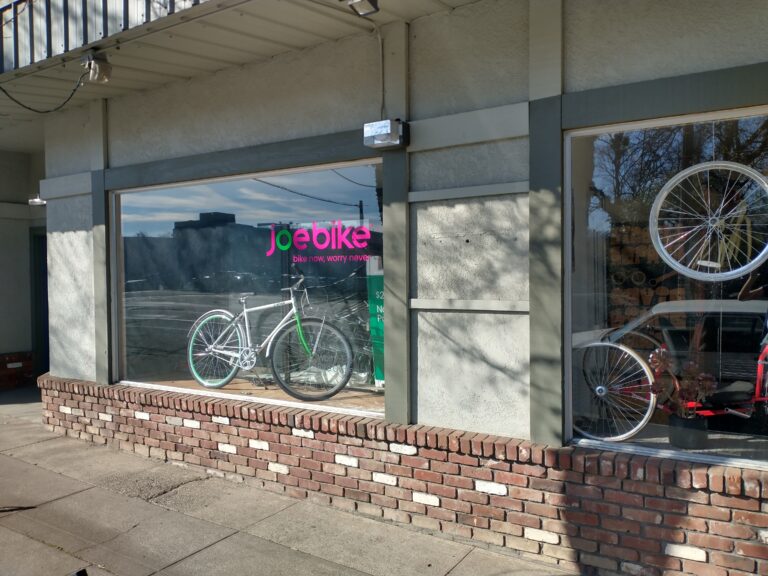
Green and white Joe Bikes are becoming an increasingly common sight around campus, but some wonder if they are a good option for UC Davis students looking to start biking around campus. Joe Bike founder Jesper Wahlberg said that Joe Bikes are a unique new subscription service.  

“Joe Bike, a first in North America, is launching a Bike Subscription Service,” Wahlberg said via email. “For $24 a month students can subscribe to our service and get their very own bike 24:7.”

In a press release, Wahlberg mentioned that he founded the company to fill a hole he saw among college students in the bike market.  

“The commuter bike is having a moment in the US and we felt the time was now to launch a similar service, primarily targeting university students, in the US,” the press release reads. 

After visiting college campuses across the U.S. and talking to students, founders of the  company learned that “bike repairs and theft is a real hassle” and “a reason many students opt not to have a bike,” according to the press release. 

“By removing those two barriers and providing a service at a great value, we think we have created a really compelling mobility solution for students,” the press release reads. 

Bike Campaign and Bike Garage Founder Maria Contreras Tebbutt supports the idea of buying your own bike. The Bike Campaign has the goal of decreasing the number of car trips and encouraging more people to ride bikes. She suggested that Joe Bike was actually more work than owning a used bicycle and taking it to be repaired yourself.

“Let’s say you’ve got a flat tire and you now have to arrange for someone to come and fix your flat tire,” Tebbutt said. “The shop itself is only open 6 to 8 hours a week. It’s more complicated than owning your own bike. If you get a flat tire you can fix it yourself or take it over to a bike mechanic. You can change things on your bike, you can modify it to fit your life.”

While a usual bike repair costs a fee, Joe Bike repairs its bikes for free. They provide insurance in case the bike is stolen as well, according to Wahlberg.  

“The Joe Bike service includes free repairs and theft replacement,” Wahlberg said. “That’s right. if a student get’s their Joe Bike stolen, Joe Bike replaces it at no cost.”  

The terms of service on Joe Bike’s website state that if a police report is not produced in the case of a theft, Joe Bike will charge the subscriber a $600 fee. This fee is far more than the actual cost of the bike, but as long as the subscriber cares for the bike, it shouldn’t be difficult to avoid the fee.  

In the event of theft and a police report is not produced, Joe Bike reserves the right to charge you a one-time replacement charge of $600 USD; equivalent to the value of the Joe Bike,” the website reads.   

The bikes are “upcycled,” Wahlberg stated. Subscribers are provided a used bicycle, which will serve many students over its lifetime. This decreases the carbon footprint of the company and reduces the number of bikes which end up abandoned or in landfills.  

Tebbutt doubted that Joe Bike would take away business from existing bike shops. The old “Jump Bicycles,” which could be picked up at any place where they were found and only needed an app to activate, may have had more of an impact. But Tebbutt noted that people who want to buy a bike generally won’t settle for a subscription service.  

“Bike shops sell bikes, new bikes,” Tebbutt said. “It is not taking business away from a bike shop. I would say that when Davis had Jump bicycles, that had more of an impact. Joe Bikes are getting a segment of the market that wouldn’t buy a bike.”

Joe Bikes also have the potential to contribute to the problem with abandoned bikes that plagues Davis, Tebbutt said. The fees involved with abandoning the bike and not returning it properly may further discourage the irresponsible practice.  

“We’ve received calls from locations where bikes have been abandoned,” Tebbutt said. “Somebody signed up for the service and maybe they left town for the holidays and didn’t come back. Wherever they left the bike, that bike is now sitting there, months later, rusting away. Abandoned bikes, which are a problem in Davis, attract thieves. It looks bad, we don’t want them there.”

Written by: Rachel Shey — city@theaggie.org