55.4 F
Davis

Davis, California

Monday, December 22, 2025
Home Blog Page 230

UC Davis receives $1.5 million in funding for pathways to climate-smart agriculture

UC Davis is among six programs that have been given a total of $9 million by the USDA National Institute for Food and Agriculture to help the agricultural community in California

By JENNIFER MA — campus@theaggie.org 

The U.S. Department of Agriculture announced on Jan. 12. that UC Davis is one of six programs to receive a combined total of $9 million in funding that will go toward climate research and solutions. This funding comes from the National Institute of Food and Agriculture (NIFA)’s Agriculture and Food Research Initiative (AFRI), which is the leading grants program for agricultural sciences in the nation.

The remaining five $1.5 million grants have been awarded to Pennsylvania State University, Montana State University, Ohio State University, Desert Research Institute Native Climate and USDA Caribbean Climate Hub.

All six programs will work towards net-zero emissions in agriculture and working lands and training a workforce to consider the environmental impacts in management decisions.  

According to a press release by UC Agriculture and Natural Resources, California has the largest and the most diverse agricultural economy in the nation with a revenue of over $50 billion — larger than the revenues of the other ten Western states combined.

“Despite its size, the state is highly vulnerable to climate change,” the statement reads. 

To combat this vulnerability, UC Davis will specifically work towards the previously mentioned goals by assessing stakeholder needs, offering climate-smart agriculture training for technical service providers, workshops for farmers and ranchers and student education with UC Cooperative Extension (UCCE) service-learning opportunities.  

These workshops will prioritize socially-disadvantaged producers, such as new and first-generation farmers and ranchers. Content includes a broad range of topics from local impacts of climate change trends to drought planning strategies.  

Additionally, due to the large size and diversity of agriculture in California, there will not be a one-size approach. Workshops for farmers and ranchers will be region specific and five county-based UCCE academics will serve as regional leads for these workshops.  

UCCE rangeland management specialist at UC Davis Leslie Roche expressed that there are both benefits and challenges to having so many people involved in the program. 

“There’s a lot of moving parts,” Roche said. “We were putting this together and we have maybe 40 plus different partners and organizations. And it’s awesome. We have so many folks interested in working together on this but also, it’s gonna be a big challenge to figure out how all these parts are going to fit together.”

For the student education aspect of this project, college students will be able to take classes and also gain practical experience related to climate and agriculture. This pathway includes the UC Merced Summer Institute on Climate and Agriculture certificate course, the UC Davis course “Science and Society: Climate Change and Agriculture” and a certificate course for community college students.

“The education focus for me is really about broadening both public and student understanding about climate change and agriculture, but then taking what I know, what others know, what the agricultural producers in the state know and making that available to community college and undergraduate students in California,” Assistant Professor in Community and Regional Development Mark Cooper said. 

Written by: Jennifer Ma — campus@theaggie.org  
Student promotes ‘moovement’ to change mascot to cow during public discussion

ASUCD members confirmed new commissioners, provided weekly reports and passed SB #44

By ISABELLA KRZESNIAK campus@theaggie.org

Internal Vice President Juliana Martinez Hernandez called the meeting to order at 6:16 p.m. on Feb. 3 and recited the UC Davis Land Acknowledgement.

Ethnic and Cultural Affairs Commission Chair Jared Lopez recommended a candidate for ECAC commissioner, whose name has been omitted upon Lopez’s request due to safety concerns. Senator Sergio Bocardo-Aguilar moved to confirm her and this was seconded by Senator Celeste Palmer.

Jaidyn Alvarez-Brigance, the general manager of KDVS, provided a quarterly report for the station. She noted four top priorities: repairing radio fuses and transmitters, finalizing a plan for a spring fundraiser, overhauling the KDVS website and hiring new core staff for the 2022-2023 school year.

External Affairs Commission (EAC) Chair Maahum Shahab recommended Harleen Kaur, Sumeet Bains, Daniel Egziabher and Daniel Mojica for EAC. These confirmations were approved.

Martinez Hernandez recommended Jacob Brunell for the position of associate vice president of internal communications. Internal Affairs Commission Chair Kabir Sahni moved to confirm him, and Palmer seconded.

Elected officers provided reports on their work over the past week and then moved into Public Announcements. Among the announcements was the upcoming ASUCD Town Hall and the need for volunteers for the Whole Earth Festival.

During Public Discussion, Mick Hashimoto, a third-year economics major, presented a petition to change the UC Davis mascot from a mustang to a cow. Hashimoto said that the movement has gained traction, citing public support on social media. He said that he feels that UC Davis needs a unique identity that resonates with students. 

Although many ASUCD representatives voiced their support for the change, Palmer said her support of Gunrock as a mascot.

“It’s important to remember the actual history of this mascot,” Palmer said. “Gunrock was an actual horse who lived at UC Davis. He was a thoroughbred, not a mustang, and he was brought by the U.S. cavalry to breed at UC Davis. This is an interesting story that actually makes it very unique.”

Senator Owen Krauss provided a counterargument to keeping the mascot. 

“[Gunrock being a thoroughbred] sounds kind of elitist,” Krauss said. “[Cows] are incredibly important to the greater community.” 

Martinez Hernandez invited consideration of old legislation, SB #44, which clarifies the roles, responsibilities and selection process for ASUCD members. After review, Krauss moved to approve it, which Palmer seconded.

Martinez Hernandez adjourned the meeting at 9:10 p.m.

Written by: Isabella Krzesniak — campus@theaggie.org

UC Davis Health develops Fragility Fracture Program to identify and provide care for patients at risk of osteoporosis

A fragility fracture, which can result from a fall from standing height, can be indicative of weakened, brittle bones and even osteoporosis

By BRANDON NGUYEN — science@theaggie.org 

The National Osteoporosis Foundation finds that roughly half of all women and up to a quarter of men will suffer a fragility fracture in their lifetime. As individuals grow older, the time needed to recover from a broken bone is prolonged and may be an indicator of a more serious health concern. 

Dr. Hai Le, an orthopedic surgeon at the UC Davis Medical Center, provided a medical definition of a fragility fracture.

“A fragility fracture is a fracture of the spine or long bone with minimal energy and with minimal trauma,” Le said. “This usually results from a fall from standing height or lower and can indicate that the bone density is very poor. It happens quite frequently, especially among postmenopausal women or women above the age of 50 with poor bone density, as well as men above the age of 65.”

Fragility fractures are most common in the hip or spine and can suggest that the bones of an individual have weakened or have become brittle, a condition known as osteoporosis. 

A recent study conducted by Le and his team found that patients who have had a fragility fracture are more likely to experience another one in the future. The study also brought  to light the lack of follow-up care to prevent these patients from potentially suffering another fragility fracture and to treat cases of osteoporosis earlier on in the medical process.

“We found that among most of these [fragility fracture] patients, only 20% of these patients are receiving post-fracture chronic care, and that indicates the undertreatment of the patient population, leading to an increased risk for recurrent falls and recorded fractures,” Le said. “The other important aspect is that fragility fracture patients have a very high mortality risk, so, within one year, [27%] of patients will pass away because these fractures can severely affect their mobility and quality of life.”

Because of the lack of attention to care for these types of patients and the associated high mortality rate, UC Davis has developed the Fragility Fracture Program, an interdisciplinary collaboration of departments at the UC Davis Medical Center organized in order to quickly identify those who have suffered from a fragility fracture and to provide comprehensive treatment to reduce risk of future fractures.

Dr. Polly Teng, an endocrinologist at the UC Davis Medical Center, described her role in the Fragility Fracture Program.

“Many hormones govern our bone health, so in normal bone remodeling, breakdown of old bone occurs in order to form a new bone, a risk factor that may put people at higher risk for osteoporosis and fragility fractures,” Teng said. “My role as an endocrinologist includes diagnosing osteoporosis, and to determine if they have risk factors that put them at risk for osteoporosis. Common risk factors can include vitamin D deficiency, inadequate calcium intake or absorption of other things that could be underlying endocrine disorders, such as people who are hyperthyroid, or have too much thyroid hormone production.”

Fragility fractures are just one indicator of osteoporosis, and Teng’s role in diagnosing osteoporosis includes conducting a complete laboratory screening of potential risk factors from a hormonal standpoint. Diagnosis, rheumatology and endocrinology specialists like Teng may prescribe pharmacologic and nonpharmacologic lifestyle modifications depending on the patient’s needs, including vitamin D or calcium supplements as well as referrals to physical therapists. 

The Fragility Fracture Program has grown to better cater to its patients by including more in-patient therapies for those with hip fractures, for example. This is immediately followed by a referral to the mobility clinic — part of the Healthy Aging Center — at UC Davis Health to work on treatments for these patients. 

More than 53 million individuals in the U.S. either already have osteoporosis or are at high risk of fragility fractures due to low bone density, according to the National Osteoporosis Foundation. Providing care among Medicare beneficiaries, including direct medical care as well as indirect costs from productivity lost and informal caregiving, has been estimated at $57 billion in 2018 and is projected to increase to over $95 billion by 2040. As both Teng and Le emphasized, preventative treatment early on in a person’s experience with fragility fractures can have a major impact on public health.  

Dr. Barton Wise, a rheumatologist at the UC Davis Medical Center, explained how the 

Fragility Fracture Program could not have been initiated without the interdisciplinary collaboration among the various health departments.

“This is a collaborative process among many different groups, including orthopedics, the emergency room, the Healthy Aging Center for the mobility clinic, endocrinology, rheumatology and so forth,” Wise said. “There are two points: one, to coordinate the care for the patients, and number two, to have a research component of it, so we can understand what is working, what is not working, so we can provide more comprehensive care to our fragility fracture patients.”

Written by: Brandon Nguyen — science@theaggie.org

UC Davis students share how college has changed their major, post-graduate plans

0

 Students develop unexpected passions and career plans since arriving at Davis

By JALAN TEHRANIFAR — features@theaggie.org

When applying to colleges, many students don’t yet know what they want to do after graduation, so choosing a major and courses to prepare for their unknown post-grad plans can be very difficult. There are many different majors to choose from and many different career paths that those majors can lead to. A degree in a specific field can open up many career options, and many career paths can be accomplished through different majors. UC Davis students discussed how they are choosing their areas of study and what they hope to use — or not use — them for in the future.

Daniela Ocampo, a first-year biological sciences major, said she has a passion for science but doesn’t have a set career path yet. 

“I’m still contemplating whether I want to go through a pre-med track or a pre-vet track,” Ocampo said. “I came here with the intent of eventually applying to medical school, but in my heart I love animals and would love to work to save their lives. I was considering changing my major to animal science and eventually apply to the UC Davis School of Veterinary Medicine, but I decided not to, for now, in case I change my mind about what I want to do with my future.”

While Ocampo is still deciding which career she wants to pursue after college, she is on a major track that could take her down either path. 

“My current major is very versatile,” Ocampo said. “I can apply to both vet school and med school with a degree in biology, but, with an animal science [degree], it wouldn’t make sense applying to medical school.” 

Other students know exactly what they want to do at the very start of their college experience. One such student is Ruby Nahem, a first-year environmental policy analysis and planning (EPAP) major.

“I’m planning on going into environmental law after I graduate,” Nahem said. “The planet is dying, and I want to help fix it. I want to prevent major corporations from killing the earth.”

Nahem said that she has always had a passion for protecting the Earth and ensuring that future generations are able to enjoy and experience it as she does, and she believes she can help accomplish this as an environmental lawyer. 

Unlike Ocampo and Nahem, some students enter college without any idea what they want to study. Natasha Replogle is a first-year student who has yet to declare a major. She said she potentially wants to pursue psychology, but she didn’t come into school with career plans and wants to see what she’s passionate about as she goes.

Many college students’ goals and plans change after attending college for a few quarters. Huyen Lee, a first-year Asain American studies major, believed that she wanted to study Asian American studies in high school but isn’t pleased with her current major. 

“I [might] want to change my major to something STEM-related,” Lee said. “What I want to do in my future is work on becoming a teacher for middle school.”

College is about figuring out what interests you and what doesn’t. Students take lower-division classes in part to decide what they enjoy learning about and what they don’t.

Emily Garcia, a first-year neurobiology, physiology, and behavior (NPB) major, said she enjoys science but isn’t passionate about the focus of her current major. 

College can sometimes be challenging and overwhelming, leading to many feelings of wanting to give up or to choose a different path. Jannet Vasquez, a first-year animal science major, is struggling with choosing a career because of the pressures of her major. She said that, though she originally planned to complete a pre-vet school track and eventually apply to the UC Davis School of Veterinary Medicine, the time and intensity of her major was too much. Even though she no longer plans to be a veterinarian, she said she’s exploring other courses to see what she does want to pursue.

Amina Alkadie, a first-year NPB major, loves being a STEM student and plans on becoming an oncologist nurse, but she said the demanding major doesn’t allow her to pursue other interests in non-scientific subjects.

Lots of students show interest in multiple areas of study, and some declare a second major. Zoupal Lor, a fifth-year psychology and theater and dance double major, is pursuing two majors that are not closely related but that she enjoys equally.

“After I graduate, I plan to go to graduate school for psychology — maybe clinical psychology or art therapy,” Lor said. “I also want to do some freelance art projects, maybe dance, photography or filming and stuff. Those are my goals.”

Because she chose to major in both areas, Lor has allowed herself career paths that relate to either major.

Some students, such as Joey Wu, a fourth-year cinema and digital media major, pursue and earn a degree and then decide not to use it for their future profession.

“My plan after graduation is to go home and finish my military service, since I am a Taiwanese citizen, and hopefully find a job here and acquire a visa,” Wu said. “If not, I’m happy just to explore the world for a couple years.”

Although Wu’s postgraduate plans are unrelated to cinema and digital media, he is happy to learn about the subject and to earn a degree as preparation for a career in the entertainment industry if he later decides to go down that path. 

“I am learning how to apply the filming skills to personal projects and professional settings,” Wu said.

Along the way, it’s easy to have doubts about the major one has chosen and the line of work they see themselves in, but, hopefully, with careful thought and consideration, students will find what they are looking for in a profession.

“It’s tough at times, and I find myself contemplating whether I should change my major to something less rigorous, but I know deep down that I won’t because I love being a part of the STEM department and being academically challenged in the science field,” Ocampo said.

Written by: Jalan Tehranifar — features@theaggie.org

Will fighting games survive COVID-19?

One of gaming’s most fascinating communities has been disproportionately affected by the pandemic

By JACOB ANDERSON — arts@theaggie.org

Of the many social scenes to be hampered by the COVID-19 pandemic, the fighting game community is rather uncomparable. Despite more or less every fighting game released for over a decade offering online play, the spaces in which the games are played “for real” — according to most of the community — remain massive offline tournaments, usually featuring a double-elimination bracket for each game as well as unlimited casual play, art sales, performances, lotteries and numberless other attractions that make bigger tournaments closer in scope to conventions than simple meetups.

For the fighting game community (FGC), playing online isn’t an authentic experience; there are two main reasons for this. Firstly, fighting games are too fast for the internet. Even with solid rollback netcode that many large developers have been slow to adopt, the presence of four or five frames of delay (one-sixtieth of a second each) can be disastrous when advanced techniques and difficult combos can often be frame perfect, requiring hours of training to perform reliably even without that added variable. The fixed speed of light ensures that it is not possible for fighting games to be played online without some amount of delay, and thus offline play will always be preferable for skilled players. 

Secondly, there’s tradition: The FGC has been around since the genre’s formalization in the early ‘90s when arcades ruled the scene — longer than most competitive gaming scenes of similar size. The lack of any requisite fixed cost (viz., a home console) meant that no economic barriers existed to restrict who could play, and consequently, the scene that has persisted to today is much more demographically varied than, for instance, competitive “Starcraft.” The scene’s arcade origins also immutably dictate that the community be oriented socially: something that lends itself to the immediate, communal nature of in-person play rather than that of distant, monitored online play. To the FGC, tournaments are inalienable.

So what, then, happens when this core component of the community is suddenly removed?

The imposition of the pandemic, of course, made in-person tournaments impossible. While the community has continued to exist online, it wasn’t until recently that in-person tournaments began to crop up again — with the requisite safety requirements. Big tournaments such as Combo Breaker and EVO have been either forced online or canceled for almost two years, and while those larger organizations were prepared to deal with the costs of a forgone event, smaller tournaments such as Michigan Masters were forced to rely on community assistance to avoid financial ruin. But these are just the yearly events. Locals, which are the weekly or monthly smaller events that form the community’s spine, have no such visibility, and in many cases it hasn’t been clear whether some of them will come back at all. Locals are what keeps the constituent areas of the fighting game community intact, and as a reddit user put it, “If [locals] start to disappear, it’s the end of the FGC.”

The community’s largest local tournament near Davis, the monthly Capitol Fight District in Sacramento, has been on hiatus (minus one event) since the beginning of 2020 — it’s now been almost two years.

With COVID-19 restrictions appearing to ramp down and certain major events, like CEO, managing to return to in-person play, the future of the community doesn’t look quite as bleak as it did before. If things continue to improve, it’s possible the community might return at an even larger scale, as serious fighting game releases like “Guilty Gear Strive” appear to be pushing up common indicators of popularity like the Steam Charts. Things could actually be better after the pandemic.

So in the interest of optimism, let the rest of this article then be a little valentine for the FGC.

When you walk into a tournament, there’s always a distinct electricity about. Before the bracket starts, players huddle in threes and fours in front of monitors. Lively conversations clutter the air and are burst by the occasional cry of defeat or victory or (usually from an observer near one of the anime games) an articulate shout of something like, “He’s free!” or “Put ‘em in the blender!” The average fighting game player seems to be now in their thirties, and it’s not uncommon to see a kid under 10 running around the tables and ogling the sometimes ostentatious arcade sticks.

Hundreds of people can be cramped into the same room, eagerly staring over the shoulders of players in unflappable states of focus. And when the bracket starts, the stations are cleared and someone calls over the crowd for the silliest usernames you’ve ever heard to play at station eight.

There’s little else that’s like it, and with the amount of fun everyone seems to be having, it’s no stupid question why fighting games remain a somewhat niche genre relative to first-person shooters and the other titans of modern gaming.

But of course there’s a reason: the separation between idly knowing that it’s possible to press down and then forward plus a punch button to throw a fireball and knowing that “236956K” is the numpad-notation translation of the input for Baiken’s “Guilty Gear Xrd REV 2” Kire Tatami Gaeshi rather than my bank account’s PIN code can feel insuperable to a new player. This is especially true when the community has often done a somewhat poor job of consolidating the information actually necessary to progress from clueless rube to fighting-game literate. The barrier to entry is high, so only those with a real drive to understand what it’s all about will usually get past the genre’s first learning stages. 

Once those travails are done, however, the world opens up; the limitless intricacies and considerations present in high-level play become observable. Knowledge of what’s actually happening on the screen serves to separate fighting-game players from the rest of the world. This barrier is what makes membership inside the FGC unique, and it’s possible even that a desire to preserve that uniqueness dissuades some players from making the information necessary to join the community readily available.

If fighting games come back bigger than ever, that would be a great thing. Fans have often been defiant in their insistence that it’s the greatest genre of video game — if nothing else, it’s managed to catalyze the creation of one of the most singular hobbyist communities around today, one strong enough to weather the temporary destruction of the thing often said to be its very center. 

Written by: Jacob Anderson — arts@theaggie.org

Chef Martin Yan donates legacy archive to UC Davis

The renowned chef donated thousands of cookbooks, photographs and videos from his food and travel television show to the university

By KAYA DO-KHANH — campus@theaggie.org

Celebrity Chef and International Food Ambassador Martin Yan recently donated to the UC Davis Library an archive which, when finalized, will consist of his collection of thousands of cookbooks and various photographs and videos from his international food and travel shows to create the Chef Martin Yan Legacy Archive. 

“Hopefully this particular archive will not only give people more understanding about the history, the culture, the lifestyle, the food and geography of each Asian country and different parts of China, but also it will hopefully bring people closer together,” Yan said.

Yan earned a bachelor’s degree in 1973 and a master’s in 1977, both in food science at UC Davis. During his time at the university, he taught cooking classes to students at the CoHo on campus. Since graduating, he has returned to UC Davis to collaborate with the Food Science Department and to host live special events. He has also given a commencement speech and served as the Grand Marshall for Picnic Day in 2008.

“UC Davis gave me a very warm feeling and also a lot of great memories. […] When I graduated, I still felt connected to Davis,” Yan said. “Instead of having this in my own library, I decided to donate this to my beloved alma mater, UC Davis. I chose UC Davis because it is my home. My family — my wife and my kids — also went to UC Davis.”

Yan’s contribution to the library includes a $20,000 donation to digitize the archive in order to give access to as many people as possible.

“When I was a food science student, […] I remember there was no high-tech digitization… You had to come in and check microfilm,” Yan said.

The UC Davis Library will host a public event in early May 2022 to celebrate the archive.

“Join us for a conversation with world-renowned chef Martin Yan ’73, M.S. ’77, and his wife, Susan ’75, at their alma mater UC Davis,” the sign-up form to be notified of registration by the library states. “The event will include a cooking demonstration and book signing by Martin Yan.”

The library already has an extensive food and wine collection, but Yan’s donated archive is an important resource that adds to the collections, according to Kevin Miller, the head of archives and special collections at the library. 

“It fills a really important gap in our food and wine collections that focuses on East Asian cuisine and its impact on cuisine in the U.S.,” Miller said. “It’s also just a really unique resource because he got into so many places around the world that people have never heard of or are hard to access, […] but, because of his connections and his obvious passion, he was able to get into these small kitchens and corners of the world where these rare and, in some cases, dying culinary traditions were happening.”

Written by: Kaya Do-Khanh — campus@theaggie.org

Declining number of annual tule fog days linked to emission trends

Radiation fog, a common wintertime feature of the Central Valley, has distinct formation processes compared to California’s coastal fog

By MADELEINE PAYNE — science@theaggie.org

Winter in Davis often means chilly bike rides to class, sunsets that start as early as 5 p.m. and the occasional presence of a dense, motionless fog known as tule fog. In the Central Valley, this weather phenomenon is known for causing limited visibility and for posing dangerous conditions for travelers. According to the U.S. Department of Transportation, tule fog is the leading cause of weather-related traffic accidents in California. 

Yet, according to a study published in 2019, the annual number of winter tule fog days is declining. From 1980 to 2016, tule fog in the Central Valley decreased by 76% — a stark contrast from the trends present in 1930 to 1970, when fog days increased by 85%. 

A UC Berkeley research team, led by doctoral student Ellyn Gray, conducted the study and analyzed several factors that could explain the decrease in fog, including temperature, wind speed, dew point depression, ​​precipitation and air pollutant levels. They found that emission trends and the NOx concentration, or the abundance of oxides of nitrogen in the air, were longer-term drivers in the changing number of days of tule fog.

Allen Goldstein, the senior author of the study and distinguished professor in the Department of Environmental Science, Policy, & Management and Civil and Environmental Engineering at UC Berkeley, explained how the formation of fog, which is essentially a cloud at ground level, is affected by the number of available particles in the air. 

“Fog droplets, just like cloud droplets, typically start by water condensing onto a small particle we often refer to as a cloud condensation nuclei,” Goldstein said. “When you get more of these small particles in the air, particularly if they’re hygroscopic, or if they want to absorb water, then you’re more likely to condense the water that’s in the air on these particles rather than, say, dew forming on the ground.”

The study discussed how tule fog in the Central Valley exhibits a north-south trend, with southern regions averaging more days of tule fog than northern regions. This is similar to trends in emission pollution, with higher rates of NOx concentration occupying the southernmost part of the valley. Researchers found that climate fluctuations drove the short-term annual changes in fog frequency and that dew point depression, the difference in degrees between the air temperature and the dew point, played a crucial role. Emission trends were responsible for the longer-term temporal and spatial changes across the Central Valley.

Tule fog, also known as radiation fog, has some distinct features when compared to fog found in coastal areas of California. Ian Faloona, a professor in the Department of Land, Air and Water Resources at UC Davis, elaborated on the physical processes that make tule fog unique.

“At night, the ground radiates in the infrared out into space,” Faloona said. “Some of the atmosphere absorbs some of that radiation and also radiates it back to the ground, but [it’s] not nearly as much as the ground radiates up. It’s constantly cooling overnight, and, when there’s enough water vapor in the air, it cools down to the dew point, and then you create the fog.”

In reference to the large-scale geographic factors that affect tule fog formation, the Central Valley is a perfect mix of low elevation with protection in the east from the Sierra Nevadas, according to Faloona. This helps create the right conditions for relatively unmoving air, a key component to the still, lifeless quality of radiation fog. 

“If you have enough wind coming in, that will mix in enough dry air to eliminate any kind of fog formation,” Faloona said. “One of the key ingredients [to radiation fog] is having stagnant winds.”

Fog by the shoreline of California often takes on a more mobile form, rolling in and out of coastal areas accompanied by a breeze. While the coastal fog formation is spurred by wind, the physical processes of formation for coastal fog and tule fog are fairly similar, according to Qi Zhang, a professor in the Department of Environmental Toxicology at UC Davis.

“If you go to the fundamentals, it’s the same process, which is the cooling of humid air,” Zhang said. “In the summertime in the coastal areas, you have this body of water that has lower temperatures, and you have this warm air that goes above the cooler surface. Then, it depends on the humidity of that air and the temperature difference between the warm air and the cool surface. This can lead to the temperature inside the air mass to approach the dew point, leading to the formation of fog.”

Yet one of the more distinctive features of coastal fog is the large-scale processes which create the proper conditions for fog formation, including oceanic movements and the Earth’s rotation, according to Faloona. 

“The ocean water is particularly cold because of a process called upwelling, where the wind blows on the ocean which moves the ocean southward and that’s what’s called the California Current,” Faloona said. “As that current is moving towards Baja and equatorward, because the earth is rotating, it gets pulled to its right and therefore offshore.”

This shift of water away from the coast opens a void by the coast that the deeper, colder waters move upward to fill, according to Faloona. Thus, the colder water can interact with the warmer air to produce fog. Besides creating cool, humid conditions on the coast, this upwelling is important for stimulating phytoplankton growth and for supporting the food web, while the fog from the upwelling can also have crucial climate implications, Faloona explained.

“It’s usually associated with these giant shields of low cloud over the ocean which are called stratocumulus,” Faloona said. “It turns out these clouds are very important and have been studied tremendously because they reflect so much sunlight. […] The difference between that cloud being there and not being there actually has very strong fulcrum on our climate. These are very important centers of climate cooling.”

Besides the role it plays in food webs and global climate change, fog has also become a cultural symbol within California communities. In San Francisco, the coastal fog has even been given a name, “Karl the Fog,” to describe the low clouds that thread through the hilly city streets. After a two-year hiatus on Twitter, Karl the Fog posted on Jan. 20 to share a recent update since the start of the pandemic — marking the triumphant return of a beloved Bay Area persona to the public sphere. 

“Oh, hey down there,” the fog wrote. “I know it’s been awhile, so hope you still recognize me [Crossed fingers emoji] (I put on a few metric tons over the last two years). Moved in with my parents in Point Reyes at the start of the pandemic. The free rent was great, but nothing beats hanging 6ft away from you.”

Written by: Madeleine Payne — science@theaggie.org

The evolution of male-dominated sports

0

Opportunities in male-dominated sports continue to expand — but there is a lot more work to be done

By KATHERIN RAYGOZA – sports@theaggie.org 

The ability to drive gender equality can lead to defying gender stereotypes and social norms. As of recently, women have made great strides in male-dominated athletics. They are allowed to referee professional male sports even in other countries, they are getting interviewed for general manager positions for the National Football League (NFL) and are progressively reaching higher positions.

On Jan.18, Rwandan referee Salima Mukansanga became the first woman referee to officiate an Africa Cup of Nations game for men in the game between Zimbabwe and Guinea. This was a monumental step, one that inspired and even had some members of Rwanda’s Kigali women’s soccer team in Rwanda gathered around to watch as Mukansanga made history. 

Being a referee has historically been a male-dominate position, and there has been sexism in regards to a lack of opportunities for female referees. Spectators have negative stereotypes of these referees and there are many other obstacles that create a hostile environment for any woman trying to become a referee.

Mukansanga has also officiated at the Olympics, Women’s World Cup, Africa Women Cup of Nations and the CAF Women’s Champions League. She is more than qualified for this position and her latest achievement of becoming a referee in one of Africa’s most prestigious soccer tournaments is a milestone for women refereeing globally.

“It’s a privilege. It’s a pleasure to me, to the rest of African women referees,” Mukansanga said at a press conference by the Confederation of African Football (CAF). “It’s [an] opportunity to open the door and to show that all African [women] are capable. They can reach that stage.”

More transgender referees are becoming prevalent in men’s sports as well. Sapir Berman, 26, in 2021, became the first transgender referee to officiate a men’s soccer match in Israel. Many of the fans that attended supported Berman.

“Finally, I decided to come out, to show [the world] who I am,” Berman said to the New York Daily News. “First for myself, for my own well-being, but also for my loved ones, so they wouldn’t see me suffering.” 

Before Berman, in 2018, Lucy Clark became the first ever transgender referee in all of profesional soccer history. She faced some verbal abuse from fans and other sport authorities and although she described some as intimidating, those instances have been minimal.

“There’s been the off time that people have got my gender wrong and things like that, but I can understand that and I’m not someone who will be precocious about it as no-one has done it maliciously,” Clark said. “But once the game is on, there have been no issues from any of the fans, managers or players apart from the normal stuff that you get as a referee which I’ve had for the last 20 years.”

Given the environment that both Berman and Clark have been in, these are noteworthy achievements that are important to recognize as other countries might begin to do the same thing.

On April 29, 2021, the Denver Broncos hired Kelly Kleine as their executive director of football operations, and special advisor to the general manager. Ten days later, the Philadelphia Eagles promoted Catherine Raîche to be vice president of football operations, making her the highest-ranking woman to ever work in an NFL front office. Then, in mid Jan. 2022, the Vikings asked Raîche to interview for their General Manager position after firing Rick Spielman and Mike Zimmer. 

“We’re at the 50-yard line,” Marnie Schneider, daughter of Susan Tose Spencer, the first female general manager in the history of the NFL, said. “It’s up to the new generation of owners to embrace women in football. If they don’t — it’s going to be a rough road ahead. We need to keep riding the history of amazing women in football and the amazing things they’ve done, so we need to continue to move the ball down the field. We’re only halfway there.” 

The National Basketball Association (NBA) has never had a female head coach. The league has come a long way since Lisa Boyer became the first-ever female assistant coach for the 2001-02 season. After her single-season with the Cleveland Cavaliers, no women were hired as assistant coaches in the NBA for over a decade. Heading into the 2021-22 NBA season, there are seven women on the coaching staff. Becky Hammon, Jenny Boucek, Kristi Toliver, Lindsey Harding, Teresa Weatherspoon, Sonia Raman, Edniesha Curry.

Women are one step away from becoming a head coach in the NBA. Rumors long swirled about Becky Hammon, the San Antonio Spurs assistant, being a potential candidate for the head coach position because she had spent the last seven seasons serving as an assistant to Gregg Popovich, one of the greatest coaches in NBA history. Popovich believes that Hammon has the skill and dedication of something special and is constantly praising her.

Back in 2020, when the Spurs Coach Gregg Popovich was ejected after arguing with a referee in the second quarter of a game with the Los Angeles Lakers in San Antonio, he turned to Becky Hammon, one of his assistant coaches, and indicated that she should take over the team. This was the first time in NBA history that a woman was leading a team.

“He officially pointed at me,” Hammon said. “That was it. Said, ‘You’ve got them.’ Obviously, it’s a big deal. It’s a substantial moment.”

Although Hammon recently took a head coaching job with the Las Vegas Aces of the WNBA, her resume and experience speaks for herself and with more women assistants in the NBA, it feels like only a matter of time before someone gets a head coaching job.

When someone plays a major role in male dominant sports, they are teaching others around the world that it is possible to be affiliated in men’s professional sports. With these opportunities continuing to become available to women and transgender individuals, the hope is that everyone will soon have the equal opportunity to collaborate with new ideas that can lead to winning big games. 

Written by: Katherin Raygoza — sports@theaggie.org

During Black History Month, The Aggie recognizes Black alumni

0

Alumni Lois and Darryl Goss share their UC Davis experience and motivation to support the Department of African American and African Studies

By MAYA SHYDLOWSKI — features@theaggie.org 

This article is the second in a four-part series in honor of Black History Month in which The California Aggie interviews a few of the many distinguished African American UC Davis alumni. These alumni discuss their achievements, share how they’re uplifting underrepresented communities and offer their wisdom to Davis students. 

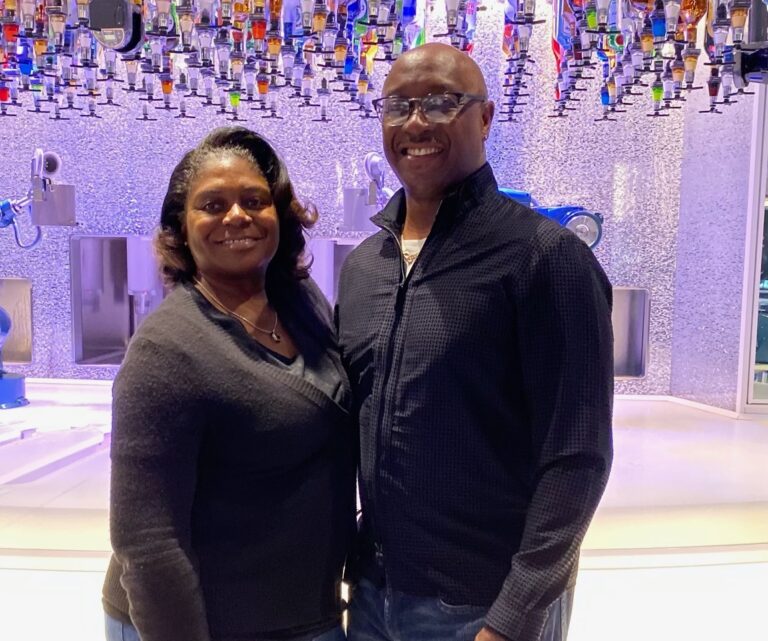
Lois and Darryl Goss, both UC Davis alumni, just celebrated their 40th wedding anniversary in August 2021. They met on campus and got married while they were students. Darryl graduated in 1983 with a degree in African American and African studies (AAAS). Lois graduated in 1985 with a sociology degree and a minor in history. 

Both attribute their education at Davis to changing the trajectory of their lives. Darryl, who played football for Davis, started college wanting to be a computer programmer but instead found his passion with AAAS after his first encounter with a different perspective on history.

“I was first exposed to Native American studies [at Davis], and it was really quite interesting to understand the contributions of other groups on society,” Darryl said. “It was eye-opening at a late age, a sophomore or junior in college, just starting to learn about the contributions of African Americans on not just American society, but worldwide.”

Both Lois and Darryl found support from the AAAS department. Lois remembered the encouraging professors, graduate students and administrators who motivated students to keep going, especially when there came negative sentiments from outside the department. Lois said that both she and Darryl came into UC Davis under affirmative action, a strategy to increase diversity and equity in education and employment, but they sometimes felt unwelcome due to people’s opposition to affirmative action.

“People didn’t just say it, but it was an attitude that you were wrong here,” Lois said. “The discouraging thing was that even when you had so many people telling you that you have just as much right to be there as anybody else, it only takes one negative encounter to tear all of that down. Now, I’m more mature, and I’ve realized that I allowed a lot of that to affect me in a negative way. If I knew then what I know now, it would have been different, but we had so many people who were encouraging, and that’s what kept me going.”

Luckily, the AAAS department provided both Lois and Darryl with support that helped them confront these attitudes and succeed academically. Darryl said that the department gave him a realistic perspective on what he was going to face after graduating. He said that his knowledge of how people stereotype different ethnic and racial groups gave him an advantage after graduation so that he was able to face these conflicts realistically. The AAAS department, as well as the Native American and Chicano studies departments, do not get enough recognition, he said.

To acknowledge and aid the work of AAAS, Lois and Darryl Goss recently made a donation to the department. Their donation helped establish a presidential chair, the first in the department. The Austin and Arutha Goss Presidential Chair is named after Darryl’s parents. They hope that this investment will support the contributions of research and teach others a more expansive and inclusive history. 

“I think it goes back to how eye-opening it was to learn about the legitimate contributions of Africans and African Americans to society, and we want people to be more aware of those contributions,” Darryl said. “What better way to build upon that than to invest in the department whose responsibility it is to share that and to modernize it. It’s not just about what happened 200 years ago.”

They financially support multiple undergraduate scholarships for UC Davis students, but the Gosses also provide more than just financial support to the university. Although they live in Texas, the Gosses have been active alumni for the last 15 years. Lois is a member of the Dean’s Advisory Council for the College of Letters and Sciences, in addition to being a member of the Women & Philanthropy group at UC Davis. Every year, the couple hosts a football tailgate where they bring together other alumni, friends and family to celebrate the positive impact Davis has had on their lives and to see how it has changed since their time as students. 

Darryl said that UC Davis has come a long way, but it still has a long way to go. “Probably the most disappointing things are that students are dealing with some of the

same challenges that we dealt with — food insecurity, support, those kinds of things,” Darryl said. “The university has made great strides around diversity. Look at women in STEM and the Chicano, Latino and Asian American [student] populations, but the African and African American student populations are the same as when I was a student. It’s only up 3%.”

Lois is concerned that African American students remain underrepresented compared to the larger student population. According to a 2020 University of California publication on diversity, only 3.68% of undergraduates and 3% of graduate students at all UC campuses identify as Black and just 1.8% of lecturers identify as Black. Another publication on admissions data across UC campuses showed that in 2021, 4% of all freshmen admitted to UC Davis were African American, compared to the UC average of 5%. That same year, 5% of all transfer students admitted to UC Davis were African American, which matches the UC average. Although the percentage of African American admitted students is 7% or less for all UC schools, UC Davis remains one of the campuses with the lowest percentage admitted. And although the school admits 4% and 5% of first-year and transfer students respectively, the percentage of African American undergraduate students attending UC Davis remains around 3%, compared to UCLA’s 5% and UC Merced’s 4.2%.

“[African American students] get admitted, but something [at Davis] isn’t quite as welcoming that convinces them to stay,” Lois said. “They’ll come and, in such a short period of time, realize that Davis isn’t for them and they’re off to other places. This is who we are and what we are here for. We aren’t going to complain about things that we’re not willing to get into and make a change. So we’re not saying this as a complaint, but we’re saying this because we’re willing to do the work.”

While encouraging these topics of conversations at Davis, the couple also finds it important to engage in these discussions themselves. Darryl talked about how he tries to be open and approachable for people to ask him about his experiences. Being able to talk about sensitive topics like microaggressions allows him to share his perspective, which helps other people gain a better understanding of situations than just what they read or see in the media, he said. These are important conversations to be had, especially at a university level, which is partly why Darryl decided to major in AAAS. 

When asked what advice she would give students in underrepresented groups at Davis and other institutions of higher education, Lois said to follow your heart like Darryl did when he chose his area of study. 

Lois and Darryl attribute their success to all the help they’ve had, and they hope that their contributions will help support African American students thrive at UC Davis. 

“Don’t sell yourself short,” Darryl said as advice to students of color. Both Lois and Darryl also emphasized the importance of asking for and accepting help.

“You have the resources there on campus to be successful,” Lois said. “That’s the thing about Davis — it lifts you up and tries to show you not who you really are but who you can be.”

Written by: Maya Shydlowski — features@theaggie.org

Review: ‘Too Hot to Handle’ is just absurd enough to be a hit

The show may not be the most deep, but it is undeniably entertaining 

By CLARA FISCHER — arts@theaggie.org

This article contains spoilers for season three of “Too Hot To Handle.”

“Too Hot to Handle,” the crossover between “Love Island” and “Big Brother” that nobody asked for, has returned for a third season. I’ll admit, reality TV isn’t exactly the pinnacle of human development, but this show is definitely a guilty pleasure that’ll keep you entertained from start to finish.

The premise is fairly straightforward. A group of conventionally attractive people in their twenties are essentially lured onto the show under the impression that they’ll be participating in a free-for-all, expenses paid dating show for the summer. However, at the end of the first episode, the hosts reveal the actual reason they have been invited to Turks and Caicos.

The singles are told that there is to be no physical intimacy of any sort, including kissing, heavy petting, sex and “self-gratificiation.” Every time a rule is broken, money will be deducted from a $100,000 prize fund meant to be allocated to the cast member that has benefited the most from the retreat.

These rules are laid down and enforced by Lana, a talking cone that acts as co-host of the show, along with narration by real-life human Desiree Burch. Lana also has the responsibility of determining the finalists who she feels grew the most in their time on the island, one of which then gets voted as the winner by their fellow retreat guests. 

It’s hard to keep a show this simple entertaining for multiple seasons in a row. No matter how charming the British slang and surprisingly progressive workshops are, the series wouldn’t be nearly as successful as it is without the pure, unhinged oddity of its cast. From Patrick, the super-buff Hawaiian that unsuccessfully attempts to serenade the girl of his dreams, to Brianna, the California girl whose late arrival onto the island caused quite a stir, there would be little reason for viewers to tune in if it weren’t for the personalities of the cast. 

Toward the end of the season, the prize fund hits zero for the first time in “Too Hot to Handle” history after a brief stint where Lana pretends to be offline as a test of the guests’ progress. Naturally, as soon as they assume that the omnipotent cone is no longer watching, they proceed to spend the funds still left over in the pot in a single night. 

This attests to the ultimate question at the heart of the show — are the stars actually gaining anything from this besides notoriety and a chance at their 15 minutes of fame? Is it possible that “Too Hot to Handle” has ascended beyond trashy reality TV into a program that actually will better a small part of society?

The answer is more than likely no, but that doesn’t mean it’s not fun to watch. With only eight episodes, the series is easily palatable and enjoyable in a “What am I watching right now?” kind of way. Some of the more absurd one-offs and the tacky editing style made me laugh so much that I don’t think it could be considered ironic. 

It is interesting, though, to see a visual representation of the phrase “sex sells” being displayed so prominently on the screen. I’m not sure what exactly the show’s success says about society, but there’s no time to think too deeply about it when you’re fixated on the fallout from the latest love triangle.


Written by: Clara Fischer — arts@theaggie.org

Temporary winter shelter at Davis Migrant Center shut down due to logistical concerns

0

The Yolo County Housing Authority and City of Davis are planning to attempt the project again next year with more preparation

By LEVI GOLDSTEIN city@theaggie.org

The City of Davis, in partnership with the non-profit organization HEART of Davis, opened a temporary shelter for individuals experiencing homelessness at the Davis Migrant Center on Nov. 29, 2021, but it was closed three weeks later due to operational failures. 

The Davis Migrant Center, jointly owned by the State of California Department of Housing and Community Development Office of Migrant Services (OMS) and the Yolo County Housing authority, is one of many affordable housing units that specifically houses seasonal agricultural workers and their families during the harvest season, according to Interim Executive Director of Yolo County Housing Sandra Sigrist. 

The Interfaith Rotating Winter Shelter, a congregate emergency shelter for people experiencing homelessness, has not been able to operate due to COVID-19 safety concerns, according to Kelly Stachowitz, Assistant City Manager. The Davis Migrant Center, which has individual units and is not occupied during the winter months, was an ideal location for an alternative pop-up shelter project. 

Additional shelter for people experiencing homelessness is imperative during the winter, according to Sigrist. 

“In the winter it gets cold and it gets down to freezing at night,” Sigrist said. “It is dangerous and unsafe for individuals to be outside[…] We need a way in particular in the winter months to facilitate indoor opportunities.”

With this in mind, Sigrist reached out to the California Department of Housing and Community Development and the City of Davis, and ultimately, the city was given permission by the state to begin the project.

Yolo County Housing and HEART of Davis staff helped the city install heating in the Migrant Center homes to make them habitable during the cold weather. Medical professionals were also employed to provide medical check-ins and other services, according to Stachowitz.

The temporary shelter was only meant to house low-risk individuals overnight, according to Stachowitz.

“​​This program […] brought individuals from downtown Davis to the site each evening and then took them back to Davis every morning,” Sigrist said. “It wasn’t a 24/7 shelter.”

According to Sigrist, individuals who experience homelessness for longer periods of time and have high support needs or medical issues requiring intensive care are housed in more permanent shelter programs. 

Despite its limitations, the shelter was helpful for a number of people experiencing homelessness. However, logistical concerns caused the city to shut down the program early before it was set to be closed at the end of winter. One issue was the lack of staffing, according to Stachowitz.

“HEART of Davis only had a matter of weeks to try to […] put everything together,” Stachowitz said. “Trying to find folks who want to work on this kind of a project on short notice, onboard them, train them, proved to be more difficult than they realized. […] They didn’t have a full complement of staff to be able to manage the program.”

Another complication was the rural location. 

“Folks who were participating in the shelter, sometimes they have needs or issues that necessitate a call for service, so a public safety call,” Stachowitz said. “Our police, our firefighters, having to go out to that site multiple times every day, every night, is a drain on resources.”

Sigrist said that the project was not a total failure. 

“There was a lot of learning in this first-go round about additional structure and supports that are needed in a program of this intensity and this rural in nature,” Sigrist said. “Everyone’s good intentions have built a model that will keep this program as a potential next year.” 

Yolo County Housing and the state are encouraging the City of Davis to attempt the program again.

“Our hope is that if we have ample time to really work with a nonprofit partner, and make sure that we have the staffing in place, well-trained, really good protocols and rules in place so that its very clear what needs to happen and how it needs to happen, that we will be able to have a program in place that serves its purpose,” Stachowitz said. 

According to Stachowitz, the grant money that would have been used for the shelter is currently being spent on local hotel costs for emergency beds, where people experiencing homelessness are spending the night and receiving the same medical care they would have at the Migrant Center. 

Written by: Levi Goldstein — city@theaggie.org

UC Davis to offer $10,000 for students who complete 450 hours of community service

UC Davis is among 45 California universities and colleges participating in the new CaliforniansForAll College Corps program, which allows students to earn a stipend while volunteering in their communities

By JENNIFER MA — campus@theaggie.org 

On Jan. 18, Governor Gavin Newsom announced the launch of CaliforniansForAll College Corps, a program that rewards students with $10,000 for 450 hours of community service in an academic year. UC Davis is leading the Sacramento Valley consortium, which also includes Sacramento State, Sacramento City College and Woodland Community College. 

This consortium is not only working toward matching 1,000 students with internships at community organizations but also offering a two-credit experiential learning course, professional development support and financial literacy workshops. UC Davis and Sacramento State will split 750 out of the 1,000 slots available while each community college will offer 125.

The process to apply will be announced in mid-March with the program starting in fall of 2022. It already has been stated that lower-income applicants and AB540-eligible DREAMers are prioritized, in an effort to combat the barriers they typically face. Additionally, for the first time in a state service program, DREAMers are included with 230 slots among the thousand reserved specifically for them.

Chancellor Gary May provided a comment on the importance of this program. 

“The living stipend and focus on serving low-income and undocumented students will broaden opportunities and make higher education more affordable,” May said via email. “We commend California Volunteers for developing an innovative program that supports and strengthens student success and equity through positive contributions with community organizations.”

The three focus areas in the College Corps program include working or interning to improve K-12 education, climate action and food insecurity.  

“We are appreciative of the Governor’s investment in the College Corps program. Our hope is that college students – especially students of color – will utilize the program to explore potential careers in K-12 education,” Anthony Volkar, the public information officer for the Yolo County Office of Education, said via email.

According to Art Pimentel, the president of Woodland Community College, even those that are not chosen to be a part of the program will benefit greatly.

“It’s all around a huge benefit not just to our students but to the community, to the potential organizations that they may be serving,” Pimentel said.   

Although the current program has only been funded to last for two years, Newsom stated in a press release that he believes that if the program is successful, it could be expanded beyond those two years and also include more students while having the possibility to be replicated outside of California. 

Communications and Public Information Officer of Sacramento City College Kaitlyn Collignon shared her hopes for the program.

“Sometimes our students, to help pay for college, are working jobs and they may not be in an area of interest,” Collignon said. “We’re hoping that this is an opportunity for [students] to really get some hands-on experience, help pay for college and also have the benefit of serving the community at the same time.”

Written by: Jennifer Ma — campus@theaggie.org  

UC Riverside outlasts UC Davis women’s basketball down the stretch

The Aggies fall at home against the Highlanders for the first time in six years

By MARLON ROLON — sports@theaggie.org

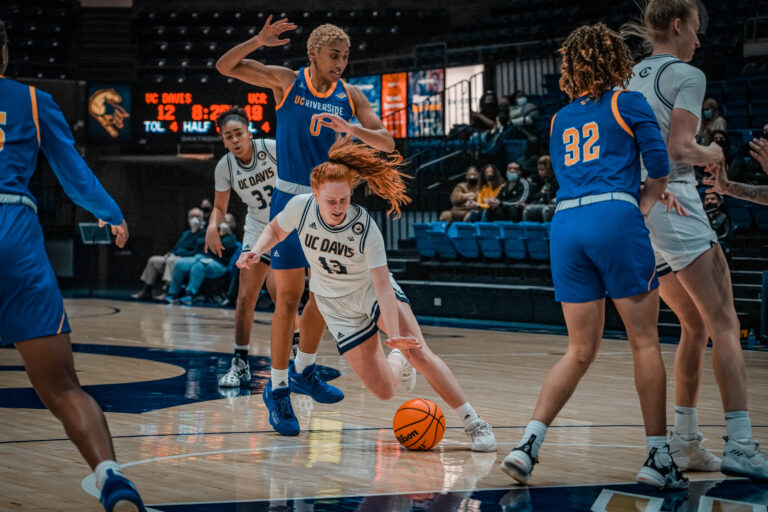
The Aggies lived by the three and died by the three falling 59-61 at home against UC Riverside in a thrilling Big West showdown. 

The UC Davis women’s basketball team started the game cold, missing their first five shot attempts and going scoreless for the first three minutes to start the game. They also missed five straight threes from beyond the arc.

 During the opening quarter, the Aggies looked to be aggressive from long range getting wide open looks from multiple players. The Highlanders played up tempo basketball, forcing the Aggie defense to play at a much faster pace than they’re used to.  

“We were getting really good looks in the first quarter,” Jennifer Gross, the UC Davis head coach, said. “I felt like we’re lacking a little bit of energy to start.” 

UC Davis’ reigning defensive player of the year Sage Stobbart missed her first eight shot attempts in the opening quarter. Stobbart went 0-5 from the field and 0-3 from three point range; however, she made her presence known on defense with a block and two rebounds. 

UC Riverside third-year guard Jada Holland was outstanding during the first quarter. She controlled the tempo and took advantage of the screens off the pick and roll, scoring 11 points in the quarter. Holland shot 4-5 from the field and an outstanding 3-3 from the three. 

Riverside went into the second quarter extending their lead 24-12. However, UC Davis looked very much like the team that won five straight conference championships, going on a 15-0 run and scoring 17 points in the quarter with eight of those points coming off the bench. The Aggie defense played one of its better quarters of the season allowing five points. The Highlanders shot 2-15 from the field and 1-6 from the three-point line. 

First-year Mazatlan Harris, the San Diego native who sports the #33 for the Aggies, was pivotal in jump starting the offense. Harris immediately scored a long jumper followed by UC Riverside’s second-year guard Ryanne Walters answering back with a three pointer. A few plays later, Harris swished a three from 30 feet sending the home crowd into a frenzy. 

Second-year guard Evanne Turner and star forward Cierra Hall contributed to the comeback, combining for nine points in the second quarter. They both made plays at the right time as Hall stole the ball and assisted Turner on a fast break three pointer to put up UC Davis 25-24. 

At that point in the game, the crowd was on their feet chanting “Defense!” The momentum swung in favor of the home team cultivating two defensive stops. With 10 seconds left in the second quarter, Hall had the ball in her hands quickly passed to Turner outside the key, Turner passed it back to Hall who was guarded by Holland. Hall accepted the challenge putting a move on Holland making her fall back with a stepback jumper scoring at the buzzer to end the half. The Aggies were in full control taking the lead 27-24.

“We just talked about how in the second quarter we took control and that’s what we needed to do during the second half,” Gross said. “I thought we had the right mentality coming out of halftime where we took a nice lead.”

Stobbart had a fantastic third quarter, posting up against defenders in the paint. She was efficient with her shot selection going 4-5 from the field and 1-1 from the arc, good enough for nine points. 

UC Davis led by as many as eight in the third quarter until UC Riverside’s Keilanei Cooper, a fourth-year guard, made her presence felt, scoring nine points. Holland contributed with six points and three assists, helping the Highlanders even the score at 47-47.

Stobbart’s dominance followed into the fourth quarter, scoring five points in 16 seconds off of two attempts within the first two minutes to open the quarter. That was the last time the Aggies fed Stobbart the ball. 

 “We were just kind of looking at different matchups,” Gross said. “We went to her a little bit. We saw [Cierra Hall] had a good match up so we were trying to post her up a little bit too, our offense is about picking up offensive advantages and so that’s what we were looking at.”

The home team spent the majority of the quarter in command, leading by as much as six. Finally, with 5:31 left in regulation the Highlanders took the lead, 56-55. 

Down the stretch, Turner bulldozed her way into the paint and scored an easy basket to cut the deficit to one. 

With 1:57 remaining, Hall, with her experience, looked to be the closer taking over ball duties scoring a fade away jumper inside the paint to put the defending champions up by one.

“She’s a tremendous player, she’s a threat from really everywhere on the floor,” Gross said of Hall. “She gets us going outside and inside and she’s a great play maker too. She’s a fun person to coach and she’s a tough match up.”

The Aggies led 59-58 with 1:26 left on the clock when Turner passed the ball out from the post to Hall who was outside the key 30 feet away from the basket. Hall took advantage of the one on one matchup against UC Riversides’ guard Mele Finau, dribbling past her down the lane as she mishandled the ball in the paint. Hall managed to recover the ball passing it to Turner with five seconds left on the shot clock. Turner with a hand on her face shot the three pointer as the clock expired and missed with the ball bouncing on the edge of the rim. 

Forward Daphne Gnago grabbed the rebound and immediately passed to Holland who dribbled past the Aggie logo passing the rock to Keilanei Cooper. Cooper drove into the paint with Hall on the defensive end; however, Cooper pump faked drawing in Stobbart and Kayla Konrad. Holland was left wide open at the top of the key proving to be lethal from beyond the arc, splashing a three pointer that seemed to be in the air for what seemed like an eternity. The University Union Credit Center was silenced as the Highlanders pulled away 61-59, earning their first road win in Davis since 2016.

Stobbart finished with 14 points, seven rebounds and two steals. While Turner finished with 16 and Hall finished with 13 points and eight assists. 

“Give Riverside credit, they came back and started making plays, and we just fell a little bit short at the end,” Gross said. 

After the game UC Davis immediately boarded a plane en route to Hawaii. The Aggies lost to Hawaii 50-57 on Feb. 3. Their record stands at 9-9, 3-5 in conference play. UC Davis will host UC San Diego on Feb. 10 at 6 p.m.

Written by: Marlon Rolon — sports@theaggie.org

Culture Corner

The Arts Desk’s weekly picks for movies, music, podcasts and television shows 

By MARGO ROSENBAUM — arts@theaggie.org

Movie: “The French Dispatch” dir. by Wes Anderson (2021)

I love Wes Anderson movies for their odd, artful style and color. “The French Dispatch” is one of Anderon’s best, but I am biased — it is a journalism movie. Many journalism movies glorify the lives of reporters and follow a sensationalized adventure as the writers uncover a hot story, but this film focuses on the beauty of the stories themselves and provides an honest representation of the lives of journalists. Structured as a series of vignettes, the movie details the closure of a fictional American magazine set in a 20th century French city, bringing to life the narratives of the magazine’s final articles: an obituary for the editor, a brief travel guide and three feature articles. The audience is engulfed in the distinct world of each vignette: French neighborhoods, a prison, a college student revolution and the kitchen of a prized chef. Seemingly content in their thrilling but lonely jobs, the journalists appear as genuine representations of the artful, crafty people in the profession, who are dedicated to capturing the lives of others through photography or even just words on a page. The reporters themselves are beautifully ordinary people who are beautifully unordinary storytellers, as illustrated by the detail and imagery of the narration unfolding on the screen. “The French Dispatch” is a magnificent movie full of impeccable storytelling. 


TV Show: “The Book of Boba Fett”

As a big fan of Star Wars, I have high expectations for any new additions to the epic franchise. The show features Boba Fett: the feared crime lord and former bounty hunter. Set after the events of “Return of the Jedi,” the show follows Fett’s recent rise to power in Tatooine, which was once controlled by Jabba the Hutt. Featuring new characters in addition to those already introduced in the Star Wars universe, “The Book of Boba Fett” even features some beloved oldies from the earliest movies (hopefully, not too much of a spoiler). While I enjoy watching anything related to the Star Wars universe, so far I have been pleasantly surprised by the quality of “The Book of Boba Fett.” While true Star Wars fans (including myself) might say “I have a bad feeling about this” and could pick apart how much of this show is a “Disneyfied” version of Star Wars, I still find myself staying up until midnight on Tuesday nights, when the show is released on Disney+. With classic scenes of the speeder races, the bar and the spice trade, Disney accurately captures much of the magic of the Star Wars universe. With more episodes to come, I am looking forward to seeing how the rest of this series pans out. 

Album: “Jubilee” by Japanese Breakfast (2021)

Michelle Zauner, better known as Japanese Breakfast, has created some of her best work with the release of her third album, “Jubilee.” True to Zauner’s classically bright and bold style, the songs on this album are absolutely mystifying and transfer listeners to a place of insight and imagination. With her honest, authentic lyrics, she said the songs are about youthful optimism and the constant struggles to feel like ourselves. As she puts it, the album is about “fighting to feel.” Released in the midst of the pandemic, this album brought me joy when I was at my lowest over the last year. Anyone who listens to her music finds that each song holds a distinctive story and sound: Some are bold and bouncy, while others are soft and meditative. No matter how different each song may appear, the album is held together by Zauner’s strong, poetic voice, which shines through on each track. My favorites on this album include “Savage Good Boy,” “Tactics,” “Slide Tackle” and “Kokomo, In.” After following Zauner’s music for years, I saw her band perform at Ace of Spades last fall. Such energy and warmth showed through in her performance, as she boogied up against her bandmate’s back (who happens to be her husband) under the mirrors and lights of the stage.

Podcast: “Ologies with Alie Ward”

I have written about Ologies in the past for The California Aggie, but my love for this podcast bears repeating. Ologies is the perfect podcast for shameless nerds — like me — to learn about 120 minutes worth of information on a typically very random but absolutely awesome topic. Who knew I needed to learn about crow funerals, hagfish and space junk? Each week, “Ologies” listeners are treated to a new “ology,” a subject of study. The podcast covers classic science topics like wildlife ecology and mycology, as well as those that are not always thought of in a scientific manner, such as decluttering (oikology) and gratitude (awesomeology). Alie Ward, or “pod-dad,” as she calls herself, covers science in a comical yet accurate manner that all audiences can enjoy. As an aspiring science writer and communicator, I look up to Ward and her ability to have insightful conversations that are relevant and conscious of topics and struggles in the world today. Ward hosts a variety of amazing scientists and experts on the show and makes an effort to showcase diverse voices in the field of science. Even science celebrities have made appearances on certain episodes, such as those on science communication (pedagogology) with Bill Nye the Science Guy and TikTok (tiktokology) with Hank Green, a man who helped me and many others through biology. While it was hard to narrow down my favorite episodes, eating wild plants (foraging ecology), sharks (selachimorphology), trees (dendrology) and UFOs (ufology) have been some of my favorites. Combining humor with excellent interviewing skills, Ward’s delectable podcast equips listeners with a portfolio of facts on anything from “dancing spiders” to “very cool worms” (kinetic salticidology and planariology, respectively). 

Written by: Margo Rosenbaum — arts@theaggie.org

Take care of yourself in the transition to in-person learning

When navigating a lifestyle change midway through the quarter, the Editorial Board reminds students to prioritize their health and wellbeing

Being a student for the past two years has required more patience, flexibility and empathy than anyone could have anticipated. And while many may have adjusted to the constant uncertainty of the education system during a pandemic, students were thrown a curve ball that impacted learning and wellbeing with the return to campus midway through this quarter. 

The beginning of a new term can be tough, especially with the quarter system, which tends to move at a faster pace. Adjusting to a new schedule, from class times to club meetings to course workload, is a necessary part of students’ reset, and we usually get to organize our schedules in Weeks 1 and 2 before the work really picks up. This time around, students established a routine while attending “Zoom University,” and then had to figure out an entirely new one when campus reopened and classes resumed in person. Not to mention, it was Week 5, when many instructors typically schedule midterms. 

During the first four weeks of the quarter, getting lunch was merely a short walk to the kitchen, and a 7 p.m. meeting could be taken from bed, if it was that type of day. Some lectures were recorded and not required, so if something came up during class time, you could always rewatch it later. Now, a trip home to the kitchen is considerably longer, those dinner time meetings are in person and many professors track attendance or aren’t posting lectures online. 

It’s not that these are impossible tasks to manage — on the contrary, most students are probably used to doing so after an in-person fall quarter. But they are new to us this quarter, so figuring out when to eat with back-to-back lectures all day and physically attending every commitment, where before a virtual presence was sufficient, are pretty draining. 

Members of the Editorial Board, at least, have been feeling drained in the past two weeks, and we can imagine many students feel the same. While we’re glad to be reconnecting in person again, we realize the strain this puts on all of us and want to remind everyone to take extra care as we tackle this transition in the midst of midterm season.

It may sound frivolous to say, but don’t forget to eat lunch and drink water — you won’t have much luck running around campus or paying attention in class if your body isn’t properly nourished and hydrated (especially with the climate anxiety-inducing warm weather we’ve been having). Similarly, try to prioritize your sleep, since getting to and from campus takes more energy than you might realize (has anyone else been feeling way more tired than usual?).

There is also an added mental strain in taking on all of these activities, so taking the time for a mental and physical recharge during the day can make a world of a difference. Some of the Editorial Board’s favorite places to take a break on campus are the Student Community Center (where both you and your laptop can recharge), the hammocks on the Quad and the Kemper Courtyard. 

Being in person also presents opportunities for social interaction that, for some, can ease the anxieties associated with our new lifestyle. From speaking to peers face-to-face in discussion sections to running into friends at the Memorial Union, these conversations bring some excitement that may have been missing when only communicating over Zoom. We want to recognize that for some, the fear of contracting COVID-19 surpasses the benefit of socializing in an in-person setting, but we hope everyone can find an opportunity to gather safely.

At the end of the day, living our lives beyond our bedrooms is finally a normal part of life again, and we are slowly but surely figuring out how to balance being in person. But as we all adjust, it’s important to bear in mind that it can take some longer than others, so be sure to give some slack to those who are finding difficulty in this return to campus — including yourself.

Written by: The Editorial Board