


Drawn by: Ke Lin –– keylin@ucdavis.edu
Disclaimer: (This cartoon is humor and/or satire, and its content is purely fictional. The story and names of “sources” are fictionalized.)
Drawn by: Ke Lin –– keylin@ucdavis.edu
Disclaimer: (This cartoon is humor and/or satire, and its content is purely fictional. The story and names of “sources” are fictionalized.)
UC Davis clinical trial launched in June of 2020 could offer a revolutionary contraceptive method for men
Birth control and pregnancy prevention has mostly been considered a responsibility of women in the past, and many people have wondered: Why? Today, the only available methods of birth control for men are condoms and vasectomies; there is no approved hormonal equivalent to the birth control pill.
However, UC Davis launched a two-year long clinical trial in June of 2020 that is a step toward developing a contraceptive for men that is both reversible and effective. The study tests a gel, which is released from a metered pump and is applied by users daily to their shoulders.
Dr. Mitchell Creinin, the principal investigator at the UC Davis site for this trial, explained that the way the gel works is similar to the female birth control pill. The pill includes two hormones, estrogen and progestin. Progestin prevents pregnancy, but it also prevents the creation of estrogen, so estrogen has to be added back into the female body to allow it to function normally. Similarly, the male contraceptive includes progestin and testosterone for the same reason, though it takes more time to be effective than the birth control pill.
The study, which is to be conducted over two years, includes four stages: screening, suppression, efficacy and recovery. After a couple enrolled goes through a screening phase, where they receive all of the information about how the gel works and what will be expected of them, the man begins the suppression phase, which Creinin describes as an “emptying” of sperm storage.
“So [the testis] is making sperm all the time and right above the testis is an organ called the epididymis, and I will explain it to people who are enrolling in the study to think of it like a big Amazon storage facility,” Creinin said. “The testis is making sperm all the time and dumping it into the storage facility. So for a woman, if you start using a birth control pill and it shuts down the ovary, you will stop making an egg, boom, you’re done, it works right away. For a man, […] you have to empty out the storage facility first. So that’s why it takes a few months to get the counts all the way down.”
As Creinin explained, the extra time that it takes for the gel to take effect is inevitable.
Even with the additional time that it takes to take effect, Creinin said that the creation of a male contraceptive other than condoms and vasectomies is extremely important for societies across the world.
“This is an important step in furthering people’s ability to control their fertility when desired,” Ceinan said. “Having a male contraceptive that is reversible, that provides greater efficacy than a condom, is an important contribution to society.”
Eve Banas, a third-year evolution, ecology and biodiversity major and the president of the Students for Reproductive Freedom at UC Davis, agrees. In a recent Zoom discussion, the club addressed the topic of birth control and it’s past, present and future, which includes male contraceptives. Banas said that as the study was taking place at Davis, she was interested in discussing it with the club. Other members were also intrigued by the idea, and Banas said that they were largely in favor of this new development.
“Male birth control isn’t something that is approved anywhere,” Banas said. “We were just kind of interested in talking a bit about why we thought that was and what institutions were blocking that from happening in the past, when there are so many forms of female contraceptives.”
During the meeting, the club discussed what reasons they felt were preventing male birth control from being developed in the past. Many trials of male birth control have been stopped due to side effects, which Banas said members pointed out were similar to side effects women commonly experience while taking various contraceptives. She also said that pharmaceutical investment plays a big role in whether or not these options are explored.
“So a lot of these different forms of contraceptives, and different things and reproductive reproductive health in general, don’t end up being followed through with just because the foreign pharmaceutical companies aren’t interested in investing in a lot of things that would benefit women,” Banas said. “I know this isn’t true all the time, but it has historically been the case. If UC Davis is successful in this trial and other trials are successful, this will show that there is interest in male contraceptives and that will help get more funding for this, which will hopefully let it be released on a wider scale.”
Banas said that members of the club expressed a sense that creation of more options and widely available male contraceptives would ultimately benefit women.
“We felt like it would further women’s rights in a lot of ways just because it takes some of the pressure off of people to take birth control, especially if it’s something that doesn’t react well with their body,” Banas said. “I think more options are better, especially with health care, things like that, just to reach a wider array of people.”
Creinin agrees, saying that his vision is to make pregnancy prevention a responsibility of both people in the future.
“I really see the future as being something where both [people] can participate,” Creinin said. “The man is using his hormonal gel and a woman is using her birth control pill, the likelihood that they as a couple will get pregnant, when they don’t want to be pregnant, is going to be incredibly low. Typically pregnancy occurs because of two people, so if both people are taking an active part in preventing pregnancy with methods that are both effective […] it can help The couple [can] have better control over whether a pregnancy occurs or not.”
Both Creinin and Banas expressed that the creation of this effective and reversible male contraceptive begins to more evenly distribute the responsibility for men and women in preventing pregnancy, which has been primarily the women’s responsibility. Creinin said that he hopes this can be a step in changing the way that we as a society look at and assign the responsibility of preventing pregnancy.
“I think this really changes the dogma, or has the potential to change the dogma of, well, the woman gets pregnant, she takes care of it,” Creinin said. “The man gets off scot free, he just gets to have sex and smile and not worry about anything. That’s not really how it should be.”
Written by: Katie DeBenedetti — features@theaggie.org
Participation in parent-child therapy results in decreased behavior problems and improved caregiver-child relationships
When we walk by a toddler throwing a tantrum in the middle of a grocery store aisle, we may unconsciously label the child as a troublemaker. But to psychologists, these behavioral problems signal something else—a cry for help. In order to help children better manage their behavior and to improve caregiver-child relationships, members of the UC Davis Child and Adolescent Abuse Resource and Evaluation (CAARE) Center have developed a treatment program called Parent-Child Care (PC-CARE).
According to Brandi Hawk, a psychologist at the UC Davis CAARE Center and co-developer of PC-CARE, the program was pioneered six years ago to offer extra support to families struggling with behavior problems in children or difficulties in caregiver-child relationships.
Susan Timmer, a research psychologist at the CAARE Diagnostic and Treatment Center, worked for many years evaluating a longer parent-child treatment program called Parent-Child Interaction Therapy (PCIT). When she found that approximately 50% of participants dropped out of the therapy before receiving substantial information about how to help their child, she—along with Hawk and Lindsey Almendariz, another co-developer of PC-CARE—saw the need to create something new.
“We developed PC-CARE to be very brief—it’s only seven weeks long—so that we can help families identify what works best for them, improve caregiver-child relationships and set them on a good trajectory, while being short enough for families to be able to actually finish services and complete the treatment,” Hawk said.
Hawk explained that their team wanted to develop the PC-CARE program to teach positive communication skills. Rather than giving attention to negative behaviors, PC-CARE teaches parents and children to highlight positive behaviors exhibited by the child.
“We start with teaching positive communication skills because those are foundational for a good relationship, and then we add on each week either self-regulation and coping skills or behavior management strategies,” Hawk said.
Timmer elaborated that in addition to the contents of each session, the order of the program was planned so participants had the skills needed to move on to the next intervention. For example, she explained the need to teach calming and coping skills before teaching more difficult behavior management strategies such as effective commands or discipline skills.
“We finish with the emphasis on recovery because it’s so important that if we’re teaching behavior management strategies, we’re also teaching parents the importance of returning to a positive caregiver-child relationship and coming back to this idea that their child is a good kid and they are a good parent and that we can move forward from difficulties together,” Hawk said.
Ross Thompson, a distinguished professor in the department of psychology, explained via email that having the caregiver and child simultaneously involved in therapy is essential in addressing these behavior problems, as the child heavily relies on relationships within their family for support, behavioral regulation and a sense of well-being.
“In efforts to address a child’s behavioral problems, it is essential to also assist the family system that has had to accommodate these problems, or sometimes has contributed to them, but in any case has to change in order to enable children to change in healthy ways,” Thompson said via email. “It is not wise to consider healing children without healing the families in which they live.”
Recently, the co-developers of PC-CARE conducted a study in collaboration with the Department of Child, Family, and Adult Services to provide the program for foster children in the Sacramento area. Hawk stated that at the end of the program, foster children showed decreases in difficult behaviors—such as noncompliance, aggression and tantrums—in addition to increases in independence, creativity and emotional regulation. The caregivers also reported an improvement in their relationships with the foster children.
Hawk explained that the CAARE team began this project after seeing that young children in the Sacramento area were moving foster placements more often than those in California as a whole. The team wanted to see whether offering PC-CARE as a preventive intervention could help children stay in the same placement longer to promote their developmental wellbeing.
Hawk elaborated that all children in foster care have experienced a form of trauma, whether it is physical abuse, sexual abuse, domestic violence, neglect, a change in location or even removal from their primary caregiver. Thompson expressed via email that a thorough rethinking of the design and funding of the foster care system would prevent such problems.
“I have read experts on the child welfare system in the United States state that if we tried to create a system of care that would create stresses for children, we would create our foster care system,” Thompson said via email.
Due to the trauma foster children face, Hawk stated these children have a heightened risk of developing behavioral and mental health difficulties. She further explained that PC-CARE aims to direct foster children away from developing mental health issues and toward positive development.
“Oftentimes in young children, we see mental health difficulties start as difficult behaviors because children, especially when they’re pre-verbal or early verbal, don’t have the words to tell us that they’re feeling sad or scared inside, and they often don’t know how they’re feeling,” Hawk said. “What we instead see are behaviors like acting out, aggression, tantrum, clinginess. Those are a child’s way of saying, ‘There’s something wrong and I need help.'”
Although this specific project focuses on foster children, Timmer emphasized that PC-CARE is available to all children ages 1 to 10 who may be, or be at risk of, exhibiting behavior problems. As this program is shorter than PCIT, Timmer hopes that the therapy may be offered in settings that are more accessible and familiar to a child, such as a primary care setting or their school. Timmer added that they have recently received funding to begin a project providing PC-CARE to various schools.
Timmer highlighted that PC-CARE emphasizes the role of play in development as both a fun activity and an important component in promoting children’s mental health. PC-CARE provides an opportunity to not only help the children, but also remind parents how to have fun with their children and nurture a positive relationship.
“We want parents to feel confident and to be the best parent they can be, and for kids to feel safe and loved and happy within their caregiver-child relationship,” Hawk said.
Written by: Michelle Wong — science@theaggie.org
Gavin Newsom’s failed environmental commitments need to be addressed with actions, not words
From rumors of recall to criticism about his handling of reopening the state, Governor Gavin Newsom has been in the news a lot lately. Although I wouldn’t go as far as endorsing an absolute recall, I would like to highlight Newsom’s many failures over the past few years. I’ve never had a favorable view of Newsom despite his progressive policies. I feel that he has consistently chosen to set goals and promote superficial policies rather than encourage real, substantive change.
Newsom has repeatedly attempted to capitalize on the momentum of the environmental movement and paint himself as a climate advocate fighting to protect California from the ravenous wildfires that have swept across our state the past few years. Despite his many public statements and promises, Newsom’s actions don’t exactly line up with that image. In fact, a lot of his stances have been superficial from the start. Last fall, Newsom set multiple environmental goals including the promise to ban fracking by 2024 in the state and phase out gasoline vehicles by 2035. Despite these lofty goals, Newsom signed roughly 1,700 oil and gas permits on public lands in the last year alone. This brings Newsom’s total well permits to nearly 8,000 since he was inaugurated in early 2019.
“Newsom has the power to stop new well approvals under state law,” remarked Kassie Siegel, the director of the Center for Biological Diversity’s Climate Law Institute, in a recent Newsweek article. “He could put in a health buffer zone (a space between drilling operations and residential areas or towns). The political pressure on him will only increase to take similarly decisive action.”
Newsom’s plan for the Delta has also been widely criticized by environmentalists, farmers and local residents. The proposed tunnel is 30 miles long and estimated to cost at least $17 billion. Opponents of the plan call it both unnecessarily expensive and have listed the countless environmental and economic impacts on the local community, from harming wildlife to affecting delta tourism. With the proper funds—since Newsom seems to have an extra $17 billion to throw around—many other sources of water could achieve the same goals like implementing more desalination plants and water recycling plans.
Recently, Newsom has also been criticized for his handling of reopening the state, especially in the context of education. California has the lowest literacy rate of any state, which has motivated Newsom to make education a priority in the past. However, within the context of a pandemic, Newsom has been pushing for the return of normalcy at any cost. This has prompted criticism from multiple teachers unions, who proposed an alternative plan that prioritizes vaccinating teachers in addition to a plethora of other safety precautions necessary for returning to work.
“Get our educators vaccinated. That is the most crucial thing that we can do,” said Richard Barrera, the San Diego Unified Board President, in an interview with CBS. “In San Diego Unified, if we could just get a few thousand of our educators vaccinated, that would be the first step to starting to bring students back to school in phases, and I just think we need to have a sense of urgency.”
Although the majority of research indicates that schools have not been as significant transmitters of the virus as previously thought, a lot of the evidence varies on a case-to-case basis. A recent study found that it is usually safe to reopen schools where rates of infection are already extremely low, whereas in-person instruction in communities with relatively high rates of hospitalization will likely increase the spread of COVID-19.
Newsom is not by any means some kind of evil Machiavellian politician, but it is important to hold our politicians accountable, especially when every decision impacts the safety and health of our communities. Speaking about injustice and condemning is always a good first step, but taking real meaningful action, even if he makes some mistakes along the way, is what we need to keep moving forward.
Written by: Joe Sweeney — jmsweeney@ucdavis.edu
Disclaimer: The views and opinions expressed by individual columnists belong to the columnists alone and do not necessarily indicate the views and opinions held by The California Aggie.
The most unpredictable NFL season in history ends with a familiar face on top
From being on the brink of possibly canceling the entire season, the National Football League (NFL) now celebrates the culmination of all 269 games. The bumpy road to get to Super Bowl 55 in Tampa Bay came with lots of stress, disappointments and uncertainty, but the result saw a familiar face once again.
Going into the Super Bowl, the Tampa Bay Buccaneers were the hottest team in the NFL. When six-time Super Bowl Champion Tom Brady signed with the Bucs last April, the expectation was what it always is with him—win. After starting off the season shaky and out of synch on both offense and defense, the Bucs were able to finish the regular season with a record of 11-5, clicking on all cylinders. A rough showing against the Washington Football Team left much to be desired, but their 30-20 victory over the division rival New Orleans Saints left Brady one win away from getting back to the big game, this time representing the NFC. To do that, he had to get past fellow great, Aaron Rodgers and the Green Bay Packers. In a game of momentum, the Buccaneers were able to hold on and make their first Super Bowl appearance since the 2002-03 season.
Waiting for the Buccaneers was the Kansas City Chiefs, who were able to make it back to the Super Bowl for the second straight year. The defending champions managed to improve from the previous year, going 14-1 in regular season games where superstar quarterback Patrick Mahomes started. Having the luxury of the first-round bye, their first opponent was the Cleveland Browns. After smooth sailing through almost three quarters of play, Mahomes was knocked out of the game, putting the Chiefs on the brink. In the end, they held on and set up a date with the Buffalo Bills. Their offense proved to be too much for the Bills, as they comfortably made it back to the Super Bowl, setting up the showdown between two stellar quarterbacks.
Having met once in the postseason, the Mahomes and Brady matchup was seen by many as a passing of the torch. Coming into the game however, the Chiefs were missing Pro Bowl left tackle Eric Fisher, now leaving both tackle positions to backups. The vaunted Tampa Bay pass rush of Jason Pierre-Paul and Shaq Barrett had come alive in the playoffs, and if the Bucs had any chance of stopping the Chiefs’ offense, it would have to start from the front four.
At kickoff in front of 25,000 fans socially distanced in Raymond James Stadium, both teams struggled to move the ball, but on their third drive, Brady found his reliable tight end Rob Gronkowski for Tampa Bay’s first points of the game. They would follow it up with another connection to extend their lead to 14-3, and eventually go into halftime up 21-6. A frustrating first 30 minutes for the Chiefs left them with some adjustments to make, as Mahomes was constantly being pressured the moment he snapped the ball.
To start the half, Mahomes was able to set up a nice drive, but could not cash in the touchdown, settling for yet another field goal. Meanwhile, the Buccaneers offense continued to roll, scoring another touchdown, further putting their stranglehold on the game. With every Chiefs drive ending in punts or turnover on downs, time eventually ran out, giving Brady his seventh championship, and bringing one home to Tampa Bay.
Brady was named Super Bowl Most Valuable Player (MVP) for the fifth time and finished the game completing 21 of his 29 passes for 201 yards and three touchdowns. Mahomes on the other hand, was unable to give his team a touchdown, finishing with 26 of 49 passing, 303 total yards and two interceptions. The story of the night was the impeccable play from Tampa Bay’s defense led by defensive coordinator Todd Bowles, holding the number one offense in the league to nine points and not letting them see the endzone once. Now having seven Super Bowl titles to himself, more than all 32 teams in the NFL, Brady further backs up his case for being the greatest football player of all time.
As this chapter has come to a close, another rapidly approaches. This successful close to a wild season only leaves more questions for next year, as it is still unknown what is going to happen or whether next season will be like the past one. With free agency negotiation period starting on March 15, the time is ticking for the NFL to set their salary cap for next season. Although there is no official word, the belief is that the cap will be higher than what they projected with COVID-19. Originally projected at $175 million, it is now believed that it will be at least five million more than that. As teams prepare for cuts and possible signings, the uncertainty of how much money will be available is something that they must live with as free agency approaches.
Even without knowing who will be moving where, player movement has started off with a bang even before the Super Bowl. In the off week between the conference championship games and the Super Bowl, the Los Angeles Rams completed a blockbuster trade for longtime Detroit Lions quarterback Matthew Stafford. The Rams agreed to send two first-round picks, a third rounder and former number one overall pick Jared Goff to Detroit for the rights to the disgruntled quarterback. With the pressure to get back to the Super Bowl, the Rams’ win-now mode has caused these aggressive moves. Stafford was one of the hottest quarterbacks remaining on the trade market, but it seems as though there is much more left to be seen.
Finding a franchise quarterback in the NFL is one of the hardest things to do, so when a team does find one, it does everything in its power to keep him. But, this offseason looks to be one that breaks the mold, as it appears there will be much more moves left before we even hit the official start of the new league year on March 17. The biggest name on the market is reportedly the Houston Texans’ young star quarterback, Deshaun Watson. Mismanagement and lack of talent surrounding him has left Watson but no choice to ask for a trade, which Houston insists they won’t do. It remains to be seen what happens, but the compensation given in the Stafford trade may complicate things for a potential Watson move.
Drafted in 2016, just one year before Watson, Carson Wentz became a big name with a lot of talent. Many injuries and frustrations later, the Eagles are reportedly close to moving on from the young quarterback. After another disappointing season that saw him get benched, it seems as though the Philadelphia management believes it is time to move on. With 2020 second round draft pick Jalen Hurts waiting, the Eagles look to be heading in a different direction. Jimmy Garoppolo, Mitch Trubisky and Sam Darnold are all names that seem to be on the move as well, further proving that the NFL is the league with the quickest turnarounds and unpredictability.
As the NFL concluded the 2020-21 season, there will be many memories teams and fans will remember. Whether it’s seeing a big stadium with nothing but empty seats or adjusting to the fact that masks became a staple, this season will go down in history as one of the best and one of the weirdest seasons ever. Regardless of what awaits in the new league year, fans can be certain that no matter what, they will be entertained by the offseason moves, as the NFL hopes they won’t have to go through the same extensive process again.
“One of the things that I think I have learned and I think all of us have learned is try not to project too far in advance because it’s difficult to do,” said NFL Commissioner Roger Goodell. “I know this: We’ve learned to operate in a very difficult environment. We have found solutions, and we’ll do it again.”
Written by: Omar Navarro — sports@theaggie.org
The best movie, book and album for your V-Day mood
As Valentine’s Day approaches, different emotions arise. You’ve got the heartbroken single folks that are bitter all day long, the love birds who use the day as an excuse to shower their partner with gifts and those who couldn’t care less but wait for the following day’s clearances on chocolates.
With these three groups in mind, I made a curated list of what to watch, read and listen to depending on your mood this Valentine’s Day.
Heartbroken:
I am a huge advocate for watching sad movies when you’re feeling down. Sometimes you just need to have a nice crying session. Releasing all of those feelings will (hopefully) make you feel better. This is why I am recommending the saddest of sad recommendations for all of my heartbroken readers.
I was expecting a cute movie to take my mind off of things when I first watched “Irreplaceable You,” but I ended up on my bed in a pool of tears. When Abbie is diagnosed with cancer, she makes it her last mission to find a new love for her fiancé Sam. I’ve always hated the idea that an individual wouldn’t be happy if their partner found love and married again after their passing—that’s such a selfish love, that isn’t real love. With that being said, seeing the lengths to which Abbie went to find Sam the perfect girl is heartwarming albeit slightly morbid.
I would also recommend the book “The Hearts We Sold” by Emily Lloyd-Jones. In this world, demons grant you a wish in return for a body part. With school on the line and abusive parents waiting for her to come home, Dee Moreno has no choice but to make a deal with a demon. But when Dee makes her deal, the demon doesn’t ask for a random limb; it asks for her heart for a year. She reluctantly accepts and from then on, she does the demon’s bidding. It was an easy read and it kept my mind off of things for a good while, but the ending broke me. Sometimes a devastating ending ties up a story with a bow. This book did exactly that. I fell in love with the characters and kept going for the romantic interest. When it finally ended, I felt sick: I was ambushed with a twist I never expected. This book deserves more recognition than it gets.
Finally, my all-time favorite artist Taylor Swift wrote the perfect tragic heartbreak album back in 2012: “Red”, which includes gut-wrenching songs like “All Too Well” and “State of Grace.” This is the most emotional album, through which Swift makes you want to curl up into a ball on your bed and listen as she gradually makes you feel better knowing that you’re not alone.
In Love:
Kumail Nanjiani wrote “The Big Sick” with his wife Emily V. Gordon based on their love story and Gordon’s sickness. In the movie Kumail plays himself as a stand-up comedian trying to avoid all of the potential fiancés his mom has lined up for him. During one of his shows, Kumail meets Emily, but after a fight which leads to the couple splitting, Emily gets sick and Kumail forms a surprising bond with her family. I recommend this movie to everyone looking for a cute rom-com. It’s one of those love stories where the characters just match up together, and it makes you laugh. Most romantic movies will get a decent chuckle out of me, but none of them really make me laugh like this one did.
“I’ll Give You the Sun” by Jandy Nelson follows a set of twins, Noah and Jude, that grow apart during their teenage years. The story goes back and forth between the twins’ points of views, but in the end, the stories intertwine. This novel is perfect for those that are in love and want a small entrance into another romantic world.
Matt Maeson’s songs (especially the stripped versions) on “Bank on the Funeral” have me listening to them on repeat. They’re perfect for an individual in love as they ride in the passenger seat of their partner’s car on the way to a drive-in theatre.
Indifferent:
I think we can all agree that “WALL-E” is a love story, but it’s much more than that. It touches on humanity and its ultimate love for Earth. It attests to trying to rebuild something from the bottom up with pure hope. This is why it’s perfect for people who don’t necessarily care for Valentine’s Day; it has a little bit of everything. It has the love between Wall-E and Eve, it has comedy, it has adventure and it shows the importance of perseverance in the human race.
“The Book Thief” by Marcus Zusak is a book you won’t want to put down. Let’s start with a line on the first page: “Here is a small fact: You are going to die.” If that jarring line doesn’t bring you into a book when you are indifferent to what happy couples or miserable singles are doing on Valentine’s day, then I don’t know what will. Narrated by Death, the book focuses on Liesel Meminger, a young girl who is sent away from her family after her brother’s death. Liesel is left to live with strangers who teach her how to read, inspiring her love for books. When a young Jewish man secretly takes shelter in their basement, she describes the weather to him through the words she learns from the books she steals.
There’s something about Of Monsters and Men’s 2016 album “My Head Is an Animal” that makes me feel so calm. When Valentine’s Day comes around and you couldn’t care less about love, this album is perfect to nod your head to as you go about your day sans romance.
Written By: Itzelth Gamboa — arts@theaggie.org
The novel nut variant, UC Wolfskill, can be harvested earlier than current varieties, increasing harvest efficiency
UC Davis is getting ready to release their new walnut variant, UC Wolfskill, to farmers all over California after an 18-year process. Researchers created the UC Wolfskill walnut after initially crossing the Chandler and Solano walnut in 2003, according to Pat Brown, breeder and an associate professor in the department of plant sciences. The variant is named after one of the first American settlers in northern California that donated the Wolfskill ranch to UC Davis for tree research.
Brown’s responsibility, along with coordinating the entire process, is to make new crosses annually by planting seedlings and deciding which seedlings are to become selections for cross breeding. The best selections will be used in grower trials by farmers willing to dedicate a plot of their land to observe and report the progress of the new variant.
According to Brown, the most popular variety in California and the rest of the globe is the Chandler walnut, due to its ease of planting and because farming produces high-quality crops. The downside with Chandler walnut is that it harvests late, resulting in the investment of harvesting equipment, hauling equipment and drying equipment across California simultaneously for a narrow window of time. Brown noted this problem was the motivation for creating the UC Wolfskill walnut.
“Our goal in developing this variety is to have something that’s earlier, to spread the harvest window [and] to increase the efficiency of those big capital investments, but to maintain the Chandler quality,” Brown said.
The Chandler’s light golden color is also a reason it is in high demand, according to Brown. Chuck Leslie, a breeder with the UC Davis Walnut Improvement Program and specialist in the plant sciences department, knows that walnuts are desired based on their ability to crack in half. Growers receive more money for walnuts in halves than in pieces. The kernel weight, or measure of seed size, is also a factor, with buyers wanting 55-57% kernel weight per nut.
The Wolfskill cross occurred when Gale McGranahan, the past leader of the Walnut Improvement Program, and Leslie decided that instead of taking pollen from one tree and putting it on another tree, they would take pollen from a variety of trees—including Solano—and put it on the Chandler trees in what is known as a poly-cross. Chandler and Solano crosses produced the most successful trees with the desired characteristics of earlier harvest and light color, according to Brown.
Although there were no genetic modifications done in the program, researchers used the genes of walnuts to make predictions about the walnut tree characteristics, according to Leslie. An example of what genetic markers can predict is when a tree will open its buds in the spring. The earlier the buds open in the spring, the earlier the flowers will bloom and the earlier the harvest will be. The genetic markers for different traits are developed from a full-sequence reference genome for walnuts created a couple years ago at UC Davis.
Walnut blight, a pathogen that spreads through orchards during the spring rains, is also a concern for both Brown and Leslie because it is hard to predict how the disease will affect UC Wolfskill once it is released to more farmers. The Chandler’s late harvest, however, causes its buds to open after the spring rains, reducing its susceptibility to the pathogen.
Although UC Wolfskill is not proven to be blight resistant, there is evidence from the grower trials that the harvest is still producing a significant quantity of nuts. It has been hypothesized that due to the high yield of walnuts, the harvest can afford to lose a small amount to blight, but according to Brown, it is still unknown. The Walnut Improvement program is currently studying this phenomenon.
Another problem the Walnut Improvement Board is investigating is the chill tolerance of walnut trees. Climate change is causing a continuous increase in Earth’s surface temperatures and the time period for the cool winter period is decreasing, according to Leslie. The orchards of walnut trees are expected to be in the ground for 40-60 years and will encounter the effects of global warming. The program will be studying the correlation of early leafing with low chill tolerance this winter.
The overall goal of UC Davis’ Walnut Improvement Program is to enhance the value of the walnut for the grower. It is funded by the California Walnut Board and the data is gathered by farmers who are observing the test variant on specific plots on their land.
“If things look promising, at that stage, then we will send or try to encourage commercial nurseries around the state to get graftwood,” Leslie said.
The nurseries, the majority located in the Central Valley of California, will have to apply to the university for a license to produce the trees. Denise Meade, the contact for nurseries that want to obtain a license, explained that any inventions developed on the UC Davis campus are required to be reported to InnovationAccess, the technology transfer office that takes care of this licensing process. The office will then examine it to determine if the invention can be protected by a patent. In the case of seed crops, a Plant Variety Protection (PVP) certificate would need to be issued through the USDA office instead of the patent office.
In order to obtain a license, the nursery must be in the state of California unless they are joint with the USDA, and it must be already licensed with the California Department of Food and Agriculture (CDFA) to maintain the purity of the variety. Once the license is obtained, the nurseries have the right to sell trees anywhere in the U.S.
Those who are first-in-line for the release of UC Wolfskill are farmers that already have it from the grower trials, according to Brown. There are plans for a batch of growers to get their UC Wolfskill trees this Spring, and Brown hopes that in four to five years consumers will start purchasing the walnuts.Written by: Francheska Torres —science@theaggie.org

Both the Faculty Association and ASUCD said they heard from outside sources before hearing directly from administration about the change
Physical education (PE) courses and the coaching minor are no longer offered at UC Davis as of the end of Fall Quarter. This came as sudden news to faculty and students who were not part of the administrators’ decision-making process.
One justification by administrators for the removal of PE courses was that the program had declining enrollment, according to Appendix 1 of the UC Davis Budget and Institutional Analysis. ASUCD Senator Tenzin Youedon said declining enrollment was due to the decrease in courses offered as lecturers left and were not replaced.
“I read the data on students and enrollment and noticed that the section was cut by a large percent over a couple of years and enrollment declined,” Youedon said.
The estimated savings from the discontinuation of PE is over $1.2 million, but the cost savings will not be immediate, according to the Budget and Institutional Analysis.
Ari Kelman, the interim dean of Letters and Science said the program, which offered up to six units of for-credit courses in lectures such as volleyball and table tennis, was a potential avenue for misuse by student athletes looking to meet unit and GPA requirements.
“When a campus offers credit for PE courses, that can be a mechanism by which student athletes maintain their eligibility and other forms of misuse or misconduct take place,” Kelman said. “I do not believe anything like that ever happened on this campus.”
Student athletes are required to be taking a minimum of 12 units and maintain a GPA of at least 2.0 according to the UC Davis Student-Athlete Handbook. Since PE courses are taken for credit, they could be used as a way to meet the mandatory credit minimums or help athletes maintain their GPA by taking a course that may be easier to pass.
Madison Butler, a third-year human development major said she had planned on pursuing the coaching minor since she had already taken several PE courses, but found out that she would no longer have that option.
“We reached out to students directly who had not yet declared the coaching minor but had taken several PE courses and asked them if they wanted to declare the coaching minor,” Kelman said. “Those students have some minor requirements that we are going to make sure they can complete.”
Butler said she has taken multiple PE courses, including various levels of abs/back conditioning and interval weightlifting and has not been contacted by anyone from the university about this opportunity to declare the minor.
Lack of communication between faculty, students and administration prior to the decision being made
The administration holds that the decision came after years of review. However, the Faculty Association stated in a letter sent to Chancellor May and Provost Mary Croughan on Oct. 10, that they first heard about the decision in an article published in The Davis Enterprise on Dec. 3 and were not consulted.
ASUCD President Kyle Krueger said he first heard about the decision when he was contacted by a concerned alumni of UC Davis.
“There is definitely, overall, between ASUCD and administration some tension because of this,” Krueger said. “With that being said, I think there are some members of the administration who genuinely wish they had done more consultation ahead of time.”
Youedon said the lack of communication with students prior to the decision was disrespectful to students.
“If they, on purpose, didn’t consult students, I’m disturbed by their refusal to think about us,” Youedon said. “I’m also disturbed by the timing of it because I feel like it was very on purpose.”
Butler was one of the co-creators of a petition that has received over 5,000 signatures to-date.
“Every signature matters because it shows you every Aggie or person who signs it is in support of PE and the value that it brings to UC Davis,” Butler said.
A Campus Recreation Committee has been formed in ASUCD to address the concerns that were raised by students and to help negotiate a potential replacement of some of the programs.
“[Administrators] don’t have a plan,” Youedon said. “They made a committee for us to make a plan for them.”
Layoffs of lecturers
Thirteen lecturers, one staff and one recall appointment received layoff notices informing them that the last day of Fall Quarter would mark their last day of work in that position.
According to an email provided to The Aggie, Barbara Jahn, the then director of physical education, sent an email letting PE staff know that as of 9:45 a.m. on Sept. 25, the Physical Education program would “cease to exist” and that they would be given layoff notices on Sept. 28.
“I want you to know that the decision was made without our input,” Jahn said via email. “This is devastating news for all of us.”
Daryl Lee, the men’s tennis coach and former lecturer, said he was made aware of the decision to discontinue PE on Sept. 25.
“The next thing that happened was Sept. 28; that was when my colleagues and I received layoff notices,” Lee said. “They said that we were going to be done on Dec. 18.”
Kirsten Stevenson, the senior campus counsel for UC Davis, said via email that the 13 lecturers who had been laid off in all but one case will continue to be paid as if they were still lecturing for a 12-month period following the notice of dismissal.
Most lecturers were also coaches at UC Davis in a teacher-coach model that divided the position between teaching PE courses and coaching.
“This is called the ‘Davis way’; it’s been in existence for about seven decades,” Lee said. “That’s the core and foundation of the program.”
Stevenson said that most of the UC Davis faculty that were laid off from their positions maintained a coaching appointment.
“And they weren’t a 50/50 split, most of them were 70/30 or 65/35, something like that,” Stevenson said. “Most of them retained their coach appointment and were pumped up to 100% coach.”
Lee, who no longer held a coach position at the university, said he no longer has employment at UC Davis.
The ‘Agreement’
The understanding by some faculty and students was that there was a longstanding agreement that if students paid for Intercollegiate Athletics (ICA)—which was entering into Division I at the time and has no direct benefit for non-athlete students—the administration would pay for PE courses.
“I was here when it all went down,” Lee said. “May has only been here for three years.”
The agreement—reportedly struck in 1994—implied that students were under no obligation to continue paying the Student Activities and Services Initiative (SASI), which included ICA if the benefit of PE was removed. The administration has pushed back against the criticism citing that PE is not directly paid for by students and therefore does not relate to SASI fees according to Chief Campus Counsel Michael Sweeney in an email obtained by The Aggie.
“And you know something?” Lee said. “They’re right. But that’s not what the agreement was.”
Bob Franks, a former associate vice chancellor for student affairs at UC Davis, said he was around when the arrangement took place.
“So, were all these matters explicitly spelled out in SASI?” Franks said in an email. “No, of course not. It would have been as unnecessary as speaking of sunrise and sunset. These simply were the reality, and all involved parties understood the reality.”
The administration cites a lack of formal documentation and maintains it has not broken an agreement with students.
“The agreement is not memorialized formally in any of the documentation that I or anyone else has seen,” Kelman said. “So, what we have is, and it’s deeply regrettable, a significant discrepancy between what you might call ‘collective memory’ and the historical record.”
Krueger said the moral argument stands with or without a formal recognition of the SASI fees being involved.
“I think from a legal standpoint, I’m not sure if it holds up,” Krueger said. “But I think there’s a moral standpoint with which [the] administration should have consulted with students because of that agreement.”
Youedon brought a resolution to the table to force the administration’s hand to either bring back PE or consider revoking SASI fees.
“I decided I would be the one to get everyone talking about it, at least,” Youedon said.
Krueger said he vetoed the original version of the bill because of the threat to remove SASI fees that fund important student programs.
“There is a lot tied up in SASI fees: the Cross-Cultural Center and the Women’s Resources Center,” Krueger said. “So there’s definitely a risk with a referendum like that.”
Once the language about SASI was removed, the revised version of the resolution was passed on Dec. 10 with 11 senators approving it and one abstaining. However, the question about whether or not the move by administration was fair is still being debated.
“I choose to believe there is a connection between SASI and PE and over 5,000 students and alumni who signed the petition also believe the very same thing,” Youedon said.
Proposed solutions
The proposal to move some courses to no-credit Campus Recreation raises concerns from students about the added cost, since PE courses are paid by tuition.
Kelman said the goal was to provide a little- to no-cost option for some courses through Campus Recreation.
“They made it clear that one of their concerns was that they didn’t want to see their constituents having to pay more for programming,” Kelman said. “And so the Provost and Chancellor agree that’s an issue and are planning to sink a lot of the money into programming through campus recreation.”
Notably, this is not a guarantee that new programs will encompass all of the courses that have been removed. Kelman said replaced programs will likely be related to health and safety.
“So this would be self-defense classes, swimming lessons—ways that our students can feel safer,” Kelman said.
Many students are not impressed with the solutions that have been offered so far. Butler said that if the programming moved to Campus Recreation, students would lose a sense of community.
Butler said she believed that the teacher-coach model was important to maintain because coaches themselves may have completed the coaching program and that they have a direct connection to the student experience.
“That teacher-coach model is just so important to have,” Butler said. “It’s just a whole part of their lives that you get to experience that now you won’t have with Campus Recreation.”
Youedon proposed that if the administration is unwilling to bring PE back, then they should create the same program through Campus Recreation, utilizing the laid-off lecturers, but only if Campus Recreation had an easier system for registration and the fees were eliminated.
The only solution, as Lee sees it, is to either refund students the amount they are paying to ICA or to reinstate the PE program.
“Everything ultimately circles back to the agreement,” Lee said. “If [Provost Croughan] decides on behalf of the administration to break the agreement, then why are they still charging you and your peers over $10 million annually to pay for the sports teams?”
Written by: Kathleen Quinn — campus@theaggie.org
We shouldn’t readily accept all forms of representation in media
Asian American identity is both fluid and inarticulable, characteristics that betray its self-determined creation. In 1968, UC Berkeley graduate students Emma Gee and Yuji Ichioka coined the term Asian American to describe different groups of Asian descent; Its creation was a “radical label […] that indicated a political agenda of equality, anti-racism and anti-imperialism.”
Yet, throughout history, the Asian American identity has been fluid to the historical context of its time; It is fluid to the laws on Asian exclusion, on immigration, citizenship and later in the exclusion of other racial groups through the persistence of the model minority myth (MMM).
The MMM reconstructs the fluidity of Asian American identity as a success story: “the most prosperous, well-educated and successful ethnic group in America.” The myth is often used to underplay the role structural racism has on other minority groups, Black Americans in particular, despite the fact that this “success story” is very much a constructed convenience. The misplacement of “Black failure” and “Asian success” on an equalizing level in the MMM removes responsibility in redressing racism.
Asian American identity, according to the MMM, is constricted in a way that generalizes expectations and outcomes for all Asian Americans. In the model’s blatant attempt to downplay the enslavement, segregation and police brutality against Black Americans, it also subtly rewrites the struggles of specific Asian American groups out of the narrative.
For example, Bhutanese-Americans have higher rates of poverty than other Asian populations. There is a significant achievement gap between South and East Asians; 13% of Hmong households hold a bachelor’s degree compared to 74% of Taiwanese households. Further, South Asians are routinely left out in the Asian American narrative. In politics, news outlets have referred to Andrew Yang as the “first Asian American candidate” presidential hopeful despite former Louisiana Gov. Bobby Jindal having run in 2016.
I appreciated the new wave of Asian American media such as “Crazy Rich Asians,” “Fresh Off the Boat” and “To All the Boys I Loved Before,” because it was all the representation I could get. Although these shows and movies do bring Asian American identity into mainstream media, it is essential to critically examine these forms of representation in how they take advantage of Asian American identity. Shows that push an unrealistic narrative only fall further complicit into the model minority stereotype and its many pitfalls. While we can appreciate the entourage of new Asian American faces on screen and feel a solidarity in the stories, we need to analyze the implications of their portrayals.
“Boba liberalism,” a term coined by suspended Twitter user “@diaspora_is_red,” critiques a “dominant strain of Asian American politics,” centered in “buzzy cultural objects”, all while neglecting “true engagement” with Asian American politics. Boba has come to be the face for this critique as a form of iconography for Asian American identity. The ebbs and flows of the popularization of certain foods associated with Asian American identity further pushes ever-changing nature of identity. The issue with boba, according to “@diaspora_is_red,” is that it is inoffensive, sugary-sweet and popular, but with no substance.
The use of food as a signifier of Asian American identity is exemplified in the romantic comedy, “To All the Boys I’ve Loved Before,” where the popular Korean yogurt drink Yakult is featured. In the film, Yakult acts as a bridge between the protagonist’s Asian heritage and the love interest’s declaration of driving to the other side of town to buy the “Korean yogurt smoothie.” The depiction of Yakult is striking against the following scene in the movie, where the protagonist and love interest are watching “Sixteen Candles” and a character named Long Dong Duk appears.
Long Dong Duk, an Asian foreign exchange student with a thick, bumbling accent, has been called “one of the most offensive Asian stereotypes Hollywood ever gave America.” The protagonist of “To All the Boys I’ve Loved Before,” and her sister overlook this offensive caricature and instead focus on the main character being cute, rather than using this as an opportunity to take a stand against the movie. In “To All the Boys I’ve Loved Before,” the choice to go with the Yakult moment is another inoffensive bridge into Asian American identity that creates sickeningly sweet love metaphors, but offers little substance in its construction of Asian American identity.
Another prominent example is “Fresh Off the Boat,” an ABC sitcom set in the late 1990s, featuring a Taiwanese-American family’s move to Orlando, Florida. The sitcom is based on food personality Eddie Huang’s memoir, who has since criticized the sitcom for rendering his life story unrecognizable, stating that the characters were neutered and exoticized to make them more palatable for viewers who have never seen Asian Americans on screen. Huang has also criticized the show for stripping key narratives from his life to provide a baseline of relatability for audiences. The show, Huang says, “totally stripped the pain and struggle of being an immigrant in this country and being a minority,” using Asian characters to tell “white narratives.” Why does a show about Asian Americans have to appeal to anyone besides those it seeks to represent?
As Huang puts it, it is easy to accept these forms of representations because that’s all that’s really offered. I read Huang’s memoir in middle school, and his experiences are very reminiscent of the experiences that Asian Americans I knew during that time went through, such as getting into fights with classmates who dole out slurs like “C*******” and “C****.” I especially resonated with the painful uncomfortableness with your Asian identity when it stands starkly against that of your peers—a feeling that “Fresh Off the Boat” tends to gloss over.
While the focus on Asian American representation in the media overshadows other important issues worthy of discussion, representation can also be an important nexus in bringing these issues into the mainstream, something the sitcom “Black-ish” does extremely well. “Black-ish” is unapologetic in its portrayal of Black issues in the mainstream, from discussions of colorism, intersectionality in feminism and stark, multi-layered discussions of police brutality. “Fresh off the Boat” misses an important opportunity that “Black-ish” took advantage of—the incorporation and discussion of crucial and even uncomfortable issues. The painful immigrant experience that Huang writes about in his memoir failed to materialize in the show’s adaptation.
“Fresh off the Boat” is the first network television sitcom in the U.S. to feature a family of Asian Americans as the main cast in over 20 years and I cannot underscore the importance of this and how essential it is for young Asian Americans to see themselves reflected on the screen. However, the creation of Asian American media like “Fresh off the Boat” and “Crazy Rich Asians” exposes two problems with Asian American representation: It takes advantage of the fluidity of Asian American identity to sell more “palatable” narratives and offers Asian American signifiers that are devoid of meaningful substance.
And just because this is all we have for now, doesn’t mean we should readily accept it.
Written by: Renee Wang — reswang@ucdavis.edu Disclaimer: The views and opinions expressed by individual columnists belong to the columnists alone and do not necessarily indicate the views and opinions held by The California Aggie.
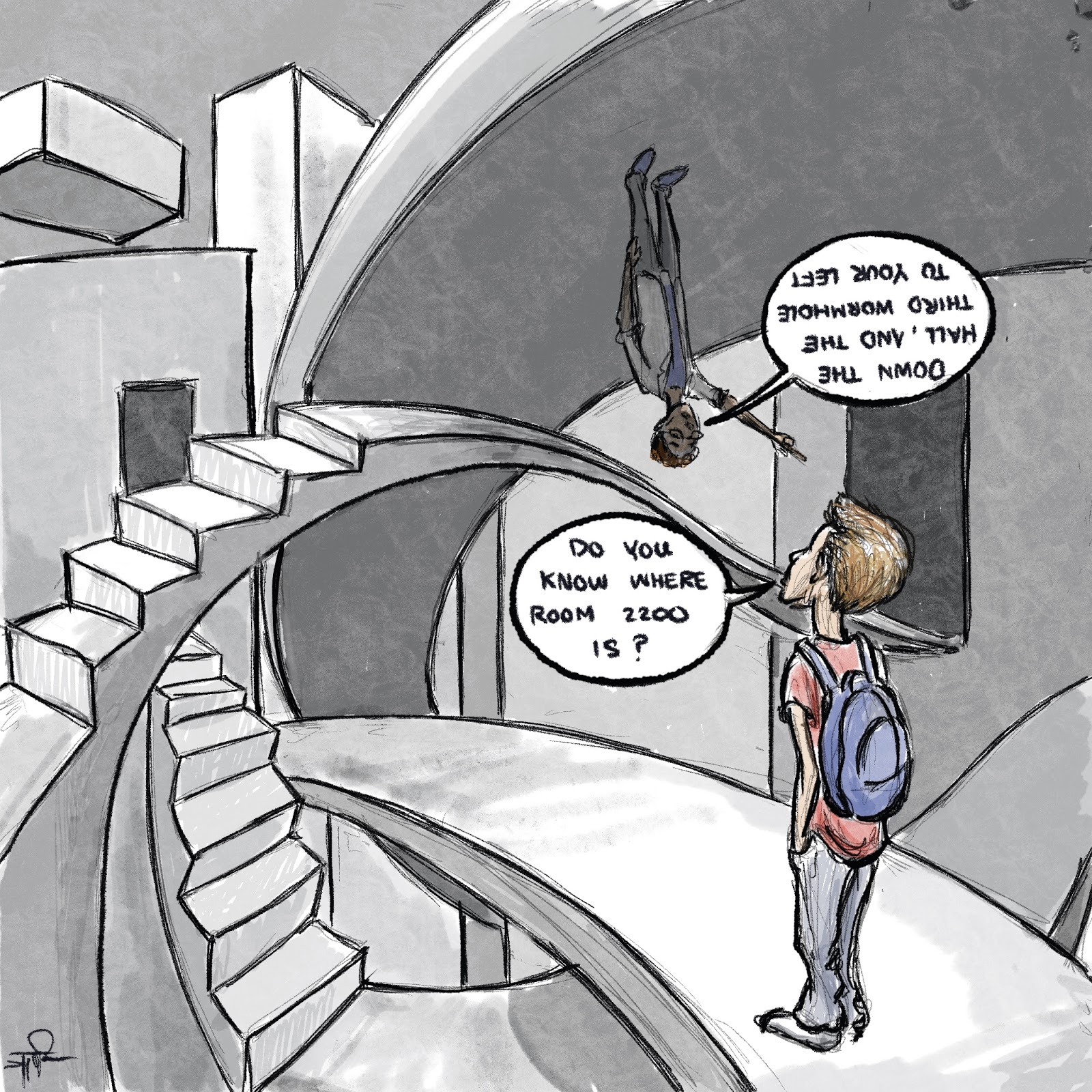
Drawn by: Rushi Tawade –– rntawade@ucdavis.edu
Disclaimer: (This cartoon is humor and/or satire, and its content is purely fictional. The story and names of “sources” are fictionalized.)
Although leagues have begun to make strides in increasing diversity, it is still a work-in-progress
Diversity in American sports contributes to respect and helps people to value one another in society. It breaks barriers among people with different backgrounds and helps them form relationships that would have never otherwise been formed.
Today, major sport organizations like the National Basketball Association (NBA), National Football League (NFL), National Hockey League (NHL) and Major League Baseball (MLB) claim to prioritize diversity, but often implementation of the idea is not visible within their coaching staff hires or player picks.
In 2015, Bleacher Report’s Howard Beck wrote about the sudden loss of Black coaches in the NBA.
“NBA teams, now more than ever, are seeking unconventional hires—college coaches, first-time coaches, foreign coaches, broadcasters, former video coordinators—and turning away from the standard pool of former players-turned-coaches, a pool that is, by definition, predominantly Black,” Beck said.
Even when putting aside race, gender representation seems to be an issue in the NBA as well. Becky Hammon became the first female assistant coach in the NBA for the San Antonio Spurs in 2014. It was the beginning of a huge culture shift that has led to there being 11 more women assistant coaches today. However, the NBA still has a long path ahead of them to diversify. In a diverse environment, the morale of players may increase and there will be more productivity for the NBA.
In the MLB, 40% of the players on the 2020 Opening Day rosters were from non-white backgrounds, and only 7.5% were African-American.
Colorado Rockies outfielder Ian Desmond announced last year that he wouldn’t be participating in the 2020 season. He said COVID-19 wasn’t a risk worth taking, but he also wanted to support his local little league baseball field because the MLB isn’t supporting underprivileged communities. Based on his former experiences in youth baseball as a biracial kid, Desmond understood firsthand how difficult it could be to find support from others in the sport of baseball.
“Why isn’t there an academy in every single community?” Desmond said. “Why does Major League Baseball have to have a specific youth baseball affiliation with RBI? Why can’t we support teaching the game to all kids—but especially those in underprivileged communities? Why aren’t accessible, affordable youth sports viewed as an essential opportunity to affect kids’ development, as opposed to money-making propositions and recruiting chances?”
By not assisting these underprivileged communities, the MLB may face serious consequences in the future by missing out on the recruitment of amazing young, talented players who just need support behind them to get a chance to compete in the professional levels down the road. Yet, as Desmond illustrated, the MLB is also missing out on the opportunity to affect meaningful change in the lives of young baseball players across the country, regardless of their possible contribution to the league’s financial success.
In regards to gender diversity, women are gradually gaining more representation in the MLB. Kim Ng became the first woman general manager in the MLB for the Miami Marlins in November of 2020. Ng is one of the most qualified people with over 30 years of experience. The barrier she broke serves as inspiration for many young girls and women to pursue their dreams in having a high position in baseball.
Last year, the NFL spoke about their commitment to the inclusion of diversity in its coaching positions. The league expanded its Rooney Rule that requires the club teams to interview two people of color for coaching positions, and compensated them with an extra third round pick. This past season was the first year since 2013 that only four minority coaches held head coaching positions. This new policy will have the NFL monitoring the interviews closely to ensure diversity amongst the 32 club teams.
“The commissioner has made it a focus area in league meetings for a good period of time but especially over the last year,” said former NFL general manager Rod Graves. “I think the awareness level regarding the issues of diversity in the league or lack of is higher than it’s been in quite a while.”
Even then, only two minority head coaches were hired in this past hiring cycle, leaving out Kansas City Chiefs talented offensive coordinator Eric Bienemy once again. The NFL has a lot of work to do when it comes to diversifying, and a lot of it starts from the top down.
A similar need for increased diversity has also been recognized in hockey. In June of 2020, seven former and current players from the NHL formed the Hockey Diversity Alliance. They operate independently from the NHL and their goal is to promote diversity in all levels of hockey, not just at the professional level.
These seven players, led by Akim Aliu and Evander Kane, partnered up with female hockey players across the U.S. and Canada and the Youth Inclusion Committee.
“In creating our alliance, we are confident we can inspire a new generation of hockey players and fans,” the group said in a statement. “We are hopeful that anyone who puts on skates or sits in the stands and will do so without worrying about race, gender or socioeconomic background will be able to express their culture, identity, values and personality without fear of retribution.”
All professional sports organizations and athletes seem to be working towards improving diversity and developing new ideas to foster inclusive communities. It is going to take a lot of work, but in recent years leagues have begun to stress the importance of diversity even more. The hope is that these efforts will eventually bring people of all backgrounds together in sports through diverse environments at both the professional and amateur levels, increasing access to and belonging within these communities for everyone, not just those who have been historically represented in them.
Written by: Katherin Raygoza — sports@theaggie.org

Whether you’re looking for some new tunes or interested in reading about our musical knowledge, you’ll find it below
Music plays a huge role in everyday life, whether you’re jamming along to the radio on your drive, listening to your favorite songs during a workout or feeling more intense emotions while watching a show or movie with a perfectly matched soundtrack. In fact, music means so much to the members of The Editorial Board, we have our very own collaborative playlist on Spotify. Although some of us will never accept additions of songs by Taylor Swift to this playlist (sorry, Anjini), taste in music can be an excellent way to bond with your friends and many of our favorite songs have been introduced to us from friends and family. We share some of our favorite songs, albums and artists and what they mean for us below.
Anjini Venugopal, Editor-in-Chief
My over-professed love for gloomy weather is only rivaled by my love for Kacey Musgraves’ 2018 album “Golden Hour,” which always makes me want to spend a lazy summer afternoon laying in a field. Each song in the album is expertly written and on my first listen, I was shocked at how the ethereal melodies and magnetic lyrics conflicted with my preconceived notions of country music. “Happy & Sad” and “Lonely Weekend” are comforting odes to solitude, especially during what has been a particularly isolating year. The album’s vivid imagery almost makes you feel frozen in a moment; that cohesion is precisely what golden hour is all about. A recommendation: “Golden Hour” provides excellent driving tunes, especially when included in a playlist with the entire soundtrack of 2011 Bollywood hit “Zindagi Na Milegi Dobara.” Feel free to amplify the soft and summery vibes by tossing in a few Maggie Rogers, Harry Styles and Taylor Swift songs while you’re at it.
Margo Rosenbaum, Managing Editor
I tend to fill my playlists with songs that bring me up, as music is one way I find joy in this dreary world. If anyone read my latest Culture Corner, then they know I am a bit obsessed with Tennis and their album “Swimmer.” The indie pop duo’s soft pop-rock sound feels nostalgic yet simultaneously so fresh. “How to Forgive” and “Need Your Love” are exactly what the world needs to listen to find respite during this pandemic. At least for me, Alaina Moore and Patrick Riley’s songs bring sheer joy the second they come on—making me have an impromptu dance party no matter where I am. Another amazing artist I’ve been listening to lately is Shannon Shaw, of the band Shannon and The Clams. Her solo album, “Shannon in Nashville,” is filled with lines promoting women empowerment, such as “I won’t do anything that I don’t have to,” which I find incredibly compelling. Her song “Lord of Alaska” makes me feel as though I can conquer anything as a woman—which is always a nice reminder. Lastly, it would be wrong of me to not share the work of my lovely boyfriend and his band Carpool Tunnel. They released a few singles in the past few months—as a part of their debut album coming Feb. 26—and although I know I am quite biased, I think their music is beautifully written and performed.
Sabrina Habchi, Campus News Editor
In my continual pursuit to live up to Southern California stereotypes, my first car was a convertible. I was completely obsessed with it and drove everywhere with my top down—a remarkably easy feat given San Diego winters. What more classic of a song to accompany a coastal drive in a convertible than “Island in the Sun” by Weezer? Every time I listen to it now, the nostalgia of my high school days comes rushing back, and I am immediately transported to driving past the breathtaking views on the 101 and pulling over at times to take it in. For a less mainstream vibe, I highly recommend the Scottish band, Niteworks. The band takes a modern twist on classic Scottish music and any lyrics are in Gaelic—an excellent choice for people who love listening to music while studying but cannot stop themselves from singing along to songs they know. Plus, you can totally brag to your friends about how you’re one of their only 17,000 monthly listeners, so you can convincingly claim you used to listen to them all the time before they made it big.
Eden Winniford, City News Editor
Whenever I’m down and need encouragement, I listen to Bruce Springsteen. Even though we were born on different sides of the country, I feel like we could have shared a hometown. His songs always make me think of the river I used to spend my summers swimming in and the dusty streets of the small town I grew up in. “The Promised Land” never fails to remind me of the goals I’m striving to achieve, and I can picture my future just in front of me while I’m belting out the lyrics. But “I’m on Fire” will always be my favorite of his songs. It’s simple and quiet, with Springsteen’s voice and a harmonica being the only prominent sounds, but it captures so many intense emotions. I consider it Springsteen at his best: simple and without embellishments, delivering an incredibly vivid narrative through his lyrics and voice inflections.
Calvin Coffee, Opinion Editor
Gustavo Santaolalla’s soundtrack for “The Last of Us” is unrivaled among soundtracks. The 30-track album is always my go-to when I write. Increasingly complex and eerie iterations of “All Gone,” “The Last of Us” and “The Path” make for a soundtrack that tells the story of the game without words—it’s phenomenal. Another album I can’t go too long without hearing is Jason Isbell’s “Southeastern.” Beginning with possibly the greatest love song of all time in “Cover Me Up,” Isbell puts on a masterclass of songwriting and storytelling—I don’t know if there’s a better collection of 12 songs out there. And last but not least, “was in The Story of Sonny Boy Slim” by Gary Clark Jr. is one of the best 54 minutes in all of music. It’s the perfect combination of Clark Jr.’s mind-bending guitar skills and a mix of R&B and Hip-Hop that will make you want to dive into his full catalog (It’s worth it).
Sophie Dewees, Features Editor
Among the many female folk artists that I’ve come to love over the years (from Kate Rusby since age 10 to Olivia Chaney, whom I discovered last year), Laura Marling will always have a special place in my heart. Her newest album, “Song For Our Daughter,” features her characteristic nylon string guitar playing and her beautifully soothing voice. Though the album was literally written for a fictional daughter, Marling has said that, in some ways, she wrote it for a younger version of herself. As a woman in my early 20s, many of the songs’ feminist themes and musings on the modern female experience really speak to me. It offers incredible emotional complexity and musical intricacy for its relatively short length of 36 minutes. Since its release in April last year, I have listened to the album on repeat. Its lovely acoustic sound unique to Laura Marling is perfect for any time of day, from sunny mornings to softly-lit evenings.
Allie Bailey, Arts & Culture Editor
A movie soundtrack is the best type of album: it gives me the variety I want in a playlist, with a common theme connecting what might otherwise be an eclectic mix of genres and artists. “Queen & Slim: The Soundtrack” does this perfectly. The movie’s themes make way for a song for every mood—”Doomed” will make you genuinely sad, and then “Ride Or Die” comes on and Megan Thee Stallion and VickeeLo remind you who you are. But no matter what plays first when I hit shuffle, I’m happy to listen. My favorite has to be “Collide” by Tiana Major9 and EARTHGANG, for its laid-back and heartwarming melody, but there are several close seconds, including “Catch The Sun” by Lil Baby, “Searching” by Roy Ayers and “Yo Love” by Vince Staples, 6LACK and Mereba. As made obvious by the artists, you get a little bit of everything in this soundtrack, from rap and R&B to neo soul and pop. There are a couple of tracks you know would sound better while playing over a movie scene, but are worth a listen all the same. No matter your taste, or your mood, you’ll find something you like—10/10 recommend.
Omar Navarro, Sports Editor
One quick look at my playlist and you can see that the mood of my music is all over the place. My genre has and always will be hip-hop, as I believe it is a genre that is limitless. 2020, in my opinion, was one of the best years for hip-hop in a long time, as it seemed like every artist dropped an album. Polo G’s “The Goat” is one that I have had on repeat since it was released almost a year ago, as its tracks such as “21” and “Heartless” have had me hooked for the lyricism and catchiness. From top to bottom, the album continues to give even to this day and is near the top of my recommended list, as well as Lil Baby’s “My Turn” and its tracks “Commercial” and “Grace”.
I truly love music, hip-hop especially, and I can go on and on naming my favorite works that I listen to daily by artists like Juice WRLD (who’s “Goodbye and Good Riddance” is my favorite album ever), Future, Giveon, J. Cole, Drake and countless others that continue to deliver timeless work. I personally believe that an artists’ best work is done when they place their emotions on their tracks, so all of my favorite artists have music for any mood.
Madeleine Payne, Science Editor
The most recent album I’ve saved on Spotify—joining the ranks of “Blonde,” “Ctrl” and “Harmless Melodies”—is Arlo Parks’ debut album, “Collapsed in Sunbeams.” Released only a few weeks ago, the album delves into the darker side of being a teenager, giving listeners a glimpse into struggles Parks dealt with growing up in London. Her songs openly confront the daily pain and burden of living with depression (“Black Dog” and “Hurt”) and explore the challenges of navigating the complicated and sometimes blurry lines of friendships and relationships (“Too Good” and “Eugene”). “Caroline,” my favorite song on the album, describes the dramatic end of a relationship at a bus stop. Parks’ has been a great companion during rainy afternoons these last few weeks; her soothing and steady voice reminds me of listening to Norah Jones during stormy drives with my mom growing up (though with a little bit more hip-hop and R&B influence). Though now, with my teenage years behind me, listening to “Collapsed in Sunbeams” has led me to reflect on my life before the pandemic—which for me, is also life before my 20s—teaching me to appreciate the growth and vulnerability of teenagehood.
Written by: The Editorial Board
Doctors at UC Davis’ Genome Center identify a highly contagious variant
On Feb. 8, Healthy Davis Together and the UC Davis Genome Center announced they had identified the first case of an especially contagious variant of COVID-19 in Yolo County.
This new variant, referred to as B.1.1.7, was first identified in the United Kingdom in September. It was first found in the U.S. in late December, but scientists estimate it has been in the U.S. since late November. The Centers For Disease Control (CDC) has reported 981 cases of this new strain as of Feb 11.
Researchers from 12 different institutions published on Feb. 7 that the variant was found to be between 35–45% more infectious than the original coronavirus strain, however the CDC estimates that number to be closer to 50%.
Dr. David Coil, a project director and scientist for Healthy Davis Together, worked with scientists to identify the variant at the UC Davis Genome Center by sequencing the genes in the virus.
“In terms of the sequencing, we’ve only done that on very, very few samples, but we’re ramping up to do much more,” Coil said.
So far, all authorized vaccines appear to still be effective against new strains like B.1.1.7.
“There’s not enough data from people who are actually vaccinated to look out at the world and see how effective it is against the variant,” Coil said. “But yes, the vaccine works against this strain as far as we know.”
As of Feb. 10, Sacramento and Yolo County hospitals have a total of 81 intensive care unit (ICU) beds available and 32 beds available at alternative sites.
“This is a really critical point,” Coil said. “It may be more important than ever that people remain vigilant.”
Scientists still don’t know exactly how many of the people in Yolo County are infected with the B.1.1.7 variant.
“It’s impossible to say how big a spike we’re expecting,” Coil said. “That depends on people’s behavior. The more people who follow the rules, the less cases we’ll have.”
Students, faculty and staff members can schedule free COVID-19 tests via the Health-e-Messaging service. Davis residents who are not affiliated with the school can schedule their appointments on Healthy Davis Together’s website.
Coil said social guidelines are even more important than they were before.
“A lot of people have started to have pandemic fatigue,” Coil said. “A lot of people have started to slack off and cut corners and it’s even more critical now than before that we don’t do that; we have to hold the line here.”
Written by: Wm. Schroedter Kinman — campus@theaggie.org
UC Davis is currently vaccinating patients 65 and older. To find out when they are eligible, patients can register for an account with MyUCDavisHealth
Having only worked at UC Davis for six months before the outbreak of COVID-19, Dr. Allison Brashear, the dean of the UC Davis School of Medicine, said that partnering with the UC Davis campus has been crucial when adjusting to the ever-changing conditions of the pandemic. On March 2, 2020, Brashear met with over 25 researchers and clinicians to discuss pandemic operations.
“We had a call to action on March 2, with the campus and the School of Medicine on what are we going to do about the pandemic, clinical trials, developing, testing [and] improving patient care,” Brashear said. “And everybody jumped in with both feet in terms of getting research approved and moving forward developing testing and really working as one team.”
Before coming to UC Davis, Brashear worked as the chair of the Department of Neurology at Wake Forest University for 15 years. Now, as the dean of the UC Davis School of Medicine, she said that her role has evolved during the pandemic to focus on strategy and operations. She has also participated in new initiatives such as a Dean’s Call and a Deans Discuss Podcast in collaboration with the School of Veterinary Medicine.
“Beginning on March 2, we developed a daily Dean’s Call which we did for almost two months,” Brashear said. “We still have those Dean’s Calls twice a week, where we actually real-time problem-solve issues about surge testing [or] vaccinations.”
Less than two weeks after the meeting in early March, UC Davis Health developed its own internal rapid testing system where tests were run through an onsite machine instead of outsourced to a lab. The university also pioneered the saliva test on Nov. 10, 2020, and initiated clinical trials relating to the vaccine, the most recent in late Dec. 2020.
According to Brashear, she is most proud of UC Davis’ adaptability and swift development of testing and clinical trials.
“I’m particularly proud of the inclusion of research in our day-to-day clinical care,” Brashear said. “That goes from standing up a test in the middle of March to bringing clinical trials in record time to our patients at the bedside and in the clinics.”
Since the development of different varieties of COVID-19 vaccines, UC Davis has administered over 40,000 vaccines in total and is currently vaccinating patients 65 and older.
As the vaccination rollout continues, Brashear said that she hopes for other vaccines to be approved in the near future to allow for more widespread vaccination.
“There have been some challenges about the vaccine rollout,” Brashear said. “We are looking forward to additional vaccines being approved, including AstraZeneca and Johnson & Johnson. In general, one of the challenges has been lots of people that want the vaccine but not enough providers to deliver the vaccine.”
According to her, UC Davis has thus far been a model in safety and in vaccination of its frontline healthcare workers.
“Our goal is to really vaccinate our health care workers so that we can make sure that they are all safe,” Brashear said. “Our frontline workers are a priority. About 82% of our [health care workers] have been vaccinated with at least one shot.”
Brashear stated that she is grateful overall for the work UC Davis Health has been able to accomplish, bolstered by a partnership with the campus.
“I’m really proud of the collaboration with main campus to really improve [the] health of our patients at UC Davis Health but also to move science forward,” Brashear said. “It’s really been a team effort over the last 10 months.”
To find more information about receiving the COVID-19 vaccine, patients can create an account with MyUCDavisHealth. Patients will be notified when they are eligible to be vaccinated.
Written by: Sophie Dewees — features@theaggie.org
Meeting was shorter than usual due to previous weather-related cancellation
A special Senate meeting was called to order by ASUCD Vice President Emily Barnenond on Tuesday, Feb. 2.
The previous week’s meeting was canceled due to widespread power outages caused by high winds, lightning and rains in the Yolo County area, including Davis.
The special Senate meeting began at 8:01 p.m. All Senators were present, establishing the necessary quorum. External Affairs Commission Vice President Maria Martinez was absent.
The meeting, called to confirm a number of commissioners into the Senate, was shorter than usual. No new or old legislation was introduced.
Ambar Mishra, Simran Chahal, Quincy Kumfert and Michelle Andrews were all speedily confirmed as internal affairs commissioners. The motion passed with unanimous consent.
Kabeer Thockcom, Shayan Shahbazi, Andrew Lee and Kaitlyn Lee were also confirmed as business and finance commissioners and alternates with unanimous consent.
Brooke Isrow, a third-year political science-public service major, was confirmed as an Aggie mentors committee chairperson with unanimous consent.
Bia Myanganbayar, a fourth-year psychology major, was also confirmed as a student health and wellness chairperson with unanimous consent.
Julia Camilleri, a fourth-year neurobiology, physiology and behavior major, was confirmed as a sexual assault awareness and advocacy chairperson with unanimous consent.
The meeting adjourned at 8:42 p.m.
Written By: Rebecca Bihn-Wallace — campus@theaggie.org

©2021, ASUCD. Designed by Creative Media.