53.8 F
Davis

Davis, California

Friday, December 19, 2025
Home Blog Page 33

$12 million grant for reach on sustainable transportation terminated by Trump administration

The grant, which supported “accelerating equitable decarbonization” research, decried as “woke” by U.S. transportation secretary


By JORDAN POLTORAK— campus@theaggie.org


United States Transportation Secretary Sean Duffy announced on Friday, May 2 that he would terminate a $12 million grant given to UC Davis’ National Center for Sustainable Transportation for being “woke.” 

The grant was used to fund “accelerating equitable decarbonization that benefits both the transportation system and the well-being of people in overburdened and historically disadvantaged communities,” according to the UC Davis Institute of Transportation Studies website

UC Davis was one of seven institutions that had their “woke university grants” revoked, according to Duffy, UC Davis’ grant being the largest. City College of New York and University of South California both lost out on $9 million for their grants. New York University, San José State University, University of New Orleans and Johns Hopkins University each had $6 million in grant funding terminated. 

 “These grants were used to advance a radical [diversity, equity and inclusion] (DEI) and green agenda that were both wasteful and ran counter to the transportation priorities of the American people,” the U.S. Department of Transportation website reads. 

The National Center for Sustainable Transportation (NCST) grant totaled $20 million with $4 million per year over five years. Research focused on three areas: improving vehicle technology, building better infrastructure and changing travel demands to cut greenhouse gas emissions. The NCST is one of five national centers funded by the Department of Transportation. 

The NCST is led by the Institute of Transportation Studies (ITS) which is the leading university center in the world on sustainable transportation with over 60 faculty and researchers and more than 120 graduate students. 

“Much of our work was in line with the previous administration and their priorities,” Susan Handy, director for NCST and principal investigator on the federal grant, said. “We were addressing the [Joe] Biden administration in our proposal. The current administration has very different priorities so we knew we had some vulnerability there. But we do a lot of work that is consistent with the current administration, with respect to the transportation realm. Projects like safety, impacts of transportation on the economy and some of my work has to do with the degree that widening highways reduces congestion.” 

Her message to students is to not give up hope. 

“A lot of good work will still continue at the Institute of Transportation Studies,” Handy said. “We receive funding from a lot of different sources including California agencies. We want to continue to fund the students we have committed to funding. We will have to work to find resources in other places that can support the important work that needs to be done.” 

A UC Davis spokesperson provided the following comment:

“The university has received dozens of notices from federal agencies related to specific grants or projects since the change in the federal administration,” the spokesperson said. “The affected grants cover a wide range of areas, including research related to cancer and Alzheimer’s disease, food production and safety, renewable energy, basic science and a great deal more.

The federal notices vary significantly in their intent and need for action. In each case, the Office of Research is working directly with the principal investigator and campus leadership to determine the appropriate course of action. 

In the case of research terminations, this may include filing an appeal directly with the agency, litigating matters in court and negotiating a financial settlement prior to winding down the research. These processes can take months and prevent us from sharing information publicly until complete.   

   UC Davis is a powerhouse for breakthroughs and impact. Our research plays a vital role in building the region’s economy and contributes to our nation’s global leadership in technology and innovation. As we navigate the complex landscape, we remain committed to maintaining and uplifting a robust research enterprise that fully serves our mission of teaching, research and public service.”

This is a developing story. Follow The Aggie for continued updates.

Written by: Jordan Poltorakcampus@theaggie.org

Senior Send-Off: William Jacobs on studying abroad, building career foundations and growing with Davis

This spring, fourth-years reflect on their time at UC Davis and share their post-graduate plans


By JALAN TEHRANIFAR — features@theaggie.org


William Jacobs came to UC Davis from Carlsbad, California, unsure of where he would end up. Four years later, the civil engineering major is graduating with a sharpened focus, a strengthened work ethic and a few extra stamps in his passport.

Jacobs said his favorite college memories were made during his summer abroad in the Netherlands. He participated in the UC Davis Sustainable Urban Systems program in 2024 with Professor Kari Watkins.

“I really liked exploring the cities with the friends I made on the trip,” Jacobs said.

Studying abroad wasn’t the only experience that shaped him. Over the past year, Jacobs said he’s seen significant personal growth — especially with time management and discipline.

“When I started school, I was pretty relaxed in the way I studied and organized my time,” Jacobs said. “But this year I’ve spent more time seeking additional degrees, participating in clubs, working and searching for jobs after I graduate.”

Jacobs picked up two minors during his time at Davis: construction management engineering and sustainability in the built environment, as well as joined the Institute of Transportation Engineers (ITE), a club that gave him hands-on experience in the field. He said ITE helped him attend technical events at other universities, build industry connections and explore real-world applications of civil engineering.

“I was able to attend events at [UC] Berkeley and UC [Los Angeles] and learn real technical skills that will help me later on in my career,” Jacobs said. “ITE also connected me with a lot of job opportunities.”

After graduation, Jacobs plans to spend a month traveling through Japan, Vietnam and Thailand. The trip will be a break from the rigorous schedule he’s maintained over the past year — a chance to recharge before diving into post-graduate life.

“I’m really excited to take some time off school and work,” Jacobs said.

The trip marks a pause, but not a slowdown. After his travels, Jacobs plans to return to Davis while he searches for jobs, hoping to eventually settle in the Bay Area. He said he’s ready for what’s next, but leaving UC Davis won’t be easy.

“College is the last place I’ll be where I’m surrounded by people my age,” Jacobs said. “I’m also going to miss the campus and downtown — I love how walkable everything is and using all the resources on campus.”

Jacobs said his favorite parts of Davis include Ali Baba, the Coffee House sandwiches, the Davis Farmers Market, UC Davis football games, Taqueria El Burrito and Bizarro World. But more than anything, he appreciated getting to know the city over time.

For current and future Aggies, Jacobs offered some advice on navigating the quarter system and finding balance.

“It’s important to stay on top of things, because the quarter system can sneak up on you,” Jacobs said. “It can be easy to fall behind when you’ve missed four weeks of lecture. But at the same time, make sure that school isn’t your whole life. Have fun while you’re in college because it goes by really fast.”


Written by: Jalan Tehranifar — features@theaggie.org

Phi Beta Sigma speaks out following Picnic Day shooting

Davis police confirm multiple shooting suspects in the incident


By YUENJO FAN — city@theaggie.org


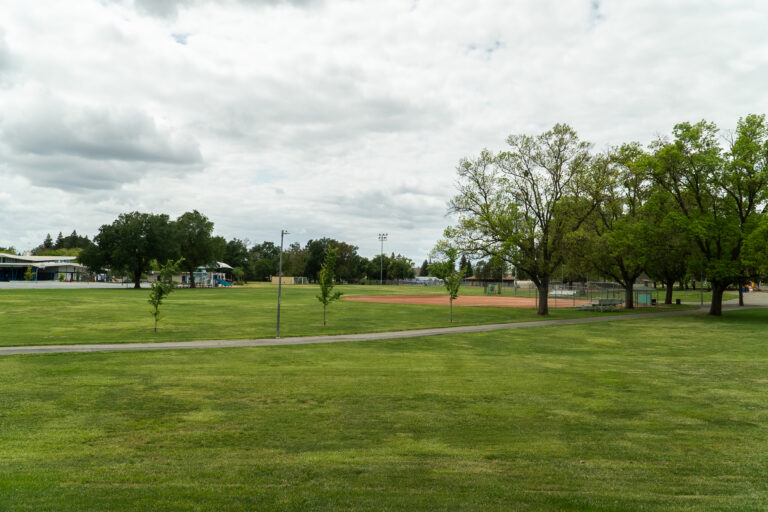
The Davis Police Department has released more details regarding the shooting that occurred at Community Park on Picnic Day, April 12.

In a released update, Davis police confirmed that multiple shooters were involved in the incident that left a 24-year-old and two teenagers injured. The Davis Police Department does not believe that the shooting poses a continued threat to the Davis community. One of the perpetrators is described as a Black male adult between 20 to 25 years old and under six feet tall with an average build. The suspect was last seen wearing a black hoodie, black pants and a face mask.

The shooting occurred in the afternoon at a block party hosted by the Davis chapter of the Phi Beta Sigma fraternity. On April 16, the fraternity released a statement addressing the shooting.

“Our hearts go out to all those affected by the incident at Community Park during Picnic Day,” the statement reads. “Like many of you, we are awaiting [for] further information and updates. As we respectfully await the Davis Police Department’s investigation, we too are feeling the impact of this occurrence. Our event has always been a space for unity, celebration and joy. It is never our intention for anyone to feel unsafe or endangered. As UC Davis students, we share the concerns surrounding the situation.”

The Phi Beta Sigma fraternity did not respond to The California Aggie’s request for further comments.

Additional details such as the multiple suspects’ whereabouts, number of rounds fired and motives have not yet been released to the public by Davis police. Lieutenant Dan Beckwith of the Davis Police Department provided more information regarding the current state of the investigation.

“It’s an active investigation, so things are unfolding and we’re still talking to witnesses,” Beckwith said. “We’re still attempting to locate videos and photos that might have been taken. We don’t want to compromise an active investigation by releasing information that may tip off suspects. We’re also discovering new things every day, […] so it’s also a responsibility of being able to release accurate information.”

Beckwith also mentioned the Davis Police Department’s intentions of addressing ways to prevent incidents in the future.

“What we’re doing right now is we’re reevaluating our process for providing security to events that happen within the city,” Beckwith said. “We’re looking for ways to improve how we approach these things moving forward, we’re having a lot of conversations between ourselves and the university with that regard and trying to make improvements as we see fit.”

Davis Mayor Bapu Vaitla and Councilmember Josh Chapman released a joint statement on April 17, reassuring the city of their support for the community during this moment of rare violence.

“Our priority as elected officials is first and foremost to protect people,” the statement reads. “When an event like this occurs, we must identify areas of improvement and take immediate steps to examine how we can do better. […] We are committed to working closely with [the Davis Police Department] and our staff team to examine that process and make improvements. This means that the scale and type of future gatherings must be commensurate with the ability of our Police Department to enforce the law and protect our community.”

The Davis Police Department has requested that any information about the shooting be emailed to tipline@davispd.org.


Written By: Yuenjo Fan — city@theaggie.org

Davis May Day demonstration draws over 800 attendees

Hundreds of demonstrators march through downtown in support of workers


By SUNNY LIU — city@theaggie.org


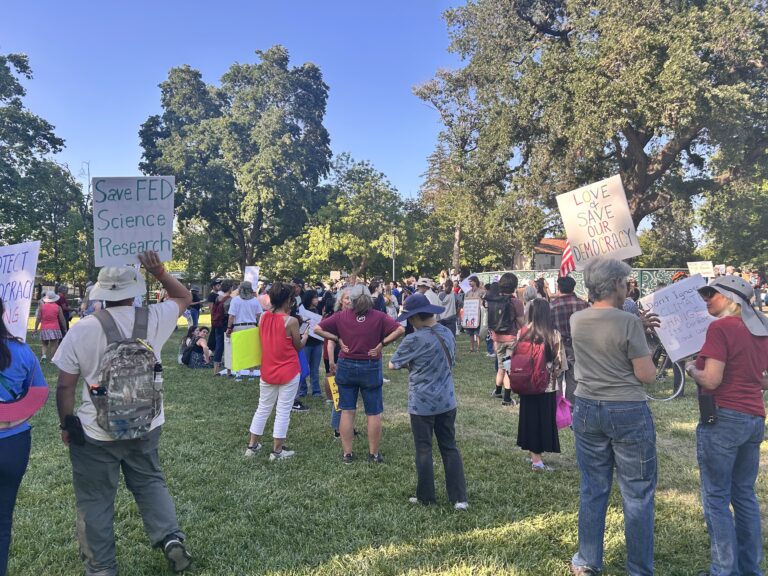
On May 1, hundreds of Davisites and UC Davis students converged in Central Park as part of a planned May Day demonstration. The protest is among hundreds of similar May Day demonstrations and strikes across the country defending labor rights. The demonstrations in Davis this May Day also demanded protection for immigrants and an end to President Donald Trump’s assault on democratic institutions.

The event was organized and sponsored by a number of community organizations, including the Davis Faculty Association, Indivisible Yolo, Democratic Socialists of America-Yolo, Sister District Yolo, Davis College Democrats, Labor Council for Latin American Advancement-Sacramento and the American Federation of Teachers at UC Davis. 

Kelly Wilkerson, an organizer for the event representing Sister District Yolo, explained the purpose of the event.

“It’s May Day, which is international workers day, so that was our focus,” Wilkerson said. “Davis Faculty Association and some other unions were here, […] so that’s one reason why we’re here. And then we’re here for all the other reasons, you know, our rights and my particular sign is pro-child anti-Trump. I’m really horrified by what’s happening. And so, you know, so it’s kind of all of the above.”

Antonio De Loera-Brust, the director of communications for the United Farm Workers Union, commented on his organization’s view on the need to foreground immigrant labor when discussing labor rights in general.

“The Latino working class [is what] really makes Yolo County run,” De Loera-Brust said. “Whether you think about the fields and the ag’ [agriculture] all around in Yolo County, that’s really our bread and butter. Or whether it’s, you know, all the kitchens in Downtown Davis, right? Every time UC Davis students order DoorDash, right, it’s probably an immigrant Latino worker making that meal. It’s often immigrant workers who are delivering them, right? So for us, we wanted to participate, to really elevate just the visibility of that workforce that doesn’t run Davis, but makes Davis run.”

The event kicked off at 5 p.m. with speeches from various sponsors and local labor organizations. Soon after 5 p.m., the group, many with homemade signs, marched around the downtown area. The protestors chanted slogans through 4th Street, G Street and then back through 2nd Street. Many roads along the march route were closed off to traffic due to the number of protesters and audience members present. 

Wilkerson described the audience during the march.

“It’s great because there’s a lot of people on G Street for the Big Day of Giving, so we kind of had a built-in audience,” Wilkerson said. “Sometimes you have a march or parade and there’s no one watching, but we did have [a large audience].”

After the protesters returned to Central Park, the organizers gave a few concluding remarks and future announcements. De Loera-Brust encapsulated the sentiment expressed by multiple labor groups and protesters at the demonstration.

“An attack on one worker is an attack on every worker,” De Loera-Brust said. “When any group of workers is afraid to speak out because they’re afraid of getting deported, that makes them less likely to report unsafe working conditions. That makes them less likely to report wage theft, and that makes not just their lives worse, but that puts every other worker, including U.S. citizen workers in the same danger. […] That’s our message that if we want to fight for workers. We need to fight for immigrant workers, too.”

After the event, Steve Murphy, the co-chair of Indivisible Yolo and an organizer for the event, spoke about the scope and size of the May Day demonstration.

“[We are] part of the national movement, the national days of action,” Murphy said. “There’ll be another one in June, but this one was all about labor, all about solidarity, labor and the immigrant community. So getting all three generations of Davis out: the student population, the adults, the seniors like myself, getting all […] three of those generations all up and getting incredibly invigorated [is important]. [It is] really important that we get everybody in Davis because it’s not a student issue, it’s not a faculty issue, it’s not a senior issue, it’s all of us. That’s what the goal was and I think we accomplished that today. […] There were over 800 people [attending].”

Viki Montera, who was affiliated with one of the organizations sponsoring the event, spoke out further about why she thought so many people turned up and the size of the event.

“[With] all the energy, people need to express themselves,” Montera said. “There’s a lot of anger, frustration and we’re waking it up. […] Some people here said this is the largest [demonstration] that we’ve seen since the ‘60s in Davis. […] We’ll take them all. There [were] more [attendees] than we thought. We [originally] thought maybe 300 [people would attend.] [During the march, we] stopped traffic and everything.”

The May Day demonstration lasted over an hour. Information on related future demonstrations and actions can be found on the social media accounts of Indivisible Yolo or Sister District Yolo


Written By: Sunny Liu — city@theaggie.org


Phi Beta Sigma speaks out following Picnic Day shooting

Davis police confirm multiple shooting suspects in the incident


By YUENJO FAN — city@theaggie.org


The Davis Police Department has released more details regarding the shooting that occurred at Community Park on Picnic Day, April 12. 

In a released update, Davis police confirmed that multiple shooters were involved in the incident that left a 24-year-old and two teenagers injured. The Davis Police Department does not believe that the shooting poses a continued threat to the Davis community. One of the perpetrators is described as a Black male adult between 20 to 25 years old and under six feet tall with an average build. The suspect was last seen wearing a black hoodie, black pants and a face mask. 

The shooting occurred in the afternoon at a block party hosted by the Davis chapter of the Phi Beta Sigma fraternity. On April 16, the fraternity released a statement addressing the shooting. 

“Our hearts go out to all those affected by the incident at Community Park during Picnic Day,” the statement reads. “Like many of you, we are awaiting [for] further information and updates. As we respectfully await the Davis Police Department’s investigation, we too are feeling the impact of this occurrence. Our event has always been a space for unity, celebration and joy. It is never our intention for anyone to feel unsafe or endangered. As UC Davis students, we share the concerns surrounding the situation.”

The Phi Beta Sigma fraternity did not respond to The California Aggie’s request for further comments. 

Additional details such as the multiple suspects’ whereabouts, number of rounds fired and motives have not yet been released to the public by Davis police. Lieutenant Dan Beckwith of the Davis Police Department provided more information regarding the current state of the investigation.

“It’s an active investigation, so things are unfolding and we’re still talking to witnesses,” Beckwith said. “We’re still attempting to locate videos and photos that might have been taken. We don’t want to compromise an active investigation by releasing information that may tip off suspects. We’re also discovering new things every day, […] so it’s also a responsibility of being able to release accurate information.”

Beckwith also mentioned the Davis Police Department’s intentions of addressing ways to prevent incidents in the future.

“What we’re doing right now is we’re reevaluating our process for providing security to events that happen within the city,” Beckwith said. “We’re looking for ways to improve how we approach these things moving forward, we’re having a lot of conversations between ourselves and the university with that regard and trying to make improvements as we see fit.”

Davis Mayor Bapu Vaitla and Councilmember Josh Chapman released a joint statement on April 17, reassuring the city of their support for the community during this moment of rare violence. 

“Our priority as elected officials is first and foremost to protect people,” the statement reads. “When an event like this occurs, we must identify areas of improvement and take immediate steps to examine how we can do better. […] We are committed to working closely with [the Davis Police Department] and our staff team to examine that process and make improvements. This means that the scale and type of future gatherings must be commensurate with the ability of our Police Department to enforce the law and protect our community.”

The Davis Police Department has requested that any information about the shooting be emailed to tipline@davispd.org


Written By: Yuenjo Fan — city@theaggie.org

Faculty advocated for an ethnic studies requirement for five years, but its proposal was recently rejected

UC ethnic studies educators, concerned about censorship of Palestine in curricula, say the failed proposal faced a “procedurally irregular” journey


By KHADEEJAH KHAN — campus@theaggie.org


Students and University of California ethnic studies faculty have been advocating for an ethnic studies admissions requirement since 2020. A proposal that was initially intended to take one year took five — and advocates have linked this delay to the UC’s alleged efforts to censor conversations surrounding Palestine in the state’s K-12 curriculum. 

The proposed Area A-G/H Ethnic Studies would have required high school students to take a non-additive, one-semester ethnic studies course for admission into one of the UC’s nine undergraduate campuses. It was rejected by a vote of the UC Academic Senate late last month.

Ethnic studies emerged out of students protesting United States imperialism in the Vietnam War as they demanded education that critically analyzed systems of imperialism, capitalism and settler colonialism. 

“Ethnic studies — it’s about reality,” UC Davis Cultural Studies doctoral candidate Beshara Kehdi said. “It’s about history. It’s about why our communities are here and why they are the way that they are. We can’t explain those things without referring to the violent displacements resulting from racism, capitalism and ongoing imperial wars.”


Timeline of Area A-G/H Ethnic Studies proposal 

Initially, the Area A-G/H Ethnic Studies proposal was unanimously approved by the UC Board of Admissions and Relations with Schools (BOARS) in November 2020. A 20-person Ethnic Studies Faculty Workgroup was then appointed to develop new ethnic studies course guidelines to recommend to BOARS.

In November 2021, BOARS approved the recommended course criteria by a vote of 10-1, with one abstention, which would send the proposal to the Academic Council for consideration. The Academic Council sent the proposal for systemwide review, and by March 2022, the proposal was sent back to BOARS with feedback from each campus.

At this time in the process, Li Cai, a UC Los Angeles professor serving on BOARS, broke Academic Senate policy by leaking internal emails, according to a 2022 article from the Daily Bruin. Cai sent communications on Area A-G/H Ethnic Studies to opponents of the proposal, including Tammi Rossman-Benjamin, a former UC Santa Cruz faculty member and co-founder of the AMCHA Initiative, a non-profit organization committed to combating antisemitism in higher education.

The AMCHA Initiative previously released a letter in 2022 alleging that the proposal would “unleash hatred and bigotry, especially antisemitism.” However, in a 2014 letter, Jewish studies professors across the UC system described AMCHA’s definition of antisemitism as too broad. In their letter, they also critique AMCHA’s methods of monitoring, documenting, boycotting and doxxing of professors and students who are pro-Palestine and anti-Zionist in a way that can “deaden the kind of spirited academic exchange that is the lifeblood of the university.”

A press release issued by the UC Ethnic Studies Faculty Council in 2022 rejects claims of antisemitism and questions the influence of “racist external pressures that inform [UC’s] deliberation around its proposed A-G ethnic studies requirement.”

“We also understand that the UC caved to spurious charges, in some cases advanced by people and organizations with a known history of racism, that our proposed criteria are ‘anti-Semitic’ and disparaging to Jewish Americans,” the press release reads. “This is a LIE. Nowhere in our course criteria do we mention Israel, Jewish people, or Judaism, much less any specific religion.”

In June 2023, BOARS approved the revised A-G ethnic studies course criteria by a vote of 9-2 with one abstention. While the vote was solely focused on the content of the criteria, members of BOARS shared concerns regarding implementation and access, according to meeting minutes.

BOARS was to vote on the proposal again in November 2023, but for the first time, the committee voted against sending the criteria to the Academic Council, despite it having previously been voted on and sent to the body.

Members of the UC Ethnic Studies Faculty Council had previously described this voting process as “procedurally irregular,” noting that the first time BOARS voted in opposition to the proposal was following the Oct. 7, 2023 attacks, despite having received strong support in past votes.

“We have to raise the concerns in terms of why this requirement has been handled and subjected to this systemwide review in a completely different way than other requirements,”  Natalia Deeb-Sossa, a UC Davis professor of Chicano and Chicana Studies, said.

Former UC Academic Senate Chair James Steintrager said the Area A-G/H Ethnic Studies proposal was concerning to the Regents due to its association with an October 2023 letter written by the Ethnic Studies Faculty Council, according to meeting minutes.

In the letter, members of the council rejected UC administrative communications that they allege “misrepresent the unfolding genocide of Palestinians in Gaza and thereby contribute to the racist and dehumanizing erasure of Palestinian daily reality.” The Ethnic Studies Faculty Council also called on the Regents to “uplift the Palestinian freedom struggle, and to stand against Israel’s war crimes against the ethnic cleansing and genocide of the Palestinian people.” 

“I will do everything in my power to never let that happen,” UC Regent Jay Sures said in an open letter, calling the faculty council’s letter “appalling and repugnant.” 

During that same period of time, Abigail Thompson, a UC Davis professor of mathematics and member of the UC Academic Senate, wrote a letter to the editor of The Davis Enterprise on campus protests by Students for Justice in Palestine titled, “Recognize True Evil.”

Thompson did not respond to requests for comment.

Dylan Rodríguez, a UC Riverside professor and member of the UC Ethnic Studies Faculty Council, has been a strong advocate for Arab American and Palestinian curricula in ethnic studies. He considers the opposition he has faced for his advocacy “well beyond censorship,” describing emailed threats of violence and death he had received.

“Anti-Palestinian racism has actually defined the terrain of the struggle [of advocating for Area A-G/H Ethnic Studies],” Rodríguez said.

Despite BOARS voting against the proposal in November 2023, the Academic Council sent the proposal for systemwide review in January 2024 as a response to the previously approved request to consider the proposal. In a December meeting that year, the Assembly of the Academic Senate voted to postpone the vote on the proposal to April 2025. 


Current status of the A-G/H Ethnic Studies proposal 

On April 23, the assembly rejected sending the ethnic studies proposal to UC Regents and President Michael V. Drake by a vote of 29-12, with 12 abstentions.

For that meeting, the UC Students Association filed a petition to indicate student support for the proposal. Christine Hong, a UC Santa Cruz professor of critical race and ethnic studies, believes that the assembly’s vote is not only a rejection of the proposal but a show of its failure to serve student needs. 

“We should be humbled before the fact that students have brought this forward and told us what they need,” Hong said. “We should be humbled before the fact that this is the sole field that has consistently been initiated by students — students who are oftentimes the most vulnerable within the institutional settings in which they’re fighting for ethnic studies.”

As ethnic studies advocates like Kehdi look toward the future of their discipline, the inclusion and expansion of Arab American and Palestinian studies remains essential in their advocacy. 

“Whenever we see racial progress as in the expansion of Palestine and Arab American studies like in California, we see racist progress and Zionist pressures to eliminate them and turn the clocks back,” Kehdi said. “Genocide is the consequence of racism, and Israel’s U.S.-backed genocide in Palestine continues. There is no going back.”

Despite the outcome of the vote, the fight for ethnic studies continues — a characteristic that ethnic studies scholars believe define the movement. 

“Ethnic studies is a grassroots struggle,” Sean Malloy, a UC Merced professor of critical race and ethnic studies, said. “We can win and lose individual battles, but the strength of this movement is in the community and student centered struggle — something they can never take away from us.”


This article is the second part of a continuing series on ethnic studies requirements for UC admission. Read the first part online.


Written by: Khadeejah Khan — campus@theaggie.org


Don’t Nod proves they still have ‘game’ with their latest release: ‘Lost Records: Bloom & Rage’

A spoiler-free review of the newly released installment by the beloved video game developer 


By BELLA PETERSON —- arts@theaggie.org


The developers of the original beloved “Life is Strange” game, Don’t Nod, just released the second and final part to their newest game “Lost Records: Bloom & Rage.” Having been known best for their choice-based storytelling, it’s safe to say that Don’t Nod has proven that they still know how to do it with this installment.

The subgenre of choose-your-own adventure storytelling in video games isn’t new, but “Life is Strange” certainly made an impact with its initial release in 2014. Since the popularity of “Life is Strange,” Don’t Nod has made various games unrelated to the series that utilized a similar format. It wasn’t until “Lost Records: Bloom & Rage” that Don’t Nod was able to make nearly the same impact as “Life is Strange.”

“Lost Records: Bloom & Rage” follows the friendship made between four girls in a mysterious summer before they all eventually go their separate ways. The story bounces between the adult and teen timeline as more information is given to the player of what made these girls choose to split apart in the first place. Similar to the game that put them on the map, this game makes no shortage of choices for the players to make that will shape their story.

If you have played both parts of this newest game, it is evident that what Don’t Nod was able to accomplish with “Life is Strange” really shines through in this newest piece. The gimmick of “your choices will have consequences” was really nailed in by Don’t Nod. Though, it isn’t said outright in this game, it’s present in the story that everything you do has an effect.

A commonly teased factor of Don’t Nod’s original hit game was its dialogue, and for the time it was relatively accurate. In “Lost Records,” the dialogue echoes a similar tone. It felt like the developers may have an inkling of this reputation, but certainly didn’t shy away from it.

“Lost Records” allows the players to shape the story however they want. The player is allowed to build and neglect relationships with the other supporting cast of characters, and even build a connection with one of the girls that are a part of the core four. Depending on the choices the player makes, it will result in a different ending — allowing for great replayability. There’s so much you can miss on the first playthrough. The game gives you a good amount of motivation to see all of the possibilities within the crafted narrative.

Another main aspect of gameplay is recording your environment with a retro video camera. It’s a refreshing take on a creative outlet for your main character as it allows for real influence by the player — compared to their previous games only allowing the player to press a few buttons in this aspect of the gameplay. The player can capture some of their favorite moments in the story and rewatch them later; Along with being able to watch these clips, the player can also edit them into whichever order they want. Essentially, you can make your own movies on top of playing the game, which is truly unique.

There’s also a supernatural element to “Lost Records: Bloom & Rage” similar to “Life is Strange.” This element was manufactured into the story smoothly — not feeling forced or too far-fetched. Almost feeling like the presence of this supernatural element was symbolic of the main girls’ journey in the story.

“Lost Records: Bloom & Rage” felt very reminiscent of Don’t Nod’s previous games, bringing a great deal of nostalgia in its content. As you explore the environment in the game, you can feel the heart of what makes these game developers so good at their niche. With many recent games coming up with the same cookie-cutter gameplay, it’s refreshing to see a company still committed to their low maintenance-format of gaming.

There’s so much life to these characters and the main story. It’s a big task to try to reach the iconic level that “Life is Strange” had, but it seems that Don’t Nod was able to take it on. It’s exciting to see that the company still holds a lot of potential — whatever their future projects may be.

Written by: Bella Peterson — arts@theaggie.org

does my use of all lowercase make me seem chill?

The primary contention with “monkey see, monkey do” 


By ABHINAYA KASAGANI— akasagani@ucdavis.edu


I turned off my auto-capitalization sometime in 2020 and haven’t looked back since. Little did I know that what I had assumed was a temporary change would stick. I never questioned why I had been asked to do this — until now, I suppose — or what the end of auto-capitalization meant, optically. Five years have passed, and still we SHOUT IN ALL CAPS, feign indifference in all lowercase and alternate between the two to communicate sArCasM.

This grammatical shift has been attributed to several different things: some admit to having adopted this lettering to seem nonchalant; others attribute this to Tumblr in the 2010s, while others claim that the origins of such lowercase lettering can be traced back to the feminist writer Bell Hooks, or even the poet, E. E. Cummings. Hooks once said that her intention behind the lowercase format of her name, “bell hooks,” was to keep the focus on “the substance of books, not who I am.”

This stylistic choice was later co-opted by online poets, most notably Rupi Kaur, as a way of “breaking the rules.” By 2020, the Internet had popularized the use of solely lowercase letters, with several mainstream pop artists — Charli XCX, Taylor Swift and Ariana Grande — immortalizing their discographies in all-lowercase: “brat” summer, “evermore” fall and “eternal sunshine” spring. Soon after this, tech companies — namely Facebook, X and Tumblr — embraced the use of all-lowercase lettering for corporate branding.

The move away from auto-caps became more than a stylistic choice; It marked a cultural shift wherein digital minimalism and casual or informal conversation were prioritized. Lowercase lettering was a way for one to assert their individuality more quietly. Formality began to feel stuffy and ingenuine in comparison to the approachable, laid-back lowercase.

Linguist Gretchen McCulloch, in her book “Because Internet,” explores these rampant Internet phenomena that have long dictated our dialects of Internet communication. She discusses how “emphatic caps feel like the quintessential example of internet tone of voice,” describing this lettering as a “typographic way of conveying the same set of cues [that one would use in speech].”

There remains no definitive way to claim that lowercase writing while texting is incorrect, or that it reliably conveys some sort of emotional nuance that is otherwise lost on the texter, just as one cannot fully grasp how lowercase text asserts digital autonomy purely by controlling the visual aesthetics of a word.

Naomi Susan Baron, a professor emeritus of linguistics at American University, likens typing in lowercase to “the ripped jeans fad of the ’90s that cyclically comes back into style every decade.” What is more concerning, however, is this desire to perform, even within the private space of a chatroom to which only chosen members are privy. Some might not even be thinking about it that deeply. They might’ve simply followed along to ensure that they wouldn’t lose their front-row seat to generational ostracization.

This collective adoption of all lowercase letters is somewhat frightening if assessed as more than a frivolous stylistic choice. The prescriptivist critique of this form of texting argues that it abandons conventional grammar rules, potentially breaking down clarity or littering academic and professional spaces with informality. Occasionally forgetting that Internet language, like all other languages, evolves with its users, this critique fails to recognize that none of these rules are governing, nor were they ever meant to be standardized for the “capital T” Texter.

This collective embrace of the all-lowercase feels as if it were a marker of social and cultural change. Capital letters once denoted the start of a sentence, a proper noun or the urgency of a cry or shout. The letter “I” was perpetually capitalized in a way that individualism was originally prioritized. Lately, however, it has felt as if this generation’s individuality has subsumed into a collective, making this deliberate staging of personality for the sake of communicating a certain aloofness ironic and somewhat oddly sincere.


Written by: Abhinaya Kasagani— akasagani@ucdavis.edu


Disclaimer: The views and opinions expressed by individual columnists belong to the

columnists alone and do not necessarily indicate the views and opinions held by The California Aggie.


UC launches workgroup, survey to see if systemwide academic calendar should be adopted

Input is requested from community members before a final report is submitted to UC leadership


By JESSICA YUNG — campus@theaggie.org


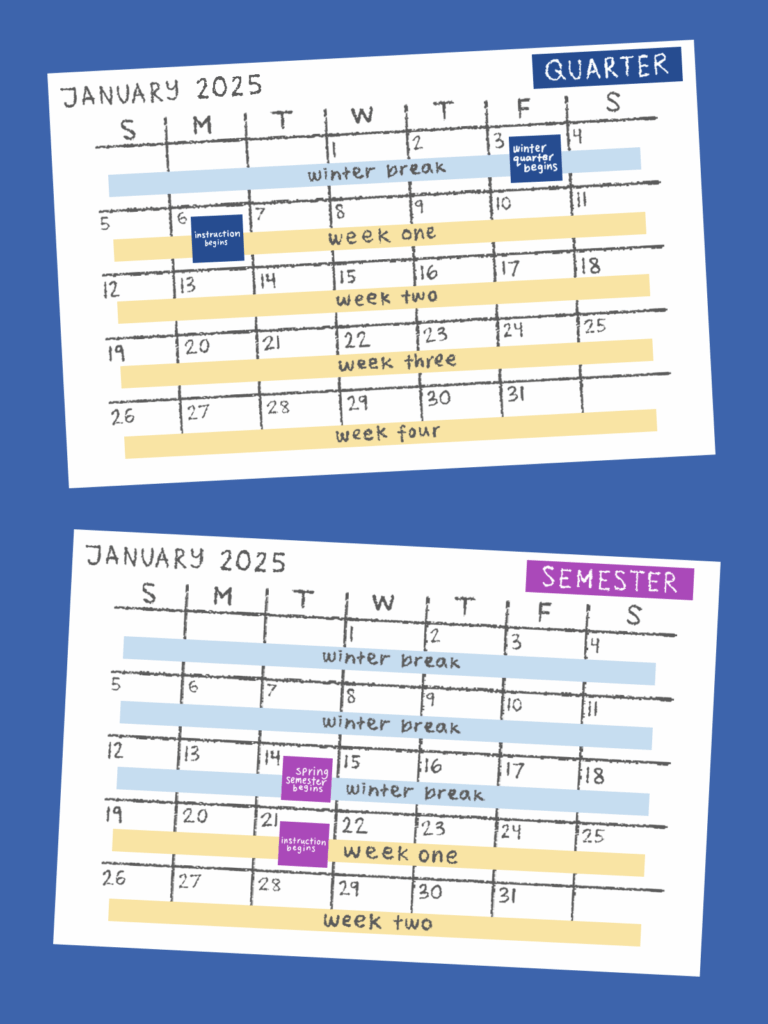
Several University of California bodies, including the Office of the President (UCOP), the Academic Senate and the UC Provost, have launched a workgroup looking into whether all UC undergraduate campuses should operate under a common academic calendar. The initiative does not seek to endorse either the semester or the quarter system, but is instead looking at the potential benefits of adopting a shared systemwide calendar.

The program, according to a letter from the workgroup, is an “information gathering exercise.” The final report will aim to “help answer the question of whether UC should return to a common academic calendar, but it will not recommend one calendar over another.”

Currently, all but two of the nine UC undergraduate campuses use the quarter system; UC Berkeley and UC Merced use the semester system. The workgroup is not examining the calendar of UC San Francisco, a graduate medical school or any other UC-affiliated graduate program.

Stett Holbrook, the associate director of Strategic and Critical Communications for UCOP, described the workgroup as a way to expand the UC’s mission.

“In September 2024, UC’s systemwide Provost and Academic Senate Chair formed an Academic Planning Council (APC) workgroup with faculty, staff and student representatives to examine the current academic calendars and calendar features that can advance the University’s teaching, research and public service mission,” Holbrook said.

Cindy Brown, the executive communication specialist in the Office of the Provost and Executive Vice Chancellor, stated that the workgroup has produced a draft report on the proposal.

“[The draft report summarizes] information collected on existing and optional calendar features, a proposal of an alternate quarter calendar, factors to consider before making any calendar changes and optional common calendars to consider,” Brown said in a press release.

The draft report also notes issues with the system using different calendars at different campuses, including varying start and end dates and other complications to cohesion and collaboration within the UC. These include “providing comparable UC student access to summer jobs and internships, expanding cross-campus or dual enrollment to unique language courses or programs, and leveraging resources across campuses.”

The UC previously operated on a common semester calendar before UC campuses converted to a common quarter calendar in 1996. In 1983, UC Berkeley converted back to the semester system, citing opportunities to improve academic preparation and student success; UC Merced opened under the semester calendar in 2005.

The draft report notes that in 2026, the California State University (CSU) system will have all of its 23 campuses on a semester calendar, completing a 13-year effort to have six of its campuses converted from quarters to semesters. The change will mean that all CSU campuses and 113 of 116 California Community College campuses will be on a semester calendar.

The workgroup took public comments, meeting with representatives to come to their conclusions.
“To produce this material, the workgroup drew upon panel discussions with individuals from UC student affairs, related campus offices and representatives from peer institutions that have already completed or are undergoing calendar conversion,” Brown said.

At UC Davis, flyers on this proposal have appeared on various television and advertising screens across campus spaces, including at the Memorial Union and Silo.

One transfer student, Brian Vuong, a third-year human development major, detailed his thoughts.

“My community college had a semester system,” Vuong said. “I think the benefits of the system is that you get more time to do your work. If you are behind, you can have more time to catch up. You don’t have to worry about tight deadlines. You don’t have to worry about taking a lot of classes in a series.”

The workgroup is asking that students and other campus community members share their opinions about this proposal so university leaders can hear further feedback. Those interested are invited to fill out an online survey or email calendar@ucop.edu.

The comment period runs through May 30. A final report incorporating feedback will be produced for UC leadership to consider, according to Holbrook.


Written by: Jessica Yung — campus@theaggie.org


An ode to fiction

How constructed realities help us understand the world


By TARA ROMERO — tcrome@ucdavis.edu


The world is confusing, and humans are naturally curious. That’s why we’ve developed different ways of understanding the world — through belief systems, natural sciences, philosophy, every major that UC Davis offers and every form of knowledge gained outside the classroom. There are so many ways to acquire knowledge and feed our hungry minds with concrete facts, so why do we even bother with fiction?

Fiction isn’t real anyway. It’s all unicorns, Smaug and Bella Swan. What’s the point of reading “Crime and Punishment” when I can just go read a scientific study on how murderers deal with guilt? Why pick up a copy of “Beloved” when I can go read the old newspaper clippings about Margaret Garner?

What’s especially funny about those questions is that the answer is in the novels themselves. Fiction represents the world in ways that scientific theories and historical records cannot do on their own. Through stories, we can step into someone else’s life (even if it’s not “real”) and assign meaning to it. We use invented stories as a way to understand the world and ourselves as individuals within it.

Think of your favorite childhood fairy tale. “Little Red Riding Hood.” “Goldilocks.” These fictional stories are constructed to teach children lessons: Don’t talk to strangers and beware if your grandmother looks like a wolf; Meet in the middle and don’t go into random bears’ houses. These stories construct worlds that exist in a vacuum to relay certain morals and values; there’s rarely anything included in the story that doesn’t have a direct meaning to it. Simply telling a child these lessons does not help them understand the consequences of their actions. World-building allows children to understand these lessons as they are acted out, so that they get a better grasp of how the world works, even if it’s told through wolves and bears.

Yet, most fictional stories are much more than simple moral lessons. If the main takeaway from “The Picture of Dorian Gray” is “and that’s why you shouldn’t be vain,” then we lose so much of what the story is truly presenting to us. The story forces the reader to sit and reflect about what art means, imitation compared to reality, how we deal with aging and queerness through the construction of its own world. Yes, themes and lessons can be drawn from it, but the story itself presents the author’s own unique understanding of how the world works, embedded within this narrative. We don’t just learn a simple lesson; we learn to understand this fictionalized version of the world.

No matter what genre of fiction, invented stories will never quite represent reality as it is. Many authors try to portray our world as it exists. Stories like “Anna Karenina” or “Of Mice and Men” place fictionalized characters within the “real world.” Although there’s nothing inherently “unreal” about these depictions, these representations of reality are limited to what the author needs us to see for the sake of the story. Fantasy worlds like “Lord of the Rings” or “The Poppy War” are purposely constructed as metaphors for different parts of how the world works. Fiction represents and misrepresents reality with intention. Authors need us to view the world in a certain way, so that their stories have meaning.

Fiction constructs different versions of reality, or unrealities, with the purpose of assigning structure to the chaos of life. It presents hypothetical universes and places parts of reality under a microscope to help us see things that might be hidden within us and our society.

The world is confusing right now, but reading stories helps us find patterns within the confusion — every story we read tells us a little bit more about how the world works. Understanding the “unreal” gives meaning to what is real.


Written by: Tara Romero— tcrome@ucdavis.edu

Disclaimer: The views and opinions expressed by individual columnists belong to the columnists alone and do not necessarily indicate the views and opinions held by The California Aggie.

The rise of automated consumption

Buying things is easier now than ever before: a trend that harms both the planet and individual consumers


By GEETIKA MAHAJAN — giamahajan@ucdavis.edu


I love when people tell me they shop at Shein because it’s the most affordable option for them. I love it because it gives me the opportunity to ask my favorite question ever, which is: “How much do you usually spend there?”

Every time I ask this, the answer is never below $200 — which suggests, to me, that it’s not about the affordability at all or about other extraneous factors like the quality of the products or how durable they are. In our current era of $2 lipsticks and $15 dupes, it’s not actually about what you’re buying: it’s about how much of it you can buy at once.

Shein, Aliexpress, Temu and other such companies have been hit by wave after wave of controversy — from exploitation to plagiarism to being vehicles for the Chinese government to spy on us. Yet, they endure; The siren song of a good deal on a product that everyone but you seems to have is apparently impossible to resist for the average consumer. Virality and affordability go hand in hand, and it seems like certain brands have mastered the ability to capitalize on the most popular styles and products to generate the maximum amount of buyers.

On TikTok, you can find a million people who “can’t believe” that a lip stain is as cheap as it is. On any dropshipping website, you can look up any designer item of clothing and find it for a fraction of the original price. It’s so easy and convenient to add products to a cart that follows us no matter where we’re scrolling. Buying things is a natural byproduct of being on the Internet.

But our unconscious consumption has ramifications beyond those that have already been recorded in exposés about exploitative working conditions or fast fashion. They have a circuitous effect on everyone, including consumers. But there are also more direct and prevalent consequences, ones that are becoming harder and harder to ignore.

Growing up, many of us were taught to distinguish between “needs” and “wants” when it came to spending. Now, however, it’s more of a question about whether you actually want something or if you just think you’re supposed to want it. If social media is able to convince us, within the span of a 15-second video, that we need a certain celebrity’s lip liner or mascara, we lose the ability to decide for ourselves whether a product is worth having and the ability to develop personal tastes or do any kind of independent research into the actual value of a product.

In an era where consumption is as automatic as it is, our collective ability to make conscious decisions about what we buy is slowly being chipped away. When consumers wield their purchasing power so carelessly, companies are able to get away with more and more — advertising their products based on virality, or because an influencer declared it essential.

For instance, almost every hair care brand is selling hair oil now. It’s not because $38 scented grease is going to magically erase the damage that years of bleaching and heat have done — it’s because the product is a goldmine for marketing and markups. A bottle that costs $2 to produce can be sold for more than 10 times that, if you convince people that it’s what every clean girl on their “For You Page” is using.

The same goes for Hailey Bieber’s glazed-skin campaign that took the Internet by storm a few years ago, when the epitome of skincare was piling on layers of moisturizer and oils to achieve a dewy look. But the thing is, healthy skin is not perpetually wet and healthy hair is not achieved through the application of a singular overpriced product. Skin is dry and hair is frizzy, and these are facts that should be apparent if one does even a few minutes of thinking before making a purchase.

When people buy these things, however, they aren’t really thinking about what’s in them, or even the results that they’re trying to achieve. Oftentimes, it’s less about the product itself and more about the fantasy — a concept that has been true of most advertising campaigns since advertising was a thing. What’s different now is how easily it works and how easily these items are bought, used and discarded as soon as something else goes viral. As consumers, we need to start asking questions again, before putting our card details into whatever website promises us the cheapest price for the most popular product. We need to ask: What’s in this? How is it supposed to help me? And, most importantly, do I even really want it at all?


Written by: Geetika Mahajan — giamahajan@ucdavis.edu

Disclaimer: The views and opinions expressed by individual columnists belong to the columnists alone and do not necessarily indicate the views and opinions held by The California Aggie.

Undergraduate students showcase presentations at 36th Undergraduate Research Conference

UC Davis students shared their research presented at the Undergraduate Research Conference and their experiences surrounding it


By EVELYN SANCHEZ — features@theaggie.org


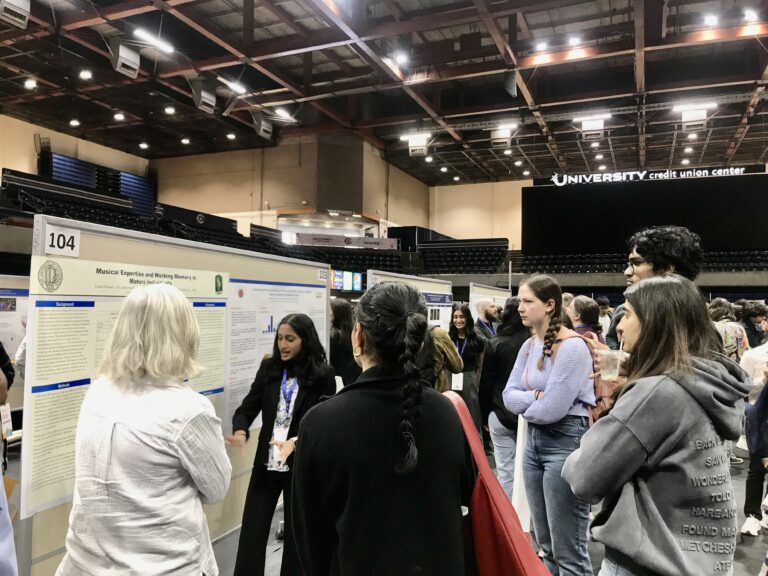
The 36th annual Undergraduate Research Conference (URC) was held on April 25 and April 26. The 36th year of the conference saw a record-breaking attendance of over 1,000+ students presenting their research.

The URC welcomed research from all disciplines, making space for research in the arts, STEM and humanities by dividing the conference into three possible events. These events included the poster session, arts and design exhibitions and oral presentations. The poster and art exhibitions took place inside of the University Credit Union Center, whereas the oral presentations took place in Wellman Hall on campus in various rooms.

The conference offers a great opportunity to undergraduate students looking for a place to not only present arduous research, but to also gain experience and establish networks with professionals in the field.

Komolika Basu, a fourth-year cinema and digital media (CDM) and theater and dance double major, presented in the arts and design exhibit.

“I’m presenting my honors thesis, which is under the CDM Department and interdisciplinary with the [Gender, Sexuality and Women’s Studies] Department,” Basu said. “It’s about understanding and analyzing queer and [transgender] representation in Indian cinema, specifically about films from Rituparno Ghosh, who was a queer icon in Bengali cinema.”

Basu’s project was titled “An Indian Film Realism: The Politics of Gender Identity in Indian Cinema Through the Art of Rituparno Ghosh.” The exhibition was featured during the poster session on Friday, where a small tent enclosed the space for a unique viewing experience within the University Credit Union Center.

“I made a short film,” Basu said. “Which is like an experimental video essay that’s going to be on a loop, and a few other objects will be next to it to create an atmosphere. It’s self-reflexive.”

The film was projected for four hours and allowed visitors to walk in and interact with the exhibition. Three posters were on display beneath it, and a few other objects were scattered around in a style similar to an interactive art installation. There was a QR code available for attendees to scan and learn more about Basu’s research.

Prati Mehta, a second-year cognitive science and statistics double major, presented her research on Wav2vec, a speech-learning model, and its tracking of phonetic differences in duration.

“I worked under the Phonetics Lab, and my research is centered around computational linguistics,” Mehta said. “The data was provided […] and my responsibilities were focused on plotting data through models, which also involved training the models using the data, and making visualizations for it.”

Mehta presented at the last poster session from 4 to 5 p.m. It was also her first time presenting.

“I worked on my poster throughout spring quarter,” Mehta said. “I worked on making graphs for it, and the project went through two rounds of editing.”

Alan Abdrazakov, a fourth-year managerial economics major, presented on the “Impact of Government Subsidies and Credit Markets on Corn Oil Prices: A Study of California’s Low Carbon Fuel Standard” under the College of Agricultural and Environmental Sciences.

“I found that credit prices, which are regulated by the California Board of Fuel Consumption, vary,” Abdrazakov said. “I’m trying to find a correlation between increasing [Low Carbon Fuel Standard] credit and corn oil prices. I found that in the end, the credit prices do have an effect on corn oil’s market price.”

Abdrazakov also discussed his experience with compiling lengthy research.

“What really helped me was my professor, Andrew Swanson,” Abdrazakov said. “He helped guide me through the process, and it’s helpful to have a real professional who knows a lot about environmental policies. Every day I’m learning more about this, and the knowledge I had at the beginning of my project versus now is greatly limited.”

Straightforward and great for experience, the Undergraduate Research Conference provides special opportunities to undergraduate students, who have spent countless hours compiling data and research, to present and publicize their work.

For more information on how to register for next year, regardless of major or topic of study, visit https://urc.ucdavis.edu/.

Written by: Evelyn Sanchez  — features@theaggie.org

Show Izakaya opens in Downtown Davis

New Japanese eatery brings authentic izakaya experience to Davis’ dining scene


By ALMA CULVERWELL — city@theaggie.org


Show Izakaya, a new Japanese restaurant, recently opened its doors at 102 F St. The restaurant occupies part of the former Season’s Kitchen & Bar, with the other portion soon to be occupied by Orangetheory Fitness, scheduled to open in May or June of 2025.

The restaurant was created by Davis resident Wendy Wu and her husband Damon Bai, who also own Four Teasons, a coffee and tea house at 620 West Covell Blvd. (formerly known as Akira). The couple also previously owned Odori Sushi, a Japanese restaurant in Palo Alto.

An izakaya, known for its Japanese meaning of “stay-drink-place,” is a laid-back Japanese pub or bar known for serving a variety of alcoholic drinks alongside small plates or bar snacks.

The Show Izakaya team explained the vision behind opening the restaurant and the welcoming environment of a traditional izakaya they hope to curate for the Davis community.

“We wanted to bring the true spirit of a Japanese izakaya to Davis: a warm, casual place where people can gather after work, share great food and enjoy a drink or two,” the team said. “There’s something uniquely comforting about the izakaya experience in Japan — it’s relaxed, lively and full of heart. We wanted to recreate that feeling here, but with our own creative touch.”

With items ranging from fresh rolls to ramen to karaage, the extensive but affordable menu provides a unique blend of casual and sophisticated flavors. The Show Izakaya team explained the thought that went into deciding their menu.

“The menu is built around what we love to eat ourselves and what we felt was missing locally,” the team said. “Every item was carefully tested for balance and we wanted to keep the soul of an izakaya, while also making it exciting for people who may be trying it for the first time.”

The team also shared their favorite menu items and what they would recommend for a first-time visitor to try.

“If it’s your first time, you can’t go wrong with the truffle hamachi, chicken karaage and the shoyu ramen,” the team said. “We also put a lot of thought into our signature rolls — the summer roll and highway 80 roll are fan favorites. And for something special, the A5 wagyu on the hot stone is always a showstopper.”

The new restaurant appeals to students and community members alike. My Davis California, and its popular group-run Instagram account, @mydaviscalifornia, spotlights new local businesses and upcoming events. They described their experience attending the soft opening.

“The opening of the restaurant was awesome,” @mydaviscalifornia said via message. “A lot of people came. They had a DJ set up, balloons for the ribbon cutting, and the windows were open for people walking by to see everyone inside eating and having a good time. It was all very well done and organized.”

They also greatly enjoyed the food they tasted at the opening and noted their recommendations for future attendees.

“All of the dishes we tried were very good,” @mydaviscalifornia said. “The fish they use is very fresh and the style is classic. If you like rolls, try any of their rolls. The rainbow roll is a great way to sample their fish options and any roll with unagi is delicious. We also recommend the nigiri and hand rolls.”

The group also commented on their positive experience with the friendly work staff.

“If you need a recommendation, ask the servers and they can definitely help you out,” @mydaviscalifornia said. “They are very nice and knowledgeable about their menu.”

Tim Brown, a Davis resident who attended the opening, said he enjoyed trying the food.

“My overall impression was that it was a really delightful experience overall, with high-quality fish and a really great atmosphere that felt a bit more high-end than a lot of Davis restaurants,” Brown said. “I would definitely recommend the chef’s choice nigiri or sashimi dishes. Their fish was really fantastic, so it’s a great way to try a bunch of what they have to offer. Their dragon roll was also a big highlight for us.”

Jenny Le, a local Bay Area and Sacramento food reviewer who goes by the Instagram handle, @itadakimasujen, described what she looks forward to trying most.

“I heard about the grand opening on Instagram when I saw @mydaviscalifornia posted a Reel,” Le said. “I’m honestly not the biggest sushi fan, so I was mostly just excited for Davis to get a new ramen spot.”

The team also reflected on how their opening has gone so far and how they have dealt with challenges along the way.

“Opening any restaurant comes with its challenges, but one of the biggest was building a team that really understood and believed in the izakaya philosophy,” the team said. “It’s not just about service — it’s about hospitality, timing and teamwork. We’ve spent a lot of time developing our team culture and training systems, and we’re really proud of how far we’ve come.”

The team explained their goals and their hopes for the long-term future of Show Izakaya.

“Our main goal is to make Show Izakaya a beloved spot in the Davis community and a place where people come not just for food, but for connection,” the team said. “In the long term, we’d love to host more cultural events, like sake tastings and chef collaborations, and possibly even expand to other cities where this kind of experience is still rare. But most importantly, we want to keep refining what we do and keep earning the trust of every guest that walks in.”

Brown shared his perspective on how the restaurant complements the Downtown Davis dining scene and what makes it stand out from other local options.

“I think it fits into the Davis scene really well and adds a more upscale option that still is affordable and accessible,” Brown said. “You can really feel the care and attention the staff put into the experience. It can be hard in Davis when people come to visit and you want to take them to a more upscale place to eat at. There’s been a lack of options for that for a while now in town, and Show Izakaya is a great option without having to make the drive into Sacramento.”

@mydaviscalifornia also offered their thoughts on the future of Show Izakaya and what they look forward to seeing from the restaurant.

“Show Izakaya is a perfect addition to Davis,” @mydaviscalifornia said. “It filled the shoes of the old Seasons restaurant, a formal yet casual dining option. It’s great for getting some food with friends or celebrating any special events. They are working on a happy hour, which we are very excited for. Some small bites combined with drinks should do very well in Davis, as not many places in town have that option. It’s usually one or the other. There definitely isn’t a Japanese restaurant doing it either.”

Show Izakaya is now open for regular hours, Monday through Thursday from 11 a.m. to 9 p.m., Friday through Saturday from 11 a.m. to 10 p.m. and Sunday from 11 a.m. to 9 p.m. Reservations can be made by emailing info@showizakaya.com.


Written By: Alma Culverwell — city@theaggie.org 


Spotlighting insect species native to Davis

Keeping a look out for bees, dragonflies and crane flies native to Davis


By AMBER WARNKE — features@theaggie.org


Davis is home to countless insect species, including varieties of spiders, bees, butterflies, dragonflies and more. Despite their small size, insects can have a huge impact on the ecosystem as a whole, maintaining healthy soil, controlling pests, pollinating plants and assisting in decomposition. 

The valley carpenter bee, or Xylocopa sonorina, for instance, is an incredibly important pollinator in the local ecosystem, according to Abigail Leonard, a UC Davis third-year  entomology Ph.D. student. They can be spotted by their golden fluffy hair, which covers the males of the species, who are unable to sting. The females look very different from the males, lacking the signature hair the males are identified by. 

“The females are these very large, striking, black bees with a shiny abdomen,” Leonard said. 

These bees can be found in the wooden rafters at Sophia’s Thai Kitchen in Downtown Davis, where the males stay to defend territory while seeking a mate, according to Leonard.

Another bee species common in Davis is the blue orchard bee, although they are less common than the valley carpenter bee, according to Leonard. 

“It’s a little on the warm side here for them, but you can find them, and they’re striking metallic blue bees that are used for spring orchard pollination in addition to being native to the area,” Leonard said. “They pollinate almonds, stone fruits, apples and pears.” 

These bee species are solitary, living outside of hives, and lacking any queen bee that hive bees have. This is not uncommon among bees; While honeybees, which live in hives, are the first thing many people think of when they think of bees, over 90% of the North American bee species are solitary. 

Some students hoping to care for some of these species put out “bee hotels,” a bee-equivalent of birdhouses, providing nesting space for solitary bee species. However, these structures can do more harm than good if not properly maintained, as they spread disease among bees unless they are routinely cleaned.

  “You should clean [bee hotels] out in the fall to remove any parasites or predators,” Leonard said. “Otherwise, it [can] accidentally become a parasite and pathogen hotel.”

Alexia Martin, a fourth-year entomology and nematology Ph.D. student, suggested that another way students can support local bee populations is by just being aware of their importance to the ecosystem.

“I think having a general respect for them and what they do [is important], so I would recommend just going outside and observing different types of bugs,” Martin said. 

Native bees are especially important to environmental well-being because 75% of North American plant species require insect pollination, with native bees being the primary pollinators to many plant species. Martin said that any students with more questions about bees are welcome to direct message her on Instagram page, @entomolexie. 

Martin also recommended that in order to support native bees, people can plant more native plants. 20 to 45% of native bees are “pollen specialists,” meaning they only harvest pollen from one species or genus of plants. If the plant they collect pollen from goes away, they do, too. 

“By providing a variety of native plants, you’re giving them kind of like a buffet,” Martin said.

Moving on to different bug species in Davis, Kaitai Liu, a fourth-year entomology major, highlighted the crane flies common in Davis, which are sometimes mistaken for giant mosquitos, which can cause alarm. 

“They don’t bite, they don’t do anything, they don’t even eat as an adult, so don’t worry about those things,” Liu said. 

Crane flies only eat in larvae form, when they consume decomposing vegetation and plant roots. This makes them very important decomposers that keep the ecosystem in balance. 

Christopher Brothers, a sixth-year animal behavior Ph.D. student, focuses on dragonflies and has studied which species live in Davis and where to find them.

“Right now is the ideal time to start finding dragonflies and damselflies, they’ll come more and more out in the summer,” Brothers said. “Northstar Park is the place to go — and occasionally you can find me out there as well, to find some of the coolest dragonflies and damselflies.” 

Brothers has spotted a variety of dragonflies in Davis, including flame skimmers, blue dashers, common green darners and pale-faced club skimmers. In addition to being beautiful, these insects benefit humans by eating common pests such as mosquitos and gnats. They are also environmental indicators, as their population levels can show scientists when water ecosystems change. 

For these reasons, it is important to be careful around these insects and keep them safe. 

“Try not to disturb nature too drastically, like [not] pushing through off-trail areas that disturb the vegetation, because a lot of that is delicate ecosystem that these organisms will live in,” Brothers said. 

While students come outside to enjoy the warm spring weather, they can know that insects all around Davis are doing the same. Students who keep their eyes out for them will be sure to see an ecosystem of important critters supporting the environment we all live in together. 


Written by: Amber Warnke — features@theaggie.org

BEAD: ‘Bureaucracy, Endless Approvals and Delays’

Taxpayer dollars are swiftly disappearing


By NEVAEH KARRAKER— nakarraker@ucdavis.edu


In 2021, the Infrastructure and Jobs Act was passed. This included a $42.5 billion provision for the Broadhead Equity, Access, and Deployment (BEAD) program to provide high-speed internet access to rural areas nationwide. And yet, nearly four years later, not a single home in those locations has been connected to this program.

Instead, the money fueled a long, aggravating process where states followed three broad stages — first, prequalification, then, challenge process and finally, grant awards. As of now, all states have submitted their initial proposal, which has been approved by the National Telecommunications and Information Administration. However, most states are still shockingly stuck in the challenge process stage.

This challenge process is a complex, messy step for stakeholders to identify what territory is considered “rural” and therefore requires funding. Further, even fewer states have begun to select service providers, and only three have submitted their final proposal for approval. 

Only after approval of this final proposal can a single person access the internet. For a program into which a substantial amount of citizens’ taxes go, it’s concerning that no definite output has been produced. 

Since BEAD’s main technique is installing underground cables, progress is minimal but gradual. Hence, the goal is to finish by 2030. While careful planning and thought has been interposed, taking nearly a decade for an asset that considerably improves countless lives seems excessive. Further, what this slow process insinuates for future chief enactments is a lack of urgency paired with expensive, unnecessary regulations.

Moreover, due to the change in presidency and thus redirected focus, this program could be significantly delayed or altered. For example, this could entail dropping “Equity” from BEAD and possibly employing the satellite internet company Starlink, operated by SpaceX, instead of continuing to dig underground.

Switching to Starlink reduces the time by years and the initial cost by billions through decreased labor requirements. However, it doesn’t bring new business to rural areas, the monthly subscription is greater than the original fiber-cables and the service is, to a certain degree, inferior. Additionally, this sudden disruption could force states to go through another equally long process, which essentially wastes the provided money as it unravels the little progress that has already been made.

In the end, the entire BEAD process disturbingly resembles a misappropriation and exploitation of funds. Companies are desperate to profit, and, without anyone monitoring how provisions are being spent, budgets for BEAD and others are likely exorbitant. 

Unfortunately, the exact taxpayers these programs aim to help are the ones being harmed by these accountability issues. The consequence of delayed projects is not simply monetary concerns, but an impediment to the workforce, economy and education — the pillars of the nation.

Further, the conflicts of competing programs, politics and government regulations result in redundant friction rather than efficient advancement. What taxpayers and voters need now, more than ever, is a transparent, concise and coherent structure where projects eliminate inessential steps and exercise frugality.

In order for this to function properly, there is a certain role taxpayers and voters must also play. When new programs are introduced, thorough, unbiased research should be conducted to fully understand what exactly is being funded — and, more importantly, specifically how our taxes are being utilized.


Written by: Nevaeh Karraker—nakarraker@ucdavis.edu


Disclaimer: The views and opinions expressed by individual columnists belong to the columnists alone and do not necessarily indicate the views and opinions held by The California Aggie.