56.1 F
Davis

Davis, California

Friday, December 19, 2025
Home Blog Page 32

Dumpling House wins Best Dumpling in Davis

Students reflect on their experiences eating at the restaurant


By AMBER WARNKE — features@theaggie.org


Dumpling House has been deemed the best dumpling restaurant in Davis yet again, earning 70.8% of students’ votes in the category. The restaurant, located at 129 E St., has been serving the Davis community for over two decades, offering students a cozy and inexpensive place to catch up, relax and experience authentic Chinese cuisine.

While the restaurant specializes in dumplings, it also sells crispy tofu, potstickers, wontons, egg rolls, noodles and fish dishes. Its ample vegetable-based options also provide choices to community members with vegetarian and plant-based diets.

Derrick Wu, a third-year computer science major, has found Dumpling House to be a comforting space, reminding him of his home.

“I am an international student, so I come from China, so dumplings are my traditional food,” Wu said. “When you eat [here], you can feel your culture.”

Forest Sabbath, a second-year anthropology major, eats at Dumpling House often and also appreciates its take on Chinese dining.

“A lot of the Chinese restaurants in Davis have quite a range of cuisines,” Sabbath said. “Some things you probably wouldn’t see elsewhere, and I think that’s a lot of [the time] due to the fact that we have a lot of actual international students here. When they go to a Chinese restaurant, they want to have something from home.”

While Sabbath has explored the international restaurants throughout Davis, Dumpling House is a special place to him.

“The thing about the dumplings that I like is the ability to mix and match dumplings for a low price,” Sabbath said. “I just hope that they continue to be able to do their thing [and] can keep the prices low.”

Dumpling House’s prices, in addition to its short wait time, are part of what makes it an accessible restaurant and a necessity for busy college students. Dumpling House’s cozy atmosphere has also given students a space to meet and unwind throughout the busy quarter.

Leilani Jackson, a second-year biomedical engineering major, has bonded with her friends after going out to eat with them at Dumpling House after club meetings.

“I built stronger connections at Dumpling house,” Jackson said. “All my memories I have at the Dumpling House are me getting to know my friends better [during] my first year and I still talk to [them] today.”

Dumpling House also regularly sells at the weekly Davis Farmers Market, providing food options that shoppers can eat while browsing the stands. Regardless of what students choose to eat from Dumpling House, the restaurant will remain a staple of Davis culture and cuisine for years to come.


Written by: Amber Warnke — features@theaggie.org
Best Student Resource Center on Campus: Women’s Resources and Research Center

Redefining what “welcome” means


By NEVAEH KARRAKER— nakarraker@ucdavis.edu


For over half of a century, the Women’s Resources and Research Center (WRRC) has been a pivotal aspect of the Davis community. It has transitioned from a small place of simple but impactful peer counseling and support groups to a hub of programs dedicated to battling against gender violence, inequities and similar forms of oppression.

One method the center employs is to indirectly challenge the patriarchal system by highlighting women’s individuality. For example, respelling words with the letter “x,” such as “womxn” and “hxstory,” actively includes any transgender, non-binary or femme individuals who do not identify as male. This feminist change illustrates the center’s value of social justice by decentering men and redefining gender stereotypes.

In light of the fact that UC Davis is considered a strong STEM university, several educational and personal obstacles are bound to arise. STEM fields are typically known to be male-dominated, which can be frustrating for many women, who may encounter discriminatory attitudes from peers and professors.

Rather than advocating exclusion, though, the WRRC works to paint the picture of a community that everyone can strive for. This is projected by the center’s new graphic logo, which is brimming with color and harmony. It encompasses symbols for fire, water, earth and air, which represent the WRRC’s commitment and dedication toward their mission — representing a balance necessary for the life of history, learning, justice and love.

The WRRC itself reflects this ideogram; the “Righteous Babes’ Lounge” and the “Joy Fergoda Library” showcase the center’s devotion to awareness. Further, the combination of rooms where one can relax, study or receive support cultivates an intimate space for all.

“I feel like it’s a living room vibe,” a fourth-year physics major, who wishes to remain anonymous, said. “I introduced [my housemate] here, too, and now she comes here and we just chill. Sometimes she takes a nap in the lounge or she has an interview on Zoom here.”

Yet, it’s not just the many resources that draw people in; it’s also the individuals who contribute to each thread of exposure to the WRRC. The staff and volunteers, who are always eager to sing karaoke and emanate energy that can only be labeled as irresistibly inviting. Because they are also students, they harbor authentic relatability.

This particular feature is what furnishes this home. It unites minorities who have grappled with belonging and employees endeavoring to achieve goals of societal growth — all under the premise that we, as a human species, desire connection and, above all else, love. This sense of community and warmth is undoubtedly what has awarded this resource center as the Best of Davis.


Written by: Nevaeh Karraker—nakarraker@ucdavis.edu


Disclaimer: The views and opinions expressed by individual columnists belong to the columnists alone and do not necessarily indicate the views and opinions held by The California Aggie.


Best Davis-specific Instagram Account: @mydaviscalifornia

Proof that everything in Davis is just a click away


By ABHINAYA KASAGANI— akasagani@ucdavis.edu


If you ever find yourself wondering how to fill your days and are plagued by the prospect of being presented with more than one choice, you’re in luck. The Instagram account @mydaviscalifornia caters to all — students, locals and visiting parents — who don’t quite know where to start.

Relatively small in breadth, Davis is large in its sweetness and wonder, making this wide-ranging and easy-to-navigate catalog helpful to those that are new here. The account features everything from underrated menu options to updates on new store openings, weekly or one-time pop-up events and more. More than anything, the account succeeds in making Davis accessible to anyone that is curious, with updates on the weekly farmers market and community life around Davis.

“@mydaviscalifornia showcases the heart of the Davis community and its local events,” Ashley Wong, a second-year economics major, said. “It promotes local small businesses and highlights everything that gives Davis its unique, small college town charm.”

The account cares for and takes students into consideration. For instance, it consists of a $20 section that suggests a plethora of ways that you can spend your money. Several deals and listings can also be found on the My Davis California website, with discounts for local businesses and restaurants.

While some use the account to plan their downtown excursions, others primarily use it to scout for local food hotspots.

“I think @mydaviscalifornia is a great way to stay informed on new events and restaurants in Davis,” Maya Leonard, a second-year design and communication double major, said. “I love going out to eat, and I know I can always find something fun on their account.”

Quick video montages of downtown sushi spots or café circuits set the account apart from other static campus sources: perfect for engaging a busy college student always on the move.

“I like the constant content and their use of videos, especially the ones with food recommendations,” Delaney Bright, a second-year human development major, said.

The Best Davis-specific Instagram Account is highly deserving of its title and does the work of continually reminding its residents that there is more to Davis than meets the eye. Whether you are attempting to get off the dining commons meal plan, looking for new study spots, trying to fill your Saturdays or simply curious about what is new in Davis, @mydaviscalifornia is a best friend dragging you downtown and loudly proclaiming that you “HAVE to try this.”


Written by: Abhinaya Kasagani— akasagani@ucdavis.edu


Disclaimer: The views and opinions expressed by individual columnists belong to the columnists alone and do not necessarily indicate the views and opinions held by The California Aggie.


Best ARC Fitness Class: Yoga

Yoga has once again earned the highest honors


By JHANA RHODES—jsrho@ucdavis.edu


As the end of the school year approaches, navigating demanding spring quarter schedules while finding time for rest can be daunting. However, the Activities and Recreation Center (ARC) offers a much-needed sanctuary through its diverse yoga classes. The ARC provides a variety of weekly yoga classes which caters to those looking to improve their physical and mental well-being while accommodating to schedules. It is no surprise that yoga has, once again, become a winning candidate for the best ARC fitness class.

Gentle yoga, hatha yoga and vinyasa yoga are the three classes offered this spring. While each style offers their own benefits, vinyasa yoga is a popular choice and is offered on Mondays, Wednesdays, Thursdays and Fridays. Vinyasa is characterized by flowing sequences.

Mary Sayer, a third-year English major and one of the instructors for vinyasa yoga, received her yoga certification in the summer and began teaching two to three classes a week in the fall. She focuses her instruction on “connecting breath to movement and finding moments of stillness, balance and strength.”

If you’re new to yoga, hearing words like “strength” and “balance” can make it seem like you have to be an expert to participate. However, it’s the complete opposite. One notable aspect of Sayer’s approach to teaching vinyasa yoga is her dedication to creating a welcoming and inclusive environment, no matter your skill level.

“You don’t have to be flexible to come to yoga, and there are no specific body types or clothing requirements,” Sayer said. “Individuals can simply show up as themselves to learn and grow.”

If you tend to avoid joining fitness classes or going to the gym because of how intimidating it can feel, having a welcoming instructor is incredibly important. Sayer fosters an inclusive environment through her thoughtful approach to individual and diverse needs.

“I offer modifications,” Sayer said. “If [students] are having rough days with their body and do not feel like they have energy, they can take it slower. And, for those who want more challenges, they can push themselves.”

Beyond the physical advantages, Sayer strongly believes in yoga’s mental health benefits and spoke from experience.

“[It’s a] safe place to return to whenever I felt uncomfortable or stressed, providing time and space to be in my body,” Sayer said.

In a world with constant stimulation, Sayer hopes that yoga can offer students a safe place to rest and find stillness without distractions from a phone or the outside world.

Vinyasa yoga, gentle yoga and hatha yoga are all part of the Living Well program, which is available from March 31 to June 7. With a Campus Recreation membership or Group Exercise pass, you can sign up for unlimited classes. If you are an active UC Davis student, you can apply for a Well-Being Fee Waiver, which makes recreation opportunities more accessible and affordable. If you are looking for a way to get involved on campus, taking yoga classes at the ARC is a great way to get started.


Written by: Jhana Rhodes— jsrho@ucdavis.edu 


Best Campus Animal: Cheeto

Meet the physics cat of UC Davis 


By MOLLY THOMPSON – mmtthompson@ucdavis.edu


UC Davis is famous for all of the animal life present on campus. From cows near the Tercero dorms, horses by the Arboretum and turkeys that haunt the pathways between lecture halls to therapy dogs that comfort students during finals week and some very brave and very stupid squirrels that all have a death wish, UC Davis has everything you could want and more.

But perhaps most famous and most beloved by the student body (and beyond) is Cheeto, the scruffy orange cat that lives by the Physics Building. Cheeto is so popular that he has his own Instagram fanpage (@cheetodaily) that periodically posts endearing photos of the cat to brighten up all of our days.

Cheeto has been an adored character in Davis since 2011 and continues to roam the area around the Physics Department. He is fed and taken care of by the department staff and is given constant love by all who stumble across him. Cheeto can often be found napping in one of his various beds, snacking from his food bowl or lounging in the sun. No matter what he’s doing, Cheeto never fails to bring joy to UC Davis students.

Stella Baum, a second-year community and regional development major, said seeing Cheeto always lifts up her spirits.

“Seeing Cheeto is like spotting a unicorn [or] a four-leaf clover,” Baum said. “[It] puts me in the best mood and makes me feel special and lucky.”

A Cheeto spotting might be rare, but it’s always worth the patience. Cheeto’s adoring fans have solidified his impact by creating a Rate My Professors profile for the orange feline (“Cheeto Physics Cat”). He has a perfect five-star rating for teaching classes such as Loafing 101 and Head Pats 010. The reviews speak for themselves: He has received comments such as “The best cat I’ve ever had for a professor,” “The only thing that gets me up in the morning” and “The source of my weekly dose of serotonin.”

Needless to say, Cheeto is a renowned staple of UC Davis. His iconic bronze coat is easy to spot amongst the green foliage when he chooses to make an appearance, and his soft fur provides comfort for students and community members alike. He receives as much love as he gives — Davis adores Cheeto.


Written by: Molly Thompson — mmtthompson@ucdavis.edu 


Disclaimer: The views and opinions expressed by individual columnists belong to the columnists alone and do not necessarily indicate the views and opinions held by The California Aggie

Best Bakery: Upper Crust Baking

Upper Crust is recognized as the best bakery in Davis for the third year in a row


By OLIVIA HOKR — city@theaggie.org


Over the past few years, Upper Crust Baking has earned the titles of Best Bakery and Best Pastries. They have once again been voted the Best Bakery in Davis for 2025.

Located at 634 G St., Upper Crust Baking has grown to become a Davis staple. The family-owned bakery prioritizes quality and authenticity in their menu items, as well as providing a space for the community to come together.

Lorin Kalisky, the owner and executive chef, took over the business from his parents in 2016. In its early years, the bakery was primarily a farmers market vendor. Kalisky wanted to expand to a physical location for customers to enjoy, which led him to open the Davis storefront in 2019.

“The bakery business is a hard business to be in — we work long hours, early hours, and no one is getting rich,” Kalisky said. “We do it because we love to bake, we love to feed people good food and we love to serve our community. It is very gratifying, and it makes it all worthwhile when we get compliments and accolades like this. We are proud of the work we do, and we are very grateful to the community for the recognition.”

The bakery offers a wide variety of goods. From fresh-baked loaves, baguettes and bagels to tarts, scones, croissants and cakes, Upper Crust has something for everyone. They also offer seasonal menus. This year’s April specials include Easter- and Passover-themed desserts.

Kalisky shared more about his favorite products and the effort they put into ensuring authenticity.

“I think we make really amazing French bread and pastry,” Kalisky said. “My wife is French, and I lived in Paris for 14 years, so we have high standards for quality and authenticity. We make a special baguette — a regional specialty from Bordeaux — that is made with spelt flour and sesame seeds, giving it a unique nutty flavor. It’s split at each end — people think it looks like it has rabbit ears — in order to resemble the trimmings from grape vines after the harvest. These trimmings are called sarments de vigne, and so the baguette is called a sarmentine baguette.”

Within the past year, the bakery expanded to provide an outdoor patio space for customers to enjoy. Kalinsky noted that there’s not much space inside the bakery, so the patio provides a space for the community to gather. Students also use the patio to study while snacking on a pastry.

Julia Ing, a fourth-year managerial economics major, frequents Upper Crust because of its welcoming environment and lattes.

“I really like the lattes,” Ing said. “I haven’t really had many of their pastries. I’ve had a savory scone. I liked it! They also have good chocolate croissants.”

Allison Merz, a graduate student in the School of Management and frequent customer, said the bakery reminds her of home.

“All of their lattes are incredible,” Merz said. “I’m from Oregon, and [the bakery] reminds me of central Oregon, so it has a very comfortable, homey feeling. And it smells so good.”

Upper Crust has also been selling at the Davis Farmers Market for nearly 40 years. Kalinsky shared that the farmers market has really supported the bakery’s ability to maintain its “farm-to-oven” approach. They try to source as many ingredients as possible from local farms and producers, ensuring fresh and quality baking.

The storefront is open from 7 a.m. to 7 p.m., Tuesday through Saturday, and 8 a.m. to 5:30 p.m. on Sundays and sells at the Davis Farmers Market on Saturday mornings. If you haven’t yet, indulge in one of their freshly baked goods to understand why they are the consecutive winners of Davis’ Best Bakery.


Written by: Olivia Hokr — city@theaggie.org

Best Dessert Shop: Davis Creamery

This local, family-owned business is set to debut a new flavor and a new trailer truck 


By RORY CONLON — city@theaggie.org


Davis Creamery, an ice cream and dessert shop located on 113 E St., has been a part of the Davis community for nearly 14 years. The Creamery was originally owned by David Robert, who opened the shop in its downtown location in 2011. In 2016, Robert sold the Davis Creamery to its current owners, Joe and Jen Schmidt, who had the vision of turning it into a family business.

“Both of us grew up in family businesses,” Joe Schmidt said. “I grew up on a farm and Jen’s father was in the book binding business. We took a lot away from growing up in family businesses, and so we decided to start one ourselves.”

Joe Schmidt said what sets Davis Creamery apart from other dessert shops is that they make the ice cream themselves.

“Our location is small and probably a third of it is the kitchen in the back, where we actually make our ice cream,” Joe Schmidt said. “We make it in very small batches. Four gallons of ice cream are made per batch.”

Davis Creamery offers a rotating selection of six to eight ice cream flavors. Jen Schmidt said that customers have two clear favorites.

“Right now, I would say that Brigadeiro and Coffee Oreo are our most popular flavors that we have out,” Jen Schmidt said. “Those two stand out to me.”

Another thing that sets Davis Creamery apart from its competitors is the Bracketology tournament they hold each spring. Through the Bracketology tournament, customers vote for new flavors and whichever one wins stays on the menu year-round.

During the first stage of Bracketology, which usually begins in February, customers fill out slips describing their ideas for new ice cream flavors. Jen Schmidt said she then sorts through these submissions with her family.

“There’s hundreds of submissions,” Jen Schmidt said. “I think, this year, we had 400 and then we narrowed it down to 16.”

From there, those 16 flavors are put into different brackets. Customers are invited to come taste the new flavors at the Creamery and vote for their favorite flavor to advance to the next round of the tournament.

Makena Wahl, the Schmidts’ daughter, manages Davis Creamery and runs the Bracketology competition. She said she makes each new ice cream flavor through a process of trial and error.

“I’ll come up with a recipe, just off the top of my head, that I think will work,” Wahl said. “I’ll mix it up a bit, and then it’s all just tasting it.”

After having her employees taste the ice cream, she makes adjustments.

“Eight out of 10 times, it needs a little more of this or a little more of that,” Wahl said. “This year, when I was making the Cucumber Lime Sorbet, I thought I was going to nail it on the first try, but I ended up having to double the lime.”

Right now, customers are voting on whether Dutch Stroopwafel and Lavender Toasted Sesame will make it to the next round. The Creamery will announce a new flavor on its menu when the Bracketology tournament ends in May.

In addition to introducing new flavors, Bracketology gives the Creamery a chance to market its brand and engage with its customer base. Jen Schmidt said a big portion of that customer base is made up of UC Davis students.

“As soon as the college kids leave, we drop about 30% [in sales],” Jen Schmidt said. “Our busiest times are spring and fall. We’re unusual for an ice cream store, where summer is not our busiest month. We’re lucky that we have university students to support our business year-round, not just in the summer.”

Joe Schmidt said that Wahl plans to expand Davis Creamery’s business even further.

“[Wahl] is taking our ice cream on the road,” Schmidt said. “She’s recently purchased a trailer that we’re going to [use to] customize the Davis Creamery’s offering. It’s going to be a separate business, but it’s an extension of Davis Creamery.”

Wahl estimates that she will get the trailer up and running by early fall. She said she wants to bring Davis Creamery’s ice cream to the UC Davis campus in the future.

“I love doing business with the university,” Wahl said. “Hopefully, there will be more opportunities for me to get on campus for things like Welcome Week, graduation festivities, stuff like that.”

Wahl, who has worked at the Davis Creamery for eight years now, said that when her parents first purchased the store, they never expected it to become as successful as it has been. She said she appreciates the students who have supported the Creamery over the years.

“I think it’s very amazing how big our business has become for students,” Wahl said. “I love the involvement of not only the Davis community, but also all these new people that are joining our community with a common interest and love for the Creamery.”


Written By: Rory Conlon — city@theaggie.org


The chemistry behind collaboration: the 2025 Miller Symposium

The 2025 R. Bryan Miller Symposium brought together students, faculty and multiple Nobel laureates to share and advocate for scientific research


By NAREN KRISHNA JEGAN


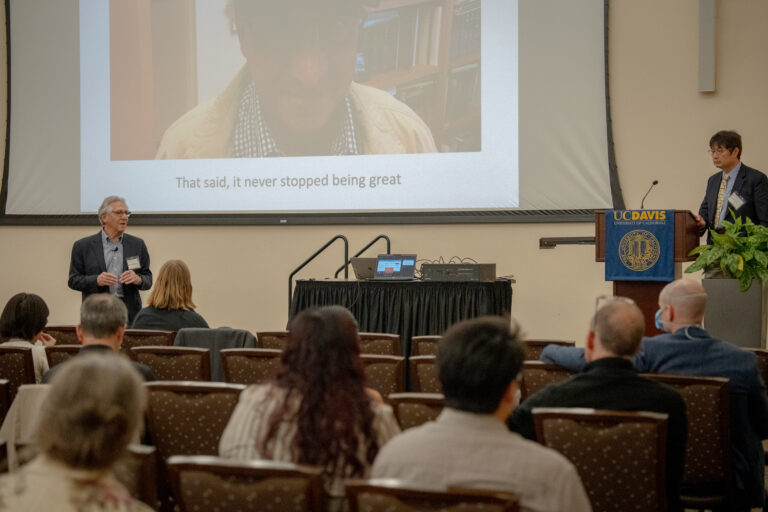
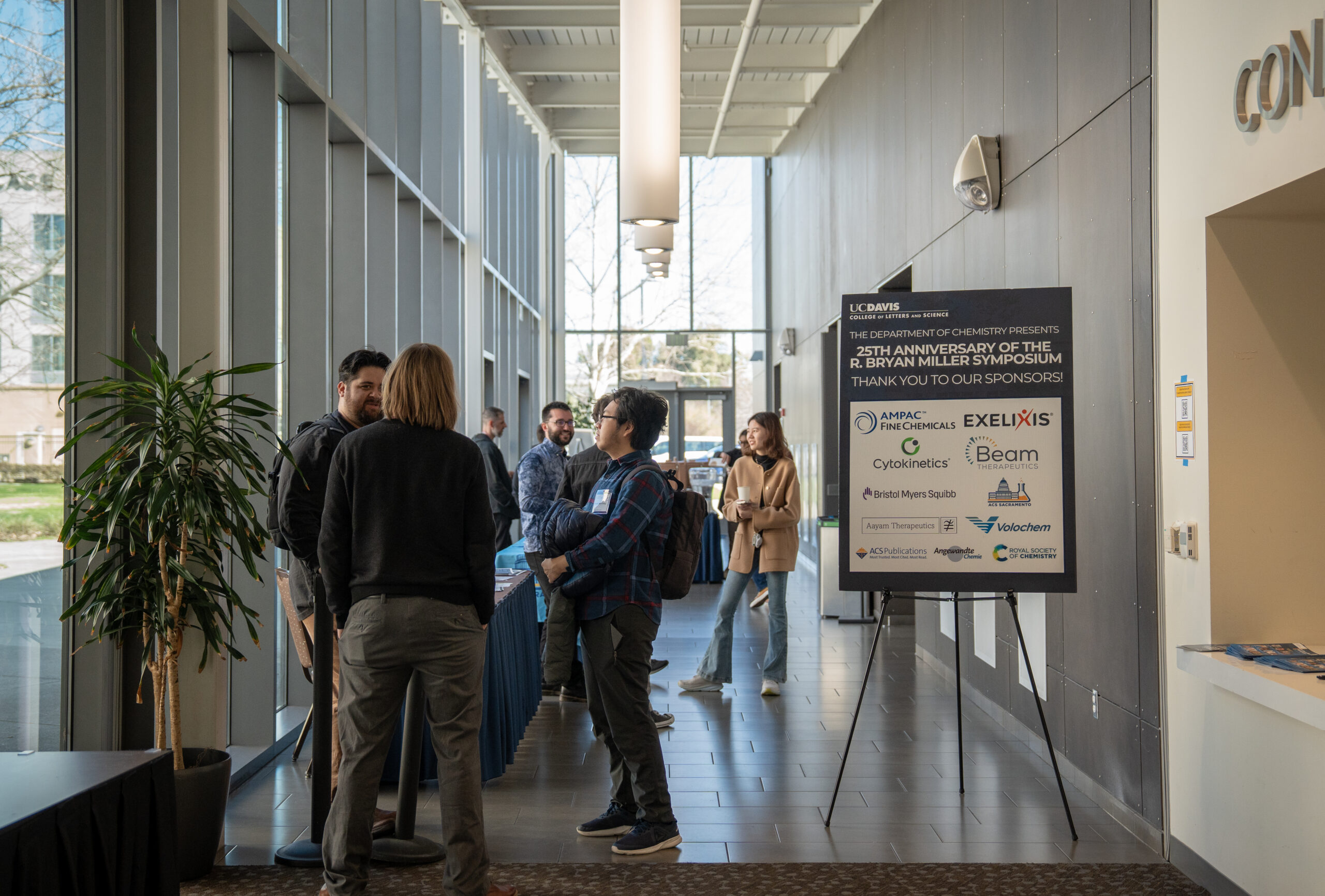
From March 6 to 7, the UC Davis Department of Chemistry held its annual Miller Symposium, a conference where undergraduates, graduate students and guest speakers share their current research interests and findings through talks, poster presentations and flash pitches. Named after the late Professor R. Bryan Miller, this year’s symposium featured some recognizable figures within the chemistry community, such as Nobel laureates Jennifer Doudna and Frances Arnold, as well as internationally renowned pioneers such as Dr. Kendall N. Houk, Alanna Schepartz, Dirk Trauner, Laura Kiessling, Ashok Bhandari, Wendy Young, Sundeep Dugar and Michael Marletta. In addition, multiple faculty members (Mark Mascal and Cody Ross Pitts) delivered talks about their own research interests.


Jennifer Doudna’s work:

Doudna’s pioneering work in the development of CRISPR-Cas9 gene editing, in collaboration with Dr. Emmanuelle Charpentier, is widely regarded as one of the most significant discoveries in the history of science, and she was awarded the Nobel Prize in Chemistry in 2020. CRISPR-Cas9 gene editing is a biotechnology tool that allows scientists to make targeted changes to DNA. It uses a guide RNA to locate a specific DNA sequence, and the Cas9 enzyme acts like molecular scissors to cut the DNA at that spot. After the cut, the cell’s natural repair processes can introduce mutations or insert new genetic material. 

Bacteria store DNA sequences of foreign pathogens, like viruses, in this “diary” after they have encountered them. These stored sequences are called spacers. Every time these bacteria survive an infection, they add a new entry (the DNA sequence of the virus) to their diary. When the bacteria encounter the same virus again, they can flip through their diary (CRISPR sequences) and find the exact DNA sequence they’ve seen before, helping them recognize the virus. This is where Cas9 comes into play to cut the DNA. After the cut, the cell’s repair system kicks in. It tries to fix the break, but it doesn’t always do so perfectly. This repair can have two possible outcomes. In non-homologous end joining (NHEJ), the cell “sticks” the broken ends back together but with errors, which can disable a gene (gene knockout). In homology-directed repair (HDR), if you provide a new DNA template, the cell can use it to repair the break more accurately, allowing you to insert or change genes.

CRISPR-Cas9 is widely used in research, medicine and agriculture due to its precision, efficiency and relative simplicity. CRISPR technology has been harnessed in the medical field, where novel therapies such as exagamglogene autotemcel (Exa-cel) have been developed to treat sickle cell disease and beta-thalassemia by editing patients’ stem cells to reactivate fetal hemoglobin production. 

Moreover, in her talk, Doudna confirmed the partnership of UC Davis to join UC Berkeley and UC San Francisco in the Innovative Genomics Institute (IGI) to advance innovations in sustainable agriculture and climate change applications. 

“One of the wonderful features of CRISPR is that it’s a technology that can be used on animals, plants, microbes — really any organism with DNA,” Doudna said. “I’m thrilled that we have now formally welcomed UC Davis as a full partner of the IGI, building on years of productive work together.”


Frances Arnold’s work:
Arnold started her conference talk by weaving together a story about what she considered to be her greatest achievement in her career: her cameo in the TV show “The Big Bang Theory.” Throughout her presentation, Arnold delved deep into the world of evolution, quoting Charles Darwin as one of her biggest inspirations to pursue her area of research: directed evolution. Darwin’s 1859 publication of “On the Origin of Species” was one of biology’s most landmark studies, as it introduced the idea of natural selection — natural processes and survival of the fittest determine the proportion of populations that will survive. 

Arnold’s work on directed evolution focuses on artificial selection of enzymes, which are biological molecules who help speed up specific reactions. Although artificial selection has been applied into breeding animals, Arnold’s novel approach to applying this to enzymes allowed her and her team to allow enzymes to develop high specifications to perform functions in non-ideal environments. 

Enzymes are made of chains of sub-molecules called amino acids. The sequence of amino acids in a cell can determine the structure and resultant function of the specific enzyme; even miniscule substitutions of one amino acid can have noticeable changes in the performance of the enzyme. 

Arnold leveraged this power of mutations in order to kickstart the process of evolution. By evolving enzymes through subsequent generations, her work allowed for “enzymes to do the dirty work such as clean your laundry.”

“If you want something quite different from what you start with, then you have to iterate; […] you have to accumulate those mutations over multiple generations,” Arnold said.


Kendall N. Houk’s work:
Houk is a distinguished research professor of chemistry at UC Los Angeles, and her research focuses on computational organic chemistry, reaction mechanisms, pericyclic reactions and molecular design using quantum mechanical models. Computational chemistry uses simulations to model how atoms and molecules behave based on the rules of physics and quantum mechanics.

“It’s like Legos,” Dr. Dean Tantillo, a UC Davis organic chemistry professor and former Houk group member, said. “You are able to input the structure of molecules into powerful computers, which then calculate how electrons move, how bonds form or break and how the molecules change shape during reactions. These simulations can predict reaction pathways, energy changes and even whether a reaction is possible before anyone actually tries it in real life.”

Houk focused on a class of enzymes called pericyclases, which specialize in the processes of pericyclic reactions. Simply put, a pericyclic reaction is a type of chemical reaction where bonds are formed and broken at the same time in a circular flow of electrons, usually without needing outside help like heat or light.

To paraphrase Tantillo, bonds are made with pairs of electrons that interact within regions of space called orbitals. Orbitals can be imagined as cotton candy clouds, with each cloud representing an electron orbital around an atom. These clouds have nodes — like the parts where the cotton candy doesn’t really exist, kind of like a gap or a neutral zone. Each cotton candy cloud can have a flavor (positive or negative sign), representing the direction of the electron wave. If two clouds (orbitals) have the same flavor (meaning the same sign of the wave), their cotton candy can overlap — like two clouds of the same flavor mixing together to form a bigger, stronger cotton candy swirl. This overlap allows the electrons to flow smoothly from one atom to another, making bonds form and break in a coordinated, smooth manner. 

However, if the clouds have different flavors (opposite signs), it’s like mixing two completely different cotton candy flavors. The clouds won’t mix well — they push against each other and the reaction won’t proceed as smoothly. In many pericyclic reactions, electrons from different parts of a molecule align in a circular or ring-like pattern, where the same-flavored clouds (orbitals with the same sign) overlap, allowing electrons to flow around the ring, making bonds form and break in one seamless motion.
Frontier Orbital Theory (FOT) is crucial to understanding pericyclic reactions because it explains why and how this smooth, concerted electron flow happens based on orbital interactions — specifically, the match between highest occupied molecular orbitals (HOMOs) and lowest unoccupied molecular orbitals (LUMOs). In Houk’s talk, he showed how enzymes called pericyclases take advantage of these orbital interactions to guide pericyclic reactions inside biological systems. 

By using FOT, Houk’s group could predict how the cotton candy clouds (orbitals) of electrons in a molecule align and interact inside these enzymes, explaining why certain bonds form or break without the need for external heat or light. His computational simulations helped reveal that pericyclases create environments where primary and secondary orbital overlaps can result in one set of reactants ending up with multiple isomer (same formula, different orientations) products by entering a post-transition state bifurcation (PTSB), where one reactant can smoothly produce two products. Moreover, he shared various ongoing projects and collaborations with other laboratories regarding the use of pericyclic reactions for neurotherapeutics, enzyme-substrate interactions and pharmaceutical applications.


Elizabeth Neumann and Cici Zhai:
In addition to the numerous talks presented, the Miller Symposium serves as a platform to recognize outstanding students pursuing research in the department. Cici Zhai, a third-year cell biology major in Dr. Elizabeth Neumann’s lab, was a recipient of a $6,000 research grant to pursue research over the summer at UC Davis. Zhai’s project focused on a novel method to analyze the metabolic features of the spinal column while preserving its spatial integrity. Given the spinal column’s complexity, traditional techniques often struggle to maintain structural integrity during analysis. 

Using matrix-assisted laser desorption/ionization mass spectrometry imaging (MALDI MSI), she and her team prepared fresh-frozen, unfixed and undecalcified rat spinal columns. To achieve high-resolution imaging (10 μm), they employed a tape-based sectioning approach, and Hematoxylin and Eosin staining confirmed the preservation of tissue architecture. Through this method, they were able to identify six distinct phospholipid profiles across spinal tissues, including the spinal cord, vertebrae, intervertebral discs, muscle and blood vessels. Her project’s findings demonstrate the potential of this technique for spatial biomolecular analysis while avoiding the degradation associated with bone decalcification.
“With the requirements of the grant, I have six uninterrupted weeks dedicated to research — an opportunity I wouldn’t normally have with my current schedule alongside my graduate student mentor,” Zhai said.
During the summer, Zhai also hopes to gain hands-on experience with our MALDI MSI TOF system and deepen her understanding of data analysis. 

“Ultimately, I’d love to work toward publishing my own paper, though I know how much effort goes into that process,” Zhai said. “But for now, I’m excited to see where the research takes me.”

(Ojas Mishra / Aggie)

The Miller Symposium:
The Miller Symposium is more than just a platform for students to share their current work; it serves as a platform to meet, inspire or gain inspiration from a variety of individuals from diverse backgrounds. 

“[The symposium] is a great opportunity to meet other scientists, trainees and talk about ideas that are coming out of convergence from all these minds gathered together in a beautiful place,” Doudna said.

Moreover, Arnold reflected on her past experience with pursuing research and reinforced that this platform serves to give students the courage to explore and challenge what may be known.
“I was there,” Arnold said. “We were all there. We were starting something that nobody had done before, so just do it. Learn as much as you can, because knowledge is like money in the bank.”

With the current situation in the scientific community regarding the loss of research funding and a complete shutdown of major research centers, the Miller Symposium serves as a way to continue pursuing research, providing students with valuable information and opportunities to hone their skills and grow their passion for the field. 


The author would like to make the following acknowledgements for their contributions in writing this article:

Jennifer Doudna, Ph.D. (UC Berkeley)
Frances Arnold, Ph.D. (California Institute of Technology)
Kendall N. Houk, Ph.D. (UCLA)
Dean Tantillo, Ph.D. (UC Davis)
Cici Zhai (UC Davis)


Written by: Naren Krishna Jegan

UC Davis research funding impacted by executive actions

Leaders and members of the UC Davis research community share how funding cuts have impacted research


By GRACIELA TIU — features@theaggie.org


Since President Donald Trump’s inauguration in January, his administration has proposed and enacted a wide range of policies that have, directly and indirectly, reduced federal research funding to universities. Through budget cuts to federal agencies, which provide substantial amounts of funding for university research, and targeted cuts and restrictions to specific programs and efforts, universities like UC Davis have been doing their best to navigate through this transitional period.

Brandon Minto, the federal government relations director at UC Davis, outlined how the university has been receiving information about funding shifts.

“The university has received dozens of notices from federal agencies related to specific grants or projects since the change in the federal administration,” Minto said. “The affected grants cover a wide range of areas, including research related to cancer and Alzheimer’s disease, food production and safety, renewable energy, basic science and a great deal more. ”

The UC Davis Office of Research recommends that all federally funded grants, both domestic and international, should continue unless otherwise directed by the supporting agency or UC Davis administration. Researchers whose programs have been halted or suspended, whether by a stop work order, termination notice, budget reduction or other mechanisms, work with the school in sorting out changes.

Out of its $1,039,156,935 of total research funding, UC Davis received $441,123,729 — around 42% — through explicitly federal funding, according to the Office of Research’s annual report for the 2023-24 fiscal year. However, some federal funding flows through other areas, such as state and higher education, bringing the percentage of federal funding up to around half of the total amount, according to Simon J. Atkinson, the vice chancellor of the Office of Research at UC Davis.

The degree of reliance on federal funding also depends on the area of research, with areas such as fundamental research relying more heavily on federal support than others.

Atkinson entailed how an executive order temporarily freezing funding through foreign aid appropriations, particularly the United States Agency for International Development (USAID), has subsequently affected many UC Davis research grants.

“We had a significant amount of funding from USAID, which was effectively disbanded in the early weeks of the new administration,” Atkinson said. “We had a number of large grants from USAID that were all terminated, and they were all research with an international dimension, as you would expect. So things like pandemic workforce preparedness, innovative agricultural methods that could be applied in other countries, those kinds of things. That’s been a major impact for us.”

The National Institutes of Health (NIH), a significant federal funding agency, has also been outlining its implementation of the new administration’s policies and guidelines. The agency has been revising its grant policies to align with new priorities, eliminating requirements for diversity-related plans in most applications and updating application instructions and forms accordingly. 

Atkinson outlined other ways that support from the NIH has shifted in recent months.

“The NIH is our largest federal funder,” Atkinson said. “We’ve only had a small number of NIH grants terminated [thus far], but NIH has been very slow to release new awards, including awards that we expected would come because the grant proposal had gotten a really good review from the NIH reviewers, and there was every indication that the funding would come through. They’ve been releasing awards at a much slower rate than they normally do. The same goes for the National Science Foundation and other agencies.”

Altogether, federal funding agencies across the board have been impacted by executive-level policies and initiatives. Atkinson also added how attempts to cap indirect costs, also known as facilities and administration costs, which support research infrastructure, have been blocked in court.

“So far, two funding agencies have tried to cap direct costs at 15%,” Atkinson said. “The NIH was first, and then the Department of Energy. Both of those attempts have been subject to court action that [have] prevented them from going into effect. We’re hoping that none of these attempts to bring indirect costs go into effect because we need that revenue to support our buildings, to support the personnel, who support research, keep the lights on, all of that stuff.”

Atkinson explained which units have been affected by the funding cuts thus far.

“I think it’s starting to spread to everybody,” Atkinson said. “I think the first units that were affected were in the College of Agricultural and Environmental Science and in the School of Medicine — they were all affected by the USAID terminations. That’s been the most severe effect that we’ve seen so far.”

Although certain departments felt an immediate impact, concern has spread through the UC Davis research community.

”But everybody is being affected because everybody is worried,” Atkinson said. “[Principal investigators] are concerned about their future funding. Graduate students are concerned about whether their funding will go away — post-docs, everybody who’s supported by the research funding that we receive, is anxious right now. So it’s not just the people who’ve been directly affected so far. It’s really the whole of our research community.”

Kunal Kardile, a fourth-year environmental policy analysis and planning major and student researcher for the UC Davis Center for Environmental Policy and Behavior, described the consequences first-hand.

“For our projects specifically, funding was due to run out at the end of March. However, due to a lack of funding from the federal level, we were unable to receive any more grants even after the original funding ran out,” Kardile said.We are now unable to get paid for the work we are doing and had the choice of continuing to work on the project on a voluntary basis.”

With reductions of federal support, private foundations are attempting to fill the gaps, though they often cannot come close to matching federal funding.

“Foundations, I think, have all been trying to decide what they can do,” Atkinson said. “Nobody has enough money to replace the federal government funding, so they’re trying to think about which of the critical parts of the research enterprise they should be trying to support.” 

Some researchers have also considered industry partnerships, which are mutually beneficial agreements between researchers and private companies, as an alternative to federal support, though that comes with its limitations.

“We have actually quite a lot of industry-funded research already,” Atkinson said. “Again, that’s not going to replace all kinds [of funding], especially fundamental research funding — industry mostly doesn’t support that. They’re much more interested in something that’s directly applicable to what they’re doing and is going to improve their business in the short or medium term.”

The UC Davis Office of Research, Sponsored Programs Office and other campus administrations have been working to support researchers in adapting to new federal guidelines, working to appeal certain terminations when possible and overall aiding in the shifting research process. The Office of Research has also provided a webpage outlining updates on how executive actions will impact funding, along with the University of California providing a federal updates page.

“We are also trying to provide as much advice to people who are applying for funding [as possible],” Atkinson said. “People are concerned that their proposals may get rejected because they include certain words, mostly related to things like [diversity, equity and inclusion] (DEI).
So we’ve been trying to advise people on how they might reframe what they’re proposing to the funding agency in a way that’s likely to be more acceptable under the current circumstances. Not to change their research priorities or abandon their values, but think about different ways of presenting their research.”

Research opportunities remain important for students, especially in regards to their future careers.

“Joining a research team has allowed me to gain a wide variety of necessary skills that I will need in my future career, along with giving me the opportunity to meet new people and make connections with those in the department,” Kardile said. “If this opportunity was not available to me when I gained the position, I would’ve missed out on garnering these skills and for an internship I worked in the past.”

Evelyn Smith, a fourth-year animal science major and a student researcher at the Finno Lab, an Equine Veterinary Genetics lab at the UC Davis Veterinary Hospital, shared how her research experience has positively affected her confidence and future planning.

“This opportunity to do research as an undergrad has meant everything to my academic and professional goals,” Smith said. “When I first started, I didn’t think I would enjoy it, but now I am so glad I pushed myself to keep learning. I’ve found that working in research has helped my brain ask more questions and problem solve, on my own and through using literature. I recently presented my research at the Undergrad Research Conference, which not only is a wonderful thing for my resume, but also exposed me to a new confidence when it comes to public speaking.”

Given the significant levels of uncertainty surrounding university research, Atkinson noted his concern for students who might feel deterred from seeking out futures in research.

“I am worried that people will be discouraged by the current situation, and people who might have pursued careers in science or other areas of research may decide not to,” Atkinson said. “I think that’s going to be one of the greatest harms that comes out of the current situation. I hope people will realize that it’s very important that the federal government not only provides strong support for research, but also reliable and consistent support for research, so people will see a future and careers in discovery.”

Even so, Atkinson believes that the research community is strong enough to persevere through these changes.

“I’m confident that we’ll get through this,” Atkinson said. “I’ve said this in several different venues — researchers are naturally very resilient. Science, or scholarship, doesn’t always go the way you think it’s going to.
You have to change course or rethink things, and that’s what our folks do. This is another situation where we may have to change the way we do some things, but issues that our researchers are trying to address haven’t gone away. They still need good answers based on evidence and good scholarship and critical thinking, and that’s what we can provide.”

Throughout this period of unpredictability and change, UC Davis community members are constantly reminded of why research remains vital to education. 

“Research is how we learn and advance,” Smith said. “Taking that opportunity away will not only slow our progress but also push people away from digging deeper to answer questions that arise. I’d want campus [and] federal leaders to know that research is not just important, it’s essential — essential for students trying to discover what they want to do with their lives and essential for our society.”

Smith emphasized the importance of investing in all aspects of research, both the work itself and those who dedicate themselves to it. 

 “When funding is cut and/or politicized, it directly harms students’ futures,” Smith said. “I think we should prioritize research through proper funding and trust our students and other researchers to do the work that pushes our country forward.” 

Written by: Graciela Tiu — features@theaggie.org

The ASUCD spring 2025 elections process is unclear and undermines our student democracy

UC Davis’ student body has the right to a transparent and clear election 


By THE EDITORIAL BOARD


Though the ASUCD spring 2025 elections have been called and all elected officials announced, much uncertainty remains surrounding the vote and the campaigns themselves. A record number of disqualifications, including of a presidential ticket, and the dissolution of an entire slate flew largely under the radar to the electorate and were not announced to the general public or the press. 

Although multiple disputes and appeals in the process are ongoing, there has been an uncomfortable level of uncertainty regarding the administration of violation points and the appeals process. At this time, candidates and the student body alike have little to no clarity on the status of these disqualifications, and The California Aggie’s knowledge of candidates’ violation points was provided through email threads and documentation access, which was later withdrawn. 

While making this information public may not be required by ASUCD Bylaws, hiding this from the student body discredits the purpose of elections themselves. The Elections Committee suspended the bylaws requiring the results to be released by Sunday night, citing technical difficulties. On Tuesday, April 29, the election results were published on @ASUCDelections on Instagram, with the final vote counts posted to the elections website later in the week. 

Posting these results on social media before doing so on their official website is unprofessional and demonstrates a lack of respect for the student body’s right to transparency. Additionally, the website was updated with incorrect elections data following the Instagram announcement, according to an Elections Committee memo dated April 30. As of the time of publication, the website provides the election results prior to disqualifications being factored in, leading to differing information presented on ASUCD’s online platforms. 

“The results published on this site do not fully reflect the elected candidates of this election due to this election cycle’s unprecedented number of disqualifications,” the ASUCD Elections website reads. “These really are interesting times. This site displays the votes as-is, before disqualifications took place, and the final results can be found on the SiteFarm site.” 

These conflicting updates reveal the Election Committee’s negligence throughout the duration of this election cycle. Despite technical difficulties and the six disqualified candidates, the lack of accurate and up-to-date information being made clearly available to the student body misleads the public about the integrity of the electoral process. 

The California Aggie’s reporting of this election has had to rely on internal elections documents provided by inside sources — not from public statements or information released by those in charge of the vote. Gathering what relatively few details we have been able to confirm was an extremely difficult process.

In fact, the actions of the Elections Committee seem to be in contradiction with the values of free, fair and accessible elections. If a team of reporters has only been able to scratch the surface behind the disqualifications and violations of the affected campaigns, how can the average student be expected to have a full understanding of the race at hand?

To eliminate multiple candidates during and after the vote without informing voters of these developments further compromises the integrity of the ballot and demeans students’ choices. While admitting that there were failures in administering this election may dissuade students from participating in ASUCD in the future, so may the secretive nature in which these developments have been kept.

ASUCD has long been trying to address its disconnect from students — nearly all of the spring candidates brought that issue up in their endorsement interviews with this paper. Mishandled elections like these deteriorate an already-shaky perception of the student government and disadvantage efforts to bridge the gap between the average student and their representatives.

The Editorial Board calls on the ASUCD Elections Committee to release a full, transparent and accurate breakdown of the vote counts, as well as information on how the disqualifications of multiple candidates affected the final results. Despite the release of raw and adjusted data on the elections website memos, clear explanations of the vote have yet to be publicized and made easily accessible — only through navigating multiple links and redirects can the data be found.

To be clear, the Editorial Board is not seeking to diminish the wins of those elected to office. We do, however, believe that there has been a disturbing lack of communication from those in charge of monitoring and administering the ballot. 

“We are always open to all public inquiry and scrutiny,” the Elections Committee said in a memo dated April 28. “If you need more clarification regarding this memo and the election results, please feel free to email elections@asucd.ucdavis.edu or message us through Instagram @asucdelections.”

While the Elections Committee upholds their commitment to transparency throughout this process, they have yet to consistently respond to inquiry via their own channels of preference. 

No democracy — certainly not a student one — is perfect. But if we are to believe that each of our votes should matter and that our representatives should be selected by popular vote, then we should be informed of every step in the process.


Written by: The Editorial Board


Yolo County Sheriff’s Office holds gun buyback in Davis

Davis Police Department and other organizations helped residents safely discard their firearms 


By GIA LOOMIS — city@theaggie.com


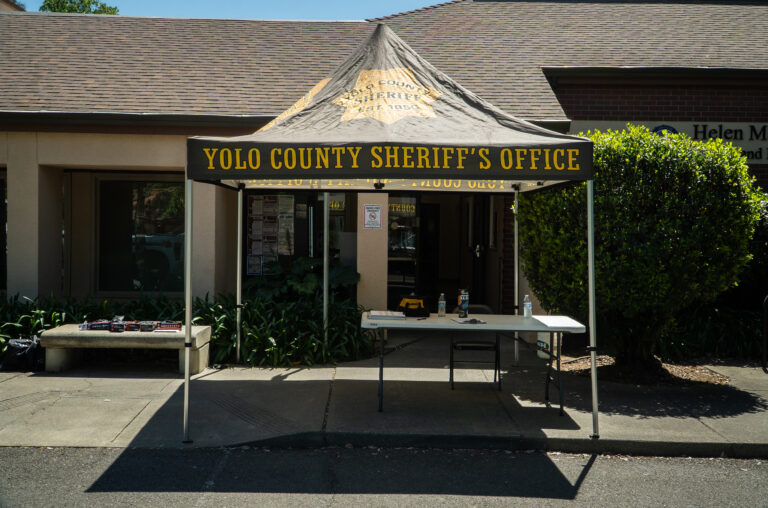
On Saturday, April 19, the Yolo County Sheriff’s Office and the Davis Police Department partnered with the Davis Health and Human Services Agency to host a gun buyback event. The event was fully anonymous and voluntary, maintaining a no-questions-asked model.

The event utilized a drive-up model to ensure a safe, efficient buyback. The officers asked participants to arrive at the buyback with firearms locked in their vehicle’s trunk. No walk-ups were allowed, and participants were asked to remain in their vehicles.

To encourage participation, the police department offered gift cards in return for functioning firearms. Handguns could be exchanged for $50 gift cards, while long guns or privately manufactured firearms fetched $100 gift cards. Additionally, the event also offered to collect non-functional firearms and boxed ammunition.

By holding gun buybacks, law enforcement ensures that these guns are properly collected and disposed of. While this effort aids in making Davis safer, Campbell Buffington, a fourth-year political science major, said it’s not a complete solution.

“Anonymous gun buybacks are a temporary fix to a larger institutional problem,” Buffington said. “While it’s smart for law enforcement to incentivize gun owners to turn in firearms in the name of safety, there needs to be a stronger set of laws in place to ensure gun incidents are not as common as they currently are. So, while I like to see Davis making a step in the right direction, I’d like to see a stronger push towards state and federal lawmakers to enact laws that protect citizens from firearm incidents.”

While these buybacks aren’t a complete resolution, it’s still a step toward safety for gun owners and citizens alike. This is especially beneficial as many people unintentionally possess these weapons.

Lucas Frerichs, who represents Yolo County District 2 and who supports the Gun Violence Prevention Collaborative, explained how many participants unwittingly ended up with these firearms.

“Many of the attendees told us that these guns were hand-me-down guns,” Frerichs said. “They don’t necessarily know what to do with them.”

Frerichs said he appreciated the planning, execution and success of the event.

“I was impressed with the turnout of the gun buyback event — over 100 guns were turned in over a few hours,” Frerichs said. “I really appreciate our law enforcement agencies co-sponsoring this event, in addition to their partnership with my office as members of the Yolo County Gun Violence Prevention Collaborative.”

The Yolo County Sheriff’s Office was also pleased with the buyback event’s results. Lieutenant Don Harmon explained its effectiveness.

“We collected about 100 guns consisting of rifles, shotguns and handguns,” Harmon said. “Some were old; some were brand new. All in all, it was a success. As always, nobody was forced to turn them over. It was just a way of collecting firearms that people no longer wanted.”

Gun buyback events are a great way to dispose of unwanted firearms. While another is not planned with the Yolo County Sheriff’s Office and Davis Police Department currently, check out their websites for more information.


Written By: Gia Loomis — city@theaggie.org


James B. Milliken chosen as next president of UC system

Milliken, chancellor of the University of Texas system, joins the UC as higher education continues to face pressures from federal government


By RIVERS STOUT— campus@theaggie.org


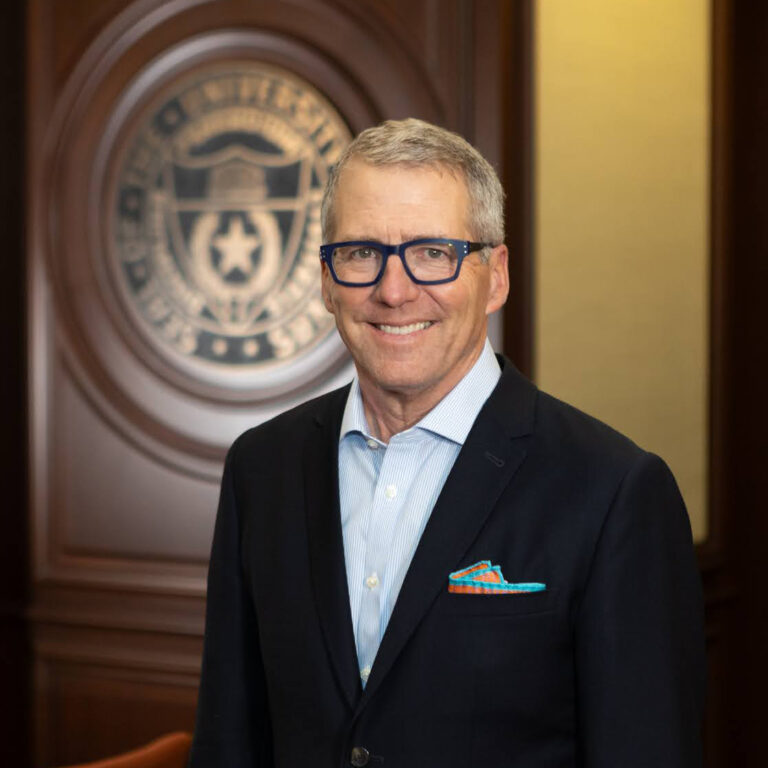
James B. Milliken, the chancellor of the University of Texas System, was chosen as the 22nd president of the University of California system, the UC Board of Regents announced on May 2. He will replace outgoing President Michael V. Drake, who announced his intent to step down in July of last year and has served in the role since 2020.

“The University of California is universally regarded as the preeminent public research university in the world, and I am deeply honored to have an opportunity to join the many talented faculty, staff, and campus leaders in their vital work,” Milliken said in a press release. “It is more important than ever that we expand the education, research, health care, and public service for which UC is so widely admired and which has benefited so many Californians.”

Milliken has been working on the administrative side of the education field since 1988, when he was an executive assistant to the president of the University of Nebraska. He has since held positions at the University of North Carolina and the City University of New York (CUNY). He has been chancellor of the University of Texas system since 2018.

Prior to working as an administrator, he held various faculty positions with the University of Nebraska’s schools of law and public policy.

As head of the UC system he will be responsible for overseeing all 10 UC campuses, 300,000 students and some 10 million patients annually.

Milliken’s board-approved annual salary is $1,473,000, an increase from Drake’s starting salary of $890,000.

“Chancellor Milliken embodies the qualities and leadership experiences the University of California community needs at this moment,” Janet Reilly, the chair of the UC Board of Regents, said in a UC statement. “He understands how critical UC’s contributions are to the state and the country, and he has decades of experience leading public institutions during times of unprecedented change in higher education. Chancellor Milliken is simply the right person for UC at just the right time.”

Milliken, who is set to take the reins in August, enters the office during a difficult time for the UC. The system is facing state budget cuts, resulting in a UC-wide hiring freeze and reductions in federal research funding amid increased scrutiny on higher education nationally from the Donald Trump administration.

Still, many state officials hold high hopes for Milliken, with Governor Gavin Newsom being one of them.

“California’s future depends on the strength of our institutions, and few are more vital than the University of California,” Newsom said in a statement. “Chancellor Milliken brings years of experience and the steady, strategic leadership needed to expand UC’s impact across the state. I am excited to see him drive the next chapter of innovation, talent, and progress that will shape California and the country for generations to come.”


Written by: Rivers Stout — campus@theaggie.org

A groundbreaking ceremony was held for the new Walnut Park Library

Yolo County begins construction on a new library for South Davis, set to open in 2026


By SUNNY LIU — city@theaggie.org


On April 18, the Yolo County Library, in partnership with the city of Davis and the California State Library, held a ceremony for the planned Walnut Park location at 2700 Lillard Dr.

The planned 12,857-square-foot library will feature an audio-visual community room accessible to not-for-profit organizations, computers, Wi-Fi, study rooms and a “Community Resiliency Center.”

The project is decades in the making and will serve the unmet needs of South Davis residents in accessing library services. The construction of the Walnut Park branch is intended to meet Yolo County’s 2018 to 2035 Library Facilities Master Plan, which recommended another branch to be built in Davis by 2025. The current library serving the area is located within Marguerite Montgomery Elementary School and is only open for eight hours a week to the public. The only other library serving the city of Davis is the Mary L. Stephens Library, located in Central Davis.

Josh Chapman, who represents District 5 and the South Davis area, described the difficulties that local residents face when attempting to access library services.

“For me and for us here in South Davis and for the city as a whole, we haven’t had a place like this,” Chapman said. “We all know that [Interstate] 80 runs straight through the city […] and the barriers for young people or people with disabilities to have access to a library, right? You’d have [a library] that’s almost three miles away, the Mary [L.] Stephens branch. It’s often overcrowded. You have to bike, walk […] drive or take a bus and those are all barriers to people.”

Jim Provenza, a former Yolo County supervisor who had previously pushed for the project, commented on the need for a new library in South Davis.

“What we found was that there was less usage of the library here than in other areas, and it was really important to fill that gap,” Provenza said. “In addition, the largest number of low-income and English learners were in this very area, so it was essential to have a library here.”

The library will cost an estimated $22.8 million and will be financed through a mix of funding streams. Notably, the funding includes a $8.7 million grant from the California State Library, a $1.5 million pledge from the city of Davis and $850,000 from Congressman Mike Thompson. Provenza described the remaining local funding sources.

“The rest of that had to be raised locally,” Provenza said. “Some of that was the money we saved. Some of it was money in various capital funds that the county replenishes over time. And when it was decided that this library was the next project that would go forward, the money was allocated and we were up to over $20 million to build this, for the solar panels, the parking lots, the whole thing.”

Provenza also brought up the importance of libraries in protecting democracy and knowledge.

“I probably wouldn’t have mentioned [this] had we not been in the current climate in Washington, D.C.,” Provenza said. “Libraries stand up [and] are an important part of our democracy. They are holders of knowledge. They teach our children, and they teach adults. And […] everybody can have their own opinion. But if you want to find actual facts, go to a library […] In terms of democratic values, democratic rights, free expression, free speech, free press [and] due process at any point in my life, I’ve never felt that our country was so threatened and a library really is something that pushes back the other way.”

Thompson was responsible for obtaining federal funding for the project. In a speech, he described his motivation for backing this project.

“Because libraries, as you know, are incredibly special,” Thompson said. “They’re important to our democracy. They’re important to freedom of information, access to information and it just really makes a community.”

Thompson then lightheartedly recognized Provenza’s role in securing funding for this project.

“Two happy outcomes,” Thompson said. “One, we get the library. [Provenza], you no longer get to twist my arm saying we need federal money.”

Rebecca Wendt, the deputy state librarian of the California State Library, explained why the state grant was awarded to the Walnut Park Library.

“[Libraries] are guardians of democracy,” Wendt said. “This is the place where you get your information, where you can make your decisions and library staff make the choices as to what is going to be included in the collection space [based] on best practices and […] making sure that they’re collecting the best resources. So here we have a community. The state was happy to read the application for the grant. We were happy to provide the $8.7 million as part of the puzzle piece for this library. But it was because the community was there, the local match was there and the support was there.”


Written By: Sunny Liu — city@theaggie.org


Faculty advocated for an ethnic studies requirement for five years, but its proposal was recently rejected

UC ethnic studies educators, concerned about censorship of Palestine in curricula, say the failed proposal faced a “procedurally irregular” journey


By KHADEEJAH KHAN — campus@theaggie.org


Students and University of California ethnic studies faculty have been advocating for an ethnic studies admissions requirement since 2020. A proposal that was initially intended to take one year took five — and advocates have linked this delay to the UC’s alleged efforts to censor conversations surrounding Palestine in the state’s K-12 curriculum.

The proposed Area A-G/H Ethnic Studies would have required high school students to take a non-additive, one-semester ethnic studies course for admission into one of the UC’s nine undergraduate campuses. It was rejected by a vote of the UC Academic Senate late last month.

Ethnic studies emerged out of students protesting United States imperialism in the Vietnam War as they demanded education that critically analyzed systems of imperialism, capitalism and settler colonialism.

“Ethnic studies — it’s about reality,” UC Davis Cultural Studies doctoral candidate Beshara Kehdi said. “It’s about history. It’s about why our communities are here and why they are the way that they are. We can’t explain those things without referring to the violent displacements resulting from racism, capitalism and ongoing imperial wars.”


Timeline of Area A-G/H Ethnic Studies proposal

Initially, the Area A-G/H Ethnic Studies proposal was unanimously approved by the UC Board of Admissions and Relations with Schools (BOARS) in November 2020. A 20-person Ethnic Studies Faculty Workgroup was then appointed to develop new ethnic studies course guidelines to recommend to BOARS.

In November 2021, BOARS approved the recommended course criteria by a vote of 10-1, with one abstention, which would send the proposal to the Academic Council for consideration. The Academic Council sent the proposal for systemwide review, and by March 2022, the proposal was sent back to BOARS with feedback from each campus.

At this time in the process, Li Cai, a UC Los Angeles professor serving on BOARS, broke Academic Senate policy by leaking internal emails, according to a 2022 article from the Daily Bruin. Cai sent communications on Area A-G/H Ethnic Studies to opponents of the proposal, including Tammi Rossman-Benjamin, a former UC Santa Cruz faculty member and co-founder of the AMCHA Initiative, a non-profit organization committed to combating antisemitism in higher education.

The AMCHA Initiative previously released a letter in 2022 alleging that the proposal would “unleash hatred and bigotry, especially antisemitism.” However, in a 2014 letter, Jewish studies professors across the UC system described AMCHA’s definition of antisemitism as too broad. In their letter, they also critique AMCHA’s methods of monitoring, documenting, boycotting and doxxing of professors and students who are pro-Palestine and anti-Zionist in a way that can “deaden the kind of spirited academic exchange that is the lifeblood of the university.”

A press release issued by the UC Ethnic Studies Faculty Council in 2022 rejects claims of antisemitism and questions the influence of “racist external pressures that inform [UC’s] deliberation around its proposed A-G ethnic studies requirement.”

“We also understand that the UC caved to spurious charges, in some cases advanced by people and organizations with a known history of racism, that our proposed criteria are ‘anti-Semitic’ and disparaging to Jewish Americans,” the press release reads. “This is a LIE. Nowhere in our course criteria do we mention Israel, Jewish people, or Judaism, much less any specific religion.”

In June 2023, BOARS approved the revised A-G ethnic studies course criteria by a vote of 9-2 with one abstention. While the vote was solely focused on the content of the criteria, members of BOARS shared concerns regarding implementation and access, according to meeting minutes.

BOARS was to vote on the proposal again in November 2023, but for the first time, the committee voted against sending the criteria to the Academic Council, despite it having previously been voted on and sent to the body.

Members of the UC Ethnic Studies Faculty Council had previously described this voting process as “procedurally irregular,” noting that the first time BOARS voted in opposition to the proposal was following the Oct. 7, 2023 attacks, despite having received strong support in past votes.

“We have to raise the concerns in terms of why this requirement has been handled and subjected to this systemwide review in a completely different way than other requirements,”  Natalia Deeb-Sossa, a UC Davis professor of Chicano and Chicana Studies, said.

Former UC Academic Senate Chair James Steintrager said the Area A-G/H Ethnic Studies proposal was concerning to the Regents due to its association with an October 2023 letter written by the Ethnic Studies Faculty Council, according to meeting minutes.

In the letter, members of the council rejected UC administrative communications that they allege “misrepresent the unfolding genocide of Palestinians in Gaza and thereby contribute to the racist and dehumanizing erasure of Palestinian daily reality.” The Ethnic Studies Faculty Council also called on the Regents to “uplift the Palestinian freedom struggle, and to stand against Israel’s war crimes against the ethnic cleansing and genocide of the Palestinian people.”

“I will do everything in my power to never let that happen,” UC Regent Jay Sures said in an open letter, calling the faculty council’s letter “appalling and repugnant.”

During that same period of time, Abigail Thompson, a UC Davis professor of mathematics and member of the UC Academic Senate, wrote a letter to the editor of The Davis Enterprise on campus protests by Students for Justice in Palestine titled, “Recognize True Evil.”

Thompson did not respond to requests for comment.

Dylan Rodríguez, a UC Riverside professor and member of the UC Ethnic Studies Faculty Council, has been a strong advocate for Arab American and Palestinian curricula in ethnic studies. He considers the opposition he has faced for his advocacy “well beyond censorship,” describing emailed threats of violence and death he had received.

“Anti-Palestinian racism has actually defined the terrain of the struggle [of advocating for Area A-G/H Ethnic Studies],” Rodríguez said.

Despite BOARS voting against the proposal in November 2023, the Academic Council sent the proposal for systemwide review in January 2024 as a response to the previously approved request to consider the proposal. In a December meeting that year, the Assembly of the Academic Senate voted to postpone the vote on the proposal to April 2025.


Current status of the A-G/H Ethnic Studies proposal

On April 23, the assembly rejected sending the ethnic studies proposal to UC Regents and President Michael V. Drake by a vote of 29-12, with 12 abstentions.

For that meeting, the UC Students Association filed a petition to indicate student support for the proposal. Christine Hong, a UC Santa Cruz professor of critical race and ethnic studies, believes that the assembly’s vote is not only a rejection of the proposal but a show of its failure to serve student needs.

“We should be humbled before the fact that students have brought this forward and told us what they need,” Hong said. “We should be humbled before the fact that this is the sole field that has consistently been initiated by students — students who are oftentimes the most vulnerable within the institutional settings in which they’re fighting for ethnic studies.”

As ethnic studies advocates like Kehdi look toward the future of their discipline, the inclusion and expansion of Arab American and Palestinian studies remains essential in their advocacy.

“Whenever we see racial progress as in the expansion of Palestine and Arab American studies like in California, we see racist progress and Zionist pressures to eliminate them and turn the clocks back,” Kehdi said. “Genocide is the consequence of racism, and Israel’s U.S.-backed genocide in Palestine continues. There is no going back.”

Despite the outcome of the vote, the fight for ethnic studies continues — a characteristic that ethnic studies scholars believe define the movement.

“Ethnic studies is a grassroots struggle,” Sean Malloy, a UC Merced professor of critical race and ethnic studies, said. “We can win and lose individual battles, but the strength of this movement is in the community and student centered struggle — something they can never take away from us.”


This article is the second part of a continuing series on ethnic studies requirements for UC admission. Read the first part online.


Written by: Khadeejah Khan — campus@theaggie.org


City of Davis holds annual César Chávez celebration

This year’s theme was Sí Se Puede: The Power of Collective Action


By OLIVIA HOKR — city@theaggie.org


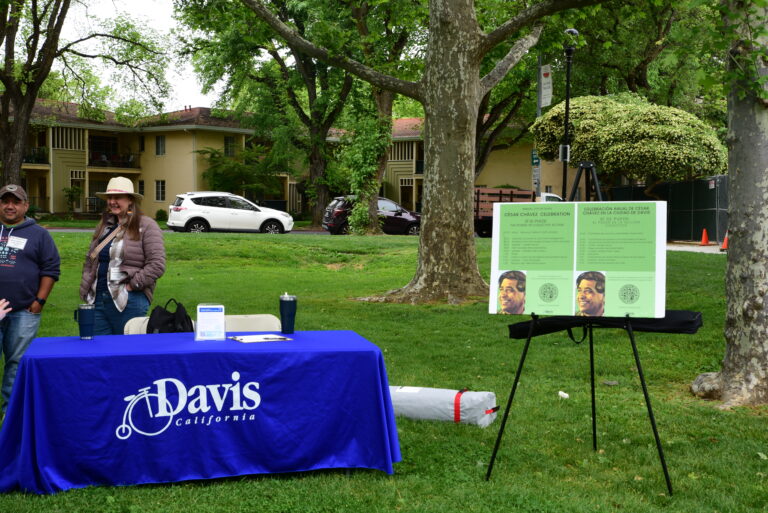
Since 2001, the city of Davis’ Human Relations Commission has hosted an annual César Chávez celebration in late May or early April. On April 26, the event was held for the 25th year in Central Park. The celebration focused on advocating for collective action as well as farmworkers’ rights.

From 10 a.m. to 12 p.m., the event consisted of various speakers, dance performances, a mariachi performance and a poem reading from the current city of Davis poet laureate. To kickstart the celebration, Mayor Bapu Vaitla gave an opening welcome. In the press release from the city, he shared a statement about the aim of the community gathering.

“Each year with this event, we honor the remarkable life of civil rights leader César Chávez,” the press release reads. “In fighting for the rights of farmworkers, Chávez taught the world that everyone has the right to be treated with dignity and respect, regardless of livelihood or immigration status. Each of us contributes our work to the betterment of society; each of us has value. These simple and powerful ideas are César Chávez’s legacy.”

César Chávez is recognized as a labor leader and civil rights activist. As a co-founder of the National Farm Workers Association, which eventually grew into the United Farm Workers labor union, he brought to light the struggles of farmworkers. The labor union focused on improving working conditions and wages.

The celebration centers around a different theme every year. “Sí se puede,” which translates to “Yes, we can,” is the motto for the United Farm Workers union and also the theme for this year’s event. Community Relations Program Manager Carrie Dyer shared further insight into the theme.

“The planning committee selected the theme of ‘Sí Se Puede: The Power of Collective Action’ to acknowledge that it takes communities working together to make strides,” Dyer said. “The event will focus on the overarching theme of collective action, with speakers and performances addressing it.”

The speakers included people from organizations such as NorCal Resist and a case worker for the California Rural Legal Assistance Foundation. Natalia Deeb-Sossa, a current professor in Chicana/o studies at the UC Davis, also gave a speech. Deeb-Sossa has worked in public higher education for 18 years and has published a number of books and articles highlighting the sociological issues that different Latinx communities are facing. At the Chávez event, she connected the theme of collective action to modern-day society.

“Chávez taught us how to organize, how to dream for a just and equitable world that does not exist and make it exist,” Deeb-Sossa said. “It is not enough to have great moral indignation. We need to act through rallies, boycotts, marches [and] hunger strikes. Everyday we need to risk it all as César Chávez and the farmworkers did with courage and determination. Our democracy, our rule of law, our intellectual freedom, our reproductive rights and education system are at stake. Given this, we must be willing to make the personal sacrifice and the life commitment required to motivate and inspire others to join us to overcome all our obstacles for as long as it takes.”

The annual César Chávez celebrations continue to motivate the community to support one another. By looking back on times prominent with discrimination and injustice, it is also important to remember the sacrifices and the actions that people made to bring forth change.


Written By: Olivia Hokr — city@theaggie.org