60.8 F
Davis

Davis, California

Wednesday, December 24, 2025
Home Blog Page 345

Large reduction in emissions from the California dairy industry over past 50 years

UC Davis researchers analyzed environmental impacts of California dairy industry

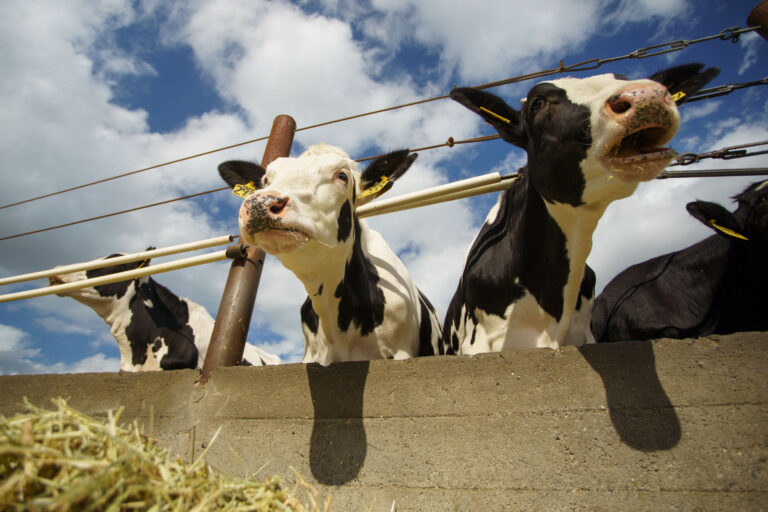
The dairy industry has long been scrutinized for producing a large amount of emissions, according to a study published in the Journal of Dairy Science. Research from this study now offers new insights into the emissions from the California dairy industry, unveiling major improvements over the past 50 years.  

UC Davis researchers analyzed the environmental impact and resource use of the California dairy industry and estimated the changes in greenhouse gas emissions and water and land use between 1964 and 2014. Data showed significant reduction in greenhouse gas emissions, water and land use.

“This may in turn remove/reduce the scrutiny and red-tape placed on CA dairy industry,” said Alexa Johnson, a doctoral student in animal and food sciences, via email.

Using Life Cycle Assessment Models, researchers kept track of the inputs used and emissions produced throughout the entire life of a dairy cow. The milk production system was separated into four sections — feed production, enteric methane produced by cattle, manure storage and farm management — for analysis.

“With this model, we can look at the system as a whole and identify areas which contribute most to emissions,” said Anna M. Naranjo, the first author of the study and a doctoral student in animal biology, via email. 

To quantify the reduction in greenhouse gas emissions, researchers measured how much input and emissions are associated with the production of the same quantity and quality of milk between 1964 and 2014. 

The carbon emissions produced by the dairy industry come from several sources: direct greenhouse gas emission from animal digestion, crop production and farming practices and use of water and land for feed production. 

Data shows about a 50% reduction in direct greenhouse gas emissions in all farming-related activities, but the most notable reduction in greenhouse gas emissions, according to Ermias Kebreab, the associate dean of the college of agricultural and environmental sciences, comes from methane.

Of the components of greenhouse gas emissions in the dairy industry in California, methane makes up a large portion. Emissions from methane are produced during manure management and during the digestion process of cattles. The reduction in emissions from methane is due to better genetics, nutrition, cow comfort and farm management. 

“Improved dairy nutrition utilizes feed by-products more efficiently to reduce food waste and increased knowledge of nutrition requirements per stage of lactation has also increased milk production,” Johnson said. “Improved management leads to happy cows, and happy cows make more milk.” 

The reduction in greenhouse gas emissions has reduced dramatically, but the decrease in water and land use is even more remarkable.

“We saw an 88.1 – 89.9% reduction in blue water use (non-precipitation water) and an 89.4-89.7% reduction in land use in 2014 compared to 1964,” Naranjo said. 

The large reduction in water and land use is because of improvements in crop genetics and better practices that enable higher yields of feed with the same amount of resource input.

The dairy industry has made remarkable efficiency gains in the past 50 years, according to Kebreab. Without these improvements, we would need 1.3 million more cows to support our dairy consumption today.

Despite the increasing demand for milk due to a growing population, researchers are optimistic about the future of the dairy industry, foreseeing a further drop in greenhouse gas emissions in the future.  

“I do suspect that as the population continues to grow, so will demand for milk,” Naranjo said. “However, as we continue to improve milk production, it will take less resources and produce less emissions per unit of milk, which will lead us to lower total greenhouse gas emissions.” 

Environmentally friendly changes that scientists are working on can help the dairy industry achieve further reductions in emissions, such as feeding cattle seaweed, according to Kebreab.

“The reduction in emissions we’ve seen is mainly due to efficiency gains,” Kebreab said. “Although this will continue, what we will see in the next few years is scientists finding solutions that target specifically at reducing emissions.” 

Written by: Yantong Ye — science@theaggie.org
Good news: newborn animals, goodie bags, intuitive eating, more as Aggies count their blessings

UC Davis students, faculty spread positivity through survey distributed by The California Aggie, responses compiled below

There is no denying the inconvenient truth that, due to the impacts of COVID-19, the global community and the lives of its citizens may be considerably different for the foreseeable future. Given the constant broadcast of virus-related news and updates, good news might seem few and far between. 

The California Aggie, in an effort to spread cheer amid difficult times, asked members of the UC Davis community to share positive news either experienced first-hand or witnessed while sheltering-in-place. More than several Aggies were willing to share exciting or uplifting tidbits, and The Aggie sorted through the responses, ultimately choosing to share responses that would be most valuable to the community at-large.

The following responses have been edited for length and clarity. 

Familial cheer

“Amid all the craziness, my sister gave birth to a baby boy! It was crazy to see this new human experiencing everything for the first time, tragic to see him be welcomed into such a disintegrating world. I soon realized, within tragedy lies new lives, lies small happy moments, that come together and make us strong enough to face tomorrow.”

“I’ve been able to video chat with my grandmother a lot more! I’m an out of state student, so it’s hard to communicate with my family due to the time difference (especially those that don’t know how to text or use social media). My grandmother and I have been video chatting, and I’ve been teaching her how to hold the phone so I can see her whole face and not just her forehead. She’s also been learning emojis. They grow up so fast! She taught me how to make her famous tuna salad the other day and she flipped her camera and everything!”

“Our family is focusing on the positive — more time to spend with each other. Our lives were incredibly busy, heading here and there all the time. Suddenly, we have come to a screeching halt. We can sit and just talk in the quiet moments of the morning, or in the afternoon after we have finished Zoom for the day. We hope to be able to look back and not forget the value of this time once we are up and running again!”

Spring has sprung!

“There are several babies being born in the campus barns — foals, lambs, kids and piglets. Vegetables and flowers are still growing in our fields, and spring continues to share its beauty. Life outside continues to thrive even as we shelter-in-place.”

“The swell in SoCal is picking up!”

“In one week, we are getting a new puppy to love — a Cavalier King Charles Spaniel. We are naming her ‘Aggie!’”

“Quarantined at home allows me to actually be able to keep an eye on two of my horses that are due with babies soon. I might actually get to be there for the births!”

“Being from the Bay Area, we’ve actually gotten a good amount of rain recently. Initially, it was a huge bummer, but [it] turned out to be so worth it because now the hills are greener than ever. Nothing beats taking my dogs out to adventure in the freshly blooming hills after a Zoom class.”

Creating personal definitions of self-discovery and fulfillment

“I have finally reached a point in my life where I fully accept and understand that I am queer. With each day, I gain more pride because I continue to be myself, unapologetically.” 

“I have free time to start learning [computer science]. I never thought I would be able to learn it, but I took it upon myself to do so this quarter.” 

“Every day, I’ve been running with my hometown best friend — six feet apart, obviously! I honestly used to be self-conscious [about] running and tried to go early in the mornings to avoid seeing people, but going with her has really helped build my confidence. I never thought I’d run this much in my life and actually feel good doing it.” 

“I’m going to law school!”

“Time at home has allowed me to focus on intuitive eating and nourishing my body. During school, I’ve always found it difficult to eat healthy meals and avoid processed, junky snacks. However, now I’m able to learn more about nutrition and what’s right for my body. Put good in, get good out!”

Acts of unity and selflessness

“In the neighborhood I’m in, every night at 7 p.m., when the doctors and nurses finish their shifts, everyone in the town goes outside their front doors with their families to bang pots and pans, honk their horns, cheer and make noise to show their support for the healthcare workers risking their lives to protect us. It makes me happy to see so many people coming together to express their solidarity and gratitude for them.”

“San Francisco is a complicated city, where genius and ambition march side-by-side with greed, inequality, and existential despair. Yet in spite of these differences, I have seen my city rise to the occasion as we fight coronavirus. I see people being gentler, kinder, and less confrontational. In my neighborhood of hipsters, young families, Slavic grandmothers, and older couples, people smile as we zigzag across the street in keeping with social distance regulations. We are united by a bewildering pandemic that threatens the livelihood of the workers who make our city function, and imperils the elderly who suffer from respiratory and autoimmune illnesses. Walking my dog a few days ago, I was sniffling not due to the virus, but due to the strong and ever-present wind blowing against me. A woman asked me if I was okay and confessed that she, too, had been sniffling earlier that day. Standing on opposite sides of the street, we shared a brief moment of connection and concern. I can only hope that this type of behavior will continue, and teach us all to be a little bit kinder.”

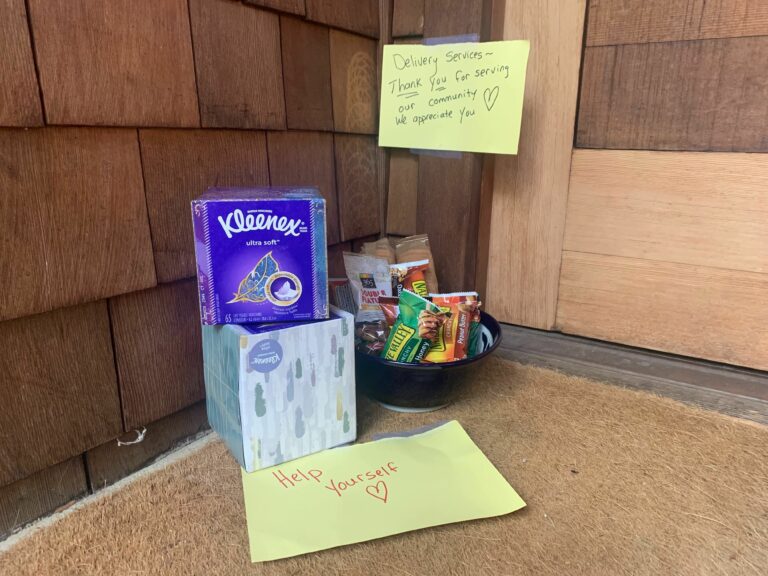
“My mom left goodie bags filled with things like toilet paper, soap and snacks on top of our trash bins for the garbage collectors. We initially made fun of her — joking that she was disrupting their workflow, because they’d have to get out of the truck to get the bag — but our mockery was silenced when one of the collectors left us a note that simply read “thank you so much” on the top of one of our bins.”

Written by: Claire Dodd — features@theaggie.org

Students go without pay during Spring Quarter

Unitrans, CoHo, Student Housing & Dining, Campus Recreation try to support students, cannot offer more than a certain amount of leave

Buildings like the ARC, the CoHo and the Peet’s locations on campus have closed for Spring Quarter, and the students who staff those areas have lost a source of income. Unemployment is a repercussion of the COVID-19 pandemic — and nationwide unemployment is now at 13%.

Third-year mechanical engineering major Kayla Flores, who was a supervisor for Peet’s Coffee before the campus closure, said Student Housing & Dining provided her with little notice about the location’s status for Spring Quarter.
“During finals week, Student Housing & Dining Services were still optimistic about staying open, but I knew they wouldn’t,” she said. “Then they emailed us at the start of the quarter saying that they would be closed.”

At the time, Flores didn’t know that the university would be offering Emergency Administrative Leave (EAL), which she called the “UC Davis version of unemployment.” She now works at Food 4 Less, often for 9-hour shifts, while living at home.

“I needed consistent income,” she said. “I don’t get enough parent help or financial aid, and I still have to pay for rent, my phone bill and my car insurance.” 

EAL is being offered throughout the UC system as a way to compensate students who cannot work remotely. It is calculated based on the number of hours students have worked in the past.  

Work-study students who are affected by the pandemic can still be paid with work-study funds, but their employers are not obligated to keep them employed during the temporary closure. UC Davis said students who cannot work remotely and are currently on work-study will be paid until their funds are depleted. 

“We encourage student staff to recommend projects in which their perspective is uniquely valuable in these unusual circumstances,” an FAQ on the UC Davis website reads. Many of the suggestions offered revolve around social media curation and website upkeep. 

Employers themselves are seeking ways to keep students working remotely. ASUCD Business Manager Greg Ortiz called the process “turning stones over multiple times.”

Ortiz said ASUCD is keeping the Bike Barn open for appointments only. He’s also talked with the CoHo about offering delivery services and with Unitrans to see if they can pick up donations to The Pantry from the Yolo County Food Bank. 

Deb Johnson, the director of recreation at Campus Recreation, said via email there were around 200 students — out of approximately 650 Campus Recreation employees — who elected to continue their work at home during Spring Quarter. Johnson said these students are “developing online classes on a variety of wellness topics” for other students to participate in at home.

“Students who are not teaching or leading programming have the opportunity to help create staff training videos, work on our risk management procedures, update and rewrite staff training manuals and help the team stay current with the constant fluid nature of our work right now,” Johnson said.

Employers are also trying to offer work opportunities to students who remain in Davis. Ortiz said CoHo and Unitrans employees were put to work making face shields for the UC Davis Medical Center. And Johnson said Campus Recreation employees are working on a similar project. 

Darin Schluep, CoHo director, said he has notified employees that they can provide culinary support at the UC Davis Medical Center. 

“I am sending weekly emails via our employee listservs with resources and relevant information from the campus,” he said. “We […] are hoping that there will be more opportunities for our employees to earn money as we continue our spring quarter closure.” 

Johnson said student employees at the Equestrian Center or Craft Center who chose to keep working during Spring Quarter remain on campus. 

“Overall, our career staff and student staff are working together to create innovative ways to work remotely,” she said. “During these unique times, many students unfortunately will see reduced hours due to the nature of serving patrons in our facilities versus at-home projects.” 

A reduction in work hours is a problem experienced by a number of student employees. Flores said she’s not getting as much at Food 4 Less as she did at Peet’s, but did say that she gets more hours, since the university restricts how much students can work. 

Fourth-year marine biology major Michael Brito, a driver, route trainer and supervisor for Unitrans, said Unitrans drivers tend to work around 30 hours per week. During Spring Quarter, he said, drivers have been working 10 to 13 hours per week.

Ortiz acknowledged that both the university and ASUCD have a finite amount of money and that they won’t always be able to supplement the reduced income.

“We’re trying to educate people to not use all their EAL in the beginning [of the quarter], but the problem is that we know this pandemic is going to last longer than EAL,” he said.

He added that without the passage of the Basic Needs & Services fee referendum in Winter Quarter, ASUCD wouldn’t have survived the Spring Quarter closures, despite having saved up a reserve of money over the past few years. 

“It’s the second time in two years something like this has happened — since we had the fires last year, and the CoHo alone lost $285,000,” Ortiz said. “The good thing is that we didn’t place a ton of orders, knowing we weren’t sure how much food we needed to have on hand.” 

Employers — not just students — are experiencing financial losses due to the campus closures. 

Flores said she thinks the university should be more understanding about students upending their lives — especially when it comes to student workers. She said she’s been scheduled 40 hours a week and has 30 hours of lecture, not including homework and study time. Although she said she feels grateful to have a job, she’s still overwhelmed. 

“I’m mentally struggling with having to push through it,” she said. “Everything is changing for students. We’re the ones being affected the most and the university can say that they’re here for us and that they understand, but at the end of the day, they’re not giving us good news.” 

Written by: Janelle Marie Salanga — campus@theaggie.org

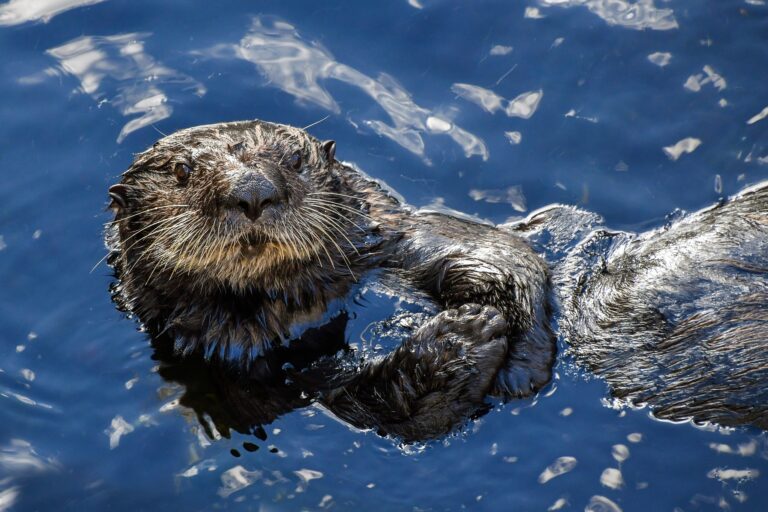
Sea otters found to be infected by parasite originally from opossum

Researchers trace transmission of single-celled parasite from land to water

With recent speculations about the travel of pathogens from wildlife to humans with COVID-19, it is interesting to consider different ways that pathogens can travel between species. A recently published epidemiological study conducted by UC Davis in collaboration with other university researchers examined how a single-celled parasite called Sarcocystis neurona traveled from its original host, the Virginia opossum, to sea otters. 

To the extent of the researchers’ knowledge, the opossum is the only known animal that can host the development of the reproductive stage of this parasite, according to Patricia Conrad, an associate dean at the UC Davis School of Veterinary Medicine. She explained that proceeding the formation of the sexual stage, the parasite is shed through the opossum’s feces which flows into bodies of water, infecting marine mammals.

“Understanding how these parasites are getting from their terrestrial hosts into marine food webs is a huge puzzle, but one that is important to solve because it affects so many species that use those nearshore waters, including threatened wildlife like sea otters and of course humans,” said Tim Tinker, a research biologist and adjunct professor of ecology and evolutionary biology at UC Santa Cruz.

Shawn Larson, a curator of conservation research at Seattle Aquarium, further explained the specific importance of sea otters to marine life.

“Sea otters are nearshore sentinel and keystone species that are key to a healthy, resilient and functioning nearshore marine ecosystem,” Larson said. “The more we learn about them and their role in the ecosystem from restoring kelp forests to the transfer of pathogens the more we will learn about how ecosystems work and what they need to survive.”

Tinker’s role within this research was to lead the team of researchers who captured and tagged wild sea otters while he was a research scientist with the U.S. Geological Survey (USGS) Western Ecological Survey. He explained that they followed these sea otters and recorded their diets and habitats in order to determine patterns of Sarcocystis neurona infection rates. Together with Tristan Burgess, the lead author of the study, and Christine Johnson, Burgess’ major professor, Tinker developed epidemiological models to compile the collected data. 

An interesting result of the study, according to Larson, was that the pathogen was found in sea otters located where there was no evidence of the Virginia opossum in the area.

“There are several possibilities a few of which are that sea otters can pass it to each other without the intermediate host, sea otters from another region, like Washington, that had exposure to opossums migrated to BC, or there are other intermediate hosts for this pathogen that we do not know about yet,” Larson said.

Although she was originally only interested in becoming a veterinarian, Conrad found herself fascinated by single-celled parasites and earned her doctorate from working with them. She initially began working with Sarcocystis neurona because it was found to cause a neurological disease in horses. 

When sea otters began to die at an alarming rate, she began conducting serological tests, which essentially measure the presence of antibodies within the organism. By looking for the presence of antibodies against the parasite to indicate whether the animal had been infected or not, this helped determine what infected sea otters were exposed to. Conrad explained that such testing may also be useful for COVID-19 research.

“The thing that is similar is that antibodies in the sea otters are indicators that the sea otters have been infected with this parasite just like antibodies in the serum of humans will be an indicator that humans have been infected,” Conrad said.

As this was a large-scale study, Conrad explained that it was important to emphasize how this study illustrates a good example of a big team of people working together. Tinker added that researchers from varying fields, from wildlife biologists to landscape ecologists, contributed to this study.

“To me, one of the most important messages is that understanding disease processes in wildlife species is a major challenge: it is important to all of us because these diseases also affect human health and the health of the ecosystems we rely on,” Tinker said. “But they are often very difficult puzzles to solve: finding answers takes time, and most importantly it takes cooperation and collaboration among specialists from many different disciplines, as we saw in this study.” 

Written by: Michelle Wong — science@theaggie.org

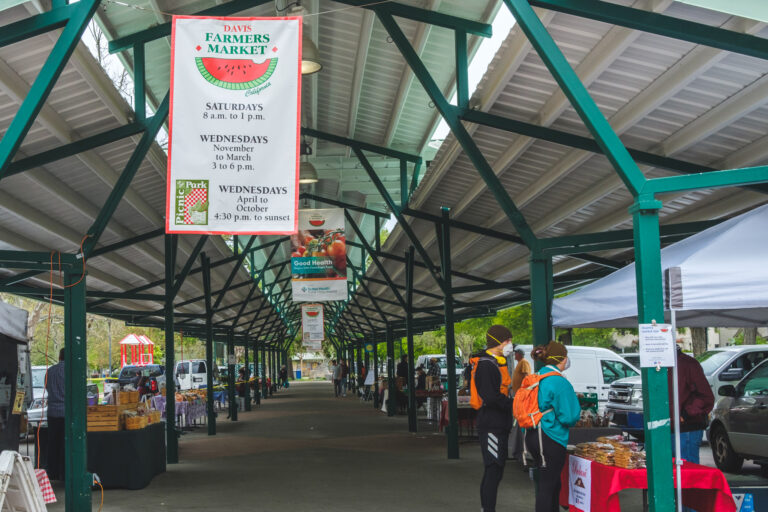
How the Davis Farmers Market and the community are adjusting

Managers discuss current state of the market, its importance to the community

With the on-campus Davis Farmers Market canceled entirely and the city side of the market maintaining strict regulations to ensure safety amid the virus, the dynamic of Davis’ only farmers market has changed drastically, but its importance to the community has become greater, according to its executive director, Randii MacNear. 

“Many, many people have told us, ‘Thank goodness [you’re] open,’” MacNear said. “They would rather come to an open-air market where they know who grew the food [and] who’s handled the food.”

Linda Adams, who manages the now-canceled campus side of the market, believes that farmers markets have become more valuable to the community because of the sense of normalcy they add to routines. 

“I think they’ve become more valuable because it’s a piece of normal,” Adams said. “Even though I may not be able to go down to Central Park and camp on the lawn with my family and friends, […] and even though I have to point at the piece of broccoli I want instead of picking it up and looking at it, and even though I have to wear a mask, it’s a piece of what I do normally.”

In addition to samples no longer being distributed and sellers having to pass out condiments, communal sitting spaces have been eliminated. Farmers Market visitors are meant to make their purchases as quickly as possible and spend little time there.  

“They’re coming and they’re shopping and they’re leaving and that’s good,” MacNear said. “Definitely nobody is sitting in the park, nobody is sitting on the benches. They have gotten that message.”

Although the market is taking many precautions, allowing the community to safely continue shopping for local produce, the social component of the market isn’t the same as it was, according to MacNear. 

“Step by step, minute by minute, we’re trying to create the most accurate and successful and efficient shopping experience for people, but it is very weird not to have any visiting, not to really have any chatting,” MacNear said.

Although there may be a strangeness to the limited social interactions among visitors and sellers, farmers aren’t struggling to sell produce. 

“We’ve had some interesting surprises — the farmers are doing fantastic and there’s really no slowing in sales in the farmers’ products,” MacNear said.

Although the small number of students living on campus aren’t affected greatly by the campus side of the market closing as they can still go to the regular market on Wednesdays and Saturdays, its cancellation is affecting students like fourth-year clinical nutrition major Janina Larsen, who is currently interning as an assistant for a registered dietician at UC Davis who helps oversee the campus side of the market. 

“My internship does not apply to the downtown market, so I no longer do that, which breaks my heart,” Larsen said. “You can ask any one of my friends how much joy the Farmers Market brings me, and they will attest that it is a lot. Luckily, I still get to write the weekly newsletters and attend the downtown market as a customer, so I am very grateful for that.” 

Larsen sends out weekly Farmers Market newsletters, which include healthy recipes, encouraging people to continue supporting the downtown location. She also helps run an Instagram account that promotes sellers and features in-season produce. 

“We hope that the students miss us as much as we miss them,” MacNear said. “We really want to see them come back, when they get back. We’re just very honored that the students love us so much and that they feel so at home at the market.”

Written by: Lyra Farrell —  features@theaggie.org 

Finding my Punjabi roots through fashion

Fashion is not just an outward display of culture, but a way to connect to it  

Wedding season is generally a happy time for all, but it’s especially meaningful for Punjabis. It’s a chance to finally see family from various continents who we haven’t seen in years, party for a straight week and, of course, show off our newest fashion grabs from the last trip to Punjab. 

I grew up in the Bay Area, which is a very culturally and ethnically diverse part of the country. Walking into Safeway with the brightest salwar-kameez suit, a traditional female garb, might have felt odd, but it usually wasn’t uncomfortable. Every Sunday, my dad took my brother and me to the gurdwara and on the way back, we always stopped by the city library. I was an abnormally tall and wiry 10-year-old in a Punjabi suit carrying a school bag full of books, but I wasn’t the only one. I was used to seeing grandmothers gathering at the park in the summer evenings wearing their everyday salwar-kameez suits, and girls like me going to grocery stores, libraries, restaurants and other places in our Punjabi clothes. 

Because I grew up outside Punjab, fashion became one of the few things with which I could immediately connect to my heritage. Fashion’s impact is unique because of how tangible and physical it is. 

Of course, growing up there were still stories from my parents and grandparents, movies to watch, music to listen to, as well as a very present and physical community, that helped me stay grounded to my roots. I learned to read and write Punjabi when I was in elementary school. My grandparents had strict Punjabi-only conversations when they called to ensure that we wouldn’t lose the language as we began learning English at school. But fashion was perhaps one of the most glaring and obvious visual symbols of my culture. 

Being surrounded by Punjabi attire at gurdwaras or Punjabi gatherings reminded me that although I may not physically be in Punjab, its culture is still an important part of my identity. Fashion may seem trivial, but it can wordlessly showcase a beautiful and powerful segment of culture.

The most important part of Punjabi fashion for me, however, goes beyond the scope of style and new clothing. Unlike the jeans and sweaters that I buy at the mall, almost all of my Punjabi clothes were bought on trips to Punjab. I’ve only made two visits in my memory and in both visits, my mom and grandma blocked an entire week just to go shopping for new suits. These suits range from party wear to everyday casual clothing. 

On our last trip, almost eight years ago, we spent an entire day walking through Jalandhar’s Rainak Bazar going from one fabric store to another. My mom and grandma led the way through the narrow and bustling alleyways of the bazar, a well-functioning scene of chaos. Jewelry and fabric stores occupied every square foot of the bazar, and the limited spaces between the shops were overtaken by small business vendors calling out to shoppers to buy their jewelry or garments.

I loved seeing my mom and grandma spend hours searching for the perfect clothing and designs in every fabric store and tailor’s boutique. But in retrospect, what I loved most was walking through the crowded bazar with my mom the way she must have done with my grandma years ago. Shopping in the clothing markets of Jalandhar wasn’t so much about finding new clothes to wear as it was about spending time with my mom and grandmother in boutiques bursting with the colors and patterns of Punjabi culture.

This is what makes Punjabi fashion all the more special to me. My chunnis, or scarves, weren’t picked off a shelf to match with my salwar-kameez — my mom and grandmother picked out the fabric and chose the colors and patterns that would be dyed onto the chunni. And whereas I saw most of the unstitched fabric for the suits as just a roll of pretty designs, my mom and grandmother somehow crafted in their minds a beautiful suit to be tailored with a perfect and unique style. Every detail on my suit was chosen and made with care and consideration, instead of being picked off a department store shelf.

Fashion is one of the many unique ways I have been able to connect with my heritage — this is the same for many others, whether of the Punjabi diaspora or not. What I love most is the community of support, especially the sisterhood that I have seen on social media among other young Punjabis who may have never met, but proudly flaunt and incorporate elements of Punjabi fashion into their identity. 

Punjabi fashion stands out in Western communities, but that’s precisely the point: Its bright colors are made to be seen, and its unique patterns are meant to draw attention. It’s a reminder of the powerful impact that fashion and art can have in finding our community.

Written by: Simran Kalkat — skkalkat@ucdavis.edu

Disclaimer: The views and opinions expressed by individual columnists belong to the columnists alone and do not necessarily indicate the views and opinions held by The California Aggie

Police Logs

Quarantine means more beers, brooms 

April 2

“Suspect broke into locked liquor cabinet.”

April 3

“Rhythmic spanking sound.”

April 4

“White Tesla backed up to show room.”

April 5

“Male subject screaming at the top of his lungs.”

April 6

“Neighbor at this location throwing a large broom over the fence into his yard this morning.”

“Subjects also have a microwave set up in front of the Dollar Tree.”

April 7

“13 year old daughter has taken her car keys and refused to return it.”

“Bee swarm at a nearby tree.”

April 8

“Male subject running around the pumps asking customers to buy him beer.”

“Crip Camp” shows the power of community in activism

The Obamas’ latest documentary sheds light on an underrecognized civil right’s issue 

On March 25, Michelle and Barack Obama’s production company Higher Ground Productions released its latest documentary on Netflix. “Crip Camp” focuses on the foundations of the disabilities rights movement and a summer camp where many of its activists got their start. “Crip Camp” was co-directed by Jim Lebretch and Nicole Newnham.

The first half of the film follows the teenagers who attended Camp Jened, a summer camp for teenagers with disabilities in New York. The camp was established in 1951 and had a traditional camp structure, however, the influence of the following decades certainly shifted the camp’s reputation. 

“As it evolved in the ‘60s and the ‘70s, what we tried to do was provide a kind of environment where teenagers could be teenagers without all the stereotypes and labels,” explains Larry Allison, the director of the camp, in the film. 

It became known as a sort of “hippie” camp, where teens with disabilities could listen to music, play sports and even experiment with drugs. With minimal adult supervision, the campers and counselors all worked together to create a positive environment for everyone at the camp. 

“What we saw at that camp was that our lives could be better,” said Jim Lebretch, co-director of the documentary and former camper at Jened. “I had to try to adapt. I had to fit into this world that wasn’t built for me. It never dawned on me that the world was ever gonna change.”

The liberatory sensation of the camp led to a ripple effect of activism from the campers in the years to follow. The second half of the film depicts the impact of Jened’s positive environment that led to real-world change. 

Pioneer of the disabilities rights movement Judith Heumann attended the camp from age nine to 18. Unable to walk after having contracted polio, Heumann was told she could not attend her local public school because she would be a “fire hazard.” But she learned her worth after attending Jened so many years. 

Not only did Huemann found Disabled in Action, she was also on the front lines of many key battles in the fight for equality. She sued the New York Board of Education and won after being denied a teaching license due to her wheelchair, and she led a sit-in on Madison Avenue after President Nixon vetoed the Rehabilitation Act of 1973.

The highlight of the film was the coverage of the 504 Sit-In of 1977. After failing to enforce the legislation of Section 504 of the Rehabilitation Act, Huemann and several other former campers occupied the Department of Health, Education, and Welfare offices across the country. 

The film depicts the strength and determination of the disabled community through these moments with grainy, first-hand footage of the demonstration. People sang and chanted to keep spirits up over their 23-day stay in the building. 

While it was especially difficult for those with disabilities to go so long without proper help or care, they remained until change was made. Huemann and the other campers were used to working alongside other people with disabilities from Camp Jened. The footage of a crowded room full of people in wheelchairs and canes helping one another survive is truly powerful. 

Though the building cut off the phones, the deaf community was able to sign through the windows to communicate with the outside world. The demonstrators received help from the local Black Panther chapter who provided hot dinners and food to sustain them everyday. And a lesbian bar owner washed people’s hair after the building’s water was turned off. 

As ‘70s funk music plays in the background, the viewer witnesses the selflessness of dozens of civil rights groups across the spectrum working to effect real change in the world. At its core, this is what the film is truly about. From Camp Jened to the frontlines of the disability rights movement, the campers learned how to work together, despite differences, to achieve a common goal. The film is empowering and brings humanity to those featured in it.

“With footage capturing profound mealtime discussions and playful asides alike, the movie not only proves the value of the camp but manages to turn its eager happy faces into a practical statement on the way inclusivity can stimulate future progress,” Eric Kohn writes in Indie Wire. “Notably, [the directors] restrict the story to the perspectives of their disabled subjects (Larry Allison, the valiant camp director, has been relegated to a supporting character throughout), so there’s never even the lingering possibility of devolving into a pity party. The movie doesn’t just celebrate Camp Jened; it hovers in the confines of its ethos.”

The documentary was met with positive reviews and a score of 100% on Rotten Tomatoes. It pays respect and honor to a civil rights movement that is often forgotten.

Written by: Alyssa Ilsley — arts@theaggie.org

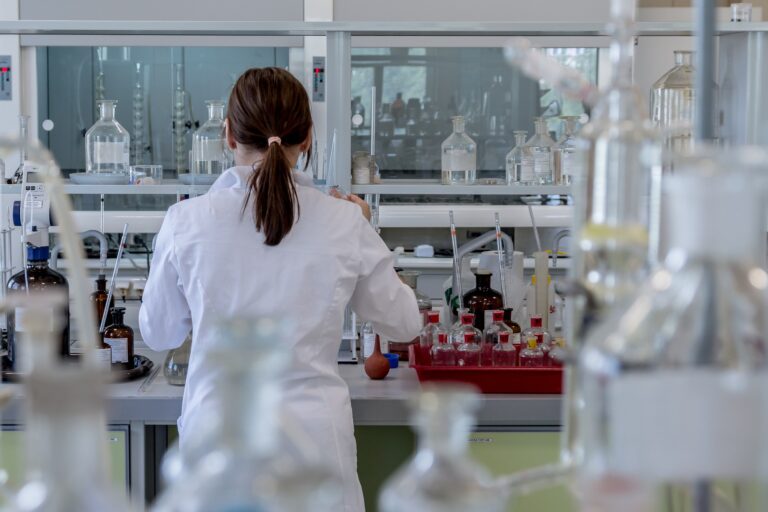
Use of chemical analytical tools shows insights into cancer metastasis

Lebrilla Lab studies biomolecules as potential method for improvements in cancer treatment, diagnosis

At the intersection of analytical chemistry and disease lies the Lebrilla Lab. Led by Carlito Lebrilla, a distinguished professor in the Chemistry Department, the team developed very rapid and accurate methods for characterizing biomolecules related to health, nutrition and disease. 

Glycans are one of the biomolecules the lab has been studying for almost 20 years. They are polysaccharides or sugar chains that attach to the proteins on a cell’s membrane. The attachment of glycans results in changes to cell functions, which are not well understood due to the difficulty of studying glycans themselves. The Lebrilla lab has been revolutionizing the way glycans are understood and studied by using unique analytical tools that allow them to measure, characterize and identify glycans.  

Such tools include nanoflow liquid chromatography, which separates a mixture of glycans into smaller sample sizes. High resolution mass spectrometry gives each glycan compound a unique identity and allows researchers to know the constituent parts of the polysaccharide.

“The key is that it is super difficult to measure the glycans and that is the greatest strength of their lab and why this lab is so important for the scientific community in general,” said Fernando Fierro, an assistant professor in the Department of Cell Biology and Human Anatomy. 

A recent study conducted at their lab shows the success of their analytical tools. The study identified the important role glycans have in the spread, or metastasis, of human cholangiocarcinoma or bile duct cancer. 

“We were interested in looking at the cholangiocarcinoma cell surface to identify specific molecules that may promote the aggressiveness of the disease” said Diane Dayoung Park, a postdoctoral researcher in the Lebrilla Lab, via email.

While bile duct cancer is not common in the U.S., it is exceedingly prevalent in Southeast Asia due to the consumption of undercooked or raw fish infected with a parasite called liver flukes. Through a collaboration with a lab at Khon Kaen University in Thailand, the researchers obtained cancer cells to analyze and conduct their studies on.  

They were able to deduce that cells with high amounts of mannose glycans, a specific type of glycan, were found to migrate faster, more frequently and through barriers non-cancer cells could not navigate through. It was determined that the attachment of high mannose glycans modified the cell functions to a degree in which metastasis would occur.

“Cancer cells all have the same proteins as non-cancerous cells but it is the change in the modifications, the glycans, that result in the change in cell function,” Lebrilla said. 

Additionally, the lab tested an antibody, a specific compound that interacts with the high mannose glycan. As the antibody targeted the high mannose glycan cells and reduced the levels of mannose, the cells stopped moving as fast. These results further showed the effect of high mannose glycans on cell function and its ability to induce cell spread.

The implications of this research could be profound for both the diagnosis of cancer and the treatment options available. One of the main challenges for treating cancer is its ability to metastasize. Removal of a tumor is most effective at halting cancer if it has not yet spread. Once cancer has metastasized, treatment is far more difficult. With a deeper understanding of glycans, it would be possible to develop treatments targeting cancer cells that are prone to spreading. 

“The problem right now is that once the cancer metastasizes it is difficult to cure,” Lebrilla said. “But if you can slow down that spread, then perhaps you can be more effective at treating it.”

Lebrilla also sees a future where glycans are used as a diagnostic tool and has made this into a reality with InterVenn, a company he co-founded. Based in the Bay Area, InterVenn is developing a blood test for ovarian cancer. The blood test uses glycan as a biomarker, which specifically would indicate the presence of ovarian cancer. They hope to make the test extremely efficient so that a simple blood prick could identify the cancer. InterVenn hopes to develop diagnostic methods for other types of cancers as well. 

“We need to be able to look at more types of cancer but we think that for many cancers this is a way that they spread and we want to find out what the mechanisms are for other cancers,” Lebrilla said.

Projects such as InterVenn highlight the innovative field the Lebrilla Lab exists in. Through the help of their analytical tools and glycan research, the future of cancer treatment and diagnosis may be drastically improved.

Written by: Alma Meckler-Pacheco — science@theaggie.org 

Bet you didn’t know their parents were famous! Unpacking Hollywood nepotism

The influence of influential parents

Nepotism is nothing new in Hollywood. In fact, it’s rather common knowledge that it’s nearly impossible to break into the industry without connections. With practically every good role going to someone with a recognizable last name or a producer parent, why is nepotism in the entertainment industry not talked about more? It’s hard to find reliable resources on children of influential parents because so much that pops up are slideshows on gossip blogs or Quora answers. In its attempt to hold up an image of authenticity and hope, Hollywood sweeps its extensive network of connections under the rug — and, along with it, the careers of hopeful, non-nepotism-benefiting actors.

If so many celebrities had their foot in the door when they began, why don’t they mention it? Many stars are self-conscious about how they got their start. It’s a lot more endearing to have an underdog story than to have success planned for you from birth. Some celebrities are upfront about their nepotism privilege. The Pinkett-Smith family is well-known as a unit. Children Jaden and Willow don’t go out of their way to hide their obvious connections; it’s well known their careers are heavily attributed to the success of their parents. For some celebrities, it’s too obvious to hide. Respected actress Drew Barrymore’s family is known for its long line of famous actors, and Barrymore doesn’t try to hide her lineage.

The notion of unearned success is too difficult for some to bear. Lately, with celebrities more accessible than ever, young actors are pushing harder to prove they fought for where they are. 

In an interview with Variety, “Stranger Things” breakout star Maya Hawke was asked about her audition process for Quentin Tarentinto’s latest film “Once Upon a Time in Hollywood.” She was adamant that she “auditioned like everyone else,” citing a simple call from her agent and a self tape in her bedroom with her dad. What was absent, but implied, from Hawke’s reply was that her father is famous actor Ethan Hawke. Her mother is famous actress Uma Thurman, well regarded as the muse of Quentin Tarentino. Zoë Kravitz, star of Hulu’s “High Fidelity” claimed her famous parents (Lisa Bonet and Lenny Kravitz) had nothing to do in her casting in George Miller’s 2015 hit “Mad Max: Fury Road.” “George Miller doesn’t f-cking care who my parents are,” Kravitz said. 

It is undeniable that nepotism has given us some of our most distinguished, beloved performers of all time. But it is impossible to ignore the obvious consequence: the neglect of less connected actors. The imbalance is apparent when you realize how many household names are the spawn of previous household names. There are countless untalented actors given chance after chance because their parents are footing the bill and countless talented actors out of a job because of it. It’s also impossible to say all products of nepotism are untalented (though many do have access to the best learning materials very early on). Until the entertainment industry addresses this imbalance, their elisitim will do nothing but ruin the quality of their own product.

Everyone’s understanding of nepotism is different. It varies based on your age, your exposure to media and your likes and dislikes. For example, I know of many nepotism-produced celebrities because of my unexplainable need to read the Wikipedia page of every actor I see. This list provides a mix of established and up-and-coming actors who you may or may not have known have influential parents.

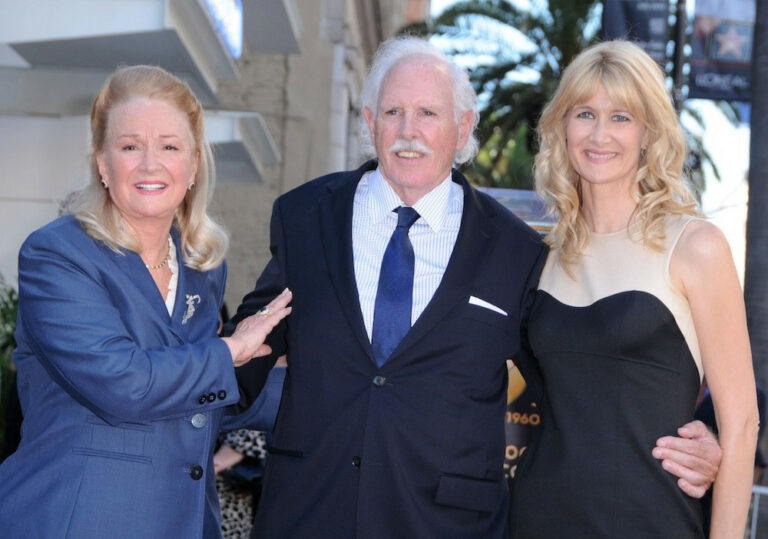
Laura Dern (“Jurassic Park,” “Marriage Story,” “Little Women”) 

Older generations are sure to be familiar with the recent Academy Award winner’s lineage, but for the younger readers: Dern is the daughter of Bruce Dern and Diane Ladd, two Oscar-nominated actors.

Rashida Jones (“Parks and Recreation,” “The Office”) 

Nepotism doesn’t just come from parents in the movie industry, privilege stems from all types of influence. Jones is the daughter of 28-time Grammy winner Quincy Jones and actress Peggy Lipton.

J.J Abrams (Director, “Star Wars”) 

The acclaimed director sold his first screenplay play while he was still in college. It’s less impressive when you learn his father was a TV producer and his mother was an executive producer.

Allison Williams (“Get Out,” “Girls”) 

The actress’ fame undeniably stems in part from the last name she shares with father and chief anchor of MSNBC, Brian Williams.

Robert Downey Jr. (“Iron Man,” “Doolittle”)

It is often forgotten that the Marvel actor got his start acting in his director father’s films.

Jamie Lee Curtis (“Halloween,” “Freaky Friday”) 

The actress is the daughter of Hollywood royalty: Her mother is Janet Leigh, star of Alfred Hitchcock’s “Psycho,” and her father is also an actor.

Kristen Stewart (“Twilight,” “Personal Shopper”) 

The primarily indie actress was less of an underdog than we were led to believe during her 2008 breakout. Her father is a producer, and her mother is a script supervisor.

Daniel Radcliff (“Harry Potter”) 

Similar to the blatant nepotism that his character’s identity is based off of, the former child actor is the son of an agent and a casting director. Not a surprise he landed the coveted role.

Maude Apatow (“Euphoria”) 

It seemed almost inevitable that this nepotism powerhouse wouldn’t break into the industry. In 2019, she landed a role in HBOs hit series “Euphoria,” following in the footsteps of her actress mother Leslie Mann and actor, director and incredibly influential producer Judd Apatow.

Margret Qualley (“Novitiate,” “Once Upon a Time in Hollywood”) 

The on-the-rise actress who garnered acclaim for her performance in “Once Upon a Time in Hollywood” is the daughter of actors Andie MacDowell and Paul Qualley.

Written by: Livvy Mullen — arts@theaggie.org

From hoarding to price gouging, law and sociology professors discuss politics of coronavirus

Professors explain the difference between hoarding and mass buying, legality of price gouging

This week, The California Aggie spoke with Professor Donald Palmer of the UC Davis Graduate School of Management and Professor Gabriel “Jack” Chin of the UC Davis law school to talk about the economic and social implications of the current coronavirus pandemic. 

Palmer, an economic sociologist whose research focuses on different forms of organizational misconduct, discussed the difference between hoarding and stockpiling food in response to changing economic conditions wrought by the outbreak of COVID-19. 

“Hoarding implies that you are accumulating quantities of things beyond which you would need,” Palmer said. 

“In this circumstance, if people are being advised to have 30 days’ worth of food and supplies, and you walk into their house and see lots more stuff than you normally see, I wouldn’t call that hoarding,” he added. “They’re preparing for the possibility that they might not get to go shopping.” 

Palmer explained that uncertainty about how long the virus will last has caused people to buy larger quantities of items than they normally would. 

Chin, whose work focuses on criminal law, immigration and race, among other topics, discussed the difference between state and federal laws addressing price gouging and hoarding, which pertain to the supply shortages caused by the pandemic. 

“State law doesn’t prohibit hoarding, it prohibits price-gouging,” he said. “So when there is a declared emergency, businesses historically have raised their prices substantially. The way that [California Penal Code Section 396] works is that, [with reselling an item], it can’t sell for more than 10% than it was before, unless you can prove that prices are going up.” 

According to Chin, this becomes more complicated when private entrepreneurs, like those affiliated with Amazon, become involved in reselling items. 

“[With them], it’s not clear how this law applies, because there is no baseline price you were selling this stuff at before the emergency against which the 10% increase can be measured,” he said. “I don’t see what value that adds to society as opposed to people just paying the regular price and more people having access to these important goods. If Costco isn’t allowed to jack up the prices, why should a private seller?”

On the other hand, Chin noted that putting strict limitations on price gouging can have a negative effect, limiting the number of people participating in the market and potentially making it harder to obtain supplies.

 “Where this breaks down is when we talk about life saving–medicine and technology,” he said. “I [wouldn’t want to see things like ventilators] allocated based on who could pay for them.”

Federal law prohibits hoarding of essential items for resale, but does not regulate the private market or keep prices down. 

Instead, Chin explained, the federal government only takes over the market for certain items — materials that the President may deem essential. In this context, it’s a violation of federal law to hoard items that are considered necessary. This problem became evident in a recent FBI investigation of a man who hoarded and resold N95 respirator masks. 

“My sense is that the White House minimized the seriousness of this until relatively recently, so I don’t think we can blame hoarding on the president,” he said. “But not being sufficiently prepared is sort of part of the president’s responsibility.”

Palmer said he believed people “are more rational” than those who study and comment on human behavior give them credit for. 

“There’s a tendency of academics to look at people and say ‘this is irrational, this is crazy,’” Palmer said, adding that this tendency isn’t fair. 

“That doesn’t mean there aren’t components of this situation that don’t fall under strict rational calculation,” Palmer said. “[But] people look to others in their environment to see, ‘How should I think? What should I think? What should I do?’” 

Palmer believes that California Gov. Gavin Newsom has done a good job of adapting to the changing news about the virus, but that the messages from the White House have been less clear. 

“[What Newsom did] is very different than where you’re giving incrementally dissonant messages — every time Trump spoke earlier on, he was saying something different than what he said before,” Palmer said. “That led to uncertainty, not only about what he’s doing, but a lack of confidence.” 

According to Palmer, although some people may believe whatever Trump says, many are still trying to make sense of the news coming from the White House. As the situation has worsened, “he’s deferred more to exits,” Palmer said. 

“This has generated problems, because the experts say things that he doesn’t want to be said,” he added, referring to internal conflicts on the president’s coronavirus task force. 

Palmer noted that the polarization of news media has led to more confusion about the pandemic. 

According to Chin, some people in the legal field falsely claim expertise about the implications of the virus. He referred to a recent article in The New Yorker which cited New York University law Professor Richard A. Epstein as having questioned the World Health Organization’s decision to call the coronavirus outbreak a pandemic. 

Trump has also voiced skepticism about the virus, and he has also touted drugs of unproven effectiveness

“I think President Trump’s intuition about [hydroxychloroquine] falls into this category,” Chin said. “He’s really not in a position [to talk] about whether this is a good treatment or not, and he’s running with this really casual information.” 

Chin talked about the dangers of similar behavior on the part of lawyers and academics. 

“If you’re practicing law, you do have to make decisions based on imperfect information with the best you can, but in this particular context, the impulse we all have to figure out the best we can based on limited information […] can be counter-productive,” he said. “I think that reliance on experts in the field is probably smarter.” 

Written by: Rebecca Bihn-Wallace — campus@theaggie.org

Four UC Davis professors share their favorite movies

French films, zombies and Burton, oh my!

With a little extra time on our hands, this may be one of the only quarters where watching a movie as a small distraction is completely acceptable. The list below includes four professors’ favorite movies. Although we may not be physically with them during lecture, we can be with them in spirit by watching some of their “faves,” as Political Science Professor Jaime Jackson put it. 

Communication Professor Virginia Hamilton — “Thelma and Louise” directed by Ridley Scott 

Thelma and Louise” follows two women trying to take a short break from reality with a fishing trip but end up running from the law for murder. How did a small, serene trip end up with a flee to Mexico? 

“It makes me laugh, it makes me cry, it makes me angry, it makes me happy,” Hamilton said via email. “It thrusts the dark side of sexism into our faces and yet we get to be thoroughly entertained as we ride through all the emotional dynamics. It is extremely well-written and all of the actors are excellent.”

Although Hamilton can pointedly recall how many times she’s watched this movie (four), she can’t decide which character is her favorite. 

“[Thelma and Lousie] are each other’s half of a whole,” Hamiton said. “I love Thelma because of her innocence, femininity, honesty, and the personal growth she achieved during her ‘adventure.’ I love Louise because of her responsibility, strength, conviction to principles, and her ultimate radical acceptance of that which she cannot change.”

Among many other awards it received, the movie won both the Academy Award and Golden Globe for Best Screenplay. It is labelled an Adventure/Crime movie, but Hamilton describes the film as political.

“It exposes the range of privileges ‘the system’ bestows upon men at the expense of women,” Hamilton said. “However I think everyone should watch the movie because it is both seriously important and highly entertaining at the same time.” 

“Thelma and Louise” can be rented on Amazon Prime. 

American Studies Professor Megan Bayles  — “Beetlejuice” directed by Tim Burton 

This 1988 classic follows a newly-wed (and newly-deceased) couple that haunt their home, stuck in limbo for what seems like forever. When a new, irritable couple moves into their home, the dead lovers hire Beetlejuice to help them kick the living couple out of their home.

Although this may sound like a horror film, Bayles described it as a comedy. 

“It’s dark and funny and very Tim Burton,” Bayles said via email. “The actors are perfectly cast—Beetlejuice is the role Michael Keaton was born to play, young Winona Ryder is the perfect goth teenager, and Alec Baldwin is so young and charming. And there are so many memorable minor characters.” 

Bayles watched the movie countless times as a child and recommends this movie to every student. 

“Who doesn’t need a little dark comedy-fantasy right now,” Bayles said. “Do it after you finish ‘Schitt’s Creek,’ and before you start re-watching ‘Schitt’s Creek.’”

“Beetlejuice” can be rented on Amazon Prime and iTunes. 

Psychology Professor Priscilla San Souci — “Shaun of the Dead” directed by Edgar Wright 

The comedy movie, about a post-apocalyptic world where zombies exist, pokes fun at zombie horror movie clichés. 

“I love British humour — especially when it comes to a man vs. nature theme,” San Souci said via email. 

Her favorite character is Shaun because although his situation isn’t preferrable, he makes the best of it. 

“It’s one of those [movies] that I could pick up in the middle,” San Souci said.

“Shaun of the Dead” can be rented on iTunes, Hulu or Amazon Prime. 

Political Science Professor Jaime Jackson  — “Amélie” directed by Jean-Pierre Jeunet 

Back when Netflix wasn’t a thing and Blockbuster existed, Jackson worked at a video store. Though she is a movie-lover, her all-time favorite is the French film “Amélie”  — she said she’s watched it more times than she can count. 

“I know the movie so well that I use it to brush up on my French whenever I’m headed out to some place where I need to speak the language,” Jackson said via email. 

The movie won multiple awards, including the Critic’s Choice Movie Award for Best Foreign Film.

“It’s weird and beautiful,” Jackson said. “I love the imagery. I notice some new thing every time I watch it. The characters are all strange and awkward. And the music is amazing!”

Amélie follows a young girl with a sad childhood as she grows up and fills her own world with a whimsical touch.  

“I would recommend this movie to EVERYONE because it is a story about self-discovery,” Jackson said. “Amélie learns how to overcome her fears but it’s done through a simple lens without a lot of thrills and frills. It’s just a great movie to watch if you need to be inspired or watch something warm and comforting. Even if the subtitles are hard to keep up with for folks, the body language, music and imagery are all capable of getting the message across.”

“Amélie” is available on Hulu or Amazon Prime. 

Written By: Itzelth Gamboa — arts@theaggie.org

Should you be fostering a puppy during lockdown? These UC Davis students say yes

Puppies bring comfort, support during unprecedented times, and find forever homes with the help of Davis students

Though classes are continuing and many students still have the same responsibilities as they did pre-COVID-19, there still remains somewhat of a caveat: most activity is now performed at home. Though some may not literally have more time on their hands, it might feel that way — which has led three UC Davis students to take advantage of the shelter-in-place order by fostering local dogs. 

Hearts for Paws is a local Davis foster-based rescue that has re-homed close to 1,000 dogs since the organization’s inception in 2016. Through the shelter, many students and community members alike have found furry companions to make quarantine a little bit more meaningful and entertaining.

Cara Van Niekerk, a third-year managerial economics major, had always planned on fostering a puppy — but when she found herself in lockdown, she decided that there was no time like the present. She said having a dog around has been really helpful in keeping her motivated and giving her purpose during this challenging time.

“It honestly was the best decision I ever made — especially stuck in my house, I get really lonely,” Van Niekerk said. “It has encouraged me to get out of bed in the morning, it encouraged me to exercise more and go on walks around Davis and it’s just been a really fun and positive experience.”

Van Niekerk has already fostered two dogs, both of which have since found permanent homes. Now, she has a third foster dog on the way. Her first two pups, Goldie and Luna, were able to find new families within 10 days, but Van Niekerk said without a foster, other puppies might not be so lucky. 

“With the [COVID-19], shelters around the entire country are basically shutting down,” Van Niekerk said. “If dogs don’t find foster homes, they [have higher odds of being] euthanized. They have a much shorter amount of time to find a home, so I think it’s really good [to foster] in terms of you’re able to save an animal’s life.”

These dogs need to be homed, given that shelters are unable to operate at their full capacity during the statewide shelter-in-place order. Jasmine Rosa, a fourth-year global disease biology major, explained that Hearts for Paws is actively looking for people to foster homeless pets, as they need to clear out the shelters. Rosa, who began fostering with Hearts to Paws in January, said she was reached out to by the company itself and asked if she would be willing to foster during this time.

“It’s extremely important [to foster] right now, because people can’t go into the shelters so these dogs are going days without eating or any human interaction so they’re left to starve,” Rosa said. “It’s not because people want to do that, it’s just because of the situation — employees getting sick and social distancing. A lot of organizations, like Hearts for Paws, are trying to clear out the shelters at least with fostering. This is a great time, since we are all stuck inside, to really save a dog and give them a second chance.”

Rosa has been fostering Hippo, a seven-year old poodle mix, for about three weeks. While she hopes he’ll find a forever home, she said he has definitely made her quarantine experience more enjoyable.

“[Fostering has] definitely made me a lot more active because I know I have to take my dog out for a walk,” Rosa said. “Other than that, I know during this time it’s very difficult for students to get used to online classes. It’s an anxious time, and I’m a very anxious person, so at least I have a dog to calm me down and remind me that it’s more about the simple things.”

Unlike Rosa and Van Niekerk, Sandy Caroll, a fifth-year civil engineering major, did not expect to be in a position to foster a dog. She found out about Hearts for Paws from Rosa, who told her about the dogs that would be euthanized if they did not find foster families. She decided to foster because of this, and because it gives her an opportunity to see what living with a dog would eventually be like.

“I know I’m going to graduate and probably not be able to have a dog for at least five years because I’m going to be in an apartment and have a [full time job] and probably not have a yard,” Carroll said. “This is the only time really, in the near future, that I can have a dog and take care of it.”

Carroll has already fostered one puppy, Max, who was able to get adopte. She is hoping to get another furry companion in the coming days. 

All three students agreed that having a puppy at this time has been mutually beneficial, and they urged others to look into fostering as well. Carroll said, in addition to giving a puppy a second chance, fostering a dog right now is a great way to lift up your own spirits. 

“It definitely brought up morale,” Carroll says. “We all had something to watch out for and take care of and it was honestly a good distraction. It was a reason to go out and do three walks a day and get out of the house and have a reason to and not break any quarantine rules. Dogs just make people happy.”

These students aren’t the only ones interested in fostering — in fact, since the shelter-in-place order, Hearts for Paws has experienced a notable increase in applications and emails from the community and beyond. On their website, they thanked everyone who has reached out to foster and adopt and assured interested parties that they are trying their best to get through all email messages. 

As of the time of publication, Hearts for Paws is still operating during the quarantine, though they have implemented new policies, such as Skype or FaceTime interviews and small, socially distanced in-person meetings for prospective owners or fosterers with dogs. 

Written by: Katherine DeBenedetti — features@theaggie.org

Sacramento and Yolo County jails release inmates to lower risk of COVID-19 transmission among staff, inmates

Among other precautionary measures, dozens of inmates close to completing their sentences were released from both county’s jails

Law enforcement officials at both Sacramento and Yolo County announced that they would be releasing certain jail detainees from their custody in order to reduce the risk of a COVID-19 outbreak in their facilities, in addition to taking other social-distancing and hygienic measures. 

Yolo Sheriff Tom Lopez presented updates in the March 31 Board of Supervisors meeting — conducted remotely via Zoom — on measures county jails are taking in the wake of the COVID-19 outbreak.

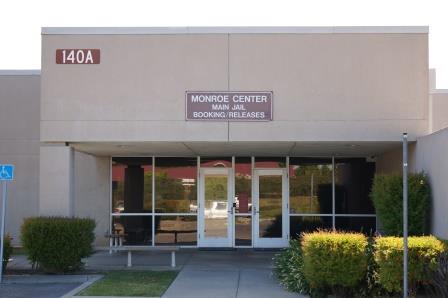
 Both staff and inmates are having their temperatures taken regularly, and staff has increased screening for exposure or infection during booking occuring at the Juvenile Detention Facility in Woodland, according to Lopez. Inmates who show symptoms of or have had recent exposure to COVID-19 will be held in a 10-bed isolation unit at the Monroe Center facility, which the county plans to expand to 50 beds in the near future.

Officials also received a court order on March 20 allowing for the release of inmates who had 30-days or less remaining on their sentence, according to Lopez. A second order was obtained on March 24, expanding early release to those with up to 60 days left in their sentences. Both misdemeanor and felony cases were eligible for early release, except for individuals charged with violent or DUI-related offenses. 

Individuals identified as transient at the time would also not be released under these court orders. Lopez said his office was working with the Yolo Health and Human Services Agency (HHSA) in order to secure temporary housing that would allow for the release of homeless individuals. 

“We’re working with the HHSA for those folks that are homeless, for a smooth pass-through for them to house them in hotels if we end up having those folks being released,” Lopez said. 

 Lopez also said, as of the March 31 meeting, 20 inmates have been released early under these two court orders. 

Yolo jails took further steps to reduce the risk of exposure from the outside. Visitation has been suspended at facilities and staff is facilitating phone contact with legal advisors to limit the amount of attorney visits to the jail, Lopez said. Phone cards have been provided to inmates to allow two 10-minute conversations per week in lieu of in-person visits. Arraignment and preliminary hearings are being conducted via remote video to limit the extent inmates travel outside the jail. 

Early releases allowed the jail to house each inmate in a private cell, Lopez said, significantly reducing the risk of widespread infection in the event of an outbreak in the facility. 

“It’s very unique — I’ve never seen us have the capacity to do this since I’ve been involved in our jail systems,” Lopez said. “Our current capacity, as I said before, is at 455. Today our current bed population is 207. So having the numbers down has provided us the opportunity to put everybody in a single cell — if the virus enters our detention system, we will be able to isolate everyone in their own room.” 

Dan Fruchtenicht, Yolo’s Chief Probation Officer, presented a report on similar measures that the county is taking within the Juvenile Detention Facility in Woodland. Four youths are currently being held at the facility and Fruchenreicht said the juvenile system is working with courts to reduce this already low population. 

Fruchtenicht said his office was taking steps to keep the juvenile facility population low, both by attempting to reduce recidivism and by encouraging officers in the field to make less arrests.  

“We’ve directed our field staff to consult with management prior to making any arrest on a youth, to ensure that all alternatives were considered before booking,” Fruchtenicht said.

The youth facility has enacted no-contact visitation times, as well as increased phone call time for the detainees. A similar remote system to the adult facilities has been set up for legal proceedings and most programs as well as interactions with volunteers have been suspended, Fruchtenriecht said. 

The Sacramento County Sheriff’s Office also announced that it would be releasing inmates under a court order issued around the same time. A March 25 notice from the office outlines similar criteria for early release — those who had 60 days or less left on their sentence, had not been convicted of a domestic violence-related nor sexual offense were eligible for early release under the court order. These standards applied to a significantly higher number of inmates in Sacramento’s larger jail population. 

“This Order will result in the release of 421 inmates who are currently being housed at the Sacramento County Main Jail or the Rio Cosumnes Correctional Center,” the notice read. “The releases will take place on or before March 30, 2020.”

Written by: Tim Lalonde — city@theaggie.org

Sports Networks, without the sports

Media giants try to navigate world of pandemic cancellations

It has been over a month since the sports world shut down in the face of the ongoing coronavirus pandemic, and the effects have been felt not only by the leagues and teams themselves, but by the media networks built to cover them. 

The suspension of the NBA, MLB and all other events have led these major outlets to search for content. With lower advertisement revenues due to a decrease in talk show and game viewership, sports networks have suffered a substantial loss in overall revenue.

The pandemic came at a time when networks like ESPN, Turner Sports, Fox Sports and NBC were gearing up for major events. The NBA Playoffs were scheduled to begin on April 18, with games that generally bring home huge revenues for ABC and ESPN (both majority owned by the Walt Disney Company) and Turner Sports Network. 

Even though the 2019 NBA playoff viewership declined in comparison to the previous year, it still averaged 3.95 million viewers per telecast. With the return of superstar Lebron James and media market giant Los Angeles Lakers to the postseason, this year’s ratings had the potential to improve. 

The loss of advertising revenue due to the suspension of the NBA season could be “in the range of $75 million to $100 million” across all networks, media consultant and former Fox Sports executive Patrick Crakes told CNN. Even though the eventual return of the playoffs could help the losses, it will be difficult to fully regain what was lost.

But ESPN’s losses pale in comparison to the hit Turner has taken. Turner isn’t a full-time sports network, but the losses from the postponement of the NBA Playoffs as well as the cancellation of the NCAA Men’s Basketball Tournament (which it broadcasts alongside CBS) are huge, and it is uncertain how long it will take before the network can recover. That puts the NBA in a difficult position, as they must satisfy the needs of both ESPN and Turner, taking into account the losses by both and making changes if need be. 

ESPN has seen a near 50% drop in ratings in comparison to last year during this time, according to Sports Pro Media. NBC, which owns The Golf Channel, has also seen a hit, as ratings have fallen 39%. It is believed that all other networks that had major events canceled or suspended have taken a similar ratings hit as well. But this is nothing more than an estimation, as networks have been reluctant to share much information or make a statement. 

So what do these sports networks show if there are no sports? There are no games to talk about or analyze, no plays to highlight and almost everything that comes with sports is gone. The networks have been put in an interesting position where they must continue to put out content but are given almost nothing to work with. After the initial suspension, NFL free agency was about to begin, which gave shows something to focus on and talk about — at least for the time being. 

“Since this week coincidentally is the beginning of the NFL league calendar and free agency, we’ve built our schedules with an eye toward that being a major topic of conversation,” said Executive Vice President of Programming at ESPN Burke Magnus in an interview released on the site.

This is the route most networks are taking, as there were many major moves that required a lot of conversation, such as Tom Brady joining the Tampa Bay Buccaneers and the blockbuster trade that sent Deandre Hopkins to the Arizona Cardinals. But, like any story, it can’t stay in the news cycle forever. 

Daily talk shows like ESPN’s “First Take” and “Get Up” continued to air at their normal times and, after initially shutting down programming for a week, Fox Sports 1 resumed its daily programming of shows like “Skip and Shannon: Undisputed” and “The Herd.” All shows that have this similar format have been forced to broadcast from home, as these networks have tried to limit interaction due to the pandemic.

With no live sports action, and with content running low, ESPN has tried to keep its airwaves busy by airing a multitude of past events, classic games and its award-winning documentaries. 

It announced a partnership with WWE to air three of the most recent Wrestlemania shows on its network. This was one of many attempts to bring viewers back, as ESPN has also announced that every Monday leading up to the NFL Draft it will be airing a historic Monday Night Football game. In addition, it has aired a multitude of episodes from its “30 for 30” documentary series, including the critically acclaimed documentary, “OJ: Made in America.”

NBC has also taken a similar route. It missed out on many NHL games and was gearing up for the coverage of the NHL playoffs. From March 30 to April 5, NBC aired two classic “Sunday Night Football” games each night. It has also aired multiple Premier League games from this past year in order to fill time. 

Due to the cancellation of the NCAA Men’s Basketball Tournament, CBS has been left with a lot of empty broadcasting space. It has been airing Big Ten conference tournament games from the last couple of years, as well as other games it holds the rights to.

Several professional leagues have also tried to produce content they can air while everyone is remote. The NBA and 2K sports announced the first ever NBA 2K Players Tournament, which began on April 3. It featured 16 current NBA players going head-to-head in the basketball video game aired on ESPN. 

The NBA is also airing a HORSE tournament on the network that will include current players from both the NBA and WNBA, as well as alumni of the game. The MLB will also begin a video game tournament of its own, with one player from each team competing in a single-game elimination tournament that will air on Twitch and Youtube. 

If you look at Bleacher Report, Sportscenter or any of the other big sports social media pages, it is certain that the majority of what you will find is old highlights, historic sports moments and other player-centered content. They have been forced to get creative in the hopes of maintaining revenue and keeping subscribers engaged, but everyday that passes continues to get harder as they must continue to post and gain interaction. 

In a streaming world where many people have “cut the cord” and moved away from cable television, this sports hiatus has added another layer of financial stress for TV networks. When the product that helps them run is suddenly gone, there’s only so much content they can show before they run out. The safety of everyone continues to be the number one priority, but at the same time, all parties are looking for ways to move forward and try to recover as much as they can from this unpredictable circumstance. 

Written by: Omar Navarro — sports@theaggie.org