53.7 F
Davis

Davis, California

Saturday, December 20, 2025
Home Blog Page 40

The ducks are bullying me

Can someone translate their quacks for me?


By ALLISON KELEHER — adkeleher@ucdavis.edu


The ducks are out and about on the UC Davis campus, and you best believe I have noticed. Those little guys can’t hide from me. I love seeing them walk around on the Mrak Hall lawn whenever I head to the library. Once, I followed some around and quacked at them so I could join in on the fun.

But lately, I feel like the vibes are off. Some have started chasing me in retaliation to my antics, and I don’t know how to feel about it. Are we building a friendly repertoire? Or is there something more conniving under those feathers?

To find out, I decided to investigate. I bought a duck costume on Amazon and it promptly arrived within two days. When I got the notification that my costume arrived, I ripped open the package and slipped into that bad boy. What followed was some very serious investigation as I attempted to infiltrate their circle in the Arboretum.

The ducks were so chill when I found them — they were all sitting politely in a circle. A couple of them were sleeping and had their beaks tucked underneath their feathers. I calmly and quietly took a seat on the grass to join the circle. Apparently, I wasn’t slick because all of the ducks stood at attention. I instantly became very aware that I was wearing a duck costume and thought that, perhaps, I wasn’t wanted.

I was feeling stressed until one of the ducks got up and started waddling around the circle as fast as he could. My first thought was that this was a mating dance. Then, I realized that it couldn’t be because there’s no way a duck would choose someone wearing a duck costume. As I was deep in thought over my potential suitor, the duck pecked me with its bill, and I was worried that a mating dance might actually be happening. Did he peck me, or did he pick me?

In an instant, the duck took off around the circle with amazing speed. The remaining ducks began quacking incessantly, and I started to wonder if they were entertained by what had just happened. I looked around in confusion, but the ducks just kept quacking at me. The duck that had pecked me continued to waddle his way around the circle, but he was losing steam. He fully made his way around the circle and looked really annoyed when I was still sitting down. Then he pecked me again.

That was when I had an epiphany. I had trained for this my entire life — a real-life game of “duck, duck, goose.” I was ecstatic; This was my moment to shine. I can clearly run much faster than these little birds, and I needed a win. I jumped into the air and took off after the duck. He already had a head start on me because I took too long to figure out what game we were playing. Then it felt like time had stopped — I tripped over my duck costume and face-planted on the floor. I was so embarrassed. All of my new friends just saw me at my lowest moment.

When I rose from the ground, I wiped the mud off my face and tried to stand up. However, I didn’t make it — I tripped again on my costume. I couldn’t show my face again, but I could hear their ridiculing quacks in the background.

By the time I finally got up on my feet, I looked over and the duck was already in my spot. I lost. My ego was shattered. I tried to look on the bright side, now I was finally given the opportunity to be a duck. That was until a duck made me sit down so they could play. The duck waddled around the circle with a big smile on its bill. Once he made it around, he pecked me to be the goose again.

When I got up this time, I didn’t trip over my costume and was able to run and tag the duck. I confidently took my seat with my fellow ducks since I was one of them now. That was until the duck pecked me to be the goose again.

This cycle continued for hours, and it made me feel really bad about myself. Maybe I wasn’t a duck like I thought I was. I decided it was time to get up and leave the ducks alone. As I walked away, I could hear their quacking fade into the distance.

They were laughing at me — I just know it.


Written by: Allison Keleher — adkeleher@ucdavis.edu


Disclaimer: (This article is humor and/or satire, and its content is purely fictional. The story and the names of “sources” are fictionalized.)


Be there or be square: UC Davis builds future in Sacramento through Aggie Square

This May, UC Davis will open a $1 billion interdisciplinary and industry-academic collaborative space in Sacramento 

BY NAREN KRISHNA JEGAN

In 2017, Sacramento Mayor Darrell Steinberg and UC Davis Chancellor Gary May established a vision to create an innovative hub where university researchers, students, industry partners, entrepreneurs and community members could collaborate side by side to accelerate interdisciplinary ideas and bring them to the world. This $1.15 billion investment, in collaboration with Wexford Science and Technology, resulted in the development of Aggie Square, the newest scientific addition to UC Davis.

Aggie Square is an urban development in Sacramento that offers all UC Davis students hands-on learning experiences, entrepreneurship programs and community engagement opportunities to help them develop critical career skills. As the embodiment of May’s vision, it fosters innovation, research expansion and strong community ties — expanding UC Davis’ regional, national and global impact.

Aggie Square’s state-of-the-art facilities have been designed to be flexible and

accommodate students and researchers in a variety of fields. Some of the district’s first

university tenants will come from the College of Engineering, the School of Veterinary

Medicine and the School of Medicine. Continuing and Professional Education will also

host classes for adult learners seeking to gain new skills for their careers. However, there

are other opportunities — like Quarter at Aggie Square — for students from other

disciplines to experience this space. Aggie Square is also open for student-led events,

providing an active hub for connection and growth.
The Quarter at Aggie Square program started in the fall of 2020 with an initial cohort studying transformative justice studies during the pandemic. Within a short few years, the program has expanded to provide undergraduates many offerings such advancing healthcare equity, education in the African American community, urban sociology and many more. The program provides unique experiences for undergraduates at UC Davis to immerse themselves in a topic of societal relevance through a combination of courses, field trips and experiential learning including internships, research and clinical rotations.

The combination of course-based learning and applied experiential components allows

students to integrate theories with real-world practice and gain career-readiness skills for post- graduation endeavors. The small class sizes allow professors to form a tight-knit community with their students. Oftentimes, students take more classes with each other or additional courses with the faculty in the program, allowing them to get letters of recommendation and access to additional opportunities. With equity as its focus, by design the program attracts students from diverse experiences and interdisciplinary backgrounds.

One of the key benefits of Quarter at Aggie Square is its financial accessibility for

undergraduate students. There are no program fees or additional costs associated with the

program, apart from potential transportation expenses to and from internship sites. This

ensures that the program remains equitable and accessible to all students, allowing them

to focus on their academic and professional development. Moreover, with dedicated staff and programming designed to make the transition from Davis to the Sacramento campus seamless, students are able to fully immerse themselves in the experience without logistical stress.

In addition to the Quarter at Aggie Square, a novel master’s program in biomedical device engineering is being piloted to equip students with the skills to translate engineering concepts into scalable devices for the private sector. The program features a three-quarter capstone project that tasks students with turning university research into prototypes aimed at improving clinical care. Students will work alongside clinicians to develop medical solutions that enhance patient outcomes and ensure the resulting devices can be commercialized at scale.

Moreover, Aggie Square offers a diverse range of experiences such as workshops, training and events through UC Davis and Wexford Science and Technology. For example, Venture Catalyst, which will have a presence at Aggie Square, provides hands-on programs and resources to assist students — from any major — to turn research and technology into real-world solutions. It also supports student and alumni startups, helping them secure accelerator funding and venture capital through initiatives like the Smart Toolkit for Accelerated Research Translation (SMART) program and Biotech Innovation Gallery, as well as facilitating connections to venture capital firms.

Aggie Square is a short bus ride away from the Davis campus through the Causeway Connection, a free weekday bus service for university affiliates. The ground floor of 200 and 300 Aggie Square and the second floor of 300 Aggie Square, will be open to the public Monday through Friday and on Saturday mornings, beginning after the grand opening celebration on May 2. Students, faculty, staff and community are welcome to enjoy the many indoor and outdoor seating options and free WiFi. Access to the university’s eduroam wireless network will also be available.

Aggie Square’s developer, Wexford Science and Technology, offers Connect Labs to enable short-term leases in a 50,000-square-foot space featuring pre-built and furnished office, lab and support spaces designed for emerging innovators and entrepreneurs in digital, life science and health sectors.
ANOVA Aggie Square is a mixed-use residential building opening in spring 2025 on the UC Davis Sacramento campus, offering 190 apartment units (252 beds). UC Davis Student Housing manages 49 units for graduate and undergraduate students, prioritizing medical and nursing students, while GMH Communities leases the remaining 141 units, giving priority to UC Davis affiliates. Amenities include a fitness center, study lounges, a game room and more. Rent for Student Housing units ranges from $1,138 to $1,510 per month, priced below the Sacramento market.
Beyond student opportunities, Aggie Square is invested in Sacramento’s growth. Through the Community Benefits Partnership Agreement (CBPA), UC Davis, the city of Sacramento and Wexford Science and Technology have committed over $50 million to affordable housing, local hiring, youth programming, community access to space and workforce development — ensuring lasting community impact for generations to come.

Forged from a vision to provide UC Davis students, researchers and faculty the opportunity to learn and apply skills through an interdisciplinary platform, Aggie Square is positioned to expand its footprint as the demand for occupancy at the district from university programs and majors, as well as private sector companies, grows.

UC Davis students, faculty and staff and community members will experience Aggie Square firsthand at the grand opening celebration on Friday, May 2. Open not just for UC Davis, but for the entire Sacramento region, anyone interested in attending is encouraged to RSVP for the event. For more information on Aggie Square, visit their website.

CREDITS: Phil Wade, Mary Mumper, Matt Marcure


Written by: Naren Krishna Jegan


Davis receives over $7.5 million in grants for citywide infrastructure projects

Improvements for Unitrans, pedestrian safety and more 


By MATTHEW MCELDOWNEY — city@theaggie.org


On March 24, Davis announced that the city has received over $7.5 million in grants from federal programs and the county since June 2024 — the complete list of these grant programs is accessible through the city’s press release.

The city will receive grants to build charging infrastructure for Unitrans’ electric buses, according to the press release from Public Information Officer Barbara Archer. Davis anticipates that Unitrans will be able to utilize 16 more charging stations by 2026, improving their ability to service the students and residents of Davis moving forward.

Archer added that these grants will also be invaluable for improving road safety for pedestrians, bikers and vehicles. To do so, the city plans on utilizing affiliate funding from the Railroad Crossing Elimination (RCE) Grant Program for a crossing relocation and grade separation project (implementing overpasses or tunnels to separate rail and road traffic).

“This project will help to reduce conflicts between both passenger and freight trains and roadway users, improve goods movement reliability, ease traffic congestion and reduce environmental impacts,” the press release reads.

Other safety projects will implement buffered bike lanes from Russell Boulevard to Arlington Road as well as install rapid flashing beacons and high-visibility pedestrian markings in several high-traffic areas. The city is also looking to use grant funding to install camera recognition technology to survey high-traffic or near-collision areas. These improvement projects will look to prevent serious injuries and traffic fatalities throughout Davis.

In addition, Archer mentioned in the statement that Davis will be receiving funding for citywide electric grid improvements. The $400,000 grant will fund energy-related education and research in addition to funding the installation of smart thermometer technology in over a hundred heating, ventilation and air conditioning systems in Davis.

Davis will also be receiving funding to upgrade the city’s transformers and build additional electric vehicle (EV) charging stations. This is on top of reimbursements for the city’s purchase of a total of 25 EVs.

Lastly, the city will receive the maximum $250,000 from the California Governor’s Office of Emergency Services’ State and Local Cybersecurity Grant Program.

“The purpose of the grant is to assist agencies in addressing cybersecurity risks and threats to information systems, and improve security of critical infrastructure and resilience of the services these entities provide to their communities,” the press release reads.

The city of Davis Mayor Bapu Vaitla expressed recognition for the efforts of the city’s staff in securing the funding necessary for these improvement projects.

“We are always looking for ways to leverage partnerships, funds and resources,” Vaitla said. “These grants will help support a broad range of services that will go a long way into reinforcing the city’s commitment towards climate action, fiscal responsibility and public safety.”

Written by: Matthew Mceldowney city@theaggie.org


‘It resembles a wonderland, our little wonderland’: The 111th Picnic Day is set for April 12

UC Davis’ annual event holds activities, attractions and educational experiences for the campus and city community


By AALIYAH ESPAÑOL-RIVAS — campus@theaggie.org

UC Davis will hold its 111th annual Picnic Day on April 12. The largest student-run event in the country, Picnic Day festivities are both campus- and city-wide and are set to feature numerous activities for students, faculty and families.

The 2025 theme “Welcome to Wonderland” was chosen to describe the transformation UC Davis takes during the event, according to Sriya Joshi, a third-year managerial economics and psychology double major and Picnic Day publicity director.

“Picnic Day becomes this spectacle on campus,” Joshi said. “So much is going on [around] campus and it resembles a wonderland, our little wonderland.”

Last year’s Picnic Day brought in close to 75,000 attendees, according to Joshi. This year, the event is slated to bring in the same crowd, with over 200 events across campus to entertain guests.

“Because UC Davis and the city of Davis go hand in hand, Picnic Day displays how welcoming this community is,” Joshi said. “It’s a fun and happy day for everyone in the city to get involved on campus.”

The annual parade starts with an opening ceremony at 9:30 a.m. at the Grandstands on the North Quad, across from Veihmeyer Hall, and officially kicks off at 10:15 a.m.

Other crowd favorite events include the Doxie Derby in the University Credit Union Center from 12 to 2 p.m. (tickets are sold out, but the event is live streamed by the university), Battle of the Bands at the East Quad Stage from 12 to 4 p.m. and Cockroach Racing at Briggs Hall from 11 a.m. to 3 p.m.

One new addition is the Picnic Day Pitstop on Russell Field. It will feature an inflatable obstacle course, food trucks and different activities and games. A new scavenger hunt will also be held in conjunction with the Student Organization Fair in the Memorial Union Quad. Attendees can explore the hundreds of campus organizations while also looking for clues, according to Joshi.

A returning event is the Children’s Discovery Fair in the lawn behind Hoagland Hall, whose theme this year is “Blasting Off into Space.” Open to all attendees, the fair will feature craft stations, games, live performances and booths.

“My favorite event is the Children’s Discovery Fair,” Joshi said. “The first year I worked Picnic Day, I was stationed there, and I was so happy seeing all the children running around and having such a good time. It’s great how Picnic Day caters to all ages.”

In the instance where any attendees need medical assistance, first aid will be located at the UC Davis Fire Station. Wheelchairs will also be available, located at the Picnic Day Headquarters in the Garrison Room on the second floor of the Memorial Union.

To find more information on this year’s Picnic Day and a full list of events and attractions, visit their official website and social media.

Written by: Aaliyah Español-Rivascampus@theaggie.org

Aggie Mental Health Ambassadors urge ASUCD Senate’s support after recent budget cuts

The April 3 meeting also saw Umar Shaikh be elected as Senate Pro Tempore


By JORDAN POLTORAK— campus@theaggie.org


Four ambassadors from Aggie Mental Health addressed the ASUCD Senate during their April 2 meeting about plans to defund the program and asked for support.

They urged Senators during open forum to take the issue up with UC Davis Student Affairs, who is cutting their funding.

Daniel Mojica, a fourth-year political science and psychology major as well as former ASUCD external affairs commission chair, addressed the table first.

“Our biggest concern is to get the help for students across campus,” Mojica said. “We do not just support students, we also support faculty and those who come to Davis’ campus to receive our services.”

The ambassadors emphasized that they were not asking for financial support but rather for Senators to use their voices and advocate for the importance of the organization.

“I know a lot of you [ran campaigns] on mental health,” Mojica said. “Now is the time to do something about those promises made to the students.”

The organization focuses on peer-to-peer support, “to ensure that mental health resources are accessible to all students and ensure their academic success,” per a statement posted on the Instagram page @save.amha, dedicated to saving the program.

“I understand that it is a hard time to be a university in America,” Alyssa Reid, a third-year psychology major and mental health ambassador, said. “However, public health is not where we can take cuts. Students now more than ever need access to mental health resources.”

The organization has less than two weeks to petition for their funding, according to the ambassadors at the meeting.


Senate Pro Tempore and Other Business

Two nominations were proposed to be Senate Pro Tempore, the legislature’s official representative, succeeding Senator Dhilena Wickramasinghe. They were Senator Umar Shaikh, a second-year political science major, and Senator Amrita Julka, a second-year political science public service and human development major. After a vote, Senator Shaikh was elected to the position for this quarter.

The Senate then moved into unit adoptions. The Executive Advisory Council typically has one senator representative, but when presented with his options, ASUCD President Gaius Ilupeju chose both Senators Ezra Rubin and Zack Dollins.

Senate Bill #67, which allows ASUCD commissions to turn in a written quarterly report rather than a presentation, also passed unanimously at the meeting.

During open forum, Senator Solana Rodriguez shared that she is working on a list of immigration resources that she will be presenting to classes in the following weeks.

The meeting was called to order at 6:18 p.m. and adjourned at 7:26 p.m.

Written by: Jordan Poltorakcampus@theaggie.org

The shift of Saint Francis University Athletics to Division 3 reflects larger trends in sports

 Is the future of smaller college athletics at risk?


By DIEGO CERNA — sports@theaggie.org


On March 25, 2025, Saint Francis University announced its decision to move from a Division 1 sports program to a Division 3 program beginning in the 2026-2027 academic year. Saint Francis student-athletes would receive a smaller amount of scholarships, as Division 3 programs only offer academic scholarships for student-athletes.

The announcement came as a shock to the Saint Francis community, especially since it involved the demotion of all 22 of Saint Francis University’s athletic programs. It came as even more of a surprise given that the Saint Francis men’s basketball team ended a 34-year drought of not reaching the National Collegiate Athletic Association (NCAA) March Madness tournament this season, which was seen as a step in the right direction for the entire athletics program.

Smaller college sports programs have seemed to struggle increasingly in the new landscape of collegiate athletics following COVID-19.

In January 2025, Sonoma State University announced its decision to cut all Division 2 programs in order to lessen its $24 million budget deficit. For Sonoma State fans and students, there was discontent as student-athletes were given no prior warning of this decision, prompting protests across the campus.

Other universities have made decisions to cut certain sports such as the swim team, including California Polytechnic State University of San Luis Obispo, San Francisco State University and many more across the country. As financial pressure eliminates program after program, many smaller programs are struggling to keep up.

The emergence of name, image and likeness (NIL) deals has opened up more opportunities for college athletes to earn commercial profit with corporate companies in the media industry. NIL deals became legal in 2021, as rising discussions from the past decade had questioned whether universities excessively profited off of their students’ success and whether college athletes should receive any compensation.

The introduction of the transfer portal and extended eligibility for student-athletes affected by the COVID-19 pandemic has influenced athletics. Additionally, athletic programs have continuously recruited based on NIL deals, which has drastically reduced smaller Division 1 and Division 2 sports programs from having any major influential power to recruit college talent.

College athletics have almost always been dominated by the “Power Four” conferences. These conferences include the Big 10, the Southeastern Conference (SEC), the Atlantic Coast Conference (ACC) and Big 12, which have controlled the recruitment of top players for a long period of time. With experience of long-lasting success, they not only maintain a greater amount of resources than smaller universities to attract top talent, but they also gain more NIL funds to persuade student athletes.

Many universities end up selecting certain sports programs to cut instead of cutting the entire sports programs overall. These programs include popular sports such as swimming and diving, tennis, golf and others. Sports such as basketball and football are usually prioritized, as they generate the most money and fans for universities.

This past summer, the NCAA agreed on a $2.8 billion antitrust settlement with five power conferences in order to compensate student-athletes while also providing more funding for programs. This is an intended benefit for student-athletes, however, it also makes it harder for universities who do not choose to opt in to this antitrust settlement to retain talent and recruit players. With a seemingly continued shift toward larger programs with the most funding, the status of NCAA athletics still remains to be seen.


Written by: Diego Cerna — sports@theaggie.org


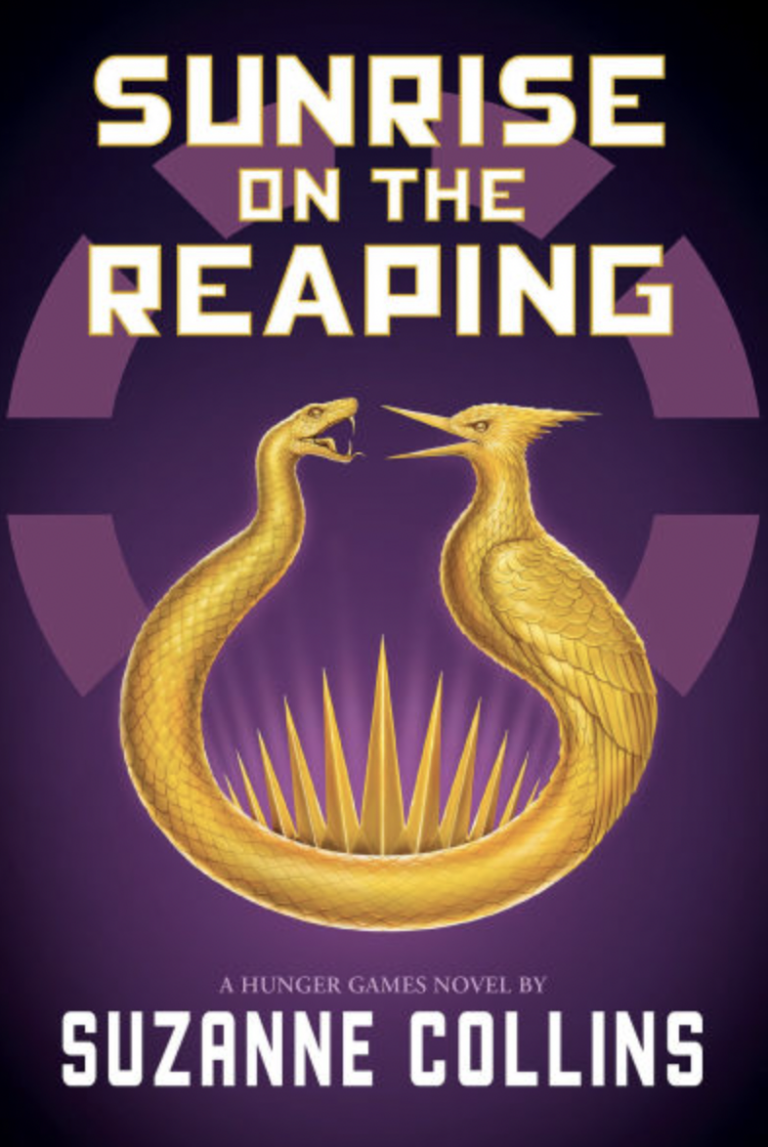
Review: ‘Sunrise on the Reaping’ recontextualizes its world

The sun rises once more on ‘The Hunger Games’ in a prequel starring beloved character Haymitch Abernathy 


BY JULIE HUANG – arts@theaggie.org


Suzanne Collins’ series “The Hunger Games” is well known for exploring difficult questions about human nature and the structure of society, while at the same time being full of exciting young-adult entertainment. Its latest addition, “Sunrise on the Reaping,” follows that tradition in smooth fashion.

What can be described as a prequel following fan favorite Haymitch Abernathy’s journey through the 50th Hunger Games is also a novel that is inextricably concerned with the role of propaganda in shaping human experience and perception. Where can truth be found in circumstances where even the most genuine actions can be twisted by the perverse motives of others?

Before diving into the narrative, Collins prepares her readers for that question with four epigraphs by George Orwell, William Blake and David Hume, discussing the relationship between truth, propaganda and what human beings choose to believe in.

The novel then begins with a depiction of Haymitch’s early life in District 12, introducing his mother, little brother and beloved girlfriend Lenore Dove in a way that just screams “something bad is going to happen” before it actually does.

Foreshadowing runs rampant throughout the entire novel, but it strikes an emotional nerve in this early section as Collins writes a protagonist characterized as a hardworking optimist, driven by love for his close ones, in ominous contrast to the solitary and jaded alcoholic that Haymitch becomes in “The Hunger Games” proper.

Once young Haymitch is selected to participate in the 50th Games, “Sunrise” begins to recontextualize everything that was seemingly well-established in the original series and never once misses an opportunity to make readers question everything they thought they knew. The very moment Haymitch is chosen constitutes one such fissure between truth and untruth, and from there, the discrepancy between the events that happen on the prequel’s pages and what was divulged in earlier novels only grows wider.

The plot unravels with these consecutive events building on top of each other, driven by characters who were portrayed one way in the original series yet are cast in a new light by their roles in this book. For one, the role and motivations of Haymitch himself as a tribute in the games are revealed to be vastly different from what was assumed by “The Hunger Games” protagonist Katniss Everdeen and real-world readers alongside her. Their father-daughter, mentor-mentee relationship is thrown into a new light as well, as the word “sweetheart” takes on a poignant meaning.

Aside from the reveal of other heartbreaking personal connections that Haymitch and Katniss share, “Sunrise” also features the early seeds of the nationwide revolution for which Katniss would eventually become the “Mockingjay” figurehead. Collins’ reveal of just how long plans for revolution against Panem’s tyrannical government under President Coriolanus Snow have been brewing. This sentiment alone serves as pointed commentary that real systemic change requires a lifetime of faith and effort in the face of repeated failures, never knowing when victory might finally arrive. So, too, are these efforts unseen and unnoticed by the majority of people who never knew they existed, yet they are necessary in order to work toward serendipitous circumstances where positive change may actually take place.

Collins’ commentary on the necessity of each generation planting seeds of hope is nowhere more clear than in the character of Lucy Gray Baird, introduced as Snow’s tribute in the first prequel and never once directly mentioned by name in this second prequel. Still, she haunts the narrative and the characters within it: first, in the defiant love of freedom exhibited by Haymitch’s tragic relationship with Lenore — who is a descendant of Lucy Gray’s family, formerly traveling musicians known as the Covey — and later in bitter words spoken by a late-middle-aged Snow on the fickleness of Covey women.

Despite their opposite ideological stances, Lucy Gray’s free will and spirit left an impression on both Lenore and Snow. Their impressions are in turn transferred to Haymitch through their interactions with him, despite him not knowing the woman that they originally knew.

The relationships between characters and the information they share, or omit from each other, could be construed as Collins engaging in fan service — inclusions made simply to please the audience and long-time fans of the series. However, these interactions also feed into the novel’s central theme of how truths and lies are passed from person to person and how the constructed narratives that become propaganda take advantage of the constraints surrounding the communication of information.

“Sunrise on the Reaping” demonstrates over and over how artifice can be injected in even the most genuine of gestures and how well-intended actions can be repackaged to fit narratives that completely oppose one’s intentions, depending on what information has been relayed and what has been discarded.

Yet this story also propounds the idea that, like Haymitch and Lucy Gray, every person is connected through the past and future to others that they may never learn the names of. Even as some information has been lost or omitted, those people have played a part in shaping the world, unseen but not unimportant.

Despite its slew of harsh realities, “Sunrise on the Reaping” is a reminder that the people one has loved leave their influence on their surroundings long after they are physically gone, and those influences leave room for future growth. It is a reminder that the genuine connections forged with others in meaningful moments will always hold some truth, even if those truths might someday become invisible in their namelessness.


Written by: Julie Huang — arts@theaggie.org 


Let’s bring back the diplomatic leader

Why diplomacy is an invaluable skill


By MAYA KORNYEYEVA — mkornyeyeva@ucdavis.edu


Over the course of our lives, we typically learn to associate the idea of “being diplomatic” with universally moral concepts like fairness, reciprocity and respect. Our parents teach us to behave courteously with our friends and siblings, our coaches encourage us to be good sports with the opposing team and our bosses instill in us the importance of being tactful and sensitive when approaching a business opportunity with another company. The notion of diplomacy exists far beyond the sphere of political discourse, subtly ingrained within our everyday communication.

However, more often than not, we hear the word “diplomacy” emphasized within the realm of international politics, where it is celebrated for its potential to be a powerful tool when utilized appropriately. At its core, diplomatic communication is a strategic exchange of views that can be used to connect with global leaders, negotiate interests and form genuine compromises that ensure both economic and social peace. It is both an art and a science — a skill that demands character, finesse and patience.

In our modern political climate, the art of being diplomatic is actively being forgotten, or, rather, purposefully pushed to the sidelines. Many of our country’s conservative elected officials solely look out for their particular self-interests, at the expense of everyone else: prioritizing “winning” over “collaborating.” Our current president is no exception.

In almost every area of foreign affairs, President Donald Trump is tearing down complex and hard-won webs of connections with global leaders, from Canada to Mexico, Greenland to China and Ukraine to Europe. It seems as though he is altogether incapable of patient, polite conversation and incompatible with the notion of treating other leaders with kindness and respect (unless, of course, there is some potential for personal gain).

Trump and J.D. Vance’s in-person conference last month with Ukrainian president Volodymyr Zelenskyy is a shockingly clear example of the current Trump administration’s lack of diplomacy. In a meeting that was supposed to result in the signing of a rare earth mineral deal between Ukraine and the United States, Trump opened with a sarcastic comment on Zelenskyy’s attire (plain military clothing, rather than a suit), Vance accused Zelensky of not being “grateful enough” for U.S. military aid and their conversation ended with both the president and vice president shouting down Zelensky and berating him for “gambling with World War III.”

Their behavior broke all bounds of decency and demonstrated unfounded contempt for another world leader, resulting in irreversible damage to diplomatic ties with Ukraine. Notably, Ukraine-U.S. relations were progressing smoothly up until Trump’s appointment to office; Both countries were in agreement to protect a Ukrainian democracy and condemn Russia for its crimes. In a conversation that lasted just under an hour, Trump and Vance managed to show the world how disrespectful they could truly be, cementing the views of other global leaders that America may no longer be a reliable and friendly ally.

Beyond this widely televised exchange, Trump’s rapid installation of tariffs on foreign imports — pertaining to nearly all of America’s trading partners — is evidence of his disregard for keeping the peace with other nations, sending a spark capable of fueling the fire of a global trade war. Furthermore, his clear disrespect for the sovereignty of other independent countries brings America back centuries, to a time when our nation was eagerly seeking to conquer and colonize. In recent weeks, Trump referred to Canada’s former prime minister, Justin Trudeau, as a “governor” and the country as America’s “51st state.” He has also vowed to annex Greenland, a Danish territory, “100 percent,” “one way or another,” citing national security as a reason for this bizarre move.

This is not to say that keeping our national interest at the forefront of our political agenda is not fundamental. However, if the means to achieve this end bypass respectful negotiations, attack other leaders and destroy connections formed over decades of diplomatic communication, it creates lasting harm and uncertainty. In turning away previous American allies, withdrawing U.S. Agency for International Development from vulnerable countries and taxing foreign imports with little to no negotiation process, Trump is isolating America from other democratic nations and building dangerous bonds with authoritarian nations like Russia and North Korea.

We need the diplomatic leader back: someone who understands the intricacies of polite and courteous communication, who is able to forge stronger ties with our existing allies and engage in fair negotiation — not an administration that strong-arms their way for personal profit, at the expense of the liberties and rights of the American people. Thus, it is beyond pertinent to judge our prospective politicians not just on their values and ideas, but also by the way they treat others and engage in conversation with those who have opposing views: by their capacity and knack for diplomacy.


Written by: Maya Kornyeyeva — mkornyeyeva@ucdavis.edu


Disclaimer: The views and opinions expressed by individual columnists belong to the columnists alone and do not necessarily indicate the views and opinions held by The California Aggie.


Revisiting the novels of ‘The Hunger Games’

Looking back on “The Hunger Games” series in preparation for its upcoming prequel 


BY JULIE HUANG – arts@theaggie.org


The long-awaited second prequel to Suzanne Collins’ “The Hunger Games,” titled “Sunrise on the Reaping,” was released on March 18, promising to tell the story of Katniss’ mentor Haymitch Abernathy as a tribute in the 50th annual Hunger Games. Due to the novel’s prequel status, the ending seems to be a foregone conclusion, but revisiting the earlier books in the series may remind readers of crucial plot points and sharpen the sense of fate that the characters in “Sunrise on the Reaping” are faced with. 


“The Hunger Games”

The book that began the franchise, “The Hunger Games” features the most self-contained plot in the series. Tightly paced and packed with action, it could technically stand alone as a gripping thriller about a group of teenagers who fight each other to the death in a survival arena. However, this first foray into the games is also tasked with the challenge of introducing readers to the dystopian country of Panem through the mind of the wary and isolated teenager Katniss Everdeen, and it succeeds. 

As narrator and protagonist, Katniss is terribly observant of the issues that affect her directly, including the lives of her loved ones. This shrewd nature extends to some cutting commentary on the injustice of her society. Yet there’s also much that she’s unaware of, as the oppressive ruling class guard their secrets and play political games. Balancing these political machinations with life-or-death action, “The Hunger Games” carefully sets up the characters and forces that will come into play in the second and third novels of the trilogy. 


“Catching Fire”

Having survived the arena together, Katniss and Peeta Mellark leave the physical threats of the games behind and become unwilling political pawns for the Panem government. Katniss especially finds herself under the yoke of President Coriolanus Snow, as he has threatened to kill her loved ones unless she yields to his will by presenting herself as passive and nonthreatening to the cruel regime. This performance requires her to engage in a pretend romance with her fellow tribute Peeta. 

Collins once again transforms political intrigue into another type of story, this time substituting action for romance until Katniss and Peeta are forced to return to the arena and the stakes are driven upwards once more. As the second book, “Catching Fire” does an excellent job of transitioning from the thrill of the first novel to the broader world of the series as a whole, intertwining romance, action and political plotlines in a way that feels all too natural. 


“Mockingjay”

As the finale to the original trilogy, “Mockingjay” breaks away from the Hunger Games arena and focuses more explicitly on Katniss’ role as a figurehead for the growing rebellion against the oppressive government ruled by Snow. As such, the political stakes of the previous novels’ personal entanglements are made more explicit, framed in the context of the political unrest and physical uprisings that concern not just a few people but all of Panem. The book can be summarized as a collection of bittersweet moments amidst a wave of tragedy. Knowing that “Mockingjay” is the last entry into the main trilogy, and that all of the characters’ fates are final, adds a touch of solemnity to the ending while sweetening the rays of hope that Collins leaves for her characters. 


“The Ballad of Songbirds and Snakes”

Fellow prequel to “Sunrise on the Reaping,” “The Ballad of Songbirds and Snakes” provides the unexpected experience of witnessing the most vulnerable and sympathetic days of Snow’s life, transporting the machiavellian dictator back into his youth when he was an ambitious underdog on a university scholarship. The prequel reveals that Snow always had a capacity for cruelty, but his family’s poverty and his own lived experiences with hardship seem to justify his ruthlessness somewhat.

Collins may be commenting on the idea of villains with sympathetic backstories. As in the main trilogy, she throws a love story into the mix as Snow develops a relationship with the District 12 tribute he is mentoring, the enigmatic and lovely Lucy Gray Baird. However, as in the trilogy proper, this romance is far from conventional or happy. Rather than softening his character, these elements of romance instead complicate the question of whether Coriolanus was always destined to become President Snow. 

As the release date has just recently passed, looking back on the events of the earlier books may heighten the anticipation for “Sunrise on the Reaping,” as readers wait to experience the interiority of the beloved but mysterious character of Haymitch Abernathy.


Written by: Julie Huang — arts@theaggie.org 


The ultimate style showdown: minimalism versus maximalism

Are you all about simplicity and serenity, or do you thrive in bold, vibrant chaos?


By IQRA AHMAD — arts@theaggie.org  

Have you been on social media recently, maybe TikTok, Instagram or Pinterest? If so, you’ve probably noticed that your feed is flooded with jaw-dropping styling tips and a never-ending parade of home decor transformations. From perfectly curated outfits to beautiful, magazine-like staged rooms, these aesthetic spaces are taking up more of our day than we might care to admit. It’s hard to scroll without feeling like your space and closet need a total revamp and the ultimate makeover, right?

But instead of reconnecting with nature or escaping to the outdoors, we seem to have entered a new era: the battle of minimalism versus maximalism. So, what suits you? Are you all about the serene simplicity of a clean, minimalist look or do you prefer the bold and eclectic energy of a maximalist style? Dive in and see which aesthetic speaks to your soul.


Minimalism vs. maximalism: What’s the difference? 

Let’s break it down: Minimalism and maximalism represent two contrasting approaches to style and design, each offering its own appeal. 

Minimalism is all about the “less is more” approach. Preserve your mental real-estate and opt in for a clean, streamlined approach that focuses on being intentional in choosing what you keep in your space and presence. With an emphasis on simplicity, functionality and quality over quantity, the purpose of minimalism is to keep your life manageable. Think neutral, calming colors and well-crafted spaces with only the essentials. Instead of being overstimulated by the chaos of endless fast-fashion cycles and those dangerously full online shopping carts, minimalism offers sustainability and a conscious effort in embracing a simpler lifestyle. 

Maximalism, on the other hand, is the opposite. It’s a bold, energetic celebration of life with excess. Why play it safe when you can go all out and make a statement? In maximalism, it’s about showcasing your creativity and individuality without restraint through pieces that compliment your look. So be exciting, experiment with a palette of vibrant colors, mix checkered patterns with stripes and layer textures. Whether you decide to add various fabrics or jewelry to your space or outfits, this style entails displaying meaningful pieces that tell stories about yourself through trinkets and other curious findings. 


Why choose one when you can have both?

Though these styles may seem like polar opposites, there is absolutely no reason you can’t mix elements of both to create a style that speaks to you. In fact, many people find themselves in the best of both worlds, combining minimalist functionality with maximalist flair. It’s all about finding a balance — creating a space or wardrobe that feels soothing and functional while still reflecting your personality and love for daring statements. 

For example, in home decor, you might start with a minimalist base, with neutral walls, clean furniture and open spaces, and then introduce maximalist touches like colorful throw pillows, unique art pieces or a gorgeous gallery wall. Similarly, in fashion, you could layer simple, classic pieces as you establish a capsule wardrobe with one or two statement accessories, like a bold scarf or eye-catching shoes. You can even adorn yourself with touches of gold and silver jewelry. 

The beauty of entwining minimalism and maximalism lies in creating an environment or style that allows both peace and personality to coexist. What’s not to love? Mix it up and showcase your style for you.


Written by: Iqra Ahmad — arts@theaggie.org 

Celebrating Holi in Davis

The UC Davis Indian Student Association will host an official event to commemorate the Hindu holiday


BY DEVANSHI AGNIHOTRI — arts@theaggie.org 


A rainbow of colors will fill the sky and water balloons will burst with colored water, because March 14 marks the official time for the annual Hindu holiday, Holi. Celebrated as the “Festival of Colors,” Holi is celebrated on a different day each year to mark the end of winter and the start of spring. The celebration occurs on the last full moon of the lunar month of Phalguna, typically on the 12th month in the Hindu calendar. 

The Hindu “Festival of Colors” honors the triumph of good over evil, with people lighting bonfires to say their goodbyes to winter, throwing bright powders and water and ringing in the change in seasons. 

Holi is celebrated in a variety of ways — the day before Holi is known as Chhoti Holi, and a bonfire is lit to symbolize good over evil. On Holi, people gather together and throw colored powder and water at anyone they see. For the celebration, people typically wear the oldest clothes in their closet, preparing for them to get ruined with colored powder and water; Each swipe of color on a person’s face is a moment of endearment.

In addition to the colored powder, water also gets involved in the celebration. Many people use water guns, water balloons or even buckets of water and playfully splash water at each other. Saanvi Bapu, a third-year cell biology major and president of UC Davis Indian Student Association (UCDISA), described first-hand experience of the festivities.  

“You go in with a set of friends and you’re just playing [alongside] them, but at some point, everyone is usually just playing [alongside] each other,” Bapu said. “You’re just throwing up colors in the air, and you can make new friends in the process. Even if you don’t talk to them and names aren’t exchanged, you’re all just having fun with the people there.”

The Indian Student Association at UC Davis is a student-run organization that focuses on highlighting Indian culture at UC Davis and works with other South Asian organizations. The organization hosts gatherings on Hindu holidays like Diwali and Holi, as well as holds the Garba Night, Davis Dhwani and study social events. 

“The Indian Student Association at UC Davis is the only undergraduate [student-run] organization at [UC Davis] that allows for Indian as well as other students interested in Indian cultures and traditions to unite under one common organization,” the UCDISA website reads. “Our main goals are to bring the UC Davis community closer through holding social events for cultural awareness [and] fundraising for the underprivileged community.”

Holi is a lively event and acts as an easy mode of connecting with others without having to socialize. Students far from home may be missing the traditions with their family such as the sweets their parents would make or the matching Holi outfits, but the Davis community brings similar sentiments to the local celebration — fostering a cultural connection within the college town. 

“You might not find these events so easily in a lot of places, especially for the students from India that may be missing these festivals,” Bapu said. “One of our main goals is to host these kinds of events so students can feel more connected to their culture.”

For those interested in celebrating the holiday, bring your friends and show your love by spreading some color at the official UCDISA Holi event on April 19. For students unable to attend the celebration, remain up to date with UCDISA’s future events and club membership by accessing the UCDISA’s Instagram page and website.


Written by: Devanshi Agnihotriarts@theaggie.org 


‘Falsettos’: Studio 301 delivers a dynamic performance

The student-run theater group brought the Broadway show to UC Davis students and local community


BY SHREYA KUMAR — arts@theaggie.org 


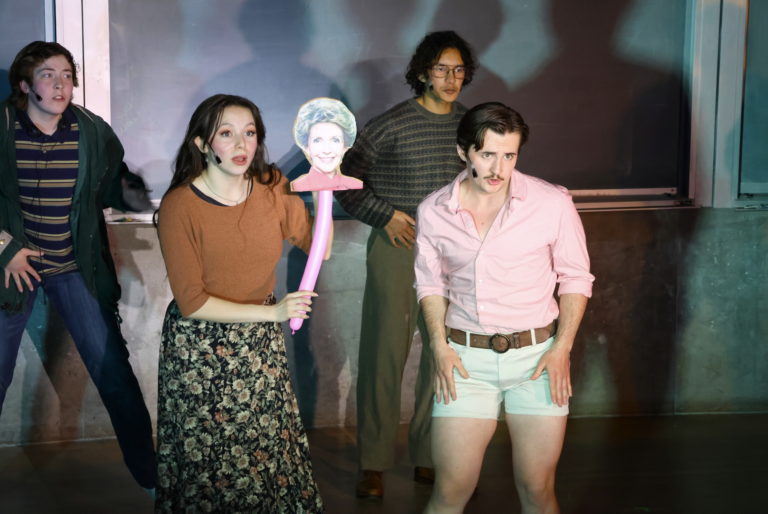
From Feb. 28 to Mar. 2, the UC Davis student theater group, Studio 301, rose to the challenge, delivering the Broadway original production of “Falsettos” with humor, heartbreak and a whole lot of heart. 

Under the direction of Isabella Ku, a fourth-year animal science major, the talented cast and creative team brought the show’s intricate score and complex characters to life in a way that left the audience spellbound each night. 

“Falsettos” opened on Broadway in 1992, earning rave reviews and seven Tony Award nominations, taking home the award for “Best Original Score.” It gained even more recognition and popularity after the 2016 revival, starring Christian Borle, Andrew Rannells and Stephanie J. Block. Set in the late 1970s and early 1980s, “Falsettos” follows a family that falls apart when the father, Marvin, divorces his wife, Trina, to be with his male lover, Whizzer. As Marvin and Trina attempt to maintain a sense of normalcy for their son, Jason, the dynamics of their unconventional family become increasingly complicated as they have to face more and more obstacles together. 

The musical’s first act is filled with sharp humor and rapid-fire dialogue, while the second act takes a more somber and introspective turn as the family tries to come together to prepare Jason’s bar mitzvah with the acquired immunodeficiency syndrome (AIDS) crisis looming in the background. Throughout it all, the show explores the complexities of love, acceptance and the work that goes into building a family. 

At the time of its release, the way the play tackled the prominent themes of Jewish heritage, gender roles, LGBTQ+ identity and the impact of the AIDS crisis made it truly groundbreaking. On top of that, the story portrays a family that practices Reform Judaism, a branch of Judaism that was still developing and shifting at the time of its writing. With so many complex themes, “Falsettos” is an ambitious choice for any theater organization.

“In this political climate, I think it’s especially important to represent queer and Jewish culture in the art,” Ku said. “I didn’t foresee this [political climate] when I submitted the idea to do this musical, but I think it’s especially meaningful now, and I hope it resonates with the audience.”

Due to the complex content in the story, the cast and crew took every step to make sure they were being as accurate and faithful in their depiction of the characters as possible. Adira Zylberman, a first-year undeclared major and a choreographer for Studio 301, gave a presentation to the organization to educate them on Jewish culture and practices in preparation for the production.

“As someone who is also Jewish, I felt like it was really important to make sure everything was done right and with care and respect,” Zylberman said. “I applaud the Studio 301 team for giving us the space to be heard and for being so committed to authenticity.”

Josh Velazquez, a fourth-year statistics major who portrayed the male lead, discussed the process of ensuring the production’s authenticity and accuracy.

“We did a lot of listening, a lot of understanding, a lot of talking about Jewish history and that helped us to understand the characters better, ” Velazquez said.

What made this production of “Falsettos” truly special was the resourcefulness and passion of the entire Studio 301 team. This quarter’s production took place in Social Science 1100 lecture hall, a venue significantly smaller than a traditional theater stage. Despite the space limitations, the crew maximized every inch, transforming the lecture hall into an immersive environment. 

The stage design featured minimal but strategic set pieces, allowing the actors to transition fluidly between scenes while keeping the focus on their performances. Cast members frequently engaged with the audience by entering the seats or walking through the aisles, adding a layer of intimacy to the production that made the emotional beats hit harder. The professional sound design and lighting contributed to the theatrical experience, further elevating the production’s quality into a professional, immersive experience. 

“I like to say since we’re on a student-run team, we’re also on a student-run budget,” Ku said. “We rely heavily on donations and ticket sales, and the majority of our budget went into getting the rights for ‘Falsettos’ alone. We actually got a lot of help from the Aggie Reuse Store, which helped us to get a majority of the clothes we used in costuming for free. We also traditionally perform in lecture halls to save on costs, but I think we’re getting the hang of it.”

The actors put on soulful, relatable performances that had the audience laughing out loud one minute and tearing up the next, signifying that Studio 301 had successfully brought “Falsettos” to life in a way that resonated deeply with its viewers. 

With its heartfelt performances, inventive staging and professional-caliber technical execution, this production was certainly a testament to the dedication, talent and passion of everyone involved in making it happen. If you missed “Falsettos” but want to support Studio 301, follow their Instagram account, @studio301productions, or visit their website to get involved or to learn more information about their upcoming productions. 


Written by: Shreya Kumar — arts@theaggie.org 

Hooked on the hunt: why we can’t look away from true crime

The thrill, the mystery and the quest for justice 


By IQRA AHMAD — arts@theaggie.org    


From bestselling books to top-charting podcasts and binge-worthy Netflix documentaries, people are hooked on learning about crime. But, why? What is it about murder, mystery and mayhem that keeps us captivated, thrilled on the edge of our seats? 

We devour shows like “Law and Order” and “Criminal Minds” and tune in religiously to “Crime Junkie” and “Dateline.” We lose ourselves in the spine-tingling and sometimes bone-chilling thrill within the pages of books like “A Good Girl’s Guide to Murder” by Holly Jackson or “The Lovely Bones” by Alice Sebold. Even childhood favorites tap into the eerie paranormal and fictitious grandeur of fear with series like “Goosebumps” by R.L. Stine or “It” by Stephen King, showing that fear has a way of gripping us — sometimes literally. 

So, what is it? What exactly fuels the fascination? It is the rush of a red herring? The adventure of playing detective? Or the irresistible challenge of solving a classic “whodunit?” Whatever the reason, one thing is clear: Crime is no longer just a genre, it’s a phenomenon we cannot look away from. Let’s look into why this may be. 

In an effort to make sense of the world and unravel the perilous questions that consume our thoughts, we are drawn to understanding what drives individuals to commit crimes. The psychology behind a criminal’s descent into wrongdoing fascinates us, so much so that we eagerly grasp onto every clue, theory and backstory. 

“We instinctively want to discover the ‘who,’ ‘what,’ ‘when,’ and ‘where’ so we can find out what makes criminals tick, and to better protect ourselves and our kin,” a BBC Science Focus article reads.

This innate curiosity drives a passion that makes obsession with true crime more than just entertainment; it’s a quest for understanding, survival and control in an unpredictable world. Perhaps the true allure lies in stepping into the shadows while knowing we can always close the book, press pause or flip the lights back on when things get too scary. This safety net makes the experience thrilling rather than terrifying. 

Psychologist Paul Rozin’s concept of benign masochism may help explain this phenomenon. His research suggests that humans take pleasure in negative experiences, so long as they are perceived as safe. Meaning, the rush of fear, suspense or even discomfort is enjoyable because it allows humans to feel intense emotions without any real risks attached, according to Rozin’s research study published by the Cambridge University Press

There’s also a deep-seated drive to uphold the long standing pursuit of justice. After all, with true crime comes true punishment. While true crime opens many eyes to the realm of criminal justice, it also taps into our natural instinct to seek justice. People empathize with victims and their families, yearning for closure and accountability, according to an article by the Prindle Post.


 But beyond the excitement or the mystery, our fascination with crime reflects something deeper — our own humanity. Whether it’s the adrenaline rush of a well-crafted plot twist, the intellectual challenge of piecing together clues or the moral reckoning that comes with understanding justice, true crime speaks to something within us. 

True crime is not just about indulging in fear from a safe distance, it’s about exploring the darkness to better understand the light. In the end, our obsession with crime is more than just entertainment, it’s a mirror, reflecting our deepest curiosities, fears and desires. And as long as the mystery remains, we’ll keep searching for answers.  


Written by: Iqra Ahmad — arts@theaggie.org

UC Davis women’s swimming and diving team surge to a strong season finale

A recap of the 2025 Big West Swimming & Diving Championships successes


By DIEGO CERNA — sports@theaggie.org


From Feb. 12 to 15, the UC Davis women’s swimming and diving team competed in the Big West Conference Swimming & Diving Championships that took place at the University of Houston’s Campus Recreation and Wellness Center (CRWC) Natatorium in Texas. 

Previously, the UC Davis Aggies had competed in the Mountain Pacific Sports Federation (MPSF) Conference for the past 15 years. This year marked the first time the Big West has hosted a swimming and diving championship since 2010, which also happened to be the last time UC Davis captured their last win in the Big West Championships. 

The first day of the competition showcased the team medley — a mix of freestyle, backstroke, breaststroke and butterfly between four swimmers. 

Emily Scheberies, a second-year communications major, went first with a 50-meter backstroke, earning a time of 25.95 seconds. Sam Rhodes, a fourth-year neurobiology, physiology and behavior major, continued the second leg of the breaststroke with a time of 28.31 seconds. Brynn Graham, a second-year mechanical engineering major, carried the third leg of the event, the butterfly, with a time of 24.97 seconds. To finish the medley, Sophi MacKay, a second-year communications major, closed with a time of 22.41 seconds. The overall time, in minutes, for the team was 1:47, securing the team the fourth spot overall.

Then came the 800m relay, where four team members completed 200m freestyle each, which is four laps in the pool, measured in minutes. Elsie Luisetti, a second-year food science major, started strong with a time of 1:51. Katie McLain, a fourth-year communications and international relations double major, entered during the second leg with a backstroke time of 1:50, leading Rhodes into the third leg with a time of 1:50. MacKay anchored again, finishing off with a time of 1:49. The team ended with an overall time of 7:21, improving by 12 seconds from their season’s previous best. 

Day two featured the one-meter contest, where divers were required to perform a series of movements as they jumped off of a springboard into the pool. Divers are scored based on execution and degree of difficulty.

Five Aggie divers made it past the preliminary rounds. This included Leila Busch, a fourth-year human development major, Taylor Schwarz, a fourth-year neurobiology, physiology and behavior major, Priscilla Nguyen, a third-year biological sciences major, Mackenzie Young, a third-year animal science and management major, and Katherine Lim, a first-year animal science major. 

MacKay was one of the only Aggies to compete in the 50m dash, where she placed third overall, swimming a personal best of 22.02 seconds. Within milliseconds, McLain, the only other Aggie to compete in the 50m dash, finished right after in fourth place with a time of 23.06 seconds.

In the 200m freestyle relay, MacKay and McLain were accompanied by Christy Douglas, a fourth-year neurobiology, physiology and behavior major, and Anna Boyer, a third-year undeclared major, in the closest race of the championships. They ended up fourth overall, only within a second of the three places ahead. The overall time clocked at 1:31.60 minutes, almost surpassing the Aggies’ previous all-time record of 1:31:42 minutes. This same quad would also end up placing third overall in the 400m freestyle relay, having a time of 3:20 minutes, marking the last event of day four.

On the third day, the 400m medley relay featured Scheberies, McLain, Graham and Rhodes. They finished on the podium in third with a time of 3:43 minutes. Rhodes would also record a personal best in the 400m finals, coming in third overall with a time of 4:16 minutes, which was three seconds improved from her previous best. 

The last day of the competition mainly highlighted the diving squad. Young finished as the highest-ranking Aggie with a silver medal on the platform, and Lim earned a third-place finish in the long fall. Lauren Kudo, a first-year undeclared major, Schwarz and Busch all placed in the top eight. 

Phil Tonne, one of the diving team’s head coaches, was also named the Big West Diving Co-Coach of the Year on Friday, Feb. 21. He helped eight of the Aggie medalists reach the podium throughout the championships, striving for tremendous improvements among the team in the one- and three-meter dives. 

Overall, the Big West Championships proved to be a success for the Aggies. Multiple UC Davis team members medaled, records were broken and personal bests were improved. The Aggies will look forward to bringing this momentum with them into the 2025-2026 season, building on their strong achievements. 

Written by: Diego Cerna — sports@theaggie.org

Culture Corner

The Arts Desk’s weekly picks for music, movies and more


By ZOEY MORTAZAVI — arts@theaggie.org


Book: “To the Lighthouse” by Virginia Woolf (1927)


This is my favorite book of all time, in case anyone was wondering. Woolf’s stream-of-consciousness prose was a bit intimidating to me at first as I somewhat struggled to understand the dynamics between characters, but before the end of the first section (the book is split into three parts: The Window, Time Passing and The Lighthouse), I was hooked. Woolf’s characters are incredibly honest and genuine. The lighthouse is symbolic of what each character desires the most in this world, while they each individually struggle to obtain it. Lily Briscoe’s character is impossible not to root for, and you get to know each character on a personal level as Woolf peers into each of their minds, using a style of omniscient narration that I can’t get enough of. The book offers glimpses of beauty within the mundane repetition of daily life, creating moments of literary magic out of seemingly nothing: a candle burning in the dark, an exchanged glance, curtains blowing in the wind. I cannot recommend this book enough; In fact, to commemorate my love for it, I’m planning on getting a lighthouse tattoo. Genuinely. 


Album: “Frank” by Amy Winehouse (2003)


This album literally changed the game — not only for me, but also just the game in general. Amy Winehouse’s iconic album, “Frank,” should not be a mystery to anyone, but in case it is, I wanted to give it some well-deserved attention. This album has it all: slow ballad tracks like “Take the Box,” more upbeat songs like “Amy Amy Amy” and “In my Bed” and somewhere in between, like “Mr. Magic / Through the Smoke.” No matter the song, Amy’s ability to express heartbreak while taking so much control over her feelings is inspiring and captivating to listen to. Her confidence, unique vocals, musicianship and her incredible range of lyrics is also displayed throughout this album. Her music will always make me feel empowered, and this album is an example of how I feel that in my everyday life. This album has also already made an appearance on my KDVS radio show, “The Red Scare” — and it definitely will again.


Song: “Pol” by Googoosh (1975)


Googoosh is one of my favorite Persian singers of all time. Any Iranian person will tell you that she’s one of the all-time greats, so I’m definitely not alone in my love for her; My dad raised me blasting her songs around the house, so she’s been one of my favorites for as long as I can remember. “Pol,” better known as “Bridge” in English, is particularly special in my opinion — it opens with a hauntingly beautiful violin intro before her vocals start, and the song in its entirety showcases her beautiful voice and instrumentals. The song explores themes of finding solace with a loved one amidst feelings of solitude, delving into the deep and intuitive “bridge” that romance can build in one’s life. You definitely don’t need to understand Farsi (in fact, I’m not even fluent myself) to feel the depth and emotion of the love she is describing in the song. Another song by her that I’ve been obsessed with is “Gole Bee Goldoon,” a favorite that I play at every family reunion my family hosts. Either way, I definitely recommend giving this song a listen — especially if you’ve been meaning to expand your musical horizons a little bit. 


Movie: “Roman Holiday” dir. William Wyler (1953)


I watched this movie with my dad for the first time in sixth grade, when I was undergoing a serious “I need to be an actor” kick. Audrey Hepburn became one of my ultimate role models after my first watch — she is so graceful, poised and charismatic in the film (and all of her films) that she’s one of the all-time greats to watch. The movie is fun, funny and the dynamic between Hepburn and Gregory Peck is incredibly enjoyable and gratifying to watch. In “Roman Holiday,” Princess Anne (Hepburn) gets a taste of everyday life beyond her duties as a touring European princess alongside Joe Bradley (Peck), a handsome and witty journalist, who shows her around the city. Peck and his friend end up covering her tour around the city, and their romance blooms as they spend a few days together. The movie’s bittersweet ending always sticks with me, and it’s one of those feel-good movies that I could (and do) watch time and time again. 

Written by Zoey Mortazavi — arts@theaggie.org