54.1 F
Davis

Davis, California

Tuesday, December 23, 2025
Home Blog Page 403

Advice from students, for students to boost academic performance

Sticky notes, public study spots and more among top tips from students

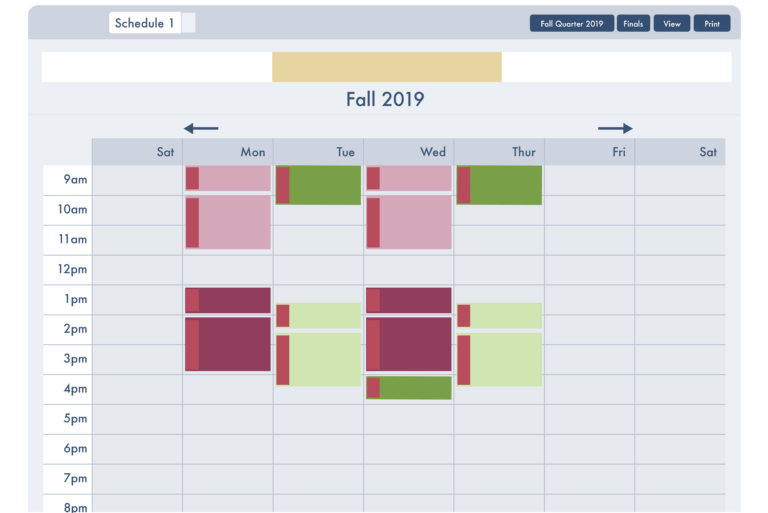
UC Davis students may easily identify with the constant struggle of having too much work but too little time as they navigate the jumble of the fast-paced quarter system. The start of the new school year, however, offers students the opportunity to learn from past mistakes and try out new study habits. 

A few top-notch UC Davis students shared their top tips with The Aggie on how to stay afloat, juggle a busy schedule and study efficiently. 

A good night’s sleep: 

Hailey Peterson, a second-year psychology major, recalls sleepless nights as a freshman in the dorms, which resulted in compromised school performance. She commented on the importance of a good night’s sleep.

“I thought I needed to do everything, so I stayed up super late and then I was always tired,” Peterson said. “That’s not a good idea if you’re trying to do well in your classes. Sleep is really important.”


Avoid procrastination: 

Fourth-year political science major Sophia Aldecoa touched on a universally-relatable subject matter.

“Literally, don’t wait until the last minute!” Aldecoa said. “All of my classes [had] one 10 to 12 page paper that I always [did] the night before, but I’m trying my last year not to do that. Don’t procrastinate — you think you can do it, but you can’t.”

Aldecoa added that while it is possible to finish a large paper or project the night before it’s due, the stress of procrastination will inevitably affect one’s mental health.

With only 10 weeks in a quarter, students will often be ambushed with midterms in week two or three. This requires staying on top of tasks and, if possible, finishing coursework ahead of time. Anticipating future assignments is a helpful way to keep stress levels low. 

Mona Karimi, a fourth-year English and psychology double major, shared her favorite tip for fighting procrastination.

“What helps me is to write down the due date for papers and midterms a day early so I psych myself out and then I actually have an extra day to study,” Karimi said.

Pick study spots wisely:

One benefit of attending a large university is the plethora of available study locations. Miles Ducatillon, a third-year human development major, said choosing a private location to study might not be in a student’s best interest. 

He said that working on his homework or studying in a public area helps him keep his focus and stay on task. 

“I sit myself in a situation where other people can see my screen so I can’t watch minecraft playthroughs or people will literally judge the hell out of me,” Ducatillon said. “I literally cannot, I have to do my homework.” 

Make lists: 

Staying organized is key for academic success — not only because it boosts mental health, but also because it prevents missed deadlines. 

One way to stay organized is to buy a planner or post-it notes. Using a pen and paper is both a reliable and a scientifically-backed method used to recall important information. 

Briana Amann, a fourth-year political science major, shared that whenever she feels stress coming on, she makes a to-do list and places sticky notes around her room and on her computer. 

“To me, it’s honestly therapeutic to write [a] single task I need to do down on a piece of paper or in my planner,” Amann said. “It kind of minimizes the problem and makes everything seem much more manageable. I also use sticky notes and put them basically everywhere to make sure I’m aware of everything going on.” 

For more tips on maximizing academic performance this year, check out the Student Health and Counseling Service Center’s advice at https://shcs.ucdavis.edu/topics/study-skills

Written by: Isabella Beristain — features@theaggie.org
New season, new coach, new capabilities

UC Davis women’s soccer starts strong to open 2019 season

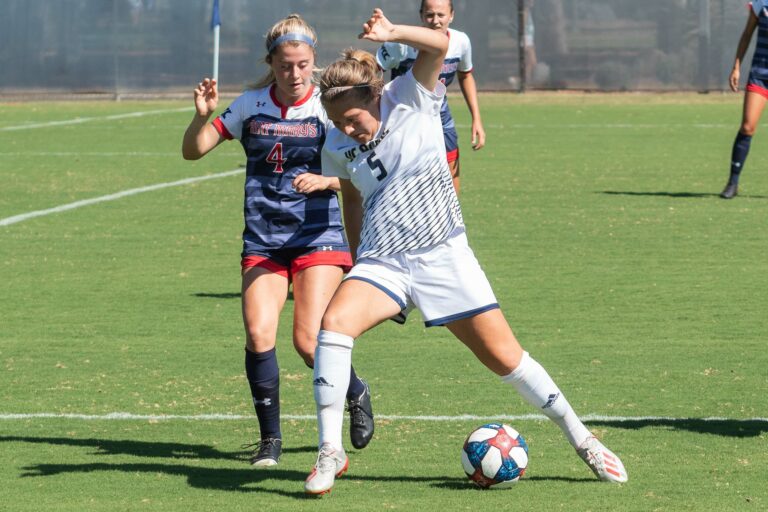
After a tough 2018-19 season, the UC Davis women’s soccer team enters the new year with high hopes and a new game plan. The Aggies open this new season with a new coach, Tracy Hamm, who is one of only two American women to hold the prestigious United European Football Association “A” coaching license. 

In addition to a new coach, the team welcomes 15 new players, including transfers, freshmen and red shirts. With Hamm’s help and vision, this new-look Aggie squad finished off its non-league play for this season with a 5-5 overall record. The team is ranked number three among Big West Conference programs with 11 assists, and the Aggies’ 11 goals allowed is the third lowest total in the conference. The team ranks third in points in the Big West and tied for first in shots per game with just over 15. 

Some of the standout players for this year include redshirt freshman midfielder Leslie Fregoso and sophomore forward Casey Palmer. These two offensive forces have tallied three goals each, which accounts for six of the 14 that UC Davis has scored this season so far. Additionally, Fregoso is the Aggies’ first Offensive Player of the Week selection since last September, when Emma Hasco ended a year-and-a-half-long drought. 

At the back-end of their non-conference play, the Aggies faced Saint Mary’s College last Friday in a tightly contested match. The game was a fierce head-to-head battle with intense play both offensively and defensively for both squads, and ultimately ended in a 1-0 defeat for the Aggies. 

“We are balanced both on the defense and attack, we have got some key players,” Hamm explained after the game “We have got to be able to adapt and change our system, and we need players to step up.” 

The Aggies plan to build from the loss and take it to their future play by “not [making] mistakes,” according to Hamm. It was pretty even both directions. 

“We need to make sure we play a full 90 minutes and not take plays off.”  

At the beginning of the second half for UC Davis, goalkeeper Jessica Lima made five of the Aggies’ seven saves, which included a crucial stop of a Saint Mary’s penalty kick. Lima was the brick wall that kept the Aggies within one, but they were unable to find that all-important equalizer following a first-half Saint Mary’s goal.

What lies ahead this season should make Aggie fans excited. With new leadership and major additions to the roster, the team is looking forward to a competitive conference slate where every game should be a battle. Hamm believes that the team possesses a number of beneficial qualities that could fuel a successful run. 

“I think I give [the team] a lot of freedom to play their styles and to their strengths. But I also think as individuals; we play with a lot of passion and energy,” Hamm said. “I think our effort is fantastic. It is just about having better cohesive effort, rather than individual effort. It is going to be a group effort.” 

Hamm is proud of the team’s culture and chemistry, but now it is just about “connecting the dots on the soccer field.” 

After a 3-2 loss to the University of San Francisco on Sunday, the Aggies now enter conference play and are looking to become a major force in the Big West. 

“Our conference is really tough,” Hamm said. “I think every game is going to be a huge battle. All of our pre season records are fairly similar. I think it is going to be a battle every game. We have got to get some players back healthy, and we will give it a good run.”

Conference play begins Oct. 3 at Cal State Fullerton. 

Written by: Frankie Veverka — sports@theaggie.org

L.A.’s October Demons

0

How October ends could have big ramifications for Dodgers’ future after two straight World Series losses

In front of an electric crowd at Chavez Ravine in the afternoon of Nov. 1, 2017, the Dodgers stood one win away from capturing their first World Series since 1988. All 54,124 fans were on their feet as Game 7 was about to begin. But in a flash, the dream turned into a nightmare for the Dodgers. They went quietly into the night, and the Houston Astros took home their first-ever World Series, celebrating on LA’s field. 

“We’ve just got to regroup,” said Dodgers’ Manager Dave Roberts in the postgame press conference. “I like our guys, I believe in our team and I expect us to be in the same position next year.”

Nearly exactly a year later, the Dodgers made another run to win the NL West division title, survived a grueling seven-game series in the National League Championship Series with the Milwaukee Brewers and made it back to the World Series — this time facing the Boston Red Sox. After several questionable managing decisions by Roberts, the Dodgers blew a four-run lead in Game 4, and ultimately lost the World Series again, this time in a quick five-game series. 

“We’ve just got to go back out there, and I expect us to be back here next year, but celebrating on the field,” Roberts said after the Game 5 loss at Dodger Stadium. “I don’t think we played our best but part of it, a lot of it, is you’ve got to give credit to the opponent. And we have a lot of time to think about this one. But, again, spring is going to be around the corner.”

For many teams, especially in a sport like baseball, the window for opportunity to win a championship is very small. Typically for teams that make it to back-to-back World Series, that next season spells the beginning of a sharp decline. It is rare for a team in the Major Leagues to hold success for an extended period of time without faltering. That is what makes this Dodgers team so interesting.

For seven straight years, including 2019, the Dodgers have won the National League West Division, and the majority of those wins came in a very comfortable fashion. It is the third-longest division-winning streak of all time, and with every new division title, the pressure builds even higher on the team to finally bring home a world championship for their fans who have waited for 31 years. Over the past six postseasons, the Dodgers have lost in the NLDS, NLCS and World Series twice each in that span. 

A mix of veterans and homegrown talent have passed through the Dodgers organization during this run. Big names like Adrian Gonzalez, Hanley Ramirez, Manny Machado and Yu Darvish all donned a Dodger uniform, but what has really helped put LA over the top is its eye for the lesser-known players with potential. Players like Chris Taylor, Max Muncy, Justin Turner and Enrique (Kiké) Hernandez were almost out of the majors, but once they arrived in LA, they became instant contributors. When the big names are not performing, players like these are there to pick up the slack. 

Another huge part of this LA run has been the team’s reluctance to part ways with young prospects for major names. In the past years, they have been linked to ace pitcher Chris Sale, the late Jose Fernandez, JT Realmuto and many other big names across the majors. But the Dodgers have refused to forfeit valuable prospects. The players that opposing teams wanted in return for those stars included now starting shortstop Corey Seager, starting left fielder Joc Pederson, lefty pitcher Julio Urias and 2019 NL MVP candidate Cody Bellinger — all of whom are an enormous contributors to the Dodgers’ success. 

Just 10 years ago, the Dodgers had a chance to acquire Hall of Famer Roy Halladay to help them in their 2009 run. But LA refused to give up a young pitcher in its system. That player was Clayton Kershaw, who has since become one of the greatest pitchers the game has ever seen. 

This year, when the opportunity came to trade for Pirates’ all-star reliever Felipe Vasquez and help out the struggling bullpen, the Dodgers and General Manager Andrew Friedman let it go because they did not want to let go of two highly-rated prospects Dustin May and Gavin Lux. Since then, both players have been called up and have contributed in every facet of the game. They ended the 2019 regular season as the NL’s best team, and as of Aug. 6, according to MLB.com, they had the third-best farm system in the league —  a key indication that the Dodgers may contend for years to come. 

While their eye for talent and building a great farm system have helped them maintain success, the Dodgers still haven’t achieved their primary goal, which is to win a championship. These past two World Series losses have left a mark on the Dodgers, and those still on the team know the dark cloud of pressure that keeps building after each postseason failure. For many teams, especially a relatively young one like the Dodgers, the two losses would lead to absolute ruin. But while losing still hurts, starting third baseman Justin Turner has the mentality that keeps this team going. 

“When you get that close two years in a row, it borderline drives you insane,” Turner told the Los Angeles Times in February. “You’re just psychotic about trying to finish it. So the drive is even greater than it was last year. Do we believe we’re a good team? Absolutely. Every guy in here, to a man, thinks we’re a really, really good team, and have a chance to do something special. At the same time, that doesn’t count for a run. You don’t score runs because you’re supposed to be good. You still have to figure out ways to score runs and throw strikes and play defense. That’s what we have to do.”

As we enter another MLB postseason, the Dodgers will play for the same thing that they have been so close to attaining the past two years. If they do win it all this year, it could be the beginning of a potential dynasty. The youth, the front office and the manager are in place for the long run, and a World Series win would certainly take some of that pressure off their backs. 

But another World Series loss and this team will have to look at themselves in a similar way to the 90s Buffalo Bills, Utah Jazz and 2010-2011 Texas Rangers. A postseason loss would likely result in big changes for the Dodgers, and some that they might not even want.

As much as making the World Series may not be a failure in many of their eyes, this Dodgers team has the potential to go down as one of the best sports teams ever that couldn’t get it done. And for a big market team like them, they may not be able to live it down and survive the pressure of three straight losses. 

All eyes are on LA this October.  A Fall Classic result will have the City of Angels feeling like a dream come true, or a nightmare they cannot awake from.

Written by: Omar Navarro — sports@theaggie.org

UC Davis awarded $845.5 million in research funding over 2018-19 school year

Federal and state government, various businesses, industries granted university funds for research projects 

Known for its strong emphasis in research, UC Davis earns funding from various institutions, and last year was no exception. In the 2018-19 school year, the university received $845.5 million in grants and contracts for research, according to an article from UC Davis. 

In total, the university was granted 4,519 awards that went to a wide range of research projects and services, as well as community outreach, according to the article. 

Various federal and state agencies and corporations give the awards. These institutions usually choose specific projects to help fund, according to Vice Chancellor for Research Prasant Mohapatra.

“The biggest share is used for supporting graduate students and postdocs,” Mohaparta said. 

Compared to other years, the research funding for the 2018-19 school year is $1.2 million below the previous year’s record-setting total of $846.7 million, according to the article. It is also about $70 million more than the 2016-17 school year, according to Mohapatra. He speculates that research funding will increase for the next year. 

Similar to previous years, the federal government provided most of the funding, totaling $473 million in awards — $26 million more than the previous year, according to the article. Other sections of the government provided an additional $88 million in subawards.

Although federal funding increased, California state funding totaled $49 million less in comparison to the 2017-18 school year. UC Davis still received a total of $124.8 million, however, making the State of California the second largest source of research funding. 

The third largest source of grants, totaling $74.3 million, came from various businesses and industries, according to the article. 

This funding allows groundbreaking research projects to occur at UC Davis. 

For example, Vinod Narayanan, a professor in the department of mechanical and aerospace engineering, received a $2.2 million award from the U.S. Department of Energy Solar Energy Technologies Office. In his project, researchers will create “additively-manufactured molten salt-to-supercritical carbon dioxide heat exchangers,” which will capture the sun’s thermal energy and convert it into usable forms of energy, such as electricity. The $2.2 million will be allocated over three years and is contingent on making steady progress, according to Narayanan. 

The U.S. Department of Education awarded $4.9 million to the the LibreTexts project, created by Delmar Larsen, a professor in the chemistry department. Libretexts, originally Chemwiki, is a leading, noncommercial open-textbook organization that is working to expand its library of free and online STEM textbooks and educational resources, according to the UC Davis article. 

“The goal is to make something that is able to substitute for commercial textbooks so students do not have to buy them,” Larsen said. “We have saved about $40 million so far in student costs and we are growing significantly.”

Like the grant given to Narayanan’s energy research, Libretext’s awards will be used over a three year period. 

“The money goes to lots of different things,” Larsen said. “We need faculty to build content; we pay students to bring content into the platform; we pay for dissemination efforts; we have to pay for meetings and ways of presenting information to get the word out; we pay for technology and software to run what we need to do; we pay for analysis and we pay for many other things.”

The state of California granted $12 million to a UC Davis study on Jordan’s syndrome, a  rare neurodevelopmental disorder that affects children. 

“Not much is really known about [Jordan’s syndrome],” said Jan Nolta, the principal investigator of the research and professor in the department of internal medicine. “It is a really rare disease.”

According to Nolta, the study received state funding because their research could help them understand whether a protein found in Jordan’s syndrome is linked to Alzheimer’s and specific cancers. The funding will help researchers develop gene therapies for kids who have the condition.  

Like the other two projects, the funding granted to the study on Jordan’s syndrome will be allocated over a three year period. 

“At the end of three years, we hope to have gene therapy and will understand the disorder better,” Nolta said. “We will find drugs that are already FDA approved and will prescribe them to stop deficits in kids.”

Nolta’s study, along with all the other research projects, are big scientific endeavors that require large teams and expensive equipment. Funding from the government, businesses and industries is necessary for their success. 

“We just always have the patient in mind and we are very motivated by children who have the disorders,” Nolta said. “A lot of team work goes into this.”

Written by: Margo Rosenbaum  — science@theaggie.org

Diversity Reporting Course offered by University Writing Program

Course designed to diversify reporting strategies, connect people

The University Writing Program is offering a new course this quarter: UWP111A Special Topics in Journalism focused on Diversity Reporting. The course will be taught by Stephen Magagnini, the retired senior diversity reporter for The Sacramento Bee and a continuing lecturer at UC Davis since 1990. 

“One of our staple set of courses has been the 111 series; 111A is the special topics in journalism course, 111B is investigative journalism and 111C is science journalism,” said Associate Director of Professional Writing Rebekka Andersen. “Students who are interested in journalism will usually take 104C, which is the fundamentals of writing in journalism, and they have the opportunity to take any of the other three courses. 111A is usually offered in the fall, and it can be any number of topics.”

Diversity reporting is especially relevant in this day and age, Andersen said.

“We have a significant population of immigrants in the Central Valley,” she said. “We have a lot of diversity on our campus. Diversity reporting is a good way to focus on the needs and the challenges of people from all different backgrounds and ethnicities. How do you write about so many groups of people that is sensitive to their cultures, backgrounds and needs?”

Magagnini plans to teach the course using lessons from his career in journalism as well as through the employment of guest speakers and assignments meant to place students in diverse settings. 

“I will teach from my own experience,” Magagnini said. “I have been the only white person in a black township in Soweto on the eve of the first free elections. I have been the only non-Muslim in large groups of Muslims in Sacramento to Pakistan … I will give [students] some assignments where [they] will step outside of [their] comfort zone.”

Exploring how reporters get individuals with a different background than their own to tell their stories to them is a fundamental concept Managagnini hopes students engage with.

 “The trick is basically to look inside yourself and tap into your own humanity and your own curiosity about people,” Magagnini said. “When you go to strangers and they sense that your interests are genuine and you are not there to hurt them or to advance your agenda they will trust you. If you are not afraid of them, they are likely not to be threatened by you. We are human beings first and journalists second.” 

The humanizing lessons proposed in the class may be translatable beyond the journalism sphere, teaching students how to host constructive dialogue with various people throughout their lives. 

“If these students develop some confidence to be able to have these conversations and find the common ground — there always is some — it will help them in every way of life,” Magagnini said. 

Fourth-year sociology organizational studies and English double major Aimee Lagrandeur, who took UWP 104C, believes teaching empathy is key to diversity reporting. 

“If you go in with empathy, then understanding is easier,” Langrandeur said. “You are trying to listen, you are trying to understand.” 

Moreover, this specialized diversity reporting class helps students expand upon the rudimentary information covered in the fundamentals of journalism course.

“It’s cool to have a diversity angle with journalism” said Lagrandeur. “It is something you don’t think about, because you are only really aware of your own experience. The course wouldn’t just be about creating a space in an interview where someone would feel comfortable answering questions. It would also be interesting to open your eyes to the other potential questions you could ask that you haven’t really thought about.”

Lagrandeur suggested that a foundational understanding of what diversity means should be a precursor to the course — “Race and gender, for example, are socially constructed,” Lagrandeur said. “It might be god to vet out some student biases first.”

Overall, Magagnini hopes the diversity reporting class will act as a way to address the hate he has noticed as of recent.

“Some people now think they have a license to hate,” Magagnini said. “That’s something I have never seen before. I don’t know if diversity reporting can combat this, but [I hope] people can get exposed to people who are different from them.”

Written By: Caroline Rutten — arts@theaggie.org

Dunloe Brewery hosts Benefit Dinner for ALS

Funds raised for ALS Walk-A-Thon

A benefit dinner, featuring homemade food and music, will be held at Dunloe Brewery in Davis on Oct. 5 for the Walk to Defeat ALS (Amyotrophic Lateral Sclerosis). Among the attendees of the benefit dinner will be Cathy Speck, who has ALS. Her condition inspired her to become captain of her own team, The SPECKtaculars, to participate in the walk. The benefit dinner will contribute 20% of all beer sales and Dunloe merchandise to this movement. The dinner and the walk are both meant to help those who suffer from ALS and their families. 

Speck was diagnosed with ALS after caring for her mother and brothers as they battled the disease. She lost her mother and her brothers to ALS before she received her own diagnosis.

“It’s devastating to watch a loved one go through it,” Speck said. “The average lifespan of a person with ALS is three to five years after diagnosis. I am an exception — being on my tenth year with the diagnosis. There is currently no cure or treatment for ALS.”

ALS, also known as Lou Gehrig’s Disease, is a fatal progressive neurodegenerative disease that affects nerve cells in the brain and the spinal cord. Eventually, people with ALS lose the ability to initiate and control muscle movement. The minds of those with the disease stay intact, yet the body is affected. 

Speck was diagnosed with ALS 10 years ago, and she dealt with the disease on top of cancer. 

“I am the fifth member of my family to have ALS — more than 90% of ALS cases are hereditary,” Speck said. “We have a very rare genetic mutation. I also have metastatic [or] incurable neuroendocrine endocrine cancer, so I fill each day with as much joy as I possibly can.” 

While Speck has been battling the disease, she still remains optimistic. 

“I chose to have a positive attitude,” Speck said. “I know every day is a gift — that I am blessed to still be able to talk. I have a choice to be depressed or positive. I decided to be positive because I want to feel happy.” 

Brennan Fleming, the owner of Dunloe Brewery, is also Speck’s close friend. The brewery opened in 2017 and has hosted many fundraising events. 

“I met Cathy when I was a kid, and she was working at the Co-op,” Brennan Fleming said via email. “My mom has stayed close to her over the years, and that’s how we got into the ALS fundraising stuff. My mom has been doing the walk for as long as I can remember.” 

Maguritie Fleming, Brennan Fleming’s mother, helps with the ALS fundraising by organizing the food and events. She described Speck’s energy when they first met, which prompted her to become interested in ALS awareness. 

“I met Cathy thirty years ago at the Davis Co-op, where she was working,” Maguritie Fleming said. “She would play with my kids while we were in line.” 

The proceeds of the dinner will go towards the ALS Walk-A-Thon, which is also held on Oct. 5 at Raley Field in West Sacramento. The walk is a fundraiser for The ALS Association Greater Sacramento Chapter (ALSSAC). The ALSSAC is an organization that provides care and support for those who are suffering from ALS and their families throughout the region, including the City of Davis. 

Written by: Taylor Martinez — city@theaggie.org

Unprecedented impeachment inquiry deserves our full attention

Call your representative, choose your news source wisely

Last week, House Speaker Nancy Pelosi announced that the U.S. House of Representatives would initiate a formal impeachment inquiry against President Donald Trump. Trump is charged with betraying his oath of office and the nation’s security. 

Following months of pressure from Democratic lawmakers, Pelosi launched the inquiry after an incident many are calling a “smoking gun” became public information as part of a whistle-blower complaint. This “smoking gun,” a term that originated during President Richard Nixon’s impeachment, was the release of a phone call that details President Trump’s dealings with Ukraine. Trump allegedly pressured Ukraine to open a corruption investigation into former Vice President Joseph R. Biden, Jr., the Democratic frontrunner of the 2020 presidential election, in the hopes of giving Trump a better chance at re-election. 

But the launch of this inquiry has come with a lot of confusion and misinformation, including from the president himself. An impeachment inquiry is not the same thing as an impeachment trial, nor does it guarantee a vote of impeachment. So what is an impeachment inquiry? This impeachment inquiry is the House Judiciary Committee’s investigation into whether there’s enough evidence for an impeachment case to go forward, according to TIME Magazine. 

Even if the House decides there’s enough evidence for an impeachment trial, it would ultimately be up to the Senate to vote on removing Trump from office. For instance, Presidents Andrew Johnson and Bill Clinton were impeached by the House, but they weren’t removed from office by the Senate. Nixon resigned from office before the House had the opportunity to vote on his impeachment. 

An impeachment trial is not a criminal trial, but a political trial, even though the president will be defended by his personal lawyer, former New York City Mayor Rudolph Guiliani. 

While impeachment seems out of our grasp at UC Davis, the Editorial Board encourages students to get involved where they can. Students should take their civic responsibility seriously and should know where their representatives stand on impeachment. If you don’t know who your representative is, you can find out here. Calling your representatives to express your opinion is important to the democratic process. 

It’s also important to get your news and updates on the impeachment proceedings from trusted sources. Trump is weaving an elaborate web trying to explain his actions, but it’s important to not let the accused party be your sole source for the truth.

Understanding what’s happening on Capitol Hill is also important because if Trump is not removed from office by the Senate, the American public will have the opportunity to express its thoughts about the impeachment proceedings during the 2020 election. If he remains in office, Trump will be the likely Republican presidential frontrunner. This is an unprecedented situation given that in previous impeachment cases, the presidents didn’t have the opportunity to run again. 

This impeachment process is sure to be long and confusing, especially given that  Trump is attempting to throw blame on pharmaceutical companies, Biden, the Democratic Party and more. Just yesterday, it was revealed that Trump also called on China’s President Xi Jinping to open his own investigation into Biden. These constant developments and revelations make it all the more necessary for everyone to follow the news and make informed decisions as we approach the next election cycle. 

Written By: The Editorial Board

California mustn’t blink in fight against plastic pollution

Failing to vote on landmark plastic legislation, California must bring bills back next year, start a national conversation about plastic pollution 

California’s 2019 Legislative Session reached its chaotic close on Friday, Sept. 13, and, unfortunately, two landmark plastic pollution reduction bills did not come to a floor vote. As we stare down the barrel of our self-inflicted plastic pollution and waste management crises, California must seize the opportunity to lead on this crucial environmental issue when the bills are brought back next year.

SB-54 (Allen) and AB-1080 (Gonzalez), together known as the California Circular Economy and Plastic Pollution Reduction Act, would create a framework that attacks the plastic pollution crisis from cradle to grave. The bills set two goals: ensuring that 75% of all single-use plastics and packaging are recyclable or compostable by 2030 and reducing 75% of waste generated from single-use plastic and packaging materials by 2020 through source reduction, recycling and composting.

These goals are ambitious, but they are the least California can do as the plastic crisis intensifies. These bills are California’s chance to set an example on major environmental legislation — as it has before — for other states and the federal government to follow. It’s disappointing not to hear the Democratic candidates talking more about plastic. It’s a complex issue that ties directly to climate change. Global plastic production is expected to triple by 2050 and account for 20% of global fossil fuel emissions. In other words, we need to talk about plastic on the national level, and we need to finally do something.

Since 1992, China imported a cumulative 92% of global plastic scraps. But China’s implementation of the National Sword policy bans imports of most recyclable plastic materials, displacing an estimated 111 million metric tons of plastic waste by 2030. While bill opponents think SB-54 and AB 1080 will cause economic harm, it’s important to note that local governments in California already spend about $420,000,000 annually in efforts to clean up and prevent plastic pollution. In addition, thousands of people are already losing their jobs as California’s recycling industry struggles. Now, much of the waste people think is recycled is just going to landfills, incinerators or our waterways.

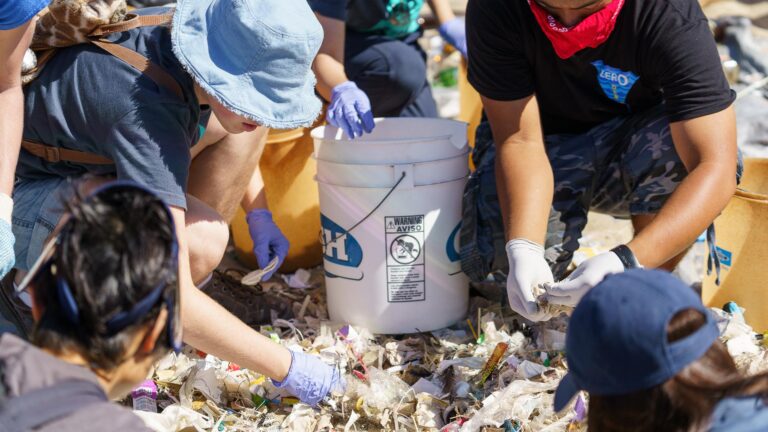
Every year, our rivers convey about 4.8 to 12.7 million metric tons of plastic into the seas. It’s estimated that by 2050, the mass of plastic in the ocean will exceed that of fish. Much recent news coverage has been devoted to the unnerving trend of dead whales and dolphins washing ashore with their stomachs full of plastic. A recent study found plastic in the guts of 100% of turtles surveyed. Microplastics have also been found in shorebirds, fish that people eat and drinking water worldwide.

Most of these plastics do not biodegrade — they just break into smaller microplastics and stay in the water, accumulate in the tissues of humans and animals and cause numerous health problems. A new study from the University of Newcastle, Australia and the World Wildlife Fund estimates that the average person ingests approximately 250 grams of plastic annually, the equivalent of a credit card’s worth of plastic per week.

Over the summer, I had the unique opportunity to intern at Environment California as part of the environmental lobbying community trying to help pass these bills. While our efforts did not push the bills across the line, we must double down next year and prevent this from being all for naught.

After the close of the session, Senator Ben Allen (D-Santa Monica), the lead author of SB-54, expressed his disappointment over the failure to send the bills to Governor Newsom’s desk, but he remains optimistic.

“Going into the final week of session, following the last round of amendments, a significant number of previously-opposed industry groups came on in support, or went neutral,” Allen said. “This gave us momentum in advance of an Assembly vote, and I am confident that if taken up in time the measure would have passed both houses and been signed into law by the governor.”

Legislators must take full advantage of this extra time to improve the bills. But they must also be aware that if they continue to kick this (plastic) can down the road, they’ll only be creating a more difficult problem to solve, allowing for further damage to environmental and public health in the process.

Having also spent a summer absorbing the grandeur of the Pacific while studying oceanography and marine ecology at the UC Davis Bodega Marine Lab, I find this fight especially personal. It’s disheartening to think that the countless ecosystems there — the fish and aquatic birds they support, along with their counterparts across the globe — are permanently threatened by our inability to innovate our way out of a problem created by one of our most innovative products.

Written by: Benjamin Porter — bbporter@ucdavis.edu 

MLB Postseason Preview

Regular season filled with new historical milestones and countless homeruns comes to an end

From the year 1900 until 1916, there were fewer home runs hit in Major League Baseball than the 2019 season alone. This season, the league-wide home run record was not only broken, but utterly obliterated, as teams amassed an unprecedented 6,776 dingers, almost 700 more than the previous record of 6,105 set in 2017. 

Although the league never officially confirmed that any changes were made to the baseballs, fans and analysts have been rather skeptical of the sudden barrage of four baggers. Many games this season ended with the only scores coming from homeruns, posing the question of whether or not “small ball” still has a place in the league. The coming years will reveal if this year’s nonstop moonshots was an anomaly or simply the new norm.

Luckily for the game, overall pitching quality ceases to decline, as many top-tier pitchers have continued to succeed despite the changes hitters have made. Most notable among this upper-echelon is Justin Verlander, the Houston Astros right-handed ringer, who just implanted his name all over MLB record books in his final outing of the season. 

In Verlander’s final start of the season, he became the 18th pitcher in history to record 3,000 strikeouts in a career, joining the likes of the legendary Greg Maddux, Randy Johnson, Nolan Ryan and more. In a 12 strikeout night against the Los Angeles Angels, Verlander also incredibly threw his 300th strikeout of the season. In the sixth inning, Verlander struckout Kole Calhoun to earn his 300th K, doing so for the first time in his career. 

The only other player in the MLB to do so this season was teammate Gerrit Cole, who led the league with 326 strikeouts. The only time this has ever been done in league history was in 2002, when Hall of Fame pitchers Randy Johnson and Curt Schilling accomplished the miraculous feat. This puts the duo in elite company, showing that the Astros are the team to beat in the playoffs, just two years removed from when they were crowned World Series champs. 

Cole and Verlander led the Astros to a league best record with 107 wins, securing home field advantage for the duration of the postseason. Not only did the Astros have one of the strongest pitching staff this season, but they also ranked third in the league in home runs hit with 288. 

Adding to the broken records, prior to the season beginning, the previous mark for the most home runs hit by a team in a single season was 268, set by the New York Yankees last year. Before that, the record since 1997 had been 264. This season, four teams trumped that total: the Yankees (306), Minnesota Twins (307), Houston Astros (288) and the Los Angeles Dodgers (279). All four teams proved that the style of power hitting is the most effective way to win — each team won its respective division and they were the only four teams to surpass 100 wins. 

The Yankees and Twins are the only teams thus far in MLB history to hit 300 bombs in a season and will meet in the ALDS in what is sure to be a fireworks-filled series. Of course, before the division series, the opponent for the league-leading Astros must be decided. The wild card game in the American League will feature the Oakland Athletics hosting the Tampa Bay Rays. Both teams boast impressive defensives and bullpens, making for what is likely to be a low-scoring duel. The Rays have allowed the fewest home runs in the league this year (181), while the Athletics have hit the fifth most (257). Whichever team comes out victorious will be a worthy opponent for the Astros. 

In the National League, the Wild Card game will feature the Milwaukee Brewers and the Washington Nationals. The two teams are both very well-rounded and have gotten hot at certain points of the season, showing they’re certainly capable of going the distance. The winner will then spar with the NL leading Dodgers, who broke their all-time franchise season record with 106 wins. The Los Angeles Dodgers’ previous record of 105 had been held by the 1953 Brooklyn Dodgers team that consisted of Roy Campanella, Pee Wee Reese and Jackie Robinson. 

This year’s Dodgers were led by Hyun-Jin Ryu, who led all of baseball in ERA (2.32), Clayton Kershaw, who went 16-5 with a 3.03 ERA and Cody Bellinger, who batted .305 with 47 home runs and is one of the front runners for NL MVP. 

In the other NL Division Series will be the St. Louis Cardinals and the Atlanta Braves. The Cardinals and Braves have the best and third best team fielding percentage respectively, making for a series with no room for error. Neither team has been especially hot, but one player surely has and that’s Cardinals ace Jack Flaherty, who has devastated batters since the All-star break, garnishing a 0.97 ERA. He’ll look to lead the Cardinals past the Braves in the second round, hopefully securing a spot in the National League Championship Series. 

Given that the reigning champions, the Boston Red Sox, are out of the picture for this year’s playoffs, the World Series is once again wide open. Will the Dodgers finally break through and win a World Series after two-straight Fall classic losses? Will the Houston Astros return to the throne? Although these questions are still unknown, but if there’s one thing MLB fans can count on, it’s that there will be a bombardment of home runs. Happy playoffs!

Written by: AJ Seymour — sports@theaggie.org

UC Davis professor arrested in Turkey recalls experiences

Professor Baki Tezcan considers himself lucky compared to Turkish academics who have lost their jobs in government crackdown

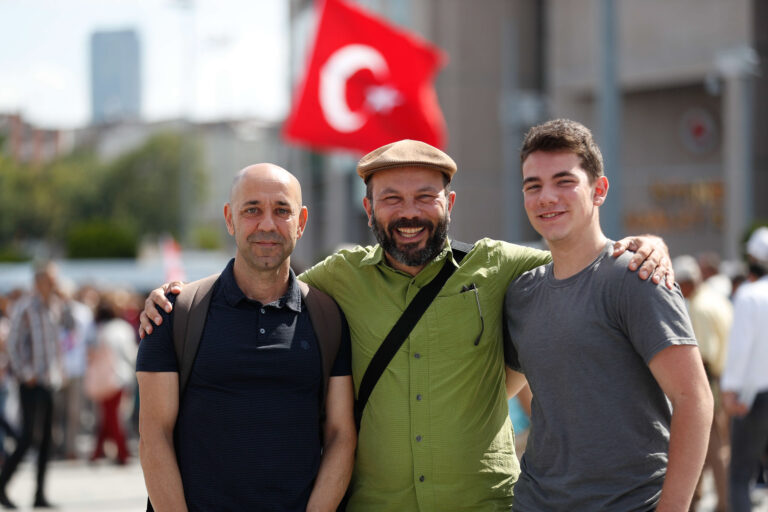
Following a brief arrest in Istanbul, Turkey this summer, Associate Professor of History Baki Tezcan has safely returned to campus. Tezcan, whose research focuses on the early modern Ottoman period, spoke to The California Aggie about his experiences navigating the Turkish justice system. 

In Jan. 2016, Tezcan signed a petition that sharply criticized the Turkish government’s actions towards Kurds, an ethnic minority in the region. His indictment came in May 2018 and, when he traveled to Turkey in June of 2019 to conduct research and to visit family members, he knew he would be arrested upon arrival. 

Tezcan said he had reasons to return to Turkey despite knowing that he would likely be arrested for his decision to sign a petition openly criticizing the Turkish government. 

“I needed to follow publications, be in touch with colleagues, continue my research,” Tezcan said. “And also, I didn’t want to be bullied [by the Turkish government], you know? I don’t think that what I did was wrong and so I thought I should be able to go there and do my share in asserting that what I did was nothing to be ashamed of and nothing to be defensive about. That was also part of the reason I chose to go even though I knew there were going to be some troubles.”

The petition Tezcan signed was authored on the heels of a turbulent year for Turkey, during which Prime Minister Recep Tayyip Erdogan had lost too many votes in his AKP (Justice and Development Party) to maintain a parliamentary majority. The ceasefire between the Turkish and Kurdish armies collapsed after Erdogan’s government issued a crackdown in the Southeast, following the alleged discovery of trenches built by the PKK (Kurdistan Workers’ Party). 

Security operations began in “around 30 urban areas as well as rural areas throughout South-East Turkey,” according to a 2017 UN (United Nations) report. The report said that this “allegedly resulted in a number of persons being killed, displaced or disappeared.” Erdogan’s government imposed curfews in the area, and the calamity was reflected in the displacement of 335,000 residents of Southeastern Turkey, many of whom were Kurds. 

Rebuffing attempts to form a coalition government, Erdogan called for reelection in Nov. 2015, after which he regained the parliamentary majority. In was at this time that the government began calling for the arrests of critics and dissidents — academics like Tezcan were targeted by the government. A failed coup in July 2016 only engendered further political and military instability. 

The Turkish government, which accused the Academics for Peace petition signatories of “propagandizing for a terrorist organization,” failed to persuade Department of Justice officials in the U.S. to interrogate Tezcan, so they took matters into their own hands when he arrived in Istanbul. 

Tezcan’s Turkish lawyer tried to have the arrest warrant lifted, but to no avail. Tezcan also notified the coordination committee of Academics for Peace of the warrant for his arrest. According to Tezcan, his lawyer said that “the purpose of the arrest wasn’t to send [him] to jail but to make [him] go to court.” Three colleagues appeared at the Istanbul airport to show their solidarity for him, and his arrest upon entering the airport transpired peacefully. 

“The [police] first took me to a building,” Tezcan recalled. “They were very courteous and respectful, they didn’t touch me — no body search. They asked me to sign papers about the body search and then the next building was at the police center in the airport and they took mugshots and fingerprints. They were plainclothes police officers. I think they were probably from the anti-terrorism team.” 

The police officers then took Tezcan to a hospital, where he received a clean bill of health. 

“I think it’s part of the procedure to show that you haven’t been tortured,” Tezcan said.

The officers then accompanied him to court, which was closed to the public; Tezcan described it as an “after-hours court.” Despite the arrest, Tezcan considers himself lucky. 

“The court was presided over by a more understanding judge than the judge who presides over the court to which my case was assigned,” he said. 

The courts often handle cases differently, Tezcan said, and some of the signatories’ trials were prolonged as a result of this. 

While the majority of the signatories whose cases were closed received 15-month sentences that they were unlikely to serve, Tezcan remained concerned about the possibility of a two-and-a-half year sentence, which would prevent him from receiving the probation that a shorter sentence would offer. Still, defendants don’t necessarily have to serve time right away and are permitted to appeal their cases. 

Tezcan pointed out, though, that many people are put in jail indefinitely as they wait for their cases to come to trial. 

“I was not so much troubled by the possibility of a jail sentence because I was thinking I could go back to the U.S. and simply avoid going to Turkey and avoid getting in jail,” Tezcan said. “I knew that the case would be overturned at the European Court of Human Rights because [it] was ridiculous. But I was really worried about travel restrictions, about not being able to return, about having to be smuggled out in a boat or something.”

At the trial, Tezcan brought a written statement to the judge, hoping “to keep the tension low.” He asked if the judge wanted the statement read out loud, but the judge said no.

“I wrote something very well-spoken and direct without any self-censorship, except for a few sentences that my lawyer insisted I take out for protecting me,” Tezcan said. “Presenting it [in written form] allowed me to keep the tension low during the trial. I even asked [the judge] whether he wanted to read it and he said no. He decided that I didn’t have to appear in the next court session and that I could go. It freed me from having to be there and he didn’t put any travel restrictions.”

Now, the Constitutional Court, the highest court in Turkey, has decided that the sentencing of the signatories was an impeachment on individual rights and liberties and has overturned the lower courts’ decisions. Since the beginning of this judicial year, these lower courts have been dismissing the signatories’ cases. As of Sept. 17, the courts have acquitted 171 of the accused individuals. But the atmosphere is still fraught for professors living and working in Turkey — following the July 2016 coup, Erdogan’s government began issuing “summary dismissals” of academics who criticized his rule. 

“Private universities in Turkey don’t have tenure and they can dismiss people much more easily,” Tezcan said. “The public universities also find ways of dismissing some.” 

Due to changes in the Turkish legal process after the coup, many of these professors are struggling to return to work. Being dismissed by governmental decree also prevents professors from receiving retirement benefits; as a result, Tezcan said, some have taken early retirement preemptively. 

“In the dismissals [that the universities issued] it wasn’t mentioned why they were being dismissed and as a result [professors] have to fight an uphill battle,” he said. “As far as we understand, [Turkish] university administrations are given a blank check and can send [lists of names to the government]. Some administrators are decent and some use it as a chance to get rid of people whose political positions they don’t like or who are outspoken for civil rights. It turned into a witch hunt.”

Halil Ibrahim Yenigün, a visiting postdoctoral scholar at Stanford University’s Islamic Studies program who was fired from a Turkish university for his involvement in signing the petition, concurs. 

“Moments after Erdogan attacked us in his speech in January 2016, right after the release of our Peace Petition, I was called by my university administration and invited for a meeting to explain myself, my motives for signing the petition, which ended up with my suspension in a couple of days,” Yenigün said via email. 

“Eventually, while the investigation was pending, I was attacked on two newspaper columns by a journalist who is known by the Turkish public opinion as an ‘attack dog’ working for the government with an amazing ability to get his targets fired from their jobs immediately,” Yenigün said. “Indeed, I was dismissed the very next business day.” 

Yenigün said that Erdogan used the petition as an “excuse” to continue his “purge” of dissident academics in the public sphere. Yenigün also wrote that he had found sympathy in the U.S. for his situation, but that some American universities maintain financial connections to Turkey and that these universities “have made efforts to keep their money flowing by simply ignoring [my] colleagues and [our] situation.” 

Yenigün believes this is largely due to the donor system in the U.S. 

“There are also some academics who wanted to keep their good relations with the pro-Erdogan academic officials in Turkey so they have kept silent and they continued to receive their invitations to Turkey,” he explained. 

Yenigün does not plan to return to Turkey in the near future due to the potential risk of “detention orders” and the struggles that professors there continue to face. 

Indeed, some of the dismissed professors have left academia entirely, while some, like Yenigün, have gone abroad. 

“I know personally people who lost their jobs, one of my generation moved out of academia altogether, one moved to a publishing job and one went to the U.S. and felt alienated and is now doing city tours in Istanbul,” Tezcan said. “Even though this story sounds like a beautiful story that ends nicely for me, it doesn’t end nicely for my colleagues.” 

Tezcan is waiting for an upcoming court date in Turkey, at which time his lawyer will ask for his case to be officially dismissed. It remains unclear why the Constitutional Court decided to begin the acquittals.

“Was it due to an instruction from Erdogan that it has been enough?” Yenigün asked in his email. “Has it been costly for Turkey’s diplomatic relations and they decided to stop it here? Or was it an act of defiance on the part of the judiciary once they saw Erdogan is losing his grip over the society now after losing Istanbul and Ankara among many other cities? It is hard to tell at this point.”

Written by: Rebecca Bihn-Wallace — campus@theaggie.org

Correction: A previous version of this article erroneously stated that Tezcan’s lawyer who tried to lift his arrest warrant was from the ALCU. The lawyer was actually a Turkish lawyer not affiliated with the ALCU. The Aggie regrets this error. Additionally, the article has been edited to clarify that Tezcan asked the judge if he would like Tezcan to read his statement out loud in court, but the judge said no.

New band, same members: Harmful Band-Uh! culture cannot be taken lightly or repeated

What oversight does the university actually have on reformed UC Davis Marching Band?

The Cal Aggie Marching Band, known to most students as Band-Uh!, was formally disbanded on Sept. 3. With it, the former band’s harmful culture and traditions, as detailed in The California Aggie, should have disappeared as well.

Since the announcement, though, it seems that members of the new UC Davis Marching Band are not taking themselves to task to focus on creating a safe culture for all members before starting on anything else.

The seriousness of the allegations against the band’s structure cannot be overstated. Courageous former members have come forward not just to The Aggie but to The Sacramento Bee as well, detailing their experiences around hazing, binge drinking, sexual harassment and assault, ineffective leadership, intimidation and more. These survivors should take solace in the fact that their stories have helped put an end to the harmful culture of Band-Uh!

Other former members, nonetheless, have taken the band’s elimination in an entirely different light. The spectrum of reactions spans from those who accept that there were problems with the band and are ready for an overhaul to those who have declined to accept that there were any issues in the band at all. This denial amounts to nothing more than victim blaming. Former members have made public social media statements consistent with their views. Within private law firm Van Dermyden Maddux’ climate survey on the former organization, some former members even expressed concerns “about ‘bias’ in the media against the organization.”

Let it be clear: The Aggie stands behind the courageous individuals who came to this newspaper and others regarding their experiences. In the Editorial Board’s eyes, members of the new band must keep survivors’ narratives at the forefront of every decision regarding the new band’s future.

When petitions — one authored by a former Band-Uh! and current UC Davis Marching Band member — appear online asking that the new marching band be allowed to perform before the hiring of a faculty director, one can’t help but feel like what happened to the band’s victims isn’t being taken seriously. Recruiting a faculty member at UC Davis is a time-intensive process, and we want this process to be as thorough as possible.

When the same petition states that “our student directors and drum majors have been trained for two or more years for these performances,” and that “the football shows that they have already written are ready to be practiced and performed,” the survivor’s experiences are not centered. They seem absent from the conversation. And when an update to the petition is signed with a well-known slogan from the former Band-Uh!, more insult is added to injury.

The university has promised that the UC Davis Marching Band will be “university-supervised” and not “student-led” like Band-Uh! was. We want to know how the administration will ensure that the students leading the new band, who could have been members of Band-Uh!, are not going to maintain the old status quo.

Members, leaders and the new interim director of the UC Davis Marching Band: This is your chance. Sure, let’s do it for the music. But first, let’s make sure that the harm Band-Uh! did to so many never happens again. Make it a fact that “Far and wide, many have tried, but none have done it better.” Because up until now, that hasn’t been true.

Written By: The Editorial Staff

Police Logs

Abandoned suitcases, lost pine tree

September 12

“Male walking around talking on [the] phone about ‘how many drugs he has sold tonight.’”

“Male inside building, appeared to be hiding behind a mailbox.”

September 15

“Pine tree fell and now in the street.”

September 16

“Sorority having party in [the] backyard.”

September 17

“Sounds of someone rifling through recycling coming from reporting party’s backyard.”

“Large suitcase next to trash can.”

September 18

“Subject briefly inside business and grabbed a handful of magazines before being asked to leave. Reporting party believes subject has been drinking or under the influence due to his behavior.”

“Suitcase left at bus stop.”

September 19

“Occured on E 8th Street. Loud Chickens.”

September 20

“Subjects in middle of street and two in backyard.”

Animal rights activists urge sanctions after deaths of seven baby primates garner media attention

UC Davis Primate Center faces scrutiny this summer

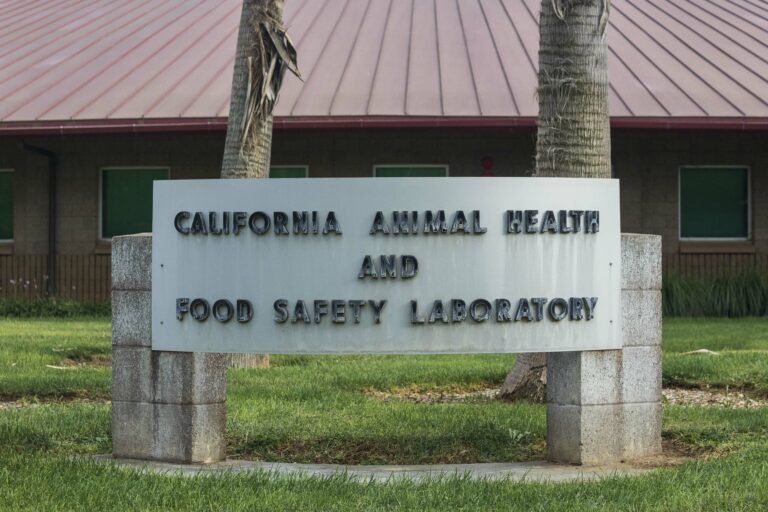
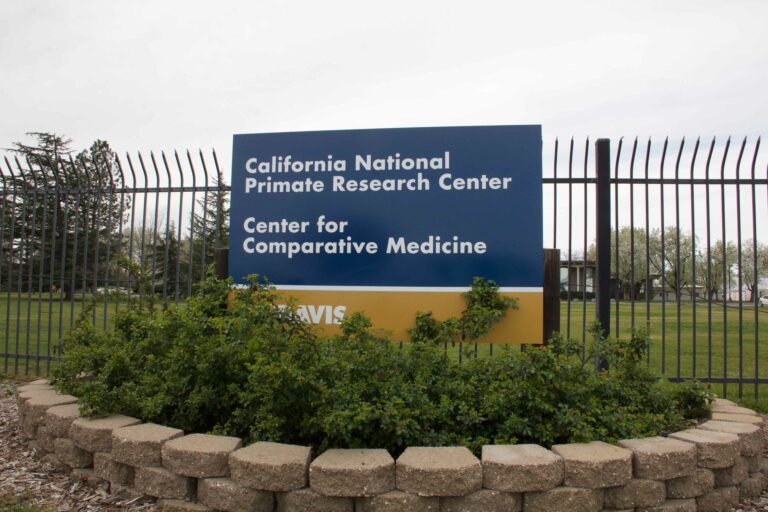
The California National Primate Research Center (CNPRC) at UC Davis came under fire again this summer after it was reported that seven baby monkeys had died under its care in April of 2018. The center reported the deaths when they happened, but the incidents were subjected to a more extensive investigation by local media this summer. 

Animal rights activist groups subsequently called for the university to be fined — Stop Animal Exploitation Now! (SAEN) went as far as to say the university was engaging in a “cover up.” SAEN, whose website is sponsored by a religious foundation, has a history of filing federal complaints about universities around the country for conducting animal research and aims to stop the practice.

According to UC Davis spokesperson Andy Fell, SAEN finds out about incidents by doing a public information search. 

“They ‘announce’ them as if they were new,” Fell said. “These are things we’ve already reported to the USDA or the NIH and taken steps to make sure it doesn’t happen again.”

The US Department of Agriculture and National Institute of Health establish the regulations and guidelines that must be followed by the CNPRC. 

The center at UC Davis is one of seven National Primate Research Centers around the country. Some of these centers, like those located at the University of Washington and the University of Wisconsin have also received attention from the same animal rights group. The University of Wisconsin declined to comment on the “activities” of the animal rights group, saying instead that the university “considers animal research an indispensable tool for understanding complex living organisms.” The University of Washington did not respond to requests for comment at the time of this article’s publication.

One of the claims animal rights groups often make is that animal experimentation is unnecessary. Research with monkeys is only conducted when “questions cannot be answered in other ways,” according to the NPRC website. Scientists use monkeys to study complicated issues such as chronic lung disease, Alzheimer’s disease or reproductive problems because of the genetic closeness of monkeys to humans. 

Fell echoed this idea, explaining that a principle of animal research is to only use it if there is no alternative. 

“If you don’t have to use an animal for the experiment, don’t use an animal, if you can use a cell culture, use a cell culture, if you can use a mouse instead of a monkey, use a mouse, if you can use fewer animals use fewer animals,” Fell said.

Animal research is conducted on rats and mice 95% of the time, according to the Foundation for Biomedical Research. For an experiment to be conducted at the CNPRC, it must be approved by the center’s Research Advisory Committee and the UC Davis Institutional Animal Care and Use Committee, which includes “public non-affiliated members.” 

When asked about why the center’s scientists are hard to reach, Fell explained that “there have been occasions in the past where people have been targeted by harassing emails or worse.”

Written by: Andrea Esquetini— campus@theaggie.org

Review: Margaret Atwood’s “The Testaments”

Atwood’s sequel to “The Handmaid’s Tale” comes at the right time for readers 

Margret Atwood’s “The Handmaid’s Tale,” published in 1985, has become a cultural sensation in recent years due to Atwood’s dystopian Gilead resonating with today’s political climate. Under the Trump administration, images of the red-clad and veiled handmaid began popping up at rallies and protests — a symbol of what the world was becoming for women everywhere. 

A large part of this resurgence was also due to the premier of the Hulu original television series “The Handmaid’s Tale,” which aired in 2016. It received critical acclaim and 14 Primetime Emmy awards. The show follows June (Offred), played by Elizabeth Moss. While the first season follows the original novel closely, later seasons have developed beyond the plot Atwood created.

Unsurprisingly, Atwood decided that there was more of this world worth exploring. On Sept. 10, she published a sequel to “The Handmaid’s Tale,” set 15 years after her first novel ends. Titled “The Testaments,” Atwood details the late-stages of Gilead’s rule, as well as those working within the system to destroy it. The story is told through manuscripts and witness testimonies of the narrators who are attempting to shed light on Gilead’s corruption.

“The Testaments” is told from the perspective of three female narrators: the infamous Aunt Lydia from the original novel, a young woman growing up in Gilead named Agnes and a Canadian student named Daisy. While the novel’s time period jumps over the events that take place in the Hulu series, there is a significant connection between the series and what Atwood includes in the novel. 

The novel answers questions that fans everywhere have had about Gilead and the characters who live in it while also developing new plots.

The New York Times describes the novel as a “riveting and deeply satisfying escapist fantasy” for the new age. It details the derailment of a society that is no longer as fictional and far-fetched as it was in the original “Handmaid’s Tale.” 

One of Atwood’s greatest strengths as a writer is her ability to create deeply complex and interesting female characters. 

This is expertly proven with the character of Aunt Lydia. As an “Aunt” of Gilead, Lydia is in charge of training and controlling the Handmaids. They are allowed to read and write, and therefore hold much more power than most women in Gilead. 

The original novel and Hulu series depicts Aunt Lydia as a cold and rigid matron, blinded by the rules of the world and the power she has over the Handmaids.  

“The Testament’s,” however, adds many layers to the character. Through her testimonies, it’s revealed that Lydia has been plotting the downfall of Gilead for some time. She tells the story of how she was abducted by the Eyes (the law enforcement in Gilead) and put through a series of grueling tests to determine her usefulness as an authority figure in their society. Everything she does has been for survival — or so she claims in her testimony. 

In an interview with Time, Atwood discusses Aunt Lydia’s leading role and her unreliable narration. Whether or not Aunt Lydia is a good person is up entirely to the perspective of the reader, Atwood said.

“Let Aunt Lydia speak for herself, and make up your own mind,” Atwood said. 

The other two narrators become involved in Aunt Lydia’s plot to take down Gilead, but their characters felt much less developed than Lydia’s. The novel’s only true criticism has been over Atwood’s struggle to narrate the voice of younger women.

“At the root of this may be that Atwood remains an unsentimental writer,” an article for NPR states. “Shattering horror visits these two, yet somehow, it’s never wrenching to read.” 

Without giving too much away, however, the identity of these characters hold enough importance that readers will find themselves invested in their stories anyway. Atwood is an expert at creating page-turners and “The Testaments” keeps readers interested. 

The novel is already wildly successful — selling out and being groomed for awards. The world Atwood had created back in 1985 needed to be revisited, and “The Testaments” does so with satisfying results. 

“The Handmaid’s Tale” was a warning, similar to Geroge Orwell’s “1984,” of a world that Atwood feared. Years later, post-”Me Too” and with continuous rollbacks of protections by the current Presidential administration, “The Testaments” is a reaction to the actualization of many of her fears, and a hopeful message that bravery and truth will ultimately prevail. 

Written By: Alyssa Ilsley — arts@theaggie.org

Aggie football humbled in blowout loss to Montana

0

UC Davis suffers 45-20 home defeat in Big Sky opener 

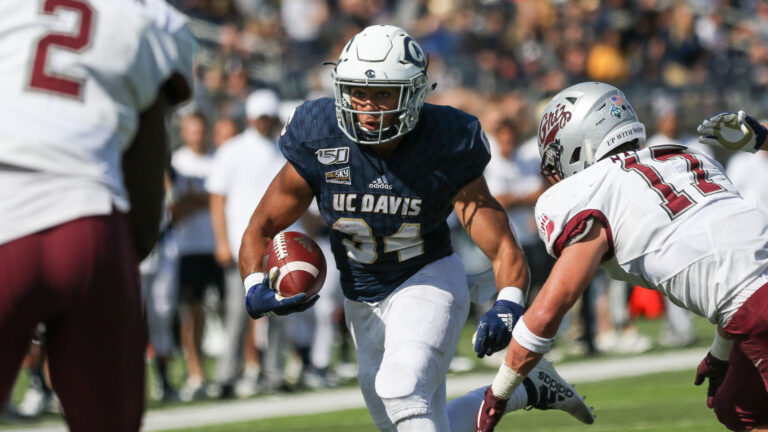
The UC Davis football team suffered its worst defeat of the season in Saturday’s Big Sky opener, falling to the visiting Montana Grizzlies by a final score of 45-20.

It was a stunning blow to the Aggies, a top-5 FCS team in many rankings polls, especially after last week’s hard-fought loss to the defending national champions.

The postgame mood in the home locker room wasn’t one of panic or anger, but rather pure disappointment and frustration due to the opportunities left on the table and numerous sloppy, uncharacteristic mistakes.

In his postgame press conference, UC Davis Head Coach Dan Hawkins explained that losses like this are par for the course along the journey of an ascending program and for a team still learning how to sustain success.

“Hardly ever, when you first learn how to fly a kite, do you just get it up in the air and it just goes the whole time,” Hawkins said. “You’ve got to lose a kite in the electrical lines or trees before you figure out exactly what you’re supposed to be doing.”

“It’s probably the first time in my two and a half years here that I felt like we got out-coached, out-energy-ed, out-executed and out-desired,” Hawkins admitted.

While the team is playing this season under the weight of increased expectations, every Aggie opponent also has added incentive to put forth their best effort and knock off last year’s conference champions.

“It’s interesting for these guys to understand wearing the target on your back,” Hawkins said. “When you go win the championship, every team and every staff that plays you will go research the heck out of you, figure out how to stop you and study your film. They’re gearing up for you.”

UC Davis simply could not get anything going on offense for all four quarters and found itself constantly playing catch-up, trailing by as many as 31 points early in the third quarter.

The Aggie defense was significantly overmatched for much of the afternoon as well, failing to get off the field on third downs and missing an alarming number of tackles in the open field. Every time it seemed like UC Davis had a chance to get a defensive stop and swing the momentum, Montana rose to the occasion and made meaningful plays to move the chains. 

A particularly damaging breakdown in coverage on the third play of the second half led to a breakaway 62-yard touchdown for the Grizzlies and opened the floodgates for a nightmarish third quarter.

“I think it really came down to tackling,” said junior defensive back Erron Duncan. “[Montana’s] quarterback did a great job of creating on the run. Even with their running backs, they were pounding us and we couldn’t tackle. We were in the position the majority of the plays to stop the run for a minimal gain and we just couldn’t make the plays.”

UC Davis was severely gashed by a relentless Grizzly rushing attack that totaled 260 yards on the ground and averaged an even six yards per carry. Montana quarterback Dalton Sneed used his legs to escape the pocket and take off running on many occasions. With many one-on-one coverages downfield, Aggie defensive backs had to choose between covering their assignments or crashing toward the scrambling Sneed, who ran for 81 yards on 10 attempts.

“He made us look silly in the open field at times and was able to beat us around the edge,” Hawkins said. “You could really sense his competitive fire and you’ve got to admire that. He struggled a little bit last year against us so I give him a lot of credit for coming back and playing like he did.”

Montana seemed to suck the life out of the Aggie defense on a few lengthy scoring drives that took significant chunks of time off the clock. The Grizzlies were content to play a dink-and-dunk style of offense at times, patiently grinding out short gains on the ground and slowly wearing out UC Davis, while always coming up with the right play design to keep drives alive on third down.

UC Davis coaches and players constantly stress the importance of winning the turnover battle, but Saturday’s game could not have strayed further from the plan as the visitors prevailed in that department by a tally of 3-1. A pair of Aggie turnovers, both lost fumbles, in the opening minutes of the third quarter gifted Montana two easy touchdown drives, which essentially put the game out of reach with still over 23 minutes left in the contest.

UC Davis was fortunate to even get on the scoreboard in the first half, taking advantage of a “roughing the kicker” penalty on junior punter Daniel Whelan that extended a mid-second quarter drive. Sophomore wide receiver Carson Crawford scored on a 3-yard touchdown reception that made it 14-7 at the time, the smallest deficit the Aggies would face for the remainder of the afternoon.

The Aggies went into the locker room at halftime having amassed just 148 yards of total offense, the lowest of any half this season. UC Davis started out cold with four consecutive punts and an interception. In addition to a stout Montana defense, the Aggies were halted by a pair of key penalties that negated lengthy pass completions to senior tight end Wes Preece and sophomore running back Ulonzo Gilliam Jr.

UC Davis was never able to establish the running game, averaging just 1.9 yards per rush, and was forced to abandon it in favor of a pass-heavy attack when Montana started to pull away in the third quarter.

The Aggie offense was not helped by unfavorable starting field position on almost every single offensive drive of the afternoon. Of the team’s 12 possessions, Davis only began past its own 26-yard line two times and was backed up inside its own 10-yard line three times. UC Davis Quarterback Jake Maier and the rest of the offense were faced with the daunting task of trying to piece together drives of 80+ yards and, as a result, were unsuccessful the majority of the time.

“When everything goes well and you score 50 points in a win, everyone tells you how great you are,” Maier explained. “When stuff like this happens, you’ve got to own it because you own the 50 points and the wins. We’ve got to be more disciplined. We keep turning the ball over and getting penalties in big situations. Regardless of what happens in these games, we can’t do this to ourselves.”

Maier was able to complete 74% of his passes and threw for a trio of touchdowns, but a pair of costly turnovers prevented him from leading the offense to more points and gave Montana prime field position to extend the lead.

On the team’s first possession of the third quarter, Maier was stumbling backwards in the face of heavy pressure and mistakenly dropped the ball on his own while losing his balance. A Montana lineman easily scooped up the loose football at the 14-yard line and the Grizzlies found the end zone on the very next play.

Maier was forced to operate without star junior wide receiver Jared Harrell, who exited early with an injury, but found success with fellow junior wide receiver Khris Vaughn who hauled in a pair of touchdowns to go along with a team-leading 57 receiving yards.

Maier moved into second place in school history with his 69th career touchdown pass, a 17-yard strike to Vaughn early in the fourth quarter. Other than that, it was a forgettable afternoon at the office for the signal caller, but he did not shy away from taking responsibility for the ugly performance.

“This is 100% on me,” Maier said. “I’m a leader of this team and where I go, this team goes. Whatever we’ve got to do to prepare better, practice better and make sure we’re executing, that falls on me ultimately.”

There’s no doubt that this loss is a negative blow to the Aggies’ playoff aspirations, due to the lopsided nature of the final score and the fact that the game was being nationally televised on Root Sports. Of course, UC Davis has seven more games to redeem itself and right the ship, but there are no cupcakes on the upcoming schedule. 

Nonetheless, Saturday’s blowout provides added motivation for the players to correct their mistakes and come back stronger.

The Aggies will have to hop on a flight back to North Dakota at the end of the week and prepare for a battle with the North Dakota Fighting Hawks in Grand Forks. The game kicks off at 11 a.m. and can be streamed on ESPN3.

UC Davis will return home to UC Davis Health Stadium on Oct. 12 for Homecoming weekend and the Battle for the Golden Horseshoe against Cal Poly.

Written by: Brendan Ogburn — sports@theaggie.org