53.5 F
Davis

Davis, California

Tuesday, December 23, 2025
Home Blog Page 404

ASUCD rebrands for 2019-20 school year

Association aims to increase student engagement across student life

With the new school year beginning, ASUCD plans to launch an expansive rebranding effort as well as organize other events and activities to help better engage the student community. 

ASUCD, the student government of the entire undergraduate population at UC Davis, supports over 20 units and employs upwards of 1,500 students.

“What I would really like students to understand is that ASUCD is an umbrella organization, under which almost every single student-driven organization is a member,” said ASUCD Senator Maya Barack, a fourth-year international relations major. “So many more organizations on campus that are run for students, by students fall under the ASUCD category.”

Popular services utilized by students like the Coffee House (CoHo), the Bike Barn and Unitrans are all funded by ASUCD. The association is also responsible for hosting favorite community events including Whole Earth Festival and Picnic Day.

Part of ASUCD’s rebranding strategy aims to increase student awareness about the services they utilize everyday that they may not know are supported by ASUCD, Barack said.

In addition to regular ASUCD Senate meetings scheduled every Thursday night, a special session is set to take place on Sept. 26 and several town halls are expected to take place throughout the quarter. Dates for town halls have yet to be confirmed.

ASUCD Vice-President Shreya Deshpande commented on upcoming legislative changes students can look out for as the school year progresses.

“There will be a lot of restructuring of legislation this year,” Deshpande said. “We plan to change elections from winter to spring, regulation of the slates, reforming Judicial Council and restructuring committees and commissions.”

The ASUCD executive office is also in the final stages of a 10-year plan for ASUCD, called “Going Forward.” Plans include transitioning student wages to minimum wage.

“This encompasses transitioning student wages to minimum wage, increasing funding for current services and expansion into new services in the future,” Deshpande said.

ASUCD President Justin Hurst has also been working with different student centers on campus in order to increase collaboration and partnerships.

“New student voter registration will also be happening on campus, throughout dorm areas this weekend as new students move in,” Hurst said, adding that for many incoming freshmen, the 2020 presidential election will be the first they are able to participate in.

With a new class of freshmen and transfer students settling into life at UC Davis, members of ASUCD’s executive office have been tabling throughout Welcome Week and orientation.

In response to the $545,000 deficit the association has accumulated, Senator Shrondreya Landrum has been spearheading plans for an ASUCD gala, scheduled to take place in the beginning of Winter Quarter 2020.

“The Gala is to raise funds as a response to this previous year’s deficit and will be marketed to ASUCD alumnis,” Hurst said.

Written by: Ally Russell — campus@theaggie.org 
Automating art: can AI truly make art?

A new horizon, or the end of the road?

In October of last year, a painting titled “Portrait of Edward Bellamy” sold for $432,500 at Christie’s auction house in New York, N.Y. In ordinary circumstances, such a price tag in the exorbitant New York art world might not fetch any noticeable attention. “Portrait of Edward Bellamy,” however, is no ordinary work of art. The painting by Obvious, a French art collective, was created with GANs, or generative neural networks. In layman’s terms, GANs are machine-learning systems that synthesize data sets containing thousands of data points and repackage that information into a new product. 

The art world took notice of this landmark sale, as AI technology has been frightening markets with its autonomous capabilities. Artificial Intelligence has made its presence known in the creative realm of art long before the sale of “Edward Bellamy.” Its capabilities and potential may be limitless as it operates more efficiently than any human artist ever could. 

As scientists and artists explore the possibilities of AI technology and its works, poignant questions arise over the purposes of art and its relation to human expression. Self expression has been inextricably linked to the art we create. So can AI truly make art as we imagine it, and if so, should we allow it to?

Since the “Portrait of Edward Bellamy,” AI has progressed to offer more human-like and diverse pieces of art. The GANs used by Obvious is limited to the art in the dataset that it uses and it cannot add any original artistic flair to the paintings it creates. It picks up patterns from previous works and reshapes them into something different, but not entirely original. Dr. Ahmed Elgammal, a professor of Computer Science at Rutgers, sees GANs as a nascent and rudimentary stage of what artificial intelligence is capable. 

Elgammal described his vision for the future of AI art with AICAN, his Creative Adversarial Network in The Atlantic. AICAN is GANs with a major twist. Instead of drawing from art solely based on its neural network, it also adds a completely new touch or style distinct from what it has learned from the neural network. This added dimension shifts the artwork slightly more into the realm of novel creation. Painting isn’t the only genre of art in which AI is making headwaves. It’s making leaps and bounds of progress in music as well. 

AI has become an increasingly important part of music since its introduction in 1963 when 17-year-old computer scientist Ray Kurzweil displayed a computer program and machine-learning system on the TV program “I’ve Got a Secret” that recognized patterns in classical works and created new original works. 

Since then, AI has developed to instantaneously create instrumentals based off the neural networks and datasets of music. It swaps art data sets for instrumental datasets and analyzes the patterns of these instrumentals to interpret musical patterns with music theory, forming entirely new beats. 

Currently, the state of musical AI isn’t to the point of creating Grammy-worthy work, but it is capable of creating catchy and soothing beats, suitable for lounging or as background music. AI’s improvements in this field have startled some who are worried that its abilities will eventually surpass and supplant human artists. Other AI optimists have taken its qualities in full stride, using it to complement their work, making the creative process more efficient. 

AI allows artists to explore different pathways and ideas in their instrumentals at a faster rate than engineering them manually. Holly Hendron, an artist and a pioneer in the AI music world summed up the aspirations of AI music in an article with Spin magazine. 

“I’m more interested in not how we can write ourselves out of the creative process, but rather expand the creative process by augmenting what we’re doing with this technology,” Hendron said. 

Many artists like Hendron believe that AI holds the key to unlocking new musical possibilities. But others are cautious of allowing AI too much traction in music. One of the disconcerting elements of AI in music is its ability to replicate human musician’s voices and styles creating original works that play off already established artists. This can open the door to many legal battles, as the copyright world tries to discern whether a replication of style that doesn’t use an original “sample” holds the same consequences as intellectual property theft. 

“There’s nothing legally requiring you to give her any profits from it unless you’re directly sampling,” said Meredith Rose, policy counsel at Public Knowledge, in an article in Verge.

These issues are still being mulled over as AI is in its infancy with no true formidable rules or regulations to govern its domain.

There is no telling how far the AI artistic capacity will grow in the coming years. It remains to be seen whether it will end up being an incredible tool for human artists, drastically elevating their abilities or an autonomous steamroller, demolishing everything in its path. This question may boil down to whether we determine the artist’s emotional and creative struggle as a vital component of art.

Written By: Andrew Williams — arts@theaggie.org

Fall quarter signals the start of school — and rush week

0

Panhellenic members open up about the process, give tips for incoming participants

The beginning of a new school year means that formal Panhellenic recruitment is right around the corner. Though the percentage of UC Davis undergraduates involved in Greek life is small — only about 3,000 students participate out of 30,000 — many say it’s a meaningful opportunity that can only be taken advantage of in college. 

The first week of school is action-packed, especially for girls looking to join a sorority in Davis. This year, recruitment begins on Sept. 27. Panhellenic has also extended the recruitment process to two weekends instead of one. “Rush” will conclude on Oct. 6 and, hopefully, with a bid from the house of one’s choice.

Erin Love, president of recruitment for the UC Davis Panhellenic Association, gave a few pointers for any girls hoping to go Greek. 

“Recruitment will begin with an orientation evening and then each day will be centered around different discussion points that are important to our chapters, such as philanthropy and sisterhood,” Love said. “Each woman who signs up for the recruitment will be given a recruitment counselor who will help them through the process, facilitate new friendships and make the transition to college easier.” 

Formal Panhellenic recruitment is described as a “mutual selection process,” with each girl picking her top houses and each house picking their top prospective members. All chapters try their best to make recruitment a values-based process. 

Conversations become more serious as the days inch toward the final step of the rush process: preference evening. Interactions will become longer with the goal of establishing a genuine connection between potential new members and chapter members. 

Second-year mechanical engineering major Annaya Tyagi is excited for the upcoming process and explained why she is rushing. 

“I want to be a part of a group of women who are working towards philanthropy while overall having fun,” said Tyagi. 

There are nine sororities at Davis. Eight participate in rush week and one, Sigma Alpha Epsilon Pi, UC Davis’s resident associative sorority, conducts a separate informal rush week for prospective candidates.

Janina Larsen, a fourth-year clinical nutrition major and Panhellenic recruitment counselor — also known as a Pi Rho Chi — gave her thoughts on the extensive process. 

“Coming to college can be a really stressful time, especially for freshmen and junior transfers,” Larsen said. “Joining the Greek community here at UC Davis is a great way to make a really big campus feel smaller and more like home. By going through recruitment, you’re joining a community that values academics, social responsibility and genuine friendship.”  

Interested students should visit www.davispanhellenic.org for additional information, including a detailed schedule and outfit recommendations. 

Written by: Isabella Beristain — features@theaggie.org

Visiting scholar to UC Davis robbed at gunpoint, irreplaceable research data stolen

0

GoFundMe page set up to help scholar has already exceeded fundraising goal

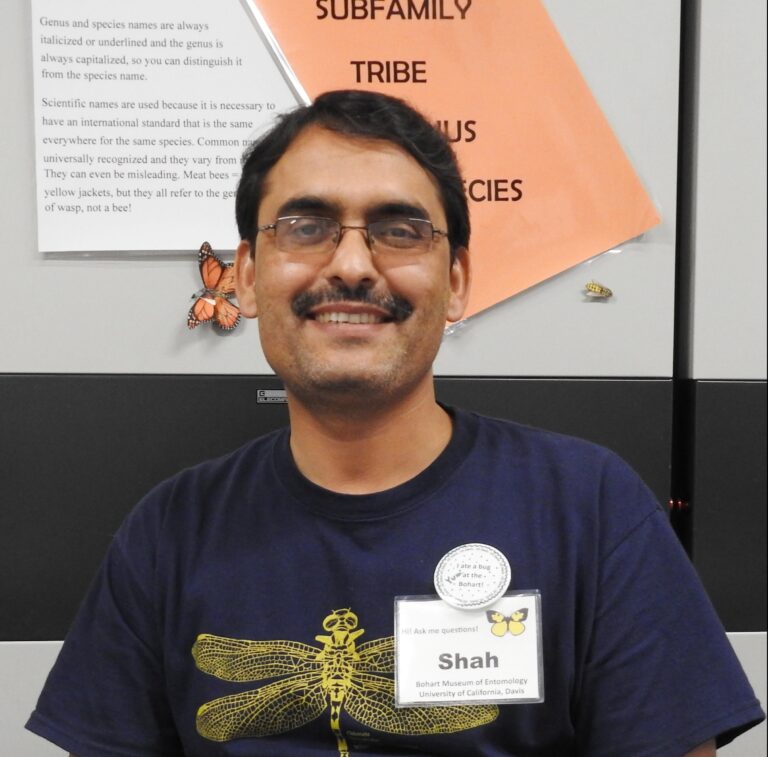
Syed Fahad Shah, a visiting scholar to UC Davis, was robbed at gunpoint last Friday, Sept. 20, as he was walking home on Russell Boulevard. Shah, a lecturer in the Department of Entomology at the University of Agriculture in Peshawar, Pakistan, lost both personal and academic items in the event.

Shah had a hard drive containing important scientific research data and lecture slides stolen from him, in addition to his wallet — containing his rent money and credit cards — and a newly purchased laptop, according to a press release from the UC Davis Department of Entomology and Nematology.

The academic, who is studying parasitoid wasps under the guidance of a UC Davis scientist at the university’s Bohart Museum of Entomology, had resorted to walking home because his bike had a flat tire. He was robbed on a bike path along Russell Boulevard, near Lake Boulevard.

The robber, aided by an accomplice, was parked on the opposite side of the road with the car’s emergency lights flashing.

“I was looking at the car and thought that maybe they have some kind of problem with the car,” Shah said, according to the press release. A man then leapt from behind a tree trunk, pointed his gun at Shah and demanded his wallet, cell phone and backpack before hurling Shah’s cell phone into a field and bolting into the waiting car, described as a dark sedan.

After finding his phone in the field, Shah called the police and described the suspect as around six-feet tall, curly-haired and between 20 and 30 years old.

“His most valuable possession […] was an external hard drive containing all his research data and lectures,” the press release states. “It is a Seagate 1 terabyte hard drive. Shah had not yet backed up the contents.”

Just weeks before the robbery, the scholar had his old laptop stolen as he was traveling through the Dubai airport. Then, the hard drive had served as a backup of his research data. Now, his only copy of the data has been lost.

Following the robbery last Friday, Director of the Bohart Museum Lynn Kimsey announced that the museum had started a GoFundMe page to raise funds to replace Shah’s belongings, even if the stolen scientific data on the hard drive cannot be replaced. The GoFundMe page has already exceeded its $2,000 goal, with $2,250 already raised.

Written by: Hannah Holzer — campus@theaggie.org


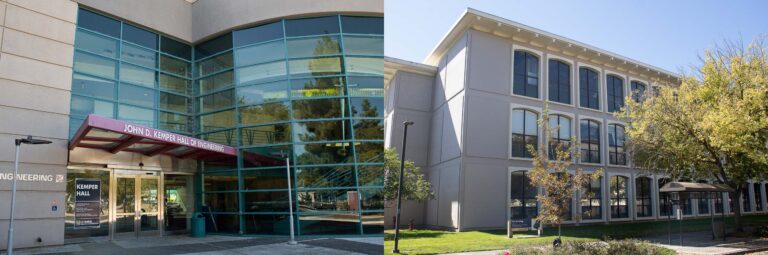
UC Davis reveals new changes to on-campus facets, including new buildings, new payroll system

0

 Keep an eye out for these on-campus improvements made over summer

The UC Davis campus has undergone several major changes while students have been away on summer break, including the construction of new buildings, the hiring of new faculty and updated rules and policies. All these innovations are considered essential to maintain UC Davis’ widely regarded ranking as a top university — including by the Wall Street Journal.  

STUDENT HOUSING

Both Pine Hall and Currant Hall in Tercero have undergone construction and now feature updated windows to protect against water intrusion and leakage. Tercero will be opening a second dining commons named Latitude as soon as the Fall Quarter begins. Latitude will be located right behind Pine and Currant and will feature both indoor and outdoor dining areas. 

What used to be Webster Hall in Cuarto has been replaced with a brand-new dorm building named Yosemite Hall. This area has been under construction since the spring of 2017. Thoreau Hall in Cuarto has been renamed Tahoe Hall. 

Finally, Emerson Hall in Cuarto will be closed for construction starting this fall and lasting until fall 2021 for a redevelopment project. Once reopened, Emerson Hall will be renamed Shasta Hall. 

Director of the Office of Student Development Branden Petitt explained that changing times required the university to make some adjustments to the names of buildings. 

“We took the opportunity to change the names [of the Cuarto residence halls] since these are new complexes and we wanted to be more reflective of the California region,” Petitt said via email. 

BUILDINGS

Walker Hall will open in Jan. 2020 after a long period of seismic upgrade construction that began in 2011 finally wraps up. As of Aug. 2019, this project is still on track for completion sometime later this year. This hall will serve as the graduate and professional student center, complete with professional development workshop spaces, a commons area for graduate and professional students and general assignment classrooms.

According to the project updates on the UC Davis graduate website, the university will be “scheduling on-site tours with some of [their] leaders, donors and staff members.”

In other news, The Gunrock will be closed for renovations until early 2020. The restaurant closed at the end of Spring Quarter of 2019. Until its reopening, The Gunrock will not be accepting any reservations. During this time, all other services at the Silo will still be available, including Peet’s Coffee, various on-site food trucks and the Silo Market. 

RULES/POLICIES

For all employees at UC Davis, there will be a new payroll and personnel system as of Friday, Sept. 27 called UCPath. With the implementation of this new system, the university is also making changes to the accounting system. Paper paychecks will no longer be distributed on campus and will instead be mailed to an individual’s home address. Employees are encouraged to attend a ‘town hall’ meeting to learn more about UCPath.

Those who are not interested in direct deposit but would like to receive pay on payroll dates have another option: pay cards. 

“Pay cards [are] available to nonrepresented employees, and represented employees whose unions have approved,” states the UC Davis update on the new accounting system. “Each payday the university will load your earnings onto your pay card (to be used as a debit card).”

Additionally, the campus police department will be retrofitting the AggieAccess system so that the police department’s dispatchers will be able to remotely monitor the systems and control access quickly in more than 160 campus buildings. 

Written by: Linh Nguyen — features@theaggie.org

New field of sociovirology headed by UCD professor studies importance of social interactions between viruses

Assistant professor makes novel discoveries about necessity of social interactions between viruses for reproduction, evolution

Viruses are more codependent and social than one may think — Samuel Díaz-Muñoz, a UC Davis assistant professor of microbiology and molecular genetics, studies these interactions and their relation to virus evolution. Through this research, Díaz-Muñoz hopes to learn more about how to better fight infections with treatments that revolve around viruses’ tendencies to socially interact.

“I tend to call … my work the ‘social lives of viruses,’ which is basically how viruses interact with each other, change their genetic makeup or evolution and, ultimately, how they interact with their host,” Díaz-Muñoz said. “We look at viruses as organisms, not as disease agents, which they are, but we are more interested in what the viruses are doing and why.” 

In his lab, which is entering its third year, Díaz-Muñoz uses the social evolution theory to understand the behavior between bacterial and viral groups. It has been known for some time now that viruses live in groups, but little has been studied about how they coordinate and interact, according to Díaz-Muñoz. 

In 2010, a paper coined the term “sociomicrobiology,” which first explored the interactions between microbes, and illustrated how the field was changing. In 2017, Díaz-Muñoz collaborated with two other professors — Rafael Sanjuán of the University of Valencia and Stuart West of the University of Oxford — to write a paper coining the term “sociovirology,” which encompasses the interactions that occur between viruses for survival. 

As the principal investigator in the lab, Díaz-Muñoz leads the research program, which is  comprised of three post doctorates, one graduate student and an associate specialist, through various studies and projects. He is in charge of obtaining funding, ensuring projects are executed correctly and safely, as well as mentoring the students and other researchers to reach their goals. 

“It’s the search for knowledge, academia, and research that is exciting,” Díaz-Muñoz said. “We have just started studying viruses in this way.” 

In the labs, researchers conduct experiments in which they create infections with many different types of viruses. Their goal is to see how much genetic exchange occurs between two viruses and what their offspring look like, Díaz-Muñoz said. Sequencing is required to determine how many genes each offspring virus gets from each parent virus. 

“Most studies in virology by necessity are just with one virus because researchers want to control all your variables,” Díaz-Muñoz said. “In reality, out there, there’s hundreds of different strains of viruses interacting, and they go far beyond one or two, so in our lab we find patterns for all variables with multiple types of viruses.” 

In Díaz-Muñoz’s lab, he said that because scientific tools are becoming more sophisticated, researchers can perform novel experiments like infecting and isolating single cells. 

“We can look at treatment strategies in a very different way,” Díaz-Muñoz said. “Instead of creating a particular drug that targets a particular part of the virus, we can actually use viral competition to help.”

Díaz-Muñoz clarified that viruses are not actually consciously thinking or aware of their actions. When researchers refer to them as being selfish or cheating, they are describing a reproduction strategy viruses use to best pass on their traits. For virologists, acting “socially” means that one virus affects another’s reproduction, as stated in an article by UC Davis. Successful social interactions aid in survival, while unsuccessful attempts could result in poor outcomes like death. 

Many of Díaz-Muñoz’s findings from his research were documented in the paper published in 2017 with West and Sanjuán.

“That collaboration was mostly an intellectual collaboration,” Díaz-Muñoz said. “With [West] at Oxford, he’s very interested in social evolution theory, and he had been thinking about its implications for viruses. [Sanjuán] has been studying viruses for a long time. He’s a proper virologist and he’s the only other person devoting his lab to sociovirology.”

Their collaboration included getting together to study the social interactions occurring among viruses, Díaz-Muñoz said. This paper explains their new understanding of the social relationships of viruses in relation with the social evolution theory. 

“That paper was applying concepts that we usually apply to animals, to look at things like cooperation and altruism, and examining how they apply to viruses,” West said. “This allows us to better understand the success and dynamics of viruses.”

With the help of West and Sanjuán’s virus studies, Díaz-Muñoz was able to legitimize many of his findings.

“[The social evolution theory] is a mathematical, legitimate theory with decades of work put into it,” Díaz-Muñoz said. “We think this is an exciting field and people should pay attention to it. Our understanding about viruses may be changed.” 

Díaz-Muñoz said that while only him and Sanjuán have labs dedicated to studying sociovirology, other scientists may be doing similar research without using the same name. 

“I did not invent this,” Díaz-Muñoz said. “People have been talking about it since 1999 at least, but it has always been this niche area and now it is becoming more mainstream and incorporated. Nobody thinks about viruses without other viruses, and not many think about viruses without their hosts, and I want it to be more like that.”

Both West and Díaz-Muñoz said they hope their work will open up this area of research for other scientists to investigate. Díaz-Muñoz said their studies can help create new vaccines that beneficially take into account the social interactions between viruses, providing alternate treatment options for human use. 

“Very few people had previously thought about viruses as cooperative social organisms,” West said. “[Díaz-Muñoz] is doing something really novel and different. It was very exciting to get involved in that.”

Written by: Margo Rosenbaum — science@theaggie.org 

Fair Pay to Play Bill passes California state legislature

0

The Golden State looks to change college athletics, compensate athletes

California Senate Bill 206, also known as the Fair Pay to Play Act, officially passed the state legislature on Sept. 11, seven months after it was first introduced by State Senator Nancy Skinner (D-9) in February. The bill now awaits Governor Gavin Newsom’s signature — he has until mid-October to sign the bill — and, if he elects not to veto the bill, it would be illegal for universities in California to revoke an athlete’s eligibility and scholarship for taking and making money off of their own likeness. 

The bill would also allow these athletes to hire agents that would look for business deals and opportunities. These changes will not take effect until Jan. 1, 2023.

The bill affects the 58 NCAA-member schools in California, including UC Davis. Universities like Stanford and USC have been publicly opposed to this bill. Stanford athletic director Bernard Muir wrote a letter to the California State Senate that expressed his department’s opposition. In the letter, he mentions that the department, “believe[s] that for any reform to be fair and meaningful to all student-athletes it needs to occur at the national level and be adopted by the NCAA.”

The UC Davis athletics department is awaiting a report from an NCAA Working Group on issues relating to student-athlete name, image and likeness before it makes any public comments regarding the bill, according to Eric Bankston, who holds the position of UC Davis assistant athletics director, athletics communications & public relations. The report is expected in October. 

Since the bill’s introduction, the NCAA has entrenched itself against SB 206. Back in May of this year, NCAA President Mark Emmert sent a letter to the California Senate, warning that if the bill passes, teams from California schools would be ineligible to compete for championships. While this could have been just a threat to the state to make them drop the bill, under NCAA rules, it would be nearly impossible for this bill to pass and have these schools eligible, which is something that the state would need to consider. The NCAA also argues that the bill would create an advantage for the California schools, as this could shift the tide of recruits that were going elsewhere to try and make some money off of their talent. 

The Fair Pay to Play Act has gained major supporters like Democratic presidential candidate Bernie Sanders and the socially active NBA superstar Lebron James. James has been very critical of the NCAA in the past and took to Twitter to voice his support for the potentially groundbreaking bill.

“Everyone is (sic) California- call your politicians and tell them to support SB 206! This law is a GAME CHANGER. College athletes can responsibly get paid for what they do and the billions they create.” James tweeted.

Conversely, Washington State football head coach Mike Leach recently told the media that California should focus on “keeping the streets clean” instead of the bill. And former Heisman Trophy winner Tim Tebow also underwent heavy scrutiny as he claimed this bill is undermining what makes college sports different. 

“I knew to go to Florida, my dream school, where I wanted to go, the passion for it and if I could support my team, support my college, support my university, that’s what it’s all about,” Tebow said on ESPN’s First Take. “But now, we’re changing it from ‘us,’ from ‘we, from ‘my university,’ from being an alumni where I care, which makes college football and college sports special, to then ‘OK, it’s not about us. It’s not about we, it’s just about me,” 

The argument can be made by either side, but the fact of the matter is that the NCAA and many of its member schools have profited significantly off the talents of amateur student athletes. Sadly, some suffer life-threatening injuries that they will never recover from, forever altering their lives for something that they never got paid for. Many lawsuits have been filed, but none have gained significant traction.

A single signature from the Governor could forever change collegiate sports, and states like South Carolina and New York have begun the process of a similar bill. If passed in California and other states, it could force the hand of NCAA to eventually fundamentally alter their rules.

What is at stake here is something bigger than sports and regardless of the outcome, we could be seeing the start of a massive shift in the NCAA. 

Written by: Omar Navarro — sports@theaggie.org

The Lumineers tackle important message on “III”

Cinematic album tells the story of addiction through three generations

The Lumineers showcase an important message on their third full-length studio album, released on Friday, Sept. 13, but it was the accompanying music videos that revealed the true meaning of the album. “III” focuses on addiction — something that lead singer Wesley Schultz became familiar with when a close family member struggled. 

In a recent interview on Morning Edition, the founding band members explained their thought process. Schultz and drummer Jeremiah Fraites share their history with relatives’ continuing struggle of addiction. 

“I remember my mom woke me up, she said, ‘Sweetheart, your brother got arrested last night,’” Fraites said. “He was arrested in a car, it was around 2:00 in the morning.’ He had smoked PCP and he was so high on drugs that he went inside this A&P, which was like a local supermarket out in the East Coast, and he drank Drano, which is just an unbelievable thing. I don’t know what compelled him to do that. But he was in the ICU for a couple of weeks with second and third-degree burns on his throat.”

Soon after, Fraites’ brother died of a heroin overdose. 

With the two band members’ unfortunate connection to addiction, their album follows three generations of a family as they struggle with their own addictions. The first generation introduced is Gloria, who is an alcoholic struggling to take care of her child while maintaining her marriage. 

“Gloria is an addict,” Schutlz tweeted in an explanation. “Her character was inspired by a member of my family, and no amount of love or resources could save her.  She’s now been homeless for over a year. Loving an addict is like standing among the crashing waves, trying to bend the will of the sea.”

The slow tune of the piano places the audience into a dream-like haze. The videos create a new dimension, the viewers feeling the heartbreaking pain of how addiction impacts a family. 

“There’s this almost cartoonish piano that interrupts the guitar,” Schultz said. “It’s almost like the guitar hands it off to the piano and I think, within the reality of being closely involved with an addict, there is a cartoonish nature to life […] and there’s a mania. There’s a manic nature that is found in that piano… So in the song, every time the guitar is the main focus, it’s the daughter talking to her mother. And every time the piano is the main focus, it’s the mother giving her side of the story back to the daughter. It’s sort of this kind of conversation.”

We see the beginning of Gloria’s addiction in the second song, “Life in the City,” which illustrates her downfall and how she inched closer to her breaking point with alcoholism. With the lyrics, “and if the subways flood and bridges break,” the relation to “Sleep on the Floor” from the band’s 2016 album “Cleopatra” adds a new layer to the song.

“With drug addiction or alcoholism, it really affects the individual and then it has a sort of fallout effect — similar to the effects of a radiation bomb — over time and over years and years, it continually tends to affect people’s loved ones,” Fraites said.

As the album progresses, listeners meet Jimmy, Gloria’s son. Jimmy is a father who struggles with his own addiction. “Jimmy Sparks,” is a conversation between Jimmy and his son — it’s a lesson. Jimmy tells his son repeatedly never to pick up a hitchhiker because it’s “us or them.” When the song ends, Jimmy gets into trouble and is brutally beaten up. He finds himself walking down the road, in the middle of a snowy day. On the opposite side of the road, Jimmy’s son is driving home from a graveyard shift, but taking his dad’s advice, he doesn’t stop to pick up his father, instead leaving him on the side of the road. 

“I think [the song] has a couple layers to it where you’re not really sure why he kept driving and if he even recognized [Jimmy],” Schultz said. “If he did, what does that mean? I think for someone who’s not around an addict very closely, it probably sounds very cold, but to anyone who has been, there are a lot of people who understand what that means, unfortunately.” 

The songs were brought to life in a 37-minute movie set to the tracklist of “III” and which artfully communicates the pain that accompanies addiction.

 The movie shows the highs and the good times Gloria had in her life. She dances with her husband, a soft smile on her face, and she bonds with her mother. The movie also shows the lows of Gloria’s life, including the danger she put her daughter in. The music videos perfectly capture devastation and love. 

Storytelling music videos aren’t a new concept, but The Lumineers took their storytelling to new heights — these are undoubtedly heartbreaking heights, but the album wouldn’t be the same without them. 

Written By: Itzelth Gamboa — arts@theaggie.org

Review: “Once Upon A Time … In Hollywood”

Tarantino mixes reality, fiction in final film

Fans of Hollywood icon Quentin Tarantino waited in anticipation this summer for the director’s (supposed) final movie of his career, “Once Upon a Time … In Hollywood.” Set in 1969 Los Angeles, the movie follows a few days in the life of Rick Dalton (played by Leonardo DiCaprio) and Cliff Booth (Brad Pitt), an actor and his stunt man duo, respectively. As Dalton’s career as a cowboy television star begins to diminish to one-time appearances as television villains, Dalton and Booth’s dynamic transforms into one of stewardship and oddly endearing friendship. 

Booth — muscular and cool with a potentially criminal background — begins acting as Dalton’s chauffeur and handyman as Dalton emotionally grapples with the potential end of his once-shining career. His professional decline becomes all the more humiliating as up-and-coming starlet and covergirl Sharon Tate (Margot Robbie) and director Roman Polankski (Rafał Zawierucha) move in next door, renting the gated home that sits above his. 

The introduction of Tate and Polanski is where the movie takes a historical-fiction turn (emphasis on the fiction), and makes Tarantino an omnipotent director of the past. Tarantino is not a newcomer to revisionist history and storytelling, as his characters Dalton and Booth become embedded in — and alter — the infamous events of the Manson Family’s brutal murder of Tate, Polankski and visiting friend Jay Sebring (Emile Hirsch). For those unaware of the Manson Family and their star-studded killing spree, a Wikipedia read is recommended in order to grasp the film in its entirety. 

DiCaprio delivers comical, emotionally dramatic scenes of Dalton stressing over forgetting lines in his trailer, another example of DiCaprio’s sheer talent as an actor. Meanwhile, Booth picks up a flirting teenage hitchhiker named Pussycat (Margaret Qualley), who is, coincidentally, a member of the Mason Family. 

While returning Pussycat to her home, Dalton visits Spahn Ranch, where the psychedelic-consuming, sex-having, apocalypse-preparing and murder-doing Mason Family is currently residing. After becoming acquainted with the family by serving a member a knuckle sandwhich or two, by coincidence and by Tarantino’s doing, Booth later violently interferes in the Manson Family’s attempted murder at the Tate residence — cue the quintessential, gruesome violence expected in a Tarantino film.

“Once Upon A Time … In Hollywood” is ultimately charming. It holds the same choppiness of scenes, distortion and quirkiness essential to a Tarantino film. The cast was picked to perfection, and each delivery is masterful. While it does not equate to the same level of talent held in films like “Pulp Fiction,” Tarantino did not end his film career at a low point. 

And Tarantino’s alteration of history is not vapid or meaningless. The Tate Murders of 1969 are often quoted as the end of the Golden Age of Hollywood — Dalton’s quivering career serves as a testament. With the starlet saved and becoming a new neighborly acquaintance of Dalton, the Golden Age may live on in Tarantino’s reality. He may be commenting on what the movie industry could have been, or should be in his mind. Or it may be Tarantino’s attempt to say goodbye to the end of his era as a director. 

Written By: Caroline Rutten — arts@theaggie.org 

Officials warn of West Nile virus activity in Yolo, Sacramento County

0

Mosquitoes, dead birds from both counties have tested positive for the virus 

Public health officials overseeing Yolo and Sacramento County have confirmed the presence of mosquitoes infected with the West Nile virus in both counties. Officials are advising residents to take steps to prevent infection during mosquito season, which began in early August and is set to end in mid-to-late October. 

Two dead birds and 102 mosquitos have tested positive for the virus in Yolo County, according to the most recent data from the Sacramento-Yolo Mosquito and Vector Control District. In Sacramento County, 71 mosquito samples and 38 dead birds tested positive for West Nile virus.

While there are no cases of humans being infected with the virus in either Sacramento or Yolo County, there are 89 confirmed human infection cases in California, with two related deaths, according to the state government’s West Nile website

According to Luz Marie Robles, the public information officer at the Sacramento-Yolo Mosquito and Vector Control District, there are more positive samples of the virus this year compared to last year in Yolo County. These numbers don’t necessarily indicate a spike in West Nile virus activity in the area. Compared to state and regional averages, this season has been “slow” for West Nile Virus, Robles said. 

Moreover, Robles said it’s fairly typical for the number of positive samples of West Nile virus in the region to fluctuate from year to year. 

“I’ve been [at] the agency for 12 years now, and usually we have one year where the activity seems to be very high, [and other] years where the activity appears to be a little bit slower,” Robles said. 

Nevertheless, county officials are taking steps to mitigate the risk of infection during mosquito season. Robles says public health officials conduct ground sprays in residential areas, where positive samples of West Nile virus have been identified.

“If we have mosquitoes that test positive in Davis, for example, we would respond by conducting ground treatments, either with a truck sprayer [or] a backpack sprayer,” Robles said. “We would treat parks, grasslands, open areas [or] maybe in neighborhoods where the West Nile virus has been detected. The overall goal is to suppress mosquito populations quickly before they pose a threat to residents.”

Those who are interested in learning more about these mosquito sprays, including where and when they will occur next, can find more information on the Sacramento-Yolo Mosquito and Vector Control Spraying Updates page.  

Humans and animals are primarily exposed to the West Nile virus from mosquito bites, which spreads by blood transmission, according to the Center for Disease Control.

Most humans infected with the virus — roughly eight in 10 — don’t develop any symptoms. A minority of those infected experience flu-like symptoms, often followed by an extended period of fatigue, according to the CDC’s information page on the virus.

 “About one in five people who are infected develop a fever with other symptoms such as headache, body aches, joint pains, vomiting, diarrhea or rash,” the department reports. “Most people with this type of West Nile virus disease recover completely, but fatigue and weakness can last for weeks or months.”

A much smaller minority of those infected — about one in 150 — develop serious and potentially life-threatening illnesses, such as meningitis or encephalitis that can affect the central nervous system. Last year, there were 11 deaths in California related to the virus, according to the state’s West Nile page. 

To combat the spread of West Nile virus, the City of Davis website advises residents to practice what they call the “District D’s of Mosquito Prevention.”

“DRAIN any standing water that may produce mosquitoes,” the site reads. “DAWN and DUSK are times to avoid being outdoors. DRESS appropriately by wearing long sleeves and pants when outside. DEFEND yourself by using an effective mosquito repellent… DOOR and window screens should be in good working condition. DISTRICT personnel are also available to address any mosquito problems.”  

Written by: Tim Lalonde— city@theaggie.org

Tornado in Davis blows the public away, with reactions on Twitter and Facebook

National Weather Service issues Tornado warning in Yolo, Solano County area

The National Weather Service issued a tornado warning around 6:36 p.m. for Yolo and Solano counties yesterday, Sept. 28. The warning lasted until 7 p.m., following a thunderstorm of hail. Karl Swanberg, a forecaster at the National Weather Service’s Sacramento office, noted that a thunderstorm escalated, concurrent with the tornado.

“The storm that spawned the tornado occurred early in the evening to the north and northwest of Davis,” Swanberg said. “The storm began to intensify just northwest of Woodland and was producing some hail at that time. As the storm tracked towards the southeast, it intensified further. What we’ve seen so far was that the tornado was near and east of Davis.”

The thunderstorm brought the largest hail that the Woodland and Davis area has seen, according to Swanberg.

“There were earlier severe thunderstorm warnings for hail,” Swanberg said. “We had hail up to a one-inch diameter. We did receive a report of one-inch hail, and that was on the highway 113 area between Woodland and Davis. That was the largest hail we had.”

The tornado that occurred in the Davis area, prompting a strong reaction from UC Davis students on Facebook — events poking fun at the situation such as, “blowing the tornado away” and “creating counter tornadoes” were created.

The tornado sparked more conversation on Twitter, where Daniel Swain, a climate scientist at UCLA, tweeted about the phenomenon in Davis. Swain indicated that the storm was likely a landspout tornado.

“Landspouts do not have condensation funnel and are usually weaker than their fully-formed counterparts, but still: wow!!!” Swain tweeted.

Swanberg said Californians must watch out for storms that may occur in the future.

“Folks have to pay attention to the weather,” Swanberg said. “Last night was a vivid show of lightning and lots of hail. We had some reports of hail covering the ground perhaps two to three inches deep. We do get severe weather in California, especially here in the central valley. It’s not just a midwest phenomenon.”

Written by: Stella Tran — city@theaggie.org 

September dedicated to pedestrian safety

0

California Office of Traffic Safety shares statistics, top tips for safety

Second-year cognitive science major James Spargo recalled a particularly upsetting bicycle accident on the streets of Davis: “I saw a car anticipate a green light and clip the back of a bicycle,” Spargo said. “Luckily both parties were unharmed, but it could have been much worse.”  

For UC Davis students, September often marks the end of summer vacation and either the dreaded or long-awaited start of the school year, yet this month has another, equally important significance for students: Pedestrian Safety Month in the state of California. 

In an attempt to bring awareness to the rising rates of pedestrian deaths, a legislative measure passed in 2015 designates September as the official month for pedestrian safety. The California Office of Traffic Safety (OTS) partners with several different law enforcement and transportation agencies to promote this month. 

“[Pedestrian deaths are] a big issue that has affected a lot of people, numbers are trending the wrong way [and] as other types of traffic deaths have gone down pedestrian deaths have climbed dramatically over the last decade,” said Timothy Weisberg, a public information officer at the California OTS.

Davis is a high foot-traffic community, with thousands of individuals walking on campus or downtown each day. This month’s theme is essential to keep in mind in order to ensure safety within the Davis community. 

Numbers indicate that 6,000 deaths occurred on a national basis in 2018 — a record number. Similarly, in California in 2017, approximately 858 pedestrians were killed, accounting for a quarter of all traffic-related deaths. 

Several campaigns have been launched to raise awareness in an attempt to curb these numbers such as “Go Safely California,” an information campaign consisting of social media posts, public service announcements and billboard messages that encourage safety as a top priority for people on the go. 

The OTS started another campaign, “Pedestrians Don’t Have Armor,” in 2016 to educate drivers on being more aware of their surroundings inside and outside their vehicles. 

These educational campaigns encourage people to take a stand against deadly behaviors while driving, such as texting and driving under the influence. 

Edita Astaguna, a second-year economics major, commented on the importance of pedestrian safety in September. 

“Traffic-related accidents are something that people need to understand because they can be completely preventable,” Astaguna said. 

Bikes, the preferred mode of transportation for a large percentage of the UC Davis student body, can be equally dangerous. Bicyclists must watch out not only for cars on the road, but also for pedestrians. 

“As far as bicyclist collision numbers, 138 bicyclists were killed on California roads in 2016, a nearly 25 percent increase since 2011,” Weisberg said. 

Collision rankings provided by a researcher at the California State Polytechnic University, Pomona demonstrate that in Davis, 69 bicyclists were injured and killed in 2016, the second-highest ranking out of 104 cities of similar size (50,000 to 100,000 people). 

The OTS recommends that pedestrians make eye contact with drivers, wear bright clothing and use a flashlight at night for maximum safety. They also discourage the use of cell phones and earbuds while walking. 

Pedestrian safety is not a matter to be taken lightly, especially when accidents are easily preventable. To read more about tips and the matter at hand, visit the OTS’s website at https://www.ots.ca.gov/media-and-research/campaigns/pedestrian-safety/

Written by: Isabella Beristain — features@theaggie.org

Upcoming Natalie Corona documentary in the works

Trailer gives first look at fallen police officer’s life

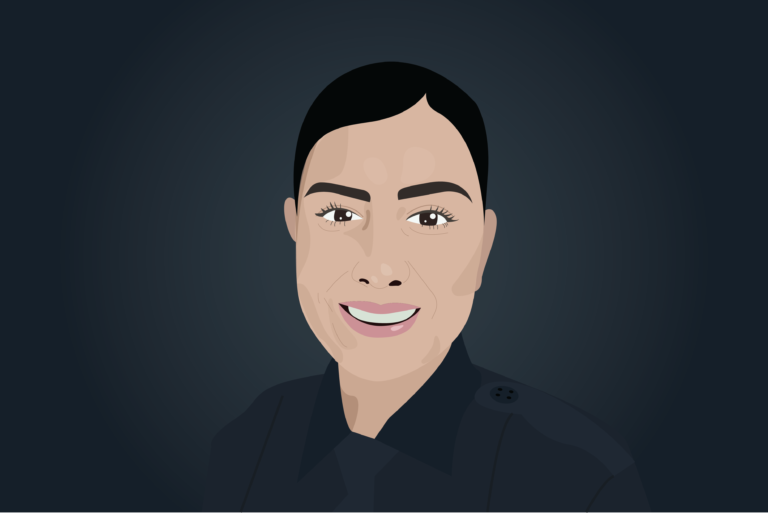
 An upcoming documentary about the life of Police Officer Natalie Corona, who was shot and killed in the line of duty on Jan. 10, is in the works. A trailer, published on Aug. 14, introduced a glimpse into the film and includes segments of interviews with Corona’s family and friends. The documentary is planned to be an hour in length, expected to be released by the end of 2019. 

Gloria Partida, the mayor pro tempore of the City of Davis, noted that she is aware of the upcoming documentary and recalled the night of the incident when Corona passed. 

“On the night it happened, a notice was received about an officer-involved shooting,” Partida said. “I was invited to go to the operations center at the Police Department, where I received the news of her death. The name stuck out to me because I had actually been at Natalie’s pinning ceremony, which was shortly after I had been elected. I had a lot of hope for her.”

Larry Cappetto, the documentary’s Colorado-based director, has made a number of films concerning the military and first responders. After the news broke on Corona’s death, Cappetto started work on making the documentary, meeting with Corona’s family in the process.

“I have an app on my phone which sends out an alert whenever a police officer is killed in the line of duty,” Cappetto said. “I got an alert the day Natalie was killed and when reading more about what happened, I knew I had to do something.” 

Cappetto wanted to capture Corona’s life and her time at the Davis Police Department.

“Through her family, I have been able to get to know Natalie,” Cappetto said. “They are remarkable and are humble people. They welcomed me into their lives, and they are an extremely close-knit family. Natalie’s dad even took me around to places that were special to Natalie.” 

 The film will feature interviews with Corona’s family, friends and coworkers. For the documentary, Cappetto came to Davis to talk to those who knew Corona. The trailer encapsulated Corona’s passions about law enforcement — Christina Giannone, a Davis Police Officer, indicated that Corona made a valiant first impression on the job.  

“She took this job very seriously,” Giannone said according to the trailer. “She made an impression — I went home later that day and told my mom about her.”

Corona’s passion for law enforcement is further shown through her family members’ reminiscences in the trailer. Lupe Corona, Natalie Corona’s mother, remembered how the fallen officer knew that she wanted to become a police officer as a child.

“It was always law enforcement,” Lupe Corona said, according to the trailer. “I mean whether it was dressing up for Halloween or for career day — it was always law enforcement.” 

In addition, Natalie Corona’s sister, Kathy Corona, said that the fallen officer’s passion reached for as long as her sister could even recollect.

“She has always loved law enforcement,” Kathy Corona said, according to the trailer. “She knew, for as long as I remember, that she wanted to be a part of the brotherhood.” 

The trailer ends with a photo of the Davis Police Department in June 2018 that shows Natalie Corona as an integral part of the department.

 “The documentary is a reflective look on her life,” Cappetto said. “It covers her early life, her time in the academy, her time as a Davis police officer and the night of her death. There are some surprises for her family at the end. I want viewers to come away with a respect for those who serve our country. Remember, freedom is not doing whatever you like but doing what you ought to do.” 

Written by: Taylor Martinez — city@theaggie.org 

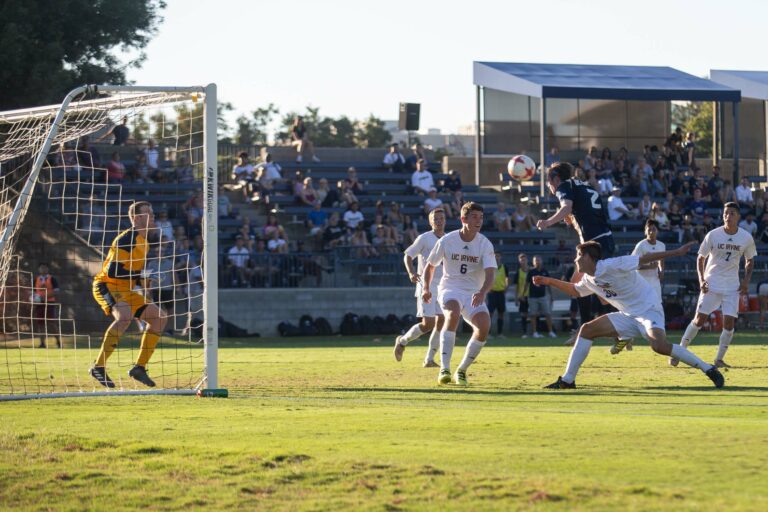
UC Davis men’s soccer battle through an up-and-down start to season

Aggies still seeking first conference title in program history

Although the past few seasons have not ended exactly how the program would have preferred, the UC Davis men’s soccer team has displayed that it’s certainly capable of competing for a Big West conference title. 

In each of the past two seasons, the Aggies fell just short of capturing a conference title and advancing to the NCAA national tournament. In 2017, the Aggies battled Cal State Fullerton in a scoreless match until they were defeated by the Titans in penalties on UC Davis’ home turf.

Last year ended in similar heartbreak, as the Aggies were again forced into a penalty shootout after both teams failed to score. This time, it was UC Riverside who slipped by UC Davis to claim the Big Sky conference crown. 

Nevertheless, these two seasons have given the program a tremendous amount of confidence, even if it wasn’t the preferred way to go out. The strong postseason runs have been fueled in large part by younger players, namely junior defensive midfielder Nabi Kibunguchy, sophomore forward Robert Mejia, sophomore defender Max Glasser and junior defender Jake Haupt. These players were integral in the Aggies’ hot start to the 2019 season, going undefeated at 3-0-1 in the initial four games. 

The official regular season kicked off in the upper midwest, playing against University of Wisconsin and Marquette. Wisconsin had received a handful of national preseason ranking votes, making for what appeared to be a tough test to start the season for UC Davis. But it was the Aggies that looked like a nationally-merited team, upending the Badgers 2-0 with goals from Mejia and sophomore midfielder Any Velasquez. After a day of rest, the Aggies then tied  Marquette after two scoreless overtime periods in a grueling, defensive standoff. 

The Aggies were thrilled to then return home from their first away stint of many this year undefeated, and turned to their first home match of the season against Cal State Bakersfield. 

The game against Bakersfield featured redshirt freshman forward Wumi Aladetimi scoring the game-winning goal in his first-ever regular season cap. The Toronto native scored just as the second half began in the 47th minute, setting up the defense to close the game. Anchored by Kibunguchy and senior goalkeeper Wallis Lapsley, the defense executed to perfection, securing the Aggies’ first home victory of the season. 

After a day of rest came a game against the Air Force Academy, at the time ranked 25th nationally. This was the second and final game of the Aggies’ “Copa de Causeway” miniseries. This game’s importance increased because of the Air Force’s ranking and because the Aggies’ next eight games would all be away. Winning one before the long away streak would give the team momentum heading into what could be, and what has turned out to be, a brutal month. 

The Aggies were able to take care of business quite handily, dominating the Air Force from start to finish. The nationally ranked side was only able to get off eight shots in the entire game, compared to the Aggies 24, two of which found the back of the net from Velasquez and redshirt freshman defensive midfielder Whalen Shinn. Lapsley turned in a clean sheet yet again, and was named to his third career Big West Defensive Player of the Week honors for his stellar goalkeeping throughout the two Copa de Causeway games. The 2-0 victory was also the first time UC Davis had defeated a nationally ranked team at home since 2015. 

But since starting undefeated through the first quarter of their season, the Aggies have struggled on the road. 

Over the course of the last two weeks, UC Davis played out half of its eight game road stint, first travelling down to Southern California to play against the University of San Diego and Loyola Marymount University, barely dropping both games by a score of 1-0. In the first game against San Diego, both teams entered the game lossless and also receiving votes for the national poll. In the end, it was San Diego that was able to squeeze in a goal in the 74th minute, edging out the Aggies under the national spotlight. Davis fell under a similar fate to LMU just two days later. 

On Sept. 19, the Aggies rolled into Stockton for a tough game against the University of the Pacific. UC Davis was never truly able to get anything going, eventually dropping the game 2-0. A bright spot in the afternoon, however, was the debut for sophomore goalkeeper Derrek Chan, who entered the match in the 75th minute. Much of the success of this current group can be attributed to excellent goalkeeper play, carving out a big role for Chan to fill once Lapslie graduates after this year.

After the three game slide, UC Davis was finally able to regain the form it had found in its first four matches on Saturday with a 3-1 victory over San Jose State. The Aggies trailed 1-0 early in the second half, but responded with back-to-back goals from sophomore forward Jye Citizen and senior forward Adam Mickelson. A San Jose State own goal later in the contest would cement the UC Davis victory and giving the Aggies a 4-3-1 record entering the second half of the road trip.

After matches at Saint Mary’s, Oregon State and Sacramento State, the team will conclude the long road journey by opening up Big West conference play at Cal Poly. The Aggies look to improve from last year’s conference record of 3-3-1, and this year’s team has proven they have the depth and experience to compete with the nation’s best. Perhaps these last few away games will allow the team to do some fine-tuning before a deep end of the year run. 

Written by: AJ Seymour — sports@theaggie.org

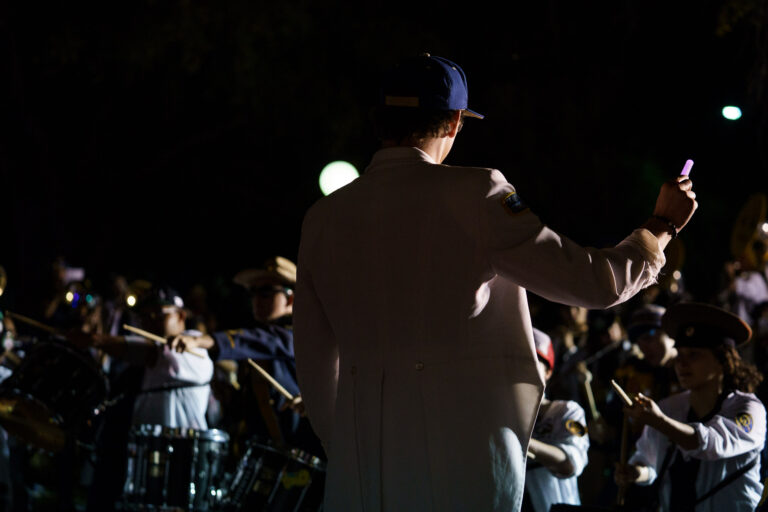
Sexual misconduct, bullying, retaliation, hazing revealed in Band-Uh! investigation reports

Documents released after Band-Uh! investigation shine light on the former organization’s practices, environment

Details included as part of a climate survey report into the organization formerly known as the Cal Aggie Marching Band authored by the independent law firm, Van Dermyden Maddux, have now publicly emerged, bringing to light student concerns about certain behaviors, traditions and activities that had a negative impact on their experiences in the campus organization. 

The announcement of the university’s decision to discontinue the student-led Cal Aggie Marching Band, also known as Band-Uh!, on Sept. 3 followed a tumultuous spring for Band-Uh!, when allegations of hazing, sexual harassment and sexual assault first came to light in The California Aggie this past April. 

While 85% of respondents to the climate survey report published by Van Dermyden Maddux report that they were either “satisfied” or “very satisfied” with their overall experience in the band, survey results also echoed the same student concerns regarding worrisome traditions and behaviors in the band previously reported upon. 

Individual interviews, which students volunteered to partake in, were also conducted. These interviews plus the results of the survey were taken into account in the university’s decision to disband Band-Uh!.

Overall, the survey found that the “most complaints and least satisfaction” came from members who had participated in Band-Uh! during the 2016-17 school year. Female respondents tended to be more concerned about “hazing, bullying, and alcohol off-campus,” while male respondents tended to be concerned about “sexual misconduct and alumni interactions.” Of the female respondents, 82.75% were satisfied or very satisfied with their band experience, while 90.37% of the male respondents were satisfied or very satisfied. 

When asked what they liked about the band, respondents stressed the sense of camaraderie, family and community it provided. Their greatest challenges, meanwhile, were “overwhelmingly” related to time management and interpersonal conflict.

Some of the most potent allegations implicated the Cal Aggie Marching Band Alumni Association. Indeed, when asked about their concerns regarding Band-Uh! in the climate survey report, 41.92% of the 167 respondents cited alumni conduct as their greatest concern. The alumni band was suspended in December 2018 and the university has now severed its relationship with it due to longstanding concerns about the behavior of certain alumni at band-related events. 

 “While we recognize that the concerns regarding the alumni band are not reflective of the entire membership, we feel this step is necessary to provide the greatest opportunity for the student band to rebuild as a new and independent program,” the university’s statement said. 

According to the law firm’s report, three individuals filed sexual harassment complaints against members of the alumni band following Homecoming 2018. The university’s Harassment and Discrimination Prevention Program (HDAPP) soon learned that one alumnus was responsible for two of the three reported incidents and permanently banned the individual from participating in alumni band activities. 

“Alumni were almost always present at band parties, and it was common [for] male alumni [to] make advances on female freshman [Band-Uh!] members who were inebriated,” one respondent said. “I don’t know if [there were] instances where there was assault, but it did make me feel uncomfortable.” 

Other responses echoed this feeling of unease around older alumni, who allegedly made inappropriate sexual comments and criticized the way that Band-Uh! was functioning in comparison to the past. 

Further student concerns included ineffective leadership, incivility and interpersonal conflict, sexual misconduct, bullying and retaliation, alcohol consumption and hazing. 

The report noted that Band-Uh! was entering “its fifth consecutive year of staff turnover in the position of Director and Coordinator, its only staff positions,” which could potentially have created a “leadership vacuum” that contributed to complaints of ineffective leadership. Students in leadership roles sometimes had other coveted positions in the band, per unique traditions, and played a part in pursuing controversial activities. 

“Specifically, the strong seniority hierarchy meant that older and more prominent members of the band were seldom challenged publicly for their inappropriate behavior,”  one respondent wrote. “Because we knew these ‘bondings’ couldn’t be affiliated with the official [Band-uh!] there was also a lot of pressure to not tell university staff about what happens on off-band time—including incidents of sexual misconduct or hazing.” 

Forty participants shared concerns about the alleged sexual misconduct. Twenty-five of them had heard about the allegations via the news cycle regarding Band-Uh! and had not experienced the misconduct firsthand. 

One respondent said that they “love the band” but found the sexual misconduct “alarming.” 

 “I was laughed at when I was almost assaulted as an 18-year-old,” a respondent said. “Now that the band is suspended, they are angry at victims. Also, all parties were organized by men who would allow assaulters into events and protect them,” they added. “The leadership was bull s— and no one was safe. Partying is natural [in] college but assault should not be.”

While some respondents expressed concern about the amount of alcohol consumption and noted that the drinking culture was ubiquitous, one suggested that band members shouldn’t be punished for what they do on off-band time, especially if they are legally able to purchase alcohol. 

“Do people in the band represent the band and the university 24/7?,” the respondent asked. “Where the hell do you people draw the line??”

Thirty-one participants in the survey mentioned concerns about bullying and retaliation, while 26 expressed their anxiety about hazing. Meanwhile, of the 31 students who selected the “other” category when responding to the question about their concerns, 17 of them expressed worry about media bias against the organization, as well as “comments about leadership and tradition” being presented “without context.” 

In light of these survey results, university officials are now tasked with organizing a new marching band, officially named The UC Davis Marching Band (UCDMB). The university also revealed a six-point action plan for the UCDMB that includes revamping the band’s organizational structure, developing a new mission statement, instituting mandatory trainings for band members and rebranding band culture. 

The university’s statement maintains that student safety is of utmost importance.

“The safety of our students is the highest priority,” the statement said. “With the seriousness of the allegations, our goal throughout this process was to act swiftly, thoughtfully and appropriately in both our assessment and decision making.”

Written by: Rebecca Bihn-Wallace — campus@theaggie.org