55.5 F
Davis

Davis, California

Tuesday, December 23, 2025
Home Blog Page 42

The UC Davis mascot Gunrock decides to retire

A reflection of Gunrock’s time at UC Davis


By ELLIE NOH — eenoh@ucdavis.edu


After much debate among students on who the real mascot of UC Davis is, it seems as though Gunrock has lost this battle. Gunrock, the beloved mascot, has officially decided to retire.

As many students mourn his loss, it is fundamental to remember the legacy that Gunrock has left behind. From ensuring students receive “hi-fives,” no matter the number of failed attempts, to walking around the campus in extremely high temperatures — this is no easy feat for any other mascot besides Gunrock.

“While I had a great time feeling like a celebrity, always taking photos with students and being recognized virtually everywhere on campus (and on multiple ‘hear me out’ cakes), I feel that my time has come to an end,” Gunrock said as he reflected upon his last moments as the official mascot. 

Each wave, each photo and each sports game attended has certainly left a lasting impact on the students, with Gunrock serving as a unifying symbol and role model for students, faculty and alumni from around the world to look up to. The iconic blue horse has been the ultimate university feature, motivating students to go to class no matter what time it is. 

Despite his far-reaching influence, however, some students were surprised to hear that Gunrock was even the mascot in the first place.

“What’s Gunrock? That’s just the restaurant inside the Silo, right?” Jokeson You, a student who was especially emotional about Gunrock’s announcement, said.

Another student also expressed her emotions: “Our mascot is a horse? Why do I see so much cow merchandise?”

Despite the students, faculty and members of the community who are upset or confused about this matter, we have a few that are extremely happy that there is now a new mascot possibly in discussion.

“Finally! I like birds so much better than horses. But really, this change had to happen right when I’m graduating?” Eloel Haaha, a fourth-year seemingly hoping for long-lasting change, said.

Regardless of these negative opinions about Gunrock, there are more significant issues at hand, especially concerning his influence. Most significantly, there seems to be a lot of chaos at the UC Davis Campus Store, where employees are desperately trying to change the design of all university merchandise lines. Additionally, in a recent survey, there has been a 150% decrease in the number of horses that experience satisfaction from grazing on campus.

“I know people are upset, and some farm animals as well. Again, it has been a wonderful time being at the forefront of the university. As my retirement comes into full effect, I will also be taking the time to appoint a new mascot, and hopefully, the Davis community will appreciate them as much as they did me,” Gunrock said tearfully.

The Davis community has been a strong supporter of Gunrock through the years, and it will continue to reminisce on the fond memories that were left behind. On behalf of everyone in the community: Thank you, Gunrock.


Written by: Ellie Noh — eenoh@ucdavis.edu


Disclaimer: (This article is humor and/or satire, and its content is purely fictional. The story and the names of “sources” are fictionalized.)

 

Spill the tea (or coffee)

An eavesdropper’s guide to philosophical banter


By NEVAEH KARRAKER— nakarraker@ucdavis.edu


I’m a very nosy person, and the amount of gossip I’ve overheard simply because of unconcerned, noisy people is practically absurd — especially at coffee shops. 

Today, I chose Mishka’s, a café enclosed by cinnabar red walls, filled with warm lights and the scent of homemade pastries. My unassigned-assigned seat next to the window was unfortunately occupied by a man. After ordering, I slid into a wooden bench nearby. 

Just as I was about to deeply engross myself in my book, I vaguely registered someone’s anxious leg-bouncing cease. My concentration momentarily faltered as I watched the man next to me run his hands through his dark, combed hair, then followed his gaze to the entrance.

A tall stranger had stepped in, his footsteps silent on the polished, hardwood floors. His eyes were impassive — trained ahead on an invisible and insignificant destination, yet exuding an air of intelligence.

“Ah, the musician,” the stranger said satirically yet enthusiastically as he approached the table.

The person next to me — the alleged musician — looked up and grinned.

“I had a feeling you would show up.” 

“So,” the stranger said as he sat down. “Do you also come here often?”

“I guess you could say today was spontaneous.”

The stranger smiled uncomfortably and titled his head in confusion. “I admire you,” he said. “Spontaneity was never a fond friend of mine, I prefer structure and contemplative decisions.”

This response seemed backhanded and vain. The stranger struck me as someone who never looked back — in an unpleasant way. 

“Well, that’s because you’re a poet,” the musician snorted. “Anyone could guess that.”

“Is that why you play music, then? Since it embodies adventure, like you?” the poet asked in answer.

The musician’s face settled in thought. “It’s almost like another language; it expands upon culture and contains profound symbolism,” he said and nodded, pleased with his response.

“What else?”

He frowned. “What do you mean?”

“It’s almost as if you’re trying to persuade me that it’s appealing. I’m asking what does music mean to you, personally?”

Silence fell upon the shop. “I love the community,” the musician deciphered. “But the thing I love most is improvising — the exhilarating feeling when the rhythm collectively becomes a part of us. It’s unlike anything you’ve ever felt.” A smile of pure joy spread across his lips. 

The poet returned the sentiment; He liked it when passion emanated from one’s soul. 

“I feel like improvising is unnecessary for writing, though. I mean, why do you have to do it for music?” he challenged. “Why not just play the notes already written?”

The musician smirked, eyes sparkling with amusement. “Try writing what you feel in the moment; you become discontented when you produce art for others,” the musician said, swirling his coffee.

I bit back laughter; they were both hypocrites.

“Alright,” the poet said. “I respect that, although I don’t understand.”

The musician’s brows furrowed. He hesitated, the air frozen in anticipation. “I want to,” he eventually drew out. “If you can explain again?” a faint touch of desperation lined his voice. Sighing, the musician slowly shook his head. “I…don’t know how to articulate it.”

The poet pursed his lips in rumination. 

“Sometimes explaining things — like a joke — causes it to lose its value. I assume this depends upon experience.”

“Yes, I would say so,” the musician said slowly. “An artist’s identity is their work, and anyone can play music another has written.”

There’s a contrast between music and musician; there was none with poem and poet. Music cannot grow limbs like a poem can, as its versatility inhibits it. A musician can live in their work, a poet cannot. No one can replicate a poet’s work. No one can comprehend the poem like the author. It was horribly limiting to be unable to share that passion, the poet thought.

Finally, the musician asked: “Tell me this: Could you go a day without writing?”

“No, of course not,” the poet responded.

“And I can’t go a day without playing. I think we know one another.”

A grin played about on the poet’s lips.

The musician brought up a good point: People forget musicians and poets are both artists, they simply have different mediums. The musician’s mind truly fit his description — similar to soundwaves, it was leaning and bending with the tide of pitch and genre, omnidirectional and longitudinal, vigorous and enormously intense, vastly different from the rigidity of the poet’s mind.

It was invigorating. And, like learning the style of a new author, maybe one day the poet could recognize the musician’s patterns.

They exchanged some final words before the poet departed, but not before my eyes widened; They were wearing the same red sweater.

And then, as the poet stood at the door, for some odd, unknown reason, he looked over his shoulder.


Written by: Nevaeh Karraker—nakarraker@ucdavis.edu

Disclaimer: (This article is humor and/or satire, and its content is purely fictional. The story and the names of “sources” are fictionalized.)
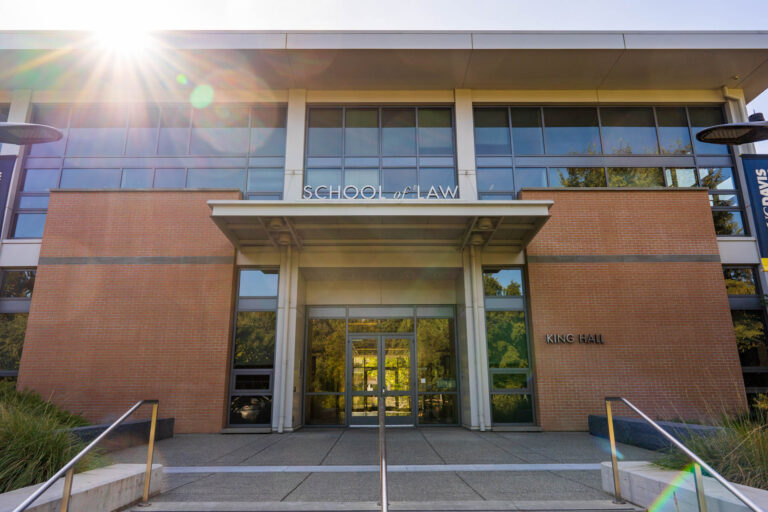
UC Davis Law School suspends Law Student Association over Boycott, Divestment and Sanctions legislation

The financial responsibilities of the student government are to be taken over by King Hall administration following the March 24 decision


By RIVERS STOUT— campus@theaggie.org


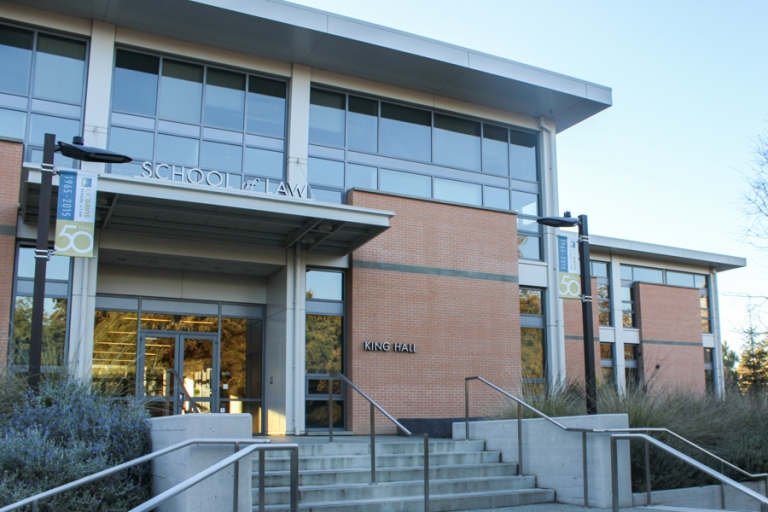
UC Davis suspended the Law Student Association on March 24 for passing legislation that divested from Israel-connected companies and speakers. The constitutional amendment, passed by the LSA board last month, implemented Boycott, Divestment and Sanctions policies in support of Palestine. The funds of the government for King Hall’s approximately 600 students have since been put under the control of UCD Law School administrators.

“[The March 24] decision follows the vote by LSA, the law school student government, to knowingly violate University of California policy by seeking to implement a discriminatory resolution intended to boycott people or entities with ties to Israel,” a university spokesperson told The Aggie in a statement. “UC policy requires student government organizations to support activities on a viewpoint-neutral basis. UC Davis is committed to providing an environment free of discrimination, harassment, antisemitism and other forms of hate.”

Shasun Sulur, a second-year graduate student in the UC Davis School of Law and former external vice president of the LSA who was ousted from their position as of the suspension, said that they had pushed for administrators to make the suspension more public.

“The UCD chancellor and King Hall administration dissolved our student government and we lost our control to allocate funds, meet and vote,” Sulur said.

“A few members of the LSA were on a call with the [King Hall] Dean of student affairs and the Vice Chancellor,” Sulur continued. “We demanded that the Law School give notice to the school. The constitutional amendment was supported by 16 student groups and 100 students on campus. [They] casually remarked this would be the only notice students would get.”

Later, law school administration sent an email informing students that the LSA was being suspended and their funds seized. 

“King Hall has a long history of student input into administration decision-making,” School of Law Dean Jessica Berg wrote in the email. “We will continue to work with our students to ensure meaningful representation continues, while respecting and upholding the policies of the university and local, state and federal laws.”

Sulur said that the LSA had been expecting repercussions for the constitutional amendment, as university and law school administrations had stated as much, but they had yet to actually implement the legislation. Due to internal conflict, implementation of the boycott had been delayed until after spring break.

Sulur also said that in a meeting with the senior assistant dean of student affairs, LSA representatives were denied the ability to appeal the decision. They were also denied a request for a formal hearing as to why the LSA was being suspended. 

The National Lawyers Guild (NLG) chapter at UC Davis, of which Sulur is a member, released a statement on March 28, criticizing UCD’s suspension.

“This suspension strips LSA of their governing status,” the statement reads. “Yet the administration still expects LSA board members to distribute funds, plan student events, spend thousands of their personal funds and support student organizations, continuing to provide students’ free labor to the administration without the power to control our own student funds or implement the BDS policy.”

The LSA’s funds primarily went to student organizations to pay for events such as speakers, career fairs and culture weeks. Faculty appointment representatives, policy representatives and graduate student representatives were also part of the LSA, though the future roles of these events and positions is unsure.

Students at King Hall will continue to pay fees for student activities, which are $30 a semester and total to some $36,000 this year.

“Rather than support students in implementing a democratically-passed amendment to our government’s bylaws dictating how we want our fees to be used, the administration has assumed control over our funds without providing any avenue for students to opt out of the fees,” the NLG statement said.

The NLG statement continued, “This extreme response by the law school administration and Chancellor Gary May is a clear message to students that freedom of speech does not include speech supporting Palestine, which is instead actively targeted for retaliation.”

NLG went on to claim that Chancellor Gary May’s position in Leidos, a defense contractor and engineering company, introduced a clear conflict of interest resulting in poor protections for students organizing for Palestine. 

In a statement released three days prior to the suspension, May addressed concerns over recent pro-Palestine demonstrations.

We’ve received complaints from concerned community members about recent student activities, including the Students for Justice in Palestine demonstration on March 11,” the memo read. “I want to state as strongly as possible that we will not tolerate hatred against any individual or group, or any activities directed at any individual or group in ways that violate UC policy.”

“This [suspension] is a clear continuation of King Hall’s and Gary May’s silencing of Palestinian speech and ignoring harassment,” Sulur said. “We’re asking that King Hall and the Chancellor allow us to implement our constitutional amendment that we democratically and constitutionally passed to have a say where our fees are spent, that’s more aligned with the namesake of our school.”

It is unclear whether this decision will affect ASUCD, the campus’ undergraduate student government, which passed similar legislation last year.


Written by: Rivers Stoutcampus@theaggie.org

Two major UC labor unions to strike systemwide April 1

UPTE-CWA 9119 and AFSCME Local 3299, representing 50,000 workers combined, will strike across all UC campuses over alleged bad-faith negotiations, staff shortages and increased healthcare premiums


By KHADEEJAH KHAN — campus@theaggie.org


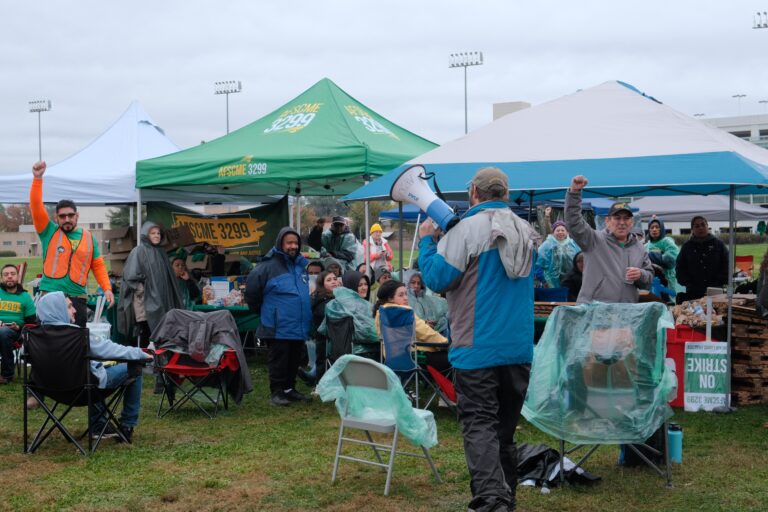
Two major unions representing over 50,000 UC workers will hold a one-day strike on April 1 across all UC campuses over alleged unfair labor practices.

The University Professional and Technical Employees-Communications Workers of America (UPTE-CWA) 9119, representing research and technical workers, were first to announce their strike on March 21. In their announcement, they cited unfair labor practices including increased health care premiums and a “crisis of recruitment and retention.”

“We’ve brought proposals to the table for safe staffing, career progression, work/life balance, fair pay and job security but have been met with bad-faith bargaining and unfair labor practices from UC,” UPTE said in a statement. “Enough is enough — Californians deserve better.”

The American Federation of State, County and Municipal Employees  (AFSCME) Local 3299, representing over 37,000 service, patient care and skilled crafts workers, announced that they will strike in solidarity with UPTE, marking the third time the two unions have gone on strike in the last four months. 

Most recently, AFSCME 3299 and UPTE-CWA held a UC wide strike from Feb. 26-28 where workers voiced many of the same concerns. At UC Davis, hundreds of workers from both unions participated. They had previously demonstrated in late November regarding their stalled contract disputes.

“Like us, [UPTE-CWA 9119] have been affected by UC’s bad-faith bargaining, which has been preventing them from reaching a fair and just contract,” AFSCME 3299 said in a statement.

In a statement made by the UC on March 21, the university says it has offered “strong” proposals to both unions and that the strikes may lead to financial pressure on the UC.

“At a time when the University of California is facing funding reductions at both the state and federal levels and preparing for significant financial challenges ahead, we are concerned about UPTE and AFSCME’s plans to strike again,” the statement reads. “We’re still committed to open dialogue and hope we can resolve these issues quickly to minimize disruption for our entire University community.​​​​​​”

According to a UC Davis spokesperson, instruction, patient care, research and other campus activities will continue to proceed without disruption. For the duration of the strike, Latitude Restaurant, Scrubs, The Gunrock, Spokes and the meal card office will be temporarily closed.

At UC Davis, the unions plan to picket at La Rue and Hutchison Drive, in addition to the UC Davis Medical Center in Sacramento. 

The strike was announced immediately after the March 17-19 Regents meeting at UC Los Angeles, where members of both unions protested unfair labor practices, including staff shortages and bad faith negotiations. Protesters were met with UCPD officers in riot gear

Additionally, AFSCME 3299 criticized the recently announced UC systemwide hiring freeze as an “institutional failure” that they claim will exacerbate already existing staff vacancies, one of the union’s major concerns, in a statement

AFSCME 3299 has previously stated their belief that staff vacancies are linked to a decline in real wages and the housing crisis “plaguing the university’s frontline workforce,” causing members to commute from long distances or sleep in their cars – issues they hope their strike will address. 


Written by: Khadeejah Khan — campus@theaggie.org


This is a developing story. Check back for more updates.


UC system announces hiring freeze amid projected $271 million cut in state funding

The news came as universities across the country brace for changes in federal policy in education spending

By VINCE BASADA — campus@theaggie.org

The University of California (UC) announced a systemwide hiring freeze March 19, citing higher education policy changes from the Trump administration and cuts to the UC’s budget allocation from the state.

The news was announced by UC President Michael V. Drake, who said the freeze will be part of the system’s wider efforts to manage costs and conserve funds. The UC is facing $271 million in proposed cuts from the state of California for the 2025-26 academic year.

“[Our] efforts have allowed us to stave off some of the immediate and projected financial impacts — but not all,” Drake said in a statement. “As we face funding reductions at both the state and federal levels, the Chancellors and I are preparing for significant financial challenges ahead.”

Drake, who is set to step down at the end of this academic year, has also directed all UC campuses to initiate other cost-saving measures, which he acknowledges will vary from location to location. They include delaying maintenance and restricting business travel.

The austerity measures will affect all nine undergraduate campuses, UC San Francisco (a graduate medical school), and several other affiliated locations.

In a message to UC Davis employees and staffers, UCD Chancellor Gary May said that he had directed Human Resources to design a new “centralized hiring process” for staff positions; a centralized hiring review is already in place at UCD Health. May also noted that he anticipates fewer faculty hires than in recent years.

“We know this news is unsettling, and many of you may have questions about how this will impact your teams and departments,” May said in the statement. “Please know that UC Davis is committed to navigating these challenges together as a community, guided by compassion and transparency.”

In a February communication from UCD administration to staffers, university leaders said that UCD is facing a $37 million reduction in state funding. Additionally, the report noted that unless significant action is taken, UCD’s budget deficit will more than double, up from $40.3 million at the close of fiscal year 2024-25 to approximately $90 million by the end of 2025-26.

The announcement comes as colleges and universities across the country are bracing for cuts in higher education spending and aid from the federal government amid calls from President Donald Trump to abolish the Department of Education.

AFSCME Local 3299, the UC’s largest labor union representing some 35,000 employees, called the announcement representative of, “more of the same institutional failure.”

“UC has effectively had a hiring freeze in place for the past four years, and its Chief Financial Officer acknowledged as much when he told the Board of Regents in 2023 that staff vacancies had tripled since the pandemic,” AFSCME Local 3299 President Michael Avant said.

The university has clarified that employment offers made by the UC on or before March 19, 2025 will be honored.


Written by: Vince Basada — campus@theaggie.org

This is a developing story. Check back for more updates.

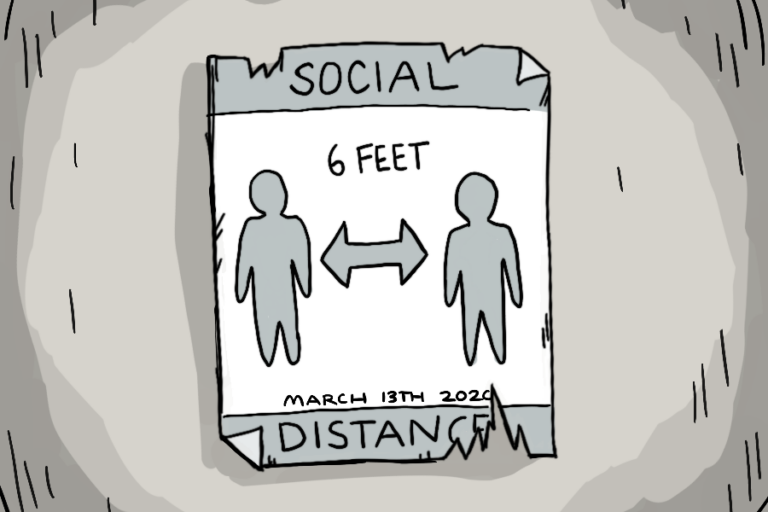
March 13 marks five years since the symbolic start of the COVID-19 pandemic in the U.S.

Students, professors comment on the lasting impact of the pandemic in professional settings


By RACHEL GAUER — features@theaggie.org


A world permeated with mask mandates, the “six-feet rule,” superspreader events and social distancing began five years ago this month. Many Americans name Friday, March 13, 2020 as the start of it all — the day President Donald Trump declared COVID-19 to be a national emergency within the U.S. — which also marked the final business day of “normal” operations. 

For many, this day symbolizes the last time students would see their peers and teachers in a traditional classroom setting, the last day some employees set foot in the office and the final moments of pre-COVID-19 life. What seemed to be an extended spring break for students quickly turned into a global pandemic and left everyone in social isolation across the globe.  

Five years later, the social impacts of COVID-19 remain present in many of our institutions, including in university settings like UC Davis. Countless workplaces have shifted to work-from-home options and academia has increasingly utilized Zoom and other online communication methods for teaching. Meetings, discussions and other face-to-face interactions are now often replaced by emails or online meetings, diminishing the small talk and human interaction that come with being in-person. 

Seth Frey, a professor of communication at UC Davis, teaches a mix of both online and in-person courses in the Department of Communication, including CMN 152V: Social Science with Online Data, an online cross-campus course, and CMN 151: Simulating Communication Processes, an in-person course. 

Frey commented on the importance of face-to-face communication in an academic and work setting both for students and faculty. 

“[Something] that I’m most interested in is the social conversation, still very much alive, around the importance of showing up in person,” Frey said via email. “We seem to agree it matters a lot and yet it’s harder now to expect it. This isn’t just about students meeting professors’ expectations for physical attendance.”

Frey also discussed the obstacles that faculty have faced following the pandemic. 

“Among ourselves, faculty are still navigating the challenge of establishing shared norms, values, and expectations for when we think physical meetings are most important, and how to go about making them happen reliably,” Frey said. 

Undoubtedly, remote options for meetings and other academic activities have brought many elements of convenience to students and faculty. Online, asynchronous courses allow students to self-pace, while remote office hours allow professors to meet with students more frequently and at more convenient times. 

Sacha Chickering, a second-year mechanical engineering major, commented on this element of accessibility with online courses, emphasizing the importance of interpersonal interaction. 

“Courses that offer hybrid or online options can offer some advantages to people living far away from school, but also I personally miss being more in person,” Chickering said. “I think in person is better — something about being online makes it feel less connected and like you could be doing it from anywhere in the world.” 

Though many current UC Davis undergraduate students experienced the start of the pandemic prior to their time at Davis, students at the time could follow their courses from truly anywhere in the world, as schools were exclusively online. 

Margaret Lonergan, a fourth-year human development major, began her undergraduate studies in September 2021 following a year of remote learning for her fourth year of high school. She reflected on the difficulty of forming connections with other students prior to moving to Davis, which she said were solely made on social media and reflected the online nature of relationships at the time.  

“Making connections solely with technology was really hard — some people aren’t great texters and some people just aren’t great at communicating virtually,” Lonergan said. “It’s hard to know if you’re getting the real personalities of people online.” 

Lonergan has opted to take some online classes despite the lack of social interaction and highlighted aspects that have drawn her to online classes.  

“It’s easier to ‘get by’ in a lot of the virtual classes, since they tend to be a lot of busy work,” Lonergan said. “But, it’s easier to zone out when classes are virtual and there is no one holding you accountable. I think I prefer the social interactions, which you don’t really get from virtual classes.” 

Though the pandemic eliminated some elements of valuable social connection, some elements of online teaching and learning have allowed for increased productivity for some, as less time is spent for commutes or other time consuming work-related activities. 

Henry Bandettini, a fourth-year psychology major, noted that the skills he gained from online learning during the pandemic during his fourth year of high school were crucial to developing his time management. Now, he said the effects of online learning have transferred over to tangible skills in his workplace and in academic settings. 

“I’m an account executive [in] Downtown Davis, and some days I work remotely and some days I’m in person,” Bandettini said. “I think the flexibility that I’ve been given throughout high school with [COVID-19] and then taking some remote and hybrid classes at Davis has taught me to manage my time in a way that I can be productive and get stuff done, but at the same time, I have flexibility and take time off when I can. I didn’t expect the time management that came with [COVID-19] to play such a big role in not only my college experience but overall career.” 

COVID-19 has certainly had lasting impacts on professional settings and interpersonal connection over the past five years and continues to have health impacts worldwide. Though the flexibility and online options have eliminated unnecessary time spent, the social implications of previous social distancing may be more implicit — yet nevertheless prominent. 


Written by: Rachel Gauer — features@theaggie.org

Nowruz comes to UC Davis: Undergraduate Iranian Students Organization hosts festive celebration for the first time

Nowruz Celebration showcases Persian culture through music, dance and tradition


By JALAN TEHRANIFAR — features@theaggie.org


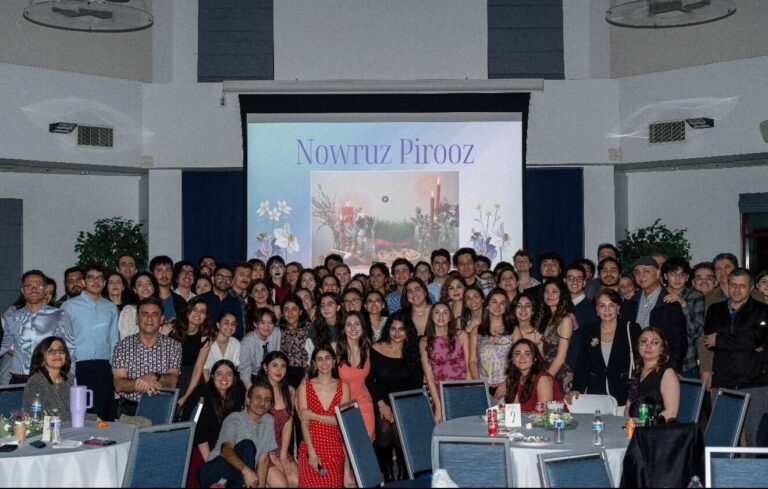
UC Davis students, faculty and alumni gathered at the Walter A. Buehler Alumni Center on March 8 to celebrate the Persian New Year during Nowruz Celebration, an event hosted by the undergraduate Iranian Students Organization (ISO). The celebration brought together students of diverse backgrounds to experience the rich traditions of Nowruz, which marks the arrival of spring and the beginning of the Iranian calendar year.

Nowruz, which means “new day” in Farsi, is an ancient festival dating back over 3,000 years. It is celebrated not only in Iran but also in countries such as Afghanistan, Tajikistan and parts of Central Asia and the Middle East. The holiday falls on the spring equinox, symbolizing rebirth, new beginnings and the triumph of light over darkness.

Families traditionally prepare for Nowruz by engaging in khooneh tekouni (spring cleaning), buying new clothes and visiting loved ones. The celebrations last for 13 days, culminating in Sizdah Bedar, a day spent outdoors in nature to bring good luck for the year ahead. This year, Nowruz begins on March 20, 2025 at 2:01 a.m.

The event featured traditional Persian music, food and cultural performances, immersing attendees in the spirit of Nowruz. The student performances included a poem reading by Telli Abbasian-Arjomand, a guitar performance by Bardia Anvari, a singing performance by Terme Arjomand and a violin and santoor performance by Negar Agah and Remi Seddigh. The performances closed with a Persian cultural dance that was choreographed by the group’s board members, performed by Ayla Ajdari, Elina Sadeghian, Max Wakeman and Amanda Zanganeh Azam.

A highlight of the celebration was the Haftseen table, a beautifully arranged display of seven symbolic items starting with the Persian letter “S” that represent renewal, prosperity and good fortune for the year ahead. Items such as sabzeh (sprouted grains) for rebirth, senjed (dried fruit) for love and seer (garlic) for health adorned the table, drawing admiration from attendees.

Lila Salehi, a fourth-year human biology major, was born and raised in Iran and longed to find a sense of home at UC Davis — a connection she ultimately discovered through the Iranian Students Organization. Now serving as the group’s president, she was thrilled to share Persian culture with the broader Davis community through this special event.

“With only eight board members who are balancing school and planning [the event], we’ve worked incredibly hard to put together a night filled with performances, cultural booths, Persian food and dancing,” Salehi said. “This is the first time the undergraduate student club is hosting Nowruz. In previous years it was the graduate students, but this year it’s all on us.”

Despite the challenges of organizing such a large-scale celebration with a small team, ISO’s leadership remained dedicated to ensuring an authentic and welcoming experience.

“The ISO sets up a Haftseen display at the Cross Cultural Center on campus, allowing students and faculty to learn more about this important tradition,” Salehi said. “I just hope that this event [and] the work that ISO does helps spread the joy and the cultural richness of Nowruz to even more people in Davis and the extended area.”

Ayla Ajdari, a third-year biomedical engineering student, serves as the social media coordinator for the Iranian Students Organization and performed a cultural dance at the event. Dressed in vibrant cultural attire, Ajdari and her fellow dancers captivated the audience, embodying the celebratory spirit of Nowruz.

“Nowruz is my favorite time of the year,” Ajdari said. “One of my big goals was to show everyone what Persians love to do, which is dancing. Dancing is a big part of our culture, and I believe bringing dancing into Nowruz is a great way of celebrating [the] new year and happiness.”

Elina Sadeghian, a third-year economics and international relations double major, played a pivotal role in organizing the event as ISO’s events coordinator. She also joined Ajdari in the evening’s dance performance, helping to bring energy and joy to the celebration.

“Nowruz is a really big part of Iranian culture, so we thought, ‘What better way to bring our community together and expand our culture than a Nowruz Celebration?’” Sadeghian said. “We had so many meetings every week trying to get the venue, reaching out to performers, working with them on choreography and just organizing everything, and it was so worth it in the end. We are so happy so many members of the community have shown up.”

Ava Jabbari, a third-year international relations and environmental policy and planning double major, serves as the director of outreach. As part of her role, she has worked to strengthen ties between past and present members, ensuring that the legacy of ISO continues to grow.

“The ISO has been around for decades,” Jabbari said. “Sara Ruebelt — who is actually faculty at the university at the moment, she’s a community counselor — was a part of the ISO back when [she was a visiting scholar in the Psychology Department], which was in the early 2000s.”

The longstanding presence of the Iranian Students Organization at UC Davis speaks to the importance of cultural organizations in fostering community and preserving heritage. Over the years, ISO has provided Iranian and Iranian-American students with a home away from home, offering a space where they can celebrate their traditions, share their experiences and introduce Persian culture to the broader campus community.

With a commitment to fostering community, the ISO hopes to continue growing its presence on campus, ensuring that Nowruz remains a cherished tradition for years to come. As spring approaches and the new year begins, Nowruz at UC Davis stands as a testament to the enduring importance of tradition, unity and the celebration of new beginnings.


Written by: Jalan Tehranifar — features@theaggie.org

Misogyny in romantic relationships

UC Davis students and experts discuss examples and implications of misogyny within romantic relationships


By GRACIELA TIU — features@theaggie.org


Misogyny, defined by Britannica as a “hatred or prejudice against women, typically exhibited by men,” manifests in numerous ways, on both large, societal scales and in everyday, interpersonal interactions. A consequence of our patriarchal society, misogyny can especially be prevalent in relationships, particularly heterosexual and heteroromantic ones. 

Misogynistic patterns in relationships can be more difficult to identify than one might expect. Gender-based prejudice is often normalized in our culture, making it challenging to recognize — especially for men, who do not experience this form of oppression first-hand. Though commonly overlooked and sometimes seemingly innocuous, many examples of misogyny within romantic and sexual relationships can have deeply harmful effects on the female-identifying partner and the relationship as a whole.

One common misogynistic pattern in many relationships is controlling behavior, typically exhibited by the male-identifying partner. Jessica Marie Elorduy, a victim advocacy specialist for the UC Davis Center for Advocacy, Resources & Education (CARE), described how behaviors that seem protective can sometimes overlap with controlling tendencies.

“Being ‘protective’ is not necessarily a bad thing as long as it means truly wanting the

best for another person and being willing to support them as they make their own

choices,” Elorduy said. “However, ‘protective’ can quickly turn into controlling when it starts to look like dictating what a partner can wear or who they can interact with. Controlling

behaviors can appear when one person does not respect the right and ability of their

partner to make their own choices.”

This concept of controlling behavior feels all too familiar for some women, many of whom have been told by their partners, sometimes supposedly out of “concern,” that their clothing is too suggestive or revealing. One student, who wished to remain anonymous, discussed how these behaviors have affected her.

“When going out, I have been commented on and it makes me feel cheap or less than, simply because I want to wear clothes I feel pretty and confident in,” the student said.

Men also frequently present misogynistic behaviors in sexual and intimate relations with their partner. Gender roles and expectations remain deeply ingrained in sexual interactions, shaped by various forms of media, socialization and cultural norms that influence what behaviors are considered acceptable and expected.

“These damaging myths and scripts set us up for situations where men may have been taught, either implicitly or explicitly, that when women say ‘no,’ or they don’t say anything at all, they are only saying or doing that because they want the man to ‘try harder,’” Sarah Meredith, the director of CARE, said.

Navigating consent in sex can often feel more complex than simply remembering “no means no.” Women ordinarily feel a pressure to adhere to gender expectations, such as remaining passive or avoiding conflict for fear of being a bad partner. When coupled with indirect or direct pressure from the initiating partner, this can lead to grey areas of consent where women feel both internal and external pressure to engage in sexual activity they may not truly want. In these situations, asserting clear boundaries becomes difficult, leading to consent that is coerced rather than freely given.

Common examples of pressure and coercion include when a partner repeatedly asks for sexual acts and continues pushing for them even after the other partner says no, expresses hesitation or has no affirmative response. They also could use emotional manipulation, such as bringing up societal norms that they feel justify their sexual expectations (e.g., people in relationships should have sex), or reacting negatively — through anger, withdrawal or threats — making their partner feel guilty for not saying yes.

“Pressure or coercion in a sexual situation creates a space where consent does not exist,” Elorduy said. “When one person in a sexual situation has been pressured or coerced, consent is not present. Consent must be given freely and affirmatively.”

The anonymous student recounted how she sometimes has reluctantly engaged in sexual activity due to the fear of what her partner might do or how he might act if she said no.

“In the situations I have been in, I have just given in,” the student said. “As someone who has had their autonomy disregarded and ignored before, it is scary to think what could happen if I don’t just accept it and give in. It’s so frustrating and sad that this is the way I think, but when put in that situation, it is easier to just say yes than to say no, especially because they tend to not give up and will continue to pressure or question why I’m saying no. In this case, although I am saying yes, it’s out of coercion — is this technically consent? I honestly think not, because I did not come up with this answer of my own accord.”

Meredith illustrated how these patterns can inflict harm on the people involved and damage relationships.

“Relationships where the people involved don’t have skills to communicate in a healthy way about sexual intimacy may be at risk for unhealthy or abusive sexual situations,” Meredith said. “Additionally, relationships where there are other forms of abuse, controlling behavior or disrespect for one partner’s autonomy are very high risk for sexual assault.”

A lot of the time, these behaviors stem from attitudes surrounding the idea that male sexual gratification takes priority, regardless of if it comes at the expense of their female-identifying partner. In many heterosexual relationships, sexual encounters are centered around male pleasure, beginning with the man’s arousal and ending when the man is sexually satisfied, leaving the woman partner’s experience potentially unacknowledged.

“Men tend to make sure their needs are met before the woman’s,” the anonymous student said. “Sometimes, they don’t even bother about the woman and once they are satisfied, they tell the woman to go home or don’t even care about meeting her needs.”

Misogyny in relationships can also present in the form of double standards between men and women, particularly regarding perceptions of sexual activity.

“College dating culture, especially when we are viewing it from a heterosexual lens, can

certainly have double standards,” Elorduy said. “It is often expected that male-identifying individuals have multiple sexual partners while women-identifying individuals run the risk of being scrutinized or shamed for having multiple sexual partners.”

Another form of misogyny present in relationships is the objectification of women. In romantic relationships specifically, objectification comes up when men see women primarily for their body and sexuality, disregarding their other attributes. Objectification can lead to women feeling dehumanized by their partner, who may fail to show them adequate empathy and respect.

“Unfortunately, this happens more frequently than expected,” another student, who also wishes to remain anonymous, said. “I have often experienced being judged solely based on my looks and body rather than my intelligence, personality or achievements, which is truly disappointing.”

The assumption of male superiority, a common theme within these layers and forms of misogyny, can also lead to the belittling of women in relationships. Some men might unreasonably assume that their female partner lacks intelligence, talent or work ethic, and they may also downplay their partner’s struggles or accomplishments. This dynamic can feel deeply demoralizing for the female partner, as one student reflected.

“It can be incredibly discouraging,” the anonymous student said. “I have experienced a partner downplaying my hard work, which creates a very negative image of myself, ultimately leading to self-doubt and frustration with both myself and my partner. I have gone through this

multiple times and have been left feeling unappreciated and undervalued in my relationships.”

Similarly to belittlement, acting dismissively toward women also constitutes misogynistic behavior in relationships. Elorduy provided examples of dismissive behavior and noted its harmful effects.

“When female-identifying partners are interrupted or talked over, it insinuates that their voice, thoughts and opinions don’t matter,” Elorduy said. “Because there is a pattern of women being talked over and interrupted, it creates a notion that women’s voices don’t matter and are somehow less than other voices. We have all accidentally interrupted or talked over someone else in a conversation, but when it becomes a pattern with no apology or reflection, it leads to a culture that dismisses and reduces women.”

The second student also recognized that calling women overly emotional or generally minimizing their experiences can be another form of dismissive, misogynistic behavior.

“It’s very frustrating,” the student said. “I have been told I am ‘too emotional’ multiple times when discussing serious and upsetting topics. I have noticed this pattern throughout my dating life and have come to the conclusion that men often say this to dismiss my feelings instead of engaging in meaningful conversation. This ultimately makes me feel as though my thoughts and emotions are invalid or exaggerated, even when they are completely reasonable.”

On the whole, because patterns of misogyny in romantic relationships tend to go overlooked, the harmful effects of this type of behavior can similarly go unnoticed. Although misogyny seems to remain ever-present in our society and in our relationships, Elorduy outlined ways to combat these attitudes and behaviors and work to cultivate healthier, respectful relationships.

“Communicate with your partner when you notice subtle or overt misogyny in your

relationship and know that it is okay to not be comfortable with misogynistic behavior,” Elorduy said. “If your partner is not willing to learn, grow and change their behavior, know that you deserve to be in a relationship that does not involve one person perpetuating and upholding misogyny.”

Elorduy expressed that we should work to unlearn harmful lessons about misogyny that permeate societal norms. 

 “We all grew up in a culture that contains misogyny and patriarchy, but it is on all of us to unlearn these harmful lessons and not use them to potentially harm those around us,” Elorduy said. “If someone is in a relationship that doesn’t feel healthy for any reason, please know that they are welcome to reach out to CARE for support.”


Written by: Graciela Tiu — features@theaggie.org

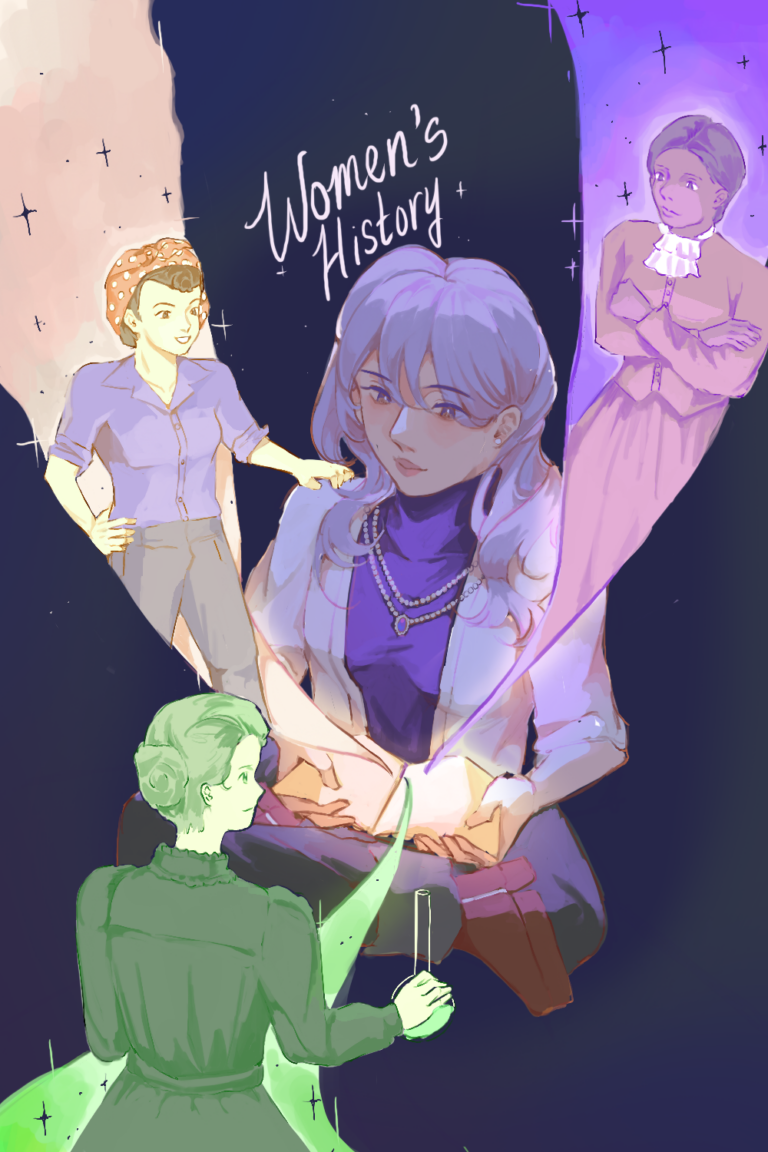
UC Davis students and staff discuss the significance of Women’s History Month

Amidst ongoing backlash, UC Davis community affirms importance of month-long observance  


By LAILA AZHAR — features@theaggie.org


In 1978, a school district in Sonoma, California organized a weeklong celebration of women’s contributions to history, including presentations in schools and a parade. This celebration took place during the week of March 8, in order to coincide with International Women’s Day, a holiday originating from the Socialist Party of America. 

The idea soon caught on with school districts and communities across the country, and in 1980, President Jimmy Carter proclaimed the week of March 8 “National Women’s History Week.” A few years later, after advocacy by the National Women’s History Project, the United States Congress expanded this to “Women’s History Month.”

Recently, an executive order under the Trump administration called for an end to federal Diversity, Equity and Inclusion (DEI) programs. In response, the Defense Department’s intelligence agency paused observances such as Women’s History Month, Martin Luther King Jr. Day and Black History Month. Additionally, Google Calendar faced controversy for no longer displaying such observances. 

Amidst the cultural backlash to events such as Women’s History Month, some argue that it’s more important than ever to highlight the histories of marginalized communities. 

For Cuahtemoc Martinez Marquez, a second-year international relations and psychology double major, events such as Women’s History Month highlight history that is often excluded in the mainstream. 

“Even though women make up half the population, people still view men as being the ‘default,’” Marquez said. “That gets reflected in the way people talk about history. History relating to men is just history, while history relating to women is ‘women’s’ history. Women’s History Month is a good reminder to learn about the history that often gets overlooked.” 

This sentiment was echoed by Karen Gettelman, a Ph.D. candidate at UC Davis, who teaches courses including HIS 072B: Women & Gender in America. 

“When I teach regular history, I’ll have one student out of every hundred who writes on my review, ‘Well it’s supposed to be about history and she just talked about gender and race,’ Gettelman said. “But that’s history.”

In recent quarters, she said that students in her classes have resonated with discussions about the 14th Amendment, especially as it relates to Dobbs versus Jackson, the Supreme Court case that overturned Roe versus Wade. 

“During my lecture, I went through all the parts of the 14th Amendment and said [Dobbs] isn’t just about this one specific issue, it’s about pushing back against the Constitution,” Gettelman said. “It will go from abortion to marriage, and I bring up Loving [versus Virginia] — and I’m really shocked by how many of my students don’t realize that interracial marriage was illegal.” 

Her classes highlight the role everyday women have played in shaping history. 

“Women have been active in labor movements since there’s been labor,” Gettelman said, particularly noting the strikes by Black washerwomen in the South following the Civil War. “There’s not often a lot of talk about ordinary women, and yet they’re often the impetus for change. It’s just easier to remember the person who’s in the lead.” 

Ella Fodor, a second-year wildlife, fish and conservation biology major, said learning about women’s history can help students navigate current events. 

“Understanding historic precedent can help you see the misogyny that underlies a lot of things, whether that be online discourse or federal policy,” Fodor said. “But it can also give you hope and inspiration to see how women of the past have resisted these systems for years and years before us.” 

Women’s History Month remains a crucial reminder of the often-overlooked contributions of women throughout history. As discussions around diversity and inclusion face scrutiny, students and scholars emphasize the importance of challenging exclusionary narratives and advocating for a more comprehensive understanding of history.


Written by: Laila Azhar — features@theaggie.org

UC Davis students share stories about the Barn Residency Program

Students share experiences and perspectives from spending a year with cows, sheep and pigs


By NOAH HARRIS — features@theaggie.org


UC Davis is known for its deep-rooted connection to agriculture and its wide variety of animals. Davis boasts cows grazing next to student residence halls and wild turkeys walking around campus like they own the place. The livestock living on campus require constant care and upkeep, allowing UC Davis students the opportunity to live with them and care for them for free.

Students can apply for the ability to live in a barn residency, a program with nine different animal barns, including those with pigs, cows and sheep. Many of these students are in animal-related majors, which is preferred when applying — and everyone must be able to lift a bale of hay. Applicants also have to have a valid California driver’s license.

Guillermo Garibay, a third-year animal science major, discussed the work and commitment needed for barn residency.

“What’s really nice about the program is in exchange for 10 hours of work a week at the facility that you live at, you get free housing,” Garibay said. “This includes rent, utilities, electricity, water [and] anything like that, just as long as I meet my 10 hours a week.”

Garibay has had a positive experience in the program so far and shared a tip for potential student applicants.

“You learn so much from it and it only helps you further increase your animal handling experiences and exposes you to veterinary practices,” Garibay said. “If that’s something that you’re interested in, the best way is always reaching out by email.”

Many students spoke positively about the experience they have received, as well as the benefits of being able to work and interact with professionals in whichever field they are a part of during the program.

Jorge Tejeda, a third-year animal science major, lives with the sheep. Tejeda and his barn mates have to check on the sheep at 12 a.m., 3 a.m. and 6 a.m. Currently, lambs are being born, and Tejeda talked through the process he undertakes to care for them.

“If there [are] any babies, we proceed with the protocols,” Tejeda said. “We set up their individual pen for the first couple of days. We lay down the straw, alfalfa grain for the mom. After that, we go ahead and we go to the other barn, where we have older lambs. Then, we go and take them out to pasture.”

Students sign a housing contract for one academic year and can stay up to two in the same barn before having the option to apply for a different barn area.

Mireya Padilla, a second-year agriculture and environmental education major, spoke about her passion for pigs that she works and lives with.

“Coming into Davis, when I joined fall quarter, my first thing was, one, how do I figure out where to apply for the Barn Residency, and two, where the heck is a swine unit at this place?” Padilla said. “I just searched it up on Google and then biked out there, made an appointment with the manager, had a little [meeting] with her, and I just told her that I want to work with pigs.”

For Padilla, children’s television was an integral part of her love for pigs.

“I found my passion [for] swine, actually, from an episode from Curious George that I watched, where he showed a pig and I was, like, that’s actually kind of cute,” Padilla said.

Though the students live at least a mile away from the main area of campus with little housing around them, they appreciate the isolation.

“I get my own room, I couldn’t ask for anything else,” Garibay said. “It’s a little far from campus, but I don’t mind. Just last week, I was in charge of feeding. I think on Friday at 5 p.m., I was out with the cows just enjoying the sunset. It’s nice being away from everything and all the urban community that you could say that Davis is.”

While Tejeda loves living in the sheep barn, there was initial hesitation.

“Every morning, like right next to the barn is probably a group of 30 turkeys,” Tejeda said. “So definitely the first two, three nights I couldn’t sleep because [for] one thing, you are in the middle of nowhere. You know, if somebody tries to do something to me, what am I going to do?”

For Padilla, living with just a few people in an isolated area has ended up being a wonderful part of her experience.

“I just can’t imagine it where I’m not close with my roommates or anything like that,” Padilla said. “We literally do everything together. They’re some of my closest friends.”

Tejeda had some words of advice for those looking for housing.

“If you guys want somewhere to live, the sheep barn is the way to go,” Tejeda said.

Spots are limited and competitive for this unique housing opportunity. While applications did close this past December, and the next crop of barn residents will experience what it’s like to live with and raise farm animals, there is always next year. Davis is known as the cow town, and perhaps nothing epitomizes that quite like the barn residency.


Written by: Noah Harris — features@theaggie.org

Law Student Association at King Hall adopts Boycott, Divest and Sanctions legislature

The student government voted in private, approving legislature to boycott Israel academically and fiscally; LSA member discusses campus administration response


By RIVERS STOUT— campus@theaggie.org


On Feb. 28, the Law Student Association (LSA) at King Hall voted on Boycott, Divest and Sanctions (BDS) legislature written by the National Lawyers Guild (NLG) at UC Davis. They voted on the legislation without public notice in order to protect voters from future discrimination, and the constitutional amendment passed. The amendment seeks to boycott Israel in primarily two ways: academically and fiscally.

“[The] LSA will not approve the use of student funds for businesses listed on the BDS list as prioritized by the US Campaign for Palestinian Rights,” the bill states.

Another segment of the bill clarifies the boycotts that the amendment details.

“[The] LSA will not approve funding requests for events with speakers who represent the Israeli government, regardless of their nationality, religion, ethnic origin or voluntarily represent Israeli academic institutions that are complicit in occupation and genocide, including Technion Israel Institute of Technology, Tel Aviv University, Hebrew University of Jerusalem and Haifa University. This constitutes the UC Davis School of Law Priority Academic Boycott List (Academic Priority List),” the bill states.

Shasun Sulur, a second-year graduate student in the UC Davis School of Law and member of the NLG and the external vice president of the LSA, expanded upon the academic boycott.

“Not only did it state that we shouldn’t be spending money on corporations [on the BDS list], but also that we shouldn’t spend money to sponsor speakers that voluntarily work with Israeli academic institutions that perpetuate the genocide,” Sulur said. “So, for speakers that are pro-Zionism or pro-genocide, we should not be spending out student fees to support them. This doesn’t mean that student groups can’t still invite these speakers to campus — that these events can’t happen — but we as a collective should not be spending money to bring these speakers to campus.”

Sulur stated that the LSA controls between $30,000 to $50,000 in a given year, according to the treasurer’s finances. The amount that went to companies, which the LSA will now boycott, is unknown.

“What we saw last year in response to student protests and student voices against the genocide in Palestine/Gaza was retribution from many law firms out there [by] revoking offers and taking away student’s financial freedoms through revoking job offers,” Sulur said.

The LSA will also boycott law firms which they believe have expressed refusal to hire those who have advocated for Palestine. Sulur said he believes that the UC Davis School of Law has been selectively enforcing rules when it comes to the NLG and its activism for Palestine.

“We have experienced some hostility towards our organizing around divestment in support of Palestinians,” Sulur said. “In holding certain events, we’ve been told after the event has happened that we’ve been in violation of certain policies, even though other student groups have not been held accountable to those same policies for holding similar events. We’ve had banners taken down, even though other student organizations have been allowed to put up banners. We’ve been told that we’re not allowed to post signage, even though other student organizations are allowed, or have not been reprimanded in similar ways.”

When asked if he believes the legislation opens the door for other boycott movements, Sulur stated he did not wish to speculate, but said he hopes that organizing groups will continue to boycott settler colonial states. Similarly, the NLG does not have plans to organize in support of other countries as it has with Palestine.

The amendment’s purpose and the policies it implements resemble many aspects of SB #52, the ASUCD Senate Bill which enabled and mandated the ASUCD to boycott Israel and other organizations complicit in the “human rights violations against Palestinians amidst the ongoing genocide in Gaza,” as well as established the creation of the Ethical Spending Committee.

“[The amendment] was extremely influenced by [SB #52],” Sulur said. “Many of us [that] were involved in writing the legislation were at the pivotal vote […] gave public comment, and some folks involved in writing this legislation spoke extensively with members of the ASUCD, talking about what implementing the legislation looks like with administration and what the Ethical Spending Committee’s role is in making sure that the language of the bill is followed and follows [University of California] (UC) policy, [as well as] any roadblocks faced in implementation right now with administration and the pushback that they’ve received.”

Sulur described the administration’s response to the LSA’s amendment.

“We received notification on Monday that administration, more specifically Campus Counsel and Associate Vice Chancellor for Student Life, Campus Community and Retention Services Sheri Atkinson, does not believe that this constitutional amendment is in line with campus policy,” Sulur said. “Specifically, their policy regarding their contracts and business agreements. […] I don’t want to speak on specifically what they found in violation further, because though we democratically as an LSA board passed this constitutional amendment, we have received no clear notice, no clear direction and no clear communication from administration as to why this policy was against their guidelines.”

Sulur went on to describe that the administration has only reached out to the LSA’s president and what they took issue with.

“They told them that if we don’t repeal this legislation itself, then administration will take action against the LSA, possibly including dissolving our organization as it is,” Sulur said. “At NLG we view this as a scare tactic, and we’re demanding from the university that if they’re going to threaten to dissolve our student government, they give us a notice, a hearing [and] a fair chance to understand what their gripes are to work with them. Instead, they’re demanding we repeal this legislation itself, but that’s hearsay because they’ve not spoken to us. Currently on the agenda is a vote next Thursday to repeal this legislation.”

After reaching out to Atkinson, The California Aggie was directed to Bill Kisliuk of Strategic Communications, who provided a comment on the matter.

“The Division of Student Affairs works closely with student governments, such as ASUCD and LSA, to support their efforts and provide guidance when requested,” Kisliuk said via email. “With regard to student government activity, the University of California Policies Applying to Campus Activities, Organizations and Students (PACAOS) provides the relevant policies and guidance, such as the authority over their constitution and by-laws, ability to take positions on public issues and requirement to follow university policies. The topic of divestment for the University of California was addressed in a statement from April 2024.”

The aforementioned statement states that the UC opposes boycott and divestment movements against Israel, citing a loss of academic freedom. It also states the UC’s tuition and fees go toward university operations and not investment, as well as mentions that UC Investments is providing stable and growing revenue that benefits employees, education, research and public service mission.

Sulur detailed the next steps of the LSA regarding the amendment.

“This week we are affirmatively reaching out to Sheri Atkinson as the King Hall community as well as members of the LSA board to make sure that we understand where they’re coming from and what their issues are, but their views were kind of sprung upon us without any formal notice,” Sulur said. “Hopefully, we’ll meet with them and gain a better understanding.”

Written by: Rivers Stout campus@theaggie.org


Silk screen printing class CHI 172 offers unique opportunity to make political statements through art

Students share their experiences and screenprint concepts from winter 2025 


By EVELYN SANCHEZ — features@theaggie.org


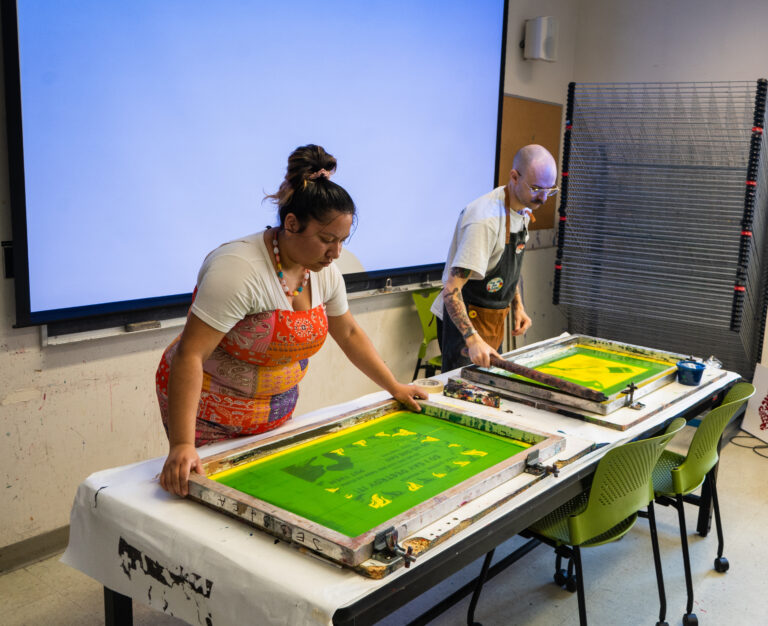
Located in the heart of Hart Hall, one unique classroom on the UC Davis campus has a closet full of paint buckets and tape. Colorful posters line the walls and wire drying racks reach the ceiling to store the student-created posters. The three-hour-long class might be tiring, but the skills it gives to students are invaluable.

Not restricted to just Chicana/Chicano studies majors, the CHI 172: Chicana/o Voice/Poster Silk Screen Workshop course presents students with a quarter-long opportunity to screen print posters in the traditional way. The art form has recently gravitated toward the digital interface, but Professor Gilda Posada provides students with the opportunity to engage with a historically political art medium by utilizing the techniques used since the 1960s.

For most students, the class presents a completely new and unique experience.

“I picked this class because it was a good outlet,” Devin Bangayan, a second-year design major, said. “[Screen printing] is a technique I haven’t learned before. In design, there’s a lot of computer and digital work, and working in [physical] layers for print [was new].”

Bangayan was previously in the military and used his experiences while enlisted to cite inspiration for his poster.

“There’s a big culture around alcoholism and I wanted to talk about that,” Bangayan said. “[This poster] is a healing piece to put out there because it’s something I know a lot of people have dealt with, and I want to represent it in an understandable way.”

Gilda Posada, the current instructor for CHI 172, shared about the history of the course.

“The silk screen courses in Chicana/o/x Studies have been taught in the Department since 1989,” Posada said. ”I am the third instructor to have taught this course after Malaquias Montoya and Carlos Jackson.”

Posada began silk screen printing when she took the same class herself as a Davis undergraduate student. She received a Bachelor of Arts degree in Chicana/Chicano studies and comparative literature at UC Davis and later received a Master of Arts and Master of Fine Arts in social practice and visual critical studies at the California College of the Arts. Currently, she is working on finishing her Ph.D. at Cornell University as an all but dissertation candidate in art history and visual studies.

Her disciplines and mediums extend to digital textiles, screen printing, exhibition curation and critical art historical writing.

“I have been printing for 18 years now,” Posada said. “I very much enjoy passing down this method to students who continue to use it to uplift their communities through their messages in their art.”

The structure of the class revolves around the creation of three posters. Silk screen printing, in the way Posada teaches it, involves the manual cutting of a stencil, which is then coated in emulsion and exposed to a screen, after which the ink is pushed through a screen by a squeegee and repeated for each new additional color.

For simplicity’s sake, the students’ first posters only have one layer and one color. Every following poster becomes more complicated and adds a new layer and resulting color, adding dimension and expanding students’ limits with the medium.

Bangayan’s poster had a rich selection of colors that featured a beer bottle tipping over into a splash silhouette of a saluting soldier. The bottle read “Coping Isn’t Healing” and the splash had blocky, red letters that said “Life Over Career.”

“I kind of expected a good measure of artwork and making stuff politically related, but I didn’t think I’d make as many friends or feel comfortable being the only Black person in the class,” Faderera Popoola, a fourth-year African American studies major, said.

Popoola’s first poster focused on Diversity, Equity and Inclusion and other systems being taken away or threatened by current legislation. She remarked that she found inspiration in previous posters that said “I Am a Man” used during the civil rights movement and experimented with the phrase by substituting it for “I am Employable.”

“I wanted to play off that saying by saying ‘I am Employable’ to say that however I look or come across, I am employable,” Popoola said.

Her poster featured a Black woman with loose, 4D hair and hoop earrings holding a sign that read “I am Employable” where the only color used was black. The hair was textured by filling in the silhouette with ink and before letting it dry fully, Popoola used a scrunched-up tissue to imprint the soft fabric onto the plastic, resulting in a hair-like texture.

Adding texture to a screenprint poster is always challenging due to the plastic stencil it must be drawn — or rather, cut — onto, but Popoola used her creativity to fashion a memorable solution.

“To me [the poster subject’s attire] is professional, but to others it is not,” Popoola said. “[She] is not necessarily me but just the Black person. Regardless of what you’re wearing, you’re still employable.”

Posada also explained the roots of the course stemming from the civil rights movement.

“The course is rooted in a long history of community social art praxis that Chicana/o/x artists and many other [Black, Indigenous, and People of Color] (BIPOC) artists used to achieve liberation and social justice for their communities during the civil rights movement,” Posada said. “In the course I continue to uphold those histories, rooted in visualizing ideas that seek to create a better world, while responding to the present moment with a new generation of artists.”

BIPOC students in the class are not only able to depict personal and meaningful ideas but, in doing so, also call back to a tradition that is ingrained within their histories. The course is open to students of all years and majors and provides a special creative opportunity for interested parties to demonstrate their political voice through art.

Written by: Evelyn Sanchez  — features@theaggie.org

Davis Human Relations Commission meeting sparks controversy

The meeting set out to discuss recent hate incidents in Davis 


By YUENJO FAN — city@theaggie.org


On Feb. 27, the city of Davis Human Relations Commission (HRC) met to discuss sanctuary city policies and address issues of hate alongside a recent controversy between two commission members.

The controversy came after HRC Commission Member Amir Kol criticised fellow Commission Member Deema Tamimi at a recent city council meeting for supporting a book titled “They Called Me a Lioness: A Palestinian Girl’s Fight for Freedom.” Kol claimed that the author had voiced past antisemitic remarks while Tamimi maintained the book’s exposure of injustices toward the Palestinian people.

With the HRC already planning to address issues of hate and discrimination, this subject matter became one of the main focal points of the meeting. Tamimi provided comments backing up her stance while Kol opted to forgo any personal statements during the meeting.

“It made me sad to see that new fears and divisiveness is being sewn right in this place where we are hoping to alleviate fear and not stir up and create new fear,” Tamimi said. “I shared this book and her story, in part because I believe people need to gain a better understanding of the everyday struggles of Palestinians, but also because we are in a time of great turmoil. Here in our local communities where our rights and the rights of our neighbors, family and friends are under attack, we have a duty to speak up to protect the most vulnerable in our communities.”

Furthermore, many meeting attendees chose to voice their opinions and concerns through the public comment section of the meeting. With an audience that was larger than usual, comments ranged from an overwhelming backing of Tamimi to support for Kol, alongside public concerns for people’s ability to express themselves.

Dean Johansson, a Davis resident of over 30 years, warned of the “heckler’s veto,” a situation where people become silenced due to intimidation of being in the minority. Johansson voiced how public gatherings such as the HRC meetings must avoid this situation and allow people to exercise their freedom of speech, regardless of belief.

“We’re taught freedom of speech and first amendment rights are the bedrock of democracy, [but] the heckler’s veto is exactly what I’ve seen going on here in Davis over and over again,” Johansson said.

Public comments also went as far as suggesting that the HRC should evaluate potential consequences to Kol for his criticism toward Tamimi. UC Davis faculty member Catherine Brinkley voiced her concern for the incident, believing that Kol’s comments were harmful to both the community and the HRC.

“I hope that the Human Relations Commission carefully considers protocols for when there are interpersonal conflicts so that they are not unduly escalated,” Brinkley said. “[There are] vulnerable student voices who have come out and said that they felt personally, physically and verbally threatened, and that is problematic to have on the Human Relations Commission.”

With so many different opinions swirling around, Commission Member Edgar Wong-Chen acted as a mediator, balancing the dispute between Kol and Tamimi.

“As members, we have to be able to stand up for what we advocate for, obviously, but we also have to respect the process and the collegiality of all of us being here,” Wong-Chen said. “We have to respect that everybody’s voice matters and that we each have an opportunity to state what bothers us, but also respect the other person’s ability to sit in their seat and speak theirs.”

Wong-Chen further addressed a recurring notion brought up by public comments to potentially remove Kol from his position.

“In my opinion, asking someone to be removed from the commission is not productive,” Wong-Chen said. “So I hope we can move forward, and I hope we can build a bridge, and I hope we can continue a dialogue. […] If we can’t exist here together, then the HRC shouldn’t be here.”

Following these discussions, Kol brought forth updates on arrangements to host a Jewish American Heritage Month celebration in May. The objective of this event is to bring a sense of community to Jewish Americans living in Davis in light of concerns about antisemitism.

“We decided that a very appropriate theme would be Immigration, Resilience and Solidarity: The Jewish American Journey and Beyond,” Kol said. “We’re thinking about a community picnic in Central Park where people come together and bring food [alongside] some music and dancing.”

Currently, the event is being targeted for May 31 and is seeking an endorsement from the HRC before moving to the city council for approval.

Moreover, the HRC also expressed an increased concern for protecting Davis’ immigrant community. Following the city’s first Immigration and Customs Enforcement arrest, the HRC now seeks to find ways of strengthening Davis’ sanctuary city status. Commission Member Felix Alvarez proposed adding Davis to the Welcoming Cities network, a non-profit organization that allocates further resources to assist immigrants.

“We talked about Welcoming Cities and whether this is something that the city of Davis should explore,” Alvarez said. “It’s an addition to the sanctuary city marker but comes with some more added benefits. It would be a membership that the city would have to look into and employ but it also comes with resources from the non-profit to the city. This would help us create programs to provide further assistance for those communities.”

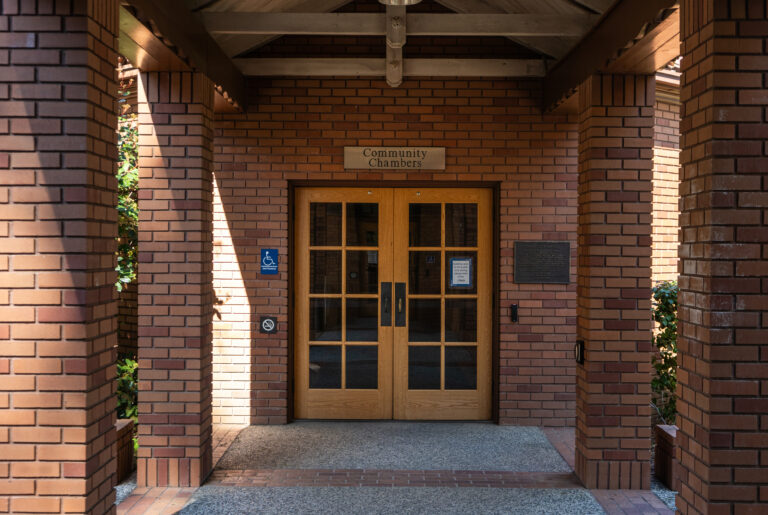
The HRC meets on the fourth Thursday of each month in Community Chambers at the City Hall, and more information can be found on the city of Davis’ website.


Written By Yuenjo Fan — city@theaggie.org

Davis Friends host speakers on the issue of nuclear weapons

Masako Toki and Professor Stephen Herzog spoke on how the legacy of nuclear disarmament activism is still carried out to this day


By MATTHEW MCELDOWNEY — city@theaggie.org


Masako Toki and Professor Stephen Herzog gave a talk on nuclear disarmament for the Feb. 27 Davis Friends, a Quaker organization, meeting. Toki and Herzog discussed a few of the ways to be involved in nuclear disarmament activism today.

Toki, the senior project manager and research associate at the Middlebury Institute of International Studies at Monterey, talked about the educational programs she leads on the nonproliferation of nuclear weapons. Ranging from high school students to graduate programs, Toki described her role in inspiring the younger generations to become involved in the local and international issue of nuclear weapons. Toki then shared about the Summer Undergraduate Nonproliferation Fellowship Program.

“I am very passionate about nuclear disarmament education, so I would appreciate any opportunity to share what I do,” Toki said.

Toki felt it was important to emphasize her role as an educator to facilitate intergenerational collaboration on the issue of nuclear disarmament. Through this education, the voices and stories of those who suffered from the atomic bomb are carried on.

“When you hear about Hiroshima, Nagasaki or the atomic bomb, perhaps the first image you have is the mushroom cloud,” Toki said. “But, [those photos] were taken from an airplane. The real impact can only be understood from within.”

Toki presented the horrors that these atomic bomb victims — the hibakusha — suffered through. In addition to photography taken at the sites of the atomic bombings, Toki stressed the importance of the 2024 Nobel Peace Prize Winner Nihon Hidankyo, an organization that shares the personal stories of atomic bomb victims to highlight the humanitarian cost of a post-nuclear world.

Hidankyo engages in international activism to achieve a world without nuclear weapons, according to Toki. In doing this, the organization builds empathy for these painful, collective histories on the international and local stage.

“The basis of peace is understanding the pain of others,” Toki said.

In Herzog’s talk, he presented his research on the kind of international and local reach that the nonproliferation activist movement is achieving in the current day. Herzog, a professor of the practice at the Middlebury Institute of International Studies, described the challenges and success activists are having through their different strategies.

Strategies ranging from public education to local support were a few of the subjects that Herzog presented. Herzog then described the efficacy of the arguments for deterrence as opposed to nonproliferation, the impact of city or district support on nonproliferation policy and the optics of nonproliferation activism.

“It’s important to recognize that there are some things that nuclear disarmament activists are doing that may not work particularly well,” Herzog said.

Herzog acknowledged the difficulty of informing the public on the side of nonproliferation. He also then highlighted the tangible effects activism could bring.

“If you are an activist advocating for nuclear disarmament, what you are doing is not futile,” Herzog said. “There are things disarmament activists are doing that are successful with the public, local officials and foreign policy staffers.”

Herzog then talked about the important work of nuclear disarmament activist groups.

“It is a gift to be able to present the work you do [as an academic], to people who do this every day,” Herzog said. “So, me presenting the work on the effect, the success and the failure of the different mechanisms for nuclear disarmament activism to a group of people who actively work on, that […] was a good experience.”

Toki was also very grateful to be able to give her talk on nonproliferation activism. Even though the solution of nonproliferation may not be in the limelight, Toki described its importance for ensuring global peace.

“The most important lesson to be learned is: never again,” Toki said.


Written by: Matthew Mceldowney — city@theaggie.org


Note: An earlier version of the article referred to the institute as the Milbury Institute of International Studies in Monterey. The corrected name is the Middlebury Institute of International Studies at Monterey. 


What does the future of Diversity, Equity and Inclusion look like at the University of California under Trump?

As educators interpret recent executive orders and Department of Education guidance regarding DEI, the UC system responds and provides system-wide guidance for students


By KHADEEJAH KHAN – campus@theaggie.org


A “Dear Colleague” letter from the United States Department of Education on Feb. 14 threatened federal funding for schools’ race specific programs, including scholarships, financial aid, dormitory floors and graduation ceremonies. Now, as community members are interpreting the impact of new guidelines, the University of California has provided systemwide guidance.

The letter followed President Donald Trump’s Jan. 20 executive order, which called for the termination of Diversity, Equity and Inclusion (DEI), Diversity Equity, Inclusion and Accessibility (DEIA) and environmental justice positions, describing them as “illegal and immoral.”

“The law is clear: treating students differently on the basis of race to achieve nebulous goals such as diversity, racial balancing, social justice or equity is illegal under controlling Supreme Court precedent,” the letter reads. “The Department will vigorously enforce the law on equal terms as to all preschool, elementary, secondary and postsecondary educational institutions, as well as state educational agencies that receive financial assistance.”

While the “Dear Colleague” letter followed the 2023 U.S. Supreme Court decision which barred the use of race in admissions decisions, this letter targets programs not included in the 2023 ruling, including dormitory floors, graduation ceremonies and scholarships. 

UC Davis Education Professor Michal Kurlaender described the letter as “overreach on the interpretation” of the 2023 Supreme Court decision. Kurlaender’s work focuses on ways to make the pathway into college more equitable amidst racial and socioeconomic inequity. She said that racial affinity programs are one step closer to achieving that equity.

“While we might think college is just about taking classes and completing, it turns out, it is not,” Kurlaender said. “Students experience college in a number of ways, and they need to feel psychological safety. They need to feel like they can navigate the complex system with deadlines and fees and any number, registration and constraints administrative burdens. They also want to feel like they see themselves in the curriculum.”

Kurlaender said students from historically marginalized backgrounds pursuing higher education, often coming from unequal K-12 environments, frequently experience imposter syndrome and isolation. While California’s K-12 student population is 80% students of color, Kurlaender noted that same diversity is often not represented in higher education environments. She believes it is essential to protect aspects of student life, including the beginning of the student experience through themed dormitory floors, all the way to their graduation to “celebrate the accomplishment of completion.”

At UC Davis, the Center for Chicanx and Latinx Academic Student Success, Center for African Diaspora Student Success, Native American Academic Student Success Center, Middle Eastern, North African and South Asian Student Resources and more have held graduation ceremonies celebrating graduating students from various communities. These centers will continue to hold their 2025 graduation ceremonies according to their websites. 

A Feb. 20 statement signed by UC President Michael Drake responded to the “Dear Colleague” letter. 

“We encourage UC staff to continue with their work in alignment with all applicable state and federal laws,” the statement reads. “We will continue to ensure that every Californian has the opportunity to join the UC community and feels welcome at our campuses. We are committed to ensuring that our campuses benefit from the talents and aspirations of all, as we create a vibrant workforce for future generations.”

On March 7, the UC Office of the President (UCOP) released an FAQ page addressing how DEI might be impacted at the UC. 

When asked whether or not the UC is planning to scale back or eliminate DEI efforts or positions, the FAQ page states that “UC remains fully committed to equal opportunity and broad participation in its education, employment and contracting opportunities,” in compliance with Article 1, Section 31 of the California Constitution. In regards to DEI titles, the statement wrote that for staff employees the job titles on UC Career Tracks may be updated, while academic job titles will remain the same. 

In response to questions regarding outreach and pipeline programming by race and sex, the UC will continue to use informational outreach strategies for those groups, with the programming being accessible to all students. Individual campus departments offering courses or programming “related to diversity, equity, inclusion, accessibility and belonging” can continue to do so “as long as those programs are open and available to all,” according to the UCOP website. These programs include Ethnic Studies departments, speaker series, research institutes and more. 

The statement also addressed affinity-based registered student organizations (RSOs), offering support to RSOs who continued to comply with current student organization rules and regulations, as well as being accessible to all students. The same applies to resource programs and centers for specific identity groups, according to the statement.

“UC must – and will be expected to – continue to advance equal opportunity and combat discrimination in all forms in alignment with federal and state law and University non-discrimination policies,” the statement reads. “UC will continue to take steps to ensure safe, inclusive and respectful UC communities for all groups. This includes developing programs and services that support a healthy campus climate, reinforce our values and bridge and improve intergroup relations in order to enhance overall employee and student experience, safety and well-being.”

Written by: Khadeejah Khan – campus@theaggie.org