55.5 F
Davis

Davis, California

Tuesday, December 23, 2025
Home Blog Page 47

The Editorial Board meets with Chancellor Gary May and UC Davis administrators

May and administrators discuss the growth of the student population, sustainability, updates on the recent strike and the effects of the Trump administration on campus life


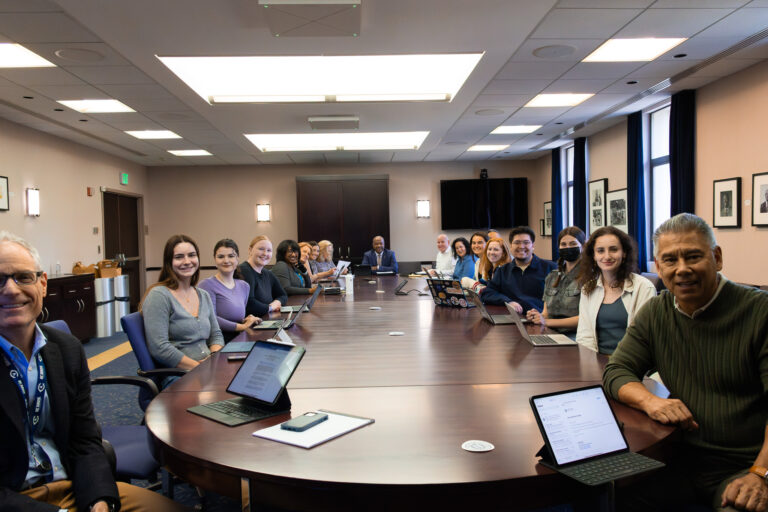
The California Aggie’s Editorial Board met with Chancellor Gary May, Provost and Executive Vice Chancellor Mary Croughan, Associate Chancellor and Chief of Staff Carl Engelbach, Chief Marketing and Communications Officer Dana Topousis, Vice Chancellor of UC Davis Finance, Operations and Administration Claire Shinnerl, Vice Chancellor for Diversity, Equity and Inclusion Renetta Tull, Chief Campus Counsel Mike Sweeney, UC Davis Police Department Chief Joseph Farrow and Vice Chancellor of Student Affairs Pablo Reguerín on Feb. 26. 


Below is a transcript of the meeting that has been edited for length and clarity.


The Editorial Board: In light of the new presidential administration’s policies around cutting government spending, how does the university plan to ensure the continuation of critical funding for students here at UC Davis? Specifically with the Department of Education being downsized or completely dismantled, are there plans in place, at UC Davis or the UC system as a whole, to compensate for losses in funding, financial aid, equal access to education, among others? 


May: You know, every day is an adventure. We’re really in unprecedented times, everyone is very anxious and there’s stress and worry enough to go around for all of us. There are several different presidential actions and executive orders that have come through. I’m just going to talk about a few of them, and feel free to follow up with questions on others if I don’t hit the ones you want to talk about. Starting with the Department of Education and the ‘Dear Colleague’ letter that pertains to Diversity, Equity and Inclusion (DEI), mostly, the university is still analyzing the impact there. Legal is doing a really thorough evaluation of programs and activities in that area, and will give us some direction. I will say that California has had Proposition 209 since 1996. We don’t have any racial preferences in admissions, hiring or procurement or anything in the university. So in that respect, I think we’re compliant with federal law and ‘Dear Colleague’ letters are not law or policy. We’ve been communicating closely with the Office of the President on these issues, as well as the other campuses, because we’re all facing the same sort of issues. The goal, though, is to ensure that we operate and respond consistently across the system and speak with a unified voice and a unified approach across these challenges. We’re dedicating significant time and resources to these matters, all with the support, health and success of our students in mind. So that’s first and foremost in all of our activities. Now there have been some other executive actions, like the cap on indirects. I’m not sure if you’re as interested in that one as you are the one I just talked about, but I’m happy to talk about that too.


The Editorial Board: Has the UC Davis or the UC system as a whole begun to discuss compensation for losses to financial aid funding, equal access to education funding, that kind of thing?


May: So I’ll say we’ve begun. We don’t know enough to have anything definitive yet. So Mary, if you want to say something?


Croughan: It’s more complicated than just the new administration, and how much are they going to put into financial aid or federal aid? What are they going to do with the Department of Education? What’s their approach? This is all layered over all the changes to the Free Application for Federal Student Aid (FAFSA) application last year, which were ostensibly made to make the whole system easier, and I’m going to try to be as factual as I can in these next statements, but I actually do have very, very strong personal opinions on it, so it’s a little challenging for me. They eliminated several aspects of FAFSA that have been there since it was originally developed, like, ‘Does your family have your own business or a farm?’, ‘How many children are you supporting in college?’, ‘How many kids are in the family to begin with?’ There was a workaround for whether or not you had to include a social security number for everyone. So mother, father and the student. None of those things are included now or considered. So I will let you come to your own conclusion about what populations you think are probably most adversely affected by those changes in the FAFSA form. As a result, there were fewer students who applied to UC Davis and every other university in the United States. As a result, you get less financial aid coming to your campus to begin with. So that was already the situation we were facing, and now we lay on top of that the Department of Education and an administration that’s a little less favorable to Pell Grants and student needs in certain populations. 


I said I would not editorialize. This is the best I can do. Be kind to me, please when you transcribe it into an article, but that’s the reality that it was. It’s going to go from bad to worse. There are grant programs the Department of Education has. There’s teacher credentialing programs they fund. There are all kinds of programs they fund that take people from other occupations and mid-career and retrain them to be teachers. They put them in a classroom with no training, and they learn on the job being mentored. It’s almost like an apprenticeship model. Those programs are incredibly effective in places where you’re probably not going to recruit somebody from a general School of Education to go work. Think of very rural areas or very poverty-stricken areas. So we don’t know what the outcome will be of those kinds of programs at this point. We care and we’re paying attention, but we don’t know.


The Editorial Board: Just a follow up to that, we really appreciate the straight answer there, but obviously, on such delicate issues, it is hard not to editorialize, and we were just wondering if this is just because you’re representing the UC as a whole, that you’re trying your best not to editorialize, or this is a concern because there’s censorship from new powers that be?


Croughan: All my colleagues could tell you, I am not worried about censorship. Mike gave me a moniker that I actually repeated to my kids: ‘Oh, no, you’re a Street Fighter. You’re gonna just take this on.’ And that’s true. I come from a long line of family labor union organizers who went to jail all the time and things like that. So no, I’m not worried about any repercussions for me personally. This is just a challenging time because there’s other forces at work that are a little hard to challenge with each action they take.


The Editorial Board: In the recent November election, the city of Davis passed Measure Q, which increased sales taxes by 1%. What actions does the university plan to take moving forward to ensure an affordable cost of living for students here in Davis?


May: Well, I think you know that the university has no way to influence local tax policy, but I think that part of that affordable living is housing, and I think we have a pretty good story here at UC Davis on housing. If you allow me to go back a little bit, we’ve been working with our city and government partners over the last seven or eight years since I’ve been here. We have a memorandum of understanding (MOU) with the city that involves keeping our housing numbers commensurate with enrollment growth and affordability is a part of that. Since 2017 we have opened up 6,266 new apartments and residence hall beds, including places like Orchard Park, Yosemite, The Green and Shasta Hall […], and some of you may live in some of those places. We now house a little over 15,000 students on campus, and that meets the terms of the MOU I just spoke of that we have with the city. At the same time, in regards to simple economics, you increase the supply, the cost goes down. So two things have happened: Cost has gone down a little bit, and the vacancy rate in Davis when I came was less than 1% and now it’s about 4%. When there’s more availability, the competition for the residents drives the cost down. We also are not stopping. We have a current project, Segundo Infill, that’ll be another 500 beds, and there’s 250 beds at Aggie Square. So you know, about 7,000 beds in seven years. For me, I’m pretty proud of that. In terms of affordability, there are subsidy programs that allow students with need to have their rent subsidized. [Reguerín] might be able to say more about that, but we do keep that in mind. The regents actually require new construction for housing to have 20% low market affordability, so we adhere to that and sometimes exceed that.


Reguerín: We just said last year, I believe it was about roughly $800,000 we gave out for a needs-based rent subsidy program. Also these properties, since they’re considered on-campus for financial aid purposes, there’s a higher amount of grant aid that goes in. The Green was consistent with many of our properties and had over 70% of the residents on some form of financial aid. As Gary mentioned, adding inventory is a really critical part to getting to affordability. So that’s our first step.


The second step, of course, is targeted programs. We have through Aggie Compass our rapid rehousing program. If someone is unhoused and we need to address those issues, students are also involved at Aggie House, a different set of tools that we use in trying to make housing affordable. Inventory is very, very important, and then the impact in the local community, with the vacancy rate going up, and then the escalation being at a low point, I think it’s 1.6% for the upcoming year. So all those things together are going to be critical. And then we still want to encourage students to use Aggie Compass. It’s called compass, so that you’ll have a starting place, and we get them support in a variety of different areas. One way everybody can contribute to the inventory, supply and demand issue, that I like to remind everybody of, including our students, is if you share a room and you have two people in a room and we have more density, you have more inventory, more availability. So, that also helps as well.


Croughan: And lower costs.


The Editorial Board: On Feb. 3, protesters marched through downtown and on campus — including in front of Mrak Hall. Those gathered protested to show support for undocumented and immigrant communities following President Trump’s ongoing mass deportation order. According to reports from protesters, you (Chancellor May) spoke to the group. A quote from a protester claims: “Chancellor Gary May came out and showed his support and gave some of his words to us,” the protester said. “He said that he was supporting from his own side, and there’s some websites and resources that he’s gathering for immigrants and students at UC Davis.” What was your impression of those protesting in front of Mrak? How was the conversation between you and the protesters? Finally, could you share what you said to the protesters? 


May: First, I just want to say, we certainly support the people’s right to protest and free expression. That’s a core value here at UC Davis, so there was nothing untoward about that, and they were very polite, and expressed themselves very forcefully, but very politely. So I got a phone call in my office, and it was my good friend, Vice Chancellor Reguerín, and he said, ‘Can you come down here? Some students want to talk to you. They’re protesting.’ 


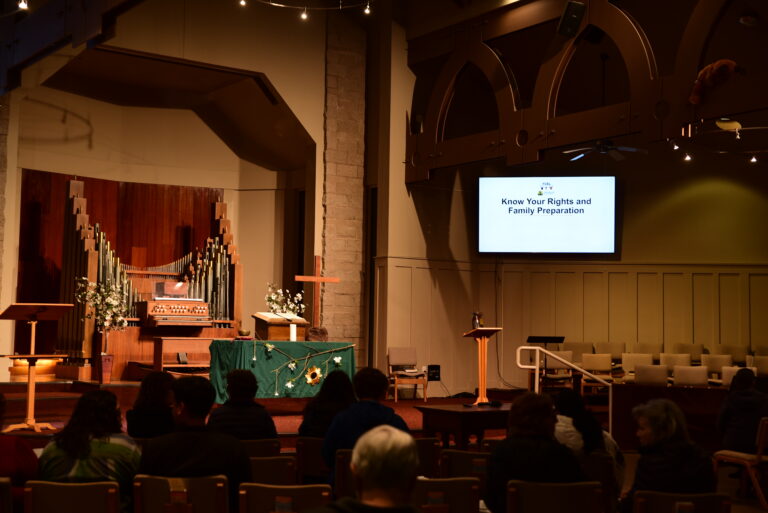
So I went down there, and there were about 50 to 75 students, and they shared their concerns. I reassured them that we are committed to our values at UC Davis, and our values include support of our undocumented community. We have not reduced the amount of support for the AB540 center or other aspects in the way we support students. We talked about the ‘Know Your Rights’ note cards that we’ve distributed, about 5,000 of them, and I listened to some of their questions and concerns and tried to respond. I think we had a good conversation. It wasn’t a long conversation, but I think at the end, they were somewhat satisfied. They gave me a Mexican flag to put in my office, so I took it back to my office with me. So I guess we had a good outcome. 


The Editorial Board: Do you know what specifically you did say to the protesters, or does it just kind of encompass what you just said?


May: I just said, ‘Our values at UC Davis are immutable. We will continue to support this community and other marginalized communities, as we have always done since I’ve been here.’ Despite what you may have heard or read or seen elsewhere, UC Davis has principles of community that we adhere to, and you can be assured that we will continue to work like that.


The Editorial Board: As discussed in previous interviews, the University of California has enacted new protesting policies including: the banning of camping on campus grounds, blocking the movement of people on campus and the restriction of masking when with the “intent to intimidate any person or group, or to evade or escape discovery.” Have any of these rules/policies been enforced by law enforcement and/or the Division of Student Affairs staff since the last time we spoke? Have there been any concerns about a rise in upcoming protests and the usage of masking following the development of our current political climate?


May: Yes, let me just clarify — two of those policies are not new policies. There’s always been a policy against camping and a policy against blocking access. The only thing that’s somewhat new or revised was the masking. And to clarify that one, you are allowed to wear a mask for religious reasons or for health reasons, and you are also even allowed to wear a mask if you’re protesting, as long as you’re not violating policy otherwise. You can’t conceal your identity for the purpose of violating policy. To the best of my knowledge, we have not, in Student Affairs [and] certainly not law enforcement, had a case where a student or another community member was wearing a mask and was either arrested or disciplined otherwise. [Farrow] or [Reguerín], you can correct me if I’m wrong, but I don’t think we’ve had any cases like that.


Farrow: We have not. In fact, the university did have a protest that was over at Shields Library where some members of the public wrote a letter claiming that people were masked

and they were intimidating. And that was one that we were actually there, watching the whole thing, and said, ‘That’s not true. That didn’t happen. It didn’t happen the way [the letter said it] did.’ We really kind of realized from the support of the protesters that they were abiding by policy and by law, and what they were doing was fairly within the rules. We have taken no action on any students, on any protest.


May: Did I get the policy right?


Sweeney: Yeah, that’s right. I’ll just say, although it’s a new policy, it’s actually always been a state law — you can’t conceal your identity while committing a crime.


The Editorial Board: Several UC Davis faculty were recipients of the presidential awards for excellence in STEM mentoring and research announced by the White House. What do you make of this prestigious accomplishment and can you share a bit more about the work that the recipients were awarded for? 


May: These are tremendous national accolades. I’m very proud of our faculty members. I’m proud of all of our faculty, but when they do things like that, it’s just really gratifying for me, personally and, I think, for the entire university leadership team. So I’ll just highlight a couple of those who received these awards: Professor Aldrin Gomes received the Presidential Award for Excellence in Science, Mathematics and Engineering Mentoring. By the way, I got that one once upon a time. Also very proud of him for joining that club. He’s received many awards over his career, both here at Davis and from his professional society and other organizations, but his work in mentoring underrepresented students in STEM fields has been really exemplary. We’re really proud of Professor Gomes. Associate Professor Joanne Emerson got the Presidential Early Career Award for Scientists and Engineers, and she works in ecology and biogeochemistry, soil and plant and other ecosystems. That’s a really prestigious award as well. I mean, a very small fraction of national scientists and engineers get that. In both of those cases, you get a trip to the White House and you meet the president. That just kind of shows you the level of prestige that those awards represent. This is one of the best parts of being at UC Davis and getting your education here: You’re working with the top minds in the country and in the world, and these are two examples of that.


The Editorial Board: The federal courts have blocked the Trump administration’s plan to cut nearly $4 billion in overhead costs for research at universities and medical centers. For many institutions, this could significantly affect their ability to sustain any research and may result in closing entirely. How does the university plan to adapt to this and what changes, if any, can we expect if the budget cuts are carried out? 


May: We’re very concerned and certainly disappointed with the proposed level of indirect costs that has been proposed, a 15% cap. Let me just first explain what indirect is, because I don’t think everybody generally knows what it is. I just like to give a simple analogy: You go to the grocery store to buy some milk. The milk, that’s your direct cost. Your indirect cost is your refrigerator. You have to have something to put it in, otherwise it spoils. Both of those are necessary, otherwise you can’t drink your milk. We have direct costs that we charge for the research. We have indirect costs, which is keeping the lights on, the infrastructure, the buildings, some of the staff that have to do some of the compliance and regulatory work for the research. Those are the indirect costs. For UC Davis, that number currently for National Institutes of Health (NIH) is 62%. Going from 62 to 15% is a drastic amount. [Shinnerl] was just about to say for us, had the 15% cap been in place this year, that would have been about $70 million lost to the university and our research and our medical research. All the campuses across the UC are actively collaborating with the Office of the President to present a unified front. It’s not just the UC, our AAU partners (the American Association for Universities) which encompasses all the top 70 research universities in the country, are involved in litigation to have the administration reconsider that cap. I’m actually on the AAU task force for that activity. We don’t know where things are going to land. I would say that the advocacy efforts will be strong, and we hope to get close to where we were, but I don’t know that status quo will be where we land. I suspect there’ll be some adjustments made. It’s really still young. I mean, [Sweeney], can you just explain what’s happened with the courts and the litigation?


Sweeney: A week and a half ago, the courts granted what’s called a temporary restraining order that holds the status quo until there’s a hearing on the merits for what’s called the preliminary injunction. There was a hearing on the preliminary injunction and I think we’re waiting for the ruling from that. We anticipate it will be granted in some form. We characterize it as chaotic. It is really hard to follow what is happening coming out of Washington. This is one of the rare places where there’s somewhat clarity. We anticipate the unilateral decision to reduce it to 15% cap will be stopped in its tracks, pending what happens next, but that’s the status.


May: So we’re involved in two lawsuits. One is the different 22 state attorneys general suit, and then the AAU and Association of Public and Land-Grant Universities and American Council on Education, these are national educational organizations. We’re involved in that suit as well.


The Editorial Board: This past fall marks the highest-ever number of undergraduate applicants to UC Davis, including increases in the proportion of applicants from historically underrepresented groups. Is UC Davis planning on making changes to acceptance rates following this trend? What resources are in place to make sure all students can succeed financially, academically, (and in other aspects like housing)? Are there any overall plans to ensure incoming students have a smooth transition into the university? 


May: We’re always doing that. I just want to say, do you guys remember the movie Lady Bird when we were not mentioned in a positive light? So all that’s changed. Now we’re the place to be. You know, we got 120,000 applications for Fall 2025, and this is for first-time freshmen, it doesn’t include transfers. It’s the first time we’re over 100,000 applicants in our history. The last class, we had nearly 400 extra students beyond the previous year. Total enrollment across both of our campuses, including medical students and residents and interns was at 41,000 or 42,000 applicants, something like that. Things are looking positive in that respect, but you know, it’s not just coming upon us to get the students here, we have to make sure that they’re successful. That includes housing, space, their experience in the classrooms and co-curricular activities. We’re really focused on graduation success rate, and just went through a round of re-accreditation by the WASC, the Western Association of Schools and Colleges. They just changed their name, but WASC is much easier to pronounce. We passed with flying colors, so that’s another 10 years of accreditation. It all speaks to some of the higher profile that the university has now, the interest that students have in coming here to UC Davis. We’re really excited about that and proud of that. We have a pretty rigorous orientation program, and you’ve all been through it once. Student Affairs and others did an excellent job in getting new students used to what it takes to be successful at UC Davis. Various efforts for undergraduate research, our first-year program and our mentoring program for students who are the first in their families to go to college, all those sorts of things.


Croughan: I can add a little bit on the admissions side of it. Two years ago, we launched a new major in data science, and then for this fall, we’re launching a new major in business. Students have been asking for this business major for about 30 years, and I’m thrilled we finally have it off the ground. It’s joint between the Graduate School of Management, who will be the lead and because it’s not just graduate students they’ll teach anymore, they’ll change their name. The Economics Department in the College of Letters and Science and agricultural and resource economics and managerial economics in the College of Agriculture. It’s a partnership across those two colleges, one school and three different departments. Effectively, it’ll be an amazing program, quite different, honestly, from UC Berkeley and UC Irvine and UC Los Angeles and so forth, much stronger economics and quantitative. We had almost 9,000 applicants for 175 spots, and this was the first time you could apply. That probably also helped to that 120,000 applications right there. 


The other thing we did this year, for the first time, is have a human biology major. We’ve always had biological sciences, molecular and cellular biology, lots of other versions, but the human biology major was second only to the business major for new applications. If you look at, ‘Are we meeting the demands and interests of students?’, our top five applied majors are all things that have been launched relatively recently, and so I think that’s a really good sign as well. 


Reguerín: Our orientation program, that we revise based on the feedback and the outcomes that we see from the prior year, has a big focus on an important aspect of orientation, which is ensuring students feel a sense of connection. If they get a sense of belonging early on, they are able to develop connections socially and academically. There’s a part where, based on their major and their college, they’ll get kind of an induction into the academic area. 93% of our incoming students live on campus or in one of our residence halls, so we have a lot of programming going on there, but it’s really about making a connection. We also have revised our orientation program to be transfer-specific, and then also freshmen-specific. We’ve seen higher participation in a shorter number of days, rather than what used to be five days in person. Aggie 101, starting online, really tries to think about the elements that students need just at this point in time because it can be information overload, as you know, going through that process. We also had this last year — through a committee that [Croughan] has charged our executive advising work group with — working across the colleges, Student Affairs, undergraduate education, enrollment management around the advising experience overall, holistically for students. The program also invested in about 24 new advising positions.


Croughan: $2.3 million and 24 advisors.


Reguerín: The goal of that was to increase appointment time and reduce wait time, so all that work is also continuing. I’m also happy to share that last summer, we did a refresh to our academic assistance and tutoring space at the library, in partnership with Shields Library. If you ever go to tutoring and you’ve checked out the space you saw it looks really different, it feels really different, and there’s better capacity. That was one of the other ways we were really trying to encourage students to use our different academic support services. We’ve added a number of case managers, therapists and just all the kinds of mental health resources with our Aggie Mental Health Initiative as it continues to move forward. So a number of different ways we’re trying to work on supporting students as our population grows, but also success across different groups.


The Editorial Board: UC Davis is one of the top institutions in the nation regarding sustainability — what efforts by the university have contributed to this success? How does UC Davis ensure the university continues to have high sustainability rankings in the coming years? 


May: So just to correct the question, you said ‘one of the top’; We’ve been No. 1 for nine years in a row now, according to the University of Indonesia GreenMetric, the organization that ranks campuses, and we’re the No. 1 campus in the U.S. and I think No. 5 in the world. This comes because we make this a high priority, not just in research and education, but in our campus operations, academic programs and everything we do. We think about sustainability when we build new buildings, we can be Leadership in Energy and Environmental Design certified, all sorts of things. 

In 2022, we released a Fossil Fuel-Free Pathway Plan to get us 95% free of fossil fuel use, using 2018 or 2019 as the baseline year, before COVID-19, to get us there by 2040. We’re a leader there, being the first campus in the UC system to release such a plan. In fact, the system then followed up with a fossil fuel pathway plan for the rest of the system. Our target was much more ambitious than you see and state policies dictated. We have a big project that’s ongoing called the Big Shift. You may be familiar with the Big Shift — that’s our move from steam to water heated by electrical means, so we don’t use the fossil fuels to heat the water vapor anymore. That project shrinks our carbon footprint by 80%. 


Shinnerl: We’re finishing phase two, and we’re starting on phase three.


May: We’re working with our local partners in Davis and Yolo County to make transportation more sustainable. There’s a Moving Forward Together plan with the city that addresses sustainable transportation and reduces the carbon footprint of our vehicles and things like that. All this campus operation stuff reports to [Shinnerl], so I’ll let [Shinnerl] add anything I may have missed.


Shinnerl: I think that it’s really part of the culture, part of the way we prioritize things. I think you nailed it. I’ll just add: In Sacramento, we have a really big campus out there, too, and they’re part of our Fossil Fuel-Free Pathway Plan. We have a lot of goals — the same goals that the Chancellor just mentioned apply to the Sacramento campus.


Croughan: Do you want to say something about the BioDigester? It’s not exactly the same as fossils, but super interesting, I think, and we are the only ones [who have it].


Shinnerl: When you eat your food in the cafeterias, your leftovers go to the BioDigester. It’s different from composting, it’s actually a specific machine like a big belly. [If you visit it], bring your earplugs and nose plugs and all that. It hasn’t been producing anything, but now we have a grant that will eventually fuel the Unitrans buses. We are taking it to the next level with the grant. It’s been biodigesting, but not actually using the fuel that comes from it. We partnered with Raley’s and others, and they pay us to take their food waste.
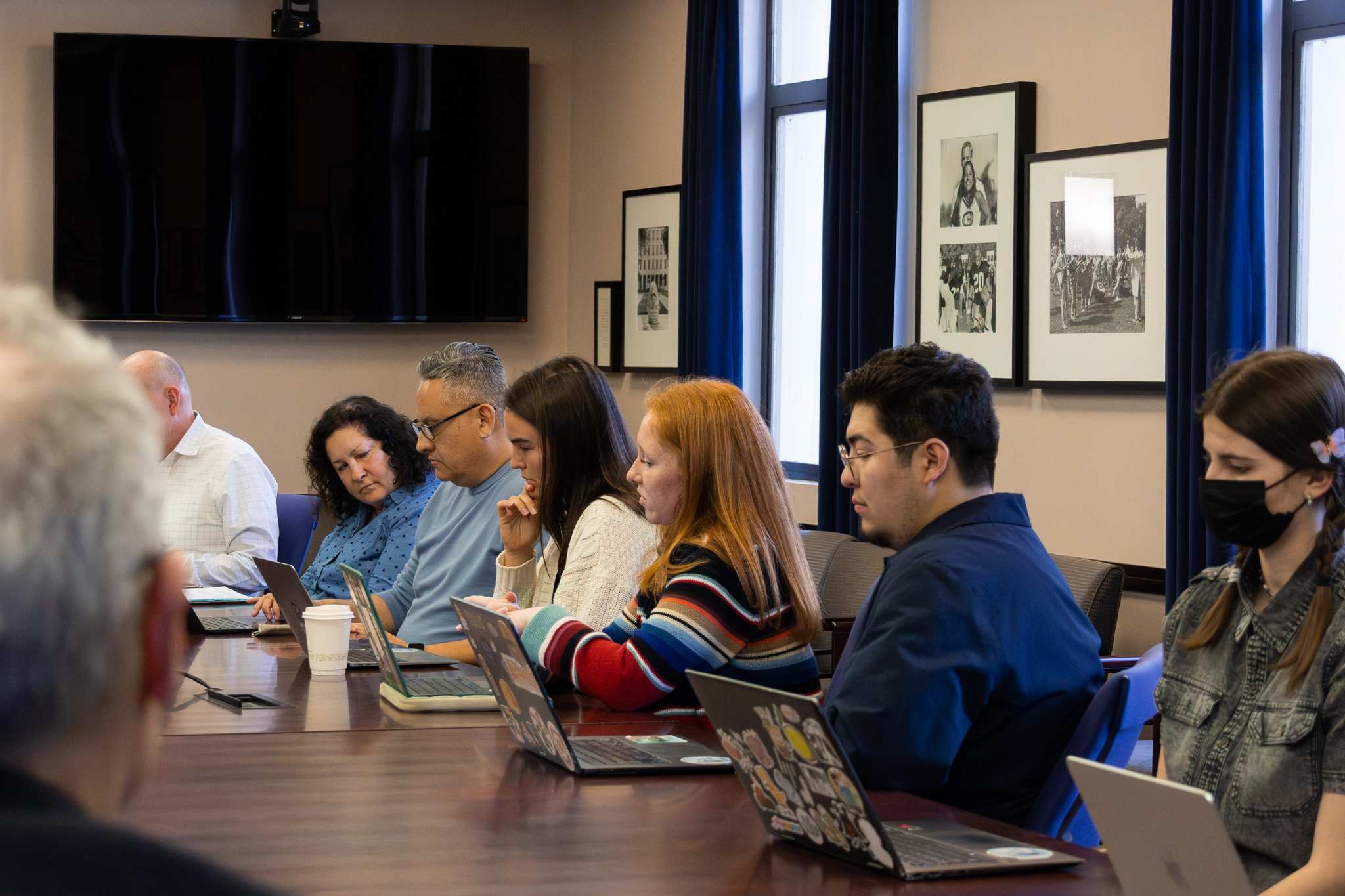
The Editorial Board asks Chancellor Gary May and campus administration questions about the campus community. (Jenna Lee / Aggie)

The Editorial Board: With the Trump administration’s mass deportation efforts and a rising Immigration and Customs Enforcement (ICE) presence, are there plans in place to protect undocumented and immigrant students within the UC system? Are there any guarantees you can offer for students who are worried about their futures at the university?


May: I alluded to some of this before when we talked about the protest, but I’ll just say we have FAQs and a website that guides our immigrant population on what enforcement activities may or may not happen on our campus. I don’t think we have had one thus far, although there have been rumors — I look on Reddit sometimes. Anyway, that hasn’t actually been true. There was a gentleman arrested in the city of Davis last week or the week before, but none of our students have been impacted by anything like that. We take great care to keep students informed about what their rights are. We make sure we’re mindful of privacy concerns and safety considerations. UC employees are not required to affirmatively assist federal immigration authorities to grant permission or access to facilities or dorms or anything like that without a warrant. So we don’t do that, and we advise our staff accordingly. [Sweeney], do you want to say anything about the campus? 


Sweeney: UC employees do not have authority to grant access to private space, and they have been informed that they do not have authority. So if somebody is in a private space, an immigration officer doesn’t have access to that space, and the employee shall not grant that consent. Chief Farrow can speak more specifically to this, but our officers are prohibited from engaging or assisting in immigration enforcement matters. 


Farrow: The existing state law prohibits any use of any local law enforcement, state law enforcement, county law enforcement, in assisting ICE and the performance of their duties. That’s currently an existing law we have up there. Our policy then echoes that statement. We won’t prohibit or prevent, but we can’t stand in the way and we won’t assist. [Sweeney] is really right — I think that’s really, really important about this mass deportation and people coming on campus to do these things — they have to follow the law, they have to have arrest warrants, they have to have very specific things that they’re going to look for. This does not allow them access to the private space dormitories and that sort of thing. I think it’s important for your readership to understand that there are a lot of protections out there right now, and ICE or whoever comes on campus has to involve some very strict guidelines.


May: Just to add one more thing, we don’t release immigration status information or confidential student records without the students permission to any federal agency. So that’s another concern people have about doxing and things like that. We don’t release that information.


Reguerín: I’ll add a little bit more in that we also have our UC Immigrant Legal Services Center. Our Davis students have our own designated immigration attorney, and then they work, of course, as a team. So we’re working closely with them, with our Undocumented Student Resource Center, I’ve also met with the student team, the interns, and they’re planning a town hall, so just staying in communication as well as to what’s changing, what’s happening. We’re also going to be partnering with our California State University and California Community Colleges colleagues. There’s a Northern California group around college university, to see what we can do, learn from them, they can learn from us, etc. One piece of information I would love to make sure you all share with your readers is that our UC Immigrant Legal Services are not only available to students who are undocumented, that are undergraduates and graduates, which I think people know, but also for the students and their immediate family members. So you might be a citizen, but let’s say your mother is undocumented — they also have access to those legal resources. Sometimes you have a hard time reaching students with mixed-status families, and so they are available for those services. I appreciate your help in getting that word out so people know that there are really phenomenal legal services. They do have to triage and prioritize cases, so they do get a lot of requests, but that’s a really important resource that we have here and they’re based out of the UC Davis School of Law.


Croughan: We serve not just our campus; we serve the entire University of California, except for UC Berkeley, which does have their own. Friday was our Foundation Board Event. We have a lot of alumni who are graduates of UC Davis School of Law and very DEI-focused, [and want to address] undocumented and documented students’ concerns. Several of them came up to me and said, ‘I would like to provide pro bono services to the immigration clinic.’ So I think we are going to be able to expand, and hopefully [Reguerín] will not have to triage as much and ensure everyone can receive services. It was one of those proud Aggie moments with our own alumni.


The Editorial Board: A Donald Trump executive order aims to threaten college students who are “Hamas sympathizers” and anti-Israel with deportation. With students worried that activism for the Free Palestine movement will result in potential deportations, what is UC Davis planning to do to ensure students’ rights to freedom of speech? 


May: I would just say that students should not worry. We have our freedom of expression policy that states, and I will just quote it, “All members of the university community have the right to express and debate their views, to voice criticism of existing practices and policies and to protest against laws, policies, actions and opinions with which they disagree.’ That’s our policy, and everyone has the right to protest no matter what the topic is and no matter who agrees or disagrees with it. That policy remains unchanged. We support students who exercise their right to free speech in accordance with our time, place and manner restrictions on campus, so students should not be worried about that.


The Editorial Board: As UC Davis prepares to be the first university to earn the Silver STEMM Equity Achievement Change Award for Diversity, Equity and Inclusion, what new initiatives or strategies do you plan on implementing to further foster and enhance DEI on campus, especially in light of recent national shifts in these policies? How does the administration believe that this university will be impacted by the removal of DEI programs and funding? 


May: Let me just say about the award — we already got the award. A couple weeks ago, I was in Boston accepting the award with Vice Provost Phil Kass. The award is given by the American Association for the Advancement of Science, and they give these awards categories: bronze, silver and gold, but you have to earn the bronze first, to get the silver, to get the gold. So it’s a process. We were the first and only university to get the bronze, and now the first to get the silver, so we’re really proud of that and we accept the award proudly and loudly. In terms of what we’re going to be focusing on going forward, maybe let [Tull] take that question.


Tull: So one of the things that we’re doing is that we already have a lot of really good programs on campus, and so the key is that we’ve always been in compliance with Prop 209, and we’re making sure that we continue with that. We’re making sure that we are in line with the Constitution, with the Civil Rights Act and all of those things. And so we want to make sure that we’re continuing to have our programming, our community book project focused on principles of community, making sure that our faculty have support to take on great research and have great teaching for all of our students who are here. We’re just going to continue to move in that direction. We don’t look at it as taking away anything from DEI, but striking it based on making sure that we’re staying in compliance.


May: We are fully in compliance with state law, the Constitution, federal law and everything like that, and we will continue to use that as our guide post.


The Editorial Board: In May, philanthropist Maria Manetti Shrem pledged more than $20 million to fund arts programs at UC Davis, prompting the creation of the Manetti Shrem Arts District from the Ann E. Pitzer Center to the art building. What are the implications of such a large donation to the arts/humanities, and how does UC Davis plan to best utilize this increase in funding? 


May: So I’ll go off script a little bit. I’ll just tell you a little about Maria Manetti Shrem. I think you’ve heard that name, you see the signs but you don’t know who she is. Mainly, she brought the Gucci brand from Italy to the United States many years ago. There’s a reason why you can buy a Gucci purse at Macy’s or whatever. So that’s how she made her fortune. She is a wonderful woman, brilliant business woman, big personality and very Italian. So this gift is a $20 million estate gift, but it’s already changing the face of our campus. I should say, not just the $20 million estate gift, but it’s also $800,000 a year until she passes. So it may wind up being, you know, 30 or more million. It’s the largest gift in the history of the College of Letters and Science and the largest gift ever for the arts at UC Davis. [Shrem] likes to say she wants to bring UC Davis back to prominence and leadership in the arts. We have former faculty members and famous artists like Wayne Thiebaud and Lori Emerson and others, too many to name, but we want to get back to the status where UC Davis is known for fine arts. She wants every student to have access to the arts. So it’s not just for students who are majoring in those disciplines, but other students as well. It’ll fund three endowed academic chairs in that program. Two will be in the Manetti Shrem art studio programs, the third will be in the Department of Design. Obviously, she’s affiliated with Gucci so she’s got an interest in design as well. It’ll also support professional funding for the California Art Studio, Maria Manetti Shrem Institute for Sustainable Design, fashion textiles and supports the Art and Art History Visual Resources Library. So lots of things get supported by that gift. We are pretty proud, you know, we had just completed our campaign, the Expect Greater Campaign, and we were able to get at least three, maybe more, eight-figure gifts in that campaign. This is one of those three. 


Croughan: She’s also donating her entire clothing collection. You can imagine, with Italian designers and the people she’s worked with throughout her life, and even now, I’ve never seen anything twice like jewelry or clothing, unlike me. So we’re getting all of it along with the funding that it takes to keep it in good shape, but that way our students can study it, learn from it and so forth in the design program and arts.


May: Anybody see the movie ‘House of Gucci’? So one of those people was her in that movie. I can’t remember which character played her, because it changed some of the names, but yeah, one of them was her.


The Editorial Board: Many UC Davis students commute to the university for work, class attendance and sports participation. The cost of on-campus parking currently ranges from $2 to $20.50 depending on the lot, with parking tickets for on-campus parking lots currently set for $17. How does the university set the pricing for parking? What is the reasoning/motivation behind an increase in parking costs, and how are you addressing affordability and accessibility concerns for commuting students? 


May: So I have a goal every day to get through the day without anyone mentioning the word parking; hasn’t happened yet. First, on campus parking ranges from $2 to $5.60 for campus residents. These rates are reviewed annually according to a strategic plan, in coordination with all the campus partners, various stakeholders, parking visits, student government and all the academic units in consultation when they make these plans. I think this is year, maybe, three of a five-year plan. Transportation Services is funded by parking revenue, and a lot of the parking lots and things that you see have to be serviced, and that service is funded by these revenues. It helps us to maintain a safe and sustainable transportation infrastructure. This also reports to [Shinnerl], so maybe I’m gonna let [Shinnerl] take the lead.


Shinnerl: At all the University of California campuses, parking is supposed to be a self-sustaining operation. We’re not supposed to knock on the door for funds, so it has to be self-sustaining. So that’s No. 1. The other thing is it does a lot more than parking, right? I mean, just these parking structures require maintenance and a lot of work. That’s part of what you’re paying for, but also the whole biking infrastructure that we have here such as the whole Bike Program and bike training [it] is way bigger than just pure parking. We are just basically trying to cover our costs. I don’t have it in front of me, but we are still one of the very least expensive UC campuses. I think Merced might be a little bit less, but that’s kind of it. 


May: Do you want to say something about Spin?


Shinnerl: Sure, I’ll say something about Spin. Have you used it? Have you used Spin? The little orange bicycles and scooters? It’s a joint contract with the City of Davis, but the goal is to increase mobility without use of cars between the city and UC Davis. It’s gotten really popular and a lot of people use it; especially the scooters are super popular, more so than the bikes. The first year, we started off with too many bikes, now we added more scooters, but it’s going very well. Just a little tip on that: You may have noticed that if you use Spin, it controls the speed where you are, which Joe Farrow loves, so that we don’t have them racing through populated areas. There are certain zones. So it’s really great from a safety perspective.


May: Last point on parking — to dispel a rumor, everybody on campus pays for parking, including the Chancellor. 


The Editorial Board: Article 26 Backpack — a UC Davis Universal Human Rights Tool for Academic Mobility — aims to aid young people whose education has been impacted by war, conflict and economic conditions in planning and structuring higher education, training and career pathways. Does UC Davis utilize any federal funding to support this tool, and, if so, given potential federal funding restrictions, will this tool be impacted? Does UC Davis have any plans to support students who depend on the usage of this tool for educational purposes? 


May: Yes, we’re very familiar with that program. Professor Watenpaugh is a good friend of the campus and a good ambassador for the campus. No direct funding from UC Davis goes to Article 26 Backpack, that funding comes from the U.S. Agency for International Development (USAID), as well as other grants. I think last year, they got a $250,000 grant from USAID, which was canceled for now. There’s some litigation going on with USAID, as you may have heard, in addition to some of the other federal litigation. So we’re not sure whether that gets restored or not. We will continue to try to support the program and the students in other ways as best we can, because we think it’s a good program, and we advertise and write stories about the program all the time because we’re so proud of it.


The Editorial Board: Previous contracts between the UC and labor unions expired last year, with negotiations beginning after. Two unions, AFSCME 3299 and UPTE-CWA, representing 50,000 workers combined, are temporarily striking, alleging “unfair labor practices.” Protests are happening across all UCs, with multiple campus dining services closing during this time. Do you know the status of negotiations? Have you heard from any union representatives at Davis?


May: So all union negotiations are done through the Office of the President, local campuses don’t have a role. We are informed, and we often provide input to the negotiations. The two unions that are on strike now, the contracts expired, I think one in October. The ASK ME contract that’s being negotiated going forward is for another five years. I don’t know if I can get into the specifics of what’s been offered and where the negotiation is. The one for UPTE-CWA 9119 is a three-year contract. All I can say is that we hope that we can reach a resolution soon. I think we are bargaining in good faith. We have a really strong bargaining team at the Office of the President that is trying to do the right thing by not just the unions, but by all of us, because those contracts affect campus budgets pretty heavily, actually. So I think that’s about all I can really say.


Shinnerl: Yeah, I can just add one thing that I think is public — an independent fact-finder considered our offer very favorably. So it’s unfortunate that it wasn’t accepted, but it was reviewed.


The Editorial Board: And then, did UC Davis contribute any advice or recommendations to the University of California Office of the President?


May: So all the chancellors, we have a monthly Council Chancellors meeting, and this is always a topic — labor negotiations. So in that context, yes.


Shinnerl: Because I’m a bean counter, I made mistakes and I just want to correct something. Chancellor May asked me about the NIH cap, and I started down the wrong path so I just want to clarify that all of our federal contracts have the same facilities and administrative rate, and it’s currently 61%, so I just wanted to make that clear. So we’ve been tearing up over the years. It was 58%, 59%, 60% and as of July 1, 2024 it’s 61%.


Engelbach: We said 62%, so we were wrong by 1%.


Shinnerl: And I said something completely wrong about something else. So yes, just to set the record. And all of our federal agencies have the same rate. Nothing different for NIH.


Croughan: It’s a really detailed, really challenging (in terms of the amount of work you have to do) documentation of exactly what our costs are down to: the number of light bulbs, what’s your Pacific Gas and Electric bill every month and breaking it down. It’s a little frustrating that you go through that every three years. It takes a lot of time and effort, and then now they’re trying to discount it. 


The above transcript has been edited for length and clarity. 


Written by: The Editorial Board

 

Culture Corner

The Arts Desk’s weekly picks for music, movies and more


By NATALIE SALTER — arts@theaggie.org


Movie: “Almost Famous” dir. Cameron Crowe (2000) 


When 15-year-old student prodigy William Miller (Patrick Fugit) seizes an opportunity to pursue music journalism, he doesn’t quite expect to find himself on a bus with rising-star band Stillwater on a cross-country tour. There’s a Rolling Stone assignment weighing on his shoulders, the band is hardly ever sober enough to give a proper interview and self-proclaimed teen muse Penny Lane (Kate Hudson) is becoming an unexpected object of his affections — it’s a lot for one high schooler to handle. Still, despite its chaos, “Almost Famous” is also a comedic and heartwarming tale — with, of course, a very memorable soundtrack as well.


Book: “Days at the Morisaki Bookshop” by Satoshi Yagisawa (2023)


Takako is at rock bottom. Her long-term boyfriend casually reveals he’s been seeing someone else and leaves her, she loses her job and she’s spiraling into a deep depression, leaving her unable to get out of bed. However, a curious offer from her eccentric uncle — to come live with him in the bookstore district of Jimbocho, Tokyo and help run his quirky used book shop — gives her a new opportunity to embrace life. In a truly beautiful turn of events, Takako learns the importance of slowing down and appreciating life’s little gifts, finally able to embrace the love of her family and friends once more. It’s a tremendously heartwarming novel that will remind you of the power of little gestures of kindness and the healing power of a good book.


Album: “Windswept Adan” by Ichiko Aoba (2020)


If you have ever wondered what the musical equivalent of soft ocean waves, a quiet breeze through leaves or the soft twittering of birds in the morning is, you need not look further than Ichiko Aoba’s masterful “Windswept Adan.” An ethereal, dreamy LP filled with diaphanous melodies and gentle vocals, Aoba’s artistry is so absolutely transcendent that you’ll feel like you’re floating through the clouds from the start of the album to its end. When the world gets a little too loud, put on “Windswept Adan” and drift away to the peaceful, enchanting world Aoba so masterfully creates. It’s unlike anything else you will ever listen to, and its soothing effects are nothing short of magical.


Song: “1980s Horror Film II” by Wallows (2020)


“She was only seventeen / Oh, why are girls in songs always seventeen?” is one lyric Wallows member Braeden Lemasters sings right at the start of “1980s Horror Film II.” That’s a great question to start a song on, and the band only continues this wry tone throughout a musical chronicle of a not-so-perfect love story with a dream girl straight out of a coming-of-age film. It’s a nostalgic, synth-backdropped track that sounds like it was pulled out of the titular decade, with an amusing lyrical narrative to match. Too bad that the song’s muse reveals at the end that she’s “really not that into guys.” Better luck next time — in the meantime, I’ll be listening to this song on repeat.

Written by Natalie Salter — arts@theaggie.org

Senate hears ways to increase engagement at athletic events, quarterly reports at Nov. 21 meeting

Some $88,312 remains in Senate Reserves for future events and programs, according to Internal Affairs Commission Chair Amanda Clark


By VINCE BASADA — campus@theaggie.org


ASUCD Internal Vice President Aaminah Mohammad called the Nov. 21 senate meeting to order at 6:18 p.m. before reading the UC Davis Land Acknowledgement.

The table first heard from the Innovation and Research Lab (IRL), ASUCD’s in-house software and research group, which has been looking at ways to increase campus and athletic engagement from students. The speakers list included IRL researchers Brady Horton, a fourth-year political science and statistics double major, Brendan Lin, a second-year economics and statistics double major, and Dyson Smith, a fourth-year statistics major.

Based on surveys and interviews from some 387 respondents, the IRL found that 60% of students rarely or never attend athletics games. To address this, the IRL recommended that the senate direct efforts toward creating community-oriented experiences (especially for transfer and first-generation students), form direct collaborations with registered student organizations and downtown businesses and embrace and market unique aspects of UC Davis culture (such as biking and agriculture).

Smith elaborated on the reasoning behind the recommendations.

“UC Davis students traditionally find small-scale social solidarity,” Smith said. “They often find their highest sense of connectedness in their [registered student groups] and in their friend groups.”

After this, the senate unanimously confirmed Vanessa Sandoval, second-year environmental science and management major, as vice-chair of the Planet Her Committee.

“There is an increasing importance [to] protect women’s rights and freedoms right now,” Sandoval said on her confirmation. “It is more important than ever right now for students to know that we will be working to create a space for women.”

A series of quarterly reports were heard throughout the night, beginning with the Judicial Council (JC). Deputy Justice Albena Goulisheva, a fourth-year political science major, presented in lieu of Head Justice Katrine Lee, who was unavailable. Goulisheva was joined by several of the council’s other justices and reported that the JC had received no appeals from the fall 2024 ASUCD elections.

Unit Director Andie Tarabzooni, a third-year economics and communications double major, then reported for The Pantry. Tarabzooni reported that over the past quarter, the unit has experienced difficulties due to no longer having a career staff advisor. Despite this setback, Tarabzooni announced The Pantry’s plans to open a new mobile pantry location, prioritize  sustainability, procure easily distributable cultural (kosher/halal) foods, open Costco and Sysco accounts and expand its menu and hours.

Tarabzooni also noted that there have been issues with keeping items stocked, exacerbated by The Pantry recently distancing itself from a food supplier. However, despite the supplier’s problems with delivered products, the on-campus food bank has served 9,350 individuals and distributed 7,430 pounds of food this fall.

ASUCD Information Technology’s Lead Programmer Marvin Lee, a fourth-year computer science major, presented next and noted that KDVS’ new website is scheduled to launch on Dec. 16.

This was followed by the Sexual Assault Awareness Advocacy Committee’s report from Chair Vrinda Vutukury, a fourth-year international relations and economics double major. She noted plans with risk management officers to make sure Greek life awareness work is not just “performative,” as well as plans for an upcoming martial arts self-defense event. Vutukury also said that her strategy for her term is to focus on assault prevention efforts, such as improving campus lighting.

The senate also heard from Student Health and Wellness Unit Director Glenna Grant, a second-year communications and psychology double major, who hopes to increase accessibility to safe-sex products throughout campus, before taking a short break.

After returning to the meeting, the table heard quarterly reports from two senators. First, Gender and Sexuality Commission Chair Tristen Dillard highlighted the upcoming Gender Empowerment and Reproductive Freedom Movie Night on Dec. 3 and issues with onboarding staffers. Then, Internal Affairs Commission Chair Amanda Clark reported that only three senators’ offices had requested money since the start of the academic year.

“Many of you ran on great platforms,” Clark said from the report. “You have [the] funds to help address the concerns in your platform. Please use them.”

Clark also reported that $88,312 remained in the Senate Reserves out of $100,000 and that all $25,000 of the Safety Initiative Fund remained untapped.

Afterward, the senate unanimously amended the 2024-25 budget to reallocate some $11,200 from the Job Creation Fund to the Inclusive Fellowship/ASUCD scholarships.

The senate passed the consent calendar and approved old meeting minutes before adjourning at 9:27 p.m.


Written by: Vince Basadacampus@theaggie.org

President Trump’s executive actions face legal pushback

UC Davis students and law professors discuss the situation’s implications on the separation of powers


By GRACIELA TIU — features@theaggie.org


For the past three months since President Donald Trump took office for his second term, his administration has been progressing its agenda through numerous executive actions. Many of these measures have faced various legal challenges since day one, raising significant questions, particularly surrounding the United States Constitution and the scope of executive power.

These examples of legal pushback against the Trump administration aim to utilize one of the largest checks on presidential power — the judiciary’s power of judicial review. This gives federal courts the power to consider whether or not certain actions taken by the executive or legislative branches are constitutional. 

Each week, new updates arise, giving the public more information surrounding the various lawsuits and their progression in the courts. Given the vast number of executive actions that have faced legal challenges (as of April 23, 2025, Trump signed 137 executive orders, 36 memoranda and 39 proclamations since his second term began), thoroughly covering all of the details of each case would be difficult. However, many of these executive actions and their lawsuits can be categorized into specific sections of his agenda. 

One of the most contested actions has been Trump’s use of the International Emergency Economic Powers Act (IEEPA), which he invoked to impose tariffs. While the power to enact tariffs generally rests with Congress under the Constitution’s Commerce Clause, the IEEPA allows the president to act unilaterally during national emergencies. Legal challenges have arisen, questioning whether the president’s use of the IEEPA oversteps his constitutional boundaries. 

“States like California have really pushed back,” Rominna Sharifi, a third-year biopsychology major and a member of Davis Pre-Law Society and Phi Alpha Delta, the UC Davis pre-law fraternity, said. “California’s economy is super globalized — agriculture, tech, manufacturing — and the tariffs have hit a lot of those sectors hard. 

Regarding federal funding cuts, Trump has faced opposition over his decision to halt federal funds to universities, Harvard University in particular, with the Trump administration citing the university’s lack of protection against antisemitism on campus. The lawsuits filed against the administration argue that Trump’s actions violate the First Amendment by targeting free speech and academic freedom. These actions have prompted a broader debate about the relationship between the federal government and academic institutions.

“The government has not — and cannot — identify any rational connection between antisemitism concerns and the medical, scientific, technological, and other research it has frozen that aims to save American lives, foster American success, preserve American security, and maintain America’s position as a global leader in innovation,” a Harvard lawsuit, filed in Boston federal court, reads.

In March 2025, Trump’s efforts to dissolve the U.S. Department of Education also provoked legal challenges. The lawsuit against Trump’s Executive Order 14242 argues that dismantling the department violates the separation of powers, as only Congress has the authority to eliminate federal agencies. The legal fight continues as courts evaluate whether such a significant restructuring of the federal government is within the president’s jurisdiction.

“Despite Congress’s clear directives to the Department, the Trump Administration has stated numerous times, in the clearest possible terms, its intention to close this vital agency, most recently in a March 20, 2025, Executive Order,” a lawsuit, filed in the U.S. District Court for the District of Maryland, reads. “These actions are unconstitutional and violate Congress’s directives.”

Another measure, Executive Order 14248, that has drawn substantial legal resistance involves Trump’s efforts to restrict voting rights. This executive action, which limits mail-in voting and changes voter ID laws, has sparked lawsuits from civil rights organizations arguing that these measures are discriminatory. 

However, on April 24, 2025, a Washington D.C. federal judge put a pause on a primary section of that executive order.

“Our Constitution entrusts Congress and the States — not the President — with the authority to regulate federal elections,” Judge Colleen Kollar-Kotelly’s opinion reads.

Trump’s controversial push to end birthright citizenship also continues to face legal opposition. The president’s Executive Order 14160, which sought to change the interpretation of the 14th Amendment, faced a major setback when the Supreme Court set dates to hear the case in May, after three district courts halted its implementation.

In another area of legal contention, Trump’s executive orders limiting transgender rights, particularly in the military and in women’s sports, have faced multiple constitutional challenges. His executive order barring transgender people from the military has been temporarily blocked, while the order barring transgender women from women’s sports is still undergoing legal contestation.

Additionally, Trump’s efforts to make it easier to fire federal employees have raised concerns over executive overreach. The president’s Executive Order 14183, which changes civil service protections, is seen by critics as an attempt to weaken federal labor rights. A new rule proposal on April 18, 2025, which would recategorize thousands of civil servants as “at-will” employees, would remove civil service protections and make the process of firing federal workers much easier.

The creation of the Department of Government Efficiency (DOGE), another controversial action by the Trump administration, has also led to legal challenges. DOGE, which was reportedly implemented to streamline government operations, has been criticized for bypassing established procedures, such as the Federal Advisory Committee Act. The legal battles surrounding the department are still amidst ongoing litigation.

Trump’s Executive Order 14151, ending federal support for Diversity, Equity and Inclusion programs, has similarly sparked multiple lawsuits. These orders are being challenged on the grounds that they violate First Amendment protections for free speech and academic freedom. The efforts have been partially and temporarily blocked by various federal judges.

Trump’s decision to suspend asylum processing has faced significant legal pushback. While lawsuits are still ongoing, an appeals court in late March allowed for the suspension of new refugees while the litigation continues.

The president also enacted Executive Order 14169 that would put a 90-day pause on most foreign aid, but faced legal challenges from various groups. Following a similar district court ruling, the Supreme Court ruled that Trump must pay around $2 billion in foreign assistance throughout the litigation process.

Sharifi discussed her thoughts on the freezing of foreign aid and its global implications.

“The U.S. has a responsibility to support global development, especially because so many of the issues other countries face — like climate change or political instability — have roots in U.S. policy,” Sharifi said. “Foreign aid isn’t just charity; It’s about justice and global solidarity. The president should have a role, but not unchecked power. Decisions about foreign aid should go through Congress and be informed by experts — not used as a political bargaining chip.”

UC Davis Distinguished Professor of Law Vikram Amar shared his view on how the ongoing legal battles showcase vulnerabilities in the constitutional system in a written statement.

“I think it does highlight how fragile our balanced system of limited constitutional powers is,” Amar said. “Congress is not a meaningful check on the executive branch these days. Courts have generally done a good job in blocking (albeit sometimes only temporarily) the most aggressive and legally dubious Executive Orders, but if and when there is a clear defiance by the President of a judicial order (especially from the Supreme Court), things could get dicey.”

Amar also outlined his thoughts on whether the court system is equipped to respond to numerous executive actions facing legal pushback.

“Courts by their nature are slow, ponderous, transparent and process-oriented,” Amar said. “The executive branch, by contrast, can act quickly and energetically along several dimensions at once, and can do so based on information and processes that aren’t always open to public view. Courts are not at their best when they have to act quickly, but in the present situation they have no choice.”

Sharifi mentioned how recent executive actions and legal proceedings have changed her view on the role of the executive.

 “I used to think the president had a lot of symbolic power, but now I see how real and far-reaching executive authority can be, especially when it’s unchecked,” Sharifi said. “It’s made me more skeptical of expanding presidential powers, no matter who’s in office. We need more oversight and accountability from Congress.”

Campbell Buffington, a fourth-year political science major, shared her hopes for her generation’s political engagement.

“I hope that my generation is inspired to be much more active in government as a result of these events,” Buffington said. “I feel that my generation has a tendency to want to see change in our government, but they do not want to run for a government position or petition [or] protest against what they see.”

Though all of Trump’s executive actions and the ongoing legal proceedings mentioned are just scratching the surface, students like Buffington recommend that community members step up in terms of their civic and political engagement. 

 “I understand that as college students, it is difficult for my generation to take the time to actively protest, run for government, etc.,” Buffington said. “I do hope that when the time comes, we step up and actively go after what we want to see changed in our government.”


Written by: Graciela Tiu — features@theaggie.org

The punchline: an impasta

Exploring the role of political incorrectness in humor


By VIOLET ZANZOT— vmzanzot@ucdavis.edu


I figured the perfect introduction for this topic would be a good joke. I was going to write in “pause for laughter” and that was going to be even funnier. I figured a good dad joke would serve best, so I used my friend as a sounding board to test some out. I asked her what you call fake spaghetti, why the coffee filed a police report and even why melons have weddings. All I got in return was a pity smile.

“It’s because you grew up most of your life without a dad,” I said. “That’s why you don’t think these jokes are funny.” We both laughed. It was a beautiful moment. Now that my comment has been written down on paper, what I said seems to be a little dark and morose, but at the moment, with the right context, it was appropriate.

That whole story I just told is what my dad would refer to as a “shaggy dog joke” (I do not know why), defining it as “a long walk for a short drink of water.” A weird way to classify a joke, but it’s even more interesting that the joke is classifiable to begin with. Humor needs to be particular in order to be successful — the content, the audience, the context of the joke being told and the goal outcome of the joke itself (are we going for just a smile or are we hoping to be rolling on the floor gasping for air) are all so important.

In the state of chronic tension in which we exist today, it feels even harder to reach an audience. Comedy is forced to walk an ever-thinning tightrope between the offended and the offensive: between the “too far” and the “not far enough.” The turmoil begs the question: Is there a place for political incorrectness in comedy?

Saturday Night Live (SNL) just celebrated its 50th birthday on Feb. 16. That makes 50 years of boundary-pushing, making light of the heinous, the morbid and the despicable for a laugh. 50 years of treading the tightrope. If you aren’t familiar with the show, I ask, “Where have you been?” (a prime example of an unfunny joke).

SNL is a live, late-night, variety, sketch, comedy show. As I mentioned, they trend toward political, grotesque and satirical comedy, but they are certainly not above the occasional cheap bit here and there.

SNL has historically been unique, because the entertainers are willing to “comedically [go] where others dare not go.” Cast members use words we’re not supposed to say and generally contemplate topics that are not suited for the dinner table: discussing rape, power relations, race, politics, gender, sexuality, violence — you name it, they’ve done a bit on it.

This characteristic in particular is why SNL has been so successful. The shock of satire is so sweet. Humor can be a powerful tool to make people not just laugh but to think. I find that this is where the disconnect exists between what is offensive and what people get offended by. Sometimes, context gets lost in the bit.

Political incorrectness as a part of satire, saying a derogatory term for the sake of commentary, is a lost art. People jump so quickly to get mad that they miss the point, which is that they’re saying the same thing: the comedian just says it in a much funnier way. It’s better to admit you’re jealous of someone funny than it is to call someone out for being a bad person, when, in reality, humor’s nuance is complicated.

This is not to say that the hurtful thing is always said for a laugh; it is to say that understanding context is an important skill if we want to exist in a world where our language does not have to be policed. Perhaps there is a difference between critiquing someone’s language and critiquing their morality, and understanding each other’s humor may just be the measuring stick we need.

So, what makes you laugh and why do you think that is?


Written by: Violet Zanzot— vmzanzot@ucdavis.edu


Disclaimer: The views and opinions expressed by individual columnists belong to the columnists alone and do not necessarily indicate the views and opinions held by The California Aggie.


UC Davis women’s lacrosse suffers hard-fought defeat against USC

The Aggies continue to search for their first win of the season


By THEO KAYSER — sports@theaggie.org

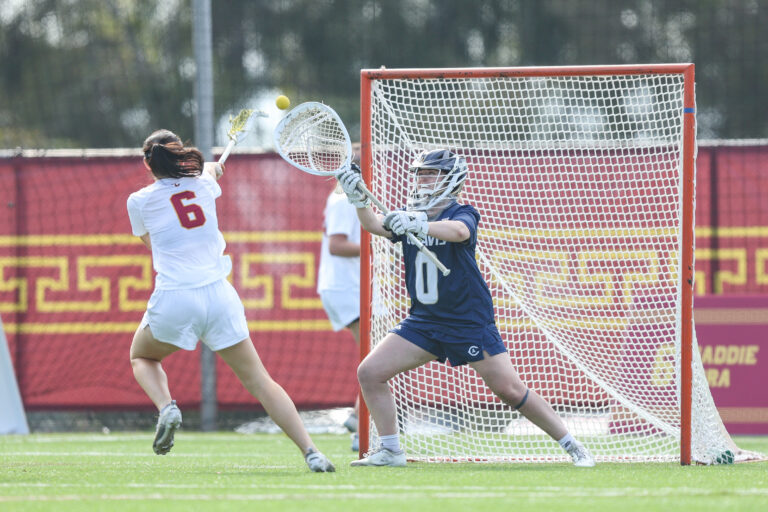
The UC Davis women’s lacrosse team traveled to Los Angeles on Feb. 21 to face off against the University of Southern California (USC) for their third game of the season. 

The Aggies put up a good fight against an intimidating opponent — USC entered the game coming off of a win against No. 21-ranked University of Colorado — but nonetheless left with a 7-12 loss.

The game began with a quick goal for USC, allowing them to take a 1-0 lead just over two minutes into the first period. UC Davis promptly responded with a goal of their own, as Ella Brislin, a fourth-year political science and history double major, scored her first goal of the game.

Just a few minutes later, Alex Agnew, a cognitive science graduate student, gave the Aggies their first lead of the game with a goal of her own as just under nine minutes were remaining in the first period. 

The following eight minutes had both teams go scoreless before USC tied the match at 2-2 as the period was winding to a close. 

Next, UC Davis retook the lead for the final time in the game after Jane Fox, a first-year undeclared major, scored an unassisted goal to make the score 3-2. 

The momentum of the game then very abruptly changed hands, as USC went on to score three consecutive goals within a 90-second window, leaving them with a 5-3 lead with seven minutes remaining in the first half. 

To bring the first half of the game to a close, Brislin scored her second goal, drawing the score within one for UC Davis. 

After the back-and-forth during the first two periods, the game started to ramp up for the Aggies. After entering the third period ahead by a score of 5-4, USC extended that lead in the opening minutes of the half all the way to 10-4, scoring five unanswered goals across a 10-minute stretch. For the Trojans, this was largely due to teammates Reese Robinson and Maddie Dora who scored two goals each. 

With 30 seconds remaining in the period, UC Davis finally re-entered the scoring column after Grace Gebhardt, a fourth-year design major, scored a goal, making the score 10-5. USC kept their foot on the gas, though, and scored another goal with just two seconds remaining in the period. In totality, the third period saw USC score six goals compared to just one by the Aggies, ending with the score sitting at 11-5 in favor of USC. 

The Aggies entered the final period of the game in search of a miraculous comeback. Although the closing 15 minutes did see the Aggies outscore their opponent 2-1, it was not enough as USC left with the victory. Both goals in the period were scored by Gebhardt, adding to an impressive half, which saw her score all three goals for the team. 

UC Davis’ offensive output was well distributed throughout the game, as four players contributed to the team’s seven goals. On the USC side, the show was undoubtedly stolen by Dora, who led the team with six goals. 

In the first, second and fourth periods combined, UC Davis and USC tied with six goals each. In the end, the deciding factor was the dominant third period by USC. 

With the loss, UC Davis dropped to a 0-3 record on the season. After searching for their first win of the New Year, hosting the University of Oregon on March 1, the UC Davis Aggies earned their first win with a final score of 20-15.


Written by: Theo Kayser — sports@theaggie.org

The ghost of Unitrans past

The buses are so wise


By ALLISON KELEHER — adkeleher@ucdavis.edu


After a long and grueling day on the UC Davis campus, with the sun having set many hours ago, I decided it was time to depart — my beautiful red chariot awaited me. As I stumbled over my own feet to the Silo bus terminal, I dreamt of the bed I was going home to.

I boarded the bus and took a seat in the very back corner. Nestled underneath my backpack, I waited for the bus to take off into the night. With a loud squeak, the bus left the station to take me home. This bus and I embark on this journey every night, so I’ve started to understand its rhythm. The braking and acceleration rocked me back and forth, like a little baby in a cradle. Tonight, I couldn’t fight the sleep that washed over me.

BAM. I woke up startled, in a random parking lot in the middle of nowhere. Farmland stretched out for miles in every direction. The only thing I could see was a beautiful double-decker Unitrans bus. It looked like one of those vintage ones that they drag out for special occasions on campus.

This seemed like a one-way ticket to getting kidnapped, so I tried to look for a way out of the situation. Sadly, I heard animal noises coming from the farmland, so that was not happening. I warily made my way over to the double-decker bus. As I got within five feet of the bus, it sputtered to life and the lights turned on. Still creepy, but I pushed forward toward the bus. As I took a step onto the threshold, the bus groaned with my weight, making me feel a little awkward.

“Why are you bothering me at this hour,” a looming voice with a British accent said above me.

“Who said that?!” I asked in fear.

“I’m the Ghost of Unitrans Past,” the British voice boomed. “Something must be troubling you, otherwise I wouldn’t be here.”

This did indeed trouble me, because I had no idea what could be troubling me. I stewed for a minute before something came to me: I had a conversation with my mom earlier today about whether UC Davis was the correct university to attend. I have been feeling homesick lately, and I’m worried that I made the wrong decision.

“That was not the wrong decision,” the British bus said, as if it could read my mind. “Look at how far you have come to be here. You have made so many friends and learned so much about yourself.”

I nodded my head in agreement since he was trying to make me feel better, but it was still not making the sinking feeling go away.

“Do you remember that one time when you slept through your midterm and almost failed your biochem class? Remember how you felt when all of your friends rallied around you to help you study for the final?” the British bus asked.

This was a great memory, but I wasn’t sure how the British bus knew about this. Nonetheless, this trip down memory lane made me start to cry. The British bus was right. UC Davis has been a wonderful place for me and has helped me build my own community.

POP.

The bus vanished into thin air, and I was left alone in the parking lot once again. But now, there was another bus standing just a couple of feet away. This bus was only one level tall, appearing to be the classic Unitrans bus I know and love.

When I stepped onto this bus, the engine rumbled, the lights flicked on and the air started blowing out of the vents. This bus felt so familiar that I thought it was the same bus I was on earlier (before I got dumped in this parking lot). I ran over to my spot in the back, but my backpack was nowhere to be found. Ugh.

“HAHAHA you got so excited, didn’t you?” a voice said above me. “I am the Ghost of Unitrans Present, silly.”

I rolled my eyes at these theatrics and waited for my next life lesson. However, before I could ask for any advice, the bus shrieked.

“GIRL, you better lock in — you have a midterm tomorrow!”

POP. This bus vanished too. I guess that was my lesson? Well, I was back in my parking lot, but this time I was completely alone. That is until I turned around, and there was a bus creeping up on me from behind. It was so quiet that I couldn’t hear its engine running. I ran around to the entrance, which opened with a satisfying “swish” noise. As I entered this bus, all I could hear was a gentle humming and nothing else. Filled with awe, I looked around at the sleek design of this bus. Everything looked like it was made from stainless steel and polished for my arrival. I walked up and down the bus to see all of its modern intricacies.

“Hello. Sorry to interrupt, but I am the Ghost of Unitrans Future,” an alluring female voice said above me. This voice was strangely smooth and calming. “How can I help you?”

“Will I be successful after I graduate? WAIT — will I graduate?” I asked.

“Unfortunately, I am not your crystal ball,” the voice purred (she lowkey ate with that). “But I will tell you that only you can define your success. No one else can do that for you.”

With that, another satisfying POP left me alone in this strange parking lot. However, this time, I fell toward the asphalt headfirst. I was anticipating the nasty fall, but, as my head hit the floor, I was magically transported back to the bus taking me home earlier.

My eyes blinked open, and I was face-to-face with a Unitrans driver. It was still dark outside, but now we were all the way back at the Silo terminal.

“You’re going to need to leave the bus, this was the last route for the night,” the driver said.

I stumbled off of the bus with my backpack in hand. Without any time to process what just happened, the bus driver immediately drove away with my chariot. With a sigh, I pulled out my phone and called a Safe Ride to take me home.


Written by: Allison Keleher — adkeleher@ucdavis.edu


Disclaimer: (This article is humor and/or satire, and its content is purely fictional. The story and the names of “sources” are fictionalized.)

Life’s a drag, so get into drag

Exploring drag’s history of resistance and how it inspires us right now


By TARA ROMERO— tcrome@ucdavis.edu


Drag is so much more than the new season of RuPaul’s Drag Race (however, Onya Nerve, a writer for The California Aggie is rooting for you).

Drag is queer expression. Drag is gender. Drag is racial identity. Drag is art. Drag is loud, and drag refuses to be silenced.

On Feb. 7, Sasha Velour, an esteemed gender-fluid drag queen, came to our very own campus to give a lecture on their new book, “The Big Reveal: An Illustrated Manifesto of Drag,” blessing us with a Lypsinka-esque performance. In Velour’s lecture, they broke down the history of drag and why it’s relevant today.

What stood out to me most from Velour’s excellent critical analysis of drag ended up being the free forum portion of the evening, in which members of the UC Davis community were able to share their feelings. In response to Donald Trump’s presidency and our country’s shift to conservative legislature and enactments, UC Davis students and the Davis LGBTQIA+ community are feeling anxious and unsure about our country’s future and our own safety.

Since returning to office, Trump has enacted overreaching executive orders to discriminate against transgender people across America. On his first day in office, he enacted an order that makes the United States only “recognize two sexes, male and female. These sexes are not changeable and are grounded in fundamental and incontrovertible reality.” In enacting this entirely socially established binary, Trump essentially discredits transgender, intersex, non-binary and gender-fluid identities.

From an executive order on Jan. 28, the United States will no longer “fund, sponsor, promote, assist, or support” any person’s gender-affirming medical care if they are under 19. Hospitals across the country have already begun to halt gender-affirming care for transgender children, according to an article from the American Civil Liberties Union (ACLU).

It’s no surprise that our community is feeling anxious and unsure when our government is so openly discriminating against our bodies and our identities.

The Trump administration wants us to be scared and hide ourselves. It wants children to live in bodies that don’t feel like their own. It wants us to not live as ourselves and instead wants us to assimilate to an imaginary standard of what our gender “should be.”

Drag is the antithesis of what the conservatives want queer and trans people to be. Drag expresses queerness and gender in abundance. Drag artists live their identities to the fullest extent, and their performances serve as inspiration within their communities.

The history of drag is rich and complex, existing across many cultures. Author Simon Doonan explained how drag dates back to classic Greek and Roman theater. Drag has also notably made its mark on the English Shakespearean stages, Japanese Kabuki theater and Chinese Peking opera — all before the 19th century.

In the U.S., the art of drag has always been an act of resistance. Throughout the 19th and 20th centuries, police raided gay and lesbian bars to crack down on “sexual indecency.” The first person to call themselves a “queen of drag” was William Dorsey Swann, a formerly enslaved Black person who held private drag events with other Black drag artists and was arrested in 1888 during a “drag raid.” After decades of police raids, Black and Latina trans women and drag artists, like Marsha P. Johnson, Sylvia Rivera, Stormé DeLarverie and Miss Major Griffin-Gracy, led the Stonewall Uprising in 1969 — a historic symbol of queer resistance.

During the acquired immunodeficiency syndrome (AIDS) epidemic in the 1980s, drag queens would organize fundraisers and educate the community on AIDS. Black drag queens, like Bob the Drag Queen and Jo Mama, were vocal and involved in the Black Lives Matter protests in 2020. Right now, in Sacramento, a local group of drag artists is holding Drag Benefits for Gaza.

Alongside the U.S. government’s long history of policing queer people and the bodies and forms of expression of Black, Indigenous and people of color (BIPOC), there has always been a long history of drag artists’ resistance to go with it.

For every member of the Davis community who is feeling anxious and unsure right now — do not hide yourself. Do not let your voice be silenced. Express yourself how you want to express yourself. Protest for your rights and your community’s rights. And, remember: You’ve always got a drag queen in your corner.


Written by: Tara Romero— tcrome@ucdavis.edu

Disclaimer: The views and opinions expressed by individual columnists belong to the columnists alone and do not necessarily indicate the views and opinions held by The California Aggie.

The California Aggie needs your support: Urge your ASUCD Senators to protect our print efforts

As budget hearings approach, The Aggie is concerned about potentially severe cuts to our budget


By THE EDITORIAL BOARD 


As our readers know, The California Aggie is the independent, student-run newspaper at UC Davis. The paper’s primary role is to provide an accurate, fair news resource for the campus and local community as a whole. Without the university providing a journalism program, The Aggie’s presence is also the only opportunity for students to gain hands-on experience in professional journalism. 

Our talented staff of over 100 students — including writers, designers, photographers and layout artists — work on tight deadlines to create a weekly print product for the UC Davis campus, Downtown Davis and local businesses. At the time of publication, the paper is held in The Avid Reader, Newsbeat, Pachamama, Philz Coffee and Temple Coffee Roasters, as well as 30+ other racks within the city and campus.

However, our ability to provide quality, unbiased journalism is currently hanging in the balance amid pending Associated Students of UC Davis (ASUCD) budget hearings. While The Aggie maintains editorial independence, our operations are largely funded by the ASUCD Senate.

ASUCD Senate and budget: 

The Senate is the student body government at UC Davis that manages an over $20 million operational budget — from Unitrans to The Pantry to The Aggie, ASUCD funds major campus operations. 

While this isn’t often discussed, this money is provided by you — the students — through quarterly fees. ASUCD has a historically low voter turnout, with the most recent election receiving roughly 7-9% of the student vote. Over the last few years, ASUCD received as little as 800 to a few thousand votes out of a student population of 40,000.  

The future of The California Aggie’s print budget will come down to negotiations between us, the Senate and Campus Media Board in the next couple of weeks. In a recent meeting between paper leadership and the Media Board, The Aggie’s proposed budget was unanimously approved — a requirement in order to proceed to budget hearings. 

Through conversations with the ASUCD President and Senate, it has become clear that there is resistance in supporting The Aggie’s print efforts moving forward. In the ASUCD President’s proposed budget for The Aggie, there is no budget line dedicated to printing costs, instead printing is included under “Supplies and Materials” along with other essential services. This proposal would effectively change our print model, pending other changes proposed by the Senate. 

The Aggie’s proposed 2025-2026 budget is lower than the year prior, excluding ASUCD’s minimum wage increase that was originally passed through emergency legislation. However, we expected challenges to our budget, which is why the proposal includes a trim to our printing costs and projected advertising income. However, the obstacles we are facing moving forward seem less concerned with our print and more concerned about what we are printing. 

Throughout the last year in public Senate meetings, it has become clear that there is disapproval of our content: From editorials to news reporting, some senators’ opposition to our paper has been made abundantly clear. We are concerned that these critiques are not with our advertising but with our reporting on Senate meetings. In order to continue our reporting and maximize our readership, The Aggie requests that “Printing Costs” be added back to the 2025-2026 budget. 

Print journalism: 

We cannot stress enough the importance of providing a physical print product for the Davis community. Not only is The Aggie’s presence in print necessary to ensure accessibility to the university’s 40,000 students — some of whom may not have access to our digital platform — it is also fundamental to our ability to promote our paper to students interested in journalism and local businesses interested in advertising opportunities. 

Additionally, print journalism directly supports local businesses and holds individuals and organizations accountable — without print, The Aggie’s visibility, accessibility and impact would be drastically reduced. The California Aggie is the only true bridge between what occurs in student government meetings and the public, and we are the only watchdogs available to hold elected officials accountable for $20 million in student fees.

Senate meetings are held weekly in the Mee Room of the Memorial Union (MU) on Thursdays. While the room is decently sized, it can only fit roughly 20 to 30 chairs for student attendees. Additionally, the Senate does not have microphones or adequate sound projection, making it inaccessible for many who attend. The Aggie requested microphones last November to ensure accuracy of quoting the Senate table and commenters, but the request has not been addressed. Moreover, the meetings are made available with Zoom but often last several hours into the night, making our coverage even more essential to the average student.

If we are to see severe cuts to our print operations, our reporting on the Senate — as well as our six other desks — would be less accessible to the student body. Let us be clear: A decision to remove The Aggie from lecture halls, campus buildings and downtown businesses would be a direct act of censorship on our organization. 

Additionally, substantially cutting our print budget would force The Aggie to restructure a significant portion of our staff’s roles. For positions such as the layout director, layout artists and outreach and distribution manager, the primary component of their role is to work with our weekly print product. For a governing body that stresses the importance of supporting ASUCD jobs and boasts about the number of students it hires, this decision would be strange at best and directly harmful at worst. 

Through conversations during The Aggie’s Quarterly Report a few weeks ago and the Media Board meeting, it’s clear that the grounds for cutting our print budget are baseless. Criticisms that lack quantitative evidence are being weaponized against The Aggie’s proposed printing budget line; These claims are based on speculation and not fact, and there is no willingness on behalf of the governing body, as of now, to present evidence or data to support their claims. 

When paper leadership requested evidence to support the reasoning behind a proposed change to The Aggie’s print budget, the response was that quantitative evidence was unnecessary, instead personal anecdotes were presented as the only requirement to make significant cuts to our organization. A decision to present unsubstantiated claims instead of backed-up reasoning lacks respect and ignores the oath taken to support the student body’s access to vital services. 

Support The Aggie: 

Our priority is not to bring in money to the ASUCD as a commercial unit, it is to provide fair and quality journalism to the campus and local community. Journalism is not intended to be a money-making resource for the student government but instead a service that informs the public and benefits the local community as a whole.

Decisions made that fundamentally restructure and defund an organization should not be based on interpersonal relations between ASUCD units and the student government but should be focused on the individuals directly impacted: the students. This paper is by students and for students, and to cut The Aggie’s funding would not only be harmful, it would be unjust.

Taking even a simple glance at our community demonstrates our impact on the lives of Davis residents and students — from clippings of campus organizations in the MU to our yearly Best of Davis issue hung on downtown windows, our impact is everywhere. We do not have full certainty of the results of Saturday’s budget hearing, but we believe that there is validity and grounds for concern. 

But, senators, please prove us wrong. Show us, and the readers, that you will put editorial concerns aside and support the only independent student paper in the city. Support our right to freedom of the press and uplift community voices by keeping us in print. As we see increasing press restrictions in our country — both on the national and student level — choose to be an outlier and support accountability and transparency. 

The Aggie has been the longest-standing student paper in Davis since 1915, and the Editorial Board requests that our readers, UC Davis students and community members come together in support of The Aggie’s continuation as a vital service and resource. Students, contact your elected ASUCD Senators to support our print efforts and submit a response directly to The California Aggie in our Google Form. The Aggie has been a free-of-cost service for the student body for over a century, and its continued role in the community needs your support and protection. 


Written by: The Editorial Board

 

The California Aggie, UC Davis’ student-run newspaper, must stay in print

Publishing in print is fundamental to any student newspaper’s journalistic endeavors 


By THE CALIFORNIA AGGIE EDITORIAL BOARD


The California Aggie has been serving the UC Davis campus and local community for 110 years. However, due to budget concerns, The Aggie’s future in print is currently in jeopardy.

Print journalism is essential to a functional and thriving democracy, especially on the student level. While at glance this may feel less relevant in today’s digital world, the impact of print journalism has always been and remains timeless. Cutting The Aggie’s budget would strip us of being a weekly newspaper and significantly downsize our journalistic efforts.  

Originally founded in 1915, the newspaper is one of the oldest student publications in the state. While maintaining complete editorial independence, The Aggie is a unit within the Associated Students of UC Davis (ASUCD) — receiving funding to manage our salaries and print operations. 

The UC Davis Campus Media Board unanimously approved The Aggie’s proposed 2025-2026 budget on Feb. 28, but the ASUCD President informed paper leadership that the ASUCD is not planning on supporting The Aggie’s full print efforts moving forward.

Throughout the last century, The Aggie has been providing the student and city community essential news including but not limited to: campus and city news, features, opinion, arts and culture, sports, science and technology and multimedia. Remaining in print is essential to The California Aggie’s service to the community. 

Print journalism has a long and powerful history of keeping those in power accountable. As student press, our obligation is the same — to hold those in any office, from local and student government to campus administration, accountable. This is our journalistic duty and legal right, as defined by the First Amendment. 

Differing from most colleges, Davis is a small town with a population of nearly 60,000 residents. We don’t have newspapers like The New York Times or The Los Angeles Times to compete with; While serving as a student newspaper, The California Aggie also functions as a local paper — providing substantial coverage to city and county communities at large.

Our print presence is essential to the local community and only further strengthens our credibility and relationship with our readers. By providing the student and local community a free physical product, we not only inform students of the only journalism opportunity at UC Davis, we assure them we are there to bring them accessible, reliable and quality journalism. 

The Aggie is also continuously working to improve our digital and online presence. It’s worth pointing out that having a printed paper is the best form of advertisement and means to increase our digital presence. In order to have a large online readership, we need a print product to coincide with it.

There are several legitimate reasons for why The California Aggie should remain weekly in print, but none are as important as the simple fact that journalism is a public and physical service for the community. 

First and foremost, The California Aggie does not want to stay in print in order to boost resumes, brag about our stories or to make advertising revenue — The California Aggie wants to stay in print in order to continue serving you, the reader. Regardless if you are a student, professor, community member, business owner, activist or all of the above — The Aggie is a service for you. This has been our priority for the last 110 years, and this will be our priority for years to come. 


Written by: The California Aggie Editorial Board

Signed in solidarity by the editorial boards of: 

UC Davis’ The California Aggie, UC Irvine’s New University, UC San Diego’s The Guardian and UCLA’s Daily Bruin


Leaping over a leap year in 2025

Learn more about the customs that come with the extra day (just not this year) 


By DEVANSHI AGNIHOTRI —- arts@theaggie.org


Mark your calendars for Feb. 29 — a phrase that can only be said every four years. A leap year contains 366 days instead of 365 days, with the extra day being Feb. 29. A year must be divisible by four to be a leap year. But if the year is a century year, it must be divisible by 400 in order to be a leap year. 

The history of the leap year traces back to Julius Caesar, who is known as the “Father of Leap Year.” In 45 B.C.E., the Romans had to create a 22 or 23-day month every second year in order to keep festivals occurring around the same season each year. As a solution, Caesar created the 365-day calendar, introducing the idea of a day being added to February every four years.

But what if you were born on Feb. 29? When a person’s birthday is on leap day, they have the privilege to flaunt the title of being a “leapling,” as well as having the rarest birthday of the year. Although their actual birthday is celebrated every four years, they still have the option to celebrate their birthday on either Feb. 28 or Mar. 1. So, this year, make sure to show your friends missing a birthday a little extra love.

Some parts of the world do not hold an appreciation for leap years.

For example, in Italy, leap years are viewed as unlucky. “Anno bisesto, anno funesto” is an Italian proverb that translates to “Leap year, disastrous year.” This Italian consensus on leap year encourages you to avoid big purchases and events during the leap year. Greece is also letting out a sigh of relief as they hold a superstition that marriages during the leap year have bad luck. Additionally, a divorce during a leap year could ultimately mean never finding love again.

All this to say, these superstitions are merely based on beliefs that have yet to be factually proven, so don’t stress that an extra day in the year heightens the probability of bad things coming your way.

However, if you are in Ireland or Scotland, the next couple of years might be years of yearning. In these countries, a leap day is known as Bachelor’s Day or Ladies Privilege, a day when women propose to their lovers. This holiday goes all the way back to 1288 A.D. when women were granted the ability to propose after it was legal to do so.

Some places might be preparing their celebrations for 2028, due to the excitement the leap year brings in its anticipation. In France, a satirical newspaper called La bougie du Sapeur is published every Feb. 29, making it the world’s only quadrennial newspaper.

Anthony, Texas holds the title of “Leap Year Capital of the World” and shares the title with Anthony, New Mexico. The town straddles both of the two states’ borders and hosts a leap year festival every leap year. This title originates from local leaplings approaching the Chamber of Commerce in 1988 with the idea of hosting a leap year birthday club and festival. Birthday celebrations and parades commemorate the day and celebrate the “leaplings” of the town.

The extra day that leap year provides warrants an extra celebration in the year to celebrate those around you and even some whose birthday parties will actually take their rightful place. Mark your calendars for 2028 to celebrate leaplings and the extra day in store.


Written by: Devanshi Agnihotriarts@theaggie.org 


ASUCD Senate discusses hiring process of new External Affairs Vice President, confirms ECAC chair at Feb. 27 meeting

The table held a debate over the constitutionality and efficiency of Executive Directive #10, passed SB#56 to clarify and codify appointment process of ASUCD elected officials


By MADISON PETERS — campus@theaggie.org


The ASUCD Senate unanimously passed Senate Bill (SB) #56 on Thursday, Feb. 27 to to overturn Executive Directive #10. The executive directive addressed the appointment of Chely Saens as the new External Affairs vice president (EAVP), who was set to take the role after former EAVP Zeph Schnelbach left the office vacant and EAVP Head of Staff Janani Sundaram passed on the position. SB#56 was later vetoed by ASUCD President Gaius Ilupeju on Feb. 28.

Saens, who currently serves as an ASUCD legislative director, assumed the role of acting EAVP on Feb. 18, one day after Schnelbach’s resignation. As the office was then permanently vacant, Article III, Section (5)(iv) of the ASUCD Constitution, which states that “the ASUCD President shall appoint a replacement for the EAVP should a permanent vacancy occur in the office prior to the end of the office holder’s term,” according to the executive directive, was enacted.

The directive introduces a new appointment process, specifically for the EAVP position, that includes candidates undergoing an interview during a special session, followed by two rounds of voting by the Senate table in a closed session and the appointment of the official by Ilupeju after Senate discussion.

Ilupeju clarified his intentions in the beginning of the directive.

“The Executive Office wishes for the hiring process for a new EAVP to be as transparent as possible,” the executive directive reads. “I also want the Senate and the public to be thoroughly involved in the candidate selection so that the interests of the student body are best represented in this process.”

SB#56 called for clarity surrounding the directive and raised issues regarding the “redundancy” of how it outlined the appointment process, as well as the constitutionality of the current appointment of the EAVP. It amended the executive directive on the grounds of a discrepancy between the directive and the ASUCD Constitution, given that in the latter “ASUCD Units are lumped under ASUCD offices, under which all bodies follow the same appointment structure,” according to SB#56. 

Thus, an alteration to the hiring process of the EAVP would differ from the ASUCD Constitution. The goal of the bill is to “reflect this discrepancy and avoid any conflicts with the ASUCD Constitution in the future,” according to SB#56. 

Senate Pro Tempore Dhilena Wickramasinghe read a letter authored by her and Internal Affairs Commission (IAC) Chair Amanda Clark, among other commision chairs, detailing their criticism with Executive Directive #10. Wickramasinghe said that the letter was never sent out, since they thought it would be more productive to have a conversation in person.

Amongst their issues with the executive directive was that it is “unconstitutional and overcomplicates the appointment process and goes beyond the President’s powers.” Additionally, concerns about not being able to properly compensate Acting EAVP Saens for the amount of labor she would be putting into the appointment process, on top of their other duties, were addressed.

Wickramasinghe brought up Ilupeju’s communication regarding the directive and the lack of Senate involvement in the hiring process.

“President Ilupeju did not communicate to the Senate table or Acting EAVP Saens [about the new appointment process],” Wickramasinghe said. “When I privately inquired about the EAVP hiring process, he didn’t give any mention that he wanted the Senate table to be involved in this at all.”

Wickramasinghe then called for a 10-minute unmoderated caucus at the end of the meeting to discuss the table’s opinions on overturning Executive Directive #10.

Senator Ezra Rubin brought up legal concerns regarding the overreach of the president’s power, as well as issues requiring an applicant to attend a public meeting as part of their hiring process.

Internal Vice President (IVP) Aaminah Mohammad responded to the issues brought up by the table, assuring that there will be no delays in the hiring process if Executive Directive #10 is signed and that the table should hold on to their questions until Ilupeju could accurately address them.

Senator Amrita Julka then expressed her frustrations with the motivations behind the directive, pointing out that interim senators were not appointed through the process that the directive proposed.

“In the constitution, ASUCD units which have an established interview committee in the bylaws are listed as part of this bigger group under which elected positions such as the EAVP permanent vacancy position is also under, so it just seems kind of weird to have separate processes for that,” Julka said. “Even if you guys did want to bring this about in this way, communication would have been nice, not Friday at 8 p.m. It feels really wrong, it feels really manipulative. It feels like you’re trying to tell us what to do and that’s not the executive [office’s] job.”

Clark requested for clarification on what changed between the hiring process of the interim senators and the EAVP.

Mohammad provided reasoning for the switch.

“The hiring process for interim senators was a constitutional amendment, [and] the Constitution exists to allow for flexibility while the bylaws are there to list out specifics,” Mohammad said. 

She also brought up the amount of overtime she puts in throughout these hiring processes and reiterated that the table should wait to ask their questions to Ilupeju, as he was not present to address all of their concerns.

Senator Siddharth Jasthi and External Affairs Commission (EAC) Chair Henry Rosenbach further expressed their disappointment with the directive, including delays in the hiring process and miscommunications between the Senate and Executive Office.

Rosenbach praised the work ethic of Saens and further stated a frustration with the Executive Office.

“To piggyback on what [Jasthi] was saying, working with the acting EAVP has been wonderful,” Rosenbach said. “They introduced legislation through EAC […] and they put a lot of effort into that. There was miscommunication between my commission, the EAVP and the Executive [Office] […]. It keeps looking like we are trying to do things and [the Executive Office] keeps pushing them back and back. We are trying to do ideas and projects and we are constantly [shooting] in the dark.”

Table members also brought up past issues with communication around Senate Resolution (SR) #7, affirming protections for undocumented students. At a previous meeting, Ilupeju had expressed criticism regarding the resolution and pushed to table it over concerns that not all relevant parties had been consulted.

 “[The] senate table got a lot of shit for not having those conversations with the people that [SR#7] impacts,” Julka said. “I’m just a little confused as to why this impacts us but we weren’t consulted on it? I know that, [Mohammad], you’re not the one who wrote it, so this isn’t necessarily a question to you but a question to [Ilupeju]: After SR#7, being like, ‘Oh we need to have communication with administration […]’ but, we are right here; We meet with you [and] it’s very open to the public. I’m just a little confused as to why that conversation wasn’t had with us.”

Wickramasinghe said that she thought the directive was “good in theory” and could be used for future hiring processes but that it needed to be improved upon and that there needs to be more communication between members of the table and the Executive Office.

Senator Umar Shaikh ended the discussion by clarifying that Executive Directive #10 is a one-time occurance and is a conversation that needs to be had with Ilupeju present.

The table then voted on a motion to overturn Executive Directive #10, voting 8-0-6, yes-no-abstain, with Transfer Student Representative Safa Mohammad, International Student Representative Muhammad Waqar, and Senators Ahmed, Cohen, Shaikh and Jenna Younes abstaining.

President Ilupeju later shared his perspective on the letter read by Senate Pro Tempore Wickramasinghe and the controversies surrounding the directive in a statement to The Aggie.
“I would like to note that the [letter] was never shared with me and that its authors issued their complaints during a week when they knew I would not be attending the Senate meeting,” Ilupeju wrote in a statement to The Aggie. “It is really unfortunate that they decided to turn the meeting into a public spectacle and detract from the governing responsibilities we all share. There is nothing unconstitutional about Executive Directive #10, in fact the assertion that it is or that it encroaches on the Senate’s jurisdiction demonstrates their ignorance about the ASUCD governing documents.”
President Ilupeju expanded saying that he does support Saens and originally intended to appoint her, but more applicants indicated their interest to serve as EAVP. He also defended the intentions of Executive Directive #10, and addressed the miscommunication concerns.
“As a former member of the UCSA Board of Directors, I can attest to Chely Saens’ remarkable experience and intended on appointing her until other individuals indicated interest in the role, including a current member of the UCSA Board,” Ilupeju wrote in a statement to The Aggie. “Executive Directive #10 outlines a transparent process that would allow the public to provide input on the interim EAVP candidates. Considering the backlash student government has faced in the past in similar situations, I felt that this change was necessary and vetoed SB #56 because it limited public access to candidates for interim elected positions. While I understand complaints about the state of communications between the Executive Office and other student government entities, I believe it is important to note that the Vice President and I have limited capacity to meet individually with all of them. We have taken measures to rectify this issue such as the hiring of former Senator Trinity Chow, as our Deputy Head of Staff for Legislative Affairs.”


Ethnic and Cultural Affairs Commission (ECAC) Chair Confirmation

Also at the Feb. 27 meeting, Faye Real, a fourth-year psychology and political science double major, was confirmed as new ECAC chair, taking over from former Chair Reem Suleiman. 

Real talked about her goals to be more integrated with marginalized communities on campus and working with the Davis Student Recruitment and Retention Center.

“[I] especially [want to focus on trilateral] communities, our undocumented students and a lot of students who are being impacted by the rhetoric coming out of the current admin,” Real said. “At this point in time, that’s something I really want to draw attention to and ensure that the ECAC is giving a full and complete scope of understanding and advocacy.”

Rubin commended her answer before asking if she would “consider, specifically, Jews and Israelis as among these communities that ought to be represented as needed,” pointing to issues that he said ECAC has had in the past.

Real provided a response to Rubin’s comment. 

“I absolutely consider Jews to be a community that is historically marginalized and does need a lot of representation or understanding given that realm,” Real said. “Within that realm, I would have to answer that as long as whatever you would view as being marginalized groups aligns with other groups that have historically been marginalized and also need attention and care and a lot of community advocacy, I would consider that under the umbrella of the same. But anything that is anti-Palestinian, I would not consider within the community I would hope to serve [as] the ECAC commission chair.”

Rubin clarified his question by asking if she specifically would consider Israeli students, not in a political context but in a purely cultural one, a part of that community.

“To ask me whether or not I consider Israelis a group beyond politics is a contradictory statement,” Real said. “To be Israeli is an inherently political statement and an inherently political stance, so to that effect I would not answer that question in the way that you would want me to.”

Real was confirmed 8-3-3, yes-no-abstain, with Senators Cohen, Rubin and Lexi Raben voting no and International Student Representative Muhammad Waqar and Senators Asif Ahmed and Nanki Kaur abstaining. 

Cohen later criticized Real’s appointment and urged her fellow senators to uplift every member of the student body regardless of birthplace, ethnicity and/or religion.

“There are students on this campus who were born in Israel and identify solely as Israeli with no other national or cultural label to describe themselves,” Cohen said. “Their identity is an intricate part of who they are, and it is essential that they feel acknowledged and respected. It is also crucial to recognize that being Israeli or Jewish does not equate to being anti-Palestinian; assuming otherwise is a shallow and unfair judgement that wrongfully assumes a monolithic group of what Israelis and Jewish people believe.”

Cohen continued with her response.

“Given that none of the senators that represent the Jewish community could support the confirmation of this ECAC chairperson, it is clear there are serious concerns about whether this individual can truly represent and advocate for all students. Furthermore, I am deeply concerned that my fellow senators, many of whom advocate for diversity and inclusivity, choose to confirm a student who cannot even clarify their ability to properly accommodate or let alone accept an entire nationality.”


Quarterly Reports and Other Senate Business

Earlier in the meeting, the Senate heard quarterly reports from The Equitable Parking Initiative, STEM, The Pantry, Creative Media, Aggie Studios, the Environmental Policy and Planning Commission, Student Health and Wellness and Aggie Reuse.

During Ex-Officio Reports, Senators Younes and Cohen addressed the table regarding a previously brought up issue of the Coffee House (CoHo) not accurately labeling their Halal meat. They iterated to the table that the CoHo assured them this issue would be fixed.

Past meeting minutes were approved, and the table adjourned at 9:27 p.m.

Written by: Madison Peters — campus@theaggie.org

Editor’s Note: In a previous version of this article, it stated that the confirmed ECAC Chair Faye Real, planned on working with the “Davis Criminal Retention Center”. The name of the organization was incorrect and has since been edited to the correct name, “Davis Student Recruitment and Retention Center”.

Editor’s Note: In a former version of this article, President Ilupeju’s statements were missing due receiving them after the print deadline. The statements have since been added to the end of the first segment.


The best of coming-of-age rom-com movies

For a sweet and inspiring movie night, try one of these films


By NATALIE SALTER—arts@theaggie.org


There are few genres of film as comforting as the coming-of-age story and the rom-com. The former shows us that we’ll all have a chance to blossom and grow into new, braver and perhaps wiser individuals; the last instilling hope that true love, with all its dramatic declarations and heart-fluttering first kisses, is still alive and real.

Naturally, the intersection of these two realms of storytelling is bound to create a beloved new genre, in which finding love and finding yourself can happen within one another. There’s a lot that we can learn from these films– not only will you find yourself laughing and blushing watching each of them, but you’ll also be inspired to chase your dreams and fearlessly pursue the things that make life invigorating.


To All The Boys I’ve Loved Before (2018) dir. Susan Johnson

Hopeless romantic Lara Jean Covey (Lana Condor) is perfectly happy to keep her wishful thinking safe inside her head, dreaming of true love while baking or cleaning her room rather than chasing a real (and thus terrifying) relationship. But when a series of private letters she wrote to previous crushes get sent out, there’s no chance of hiding now.

To avoid trouble with the boy she’s been obsessed with for years– who also happens to be her older sister’s ex-boyfriend — she strikes up a deal with popular athlete and fellow letter-recipient Peter Kavinsky (Noah Centineo) to pretend to date in order to make their respective crushes jealous. Of course, neither of them is prepared for the feelings that bloom between them along the way.

Lara Jean’s experiences throw her into a journey filled with love and self-discovery, making “To All The Boys” a perfect example of a coming-of-age rom-com. While finding a swoon-worthy romance that she thought was just a fantasy, Lara Jean also learns to be confident and self-assured in pursuing what she wants. If you consider yourself a hopeless romantic, take Lara Jean’s story as a reminder to take that leap, even if it might be scary. Staying in your comfort zone is safe, but your dreams won’t come true until you’ve fully stepped out of it and taken a big risk.


10 Things I Hate About You (1999) dir. Gil Junger

In a contemporary twist on Shakespeare’s “The Taming of the Shrew,” the beloved 1999 film “10 Things I Hate About You” begins with shy new student Cameron (Joseph Gordon-Levitt) falling in love at first sight with the pretty and popular Bianca Stratford (Larisa Oleynik). However, he quickly faces two obstacles in his pursuit of Bianca. One is the fact that she can’t date until her older sister Kat (Julia Stiles) does; the other is that Kat is a headstrong, proudly feminist rebel who has no interest in dating whatsoever.

To win Bianca’s affection, Cameron makes it his mission to find a guy for Kat, convincing the vain Joey (Andrew Keegan) to pay the delinquent Patrick (Heath Ledger) to sweep her off her feet. The two love stories — Bianca and Cameron, and Kat and Patrick — intersect, as real feelings grow in unexpected ways.

Not only is “10 Things I Hate About You” sure to bring a smile to your face, but it will also deliver an important message for anyone who relates to either of the two very different Stratford sisters. Kat learns to be vulnerable with her loved ones rather than shield her heart from everyone, and Bianca learns that real connection and joy are better than chasing what’s popular or conventional. Either way, it’s a poignant reminder that sometimes, finding happiness means defying the expectations others have set out for you and that it’s okay to be a little unconventional in the pursuit of a life worth living.


Clueless (1995) dir. Amy Heckerling

Another clever 90’s adaptation of a classic work of literature is “Clueless,” deriving its plot from Jane Austen’s “Emma.” Pretty, popular and rich protagonist Cher Horowitz (Alicia Silverstone) has everything she could want — except a good grade in debate class, no thanks to her grumpy teacher. Hoping to negotiate her way into an “A”, Cher covertly sets him up with another faculty member and discovers she has a talent for matchmaking along the way.

Of course, trouble still finds its way into Cher’s glamorous life. She finds herself mentoring the sweet outcast Tai (Brittany Murphy) in the ways of being popular, all while her frustrating step-brother Josh (Paul Rudd) gives her flack for her vanity and naivety. Cher gets both the coming-of-age and romcom treatment, falling unexpectedly in love while learning how to be more selfless and thoughtful in how she treats the people around her.

There’s lots to love about “Clueless,” its bright cast of characters and playful sense of humor being particular standouts, but there’s a lesson to be learned from it too. That is, doing good things for others for their sake rather than for yours is one of the best things you can do for the world. Kindness and thoughtfulness will not only make the people around you happier but will bring light to your own life as well. And who knows — maybe, just like Cher, you’ll tumble into a wonderful love story of your own as a result.

Written by: Natalie Salter—arts@theaggie.org

Tree Davis hosts community planting event for River City High School

Davis non-profit volunteers collaborated with Texas Trees Foundation as a part of a $22 million green schoolyards project


By MATTHEW MCELDOWNEY — city@theaggie.org


On Feb. 22, Tree Davis worked alongside the Washington Unified School District (WUSD) to plant trees around River City High School. The non-profit organization was founded in 1992 by former Senator Lois Wolk and former Parks and Open Space Administrator Bob Cordrey to help create a 40-year urban forest management plan and plant trees.

Since Tree Davis’ founding, the non-profit has worked with over 5,000 volunteers to plant over 12,000 new trees. The non-profit also worked alongside the city of Davis and UC Davis on climate action plans and educational programs respectively.

Community members and volunteers alike were able to plant a total of 48 trees through the Cool Schools Yolo County program, according to the Tree Davis Instagram.

Community planting events such as the one at River City High School are part of only the first stage of the Cool Schools Yolo initiative. As a partner of the Cool Schools Yolo, Tree Davis is working with nine Title I school campuses in West Sacramento and Woodland to plant trees, gardens and more. The Cool Schools Yolo initiative is seeking to promote climate-ready, nature-based schools through a $22 million grant from the Cal Fire Urban Community Forestry Program.

The Texas Trees Foundation — the organization behind the development of stage one of Cool Schools Yolo — unveiled the greening designs for River City, Riverbank, Yolo County and Westmore Oak schools in West Sacramento on March 1 during a community event and celebration. Additionally, Cool Schools Yolo will be making renovations to Beamer, Dingle, Prairie, Freeman and Whitehead Elementary Schools in Woodland.

Ellen Denk, the principal-in-charge for Studio Outside — the landscape architecture practice responsible for creating the Cool Schools Yolo designs — went into detail about the exciting renovations to come.

Cool Schools Yolo will be replacing heat-absorbing asphalt with wood, trails and garden spaces, according to Denk. By using naturally cooling surfaces, building shade and interactive playscapes, Cool Schools Yolo hopes to encourage students to enjoy their time outdoors.

“It’s too hot in a lot of areas of the county,” Denk said.

For schools like River City High, they will also be introducing interactive elements such as parkour, climbing, sensory swings and a statue of River City’s mascot — the otter.

Jillian Zwerdling, a science teacher and supervisor of the gardening club at River City High School, is excited for the nature-based teaching opportunities Cool Schools Yolo will provide.

“I’m definitely most excited about the gardens,” Zwerdling said. “The pollinator is a big plus. […] Kids are really disconnected from nature, and so this is a nice opportunity to really enjoy the outdoors.”

Zwedling said she is especially excited to use these spaces to help make her classroom activities more engaging for her students. Zwerdling looks forward to conducting outdoor science labs like soil quality testing and weather monitoring for next year’s students.

The Cool Schools Yolo is currently reaching out to contractors and expects to break ground for construction by the end of the 2024-2025 school year. They expect this project — two years in the making — to be complete by the start of the 2025-2026 academic year in the fall.

Information about donating to or working with Tree Davis is available on their social media and website. The Texas Trees Foundation website also has further details on the progress of the Cool Schools Yolo project as well as their overall mission to ensure that “no child [is] left behind.”

Denk then made remarks about the importance of spending time outside and emphasized the importance of the Cool Schools Yolo County mission.

“I would love for a parent to be comfortable for their kids to spend time outdoors,” Denk said. “It’s a space for everybody to be comfortable in the environment and in their mind.”


Written by: Matthew Mceldowney — city@theaggie.org


The Yolo Interfaith Immigration Network hosts Know Your Rights event for immigrants amid ICE crackdowns

The event covered how immigrants could assert their rights in the presence of ICE or the police 


By RORY CONLON — city@theaggie.org


The Yolo Interfaith Immigration Network hosted a workshop to help immigrants understand their legal rights when interacting with immigration agents and police at the Davis United Methodist Church on Feb. 19.

If immigrants are stopped out in public by Immigration and Customs Enforcement (ICE) or the police, they have the right to remain silent. Amagda Perez, a co-director of the UC Davis Immigration Law Clinic, said the goal is to avoid giving officers probable cause to arrest.

“The only way that any of us can be arrested or deported is if we provide probable cause to show that we’ve committed a crime or that we’re here without status,” Perez said. “Without answering any questions, we’re not contributing any information that could be used against us.”

Perez said that people do not need to present their documents unless they are pulled over.

“All you have to do is present your driver’s license, your car registration and proof of insurance, because otherwise you get your car taken away,” Perez said. “But after that, you’re not required to give your name [or] answer any questions regarding your nationality, citizenship status or place of birth.”

If ICE agents visit a residence, people can exercise their right to remain silent and choose not to open the door. They can also ask immigration agents to slip the warrant they have under the door or through the mail slip.

Alicia Rusoja, an assistant professor with the School of Education at UC Davis, said people should determine whether ICE agents come with a judicial warrant or an administrative warrant.

“A judicial warrant is one that ICE can use to enter your home — [that’s] the one that’s correct,” Rusoja said. “An administrative warrant is something ICE cannot use to enter your home. Most often, ICE comes with an administrative warrant, so you should become familiar with these and know the difference.”

If ICE tries to enter the home regardless, residents should call the hotline for the Sacramento Rapid Response Network at (916) 382-0256. This line can also be used to report ICE activity in Sacramento or Yolo County and seek help for someone detained in the last 24 hours.

If people are taken into custody, they have the right to remain silent, and they should not sign any document until they have consulted with a lawyer. While everyone has the right to an attorney, the government does not have to grant people one if they are in the middle of immigration proceedings.

Natalia Deeb-Sossa, a professor in Chicano/a Studies at UC Davis, said people should know what public and private spaces are in a workplace and make sure they are well-designated.

“ICE can only have access to public spaces, not private spaces,” Deeb-Sossa said. “In a restaurant, [a public space is where] people who are eating sit, and in the back, where the cooks are, [that is a private space, and] they cannot go in there.”

The discussion turned to how schools are navigating interactions with ICE. Joana Peraza, a lawyer with the California Rural Legal Assistance Foundation, said that while local school districts have to cooperate with ICE, they can make it harder for them to enter schools.

“Right now, if ICE were to show up at a school in Sacramento County, they have a whole protocol where one, ICE has to come in with a valid warrant, and two, they cannot speak to the child,” Peraza said. “They have to go through either the superintendent of the district or some sort of legal counsel from the district.”

Perez said that UC Davis is still working on a policy for interacting with immigration enforcement, but it will likely be similar in structure.

“At the law school itself, they’ve implemented a policy that they’re not going to share any information, and they have a whole group of lawyers there deciding how the policy is going to be implemented,” Perez said. “They have to go speak with the dean, they’re going to consult with the campus council, they have to evaluate warrants to make sure they’re legitimate and then, if there is a court order, they will cooperate and release information.”

Deeb-Sossa said that she would not identify students to ICE, share whether they were in class or present their schedule.

“It’s about who the gatekeeper is,” Deeb-Sossa said. “Tell them: ‘This is a private classroom. You are not registered in my classroom. Get out of my classroom.’”


Written By: Rory Conlon — city@theaggie.org