55.7 F
Davis

Davis, California

Monday, December 22, 2025
Home Blog Page 48

City of Davis hosts Day of Remembrance for Executive Order 9066

Screenings of two films highlight legal battles and personal defiance against the executive order during World War II


By ALMA CULVERWELL — city@theaggie.org

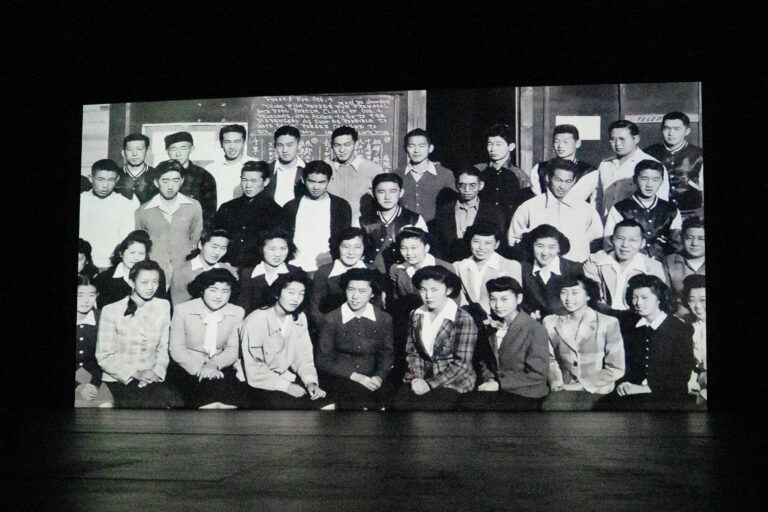
The city of Davis recently co-sponsored a free event along with the city’s Human Relations Commission and many other local organizations for the Yolo County Day of Remembrance of Executive Order 9066 on Wednesday, Feb. 19 at Veterans Memorial Theatre.

Executive Order 9066, signed by United States President Franklin Roosevelt during World War II, authorized the forced removal of Japanese Americans from the West Coast and relocation to internment camps, uprooting thousands from their homes and livelihoods.

The event featured two documentary films, “One Fighting Irishman” and “Row Don’t Drift,” which both document the resistance to the internment of Japanese Americans during World War II.

“One Fighting Irishman” is a film that depicts the efforts of San Francisco civil rights attorney Wayne M. Collins in defending the constitutional rights of Japanese Americans during and after World War II. Collins spent 23 years representing more than 5,000 Japanese Americans who renounced their U.S. citizenship while imprisoned at the Tule Lake Segregation Center, which is considered the most oppressive of America’s wartime incarceration camps.

“Row Don’t Drift” tells the story of Yoshi Kubo, a birthright American citizen forcibly evicted from his California farm under the World War II Japanese exclusion order and sent to an internment camp in Colorado. Through interviews, archival footage and re-enactments, the film captures Kubo’s fight against injustice, his family’s resilience and the unexpected kindness of neighbors who safeguarded his land until his return.

Pattie Fong, the event’s lead organizer, explained the process of selecting these movies and the powerful messages associated with them.

“Both movies recognize the Japanese community’s resistance to injustice and the goodness of people outside the Japanese community to help them,” Fong said. “This is very in line with our current political situation — a government very much out of control which targets and is harming specific communities — all with the same justification: ‘They are taking away jobs and competing with white America.’”

Fong further described the films.

“Both films show the anguish and trauma inflicted on the Japanese families by the incarceration — the ‘internment’ totally stressed the Japanese American families — they fought over what it meant to be loyal, what was the best for the family, they were powerless,” Fong said. “It wrecked familial relationships even to this day.”

Gloria Partida, the executive director of the Davis Phoenix Coalition, explained the group’s involvement in the event.

“As part of our mission to raise the visibility of marginalized communities, we felt that participating in this event fits well with our mission,” Partida said. “In today’s environment, where we see once again the rise in villainization of immigrant communities, it is important to remember our history and the injuries of the past so that we don’t make these mistakes again.”

Partida further elaborated on the Davis Phoenix Coalition’s role in addressing historical injustices.

“Our mission is to gather and engage the community to eliminate intolerance and prevent hate-motivated violence,” Partida said. “One of the ways to do this is by creating safe spaces to explore difficult topics that further our understanding of each other.”

Carole Hom, a spokesperson from the Episcopal Church of St. Martin, explained the church’s role as a co-sponsor.

“The Episcopal Church of St. Martin has long been engaged in ministries centered on justice, international and domestic poverty relief, reconciliation and creation care,” Hom said. “We take to heart the Biblical exhortation to be merciful, to care for the least among us, to welcome the stranger.”

Hom commented on the event’s historical significance and themes that are still relevant today.

“In 1942, virtually no one spoke out to oppose the imprisonment of Americans of Japanese descent,” Hom said. “In 2017, members of the Japanese American community were among the first people to protest the Muslim and refugee ban. In 2025, we have already seen the detention of undocumented persons in Guantanamo Bay and the deportation of others within days of their scheduled asylum hearings. It’s important that we all stand together in such times to support those who have been targeted.”

Fong similarly urged community members to take action and deepen civic engagement in their daily lives.

“We should not be complacent just because we personally don’t have a target on our backs,” Fong said. “We want more people to feel empowered to make a difference.”

Hom echoed a similar sentiment for attendees to walk away with a renewed sense of purpose and responsibility, understanding that collective action is key to driving meaningful change.

“We hope that attendees took away a better understanding of the history of the World War II Japanese concentration camps and the lasting difference that individuals can make,” Hom said.


Written by: Alma Culverwell — city@theaggie.org
International House hosts annual Ignite Talks with speakers from around the world

Humphrey Fellows gave talks on the USAID freeze, air pollution and fighting natural disasters 


By RORY CONLON — city@theaggie.org


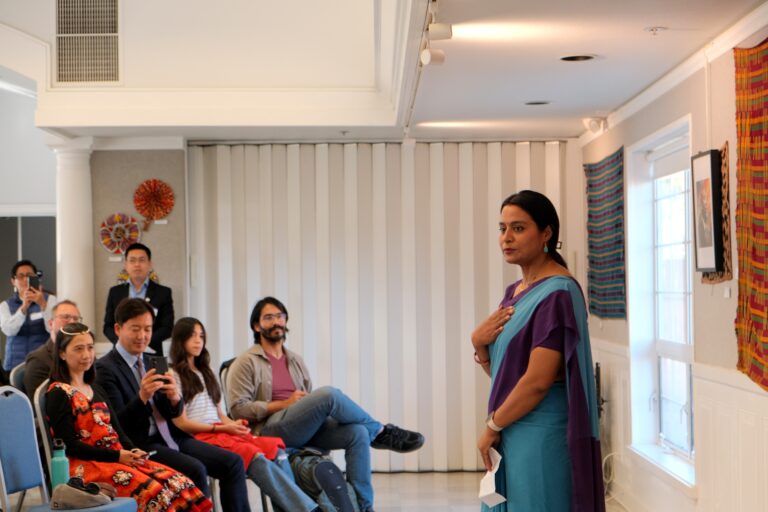
The International House hosted 12 UC Davis Humphrey Fellows from around the world for its Ignite Talks event on Feb. 21.

The Hubert H. Humphrey Fellowship Program offers international public service professionals the opportunity to study in the United States and engage in practical professional development. Oliver Hack, the leadership manager of the Mandela Washington Fellowship for UC Davis Global Affairs, said the goal of the Ignite Talks is to give each fellow a platform.

“One of the most important leadership skills is public communication, so we challenge our fellows to do a five-minute TED Talk-style talk,” Hack said. “We call it an ‘Ignite Talk’ [because] the job of our speakers today is to try [to] ignite a thought in your mind. It’s also meant as an opportunity for them to share something about themselves with you and some little piece of the world, the universe and the human experience that is uniquely theirs.”

Kunan Vesselly, a fellow from Liberia, discussed the consequences of the 90-day freeze on all United States foreign assistance.

“Five of my friends, working for different [U.S. Agency for International Development] (USAID) projects, lost their jobs immediately,” Vesselly said. “These are just my friends — think about the thousands who lost their jobs abruptly, without adequate safety nets in place. Beyond employment, basic services in health and education, like the treatment of [human immunodeficiency virus] (HIV) and [acquired immune deficiency syndrome] (AIDS) and school feeding activities, have been shut down.”

Vesselly advocated for three strategies to reduce Liberia’s reliance on foreign aid: investment in agricultural mechanization, industrialization and STEM education. However, he said the abrupt cutoff of aid has halted progress toward these long-term goals.

“People are losing their livelihoods, families are falling apart, communities are crumbling, the future of kids [is] uncertain and nations are collapsing,” Vesselly said. “I implore you today, as members of the Davis community, […] to engage with your members of Congress to reassess the current foreign aid freeze because of its devastating consequences. Africa will move from handouts to handshakes, but this should be done gingerly, with the delicate nature of things taken into consideration.”

Begaim Alipova, a fellow from Kyrgyzstan, was head of the air quality monitoring department in the Ministry of Emergency Situations. She said the main lesson she learned through her work is that elections matter.

“The air we breathe depends on politics,” Alipova said. “In 2021, my team and I installed 50 local sensors in Bishkek. For the first time, air quality data officially became available online, updated every hour. In the same year, a new government came to power. But instead of using that information from sensors to fight smoke, they tried to hide the data. Only eight [sensors] remain today.”

Alipova cited a 2021 World Health Organization report which found that 99% of the world’s population is breathing air that exceeds safe pollution levels. She said advocating for cleaner air is a joint responsibility.

“At the end of the day, Kyrgyzstan and the [U.S.] are not so different,” Alipova said. “[You] can be active in elections to ensure that the new government will prioritize green solutions, speak up when serious issues arise and keep pushing forward, no matter how small the steps are, because every action counts.”

Muki Nampokolwe, a fellow from Zambia, works as a veterinarian in the Ministry of Fisheries and Livestock. She discussed her experiences with sexism as a woman in a male-dominated field.

“I’ve heard it all: ‘It’s too tough for a woman,’ ‘You will struggle [working] with large animals,’ ‘Men will always have the upper hand,’” Nampokolwe said. “Farmers have doubted me, clients have second-guessed my advice and colleagues have sometimes underestimated me. But over time, I have learned that the best response isn’t words — it’s results.”

Nampokolwe, who works with cattle, goats and bulls, calls her work rough, physical and unpredictable. She said the greatest reward in it is knowing that she can inspire the next generation.

“My work feels truly fulfilling when my daughter looks up to me and says, ‘Mommy, I want to be a doctor like you,’” Nampokolwe said. “More young girls are seeing that they, too, can do it: They can work with livestock, they can conduct surgeries and they can be leaders in animal health. It’s not just about breaking barriers. It’s about making sure that no one has to fight this battle alone.”

The last speaker of the day was Forhat Chowdhury, a fellow from Bangladesh who works with refugees affected by disasters. She recognized Feb. 21 as International Mother Language Day and recalled how Bangladesh fought for the preservation of its own language.

“In 1952, we stood up and sacrificed our lives to protect the right to speak Bangla,” Chowdhury said. “We fought and we won. The spirit of resilience and the refusal to be silenced runs deep in the history of Bangladesh — we are habituated to facing difficulties and we still continue to fight for our survival.”

Chowdhury said Bangladesh faces the dangers of cyclones and rising seas, two threats that have only worsened with climate change. However, due to extensive disaster risk reduction efforts, casualties have declined from nearly half a million in 1970 to almost zero in the present day.

“We have built strong shelters which can withstand the hardest, toughest wind; We have created emergency response actions, we have designed floating farms and we have designed flood-resistant infrastructure,” Chowdhury said. “Bangladesh has become an example for the whole world in cyclone resistance and disaster risk reduction.”

Chowdhury said Bangladesh’s resilience defines her approach to humanitarian work.

“From the Rohingya community in Cox’s Bazar, Bangladesh to the earthquake-shattered shelters in Syria; from the war-torn Ukrainian roads to the displaced people’s camp in Ethiopia, I have carried Bangladesh with me,” Chowdhury said. “Because resilience is not just about bouncing back — it’s about bouncing forward.”


Written By: Rory Conlon— city@theaggie.org


Various centers at UC Davis aim to support international students following recent executive orders

Following Trump’s executive order, Services for International Students and Scholars (SISS) and ASUCD’s Office of International Student Representative provide legal and advocacy resources 


By Khadeejah Khan — campus@theaggie.org


On Jan. 29, President Donald Trump signed an executive order to endanger student visas of international students who participated in pro-Palestine protests. As international students and pro-Palestine organizers navigate the implications of this executive order, various centers on campus aim to provide resources for international students during this moment.

Rights to free speech and protest under the First Amendment protect everyone in the United States, including international students and scholars. However, arrests or detainment can trigger immigration consequences for this community. In addition to physical forms of speech, digital engagement can also impact international students’ immigration statuses as U.S. Customs and Border Protection have the authority to review electronic devices when individuals enter the country, according to their website.

For some international students, the news of a second Trump presidency was a “point of fear,” as described by ASUCD’s International Student Representative, Muhammad Waqar, a fourth-year political science major and international student from Pakistan. He mentioned how some students expressed concerns and worries about how policies would impact their student visas.

“It really hits hard to international students, because as much as some of us want to take part in this, we also have the biggest fall or downfall when we go out and take these political stances,” Waqar said. “Our F-1 visa comes under scrutiny.”

One resource at UC Davis is Services for International Students and Scholars (SISS). SISS, within Global Affairs. SISS assists incoming and current international students and scholars with visa and immigration issues through preparing visa application documents, maintaining their legal status while in the U.S. and providing general support during their time at UC Davis. SISS provides these services to students and scholars who are on F-1, J-1, H-1B, O-1, B-1, E-3 and TN-type visas, according to their website.

SISS Director Andrew Shiotani noted that the international student community is large and diverse, and there are students with various types of visas. SISS is one of many services provided for this international student community.

In the months before Trump’s inauguration, SISS held a town hall-style meeting for UC Davis international students and scholars on Dec. 6, 2024 and issued a winter travel advisory, recommending students and scholars to return prior to inauguration on Jan. 20. Following the executive order, Shiotani recommended students to reach out to their SISS advisors for guidance and rely on the SISS website for updated communications due to the unpredictable nature of recent developments.

“With regard to what the current administration has said about international students who participated in protests, it is difficult to predict the executive order’s impact on UC Davis international students at this time,” Shiotani said. “SISS will continue to monitor developments and provide guidance as needed.”

In regards to immigration matters, Shiotani adds that policies will impact groups differently, including international students and scholars, undocumented individuals, permanent residents, asylees and refugees, which is why he recommends seeking personalized advice from appropriate sources. SISS also works closely with University of California Immigrant Legal Services Center (UCIMM), which provides services to undocumented and immigrant students.

In addition to immigration and legal services, ASUCD’s Office of the International Student Representative (ISR) provides advocacy, social and mental health resources for the international student community at UC Davis. The ISR Office acts as a liaison between international students and the centers that represent them, including SISS, according to Waqar.

“In my office, we are taking certain actions in which we make sure that international students are heard,” Waqar said. “There are certain movements which you have to stand up for regardless, because they’re too close to your faith and they’re too close to your community, and that is completely understandable. One should do that because that is where your identity stems from.”

Waqar advocates for the international student community through working on legislation and events that represent them in the ASUCD Senate. Some events the Office of the ISR has worked on include the ASUCD Supporting Students event following the inauguration, celebrating Kashmir Day and an informational session about Shi’a Persecution. Waqar said he aims to create spaces of dialogue and visibility at these events.

In a White House fact sheet announcing the Trump administration’s “forceful and unprecedented steps to combat anti-semitism,” Trump pledged to “Deport Hamas Sympathizers and Revoke Student Visas.” The executive order references current immigration laws which allow for the deportation of a noncitizen who “endorses or espouses terrorist activity or persuades others to endorse or espouse terrorist activity or support a terrorist organization.”

Groups like the Council on American Islamic Relations (CAIR) claim the executive order attacks free speech and censors solidarity for Palestine “under the guise of combating antisemitism,” citing an article from The Guardian that found that 97% of demonstrations were peaceful and involved both Jewish and Palestinian student groups.

A pro-Palestine student advocate, who wishes to stay anonymous out of concern for safety, pointed out that during UC Davis’ Palestine encampment, disclaimers were given to international students participating about potential consequences relating to immigration and visa status. They recommended that international students conceal their identity if they choose to continue to protest and advocate.

“There’s still always ways to show support, even if it’s not very outward and direct, which a lot of international students here have found a way to do so,” the advocate said. “I’m very grateful that they still care enough to show up when a lot of other people don’t.”

Through the news cycles about executive orders and policies, Shiotani advised students to rely on communications from SISS as they work with partners at UC Davis and the UC system, in addition to professional and legal organizations.

“It is important for community members to support one another and stay informed,” Shiotani said. “SISS remains committed to providing resources and assistance to international students and scholars as new policies emerge.”


Written by: Khadeejah Khan — campus@theaggie.org


A jam-tastic National Strawberry Day

From farm to fork, there’s no wrong way to enjoy this berry delicious holiday


By IQRA AHMAD — arts@theaggie.org


Happy National Strawberry Day! Every year on Feb. 27, strawberry lovers unite to celebrate one of the most beloved and versatile fruits. Whether you enjoy them fresh, dipped in chocolate, blended into smoothies or baked into delicious treats, strawberries add a burst of flavor and a pop of color to any dish. Their natural sweetness, vibrant red hue and countless health benefits make them a true staple in kitchens worldwide.

But why stop at just eating strawberries? Don’t be straw-dinary, try something new. There are plenty of fun and creative ways to celebrate National Strawberry Day. From trying out new recipes to hosting a strawberry-themed party, this day is the perfect excuse to indulge in everything strawberry.


Make strawberry-themed recipes

One of the best ways to celebrate this day dedicated to strawberries is by making strawberry-inspired dishes. The possibilities are truly endless! One delectable dessert to make is cheesecake-stuffed strawberries, a simple yet decadent treat that requires just a few ingredients and a few minutes to prepare. If you’re in the mood for something with a classic touch, a strawberry shortcake is a perfect way to commemorate this holiday. Even breakfast can be strawberry-themed. Imagine starting your day by whipping up some fluffy strawberry pancakes, oatmeal topped with fresh berries or a strawberry smoothie.


Create a strawberry spa experience

Did you know strawberries are packed with antioxidants and vitamin C, making them a great natural ingredient for skincare? While eating them is the best way to get these nutrients, try a strawberry face mask or a strawberry sugar scrub for a refreshing at-home spa treatment and a fun step in your skincare routine.


Host a strawberry-themed party

Turn National Strawberry Day into a full-fledged celebration, gathering your friends and family for an evening filled with trying new treats and drinks. Set up a strawberry-tasting station, featuring different strawberry desserts like chocolate-covered strawberries, strawberry tartlets and strawberry shortcakes. You can even decorate with pink and red hues. It’s a fun and festive way to share your love for this fruit with others.


Visit a local strawberry farm

Living in Davis means being near the heart of incredible agriculture, especially strawberry farms. Take advantage of the rich farmland by checking out a few nearby places for strawberry picking like Yumm Strawberry Farms in West Sacramento or Eatwell Farms in Dixon.  Picking fresh strawberries straight from the vine is not only a great way to enjoy the freshest fruit possible, but it also supports local farmers and allows you to appreciate the hard work that goes into growing this beloved berry.


National Strawberry Day is a wonderful time to appreciate this delicious fruit in all its forms. Whether you’re baking up a storm or simply enjoying them fresh, there are countless ways to make this day extra special. So grab a basket of strawberries and celebrate in style!


Written by: Iqra Ahmad — arts@theaggie.org 

How am I supposed to choose?

Finding meaningful experiences amongst life’s inherent limitations is easier said than done 


By JHANA RHODES—jsrho@ucdavis.edu


I feel existential and have been this way for over two weeks. As I stood in front of one of the many towering bookshelves in The Avid Reader Bookstore, vibrant mosaics of books — from Edgar Allan Poe to Jenny Han — lined the shelves, their scent a blend of aged wood and dry ink. After contemplating whether I was spending the night with Shakespeare or Oscar Wilde, I reluctantly placed Hamlet inside my tote bag.

As the checkout line inched forward, each step was further away from thousands of uncharted books and one step closer to the cashier, along with an inevitable realization: My desire to consume outweighs my capacity to do so. And it’s not just for books. There are millions of films I haven’t seen, songs I haven’t listened to, places I’ve never been and people I’ve never met. Though I am only one person, I find myself increasingly frustrated at the thought of not accomplishing my limitless aspirations.

While my existential conundrum highlights my personal struggle with actualization, it’s a feeling far from unique. Sylvia Plath poignantly captured this feeling: “I am gone quite mad with the knowledge of accepting the overwhelming number of things I can never know, places I can never go, and people I can never be.”

Plath’s quote encapsulates years of my existential angst into one sentence, beautifully summing up the human experience and the desire to experience limitless possibilities. Our world is full of uniqueness, beauty and rich and diverse culture, and therefore, it is only natural to want to experience everything life has to offer. But alas, there are inherent limits.

To clarify, I don’t want to live forever. I learned from Edward Cullen — the brooding, sparkling vampire — that immortality sucks, literally. If I were stuck at 17 for over a hundred years, I’d be mad, too. However, the intrigue of immortality is still there. With unlimited time, I’d be able to earn every doctorate degree, be a master of all trades and maybe even read all of the 62 million (and counting) pages of Wikipedia. If I had all of the time in the world, perhaps I’d have time to explore everything life offers. However, if I had the opportunity to do everything, how much of it would I appreciate?

With hard work and determination, anyone can accomplish any goal they set their mind to. Though I’m sure we all join student clubs and associations we are passionate about, it’s important to create meaningful goals rather than superficial ones, such as joining a club on campus solely for the status or perceived resume boost. Though the experience is excellent, you’d be able to appreciate it more if you had a genuine interest in the club’s activities.

Ultimately, although it perturbs me that I won’t be around to witness all the newest films, songs and literature available hundreds of years from now, I accept that my time is finite. It’s bittersweet — I can’t do or be everywhere all at once. This limitation makes my limited experiences that much more meaningful.

I’m still learning to worry less about all of the paths I have not taken, and instead, I’m learning to appreciate the path I’m currently on. In the meantime, I’m happy watching my little sister grow up into an outstanding adult, walking around the neighborhood with my mom or talking about anything and everything with my grandma. I am beyond grateful for all the memories I experienced in the past, the opportunities in the present and the adventures to come in the future.


Written by: Jhana Rhodes— jsrho@ucdavis.edu 


Disclaimer: The views and opinions expressed by individual columnists belong to the columnists alone and do not necessarily indicate the views and opinions held by The California Aggie.

An elusive species of shrew caught on camera

The Mount Lyell shrew has been photographed live for the first time


By KATELYN BURNS— science@theaggie.org


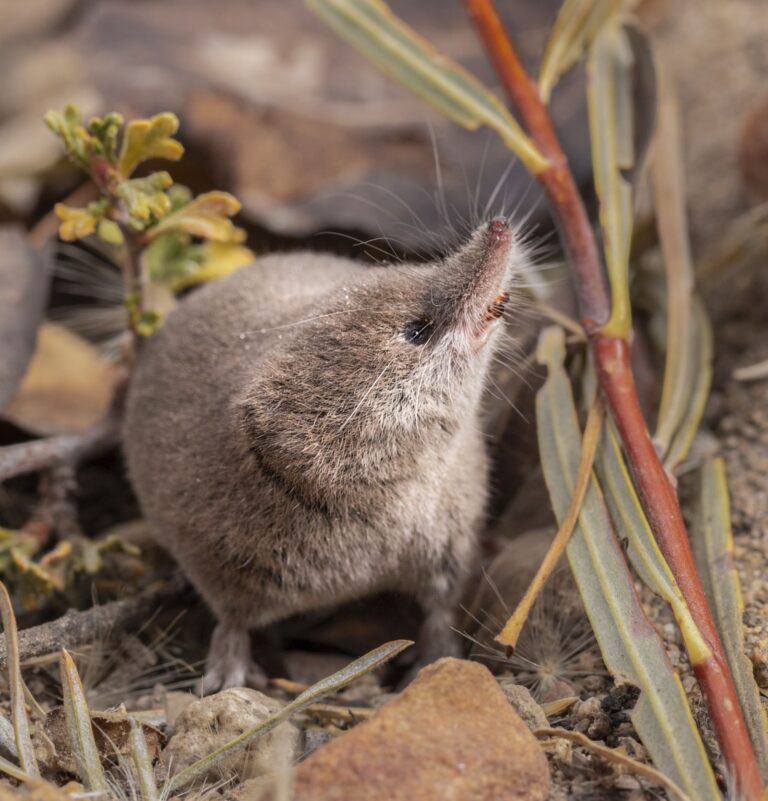
The Mount Lyell shrew is a small mammal endemic to a tiny area in the Sierra Nevada. The species is highly vulnerable to climate change, as noted in a 2015 Climate Change Vulnerability Assessment by UC Davis. However, very little is known about the Mount Lyell shrew.

“Species experts were not aware of the existence of a photograph of a live Mount Lyell shrew,” the assessment reads.

In November 2024, this changed as a wildlife photographer and recent UC Berkeley graduate Vishal Subramanyan, alongside collaborators, released images of the elusive Mount Lyell shrew.

“Shrews have very fast metabolisms and combined with the fact that they spend a lot of their time underground, the only way to observe shrews are with traps — specifically pitfall traps, which are cups placed in the ground with bait so that the animals fall in,” Subramanyan said.

However, their fast metabolisms can create an issue with trapping them when they are alive. Their metabolisms are very fast, and they will die if they are unable to eat every one to two hours. So, amongst the handful of times that Mount Lyell shrews had been caught before, the shrews were dead. To minimize their environmental impact and record previously undocumented data, the researchers wanted to capture the shrews alive and then release them.

“We had come up with the protocol of checking traps every two hours to ensure [the shrews] stayed alive; The hard part was just staying awake, because we never got to sleep for more than two hours at a time for four days,” Subramanyan said. “ [This] was definitely not the most fun or ideal, especially as temperatures got down to like 15 degrees at night.”

Once they had caught a shrew in a trap, the researchers would take photos, both in their white background setup and their natural terrarium setup. They would also take a small genetic sample to use for later testing before releasing the shrews.

Where the expedition occurred — in the eastern Sierra Nevada, just southwest of the Lee Vining community — there are five species of shrews, including the Mount Lyell shrew.

“A lot of these shrew species are indistinguishable in the field and you need genetics to confirm their identification,” Subramanyan said. “​​[This] means that we had to photograph every single shrew we caught, and we wouldn’t know that it was a Mount Lyell shrew until we ran genetics weeks later.”

Out of 18 shrews caught and genetically tested, six were confirmed as Mount Lyell shrews.

“When we start thinking about biodiversity loss and the types of species that it’s impacting, it’s often these species — these overlooked species — that are kind of quietly disappearing under the radar with no public awareness or attention,” Subramanyan said.

Despite the vulnerability of the Mount Lyell shrew, there’s very little research on them and virtually no field research.

“Now, with these photographs, we’ve taken an animal that a handful of people knew about and now millions of people know about it,” Subramanyan said. “Raising that awareness is the first step to inspiring more studies and inspiring animal conservation.”

High-elevation animals in the Sierra Nevada face many threats due to the rapidly changing climates. The Mount Lyell shrew, being particularly vulnerable to these rapid changes, can act as an indicator species for the health of its high-elevation habitat.

Written by: Katelyn Burns— science@theaggie.org

UC Davis researchers demonstrate a new etching method for fabricating quantum photonic devices at wafer-scale in silicon carbide

The new research may pave the way toward mass production of quantum devices


By EKATERINA MEDVEDEVA— science@theaggie.org

It is quite hard to break down something fundamental with a single atom, let alone with a subatomic particle. However, classical mechanics is an exception.

On very small scales, it is the laws of quantum mechanics that dictate properties and behavior of particles. Unique features that they outline, such as state of superposition and quantum entanglement, give rise to many applications, including the field of quantum information processing (QIP). The technologies that implement QIP can enable humanity to solve problems unconquerable for modern computing tools.

The devices of interest for these tasks are nanophotonic devices, which are able to manipulate light — more precisely, photons — at nanoscales. However, fabrication of this type of hardware that can harness quantum phenomena and eventually integrate the QIP protocols is extremely challenging, and on top of that, it needs to be affordable and scalable.

UC Davis research group, led by Associate Professor of Electrical and Computer Engineering Marina Radulaski, addressed this complex of problems by proposing in their study a new method of etching the nanostructures at an angle in silicon carbide (SiC) on wafer-scale substrates. These are thin slices of SiC that can be implemented into a device.

“It is new to our field for silicon carbide quantum photonics, because what it brings is two things that have been challenging: one, the process does not destroy color centers, which are important for quantum performance, and two, with this tool we can make wafer-scale substrates,” Radulaski said. “So rather than having very small millimeter scale [chips], here we can have several inches of wafer substrate that can be bought commercially and that will enable us to either make many identical devices and deploy them to different parts — say different nodes of quantum interest — or make very complex quantum circuits on the same material.”

The mentioned color centers, also known as nitrogen-vacancy (NV) centers, are small defects in the SiC substrate where silicon and carbon pairs are substituted by a nitrogen atom and a vacancy spot. These NV centers then act as quasi atoms that emit photons, which are then processed inside the nanophotonic devices.

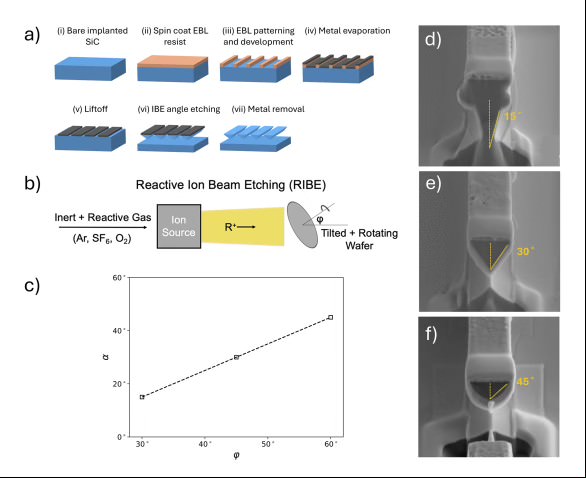
The production of these devices consists of three main phases: generation of NV centers in the SiC substrate, design and production of photonic patterns on a metal layer and the etching of the patterns on the substrate.

“We first model these devices, which involves solving equations of light evolution in different materials and getting an idea what shape we want to make this device into,” Radulaski said. “Then we do electron beam lithography where we deposit the [electron beam resist polymethyl methacrylate (PMMA)] mask [onto the SiC substrate] and bombard it with an electron gun, [located in Lawrence Berkeley National Laboratory], which basically writes the shape that we want to etch. After that, we deposit the nickel mask and [perform lift-off] to transfer that shape into the metal.”

Once the patterns are created, the substrate and the mask are placed into a machine, called an etcher, that “engraves” triangular cross-section devices into the substrate.

“The specific one we have here at UC Davis is very rare and is called an ion beam etcher,” Radulaski said. “It allows us to accelerate ions to bombard this [wafer] with the metal mask [on], removing a part of silicon carbide that is not covered. And what is specific to our method, is that we tilt the wafer at an angle to direct the ions underneath the mask, and what we get in the end are these nanostructures with triangular cross-section.”

The study’s first author, Sridhar Majety, who received his Ph.D. in quantum nanophotonics from UC Davis in 2024, won the electrical and computer engineering department’s Richard and Joy Dorf Graduate Student Award for this work. This award recognizes “outstanding academic achievement and exceptional personal leadership,” according to its webpage. Furthermore, another co-author and current graduate UC Davis student, Pranta Saha, won a poster prize award for a demonstration of the team’s findings.

“Now we need to design photonic devices implementing this method and ensure that they operate well,” Radulaski said. “The light that is emitted by the color centers should enter the optical mode of the device and enter the QIP process efficiently so that we don’t lose those photons to the environment.”

There are many potential devices that can be manufactured with this method, including those used for quantum computing, quantum networking, quantum simulation and quantum sensing.

“Right now, we are also working on hybrid integration of silicon carbide nanodevices with superconducting nanowire systems that can be used as detectors for single photons,” Radulaski said. “These detectors are highly sensitive and complicated because you’re trying to detect just one particle of light, and so the systems that can do that require low temperatures and [need] to operate in a superconducting regime. We have done preliminary studies in collaboration with the Munich Technical University where we were able to deposit this superconducting material on top of our silicon carbide substrate. And now the next step is to fabricate detectors out of it.”

Written by: Ekaterina Medvedeva — science@theaggie.org


Best places to ‘Hot Girl Walk’ in Davis, according to UC Davis students

From peaceful paths to the vibrant streets, discover the best spots for a ‘hot girl walk’ while prioritizing safety and confidence


By JALAN TEHRANIFAR — features@theaggie.org


A few years ago, the simple act of going on a walk got a full rebrand, and thus, the “hot girl walk” was born. Coined by TikTok creator Mia Lind in 2021, the “hot girl walk” isn’t just about getting your steps in — it’s a state of mind. Since posting her first walking video to the social media app in Jan. 2021, the hashtag #hotgirlwalk has cultivated more than 641 million views, according to CBS News.

The rules are simple — walk for about four miles while focusing on three things: what you’re grateful for, your goals and, of course, how hot you are. What started as a fitness trend quickly evolved into a lifestyle movement, empowering people (of all genders, despite the name) to romanticize their daily strolls, clear their minds and embrace their inner confidence.

From city sidewalks to suburban trails, the “hot girl walk” has taken over, and in a town like Davis — where bike paths and scenic routes are abundant — there’s no shortage of places to strut your stuff. But where exactly should you go for the ultimate “hot girl walk” in Davis?

For a scenic and serene place to walk, the UC Davis Arboretum and Public Garden is widely considered a Davis must. Stretching along the Putah Creek waterway, the Arboretum features 100 acres of trails, shaded paths and curated gardens. At the Arboretum students can admire the California native plants, stroll past the redwood grove or watch ducks float by on the water.

The Arboretum also has several bridges and resting areas, making it a great place to pause and take in the surroundings. Plus, the looped pathways mean you can tailor walks to the exact distance you want or switch it up every now and then.

Eva Jabbari, a third-year environmental policy and international relations double major, likes to “hot girl walk” in areas with beautiful surroundings. Jabbari’s go-to location to leisurely walk around is the West Area Pond by the Aspen Neighborhood.

“I like to ‘hot girl walk’ in West Davis,” Jabbari said. “There is a pond in between some houses. There’s trails in between the suburbs there because all the houses there have gardens, so they have a trail for them, and there’s a public garden […] If you walk along the garden, it’s really nice. There’s also a vineyard and an Italian restaurant around there.”

​​ Sophia King, a first-year clinical nutrition major, lives on campus, so when she goes on a “hot girl walk,” she prefers to stay close to her dormitory. King often walks on Russell Blvd, admiring the sky and the people she passes by. The well-lit streets, consistent foot traffic and lively atmosphere make it a comfortable option for a night walk.

“I really like walking around between Cuarto and Segundo,” King said. “It actually feels really safe […] all the greek [life] houses are lining the road and there are a lot of cars driving, so there are people all around, even at night. I’ve never felt scared walking there alone. Even once you pass the frat houses. [And when] you’re in the Cuarto area and there are always people there too. I usually go from Cuarto to Segundo and then I lap around until I feel like going home.”

For students who prefer to see more people and less nature during their “hot girl walk,” Downtown Davis offers a lively environment with plenty of coffee shops, restaurants and boutique stores to admire. The area is always buzzing with activity, so no matter the time of day or night, there’s always foot traffic, making it a great option for those who feel more comfortable walking in well-populated areas.

For those who don’t want to go outside — like Hana Raie, a third-year political science major — the Activities and Recreation Center (ARC) on campus is always an option. The second floor of the ARC is covered with treadmills that allow you to adjust your walking speed and incline.

“I just do my ‘hot girl walk’ on the treadmills at the ARC,” Raie said. “It’s cold outside.”

As “hot girl walk” creator, Mia Lind, said, you can’t be hot if you’re not safe. Staying safe while going on a walk is a priority, and while Davis is generally considered a safe and walkable town, it is always important to take precautions, especially when walking alone.

The UC Davis Police Department suggests selecting safe routes that are well-lit and populated — avoid remote or secluded areas, especially at night. Whenever possible, walk with a friend or in a group to enhance safety. If you need to travel alone at night, take advantage of Safe Rides, a free service from the UC Davis Police Department that provides transportation from campus locations. Additionally, familiarize yourself with the locations of emergency call boxes throughout campus, so you know where to go if you ever feel unsafe or need immediate assistance.

Stay safe, be present and enjoy the walk.


Written by: Jalan Tehranifar — features@theaggie.org


Is it a bird? Is it a squirrel? A turkey? Nope: It’s just a student in a tree again

Students at UC Davis discuss the nostalgia, mindfulness and excitement of climbing trees


By JENEVAH HARRISON — features@theaggie.org


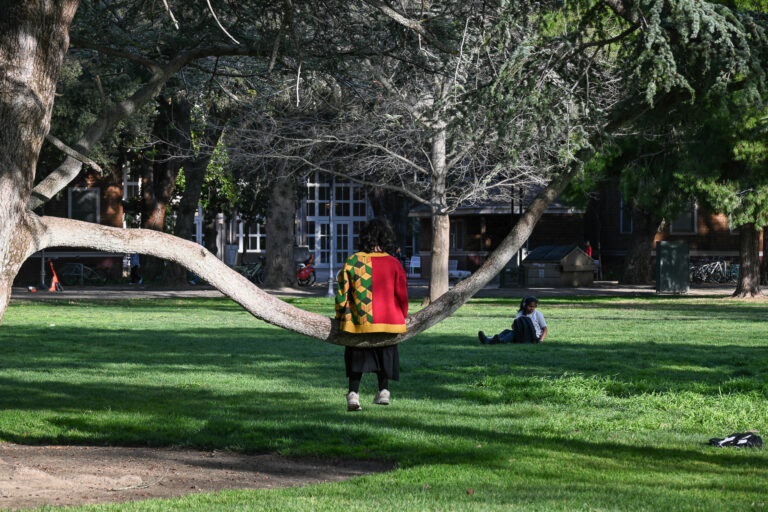
If you have ever spent time near the East Quad on the UC Davis campus, chances are you have seen a humanlike figure looking down at you from high up in the trees. Between studying for exams and writing essays, many students at UC Davis have taken to scaling the campus’ most inviting trees, channeling their inner Tarzans.

For some, tree climbing is just a fun way to pass the time; For others, it serves a more significant purpose. With the pressure of college life, it can be difficult to find moments of peace. Sometimes taking a quick break in between classes to climb a tree is all that is needed to heal us, with studies showing that tree climbing can be an extremely restorative and therapeutic pastime. Students can find this activity to be the perfect reset, discovering a sense of peace and joy within the swinging branches of a pretty tree.

“Sometimes, I will climb up one of the trees in the Quad here on campus and just sit up there for a while,” Angel Torres, a fourth-year sustainable environmental design major, said. “I’ve also done homework a couple times up there — it’s kind of just a way for me to reconnect with nature and fulfill a sort of youthful urge.”

Sometimes, finding time to rest and regroup can be hard, but students like Torres are finding fulfillment in the little things. Torres embraces this simple activity, and utilizes it not only as a nostalgic pastime, but also as an innate form of mindfulness. Sitting high up in the branches away from the campus crowds can allow students to unlock a sense of calm that is missing from their daily routines.

Climbing trees is often associated with childhood indiscretions, and just like most of these activities, tree climbing gets left behind as a forgotten pastime. However, many students on campus are rediscovering this simple pleasure and fulfilling a lost sense of excitement.

“It’s both comforting and exhilarating at the same time,” Torres said.

Torres also described the comfort of both re-living childhood experiences and testing the limits of your physicality — an often humbly rewarding experience.

For Siena Saffari, a first-year history major, her motivation to climb trees presents itself as a more rebellious pastime and personal challenge.

“I like to climb trees, because it is something I feel accomplished doing — it takes a lot of upper body strength, and the feeling of relief when you climb a tree is indescribable, to be honest,” Saffari said. “It’s also not a necessarily safe thing to do so it’s nice to be a little rebellious, you could say.”

While some may see tree climbing as reckless or childish, these students find that it’s the perfect blend of physical activity and relaxation. Scaling a tree requires both excellent physicality and a bit of courage, but once you reach a respectable level, the reward is a quiet place to sit, think or even study, as Torres does.

One of the appeals of tree climbing is the literal change in perspective. The higher vantage point offers a unique view of campus, offering a transformation of a familiar landscape into something entirely new.

“There’s something really nice about seeing everything from a different angle but also being outside of it,” Patrick Kemp, a third-year anthropology major, said. “It’s kind of like an escape from everything on the ground, including whatever stress you’re experiencing.”

For some, climbing is also a way to feel connected to a larger environmental presence. As UC Davis students, many of whom are passionate about sustainability and the environment, spending time in the trees enhances this connection on a more personal level.

“I definitely feel more connected to nature when I’m up in a tree, for obvious reasons, like you are literally sitting on a giant organism that grew from the earth,” Kemp said. “It sounds cliche, but it’s a super peaceful experience.”

Students are embracing these moments of adventure, youthful fulfillment and the simple relief of a quiet atmosphere, proving that climbing trees is a wonderful tool of escapism, even amidst adulthood and the tumult of college life.

“Or maybe,” Torres said. “It’s just a result of the primal urge from our monkey ancestors.”


Written by: Jenevah Harrison — features@theaggie.org

UC Davis play ‘Small Mouth Sounds’ opens Thursday, Feb. 27

The director, cast and crew share their experiences creating the play


By GRACIELA TIU — features@theaggie.org


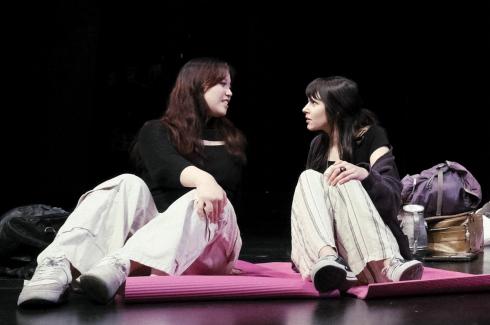
On Thursday, Feb. 27 at 7 p.m., the UC Davis Department of Theatre and Dance’s production of the play “Small Mouth Sounds” will have its opening night. The show, taking place at the Wyatt Pavilion Theatre, will have additional performances on Feb. 28, March 1 and March 6 through March 8.

Student cast and crew have been working tirelessly since the beginning of the quarter to put together the production, which features elements of experimental and minimalist theatre.

Jane Lee, a fourth-year theatre and dance major who plays the role of Alicia, described the preliminary audition process.

“The auditions held by the Theater and Dance Department are open to students of any major and year,” Lee said. “I signed up for a slot two days before the audition and prepared a monologue from a contemporary play. I printed out my resume, performed my monologue and had a conversation with the Director, Peter J. Kuo, and the Assistant Director, Ainsley O’Brien.”

This production followed a typical play audition process, calling back certain auditioners after their first auditions and asking them to read through various additional pieces.

Once the cast was selected and rehearsals began in early January, the actors noticed how they came to build friendships and connections through their work.

“Every day, we grow closer as a cast,” Lee said. “Since there are only seven of us — a small cast for ‘Small Mouth Sounds’ — every rehearsal has its share of exciting and fun moments. We share laughter, tears and valuable lessons from one another.”

Peter J. Kuo holds the position of the Granada Artist-in-Residence at the UC Davis Department of Theatre and Dance for winter 2025. “Small Mouth Sounds” cast members especially appreciate Kuo’s approach to directing and his enthusiasm in regard to character exploration.

“He’s so hilarious and radiates such a fun energy,” Sabrina Chen, a third-year theatre and dance and psychology double major, said. “He truly immerses himself in the script and allows us to explore our characters while providing us with specific points on how to clearly communicate our actions to the audience.”

Kuo described that a large aspect of both his directing and casting methods included creating space for actors to critically examine their characters’ journeys.

“Part of my process as a director is also talking about the play — the characters, the themes and what journeys they’re going through — and creating a room of people that I also enjoy spending time with and having critical dialogues with,” Kuo said. “Thinking about characters and themes deeply is part of the casting and curation process for me.”

Many cast members share the hope that the audience will resonate with the characters and feel encouraged to reflect on the characters’ experiences.

“I hope the audience will be able to witness the change that the characters go through as each day progresses,” Chen said. “I hope they see themselves through the characters, even if it’s a small part. ‘Small Mouth Sounds’ highlights the challenges that we face as humans just existing, making mistakes and learning from our past. And that amidst the chaos of life, sometimes what we truly need is […] silence.”

Sophia Warnock, a fourth-year evolution, ecology and biodiversity major, hopes that audience members will also share moments of laughter amidst the more serious themes of the show.

“I really hope they laugh,” Warnock said. “There’s a lot of non-verbal comedy in this show and a few blink-and-you’ll-miss-it moments as well.”

Playwright Beth Wohl intentionally left many pieces of the show up to interpretation, and cast members noticed how this element can feel particularly unique compared to other plays.

“Paired with the very raw view of interpersonal relationships and the importance of connection, I think that the great part of the mystery is that so much is left to interpretation, and every audience member will hopefully be able to see a character on stage within themselves,” Arman Abbassi, a third-year managerial economics major, said.

The production also features student designers, with EJ Agata, a fourth-year theatre and dance and English double major, working as the show’s lighting designer.

“Lighting enhances by adding depth and texture to the set design and works in tandem with sound design to create the world the characters are in,” Agata said.

They also described their creative process for building the lighting design in a way that works well with the show.

“I often start by focusing on where the actors are in the scene and by giving them front light, that way we know for sure that they can be seen by the audience,” Agata said. “I then think about sidelight and where the fill light for the scene is coming from. Since a lot of the show takes place outdoors, they need a lot of side lighting to make sure they can be seen from multiple angles.”

Different elements of the lighting design can often heighten elements of the show and help accentuate certain moments.

“After our designer run a few weeks ago, I thought a lot about the smaller moments that occur between characters, whether good or bad, and realized that even in day-to-day life we tend to miss a lot of them if we aren’t paying attention,” Agata said. “I’m referring to the glances we share with people, brief hand-holding, those kinds of little things. Since this show relies less on the dialogue that the characters share with each other, I wanted to highlight those moments instead as they really carry most of the scenes of the show.”

The details of the show, whether in the acting or technical aspects, come together to deepen the varying themes within the story. Kuo described that the play’s themes of connection and nature fit well with the UC Davis environment because of the school’s strong integration with nature.

The show especially aided the cast members in strengthening their acting skills and technique.

“Good acting is about finding your motivations and emotional beats off of those of the characters you are working with,” Abbassi said. “It’s really intrinsically a team art, and it’s so rewarding when it comes together so well as it has in this play.”

When rehearsing for this play, the group came to deepen their trust in each other, especially with the more delicate scenes.

“There’s a lot of trust involved in emotionally intimate and vulnerable scenes,” Warnock said. “But I feel like I’ve learned that some people really do deserve that trust. The cast wholeheartedly puts themselves out there every time we’re in rehearsal, and the bravery to do so inspires me to do the same.”

Utilizing that trust when working through each scene brought a sense of stability to some actors, aiding them in bringing their characters to life.

“I’ve learned a lot from my cast members, and one thing that stands out is truly how trusting the people around [me] changes my own voice and character,” Simon said. “The more I would trust them, the better my acting was, because I wouldn’t have to worry about them missing anything.”

The cast members also noted that they learned the value of true collaboration when working and acting with others onstage.

“This is a lesson that I took from another one of my acting professors: work with your scene partners, not at them,” Chen said. “It’s more challenging in the beginning, as I’m just trying to memorize and process the script, but as I grow more comfortable with the words, I really play off my actions and dialogue through the other characters, registering their reactions in real time and using the language and movement to my advantage to drive the action.”

Giving actors the space and opportunity to come up with their own ideas can help them feel confident in themselves and encourage further creativity, according to Kuo.

“Part of that collaborative process is building and empowering these artists [to know that] that their input matters, their creativity matters and how their thoughts and critical analysis of the play combined with how they’re bringing their life experience and approaching the text matters,” Kuo said.

Cast members felt that another special aspect of the show is the diversity of the group and the representation that the audience will see on stage.

“[Kuo] selected a really diverse cast, and I am so glad to be a part of that representation that I hope the audience will receive,” Chen said. “Specifically for me, it’s always a gift to work with other Asian Americans in theater.”

The hard work and dedication the cast and crew put into the show made the experience especially rewarding for them.

“The friendship we have and the amount of work that everyone, most importantly our director, [Kuo], has poured into this production is what makes it special,” Abbassi said. “I truly think that a production’s quality is so accurately exemplified by the amount of care, effort and attention to detail that its director is able to imbue into it in order to get the most out of the material and the actors’ performances and [Kuo] has most definitely [proven] that.”

Another one of the many takeaways the group hopes the audience will leave with is a reevaluation of time and its interconnectedness with relationships, according to Kuo.

“I think part of it is just being able to re-appreciate time,” Kuo said. “And that sometimes things happen at a slower pace or happen in unexpected ways. […] Journeys of healing are around how we connect with others, and I think that’s what this play does and is teaching us. Part of what this piece is reminding us of is that it’s okay to have moments of stillness and reflectiveness.”

The cast and crew are excited to bring the show to the UC Davis community and share the product of their effort and commitment. The play has tickets available for purchase on the UC Davis Department of Theatre and Dance website, with discounted tickets available for students at $5, faculty and staff tickets at $12 and adult tickets at $15.


Written by: Graciela Tiu — features@theaggie.org


Students reflect on issues with commencement ceremony registration

UC Davis students and alumni discuss their worries surrounding commencement registration and the stress from previous years’ website crashing 


By EVELYN SANCHEZ — features@theaggie.org


As spring approaches, it is nearly time for every graduating student, undergraduate and graduate alike, to walk across the stage during the commencement ceremony. Wrapping up years of intensive study, commencement finally awards students with the certificate of their name and degree built on all-nighters, stressful breakdowns and last-minute cramming.

However, one final breakdown UC Davis students might face rears its head at the last minute: commencement registration. Natalie Chrisman, a fourth-year human biology major who planned to walk in June, said she faced technical difficulties while registering.

“I’m worried about registration, because when I tried to register to graduate, the website was down,” Chrisman said.

Chrisman commented that she attempted to register right as the application opened. Spring Commencement Registration opened on Feb. 25 for the spring 2025 graduation ceremony and offered three days for UC Davis’ large pool of graduating students. Possible dates include Friday, June 13 for either 9 a.m. or 2 p.m., Saturday, June 14 for 9 a.m. or 2 p.m., and Sunday, June 15, with only one session at 9 a.m.

Despite offering a pool of selections, it is possible for students to find it difficult to accommodate other days if their first choice isn’t available.

“I think everyone and their mother is trying to get Saturday commencement,” Chrisman said. “My parents have to take time off work, and I think it would be more of a hassle to do Friday.”

Perla Guzman, a fourth-year cinema and digital media and design double major who plans to graduate in the spring, commented on her graduation day preferences.

“I am trying to register for Saturday, at [any] of the times,” Guzman said. “I want this day because this is the day my sister preferred, but personally, I don’t have a preference. I just want to graduate.”

Analisa Haidinger, a spring 2024 alumna who graduated with a Bachelor of Science (B.S.) degree in sustainable environmental design, commented on her experience registering for spring commencement.

“My biggest worry was just not getting the day I wanted, which was Friday at 2 p.m.,” Haidinger said. “I ended up getting that [day], thankfully, since, I think, Friday is the least-desirable day.”

Amanda Li, a fall 2024 alumna who graduated with a B.S. in biological sciences, commented about her differing experiences with registration.

“[Registering] was easy — there was no website crash and it was pretty straightforward,” Li said. “My only concern was being on the website too soon and it [not being] open yet.”

Chrisman conveyed that, if she is unable to register for her preferred time, the lack of organization on the commencement website could result in an anticlimactic end to her four years.

“I’d feel really disappointed, because I feel like [graduation] is an achievement I’m proud of,” Chrisman said. “I [want to] share it with people that have heard me ranting about midterms and the worst [times], and it’d suck to be with these people for four years and get separated just because the site crashes.”

Fortunately, Chrisman was able to get the Saturday 9 a.m. time slot.

The website did crash as soon as the commencement registration link went live on Feb. 25 at 10 a.m. As soon as the website was refreshed, a blank webpage with the words “Service Unavailable” continued popping up on students’ screens.

By 10:15 a.m., the Saturday ceremony reached full capacity.

Two years ago, one Reddit user on the subreddit r/UCDavis also noticed some discrepancies within the website, asking how the Saturday at 2 p.m. commencement time slot met capacity just minutes after the registration portal opened.

Their screenshot showed that the 2 p.m. slot was unable to be selected due to full capacity. Other users noticed that the link went live well before 9 a.m. and didn’t alert students, adding to the confusion.

“The site is going to crash,” Chrisman said. “Definitely.”

Guzman instead expressed ambivalence to the idea of a website malfunction.

“If I don’t get Saturday, then I’ll try to get Sunday, and if I don’t get Sunday then I’ll try to get Friday,” Guzman said. “I’m just hoping to get a day.”

Guzman was able to find a spot for the Sunday at 9 a.m. though it wasn’t her ideal choice.

“A little irritating, but I’m graduating, so whatever,” Guzman said.

Despite not registering for the chaotic spring commencement times, Li still recalls what her friends, who were graduating in spring, experienced.

“I remember being at my internship back when it was happening in spring and people were refreshing the page and the website wouldn’t work,” Li said. “Glad it wasn’t me — stay safe out there. I am fortunate to not have faced that hardship.”

Commenting from first-hand experience, Haidinger commented on the annual crash.

“Since everyone is interfacing with the website at the same time, no matter what day you want, [the website] just couldn’t handle it,” Haidinger said. “So, after repeated crashing at various stages, I finally got it.”

Guzman expressed that she is primarily concerned with the outcome, rather than the time.

“I’m not too nervous about the website potentially crashing,” Guzman said. “If it crashes, there isn’t anything I can do about it. I just know that I’ll end up registering for something.”

The actual commencement ceremony has also seen its struggles. Traditionally held at the UC Davis Health Stadium, spring 2022 saw record heat waves since the reimplementation of in-person ceremonies following COVID-19. The June 10 ceremony was continually pushed later into the day, resulting in overheating on the plastic turf within the enclosed stadium.

The Los Angeles Times reported that there was a lack of water, shade and organization that led to the eventual 36 heat-related medical calls. Makeup ceremonies had to be organized last minute and many students were unable to attend the listed dates.

Since then, commencement ceremonies have been held at the air-conditioned, shaded Golden 1 Center in Sacramento.

Commencement registration has sparked frustration and confusion among UC Davis students. While some emerged from spamming the refresh button with victory, other students across campus couldn’t say the same. Regardless of commencement time slots and dates, UC Davis students look forward to the ceremony and celebration of their years of hard work and dedication to their academic careers.


Written by: Evelyn Sanchez  — features@theaggie.org

Let’s appreciate the humanities more

Finding the value in social sciences in an era of animosity 


By SABRINA FIGUEROA — sfigueroaavila@ucdavis.edu


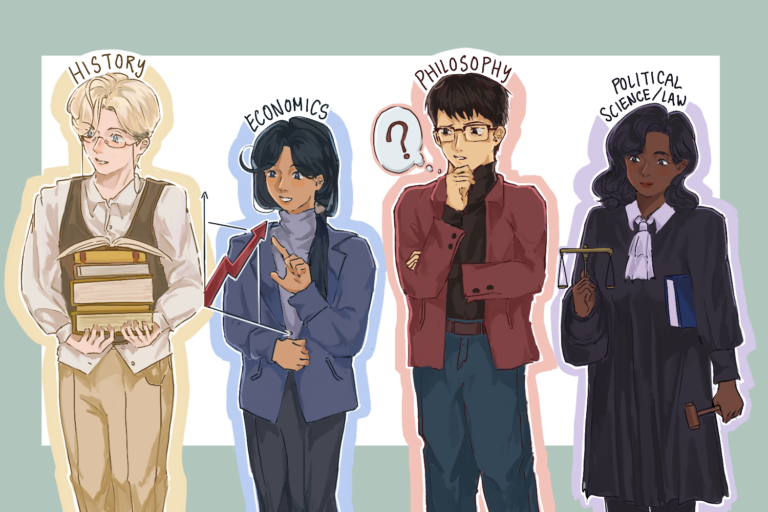
As someone majoring in the humanities and social sciences, I have my fair share of “What are you gonna do with that?” questions. I used to answer genuinely, putting all of my energy into a beautifully crafted answer of my future plans, but now I simply answer with “barista” and hope they leave me alone!

But in all honesty, the question I highlighted above and the disappointed “oh’s” following after is exhausting. However, I don’t blame people for liking STEM as much as they do, and I have always admired the area. It’s insanely cool to mess around with chemicals, cells, computers, code, brains and the like! Science, technology, engineering and math are also extremely important for the well-being of society, whether it’s creating vaccines in a time of need, treating patients, coding websites to connect people faster or doing research in a lab. I have a friend who studies neuroscience and loves learning about how brains work, although that will never be my forte, it’s nice to hear someone so passionate talk about their work.

As much as I and many others appreciate the area of STEM, the humanities and social sciences rarely ever get as much appreciation in return. Some of the problems stem from the fact that we — in the United States — are highly individualistic and place a major emphasis on earning money. Those two things aren’t all bad, but they do have dangerous qualities highlighted in this case. Individualism is ingrained in our education, the media we consume, our constitution and even our economy. Capitalism makes it so that our human value lies in how much we individually contribute to society, especially in terms of money. Combine this notion with a high cost of living, and a lot of our major and career choices are based on survival. In other words, “What job will make me the most money?”

For many people who aren’t genuinely passionate about the subject, a career in STEM ensures job and financial stability — and that’s all that matters to them. This is not to shame people for having this mentality, as sometimes it’s not out of malice; It’s the unfortunate path our society has put us on. But, this path has also led us to devalue the humanities and social sciences in ways that could be potentially detrimental to our lives, whether it’s the literal belittlement of subjects within these areas or future doctors who lack enough empathy to do their jobs efficiently.

The humanities and social sciences teach us the inner workings and importance of being human: how and why we interact and create, our failures and successes throughout history and how people go about their lives based on their unique circumstances. If anything, these two areas of study are complementary to STEM — a symbiotic relationship.

Without seeing the value in the humanities and social sciences (and the arts, you’re included here too), we would never be able to learn from our mistakes as humans, our levels of empathy could decrease and societies could collapse. This trajectory may very well be occurring in the U.S. right now, as the current president has launched attacks aimed at higher education, labeling it as “indoctrination” that turns people “woke.” Though that may sound like a joke, it is the sad reality we live in.

These attacks on education include everything — from science to gender studies — and that’s because all forms of education pose a threat to power-hungry leaders. In many cases, education is what makes us ordinary people have individual power. Many people do not see it that way, though, with humanities and social sciences landing at the bottom of many lists.

Humanities and social sciences show us that human beings are strong and that we have persisted through hateful and rough times together. Hate, oppression and fascism can travel far if you don’t have the educational power to help fight them off. It’s not the time — though there’s never a time — to devalue any kind of knowledge.


Written by: Sabrina Figueroa — sfigueroaavila@ucdavis.edu

Disclaimer: The views and opinions expressed by individual columnists belong to the columnists alone and do not necessarily indicate the views and opinions held by The California Aggie.

Yolo County Housing presents draft of five-year Strategic Plan to Davis City Council

Executive director of Yolo County Housing shared information on upcoming improvements


By OLIVIA HOKR — city@theaggie.org


On Feb. 18, the Davis City Council held its bi-weekly meeting and Yolo County Housing (YCH) provided a presentation on its five-year Strategic Plan. YCH aims to establish sustainable and affordable housing to those in Yolo County. YCH is federally funded through the United States Department of Housing and Urban Development and the State of California Department of Housing and Community Development.

YCH assists the community with finding affordable housing through Housing Choice Vouchers, which is a federal program that assists low-income families in paying for single-family homes, public housing and more. 

Ian Evans, the executive director of YCH, gave the presentation on the overview of the program and how YCH intends to expand its effectiveness. The Strategic Plan has been in the works for nine months and has received feedback from staff, public housing residents, city managers and housing commissioners, among others. 

The Strategic Plan is built on three pillars: people, housing and administration. Each of those pillars also has goals, objectives and tactics. The pillars and goals will be reviewed every four to five years for a new strategic planning cycle, while the tactics will be reviewed annually. 

Evans highlighted a few of the goals from the plan during his presentation. 

“The next goal under [the] people [pillar] is to strengthen community partnership,” Evans said. “So, our objective around this is to create cross-education opportunities between our team [YCH] and our community partners, and through those opportunities, we hope to learn about their mission, goals and strategies and share our mission, goals and strategies to create five new collaborative partnerships.”

Evans provided an example of this from the past year, when YCH created a partnership with Meals on Wheels, a non-profit organization in Yolo County, to deliver weekly meals to the senior households at YCH migrant centers. 

Davis City Council Member Josh Chapman shared his appreciation for Evans’ dedication to improving the lives of our community members. Chapman also expressed interest in getting more involved with the program. 

“What can the city of Davis do?” Chapman said. “What can we do as elected leaders in this community to help support Yolo County Housing? What does that relationship look like for you? We have examples of what we’re already doing, and we know it’s not enough.”

Davis City Council Member Gloria Partida asked about those who are a part of the public housing program and whether they can be supported for a sustainable amount of time. 

“Often, folks who have to move out of the [migrant] housing, some of them return to their homes in Mexico or wherever it is that they are coming from,” Partida said. “But some of them remain because they have kids here. And I often hear that it becomes difficult for those families who want to continue here in our school system, and they basically end up having to double up with other families or couch [surf] and things like that. Are they eligible for any of the voucher programs to help them move from the migrant housing into something that they can afford in town? Is there a way that YCH can help in that regard?”

Evans also shared that the waitlist for the vouchers currently has about 4,700 people on it, and they are planning to adjust the time that the waitlist opens to make it more effective for those who really need it. 

The presentation given by Evans is available to the public on the city of Davis website. To learn more about the Yolo County Housing resources available to community members, visit www.ych.ca.gov/


Written by: Olivia Hokr — city@theaggie.org


Recent DIY skatepark demolition sparks frustration among locals

As homemade skate spots across Davis are taken down, patrons grapple with how to rebuild


By EMME DUNNING — features@theaggie.org


In the past year, multiple patron-made skate spots have been taken down across different jurisdictions including UC Davis land, city of Davis land and across rural Yolo County.

The do-it-yourself (DIY) skate spots have been built and maintained by their patrons, who are now coping with the loss of a beloved community gathering place.

Ben Salko, a third-year landscape architecture major, has been skating since elementary school. Salko asserted the importance of skating in his daily life and the role it plays in building positive connections in the community.

“It’s been a source of community and friendship since then, as well as being a great way to push myself physically and express myself,” Salko said.

Since coming to Davis, Salko expressed disappointment in the park options that the city of Davis offers for skating.
“The Davis skatepark fails to meet the needs of the majority of skateboarders and is very run down,” Salko said. “It has been ranked as one of the worst skateparks in the [United States] a couple of times.”

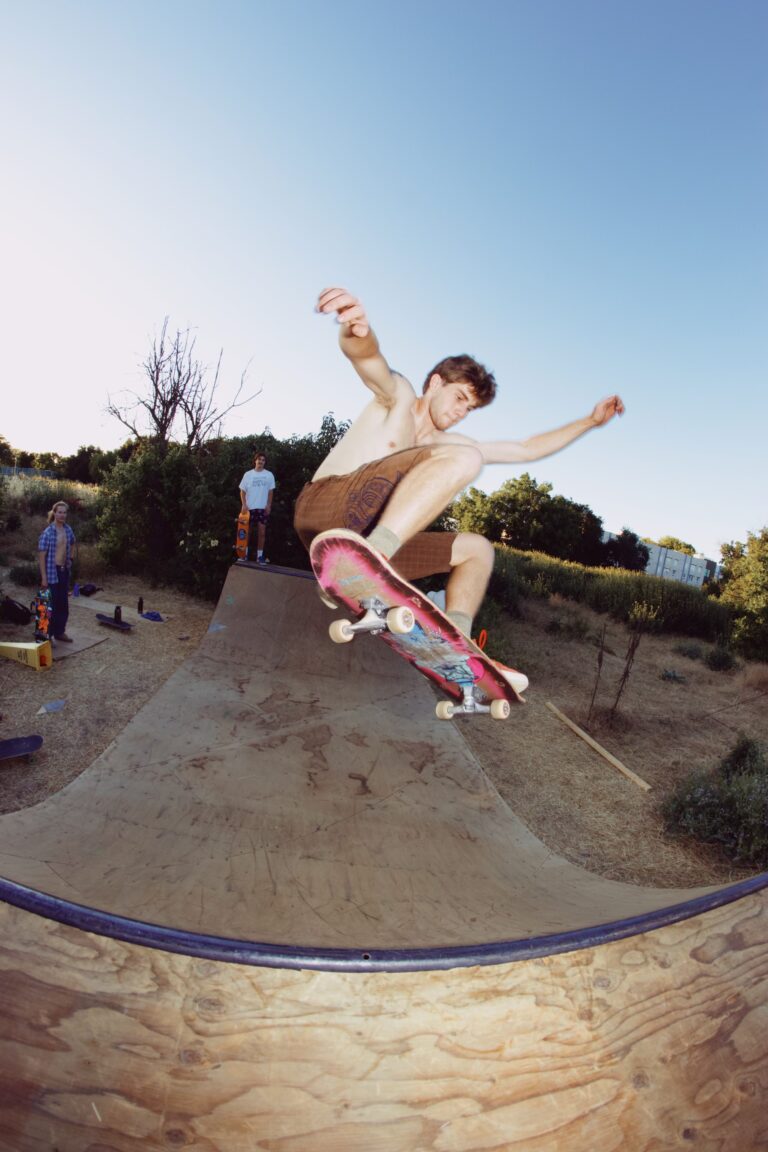
Salko and his friends recognized the importance of an adequate skate park in cultivating a thriving community and set out to create a halfpipe ramp in an open field tucked behind The Domes. The halfpipe was made primarily out of wood and could comfortably support multiple people. At one point, couches were even brought to the spot, providing a multi-functional place for people to skate and socialize.

“Word of this place quickly spread,” Salko said. “Every time I went, I would meet new skaters from the area excited for the opportunity to skate a fun ramp in Davis. We quickly had a third space — a true home away from home — where everyone could hang out and push each other to learn and improve.”

Despite the growing popularity of the ramp, it was taken down last August by an unknown party, causing a rift within the skateboarding community. Other DIY parks, including the Davis Ditch, a converted concrete bowl in a field off of County Road 32A, have faced similar instances of demolition.

The Davis Ditch featured curbs, quarter pipes and boxes made primarily from reused and found materials that came together to make a functional skatepark. It was a longtime local hub for recreation and creativity, something that UC Davis students and locals have come to appreciate.

Colin Carter, a Davis local and avid biker, enjoyed the collaborative nature of the DIY spots.

“The people you’d meet at a DIY spot were all super into constantly improving and maintaining it,” Carter said. “You knew every time you would show up, there may be a new feature or some work to be done, which was part of the fun.”

This unique feature has made the recent demolition even harder for those who frequent the spots.

“Coming back and seeing them slowly being taken apart over the last few months has definitely been sad to say the least,” Carter said. “I’ve been able to get out and see them again, which may be the last time.”

Trey Brown, a third-year global disease biology major, was introduced to the DIY spots through a friend and was immediately drawn to their innovative models.

“You knew that people had put time and effort into making the park,” Brown said. “It was different, but encouraged you to get creative to make the space work.”

Brown asserted that the DIY spots were not a safety or waste concern and that patrons were committed to their maintenance.

“They caused no harm and weren’t in the way of anyone,” Brown said. “They remained clean and were purely a place for people to gather and enjoy themselves.”

He also expressed worries about the future of skate culture in Davis if the crackdown on homemade spots continues.

“The Davis Park is beyond insufficient — so without these locally constructed spots, there aren’t too many options,” Brown said.

Looking forward, proponents of the DIY skate and bike spots hope that more collaboration could take place between the university, city officials and DIY park users to facilitate the re-establishment and expansion of skateboarding spaces that allow for creativity and community connection.

“Having a place to skateboard that is easily accessible to people and is enjoyable defines the skate community in the area,” Salko said. “I would like to imagine a future where universities — especially one like Davis with such strong DIY roots and spirit — can create spaces to promote skateboarding and the wider range of activities that their population enjoy[s].”


Written by: Emme Dunning — features@theaggie.org

UC Davis baseball season begins with a series win against Gonzaga

The Aggies persist after an opening-day loss to start the season strong


By (Theo Kayser) — sports@theaggie.org


On Feb. 14, the UC Davis Aggies’ baseball team began their season, hosting the Gonzaga University Bulldogs for a three-game series over the weekend. The Aggies walked away from the series with a win, capturing two victories across the three-game set. 

Gonzaga began the series ahead, securing a convincing 6-1 victory in the first game. This was driven by a dominant pitching performance, including 11 strikeouts, as well as a series of defensive blunders from the Aggies, who had three errors in the game. These defensive mishaps proved costly in the fifth inning when two errors by UC Davis allowed for three runs to be scored by the Bulldogs.

The Aggies retaliated the next day, winning 3-1. UC Davis scored methodically, beginning in the fourth inning. Riley Acosta, a fourth-year computer science major, and Mark Wolbert, a fourth-year managerial economics major, both singled to begin the inning, then advanced into scoring position after a passed ball. From there, Korey Williams, a third-year undeclared major, hit a sacrifice fly ball to score for the Aggies. Wolbert was subsequently batted in, too, after a single from Alex Gouveia, a sixth-year human development major.

The Aggies extended their lead in the following inning, after Joey Wright, a third-year communications major, hit a Runs Batted In (RBI) single to bring the score to 3-0 in the fifth. 

All the while, starting pitcher Noel Valdez, a fourth-year human development major, kept the Gonzaga offense at bay, tossing six shutout innings. Carter Delaney, a Master of Management graduate student, then followed suit, notching his first save of the season with two shutout innings of his own. 

The rubber match, or final match of the series, saw UC Davis walking away victorious again, this time by a final score of 5-1.

The Aggies again jumped out to an early lead with more small-ball offensive tactics. At the bottom of the third inning, UC Davis drew three consecutive walks to load the bases with just one out. Williams then hit a single to drive in Ryan Lee, a third-year economics major, and Braydon Wooldridge, a third-year human development major, making the score 2-0. 

After Gonzaga responded in the top of the fourth inning with a solo home run, UC Davis added a couple of insurance runs at the bottom of the inning. This came from Lee hitting a run-scoring single, knocking in Wolbert and Nick Leehey, a fourth-year communications major, after they had been bunted into scoring position.

Following a similar game script to the day prior, the Aggies coupled their offensive approach with a lights-out pitching performance, this time led by 5.1 stellar innings from Tyler Wood, a second-year managerial economics major. Four Aggie arms then combined for a scoreless end to the game, allowing just three baserunners in the final 3.2 frames. 

After a first game that fell short on the run-prevention front, the Aggies shined on the pitching and defensive side to close the series. Across their two wins, UC Davis pitchers walked zero opposing batters and were rewarded for their strike-throwing abilities by their defense, who recorded zero errors.

Going forward, the Aggies will look to continue their strong start to the season as they face off against the University of the Pacific on Feb. 18, before their next series against Santa Clara University beginning Feb. 21. 


By (Theo Kayser) — sports@theaggie.org