55.9 F
Davis

Davis, California

Tuesday, December 23, 2025
Home Blog Page 61

Artist Bussie Parker Kehoe returns to Pence Gallery with new solo exhibition: ‘A Curious Garden’

Almost a year after her stairway display, an Emerging Artist Award winner creates a new world with her unique recycled paint method 


By SAVANNAH ANNO — arts@theaggie.org


On March 1, 2024, San Francisco-based artist Bussie Parker Kehoe displayed her work in Davis for the first time. Her small but captivating stairway exhibit at the Pence Gallery, “Lucky Seven,” won her the gallery’s annual Emerging Artist Award, which serves to support Californian creatives with limited solo exhibit history in furthering their work. 

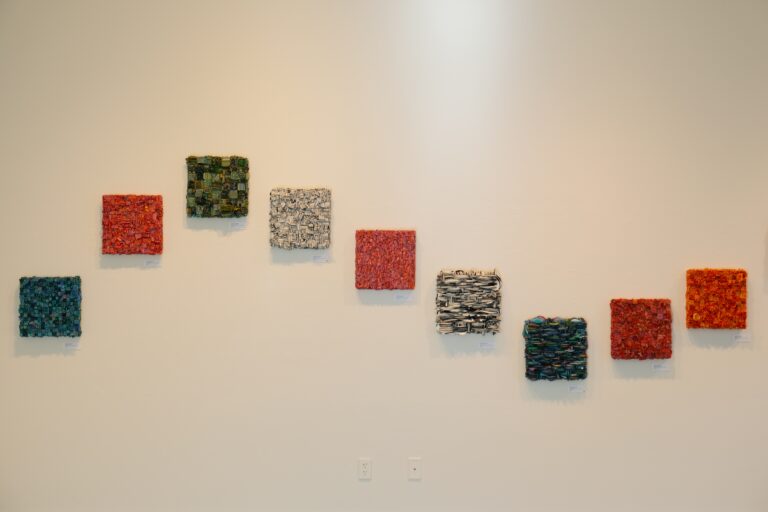
In just under a year, Kehoe has been upgraded from the stairway of the Pence to the first floor, filling a large gallery space with over 10 different pieces all ranging in size and color. Open from Jan. 10 to Feb. 28, “A Curious Garden” is just as it sounds: a bright mixture of colors and artistic experimentation resulting from Kehoe’s unique artistic method. 

A mixed-media artist, noted by the Pence to “walk the line between painting and sculpture,” Kehoe dries and layers discarded house paint to then cut and mold the material into various organic shapes. Glued onto wooden panels, some are covered in geometric stacks and cubes of color while others are arranged in circular shapes to resemble flowing waves or fish scales. 

“The short story is that I discovered my process by accident,” Kehoe said in a past interview with The California Aggie.I had errant paint drops that landed on the plastic sheeting covering the floor. Once they dried, I could peel them off the plastic and play with them. That’s when I started to work entirely with poured paint skins.”

In an effort to make her process sustainable, and also save her own money on paint, Kehoe found that she could utilize already-bought house paint that had gone unused. 

“I saw an unlimited supply that I could use and keep out of landfills,” Kehoe said. “I also have a soft spot for things that are unwanted. Strangely, I felt sorry for those dusty old cans.” 

Unlike “Lucky Seven,” in which Kehoe limited herself to only use seven different colors, “A Curious Garden,” widely varies in color schemes and hues. “Happy Accidents,” the only differing piece as it was completed on paper, actually includes dried drops of every single paint color used throughout the entire exhibit. 

With some pieces made entirely of different blues or greens, Kehoe layers shades to create abstract depictions of various feelings, places and things. “Superbloom,” for example, featured blocks and swirls of oranges, pinks and yellows to resemble an infinite field of poppies. “Low Tide” is a mix of earthy seaweed tones, deep blues and sparing splashes of red. 

“Even when she’s focusing on one color, like in one piece based off of malachite [a green crystal], she didn’t just stick to greens,” Madeline Furtado, a fourth-year design and art history double major, said. “She also includes blues, reds, aquamarine and other colors that allow the green to pop out even more.” 

Visiting the gallery during its opening reception on Jan. 10, Furtado and others reflected not only on what Kehoe might have been trying to translate through her pieces but also on their own interpretations of the various colors and shapes. 

Josue Toribo, a second-year English and design double major, found new ways to look at Kehoe’s three-dimensional works. 

“If you look at this one from the side [“Verdant”], it almost looks like a chart of data, like it’s a record of population density or some sort of map,” Toribo said. “It’s so catching, and you’re able to see the visual movement. The art really pops out at you.” 

Open until Feb. 28 and free for everyone to view, the intricacies of Kehoe’s designs are too singular to go unseen. Returning to Davis for an artist talk at the Pence Gallery on Feb. 22, visitors can also hear about the methods and meanings behind the exhibit from the artist herself, in conversation with Pence Gallery Director Natalie Nelson. 

Kehoe’s “A Curious Garden” is also currently showing alongside a handful of other talented artists. Be sure not to miss Stephen Giannetti’s “All In” poker chip sculptures and canvases, Jordan Hayes’ incredibly realistic figure paintings in her new exhibit, “The Little Things,” or Kathy Canfield Shepard’s stairway display of dreamy, quilled paper art, all open through the end of January. 

Written by: Savannah Anno — arts@theaggie.org 

 

Stay away from the bagel

Student drives himself insane over Memorial Union pizza bagel


By ALLISON KELEHER — adkeleher@ucdavis.edu


My poor friend, Dwayne, a geology major, took some much-needed respite from instruction during the winter break — needed because he spent all of fall quarter obsessing over pizza bagels. The sad thing is that he started the fall quarter as a transfer student, so he doesn’t know what “normal” is like here at UC Davis. He attempted to explain his dilemma to me countless times; However, I was never able to soothe his thoughts. 

It all began in September when he was a fresh and shiny incoming student. The world was his oyster. He dreamt of researching rocks to his heart’s content. All was well for Dwayne in the beginning. His classes were interesting, and he was trying out different study spots around campus in his free time. That was, until he tried out the CoHo in the Memorial Union. 

The CoHo overwhelmed Dwayne with all of the students, countless food options and excess of natural light. However, he powered through toward the bagels. Dwayne loves bagels. One year in high school, he ate bagels twice per day every day, and it sent him to the emergency room for severe constipation. Now, he tries to restrain himself from his vice. Luckily, he hadn’t had a bagel in a week, so it was okay to indulge. 

This was when the pizza bagel caught his eye. This was a rare delicacy that Dwanye typically tried to avoid. In an impulsive moment, Dwayne ordered a pizza bagel. As the MU bagel artisan was preparing his pizza bagel, Dwayne bit his lip in anticipation because he knew that he just made a bad decision. 

Once the pizza bagel was ready, the employee called out Dwayne’s name to reunite the bagel with its true home. Dwayne found a luxurious booth in the CoHo and sat down to eat his pizza bagel. Napkin in one hand and his pizza bagel in the other, Dwayne took a large bite. 

Oh no. 

Dwayne was filled with immense disappointment, because the bagel was a mushy mess. He took another bite and it only got worse. Dwayne frantically took bite after bite to mend the situation, however the bagel never improved. 

He carried this disappointment with him throughout the week. He couldn’t sleep at night, focus in class or even maintain a meaningful conversation with his new friends. After seven days of wallowing, Dwayne couldn’t take it anymore and stumbled into the CoHo in search of a replacement bagel. 

“One pizza bagel please,” Dwayne ordered anxiously. It was torture to wait for his bagel to be ready. Once it was, Dwayne carried it carefully over to a table and set it down cautiously. One bite in, Dwayne felt flooded with disappointment once more. 

Throughout the rest of fall quarter, Dwayne entered into an obsessive cycle of eating pizza bagels and then entering manic episodes of disappointment due to how terrible they tasted. His grades suffered and his friends felt sorry for him. 

Near the end of the quarter, one of his friends (what a saint) decided to help him through this rough patch so that he could lock in for finals week. His friend, Hayley, held his hand and guided him back to the CoHo. This time, she hoped to persuade him to eat a different bagel so he could move forward from his toxic relationship with the pizza bagel. 

“Why don’t you try a toasted plain bagel, that wouldn’t be too bad?” Hayley soothed Dwayne. He was apprehensive, but went along with her plan because it couldn’t possibly be worse than the pizza bagel. 

Toasted bagel in hand, Hayley helped him find a place to sit and test out this new bagel. Dwayne took a small bite and was filled with relief. This bagel actually wasn’t too bad. He frantically took more bites to verify that this was true. The bagel tasted amazing. It was perfectly toasted and crispy to Dwayne’s liking. 

This was when Dwayne realized the reason why the pizza bagel was so terrible. It was toasted in the same manner as this plain bagel, which wasn’t enough for the hefty pizza bagel. Dwayne was cured from his obsession and turned to give Hayley a gigantic hug for her help. 

One hour later, Dwayne was spotted at the library — locked in. He spent the rest of his time at UC Davis in the library to catch up on all the material that he missed during the pizza bagel mania. He was able to catch up, scoring high on all of his final exams. 

Dwayne lived happily ever after without that cursed pizza bagel. 

The End.


Written by: Allison Keleher — adkeleher@ucdavis.edu


Disclaimer: (This article is humor and/or satire, and its content is purely fictional. The story and the names of “sources” are fictionalized.)

Indie-rock artists Bad Bad Hats and Party Nails perform at Sudwerk Brewing Company

Davis Live Music Collective continues to bring diverse live music experiences to the community


By ALMA CULVERWELL city@theaggie.org 


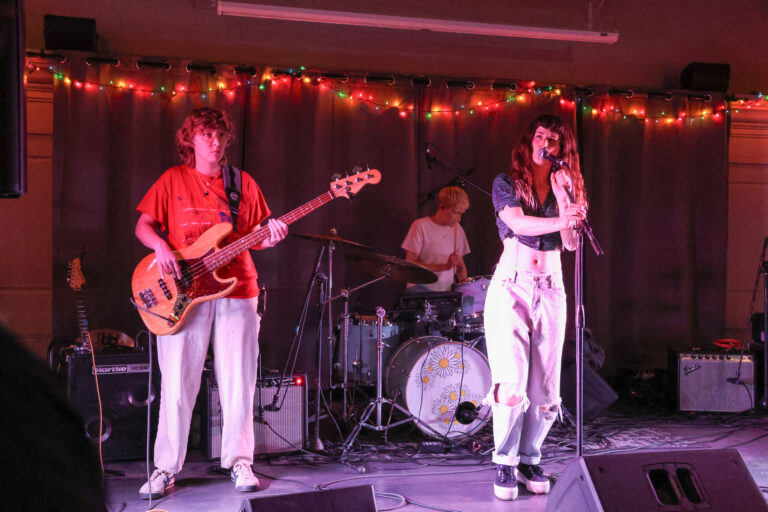
Sudwerk Brewing Company hosted two live indie-rock music artists, Bad Bad Hats and Party Nails, on Jan. 11. The event was sponsored by the Davis Live Music Collective (DLMC) — a non-profit, volunteer organization formed to curate, organize, host and promote diverse, high-quality concerts — and is one of various concert events that Sudwerk Brewery has recently hosted.

Bad Bad Hats, a band from Minneapolis, Minnesota, was founded in 2012 by Kerry Alexander and Chris Hoge. In the past 10 years, they have toured the country and performed alongside artists including The Beths, Margaret Glaspy, The Front Bottoms and Hippo Campus. They released their fourth album, “Bad Bad Hats” with Don Giovanni Records on April 12, 2024.

The event also featured Southern California-based musician, singer-songwriter and producer Elana Carroll, better known as Party Nails. Party Nails recently released her third album, “Pillow Talk,” with Eye Knee Records. Carroll described the 10-track album as finding her in a “honey-colored party mood,” according to her concert description. Carroll’s genre-blending approach creates a dynamic listening experience, culminating in heartfelt moments throughout the album.

Carroll explained how she originally got into indie-rock music and details on her music journey.

“Rock music is what made me want to be a touring musician,” Carroll said. “I would listen to albums by The White Stripes, Garbage and Nirvana on a loop. I started playing guitar when I was 11 years old, and I would practice with my little Aria and amp and imagine one day performing for the people, especially young women.”

Carroll described her experience performing at Sudwerk and hopes to work with the DLMC again.

“Our show on Jan. 11 was my first time working with Davis Live Music Collective,” Carroll said. “I hope it’s not the last, I had such a great time. I loved the atmosphere of Sudwerks and the people who came out. I loved meeting the sound person, the staff and the people who put on the shows. Everyone was kind and a true lover of the arts. The audience was all ages, and that was so lovely. ”

Carroll also commented on her ongoing collaboration with Bad Bad Hats.

“As for Bad Bad Hats, I first met Kerry [Alexander] back in 2011, before either of us had bands,” Carroll said. “We played our songs for each other and became friends. Looking ahead, we have actually banded together to start a new band called Megasound. We have an album on the way. Working with them is a dream.”

Hosting events like these makes Sudwerk Brewing Company a crowd-favorite outing within the Davis community. Ana Perez, a recent UC Davis alum, explained why she loves frequenting Sudwerk with her friends and participating in the various events that they put on.

“My favorite thing about Sudwerk is their trivia,” Perez said. “Personally it’s my favorite trivia in Davis because the host, Dr. Andy, is so fun. Sudwerk is also just such a fun place to hang out with friends or grab a drink, especially on their patio.”

The DLMC, along with Sudwerk Brewery, plan to continue hosting monthly concerts and bring a variety of artists to Davis.

Taylor Ledbetter, a third-year political science major, explained her desire to attend similar events in the future.

“As someone who loves live music, I think it is so great that events like this are being organized,” Ledbetter said. “I think it is such a great thing for the Davis community and will definitely be attending future events with my friends.”


Written By Alma Culverwell — city@theaggie.org


We should bring personal style back

Social media and its perpetuation of microtrends kills the art of personal style


By SABRINA FIGUEROA — sfigueroaavila@ucdavis.edu


Personal style, in terms of fashion sense, is something I absolutely adore and notice frequently. Every day, I see dozens of students on campus and in my classes dressed in gorgeous, unique combinations of clothing. I think it’s incredible when someone can make you see the potential of pieces you may not have picked up in the store yourself or when someone reflects aspects of themselves in what they wear. Are you ever at a thrift store and someone who dresses 10 times better than you walks in, so you just give up and leave? It takes real personal-style talent to get people to leave. I admire that. 

However, in the past couple of years, personal style has been dying off. In part, this may have to do with social media and its identity as an instantaneous communication method. As soon as you press “post,” your video or picture is in the algorithm and can blow up overnight — or maybe even in an hour. 

The instantaneous nature of social media has made it so that clothing trends come and go fast: almost too fast. As soon as you buy into one trend — literally — chances are there’s another one circulating the internet. And many will buy that one, too. And then another. And another. Until, finally, they have a pile of polyester clothing items that they will donate to a thrift store while asking themselves: “Why did I even buy that?” 

Social media perpetuates fast fashion and consumerism in a way that is almost unhealthy for not only the environment but also our bank accounts. Fashion production is detrimental to water sources, leading to drought and polluting rivers and streams. Additionally, a staggering 85% of all textiles end up in waste dumps every year. In 2019, the United Nations Environment Programme stated that the fast fashion industry was the second-biggest consumer of water, responsible for 2 to 8% of global carbon gas emissions. These emissions are also expected to rise by more than 60% by 2030, consequently contributing to climate change and global warming.

Fast fashion, consumerism and social media also completely suck the soul out of personal style, because now the mindset for many is to just dress “unique” to receive validation from others. Or, it may even drive people away from staples in their own personal style for fear that people will think they are just following a microtrend. 

When Pinterest predicted “Fisherman Aesthetic” as an up-and-coming trend in 2025, some expressed their hatred for it in the comments, saying that the trend was “ugly.” To be fair, it’s not my cup of tea either, but people need to realize that you don’t have to take part in a trend, unless you genuinely like it or were already dressing like it. 

If we shift our perspective from dressing to look “cool” for others to simply dressing for the sake of enjoying ourselves, the art of personal style does not have to disappear. The point is to wear what you want and what you like. And, if you don’t know what you like without social media telling you what to like, figure it out Runaway Bride style. Doing so can be a fun journey — allowing yourself to spend time finding out what you actually like!

If you don’t know where to start, thrifting is always a good way to find unique, durable clothing items at a cheaper price. It’s also a great way to start decreasing your carbon footprint; just because we have to be consumers in our society to live doesn’t mean we can’t consciously make better shopping choices. 

Though thrifting takes patience, so does accruing your own style sensibility. Personal style takes time to create, as much as art does, because you have to get a sense of yourself first. It’s all a reflection of you. 


Written by: Sabrina Figueroa — sfigueroaavila@ucdavis.edu


Disclaimer: The views and opinions expressed by individual columnists belong to the columnists alone and do not necessarily indicate the views and opinions held by The California Aggie.


Navigating the fake news epidemic

Now more than ever, it is important to examine the quality of your media diet


BY THE EDITORIAL BOARD


In a time when disinformation can be rampant, it’s critical to take a step back and have a harder look at the media we consistently consume. Whether it’s the podcast you listen to on your morning drive or your favorite scrolling app, our methods of receiving information have a role in shaping our view of the world.

Fake news is dangerous, which is why we must stay vigilant. A Pew Research study found that 23% of Americans who were a part of their survey have at some point shared fake news. Algorithms are not your friend and have even been found to knowingly exacerbate mental health issues. These are issues that should not be taken lightly. This is why the Editorial Board urges you to have a media diet rich in high-quality information sources — so we compiled a list to make the search a little easier.


National Public Radio

National Public Radio (NPR) is a non-profit, independent organization with a mission of informing the American people. NPR was initially created by Congress in 1967 under the Public Broadcasting Act with the aim of enhancing the educational and cultural aspects of radio broadcasting. The organization has since expanded to now include a website, podcasts and shows. NPR is funded in many ways, but one of its main sources of revenue is the subscription fees of listeners. 

It is, in part, this funding structure that makes NPR one of our top picks, as it allows the organization to experience lessened financial pressures that may compromise journalistic integrity. News outlets are the watchdogs of society, and it is vital that the for-profit incentive structure of media does not subvert the release of information that is misaligned with the interests of the media outlet’s owners.


Associated Press News

Founded in 1847, Associated Press (AP) News is an independent news organization “beholden only to the facts.” AP News has a strong global presence and provides an array of coverage on both national and foreign affairs. AP News journalists follow a standard of practice that minimizes bias and inaccuracies.

A strong standard of practice is key to obtaining news in the most objective way possible. However, we must also recognize that completely unbiased news is simply not attainable. The people who write, edit and publish these stories will always have a certain partiality, so we should instead aim for fair news. Fair news seeks to minimize incorrect information and narrow perspectives while also embracing the humanness in journalism enough to meaningfully tell people stories.


Local news

Lastly, if you haven’t already, check out your local news. While it may be tempting to get wrapped up in the whirlwind of news on national politics, seeing news most relevant to your area can provide a much-needed, down-to-earth perspective on issues impacting your community.

 Some news outlets local to the Davis area include: The Davis Enterprise, the Davis Vanguard and The Sacramento Bee. Local news groups often don’t suffer the same over-politicization that larger news outlets so often do, making them a compelling source of news. For more statewide issues, CalMatters is also an honorable mention. Lastly, don’t hesitate to find journalists you trust and subscribe to their Substack or any other independent media organization that supports high-quality journalism.

Remember to have compassion for the local news organizations that need to operate behind a paywall to sustain themselves. Local journalism is struggling to stay alive, and it is much more preferable for news outlets to be funded by everyday readers instead of billionaires who prioritize profit over the truth.

If you read through this editorial and still choose to get your news from TikTok or some other social media platform, at the very least fact-check the information and always assume it to be false before verification. It’s important to make fact-checking a habit, especially when the source of the information has uncertain credibility.


Written by: The Editorial Board


America is feeling more like an oligarchy following Donald Trump’s inauguration

It’s time to start saying the quiet part out loud 

BY THE EDITORIAL BOARD


It has been a strenuous last week, with news that sounds like it’s straight out of a dystopian novel. On Jan. 18, TikTok was briefly banned following a Supreme Court decision, only to be abruptly brought back the next day with a message thanking President Donald Trump. Not two days later, the United States withdrew from the World Health Organization and Trump signed a wave of dangerous executive orders. Trump’s inauguration is starting what feels like a new period of oligarchy in the U.S.

The Editorial Board condemns this new presidential administration and hopes that you remain vigilant in these trying times. As more developments happen day by day, it’s important to remind yourself that what is happening in our country is not normal — there is no need to water down the severity of this far-right extremism. Even former President Joe Biden used the language of “oligarchy” in his farewell address, warning of the upcoming centralization of powers in the U.S. 

On one of the days preceding the inauguration, TikTok was temporarily shut down. Many have suggested that this feels politically calculated and may have been an intentional ploy to manipulate American users. Ironically, Trump signed an executive order in August 2020 to ban TikTok, claiming the app was a danger to national security. It is unsettling that anyone would give Trump praise for taking credit for solving a problem he started. 

“These risks are real,” the 2020 executive order reads. “This data collection threatens to allow the Chinese Communist Party access to Americans’ personal and proprietary information.”

Without shock to anyone, Trump lied and changed his mind, now championing TikTok’s return for millions of Americans.

“Frankly, there are a lot of people on TikTok that love it,” Trump said in an interview with CNBC. “There are a lot of young kids on TikTok who will go crazy without it. There are a lot of users, a lot of good and there’s a lot of bad with TikTok.”

Time and time again, Trump has proven himself to be a conman full of contradictions. His credibility can’t be trusted and, with a list of unconstitutional executive orders that violate basic rights, his presidency is off to a dangerous start.

One of the first executive orders Trump passed on his first day back in office was a long-time campaign promise — effectively ending birthright citizenship. While this constitutional right is guaranteed by the 14th Amendment, this executive order is set to take effect on Feb. 19. This unconstitutional move further vilifies undocumented Americans and completely deconstructs the conception of the so-called “American Dream.” 

There’s no beating around what these policies are actually about — racism and the dehumanization of Latinos and immigrants. In response, 18 states, the District of Columbia and San Francisco have filed a lawsuit against Trump for this action. It remains to be seen what the future of birthright citizenship will be, how extensive this executive order will reach and how this policy will be enforced. What is certain is that life has become even more dangerous for immigrants in an already-dangerous country. 

Beyond this, the White House’s Spanish website has been taken down and Trump has even declared a national emergency at the U.S.-Mexico border. This could potentially allow Trump to access federal funding and the ability to use the military and National Guard at the border, according to The New York Times

The government website https://reproductiverights.gov/, which was used to provide essential information about reproductive rights and access, has gone offline following Trump’s inauguration. Although it remains unconfirmed if this was an intentional move by the Trump Administration, it signals the administration’s ongoing efforts to restrict women’s bodies and reproductive healthcare. 

Another bizarre action taken on Trump’s first day back in office was passing an executive order titled “Restoring Names That Honor American Greatness,” which calls for the Gulf of Mexico to be renamed the “Gulf of America.” While these comments are sometimes written off as so ridiculous they must be satire or said in jest (like Trump suggesting the U.S. annex Canada, Greenland and the Panama Canal), this rhetoric must be taken seriously. This spirit of American manifest destiny is a danger to other nations and to us, so we must call it like it is — authoritarian. 

Not only do these executive orders signal a dangerous precedent for the country, but the inauguration itself symbolized the U.S.’ leaning toward being outwardly oligarchical. Standing in front of the incoming presidential cabinet at the inauguration were the wealthiest people in the world: Jeff Bezos, Mark Zuckerberg, Elon Musk and Chief Executive Officer of Google Sundar Pichai. Together, they are worth nearly a trillion dollars.

Musk, the now administrator of the Department of Government Efficiency, sparked controversy during a speech at a post-inauguration rally where he gave a one-armed salute that appeared similar to a Nazi salute twice. 

“My heart goes out to you,” Musk said as he gave the salute. “It is thanks to you that the future of civilization is assured.”

While Musk avoided fully denying this was his intention, it’s clear this salute along with the political extremism of the administration echoes far-right movements from history. This gesture also has been embraced by many white supremacists and other hate groups. Some examples of this gesture being accepted include: a White Lives Matter group celebrating the post on Telegram, conservative commentator Evan Kilgore saying “we are so back” and more, according to AP News.

“He’s still blowing it off as though it wasn’t something serious,” Kurt Braddock, a professor from American University, told AP News. “I know what I saw, I know what the response to it was among elements of the extreme right including neo-Nazis, and I see what the reaction is now. And none of it is a laughing matter.”

It’s clear that we are living in unprecedented times full of dangerous propaganda and executive action. The Editorial Board urges you to be aware of the new administration and the changes it brings — be vigilant, take care of yourself and do not accept any of this as the new normal. Any way that you are feeling right now is not an overreaction. 


Written by: The Editorial Board

I’ve got a tip for you: don’t

UC Davis student bravely speaks out against American tipping culture


By Tara Romero — tcrome@ucdavis.edu


If you’re tired of the barista flipping their iPad around with a tip screen, this one’s for you. 

Now, I get a coffee every morning as a cute, little start-of-the-day routine. Yet, every morning, they turn that iPad around and expect me to give them a dollar for their “can-do” attitude! I already spent $8 of my parent’s money on my very simple and reasonable drink order, and then I am socially obligated to give them another couple of dollars for “kind service.” How about you kindly keep your iPad on your side of the counter?

In fact, tipping culture has gotten utterly outrageous. Apparently pouring a cup of coffee is a service worth $2 in your pitiful tip jar. What’s next? Tipping the pizza delivery guy? The hotel maid? The tattoo artist? Absolutely not. 

Don’t get me wrong, I respect food service workers very much. I have never once caused a scene (unless provoked). All I am saying is that most of them already make minimum wage. They already get $16 every hour, and those baristas want to take my money too! Don’t they know how expensive my groceries are?

Now servers, that’s a different story. Let the record show that I am very fair, and I do consider tipping when I dine in at a restaurant. However, just like every other job in the world, they have to earn their money. I simply decide whether or not they “earn” their 5% tip. 

Let me walk you through a horror story from the last time I ate out. 14 of my closest friends and I went into a local restaurant for my boyfriend’s birthday brunch. They told us the wait time for a party of our size would be 10 minutes. 10 minutes? Can you believe that? I graciously pointed out that I saw some open tables so surely we wouldn’t have to wait. Yes, the place looked pretty packed, but after a bit of convincing, the host sat us.

This is where bad goes to worse. After sitting, our server did not come to greet us for 15 whole minutes! I don’t know what the hold-up was, but that was strike one.

Once our server finally appeared, we naturally ordered bottomless mimosas for the table. I’m not sure about you guys, but I was led to presume that these mimosas would in fact keep coming — given the term “bottomless.” However, our server clearly did not know the meaning of the word as my boyfriend was cut off after his 12th mimosa. Strike two. Not to mention, she took a bit too long bringing over pitcher No. 7 (which was strike three, if you’re following along).

Listen, I know this is not my server’s fault, but I do have reason to believe my boyfriend was experiencing a bit of food poisoning. By the end of the meal, he was slurring his words and could not stop throwing up in the bathroom. The server did one thing right that entire meal, and she thankfully called him a paramedic. 

So, I went to pay for my boyfriend and I’s share of the split check — we had 11 separate checks of course. We told her at the end of the meal while my boyfriend was being stretchered out into the ambulance. 

Here’s why I’m telling you all of this: After the horror show that unfolded before us, this server obviously did not earn my tip. I complained to my friends and showed them the frowny face I drew on the tip line. To my utter shock, all of them seemed really upset with me — saying something about her being the only server and her “saving my boyfriend’s life.” 

This is why I turn to you, my fellow students. I cannot be the only person on campus who is over this whole “tipping” charade. I’m sure all of you, like me, are reasonable individuals who are fed up with tipping out. 


Written by: Tara Romero— tcrome@ucdavis.edu


Disclaimer: (This article is humor and/or satire, and its content is purely fictional. The story and the names of “sources” are fictionalized.)

Big Fish: Unique local band captivates listeners near and far

0

A group of unlikely friends joined together by a shared love of music 


By EMME DUNNING — features@theaggie.org


The Davis music scene is an undoubtedly unique community. On any given weekend in the bustling college town, UC Davis students from all walks of life can be found crowded into the backyards of unassuming houses, captivated by the performances of their peers. For many Davis students, live music — house shows in particular — is an integral part of the local nightlife. 

One such Davis backyard band, Big Fish, had rather unconventional beginnings. The group formed from two separate ventures and a common love of music. 

Angelina Cicchini, a fourth-year sociology major, and UC Davis alum Greta Foehr spearheaded the first endeavor. As a singer and a keyboard player, respectively, the two spent their time at UC Davis engaging in music casually with friends and the community but dreamed of something bigger. 

“We really wanted to start a band,” Cicchini said. “It was a pipe dream for like a year. We never really looked hard enough. We never really found anyone, but Greta [Foehr] and I would perform together sometimes.”

Cicchini and Foehr cultivated their shared interest in music through small performances at retirement homes and other venues. Sierra Lizerbram, Allie Riley and Brooke Tokushige — three UC Davis students at the time — had an idea of their own. 

The trio wanted to form a band with a simple goal: to play one show before their graduation in June of 2023. With a guitarist, a bassist and a drummer, the group was missing a lead singer and a keyboard player. 

When Foehr met the trio through a mutual friend, the missing pieces fell into place. Cicchini and Foehr joined Lizerbram, Riley and Tokushige in their dream of starting a band, and Big Fish was born. 

After getting acquainted, the new group set their sights on their goal of a single performance, with low expectations for the future of the group and a focus on having fun. Despite their low expectations, the show was a major hit. 

“We had our first show that was supposed to be our one show before we graduated,” Foehr said. “We actually sounded good, which we were kind of shocked at. Right after that show, we got a bunch of offers.”

Within 24 hours of their debut performance, Big Fish was fielding requests to perform at multiple other shows, and they decided to continue the band despite not knowing what the future might hold. The group committed themselves to developing their sound and image as a band and began writing original music and performing at venues across Davis, including a set at the annual Whole Earth Festival.

Last year, the band released their first album, titled “Up for Air” and consisting of seven original tracks. The five current band members — alongside Rhea Cosand, who played rhythm guitar with the band for a period of time — recorded the album together, though Cosand opted to leave the band to prioritize recovery from an injury. This past summer, they took their music on the road for their first tour, playing shows across California. 

The group describes their music as indie pop rock but asserts that their sound does not necessarily conform to a single genre.

“Nostalgic always comes to mind for me,” Cicchini said, adding that she believes Big Fish is moody, engaging and, overall, funky.

Katya Jane, a UC Davis alum, has seen the evolution of Big Fish first-hand. Jane has been involved in the Davis music scene for years and was a founding member of the popular student-formed band Cowboys After Dark

In this role, Jane quickly discovered just how much work goes into putting together a show and leaned into a logistical role for her own band. After graduating in 2023, Jane began Velvet Red Productions, a production company that plans live music events statewide. It was in this role that Jane connected with Big Fish. 

“After graduating college and spending some time living in [Los Angeles], I came across Big Fish on social media and saw videos of one of their shows in Davis,” Jane said in a written statement. “Even just from the videos, I could tell they had such an incredible vibe.”

Jane was so taken with Big Fish that she invited them to perform at a local Velvet Red Production event in the spring of 2023. 

“Shortly after discovering them, I reached out and invited Big Fish to perform at the Flower Power Festival,” Jane said. “I traveled all the way from L.A. to be there, and I finally got to experience their live performance in person. They completely captivated the crowd, leaving everyone wanting more.”

Through their collaboration, Jane has gotten to know the members of Big Fish as musicians and people and can attest to the band’s unique nature.

“They truly embody Davis culture,” Jane said. “They care about their community and they spread positivity through their art and through their friendships. Each member is incredibly gifted and they have this ability to put on an effortlessly entertaining and technically impressive performance.” 

Jane has continued to collaborate with Big Fish since the Flower Power Festival, putting together a show for them in Los Angeles during their tour last summer and planning a Picnic Day performance for this coming April. 

Though the group has certainly risen in popularity since their first performance, the band has remained committed to their original goal of making music and performing in a way that truly represents their dynamic. 

  “We’re very devoted to doing this because we love it — but at the same time we’re very unserious,” Cicchini said. “It’s just been so much fun.” 


Written by: Emme Dunning — features@theaggie.org

A look into the social complexities of humpback whales

A study documents a “conversation” with Twain the humpback whale


By KATELYN BURNS— science@theaggie.org


Whales have incredible social and vocal complexity. Similarities between human language and humpback whale songs had been noted despite humans and humpback whales being evolutionarily distant. In a study conducted in 2021 by UC Davis animal behaviorists and published in 2023 by PeerJ, a rare interaction with a humpback whale was documented.

Brenda McCowan, a professor in the UC Davis Department of Population Health & Reproduction with an interest in communication complexity in non-human animals, spoke on the whales’ feeding habits.

“These whales come to Alaska to feed,” McCowan said. “So, they’re really focused on eating, because they need to feed in order to go back to their breeding grounds where they don’t feed for six months round-trip.”

The study’s team had done a series of playbacks on other research vessels earlier in the season, with no responses. Normal protocol for playback study is to have a pre-playback period, where researchers simply record what is currently occuring, and a follow-up post-playback period, where researchers look for repercussions of the playback.

The team was using a previously recorded contact call, called the “whup call,” theorized to convey information about where they are in a space.

“There are two ways that whales can respond to a playback,” McCowan said. “One is to vocalize back [and] the other is to approach the speaker, because if it’s a contact call, like what we think the ‘whup’ is, then they might want to approach it.”

While McCowan was conducting the playback trial from below deck, other members of the team, including Josephine Hubbard, a postdoctoral researcher at UC Davis at the California National Primate Research Center who works on whale acoustics, and Jodi Frediani, an internationally recognized photographer specializing in marine species, were above deck recording behavior and identifying the whale.

“One of the gold standards for understanding what animals are saying is what they’re doing when they’re saying it,” Hubbard said.

The whale was observed to be circling the boat, coming within 100 meters. The team also noted changes in their blows, from relaxed during the initial engagement phase to wheezy during the agitation phase.

“In the same way that we have unique and individual fingerprints, whales have a unique pigmentation pattern on the underside of their tails,” Frediani said.

Using the Happywhale website, which uses Artificial Intelligence to instantly match a whale’s fluke (the underside of their tails) in a global database, the whale was identified as Twain, an approximately 38-year-old female. Twain was also identified in photos taken the previous day, during the time in which they recorded the whup call used during the playback trial. Twain was amongst eight other whales.

“She was either responding to her own contact call […] or she was responding to a contact call from one of the whales that she’d been hanging out with and feeding with the day before,” Frediani said.

While limited to a 20-minute “conversation” with just one call played back and forth, the team looks forward to longer and more dynamic playback trials in the future. For more information on the details of the research conducted and Twain, check out the team’s full study and the UC Davis website.


Written by: Katelyn Burns— science@theaggie.org

New Year’s resolutions are a zero-sum game

The dangers of an “all or nothing” mindset 


By MOLLY THOMPSON – mmtthompson@ucdavis.edu 


New Year’s has recently come and gone and with it a slough of resolutions to start going to the gym four times a week, go vegan, stop skipping lectures or read 30 books before the end of the year. There’s an initial spurt of motivation from novelty and the compelling idea of a beautiful, new life created by new habits. 

But before too long, the schedule gets filled up. It’s hard to get to the gym on cold mornings, ice cream has never sounded better, 8 a.m. lectures are honestly just unrealistic and the first book has yet to be opened past the prologue. It sounds like it’s time to give up. 

As a society, we place a lot of emphasis on the “go big or go home” all-or-nothing mentality that fuels this kind of thinking. If I can’t accomplish my goals as I initially set them, if I can’t complete something in its totality, I might as well not try at all, right? 

Wrong — there’s a lot to be said for doing something partway. 

Take the example of aiming to transition from a conventional omnivore diet to a vegan diet: an admirable goal. Maybe it’s for environmental sustainability, maybe it’s for personal health, maybe it’s for ethical reasons, but if I’m used to eating animal products and they’re part of the diet I rely on (physically and emotionally), it’s going to be really intimidating to upturn how I grocery shop, meal plan, cook and get in all my necessary nutrients. It’s exciting at first, and I’m motivated by the desire to do well, but that spark wears off eventually. I start to feel unsure of what I’m doing and lost in the aisles of the Davis Food Co-op. I start to lose confidence in my kitchen skills. I start to miss my usual In-N-Out order. The effort no longer feels worth it, so I give up. 

But what if, instead of giving up completely, I just went to In-N-Out every once in a while? What if, instead of switching up everything about how I get my groceries, I went back to Trader Joe’s and just picked up oat milk instead of cow’s milk? What if, instead of trying to venture into a new set of meals I’m unfamiliar with, I kept making my favorite recipes but just swapped tofu or tempeh where beef or pork would usually be? Maybe I wouldn’t feel the need to give up. 

A general recommendation with New Year’s resolutions is to make them specific — common advice says that vague goals are hard to achieve and don’t provide good motivation. However, I would argue that specific goals are easier to abandon.

If I realize in May that I’m not on track to meet my goal of reading 30 books in the year, I’m likely going to stop focusing on reading at all and vow to try harder next year. At this point it feels like a lost cause, so there’s no point in trying to keep up. But if my goal had been to read more in general or to read more nonfiction or to learn something new from a book, I wouldn’t feel like I was failing by falling behind by an arbitrary margin. 

The principle extends far beyond New Year’s resolutions — that’s just a topical application. If you want to go vegetarian because you’ve heard that meat has a high carbon footprint, but you’re afraid to because you think you’d miss sushi, then keep eating sushi but make the other swaps. There’s no rule that says that if you’re not 100% perfect you shouldn’t even try. It’s the opposite — you’ll be making a huge difference by reducing the amount of meat you eat on a daily basis, and you can still keep eating sushi. 

You can be mostly vegan but take your coffee with whole milk. You can go to the gym four times a week except when you’re on your period. You can read two books every month but skip one when you have a big midterm. You can miss your 8 a.m. class a couple of times and still go back. A “slip up” doesn’t mean you’ve failed, and it certainly doesn’t mean you should stop trying. 

Oftentimes when we put things in an “all or nothing” frame, we sabotage our efforts from the get-go. We feel like anything less than all is pointless, so we might as well stop trying if we break our perfect streaks. In a world where goals are binary and the only outcomes are all or none, some feels like it might as well be none. But that’s not true; Your efforts are not in vain. Cut yourself some slack — at the end of the day, some will always be better than none


Written by: Molly Thompson — mmtthompson@ucdavis.edu 

Disclaimer: The views and opinions expressed by individual columnists belong to the columnists alone and do not necessarily indicate the views and opinions held by The California Aggie

They don’t know Snoopy like I do

Do social media users wearing his profile picture really know his heart?


By MADISON SEEMAN— meseeman@ucdavis.edu


Snoopy is everywhere. He’s on the face of chocolate bars, the front of fashionable tote bags, the shelves of CVS and all over my X feed. At 84 years old, Snoopy might just be the hippest boomer around. But as Snoopy thrives at icon status, it’s become clear that some social media users are flattening his character into something that can fit picture perfect into their profile pictures. These new Snoopy stans simply don’t know him like I do.

On Oct. 4, 1950, Snoopy made his debut — perfectly friend-shaped. He took some time to grow into the traits that became his trademarks: his doghouse and his friendship with Charlie Brown. He didn’t even achieve bipedal status until 1957, but it was clear that he was loveable from day one.

Today, he’s all over my social media timelines. My feeds are full of Snoopy wrapped in his iconic red puffer or tucked snuggly into bed. He’s happy-dancing in profile pictures, DJing in Charli XCX memes and dancing to ABBA — always innocent-looking, docile and cutesy. And hey, I’m not complaining. But as I scroll through my feed, I wonder if these so-called “Snoopy stans” are looking any deeper than floppy ears and silly smiles. Have they even watched the Charlie Brown holiday specials?

There’s something missing in this modern portrait of the most iconic beagle on the planet. He’s too cute, too perfect. His X presence lacks key traits — a rejection of his mischievous heart.
The real Snoopy is no perfect angel. While undeniably adorable, he’s a complicated dog! And, like an onion (or like Shrek), there are layers that reveal, at the center, a healthy amount of mischief in Snoopy’s heart. Hidden inside that iconic red puffer are evil plans. Real fans know but love him anyway.

He’s a blue blanket stealer, a prankster and a little stinker. He steals kisses from Lucy and he tortures his companions with his cold, cold nose. He’s a tickle monster, even. He’s a maniacal laugh in very, very cute packaging.

He’s not always as peaceful as those his fair-weather fans might portray either. Snoopy is plagued by a philosopher’s mind. Existential thoughts, like, “I search the sky and find no meaning,” hide behind those misleadingly simple eyes.

He’s ambitious, too, as booked and busy as Barbie. Are those social media users hiding behind his face even familiar with his career as an astronaut? A surgeon? A writer? An attorney? I hope they at least know of his service in the First World War, but with these new-gen fans, who can tell? 

He’s smug, he’s impish and evidence points to the fact that he may not even know Charlie Brown’s name. That’s his best friend!

But real Snoopy fans — myself included — support Snoopy’s rights and wrongs. We’ve sat through the holiday specials, we’ve met his family, his first owner. We know that behind that cute face is a whole lot of mischief, and behind that mischief is a heart of gold.

Can we really blame casual Snoopy enjoyers for their ignorance? Snoopy is loveable at every level and it’s impossible not to be charmed. Maybe there’s no crime in being a surface-level Snoopy lover.

But maybe there is. To my fellow (real) Snoopy fans: Stay strong and spread the good word. May Snoopy be with you.


Written by: Madison Seeman— meseeman@ucdavis@ucdavis.edu


Disclaimer: (This article is humor and/or satire, and its content is purely fictional. The story and the names of “sources” are fictionalized.)


Looking for more lookalike contests in 2025

Who doesn’t love seeing their neighbor dress up as their favorite celebrity? 


By DEVANSHI AGNIHOTRI —- arts@theaggie.org 


Imagine going on your daily walk with your dog through Washington Square Park, yet on this day in particular, you see Willy Wonka — accompanied by several other people who look just like him. They all share the same dark curly hair and strikingly similar facial features. Suddenly, you find yourself stuck in a swarm of people who look like Timotheé Chalamet, the most-recent portrayer of the character. So, what is responsible for this phenomenon? The answer: lookalike contests.

Dressing up as your favorite characters and celebrities has been a common activity — it’s a way to show appreciation or just have fun. But recently, lookalike contests have risen in popularity. 

On Oct. 27 at 1 p.m., YouTuber Anthony Po posted a flyer advertising a Timotheé Chalamet lookalike competition at the Washington Square Park Arch in New York City. Miles Mitchell won the contest while dressed up as Wonka. He earned a trophy and $50 prize while also meeting Chalamet, who took surprise photos with contestants. After Chalamet showed up to his own contest, excitement sparked around these lookalike competitions. Despite the $500 fine issued by the New York Police Department for hosting a public event without a permit, many contests have since been hosted for various celebrities. 

These contests have been occurring all over the country. For example, the Dev Patel lookalike contest was held in San Francisco and the Glen Powell lookalike contest occurred in Powell’s hometown in Texas. The number of contestants has been huge, with people entering themselves, friends and even siblings into the competition.

The contests started as a way to have some fun, but they have now launched into something even greater by getting the actual celebrities involved. During the Powell lookalike contest, the actor sent in a video explaining that the winner’s family member would earn a cameo in his next movie. Powell was also able to meet his lookalike at the 2025 Golden Globe Awards when Maxwell Braunstein, Powell’s lookalike, and Mitchell, Chalamet’s lookalike, were both invited to the award show. 

The two lookalikes even took an iconic photo when they held up a sign that reads: “I won a lookalike contest and now I’m at the Golden Globes.” This moment helped bring the internet’s excitement full circle. 

Aside from meeting the celebrities, people have been using lookalike contests to engage with their local communities, meet new people and find out which community members look the most like their favorite celebrities. So, look in the mirror, figure out your celebrity twin and book the quickest flight to the next contest with the hopes of winning a trophy, some money or even meeting some of your own lookalikes.  


Written by: Devanshi Agnihotri — arts@theaggie.org 

UC Davis students reflect on the joy hot chocolate has brought to their lives

0

The history of hot chocolate, how students drink it and recommendations on consuming the beloved beverage more ethically


By AMBER WARNKE — features@theaggie.org


Hot chocolate has long comforted humankind, originating as far back as the ancient Olmec, Mayan and Aztec cultures of what is now Mexico and Central America. This early predecessor to hot chocolate, however, was vastly different from what we know and love today, with these cultures drinking their chocolate in an unsweetened and unheated form. It was consumed as far back as 3,500 years ago and was considered a form of medicine, as well as often being drunk during special occasions. 

In the 1500s, the drink was introduced to Spain during Spanish colonization. There, sugar and cinnamon were added to the drink, but it did not become widespread for over a hundred years due to the drink being restricted to the nobility. In 1828, Dutch scientist Coenraad Van Houten revolutionized the process of creating hot chocolate with the invention of the cocoa press. This removed most of the cocoa butter from the processed cacao, refining the drink and led to the modern form of hot chocolate we drink today. 

People all around the world love hot chocolate and find solace in the drink’s sweet and cozy taste. Hot chocolate is loved throughout Davis, both on and off the UC Davis campus. 

Grace Kasabula, a second-year plant sciences major, shared her love for hot chocolate, as well as her preferred method of consuming it. 

“It makes me feel warm and happy inside,” Kasabula said. “I like to make it with the dark Swiss Miss packets […] I make it with milk, not water. If you’re having hot chocolate, it better be with milk. I [also] like to spike hot chocolate [with] adult beverages.” 

Kasabula especially benefited from hot chocolate when she worked as a ski coach at Ski Bradford in Haverhill, Massachusetts

“I would come home from work all day in the snow, and I would just have some hot chocolate by the fire,” Kasabula said. “It was just a nice way to end my day.” 

Kasabula believes that chocolate is one of the best ways to deal with a difficult day, and recommends UC Davis students to drink hot chocolate when dealing with academic stress. 

“Froth that up [and] call it a night,” Kasabula said.

Kaitlyn Deem, a fourth-year cognitive science major, also said drinking hot chocolate is a way to manage college stress. She said that finding out what concentration of chocolate she likes best in the drink led her to realize that the beverage can be enjoyed in many forms. 

“It’s way more customizable than I thought,” Deem said.

Salina Kamburova, a fourth-year managerial economics major who works at a coffee shop, Pachamama, in Downtown Davis, is skilled at customizing hot chocolate. There, Kamburova serves a variety of drinks, including coffee, matcha, teas and hot chocolate. She enjoys making artistic drawings on top of the hot chocolate with milk foam in the shape of flowers, bears, hearts and snails.

Being a professional hot chocolate maker, Kamburova offered specific recommendations to students hoping to make high-quality hot chocolate at home. 

“Make sure whatever chocolate base you’re using is really well mixed before you add the milk,” Kamburova said. “I [also] like adding lavender simple syrup and peppermint.” 

However, her greatest joy in serving hot chocolate is how it enables her to connect with children who come into her work because they order hot chocolate frequently. 

“It’s fun to make the little bears on [the hot chocolate] for them and see their reaction,” Kamburova said.

While the drink has positive connotations with its drinkers, the ethics of the chocolate industry are another aspect to consider when buying cocoa products. Child and slave labor are major issues on cocoa plantations, according to the Food Empowerment Project. Most cocoa farmers earn less than one dollar a day, and about 2.1 million children in the Ivory Coast and Ghana are used for child labor on cocoa farms. Experts in these issues recommend not purchasing hot chocolate or other goods from companies including Nestlé, Cadbury, Lindt, Ghirardelli, See’s Candies or Hershey’s. Instead, they recommend shopping from more ethical brands like Tony’s Chocolonely, Divine and Vego.

So, top off your hot chocolate with whipped cream — or, as some students recommend, some lavender syrup — and have a cup of cheer. Regardless of your hot cocoa-based preferences, looking into where hot cocoa is sourced can assist those interested in buying both ethically and responsibly.


Written by: Amber Warnke — features@theaggie.org

Students, professors comment on the issues of digital texts through Equitable Access

0

Humanities departments struggle with digitized versions of texts as opposed to paper copies, which are not widely provided by the program 


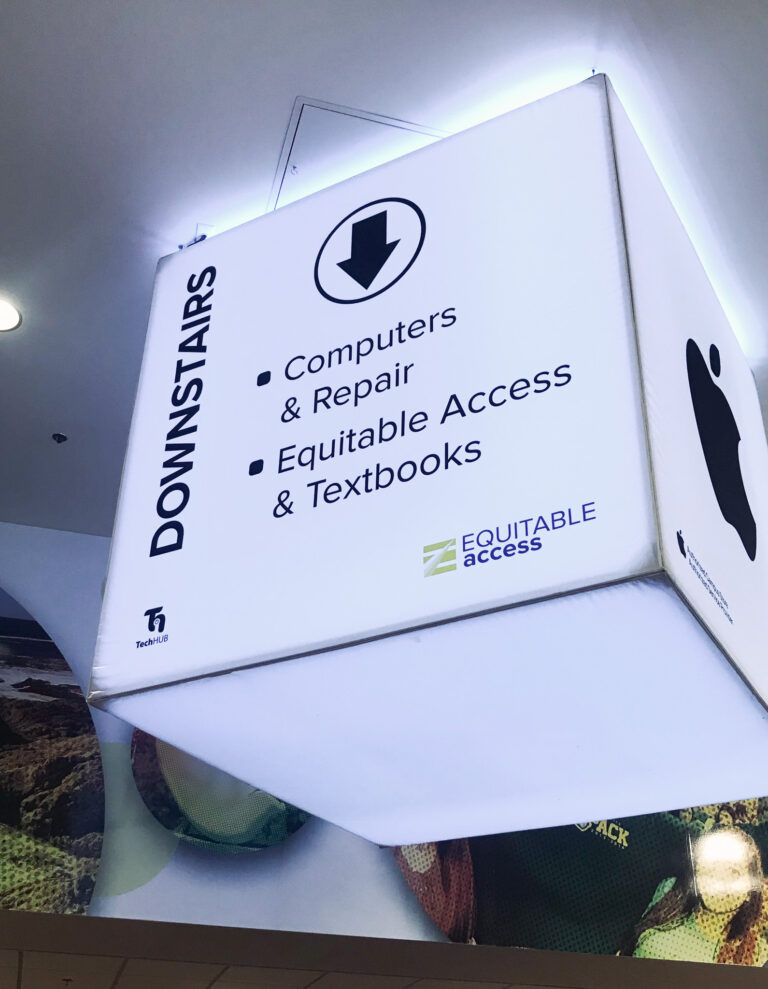
To many students, Equitable Access (EA) is the program that provides access to textbooks and class reading materials without having to hunt to find them externally. Equitable Access provides undergraduate students access to required class materials for a fixed price of $169 per quarter. Students are automatically opted into the program but have the option of manually opting out, which can be done until the twentieth day of instruction each quarter.

Through the program, required texts appear neatly on Canvas’ digital bookshelves as soon as each quarter begins. No fuss, no stress and no heavy stack of books to carry from lecture to lecture. Equitable Access provides books in “traditional” form only when a digital option of the text is not available, according to the program’s website

For others, however, Equitable Access has presented significant challenges and disadvantages. In fields that emphasize textual analysis, such as languages and various humanities disciplines, many have found that exclusively digital access to texts is simply not sufficient for the kind of study required. 

Tobias Menely, a professor of English at UC Davis who also serves as chair of the department, explained how those in the English department struggle with lacking access to physical books. 

“The mandated use of digital textbooks undermines standard pedagogical practices in disciplines that teach textual analysis,” Menely said via email. “The methods of critical and interpretive reading we teach — including annotation, scanning, passage analysis and comparison — cannot always be practiced effectively with digital texts.” 

Menley is one of the instructors of ENL 122, which focuses on works by English poet John Milton. Menely explained that he has resorted to requiring students to purchase a paper copy of “Paradise Lost,” one of the primary texts the course covers. 

“They can’t take the course without a paper copy of the book because they can’t read the poem in the way I need them to — slowly, attentively, recursively, with quick access to notes, with a pen or pencil in hand — with a digital edition,” Menely wrote. “Many of them are signed up for EA, but for my course they still need to purchase the book. The course simply can’t be taught with the digital editions mandated by EA.”

Grace Delmolino, a professor of Italian at UC Davis who specializes in medieval literature, provided historical context regarding physical books. 

“The physical book is a very old technology and [it has] been perfected in a way that digital books have not been,” Delmolino said. “In the Middle Ages, people would read books in a format where they were presented with a physical page that had not just the main text they were studying but also a gloss, which is a commentary that explains what’s important in the text.” 

Delmolino said that digital texts hinders students’ abilities to easily transition between original texts and their “gloss.” 

“That is still the model we use to study great works of literature: You have your text and then you have a gloss,” Delmolino said. “The digital format makes it almost impossible to go back and forth between these two things in the way that you need to to understand these texts.” 

Madison Ford, a fourth-year comparative literature and Italian double major, has chosen to opt out of the Equitable Access program. Though she made use of the program in her lower-division courses that required expensive textbooks but didn’t necessarily indicate a close, interactive reading, Ford’s literature-based major courses often require a variety of books that she believes are studied best as paper texts.

“Having a physical copy makes it easier for me to keep track of my notes as I can easily bring it with me everywhere without having to worry about finding a charging outlet,” Ford said. “It’s easier to take notes since I can write in the margins and keep track of old annotations that I want to look back at and reference.” 

Tiffany Jo Werth, a professor of English at UC Davis, commented on the problem of lacking permanent access to annotations and notes within a physical text purchased through the program. 

“Student access to the books is limited to the quarter in which they’re taking the class,” Werth said. “So, after the class is finished, that virtual book is no longer available for you on your virtual bookshelf — any annotations or any kind of engagement that you had with that text is gone. There is no sense of it lasting beyond the duration of the quarter.” 

Professors have also noted that even when they order specific texts through the program, the copy that students receive on their digital bookshelves does not always match with the text they have selected to study. 

Delmolino noted that when she ordered a modern translation of Giovanni Boccaccio’s “Decameron” for the course ITA 114, which is focused entirely on the work, the program incorrectly matched students with a translation different from what she requested.

“I ordered this particular translation after evaluating the options and determining this was the best one — it’s readable, it’s clear and it had good notes and commentary,” Delmolino said.  “Equitable Access ordered a random translation which was already free online since it was in the public domain. It had no notes and wasn’t viable for a course where we were going to be reading 1,000 pages of the text.”  

Werth experienced a similar error through the program, where the version of the text of “The Man in the Moone” for the ENL 189 seminar class was not granted to students. After a student shared that he had a difficult time reading the text, she examined the site and noticed the error. 

“I opened Equitable Access and it showed the cover of the edition of the version I ordered, which is a very nice edition — very clear, great introduction and great notes,” Werth said. “They had the cover image of the text I’d ordered and inside was a facsimile edition of the text from the 1700s. No page numbers, no notes, nothing.” 

As of this quarter, the Undergraduate Council and the Division of Student Affairs joined together to offer a pilot program to provide print copies of books through Equitable Access. The program will take place during spring quarter and will allow instructors to propose a rationale as to why a particular text needs to be available to students in print and offered through Equitable Access. If proven successful, the program could be implemented as a permanent option and will therefore allow some books to be granted in physical form. 

Despite issues that have arisen with the program, Equitable Access has been designed to benefit students and staff. In an ideal world for some at UC Davis, the program could be adapted slightly to host more print availability for students and staff. Until then, many students at UC Davis may choose to proceed with caution and research before selecting to opt in or out of the program.  


Written by: Rachel Gauer — features@theaggie.org


UC Davis student founds School of Freedom to educate Afghan girls amid Taliban ban

0

Walid Jailani launches the non-profit to provide education in support of over 1,200 students and empower local educators


Walid Jailani, a fourth-year neurobiology, physiology and behavior major and education minor, founded the School of Freedom — a non-profit organization dedicated to providing education to young Afghan girls who have outgrown the limited schooling opportunities available to them in Afghanistan. 

Jailani shared that he was deeply moved to help young girls in Afghanistan after seeing their videos posted on TikTok. In these videos, they revealed that they were unable to continue their education beyond the seventh grade as a result of new bans implemented by the Taliban.

“I showed my brother and said, ‘This is making me very sad, I want to do something about it,’ and he joked and said, ‘Oh, just start a school,’” Jailani said.

The School of Freedom was originally the Women’s Education Movement (WEM), a UC Davis on-campus club that Jailani started as a second-year in 2023. Jailani and other undergraduate members began tutoring girls in Afghanistan, initially teaching only English-language courses to a classroom of 30 students. Eventually, they had 1,200 students sign up, allowing them to create separate English courses: Elementary English, Intermediate English and Advanced English.

“Depending on their level and proficiency, we placed them in those classes and UC Davis students were teaching them,” Jailani said. “They tutored these girls for about 13 to 14 months themselves and so did I. It was a good time.”

Jailani also said that the dedication of the School of Freedom volunteers helped to create an established program. 

“Props to my volunteers, they would be waking up at 8 a.m. every day — they don’t even wake up for their classes at 8 a.m. — and they were ready to teach,” Jailani said. “It was very interesting for me to see them wake up and be so excited to teach and give back to these girls and this community when they wouldn’t even want to wake up for their own 8 a.m. classes.”

Word quickly spread about their classes, and soon, Afghan teachers who had lost their jobs began reaching out to Jailani, eager to contribute. With their support, Jailani established the School of Freedom, creating a platform for Afghan educators to teach a variety of subjects to Afghan students, expanding the curriculum beyond just English.

“At that time it was two different branches,” Jailani said. “We had the Women’s Education Movement that was being run in the [United States] and the School of Freedom that was taught voluntarily by teachers that lost their jobs in Afghanistan.”

The Women’s Education Movement aimed to provide crucial financial support to Afghan teachers and students through fundraising and donations. To ensure the most efficient use of its limited budget, the organization developed a financial aid application system to assess and prioritize students with the greatest need.

“We paid for their internet and anything else we could help them out with,” Jailani said. “For students, we set up a financial aid system. We were getting donations from the Willow Way Tutoring Club. […] They would give us a budget every month to pay out 30 to 40 students for Wi-Fi money because some students couldn’t afford it and we wanted to accommodate them any way we could.” 

Eventually, the Women’s Education Movement and the School of Freedom united as one, with the School of Freedom being officially registered as a non-profit organization. The School of Freedom now serves approximately 1,200 students and has 35 teachers, including a principal and vice principal. The school follows the official Afghan curriculum, while UC Davis student members focus on management-related tasks, including fundraising and outreach efforts to enroll more students.

Robina Haqiqi, a fourth-year psychology major, serves as the vice president of the School of Freedom at UC Davis, leading projects and supporting Jailani in carrying out their mission to teach. She emphasized that the School of Freedom is not just about teaching a set curriculum but also about a larger social impact.

“This work has been deeply meaningful to me because it represents hope and resilience,” Haqiqi said. “Knowing that we’re making a huge difference in the lives of girls who are denied basic opportunities motivates me every day. It’s a reminder that even in the face of unimaginable challenges, education can still be a tool for freedom and change.”

The School of Freedom’s students have already been inspired to shape the future, according to Mariam Saleh, a fourth-year neurobiology, physiology and behavior major. Acting as the organization’s social media coordinator, Saleh had the privilege of connecting with students one-on-one and sharing their stories with the rest of the world.

“One thing that inspired me from the interviews [with the students] is that a lot of the girls wanted to become journalists, which is very powerful because they want to use their voice to make a change as well,” Saleh said. “Overall, I am very excited for what [the] School of Freedom can do, and [I am] hoping it can create a bigger and more powerful change.”

Moving forward, UC Davis members of the School of Freedom club are working on launching a youth program for Middle Eastern and other refugee communities in California to provide mentorship, mental health resources and tutoring support for high school-aged students. 

“They come to this country and they might be good at science and math but struggle with the language barrier,” Jailani said. “As far as mentorship, most of the members here are refugees or immigrants and have gone through this process themselves and are now at UC Davis. We want these [high school] students to get connected with our undergrads so they can see and know, ‘If they did it, I can do it too.’ […] We want to introduce them to trade schools, community college[s] and four-year universities to get them thinking about continuing their education.”

The School of Freedom organization is eager to welcome new volunteers. Students who are interested in becoming members or donating to their cause can find information through their organization’s website or by emailing admin@schooloffreedom.org

“Mostly, we are looking for people who can help us with fundraisers, people who can [do] outreach [and] people who can help us get donations,” Jailani said, “Once our youth program starts, we are looking for people who can help us with presentations, help out with workshops and tutor students [who reside in California].”

Jailani emphasized that the School of Freedom would not exist without the help and support from his peers, saying that the collective strength of their teamwork and shared commitment to the cause was the foundation of its success.

“I want to thank Sadia Haidari, the principal and co-founder of the Afghanistan part of School of Freedom, Moheb Salemi, who helped me out to turn this entire thing to a non-profit, and Robina Haqiqi, Jasmine Alhuniti, Mariam Saleh and Ghezal Karim for being there since day one and now help me with the management on board,” Jailani said.


Written by: Jalan Tehranifar — features@theaggie.org