58.4 F
Davis

Davis, California

Tuesday, December 23, 2025
Home Blog Page 62

Track your media in 2025 with these three apps

Letterboxd, Goodreads and Airbuds are apps that allow users to track their media consumption in an interactive and social way 


By AALIYAH ESPAÑOL-RIVAS — arts@theaggie.org


It is nearly impossible to remember every piece of media you’ve ever consumed. From film, TV shows, music and books, there is no guarantee one will be able to recall a movie they watched eight years ago. However, many apps have been created with the intent to provide users with the ability to log every piece of media they have ever consumed. Mixed with rating systems, lists and social aspects, these three apps make logging media activity enjoyable.

Letterboxd is a social media platform that allows users of varying interests in film to log, rate and share every film they have seen. Founded by Matthew Buchanan in 2011, the app was initially launched in New Zealand.

“[Letterboxd was] designed to foster a community of film lovers who would share, log, rate and watchlist films,” the Letterboxd website reads.

The platform now has over 13 million users across more than 190 countries. For Joselino De la Rosa, a second-year human biology major, he enjoys using Letterboxd as an avid movie watcher.

“I’ve been using Letterboxd for two years now and wish I could’ve downloaded it sooner,” De la Rosa said. “I heard about it from a friend and thought it was so cool to have a place where I could track every movie I’ve seen and refer back to it whenever I wanted, with all my notes and thoughts on the film. Also, I like how I can see what my friends log and read their opinions on films I’ve seen.”

For music lovers, Airbuds is an app that allows users to share their music listening history from apps such as Spotify or Apple Music with friends, with the option of adding a widget on their phone screen that shares what their friends are listening to. Launched in 2023, the app takes what people love about “Spotify Wrapped” and “Apple Music Replay,” making user listening habits accessible year-round with features such as “Weekly Recap” and “Daily Roundup.” Additionally, users can “react” to their friend’s listening habits with emojis.

Evelyn Romero, a second-year political science major, uses Airbuds because she likes connecting with her friends and family through music.

“I like following my friends and family on Airbuds, because I think that through music, you are able to build a connection with others and bond over similar things,” Romero said. “Not only are you able to view what others are listening to but you can also view your music compatibility score with them, it’s so fun.”

As for bookworms, Goodreads is an app where you can track what books you’ve read and write recommendations for other users to see. Launched in 2007 by Otis Chandler and Elizabeth Khuri Chandler, the app was later acquired by Amazon and now has over 150 million users.

“[Goodreads] is a place where you can see what your friends are reading and vice versa. You can create ‘bookshelves’ to organize what you’ve read (or want to read). You can comment on each other’s reviews. You can find your next favorite book. And on this journey with your friends you can explore new territory, gather information, and expand your mind,” the Goodreads website reads.

Andrea Rojas Norato, a second-year political science major, loves using Goodreads to look back on how she felt reading certain books and their impact on her life.

“I love that I can go back and read a review I wrote about a book I found impactful (or not) at the time and why I felt that way,” Norato said. “It’s like traveling back in time to see what the me from the past was feeling.”

Next time you blank when someone asks you for a book recommendation, forget if you watched a certain movie or want to know what artists to listen to less before your “Spotify Wrapped,” consider using these three apps to refer back to your media consumption this 2025.


Written by: Aaliyah Español-Rivas — arts@theaggie.org 
ASUCD senate bans purchasing of single-use plastics, holds unscheduled closed session at Jan. 16 meeting

The table discussed the marketing for an upcoming destresser event, and Senator Cohen asserted her openness to collaboration


By MEGAN PUSL, KHADEEJAH KHAN and VINCE BASADA — campus@theaggie.org


ASUCD Internal Vice President Aaminah Mohammad called the Jan. 16 senate meeting to order at 6:14 p.m. before reading the UC Davis Land Acknowledgement. 

First, the table heard a presentation from the Innovation and Research Lab (IRL), ASUCD’s in-house software and research group. 

IRL researchers Jeremy Elvander, a third-year data science major, Isabella Gonzales, a fourth-year statistics major, and Rani Saro, fourth-year computer science major, introduced a new internal project request form to the table that allows senators to personally request software and research projects. 

Elvander, who also serves as the IRL’s associate director, expressed his goals for researchers.

 “[To] work closer with the legislative branch of the senate, creating projects that help you guys with your tasks and allow us to make better connections with other units and commissions within ASUCD,” Elvander said.

Next, the table went over unit and committee adoptions, where each senator requested, or was assigned, to work with individual ASUCD units and committees. 

After elected officer and ex-officio reports, and with no public comments, the senate took a short break before returning to discuss legislation. The senate quickly passed the consent calendar, a group of noncontroversial bills that are not debated over. This included Senate Bill (SB)#33, which clarifies the duties of the executive branch as laid out in SB#4. 

SB#31, a bill that would allocate $320 to host an event titled “ASUCD Supporting Students in Post-Inauguration Stress,” was removed at the request of Senator Mia Cohen.

Senator Amrita Julka, who authored the bill, described the event as a way to address student “stress, anxiety and worries” following the inauguration of President Donald Trump. Cohen objected to the use of the phrase “post-inauguration stress,” arguing that “certain communities on campus may feel unwelcome on campus” if ASUCD took a political stance on the new administration.

Senator Umar Shaikh responded to Cohen’s objection, citing the experiences and fears students from historically marginalized communities underwent during the first Trump presidency and his belief that ASUCD should take a stance on such issues. 

“I think the notion that [ASUCD isn’t] a political institution is kind of ridiculous,” Shaikh said. “It is nonsensical to say that we shouldn’t be political when our identities are politicized all the time.”

Jasthi agreed and supported the language used in the bill.

“The language used isn’t just because it is a political thing in itself but because it affects people with that political lens attached to it,” Jasthi said.

Cohen responded to clarify her stance, stating that instead of opposing the event itself, she believed a change of wording to be less “divisive” to be the best course of action. Additionally, Cohen said there is no intent to change the event’s planning but only its advertisement. 

Julka said she was open to making changes to the event’s name, adding that when she advertises the event on social media, the event would be promoted solely as a supportive environment for all students. However, she also said that she would not change the event’s purpose and reaffirmed the validity of post-inauguration stress.

“My goal is to provide students with space,” Julka said. “Students are worrying right now.”

SB#31 passed with a vote of 10-1-3, yes-no-abstain/absent, with Cohen providing the “no” vote. 

Next, the senate discussed SB#32, a bill that would establish a ban on single-use plastic products, excluding single-use plastic packaging. The table discussed concerns surrounding the enforcement of the bill within the Coffee House and regarding current supplier comments. 

After Environmental Policy and Planning Commission (EPPC) Chairperson Annie Kanjamala addressed her concerns and informed them that enforcement of the bill would be up to ASUCD’s career staffers, the bill passed unanimously.

The senate then discussed Senate Resolution (SR)#4, a resolution that called on UC Davis to abide by contractual bidding processes in alignment with California Contract Code and University of California policy. The resolution specifically cited alleged contract violations in the university’s handling of a recently renewed $10 million pouring rights contract (PRC) with PepsiCo. 

The EPPC was under the impression that the UC Davis administration responsible for procurement failed to submit a Request for Proposal (RFP), a document allowing corporations to bid for the PRC. President Gaius Illepeju informed the table that UC Davis did submit an RFP, which would make the resolution factually incorrect, and apologized for not clarifying the situation with EPPC sooner. Given this new information, Kanjamala said she was open to tabling the resolution and SR#4 was withdrawn. 

After approving past meeting minutes, the table moved into open forum. The table discussed the possibility of having most units’ quarterly reports be delivered as written statements and having only a few pre-selected units appear before the table in person, in the interest of time. Others on the table, including Ilupeju, expressed concerns that prioritizing a few units for increased attention would be an unfair practice.

The table continued discussion on possible ways to make meetings more efficient, though they did not come to a final decision before moving to other comments. Afterwards, Cohen made a statement about working alongside the other senators, placing an emphasis on fostering collaboration. 

“It’s been an absolute privilege to get to know and work alongside each of you,” Cohen said. “I’d like to take a moment to remind everyone of SR#1, which mentions, and I quote, ‘Bringing community leaders together to find common ground is important for promoting understanding, reducing conflict and ensuring that diverse perspectives are respected within the campus community.’ That being said, dialogue, open mindedness and mutual respect are essential in a collaborative setting like this.”

Cohen continued to express her thoughts on the matter of openness and collaboration.
“I deeply appreciate everyone who’s engaged with me this far,” Cohen said. “I’m always approachable for questions or collaboration regardless of any preconceived notions.”

Following other brief comments during open forum, the senate entered into an unscheduled closed session at 8:24 p.m. without public notice.

An ASUCD official close to the matter, speaking on the condition of anonymity, confirmed that the closed session was a “surprise” to several members of the senate table and was planned ahead of time by Ilupeju.

The closed session lasted until the meeting’s adjournment at 9:05 p.m.


Written by: Megan Pusl, Khadeejah Khan and Vince Basada campus@theaggie.org


The ‘reposter’ as an antihero

The myth of social media as a tool for protest


By VIOLET ZANZOT— vmzanzot@ucdavis.edu


If I am being honest, the world has felt all too biblical recently: plagues, famine, war and, now, fire. I’m pretty confident I am not the only person who feels like things have been off; In fact, I think it may be one of the only things we can probably all agree on with today’s turmoil — things are odd, maybe even eerie. What I find particularly interesting about it all is the way people deal with this new kind of “out-of-the-ordinary” version of normal, especially the various ways people have decided to protest against it. 

The kind of protest that really seems to “get my goat,” if you will, is the kind that exists purely on Instagram Stories. Using social media as a means of vocalizing individual opinions has only led to misinformation and division. It is to act publicly while simultaneously hiding. What happened to the good, old-fashioned collective frustration that drew people out to the picket lines? 

It is clear that collective action on social media can, in some way, be effective. I point to celebrity JoJo Siwa as an example. In December of 2024, a majority of the TikTok community agreed to not like her posts. The whole sensation unintentionally proved that a collective action on social media can be at least relatively effective — the star had videos with millions of views, but only thousands of likes. This only occurred because most people were able to agree on a feeling and an action — an agreement which political and social issues have failed to inspire recently. 

People have taken it into their own hands to repost and express their personal feelings as a form of activism. But how can protest be effective if it is not collective? Furthermore, because of the ever-so-hasty news cycle, which has exploded the number of news sources and sensational media available, independently promoting one’s own feed only further creates a disconnect between the larger collective (a group that is necessary for action). 

The argument could be made that social media has allowed for a space to share opinions and learn new things. I, for one, cannot deny that I love to pull out the expression: “I found this somewhere.” The “where” I am referring to is, of course, TikTok. But when it comes to forming opinions and then sharing them to build a personal platform, the 30 seconds spent on an Instagram Story are not the answer. 

Unfortunately, the temporal nature of social media and the overwhelming amount of both fake and heavily biased news has lessened the ability of a “repost” to be an effective voice for the masses. If everyone is yelling (or posting) something different, then no one can be heard.

Social media represents people as having sharp, fleeting opinions, which are often the most dangerous thoughts — unknowing, stubborn and volatile. No one wants to drive down a mountain that is filled with switchbacks, is steep and has a fast speed limit, yet this is the mountain we have made social media out to be.

 I would love to argue that social media as a whole is some unnecessary evil, but I am in fact a sheep in the sense that I often enjoy seeing people’s trips to Rome or theories on “10 ways to make a guy fall in love with you.” Beyond that, though, when we use social media, especially the “reposting” or “Story” features on Instagram, as a tool for political or social protest, we tend to just be separating ourselves from others — often in a way that is backed by misinformation or bias. We cannot make change if we act as or think like sovereign citizens —  a sentiment social media has seemed to foster. 

While the world is burning, is it our responsibility to repost news or to take action? They are not the same. 


Written by: Violet Zanzot— vmzanzot@ucdavis.edu


Disclaimer: The views and opinions expressed by individual columnists belong to the columnists alone and do not necessarily indicate the views and opinions held by The California Aggie.


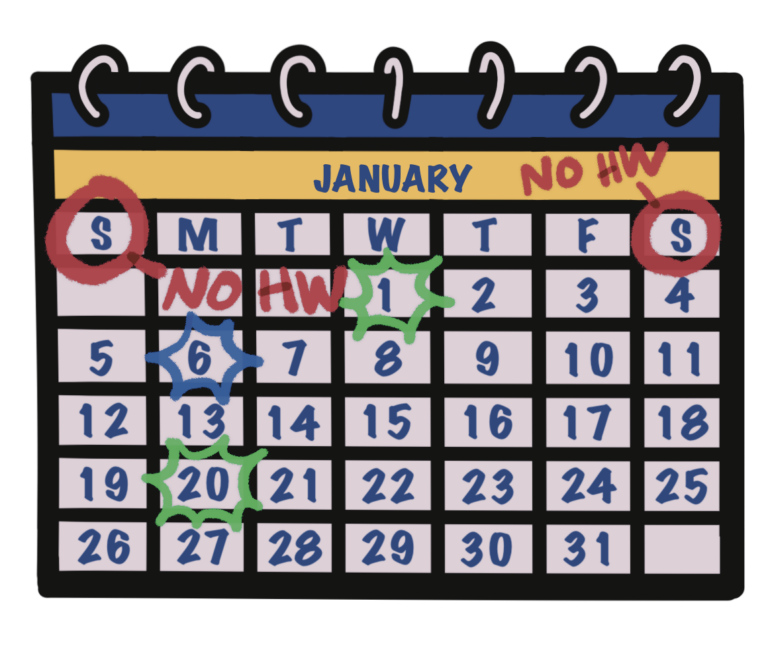
Weekend assignments should not be allowed

For the sake of student mental health and well-being, college assignments should only be due on weekdays 


By Ellie Noh — eenoh@ucdavis.edu


“Assignment due Saturday at 11:59 p.m.” 

This is what some students might see on Canvas after anticipating a somewhat restful weekend break. In my personal experience, I’ve had many assignments due on Sundays, week after week. While I understand why a few professors may opt to make this choice, having multiple assignments due on the weekend can be quite a daunting task for students who have a full academic workload.

With regards to higher education, I understand that the concept of being a full-time college student entails a chance for high school students to transition into the fast-paced “real world” lifestyle. However, I still continue to view weekends as a chance to achieve more balance in my life after a long week of classes and other assignments due throughout the week. If multiple looming deadlines are approaching on a weekend, it can cause a “day of relaxation” to be a day of working and finalizing assignments.

Students trying to achieve more of a balance on weekends does not necessarily entail just relaxation, either. It can also mean spending more time on extracurricular activities and developing pre-professional experiences. I have five meetings on the weekends, and this is just one example of my schedule that can hinder my ability to give a lot of my time to assignments due on the weekend. Other examples of weekend activities can be athletic meets, academic tournaments and more. Even with effective time management, there are always weekends that will have packed schedules — with commitments that are often out of our control.

Considering students’ busy schedules, a student’s academic career can almost be considered a full-time job — which traditionally only allows employees to work from 9 a.m. to 5 p.m. on weekdays. While the workloads can differ, students should be able to treat weekends as a break from their academic stress. Additionally, some professors prefer to not respond on the weekends and frequently reiterate to students that they should not expect a response from them. In these scenarios, if there are additional questions that might arise over the weekend about an assignment due, they will likely go unanswered. 

With this in mind, there does seem to be a correlation between the advancements in technology and the ability to make assignments due on the weekends. As platforms like Google Classroom and Canvas become commonly used tools for education, I can only reminisce back to the times when these platforms weren’t used as often as they are today: when assignments had to be submitted in person, with the weekdays being the only opportunity for students to do so. Prior to digital academic technologies, it wasn’t an expectation to go to school and turn in assignments on the weekend.

My perspective is not to get rid of such assignments, only to push the deadline to the start of class rather than a day prior. This can allow for more time on assignments if students have busy schedules on weekends. For instance, an assignment due Sunday at 11:59 p.m. can be moved to Monday at noon, at the start of class. This would allow for students to use more time on an assignment and finalize it with a fresh mindset, the day after Sunday, rather than spending their last day before a long week stressed about submitting it.

Having homework is a crucial part of learning and a helpful way to apply concepts learned in lecture, but it is also important to give ample time for students to plan their workload around an often strenuous and complex schedule. With this in mind, assignments should only be allowed to be due from Monday to Friday in order to allow for a more thorough completion and to improve students’ work-life balance. 


Written by: Ellie Noh — eenoh@ucdavis.edu


Disclaimer: The views and opinions expressed by individual columnists belong to the columnists alone and do not necessarily indicate the views and opinions held by The California Aggie.


UC Davis women’s tennis loses two matches at Washington State

After a rough start to the Aggies’ season, the team looks to improve at future matches 


By (Abigail DeSa) — sports@theaggie.org


On Jan. 11, the UC Davis women’s tennis team traveled to Seattle, Washington for their first matches of the season against the Washington State University Cougars and the Eastern Washington University Eagles. While the team demonstrated great effort and perseverance, the UC Davis Aggies unfortunately fell short over the weekend, losing both matches.

In their first match, the Aggies played Washington State University and were defeated with a final score of 0-7. The Cougars dominated the day, slashing wins across the board for the singles category, as well as taking a team point from the doubles category after winning two of the three doubles matches.

The Aggies’ lone victory was claimed by the doubles pair: Claire Galerkin, a fourth-year managerial economics major, and Kaia Wolfe, a third-year aerospace science and engineering and mechanical engineering double major. The match was heated and hard-fought on both sides, resulting in a tiebreaker set in Galerkin and Wolfe’s favor.

The match on Jan. 12 against Eastern Washington University was fierce, with both teams fighting hard to secure the win. Fired up by the tough loss the previous day, the Aggies showed up ready to shift the tides.

Despite the first doubles match ending in defeat for the Aggies, Galerkin and Wolfe rose to the occasion and earned a doubles win. With the matches tied, it was up to Polina Marakhtanova, a first-year cognitive science major, and Solia Valentine, a graduate student in the Master of Management program, to clinch the win. Unfortunately, they came up short and relinquished the first team point to the Eagles.

On the singles front, Marakhtanova and Valentine continued by picking up early wins for the team, showing their dominance in singles and making a strong comeback from their previous doubles match.

However, their efforts were soon followed by two losses for the Aggies, bringing the score to 2-3 to lean in favor of an Eagles victory.

It was up to Galerkin to keep the Aggies in the game — with a two-set victory, Galerkin clinched the win and tied up the score. Galerkin’s high performance throughout the weekend had her named the Big West Women’s Tennis Player of the Week, highlighting her valuable wins and athleticism.

Isabella Bringas, a first-year neurobiology, physiology and behavior major, then took over for the singles division. Nevertheless, she was unable to close the gap against her opponent , concluding the series of games and producing a team score of 3-4, with the Eagles taking the victory.

These matches assist the UC Davis tennis players in gaining experience and opportunities before the Big West Conference, making them best prepared for what is to come. Although the start to the season was rocky, the Aggies stood their ground and gave their full effort in every match. Despite setbacks, UC Davis will take the next steps forward and work toward coming back stronger. Up next, the UC Davis women’s tennis team is headed to Stanford, California for their match against Stanford University on Jan. 18.


By (Abigail DeSa) — sports@theaggie.org

Polarized CMB light: A new look into the origins of our universe

UC Davis researchers analyze the polarized light data from the South Pole Telescope, corroborating the standard cosmological model


By EKATERINA MEDVEDEVA — science@theaggie.org


A long time ago in a galaxy far, far away… Actually, if we look far enough into space, we will not find any galaxies. The light from those places was traveling to Earth for such a long time — meaning that its photons were emitted so long ago — that we have a chance to see what the universe looked like before the formation of galaxies.

The remnants of the first light that was ever emitted when the universe cooled down enough to allow photons to travel freely through space, about 380,000 years after the Big Bang, are known as the Cosmic Microwave Background (CMB). Studying this relic light can give us the key to understanding how the universe came to be.

There are three main sources of data for analysis of CMB: the South Pole Telescope (SPT) in Antarctica, the Atacama Cosmology Telescope (ACT) in Chile and Planck mission in space that was operated by the European Space Agency (ESA) from 2009 to 2013.

The frontier of CMB research for the past few years has been the analysis of its polarized portion of the light. Most light that we encounter in our daily lives is unpolarized. This is when the electric field component associated with a light wave oscillates in various directions perpendicular to its direction of travel. When the light is polarized, however, the electric field component oscillates in a single preferred direction.

In a recent study, a team of UC Davis researchers in collaboration with their colleagues from the South Pole Telescope analyzed this polarization data from the SPT, collected in 2019 to 2020, in an innovatory way to test certain aspects of the standard cosmological model (also known as ΛCDM), which describes how the universe evolved.

“This paper is a combination of really good data and a new state-of-the-art method for analysing it,” Marius Millea, one of the co-authors of the study, said. “The main way in which this analysis is different from previous studies is that it is done using the so-called Bayesian technique. A lot of the older methods pick out only some part of the data to analyze and this method is really able to consider the full data set — the entire [CMB polarization] map that we make and extract all of the information that’s in there.”

The computing for this study was done on a supercluster of Graphics Processing Unit (GPU) nodes called the National Energy Research Scientific Computing (NERSC) center located in Berkeley, California. Using the SPT data, which encompasses 1500 square degrees of the sky, researchers were able to derive the most precise measurements ever from the CMB polarization data, as opposed to a combination of polarization data and other measurements.

One of the most important measurements is the Hubble constant, which is the rate of the expansion of the universe. Currently, there is disagreement about its value that is known as the Hubble tension. The conflict stems from the fact that its value measured locally (by looking at supernovae) significantly differs from the value measured via studying the CMB. The Hubble constant estimates range from 67.4 km/sec/Mpc to 74.0 km/sec/Mpc, according to a NASA article published in 2019. The UC Davis team’s precise measurements, yielding 66.81 ± 0.81 km/s/Mpc, thus reinforce the discrepancy.

“Before our measurements, if you ask, well, ‘What is the expansion rate if you only use the polarization of the CMB?’, the air bars were too large and it could have actually agreed with the value that you get from these local measurements and sort of saying everything is alright,” Millea said. “But we just said no. What we actually find is something totally in line with the whole host of other measurements [of CMB] that disagrees with the local measurement.”

The results of this study reaffirm the standard cosmological model and match the predictions from other major CMB data studies.

“The ΛCDM model provides a good simultaneous fit to the combined Planck, ACT and SPT data, and thus passes a powerful test,” the study reads.

This paper is the first out of a series of the team’s studies that analyze the SPT data, offering exciting prospects in the near future.

“The telescope has been taking data ever since 2020, so we have more than double the amount of data that we used for this analysis, and we have the temperature which we didn’t use in this analysis at all,” Millea said. “This analysis [already] produced the tightest constraints on various things. In the coming analyses we’ll better measure the Hubble constant, the amount of gravitational lensing, the matter density in the universe — so the future is pretty bright.”


Written by: Ekaterina Medvedeva — science@theaggie.org


Breaking Bredt: A new era of strained molecule synthesis at UCLA

“If you’re going to take on a rule that’s been around for a hundred years, you have to have a certain type of mindset — being willing to go out on a limb.” — Neil Garg

By NAREN KRISHNA JEGAN — science@theaggie.org

In 1924, organic chemist Julius Bredt created an empirical observation about ringed molecules with a bonded carbon above or below the plane of the ring. He noted that an alkene (double-bonded carbon) cannot be placed at the bridgehead carbon (a carbon bonded to a sub planar or super planar branch with respect to the ring).

Dr. Jared Shaw, an organic chemistry professor at UC Davis, provided insight behind this observation.

“A double-bonded two-carbon molecule is flat,” Shaw said. “If each carbon atom has two substituents bonded to it, then those substituents will be in the same plane as the carbon. As you start to connect those atoms with rings, you introduce strain. A little bit of strain is okay, but if you have a double bond that’s at the bridgehead position […] then one of the rings has to be pretty big or there will be so much strain that the molecule will be very difficult — even impossible — to create.”

Researchers from the University of California, Los Angeles (UCLA) have found a way to create anti-Bredt olefins (ABOs), or molecules that systematically violate Bredt’s rule. While ABO research has been ongoing for multiple decades, this work provides a novel generalizable approach to synthesize ABOs that has a plethora of potential areas of future research.

Synthesizing ABOs is no easy task. UCLA graduate students Luca McDermott and Zach Walters, along with Professor Neil Garg, highlighted three main parts of the synthesis.

“People have performed ABO research in the past,” McDermott said. “All of them rely on some form of precursor you make. The ways a lot of people have done in the past to activate these precursors is very harsh; These methods allow you to generate ABOs but not in the presence of other functional groups.”

One major consideration of the precursors was stereochemistry, or the three-dimensional arrangement of atoms in a molecule.

“If you had the incorrect stereochemistry, the elimination reaction wouldn’t work at all,” McDermott said. “I remember heating our vessel higher and higher to see if it would react, but you wouldn’t get a reaction if you had the incorrect stereoisomer.”
Garg, Shaw and McDermott then explained one of the key mechanisms responsible for creating the ABOs the team was working on. In the context of precursors, McDermott introduced the Kobayashi method’s versatility with a variety of functional groups.

“The real beauty of the Kobayashi method is that you put the two substituents where you want the bond to form,” Garg said. “One side you put a silicon, the other a triflate or halide.”

The Kobayashi mechanism uses a fluoride source to attack the silyl group. Shaw points out that trimethylsilyl (TMS) contains silicon and, when near fluoride, will create a very strong interaction. This results in a simultaneous elimination reaction that results in the formation of a TMS–F complex, a triflate anion, and the strained bond between the locations of the original triflate and TMS groups. Using this principle, the team created a precursor compound with a silyl group and nonaflate, chloride or bromide leaving group at the location of the carbons where the double bond would exist. Adding a fluoride source, the TMS-F complex and the leaving group anion would be freed, resulting in the formation of an ABO with the desired location of the alkene.

Walters discussed how the team was able to contain such an unstable molecule. He rationaled that ABOs can react not only with other molecules, but even with themselves. In order to verify the presence of an ABO, they would need to trap it with something else, another reactant, such as anthracene.

“A big challenge that we encountered with strained compound chemistry was generating the compound slowly and using an excess amount of reactants to ensure proper synthesis,” Walters said.

One of the strategies used was pairing caesium fluoride (CsF) with tetra-butyl ammonium bromide, which was expected to undergo a double displacement reaction which would slowly release the fluoride ion in toluene to generate the ABO in small amounts.

“The key there was using toluene […] We saw poor reactivity in other solvents at elevated temperatures,” Walters said. “Using the tetra-butyl ammonium bromide meant that having a solvent where CsF would be insoluble was very important.”

Using this approach, the team was able to create eight types of ABOs, confirmed by analysis of trapping reactions using nuclear magnetic resonance (NMR) spectroscopy. Furthermore, the team was able to show that the ABOs were chiral, showcasing the ability to design stable yet highly strained molecules with well-defined stereochemistry, expanding the field’s understanding of molecular stability and reactivity.

“There are a few scattered examples of people making ABO’s over the last few decades […] so it’s not shown to be impossible,” Garg said. “The purpose of our paper is […] to show that you can make ABO’s in a general way; and that’s what now makes it really possible. It shouldn’t be lost upon anybody the amount of work and creativity from the students and postdocs that went into this is enormous […] This [work] is the result of four PhD students, two postdocs and our UCLA collaborator Professor Ken Houk.”
Research on this topic will continue for years to come, and the results of this study will be an avenue for future discoveries and scientific progress. For more information about this work and the members who contributed, check out the original study and the Garg Lab’s website.


Original Article:

Luca McDermott et al., A solution to the anti-Bredt olefin synthesis problem.

Science386,eadq3519(2024).DOI:10.1126/science.adq3519

Contributing Authors:

Luca McDermott, Zach Walters, Sarah French, Allison Clark, Jiaming Ding, Andrew Kelleghan, K.N. Houk, Neil Garg


More Information About the Garg Research Group:

https://garg.chem.ucla.edu


Written by: Naren Krishna Jeganscience@theaggie.org

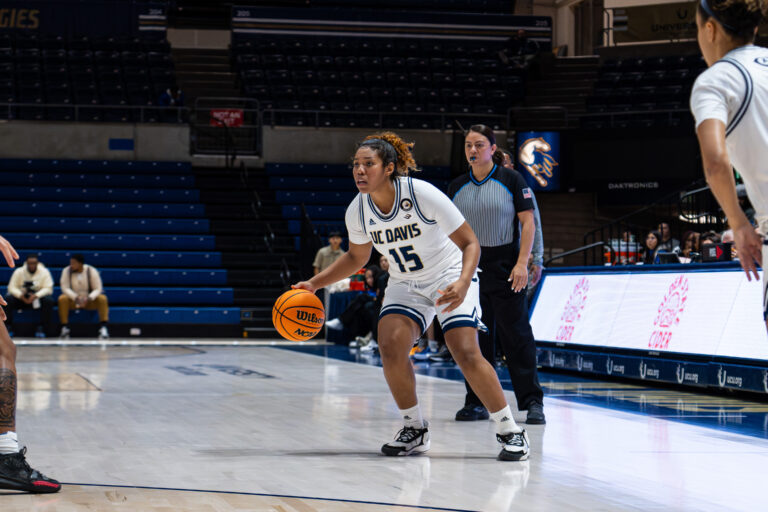
UC Davis women’s basketball takes the win over Fullerton to extend hot streak

The win marks a strong start to the new quarter for the Aggies


By Diego Cerna – (sports@theaggie.org)


On Jan. 9, 2025, the UC Davis women’s basketball team faced off against the California State University, Fullerton Titans in an away game for their 15th game of the season.

The Aggies took control of the game from the start: Tova Sabel, a fourth-year psychology major, and Megan Norris, a third-year political science major, led the team with strong performances. The Aggies entered halftime with a commanding 41-19 lead, only giving up six points to the Titans in the second quarter.

Despite a significant deficit, the Titans showed resilience and scored a total of 20 points in the third quarter. However, the Aggies responded just before the end of the quarter when Victoria Baker, a third-year psychology major and guard, scored the final six points of the third quarter, giving the Aggies a 59-39 lead heading into the fourth.

The final quarter saw the first-year Aggies shine. Avery Sussex, a first-year undeclared major and guard, nailed two three-pointers, while Sahana Kanagasabay, a first-year undeclared major and guard, contributed with back-to-back layups to help seal the game with a dominant 80-54 victory for the Aggies.

Sabel ended the game having scored 24 points and 10 rebounds on a 10-18 clip with 50% shooting from the three-ball. This is Sabel’s second double-double of the season, the first in UC Davis’ most recent loss to Portland State back in November.

The week prior, Sabel was named to the National Collegiate Athletic Association (NCAA) Women’s Basketball starting five for Week 10 of play, which highlights the best performances nationwide from NCAA Division 1 players. Sabel dropped 21 points, six rebounds and three steals against California State University, Bakersfield on Jan. 2 and 10 points, eight rebounds and two blocks against California State University, Northridge on Jan. 4. She also surpassed 1,000 points in her collegiate career.

Norris delivered 10 points and 11 rebounds for her first double-double of the season, along with two steals and two blocks. Baker also delivered 10 points of her own on an efficient 4-5 record from the field.

This is the Aggies’ eighth straight win, as they remain at the top of the Big West Conference. They continue their undefeated month of December, as they have beaten four out of the five conference teams with a margin of 20 points or more. Additionally, the team has proven its ability to win close games, securing two wins by margins of 10 points or less with a 66-60 win in their conference opener against California Polytechnic University, San Luis Obispo and a 57-50 win over Arizona State University.

The Aggies currently sit second in the Big West Standings, remaining 5-0 in conference play. The Aggies’ next home games will host Cal Poly, San Luis Obispo on Jan. 16 and UC Santa Barbara on Jan. 18 at the UC Davis Credit Union Center.


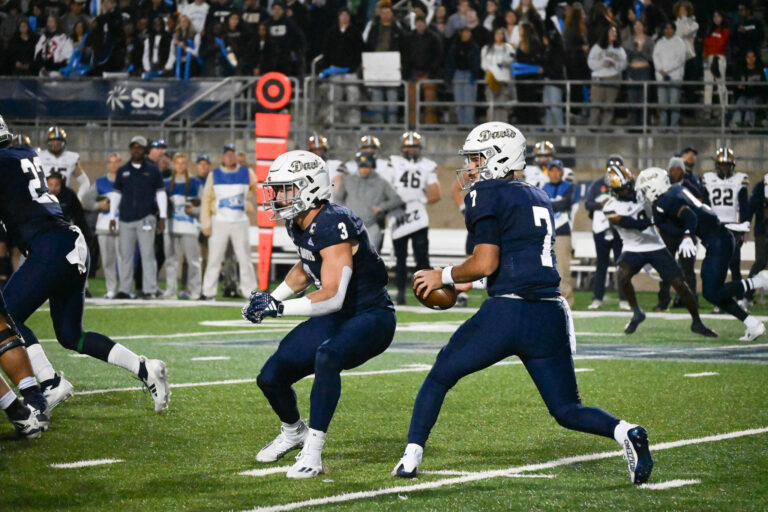
A look into the historic season for UC Davis football

The Aggies were defeated by South Dakota in the NCAA quarterfinals


By Lucienne Brooker — sports@theaggie.org

A historic season for UC Davis football came to a close end in the NCAA quarterfinals with a loss to the fourth-ranked University of South Dakota Coyotes. The 21-35 defeat on Dec. 14 in Vermillion, South Dakota marked only the third loss of the season for the Aggies, where the team blossomed into a national contender. New Head Coach Tim Plough breathed new life into the team, inspiring them to only their second appearance in NCAA Division 1 quarterfinals in team history. Going into the tournament as the No. 5 seed was another recording-breaking moment for the team.

Despite an earlier-than-hoped exit from post-season playoffs, the team, coaching staff and fans experienced a groundbreaking season. The Aggies won 11 of 14 games, including a nine-game victory streak in the middle of the season.

Highlights included decisive wins over rivals Sacramento State University and California Polytechnic State University, San Luis Obispo, as well as a rousing defeat of 12th-ranked Illinois State University at the UC Davis Health Stadium in the second round of playoffs. In the final match of the 2024 season, the Aggies fought hard to advance to the next round, but they were outmatched against a strong South Dakota team.

South Dakota scored first in the first quarter, but the Aggies were quickly able to fight back to tie the score at 7-7. Unfortunately for UC Davis, South Dakota cut off their momentum and capitalized twice to make the score 21-7. The Aggies cut the deficit to seven points again before halftime, however, a third quarter in which they failed to take advantage of any scoring opportunities set them too far behind to catch up.

South Dakota scored again in the third and then once more in the fourth quarter, pushing them to 35 points. While the Aggies also scored one more touchdown to increase their score to 21 points, they weren’t able to overtake the Coyotes’ lead. A final interception by South Dakota sealed their spot in the next round.

Despite the loss for the Aggies, there are a lot of positive takeaways from the game and the season as a whole. Trent Tompkins, a fifth-year communications major and wide receiver, finished the quarterfinal with a career-high 11 receptions. The Aggie defense was also able to limit scoring opportunities for South Dakota, denying them any points in several close calls.

“I appreciate these players and I’m grateful to be in a position to coach at a school I really love, and it was a good season for us,” Head Coach Tim Plough said in a UC Davis Athletics article. “So hopefully we can get back to work and figure out how to get back here again in the future. Despite the result, there was a lot of joy out there today.”

Several players received post-season awards. A total of 13 players were named to Big Sky All-Conference teams, including six to the first team. Lan Larison, a fourth-year managerial economics major and running back, and Rex Connors, a third-year human development major and defensive back, were unanimously picked for the first team.

Larison and Miles Hastings,  a fifth-year communications major and quarterback, were also named finalists for the Walter Payton Award. David Meyer, a third-year undeclared major and linebacker, was named a Buck Buchanan Award finalist and Hunter Ridley, a third-year communications major and kicker, was named a Fred Mitchell Award finalist after stellar performances from both players throughout the season.

Although the season didn’t end in a national championship, the future of UC Davis football is bright. Under Head Coach Tim Plough, fans look forward to more exciting football in 2025 and beyond.


By Lucienne Brooker — sports@theaggie.org

The 2025 awards season is here, and it’s kicking off in ‘golden’ fashion

A recap of some notable moments from this past Golden Globe Awards


BY SHREYA KUMAR – arts@theaggie.org


The 82nd Annual Golden Globe Awards took center stage on Jan. 5 at the iconic Beverly Hilton Ballroom in Los Angeles. Host Nikki Glaser made history as the first woman to solo host the Golden Globes, and engaged the artists in the ballroom as well as the viewers at home. Glaser kept the energy up while staying respectful, and her rendition of a “Wicked” and “Conclave” mashup song — “Pope-ular” — has already gone viral.

As always, the Globes celebrated the most outstanding and talked-about films and TV shows of the year. Netflix’s original Spanish-language musical crime comedy “Emilia Pérez” led the pack with the most nominations going into the night and delivered on expectations, taking home several awards including the coveted Best Motion Picture in the Comedy or Musical category.

The film has been polarizing since its release and portrays a Mexican cartel leader who starts a new life after transitioning into a woman. Despite receiving praise for its performances, directing, music and ambitious story, it has also received criticism for its stereotypical representation of Mexican culture, clunky Spanish dialogue, and for its somewhat flippant portrayal of gender transition. Despite the controversy, the film’s accolades are still a win for Spanish-language films and transgender representation on the big screen, indicating that audiences and critics alike are willing to expand their boundaries and enjoy unique foreign stories.

“The Brutalist” claimed the award for Best Motion Picture in the Drama category, with its star Adrien Brody also earning Best Male Actor in a Drama for his poignant performance as a Holocaust survivor trying to make a living in post-war America.

“I was told this film was indistributable,” director Brady Corbet said in his acceptance speech. “I was told that no one would come out and see it.”

The film is one of the rare few in Hollywood to include a 15-minute intermission in the middle of its three-and-a-half-hour runtime — yet it remained a critical favorite and commercial success.

In a historic moment, Fernanda Torres became the first Brazilian actor to win Best Female Actor in a Drama for her role in “I’m Still Here,” over 25 years after her mother was the first Brazilian actress ever nominated for the award. Demi Moore, after years of being one of Hollywood’s more iconic faces, won her first Golden Globe for her role in “The Substance” at the age of 62.

In terms of television, “Shōgun” had a major sweep, taking home Best Drama TV Series, with both of its leads winning Best Actor and Actress in a Drama TV Series. On the comedic side, “Hacks” continued its reign as a fan and critic favorite, winning Best Musical or Comedy TV Series for its razor-sharp wit, as well as Jean Smart winning Best Actress in a Musical or Comedy TV Series for her standout role.

From groundbreaking wins to historic moments, the night highlighted the industry’s ability to evolve while honoring its roots. With standout performances, innovative projects and a diverse array of voices taking center stage, this year’s ceremony set a high bar for the awards season ahead. As Hollywood continues to push boundaries and redefine entertainment, the Golden Globes reminded us why we need these stories to resonate, inspire and captivate audiences worldwide.


Written by Shreya Kumar – arts@theaggie.org 


Culture Corner

The Arts Desk’s weekly picks for music, movies and more


By CHARLIE MCBRIAN — arts@theaggie.org


TV Show: “Hacks” (2021 to present)


“Hacks” revolves around the relationship between aging comedy legend Deborah Vance and her younger new writer Ava Daniels. Their clashing statuses and personalities allow the show to explore the power dynamics inherent to comedy. “Hacks” asks: How much of yourself and others around you are you willing to sacrifice for success? Who’s laughing and who’s being laughed at? “Hacks” doesn’t answer these questions, with Ava and Deborah having moments of admirability and detestability, often simultaneously. While constraining her, Deborah weaponizes the expectations and assumptions toward female comedians to stay afloat and maybe even get ahead. Ava works with someone she sees as a “hack” in order to rehabilitate her image after her self-centeredness causes her to lose her life in Los Angeles. In its bluntness, it goes places a lot of shows don’t yet attempt to and preserves its heart and humor.

Song: “Fingertips Suite” (1997) by They Might Be Giants

Consisting of 21 songlets ranging in length from four to 61 seconds, “Fingertips” is a highlight off of They Might Be Giants’ 1997 LP “Apollo 18.” They Might Be Giants can make high-concept pop from a do it yourself approach. “Fingertips” sees this project at its creative peak featuring wit, humor, genre-play and, above all, hooks — as there’s not much room for anything else. Pieces vary from ballads (“Mysterious Whisper”) to power pop (“Hey now Everybody”) to country (“All Alone”). Songs cut off midway through and make way for a fresh idea. The pieces are strong enough to not get disoriented or exhausted, making for an exhilarating listen. I dare anyone to listen through the LP without getting a song segment stuck in their head.

Movie: “The Queen” (1968) dir. Frank Simon


A little over two decades before “Paris Is Burning” came its spiritual predecessor — “The Queen,” documenting a 1967 drag pageant. Shot as a fly on the wall, it allows the story and characters to speak for themselves, covering topics like gay individuals in the military, gender-affirming surgery and marriage — all topics that would later reach the forefront of queer rights discourse. Clearly defined characters like narrator/emcee Flawless Sabrina, Pepper Labeija and the pageant’s favorite Rachel Harlow push forward the narrative toward the end. Although her appearance is brief, Crystal Labeija (mother of Ballroom’s legendary House of Labeija) pulls focus and hijacks the narrative to expose the inequality and artifice of pageant culture. Overall a great snapshot of a period of time through an, at the time, more hidden culture, this film is a must watch for fans of drag, queer history and the 1960s.


Album: “From a Basement on the Hill” (2004) by Elliott Smith


After simmering for his previous six albums, Elliott Smith’s sublimated bitterness comes to the surface. Years of “burning every bridge that [he] crossed” makes the album throb like an exposed nerve. Released roughly a year after Smith’s untimely death, sometimes it reads like a suicide note — ”Fond Farewell,” “Kings Crossing” and “The Last Hour.” But also on other tracks, like the explosive “Shooting Star” and “Coast to Coast,” it felt like Smith had a lot more to give. It’s a messy and difficult but ultimately beautiful album that stands apart from the rest of his discography and music in general. I recommend this to people who like The Beatles (“White Album”) and other all-over-the-place raw albums.

Written by: Charlie McBrian — arts@theaggie.org

Review: ‘Arcane’

The show’s animation and storytelling deserve to be remembered 


BY JULIE HUANG – arts@theaggie.org


The final episodes of “Arcane: League of Legends” came out a little more than a month ago, but no matter how much time passes, it deserves to remain in public memory as a masterful example of animated storytelling.

Although “Arcane” functions as an adaptation of the backstories of certain characters from Riot Games’ online multiplayer video game “League of Legends,” the show can be watched without any prior knowledge of the game that it is based on, managing to stand as a cohesive piece through the strength of the worldbuilding and characterization present within the confines of its own runtime.

“Arcane” is nearly unanimously regarded as an excellent show for the beauty of its visuals alone, and this beauty is put to good use. The animators expertly wield the qualities of their medium to serve other aspects of the show, harnessing the art and animation to advance the plot, develop the characters and enhance the emotional core of the story when necessary. Background art such as that of pristine city of Piltover’s shining white buildings or underground Zaun’s gloomy, dim streets are rendered in ways that convey the living conditions of both locations, hinting at how residents of both might feel on a daily basis without having to shoehorn that information in through heavy-handed dialogue.

As a viewing experience, “Arcane” is comfortable at baseline but incredibly emotional when it needs to be. The medium of animation shines best when used to portray concepts that might not visually translate as effectively in reality, and “Arcane” takes full advantage of its status as an art form. Fight scenes are infused with vibrant color, fluid animation and unique camera angles for maximum thrill and spectacle, while emotional moments, such as scenes featuring a character in mental turmoil, can be artistically represented through stylized depictions of pain, paranoia, chaos and other emotions.

The sizable cast of characters are each animated in a specific manner, subtly differentiated from each other not just through thoughtful character design but also careful emphasis on different aspects of their body language. By focusing on the expressiveness of Caitlyn’s Kiramman’s eyes, Vi’s consistent usage of her hands as a mode of defense or Jayce’s tendency to initiate physical touch as a sign of affection, the animation in “Arcane” successfully replicates how people carry themselves in distinct ways that demonstrate their unique preferences, associations and habits. This subtle reinforcement of each character as an individual entity then adds to the scale and scope of the show, making a compelling case for why the audience should feel invested without having to say a word.

Apart from the supporting strength of its visuals and animation, “Arcane” presents characters and dynamics that are compelling in their own right. Caitlyn and Vi stand out as a trailblazing example of a sexually explicit onscreen romance between two women, not merely for being positive representation but for being effortless representation. The depiction of their relationship avoids the classic queer arc of struggling against heteronormative societal values, a disapproving family, community or internalized homophobia. Although the pair do struggle and face societal pressures that impede their relationship, the fact that both Caitlyn and Vi are women is never itself the obstacle that must be overcome, allowing “Arcane” to explore a portrayal of a same-sex couple that is rooted in something other than the well-trod trope of needing to persevere through homophobia.

Essentially, by diverging from expectations that the nature of their relationship is something to comment on, the show is able to characterize the two women by more than their participation in a same-sex relationship. “Arcane” instead explores Caitlyn and Vi through other facets of their identities, such as how their dynamic is continually impacted by matters of class difference and complex family loyalties, successfully granting both their characters an organic level of depth and sense of attraction.

Some have criticized the inconsistent pacing between the first and second season, and this could be attributed to the differing scale of the timeline in each. The first season appears to cover around the span of a week to a month, while the second season takes place within a much larger time frame. Furthermore, the character arcs become more ambitious in season two,  diverging from each other and covering a larger range of concepts. The show is forced to devote time to each character separately, as opposed to the more tightly knit, entangled dynamics of the first season.

Perhaps some concepts and character arcs in season two could have benefited from the added time that a third season would provide. Yet, ultimately, the difference in pacing between these two seasons proves to be a subtle reminder that art does not exist in a vacuum.

Artists must constantly consider the limits of the resources at their disposal, whether those limits involve finances, time or the sheer amount of effort required to consistently produce art of high quality.

As showrunners confirmed that more shows set in the “League of Legends” world are in development, it only makes sense that “Arcane” had to be wrapped up quickly to make room for new projects. Although the show itself has ended, it will doubtlessly be remembered as a shining example of storytelling through animation for years to come.


Written by: Julie Huang — arts@theaggie.org 


Review: SZA is everlastingly emotionally honest on ‘LANA’

On her latest album, SZA reckons with healing and the cost of growth


By NATALIE SALTER—arts@theaggie.org


SZA is not afraid to contradict herself. On the title track of 2022’s “SOS,” the lyrics read, “No more fuck-shit, I’m done / Damn right, I’m the one” — but 12 tracks later, she laments upon her misgivings and crushing self-loathing post-breakup: “If I’m real, I deserve less / If I were you I wouldn’t take me back” (“Nobody Gets Me”). “SOS” plays out like a high-stakes tennis match between SZA’s ego and insecurities, swinging between effervescent self-confidence (“Conceited”) and a desperation to not be alone so intense it drives her to the point of plotting bloody vengeance (“Kill Bill”).

The triumph of “SOS,” and SZA’s artistry as a whole, is her ability to exist within both of these two extremes and the expanse of emotions in between without once coming across as disjointed or confused. Accentuated by diverse instrumental landscapes and delightfully cheeky lyricsim (“Damn, bitch, you so thirsty” from “Shirt”), SZA’s willingness to be simultaneously ferociously self-assured and self-critical makes her songwriting not only deeply relatable but a refreshing dose of genuine vulnerability in an industry that only celebrates authenticity so long as it isn’t too uncomfortable for commercial audiences.

Just before 2024 came to a close, SZA announced that she would be expanding “SOS” to a deluxe album, with the inclusion of 15 new tracks and a new title, “LANA.” Though perhaps more sonically consistent than its tempestuous predecessor, “LANA” is a clear continuation of the original album’s assertive yet unguarded storytelling.

An aptly titled first note of the album, the ensuing slew of tracks candidly present her deepest desires and worst hurts without restraint.

“I wanna feel sun on my skin / Even if it burns or blinds me / I wanna be purified within,” the lyrics read on “No More Hiding.”

As before, SZA refuses to let herself be strictly defined on this album. She gracefully dances between identities from track to track. The SZA we hear on “Drive” regrets her inability to make good on her promises of self-improvement and the lack of fulfillment she suffers within her current lifestyle. Then, on “30 for 30 (with Kendrick Lamar)” she tosses out expletives and dismissals with a devil-may-care attitude. She swings back into heart-aching introspection on “Kitchen,” but her bravado returns in full on “My Turn” — a fiercely infectious revenge track that channels “Kill Bill,” though is decidedly less bloodsoaked in its narrative.

SZA’s dissatisfaction with the pitfalls of modern life takes the front seat on “LANA.” “Saturn,” a track which predated the full deluxe album by over six months, lets her turn deeply philosophical as she wonders upon her purpose in a world filled with so much suffering.

“If there’s a point to being good, then where’s my reward? / The good die young and poor,” the lyrics read.

She fantasizes about floating away to another planet against a soundscape as exquisitely dreamy as its lyricism, maintaining a delicate balance between melancholy and hopefulness.

Where “SOS” thrived on roaring hooks as a framework for SZA’s intense declarations, the introspective thematic storytelling of “LANA” is composed of more diaphanous sounds. The chorus of “Kitchen” floats over a twinking, ethereal melody; “Crybaby” is enchantingly hypnotic in its slow-paced string backdrop. Side by side on the album, they work in tandem to create a soothing and near-divine listening experience.

On “BMF,” SZA interpolates “The Girl From Ipanema” to craft a blushing, bright ode to new crushes and fluttering first attraction. “Another Life” is elevated from a mere breakup piece to a transcendent reflection on love that could have been thanks to its warm, soaring tune. A bittersweet mixture of affection and mourning seeps into her mesmerizing vocals as she wishes for the stars to align for the love she knows could be the one.

SZA’s touch is verifiable magic — whatever she chooses to bring to life with her captivating voice is instantaneously alchemized into an extraordinary blend of burning emotions and everlasting dreams. Furthermore, the production on “LANA” is arguably her best yet, ascending beyond what SZA has ever done before to create a unique, entirely singular universe of her own.

Of course, some things never change. Damaged relationships occupy her psyche as much as ever — on “What Do I Do,” SZA finds herself paralyzed in the wake of an accidental discovery of her partner’s infidelity. “Love Me 4 Me,” which is made otherworldly by its atmospheric production and haunting instrumentals, gives her the chance to admit that she “romanticize[s] the scariest things,” chasing red flags only to be unloved by their bearers.

Likewise, she’s just as ready to get her knuckles bloody here as she was on “SOS.” A rippling, almost alien sequence of notes skips like a pebble across a lake behind a series of threatening assertions on “Get Behind Me (Interlude).” But where attacking her problems with a headstrong attitude was at the top of her rulebook before, the SZA of “LANA” seems more interested in analyzing her own behavior in order to free herself of it. She’d now much rather blame herself for being foolish and trusting than condemn an ex for betraying her, and she’s choosing to get her hands dirty by digging into her own misgivings rather than swinging at someone else’s.

From as early as 2017’s “CTRL,” SZA has mused upon the idea of healing, questioning if she will ever achieve serenity with herself and the world. She’s danced around it, masked her desire for it with romantic escapades and proclamations of an unbreakable self-worth and even toyed with it momentarily before dropping it for the edgier pessimism that dots the album’s 23-track run.

But on “LANA,” she finally dives into it headfirst. She knows she has a long way to go — (“Maybe if I stopped blaming the world for my faults, I could evolve”), the lyrics read on “Crybaby” — but 15 tracks later, she’s ready to face the challenges it may bring. After all, she said it herself that one must “break it if you want it to grow” (“No More Hiding”). She’s broken herself already; years of bitingly self-effacing lyrics guarantee that.

She’s grown too, as an artist and as a person, “LANA” in particular glowing with emotional maturity beyond what she’s ever done before. And not only is she ready to grow and heal through music again — but this time, it’s in lyrics meant to be screamed along to in cars and cried alongside of during nights of despair, she’s taking us along with her.

Written by: Natalie Salter—arts@theaggie.org

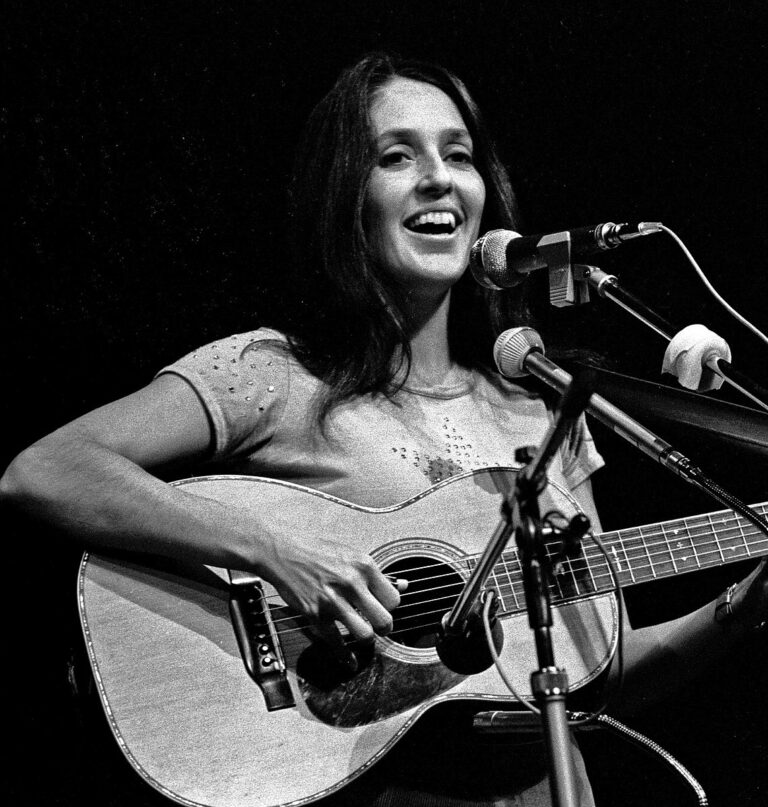
Joan Baez beyond ‘A Complete Unknown’

Exploring the life and work of the renowned folk singer outside of her relationship with Bob Dylan 


By SAVANNAH ANNO — arts@theaggie.org

Following the holiday release of “A Complete Unknown,” James Mangold’s long-awaited Bob Dylan biopic, came an uptick of curiosity about the film’s supporting characters. With Timothée Chalamet’s popularity working to bridge the gap between older and younger generations of viewers, many walked into the film with little to no knowledge of Dylan, along with other folk legends like Pete Seeger or Woody Guthrie. But that didn’t stop them from walking out with a new love for their timeless songwriting and sound, particularly when it came to Joan Baez.

With the very first look of actress Monica Barbaro as Baez — long black hair as she determinedly walks through New York to a folk club where she’ll have her first encounter with Dylan — Mangold solidifies her character: sure of herself, pristine and mesmerizing. After a haunting performance of “House Of The Rising Sun,” viewers, just like Dylan and the audience watching her within the movie, were immediately entranced.

Known for her “heartstopping soprano voice,” as Dylan called it in “How Sweet the Sound,” a short 2009 Baez documentary, the singer grabbed the public’s attention in 1959 at just 18 years old during her performance at the very first Newport Folk Festival.

From then on, Baez became a sensation. With her first album, “Joan Baez,” going gold, performing at Martin Luther King Jr.’s March on Washington and featured on the cover of TIME Magazine all within the span of three years, there was no doubt she would be a folk legend for decades to come.

As “A Complete Unknown” details, Baez became eternally linked to Dylan after helping bring his music to the greater public through duet performances and recording her own versions of his songs. With iconic videos of the pair singing tracks like “It Ain’t Me Babe,” it’s hard not to be curious about the exact details of Baez and Dylan’s ultimately tumultuous relationship of the ‘60s.

Baez’s existence as an artist, however, has much more to do with her own talent and character than it ever had to do with Dylan’s rise to fame and their eventual split. With many fans leaving “A Complete Unknown” not fully satisfied with the small hints of Baez’s career outside of Dylan, it may comfort you to know that there is no shortage of films, books or art detailing her life and voice. Here are a few different places to start while you dive into her large music discography.


“Where the Kissing Never Stops” by Joan Didion (1968)

From one Joan to another, “Where the Kissing Never Stops” is an essay that details Didion’s observations of Baez and her Institute for the Study of Nonviolence in Carmel Valley, California. As with everything else, Didion takes a critical eye to Baez’s activism and fame. While you may not agree with her portrayal of Baez, it’s worth the read to imagine the two legendary women sitting down together for an interview.


“Mischief Makers” (2017) and “Mischief Makers 2” (2021) at Seager Gray Gallery

While “A Complete Unknown” made Baez’s musical talent clear for all to see, her talent as a visual artist came to the forefront of her career later in life. Her series of paintings, which she calls “Mischief Makers,” includes portraits of activists like Greta Thunberg, figures like Kamala Harris and even one of a young Bob Dylan.


“Am I Pretty When I Fly? An Album of Upside Down Drawings” by Joan Baez (2023)

Published fairly recently is a 120-page collection of drawings, completed and categorized by Baez in a large, hardcover coffee table book. Baez, who has always had a passion for art, completed each drawing by beginning with the paper upside down and sometimes even with her non-dominant hand. Featuring abstract sketches of herself, nature and other people, Baez provides a new way for fans to get to know her beyond just listening to her music.


“Joan Baez: I Am a Noise” dir. Miri Navasky, Karen O’Connor and Maeve O’Boyle (2023)

A full-length documentary, “Joan Baez: I Am a Noise” shifts back and forth between Baez’s farewell tour in the present day and the fully fledged story of her 60-year career. Not only detailing the events of her life but the inner workings of her mind through her journal entries and drawings, “I Am a Noise,” highlights Baez’s emotional strength and resilience as an activist, artist and overall human being.


“When You See My Mother, Ask Her to Dance” by Joan Baez (2024)

A collection of autobiographical poetry, “When You See My Mother, Ask Her to Dance,” is made up of old and new writings by Baez, chronicling her relationships with friends, family members and more. Published just recently in April 2024, the collection is the very first-ever look at Baez’s poetry outside of her songwriting.


While “A Complete Unknown” may not be a perfect film — Dylan experts are beginning to point out the movie’s inconsistencies with reality — it was successful in its mission to bring new life to folk music’s fanbase. Using Barbaro’s talent as a way to lead fans into the rest of Baez’s story, her character in the film is just the tip of the iceberg when it comes to understanding the depth of her art.

“I hope audiences who watch this film are inspired to dive into Joan Baez’s music and activism,” Barbaro said in an interview with Variety. “She’s an icon, and it’s an honor to bring her story to life.”


Written by: Savannah Anno — arts@theaggie.org

New year, new you, same movies

Movies start your New Year off right and on the path to success 


By DEVANSHI AGNIHOTRI —- arts@theaggie.org


As the new year has started, many of us have been experimenting with new habits and regimes to achieve our New Year’s resolutions, but the commitment can get overwhelming. Here are a few movies that embody the hard work and dedication to inspire you to get back on track.

The first movie that describes perseverance in a unique way is “Forrest Gump,” which follows a man named Forrest Gump who has experienced various lives, reliving these experiences while he passes time waiting for the bus. He played college football, joined the U.S. Army fighting in Vietnam, received the Medal of Honor and captained a shrimp boat — just to note a few of his accomplishments. Gump later proposes to his childhood love, Jenny, but once she rejects the proposal, Gump runs around the entire country while distraught. But eventually, Gump comes back and everything falls into place.

In the film, Gump proudly acknowledges that he has always strived to live a life full of experiences, even if they weren’t necessarily easy. “Always be able to look back and say, at least I didn’t lead no humdrum life,” he said. This film emphasizes the importance of finding your true meaning in life, and being fearless of a new experience despite what others may say. Regardless of the obstacles in Gump’s life, such as his friend Benjamin Buford “Bubba” Blue passing away, he managed to push forward and leave no dreams unattended. For example, he ended up captaining the shrimp boat despite it being the dream he shared with Bubba.

Another movie that many of us need to manifest is “Legally Blonde,” a film that follows Elle Woods, a fashion merchandising major. Her boyfriend, Warner Huntington III, will attend Harvard Law the following year but abruptly breaks up with her. In order to get Warner back, Elle aims to follow him there after studying and passing the law school entrance exam. Once they run into each other, Warner is shocked to see her, but even more shocked to find out that she attends the university. He questions her ability to get into the law school program to which she delivers the iconic response —- “What, like it’s hard?” After working to be with Warner, she slowly realizes that he will never want to be with her, so it is time to make a name for herself, which she does by being invited to one of Boston’s best law firms after many doubting her ability to succeed in the industry. This movie is sure to make you laugh and feel inspired to go after what you want, even if you are told otherwise. In 2025, we could all use a little more confidence. No dream was too big for Elle Woods, so why should it be different for you? Every time she formed a new goal, she put in all the necessary work, and marked the goal off her checklist.

When thinking of inspirational films, “Ratatouille” definitely fits the bill. Through the way Remy, the rat, gains inspiration from French chef Auguste Gusteau and maintains his passion for cooking despite the rest of the rats ridiculing him for not scavenging for garbage with them. But, Remy keeps his mind set on what his heart desires and eventually opens “La Ratatouille,” a bistro that welcomes both rats and humans.

One notable quote that guides Remy in the right direction after being discouraged is from Chef Auguste Gusteau: “You must be imaginative, strong-hearted. You must try things that may not work, and you must not let anyone define your limits because of where you come from. Your only limit is your soul.” We are the only people that can hold us back. So, this year, do whatever your heart desires and take on the challenges others have scared you away from. If Remy, a rat, can cook in a kitchen and open a bistro, there is no reason for you to let your dreams go.

If you feel the load of this quarter getting heavy, just take a moment, sit back, turn on one of these movies and let your imagination fly. Remember how Forrest Gump, Elle Woods and Remy achieved their biggest dreams that even us, as the audience, couldn’t believe. They ignored the people (and rats) who doubted them, and continued living their life the way they saw best. So, take a deep breath and stay on track!


Written by: Devanshi Agnihotri — arts@theaggie.org