58.4 F
Davis

Davis, California

Tuesday, December 23, 2025
Home Blog Page 63

‘Setting the roots for law school’: Las Raíces Pre-Law helps underrepresented students break into law

Las Raíces board members and founder share the group’s mission, resources available to pre-law students 


By EVELYN SANCHEZ — features@theaggie.org

Pre-law can be incredibly daunting. Thousands of students spend months, if not years, studying for the Law School Admission Test (LSAT), applying to law schools, practicing interviews and desperately hoping they’re good enough to make it in the competitive field.

However, law practice is incredibly varied and not limited to becoming a lawyer. Pursuing law can earn positions in consulting, human resources and other government sectors. Pre-law is also not only for political science majors — a common misconception often ingrained into university culture. 

Students from a variety of backgrounds continue to be underrepresented in areas that desperately need them. Only about 14% of law students identify as Hispanic, with Black students making up only 8.3% and Asian students constituting 7.4%, according to a study done by Enjuris. Las Raíces exists to provide an avenue into the world of law for such students. 

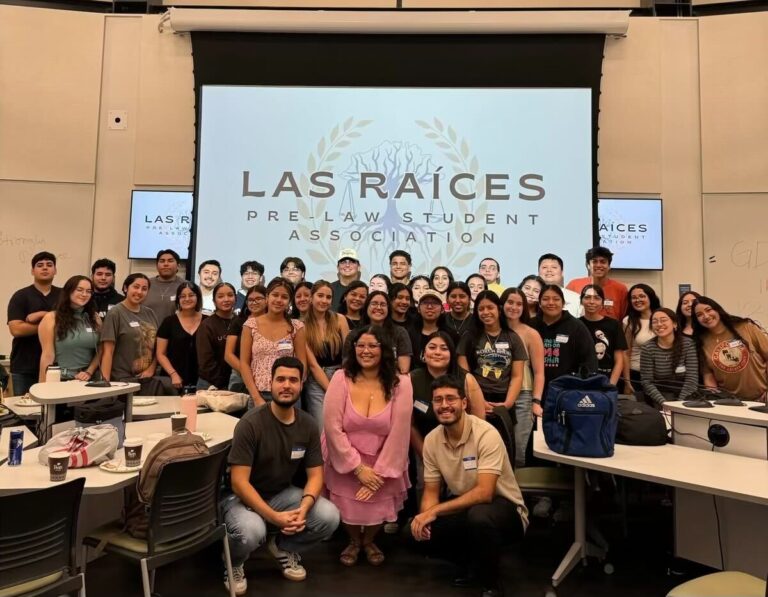
“The mission of the Las Raíces Pre-Law Student Association at the University of California, Davis is to provide a means for educating and creating accessibility into the field of law for Latinx students as well as students of other historically underrepresented marginalized communities,” Las Raíces’ website and mission statement reads

Rogelio Villagrana, a UC Davis alum and the current director for UC Davis for Early Academic Outreach Program, alongside six other UC Davis undergraduate students founded the club during his second year, having graduated in 1996. 

“There [already] was a pre-law society [at Davis], which was informational only,” Villagrana said. “I wanted something that was more active in the community. I wanted an organization that could be a conduit of resources to the community. It was created by that void that existed.”

Originally established as La Raza Pre-Law Student Association at UC Davis, the organization’s humble beginnings stemmed from a desire to establish a resource center for struggling Latinx students interested in pursuing law. 

With no formerly dedicated pre-law organization, the name was chosen as an homage to the struggles of the Latinx community. In 2022, the name was changed to Las Raíces. The continued Spanish title serves as a tribute to their origins, while students continue to reflect on the importance of Latinx individuals within the law field.

“When we had that name, it was an homage to that struggle,” Graciela Álvarez, a fourth-year history major and the organization’s co-chair, said. “But Las Raíces — which means roots — we are setting the roots for law school. It’s ethnically centered and not exclusive.”

Álvarez discussed why she chose to join the pre-law organization and how it has benefitted her. 

“I wanted to pursue teaching something law-related at first,” Álvarez said. “Then I saw [Las Raíces] at the Chicanx Center, Bienvenida, and I knew I wanted to go to law school. I knew that possibly during my time here, my mind would change. I met a community through the club.”

Similarly to Álvarez, Tatiana Vega, a fourth-year political science and sociology double major, did not start out with dreams of law school. Having joined her second year, Vega now serves as the sergeant at arms for the organization. 

“I wasn’t interested in law,” Vega said. “I wanted to become an FBI agent until my second year. I started off as a political science major and added another major. After I did all that, I found out about the club.” 

Sianna Vega, a fourth-year international relations major and the co-chair of Las Raíces, shared that there is sometimes a level of intimidation shared among her peers toward processes within higher education.

“A big majority of us Latinos don’t know the process in higher education,” Vega said. “We don’t know the steps we need to take to apply to these places. It can be very intimidating.”

Vega went on to discuss part of the organization’s goal with undergraduate students. 

“There is a very stressful idea around law school,” Vega said. “But we are also trying to make undergrad less stressful too.” 

The organization hosts resume workshops where students can streamline their resumes for law school applications, as well as scholarships twice every winter and spring quarter. The scholarships are open to any UC Davis students, including those not in the organization, and the next opportunity available opens on Monday, Jan. 13.

Las Raíces hosts multiple speaker and alumni panels, including the former Dean of the UC Davis School of Law, Kevin R. Johnson, and Zuma Alejandra Muñoz, a Latina first-generation practicing attorney, to speak on their experiences with law school and admissions. Las Raíces also has connections to the California Latino Capitol Association Foundation Fellowship Program, which hosts an annual 10-week summer fellowship, and often coordinates LSAT study groups, social events and fundraisers.

“I didn’t know there were programs for pre-law students like KHOP, or [the] King Hall Outreach Program,” Álvarez said. “It’s a one-day-a-week commitment program that helps you know what’s expected on the law school application. It helps keep important things in mind, discerns what makes a law school a good fit and informs you on financial aid. I met a bunch of people through that program that [do not] only go to Davis.” 

Gerardo Medina, a fourth-year political science major and the organization’s historian, discussed the impact of the Las Raíces. 

“We are here to continue the legacy of those before and after us,” Medina said. “At the end of the day, we are always here to help each other. We are all trying to succeed.”

Las Raíces also hosts field trips to law schools and courts to expand students’ perspectives. Though still in the works, they have been facilitating a field trip to meet up with the Latine Pre-Law Society (LPLS) at UC Berkeley. The goal is to organize panels between LPLS Berkeley, La Alianza at UC Berkeley Law and Latinx Law Students Associations at the UC Davis School of Law.

Villagrana continues to give back to the organization as a mentor and occasional speaker.

“It’s a very safe space for people to come together and contribute and share,” Villagrana said. “It’s important to have a group you can belong to when you run into difficult times as a student.”

To learn more about joining the organization, feel free to follow @lasraicesprelawucd on Instagram or visit their website at ucdlasraicesprelaw.com


Written by: Evelyn Sanchez  — features@theaggie.org


Editor’s Note: An earlier version of this article did not include accent marks in Las Raíces and Tatiana Vega’s name was originally written as Tatiana Varga. We have updated the story to better represent the communities and sources covered. 

 

The winter blues: A guide to health and wellness during the daunting winter quarter

0

UC Davis students offer advice and strategies for maintaining their mental and physical health during the winter season


By JENEVAH HARRISON — features@theaggie.org


The winter blues are starting to return; During these trying times, many UC Davis students struggle to maintain their mental and physical health.

But try not to despair too much and take these tips from some of your fellow students on how to beat these incessant blues.

“Winter quarter is definitely the toughest quarter for me,” Julie Marquez, a second-year English major, said. “The weather tends to affect my mood, and since I’ve never liked the cold, I would rather stay inside than go out with friends or study elsewhere. Consequently, I end up getting a little sad and unproductive.”

Marquez’s experience echoes that of many students who find themselves wrestling with low energy and mood swings as the days grow shorter and colder. Subsequently, the temptation of remaining in the comforts of one’s home arises, often leading to patterns of isolation and depression. Marquez said it’s important to resist that temptation to decrease isolation.

“I’ve found that it’s beneficial when I push myself to interact with people and study around campus instead of rushing back home as soon as classes are over,” Marquez said.

Marquez also said staying off the phone helps to stimulate the mind.

“Also, [I try to] spend as much time off of social media as I can,” Marquez said. “I spent the majority of my winter break reading, and I’d like for that to follow into the quarter. It always feels like a better alternative to mindlessly scrolling on any app.”

Besides engaging the brain, Huy Tran, a third-year international relations major, said physical activity is another way to beat the winter slump.

“One way I manage my stress levels is going to the gym,” Tran said. “The gym is one of my favorite places to go because I don’t have to think. There [are] no thoughts in my head at the gym, and I feel very relaxed.”

Tran also highlighted the importance of picking up new hobbies to combat the long and draining season.

“I feel like especially with the weather, it gets very depressing — but that’s why it’s the perfect opportunity to try something new, like learning a new hobby,” Tran said.

Anna Petruzzi, a second year biological psychology major, said the lighting changes in winter tends to make her feel less motivated.

“The sun setting early is just so depressing,” Petruzzi said. “It makes me want to sleep instead of doing my work.”

To combat these feelings, Petruzzi said she likes to make her room cozy to create a safe place to return to after classes. She also said she gives herself plenty of breaks in between study sessions to ensure her energy and motivation remain intact.

The UC Davis Student Health and Counseling Services also offers tips to manage stress levels. In their article “Feeling Stressed?” they suggested implementing a regular exercise routine.

“Exercise can help bring your body back to normal levels and releases feel-good neurotransmitters called endorphins,” the article reads.

They also emphasized the importance of proper nutrition and eating habits.

“Eating three or more small to medium meals on a regular schedule that include fruit and vegetables can help maintain a balanced energy level,” the article reads.

Students can also find support through campus resources and organizations. Clubs and organizations on campus may provide opportunities for indoor and outdoor activities. For more information on specific groups, the UC Davis website provides club and organization lists, as well as further resources for students.

For those who prefer indoor activities, campus locations including the Activities and Recreation Center (ARC) provide many activities for students including yoga, badminton, volleyball, an indoor track for running and even a rock climbing wall.

Whether it’s joining a creative writing club, engaging in group study sessions or taking part in cultural organizations, there are plenty of ways to stay connected, active and motivated this winter quarter.


Written by: Jenevah Harrison — features@theaggie.org


On-campus ‘food hole’ grabs the attention of the community

0

A recent viral post from local account @mydaviscalifornia popularized the on-campus anomaly


By RACHEL GAUER — features@theaggie.org


“What is a food hole?” — that’s the opening title phrase that captured audience attention on a recent video published by the local Instagram account, @mydaviscalifornia. The account, which showcases Davis restaurants, spots and other unique details the city has to offer, posted the video across its social media pages on Dec. 28, 2024.

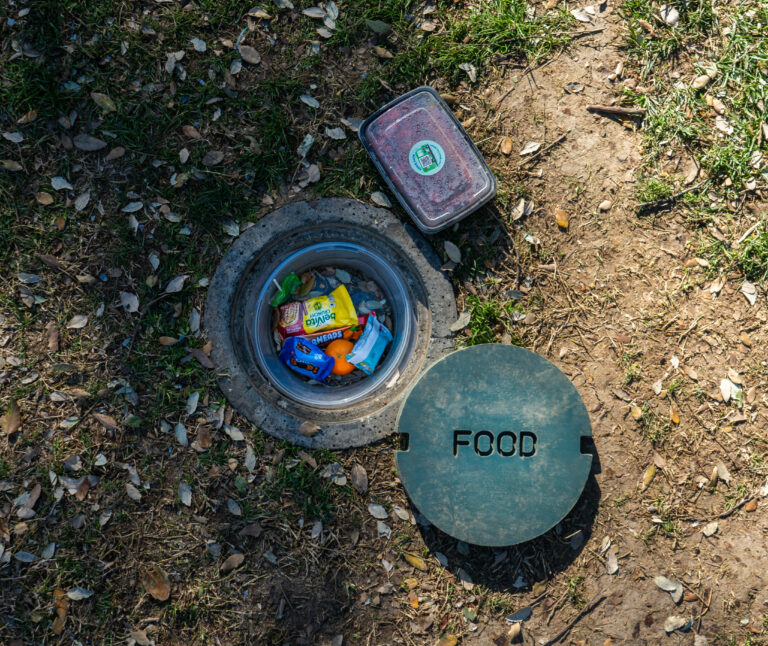
The Instagram reel currently has 2.2 million views and follows one of the account’s co-owners, Gray Eby, discovering the anomaly, located near Mrak Hall on campus. Eby is seen uncovering the green “food” lid — revealing just a few candy canes, a small bottle of water and a single orange — and then refilling its stocks with packs of various candies.

The inspiration for creating the video came from a Reddit post that had begun to grow traction as a user had posted they had refilled the hole. The original post, published two months ago, shows a user having replenished the food and has received over 800 upvotes. Having not heard of the food hole prior to the post, the account’s co-owners, Eby and Richard Jia, felt an immediate desire to discover the peculiarity.

“We were both out of town for the holidays, but somebody had put on Reddit that it was restocked,” Eby said. “I was like, ‘Oh my gosh, the day I get back I’m going there and making a video.’”

The video took off almost immediately on their various social media accounts, gaining around 200,000 views in the first 24 hours on Instagram.

Eby commented on one of the reasons why he thinks the video particularly caught attention.

“One of the strange things that I think helped propel the video was that it was called a ‘food hole,’ but I filled it with candy,” Eby said. “So there were so many comments that said, ‘That’s not food’ and ‘Put real food.’ The perfect imperfection of a food hole filled with candy stirred enough people to catch the algorithm’s attention.”

Many of the comments under the post complain that the items Eby put into the hole are “junk” and lack nutritional value. However, many comments also reveal that many students and community members had never seen or heard of the on-campus hidden gem.

Jia, a UC Davis alum and a co-owner of @mydaviscalifornia, emphasized the peculiarity of the installation in its relation to the city of Davis.

“Not a lot of places in the world have a hole that is filled with fun food,” Jia said. “It’s definitely unique — it’s very, very Davis.”

Claudia Loomis, a first-year Ph.D. candidate in the political science program, first heard of the food hole in September through Reddit and named it a goal of hers to find the hole.

“It’s such an odd thing — from the concept to the name, ‘food hole,’” Loomis said via email. “It just felt like such a good bit.”

It wasn’t until @mydaviscalifornia posted their discovery of it that she went to seek out the hole herself. To her disappointment, the hole was found in a state of disarray.

“On Dec. 30, my partner and I went to walk around the Arboretum and campus and I remember[ed] seeing the video from the mydaviscalifornia account,” Loomis said. “I recognized the location so we backtracked to find the food hole. When we did, the container in it was cracked with water inside it.”

Loomis noted that since it strives to be a fun, peculiar installation on campus as opposed to a primary food source for the hungry, it’s important to note that alternatives for safe and fresh food can be found on campus or around Davis, such as the Freedges around Davis that provide free food donations for those in need. Other on-campus resources include the ASUCD Pantry, which aims to resolve food insecurity in the community, as well as the Aggie Eats program, a food truck which hosts a “pay-what-you-want” system; Both programs are available to all UC Davis students.

Despite its recent popularity, the hole has existed for quite longer than just a few months. Artist and UC Davis alum Paul Taylor originally installed the food hole as an art “intervention” during his time as a student, according to his website.

The food hole on campus is part of an ongoing effort to create art out of everyday infrastructure that normally escapes our attention, according to his website.

“The context of these bits of infrastructure becomes a part of the pieces themselves, and often they evade detection through a form of camouflage, by looking like they belong,” the website reads.

Taylor did not respond for a comment for The California Aggie, but he has been active on Reddit threads encouraging progress on fixing the hole’s lid — which recently broke but was fixed, according to a post on the platform.

For readers who want to discover this peculiar installment for themselves, the food hole is located between Shields Library and Mrak Hall and, to the naked eye, appears to be any other sewer hole aside from its label that simply reads “food.”


Written by: Rachel Gauer — features@theaggie.org

UC Davis second-year crowned Miss India USA, inspiring young Indian-American women nationwide

0

Caitlin Sandra Neil discusses balancing pageantry, culture and college life at UC Davis


By JALAN TEHRANIFAR — features@theaggie.org


19-year-old Cailtin Sandra Neil, a second-year cognitive science major, was crowned Miss India USA in December 2024 at the national pageant held in New Jersey.

Neil was born in Chennai, India and grew up in the small town of Mountain House, California. She attended Tracy High School before enrolling at UC Davis. Although she began competing in pageants only six months before her win, Neil says her passion for fashion has been a lifelong interest.

“Growing up, I’ve always loved fashion, and I [would] put on little fashion shows for my parents in our living room,” Neil said. “But growing up, I never had the confidence or even the means to go out and go into pageantry.”

Neil credits UC Davis with helping her gain the confidence to begin her pageantry journey, as it gave her the opportunity to explore new opportunities.

Her mother, Angelin Reuben, was a key motivator in encouraging Neil to showcase her talents while exploring her interest in fashion.

“My mom was telling me to get out of my comfort zone and compete in pageants,” Neil said. “So, I competed in one called Miss Asian Global in August, and that was my first-ever pageant. After that, I got a sub-award called Miss Asian [Best in] Cultural Attire, and then […] I [didn’t] know if I [wanted to] do another pageant. But I was like, ‘Okay, I’ll try it out, maybe one that I can represent my heritage and also my community here in America.’ So I competed in Miss India USA.”

The Miss India USA pageant consisted of four categories: Q&A, evening gown walk, cultural attire walk and a talent performance. The talents Neil chose to showcase at the competition were her singing and piano-playing abilities.

“I sang a song and played the piano along with it,” Neil said. “The English song was ‘I See the Light’ from [the movie] ‘Tangled,’ and then the Hindi one was ‘Kahaan Hoon Main.’”

Standing on stage alongside the four other finalists, Neil said she was in disbelief when she was announced the winner of Miss India USA.

“It felt absolutely surreal, I couldn’t believe it,” Neil said. “I was like, wait, did they actually say my name? Am I hearing things right now? I was so confused.”

She described trying to stay composed onstage while catching a glimpse of her family in the crowd, who were visibly emotional over her win, saying that she wanted to “hold it together.”

“I saw my mom in the corner of my eye […], and I was like, ‘Okay, don’t look over,’ [because] I could see my mom tearing up with happy tears,” Neil said.

Reuben described her daughter’s dedication to her high school extracurriculars.

“Reuben saw the potential in her daughter who was very involved during her high school years at Mountain House, playing varsity basketball and serving as secretary in [the Associated Student Body], student leadership,” an interview with CBS News reads.

Neil plans to continue competing in pageants while balancing her studies at UC Davis. She hopes to represent the United States in the Miss India Worldwide competition, which she said will take place in Mumbai, India before the start of fall quarter 2025. Academically, she aims to use her education to combine her creative and technical skills.

“I’m hoping to go into [User Interface or User Experience] design or product design; That’s kind of where my interests lie right now,” Neil said. “I want to be able to use my creative side and also my tech side as well.”

Neil also expressed gratitude for her friends that she made at UC Davis, saying they were supportive of her during her pageant journey and that they were excited for her when she won.

“[My friends] let me practice with them,” Neil said. “They’d practice Q&A questions with me so I could get the hang of it and be able to not freeze up on stage.”

Neil shared that she never imagined that she would become a role model, inspiring young Indian girls to chase their dreams.

“A little girl came to my house after, […] and she said, ‘I want to do pageants just like you,’” Neil said. “I never thought that I would be able to inspire people like that, but to see how other young women are inspired and want to pursue their dreams as well […] I’m honored to be their representative.”

With her crown in hand and her goals set high, Neil is ready to continue breaking barriers, inspiring others and representing her culture, as well as the UC Davis community, with pride and grace.

“When I was on the news with CBS and FOX40, everyone referred to me as a student from UC Davis — and I was like, ‘That is me, that’s my identity, that’s who I’m apart of and to be able to represent such a huge campus is truly an honor,” Neil said.


Written by:  Jalan Tehranifar — features@theaggie.org


Caffeine culture at UC Davis

0

The different types of collegiate caffeine consumption, according to students


By GRACIELA TIU — features@theaggie.org


Caffeinated drinks, whether it’s coffee, tea or energy drinks, remain a staple for many UC Davis students. Each student’s caffeine consumption varies, with some drinking it multiple times a day, others only a couple times a week and some drinking none at all.

“I drink some sort of caffeine maybe twice a week,” Tiffany Liebelt, a third-year biochemistry and molecular biology major, said. “I love Monsters, tea and Dutch Bros Rebels.”

Alex Wyman, a third-year design major, also shared her typical caffeine habits.

“I drink coffee almost every day, usually in the morning,” Wyman said. “I usually make it myself or I get one from a coffee shop.”

Luckily for the university’s caffeine drinkers, Davis has plenty of spots to grab a cup of coffee — including at the Memorial Union (MU) Coffee House (CoHo), or one of the six on-campus Peet’s Coffee locations.

“I love going to Dutch Bros or the Coffee House at the MU,” Liebelt said.

Besides the enjoyable taste of coffee and other caffeinated drinks, students tend to drink caffeine primarily for its other benefits.

“A lot of students drink caffeine if they have to stay up late to study or anything like that,” Lia Reznik, a fourth-year clinical nutrition major, said. “Or, if they have an 8 a.m. or an early class, a lot of people will drink caffeine to be able to stay awake.”

With so many students drinking these beverages, many notice a culture of habits established surrounding consuming caffeine.

“People are always drinking caffeine and keep drinking it nonstop,” Liebelt said. “I’ve seen a lot of people comparing how many energy drinks they drink a day or comparing how many milligrams of caffeine they’ve had, and it’s interesting to see.”

For many students, another part of caffeine consumption is the social aspect of it.

“Caffeine is definitely a social thing too; It’s really easy to go on a coffee date with someone,” Reznik said. “Or if you’re looking for a place to study, going to a coffee shop with friends can be a really cute idea.”

Despite the various fun and beneficial things about caffeinated beverages, some students make the decision not to consume caffeine for different reasons.

“When it comes to focusing, for me caffeine makes me really jittery and anxious,” Reznik said. “I feel like my mind is kind of like everywhere if I drink caffeine, especially a lot of it.”

Another big reason people tend to cut out caffeine relates to their sleeping habits.

“I noticed that it’s hard for me to sleep if I drink caffeine in the evening or at night, so I usually make sure to only drink it in the morning,” Wyman said.

Health is also a popular topic people bring up when discussing caffeine consumption. Consuming over 400 milligrams of caffeine a day can be dangerous for one’s health and well-being, and it can also be dangerous at lower levels if a person has certain underlying health conditions, according to the American Medical Association.

With that being said, the right amount of caffeine often depends on each person’s individual circumstances.

“I do agree that there are a lot of health implications that can come with drinking a lot of coffee or caffeine, but I think it depends on the person,” Reznik said. “For me, I noticed the health implications really quickly, like not being able to sleep — so that’s kind of why I cut it out, but I think for some people it might not be as big of a deal.”


Written by: Graciela Tiu — features@theaggie.org


Student-athletes explore extracurriculars in their off-season

0

Davis students pursuing outside passions experience benefits in their well-being, athletic performance


By EMME DUNNING — features@theaggie.org


For most student-athletes, sports are a major part of their identities. Many have dedicated years to honing their athletic skills, spending much of their time at UC Davis practicing and playing the sport they love. While athletes are in season, they are often occupied with the rigorous schedule of the season on top of academics. As a result, many athletes lose time for extracurriculars.

Once the season ends, however, athletes find themselves with more free time to pursue their passions and maintain a balanced lifestyle. The off-season provides student-athletes with a unique opportunity to explore other interests, invest in their academics and ensure they are rested and recharged for the next season.

Brody Crouch, a third-year communications and psychology double major, is on the UC Davis men’s water polo team. During the fall water polo season, Crouch and his teammates can be found in the pool practicing, watching films or on the road for games and tournaments. Although water polo season is an exciting time for the team, it is also a major mental and physical commitment. After a long season, Crouch and his teammates take time to pursue personal interests.

“During the off-season we have a lot more free time, giving my teammates and I more time to play games, relax and take more classes,” Crouch said. “My teammates and I have gotten really into pickleball and going to the [Activities and Recreation Center] ARC to play pickup basketball.”

Crouch asserted that the off-season also provides an opportunity for him to prioritize his educational pursuits.

“I also enjoy the off-season for academics,” Crouch said. “It allows me to spend more time on schoolwork and classes.”

Crouch believes that pursuing outside interests in the off-season is an important part of how athletes balance sports with their day-to-day-lives, and can even help improve performance in season.

“Having an off-season is crucial to an athlete because it gives the body and mind a new routine,” Crouch said. “During the season with traveling and working out, our schedule can get very repetitive. Getting a change every quarter is super nice.”

Joshua Davis, a fourth-year political science major on the UC Davis men’s water polo team, uses the off-season as a time to reset and recharge. Davis said that this time allows him to put more effort into academics and hobbies that are more difficult during the season.

“I enjoy focusing on school and playing golf, which are both hard during the season with the huge time commitment,” Davis said. “Outside the season, I have so much time to do those things that help me decompress.”

Even in the off-season, student-athletes take time to stay active — which, for water polo athletes, often means a mix of activities both in and out of the pool.

“I swim once in a while, and then [I] play pickleball or other sports here or there that help keep me in shape,” Davis said.

Katie Sullivan, a fourth-year design major on the UC Davis women’s lacrosse team, finds many ways to fill her time in the off-season. As a design major, Sullivan often spends the extra free time she finds in the fall and summer fostering her creative interests.

“I really like just being creative,” Sullivan said. “It’s part of my major so I’m lucky to have an outlet through school. Diving into creative projects like sewing or building things, and just designing in general.”

In addition to cultivating her artistic passions, Sullivan also stays active in her off-season.

“I love being active, especially when it’s not required for my sport,” Sullivan said. “Anything outdoors like hiking, surfing and pickleball. I also love getting out on trail runs, where it’s not just sprinting on the field, but more for enjoyment.”

Sullivan noted that although sports performance can serve as an important part of an athlete’s identity, leaning into other hobbies is vital to maintaining a healthy balance.

“I think [finding interests outside of your sport] is very necessary,” Sullivan said. “For my sport, it’s definitely a mindset whether or not you weigh your self-worth based on how you do in your sport. It’s important to detach from that identity and find other hobbies.”

While Sullivan practices this mindset in her own life, she expressed that for her and many other athletes, it is an ongoing process of discovery and growth.

“I feel so lucky that I’ve been drawn to so many other things that have allowed me to separate from that identity a little bit, but it has definitely been a struggle throughout the years,” Sullivan said. “It’s a journey.”


Written by: Emme Dunning — features@theaggie.org

Welcome to Winter!

Drawn by: Sandhya Pfile –– sbpfile@ucdavis.edu

Disclaimer: (This cartoon is humor and/or satire, and its content is purely fictional. The story and names of “sources” are fictionalized.)

A crash course on dealing with negative emotions

Remember Sadness from “Inside Out”?


By MAYA KORNYEYEVA — mkornyeyeva@ucdavis.edu


Negativity — the expression of criticism or pessimism toward ourselves or others — is a train of thought that is often brought on by unwanted change, unfavorable circumstances or mistakes. Often, our mindset shifts negatively whenever we feel like we messed up; maybe we weren’t a good friend, we failed an exam or we forgot something important.

However, “the negative” is a dimension that is not so easily overcome. Negative thoughts and emotions tend to strike us frequently and with reckless abandon, and, in each of our lives, we will inevitably come face-to-face with negative experiences that push us into the darkest corners of our minds. Because of its frequency, it is crucial that we become well-versed in techniques for dealing with negativity in a healthy way and train ourselves to direct our thoughts to be both positive and productive.

While I am no licensed expert, I (like I’m sure, many of you) have dealt with my fair share of negative emotions. From epicly disastrous failures to days on end dragging myself through life, it’s definitely taken me a while to learn my thought process inside and out — to observe how I deal with negative thoughts and slowly direct myself to be less destructive.

This is a crucial step in learning to objectively regard your feelings; to understand that being in a negative mindspace can make us less receptive to help, more cynical and dismissive of our support systems. For all these reasons (and many more), I hope this mini crash course on dealing with negativity will prove thought-provoking, if not directly helpful.

To start off, it is important to differentiate between different forms of negativity and determine whether the sadness, distress or despair you are feeling is productive or unproductive. Productive negativity is characterized by a form of negativity that is, for lack of a better word, “character building.” In a productive negative state, you understand that you need this moment to grow — to make positive changes in your life and to become a better person as the result of carefully working through your negative emotions.

On the other hand, unproductive negativity is the very opposite; Rather than understanding that these emotions can be channelled into positive change, you dwell on things you cannot control, falling deeper into a spiral of unnecessary pain. In my case, unproductive negativity often arises from either a place of blame or comparison. Whether it’s blaming myself for not doing something I should have done or meticulously dwelling on the differences between myself and others, unproductive negativity doesn’t result in any healthy thought processes — let alone positive action.

The next step, after reflecting on the source of your negative emotions, is to channel that negativity into positivity. While this is easier said than done, it is extremely effective (at least for me) in raising all the gloomy energy off my shoulders.

Channelling your negativity can be achieved in many creative and introspective ways, and, before anything else, you should take a moment to pause and breathe in order to regulate your heart rate and calm your mind. Then, once you have collected your thoughts, you can direct them towards setting goals for yourself — making decisions on how to move forward with everything you learned while you were feeling blue.

As an example of this methodology in action, let’s imagine that you are experiencing some miserable self-criticism because you failed your economics midterm. After wallowing for an hour or so, you have the energy to think about what went wrong — did I not study enough? Is there something that I can fix going forward, like studying more in advance, going to office hours or consulting a friend? In this way, generating potential solutions is vital to moving past any negative emotions and bringing yourself out of the self-depreciating hole you may have been digging.

After deciding on an actionable item (for instance, “In the future I will take more thorough notes during lectures”), don’t forget to remind yourself that you are ultimately in control of who you are and who you want to be, and that (no matter what), you should always be there for yourself. It all comes down to continuously supporting your body and mind and, most importantly, being gentle on yourself.

In the end, my advice is almost exactly like the message of the Pixar movie “Inside Out”: Negative emotions are an undeniable part of our everyday lives, and, rather than avoiding these feelings and experiencing guilt for having these emotions, we need to remember that all our emotions are valid — even sadness (not just joy) can help us learn about ourselves and grow as individuals.


Written by: Maya Kornyeyeva — mkornyeyeva@ucdavis.edu

Disclaimer: The views and opinions expressed by individual columnists belong to the columnists alone and do not necessarily indicate the views and opinions held by The California Aggie.

Wealth inequality will and is killing America

A very brief look about the largest inequality in American society: class 


By CALEB SILVER —chsilver@ucdavis.edu


On Election Day 2024, it was quickly apparent that Donald Trump would be our 47th president. Right away, like hearing a friend tell a story they’ve already told, many liberals began to scramble with questions and condemnations. “Republicans are to blame.” “Kamala is to blame.” “Joe Biden is to blame.” “Obama is to blame.”

Though our collective culprit is not clear, Trump won — both the popular vote and the electoral college. We chose him to be our leader, our president. And, if we drop the voracious scapegoating for a minute, we could see that American voters have told us why they voted for him for the second time since 2016: “The economy.”

Of course, asking any expert about how the economy is fairing under Biden, they’ll tell you that, if this was truly a marker of concern, Harris would be handing a bible in a couple months, or perhaps an 83-year-old Biden would be grinning from ear to ear in a new presidential portrait. What I believe is meant by a perceived issue with the economy is the real issue of unaffordability — the unaffordability of everything. Despite all of the progress everyone tells you we have made within the realm of equity (which, perhaps, isn’t as great as everyone champions), the wealth gap in this country is larger than ever, making everything from groceries to technology unaffordable for most people.

Maybe you’ll take me at my word that the wealth gap is insurmountable, but, even so, I’d like to paint you a picture. For one, CEO of Tesla, X, formerly known as Twitter, owner and right-wing egoist Elon Musk is currently worth over $332 billion. It would be impossible for any American worker, even one making a salary above the $64,000 average, to make that in 10 lifetimes. Given the disastrous Citizens United v. Federal Election Commission (FEC) court case, which asserted that money is a part of free speech, Musk currently possesses more free speech than anyone else in America. However, it isn’t just Musk; The top 1% of Americans hold 15 times more wealth ($34.2 trillion) than the bottom 50% combined ($2.1 trillion).

Therein lies America’s largest problem, which is much more vast and complex than this article has room for. Neither Harris nor Trump can fix it on their own. In fact, Trump’s plan is to reduce the corporate tax rate from 21% to 18%, channeling Reagan-era levels of ridiculousness. This would follow Trump’s 2017 tax cut plan, which gave preposterous discounts to corporations and handouts to the ultra-elite.

Ironically, for a country that is so against the idea of welfare, we give a lot of it to large corporations and banks that lobby and befriend our politicians. In the eyes of many conservative politicians, fundamental aspects of public national social security and healthcare are perceived as unnecessary and unfavorable when it’s for the majority of the nation, but necessary and “American” when it comes to billion-dollar multinational corporations.

Democracy is not going to collapse in one day — it is going to erode over time, as it has been in recent years. America’s erosion is oligarchic. We are feeling the corporate consolidation of Reagan’s presidency today, and we will feel Trump’s now and perhaps in even greater force in 20 years.

When the ultra-wealthy (which can mean both people and companies, since they are practically the same) have everything and can do anything, things are naturally harder for the average citizen. And, when things are this hard and this unaffordable, we all look for one person to save us, even if it isn’t possible. Like it or not, Trump campaigned on change, he campaigned on making the unaffordable affordable and he did so through hate — which proved to be very effective.

However, the reality is that his presidency, like last time, is not going to deregulate corporations — it’s going to do the opposite. If we want our economy and our society to ever progress, we need to convince America that universal healthcare, an increase in taxes on the wealthy and a modern day trust-busting are the steps forward. Because America works in the ugly way that it does, it seems that what we need most is a figurehead to convince us of the virtues and necessities of progressive policy and economic populism.


Written by: Caleb Silver — chsilver@ucdavis.edu


Disclaimer: The views and opinions expressed by individual columnists belong to the columnists alone and do not necessarily indicate the views and opinions held by The California Aggie.

The detrimental nature of current beauty standards

Modern beauty trends and their effect on our definitions of conventional beauty


By SABRINA FIGUEROA — sfigueroaavila@ucdavis.edu


What makes a “beautiful” person? Or, rather, what is “beauty”? I think it’s safe to say that it’s a subjective concept, because not everyone will find the same person attractive, and, if they do, perhaps it’s for different reasons.

That might seem obvious, and it definitely is. But why is it so hard for people to actually take it to heart? We tend to place emphasis on our physical appearance more than anything else when it comes to beauty, and though it does play a factor, we could be playing a dangerous game here. This over-emphasis is apparent in recent beauty trends that have spread on the Internet.

Of course, it all starts off as fun and no one’s real intention is to hurt anyone’s perception of themselves. For example, the “deer pretty” or “bunny pretty” trend on TikTok started off as a non-serious, unique way to call people pretty. As stupid as it was, its intention wasn’t to make other people feel insecure or bad — however, social media shapes our perceptions of things nonetheless.

When the internet was going crazy over “cortisol face” or jowls, commenters would swarm random videos of people drinking coffee through straws, warning them that their actions could give them jowls — as if the posters asked. Though trends like these drive me insane, I’m not saying that all beauty trends should stop, as some are harmless and, in many cases, inevitable. However, I believe we need to stay skeptical about many of them, especially the whole “facial harmony” trend.

The “facial harmony” trend, at a very basic level, has to do with facial aesthetics. In this trend, people strive for their features to be in balance so that no single feature “stands out.” At a glance, it’s not serious — until people start recording their facial features and calling them “good” or “bad” features, “in” or “out” of harmony with each other.

This line of commentary on the inherent “goodness” of facial features is concerning: Should we really be describing features with words that are used to describe morality? Because what is a “good” feature? What is a “bad” one? What is our standard for that?

If the answer is that euro-centric features are the standard, this trend is dismissive of cultural diversity and reminiscent of eugenics and phrenology — concepts that were used to spread racist ideology. And even if that wasn’t the standard, it’s still harmful to give features characteristics of morality.

We need to realize that social media is a facet of mass communication that molds our world, our society, our perceptions and our concepts. This is especially true since social media is an inherently neutral technology, with the power to both create and destroy progress.

If we allow content like “facial harmony” to trend without thinking twice, our perceptions of beauty will be distorted. Maybe it’s a sign that they already are.

Decentering physical appearance as the only aspect of beauty and asking ourselves where we even got our standard of beauty to begin with might be a good place to start if we want to reevaluate our beauty standards. With all this being said, I leave you with a question: What is beauty to you?


Written by: Sabrina Figueroa — sfigueroaavila@ucdavis.edu


Disclaimer: The views and opinions expressed by individual columnists belong to the columnists alone and do not necessarily indicate the views and opinions held by The California Aggie.


Kitchen conversations

Like father, like daughter


By NEVAEH KARRAKER— nakarraker@ucdavis.edu


My father’s favorite word is “facetious.” He bellows it while cooking spicy ramen at 10 p.m., he whispers it during our debates and chuckles it out while telling cheesy dad jokes. It’s become a consistent inside joke between us, especially in the kitchen.

Cooking is a creative endeavor with endless possibilities, and the kitchen is somewhere we can discuss any subject: where flavors are like opinions. As we stir in the ingredients, he presents his claims with evidence and I counter with my own. And, as he tosses in data, he educates me on new recipes.

Eventually, the term “kitchen conversations” became established. At the time, it was a fun way to bond and refer to our nightly ritual. Gradually, it evolved into a nostalgic tradition that heavily influenced how I approached many things in my life, including philosophy, my research process and the importance of being properly informed before making assumptions on controversial topics.

It’s common knowledge in the culinary field that temperature, humidity and other external factors affect the concoction of delicious dishes. Correspondingly, our environment shapes who we are in ways we often don’t notice. We adopt a select few mannerisms of those we spend our time with, like speech patterns or hand gestures.

As my father fell into the role of a public figure in my hometown and at his work, I began to hear the term “kitchen convos” thrown around by the people I knew. He nourished an open-mindedness so unconventional that it enabled him to educate anyone within his vicinity about recent events and theology in a factual, unbiased manner.

This environment my father cultivated attracted everyone to the kitchen, even if he wasn’t there. It made me excited to begin making my own meals and having discussions with friends.

Attempting to cook in community kitchens, though, is vastly different — I’m sure Davis students can attest to this. It’s eerily quiet, you have to awkwardly shuffle past people and you probably want to avoid storing food there.

I presumed I would frequently utilize that space; Instead, I rarely entered it. When I did, the noodles lacked the flavor they once had — as good as they tasted, they would never compare to his company. There now exists the incapability to make these noodles alone. Tradition is practically insignificant if it’s not shared and experienced with others.

The more I observed this phenomenon, the more I began to understand. It’s like music. We find an artist or song and it’s all we consume. When someone asks us about it, we can’t help but grin as they listen to it because we were the one that recommended it. They save it in their song library, and occasionally we’ll notice them post on social media attending the same artist’s concert months later. With food, they might bake us the same sweet treat we made them when we visited. Reenactment is a reminder of how deeply that interaction meant to us.

Something as simple as ramen taught me how influential and valuable our relationships can be, and, in exchange, how we gain transferable skills.

When adding egg to noodles, it’s important to incorporate them properly, rather than scramble them. Similarly, when placed under pressure, either we can flourish or we can wither. We need to accept constructive criticism, rather than reject it. And, we need to learn from others’ opinions — flavors — instead of assuming indifference. The application of this knowledge allows us to not only be a teacher, but be teachable.

In a way, the world is a kitchen: a place where perspectives are mixed and critical thinking skills are strengthened. Instead of turning on a stove, we ask questions. Instead of reading instructions, we analyze reasoning. And, instead of plating, we present evidence. All of this boils down to two foundational ingredients — objective truth and affection.


Written by: Nevaeh Karraker—nakarraker@ucdavis.edu

Disclaimer: The views and opinions expressed by individual columnists belong to the columnists alone and do not necessarily indicate the views and opinions held by The California Aggie.

Davis’ first cat café is now open for business

Cat lovers can now rejoice over the newest fluffy sensation: Cat Tales Feline Health Center and Cat Lounge


By MATTHEW MCELDOWNEY — city@theaggie.org


While many students may have been scrambling to study for finals at the end of fall quarter, Davis welcomed its first cat café and feline center into its city on Dec. 16.

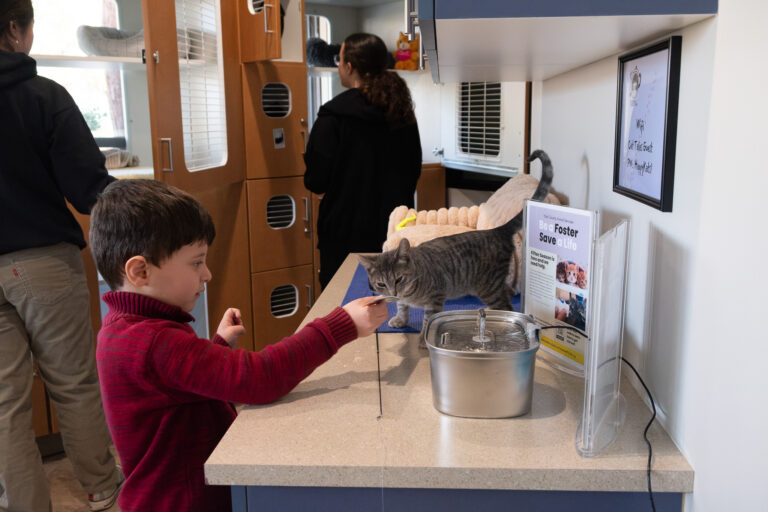
Tabby Tea Cat Lounge is accepting appointments for visitors to meet, play and even adopt these adorable cats and kittens. Pitched and designed by local Da Vinci High School students in Davis, Tabby Tea Cat Lounge is part of a longtime dream of Davis locals, Dr. Julie Cole and Dr. Chris “Shac” Shacoski, to open a space for cat lovers, by cat lovers. Located at 606 W. Covell Blvd, the cat lounge is part of a cutting-edge cat care facility, Cat Tales Feline Health Center.

During an interview with Fox40 News, Dr. Julie Cole, the medical director and business partner of Cat Tales, described the joy it was to be able to see this cat café in action.

“It’s so beautiful to see people bond, but we’ve also had people come in and just want to hang out,” Cole said.

This cat café will hopefully allow cat lovers who either can’t afford or dedicate the time to own a cat to be able to spend quality time with them. As for those who are looking to become cat parents, this lounge offers a perfect opportunity to get to know some of these cats from the shelter a little better while enjoying a complimentary beverage.

On top of this new cat café, cat parents can enjoy the highest standard of specialized cat care. Attached to Tabby Tea Cat Lounge, Cole and Shacoski’s clinic, Cat Tales Feline Health Center, is hoping to push the standard for quality cat care in Northern California.

“We are using the most state-of-the-art knowledge in feline-only care and medicine to build a practice that truly delivers the best in medicine and concierge-level services tailored specifically for cats and the people they own,” their official website reads.

As a longtime practitioner and managing partner for Cat Tales, Shacoski described the ways, big and small, that they have tailored their business to appease the appropriately high standards of their fuzzy clientele. From the layout of the clinic to the color of the walls, Shacoski described how he and Cole hope to create a calm environment for these cats down to the smallest detail.

“The No. 1 word [that best describes cats] would be calm,” Shacoski said. “Cats are calming for people, but they also need calm around them.”

To achieve this, Shacoski said that Cat Tales opted for telephones that vibrate instead of ring and chose wall colors that have been proven to be calming for cats. They also chose decor that cats wouldn’t feel startled by — cats are often startled by paintings of people and animals that face toward them — and specialized in cat care exclusively to eliminate the sounds caused by other pets like dogs. Furthermore, Cat Tales has procedures in place and a clinic layout designed to put cats at ease.

“Cats really like to be in one place, so if you have to move a cat, the cat wants to be moved once,” Shacoski said. “[At Cat Tales], the cat doesn’t move like waiting in the lobby, waiting in the exam room, going to the treatment area and coming back to another room — we try to do it all in one room if we can.”

By accommodating cats and tailoring a pet care experience for their needs, Shacoski and Cole hope that their clinic can be somewhere cat owners feel comfortable taking their cat back to regularly. This is especially important for cats in this current veterinary landscape as they receive a fraction of the preventative care that dogs receive, precisely because of the stress involved with a run-of-the-mill vet visit.

As they continue to gain traction in Davis, Shacoski hopes that they are eventually able to host informational programs, tours and events in their space. It is confirmed that Cat Tales is partnering with Meals on Wheels to donate pet supplies for an animal companionship program, but Cat Tales is also discussing the possibility of having a booth for Picnic Day. Cat Tales hopes to get UC Davis veterinary students involved in future programs such as externships and a possible collaboration with Yolo County Animal Services’ Trap-Neuter-Return program.

At the moment, however, Shacoski described that their biggest focus is to master the basics of Tabby Tea Cat Lounge and their clinic. To do that, Cat Tales wants to focus on the most important parts — the people and the cats.

“[For our visitors] at Tabby Tea Cat Lounge, I just want them to feel refreshed after being able to sit, hang out with a cat and have a little fun,” Shacoski said. “Out of the clinic, we really want our visitors to think, ‘Wow, this is really different,’ […] and that’s the one thing that’s going to make a difference in these cats’ lives.”


Written by: Matthew Mceldowney city@theaggie.org


Updates on Davis development given at a recent Yolo County/city of Davis 2×2 meeting

The joint committee discussed the construction and budget for the Walnut Park Davis Library and Pacifico Housing Community


By YUENJO FAN — city@theaggie.org


The first Yolo County/city of Davis 2×2 meeting of the year took place on Jan. 8 to discuss the upcoming South Davis Library construction, Pacifico Housing Community and updates from the county administrative officer and assistant city manager. The meeting includes two members of the Davis City Council and two members of the Yolo County Board of Supervisors.

The Walnut Park Davis Library — Yolo County Library’s newest planned branch — is scheduled for completion in 2026 with plans for the project emerging as far back as 2017. There is an estimated size of over 12,000 square feet and a $21.3 million price tag. Following a slight delay due to the winter holidays, Ryan Pistochini, the Yolo County director of general services, is expecting the project to break ground very soon.

“It really depends on the land transfer being signed,” Pistochini said. “If it’s not early January it would be early February. I do know the contractor and their team have just finished a job [and] they’re going to be ready to stand up [at the] end of January, so the timing will be ideal for them as well as us.”

Planned to be located next to the Marguerite Montgomery Elementary School, Pistochini also addressed the committee’s concern about the potential impact of construction on safety and traffic in the area.

“Our biggest concern is what we call the laydown area, which is the area that the contractors have space to operate,” Pistochini said. “We told them to stay within the parcel, so it will stay far away from the school district. The other concern we have is coordinating, and we will do further coordination on where the contractor staff will park because that will impact the parking lot. […] And then in terms of commuting to the school, the reason why we gave the bell schedule to the contractors is to make sure that major deliveries are times outside of [school hours].”

With construction nearing, both the city and county have made preliminary efforts to avoid any inconveniences to students and staff commuting to school.

Yolo County has also been working with the city of Davis to rehabilitate Pacifico housing, a CalWORKs Housing Support Program, buildings A and B. With the 30% design phase reached, the county is now seeking a cost estimate on this impending project. For Nolan Sullivan, the Yolo County director of health & human services agency, having the ability to make renovations for the housing programs is crucial in supporting locals in need.

“Homelessness is growing across the state and across the county,” Sullivan said. “[…] I just want to set that stage. We have homeless families tonight that will be in motels because they have nowhere else to go, or on the streets or in shelters, unfortunately. And so the program [is needed] in Davis and in Yolo County.”

Yolo County and Davis’ ability to follow through on the building rehabilitation will largely be decided by the state’s budget and how much is allocated to the CalWORKS program. As of right now, Sullivan believes there to be enough funding but stressed that the project must be put into motion soon.

“First initial glimpse, the state [budget] looks stable, so hopefully that holds and we’ll be in good shape,” Sullivan said. “We have $1.2 million budgeted in this project in CalWORKS housing support funds. Those funds do expire on June 30 of this year; they have to be spent or encumbered. We’ve rolled these forward twice now — this project has stretched pretty far — so I don’t anticipate we will be given another grace waiver to roll these funds forward. So if we do not get this project either built or at least encumbered by June 30, that $1.2 million returns to the state of California.”

Furthermore, County Administrative Officer Dirk Brazil updated the committee about budget issues, also voicing his concern about financial challenges.

“[County] departments are going through a 7% across-the-board budget reduction exercise right now,” Brazil said. “We’re anticipating our general fund hit to be about $15 million this year with some subsequent issues in the outyears as well.”

Davis Assistant City Manager Kelly Stachowicz provided her updates on city budgeting, citing an optimistic outlook through a recently passed measure that will benefit the city of Davis by $11 million.

“In November we were able to pass Measure Q which will bring much-needed revenue to the city starting with the sales tax increase [which] will take place at the start of April 1, and the city will start to see revenues from that toward the end of the fiscal year,” Stachowicz said.

The Yolo County/city of Davis 2×2 committee members are: Yolo County Supervisors Sheila Allen and Lucas Frerichs, Davis City Councilmembers Gloria Partida and Josh Chapman. Also present at the meeting was Pistochini, Sullivan, Kelly Stachowicz and Brazil.

The Yolo County/city of Davis 2×2 meeting convenes on the second Wednesday of every other month. Dates, times and agendas can be found on the Davis city calendar.


Written By Yuenjo Fan — city@theaggie.org


Mayor Bapu Vaitla and Vice Mayor Donna Neville appointed at a recent city council meeting

The Jan. 9 city council meeting was comprised of updates to the General Plan alongside new leadership being appointed


By RORY CONLON — city@theaggie.org


The Davis City Council approved a contract with Raimi + Associates for consultant work on the city’s General Plan and appointed Bapu Vaitla as mayor and Donna Neville as vice mayor on Jan. 9.

Sherri Metzker, the community development director for the city of Davis, introduced Matt Raimi, the head of the urban design and planning firm Raimi + Associates. Metzker said she was seeking approval from the city council to execute a contract with Raimi.

“Matt is the principal of Raimi + Associates, the company that we have recommended to you to act as our consulting firm on the preparation of the General Plan itself,” Metzker said. “Between him and I, we hope to answer whatever questions you might still have in regard to the General Plan.”

The current version of the city’s General Plan was adopted in 2001, and the city of Davis officially began the process of updating its General Plan in February 2024. Metzker listed the eight elements the city of Davis needs to prepare.

“There are now eight required elements: land use, circulation, housing, conservation, open space, noise, safety and the environmental justice element,” Metzker said. “Davis isn’t technically required to do an environmental justice element, but we have elected to do so, and it is included in the scope of work for Raimi + Associates to prepare.”

Metzker said each of the required elements, with the exception of noise and safety, would be assigned to a different city commission. The commissions would work in collaboration with Raimi + Associates to provide a local perspective.

While the current version of the city’s General Plan took seven years to create, Metzker and Davis City Manager Michael Webb have established a rough timeline of two to three years for the update. The plan is set to go through multiple iterations according to public feedback.

Councilmember Donna Neville raised a concern about how community engagement will be handled by Raimi + Associates.

“I can give a lot of examples, but I’ve participated in these events where folks are brought into a room and asked to [talk about] how [they’d] like to see bicycle paths work,” Neville said. “None of us have any idea how they should be engineered, so we’re offering up suggestions that, in some cases, are not useful. How do you counter that?”

Raimi said he would rephrase the questions to make them more accessible to community members.

“We would ask the questions: ‘How do you want to use this space? How do you get around the community? What does safety mean to you?’” Raimi said. “You know how you engage in your environment, in your community. It’s our job to take that information and give you options to achieve what you say you want to achieve.”

The city council approved the contract with Raimi + Associates, kicking off work on the General Plan.

Webb also asked the city council to self-appoint a new mayor and vice mayor for 2025 according to a list of principles.

“Factors to be considered include seniority, consensus building skills, experience presiding over legislative bodies and any other factors that may just be taken into account to promote good governance,” Webb said.

The decision was opened up for public comment. Davis resident Connor Gorman said mayor and vice mayor positions should be assigned using a rotational model, which is based on the numbers of the councilmembers’ districts, rather than through the self-appointment process.

“I do generally continue to favor the rotation model, meaning these positions are rotated unless there’s a reason to do otherwise,” Gorman said. “There is not a reason to do otherwise in this case. So I would support continuing to rotate these positions here, which would lend itself to Bapu [Vaitla] as mayor and Donna [Neville] as vice mayor.”

Councilmember Linda Deos said she was open to a different way of deciding mayor and vice mayor.

“Connor [Gorman] brought up the rotational thing,” Deos said. “In the past, we had done whoever got the most votes, but we couldn’t do that in districts in the same way. I would like to know if there’s still the will of the body to keep it as these factors being important or if it’s worth looking at a rotational system or other ways of doing it.”

The process of self-appointing a mayor and vice mayor started last year, when Davis transitioned to a district election process. Former Mayor Lucas Frerichs and Vice Mayor Will Arnold were chosen for their seniority in city council.

Mayor Josh Chapman said that the council should appoint a mayor and vice mayor for 2025, but he would direct city staff to provide feedback on other options in time for 2026.

“I think [self-appointment] creates confusion and unnecessary conflict between colleagues around who is next up and who is not next up,” Chapman said. “Everyone sitting up here is qualified to sit in this seat, and everyone wants to be fair around it. […] I really want to make sure that we dive into what we can do differently in the next cycle.”

The conversation then turned to who should be chosen for 2025. Vaitla nominated himself for the position of mayor.

“The duties of helping set the agenda, of speaking in public and trying to deliver a consistent message across the year, trying to figure out what colleagues want to see get done that year and trying to figure out how to make it all happen — that stuff is exciting to me,” Vaitla said. “For that reason, I would like to be in this role.”

Councilmember Gloria Partida made a motion to appoint Vaitla as mayor and Neville as vice mayor. Linda Deos seconded that motion, and it passed.

In his last statement, Chapman said he appreciated his colleagues’ respect for one another and reaffirmed their commitment to the community.

“In order for us to get things done and move things forward, we have to work together,” Chapman said. “We have to work together with not just the five of us, but with our staff. Setting the tone of unanimity when we elect mayor and vice mayor is an important message to the community.”


Written By: Rory Conlon — city@theaggie.org


Let Them Eat Cake bakery closes doors on Downtown Davis storefront

Beloved local bakery transitions to online orders after nearly a decade of serving the community


By ALMA CULVERWELL — city@theaggie.org


Local Davis bakery Let Them Eat Cake (LTEC), founded by owner Alyssa Bulfer in 2016, closed its storefront on 310 C St. in late December.

The store, which has been a Davis staple since its opening in 2009 by Paulette Coffman, sells a variety of baked goods ranging from cupcakes to larger cakes that cater to a range of dietary needs including vegan, gluten-free and nut-free options. The bakery also offers online kits for customers to decorate their own cookies or gingerbread houses.

Since its original opening on L Street in 2009, the business has changed hands several times. Once from 2014 to 2016 when it was owned by Melody Steeples and moved to C Street, and then again when it shifted to current owner Bulfer, who has run the business since 2016.

Bulfer explained the factors that led to closing the storefront.

“Unfortunately, it was not our decision to close the storefront,” Bulfer said. “We were trying to sell the business in June of 2024, in which it gave our landlord an opportunity to have one of their friends move into our building. I really wished we could have stayed at our location, it was perfect for us.”

Let Them Eat Cake has been a business beloved by many Davis students and families alike. Delilah Becarra, a fourth-year environmental science and management major, reflected on her years of fond memories at the bakery.

“I frequently went there to study with friends and sometimes by myself because it was a great place,” Becarra said. “I also went there a lot with my friends who graduated a few years ago, and we made the cupcakes a must in all of our hangouts. One of those friends really loved sweets but because she’s vegan, [she] found it hard to find sweets that tasted good and were vegan. Because LTEC had such a wide range of vegan baked goods, there was no other place to go when we were craving sweets.”

Becarra described her thoughts about the recent storefront closure.

“I’m so sad they’re gone,” Becarra said. “I’m going to miss their flavors, their cute interior and going there whenever I needed a sweet treat. Their treats were affordable and their lattes were underrated. They were a Davis jewel and even though I’m graduating this year, I selfishly wish they chose to close after I was gone.”

Emma Nguyen, a third-year community and regional development major, also commented on her positive memories of the local bakery.

“I used to really love going there on Saturdays and I loved the flavors they had,” Nguyen said. “This is actually the way I’m hearing about it closing so it’s a bit surprising to me.”

Recent UC Davis alum Felicia Chico described her memories surrounding Let Them Eat Cake.

“I recall my experiences with Let Them Eat Cake with great fondness,” Chico said. “To me, Let Them Eat Cake was one of the quintessential ‘Davis’ businesses that prided itself on delivering to the local community. I remember going in to buy whole trays of cupcakes to celebrate the end of finals, as gifts for friends or just as a pick-me-up when the quarter got hectic and I felt like a sweet treat.”

Chico further described her appreciation for the bakery.

“I would recommend the shop to all new Aggies I met and was always shocked when someone admitted to never having tried it,” Chico said. “It was definitely one of the places I knew I was going to miss once I graduated, and I am so sad to hear that the storefront will be closing. I wish the owner, Alyssa, nothing but the best in her future endeavors.”

The Let Them Eat Cake business continues to be open for online wedding and custom cakes, but their storefront will surely be missed by many.

Bulfer reflected on her favorite moments and described the focus for the future of the bakery.

“I can’t pick out just one favorite memory or milestone, but I really did enjoy celebrating the bakery’s anniversary year after year,” Bulfer said. “Going forward, Let Them Eat Cake will primarily be a wedding cake business. We are currently working on getting a permit and licenses to be a cottage food facility. We did 88 weddings in 2024, and we can’t wait to serve more 2025 couples.”


Written By Alma Culverwell — city@theaggie.org