57.6 F
Davis

Davis, California

Tuesday, December 23, 2025
Home Blog Page 64

‘Bookish’ podcast represents literature students

The podcast serves as a creative space to discuss the experiences of humanities students 


BY JULIE HUANG – arts@theaggie.org


The start of winter quarter and the new year is an excellent time to introduce positive changes to one’s life, whether that involves starting new habits, meeting new people or consuming new media. When it comes to exploring new ways of looking at literature and the experiences of literature students, the podcast “Bookish” is an invaluable resource.

Hosted by English majors Melissa and Lani and edited by John Yarbrough, the undergraduate-based podcast aims to provide a creative space and outlet for literature students to discuss literary studies and the arts through a myriad of angles, with the overall goal of carving out a space specifically for students interested in humanities and the arts. In hosting this literature-focused podcast at UC Davis, where attention toward STEM subjects can feel widespread and inescapable to students, Melissa and Lani hope to touch on topics specifically relevant to humanities students and the issues that come up when navigating university on a humanities pathway.

Episode six of  “Bookish,” for example, discusses the anxieties and uncertainties of choosing an English major when it comes to the resulting career outcomes, which are not always straightforward. The podcast acknowledges how parents may react in a skeptical manner when it comes to making certain choices, while also emphasizing how important it is to find support from peers with shared experiences and fellow English majors who they can empathize with.

A primary goal of “Bookish” is to bring together students and faculty in an environment that is less structured than academic settings usually are. Hosting faculty such as English Professor Gregory Dobbins, as well as graduate and undergraduate students, Melissa and Lani strike a conversational tone while remaining informational.

Each guest on the podcast brings their own interests and perspectives on the broad categories of literature and humanities-related subjects, infusing every episode of “Bookish” with a distinct personal charm that cannot be easily replicated. It follows that the podcast covers a wide variety of topics all falling under the purview of literature, such as Irish literature, being neurodivergent in academia, queer and transgender poetics, disability studies, environmental humanities and the journey of obtaining a Ph.D. in literature.

During each episode, Melissa and Lani also often commiserate about the little details present in the reality of being an English major, touching on things like how a reading-heavy course load may cause declining motivation to read for pleasure or acknowledging the strange experience of being a humanities student during the widespread growth of Artificial Intelligence chatbots like ChatGPT.

The content of the podcast is complemented by the gentle, warm atmosphere running through each episode. Throughout the six episodes currently available on the podcast’s channel, it is clear that Melissa, Lani and John hold genuine passion for their goal of creating a inviting space dedicated to literature students and the unique issues and circumstances they face, as well as thoughtful care for each of the guests they invite onto “Bookish.”


Written by: Julie Huang — arts@theaggie.org 

 

UC Davis students design and build three unique seating areas on campus

The space outside Hunt Hall is transformed by three new structures called “follies,” created by students in the Design & Build Studio course 


By MEGAN PUSL — campus@theaggie.org


UC Davis students from the course Landscape Design Architecture (LDA) 160: Design & Build Studio, spent fall quarter 2024 designing and building three new seating areas outside of Hunt Hall. Haven Kiers and Gabino Marquez, the course instructors, led students in creating the follies on campus.

The focus of the Design & Build Studio course in the fall was to create structures known as “follies,” according to Kiers.

“My goal for these design-build projects is to give students a chance to not only to see their creative ideas and designs come to life but also to understand the practical skills and effort that go into any construction project,” Kiers said. “My hope is that projects like these provide them with a chance to try new tools, get their hands dirty and learn applied skills.”

The three follies are located outside of Hunt Hall, the landscape architecture building, and Kiers said they have seen much attention due to their close location to the Memorial Union and the Quad.

“The addition of the follies activated an underutilized space in front of Hunt Hall,” Kiers said. “It’s a great, open, sunny location, but no one ever spent time there. Since the follies have been added, the area has been full of people hanging out between classes, eating lunch [and/or] taking a coffee break.”

Every student in the LDA 160 course dedicated their time and worked hands-on to create the new seating areas on campus during a 10-week time period. Gracie Snedden, third-year landscape architecture major, explained the process of creating the follies in class.

“During the first week, everyone came up with a design without any real constraints, then we picked our favorites and voted on the top three,” Snedden said. “We split into three groups to work on design specifics like how the swings should hang or if we wanted a roof. We made the construction documents in our groups before beginning the construction process.”

Brianna Bobadilla, a third-year landscape architecture major, designed one of the three follies selected by the class for construction.

“When I was coming up with my design, I wanted it to be something that could be realistically used by the community there,” Bobadilla said. “The whole purpose behind the design is to make something that could be integrated into the UC Davis campus.”

Bobadilla explained the versatile and inclusive design of her folly.

“The folly consists of three parts,” Bobadilla said. “The [purpose] behind the middle table is that it can be accessed by wheelchair users. Also, the two benches on the sides are at a height where anyone can sit.”

Bobadilla then described the extensive time and energy that every student put into the three follies.

“Everyone in the class worked really hard to get this done,” Bobadilla said. “It was such a great experience to get to do this.”

Many UC Davis students have already utilized the new seating on campus. Amelia Swanson, a fourth-year sustainable environmental design major, shared her excitement about the new follies.

“I am so excited about the new benches outside of Hunt Hall,” Swanson said. “I have already used them several times to study with friends or to hang out waiting for my next class to start. They are all uniquely built allowing for a different experience each time I use them!”

Although LDA 160 is only open to landscape architecture students, anyone can enjoy the projects that are created by the class. The follies are open every day and time and can be found on the south side of Hunt Hall.


Written by: Megan Pusl— campus@theaggie.org


Assembly Bill 413 and what will change for Davis drivers

California’s new “Daylighting Law” illuminates the dangers of low visibility while driving


By PIPER AWEEKA — city@theaggie.org


On Jan. 2 of this year, the city of Davis announced its plan to begin instituting California’s Assembly Bill (AB) 413, dubbed the “Daylighting Law” which will largely impact parking demarcations downtown.

By “daylighting,” the bill is referring to an unobstructed field of view for anyone approaching an intersection. In its press release, the city stated a three-phase plan of implementation. The first phase, due to begin this month, will result in parking spaces near downtown intersections painted red. Because of the goal to increase the visibility of sidewalks for both vehicles and pedestrians, the law will yield most of its impacts in Downtown Davis where traffic is most problematic.

Ryan Chapman, Davis’ assistant director of Public Works Engineering and Transportation Department, addressed the varied implementations that will take place across the city.

“The approach is designed to better accommodate the specific needs and characteristics of our various neighborhoods,” Chapman said. “For example, in the downtown area, we have all of these locations marked as timed parking, and the curb faces need to be repainted in order to not conflict with the ‘Daylighting Law.’”

While AB 413 stands to result in an elevated level of safety for pedestrians due to increased fields of view at intersections, some citizens express that some of the most dangerous situations involve not just pedestrians but also bicyclists.

Monica, an employee at popular downtown eatery Cafe Bernardo — that has an outdoor seating area bordering the corner of 3rd and D Street — said that in her experience working at the establishment, commotion most commonly involves these cyclists.

“It’s not necessarily an issue with pedestrians but more with bicyclists not stopping at stop signs,” Monica said.

Travis, a more than five-year-long employee at Starbucks, also noted the severity of issues between vehicles, pedestrians and bicyclists.

“The hierarchy of walking, biking and driving is not respected,” Travis said.

The implementation of AB 413 aims to result in safety for everyone and the mitigation of incidents that residents like Travis have frequently experienced.

“I have almost been hit many times,” Travis said. “Cars do not stop and look long enough.”

In the press release from the city of Davis, Phase 3 of AB 413 is projected to continue up until October 2025, with an ongoing Phase 4 involving the evaluation of feedback on how the “Daylighting Law” has fared.

Chapman expects that the plan will not only be individualized to this city but that many municipalities across California will adopt similar strategies.

“Many other cities are still planning the changes that are needed to implement this law,” Chapman said. “We do not expect that their approach will be significantly different from the city of Davis plan.”

As the bill begins to be applied in Davis, only time will tell how it will benefit the city. With concerns from both the city and citizens alike, there is a focus on increasing the safety of all of Davis’ residents and visitors, and the adoption of Assembly Bill 413 marks a first step toward an even safer city.


Written by: Piper Aweeka — city@theaggie.org


Dhilena Wickramasinghe elected as senate pro tempore at Jan. 9 meeting

Ethnic Affairs Commission Chair Reem Suleiman also asserted her position regarding collaborations and endorsements


By VINCE BASADA  — campus@theaggie.org


ASUCD Senator Asif Ahmed called the Jan. 9 senate meeting to order at 6:16 p.m. before reading the UC Davis Land Acknowledgement.

The first matter for the table was to elect a new senate pro tempore, the presiding officer in absence of the internal vice president and a representative of the senate as a whole.

Internal Affairs Commission Chair Amanda Clark nominated Senator Dhilena Wickramasinghe for the position, noting her work as head of the Ethical Spending Committee and her record as having passed the most legislation of any student senator last quarter.

“I have the utmost faith that she would carry out the role excellently,” Clark said.

With no other nominees put forth, Wickramasinghe was appointed the role and welcomed by outgoing Pro Tempore Ahmed.

The senate then began to designate unit and committee adoptions, which is the process of assigning individual senators to overlook and work with each body within the association. Unit adoptions, however, were soon pushed to the following meeting to get more input from unit leadership. As such, only the internal committees were given adopted senators at that time.

After filling out elected officer and ex-officio reports, Lauren Gomez, a fourth-year biological psychology major, was confirmed as a member of the Sexual Assault Awareness Advocacy Committee.

Moving to legislation, the senate passed Senate Bill (SB) #26, changing the senate’s Quarterly Town Hall to a Quarterly Showcase.

SB#27, which moves the public discussion section of the senate’s weekly meetings closer to the beginning to make them more accessible to the student population, also passed unanimously after some deliberation.

SB#28, creating the ASUCD 530 Market Committee tasked with planning this year’s market — an Asian & Pacific Islander Community Health and Culture Fair held for the first time in 2023, also passed. The senate had previously set aside $9,000 in spring 2024 to host the event.

The last bill of the night was SB#30, emergency legislation to restructure the ASUCD Scholarship to improve efficiency. There have been some delays in awarding the scholarship, which is open to all undergraduate students, and SB#30 was needed to help ensure they were given in a more timely manner in the future, according to Academic Affairs Commission Chair Iris Chen. It passed unanimously.

Returning from a short break and completing the approval of past meeting minutes, Ethnic and Cultural Affairs Commission (ECAC) Chair Reem Suleiman addressed her stance on ECAC collaborations and endorsements during open forum.

“I’ve made it abundantly clear that this commission is a pro-Palestinian one, and it is universally anti-genocide, anti-colonial and anti-occupation,” Suleiman said. “[ECAC] and any decent and intellectual human for that matter does not believe there are two sides to the Palestinian experience. ECAC will not endorse or engage in any attempts at creating so-called dialogue. Dialogue between murderer and murdered, oppressor and oppressed is useless.”

Suleiman further expressed her thoughts on the matter.

“Palestinian students are expected to juggle unending traumas every waking moment,” Suleiman said. “When I am here and I sit on this table, I am enduring traumas. I do not wish, nor do I wish on my fellow Palestinian students, to endure a meaningless confrontation with members of the student body who wish to legitimize their support for the slaughter of my people and the theft of my homeland.”

Suleiman then shared some personal experiences she has faced as a commission chair.

“No Palestinian deserves to come face to face with people, the likes of some on this very table, who wear our keffiyeh as bikini wraps and vacation atop the graves of our families with the most brazen, disgraceful and disgusting disregard,” Suleiman said. “If me and my community’s existence makes you feel unsafe, that is nothing more than a personal problem and a grand illusion that I will not be indulging in. I’ve been too nice this past quarter, and it’s time that I actually stand my ground and back my beliefs.”

Suleiman ended by saying the ECAC will not entertain any future attempts at conversation surrounding the topic.

“If you wish to have dialogue about your feelings, support for genocide and how [that] support makes you feel unsafe, we have a saying in Arabic coming from my village that loosely translates to: ‘You can speak to the walls,’” Suleiman said. “This is the last time I will be addressing this and any attempt to create dialogue regarding this topic will be ignored.”

Following some other brief comments during open forum, the meeting was adjourned at 8:04 p.m.


Written by: Vince Basada campus@theaggie.org

Review: Rosé’s “Rosie” leaves fans enamored with her solo career

The Blackpink singer brings authentic experiences into her debut album


By NATALIE SALTER—arts@theaggie.org


“Ladies and gentlemen, I present to you, the ex,” singer-songwriter Rosé said midway through “Toxic Till The End,” the third single off her debut album “Rosie.” This playfully earnest declaration between chorus and verse befits the song itself — a post-breakup anthem reflecting upon the rollercoaster of emotions experienced within a fraught relationship, yet it is just as easily taken as a brief summary of the thematic thread which Rosé weaves through the album’s 12-track run. A front-to-back listen of “Rosie” paints a picture of a tempestuous relationship intertwined with the singer’s personal insecurities and the unpredictability of fame, all to create a deeply honest and infectious debut album.

Though “Rosie” is her solo debut, New Zealand-born Korean singer Rosé has been no stranger to the spotlight. Since 2016, Rosé has comprised one-fourth of the massively popular K-pop quartet Blackpink. The image that she and fellow members Jennie, Jisoo and Lisa have built for themselves as a group is one that radiates self-confidence and a coolly unbothered attitude toward haters and exes alike.

In her October 2024 announcement for “Rosie” on Instagram, Rosé made clear that in her new solo venture, she intends to peel back the facade of toughness and reveal the vulnerability beneath.

“I have poured my blood and tears into this album,” Rosé said. “I cannot wait for you to listen to this little journal of mine.”

True to her words, the album — which released on Dec. 6, 2024 — is bursting with the sort of raw emotions and wholehearted expressions of inner fears that would not be out of place scrawled across the pages of a diary.

The opening track, “Number One Girl,” which was released as a single in November, 2024, delivers most on this promise.

“Tell me that you need me, tell me that I’m loved,” the lyrics read, her voice filled with emotion as the music gradually swells. “Tell me that I’m worth it, and that I’m enough / I need it and I don’t know why.”

Gone is the effortless detachment she exuded as a member of Blackpink, replaced with an undisguised exposure of her desperate need to be wanted and loved.

Interestingly, “Number One Girl” is somewhat singular on “Rosie.” More often than not, Rosé occupies herself with an unnamed ex rather than herself. Though the first half of the album is more diverse in its offerings, lyrically and sonically, the latter end of it is filled with lamentful odes to an interred love that melt together into an ocean of embittered metaphors and sorrowful piano melodies.

Listeners who came to the album from its wildly successful debut single, “APT” — which features singer Bruno Mars and earned worldwide recognition enough to give Rosé’s album an extra boost in the public eye — might find themselves more pleased with the first stretch of the album than the second. “APT” remains a highlight of the album, with its earworm of a guitar riff and playful lyricism. It’s delightfully fun even months later.

The album’s preoccupation with Rosé’s ex rather than herself does not mean that its breakup-driven songs are weak, however. On “Toxic Till The End,” Rosé reflects upon the aforementioned relationship and its rottenness to the very core. After all, her ex enjoyed playing literal and emotional chess with her and stealing her Tiffany rings — how could she not see the red flags?

“I’ll never forgive you for one thing, my dear / You wasting my prettiest years,” the lyrics read during the bridge, both a despairing recognition of lost time and a coy jab at the unrelenting beauty standards which celebrities like herself are constantly subject to.

Cleverly, she introduces an additional layer of emotional complexity to the track by acknowledging her own part in the relationship’s toxicity, using “we” as often as “you” to make clear that she was an accomplice in their worst moments.

Even if a handful of songs on “Rosie” are a little shakier than others, the highs are high enough to keep the album afloat. “Drinks or Coffee” uses an R&B-inspired instrumental as backdrop to Rosé’s more mischievous side; “Gameboy” is addictively catchy and utilizes simple wordplay to great success.

For all her melancholy, Rosé is effortlessly confident when she chooses to be; In spite of her promises that she would be open with her insecurities on “Rosie” in order to be as authentic as possible, she triumphs the most when she is entirely unafraid to be herself. Whether that self is sending bold drunk texts or giving flirtatious glances from the wallflower benches, she’s what makes the album so great — and one can only hope we’ll see more in Rosé’s future.

Written by: Natalie Salter—arts@theaggie.org

Former UC Davis fire chief, assistant indicted on misappropriation of public funds

Nathan Trauernicht and Meagan McFadden face felony charges from the Yolo County District Attorney

By VINCE BASADA — campus@theaggie.org


Two former UC Davis Fire Department employees, including its former chief, were indicted by the Yolo County District Attorney’s Office last month on the misappropriation of public money. 

Former Fire Chief Nathan Trauernicht, 45, is alleged to have misappropriated funds between Oct. 16, 2021 and July 22, 2023. Trauernicht’s former Executive Assistant Meagan McFadden, 34, is facing the same charge in a separate case, as well as a perjury charge.

Trauernicht appeared before the Yolo County Superior Court for arraignment on Dec. 9, 2024 and pleaded not guilty. He is currently out of custody on his own recognizance on the condition he not be put in a position in control of any public money.

The Davis Enterprise has reported, based on search warrant affidavits that The California Aggie has not been able to obtain or verify, that Trauernicht approved fraudulent timesheets over a two-year period that resulted in $42,000 in overtime pay for McFadden.

“Nathan Trauernicht never misappropriated a penny of public money, nor did he knowingly assist Ms. McFadden in doing so,” Trauernicht’s attorney, Steven B. Plesser, told KCRA 3 in early December, before The Davis Enterprise’s report on the affidavits was released.

 “This indictment is wholly misguided, and appears to be based entirely on speculation of an improper relationship between Mr. Trauernicht and Ms. McFadden that simply did not exist, and of which there is no evidence,” the statement reads. “Mr. Trauernicht looks forward to using the judicial process to clear his name and to restore his well-deserved reputation as an honest and dedicated public servant.”

“We take seriously any alleged misuse of university funds and are fully cooperating with the Yolo County District Attorney’s Office,” a UCD spokesperson told The Aggie in a statement. “We continuously examine and update our oversight practices to ensure that our resources are used properly and that employees are held accountable for following university procedures and policies.”

The spokesperson also said that UC Davis is performing a “comprehensive, third-party review of fire department operations.”

Trauernicht joined the UC Davis Fire Department in April 2008 and resigned on Oct. 1, 2024 after nearly 13 years as chief. McFadden was employed with the department from Nov. 18, 2019 to Jan. 30, 2024.

Both McFadden and UC Davis’ current Interim Fire Chief Nathaniel Hartinger are listed as witnesses examined by the Grand Jury in Trauernicht’s indictment case, alongside UC Davis’ director of investigations, payroll coordinator, human resources manager and chief operating officer (COO). 

Trauernicht is next scheduled to appear in court on Jan. 21 for a trial setting conference; McFadden is set to be arraigned on both of her charges that same day.

McFadden could not be immediately reached for comment.


Written by: Vince Basadacampus@theaggie.org

Editor’s Note: A previous version of this article misattributed a quote to an “ASUCD spokesperson” when it should have been attributed to a “UCD spokesperson.” This error has since been corrected.

‘Student support for ethnic studies is not quiet’: Students and faculty mobilize for Area A-G/H Ethnic Studies

As the Assembly of the Academic Senate votes on the proposal this April, students and faculty face challenges in advocacy 


By Khadeejah Khan — campus@theaggie.org


In April 2025, the Assembly of the Academic Senate will be voting on A-G/H Ethnic Studies, a proposal that would require high school students to take a non-additive, one-semester ethnic studies course for admission into the University of California. This proposal was previously postponed at the Dec. 12 Meeting of the Assembly.

California Governor Gavin Newsom signed Assembly Bill (AB) 101 in October 2021, requiring the completion of a one-semester ethnic studies course for high school graduation starting with the class of 2030, according to Newsom’s website. The bill states that in the 2025-26 school year, California schools are required to begin offering ethnic studies courses. While AB 101 is already California law, authors of Area A-G/H Ethnic Studies believe that adopting the proposal will place the UC system in a position of leadership and guidance for school districts who are fulfilling the new requirement.

Natalia Deeb-Sossa, a professor of Chicano and Chicana Studies at UC Davis, expressed her opinions on the purpose of the proposal.

“We already have our knowledge and critical understanding of our histories, cultures, intellectual traditions, lived experiences and social struggles,” Deeb-Sossa said. “But the reality is that our history, the history of Chicanx, Latinx, Asian American, Black and Native American people has never been taught in K-12.”

When making the proposal, various studies that were considered have shown that students who have taken ethnic studies courses prior to college admission earn higher standardized test scores, grade point averages and increased school attendance, according to Deeb-Sossa. 

Because A-G/H Ethnic Studies is non-additive, the requirement does not necessarily have to be fulfilled through a separate ethnic studies class, but can instead be fulfilled through an overlay — an already existing course that meets ethnic studies course criteria, according to the bill.


A Legacy of Advocacy

Ethnic studies is a field born from student advocacy and protest at San Francisco State University (SFSU) in the 1960s, according to Christine Hong, a professor of critical race, ethnic studies and literature at UC Santa Cruz. A coalition of students from the university’s Black Student Union, Latin American Students Organization, Asian American Political Alliance and more formed the Third World Liberation Front (TWLF) in 1968, where they demanded the establishment of ethnic studies programs that taught the experiences and history of their communities, according to an article by KQED. As the movement grew, in 1969, UC Berkeley students formed another Third World Liberation Front and UC Davis students launched the Third World Forum, a student-run and published newspaper in 1970, according to the UC Davis Library website. 

Hong said that the historic origins of ethnic studies emerged out of student demand.

“When students are demanding a field, they’re pointing to ways in which student success can be supported,” Hong said. “This was true with Area (A-G/H) Ethnic Studies as well. It was students who initiated it.” 

Today, students continue to carry on the legacy of advocating for ethnic studies with student organizations like the UC Students Association (UCSA), who represent over 230,000 university students. Currently, four UC student governments have passed resolutions in support of Area A-G/H Ethnic Studies: UC Davis, UC Santa Cruz, UC San Diego and UC Riverside. 

For UCSA President Aditi Hariharan, the legacy of student advocacy within California is an inspiration. However, she said recent policies restricting protest through time, place and manner are concerning, as she recognizes the impact of student protest historically, especially in the creation of ethnic studies. 

“Ethnic studies is the forefront of why the UC Student Association even exists right now,” Hariharan said. “Student support for ethnic studies is not quiet. It is not hidden. It is loud, and we are strongly in support of it.”

Hariharan took her first ethnic studies class at UC Davis — an experience that she described as “revolutionary.” She believes that the Area A-G/H Ethnic Studies proposal is essential to serve California’s K-12 population, 80% of whom are students of color

“I’ve never seen my race accurately represented to the proportion of students of South Asian heritage who I know go to the school,” Hariharan said. “When I went to my first ethnic studies class, it felt revolutionary in the sense of pulling apart all of these academic works that I had thought as foundational and unquestionable and realizing that there was so much more to explore and question.”

TWLF met challenges during the creation of ethnic studies with many students often facing police violence and arrests. Today, the struggle continues in the process of the Area A-G/H Ethnic Studies proposal.

Hong expanded on the exclusion of students in legal decisions.

“The baton has been passed from one generation to another of students who have fought for ethnic studies,” Hong said. “That baton has been passed to us too. But where are the students represented in the decision-making process? Why is it that students who are calling for ethnic studies are not lifted up in the system-wide Academic Senate and the Academic Assembly?” 


A Series of “Procedural Irregularities”

Since 2020, the proposal has undergone a series of votes and what authors of the proposal describe as “procedural irregularities.” 

The proposal itself was initially approved by the Board of Admissions and Relations with Schools (BOARS) in late 2020. BOARS then voted in November 2021 to approve course criteria and once again in June 2023, which would allow for the proposal to be sent to the Academic Council. However, a third vote occurred in BOARS in November 2023 against approving the course criteria — six votes against, five votes approved and one abstained.

For Dylan Rodríguez, a professor in the Department of Black Study and Department of Media and Cultural Studies at UC Riverside, this process has been marked by “layers of insult.” 

“That’s unheard of for the same thing to be voted on three times and for people to keep calling for votes, to keep calling for reviews, and so forth and so on,” Rodríguez said. “It is not only inconsistent, hypocritical and the worst type of double standard, it’s a complete obliteration of any notion of integrity or the Academic Senate review process.”

Sean Malloy, a professor of history, critical race and ethnic studies at UC Merced, believes that these instances reflect institutional racism that scholars in ethnic studies experience far too often.

“The white supremacy of the Academic Senate does not generally manifest in terms of racial slurs or people showing up wearing hoods,” Malloy said. “It shows up in the kind of proceduralism that marks some kinds of knowledge as legitimate and some kinds as requiring extra layers of proof.”

Beyond the meetings, this process has taken a toll, according to authors of the proposal and advocates. Some described experiences with receiving death threats, being held to a double standard and experiencing faltering health. 

Deeb-Sossa shared her experiences with the continued struggle of including ethnic studies in K-12 education.

“I have been at the university for 18 years (going on 19 years), and to continue feeling that our fields and our scholarship is completely devalued at this level is deeply wounding,” Deeb-Sossa said.


 The Road Ahead 

Following the postponement vote at the Dec. 12 meeting, some groups in opposition of the proposal, including FAIR for All, celebrated the postponement claiming that the proposal is “political and sectarian.”

The Assembly of the Academic Senate will vote on Area A-G/H Ethnic Studies on April 17, 2025. Newsom’s January budget will likely impact the level of support and opposition in the April meeting, according to Academic Senate Chair Steven Cheung, as he cited funding as a point of debate in the December meeting. If approved, the criteria will be sent to UC President Michael V. Drake and will be presented to the UC Regents. 

“A lot of it will be contingent on what happens with the governor’s budget,” Cheung said. “If it looks like it will be supported by the governor, (April) will be a very active meeting.”

For ethnic studies scholars like Hong, the proposal’s impact extends beyond the field of ethnic studies, but instead, all of California. 

“Ethnic studies actually diversifies and expands the applicant pool not only to the UC but also to the professional and graduate schools,” Hong said. “If UC faculty in non-ethnic studies disciplines want their own field to have a vibrant future, they have to think much more broadly and critically about K-12 education than many of them are doing right now.”

Written by: Khadeejah Khancampus@theaggie.org

Proposition 36 goes into effect in Davis and Yolo County

New California law raises the penalty of repeat drug and theft crimes to a felony


By YUENJO FAN — city@theaggie.org


On Dec. 18, Proposition 36 was enforced as an effort to combat drug and theft crimes statewide. A measure on the 2024 election ballot, the proposition was voted on by Californians, with a 68.4% majority voting, translating to a popular vote of 10,307,296. 

This proposition comes in response to 2014’s Proposition 47, which recategorized theft of less than $950 and illegal drug possession under a specific weight as misdemeanors rather than felonies. Now, 10 years later, Proposition 36 has taken a different trajectory.

A recent press release by the Yolo County District Attorney’s office affirmed the county’s law enforcement effort to support the newly passed law. 

“Yolo County law enforcement officials stand united to immediately enforce the laws that were amended or created by Prop. 36,” the press release reads. “Among the key provisions are: mandated treatment for individuals who are charged with their third drug possession offense; elevate theft offenses to felonies after a second conviction; aggregating multiple thefts to meet the felony threshold amount of $950; and advising convicted drug dealers that if they continue to sell drugs and someone dies, they can be charged with murder.”

On Dec. 20, two days after the law went into effect, Yolo County pressed its first Proposition 36-related charges against a suspect for repeat drug possession and multiple suspects, including a Davis resident, for theft crimes after two or more previous convictions. 

Through these statements, including a recent social media post by Yolo County’s District Attorney Jeff Reisig, local prosecutors recognize Proposition 36’s impact. On X, formerly known as Twitter, Reisig expressed his support for the newly implemented law.

“Prop 36 offers real healing potential through court-supervised mandated treatment for individuals who simply can’t stop using hard drugs like fentanyl, heroin and methamphetamine,” the post reads. “Prop 36 will save lives.”

The proposition aims to decrease crime rates and discourage repeat offenders from committing drug or theft crimes. Yet, objectors fear the new law may cause more harm than good. 

California’s Voter Information Guide detailed the potential cons of the new law. 

“It reignites the failed war on drugs, makes simple drug possession a felony, and wastes billions on prisons, while slashing crucial funding for victims, crime prevention, treatment, and rehabilitation,” the guide reads. 

On the other hand, the District Attorney’s Office refuted these claims in the press release, voicing additional support for Proposition 36.

“[Proposition 36] restored the ability to achieve the objective of holding people accountable for their actions and mandating services to those who are severely addicted or mentally ill,” the press release reads. 

More information about Proposition 36 and other new laws can be found on the California Voter Information Guide website


Written By Yuenjo Fan — city@theaggie.org


Measure Q takes effect as Davis rings in 2025

The measure on last November’s ballot raised Davis’ sales tax from 8.25% to 9.25%


By RORY CONLON — city@theaggie.org


Measure Q, which passed in November 2024 with a 64.2% majority, raised the sales tax in Davis by one percent, from 8.25% to 9.25%. It is set to generate about $11 million worth of tax revenue annually. 

Residents will pay more for taxable goods purchased in Davis, with notable exceptions being on purchases of groceries and prescription medicine. In an FAQ section on Measure Q, the city of Davis listed purposes the money can be used for.

“Measure Q is a general tax, which means it can be used for any city governmental purpose,” the city of Davis website reads. “This includes maintaining public safety and emergency response; addressing aging infrastructure needs; maintaining and improving our roads, bike paths and parks; providing affordable housing support and addressing impacts of homelessness; providing programs to community members of all ages; and taking actions that reduce greenhouse gas emissions and address climate change.” 

The city estimated that it would have $6.3 million, or 7.5% of the General Fund for the 2024-25 year. Since the city aims to maintain a baseline of 15% in the General Fund Reserve, supporters for the measure argued that more money was needed. 

Supporters for Measure Q included all members of the 2024 city council and five former Davis mayors. In a statement in favor of the measure, the five former mayors reiterated the importance of increasing city revenue to provide adequate services for residents. 

“The City of Davis has worked diligently to manage existing resources efficiently, trimming expenses while protecting residents’ services and staff positions,” the argument in favor reads. “Now we need to catch up to inflation, increasing costs and our growing population.” 

Those against Measure Q included Elaine Roberts Musser, a former chair on the utilities and Senior Citizen Commission; Mark Mezger, the president of the Yolo County Taxpayers Association; and three others. Their statement outlined questions on how taxpayer money would be allocated by the city and alleged that the city is paying “exorbitant salaries” to senior management and firefighters. 

“The real problem is our Davis City Council has irresponsibly granted excessive salary increases to senior management and firefighters while the city is in dire financial straits,” the argument against reads. “The latest salary increases granted by the current Davis City Council will cost taxpayers millions of dollars over the coming years.” 

In a rebuttal to the opposition, the 2024 Davis City Council members said they have made a plan to address the city’s needs and they are paying employees an appropriate amount. 

“Until recently, Davis staff salaries were well below regional averages,” the rebuttal statement reads. “Through careful management, we have brought our public employees, including first responders and firefighters, to regional pay parity. The City’s most recent financial audit, certified by an independent audit firm, concluded the City appropriately accounted for its revenues and expenditures.” 

Similar measures that involved adopting a sales tax were on the ballot in other cities in Yolo County like Woodland, West Sacramento and Winters. While Woodland’s Measure U (“Emergency Services and City Improvement Measure”) failed, West Sacramento’s Measure O (“Sales Tax for City Services Measure”) and Winters’ Measure S (“Emergency Services Measure”) passed. 

Measure Q is set to stay in place unless it is repealed or amended by voters. 

Written By: Rory Conlon — city@theaggie.org

UC Davis women’s volleyball: season highlights and historic wins

Recap of the 2024 UC Davis women’s volleyball season 


By (Abigail DeSa) — sports@theaggie.org


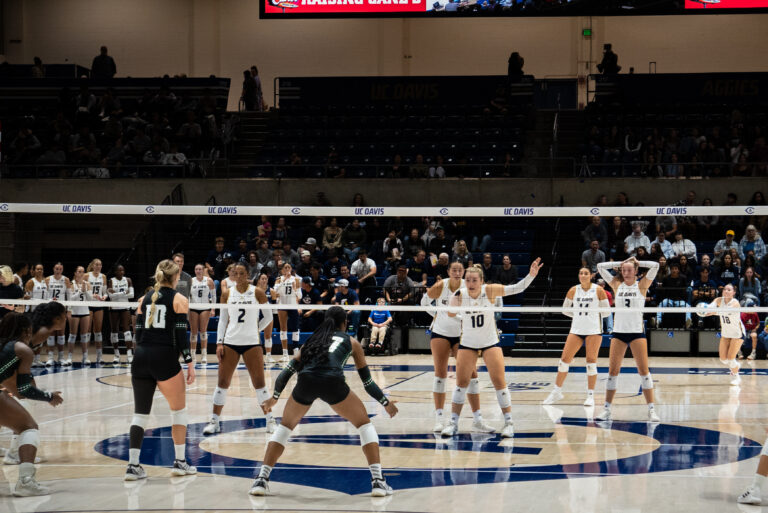
The UC Davis women’s volleyball team wrapped up their season, celebrating a series of historical achievements for the Aggies. With a major nine-game winning streak and a collection of victories against powerhouse teams, the Aggies secured second in the Big West Conference for the first time since 2009 and marked their return to the top three, which hasn’t happened since 2014.

Amongst the many firsts for the Aggies this year was a win against UC Los Angeles, the first in program history in non-conference play. UC Davis also notes record-breaking attendance for a home game with fans showing up to support the team and witness the phenomenal match.

The Aggies started their winning streak with a three-set win against UC San Diego in their second Big West season game. This game showcased the Aggies’ tenacity, proving how they are able to bounce back following a loss against California State University, Long Beach two days prior.

On Oct. 4, in Mustang territory, the Aggies defeated California Polytechnic State University, San Luis Obispo for the first time since 2015. Picked as the League Favorite in the preseason poll, Cal Poly has been a consistent top contender in the Big West Conference which made their loss a big shake-up for the season’s projections.

After two more victories and a continued winning streak of four games, the Aggies faced the Rainbow Wahines of the University of Hawai’i and prevailed in a four-set battle. This marks another achievement for the team as it is their first triumph over Hawai’i since 2013. With these wins against key figures in the Big West Conference, the Aggies cemented their presence as a dominant force in the league.

Following their win in Hawai’i, the Aggies celebrated four more victories against California State University, Bakersfield, California State University, Northridge, UC Irvine, and California State University, Fullerton. The streak was then broken by UC San Diego in a hard-fought five-set match. Following the UCSD loss, the Aggies were additionally set back by a close game with Cal State, Long Beach where they suffered another defeat.

Although the Aggies would overcome the upset with a win against UC Riverside, the players fell short in their home game rematches with Hawai’i and Cal Poly. In the Big West Volleyball Tournament, the team faced Hawai’i for the third time this season in an electric match to break the 1-1 tie in their previous encounters.

The showdown ended in a tough loss for the Aggies, as they battled through a five-set game, with the fifth set narrowly going 13-15 in favor of the Rainbow Wahines. While their season had a tough end, as a whole the Aggies were successful in showing the fortitude and drive of both the players and the program.

Although the entirety of the roster played a part in the program’s accomplishments, several key players had stand-out performances throughout the season. Notably, Olivia Utterback, a fourth-year human development major, Ally Chandler, a second-year undeclared major, Jade Light, a third-year aeronautical engineering major, Ximena Cordero Barr, a first-year landscape architecture major, and Mia Starr, a second-year undeclared major, all played vital roles in fueling the team’s victories.

Utterback, an opposite hitter for the Aggies, leads the team on many fronts. She has the most kills on the team with 422 kills and has the second-most service aces on the team (39). For her excellence in her position, Utterback was nominated for the 2024 AVCA Pacific All-Region Honorable Mention and 2024 All-Big West Conference First Team.

Chandler, a middle blocker, also received a nomination. Chandler is nominated for the 2024 All-Big West Conference Second Team. Being No. 1 in hitting percentage in the Big West (0.373) and having the second-highest number of blocks on the UC Davis team (81). Chandler is undeniably integral to the roster.

Also nominated for the 2024 All-Big West Conference Second Team is outside hitter Light. Light has the most service aces for the Aggies, scoring 40 aces overall, and in the conference has the second-highest number of aces (28). Light is also seventh in the conference for kills, with 3.48 kills per set.

Additionally, setter Starr and libero Cordero Barr are nominated, with Starr being a 2024 All-Big West Honorable Mention and Cordero Barr on the 2024 All-Big West Freshman Team. Starr had a team high of 1,177 assists overall with 9.87 assists per set. Cordero Barr had an all-around successful season in kills, assists, service aces and a notable 239 digs. 

Placing second overall in the Big West Conference demonstrates the capability of the UC Davis women’s volleyball program. Proving expectations wrong and charting their path, with these new achievements the UC Davis Aggies are set for a bright future and more successful seasons ahead of them.


By (Abigail DeSa) — sports@theaggie.org

Saving children’s media, one muppet at a time

Jim Henson’s Muppets need to be recognized for their impact


By AALIYAH ESPAÑOL-RIVAS — arts@theaggie.org


A “Muppet” is more than just a puppet. The term, coined by legendary puppeteer Jim Henson, is a combination of the words “puppets” and “marionettes.” Henson created the first muppet in 1955 and since their inception, Muppets have evolved into pop culture phenomena. From Kermit the Frog to Elmo, muppets have transcended the bounds of time and age.
However in recent years, their fate for forthcoming generations remains to be a constant battle of underutilization and undervalue.

On November 22, 2024 the official Disney Parks Blog announced the closure of “Muppets Courtyard,” a designated area dedicated to “The Muppets” in Disney World’s Hollywood Studios park. This closure includes “Muppet*Vision3D,” the sole Muppet-themed attraction in all 12 of Disney’s parks. Opened in 1991, the attraction takes guests through a tour of Muppet Studios, with the usage of 3D, special effects and animatronics. “Muppet*Vision3D” would also be the last Muppet project made by Henson himself before his death in 1990.

However, this news came as no shock to park goers due to the decline in popularity of the franchise. “The Muppets” which include and are not limited to: Kermit the Frog, Ms. Piggy, Fozzie Bear and Gonzo, began their start in 1974 on “The Muppet Show,” a children’s sketch comedy show that mixed the Muppets interacting with real-life celebrities. The show aired for five seasons and spawned six films from 1979 to 1999 before Disney acquired “The Muppets” franchise in 2004.

After Disney’s acquisition, “The Muppets” has not seen a successful interjection into mainstream media since the release of “The Muppets” film in 2011 and its sequel, “Muppets Most Wanted” in 2014.

Further muppet fate would falter, as on December 13, 2024, a spokesperson for Max (HBO’s streaming service) announced that HBO would not continue producing new episodes of the children’s show “Sesame Street” after the release of the 56th season in 2025.

“Based on consumer usage and feedback, we’ve had to prioritize our focus on stories for adults and families,” a Max spokesman said. “And so new episodes from ‘Sesame Street,’ at this time, are not as core to our strategy.”

“Sesame Street,” also a Henson creation, began airing on Public Broadcasting Service (PBS) in 1969, to create educational children’s programming that bridges the inequality gap for low-income families. PBS produced the show for nearly 50 years before Sesame Workshop, the non-profit studio behind “Sesame Street” sold the producing rights to HBO in 2016 due to increasing costs and loss of revenue. Thus, all new episodes of “Sesame Street” would be released to HBO platforms first, before airing on PBS nine months later.

As the future fate of all Muppets remains uncertain, it is now undoubtedly important to recognize their significance in society. As children have shifted from sitting in front of televisions to mobile devices, Henson’s creations serve as a reminder of the ideals children’s media should uphold.

“Sesame Street” is a hallmark of children’s television, not only teaching children basic math, language and empathy skills, but also covering heavy topics such as grief, homelessness and racism in an easily comprehensible way. “The Muppets” teach the importance of teamwork, perseverance and fun, bringing a smile to all audiences.

“The Muppets,” whose versatility is evident through their various adaptations of classic stories like “The Wizard of Oz” and “A Christmas Carol,” can still have an impact on audiences today. Since their creation, Henson’s Muppets have made a positive impact on audiences of all ages — regardless if you grew up on any of the franchise’s content. As for “Sesame Street,” fans can be hopeful that future generations will always have the knowledge passed down from Elmo, Big Bird and Oscar the Grouch.


Written by: Aaliyah Español-Rivas — arts@theaggie.org 

Put the phone down and go read a book or something

How our phones monopolize our free time


By Tara Romero— tcrome@ucdavis.edu


“What did you do over break?” — the dreaded question for all of us social media addicts. You don’t want to admit that you spent the majority of your break watching fan-wars unfold on Twitter and clocking in for a six-hour night shift of unconscious scrolling on TikTok. Instead, you lie and say you read a book that you actually read three years ago (your class acquaintance doesn’t need to know that).

However, many of us are not as alone as we think in our high daily screen time hours. The average amount of time Americans spend on their phones is four hours and 37 minutes each day. Although we typically spread out our phone usage throughout the day, we end up spending almost a quarter of our waking hours glued to our phones.

We have all undoubtedly read or heard about the thousands of scientific studies that warn us of the negative effects of too much screen time. From mental health to digital eye strain to sleep quality, the studies point to limiting social media and screen usage. Despite knowing this information, we still open up TikTok and watch clips of a sitcom on two times the regular speed with a Subway Surfers playthrough in the background. Knowing the health effects of high screen time doesn’t necessarily deter us — these health effects feel distant and out of our direct control. We can acknowledge the risks, but think, “Well, maybe for other people, but it probably, definitely doesn’t affect me.”

Another argument against social media usage is that it makes us less productive — any time we spend on our phones is time we could be working. Perhaps, instead of watching two-hour long YouTube video essays, we could instead write our own essay that we have been procrastinating on. In America, we live with a constant “grind-set” mindset where, if we are not being productive, we are doing something wrong. In other words, any time spent on our phones is a “waste of time.” This argument has a point, but I think it is founded in the wrong perspective. People do need a block of time during which they are not productive: leisure time.

Leisure time is a portion of the day set aside for people to unwind from their various responsibilities. A 2015 study from UC Merced demonstrates how leisure time helps us improve our mental health and well-being. Although we are not being “productive” in the corporate sense, we are actively doing something that we love. Spending time on our hobbies helps us feel more fulfilled in our lives.

Phone usage and social media masquerade as “leisure time” but, in reality, do not make us feel any more fulfilled (as leisure time ideally should). Our phones take up all of our leisure time and leave us with no time in the day to do anything we actually care about.

We owe it to ourselves to cut down our screen time. Life goes by too fast for comfort and we lose so much time simply staring at a screen.

If we have an extra four hours and 37 minutes in the day, then we have so much more time to do all the things we want to do. Finally go to Mary L. Stephens Davis Branch Library and pick up that book you have been wanting to read. Learn how to perfect your favorite dish. Go for walks. Volunteer for your community. Get really into building puzzles for a month. Try out a new hobby and hate it, but that’s okay because at least now you know that you hate it. There are endless ways to spend your new time away from your phone.

Replacing your screen time with fulfilling leisure time will not only diminish the negative health effects of screen usage, but improve your overall well-being.

Now, when someone asks us what we did over break, we won’t feel ashamed in our answer — because we know that we spent our time doing something meaningful to us, whatever that might be.


Written by: Tara Romero— tcrome@ucdavis.edu

Disclaimer: The views and opinions expressed by individual columnists belong to the columnists alone and do not necessarily indicate the views and opinions held by The California Aggie.

It’s time to start making enemies

Studies indicate that having an enemy is actually good for you


By MADISON SEEMAN— meseeman@ucdavis.edu


As children, we’re often discouraged from using the word “hate.” It’s a “strong” word, adults tell us. But I say that now is the time for strong words; We’ve been told for far too long that hatred kills your soul and bitterness is the enemy of joy. I think it’s time we embrace our natural instincts and fill our hearts with the singular focused ray of hatred that is having an enemy.

Thanks to an anonymous study I saw on TikTok yesterday, we now know that having an enemy is good for you. Blaming all of your problems on someone is healthy: It lowers your cholesterol, or something like that.

When the good goes bad, how do you cope? Sure, you can try yoga or deep breathing or even meditation, but those solutions are all massively unrealistic (and a little boring). Having an enemy is not only realistic and attainable — it’s exciting.

Take last Thursday for example. It started raining, which would’ve been fine if I hadn’t been carrying a small paper model of my room for class.Then, my AirPods died, I ran into my ex and worst of all? When I went to the bathroom after class, the toilet seat was warm.

My soul was dying, and I needed a savior. This is where the enemy comes in.

Geniveve Williams. In fourth grade, she invited everyone except for me to her dog-themed birthday party, even though she knew I was the biggest dog aficionado in class. In the eighth grade, she told Anthony from math class I liked him and then asked him out a week later. In senior year? I don’t even want to talk about it.

But on Thursday, I found out Geniveve Williams had joined a pyramid scheme.

I felt validated — vindicated even. I could feel the joy of her poor decision making healing the scars that day had left on my soul. I felt my vigor for life renewing and my motivation for my chem assignment building back up. I felt a profound sense of peace knowing that wherever I was, Genieveve Williams was doing worse than me.

It’s just like that famous Winston Churchill quote: “Having enemies makes you a better person” (or something like that). The anger Adrian from anthropology inspires in me gives me the adrenaline I need to get that paper in on time. Talking smack about Sara from sociology is the perfect warm-up for that final presentation. Hating Kevin the misogynist gives me feminist points.

I interviewed my friend David Kim, who has a lot of enemies, to get to the bottom of the benefits.

“It’s the only reason I’m passing my classes,” Kim said. “Take Emily for example. She’s involved in all the stages of my academic process. I rant about Emily to warm up for assignments. I blame Emily for all the things I get wrong. And, when I’m done, I hate-scroll through her Instagram as a little treat.”

Olivia Joy — another expert enemy-haver — gave me the inside scoop on how she collects so many enemies.

“I don’t discriminate; Anyone can be an enemy,” Joy said. “That guy walking too slow? Yeah, he’s my enemy now. The girl that won’t stop asking questions in the 8 a.m. lecture? Nails on a chalkboard. My class crush has a girlfriend? New enemy unlocked.”

Whether having an enemy is a coping mechanism, a hobby or a passion, there’s something in it for everyone. So, when the fire alarm goes off at 2 a.m. again, blame your ex-roommate. When you’re late to a pop quiz, blame that pompous electric scooter rider. When you fail a quiz, blame Kristin (she knows what she did). The world is your oyster, and anyone  can be an enemy.


Written by: Madison Seeman— meseeman@ucdavis@ucdavis.edu


Disclaimer: (This article is humor and/or satire, and its content is purely fictional. The story and the names of “sources” are fictionalized.)

Feeling SAD?

Seasonal affective disorder and the terrible, horrible, no good, very bad day


By MOLLY THOMPSON – mmtthompson@ucdavis.edu


If you’ve been to the Activities and Recreation Center (ARC) recently, you’re likely familiar with the fun, seemingly random exit polls the staff often pose on a little whiteboard for gym goers to vote on as they leave. I saw one during the week after daylight savings time ended, asking whether seasonal depression “hit you like a truck” or if you were “still okay somehow.” There were a lot of responses on both sides (and some other creative responses), but it appeared that most people felt like they’d been run over by the proverbial 18-wheeler that is seasonal depression. I guess it helps to know that I’m not alone.

More accurately known as seasonal affective disorder (or SAD, appropriately), seasonal depression causes many people to experience depressive symptoms during the winter months. This can include or be accompanied by increased levels of anxiety, fatigue, pessimism, irritability, lack of motivation, inability to concentrate and physical ailments, among many more possible symptoms.

While SAD can occur during the summer months (often with slightly different symptoms), it’s most common in the winter, affecting millions of Americans every year to varying degrees. Interestingly, it’s also more common in northern areas, which receive less daylight hours during the winter season.

The National Institute of Mental Health (NIMH) emphasizes that the root causes of SAD are still being determined, but a lot of data and research on it does already exist. As it turns out, decreased exposure to sunlight is one of the leading culprits. Depending on location, we can get around five to six fewer hours of daylight in the winter than the summer here in the United States. With stormy, cloudy weather commonly occuring in the winter, we often get even less sun exposure than that.

But why does this even matter? Why do we even need sun exposure? Firstly, it helps us regulate our circadian rhythms and can dictate the quality of our sleep. Sleep has a powerful impact on physical health, mental health, emotional well-being, productivity and mood. Especially in the morning, sunlight can help set our internal clocks. Oftentimes, because of lowered sun exposure and as a general pattern that exists in conjecture, people with SAD tend to produce excess melatonin — a hormone that helps maintain a normative circadian rhythm — causing exhaustion and oversleeping.

The most important thing we get from the sun is vitamin D. Ultraviolet (UV) rays from the sun help our bodies make the nutrient, which is necessary for bone health, blood cells and our immune system (another reason why we can be more susceptible to viruses and infections during the winter).

Vitamin D is also incredibly important for our mental health, as it impacts the molecules in our brains that allow us to keep our serotonin — acting as a neurotransmitter that helps regulate our moods — levels up. So, less vitamin D from less sun exposure can keep those molecules from adequately doing their jobs, leading to lower levels of serotonin in the colder, darker months. Without sufficient serotonin, we can feel destabilized.

The good news is that there are things we can do to take care of ourselves during these dark and stormy nights. Utilizing supplements is a popular and effective treatment strategy; Melatonin, for example, is abundantly available over the counter.

A common misconception about melatonin is that it works as a sedative, even though it doesn’t — it’s a hormone that our bodies produce naturally that helps regulate our sleep and wake cycles, rather than simply putting us to sleep. Common practice is to take five to 10 milligrams about 30 minutes before we want to go to sleep, although it doesn’t necessarily work that way. Instead, I suggest taking a smaller dose (up to one milligram) several hours before going to sleep and taking it every day. This will help realign our circadian rhythms over time, which is how melatonin normally functions. Overdoing and misusing melatonin can actually worsen symptoms of insomnia and drowsiness during waking hours, so it’s important to be patient.

Vitamin D is also an easy-to-acquire supplement, and, unlike melatonin, it’s hard to overdose on it. Unlike other vitamins like vitamin C, vitamin D is fat-soluble rather than water-soluble. With vitamin C, any excess that you ingest will just be flushed out of your system through your kidneys. On the other hand, because vitamin D is fat-soluble, your body will absorb what you take in.

The amount that each person needs varies based on age, region, diet (how much vitamin D you get from the foods you already eat), skin color and body size, among other factors. The Mayo Clinic notes that beyond 4,000 international units (IU) per day is unsafe, and most drug store supplements contain half of that or less. Vitamin D deficiency is also very common; The last time I asked my primary care doctor how much I should be taking, she said that she’s never seen anyone have lab results that showed enough vitamin D — do with that information what you will.

Of course, supplements and self-care practices aren’t magic. Even if we make ourselves into perfect pictures of health on paper, chances are our seasonal depression won’t disappear. It can certainly make a big difference, but it’s not a panacea. I’ve personally found that prioritizing time with my social circle makes a significant difference. Surrounding myself with people who give me love has proven to be incomparably rejuvenating time and time again, similar to finally charging your phone enough to turn off low-power mode.

Be extra gentle with yourself now that the days are shorter and the winds have turned cold and unforgiving. Take care of yourself, but also cut yourself some slack. Yes, it’s hard to feel optimistic when it’s dark at 4:30 p.m., but don’t forget that the sun will always come out tomorrow.


Written by: Molly Thompson — mmtthompson@ucdavis.edu 

Disclaimer: The views and opinions expressed by individual columnists belong to the columnists alone and do not necessarily indicate the views and opinions held by The California Aggie

The Editorial Board’s tips and tricks for a successful winter quarter

Now is the time to prioritize both your well-being and your academic productivity

By THE EDITORIAL BOARD

Every year, winter quarter at UC Davis greets students with unforgiving classes, shorter days and colder weather, making it one of the toughest periods of the academic school year. While surviving the quarter may seem daunting (cue flashbacks of biking in the rain or accidentally dropping your croissant in a puddle), now is the perfect time to examine your current routines, set healthy habits for the New Year and get your brain back onto the academic grind. 

Luckily for you, the Editorial Board — having made it through their fair share of winter quarters — has just the tips you need to be successful in these upcoming months. From ways to bolster your immune system to suggestions on how to take care of your mental health to academic advice, we’ve got you covered. 


Health:

First and foremost, keeping your body and mind happy and healthy is arguably the most important thing you need to brave the grim weather. Feeling comfortable and organized empowers you to face the world — to try your best in classes, take care of yourself and have the energy for both hanging out with friends and completing assignments. 

A surefire way to support both your physical and psychological well-being is by simply being in nature. Whether it’s taking a stroll through the Arboretum, going on a hike or studying on the Quad, being surrounded by fresh air and lots of green is proven to boost your critical thinking ability and reduce your anxiety. Further, doing physical exercise outside can lower chances of heart disease, and exposure to natural light can help regulate your sleep/wake cycles.  

On the topic of sleep, it is beyond important to get a good amount of it every single day. Contrary to popular belief, four to five hours a night won’t cut it; Seven to nine hours is highly recommended, with sleep professionals suggesting that adults calculate their sleep hours in 90-minute cycles — consisting of a completion of three NREM stages (light sleep) as well as REM (dreaming). Planning naps and nights from the perspective of sleep cycles helps us avoid waking up in the middle of REM sleep, which often results in feeling drained and worn out. 

Besides getting good sleep and plenty of sunshine, exercise is a crucial factor in keeping your energy levels up. During the first two weeks of winter quarter (Jan. 6 to 18) the Activities and Recreation Center (ARC) offers the program “Try Before You Buy” for all studio classes: from dance to martial arts. At the ARC, students also have the opportunity to purchase a “Rec Pass,” opt for a fee waiver or take free weekly yoga classes throughout the quarter — all great ways to get your body up and moving. 

Like clockwork, winter quarter also brings about a wave of sickness. With a strict attendance policy in many classes and rapidly moving courses, we often can’t “afford” to be sick — there’s just so much work that needs to get done. 

To avoid being bed-ridden for days on end, it is vital to take your vitamins, drink lots of water and hot tea and eat nutritious food. Supplements like Vitamin B (for cell health and brain function), Vitamin C (for your immune system) and Vitamin D (to help maintain levels of calcium and phosphorus) are all equally important to improving your health and helping you fight off the common cold and other minor illnesses. 


Academics:

Now that we’ve covered some of the best ways to take care of your body and mind, it’s time for some academic tips. 

The first, and one of the most overlooked academic strategies, is to go to office hours. While it may feel redundant to see your professor outside of scheduled class time, office hours are a fantastic time to get clarity about tough concepts and have a one-on-one talk with your professor. Networking in college is a process that will prove advantageous even post-graduation — getting to know your professors will get you on the radar, allow you to build professional connections and maybe even secure that recommendation letter. 

Beyond office hours, sitting in the front or middle of the class, taking notes during lectures (especially on paper) and actively participating aids in memory retention. Rather than playing 2048 aimlessly in the farthest row, you are forced to be attentive by the watchful eyes of all your classmates staring down your laptop screen from the back. Apart from helping you succeed, paying attention is simply being courteous to your professor: You’re showing them that you care about the material and respect the work they put into teaching it.  


The Winter Season:

One of the main reasons winter quarter is especially difficult is due to a significant lack of sunlight; Days are extremely short, and the weather is often dreary, rainy and cloudy. These natural phenomena are often responsible for an affliction called Seasonal Affective Disorder (SAD), which millions of Americans experience each year. 

In preparation for the chilly season, we recommend creating a schedule for yourself that optimizes “daytime” hours, planning your most intensive work to be completed between 8 a.m. and 5 p.m. Once the sun sets, our motivation often declines — we tend to get sleepy and feel less energized. It’s crucial to get as much sunshine as you can when you can; ways to do so include choosing naturally lit study spaces and taking breaks outdoors to get that extra bit of serotonin from the sun. 

With regards to the predictable onslaught of wind and rain, make sure to have some winter essentials in your closet — including a sturdy umbrella, rain gear, a windbreaker and fenders for your bike. Even though you may be tempted to stay in the comfort of your bed all winter, being prepared for the outdoors is one way to keep yourself productive and in good spirits.


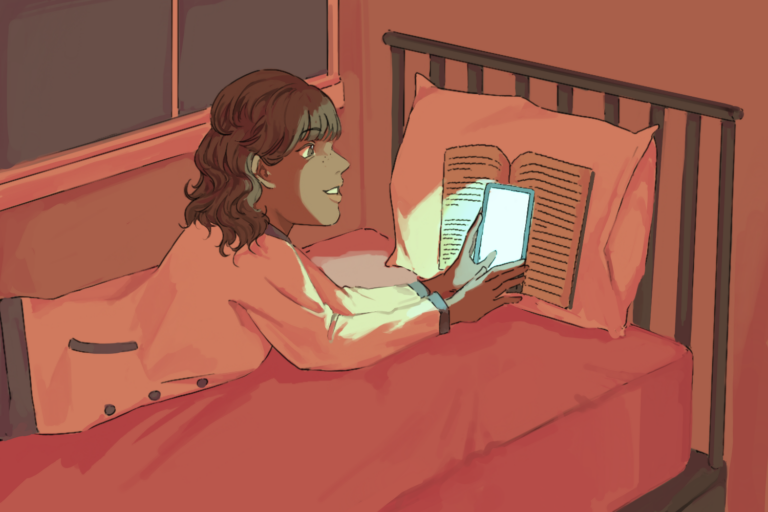
Ultimately, just remember to be gentle and patient with yourself — contrary to the expectations we and others often set for ourselves, we are humans, not machines. It is okay to take a mental health day to chill in bed with a few candles and a good book, it is totally fine to get yourself that sweet treat every now and again and it is normal to feel overwhelmed. Make sure to take a deep breath, lean on your friends and family for support and keep your best interests at heart. Don’t forget to set time aside for hobbies because, at the end of the day, you are so much more than your academics.  


Written by: The Editorial Board