57.3 F
Davis

Davis, California

Wednesday, December 24, 2025
Home Blog Page 65

Soup fixes everything

Researchers visiting UC Davis are unsatisfied with their catering options


By ALLISON KELEHER — adkeleher@ucdavis.edu


Recently, the Department of Agricultural and Resource Economics (ARE) hosted three traveling researchers. It was a pleasant affair composed of a guest lecture, several meetings and an ending presentation. Many connections were made and networks were expanded. An overall exceptional experience, and it was only 11 a.m.

“So, what’s for lunch?” one researcher asked whilst clutching his fairly large belly.

The ARE faculty grinned from ear to ear, as they had secured an elite dining experience — the Segundo Dining Commons. However, just as it made the ARE faculty smile, it wiped the smile off of the traveling researchers’ faces.

When asked for a statement, the second researcher announced: “It was really disappointing to be treated so poorly. I wanted something classy for lunch. Something like catered Panera Bread.”

The three researchers dragged their feet all the way to the Segundo Dining Commons to get their meal. One researcher chose a burger with curly fries, another a salad and the third refused food on principle. Overall, this once amazing day was quickly taking a turn for the worst.

After lunch, the third researcher was scheduled to present — however, he was extremely hungry due to his protest of the food offered at the dining commons. So, he presented with an attitude and answered every question irritably. In order to mend this once beautiful relationship, the ARE faculty decided to purchase a Snickers bar from a vending machine for this researcher. However, it ruined what was left of their working relationship because it turned out that he was allergic to peanuts.

While tension was building in the department, several squirrels outside began to listen in on the commotion and pass on the message. After about an hour, everyone at UC Davis had heard about the drama. Squirrels are very popular.

Thus, a plan was hatched to earn the respect of the researchers once again. It started with Gunrock, who acquired a very large stainless steel pot which he placed over a bed of coals in the Memorial Union (MU). One by one, squirrels from all over campus acquired bits of food to add to the pot. One group of squirrels even trekked all the way to the student farm to get some nice vegetables.

Slowly but surely, the pot began to be filled with veggies from the student farm and chicken stock from The Pantry — someone even tried to put a wild turkey into the pot before Gunrock intervened. When Gunrock wasn’t looking, a group of geology majors slipped some stones into the soup, claiming that rocks make every meal taste better. As the makeshift soup simmered, Gunrock would stir occasionally with a large wooden spoon.

At around 5 p.m., the soup was about finished and ready to serve. The researchers were angrily getting ready to leave when they were redirected to the MU to have some soup. Hundreds of UC Davis students gathered in the MU to witness the mending of friendship through soup.

At this point, Gunrock had an apron on and began ladling out bowls of soup for the researchers. Although they were still upset, the soup smelled very scrumptious, so they couldn’t resist a taste. A couple slurps later, these researchers were hooked, claiming that this was the “best soup they’d ever had.”

The campus rejoiced, and students began to line up for their share of the friendship soup. After enjoying a hearty bowl served by Gunrock, everyone lived happily ever after.

The end.


Written by: Allison Keleher — adkeleher@ucdavis.edu


Disclaimer: (This article is humor and/or satire, and its content is purely fictional. The story and the names of “sources” are fictionalized.)


Are electric vehicles really sustainable for the environment?

Factors to consider before purchasing your next car


By Ellie Noh — eenoh@ucdavis.edu


With the increasing inevitability of the climate crisis, new forms of green technology are being developed in hopes to help mitigate environmental damage. One of the most recent developments is seen on the roads with electric vehicles (EVs). 

Although electric vehicles are promoted as a new eco-friendly mode of transportation, many people often overlook the negative environmental effects generated by their production. Especially when global warming is intensifying, people should stop to consider the counteractive effects of EVs before purchasing. 

Electric vehicles can operate using electricity taken from a battery, rather than an internal combustion engine that relies on gasoline. This ability to produce zero emissions and EVs’ “cost-effectiveness” when it comes to maintenance — since EVs don’t use gas, don’t require stringent engine maintenance and don’t need oil changes — often outshines the negative impacts of producing the vehicles. 

One of the main components of electric vehicles that is harmful to the environment is the production of lithium batteries. For instance, EV batteries require various metals such as cobalt, aluminum and lithium to produce, which are acquired through mining. In order for mining to occur, many natural resources are threatened and large amounts of water are needed. 

Considering these factors, we can compare the production of EV batteries and the production of common internal combustion engines. With each ton of lithium mined, there are 15 tons of carbon dioxide emissions, according to MIT Climate. On the other hand, EARTH.org indicates that one ton of steel, which is needed for internal combustion engines, produces 1.9 tons of carbon dioxide emissions.

As the demand for EVs increases, there are concerns that recycling will not be able to catch up to the amount of lithium batteries used in production. Also, if precautions are not taken during disposal, lithium batteries can become a fire hazard, especially if they are accidentally destroyed. Thus, these batteries cannot be easily disposed of in municipal recycling bins or trash to avoid potential danger.

With these aspects in mind, there should be more awareness regarding the impacts of EV batteries on the environment, along with more development in making lithium battery production and recycling more sustainable. While there are many positive environmental effects surrounding the EVs themselves (compared to gas-powered vehicles), it is still important to know the drawbacks of the mode of transportation you take every day. Though I am supportive of the efforts of the advancements made in making eco-friendly vehicles, there should not be significant underlying factors that contribute to an unsustainable environment.

Before buying your next car, it is crucial that you do research on its potential environmental effects and consider whether or not it is truly the most sustainable option. While driving EVs can decrease emissions, all factors should be taken into account — including emissions caused during the production phase, not just everyday use of the vehicles themselves. Also, if other sustainable modes of transportation are available (such as taking public transportation or biking), that is another viable option to take into account. 

We must become more conscientious of our environmental actions — each individual action can bring us a step closer to a greener future.  


Written by: Ellie Noh — eenoh@ucdavis.edu


Disclaimer: The views and opinions expressed by individual columnists belong to the columnists alone and do not necessarily indicate the views and opinions held by The California Aggie.


All I want for Christmas is a good book

Sentimentality drives the book industry during the holiday season


By Abhinaya Kasagani— akasagani@ucdavis.edu


Winter is magical in its crispness and twinkle of soft lights, in the warmth of traditions passed down over generations. The season is one of sentimentality, and, for the book industry (just like any consumerist industry), this is the time to shine. More than any other season, winter leverages this yearning for connection and nostalgia, fueling a surge in book sales and readership. 

The holidays have long been intertwined with the act of storytelling. Whatever this looks like for you — whether you are reliant on a warm book by the fire or another task of intellect and care — it is hard to disregard that binge-reading has found its way into tradition. This sentimentality is what the season is built on: It is a time for reflection and giving. Books can be great for this, since they are less presents and more companions during the cold — as gifts, they imply care. The discounts aren’t too bad either. 

Not only does the holiday season invite guilt-free consumption, but the long nights and shorter days offer us such time. The quickness of life is halted, however temporarily, and people find themselves curled up indoors, seeking the wisdom and kindness of a book. Holiday breaks become perfect opportunities to recenter oneself, revisit old favorites and discover new ones. Seasonal genres tactfully leverage this desire for comfort and familiarity with cozy mysteries, holiday romances and festive cookbooks. Nothing is too gauche for the season that greets. 

Publishers and booksellers alike have perfected the art of aligning themselves with what the season demands. The weeks leading up to Christmas see an influx of special editions, gift sets and limited-time promotions: It is almost foolish not to participate. From Black Friday to Christmas, books are featured in sales campaigns as ideal gifts. Audiobooks and eBooks, along with digital platforms and subscription services like Audible and Kindle Unlimited, are in equal demand, rising in popularity as technology reshapes the way we consume stories during these travel-heavy months. The tangible joy of holding a physical copy persists, yet this promotional tactic spares no format. 

Winter is also synonymous with a revival of Christmas-themed media — new songbook editions, re-releases of Christmas carols and sheet music collections. These re-releases are often promoted by contemporary artists who leverage this sentimentality to further feed into the con of seasonal media consumption, a product of the enduring appeal of holiday traditions. 

Winter is a season that embraces storytelling in all its forms, linking together generations and memories to inspire new ones. In Iceland, for instance, the Christmas Book Flood takes center stage, encouraging one to gift books to those they love. This leads to a massive surge in book sales during December, as families exchange books on Christmas Eve and spend the night reading them. Pop-up bookstores and literary booths at holiday markets cater to shoppers seeking meaningful gifts, while libraries and community centers work to foster good winter reading habits. Many host seasonal programs, such as storytime for children, holiday craft workshops and book clubs focused on winter-themed literature. These events not only promote literacy but also strengthen the community’s propensity for reading. It is, after all, a time for turning over a new leaf.

Ultimately, reading in winter is almost sacred. The world grows quieter, and the rustling of pages gets louder. The season stretches and folds, inviting us to ask our questions and have them answered. The act of reading is as common this time of year as a Mariah Carey re-release. Winter reading, apart from being especially lucrative for the book industry, is a form of self-care. The season encourages introspection, and books are there to hold your hand through it all. No book leaves something to be desired — there is always something to learn. Decide now what story will keep you company this chilly winter; Remember, time is of the essence. 


Written by: Abhinaya Kasagani— akasagani@ucdavis.edu


Disclaimer: The views and opinions expressed by individual columnists belong to the columnists alone and do not necessarily indicate the views and opinions held by The California Aggie.

UC Davis’ Lashkara brings Bollywood Fusion dance to life

Lashkara dance team fosters commitment, talent and community building


By GRACIELA TIU — features@theaggie.org


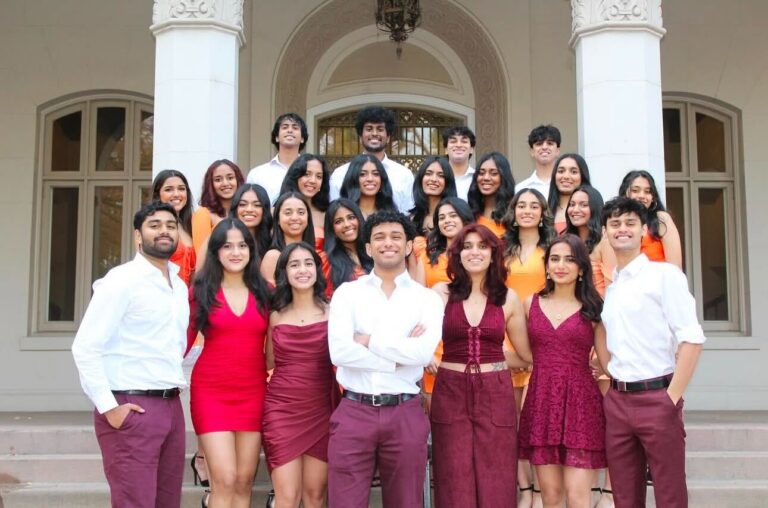
Lashkara, UC Davis’ premiere Bollywood Fusion dance team, prides itself on the talent, community, passion and hard work of its members. Whether it be through their choreography, practices, performances or their overall bond as a team, Lashkara at UC Davis exceptionally impacts its members, the school community and beyond.

“Lashkara strives to spread cultural diversity through Bollywood Fusion dance by blending traditional and modern elements of dance into its set,” Sumit Mantri, a second-year computer science and statistics double major, said. “The team reflects these values by incorporating innovative, traditional choreography as well as a mix of both modern and traditional music.”

Ani Chiplunkar, a second-year statistics major, described how Lashkara’s significance extends beyond just dance.

“At the end of the day, Lashkara is more than just a dance team or a set of people,” Chiplunkar said. “It’s a purpose. We perform a plethora of dance styles and tailor them to a theme in order to satisfy the purpose of really moving people and showing how passion can bring out the best of us.”

Members of the team recognize how their commitment to their work is driven by a common love for what they do.

“The drive that we have to dance is reflected through our dancers,” Dhwani Shetty, a second-year materials science and engineering major, said. “Passion is what fuels us; it’s how we perform as a team, do things as a team and bond as a team — over our love for dance.”

The team’s performances range between multiple dance styles but are combined into one performance.

“The style and energy of a typical Lashkara performance is very versatile,” Shetty said. “We have an eight-minute segment that we perform at competitions and it includes various dance styles such as Bhangra, Bollyhop, Bollywood, contemporary, hip-hop and more. Each of these requires different types of energy.”

Mantri reflected on what made him feel inclined to try out for the team.

“Before Lashakra, I had little to no dance experience, but dance is something I’ve always been interested in,” Mantri said. “So I decided to give it a shot, and I came to the realization that this is something I truly enjoy. Not just the dancing, but the community and connections that you build through the team.”

One of the most important pieces that ties the team together is their frequent practices.

“A typical week involves structured practice sessions, often five times a week for three hours a day, focusing on choreography, cleaning, stamina building and synchronization,” Mantri said. “Before a performance or competition, rehearsals and hours do intensify, and mock performances are held to ensure our readiness so we can go into our competition confident in our set.”

Despite the long hours of practice for the team, some members said that the time commitment actually benefits their academic performance.

“The practices are long, but it’s helped me learn how to manage my time better,” Shetty said. “I know I have dance at 8 p.m. and I have to finish everything before then, so it really helps structure my schoolwork.”

UC Davis Lashkara has around four performances a year that they travel to, depending on which competitions the team qualifies for. One of the most memorable ones for the team in the past year was University of Georgia (UGA) India Night in Athens, Georgia.

“I would say UGA India Night 2024 was the most memorable performance for me in Lashkara as I’d never performed before on stage, and we ended up having to perform first for the event,” Mantri said. “Before performing, I peeked out from the backstage curtains, and I saw thousands of people in the audience, and heard people chanting our team name. I was nervous to my core and had a huge adrenaline rush. And when going onto the stage, I carried that

adrenaline rush through with me for the performance and was hyped to showcase our set.”

Chiplunkar also explained why UGA India Night was such a special performance for the team.

“It was our first competition, and we had all the odds stacked against us — logistical problems, technical issues, the entire circuit and people at our own school doubting whether we’d place or not,” Chiplunkar said. “Placing at that competition really set the tone for a west coast team to make a big impact on the circuit, and that’s exactly what we did. So it was a memorable performance, because it proved to myself and others that really, if you put your mind to something, you can defy all odds, no matter how much they’re stacked against you.”

Members including Mantri believe that a big part of what makes the group so special is the different talents that each individual member brings to the team.

“Every team member has their unique strengths that are utilized for different aspects of our set,” Mantri said. “Some people are really imaginative and artistic, so they become interested in the production part of our performance, and some people are creative, so they’re inclined to begin creating choreography. These strengths don’t go to waste, and they definitely positively impact our set.”

Through all of their practices and performances, the team’s members believe that one of the most rewarding aspects of the dance team is the community they’ve created.

“It’s just so special, because we all got so close over a short period of time,” Shetty said. “We haven’t known each other for that long, but it feels like we have known each other for a really long time because we spend so much time together.”


Written by: Graciela Tiu — features@theaggie.org


Culture Corner

The Arts Desk’s weekly picks for music, movies and more


By ELIZABETH BUNT — arts@theaggie.org


Movie: “A Complete Unknown” dir. James Mangold (2024)


Released only a few weeks ago, “A Complete Unknown” is the new biopic of Bob Dylan’s early life. The film follows the first few years of Dylan’s career from his arrival in New York as an untested 19-year-old to his controversial performance at the 1965 Newport Folk Festival. Timothée Chalamet nails the part of young Dylan, and his performance is matched by Monica Barbaro’s portrayal of folk legend Joan Baez. Led by their convincing embodiment, the film does a fantastic job of giving viewers a glimpse into the folk music scene of the 1960s. No prior music history knowledge is required to enjoy “A Complete Unknown” — anyone with any amount of appreciation for good music will love watching this movie and will find themselves adding more Dylan to their usual playlists.


Book: “A Room of One’s Own” by Virginia Woolf (1929)


One of Virginia Woolf’s best known works, “A Room of One’s Own” is an extended essay on the topic of female artists. Over the course of roughly 100 pages, Woolf argues that feminine genius has been stifled by social conditions throughout all of human history. In her most convincing anecdote, she suggests a scenario in which Shakespeare had a sister with an equal amount of poetic talent but who was never given the opportunity to prove it. Originally given as two lectures at women’s colleges, Woolf finishes with a call to action, demanding that young women continue creating art despite the social obstacles. Though a work of nonfiction, “A Room of One’s Own” is fast-paced and easy to read. It is accessible and thought-provoking for any level of reader.


TV Show: “Abbott Elementary” by Quinta Brunson (2021)


Anyone looking for a new bingeable show should definitely put “Abbott Elementary” on their list. “Abbott Elementary” is a mockumentary sitcom set in an underfunded public school in Philadelphia. It features a cast of dedicated, underpaid teachers trying to give their students the best possible chance of success. While silly and satirical, “Abbott Elementary” is also a very wholesome show, making each episode a very “feel-good” experience. Fans of “It’s Always Sunny in Philadelphia” should definitely make a point to watch “Abbott Elementary” to prepare for the collaboration season coming out shortly.


Album: “Diamonds and Rust” by Joan Baez (1975)


“Diamonds and Rust” is a classic folk album put together by Joan Baez in 1975, and I included it here as a pairing with “A Complete Unknown.” Made up of a compilation of covers and original compositions, it showcases Baez’s incredible voice and songwriting ability. It is theorized that the title track, “Diamonds and Rust,” was written about Baez’s tumultuous relationship with Bob Dylan, offering her side of the story covered partially in the Dylan biopic.

City of Davis reopens The Great Lawn in Central Park

The new renovations include a splash pad, improved drainage system and upgraded picnic areas to enhance community gatherings and sustainability


By ALMA CULVERWELL — city@theaggie.org


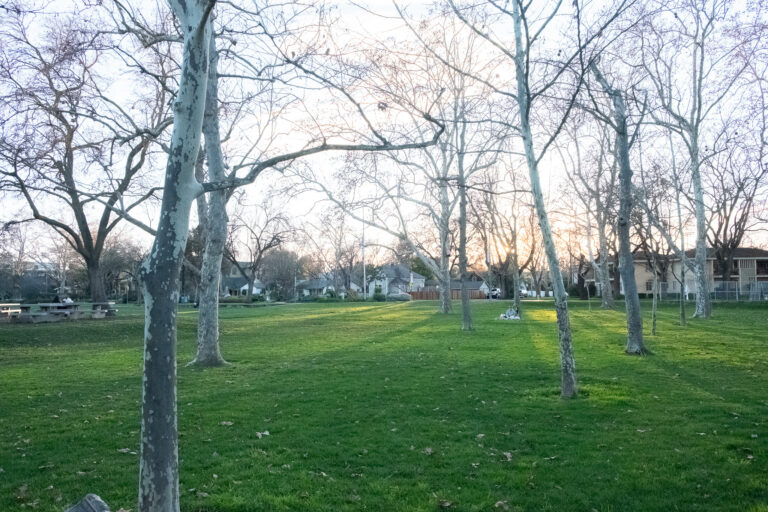
The city of Davis recently reopened The Great Lawn at Central Park after months of closure for the ongoing Central Park Revitalization Project. The reopening marks a significant milestone in the city’s efforts to enhance community spaces and promote sustainability.

The improvements are part of the Central Park Revitalization Project, which focuses on creating sustainable and accessible spaces for the Davis community. The city of Davis encourages residents to visit The Great Lawn and enjoy its newly upgraded features, highlighting the importance of outdoor spaces and fostering community connections.

The Revitalization Project includes several key improvements to the park area, such as the installation of a splash pad on the north side of the park, the removal of preexisting concrete panels on the south side and the addition of a new drainage system under The Great Lawn. The area also features an underground holding tank for the splash pad, new fencing and new picnic tables.

All work was completed in accordance with the City of Davis Standard Specifications January 1996 Edition, Addenda through September 2021, General Prevailing Wage Rate, Labor Surcharge and Equipment Rental Rates and the contract documents. The project was funded by a California State Proposition 68 grant.

Central Park, a central landmark in Davis, is a popular spot for daily activities. Kayla Duggan, a third-year neurobiology, physiology and behavior major and studio art minor, shared how the park has played a meaningful role in her life.

“On the weekends, I love selling my crochet pieces at the farmers market,” Duggan said. “Through this, I’ve gotten to witness how Central Park is loved by so many families and students alike. It will be so nice to see the impact of these renovations on such a special area.”

Abby Greenberg, a third-year psychology major, also expressed her appreciation for Central Park.

“Central Park is such an amazing place that I have so many great memories associated with,” Greenberg said. “It’s such a nice area to meet up with friends or even just stroll through.”

The Great Lawn’s new infrastructure and improvements ensure the space will remain functional and inviting for events, recreation and gatherings, regardless of weather conditions.

Charlotte Franklin, a recent UC Davis alum, reflected on her fond memories of Central Park.

“My senior year, I lived just a few blocks away from Central Park,” Franklin said. “My roommates and I loved going to the weekly farmers market and taking walks through the park. Though I no longer live in Davis, it’s always a highlight for me when I come back to visit, and I can’t wait to see how these renovations pan out.”


Written By Alma Culverwell — city@theaggie.org

All about coffee research at UC Davis

The UC Davis Coffee Center is looking to make UC Davis one of the top places for coffee research and education


By KATELYN BURNS— science@theaggie.org


What began as an introductory chemical engineering course has become a center dedicated to coffee research and education.

One of the most popular undergraduate elective courses at UC Davis is ECH 001: Design of Coffee — An Introduction to Chemical Engineering. Started by Professors of Chemical Engineering and Co-Directors of the UC Davis Coffee Center William Ristenpart and Tonya Kuhl, the course gives students hands-on experience with engineering and science principles using coffee. Students also get roasting and brewing experience using the Coffee Brewing Control Chart, which uses factors such as total dissolved solids (how strong the coffee is), extraction yield (what fraction of mass was taken out of the solid coffee grounds into liquid phase) and brew ratio (the ratio of water to coffee grounds used).

“The whole process of roasting and brewing coffee really is chemical engineering,” Kuhl said.

Following the success of the Design of Coffee course and with the support of faculty interested in coffee and the coffee industry, the Coffee Center was built. The building remodel was entirely funded by donations, and the Coffee Center was reopened in spring 2024. It has an espresso lab, pilot roastery, analytical lab, green bean storage, sensory booths and more.

“[The Coffee Center is] the nation’s first academic center located on a college campus focused on coffee,” Ristenpart said. “The idea is to have everything you need for advanced coffee research and advanced coffee education under one roof.”

The Coffee Center may have built off of the success of the chemical engineering department’s Design of Coffee course, but it is meant to serve as a nexus for all coffee research on campus.

Timothy Styczynski, head roaster for the UC Davis Coffee Center, facilitates the material-handling side for graduate students at the Coffee Center during their research projects. These projects include Anokye-Bempah’s research into titratable acidity, which is a measure of total acid concentration.

“[Anokye-Bempah] found that there’s a bell curve of increase [where the data increases to a peak before decreasing] in titratable acidity of roasted coffee across the production cycle,” Styczynski said. “That had never been done before.”

Styczynski also discussed Roastpic, an app developed by UC Davis computer science students for evaluating coffee beans.

“A couple of computer science students, who also happen to be Q graders — which is similar to a sommelier for wine [but for coffee] — helped develop an app that uses a calibrated sheet for measured color using your cell phone’s camera,” Styczynski said.

Styczynski also discussed his hopes for future research at the Coffee Center.

“The hope is that we’ll be able to do a green coffee defects study,” Styczynski said. “Right now, the rules about defects date back almost 150 years, and they’re really a subjective view on something that’s good or bad about the green coffee.”

Coffee, while incredibly complex, is under-researched. From taste to sustainability to climate resistance to green coffee defects, there is a lot of room for improvement when it comes to the current coffee production processes.

“For something that is so valuable as a commodity — the monetary value is immense and the social-economic value is incredibly important — there’s very little research in coffee,” Styczynski said.

Written by: Katelyn Burns— science@theaggie.org

Taboo or tasteful?: Exploring college discourse surrounding tattoos and piercings

UC Davis students reflect on the culture and idea of body modifications


By EVELYN SANCHEZ — features@theaggie.org


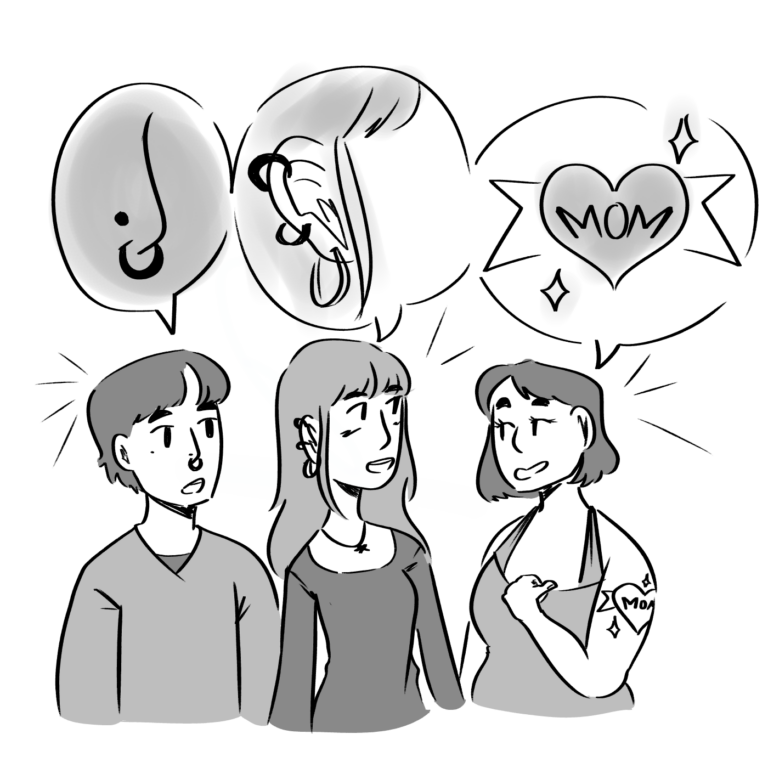
Finally living away from significant parental supervision for the first time in years, students are naturally excited for the endless possibilities that arise in college. Some of such possibilities include getting tattooed for the first time or getting a piercing aside from earlobes.

Body modifications have a rich and varied history, where the first known evidence of tattoos dates back to 4000-3500 B.C.E. Indigenous Polynesians tattoo intricate geometric designs to express personality and identity; Likewise, the Maori people use the medium to display status and significance via facial tattoos, and some communities within sub-Saharan Africa practice the body modification of cicatrization where soot or ash is rubbed into a deep cut to produce a raised scar.

Despite the varied significance around the world, it is difficult for some students to lightly shrug off the burden of the task. Taboos surrounding piercings and tattoos remain prevalent in many cultures, such as Japanese culture associating tattoos and piercings with yakuza violence and even banning tattoos in certain public spaces. However, a short stroll through campus would reveal a more lenient attitude toward body modifications.

“I’d be a different person if I still lived with my parents,” Alana Faria, a fourth-year history major, said. “I think I’d be less likely [to get tattoos] because even though I liked tattoos, I thought they’d look bad on me. But college taught me it doesn’t matter how they look on you as long as you like them.”

In an environment where everyone is striving for professional success, the burden of social norms is lighter when your fellow historians and doctors are also getting tattoos that have significant meanings to them — and even ones that don’t.

“Being surrounded by so many people where stuff like tattoos and piercings aren’t looked down upon, as well as having a lot of friends that had these body modifications, made me feel a lot more comfortable getting the tattoos and piercings I wanted,” Cris Lima, a fourth-year physics major, said. “I probably would’ve ended up with at least one small tattoo, but I probably wouldn’t have gotten piercings of any kind.”

Faria and Lima both got their first tattoos at Death or Glory, a tattoo and piercing shop in Downtown Davis. Being the closest shop to campus, it tends to be Davis students’ go-to spot for when they’re looking into getting body modifications for the first time.

“I got my nostril when I was 16 and tattoo when I was 17, with parental consent,” Nirvana Nejad, a third-year English major, said.

Nejad’s first tattoo and piercing were done at a tattoo shop in Fairfax, Virginia, and, already knowing that they wanted more body modifications coming into college, it was a matter of “how many” instead of “when.” They have since also been tattooed at Death or Glory in Davis.

“I’ve known since I was a little kid that I wanted tattoos,” Nejad said. “If anything, I respect the art form and the culture surrounding tattooing more than I did after coming to college.”

Despite their reputation to some, tattoos hold and reflect sentimental value for many people, and the designs often extend beyond simple decoration or a spontaneous decision. Contrary to them often being seen as impulsive, the college setting allows students to view tattoos as a form of art.

“The more time I spent at tattoo shops and talked to people that work there, I realized that getting tattooed is an act of incredible trust with a stranger,” Nejad said. “You’re trusting someone to permanently change your body while they deliberately cause you pain. I think the profession comes from a place of loving people and art.”

Nejad cites a tattoo sheet dedicated to Leonard Stoney St. Clair, a circus performer and tattoo artist who learned tattooing during his time as a performer, which deeply resonated with her. The sheet was committed to the history and art of the practice.

“I am in the business of rendering a service to this community for the small group of people who choose to have their bodies decorated in some way or another,” St. Clair said in an interview for the non-profit Folkstreams. “I choose to pursue my profession with intelligence and skill, wishing not to offend anyone, but instead with my love of mankind, do what good I can before I die.”

Faria said that she plans to get a shark tattoo on her arm to commemorate her dog’s name and a pumpkin on her left shoulder to remember her late aunt who nicknamed her “pumpkin.” An avid animal lover with countless pets, Faria memorializes her love through her tattoos.

Lima shared that he finds importance in the aesthetic value of tattoos and prefers those that reflect his interests and personhood.

“My second tattoo is a physics equation with a little nerdy design [because] at heart, I am a nerd and a physics major,” Lima said. “My third one is a Queen of Hearts, which is my favorite single card in a deck. I also like playing card games, but it’s mainly for the design.”

Despite the value such body modifications hold, it can still be scary for students returning home for breaks to families that do not share the same sentiment.

“Each passing tattoo and piercing has gotten better, so, [for] like the first tattoo ever, they freaked out a little,” Lima said. “But they’ve become more okay with it to the point now with my recent tattoo, my mom reacted with a sunglasses emoji.”

Nejad’s mother has also adjusted to the idea of tattoos and piercings — her mother simply wanting her to “slow down.”

Widespread societal attitudes will continue changing, but the culture of body modification will always remain an important art form to many people — both in and out of college.


Written by: Evelyn Sanchez — features@theaggie.org

Kickstart your career: starting your summer 2025 internship search

How UC Davis students can secure internships through Handshake and Career Center resources


By JALAN TEHRANIFAR — features@theaggie.org


With the holiday season behind us, it is the perfect time for students to kick off their search and applications for summer 2025 internships. While six months might seem far away, many companies start seeking student interns well in advance. In fact, most internship applications open as early as December, with deadlines typically falling between January and March.

Fortunately, UC Davis has several resources available for students through the Career Center. An important resource available to UC Davis students is Handshake, a job board that connects employers only with university students and alumni, unlike other platforms that serve a broader audience of applicants. UC Davis students automatically have Handshake accounts, allowing students to simply log in with their UC Davis Kerberos to activate it.

Handshake is used to search and apply for jobs and internships, schedule appointments with career advisors at the Career Center, sign up for company interviews and connect students with other students. The Career Center suggests keeping your Handshake profile up to date to improve your chances of getting an internship, as well as your resume.

“The more details you provide about your academics and experience, the easier it is for Handshake to tailor jobs and internships for you,” the Career Center website reads. “Employers can also contact you through Handshake, so having an updated profile allows them to see your accomplishments and skills that they may be looking for.”

Shreya Rupani, a fourth-year sociology major, said that Handshake has been helpful in getting her in touch with employers.

“I took a career-building seminar course one of my first quarters here, and the instructors taught us how to create our Handshake profiles and turn our resumes into sections on the app,” Rupani said. “I haven’t applied for any internships or jobs on there, but I get contacted by a lot of hiring managers who have seen my profile and think I would be a good fit for their company.”

Rupani said that it’s good to have your profile active even if you aren’t looking for a job at the moment. She emphasized Handshake’s ability to introduce different companies.

“I really like that companies are able to reach out to students on the platform because you get to hear from different companies that you may not have known exists and see what positions they generally look for,” Rupani said. “My major is pretty broad, and I can apply what I have learned to a lot of different types of positions, so it’s nice to see what’s out there.”

UC Davis’ on-campus internships and research opportunities can also be found on Handshake. UC Davis staff and departments post opportunities and job descriptions at the beginning of each quarter, as well as when positions become available throughout the quarter.

Melayna Ramos, a third-year forensic chemistry major, found her on-campus internship through Handshake with UC Davis Intercollegiate Athletics.

“Around this time last year, I was looking for any job or paid internship on campus, because it was convenient to work where you go to school,” Ramos said. “I came across an internship opportunity to film for the UC Davis football team during winter ball and throughout the 2024 football season. I didn’t really have any experience in camera work, but that’s the great thing about on-campus internships — they take the time to teach students the skills they need to be successful.”

The job application process through the Handshake app was easy, according to Ramos. Having her resume already saved in her account allowed her to apply with one click.

“All I had to do was filter my search for on-campus jobs and internships, and it immediately gave me a list of all the openings,” Ramos said. “I didn’t use any keywords since I wasn’t looking for anything specific, but I found a lot of positions that I was interested in. All I did was click apply — I didn’t get sent to an external tab — and I selected my previously uploaded resume and submitted it.”

Having a resume already drafted and ready to upload to Handshake makes applying to internships easier. Ramos said that the advisors at the Career Center were helpful in resume writing, as she was able to go to resume-writing workshops.

“I went to one of the workshops the Career Center hosts, and they showed my examples of good resumes and helped me figure out what skills and experience to prioritize,” Ramos said. “I was also told it’s important to tailor your resume to the job or internship you’re applying for, so I always make sure to do that too.”

When looking for internships, it’s difficult to know what type of workplace and industry would be a good fit. A great place to start is by attending a career fair, which is hosted by the Career Center four to six times a year, as it allows you to meet employers and ask questions about positions before applying.

The Career Center also recommends that students attend information sessions and  career fairs to learn about career options, network and explore opportunities.

Natalie DiMeglio, a 2024 UC Davis graduate with a degree in cinema and digital media, held two internships as an undergraduate student. A helpful resource for her was the on-campus Involvement Fair, which introduced the opportunity to join Aggie Studios, an ASUCD production group, according to DiMeglio. This opportunity led to her internship with UC Davis Strategic Communications, as networking with students in the same field allowed her to learn about more internship openings.

“My internship was with Aggie Studios and UC Davis Strategic Communications in the visual communication department,” DiMeglio said. “Both of my internships opened my eyes to the possibilities out there in creative fields despite what people say about them. It made me realize how much I love what I do and that being able to get paid for it was possible.”

Internships are a great way to test whether you want to pursue a career in a certain field. For DiMeglio, her internships reinforced her desire to work in the creative media industry.

“Both of my internships opened my eyes to the possibilities out there in creative fields,” DiMeglio said. “My current job is a production assistant and photographer with the Los Angeles Kings, NHL, and I also am a contracted photographer with the Los Angeles Clippers, NBA.”

Career Fair dates and employer lists can be found on the Career Center website, as well as on the Handshake platform. For students who are not looking for internships just yet, Career Fairs are a great opportunity to network with employers and build relationships for the future. Networking is crucial to career building — something that DiMeglio recommends.

“I think my best advice to students would be to talk to people and make connections,” DiMeglio said. “No matter the field you’re in, a lot of the rough market is about connections. I had so many people I looked up to in the industry and so I figured if I wanna be where they are, I need to talk to them — and so I did.”


Written by: Jalan Tehranifar — features@theaggie.org


The gothic horror: how the understanding of vampires has changed over time

Students and professors share their thoughts about society’s obsession with the supernatural 


By JENEVAH HARRISON — features@theaggie.org


The supernatural has long been a source of fascination, reflecting the fears, hopes and beliefs of societies throughout history. From medieval rituals to modern horror films, these stories evolve alongside humanity, offering glimpses into how people make sense of the unknown.

For UC Davis English Professor Tiffany Jo Werth, the connection between language, rituals and the supernatural is a window into the mindset of pre-modern societies. Werth referenced a text taught in her course, Literatures in English I: to 1700, titled “a little charm for when you get a side ache.”

“For me, this little charm illustrates how differently the premodern world understood the presence of the supernatural,” Werth said.

This specific poem contains a list of rituals that are meant to produce a healing remedy, which includes both physical actions, such as taking medicine and spiritual actions such as recitations and chants.

“They suggest that to be healed, going to the pharmacy for a prescription might not be enough,” Werth said. “The healing entailed was in some ways more holistic than our own as it included both a physical as well as spiritual component.”

Werth explores how these rituals offered reassurance in times of uncertainty. Whether seeking healing or protection, the supernatural was deeply entwined with everyday life, which Werth describes its representation in literature as “connecting words and physical properties.”

“They are, like prayers, a kind of insurance against uncertainty,” Werth said. “It also indicates the imbrication of the physical world with the supernatural — both beneficial and malicious.”

The “prayers” within the poem reflect a broader representation of early supernatural beliefs within this period, emerging primarily as tools to ward off what was deemed to be ‘evil,’ which Werth defines as any kind of supernatural figure.

Fast forward to the 17th and 18th centuries, and the supernatural took on new shapes in literature, with vampires emerging as enduring symbols of society’s anxieties. The gothic horror genre especially brought these creatures to life, embodying society’s fears of the unknown. One of the most well-known examples, Bram Stoker’s “Dracula” represents the fears and uncertainties of the late Victorian era.

“Stoker’s original treatment of the vampire myth, which predates his novel, expresses the racial and sexual hangups of the late Victorian period,” Davis English professor Jeffrey H. Solomon, who frequently examines how supernatural narratives reflect societal shifts, said.

Solomon reflected on how the novel’s themes of controlling women’s bodies and fears of race mixing mirror the anxieties of this era.

“We keep updating and changing to suit our evolving cultural needs,” Solomon said.

Over time, the vampire has transformed from a villain into a more complex figure.

“Looking at the genre with a more technical narrative perspective, we can see that the vampire has shifted from villain to hero (of sorts) in the post-WWII period, when there’s been a corresponding turn in our culture to gradually embrace outsiders and anti-heroes,” Solomon said.

The vampire, which Solomon describes as an “other” figure and a physical embodiment of the non-normative qualities of humanity, became a representation of a path toward societal change. As society has become more open to general diversity and the existence of suppressed identities, the vampire plot subsequently shifted into a more positive light.

The most recent adaptation of this phenomenon can be seen in F.W. Murnau’s 1922 and Robert Eggers’ 2024 film versions of “Nosferatu,” where the vampire is described as a true embodiment of evil.

“I’d argue that F.W. Murnau’s early film ‘Nosferatu’ is the closest in spirit to Stoker’s novel, where the vampire really is a horrible monster,” Solomon said.

Film viewers at Davis, including Violet Ichel, a second-year design major, felt like the vampire’s on-screen presence was uncomfortable.

“The vampire was terribly scary; however, at the same time, he was also alluring, almost in a sexual way,” Ichel said.

This ongoing reimagining and cultural relevance of the vampire myth highlights the enduring power of the supernatural as a narrative device — one that is consistently used in creative media including films, books and TV shows, as well as intellectual and cultural studies like Solomon described.

Through its many iterations, the supernatural, with vampires as an ever-popular example, remains a profound lens for exploring the ever-changing boundaries of cultural, moral and existential understanding.


Written by: Jenevah Harrison — features@theaggie.org

The Davis Raging Grannies bring a unique approach to activism

The local organization tackles important issues through song


By LAILA AZHAR — features@theaggie.org


The Davis Raging Grannies are a chapter — or a “gaggle,” as they call it — of the international organization of Raging Grannies.

The first Raging Grannies was a group of women in Canada. In 1987, in response to the presence of US Navy warships and submarines in Victoria, they launched a series of creative protests, often including singing songs and dressing up in costumes.

“Young people that see us are often surprised,” Lynne Nittler, a founding member of the Davis chapter of Raging Grannies said. “They probably think: ‘These are old ladies, what are they doing out here?’”

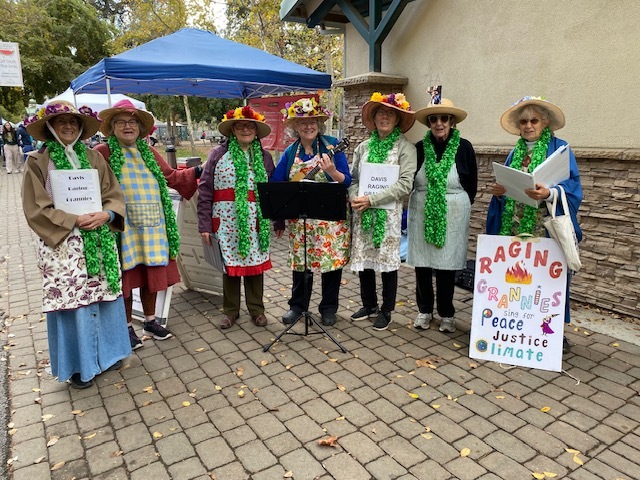
Dressed in wide-brimmed hats decorated with flowers, patterned aprons and feather boas, the Davis Raging Grannies can be found singing songs such as “Deck the Halls (of Congress)” and “I’m Dreaming of a Trump Free Christmas.”

The subject of the songs often have to do with serious issues such as climate change and voting rights. But their weekly rehearsals are filled with positivity. The women check in with each other, laughing and chatting as they make revisions to their songs. For them, activism also includes building a community.

The Davis chapter was formed as a direct response to the 2016 election, a time during which many people were looking to get involved in politics.

“Most of us grew up during the 60s and 70s and we were kind of steeped in activism,” Jeanette Vance, a member of the Davis Raging Grannies, said.

“The Vietnam War,” Nittler said. “As the guys in our classes went off and fought, some didn’t come back.”

When she first saw a notice recruiting women for Raging Grannies, Vance was reminded of the activism going on around her during the years of the Vietnam War.

“I wasn’t active at that time, but I was just starting to vote, so I was voting for all the peace candidates,” Vance said. “But when Trump was elected, it flipped a switch in my mind. I saw that notice and thought, this would be so good for me — to be with other people that felt the same thing, and to make some noise, to protest.”

Since then, the Davis Raging Grannies have sung at the farmers market, marched in the picnic day parade and participated in protests such as the Women’s March in Sacramento and the Climate March in San Francisco.

Nittler said they aim to bring an air of positivity to politics.

“There’s enough bitterness and negativity out there,” Nittler said. “Even if something has a serious meaning, if you say it couched in a song it becomes an earworm. [People] remember the idea, or just laugh, not because the topic is not a serious one, but because that can break down barriers.”

Hearing political messaging coming from a group of “grannies” is surprising for some. The members of Davis Raging Grannies believe it is precisely that surprise that makes their message memorable.

“In general, the whole idea of dressing up like grannies is to appear like harmless little old women,” Vance said.

Vance also said that the positive feelings of affection surrounding grandmothers helps to push their message.

“Yes, everyone has good feelings about their grandmother,” Vance said. “To try and shake them out of their complacency presents a contrast; Here’s something that you didn’t expect to have teeth behind it, but there’s a real purpose.”

UC Davis students say the group inspires important conversations about activism.

“A lot of Gen Z’s political engagement happens online,” Zara Hashim, a third-year psychology major, said. “Groups like the Raging Grannies are a great example of the fact that we shouldn’t forget the importance of building community and engaging with politics locally.”

For the group, providing inspiration to younger generations is a key part of their mission.

Despite the fact that the group feels discouraged by the results of the recent election — after all, it was Trump’s election in 2016 that sparked the chapter’s inception — the Davis Raging Grannies have hope for the future.

“That’s one of the things that I’ve found the most satisfying about being a part of the group too, is the idea of passing on the torch to the next generation,” Nittler said. “We want to engender the idea that activism and wanting to do something to try and make the world a better place, can start when you’re young, but it can continue your whole life.”


Written by: Laila Azhar — features@theaggie.org


The man behind the mask

How politicians shape contemporary culture 


By VIOLET ZANZOT— vmzanzot@ucdavis.edu


On Nov. 5, the citizens of the United States elected a “strongman” — who, according to NPR, is “someone who represents democracy as weak and ineffectual, presenting himself as the only one who can fix the nation’s problems.”

Superman, though not a historical figure, politician or notable “strongman” (but a strong man nonetheless), is often characterized as tough and brave — maybe even handsome. More than that, he is notable because he represents a feeling of safety. He represents the idea that a person is more than their qualities: A person shapes an environment. While his rugged features are great, his ability to be influential is derived from his impact on culture. When the glasses come off and the cape goes on, Superman is the hero protecting the safety of the citizens of Metropolis –– or at least, that is how he impacts the culture of the city.

Now, this is not to say that politicians are heroes by any stretch of the word, but they are comparable in the sense that they are able to shape culture in a way that is unique from the individual attributes that define them. In other words, politicians are impactful outside policy because of their ability to shape perspectives.

First, one must understand what is meant by culture. This word we tend to throw around may be best explained as the reasoning behind our seemingly random actions; In other words,  culture is meaning. It is a set of shared beliefs, values and customs. Claude Levi-Strauss distinguishes between culture and nature as the difference between “the raw and the cooked” — culture is the place where meaning comes from.

So, if culture is the process through which we create reasoning for our actions, it turns out to be a pretty big deal. Similarly, when someone wields the ability to shape culture at large, it tends to be important.

It seems though, that this power is often ignored. The people who we chose to bear such great significance are often analyzed in every way other than their influence on culture. Politicians are remembered for their distinct attributes, the historical moments they experienced and important legislation they passed, not the underlying waves of change that they inspired within society.

In learning history, we often separate cultural shifts from politicians. Maybe you learned about the extraordinary movements of the ‘60s and ‘70s, as well as how they seemed to dissipate going into the ‘80s. However, seldom are the movements discussed in tandem with the atmosphere created by the time’s respective politicians. Ronald Reagan’s platform of the “War on Drugs” and “Reaganomics” falls almost exactly as these cultural movements are noted as faltering. There is a connection.

Instead, typically in study, politicians are remembered separately from societal trends. Franklin D. Roosevelt is best known as the “President during World War II”, the founder of the New Deal and the only president to ever serve three terms in office. Richard Nixon will forever be tainted by the Watergate Scandal. Bill Clinton is marked by his relationship with Monica Lewinsky. Joe Biden has come to be known for his age and all of the trials and tribulations that came with a post-COVID-19 world. More than these facts and markings of significance, each of these men have shaped culture by setting a standard for what is acceptable in society.

Politicians have the ability to be impactful — dangerous even — because their influence allows them to shape societal norms. Not only do policies change, but conversations shift, depending on the politicians of that time. By controlling the conversation, politicians can dictate the norm. Their role as the intermediary between government and the public allows them to create and then explain meaning behind the actions made by our governing body.

The most recent election perfectly exemplifies this idea. Kamala Harris represented a clear and dramatic shift toward modernization. As a minority who emphasized social issues and redistribution, her platform was designed to highlight the change in culture she would bring about. Donald Trump’s “Make America Great Again” encapsulates traditional ideals, or a return to a culture that once existed. Each person changed the conversations that were being had across the country.

Now, with the results settled and the inauguration impending, Trump represents more than his potential policy changes or even his cabinet. He represents a shift in perspective, demonstrating that the American people accept his behavior as a popular standard, even as exemplary action. Conversations will cascade down from the White House, just as they always have.


Written by: Violet Zanzot— vmzanzot@ucdavis.edu


Disclaimer: The views and opinions expressed by individual columnists belong to the columnists alone and do not necessarily indicate the views and opinions held by The California Aggie.


Rex Orange County is back with ‘The Alexander Technique’

The artist’s new September album has indie fans itching for more


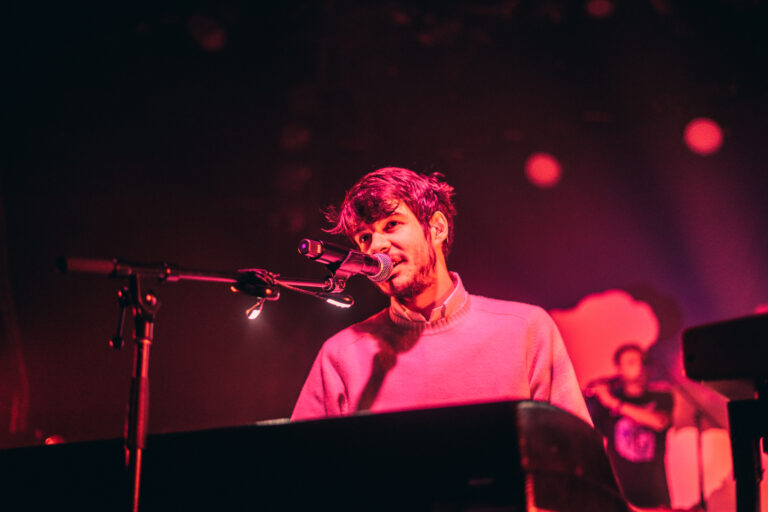
Indie lovers gathered in Oakland’s Paramount Theatre for an unforgettable experience during Rex Orange County’s North American tour. Taking place from Nov. 19 to 21, fans eagerly awaited a three-night run in Oakland, where they were treated to a night of heartfelt melodies and energetic performances.

Alexander James O’Connor, known professionally as Rex Orange County, is an acclaimed artist who dominates the alternative music scene. Hailing from Hampshire, England, Rex has brought his British charm across the Atlantic to showcase his latest album, “The Alexander Technique,” released on Sept. 6.

Rex’s 2024 tour was anticipated to a greater extent as “FINALLY: A Theatre Tour” marked his return to performing following a two-year hiatus. In late 2022, Rex Orange County faced allegations of sexual assault, indefinitely postponing his scheduled shows. After denying the charges, pleading not guilty on all six counts, Rex was cleared of charges by The Crown Prosecution Service on Dec. 22, 2022.

Known for its historic architecture and vibrant acoustics, the Paramount Theatre provided the backdrop for Rex’s performances. At 8 p.m. on Nov. 21, audiences filed into the venue where fans paraded the halls in Rex Orange County-inspired outfits. Audiences filled the velvet seats, their excitement growing as the lights dimmed and Rex took the stage.

Opening with his new track, “Alexander,” Rex appeared on stage alongside a doctor and a patient’s table. Amidst the song’s lyrics, Rex seamlessly adopted the persona of a sick patient during a captivating interlude. Audiences were enchanted by the theatrical dynamic as they prepared for more than just a concert — an artistic experience.

Playing a total of 19 songs, Rex delivered hits like “Best Friend” and “Amazing” as well as newer tracks such as “Guitar Song” and “Therapy” with an equally raw passion. Despite the venue’s size, Rex’s unmistakable vocals projected through the theatre, creating an intimate atmosphere that resonated with every fan in attendance.

After 18 songs and a memorable performance, Rex expressed his gratitude to the crowd and announced that he was stepping away from the stage. The chemistry between Rex and his band was palpable as he appreciatively gestured toward each member, queuing the audience to applaud. With that, the stage fell empty and a sense of unfinished excitement left fans begging for more. Faithful to his audience’s wishes, Rex returned for an encore. He closed the show with “Pluto Projector,” arguably his most celebrated song from his 2019 album, “Pony.”

As Rex’s final night in Oakland came to an end, audiences left the theater buzzing with energy. A concert filled with introspective melodies, Rex’s performance evoked a sense of nostalgia unique to his music. As fans look forward to the future, one thing is clear: Rex Orange County’s journey is far from over.


Written by Beth Munro-Morris — arts@theaggie.org 

Where mischief meets melody

Mondavi Center and Manetti Shrem Present Donizetti’s Don Pasquale


By IQRA AHMAD — arts@theaggie.org

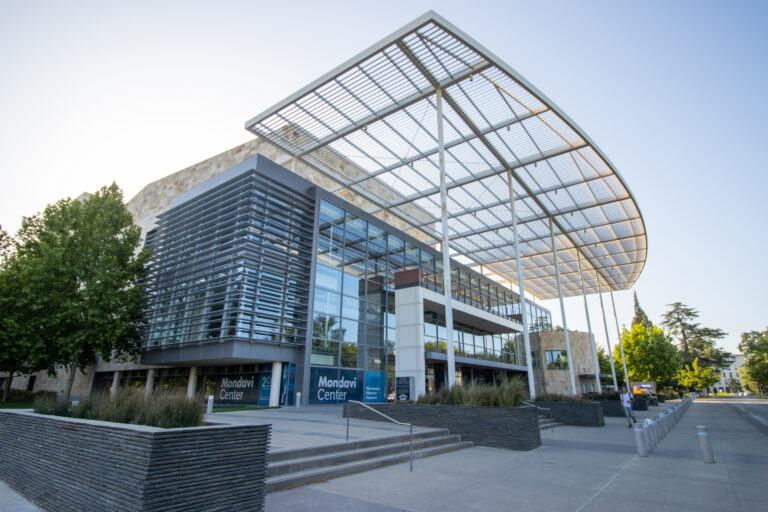
There’s a certain magic to the thought of attending an evening at the opera—the plush red carpet underfoot, the buzz of excitement at the ticket booth and the warm camaraderie as you mingle with fellow attendees. This was exactly the enchanting atmosphere that greeted opera-goers at the Mondavi Center for the Manetti Shrem presentation of Donizetti’s Don Pasquale. As the sun set on the chilly evening of Friday, Nov. 15, the opera’s whimsical charm came to life against the backdrop of a vibrant night and a live orchestra to accompany it.

Glammed up for the occasion, students and community members arrived in dazzling sequin dresses, tailored blazers, sleek suits and stylish polos, complemented by heels, boots and polished dress shoes. Styled hair, slicked back or cleanly combed and big Hollywood curls completed the look. The effort to dress for the evening gave the event a special sense of occasion, creating an ambiance of excitement and elegance.

The Mondavi Center’s main hall buzzed with activity as guests checked in their coats, purchased snacks for the show and anticipated the opening of the doors at 7 p.m. Shared smiles and introductions added to the sense of familiarity as old friends reunited and new connections were made. Small groups chatted enthusiastically, while others flipped through program flyers, reading about the opera’s history and storyline.

With 1,800 seats to fill, it was the Mondavi Center’s first fully-staged opera featuring a live orchestra and an interactive video set. As the house lights dimmed and the orchestra began to play, the audience settled in, captivated by the vibrant reimagining of the comedic opera set in 1980s Miami paired with neon colors and lively costumes. Laughter rippled throughout the hall as the plot unfolded, with playful nudges and excitement exchanged between friends who saw reflections in the slapstick humor and witty dialogue —- their own relationships were mirrored in the characters on stage.

The magic did not end with the final bow. As the performers took their steps offstage, the energy from the production seemed to carry into the lobby of the Mondavi Center. Guests lingered, snapping photos and animatedly recounting their favorite moments.

For any students, evenings like this are not only memorable but accessible. Events at the Mondavi Center often offer UC Davis students discounted and even free tickets to any event, making it a perfect opportunity to explore brilliant and new performances without breaking the bank.

If going to the opera or catching a play sounds exciting, make sure to keep an eye out for upcoming events and performances by checking out the Mondavi Center’s website or following their social media pages. Don’t miss the chance to immerse yourself in a new experience or engage in different events —- all just a few steps from campus.

Written by: Iqra Ahmad — arts@theaggie.org

Culture Corner

The Arts Desk’s weekly picks for music, movies and more


By CHARLIE MCBRIAN — arts@theaggie.org


In a country where queer existence is not always met with acceptance, the media plays an important role in imagining a reality better than our own. Here are five queer picks to keep you company over winter break.


Movie: “Nowhere” (1997) dir. Gregg Araki


“Nowhere” represents the crater of meaning at the center of pop culture. The film follows a day in the life of a group of young eccentrics grasping at meaning through sex, love, media, drugs and religion in an increasingly apocalyptic Los Angeles. Gregg Araki takes this framework and heightens each element, overwhelming each frame through surreal colorful visuals, camp dialogue and a fuzzed-out alternative soundtrack. Beyond turning it on its head, “Nowhere” bends pop cultural symbols to the point of snapping, fracturing into 1,000 shards of acid-dipped rock candy. Initially received as a style-over-substance parody piece, its caustic indifference speaks to a world suffocated by conflicting narratives.


TV Show: “Are You the One?” (2019) by MTV 


Despite the name, reality TV represents a manufactured and limited reality. This is especially clear in dating shows which invariably reinforce heteronormative expectations. Season eight, “Come One, Come All” of MTV’s “Are You the One?” sidesteps this, not because it’s more honest — it’s catty, dramatized and at times ridiculous. Rather, it crafts a reality that uplifts the queer experience as something complex, tangible and worth celebrating without pandering to a straight audience. Boasting a fully sexually fluid cast, the eighth season of “Are You the One?” has 16 contestants that share the goal of finding eight perfect matches and winning $1 million. It’s a smaller cast than earlier seasons but a much more challenging task as each contestant may be a match with the other 15. This leads to a lot of strategy and some satisfying negatives as well as devastating false positives. Its cast also meshed together well, feeling as though they need to win this for the queer community. As pretty much the only queer dating show on major streaming platforms, this is a must watch.


Song: “The Drowners” by Suede (1992)


Emerging out of Britpop, Suede remains a criminally overlooked group within the scene. Suede was able to condense the flirty, sleazy and dangerous side of glam rock into an alternative rock context and turned the queer subtext of David Bowie and T. Rex into text. Backed by its scuzz-wall of guitars, “The Drowners” contains the excitement of enjoying something you’re supposed to reject, of being something you’re not supposed to be, distilling the group’s best elements. It feels like a warm velvet hug, it feels like gender. It’s really good, please check it out.


Album: Larry Levan “Live at the Paradise Garage 1979” (2000 archival)


An early house music pioneer, Larry Levan’s DJing mixed soul, disco, funk, electronica, post-punk and psychedelia at the alcohol-free — but certainly not drug-free — queer discotheque: Paradise Garage. “Live at Paradise Garage” is an uptempo soul set in which Levan blends Cher and the Supremes with obscurities at a relentless and seamless tempo, allowing the set to feel like an endless party. Paradise Garage distilled the initial queer freedom promised by Disco into an enduring and repeatable reality — immune to the supposed “death of Disco.” Eventually, AIDS killed the club in 1987 and Levan in 1992. But his legacy lives on through the diva pop of Madonna, Beyonce, Grace Jones, Sophie and subsequent generations of DJs and gay clubs as well as Garage house, a whole genre based on the sound of Paradise Garage and Levan.


*Video: “Sufjan Stevens ‘Futile Devices’ Live on Soundcheck” uploaded by WNYC (2011)


I’ll finish it off with a 2011 radio performance of “Futile Devices” by Sufjan Stevens. Minimal yet gorgeous instrumentation sets the stage for an emotionally overwhelming performance from a misty-eyed Stevens. “Futile Devices” sits at the edge of action, a small interaction burdened by centuries of violent negation. But to choose to live as you want despite that is what makes queer love so beautiful and necessary. Youtube user @Connor Williams put it best: “He made his own damn gay ass self cry with his own damn gay ass song.”

Written by: Charlie McBrian — arts@theaggie.org