55.7 F
Davis

Davis, California

Wednesday, December 24, 2025
Home Blog Page 68

Armadillo Music hosts ‘Wicked’ soundtrack listening party

Local music shop celebrated the long-awaited release of the new movie musical


By OLIVIA HOKR — city@theaggie.org


On Nov. 22, Armadillo Music invited “Wicked” fans to come together and enjoy a free listening party dedicated to the new movie musical adaptation. The Davis-favorite music shop gave away prizes during the event and those who purchased a “Wicked” vinyl or CD were given a free poster.

Armadillo Music in Downtown Davis is known for their welcoming atmosphere and events. Hosting listening parties is a staple event for Armadillo: Some of the recent parties were for Linkin Park’s “From Zero,” Sabrina Carpenter’s “Short n’ Sweet” and Remi Wolf’s “Big Ideas.”

With the excitement surrounding that week’s public premiere of the new “Wicked” movie, starring Ariana Grande as Glinda and Cynthia Erivo as Elphaba, Armadillo provided the free event for fans to get together and appreciate the soundtrack.

To inform the community of upcoming festivities, Armadillo Music is active on Instagram and shares details about all of their events. For the “Wicked” listening party, they provided an on-theme flyer with information about what attendees can expect.

“We will play the soundtrack in the store and give away prizes to many in attendance, including Wicked tote bags & turntable slipmats,” Armadillo said in an Instagram post. “We also have full-sized Wicked posters to give away with purchase of the CD or the vinyl, while supplies last!”

Attendees were encouraged to dress for the occasion by wearing green or pink, a representation of the two witches. Many guests dressed accordingly, and some took it to the next level. Alejandra, a fourth-year linguistics major, dressed up as Elphaba by painting herself green.

“I am dressed as, obviously, Miss Witch,” Alejandra said. “We were actually going to watch the movie after the listening party so we just wanted to come listen to the soundtrack, really appreciate it in all its glory and then see the visuals paired with the soundtrack later on. We’re just really excited, we’re really big fans and we’ve been waiting for a movie since the musical isn’t shown all the time.”

Her friend, Allison Keleher, a fourth-year managerial economics major, dressed as Glinda to complete the duo and bring the vision of the two witches to life.

“I heard they were giving out free stuff, and I wanted to see the movie,” Keleher said. “So I’m wearing an ensemble with a pink t-shirt and a pink blanket so it’s like a dress, and my face is painted pink.”

During these listening parties, Armadillo’s bar, known as The Bootleg, is always open for 21+ listeners to enjoy. The record store also hosts events throughout each month such as Suds & Sounds and Bikes and Beats for community members to mingle and show appreciation for their music taste.


Written By: Olivia Hokr — city@theaggie.org

 

A cool girl’s guide to gift giving

Playing Santa? Here are some picks your loved ones will find perfect this upcoming holiday season 


By SAVANNAH ANNO — arts@theaggie.org

Let’s be honest. While it may be in opposition of the holiday spirit, gift giving isn’t just about who you’re giving the gift to. It’s also about you. Sitting around the tree on Christmas morning or revealing secret Santa with your friends, you want to be able to feel proud of yourself. You want them to know that you’re creative, that you’re capable of finding the elusive “perfect gift.”

While we can’t promise that the following recommendations will be completely on the nose for everyone, it can give you a place to start.


For the book lover: 


If you don’t want to take a gamble on what your book lover has or hasn’t yet read, or what they may or may not enjoy, go for book-adjacent gifts. If you want to impress, ditch the bookmark idea and instead look for a custom book embosser on Etsy. A stamp that doesn’t need any ink, the embosser gives your book lover a subtle and classy way to mark their copies permanently. You can pick a symbol that speaks to them — a favorite flower, their chosen genre, an animal — and complete it with their name.

Pair it with other reading accessories like a crotchet book sleeve or a Kindle page turner so they can sit back and relax while they read (if they already own a Kindle, of course). If you know their favorite book or character, surf Etsy for subtle jewelry, stickers or candles. You can even order customized letters written and sent by a character of your choice, from Katniss Everdeen to Mr. Darcy — while it’s something your book lover may never order themselves, we both know they would secretly keep it forever.


When men are difficult to shop for: 

Whether it’s your father, your boyfriend or your brother, shopping for the men in your life is probably the hardest task of the season. Never giving you any idea of what they might want, it’s easy to resort to the classics: socks, cologne, a LEGO set, some sort of sports or grilling tool, etc. While those are all great gifts, if you want to try something new this year, go for something that’s already been well-loved. While antique stores may seem like they only carry vintage jewelry or tea sets, you may find a variety of interesting objects that could serve as a great desk decoration or a new family heirloom. Vintage model cars, matchboxes, posters or collectible sports cards from their favorite team are classic but unique at the same time when you get them second hand.

If it’s for a best friend or romantic partner, try to incorporate something handmade. Find vintage charms and turn them into matching keychains, print out and frame concert tickets from shows you’ve attended together or try your hand at ceramics to make a personalized tray for their rings or keys.

Impressing the film buff: 


Honestly, this one is pretty simple. With ticket prices at movie theaters steadily increasing, include either a gift card to the local cinema or try the Regal Unlimited subscription for a month — $21.49 for 30 days of endless movies and 10% off concessions. In the same breadth, make your Letterboxd lover’s dream come true by upgrading their account to either Pro or Patron for a year. A movie-reviewing app, Letterboxd’s upgraded accounts give users special access to beta-features, personalized viewing statistics and the ability to fully customize their profiles.

Beyond subscriptions, try to include posters of your film buff’s favorite picks (either vintage or newly designed on Etsy), anything from the A24 online shop or the Jellycat Popcorn Bag, perfect for sneaking any snack into the theater.


Finding your mom something new: 

While it’s difficult to resist gifting her yet another candle, fuzzy blanket or pair of slippers, it’s time to branch out when it comes to your mom. Try to cater toward her special interests and shop for her as if she were a friend. If she loves art, try to find a local craft workshop or studio in your hometown that you can sign her up for. If she’s more of a green thumb, find her a set of ceramic plant markers from Etsy or a customizable seed packet organizer if she tends to leave them all over the house. Anything you can adjust to her preferences, like a coffee table book on her favorite subject, a new ceramic vase or a wallet in her favorite color are all functional and easy to find.

If you want to keep her on her toes, pair these with some smaller trinkets she would never think to get for herself. Anything a little whimsical, like a felted figurine of her favorite animal, a funny set of salt & pepper shakers or a set of vintage postcards, is perfect for any mom who loves a little collectible.


This holiday season, remember that what makes a gift truly perfect is that it’s coming from you. While gift guides like this serve as a great baseline, it’s up to you to show that you listen and understand the person you’re giving a present to. Whether it’s a family member, a friend or even a coworker, the best feeling is opening a gift from someone and knowing that they really get you.

Written by: Savannah Anno — arts@theaggie.org

The true meaning of Thanksgiving

Gratefulness in a world of unhappiness


By NEVAEH KARRAKER— nakarraker@ucdavis.edu


For many this fall season, the re-election of Donald Trump for a second term does not evoke any cheerful sentiment. Social media has been flooded with posts conveying a sense of concern, rage and deep sadness from women, immigrants and others affected by the election results. The future is unknown.

On top of that, finals are fast approaching. Not only do college students have to worry about changes to their government, economy and policies, but there are also critical exams that can influence winter registration. Even beyond studies and politics, seasonal depression lurks within the colder weather, continuously creeping up on students as they lose motivation to attend classes.

Given all of this unhappiness, it can seem pointless to celebrate any upcoming holidays — obviously, there are larger concerns at hand. However, if that’s the present mindset, we miss the whole point of Thanksgiving. Celebrating it in no way disregards reality; Rather, it’s a chance to be grateful despite reality.

That’s one reason why Thanksgiving is so important. We have to be grateful for what we do have in lieu of being consumed by what we lack. The world is chaotic, especially now, but it is not shameful to have the capacity to enjoy a dinner with loved ones. In fact, it’s more crucial than ever.

Since the exposure of the more-than-gruesome backstory of Thanksgiving — with the influence of disease and violence against the Wampanoag tribe — the holiday has been viewed by many as a propaganda technique. However, as long as we address this history, we can appreciate what the contemporary holiday stands for; The past is not defining, but rather liberating.

Following the Civil War, tensions remained extremely high as abolition movements experienced retaliation during the Reconstruction Era. American writer and activist Sara Hale campaigned for the national holiday as a “joyful tribute” for blessings, and Republican president Abraham Lincoln was fond of it. He established Thanksgiving as a national holiday to diffuse conflict, unite an antagonistic America and promote democracy.

And, of course, we all know turkeys are the centerpiece of this festive feast. This poultry was indigenous to New England and therefore exceedingly cheap during the war, becoming a staple for soldiers. Thus, turkeys turned into a symbol which represented this newfound harmony.

As America confronts unresolved vexation about what the future will entail, tradition remains constant. The corny (no pun intended) autumn leaves, pumpkins, turkey and gravy may seem obnoxious and redundant, yet it is something we can rely on. In times of uncertainty, it is of the essence that we focus on what we can control rather than on what we can’t. Whether we adopt pessimism or optimism, we must critically consider if and how we extend our emotions onto others.

In the end, the constitution is still intact, and we are not under authoritarian or communist rule. We still have the freedom to choose to celebrate (or not celebrate) holidays. While acknowledging the implications of others’ decisions is necessary, we cannot become too fixated on them. Gratefulness is not ignorance, it’s awareness.

The younger generations have been persistently told that they are the future by older generations — no wonder the student body is so disturbed. How can they be a part of the future if they have to fix the fragmented system of the people who thrust that future upon them? It appears like there is barely a future to anticipate.

Even so, I believe that the youth are the change. If one complains there’s not enough art in the world, become an artist. If one complains medicine is inadequate, become a doctor. If one complains the government is corrupted, become a keeper of objective truth as a journalist. This doesn’t mean that every person who feels conflicted during these times has to take upon the most laborious, complicated task. It’s simply this — if one wants change, they have to be the change.

With all of this said, mindset is an incredibly powerful tool. As people communicate to one another their beliefs and thus their disposition, the youth can serve as a catalyst to redirect the nation’s attention to what really matters: being optimistic as we concentrate on the people, memories and traditions we love.


Written by: Nevaeh Karraker—nakarraker@ucdavis.edu


Disclaimer: The views and opinions expressed by individual columnists belong to the columnists alone and do not necessarily indicate the views and opinions held by The California Aggie.

UC Davis students take the stage this holiday season

Navigating queer identity when going home for the holidays


By Tara Romero — tcrome@ucdavis.edu


As we enter the American holiday season, many students are going back home to spend time with family. The holidays are a time for family and cultural traditions to be shared — a time for genuine connection with the people we grew up with.

As college students, many of us live away from home. The holidays give us a break from the never-ending current of midterms and paper deadlines, and we can return home to reconnect with our roots. However, for many queer students, the holiday season can feel much less genuine and much more like a performance.

When away from home, queer students may feel more comfortable exploring their identities. This is because we meet people with identities like our own, and we make meaningful connections outside of the world we used to know. We can explore ways to express gender and our queer identities far away from the fear of our family’s judgment. UC Davis excels in this particular area, offering a variety of intersectionality-centered student-led clubs, as well as the LGBTQIA Resource Center led by staff who are dedicated to providing support for students on campus.

For many queer students, returning home from college means leaving behind a part of ourselves. When I sit at the family dinner table on Thanksgiving, I do not feel like myself. I leave behind my non-binary lesbian identity and enter my critically acclaimed role as the “average straight girl.”

Although I am out to my very accepting immediate family and a fairly large percentage of my extended family, I still put on this role every year for the members I am not out to and for the ones who know but clearly wish they didn’t.

I trade in my binder for a push-up bra. I put on my mask of lipstick and eyeshadow. I pull out my most feminine dress sitting at the bottom of my closet. I put on this costume, and I get ready for the performance of a lifetime.

My costume gets critical praise from the audience. I carefully read my script, knowing that one wrong move means receiving tossed tomatoes instead of flowers. I face the dreaded question: “Do you have a boyfriend yet?” to which I read off my script, “Not yet! I’m just focusing on school” — an instant crowd-pleaser. Exhausted by the end of my performance, I give my final bow with a “See you next year!”

Even though the holidays are supposed to be about connecting with family, the “connections” I share with my extended family do not feel genuine. This performance only results in more feelings of isolation.

To stop performing is a risky decision with family ties on the line. Many queer students do not have the option of attending the holidays with their families because of it.

Therefore, plenty of queer students will continue to perform at their family dinners this year. In American queer culture, there is always a pressure to come out, live authentically and abandon everything else in our lives. For some people, that is their lived truth. But this is not the truth for everyone. For many queer students, performing around family allows them to connect with other essential parts of their identity.

The reality is that the holidays are a complicated time for queer students — no matter if they are on or off the stage this year. All we can do is continue to support those of us without accepting families at home and wish all of our fellow queer actors at UC Davis a very sincere “break a leg” this holiday season.


Written by: Tara Romero— tcrome@ucdavis.edu

Disclaimer: The views and opinions expressed by individual columnists belong to the columnists alone and do not necessarily indicate the views and opinions held by The California Aggie.

Fidgeting is found to improve focus in adults with ADHD

UC Davis researchers unveil the compensatory nature of fidgeting in adults with hyperactivity


By EKATERINA MEDVEDEVA — science@theaggie.org


Attention deficit hyperactivity disorder (ADHD) is a neurodevelopmental condition that interferes with their ability to concentrate on tasks and, often, remain still. This poses challenges in settings where undivided attention is required, such as in the classroom.

The main focus of ADHD research is on children, as they are the most commonly diagnosed. Its symptoms may get milder with age, although many people continue to struggle with them in adulthood.

According to survey data collected by the National Center for Health Statistics in 2023, an estimated 15.5 million, or 6%, of adults in the U.S. have an ADHD diagnosis. However, some people don’t get diagnosed with ADHD until well into adulthood, meaning that these numbers could be higher, making it an important research area that warrants further exploration.

In an effort to find methods to relieve ADHD symptoms, a team of UC Davis researchers led by Julie B. Schweitzer, a professor of psychiatry and behavioral sciences and faculty member at Medical Investigation of Neurodevelopmental Disorders (MIND), conducted a study on adults with ADHD. The results show that intrinsic fidgeting (or movement that occurs naturally) is correlated with improved attention.

In the study, the participants wore actigraphy devices that measured the amount of physical movement of their ankle and wrist. They were given a response inhibition and attention task called Flanker, which allowed researchers to test their level of their concentration by looking at their response times and comparing it with their amount of fidgeting.

“Variability in response time is a proxy for attention,” Schweitzer said. “If you are highly attentive, then your response should be quick, accurate and steady. What we found, particularly as the test went on, is when you usually start seeing the attention lag, was that movement was associated with better performance and less variable response time.”

This result complements Schweitzer’s previous study on children with ADHD that came to an analogous conclusion that “motoric activity … may reflect compensatory efforts to modulate attention and alertness.”

Both of these studies shed a new light on hyperactivity in people with ADHD, which is commonly seen as a maladaptive condition that impedes focus on a task. Throughout the years, school teachers have tried various ways to adapt to the needs of young students with ADHD, from rubber bands wrapped around desks to yoga balls for seats. Now, the need for more innovative practices that could serve university students as well is being reemphasized.

“You have to find some sort of behavior that’s not distracting and keeps the hands free,” Schweitzer said. “There’s good evidence at this point that people who are doing exercise before they’re doing an active task experience a moderate improvement in their attention.”

Despite their widespread advertisement, the effectiveness of fidget tools is an area of active research that has not yet yielded definitive evidence. Currently, Schweitzer and her colleagues from UC Santa Cruz are looking into whether a “smart” fidget ball could help adults with ADHD concentrate better.

“I think it’s pretty standard now that in some classroom situations, people bring their fidgets,” Schweitzer said. “And there have to be rules around those, so they are not so distracting to other individuals.”

Still, even with the adaptation methods, the destigmatization of ADHD continues to be a goal for communities.

“It’s important to be patient and recognize that [fidgeting] is not always under their control and it might actually be something that’s helping them,” Schweitzer said.


Written by: Ekaterina Medvedeva — science@theaggie.org


The city of Woodland is buzzing over The Hive’s third anniversary

Live music, mead and a wide selection of varietal honey to taste from made up this anniversary celebration


By MATTHEW MCELDOWNEY — city@theaggie.org


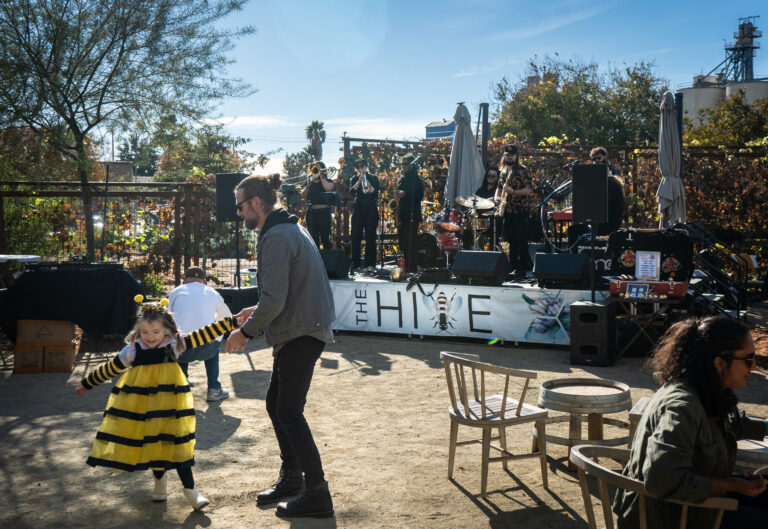
It is estimated that over one thousand people came out to celebrate the anniversary and success of The Hive, a tasting room, kitchen and honey production facility, on Nov. 16. Z Speciality Food is a family-run business that has since moved from sharing a warehouse space with a wool factory into The Hive’s state-of-the-art, zero-net-energy production facility and event space that has 20,000 square feet.

Programs at the anniversary celebration took families on tours through this garden and production facility to highlight their commitment to taking care of the climate and bees that in turn take care of them.

The families of Woodland were also given the opportunity to participate in a honey tasting, an interactive bee show and a spelling bee. These free programs were complemented by the event’s farm-to-table menu and a wide selection of mead to purchase.

Shoshana Zeldner, the director of brand strategy and marketing, and her brother Joshua Zeldner, the nectar director who is responsible for the wholesale, food manufacturing and honey processing side of the business, talked about their family business and the sheer amount of support they received during this event.

This was an unprecedented amount of people we have had at The Hive in one day,” Shoshana said. “Having more than one thousand people was an achievement, and we are glad things ran so smoothly with that many people.”

Joshua added onto his sister’s statement and explained what he loves most about the event.

“It showcases how excited the community is that we’re here, and we hear it from people all the time — especially from people living in Woodland — that they are just so happy that we exist,” Joshua said.

At the event, many people were there to participate in tasting each of the over 30 varieties of honey and competed against one another in the bee-themed spelling bee, even coming to the event in bee-themed costumes. This year’s programs had more participation than ever before as families were clamoring to learn more about The Hive’s business at its heart, according to the siblings.

“We showcase very pure products from nature and so a strong connection to the environment as well as pure, simple and high-level ingredients is really core to who we are,” Shoshana said.

Moreover, Shoshana and Joshua emphasized that during the facility tour, this commitment to sustainability is intrinsic to so many aspects of their business and distribution model.

“Josh has also done a lot of work on having our building, our packaging and our shipping to all reflect [our values of] environmental sustainability,” Shoshana said.

Their facility is fully electric, offset with solar panels and their business uses packing and shipping materials that are recyclable or recycled whenever possible. Furthermore, the facility includes a garden that uses drought-tolerant pollinator plants, 100% organic landscaping, emergency-efficient appliances/architectural design and solar heating. This commitment to sustainability was among the major factors in building The Hive from the ground up.

As experts in the honey industry, their business has been consulted by UC Davis in the founding of its Honey Center with Joshua and Shoshana’s mom, Amina Harris, as the founding director. This role is one that Harris feels best aligned with her goals and vision as an educator.

“A big value is education,” Shoshana said. “When our parents started the business, they were really the first company at the time to be talking about varietal honey. And so, educating people about what varietal honeys are, and honey in general, is really central to our identity.”

Joshua then emphasized the importance of making their honey education accessible to a wide range of people.

“We try to assume that each person that walks through the door has never tried varietal honey or mead before,” Joshua said. “So we have a lot of fun educating people.”

For Ailee Mcleod, a third-year psychology major, this was her first time tasting different varieties of honey side-by-side or trying mead at all.

“I didn’t know mead was a thing until I was brought into The Hive,” Mcleod said.

The Hive was a welcoming place that allowed her to try a whole bunch of honey-based products such as honey cider, honey beer and a whole bunch of pure honeys sourced from Northern California, Florida and Hawaii, according to Mcleod.

“[My favorite part was] the honey tasting,” Mcleod said. “I didn’t know there was a wide variety of honeys —- you’d be surprised —- there’s savory honey!”

Each of the native flowers that the honeybees would collect nectar from would produce unique flavors unique to each variety. And as Mcleod tasted The Hive’s wide selection of honeys, she developed her own personal taste.

“My least favorite was the Hawaiian Lehua —- there was no party in my mouth — the one that did give a big party in my mouth was the orange blossom and the sweet clover,” Mcleod said. “I don’t know what was in that, but all I know is that it was really good.”

For this family business, Z Specialty Food, to allow so many people to come back or be introduced to the delectable world of honey through this anniversary event is what made it so meaningful. Overcoming the challenges of both operating and expanding their small business to what it is today was no small feat. However, it is the many precious moments like Mcleod’s first honey tasting that remind them of how far their journey has taken them, according to the Zeldners.

“We’ve put in so much work over the years to get to where we are today, and it is really validating to see this space being used to its fullest potential — to see the band going with the stage and the PA, the bee show, the facility tour, people tasting honey and drinking mead,” Joshua said. “All those things together is such a beautiful picture that brings tears to our eyes, [given that] we have worked so hard to get here.”

Written By: Matthew Mceldowney — city@theaggie.org

Davis Senior Center hosts annual craft fair showcasing creativity and community

To kick off the fall season, the craft fair highlighted a variety of local artisans and crafters


By ALYSSA TORRES  — city@theaggie.org


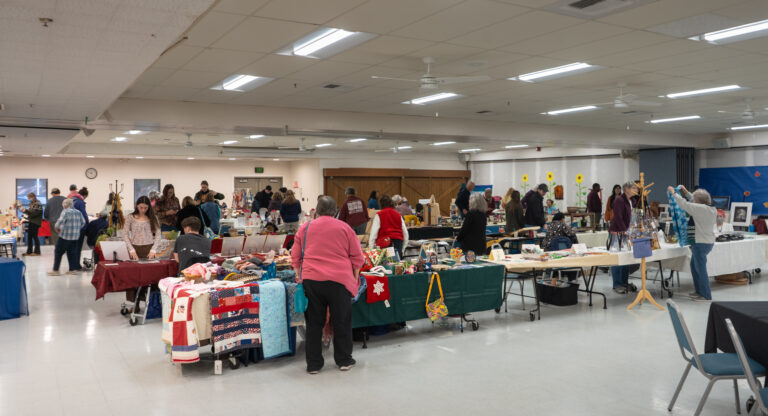
Davis residents seeking unique, handmade crafts gathered at the annual Senior Center Craft Fair on Nov. 16. The craft fair has been a tradition for over 20 years, becoming a touchstone for local vendors to gather, sell and show their crafts to the Davis community.

Over 20 vendors participated in this year’s craft fair. One of these vendors was Buttons ‘n Bears, Oh My!, a local micro-enterprise founded in 2011 by longtime friends Anna Hoban and Jackson Murtha. Specializing in custom and premade designs, their booth featured teddy bears, buttons and magnets, and over the years, they’ve created designs for political campaigns, parties and gifts. This is the second time Buttons ‘n Bears, Oh My! has participated in the Senior Center Craft Fair.

Craft fairs not only provide local artisans and crafters an opportunity to sell their creations, but they also provide a chance to connect with their fellow crafters and the greater community. For Hoban, these personal interactions are the highlight of the fair.

“The most enjoyable thing about craft fairs [is] getting to see old friends and getting the chance to meet new people,” Hoban said.

Mayaland Crystals & Rocks, run by Phyllis and Rich DeHaven, showcased geodes, quartz and polished rock art designed for healing, meditation and wellness. When asked about her favorite part of the event, Phyllis shared her love for talking to attendees about the rocks, particularly about ‘wishing rocks.’ Inspired by an old Irish legend, wishing rocks are stones with a continuous quartz band encircling them, believed to bring good luck to those who find them.

Also present was Erica Garas, selling crocheted stuffed animals, hats and zippered storage scrunchies, a clever accessory that doubles as a discreet pocket.

Garas has been a crafter her whole life, but crafting for the public started as a way to give back to her community.

“I started a few years ago,” Garas said. “I lived in Concord and was selling things to benefit the homeless locally.”

Handing out raffle tickets was Blue Pine Coffins, a family-run company started by Dean and Danielle Newbury, focused on creating 100% biodegradable, affordable and locally sourced coffins. The business champions the “Green Burial” movement, a growing initiative working toward environmentally sustainable approaches to end-of-life practices.

Every booth at the craft fair had a story to tell. Katherine Damonte sold crocheted blankets, patchwork items and plant mugs, inspired by her fond memories of crafting with her grandmother.

“I just really enjoy sewing and crocheting,” Damonte said.

At a neighboring table, Nancy Townsend displayed diamond paintings, mosaic-like artwork crafted by placing tiny, colored resin “diamonds” onto a coded canvas. She began diamond painting three years ago after her husband’s passing.

“I just do it to do it,” Townsend said. “It makes me feel renewed.”

A representative of the Davis Senior Center, who wished to remain anonymous, explained how the craft fair benefits Davis’ creative community.

“Craft fairs are such a great way to give the community a chance to see what our local artisans are making,” the representative said. “Ultimately this event helps our vendors make a bit of money, connect with the community and enjoy sharing what they’ve created.”


Written By: Alyssa Torres — city@theaggie.org

ASUCD Coffee House introduces halal menu options, increasing accessibility

The CoHo now serves halal chicken and pepperoni in hopes of creating a more accessible menu


By Khadeejah Khan — campus@theaggie.org


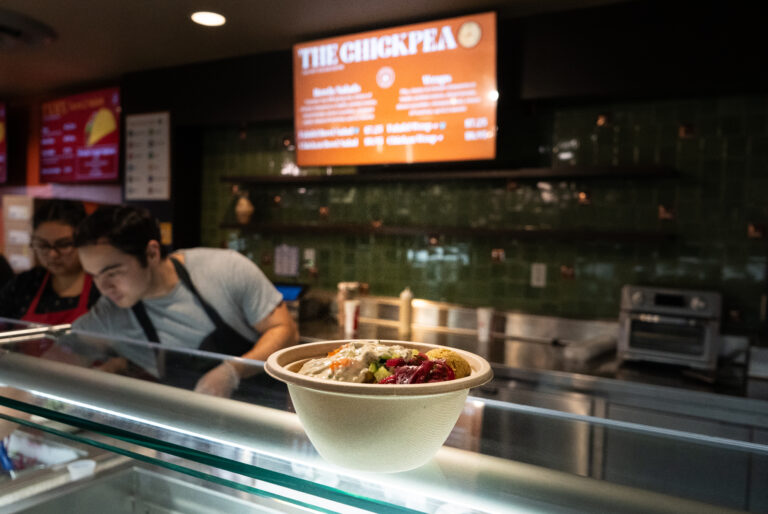
This fall quarter, the ASUCD Executive Office announced that all chicken and pepperoni at Ciao’s Pizzeria served at the Memorial Union Coffee House (CoHo) is halal.

While the transition to halal meat initially began last year, the CoHo did not publicly announce the change until recently to guarantee a complete transition to halal meat. Now, with the official ASUCD announcement, the CoHo’s goal is to make food more accessible to students with different dietary needs.

“We didn’t want to announce it at the time, because there were a lot of bridges to gap,” Ryan DeGuzman, the executive chef of the CoHo, said. “I wanted to make sure that if we were going to do halal that all our offerings would be able to be transitioned to halal.”

For DeGuzman, food symbolizes comfort. As executive chef, he aspires to bring the comfort of home-cooked meals to dining spots like the CoHo for all students.

“There’s a lot of kids who are so homesick here,” DeGuzman said. “When you’re homesick, you want something that is from your own culture or quenches that thirst for being at home. Adding the halal offerings kind of helps bridge that.”

The response from the Davis Muslim community has been overwhelmingly positive after the public announcement, according to DeGuzman, who also noted that the CoHo seems to now draw in larger crowds.

Nur Ambaw, a fourth-year political science major and president of the Muslim Student Association (MSA), expressed his appreciation for the switch.

“Islam is a way of life, along with being a religion, and so it boils down to what we eat in a day,” Ambaw said. “Having this option allows us to explore so many more cuisines that we might not have been able to, especially people’s favorite like pepperoni.”

For Sabahat Nabiha, a fourth-year public service major and external vice president of the MSA, the menu change is a major step toward inclusion and accessibility on campus.

“In high school, I didn’t really have that many halal options, so I never really felt seen or visible,” Nabiha said. “I think that halal food does mean that the university is seeing us, that we’re being seen, that we matter and our religion and our beliefs are valued.”

The menu change has positively impacted Muslim students on campus, especially international students who come from countries where halal food is widely accessible, according to Nabiha.

“When you have students not only coming from different states [and] different backgrounds, but you’re also having students that come from all over the world, and a lot of them are coming from Muslim countries where all they have around them is halal food, so they never have to question ‘is this thing halal?’” Nabiha said.

When it comes to expanding the CoHo’s menu, DeGuzman believes that this change is just the start. He calls for students and faculty to share recipes they want to see added to the menu.

“If one person likes a recipe, there’s definitely going to be a lot more people behind them in line,” DeGuzman said. “The future of the Coffee House really depends on the students.”

Ambaw is grateful for the increased halal offerings and is optimistic about what the future holds when it comes to accessibility and inclusion on campus. As a former senator, Ambaw hopes that this change can lead to more decisions that impact student life.

“I hope this is just a start of the connection and the relationship between ASUCD and accommodating identity[-based] groups on campus, because it’s a direct impact,” Ambaw said. “When I was on the senate table last year, the biggest topic was, ‘How do we impact students?’ This is how we do it.”


Written by: Khadeejah Khan — campus@theaggie.org

Giant water lilies bloom at the UC Davis Botanical Conservatory

Native to the backwaters of the Amazon River, Victoria amazonica have been brought to UC Davis for the first time


By KATELYN BURNS— science@theaggie.org


Victoria amazonica is native to tropical South America, and it is found in the backwaters of the Amazon River. This plant is used to conditions where the water is more stagnant, the pH is lower and water depth is shallower. It is commonly found in lakes and ponds.

The water lily is regarded as one of the most difficult plants to cultivate, but Ryan Booke, a third-year plant sciences major and student employee at the UC Davis Botanical Conservatory, has managed to successfully cultivate the plant.

“Only so many people have cultivated the plant,” Booke said. “So, there’s a lot of gray area.”

Booke brought the project to the manager and curator of the UC Davis Botanical Conservatory, Marlene Simon, whose role was to support Booke behind the scenes. However, Booke bought the seeds himself, managed to get them to germinate and continues to care for the plant.

“The germination rate is very low,” Booke said. “It’s only around 2 to 3%, and that’s out of 150 [seeds].”

Once Booke succeeded in achieving germination, the next concern was space. Known for their rapid growth and large size, giant water lilies require a lot of area. Simon allowed Booke to use a room in the staff greenhouse, formerly fitted for cool-growing cacti, to be converted into the room for the Victoria amazonica. It was also equipped with two above-ground swimming pools.

“In theory, the leaves can get nine feet across,” Simon said. “Ours have been three to four feet.”

Despite the leaves’ sizes being limited by the pool size, the plants have still reached maturity. The green, circular leaves have upturned red rims and spikes on the bottom. Once that red rim appears, it’s considered to be flowering size.

The first of the flowers bloomed earlier this November in the early morning. Booke remained at the conservatory that night to give the public the rare opportunity to view the blooms, and the arrival of the flowers was announced on Instagram.

On its first night, the flower is considered to be female. On its second night, the flower is considered male and pollen can be collected. In its native environment, Victoria amazonica relies on a specific species of scarab beetle that is heavily attracted to the flower’s pineapple smell and its thermogenesis. In the conservatory, Booke acts as the pollinator and collects the pollen. He can pollinate the next blooms, producing a first generation of seeds.

A concern for the flower is how it handles the winter months. In the plant’s native environment, the winter is dry. There’s less rain, the water recedes and the temperature drops. The current concern for the Victoria amazonica at the conservatory is the water temperature, which has become a hassle to keep stable. The water heaters — there are a couple for each pool — are used for 200 to 250 gallons of water and the pools contain around 1,000 gallons. Furthermore, the greenhouses are old, facing issues with power outages and outside air getting in.

There have also been issues with algae and aphids, and furthermore, the plant is sensitive to many different conditions.

“If you give [the lily] too much light, it will die,” Booke says. “If you give it too little light, it will die. If you give it too much fertilizer or too little fertilizer, it will die.”

But Booke is hopeful that the plant will survive, ideally until Picnic Day.

“If I can get people to see it even barely alive, I think that’d be pretty cool,” Booke said. “If someone wants to donate money when they see it on Picnic Day, I will be thrilled. That will help me buy more seeds, get a better water heater, buy equipment that can help with amateur testing, or something like that.”

Nevertheless, even if these plants don’t make it, it seems that Victoria amazonica is here to stay at the UC Davis Botanical Conservatory.

“We have the setup for it,” Simon said. “We have the swimming pools, we have the lights, we have the know-how. All the protocols are being written down. And it is really popular, people like seeing it, people are in awe of it.”

Written by: Katelyn Burns— science@theaggie.org

Finding structure within ‘A Short Talk with Tomoyuki Endo’

Visiting scholar Tomoyuki Endo discussed the relationship between the structure of Chinese ideograms, the importance of audience imagination and the analysis of modern poetry 


By JULIE HUANG – arts@theaggie.org


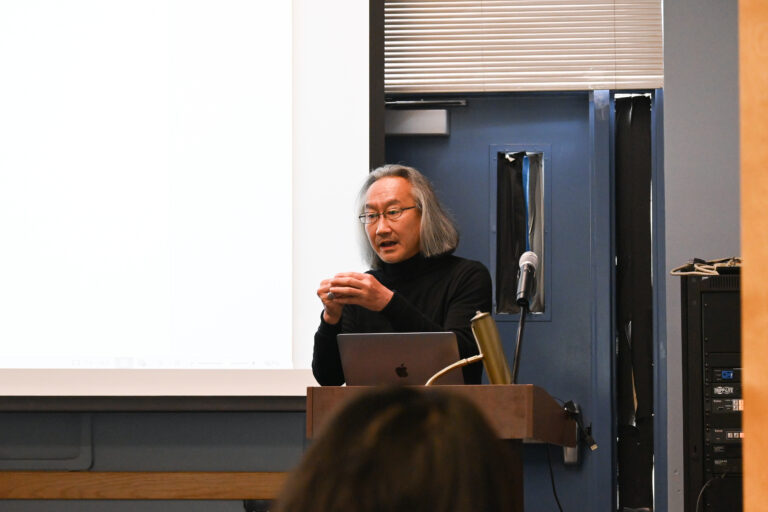
On Nov. 19, the UC Davis Department of English hosted scholar Tomoyuki Endo, visiting this quarter from Tokyo’s Wakō University, to give a short talk on the connections between Chinese characters and modern poetry.

A professor and translator of 20th century Japanese and English literature, Endo’s most recent translation, co-translated with Forrest Gander, is Shuri Kido’s “Names and Rivers,” which was longlisted for the National Translation Award from the American Literary Translators Association.

Endo began his talk by reading a quote from Ezra Pound’s “The Cantos,” a modernist poem that includes Chinese characters.

“I dare to imitate his style and way of reading,” Endo said.

Endo continued by describing how artists in the early 20th century experimented with color, texture, composition and material in order to create more abstract ways of expressing thoughts and feelings than previous artistic traditions, such as naturalism, which tries to represent subjects accurately to how they appear in real life.

“It’s kind of embarrassing for me to talk about American poetry to Americans, but let me try,” Endo said.

Specifically, Endo explained how Pound applied the structure of Chinese characters to the creative processes of writing poetry: by using the guiding principle that Chinese characters are shorthand pictures, where the combination of two pictures depicting concrete concepts results in the creation of a more abstract concept. For example, the concrete character which means “sun,” when combined with the character meaning “tree,” creates the abstract concept of “east” as a direction.

Similarly, Pound’s poetry revealed abstract and artificial constructs of human culture by combining more concrete ideas to create new ways of thinking about things.

“This is the very fundamental principle of writing poems after the 20th century,” Endo said. “After breaking the pentameter, what is it that poets have to follow? Is there a principle or some rules to write good work?”

Endo connected the principle derived from the structure of Chinese characters to a quote by Antoni Tapies, a painter and sculptor who stated that, “If one draws things in a manner which provides only the barest clue to their meaning, the viewer is forced to fill in the gaps by using [their] own imagination. [They are] compelled to participate in the creative act.”

“One has to participate in the completion of a poem in order to create [their] image,” Endo said.

With that in mind, Endo then engaged in an analysis of  “Alba,” another poem of Pound’s, in order to more clearly walk through the process by which, through the imagination of an audience, concrete elements of language can convey more abstract feelings. He pointed out how the structure of consonants within the poem created the feeling of a sensory experience.

“The fricatives and laterals [within “Alba”] suggest the movement of air,” Endo said. “In this room, I would say, a light breeze is blowing.”

Endo proceeded to analyze “Preludes” by T. S. Eliot using the same principle of, through the participation of the audience’s imagination, concrete elements creating more abstract complexities.

“‘A lonely cab-horse steams and stamps,’” Endo said. “[Eliot] doesn’t say it, but we can easily guess that the horse is blowing air out of its nose.”

Endo paired the poem with a visual of a horse-drawn carriage in the rain, in which steam was not only coming out of the horse’s nostrils but also from raindrops falling onto the back of the horse.

“From this one line, you come out with two different images,” Endo said. “I would say that’s the magic of poetry.”

Using the poem “Burning the Small Dead” by UC Davis Professor Emeritus Gary Snyder as a final example, Endo once again illustrated the significance of Tapies’ quote.

“[The poem] looks like just description after description, plainly speaking,” Endo said.

However, each seemingly disjointed piece of imagery, when taken as interrelated parts of the poem’s overall structure, creates a sense of time and geography within the poem.

“Snyder picks up all these images of light, fire or heat and lines them up in one poem,” Endo said. “We are forced to find the coherence of these images.”

For example, “Burning the Small Dead” mentions Deneb and Altair, which are stars that are, respectively, 1,400 light-years and 16.7 light-years away.

“The light we see from Deneb is as old as Lady Murasaki’s ‘The Tale of Genji,’ but you can see it at this moment,” Endo said.

Endo finished his talk by reading “A Love Letter,” a poem by Nanao Sakaki, whom Snyder regarded as a friend and a great teacher in his poetic endeavors.

“I was looking through his archive [in Shields Library] and was totally surprised to find my essay from 30 years ago or so, when my hair was black,” Endo said.

While reading “A Love Letter,” Endo instructed his audience not to read the words alongside him but only to focus on the sensory qualities of the auditory experience.

“After hearing it read aloud, you will surely know Sakaki is a great poet,” Endo said.


Written by: Julie Huang — arts@theaggie.org 


UC Davis football falls to Montana State 28-30

A dominant fourth quarter performance wasn’t enough to bring the Aggies a victory


By Lucienne Brooker — sports@theaggie.org


A sold-out crowd of 14,000 watched the UC Davis Aggies fall to the Montana State University (MSU) Bobcats on Nov. 16 at the UC Davis Health Stadium. In what was billed as the “biggest game in UC Davis history,” Head Coach Tim Plough and his team hoped to extend their winning streak and make history. However, their performance wasn’t quite enough, as Montana State went on to clinch the automatic playoff bid from the Big Sky Conference and at least a share of the conference title.

It wasn’t a strong start for the Aggies, whose chances of conference championships and playoff berths quickly decreased. Although they managed to take an early lead with a touchdown from Ian Simpson, a third-year sociology major and tight end, the Bobcats easily responded.

One touchdown in the first quarter cut the Aggie lead to one point, and in the second quarter, the Bobcats turned up the intensity. They capitalized on poor defensive play by the Aggies and scored two touchdowns and an additional field goal, making the score 23-8 halfway through the game.

The Bobcats continued their momentum in the third quarter, adding to their point count with a fourth touchdown. With the score now sitting at 30-8, victory was slipping further out of reach for the Aggies. Each MSU touchdown was scored by a different player, showing a strong overall team effort.

However, the Bobcats’ win was not as comfortable as it seemed. With six minutes left in the final quarter of the game, Lan Larison, a fourth-year managerial economics major and running back and captain, scored a touchdown to cut the point gap to 15.

With two minutes left to play and still down by 15 points, a win appeared to be very unlikely. However, a long pass from Miles Hastings, a fourth-year communications major and quarterback, to Chad Davis, a fourth-year psychology major and wide receiver, saw the Aggies at the fourth-yard line with a scoring opportunity. Samuel Gbatu Jr., a third-year undeclared major and wide receiver, was able to score the touchdown — suddenly, the Aggies were back in the competition with a minute and a half to go.

While the Bobcats took possession and tried to run down the clock, Winston Williams, a fourth-year psychology major and tight end, was able to wrestle the ball away from MSU, leaving the Aggies with one more golden opportunity.

A pass from Hastings found Davis, who scored his first touchdown of the game to make it a two-point game. Although the Aggies had the opportunity to tie the match, they failed their two-point conversion attempt, and MSU was able to retake possession and run down the clock with a sigh of relief.

Despite the disappointing loss, there are plenty of positives for the Aggies to look back on after the game. A total of 13,947 attendees marks the biggest home crowd this season for a team that has struggled to draw a student presence at their games in the past. While the team had hoped they could deliver a win, most fans were just happy to have witnessed such a strong performance from their team.

UC Davis will play their final match of the 2024 regular season against the Sacramento State University Hornets in the highly anticipated Causeway Classic. The Aggies have performed well against the Hornets in recent seasons, defeating them 31-21 last November. Sacramento State has won only three games this season, so UC Davis is hoping for a chance to close out the season with a decisive victory. The game will take place at Hornet Stadium on Nov. 23 at 2 p.m.


By Lucienne Brooker — sports@theaggie.org

UC Davis men’s and women’s cross country teams have won against over 20 other schools in the West Regional Championships

0

UC Davis cross country teams end the season in 11th and 12th place 


By (Abigail DeSa) — sports@theaggie.org


The UC Davis cross country teams closed out the season with strong finishes at National Collegiate Athletics Association (NCAA) West Regional Championships in Colfax, Washington, with the women’s team taking 11th place and the men’s team taking 12th in their respective competitions. Despite the chilly weather, all 13 Davis athletes brought the heat and put their best feet forward. 

Dani Barrett, a fourth-year wildlife, fish & conservation biology major, earned a spot on the All-Region team due to her performance — an achievement reserved for the top 25 runners in the region. 

With a time of 19:55, Barrett placed 18th among 262 competitors, falling short of 17th place by 1.5 seconds. Barrett’s run also matched pace with her career-high time of 19:53:6 — a time that won her fourth place at the 2024 Big West Championships. 

Barrett has had a remarkable fourth season as a UC Davis Aggie: she set new personal records (PRs) and has pushed her limits, with this year being her second time in the top 25 of West Regionals. Last year, Barrett placed 22nd with a time of 20:05:5, a slower time than her performance in this year’s Regional Championships. Barrett’s success at the 2024 West Regionals marks an over 10-second growth. 

Coming close behind Barrett on the West Regionals stage was Maddie Kackley, a fourth-year managerial economics major. Kackley placed 36th, clocking in at 20:30:5. While this time is 30 seconds slower than her performance at this year’s Big West Championships, Kackley’s time is still impressive and has also seen great improvement throughout the season. 

The next Aggie to cross the finish line for the women’s team was Hope Bergmark, a third-year human development major, who placed 88th. Bergmark was followed by Fiona McGrath, a first-year biochemistry and molecular biology major, who secured 102nd place, Stormy Wallace, a third-year biomedical engineering major, in 129th place, Kayla Rutz, a third-year managerial economics major, in 136th place, and Lauren Villegas, a first-year communications major, in 149th place.

The men’s cross country team had a successful competition as well with five out of seven Aggies making it in the top 90 runners.​​ This was also the longest race of their season, with the majority of the team running a distance of 10k rather than their usual 8k. Out of 32 teams, UC Davis claimed 12th place in the men’s bracket. 

Competing in his first 10k with the Aggies, third-year Muhammed Ahmed was the first person in the UC Davis team to cross the finish line. Ahmed completed the race in 46th place with a time of 30:02. Following Ahmed was third-year Ethan Brooks coming in at 30:48:5 in 71st place. Brooks completed the race only about 7.5 seconds slower than his PR the previous year. 

In 79th place for the Aggies was Chris Coles, a third-year biochemistry and molecular biology major, marking his third time competing on the West Regionals stage. In the competition, Coles set a new PR time at 30:57:2 in the 10k. Just nine seconds behind Cole was Michael Cooper, a third-year political science major, who landed in 82nd place for the team. 

The next athletes for UC Davis to cross the finish line were Nick Herrmann, a second-year political science major, in 86th place, Zachary Graeber, a third-year computer science and engineering major, in 128th place, and second-year Donavan Cheruiyot in 143rd place. All Aggies for the men’s team landed in the top 150, with five athletes making it to the top 90. 

The UC Davis cross country team made a strong impression at the West Regional Championships, being the first University of California school to cross the finish line in this competition for the women’s category and second for the men’s. Running against the most elite athletes in the country, the Aggies claimed 11th and 12th and showcased their years of training and hours of hard work. 

At the final stage of the season for the Aggies, the athletes left it all on the Colfax course. Off-season training will begin shortly, with many athletes looking to track and field competitions in the spring. With many new PRs and achievements, the UC Davis cross country team has completed their season and will now hope to run even faster and farther in future seasons. 


By (Abigail DeSa) — sports@theaggie.org

Over 400 days of conflict: reflecting on the last year in Palestine

0

Students and community members think back on the UC Davis encampment, discuss ongoing efforts for Palestinian activism 


By EVELYN SANCHEZ — features@theaggie.org


An entire 418 days and counting have passed since Israel’s siege on the Gaza Strip. After a year of Gazans being slowly depleted of necessities, Israel has extended their invasion onto the West Bank and Lebanon. 

Around 1.9 million people, or 90% of the population on the Strip, have been displaced from their homes. Millions must face harsh conditions with inadequate clothes, food and water, and a lack of sanitation has increased the number of diseases spreading throughout cramped conditions. The destruction of public infrastructure and facilities has even led to cases of polio being reported. 

Northern Gaza has been under a tight siege since Oct. 6, 2024, where no aid or humanitarian trucks have been allowed in. Israel has consistently violated ceasefire orders in Gaza, having recently broken the Lebanon ceasefire as of Nov. 28, 2024 by shelling two cities in Southern Lebanon. This attack was in response to a recent response by Hezbollah, the Lebanese Shia Islamist political party, during which they sent a “defensive and warning response,” sending two mortars into the disputed Shebaa Farms territory in Lebanon.  

“Humanitarian workers are being killed at an unprecedented rate, their courage and humanity being met with bullets and bombs,” Tom Fletcher, the new United Nations under-secretary-general for humanitarian affairs and emergency relief coordinator, said.

More journalists have been killed during Israel’s siege on Gaza compared to the entirety of the Vietnam War and World War II journalist casualties combined. The conflict in Gaza has resulted in the deaths of 333 aid workers and 137 journalists and media workers since Oct. 7, 2023. Israel has targeted these groups, who are protected by international law, in addition to war crimes the state has committed on its own population. 

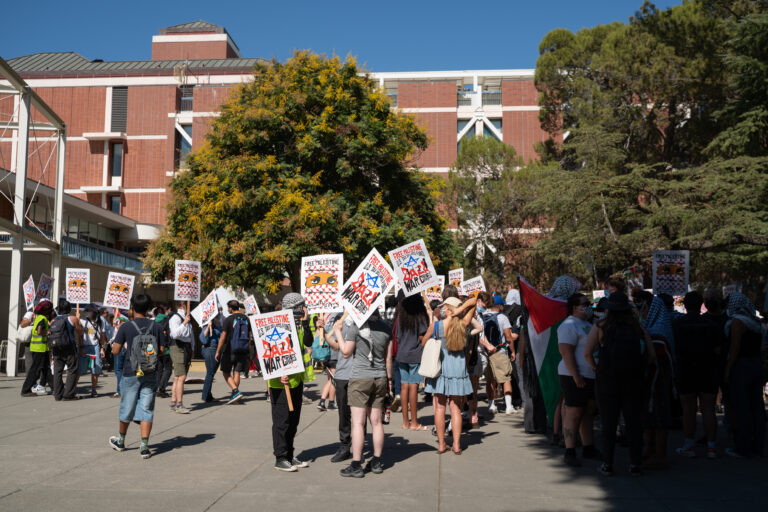
With the UC Davis Popular University for the Liberation of Palestine’s (PULP) encampment demands not being met — including complete university divestment from businesses and investments in Israel — some members of the Davis community believe that the university remains complicit in Israel’s crimes.

“I saw the encampment as a way to voice our concerns that we didn’t want our money being sent over to Israel,” Manuel Maravilla, a fourth-year cinema and digital media major, said. “We didn’t want our tuition dollars going to the murder of children.” 

Maravilla continued by sharing how her experience with the Davis encampment had a positive impact on her life. 

“I do think the encampment was a necessary thing, and a beautiful one,” Maravilla said. “I built a lot of friendships and community by being in the encampment.” 

Raeda Zarzour, a community member that has lived in the greater Sacramento area their entire life, emphasized the importance of using protesting as a tool for change.

 “Protesting is one of our best and largest weapon[s] to get movement and our strongest tool to get things achieved in this country,” Zarzour said.

Zarzour was actively involved in the California State University, Sacramento and UC Davis encampments, with the former school reaching a divestment compromise within a week. 

“We helped [students] think out their demands and helped in wording [them] properly,” Zarzour said.

Zarzour, also a participant, commented on the encampment’s ability to connect students, staff and graduate students. 

 “Students who didn’t feel comfortable using their voices found a community where they had emotional support from older students, grad students, faculty and community members willing to help them use their voice,” Zarzour said.

A third-year student, who asked to remain anonymous, also spoke on her experiences as a Palestinian student and member of Students for Justice in Palestine (SJP) at UC Davis. The student discussed the passing of Senate Bill #52 in accordance with the Boycotting, Divestment and Sanctions movement (BDS) in February 2024, a non-violent global campaign promoting boycotts against Israel and organizations that they have deemed complicit in Israel’s actions. 

“When we passed BDS in February, that was a huge deal,” the student said. “The $20 million divestment was a big win, and we were the first in the country to do that.” 

The encampment not only represented the student and community body dissatisfied with the university, but it also proved to be a great place to facilitate discussion on Palestine and other related issues. 

Although many people found support, Zarzour explained the harmful responses from other members of the community. Despite May’s stance on protecting the protestors’ First Amendment rights, Zarzour believes that the consistent police presence should have been used to protect the students and community members. Instead, they felt that the encampment was unfairly allowed to be harassed and recorded. 

“[The encampment] drew people from within the city, not affiliated with campus or students, for the purpose of disrupting and harassing sometimes minor students,” Zarzour said. UC Davis is letting full-blown adults in their 60s post photos of minor student faces and tagging the school and [the] school has done nothing.

After the weather began nearing triple digits and student presence diminished due to the beginning of summer, the encampment had no choice but to pack up despite PULP not reaching formal negotiations with the UC Davis administration. 

The anonymous student said that many compromises were promised, but the UC Regents failed to deliver anything on paper, and a struggle of SJP persists as they maintain contact with the necessary boards to make sure they deliver on their promises.

“​​We got in a couple negotiation sessions to talk about it, and at the end of the day they didn’t wanna put anything on paper,” the anonymous student said. “Most of the struggle has been to hold them to their word.” 

SJP continues to advocate for their demands, staying committed to both pro-Palestinian and pro-divestment causes at Davis and beyond.

Any excess food and tents from the encampment were donated to the unhoused community surrounding Davis and Sacramento. 

“People are failing to realize it’s not something that happens overnight or a year,” the anonymous student said. “[Divestment] takes a while to accomplish. If we can get the ball rolling for future students to take on the projects, then that’s what we’re gonna do.” 

SJP organizations from other universities have been actively collaborating and circulating information with each other, according to the anonymous student. 

“One thing I always tell people is just talk to Palestinians,” the student said. “I know that sounds so obvious, but a lot of people are starting to disregard and ignore Palestinians in their community.” 

The encampment featured many teach-ins with faculty and offered many opportunities for students and staff alike to educate themselves about Palestinian history and culture. 

One such talk was held with Plestia Alaquas, a Palestinian journalist who was on the ground — highlighting Palestinian voices both inside and outside of the community became essential to remind students of solidarity during divisive times. 

“We are all focused on saving ourselves,” Zazour said. “Palestinian protesters aren’t only protesting to get the school to divest because it helps Palestine. Students should be concerned about where the money goes and how [the] faculty treats students with differing opinions, because it affects the safety of everyone.” 

The anonymous student said that SJP is always working toward making the movement larger. 

“It’s just a matter of time,” the student said.

Students in SJP, elsewhere at UC Davis and far beyond continue to express that society cannot afford apathy or inaction toward this crisis. There are many resources and organizations available to students at Davis looking to learn more about the ongoing situation or get involved.  


Written By: Evelyn Sanchez — features@theaggie.org

ASUCD HAUS hosts Housing Fair on Nov. 13

The Housing Fair showcased different housing options, advocacy groups and ASUCD units for both students and the community 


By JESSICA YUNG — campus@theaggie.org


On Nov. 13, the ASUCD Fall Housing Fair took place on the Quad from 10 a.m. to 2 p.m. The Housing Fair included booths from local apartments, ASUCD service units and local non-profit groups. The event was free and open to both students and community members.

The Housing Fair was set up by the ASUCD Housing Advising for Undergraduate Students (HAUS) and College Pads.

Sam Hopwood, a fourth-year political science major and unit director of HAUS, elaborated on the unit’s role for students.

“HAUS works with students to directly address their woes via housing,” Hopwood said. “[We do] housing advocacy and housing advising. We give [students] direct advice and counseling about housing. We connect them with tenants rights organizations. Students [can make] appointments with a housing advisor […] and we will get [students] wonderful guidance and counseling.”

Hopwood elaborated on the challenges that students face.

“The hardest part of college is finding housing,” Hopwood said. “We’re young people. We don’t know what to do. We don’t know how our tenants rights are being respected or disrespected. HAUS is a resource for students to know what to do when finding housing. Students can reach out to us and get assistance and receive guidance as a renter and as a tenant.”

Cherié Dimmerling, the executive director of Fair Housing Sacramento, said the main housing issue facing tenants today is disability rights violations.

“In California, the bulk of the [housing] complaints are around disability and disability rights,” Dimmerling said. “The other big disability complaint that we get is around reasonable accommodations. Reasonable accommodations means if you have a disability, that [apartments] have to reasonably accommodate that disability, i.e. having a ramp, if you need a wheelchair [and/or] putting bars in the bathroom.”

Hopwood said that finding housing is particularly difficult in California because of the state’s high unhoused population. Dimmerling reaffirmed Hopwood’s statement.

“I do work with homeless individuals, as well as homeless students,” Dimmerling said. “There’s a surprising amount of students that I would have never anticipated that are homeless and taking classes until I got to California.”

There are many ASUCD and campus resources that support students facing a lack of housing, according to Hopwood.

“Aggie House is a wonderful transitory housing,” Hopwood said. “[HAUS] can help students with rent. We’re working on a service right now with Health 34 to make sure that students who are temporarily unhoused for a night can get into a hotel in Davis.”

Hopwood also gave his recommended process for first-year students that are looking for housing.

“First quarter, start looking [and] generally know what your options are,” Hopwood said. “Second quarter, narrow down your options and by third quarter, commit.”

Hopwood also added some general advice for all students.

“I encourage everyone to look at all of your options,” Hopwood said. “Don’t ignore options. Don’t ignore the trial co-ops. Don’t ignore cooperative housing. Don’t ignore a house. Don’t ignore Craig’s List. Look at everything, because you will find something that benefits you.”

Haleigh Johnson, a fifth-year environmental policy analysis and planning major, described the apartment complexes that were featured at the fair.

“I think the Housing Fair did an excellent job showcasing the various apartments,” Johnson said. “The majority of apartments in Davis offer long-term leasing, around a year or so. There are some apartments that offer short-term leasing, but both leasing types require you to find a replacement renter if you need to break your lease early. Many of the apartments had amenities like gyms, pools and in-unit laundry systems.”

Johnson also reiterated the resources that ASUCD HAUS provides to students at the fair.

“The housing search feels much easier and less stressful now that I’ve attended the fair,” Johnson said. “I learned that ASUCD [HAUS] has a housing portal that shows all the apartments in Davis and their current listings, so I know where to look if I decide to change my housing.”


Written by: Jessica Yung – campus@theaggie.org

Cooking rituals: How students balance a healthy diet while in school

0

UC Davis students provide insight on how cooking and eating rituals play a role in their day-to-day lives 


By JENEVAH HARRISON — features@theaggie.org


College life often evokes images of late-night study sessions fueled by instant ramen or greasy pizza deliveries. However, at UC Davis, students hope to redefine the stereotype by introducing creative approaches to healthy eating, even amidst packed schedules. However, this is easier said than done to implement. From meal prep hacks to mindful grocery shopping, these Davis students shared that though it can be difficult, maintaining a nutritious diet is achievable — and there are plenty of resources to help.

Many students without a meal plan on campus initially struggle with maintaining balanced cooking routines and find themselves uncertain or stressed about the responsibility that comes with practicing a regular cooking schedule.

“I usually eat out most days of the week and cook maybe once or twice a week,” Madeline Hass, a second-year environmental science and management major, said. “But it’s definitely a New Year’s resolution of mine to start cooking it up more.”

Between lectures, labs and the ever-looming threat of deadlines, it’s easy for nutrition to take a backseat. For many students, convenience and cost dictate their eating habits.

“When you’re on a tight budget and limited time, fast food often feels like the quickest option,” Hazel Henninger, a second-year history major, said. “I realized eating poorly was really affecting my energy levels; I often felt sluggish and just straight up gross, which definitely didn’t help with my workload.”

For Henninger, the realization that eating well wasn’t just about maintaining a visually healthy appearance but also a healthy mind, ultimately motivated her to make some changes.

UC Davis students have found that small, consistent habits can make a big impact. For example, one strategy to avoid cooking every day is developing a meal-prep routine. This may include preparing food items in bulk to last the whole week.

“The Nutrition Source” from Harvard University’s School of Public Health provides a meal prep guide which may be helpful for some students. They express the substantial benefits of meal planning and prepping which has the potential to help with time and money management, weight control and creating a balanced, nutritious diet while reducing stress levels, according to the meal prep guide.

For those less keen on extensive meal prep, batch cooking is another less extensive approach. This strategy consists of cooking a large batch of one meal that will last for several days, allowing less time devoted to preparing meals multiple times a week.

Smart shopping goes hand-in-hand with developing healthy eating habits. The Davis Farmers Market is a popular location to obtain quality, locally produced fruits and vegetables. Many students enjoy the convenience of the market and its surplus of fresh produce, as well as the overall pleasant atmosphere.

“I love going to the farmers market,” Maria Gonzales, a second-year nutrition science major, said. “It’s not only about getting fresh fruits and veggies — it’s also a way to de-stress and enjoy the community.”

For others, planning grocery trips with lists helps avoid impulse buys and ensures they stick to their budget. Focusing on buying simple, staple food items that balance each other is especially important when planning these trips.

Sometimes, even the best plans can go awry when midterms and finals season hits. To stay on track during hectic times, students rely on quick and easy recipes that require minimal effort.

While some like Hass rely on eating out during these hectic periods — which is completely reasonable — quick recipes to snack on may also be ideal. Some common examples include overnight oats, tortilla wraps and fruit with peanut butter — but there are plenty of other healthy snack options to discover online or through friends.

For students looking to begin their own healthy eating journey, it’s best to start with small steps. Changing your entire diet overnight is not realistic, but performing small gradual changes is ideal in moving toward new goals.


Written by: Jenevah Harrison — features@theaggie.org