55.7 F
Davis

Davis, California

Wednesday, December 24, 2025
Home Blog Page 69

Fidgeting is found to improve focus in adults with ADHD

UC Davis researchers unveil the compensatory nature of fidgeting in adults with hyperactivity


By EKATERINA MEDVEDEVA — science@theaggie.org


Attention-deficit/hyperactivity disorder (ADHD) is a neurodevelopmental condition that can lead to an individual’s difficulty concentrating on a task, excess movements and impulsivity. This can pose challenges in settings where undivided attention is required, such as in the classroom. 

The main focus of ADHD research is on children, as they are the most commonly diagnosed. Its symptoms may get milder with age, although many people continue to struggle with them in adulthood. 

An estimated 15.5 million, or 6%, of adults in the United States have an ADHD diagnosis, according to survey data collected by the National Center for Health Statistics in 2023. However, some individuals don’t get diagnosed with ADHD until well into adulthood, meaning that these numbers could be higher — making it an important research area that warrants further exploration. 

In an effort to find methods to relieve ADHD symptoms, a team of UC Davis researchers led by Julie B. Schweitzer, a professor of psychiatry and behavioral sciences and faculty member at Medical Investigation of Neurodevelopmental Disorders (MIND), conducted a study on adults with ADHD. The results show that intrinsic fidgeting (or movement that occurs naturally) is correlated with improved attention. 

In the study, the participants wore actigraphy devices that measured the amount of physical movement of their ankle and wrist. They were given a response inhibition and attention task called Flanker, which allowed researchers to test their level of their concentration by looking at their response times and comparing it with their amount of fidgeting.

“Variability in response time is a proxy for attention,” Schweitzer said. “If you are highly attentive, then your response should be quick, accurate and steady. What we found, particularly as the test went on, is when you usually start seeing the attention lag, was that movement was associated with better performance and less variable response time.”

This result complements Schweitzer’s previous study on children with ADHD that came to an analogous conclusion that “motoric activity […] may reflect compensatory efforts to modulate attention and alertness.” 

Both of these studies shed a new light on hyperactivity in people with ADHD. Throughout the years, school teachers have tried various ways to adapt to the needs of young students with ADHD, from rubber bands wrapped around desks to yoga balls for seats. Now, the need for more innovative practices that could serve university students as well is being reemphasized. 

“You have to find some sort of behavior that’s not distracting and keeps the hands free,” Schweitzer said. “There’s good evidence at this point that people who are doing exercise before they’re doing an active task experience a moderate improvement in their attention.”

Despite their widespread advertisement, the effectiveness of fidget tools is an area of active research that has not yet yielded definitive evidence. Currently, Schweitzer and her colleagues from UC Santa Cruz are looking into whether a “smart” fidget ball could help adults with ADHD concentrate better.

“I think it’s pretty standard now that in some classroom situations, people bring their fidgets,” Schweitzer said. “And there have to be rules around those, so they are not so distracting to other individuals.”

Still, even with the adaptation methods, the destigmatization of ADHD continues to be a goal for communities. 

“It’s important to be patient and recognize that [fidgeting] is not always under their control and it might actually be something that’s helping them,” Schweitzer said.


Written by: Ekaterina Medvedeva — science@theaggie.org
 

Sudwerk Brewing Co. holds its annual Punksgiving benefit concert

The punk-themed concert raised $780 for the Yolo Food Bank 


By YUENJO FAN — city@theaggie.org


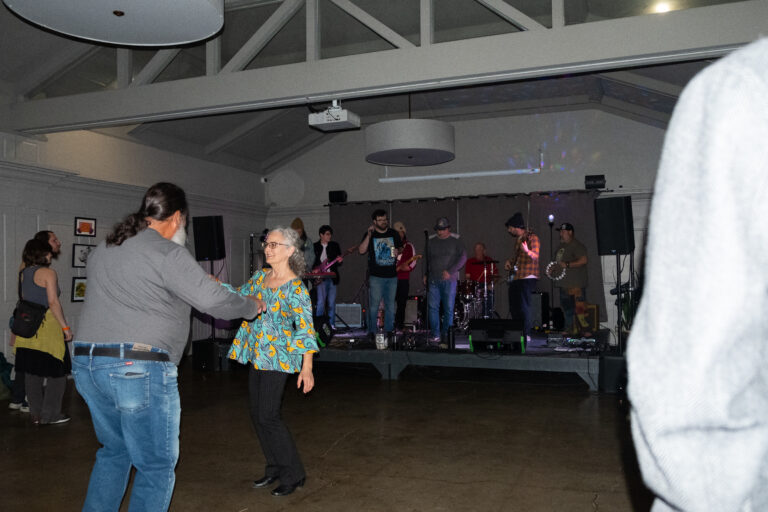
On Saturday, Nov. 16, Sudwerk Brewing Co. hosted its annual Punksgiving benefit concert in support of the Yolo Food Bank. As Thanksgiving neared, the show featured the bands Cowboys After Dark, Playground Hooligans, Bass Feens and Wet Wreckless to commemorate the punk genre, alongside other genres of rock, in solidarity with the local food bank.

Evan Daly, a Davis local and organizer of Punksgiving, gave insight into the importance of punk rock as a genre.

“Punk rock is all about self-expression and resistance against the establishment and dominant culture that is constantly seeking to oppress us and rob us of our individuality, of our personal cultures and everything that makes us individual and free in this world,” Daly said.

A musician since his youth, Daly is no stranger to helping boost the Davis music scene. For over a decade, he has been performing shows and fundraisers in the city. For Daly, music is crucial for a sense of togetherness in Davis.

“We need to constantly be gathering our communities, coming together, supporting each other because we are all we have,” Daly said. “And that’s what punk rock is all about. It’s about unity. It’s about community. To raise money for the food bank, that is totally right in line with punk rock values. For me, it was amazing.”

As Daly manned the sound system while concert-goers vibed and headbanged, punk’s impact was on full display. An elderly couple danced to a cover of My Chemical Romance’s “Teenagers,” and a young couple kissed. A child, perched on the shoulders of his father, smiled at the sound of drum and guitar. A flier with a QR code taped to the wall read: “Make a donation to the Yolo Food Bank! Happy Punksgiving!”

Playing guitar and wearing all black with a red tie, Spencer Scruggs, the lead man of Playground Hooligans, had an aesthetic reminiscent of punk legend Billie Joe Armstrong. Originally from Virginia, Scruggs’ connection with punk runs deep.

“I’m clearly influenced from Green Day, Blink-182, Third Eye Blind, etc.,” Scruggs said. “I’m just happy to be up here with my buddies doing what I love, and that’s all that we really care about. It’s about the brotherhood.”

The band, which originated in Sacramento, also consisted of bassist Jonathan Williamson and drummer Roman Anderson. Their performances ranged from originals to covers of Green Day’s “Basket Case” and “Brain Stew.”

“There’s a really strong sense of community with art especially,” Anderson said. “Everyone here’s hungry to learn, very social, [and there’s] very nice people in Davis […] I’m very humbled that there was such a good turnout tonight. Hopefully we raised a bunch of money and feed all the people. And it’s really great ’cause, especially around this time, you got to be thankful for everyone. Thank all your loved ones and spread it to the community — that’s why we’re all here.”

For punk band Bass Feens —- who performed their original songs such as “Norway” and “In the Air” — they are no stranger to the sense of togetherness that Punksgiving brings. Members Rex Laylo and Chris Fuss have now played together at the show for three years in a row. Laylo, originally from Florida, started off making EDM and rap music before being introduced to the guitar which ultimately led him to punk.

“[Chris] does Punksgiving every year, and I was like, ‘Hey, let me play,’” Laylo said. “And at that time, I didn’t even have a drummer, it was just me doing guitar. And [now] this is our third Punksgiving as a band, and it’s pretty good.”

As for Fuss, Bass Feen’s music represents punk at its finest.

“We’re kind of going against the culture of Davis,” Fuss said. “Kind of going against the grain. I feel like some people get attracted to that because it’s different from what they see every day.”

Yet with all of this festivity, Daly further explained how Punksgiving was only possible with the help of Sudwerk Brewing’s generosity.

“This town is starved for live music venues,” Daly stated. “The city government and the culture at large in Davis, from homeowners and the University, has largely been unsupportive of local live music and the idea and advent of having live music here in general. So Sudwerk is doing great work in supporting local live music and having a venue for us to play here in this town because it’s been lacking for a very long time.”

Punksgiving raised $780 for the Yolo Food Bank with special thanks to Sudwerk Brewing, Evan Daly and all of the performing bands and attendees. The benefit concert is held every November at Sudwerk Brewing Co. to raise money for local causes. Donations to the Yolo Food Bank and more information on how to support them can be found on their website.


Written By Yuenjo Fan — city@theaggie.org


Aggies head home to celebrate beloved holiday traditions

0

UC Davis students reflect on holiday festivities, recipes and memories


By EMME DUNNING — features@theaggie.org


Holidays are a time to reconnect with family and friends near and far. As Thanksgiving kicks off the holiday season, many students travel to reunite with loved ones; For some Aggies, travel makes the holiday season look just a little bit different.

Iain Kennedy, a fourth-year economics major, heads across the pond almost every holiday season. The senior was born and raised in England until he was 10 and still has close family in Scotland, where his family gathers for December festivities.

“I’ve spent pretty much every single Christmas and New Year in the [United Kingdom],” Kennedy said.

The holiday season in Scotland’s capital of Edinburgh is rich with its own special traditions that residents know and love. For the Kennedy family, Christmas time conjures up memories of snooker, a game similar to pool, murder mysteries on the British Broadcasting Corporation (BBC) and good food.

Kennedy also raves about the New Year’s Eve celebration in the city. Commonly referred to as Hogmanay in Scotland, New Year’s Eve is a time for celebration and community gathering, something that Kennedy has witnessed first hand.

“In Edinburgh, they have a massive block party and there [are] thousands of people on the streets,” Kennedy said. “Right when midnight strikes, there are fireworks over the castle. You all cross hands and you sing Auld Lang Syne.”

For Gael Ibrahim Bagby-Fonseca, a UC Davis alum with a Bachelor of Arts in sociology, family is also a central part of the holiday season. Bagby-Fonseca celebrates an unconventional Thanksgiving, heading down to visit family in Mexico for the traditionally American holiday.

“Thanksgiving is a super American holiday, but I have family in Mexico and we go and visit every November,” Bagby-Fonseca said.

For their family, creating new traditions and spending time together are what make the day truly special.

“When we’re over there they cook octopus and a bunch of other stuff that’s not turkey,” Bagby-Fonseca said. “It’s just a celebration of family and giving thanks.”

Caden Velasquez, a UC Davis alum with a Bachelor of Arts in international relations, also has experience with travel during the holidays. Velasquez and his family often moved around in his upbringing, and their Christmas celebrations and traditions shifted with these moves. Despite many changes, one thing has stayed the same.

“We would rarely be in the same place for the holidays, but the one thing that did remain consistent every year was being surrounded by my family,” Velasquez said.

For his family, food is an integral part of festivities. Velasquez recounted traditional Venezuelan meals that his family has made around the holidays including pan de jamon and, most important to their family traditions, hallacas.

“We would all get together — and this was an entire day endeavor — we would make hallacas,” Velasquez said. “We’d spend the whole day sourcing all the materials. We cook the masa and the meat, and we prepare everything on a long table.”

Hallacas are a corn-based dough with a tamale-like filling. The unique dish can include ingredients such as olives, capers and raisins and are typically cooked in a banana leaf wrapping.

“We end up making hundreds of them, but we never keep more than 10% of them,” Velasquez said. “The purpose of making them is to give them all away. We’ll package up hundreds of them and give them away to friends, family and neighbors.”

Velasquez expressed that a little can go a long way toward creating memorable family traditions, noting two things that always made his holidays special.

“We’d always have family, and we’d always have good food.”

Written by: Emme Dunning — features@theaggie.org

Construction continues on the UC Davis Arboretum

0

A look into the people and experiences that shape one of campus’ most beautiful spots


By NOAH HARRIS — features@theaggie.org


With vast amounts of green and blue colors, the UC Davis Arboretum and Public Garden’s array of wildlife and plants have turned it into one of Davis’ most popular places to visit. Traditionally green with a river flowing through its center, the Arboretum has looked a bit different during the last few months. Running along the southern end of the UC Davis campus, the Arboretum is in a state of change that is set to conclude soon — as those involved have shared, the finished product will be much different than before.

The Arboretum is a 100-acre public garden that hosts thousands of species of plants, trees and shrubs. They have at least 31 species of mammals, 45 species of butterflies and 135 species of birds have been found partaking in what the Arboretum has to offer, according to their website.

On March 25 of this year, a press release was put out to announce that the Waterway Enhancement Project had officially launched its second stage. Its first stage took place from 2016 to 2018, having focused on increasing water flow and native vegetation.

The Enhancement Project was given a $5.4 million grant from the state and received $2.5 million from UC Davis, making it the largest grant that the UC Davis Arboretum has been given to date.

So far, construction has focused primarily on removing concrete banks and sediment buildup, giving the river a more natural look. Underground piping work for the river supply is also finished, which helps the river run more smoothly, even during dry years. Over the last few months, there have also been fences and orange safety barriers put into place around the Arboretum.

Emily Evans, a fourth-year environmental science management major, said that animals will also be given their own slice of luxury on the western part of the Arboretum.

“Islands have been created at the west end, which will be planted with marsh plants to mimic a natural wetland habitat,” Evans said.

Evans further explained the details of and her excitement for the island feature.

“The construction crew essentially created islands from scratch, and now, seeing the water slowly fill back in, it’s nothing short of inspiring,” Evans said. “I can’t wait to continue transforming the space and watch it come back to life with new plantings along the banks.”

Katie Hetrick, the assistant director of communications in Finance, Operations and Administration (FOA), shared that the project has been designed to last a long time.

“The enhancements are designed to be resilient for decades, with regular maintenance and adaptive management ensuring the waterway remains functional and healthy,” Hetrick said.

Evans also emphasized that the Arboretum renovations are an ongoing project.

“Personally, I prefer to think that the enhancement of the waterway is an ongoing effort that will never truly end as we continue to make improvements to the system,” Evans said.

If this seems fast for such a massive effort, it is — at least, according to their expectations going into the project.

“The construction phase of the project is expected to be completed in early 2025 when the recirculating pump installation will be complete,” Hetrick said. “Final touches, including planting and habitat establishment, will extend into 2025 and potentially longer.”

Their time frame is progressing far, around one year ahead of schedule.

Susan Collopy, the project manager for UC Davis Design and Construction Management, explained why the project was so quick compared to their initial thoughts.

“The project timeline included the potential for delays as the result of a variety of environmental impacts that we did not experience,” Collopy said. “In addition, the contractor identified an alternate method to install the recirculating pipe that saved a lot of time.”

Andrew Fulks, the assistant director of the Arboretum, shared that the turnaround time was one of the most unique parts of the undertaking.

“I have been involved in a number of campus construction projects,” Fulks said. “The most interesting thing about this one was how uneventful it was. Everything went smoothly and nothing out of the ordinary occurred.”

Tabitha Mitchell, a fourth-year animal science major, shared her thoughts on the Arboretum. She is one of many students who utilizes the space to her advantage throughout the school year at Davis.

“It’s a really tranquil, serene space,” Mitchell said. “I love to exercise there, and it’s a really nice place to just connect with nature and have some high-quality alone time. Right now, I enjoy it less because there’s a lot of construction and not as much wildlife. So it seems more like a project rather than a place for us to enjoy ourselves.”

Evans shared her thoughts on the Arboretum during construction, stating that she has loved the entire experience and the opportunity that the project presented her with.

“The most fascinating part of the enhancement process has been witnessing the waterway at various stages of construction,” Evans said. “It’s rare to have the opportunity to directly contribute to something that benefits both the environment and the community in such a tangible way.”

During this time, many people have and continue to contribute to the project.

“An average day for workers might include tasks like grading soil, installing erosion-control measures, planting native vegetation or adjusting the waterway to improve flow,” Hetrick said. “Workers also monitor sediment levels, remove invasive species and maintain pathways or structures.”

Mitchell, who revealed she would love to see a butterfly sanctuary in the Arboretum, expressed gratitude for the time she has spent in the space.

“I’m happy that that’s happening because it’s going to make it look better in the long run, and I’ve already spent quality time at the Arboretum,” Mitchell said. “I just really hope that they get it looking the way they want it to within the next three or four years, because I want the freshmen to get a chance to experience it with a thriving ecosystem.”

The hope for Evans, Hetrick and Mitchell is that the Arboretum will be back to its normal thriving self soon — though with some noticeable improvements — both in its beauty and functionality.

Written by: Noah Harris — features@theaggie.org

Artificial Intelligence might be taking over journalism: here’s why it shouldn’t

The ethics of using AI in writing


By Ellie Noh — eenoh@ucdavis.edu


Since 2020, Artificial Intelligence (AI) has rapidly grown as a form of technology, making headlines due to its ability to complete tasks faster than ever. This increase in AI development occurred throughout the pandemic, largely driven by the challenges created with working remotely and our hindered ability to have human-to-human interactions. Now, with more AI platforms like ChatGPT, we are able to generate ideas just from a click of a button.

In a world with increasingly rampant use of technology and the rising presence of generative AI, the real question is this: When does it become ethical to use Artificial Intelligence in journalistic writing?

Journalism refers to the type of writing which covers news by collecting information from various sources, such as an interview and creating reports. Without journalism, it would be difficult to stay up to date on current news, and we might even be prone to danger if we aren’t aware about what is happening in the world around us.

If you’ve ever written an essay, column or article before, you might be aware of the time it takes in order to go through multiple drafts, along with the never-ending editing process to produce your best work possible. With the recent developments in AI, many writers have learned to take shortcuts — they have allowed AI to think for them, sitting back and watching ChatGPT come up with words and phrases they may not have ever thought of.

In any writing, and in journalism in particular, AI has the potential to come up with auto-generated articles, freeing up journalists to spend their time focusing on other, more pressing issues. While this strategy can be used to help with timeliness for publications, I believe that there should be a limit on what it can be used for. AI should be a tool, not a replacement for human-discovered truth.

Central to the art of journalism is the notion of seeking out sources as a reporter and in this way creating human-to-human connections when covering a story. Using AI, rather than taking the time to put spoken words onto paper, eliminates the presence of human thoughts and emotions in journalistic writing.

In my past journalistic experiences, I’ve had the opportunity to schedule interviews with various changemakers to cover their journeys in making an impact in their community. From this, I recognized the importance of creating that human-to-human connection, which establishes a sense of understanding between myself and my conversation partner. Through face-to-face communication, we connected through our shared journeys. In many ways, AI-generated articles lack this crucial “human touch.”

Additionally, because AI is still developing to this day, it often has issues with credibility, making it an unreliable news source for people to go to. 1,121 “Unreliable AI-Generated News” websites across 16 languages were discovered by NewsGuard. With this in mind, some AI functions have yet to become a solid source of information for us, meaning that we should refrain from using AI in order to prevent the possibility of spreading misinformation.

However, there are a few ways AI can be ethically used to prevent human errors. One way includes checking articles for grammar and any spelling discrepancies that are missed by the eye of writers and editors. Additionally, if efficiency is fundamental, the best way to communicate an original story while improving the usage of time is to generate story ideas using AI. If you choose this option as a writer, it is crucial to keep in mind that this generated list is not able to fully encapsulate your personal experiences and inspirations  of the article.

AI can also be used as a search engine in order to quickly gather baseline research needed for an article. However, this has to be used carefully, especially with the  unreliable features of AI that necessitates us to manually cross-check its results for false information.

In the end, any writing that you create should stem from your own ideas, not from computer generation. Will the average reader be able to tell whether it was written by AI? Probably not. Even so, in every decision we make we must think and consider our own morals and what we see as ethical — the decision is ultimately ours. Writing is central to our academic and professional lives and should not be a missed opportunity for human creativity.


Written by: Ellie Noh — eenoh@ucdavis.edu


Disclaimer: The views and opinions expressed by individual columnists belong to the columnists alone and do not necessarily indicate the views and opinions held by The California Aggie.


Finding a new family through Diwali

What Diwali is and how students are celebrating away from home 


BY DEVANSHI AGNIHOTRI —- arts@theaggie.org


Your mom carries a diya from the kitchen to the porch, her lavender sari sparkling with the light reflected from the sparklers in your brother’s hand. A rangoli of flowers with your favorite colors lights up the ground as — “Connection is Unstable.” The screen turns off and you toss your phone, bouncing it off the edge of your twin XL.

While being in college and away from home, Diwali has looked different for many students. Diwali is the Hindu Festival of Lights, and this year it took place from Oct. 31 to Nov. 1. As a way of celebrating, people light up the outside of their homes with diyas and string lights to symbolize the triumph of light over darkness, or good over evil.

Diwali is one of the biggest Indian holidays and has always been a very family-centered celebration. The whole family helps tidy up the house and then prepares it for the decorations, everyone working together to get the marigold garlands and string lights up, as well as placing the diyas properly. Many families will also create rangoli, a colorful design made out of colored powders, rice, sand and chalk on their doorstep. The lovely traditions and cute quirks of families make Diwali a personal and heartwarming holiday for many.

Since many students cannot go home in time to celebrate with their family, they have to enjoy it behind the screen of their video call — where your dad might be holding the phone at the wrong angle, making you miss your home even more.

Despite unstable video calls, many students tried bringing the Diwali magic on to campus. UC Davis’ Indian Student Association (UCDISA) hosted a celebration called “Diwali Dhamaka.” The event was held on Nov. 16 from 8 to 10:30 p.m at the Activities and Recreation Center (ARC) Ballroom and involved music, dancing and food. Students showed up in their cultural clothing, varying from kurtas to lehengas.

UCDISA created a fun atmosphere for all students, especially the ones missing their family, to celebrate Diwali with another family.

“I think one of the things about college is this idea of a found family where the friends and people you meet and live with feel like family a lot of the time,” the President of UCDISA Saanvi Bapu said. “We wanted to give people a place where they could celebrate these holidays with that found family.”

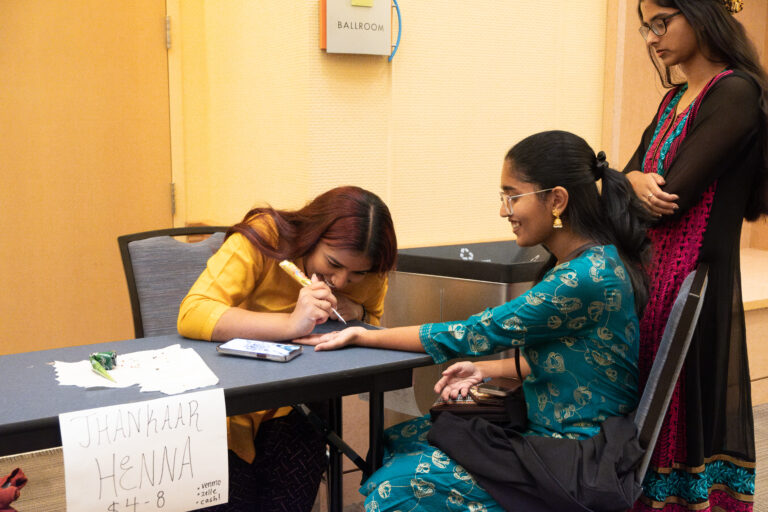
Jhankaar A Cappella, UC Davis’ South Asian/Western fusion a cappella team, also hosted a henna booth at the party. The entire ARC Ballroom was decorated with golden fabric, marigold garlands and string lights draped around the room. UCDISA served rose milk, paapdi chaat and kaju khatli to give students a taste of home. Right after the food, the lights were dimmed and most people gathered on the dance floor, dancing and singing along at the top of their lungs to the music.

Though traditionally celebrated at home, Diwali, like many holidays, can be celebrated elsewhere. Luckily for UC Davis students, Diwali celebrations also take place on campus for students who can’t spend it with their families and need a little extra “light” in their lives. Those looking to celebrate don’t need much to replicate the magic of the holiday: Marigold garlands and string lights coupled with loved ones are more than enough to relight the Diwali spirit away from home.

Written by: Devanshi Agnihotri — arts@theaggie.org

Navigating tough conversations with family around the holidays

0

UC Davis students share their experiences and advice on controversial discussions with family during the holiday season


By GRACIELA TIU — features@theaggie.org


Although the holiday season can bring people feelings of love and comfort, spending time with family during these festivities often also brings up controversial conversations. Conversing with close friends or extended family over the holidays can sometimes turn unpleasant, especially when the topics at hand get too personal or political.

Many people, including students at UC Davis, have experienced these uncomfortable or disagreeable family discussions and try their best to circumvent them.

“I would try to avoid bringing up anything to do with politics,” Serineh Ohanian, a third-year managerial economics major, said. “Since they grew up in a different environment, they have different ideas and perspectives on certain topics and what the government should do about them. Because I was brought up in the more modern age that is more inclusive, I would say I do have a different perspective than they do.”

Sometimes, deciding whether to bypass or continue these conversations depends on which family members are present.

“If it is with a close family member that I know I can find common ground with, we might further engage in an uncomfortable conversation,” Eliana Shor, a second-year managerial economics major, said. “If it is with a family member I am not as close with, I tend to walk away.”

Nicole Hazen, a first-year chemistry major, described her method of navigating these exchanges.

“With conversations like that, I usually engage and try to resolve conflict, but I also don’t let them get their way,” Hazen said.

Ohanian has also changed how she moves through these conversations, especially because she wants to stay mindful of any children in the family who may be listening.

“I would say that my approach has changed over the years,” Ohanian said. “I would be more quiet, I would sit down, I wouldn’t say a word and I wouldn’t want to cause an argument or a fight. In more recent years, I definitely have spoken up more because I know there are young children here listening, and they are extremely impressionable.”

Ohanian continued to emphasize the impression that arguments can make on younger family members.

“When they hear these things,  they just believe the people around them,” Ohanian said. “They’re too young to know how to do research or how to gain their own information or truly what to believe. When you speak up, they hear another argument or another point, and it makes them able to see a different side of things.”

When talking with family, students like Shor find it helpful to speak with intention and awareness of different perspectives.

“Over the years, I’ve begun to give more compassion and respect to people with opposing views on political issues,” Shor said. “I’ve grown to be less argumentative and more careful with what I say and the battles I choose to fight.”

Certain topics might feel unavoidable, but consciously choosing which subjects to continue discussing can also help avert any unnecessary conflict.

“My advice would be to know when to pick your fights,” Ohanian said. “Figure out which topics are really important and speak up about those — but if it’s something minor, you know, it is your family, it is the holidays. Keep the peace and have everything be as calm, civil and loving as possible.”

Convincing your family to agree with your opinions typically tends to be harder than you think.

“Give your family understanding and time, as that is the only way that they will begin to feel comfortable listening,” Shor said. “You can’t change anyone’s mind overnight, and their difference in opinion doesn’t inherently make them a bad person.”

Even though in the moment, persuading family members to agree with you might seem like the best solution, it might not always be possible.

“I would say there typically isn’t a sense of understanding [reached] since you honestly do have your own mindset and ideas, and it’s really hard to switch [theirs] as much as you try,” Ohanian said. “But, I’ll always be there to have open discussions and open communication with them and really be understanding.”

Ultimately, if it is possible and feels right, moving past any arguments and appreciating the time spent with family during the holidays might feel more enjoyable, as these Davis students have attested.

“I always try to end things on a good note and come together,” Hazen said, “Just so we can all stay on good terms and appreciate the moment.”


Written by: Graciela Tiu — features@theaggie.org


Senate hears ways to increase engagement at athletic events, quarterly reports at Nov. 21 meeting

Some $88,312 remains in Senate Reserves for future events and programs, according to Internal Affairs Commission Chair Amanda Clark


By VINCE BASADA — campus@theaggie.org


ASUCD Internal Vice President Aaminah Mohammad called the Nov. 21 senate meeting to order at 6:18 p.m. before reading the UC Davis Land Acknowledgement.

The table first heard from the Innovation and Research Lab (IRL), ASUCD’s in-house software and research group, which has been looking at ways to increase campus and athletic engagement from students. The speakers list included IRL researchers Brady Horton, a fourth-year political science and statistics double major, Brendan Lin, a second-year economics and statistics double major, and Dyson Smith, a fourth-year statistics major.

            Based on surveys and interviews from some 387 respondents, the IRL found that 60% of students rarely or never attend athletics games. To address this, the IRL recommended that the senate direct efforts toward creating community-oriented experiences (especially for transfer and first-generation students), form direct collaborations with registered student organizations and downtown businesses and embrace and market unique aspects of UC Davis culture (such as biking and agriculture).

            Smith elaborated on the reasoning behind the recommendations.

“UC Davis students traditionally find small-scale social solidarity,” Smith said. “They often find their highest sense of connectedness in their [registered student groups] and in their friend groups.”

After this, the senate unanimously confirmed Vanessa Sandoval, second-year environmental science and management major, as vice-chair of the Planet Her Committee. 

“There is an increasing importance [to] protect women’s rights and freedoms right now,” Sandoval said on her confirmation. “It is more important than ever right now for students to know that we will be working to create a space for women.”

A series of quarterly reports were heard throughout the night, beginning with the Judicial Council (JC). Deputy Justice Albena Goulisheva, a fourth-year political science major, presented in lieu of Head Justice Katrine Lee, who was unavailable. Goulisheva was joined by several of the council’s other justices and reported that the JC had received no appeals from the fall 2024 ASUCD elections.

Unit Director Andie Tarabzooni, a third-year economics and communications double major, then reported for The Pantry. Tarabzooni reported that over the past quarter, the unit has experienced difficulties due to no longer having a career staff advisor. Despite this setback, Tarabzooni announced The Pantry’s plans to open a new mobile pantry location, prioritize  sustainability, procure easily distributable cultural (kosher/halal) foods, open Costco and Sysco accounts and expand its menu and hours.

Tarabzooni also noted that there have been issues with keeping items stocked, exacerbated by The Pantry recently distancing itself from a food supplier. However, despite the supplier’s problems with delivered products, the on-campus food bank has served 9,350 individuals and distributed 7,430 pounds of food this fall.

ASUCD Information Technology’s Lead Programmer Marvin Lee, a fourth-year computer science major, presented next and noted that KDVS’ new website is scheduled to launch on Dec. 16. 

This was followed by the Sexual Assault Awareness Advocacy Committee’s report from Chair Vrinda Vutukury, a fourth-year international relations and economics double major. She noted plans with risk management officers to make sure Greek life awareness work is not just “performative,” as well as plans for an upcoming martial arts self-defense event. Vutukury also said that her strategy for her term is to focus on assault prevention efforts, such as improving campus lighting.

The senate also heard from Student Health and Wellness Unit Director Glenna Grant, a second-year communications and psychology double major, who hopes to increase accessibility to safe-sex products throughout campus, before taking a short break.

After returning to the meeting, the table heard quarterly reports from two senators. First, Gender and Sexuality Commission Chair Tristen Dillard highlighted the upcoming Gender Empowerment and Reproductive Freedom Movie Night on Dec. 3 and issues with onboarding staffers. Then, Internal Affairs Commission Chair Amanda Clark reported that only three senators’ offices had requested money since the start of the academic year.

“Many of you ran on great platforms,” Clark said from the report. “You have [the] funds to help address the concerns in your platform. Please use them.”

Clark also reported that $88,312 remained in the Senate Reserves out of $100,000 and that all $25,000 of the Safety Initiative Fund remained untapped.

Afterward, the senate unanimously amended the 2024-25 budget to reallocate some $11,200 from the Job Creation Fund to the Inclusive Fellowship/ASUCD scholarships. 

The senate passed the consent calendar and approved old meeting minutes before adjourning at 9:27 p.m.


Written by: Vince Basadacampus@theaggie.org

From suffrage to the White House: how generations of women paved the way for Kamala Harris’ historic candidacy

0

UC Davis students and a professor share how the candidacy was made possible through the work and sacrifices of generations of women fighting for political equality and representation


By JALAN TEHRANIFAR — features@theaggie.org


The recent election marked a watershed moment in American history: A woman came close to being elected President of the United States. This feat, which has been most notably attempted by two female candidates to date since 2016, is huge — though it has proven difficult to break through the glass ceiling of a female presidency in the United States. Still, women’s rights, particularly in the political forum, have expanded dramatically spanning the last century.

This milestone was not simply the product of one candidate’s ambition or determination. It is the culmination of centuries of tireless work, courage and sacrifice by women who defied convention, broke barriers and fought for the right to be heard and seen.

Current Vice President Kamala Harris addressed this notion in 2020 in her speech at the Democratic National Convention when accepting her vice presidential candidacy.

“That I am here tonight is a testament to the dedication of generations before me,” Harris said. “Women and men who believed so fiercely in the promise of equality, liberty and justice for all. Without fanfare or recognition, they organized, testified, rallied, marched and fought — not just for their vote, but for a seat at the table. These women and the generations that followed worked to make democracy and opportunity real in the lives of all of us who followed.”

Her victory as the elected vice president marked a triumph of perseverance but also a recognition that her achievement was built upon the sacrifices and struggles of those who came before her. To understand the true depth of this moment, it is important to step back and reflect on the centuries of fight that made it possible.

As Dr. Lisa G. Materson, a UC Davis professor and historian of U.S. women’s and gender history, explained that the journey toward political equality for women has been anything but linear.

“In the history of women’s involvement in the struggle for voting rights and party politics, there have been many disappointments before and there have been many moments where people who supported a woman candidate or who were a candidate themselves or who were seeking voting rights, thought they were on the verge of victory, and then that didn’t come,” Materson said.

Materson continued by explaining barriers that have historically stood in the way of women seeking to become involved in political movements.

“If you look at 1920, there were still tons of women who, […] even if they were legally enfranchised or they had the legal right to vote, the constitutional right to vote, they weren’t able to cast a ballot because — for example, African Americans in the South — […] of the white disenfranchising measures or colonized women [who] couldn’t cast a ballot,” Materson said. “So, you know, you can look at these different moments historically as part of a longstanding trajectory of women’s political activism.”

Materson highlighted Charlotta Bass, who was the first African American woman to run for the vice presidency in 1952.

“She was involved in left politics for a combination of rights for individuals — people of color, laborers [and] women,” Materson said. “She ran a newspaper. It was one of the important historically Black newspapers in the United States. It was called The California Eagle.”

Materson emphasized how Bass leveraged her role as a journalist to spotlight stories often ignored by mainstream media — particularly those controlled by white-dominated newspapers — reporting on issues that otherwise would have been left out of the public conversation.

Shirley Chishom, one of the handful of women that Harris particularly named, was the first African American congresswoman and the first Black woman to run for president in 1972.

In the Empire Suffrage Syllabus, created by faculty and graduate students across the University of California including Professor Materson — Shirley Chishom was highlighted for opposing U.S. militarism and advocating for social programs that aimed to mitigate social inequalities.

Especially because of the recent election, the topic of women’s roles in politics has been widely discussed on college campuses. Hana Raie, a third-year political science major, shared her thoughts on the subject as a young female pursuing a degree in a political field.

“I didn’t think that in this day and age, the gender of a candidate would hold so much weight over an election,” Raie said. “As a student taking classes that revolve around politics and voting for the first time, I was very invested in following the events of this election season.”

Raie also shared some disheartening discourse she saw on social media throughout the election cycle.

“I saw a lot of discourse over social media regarding it, and there were many people posting and making comments about how they were only voting for Trump because he was a man — a lot of people were saying that a woman doesn’t ‘have what it takes’ to lead a country, and I wish I could say I was surprised to see this,” Raie said. “It’s one thing to vote against an individual because you don’t agree with their political views or policymaking, but it’s another thing to vote against them based on their sex.”

Raie’s reflection highlights the persistence of gender bias in politics, revealing how these biases are still deeply ingrained, even among younger generations.

Nava Regev, a fourth-year political science major, highlighted how the experiences of women are complex, and that there are many factors shaping the challenges they face and progress they make.

“Women continue to face systemic barriers in politics, but also in other aspects of life like work atmospheres and healthcare, and I think a lot of that can be attributed to the underrepresentation of women in leadership roles,” Regev said. “That being said, women’s roles in society are not the same across all women — [they vary] across different cultures, races and social classes too. Black women, Indigenous women [and] women of color […] they are not only fighting against gender-based discrimination but also racism and colonialism, which shapes the course of history and politics in its own ways as well.“

Regev plans to pursue a career in politics, hoping to continue this ongoing legacy of women making strides toward equality and equal representation.

“Aside from my political views, I think Kamala is a very impressive individual,” Regev said. “As someone with an Indian background on my mom’s side, it’s inspiring to see someone with a similar ethnic heritage accomplishing so much and fighting for women’s rights and being proud of her background and the work she’s done. This is why it’s important to have a diverse range of representation, especially in politics.”

Although Regev is proud of how far women have come, she recognizes that there is still much work to be done, stating, “We’re not done yet.”

“Although women’s role[s] in politics have come a long way since the Nineteenth Amendment was passed, I think there are still many milestones that have yet to be reached,” Regev said.

Written By: Jalan Tehranifar — features@theaggie.org

An overview of Trump’s 2020 Title IX revisions from his first presidency, his plans for 2025 and beyond

0

UC Davis students to reflect on how his next term will affect their time in college following tightening of Title IX policies


By AMBER WARNKE — features@theaggie.org


When Donald Trump became president in 2017, he nominated Betsy DeVos to serve as the U.S. Secretary of Education. Once she took office, DeVos announced sweeping changes to Title IX, the federal civil rights law preventing sex-based discrimination in education, which has been widely applied to cases of sexual assault and harrasment that occur within the context of educational settings. 

“Betsy DeVos in May 2020, issued what’s called the ‘DeVos rules’ to Title IX,” Alice Malmberg, a Ph.D. student in American politics, said. “And that fundamentally changed how Title IX was implemented, specifically for higher education [cases of] sexual harassment. So it narrowed the definition, first of all, of sexual harassment, and required colleges to investigate claims only if they were reported to certain officials.” 

This limited the number of people to whom a student could report sexual assault and harrasment, which previously included teaching assistants (TAs), coaches, community advisors (CAs) and a wide number of other university staff.

Hearing of these decisions, Heather Williford, a fourth-year cognitive science major, made a comment on her analysis of the issue. 

“It doesn’t sound like progress; It sounds like we’re going backwards,” Williford said.

Malmberg also said that the DeVos rulings “required live hearings” between complainants — both those who reported sexual misconduct and respondents who were accused of it. 

“Students were allowed, and in some cases required to, question one another [and’ cross-examine one another through representatives during these live hearings,” Malmberg  said. “A survivor could question a person accused of committing an act of an assault, but also that accused person could question the survivor.” 

This stands in strong opposition to the previous guidelines, which strongly discouraged cross-emaninations in cases of sexual abuse or harrasment, only allowing for cross-examination to occur through a third party. 

“I’m willing to bet that someone who is accused of perpetuating sexual assault, who has everything to lose but wants to clear their name, is a lot more comfortable and is willing to take advantage of questioning a survivor than the survivor wanting or […] having the motivation to question that person,” Malmberg said.

Critics have pointed out that being cross-examined directly by their assaulters can be “highly traumatic” for survivors and may lead to some victims dropping their cases entirely. 

When considering the 2020 Title IX policies, Sophia Lim, a third-year applied mathematics major, commented on her fear for women’s safety going into the next presidential term. 

 “It’s just restricting people’s voices in a way that affects their safety,” Lim said. “[It] makes me feel scared. It makes me feel like there’s not a place for women in this world.”

However, the Title IX rulings around sexual misconduct are “not surprising” because of Donald Trump’s being found legally guilty in 2023 of sexually assaulting a woman, E. Jean Carroll, in the 1990s, according to Lim. 

Malmberg explained that under the DeVos rules, colleges were not required to handle complaints from students about instances occurring beyond the borders of the Davis campus — with some exceptions including campus or fraternity houses. 

Not only were universities not required to manage these cases, but they were actually forced to dismiss them. In addition to this, there were no Title IX protections for students studying abroad. 

“For example, if something happened in Downtown Davis, even if the incidents were both UC Davis students, and even if they had just been coming from the Davis campus, colleges and universities would not necessarily be required to treat that as a Title IX matter because it didn’t happen on campus grounds [under the 2020 rules],” Malmberg said. 

Furthermore, under the DeVos regulations, colleges were not obligated to investigate all sexual harassment reports, but only the “most egregious cases” that were “severe, pervasive and objectively offensive,” rather than the previous definition, which included all behavior that was an “unwelcome conduct of a sexual nature.” 

Williford considered the wording of the DeVos rulings. 

“It sounds like it’s making it more strict about what qualifies as something you can report,” Williford said. “I think you should be able to report anything that’s upsetting to you of that nature.”

The DeVos rules also lacked a deadline for investigations, which were previously mandated to take no longer than 60 days in order to give complainants a speedy result. 

“[There was] a lot of criticism from universities that they assumed, and I think correctly so, that the number of Title IX reports and complaints would go down, and the number of assaults or incidents wouldn’t necessarily go down,” Malmberg said. 

There is also a concern that these cases would become increasingly underreported, according to Malmberg. 

Although many of these rulings have been reversed under the Biden Administration, it is unclear if and how Title IX rulings will be changed when Trump takes office again in January. 

“[Trump has vowed to] undo [the Title IX]  protections specifically for LGBTQ+ individuals,” Malmberg said. “He said that repeatedly throughout his campaign.” 

Trump has promised to enact these changes as early as “day one” of his presidency. 

Williford reflected on these statements in light of the election results. 

“In regards to trans people in particular, the general hate I’m seeing, especially online, is getting worse instead of better, which you would hope would happen with time,” Williford said. “I don’t think [Trump’s rulings on transgender issues are] gonna lead anywhere good.”

Lim shared that the future feels especially unclear for her due to her identity as a queer person.

“It’s disheartening and then scary [to think of how Title IX’s protections may be changed] just because of something that is completely out of my control,” Lim said. 


Written by: Amber Warnke — features@theaggie.org


The first father and son duo to play in the NBA together

0

Lebron and Bronny James make history


By Diego Cerna – (sports@theaggie.org


On Oct. 22, the Los Angeles Lakers hosted the Minnesota Timberwolves at the Crypto.com Arena in Los Angeles to start off the 2024-25 National Basketball Association (NBA) season. Lakers forward Lebron James returned for his 22nd season in the NBA, tying with former NBA star Vince Carter for the second-most seasons played in the NBA and trailing George Blanda’s 26 seasons played. 

However, this wasn’t just any typical NBA season opener. In the summer of 2024, the Los Angeles Lakers selected Lebron James Jr., better known as “Bronny,” with the 55th overall pick in the 2024 NBA draft. Bronny signed a four-year, two-way $7.9 million contract with the Lakers, allowing him to play games in both the NBA and the G-League, which is the official minor league under the NBA. 

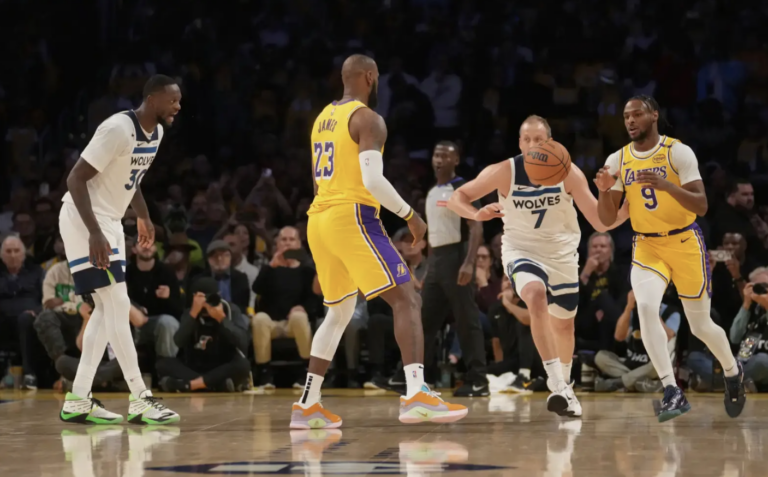
With four minutes to go in the second half of the Oct. 22 game, Lebron and Bronny subbed into the game together — both surprising the crowd and officially making history by becoming the first-ever father and son NBA duo to play on the same team. 

This accomplishment not only highlights Bronny’s achievement of making the NBA but also showcases Lebron’s longevity in the league. The soon-to-be 40-year-old is averaging 23.3 points, 8.6 rebounds and 9.2 assists. Most players’ careers start to slow down in their mid-30s to early 40s, but Lebron continues to play at a high level and, like the majority of his career, is still considered a top player in today’s league

Bronny has been in the spotlight since he was born. In middle school, fans followed his Amateur Athletic Union (AAU) days playing with the North Coast Blue Chips. He later played at Sierra Canyon School where he was widely regarded as one of the best high school basketball players at the time and was named a McDonald’s All-American, along with current NBA rookies — including Philadelphia 76er’s Jared McCain, San Antonio Spurs’ Stephon Castle, Chicago Bulls’ Matas Buzelis. From there, Bronny went on to play at the University of Southern California until he suffered a cardiac arrest that cut his season short. 

Fans and commentators have speculated that this is the most pressure a 55th overall pick has ever gotten

“Bronny has earned this through hard work,” Head Coach Jonathan Clay “JJ” Redick, a former three-point specialist in the NBA who played 15 seasons against Lebron, said in the Lakers’ 2024 draft pick introduction press conference. “His base level of feel, athleticism, point of attack defender, shooting, passing — there’s a lot to like about his game.”

It’s clear that Redick, along with the Lakers, wants to develop Bronny into his fullest potential as a player. This is an area where the modern NBA and its fans have shown impatience: giving young players time to develop. 

At this time, Bronny is only 19 years old and his every shot and every game are analyzed by his 8.1 million followers and social media channels — everyone following the game has high expectations. Bronny is more well known than the No. 1 and No. 2 picks of the 2024 NBA draft, Zaccharie Risacher and Alex Sarr. Whether or not he has gained his fame through his father, Bronny is a professional basketball player and has not disappointed as the 55th pick of the second round. 

As of now, Bronny has been alternating between playing with the G-League South Bay Lakers and NBA Los Angeles Lakers. We don’t know what will come out of Bronny’s career, but it cannot take away what this means for Lebron James Jr. and Sr. stepping out on that court together. 

Sudwerk Brewery hosts dog fashion show in collaboration with Dogtopia for Veterans Day

0

The proceeds funded service animals for veterans with PTSD 


By RORY CONLON — city@theaggie.org


Sudwerk Brewery hosted a Veterans Day dog fashion show in partnership with Dogtopia of Davis, an organization that funds service animals for veterans, on Nov. 10. 

On the way into the fashion show, attendees could give information about their dogs, including their breed, age and personality. Amy Leslie, a fifth-year Ph.D. student on the plant biology track, entered Bean, their five-year-old German Shepherd, into the show. 

“I dressed him up in a tuxedo,” Leslie said. “I’m actually reusing it from my engagement party earlier this year.” 

Leslie said that the name “Bean” came right after they brought him home from the shelter. 

“He looked like a little bean when I got him from the shelter,” Leslie said. “He was 10 pounds then. He’s 110 pounds now.”
Bean was 1 in 10 dogs who competed in the fashion show, showing off their outfits for a panel of three judges and an audience of 50. Other costumes included: a Doberman Pinscher dressed as a Christmas dinosaur; an English Springer Spaniel wearing a checkered detective coat and hat and a husky wearing a red flower neck scarf. 

Caitlin McSorley, the assistant general manager of Sudwerk, said she organized the fashion show in collaboration with members of Dogtopia, a local dog daycare with a non-profit foundation attached to it. 

“We’ve done previous events with local dog charities and animal groups,” McSorley said. “Last year, we did an event with the [American Society for the Prevention of Cruelty to Animals] ASPCA that was really similar. I thought the tie-in of Dogtopia providing service dogs for veterans was the perfect crossover.” 

McSorley also recognized the positive impact service dogs can have on veterans in need of support. 

“If people have physical disabilities, that’s definitely a help,” McSorley said. “Also, if people have PTSD, it can be super helpful to have a dog that can comfort and provide them with security by smelling for explosives or clearing rooms for them to make sure that’s safe. There’s that psychological aspect to it as well.” 

While another organization purchases the dogs, Dogtopia pays $6,000 to train them so that they can assist veterans. Since its opening in July 2023, they have successfully trained one service dog for a veteran living in Santa Rosa. 

At the event, Dogtopia owner Cindy Hespe raffled off tickets to raise money to train a second dog for a veteran in need. Hespe said she wanted to use the non-profit branch of her organization to support veterans after seeing how they struggled to readjust to civilian life. 

“My husband and I met one veteran who had been a ranger for five years, where he was going out in Afghanistan and Iraq to make sure the path was clear before they went out,” Hespe said. “For five years, he was wired to look for danger, and then when he came home, he couldn’t get that out of his brain. It was driving him crazy — he was suicidal.” 

Hespe said that getting a service dog helped support that veteran in his recovery. 

“He said that the dog saved his life because he didn’t have to worry about what happened behind him anymore,” Hespe said. “He just had to worry about what was in front of him. Dogs sense when [people] start to panic, and they warn them — it’s amazing what they can do.” 


Written By: Rory Conlon city@theaggie.org


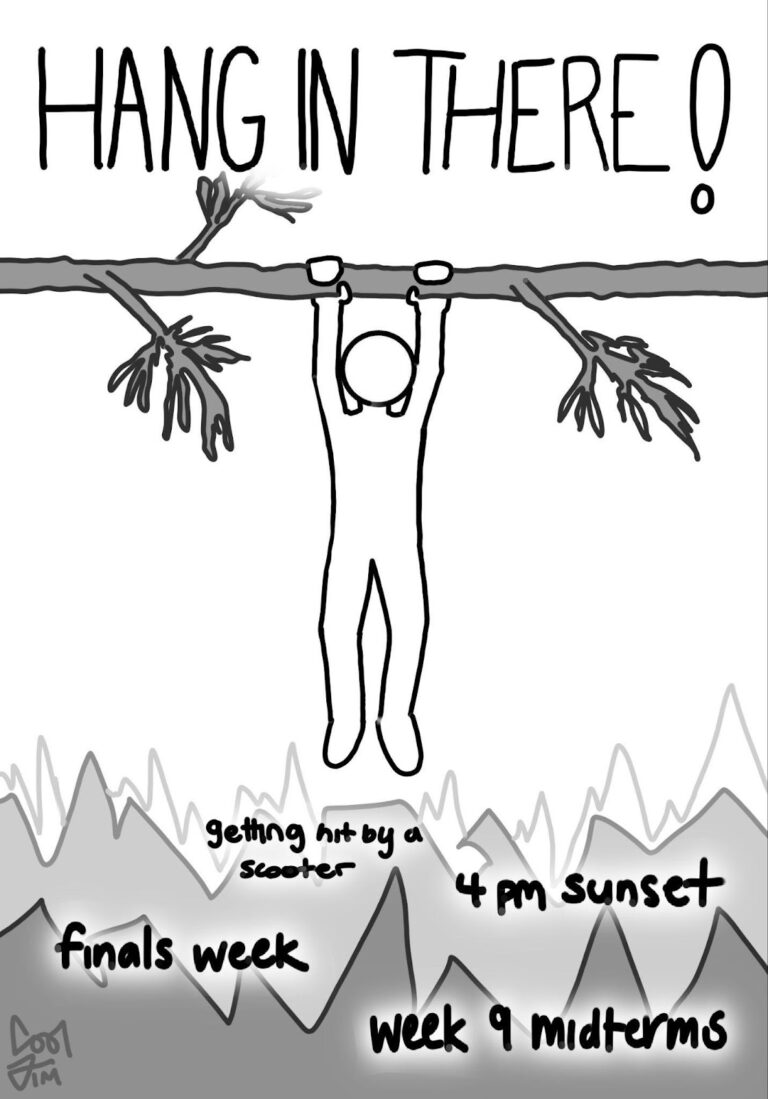
You’ve got this!!

Drawn by: Sandhya Pfile –– sbpfile@ucdavis.edu

Disclaimer: (This cartoon is humor and/or satire, and its content is purely fictional. The story and names of “sources” are fictionalized.)

The city of Davis partners with California Conservation Corps for vegetation cleanup

0

Cleanup effort balances wildfire risk reduction with habitat preservation in North Putah Creek area


By ALMA CULVERWELL city@theaggie.org 


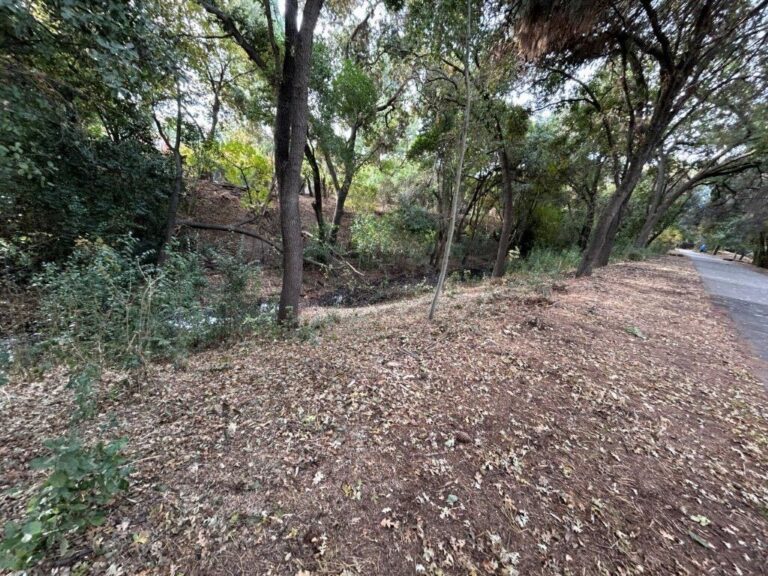
From Nov. 5 to 7 and Nov. 12 to 14 from 8 a.m. to 4 p.m., the city of Davis conducted a vegetation cleanup on 10 acres of the North Putah Creek area in partnership with the California Conservation Corps (CCC). During the cleanup, dead trees, vegetation, down woody debris, ladder fuels and dense dry strands of shrubbery were removed to reduce wildlife fire risk and maintain the dual functions of stormwater conveyance and habitat. 

The project area, located along the southern border of Davis’ Willowcreek subdivision and near the Willowbank and old Willowbank neighborhoods in Yolo County, was managed with specific attention to environmental concerns.  

Adrienne Heinig, the deputy director of public works for the city of Davis, explained the key objectives of the project. 

“The goals of this project and other fuel management projects around the city are to protect public safety and preserve the overall health and longevity of available habitat,” Heinig said. “The key objectives to achieve these goals are to reduce fire fuels along the drainage channel to prevent the rapid lateral or horizontal spread of fire, remove hanging [or] hazard limbs and remove invasive species.”

The city of Davis assured residents that no wildlife would be harmed through this process in an announcement on Oct. 31.

“Mature, healthy trees will not be affected by this project and wildlife specialists have inspected the area,” the announcement reads. “The work is occurring outside of nesting season for birds or other wildlife, and there will be no negative impacts to wildlife. All reasonable efforts will be made to prune trees and preserve their overall health and integrity.”

Heinig elaborated on this, explaining that the several measures in place ensure the protection of wildlife and biological resources.

 “Every effort is made to plan such disturbance outside of the breeding season for most wildlife species,” Heinig said. “The city’s wildlife biologist advises on prescriptive vegetation removal, conducts impact avoidance surveys and provides training to maintenance crews about resource protections and impact avoidance.”

This work was last done in March 2023 and aligns with the city’s ongoing commitment to wildfire prevention and ecological management. Timing the work to take place outside of nesting season guaranteed minimal disruption to wildlife habitats. 

Heinig also went into more detail on the specific area selected for the cleanup. 

“Overgrowth of vegetation in the channel necessitated this project,” Heinig said. “While it is no longer hydrologically connected to Putah Creek, the segment serves to convey stormwater runoff from portions of South Davis out to the Yolo Bypass. The channel is a multi-use utility serving primarily as stormwater conveyance that also provides valuable wildlife habitat and a naturalistic amenity to the community.” 

City staff, in collaboration with the CCC, implemented a detailed Incident Action Plan to oversee the project’s execution in a safe and appropriate manner. Urban Forestry and Ecological Resources Program staff along with the fire marshal worked together on this maintenance effort.

During the cleanup, the public experienced minor disturbances including noise from machinery and temporarily limited access to the bike path. The city of Davis continues to prioritize environmental stewardship and community safety in managing the North Putah Creek area, balancing habitat preservation with wildlife preservation. 


Written By Alma Culverwell city@theaggie.org 

I am haunted and so are you

Understanding how we deal with the past


By Tara Romero — tcrome@ucdavis.edu


Halloween and the time of ghost stories has come and gone, but why do I still feel haunted?

When we think of the word “haunted,” we tend to imagine some sort of Victorian poltergeist moving objects around an old dark mansion or some kind of spirit terrorizing a family like in “The Conjuring.”

Similarly, the concept of hauntings appears throughout our culture in movies and literature. We use the idea of ghosts to represent the physical embodiments of the past who haunt and torment people in the present. Something about the idea of figures from the past lingering with unfinished business fascinates us — perhaps because this is something we can relate to all too well.

I believe that hauntings are more than ghost stories; to understand hauntings is to understand ourselves and how we deal with our pasts. The way we experience and think about memories is through a sort of “haunting.” Existing outside of our daily consciousness, our past looms over us. Every once in a while, like a ghost manifesting itself in front of us, a past memory suddenly appears in our thoughts. 

We all know the feeling of going to sleep and suddenly shooting awake remembering the embarrassing thing we did eight years ago. No matter how much we try to repress it, our mind cannot help but bring back that godforsaken memory from the vault. 

In this way, memories from our past continuously haunt us as they reappear again and again. The worst thing that someone has done to us. The worst thing we’ve ever done. The feeling of an unwanted touch still lingering on our skin, no matter how many hundreds of showers we’ve taken since. Like ghosts, our past memories eternally walk alongside us, not allowing themselves to be forgotten.

We are all haunted. Memories torment us — constantly reminding us of our guilt, shame and fear. So how do we exorcize our ghosts?

One way in which we try to escape these ghosts is through repression, which is the urge to ignore our pasts in order to make them go away. Out of sight, out of mind, right? However, ignoring our pasts only makes the hauntings worse. The feelings of guilt, shame, fear and anger all continue to grow and fester. Through repression, we give our pasts the power to truly hurt us. 

The past will always resurface, no matter how much we try to ignore it. With the way our memories work, the smallest detail can force us to remember something we tried so hard to forget. Whether it’s when you eat a certain food, smell a specific smell or hear the name of someone you once knew — something will inevitably remind you of your past. 

It’s impossible to escape what haunts us; the thing about these ghosts is that they never truly go away. I do not believe there is any way to get rid of our pasts, and that the past is not something that we can change. We have no way of controlling our past selves or the things that happened to us, so we must live with the memories that we have. 

Understanding our pasts through the lens of haunting makes our worst moments feel inescapable. How are we supposed to live if we are eternally plagued by our memories?

The answer is that we must learn to live alongside our ghosts. This looks different for everyone, but the first step is always the same. We need to let our ghosts show themselves. Memories can be painful, but we cannot let them hold so much power over us. By confronting the difficult times in our lives, we begin the process of coming to terms with them — the process of healing. Our memories will always haunt us, but we do not have to feel haunted. 


Written by: Tara Romero— tcrome@ucdavis.edu

Disclaimer: The views and opinions expressed by individual columnists belong to the columnists alone and do not necessarily indicate the views and opinions held by The California Aggie.