55.5 F
Davis

Davis, California

Wednesday, December 24, 2025
Home Blog Page 70

Don’t ask me if I’m happy

Analysis is a real killjoy 


By MOLLY THOMPSON – mmtthompson@ucdavis.edu 


“Would you say that, overall, you’re happy?” came the voice over the phone from 380 miles away, just 20 minutes into our just-to-catch-up conversation. 

“Yeah, I think so. I mean, there are definitely days where I’d say I’m not, but for the most part, yes.” 

I started to think about it more: am I happy right now? There’s no reason for me not to be, so I guess so. But shouldn’t true happiness be more than an “I guess so?” Does that mean I’m not happy? 

50 minutes later, when I hung up the phone, I was still thinking about it. I remembered a book I read for my 11th grade English class: “The Geography of Bliss,” by Eric Weiner. It follows a journalist as he visits 10 countries in search of the happiest place on Earth and the elusive secret to true happiness. His journey takes him to not only commonly cited paradises and places that are known for their happy populations but also to their antitheses: places wreaked with corruption and desperation. 

He discovers that the Swiss are very content, but is that the same as happiness? The Netherlands is very equitable, but does that create joy? Bhutan is poor financially but rich spiritually and has a self-imposed Gross National Happiness (GNH) index that they pride themselves on — are they onto something? 

A lot of Qatar is wealthy but stifled and unsatisfied with life. Iceland values failure as a necessary part of success: is that the key to creativity? Moldova is overrun with poverty and oppression, so does democracy play a part in a happy population? Thai culture encourages dropping your problems instead of worrying about them, but does forgetting about worries equate to bliss or is that just ignorance? 

Happiness isn’t seen as an inherent goal in England, so do we need to actively seek it out in order to achieve it? India believes that seeking out happiness is counterproductive, so what should we be looking for? In the United States, material success is synonymous with personal fulfillment, but we report increasing levels of unhappiness every year. So what’s the answer? 

In a predictably trite and still deeply unsatisfying ending, Weiner concludes that there is no secret to happiness. But what he does find to be true is that nobody actually finds happiness when they’re looking for it. 

That kind of makes sense — the happiest moments of our lives are usually unplanned and spontaneous. True joy can’t be orchestrated, it has to be organic. By that logic, seeking happiness really is futile. 

This is not to say that it’s completely out of our hands. From visiting Moldova, Weiner concluded that comfort is a necessary element of happiness, and we can (to a certain extent) control our comfort levels. That’s where the American ideal of material wealth as happiness comes in — material wealth often equates to comfort. Nonetheless, comfort doesn’t necessarily equal happiness; Weiner discovered that the population of Qatar has a lot of material wealth but is generally unhappy. So, comfort is a necessity for joy, but it’s not the whole equation. 

What’s the missing piece? We don’t know. I think it’s different for everyone, but trying too hard to pin it down will backfire and just become another stressor.

One thing that Weiner concluded, that I’ve found particularly interesting and accurate, is that the second we try to assess our own happiness we become less happy. There’s more research to back this up too; the general consensus is that trying to put a metric on our mental satisfaction causes our ratings to decline. In other words, the more we think about how happy we are, the worse we feel. 

I think this comes down to a couple of factors, with the first being the idea that analyzing how we feel forces us out of the moment we were in and into our heads. Instead of enjoying the present activity, we’re overthinking our mental and emotional state of being, so, naturally, we feel less happy. 

In a similar vein, prompting us to assess our happiness is essentially asking us to think about everything in our lives that might be making us unhappy. When trying to assess how satisfied we are with our lives, we start tallying up everything that might be getting in the way of perfection. So with our attention on what’s going wrong, our happiness declines. Maybe Thai culture is onto something. 

“I mean, I think I am,” I say, after we’ve been talking about it for a few minutes. The more I think about it, the less confident I am in my answer. 

“Things are going well. I think for the most part, I’m pretty happy.” I’m starting to think I should stop talking. “I guess so, yeah.”  


Written by: Molly Thompson — mmtthompson@ucdavis.edu 


Disclaimer: The views and opinions expressed by individual columnists belong to the columnists alone and do not necessarily indicate the views and opinions held by The California Aggie 

 

Space for sweetness in a dog-eat-dog world

Why we must reprioritize kindness


By Abhinaya Kasagani — opinion@theaggie.org


When I first moved to college, I was uncomfortable with the urgency at which most things moved. When I got to something, everyone was already onto the next thing; friendships were fleeting, kindness was limited and, worst of all, none of this was baffling to most. Making friends in college requires you to lay your own groundwork, dig your own pit and hope the climb out isn’t too embarrassing. Sometimes, it can feel as if it is more sensible not to try. When I finally made friends, so much of the initial risk dissipated. Four walls enclosed me like a soft hug. Gratitude erupted amidst all of the smoke. 

Recently, I was talking to a friend about how kindness has been scarce lately and how I was losing my inclination for it too. The consensus nowadays seems to be that compassion is fatiguing and that this dearth of kindness — caused by an increasingly polarized world — is oftentimes warranted and self-sustaining. 

Altruistic instincts are frequently undermined by societal and psychological passivity, making it so that the more we’re exposed to suffering, the less inclined we are to be kind. As counterproductive as that is, tendencies like diffusion of responsibility and compassion fatigue fuel a cycle of further disconnection, tricking us into viewing kindness as secondary rather than essential. What we fail to remember is that the act of kindness is inherently reciprocal.

When I chose to title this piece “Space for sweetness in a dog-eat-dog world,” I had to remind myself of the goodness that sustained me throughout my time here. I am a product of such kindness — of my best friend coming over to help me with laundry when I was sick, of a friend showing up at my door with tomatoes and burrata that we happily devoured in silence, of my old roommate brushing the knots out of my hair simply because it occurred to her, to them, in that moment to ask and to concern themselves with someone other than themselves. 

Kindness is so easy to muster, yet we still shy away from it because it is easier not to care. This rhetoric of dog-eat-dog has permeated the social sphere and led to a gradual erosion of our altruistic instincts. We are now more inclined than ever to internalize the notion that personal achievements precede all, and so we deprioritize kindness. This sets off a chain reaction: with deprioritized kindness, people are worse off and the consumption of negative media exhausts us and worsens our anxiety, leading us to continue disregarding kindness. The cyclicality of our passivity is inescapable.

There is such loss amidst all the traffic and ambition — a desire to compete against rather than alongside — and so we grab onto multiple threads and lose track of them all. I would implore one to ask themselves if, and why, kindness to them is superfluous and no longer a priority.

The environments we inhabit are only becoming further divided, making it necessary for us to consciously embrace it. It has been observed that people in large groups, those accustomed to kindness within their circles, feel less inclined to take individual responsibility (a phenomenon known as diffusion of responsibility) and often ignore opportunities to offer support. Challenging this dog-eat-dog mindset that we have acclimated ourselves to scrutinizes how one’s passivity only further feeds into this unkindness. 

More often than not, this desire for goodness is fueled by the expectation of a reward. The lack of reward has made it so that one is less willing to embrace it naturally. People often assume that the smallness of their kindness won’t truly contribute or that someone else will do it instead (someone might, but you always could!). 

What I’ve found to be true during my time here is that you make a series of patient, conscious acts of kindness, and whether or not they amount to anything, only time will tell. What matters more is that you pay attention to the defiant, celebratory quality of the act itself. Again, altruism is not the goal — it has never been. There is no need to be grandiose or self-sacrificial; small is big. 

Kindness is easy to forget but just as easy to remember. If you call to mind this doggedness, of once breaking off a piece of your lunch, of once sharing plastic tools in a sandbox, you urge the dog-eat-dog of it all to become undesirable. Tenderness is in the air. Hold each other’s hands. There is space for everyone and for sweetness.


Written by: Abhinaya Kasagani— akasagani@ucdavis.edu


Disclaimer: The views and opinions expressed by individual columnists belong to the columnists alone and do not necessarily indicate the views and opinions held by The California Aggie.


Three Davis alumni discuss how UC Davis has changed — and not changed — in 50 years

0

The Jackson siblings, who attended Davis between 1969 and 1978, compare contemporary university culture to their own experiences 


By ZOEY MORTAZAVI — features@theaggie.org


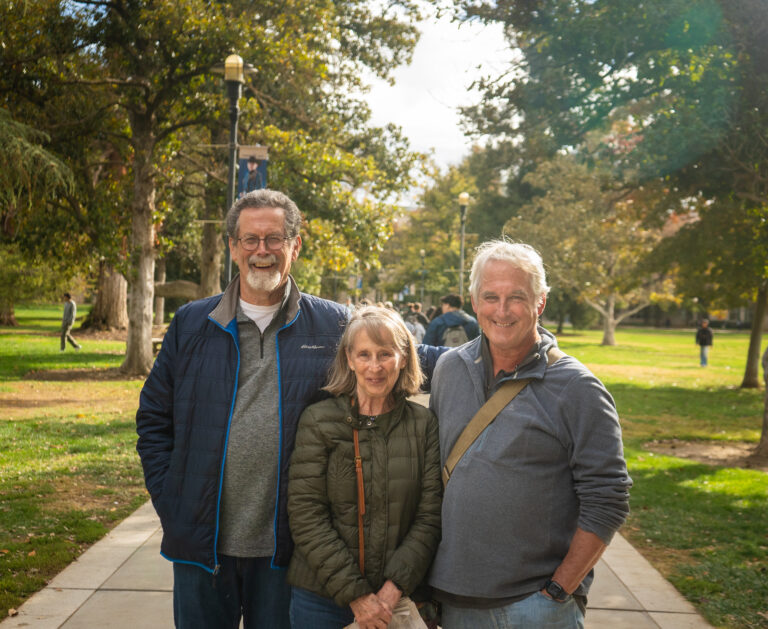
Three siblings — John Jackson (73), Linda Jackson Becker (71) and Rob Jackson (68) — moved from Philadelphia to Santa Rosa, California when they were growing up in the 1950s. UC Davis seemed like the natural choice for university for John, the eldest brother. The other two siblings followed suit, with Linda and Rob’s Davis careers overlapping by two years, while John and Linda’s overlapped by one year. 

The Jacksons revisited UC Davis on Nov. 14, 2024 — 55 years after John began his education at the university in 1969. The siblings noticed dramatic changes compared to when they attended the school: general facilities, student-to-faculty relations, student population and diversity-centered differences, just to name a few. The Jackson siblings expressed that they all enjoyed their college experiences at Davis, noting modern similarities in on-campus discourse. 

To get a more established sense of how academic operations have changed, Rob and Linda both attended courses just last week that they took during their own Davis careers. After their experiences watching the lectures, The California Aggie sat down with Rob, Linda and John to discuss some of their takeaways about how Davis has — and has not — changed throughout the 46 years that have passed since the last Jackson sibling graduated. 

Rob, who attended Davis as an English major and later graduated from the UC Davis School of Law, attended ENG 117, which focuses predominantly on Shakespearean literature. John, though he was unable to find a lecture to attend that day, graduated from Davis in 1973 with a degree in mathematics and later attended the UC Irvine School of Medicine. Linda, who graduated from UCD with a degree in cognitive development and child education, attended EDU 110, a course in educational psychology — which, she noted, was her favorite class as a Davis student. 

In addition to general classroom structure, class participation and overall technological advances, Linda also commented on how much on-campus diversity has changed since the 1970s.  

“It was just really inspiring to see the diversity in the classroom,” Linda said after sitting in on the lecture. 

Linda also noted that it was a bit of a shock to see the amount of students taking notes on laptops, rather than using pen and paper, to which Rob agreed.

“The makeup of the class was roughly the same — I counted 32 students, two guys,” Rob said. “What stood out to me with the technology [was] that the professor could give visuals that we never had.”

Rob proceeded to compare the convenience of having visual aids to his own process of trying to make sense of Shakespearean plays during his college years. This process consisted of him going to the much-smaller Shields Library to check out LP tapes of the plays, which you couldn’t rewind, and listening to them on repeat until some level of understanding was reached. 

One of the concepts the Jacksons were the most curious about was AI in the modern university setting. After it was explained that many professors at Davis and beyond are taking measures to shift the use of AI to being more beneficial than harmful, the three siblings agreed that it seems that students today have the ability to understand content more expeditiously due to not just the technology, but also the expanded number of resources being offered. 

They proceeded to share that academic and other resources for students were very minimal in the 1970s compared to today. When disclosing some of the campus groups, student research options and mental health resources offered at Davis, they seemed surprised to realize the amount of resources that students have today. With these modern advantages, though, come modern disadvantages.

For the three, the thought of contemporary tuition rates, rent and even food was almost unfathomable. During their time at Davis, the three paid $212 per quarter for their tuition; John even commented that he paid $50 per month for his rent living in a Davis apartment, while averages now extend far beyond what they used to pay. They seemed a bit disturbed to find that many students now work and provide for themselves in order to afford basic food and living expenses — something that was much less of a concern during their own college years.   

“We all had side jobs for spending money, but we were talking around 12-15 hours a week,” Linda said. “My daughter worked 36 hours a week, alongside a full load. What I’ve noticed is that kids now are just surviving; their focus is not solely on school, it’s about survival, and about paying the bills.” 

When asked what some of their preferred extracurricular activities were as Aggies, Rob remarked that he drove Unitrans buses when he attended Davis. The three were happy to hear that the old school double-decker buses have not gone completely extinct from the community, and now even offer service to and from the Davis Farmers Market on Saturdays.

John shared that he often participated in intramural or recreational sports, which remain very popular at Davis for students — though sport and exercise-based resources, including the development of the Activities and Recreation Center (ARC) have since occurred. 

It was also revealed that during the 1970s, Greek life at Davis was viewed as being an elitist institution that most students avoided. Linda, who described that theirs was the hippie generation, commented that Greek life was often seen as very exclusionary and even classist. This system has changed significantly, with philanthropic efforts often being at the forefront of contemporary fraternity and sorority life in universities today. 

“My take is that it was kind of the anti-’50s,” John said. “We were considered kind of ‘awakened.’” 

They also described that student protests were present during their time as students. John said that protests associated with the Vietnam War “really died down in the late ‘60s,” though Linda commented that her father was worried that she would be hurt on campus in the face of protests associated with the war, which concluded during her third year at Davis. 

While they expressed that Davis held fewer protests than other campuses, there has been a long-existing presence of college protesters responding to global political issues and human rights violations. These acts of student expression and political commentary have been an integral part of university life, with Davis and other UCs serving as examples.

Despite the overall positive memories that the siblings associate with their college experiences, John remarked that he wishes Davis conducted more outreach to establish a more active alumni network. As the Jacksons expressed, a public university system like the UCs could likely do more to reach out and invite back past students and staff to engage with current campus life. 

“The university could encourage [inviting] the alumni back,” John said. “Just to make it easier — you know, like [Rob and Linda] were able to do today. Reach out to them and say, ‘Hey, come sit in on this event or this class, or anything like that.’”

UC Davis has come a long way over the last several decades, as this conversation with Rob, John and Linda seemed to affirm. Davis has transformed from just Berkeley’s agricultural school into a diverse, expansive research institution that is not only academically renowned and competitive for applicants, but also seeks to supply its students with as much hands-on experience as possible. 

To conclude the interview, the Jacksons and Jackson Becker shared some advice for current students attending Davis. 

“Walking around here, I wanted to get up on a park bench and scream: this is going to be the best time of your life!” Rob said. “Right now. It will truly never be better than this. Lord knows there’s enough pressure on college kids, and to characterize college as [being] stress-free is not right […] I remember, my dad told me the same thing when he dropped me off here.” 

John continued by disclosing his own advice for current Aggies. 

“Take this opportunity to grow,” John said. “I mean you don’t have the weight of the world on your shoulders, you don’t have to take care of your family and you just hope that no one’s trying to step on each other to get to some other place — so just enjoy the opportunity that this is.” 

Finally, Linda shared advice about stepping outside of your comfort zone and past experiences during college. 

“Think outside of your family, outside of the way you were raised and entertain other ways of looking at the world,” Linda said. “You can learn a lot from people. Get out of your bubble. It’s so important — especially the way things are right now.”


Written by: Zoey Mortazavi — features@theaggie.org


Tick tock! The time changed, again

The fascinating history of daylight savings time 


By IQRA AHMAD —- arts@theaggie.org


Twice a year, millions of people across the world partake in a curious ritual of adjusting their clocks, either gaining or losing an hour. For some, like on Nov. 3, it’s a welcomed extra hour of sleep or, for others, an unwelcome disruption. This practice, otherwise known as daylight savings time (DST), alters our perception of time twice a year. But where did this odd custom come from, and what influence does it have on time today?

Historically, clocks did far more than simply tick away the hours like they do now. In ancient Rome, for instance, timekeepers manipulated their hours relative to the seasons. A “summer hour” could span up to 75 minutes, while a “winter hour” might fly by in only 44 minutes.

The idea of “saving” daylight isn’t unique to just the Romans. For centuries, humans have sought ways to capture sunlight to most efficiently serve them throughout the day as well as the duration of history. In 1784, Benjamin Franklin famously proposed adjusting schedules to save on candle usage in a satirical letter to a Parisian newspaper, according to The Franklin Institute. His suggestion was meant to be humorous, but the concept would ultimately take root just a century later.

The concept of DST surfaced in 1895 when New Zealand entomologist George Hudson presented his proposal to the Wellington Philosophical Society to re-adjust a two hour shift in clocks in order to optimize daylight for leisure, as reported by the National Conference of State Legislatures. It wasn’t until 1907, when a man from Southeast London, William Willet, published a pamphlet, “Waste of Daylight,” to call for actual changes in time, though he was initially unsuccessful.

In the throes of the first world war, daylight savings time reappeared as a strategic instrument, as opposed to solely a clock change. The idea of longer, sunlit evenings and less strain on coal supply for lamps supported Willet’s advocacy to rewind the clocks. When Germany jumped on the daylight savings bandwagon on April 30, 1916, Britain did not want to be left in the dark. Just weeks later, on May 17, they launched their own “Summer Time Act” to soak up on those extra daylight hours, according to BBC.

In the United States, only during World War II was DST adopted. While it was not completely embedded into daily life or legally implemented, different states began using the system. Therefore, the Uniform Time Act of 1966 sought to restore order, setting a national DST policy. This was furthered by Nixon, who in January 1974, signed a law establishing year-round DST to reduce gas consumption amid a national energy crisis, according to Smithsonian Magazine. While it was initially popular, President Gerald Ford changed the policy after a U.S. Senate report noted public dislike during the winter months. Now, in recent years, the Sunshine Protection Act was introduced to make DST permanent, passing through the Senate in 2022.

As we continue to adjust our clocks, the debate over daylight savings time remains far from settled. From its origins in ancient civilizations to its fluctuating status in modern society, DST has had a lasting impact on our relationship with time. While the future of daylight savings time remains uncertain, one thing is clear: the way we measure and manage time will continue to change, whether we spring forward, fall back or leave the clock ticking without change.


Written by: Iqra Ahmad — arts@theaggie.org 

The Mondavi Center holds performance of Astria Suparak’s ‘Asian futures, without Asians’

On Oct. 24, the multimedia performance lecture explored the portrayal of Asian culture and presence of Asian individuals in science fiction 


By JESSICA YUNG — campus@theaggie.org


On Oct. 24, the Mondavi Center hosted a multimedia performance lecture of Astria Suparak’s “Asian futures, without Asians” in Vanderhoef Studio Theatre from 7:30 to 9:30 p.m. The performance demonstrated the prevalence of Asian themes in science fiction without the presence of Asian individuals. 

Suparak is an Oakland-based artist and curator, according to the bio on her website.

“Her cross-disciplinary projects address complex and urgent issues (like institutionalized racism, feminisms and colonialism) made accessible through a popular culture lens, such as science fiction movies, rock music and sports,” her website reads.

The program was sponsored by UC Davis Asian American Studies, Mellon Foundation Affirming Multivocal Humanities Grant and the Mondavi Center for the Performing Arts. Suparak’s lecture examined films and TV shows such as “Firefly,” “Star Wars,” “Ghost in the Shell,” “Doctor Strange” and “Black Mirror.”

There are certain tropes that science fiction typically uses and certain Asian aesthetics are used over others and presented in a different light. For example, the Chinese food stall in “Firefly” (2002) is seen as being dirty, but the use of Japanese tea sets is seen as being high class in the same show. 

Suparak explained this concept in her performance.

“All food in China is cheap [and] working class,” Suparak said. “Japanese food is high end, [which] makes zero sense.”

The Mondavi Center’s website further elaborates on the repercussions of this bias.

“Asian cultures have been mixed and matched, contrasted against and conflated with each other, often creating a fungible ‘Asianness’ in futuristic sci-fi,” the website reads.

Aneka Torgrimson, a second-year Asian American studies and political science double major and Asian American studies peer advisor, explained this misconception as presented by Suparak.

“[Suparak] not only highlighted the historical and spiritual significance of the Asian elements scattered across sci-fi worlds but also explored how they contribute to the ongoing erasure of Asian bodies from the genre while keeping their cultural aesthetics,” Torgrimson said. “She touched on concepts like ‘Commodity Orientalism,’ or the way objects and cultural markers from Asia are exploited as symbols of wealth and global exchange, and ‘Techno-Orientalism,’ which racializes Asia as both a producer and symbol of futuristic technology.”

In a statement following the results of the presidential election, Suparak said that her performance has taken new meaning.

“My focus on the histories and consequences of anti-immigrant, anti-Asian and anti-Arab rhetoric, visual culture and legislation in “Asian futures, without Asians” feels even more urgent in light of Trump’s reelection, with his promises to mass-deport immigrants and his decades-long targeting of people of color,” Suparak said.

Additionally, the event included a 15-minute intermission with electronic music performed  by Tammy Lakkis. 

 “[Lakkis is a] songwriter, singer, producer, poet and DJ,” the event’s program read. “Lakkis made a name for herself performing playful, all hardware live sets and singing bilingually in English and Arabic.” 

This was followed by a conversation between Suparak and Mark Jerng, the chair of African American Studies and a professor of English and Asian American Studies.

Jerng asked questions around topics that were discussed in Suparak’s lecture, such as the durability of Asian aesthetic tropes within the media. 

 “There are artists and writers doing work that is reimagining and resetting the entire set of tropes,” Suparak said.

Christy Vong, a fourth-year Asian American studies and community and regional development double major, said she was moved by Suparak’s performance.

“My perceptions about science fiction have definitely changed since the performance,” Vong said. “I think I’m more able to be critical of them now. Once she pointed it out, I can’t unsee the way there are backgrounds of Asian culture yet the main characters on screen are white people. I wish more white people could watch and listen to this performance. People studying abroad in Asia or involved with Asian culture somehow, I think would be a great audience to have. Because I feel these ideas are in peoples’ subconscious.” 

Torgrimson expressed her thoughts about the impact of Suparak’s lecture. 

 “Suparak’s performance brought these issues to the forefront in a way that was both engaging and accessible, using sound and lighting to make the experience immersive,” Torgrimson said. “I appreciated how it opened space for deeper conversations about the genre’s cultural implications, making me think critically about how sci-fi can both inspire and exclude.”

Written by: Jessica Yung – campus@theaggie.org

The Editorial Board meets with Chancellor May and UC Davis administrators

May and administrators discuss mask policies, student safety, research opportunities and more 

By THE EDITORIAL BOARD


The California Aggie’s Editorial Board met with Chancellor Gary May, Provost and Executive Vice Chancellor Mary Croughan, Associate Chancellor and Chief of Staff Carl Engelbach, Chief Marketing and Communications Officer Dana Topousis, Vice Chancellor of UC Davis Finance, Operations and Administration Claire Shinnerl, Vice Chancellor for Diversity, Equity and Inclusion Renetta Tull, Director of Athletics Rocko DeLuca, Chief Campus Counsel Mike Sweeney, Faculty Advisor to the Chancellor and Provost Ari Kelman, and Vice Chancellor, Student Affairs Pablo Reguerín on Nov. 20. 


Below is a transcript of the meeting that has been edited for length and clarity. 


The Editorial Board: After several years of attempts, UC Davis was recently announced to be an official Hispanic-serving institution. What was different about this year’s admissions that made Davis reach this status? Does the university have plans to help foster an environment that is welcoming for Hispanic and Latinx students?


May: So let me first say, we’re very excited to finally reach this milestone. It’s been years or decades in the making, and we’ve been pursuing it vigorously. Let me just clarify, however, that we are qualified to be designated as an HSI (Hispanic Serving Institution) but we still have to apply to the Department of Education to get the official designation and they have to approve it. So we have numbers, we just now have to do the application. By the way, so that everyone knows, 25% of our domestic undergraduate population is Latinx — that’s the threshold. 


So this just reflects our commitment to California and our diverse communities here. As I said, this is after years of efforts, recruitment initiatives, partnerships and collaboration with alumni and the community. Once we do apply and hopefully receive the designation that makes us eligible to apply for competitive grants that require HSI status, there’s no money that starts flowing in. I just want that to be clear. People think that it automatically means money comes. No, you still have to apply for the grants to get the resources, and these will be grants that are aimed at student success, academic innovation and institutional transformation. They’ll allow us to deepen our commitment to providing a supportive environment for all of our students, but particularly our Latinx students. 


Tull: I was just going to say that in terms of the money and the funding, the nice thing is that it gives us an opportunity to apply for additional tracks of funding in different places. And in fact, we have two grants that are going in this Friday to UCOP (University of California’s Office of the President) and their faculty, one here at our Davis campus and one in Sacramento. The plan is to have programs that are going to help all of our students on campus, but it’s this track that allows us to be able to apply under this kind of eligibility. So we’re really excited about it and we have different kinds of things that are going to support the Avanza, as we call it, sort of the umbrella, but there are a lot of programs that have been long standing on campus, through student affairs and through other different entities on campus.


Reguerín: I think part of the real story is our enrollment is now over 8,100 Latino domestic students, and there are very few universities in the country that serve that many. So aside from the percent, and part of reaching that percent has to do is that we’re a large campus, so it’s always this numerator-denominator issue, as we grow. But it’s not just about reaching that enrollment target. Last year, at this time, we were at 7,700, so it is significant in terms of the growth. We still acknowledge, though, that Latinos make up high school graduating students close to 48% so we’re still not reflective of the state. We are still considered an underrepresented group in terms of parity, and a lot of our initiatives are around making sure students thrive here at UC Davis. So not just that you’re coming in and barely graduating but actually thriving and connected. And so we’re looking at it very holistically in terms of the programs and support that we offer. And as Renetta mentioned, the services and programs really are about creating a more inclusive UC Davis and as a larger part of the community, Latino students and non-Latino students obviously will benefit. 


May: I’ll just conclude with one more point here. There are few universities that have reached this level — I would say even fewer research universities that are at this level. So that’s a very select group, and we’re proud to be part of it. 


The Editorial Board: Last year, the UC Board of Regents announced they will no longer be looking for pathways for undocumented students to work on-campus jobs due to legal and safety concerns. Do you know if the regents are looking for new pathways in the future? Could this be impacted by the 2024 election in some way? If not, is UC Davis currently looking for ways for undocumented students to be involved with on-campus research and jobs? 


May: We just had a regents meeting a week before last and as of right now, I am not aware of any new pathways that the regents are looking at to implement these types of programs, from a system level.


The Editorial Board: Away from a system level, is UC Davis currently looking at any ways to implement jobs for these students to be involved in research, or any other on-campus jobs and have there been any legal voices on campus that contributed to this conversation as well? 


May: Yes, UC Davis is doing a couple things. I’ll just start and maybe ask Pablo to amplify. We have two programs that connect students with finding work and research opportunities. The first is the UC Davis College Corps program, which is a state-funded program that provides undocumented fellows with up to $5,500 for living expenses, and it also provides real world job experience and other benefits. The second one is called our Undocu Pathways program that we piloted last year, that funds undergraduate, graduate and professional students who engage in unpaid, experiential learning opportunities. We probably could say something about the first one since we have a bunch of students involved in College Corps. 


Reguerín: So again, we have a cohort of students and besides the $5,500 there’s also a $3,000 scholarship for a summer. It can be, depending on how many hours you put in, about $10,000. The key part in understanding both College Corps and Undocu Pathways is that these are essentially what we call inclusive fellowships. So, they’re not an employer-employee relationship. You get practical training and in the case of College Corps, there’s also a course academic experience. You get field experience, and then we’re able to provide a living stipend or scholarship, depending on the situation. 


It’s really about identifying the areas that is something that’s related to a student’s interest and the field that they’re in. So it’s really about connecting them. Sometimes their experience might be integrated into a course, but it’s expected that you volunteer, so we’ll provide some funding support. We’ve also increased our emergency funding support, so the financial aid office has reallocated the DREAM loan funds, which is a fairly new law that passed around how to redistribute what used to be a traditional loan program into grant and aid programs. So we’re all working together, trying to sort out the different pots of money, and then trying to ensure students have support in their various goals. 


The Editorial Board: In July, the UC Board of Regents approved the construction of a new residence hall in the Segundo area to address the growing demand for on-campus housing. What is the timeline of its completion, and what kind of an impact do you foresee this new housing development having with regards to the increasing student population at UC Davis? 


May: The Segundo infill project is going to give us 550 new beds for first-year students when it’s complete. The design is similar to the residence halls in Tercero — if you lived in Tercero, you might recognize it. The design was vetted through surveys administered to the residents, student staff and operational staff, and focus groups are also used to help ensure that we have the best design for student needs. The project will be complete in time for fall 2027 occupancy, and this will help us move forward with our stated goal. In fact, the goal that we have is in a memorandum of understanding with the city, which is to house 48% of our Davis-based students on campus. 


Along with some other projects recently completed — Orchard Park, The Green, Shasta Hall, Yosemite Hall — we’re all moving forward in compliance with that goal and 48%: that’s a big deal. When I got here in 2017, we were in the mid-30s, maybe lower-30s, in terms of the percentile of students that were able to live on campus. So we made quite a bit of progress. We’ve added close to 7,000 beds in that time frame. So we’re seeing these efforts, along with our increased housing that’s happening in the city, having the impact of increasing the overall vacancy rate so there’s more available housing, and more availability means prices come down. So in 2023-24 the vacancy rate of bed lease and apartment lease rates hit 3%, which doesn’t sound like a lot, but again, seven years ago it was less than 1%. A healthy vacancy rate, just for comparison, is about 5%, so we’re getting toward what’s considered a healthy vacancy rate. 


Reguerín: It has a broader impact as mentioned on the inventory, which is key to affordability. 


Shinnerl: You’ll see construction start when you come back from winter break, so in the early spring, you’ll see construction. I’m excited about the architecture. It’s gonna pop up a little bit. It’s gonna be five stories compared to four. So a little bit more view and change and how it looks. A lot of open space, a lot of community space, a lot of social space, study space — I think it’s well done. Lots of bike parking.


The Editorial Board: The University of California recently released an updated mask policy that includes UC Davis. The policy states that “Individuals may not wear a mask, personal disguise or otherwise conceal their identity with the intent to intimidate any person or group, or to evade or escape discovery, recognition or identification while violating law or policy.” In light of recent protests on campus, what are the specific scenarios that would require someone to remove their face covering? Has the university considered implementing adaptations to the new mask policy in order to prevent potential discrimination due to ambiguity?


May: I’m glad you asked that question, because there has been a lot of confusion about this policy. So at the bottom of the UC Davis free speech website, you find time, place and manner FAQs that answer questions like this one, but just let me emphasize two points: First, wearing masks or face coverings is permissible for people that are going about their normal business, people that are concerned with health or people that have religious reasons for concealing their face. The masking directive applies only to people who are in the act of violating law or policy. So, in other words, you can’t conceal your identity if you’re in the act of doing something that’s against policy. 


And while the question doesn’t really anticipate this, I want to note that the only people who can enforce the related policy are those that are specifically designated by UC Davis, which is essentially law enforcement and Division of Student Affairs staff. So an average community person can’t ask someone for their ID or to remove their mask. It has to be an officially authorized university representative.


Sweeney: I’ll just add that these provisions have already been in policy and state law before this. I’ve been at UC Davis almost 20 years; I’ve never seen an administrator arbitrarily enforce this rule. I think administrators are very reluctant to demand that individuals identify themselves. I know based on personal experience that that is the case. But it kind of makes sense if somebody is violating a law or policy but refuses to identify themselves, that in and of itself, is a violation of policy. That’s really the way to think about it. You can’t go and commit a crime and then refuse to identify yourself. That is also a violation of law and policy, and that’s probably a better way to think about it. Lots and lots of people on this campus wear masks. We all know that — actually many of you weren’t here during the pandemic, but we all wore masks. Still today, a significant percentage of people wear masks. That is not a violation of policy, period. 


The Editorial Board: Is there anything different legally that the UC has to do — post this summer — about that than before? Is it the same status or is it just more public?


Sweeney: Well, I think we have had to clarify. That’s the thing we’ve had to do because it was put out there. We had to do a lot of clarification, but there hasn’t been an occasion since it was put out there that we’ve actually been in a situation where we needed to enforce it.


Reguerín: We haven’t enforced it at this point. 


May: Important to note also, protesting is not a violation of policy in and of itself. So a person wearing a mask while protesting is not violating policy and keeping with time, place and manner restrictions.


Sweeney: Just to be clear, our policy explicitly states everybody has the right to protest. Some of us participate in protests. Protest is not a violation of policy, period. 


The Editorial Board: In September, the admission for police forces to be able to utilize military grade weapons, including drones, projectile launchers, pepper balls and foam and sponge rounds on all UC campuses was passed. This is something that has brought many safety concerns among students on this campus. Under what circumstances would this kind of response from local law enforcement be put forward?


May: While I appreciate the question, I just wanted to really strongly emphasize that the UC Davis Police Department did not request any additional equipment, military grade or otherwise, at the September regents meeting. In fact, our campus police do not have military grade weapons or projectile launchers.


Shinnerl: I think we have a few, but they were approved in 2022. We had drones that were approved in 2023. Sorry, I can clarify, just to be completely transparent. Our police department got approval for three military grades, but they’re very, very low grade, back in 2022. Some launchers and amplified sound equipment, then drones in 2023. We have the fewest, I believe, out of any UC campus. 


May: We were not in the request in the September regents meeting. 


Shinnerl: Nothing new in September. These were all old requests. 


Croughan: Maybe it would help if you said what we use the drones for? 


Shinnerl: Only in an emergency. We do not use drones under any other circumstances. If 911 is activated and there is a law enforcement matter, then we could use our drones. We have not used them since we got approval. Also, we have very strict policies on them that are vetted by the regents, as well as a drone expert out of UC Merced. So, it’s really well documented when you can use them and how you can use them. 


Croughan: Some of our original thinking was: If there’s a risk of fire, the drones can be super helpful for determining exactly where it is and monitoring hot spots. 


Shinnerl: It has infrared, so it can detect heat. Sometimes we get a report of smoke, but we can’t find the source. But you can use a drone to try to find the actual fire.


Engelbach: They’re also used to assist in locating individual students who may be considered missing, oftentimes for health and welfare reasons. And so they’re used for that purpose as well.


Shinnerl: We have the largest University of California, in terms of acreage — 5300 acres — and we would have to hire a whole lot more people to try to run all the way out past Highway 113 and check up on something if a 911 call is activated. So they’re also very efficient compared to driving out there, running out there or biking out there. By the way, there is a rule that you have to keep your eye on it and be able to see it.


Sweeney: It’s also heavily regulated around airports. 


Shinnerl: Which we also have. 


The Editorial Board: In May 2024, Cheyenne Xiong, a UC Davis student, was arrested by UCDPD for alleged vandalism. During her arrest, the officer “accidentally” fired their gun. According to university sources, the officer is currently being investigated. Is the university taking any action to prevent situations like this from reoccurring in order to protect student safety?


May: The case is still active so I really am prohibited from providing a lot of detail. What we can say is that the discharge of weapons on campus is thoroughly investigated, and we take that very seriously, as we should. This case is no exception. It’s currently being reviewed at the UC Davis Police Accountability Board level, and the recommendations from that board are forthcoming.


The Editorial Board: UC Davis does not offer a program or major for students interested in journalism. What efforts has the university been making to support student journalism? 


May: You’d be surprised with how long it takes us to get an undergraduate major. The business major case was over 20 years, but you didn’t ask about business. So, only two UCs offer undergrad degrees in journalism. UC Irvine has a Bachelor of Arts in literary journalism and UC Berkeley offers a journalism minor in the Graduate School of Journalism for the undergraduates. So, our writing program is interested in creating a professional writing major, but I’d encourage any students interested to contact that program’s leadership and support those efforts. I don’t think we have any formal efforts to have a journalism major on campus. 


The Editorial Board: Last October, a UC Davis assistant professor threatened “American Zionist journalists” and their families. While you have condemned these comments previously and shared that the professor is under investigation, what is the current status of this process? Was the professor terminated for these comments, or is this still under review?  


May: Still under review is the short answer. There are specific procedures for review and complaints of faculty misconduct with our university-wide policies and our system-wide policies and bylaws. Complaints against faculty members are confidential personnel matters, so we are really not able to comment publicly on the status of that matter or any other steps that we may be pursuing. I will say that the public expression of opinions, even those opinions that are controversial or abhorrent, really has a high level of protection under the First Amendment. So we’ve been carefully reviewing this matter to ensure our response is consistent in both university policy and state and federal protections under the First Amendment. 


Sweeney: I’ll just add: It may sound like institutions hide behind privacy, and that’s not always untrue, but there are indeed laws that protect privacy. Student records have privacy laws — it’s called FERPA. You may have heard that that’s an acronym for a federal law. There’s a similar law that applies to personnel matters, and we’re not able to disclose information. If we actually intentionally disclose information, it’s a crime. Police officers, for example: In the penal code, there’s a specific provision that makes it a crime to disclose peace police officer personnel matters. So it’s very challenging for the chancellor to talk about these things. I mean, the chancellor wants to have transparency with the community, but there’s these laws. I’ll just say that we’re following the university process for dealing with these matters, and we’re happy to talk about processes and bore you to death with all the process, but we can’t talk about the specific personnel issues. 


The Editorial Board: Specific personnel aside, how long would that process usually take for a professor or admin’s character in this kind of review?


Sweeney: At the University of California, literally everything is very slow, as you know. That is also true in our personnel matters. Certain groups of employees that have greater, I don’t want to say rights, but they’re more complicated and they’re more robust. Faculty have the greatest rights and it involves the UC Davis Academic Senate. Those processes go through at a glacial pace, not the pace that some of us in the administration would like, but, at the same time, they’re very thoughtful and they think a lot about the cases. They are moving it, just sometimes it’s hard to discern the movement. So, that’s not a direct answer, but they’re not satisfying. I will say, for faculty, it’s typically more than a year, up to two years. For staff, it’s typically six months. That’s the life cycle of a serious staff matter.


The Editorial Board: An unnamed former ASUCD unit director was recently alleged to have been misappropriating hiring practices and procedures. Does the university have plans in place to monitor ASUCD units and to intervene if funds are being used unethically and illegally?


May: As you probably know, ASUCD is 98% student-led and several unit directors in ASUCD are student-led units. Each unit has a staff, career, staff oversight and follows our Davis policy and procedures manual, or PPM (Policy and Procedure Manual). Vacancies are posted online through a publicly accessible website following the ASUCD bylaws. Interviews are conducted by student committees, and those hired have to be confirmed by the ASUCD Senate. Now, sometimes a student unit director might try to hire someone in this part of the process, which can happen in the living and learning model that we have. 


So, when this occurs, we typically will find out what the hiring process was, what was not followed and when the student hired asked the personnel coordinator why they have not been paid. Then the personnel coordinator reviews the vacancy and checks where the position was posted or where any paperwork is missing. The unit directors have two training sessions a year on hiring, purchasing and day-to-day operational needs. ASUCD oversees these hiring practices and follows them through the PPM and state and federal laws. If a student believes that the process was not followed correctly, they can submit a review request, which can include a review by the personnel committee in ASUCD, a closed session by the ASUCD Senate or a complaint to human resources in those mechanisms. 


So with regard to the fiscal responsibility concern, the ASUCD Senate approves the annual $22 million budget for ASUCD. If students believe the unit director is spending money in a way that is inappropriate, the controller and business manager can audit the unit director, or the senate can call a closed session. So I’m going to stop there, because that’s a lot of process and policy. I don’t know much about the specific case. 


Reguerín: In terms of purchasing, there are checks and balances in place. A lot of that is actually done by staff — some within ASUCD, some outside of ASUCD. It’ll depend on the dollar amount and what process we’re talking about. But certainly I would bring forward any allegations of either not following the HR process or stewarding resources appropriately. It could be to my office. Certainly, there’s a process within ASUCD. Sheri Atkinson, the AVC (Associate Vice Chancellor for Student Life), oversees that area as a resource, and then there’s also resources beyond to report. We would just need the information to then look into it further. 


The Editorial Board: This fall quarter, both the CoHo in the Memorial Union and the South CoHo began using Pachamama coffee beans to craft their beverages for students to enjoy. What was the overall process of switching coffee providers, and how does this align with UC Davis’ commitment to sustainability on campus? Will there be other efforts to follow in terms of encouraging similar sustainable practices? 


May: So earlier in the year, UC Davis, including stakeholders from Health, issued a request for proposals for coffee services and coffee beans. We used an RFP (Request for Proposal) because our existing campus relationship is with Peet’s Coffee and that was expiring. We wanted to explore what the market would offer. Upon reviewing responses to that RFP, Peet’s Coffee was selected for coffee service through dining services and at the kiosks around campus. Pachamama, a local vendor founded by an alum, was added to a supplier list from beans to the CoHo and UC Davis Health. All vendors are required to serve their beverages in sustainable packaging in accordance with our UC Sustainable Practices Policy. 


Shinnerl: I have a couple of things to add. The nice thing about going to bid is you set your requirements, such as meeting sustainable practices, and it’s one of the criteria for selection. If we just let everything just happen without an RFP, we get all kinds of stuff. So that’s just one of the benefits of going through a process. 


The Editorial Board: UC Davis has a strong commitment to sustainability, which draws many students to our campus. What can you tell us about current plans to achieve the university’s carbon neutrality goal, which aims to achieve net-zero emissions by 2025 and how can students get involved? What can be done on campus to increase student and staff awareness about helping us reach sustainability goals? 


May: Another good question. In 2023, all of the UC campuses, including UC Davis, transitioned toward pursuing more ambitious emissions goals. Currently, the new UC system-wide goal articulated in our UC Policy on Sustainable Practices is to achieve 90% reduction in total emissions by no later than 2045. We’ve been a leader in this area for many years. In 2020, UC Davis prioritized direct reductions in greenhouse gas emissions by investing in infrastructure that reduces our campus greenhouse gas emissions while immediately increasing our energy and water use. You might be familiar with our massive multi-phase project, which we call the “Big Shift,” and that replaces the campus’ natural gas, fire and steam apparatus with a system that uses electricity to generate water instead. That project will shrink the UC Davis central power plants carbon footprint by 80%. 


Campus has also worked pretty proactively to identify pathways to a fossil fuel-free campus. There actually is a plan called the Fossil Fuel-Free Pathway Plan (FFFPP) which articulates areas of campus operations that would need to transition away from fossil fuel-based energy sources to achieve a 95% reduction in greenhouse gas emissions by 2040. So, we are even more ambitious than the system-wide goal here on our campus. We encourage engagement with these plans and efforts. Student engagement has been a real critical component of many of the initiatives we are talking about. There were student participants on the FFFPP committee. Students have contributed to the development and optimization of energy systems at Davis through campus as a living-lab partnership between operations managers and project-based courses like our Path to Zero Net Energy course. 


Shinnerl: You said it all. We are absolute leaders; not just here but across the country, we are used as an example. We just talked about Segundo housing, that’s going to be an all-electric and minimum LEED Gold status. It will be connected to the “Big Shift,” only using electricity and no natural gas. 


The Editorial Board: As a follow up to that question, how do the university’s and administration’s partnerships with companies such as Chevron and PepsiCo reflect the UCD values such as sustainability?


May: So we had the renewal of the Pouring Rights agreement between UC Davis and PepsiCo. That upholds and advances our sustainability goals particularly, with the campus’ ability to achieve the system-wide target of phasing out single-use plastics for containers and favor recyclable materials or locally compostable alternatives. The renewed contract ensures that 80% of PepsiCo beverages will be provided in non-single-use plastic containers while the remaining products transition to metal or glass by 2030. We are still trying to behave in a consistent manner with our sustainability practices with respect to the Pouring Rights Contract (PRC). You mentioned Chevron, but I don’t believe that UC Davis has any direct contract with Chevron. The College of Engineering has several research projects that are funded by Chevron; I believe a member of the advisory board is a Chevron employee who is also an alum, but I don’t think the university has any comprehensive relationship with Chevron. 


Shinnerl: We picked PepsiCo over other alternatives because they really were able to demonstrate their commitment to sustainability. 80% of our products are non-single-use plastics. They already notified us that some of the products that they thought would take until 2030 are ahead of schedule, so a couple of brands of Gatorade — did you know that Gatorade is owned by Pepsi? Anyway, they told us a couple of flavors are now available in non-plastic, so bit by bit. 


The Editorial Board: The Arboretum has been in the process of being restored since late last spring, with signs indicating that the full restoration should be finished by winter 2026. Can you provide any other updates or information regarding the pending restoration? 


May: The project’s construction phase is actually finishing a year early, and that never happens. 

There were going to be two sessions of construction, April through November 2024 and 2025, with construction to be complete by winter 2026. However, construction across the entirety of the project was just recently completed and the waterway is being refilled even now. Since all of the construction is finished, the team is turning its attention to the restoration phase, including planting some native plants on the banks and some newly created islands. We’re also encouraging students to get involved in helping to revegetate the slopes and wetland islands. The main waterway page features a link to sign on, if students have interest. 


Shinnerl: It’s perfect and we are glad to have our crown jewel back with water and turtles. 


Croughan: I’ll just add: That was funded by a grant that we applied for from the state of California and it’s the second waterway project we did. So the first was further up Putah Creek and then now through the campus. So it’s all completed, and it’s back to a much more natural environment for the creek and for Stafford Lake, rather than concrete, which is what was below the water before.


The Editorial Board: ChatGPT is one of several AI tools that has increased in usage, with many students using the platform for coursework assistance. Many teachers have been updating the class syllabus to indicate the terms of the usage, but it still remains unclear what the definitive lines are. Do you have any suggestions on how professors can better address the usage guidelines? 


May: As you know, this is a very rapidly evolving space internationally. Some tools used for some time by students without AI components have now shifted to embed AI tools within their platforms. This can make drafting guidelines a much more complex process than it has been in the past. Last fall, I created an AI Council, co-chaired by the Academic Senate chair and the vice chancellor for research, which will help us develop principles and governance structures for appropriate use of AI on campus. We’ll also be doing sort of an inventory of what AI exists and is being developed on campus because there are dozens of projects, maybe hundreds, around campus that we just need to get a handle on what’s going on. 


We also have a number of resources online related to AI in the classroom that are designed for instructional use. The system-wide Academic Center has convened a work group on AI to examine risks and opportunities for instruction and research, intellectual property, admissions, academic integrity and all other topics under faculty purview. Once that review is complete, the Academic Council and related committees will consider issuing advice and identify resources for faculty. Now on campus, a specific area of concern is academic honesty. The Office of Student and Judicial Affairs and the Academic Senate are working on ways to help faculty communicate with students as the community navigates this changing environment. The instruction work group at the AI Council is also hard at work on this, researching and making recommendations for resources on campus that will aid and clarify this space. We’ll be communicating more about this as information becomes available. 


The Editorial Board: Jumping off that, besides any written guidelines explaining the usage, does the administration have any particular sense of how AI is affecting the UC Davis curriculum and whether it’s doing more harm than good? 


May: I don’t think there is an administrative position on this, per say. I think AI is going to be an important tool for students and for faculty going forward. Many departments across campus are integrating machine learning, large language models and generative AI courses. This is kind of happening on its own, whether we do anything or not. My personal point of view is that it’s something that’s here to stay, and we should make good use of it to improve how we do things, both in pedagogy and in operations around the campus. So I’m not an alarmist with respect to AI at all. Anything can have benefits or detriments, right? But I think if we are smart about how we use and implement AI, it can be a very strong benefit to the campus.


Croughan: I’ll just add to that. I think the last statement is where I stand as a provost. If you use it, make sure you double check and that you verify with other resources. So Ari Kelman, in his history course, did a beautiful job over the last couple years showing how you’d get an F if you used AI to answer one of his final exam questions. I think last year, it went to a D or a C. It’s sort of a B-minus now. So, AI is improving, but it is not accurate. That’s where I have a fear, that students will think they got the right answer. It’s sort of like going to the wrong internet site. You might get garbage, and garbage in makes garbage out. So just don’t rely on it, would be my advice.


Reguerín: I’ll add a little bit. With OSSJA (Office of Student Support and Judicial Affairs), we have someone who’s become an expert, Marilyn Derby, and we’re trying to follow the changing technology, different practices and trends. We’re talking with other UC campuses and so I would say we’ve made a real concerted effort to be thoughtful, to be adaptable and nimble as things change and then looking at our processes as well: how you get assignments, whether you know if you can test it and looking at all the pieces together. We know these situations bring a lot of stress on students and faculty. So, we’ve designated her as an expert within the office, but we’re all trying to learn. 


The Editorial Board: The Pantry has recently changed locations and format. What has been the feedback on the new structure? How much weight did the administration have in the location switch? Does The Pantry plan on opening its services to community members who aren’t students? 


May: The Pantry will continue to focus primarily on students for now. The Davis community has access to other resources like the Yolo Food Bank and Sacramento Food Bank, so we think our proper focus for The Pantry is our students. We’ve heard some feedback about the move. It’s been mixed, but much of it’s been positive. There has been some constructive criticism about long lines. One point to consider there is that we have to comply with the fire code, and that only allows a maximum of 10 patrons at one time in the space. That can be a problem during the busiest hours. We have a lot more freezer and refrigerator space, so we can order a lot more goods to store. That means The Pantry stock can be depleted just as quickly. We have a checkout system with an item-sorting table that people have seemed to enjoy. Both ASUCD and The Pantry Unit Directors have worked on this for a while. We dedicated the new space just a month or so ago, and it was the decision of those student directors to make the move. 


Reguerín: I think the key thing, too, is that it’s more of a shopping experience; so you can do your pre-order, and that’s always appreciated so they can get your materials ready. I think one of the big conceptual pieces with the shift was to try to address stigmas and trend normalizing, like a shopping experience. Everybody goes to the market and has more of an experience like that, versus just waiting in line. That issue isn’t completely solved, but it’s more the experience of going through it: It’s appealing to someone who may be really comfortable and understands it’s part of their experience or someone else who might be trying it out for the first time. We wanted to make it accessible. And then, of course, trying to fight any negative associations, stigmas or shame — those types of things that can produce a lot of stress — to make it just an experience that anybody can go through. 


The Editorial Board: Academic Advising is a vital resource for students planning their course load for the upcoming quarter, receiving academic advice and guidance and graduating on time. For certain majors, there can be an extended wait time to find an Academic Advising appointment. Are there plans to hire more staff and provide more resources for students who may be experiencing these delays? 


May: I’m glad you asked that question. As a result of a lot of work done by the Task Force, which we call Student Success and Equitable Outcomes, we’ve participated in an investment of $2.8 million in Academic Advising. This will result in 24 new advisors over the summer and earlier this quarter. We’ve also created a new advising executive work group which features a college dean, vice provost for enrollment management, director of institutional analysis, vice chancellor for Student Affairs and faculty advisor to the provost and chancellor are on that executive work group.


Reguerín: I also want to mention that our dean of undergraduate education is in that workforce as well. We’re trying to look at the systems and how we collaborate. So if we all look at our part, let’s say within Student Affairs and the academic retention issues, I’m just looking at that part. That’s one thing, but students’ experiences are both in the colleges and they’re in undergraduate education. We’re coming together to really look at the student’s journey through different advising mechanisms. Also, within the colleges they’re organized differently. So looking at the systems and policies, if there are any, that are barriers because they’re governed in different ways. Some are through the Academic Senate, some are through the deans. I really describe this team as trying to build the coherence for the campus overall in terms of how we look at it and shift away from looking at only your part individually, because students’ experiences and challenges and successes never start and end in one part of the organization — they flow across. It’s really that shift, and Mary charged our work group to really think about how to work collaboratively and then focused on student success, building on the talents and gifts that students bring. So, we deal with a variety of different issues.


Kelman: I think the last thing I would say is that 24 new advisors is terrific, and it’s going to be extraordinarily helpful to build capacity in the advising community in that way. The goal is to try and alleviate backlog at critical moments. That’s not to say that there won’t still be times where there’s a wait to get in to see an advisor, but the idea is to try and make those waits as short as they can be, particularly at those stressful moments in the quarter when people need support, when students need to get in to see someone. So it’s a big investment that came both at the level of the central campus, but also the colleges and Student Affairs. The Undergraduate Education Division made investments as well. It’s an example of the university community coming together to try and meet a critical need.


Croughan: One thing we identified in this process was problems with the software we were using around degree progress. Two of my own kids graduated from Davis recently. You could walk in and get one answer from an advisor in the morning and get a different answer in the afternoon, but that was not the function of bad advising, that was the function of bad software. So, we’re replacing that software with something called uAchieve. We’re in the process of doing all the development work right now. uAchieve will enable the student and the advisor to both have access to all the data, so you will know exactly where you stand in your degree progress. In other words, what courses you have left to take and what components you  have fulfilled. It’ll give you the ability to search and say, “Well, I’ve already completed my human development major and my public health minor. Looks like I can get a psychology minor too, if I just take two more classes.” We’ve never had that capability and we will now, so you’ll know exactly where you stand. Your advisor will have the same information as well. I think people have to spend less time trying to get that information, because they’ll have access to it at home, and the advisors will have accurate information to help you. 


The Editorial Board: Student safety is a primary concern when it comes to college campuses. Aside from Safe Ride and other services, UC Davis has 26 emergency call boxes stationed around campus. How does the university ensure that these call boxes are in working order, and are there any plans to add additional call boxes? 


May: By August 2025, we’ll have seven new call boxes. Locations are listed on the Design and Construction Management page under Security Progress. That page also includes information on campus safety efforts, including outdoor security cameras, lighting improvements and Aggie access. In terms of our maintenance of call boxes, all of them are checked monthly by our Aggie Host security officers. Tools in the phone system are maintained by information and educational technology or IT. They provide real time connectivity alerts, tools within the security cameras and software also identify real time security camera issues. There’s lots of ongoing checking and maintenance of the equipment.


Shinnerl: I mean, a lot of this is feedback from students. We do what we call “lighting walks” every winter, one coming up in January, and we focus not only on lights but also on all the call boxes and feedback from students on where we should add call boxes. So, we’ve been really working diligently on that. There’s a whole map where you can see where they are and where they’re planned to be.


The Editorial Board: As a prominent STEM school, UC Davis has made an effort to promote research opportunities for students within scientific fields of study. How is UC Davis promoting undergraduate research opportunities for students in non-STEM fields?


May: We appreciate that we are renowned for our strength in STEM, but we are equally committed to fostering research and educational opportunities across all disciplines — including arts, humanities and social sciences. You may have seen or heard about the gift from Maria Manetti Shrem for our arts program, $20 million for the Maria Manetti Shrem for the Arts Renaissance, earlier this year. That gift will fund endowments for arts and design, including three new faculty chairs in the College of Letters and Science. It’s the largest-ever gift to that college, and largest in the history of UC Davis with respect to art. We also have our Undergraduate Research Scholarship and Creative Activities Conference, which showcases research from undergraduates across all disciplines. There’s a strong representation at that event in non-STEM fields like English, political science and art. It gives a platform for students to present their research and creative work to a broader audience, and they gain valuable communication skills and feedback from their peers and from faculty. We also encourage faculty across all disciplines to support undergraduate research. Faculty in the non-STEM fields often supervise students on these projects, including thesis work, and independent studies help students develop their critical thinking skills and creative inquiry skills. The Undergraduate Research Center provides resources to those faculty and students as well. Maybe I’ll stop and let one of our non-STEM faculty make a comment or two. 


Kelman: A couple of things I would say. One is that doing research for undergraduates in a discipline like mine, in history, looks a little bit different than it does in STEM fields, and it can be harder to find it. The chancellor already mentioned that the history department has a capstone for all students. They all take undergraduate seminars before they graduate, and they do research in those seminars, then we, of course, have opportunities for students to work with faculty. I want to pivot though and say that we had a meeting yesterday in which the Provost reiterated one of the chancellor and provost’s long-standing priorities, which is exactly this. And the provost asked me, her chief of staff and the dean and vice provost of undergraduate education, Michael Bradford, to come up with a comprehensive list of all of the research opportunities that exist on the campus for undergraduates. 


So, we are a little bit overwhelmed by this but we are going to begin doing this, and that means doing outreach to all of the department chairs of every academic unit across the campus that has undergraduate programming and finding out where these opportunities are. Part of the issue right now, again, that both the chancellor and the provost believe is really a very high priority, is that students don’t know what’s available because we don’t know what’s available. We know there’s a lot of undergraduate research that’s happening, in my home department of history, but it’s not readily available, so it’s not legible for undergraduates. They don’t know that it’s there. They don’t know that they can come to the History Department or the Department of Sociology. Again, we’re talking about non-STEM with this question. They don’t know that they can go to these departments and say, “Oh, that looks interesting. I’d like to take part in that. How do I get involved?” There isn’t that kind of a catalog, but there will be soon. 


Croughan: Can I just add to that? After that meeting where I charged them with that very daunting task, it turns out that this year we had our second Undergraduate Research Fair, which is different than the conference. The conference we’ve had for quite a while, and that’s the end result of research, but the research fair is having faculty show up tabling and students can come and talk to them about what the opportunities in that department or field are. We just had the second one of those fairs, and I think that’ll be another way for students to learn more.


The Editorial Board: Given that we are a tier-one research university, what areas of UC Davis research do you find to be particularly promising?


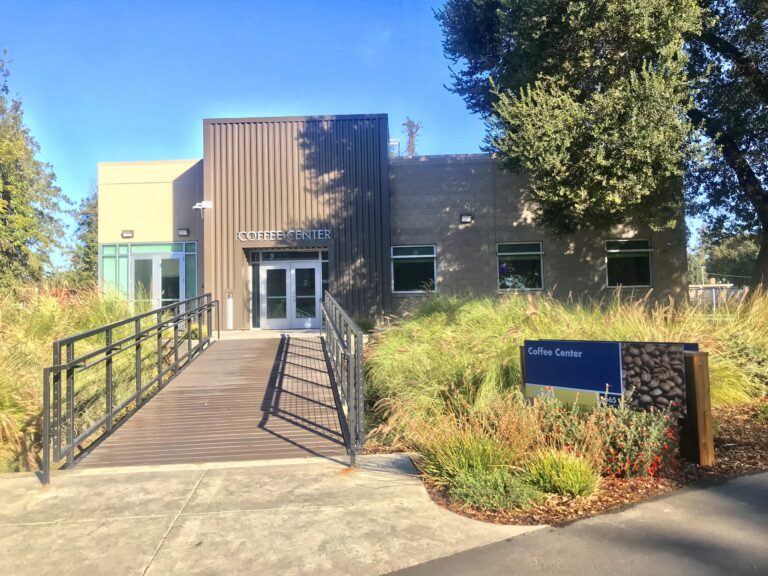
May: I’ll just say, we have a billion dollars’ worth of research on our campus, and it would be really hard to answer that question because there are lots of really exciting things going on. I’ll just give three quick examples. You may have seen the national coverage of the UC Davis Coffee Center on the Today Show. We’re really excited about that program and the research that they’re doing on something that you would think was sort of a mundane, everyday thing like coffee, but there’s a lot of active work on how to make the coffee not just taste better but to grow the beans sustainably, to make the process efficient, etc. 


UC Davis Health has a really exciting, ongoing project to essentially cure Spina bifida with stem cells. There’s a nice video that you can see where there’s a relationship between dogs and humans that have Spina bifida; Injecting stem cells into a fetus can correct some of those problems. We have a nice video that shows a bulldog and a human baby that both got the same treatment and both were able to walk now and no longer suffer from spinal deficiency. That also made the national news. 


Lastly, there’s a project on non-hallucinogenic psychedelics to improve brain function and symptoms of mental disorders like depression and PTSD. We have a center for alternative meat and protein, iCAMP (Integrative Center for Alternative Meat and Protein), which is looking at transformative knowledge and innovation around the commercialization of alternative proteins. I could go on and on and on, right? There are so many exciting things happening here, and we’re really proud of our research that we do that improves people’s lives. 


Written by: The Editorial Board


Donations for Citations program waives parking citations with donations

The collaborative effort between The Pantry and UC Davis Transportation Services supports students and addresses campus food insecurity


By MEGAN PUSL — campus@theaggie.org


From Nov. 12 to 22, The Pantry and UC Davis Department of Transportation Services are collaborating to waive student parking citations with qualifying Pantry donations. 

If students received a parking citation on or before Nov. 5, they have the opportunity to bring eligible items, along with their citation number, to waive one citation. Students can do this at the Transportation and Parking Services building, located on North Dairy Road, from Tuesday to Friday, 9 a.m. to 3:30 p.m. 

Qualifying items fall under each of these categories: canned food, carbs, canned protein, pantry staples and hygiene products, according to the program’s website. For more expensive citations, a greater number of items from each category is required, and the donation guidelines can also be found on the website. 

The Donations for Citations Program also provides the opportunity for students to volunteer their time at The Pantry as a way to waive their citations.  

Shelby Slutzker, the engagement and marketing specialist for UC Davis Department of Transportation Services, explained how this unique campus initiative came to life.

“This is something that has been in the works for quite a few months,” Slutzker said. “We were inspired by other campuses, we were inspired by some of our own students who use The Pantry. It’s definitely different than our normal operations, and it’s been fun!”

Slutzker then spoke about how the Donations for Citations program aligns with the transportation department’s mission.

“As an organization, we’re committed to supporting our UC Davis community and campus partners where we can,” Slutzker said. “We’re very excited to have been able to partner with The Pantry on a unique program that provides some relief for somebody who’s received a citation, but also supports an incredible campus organization addressing important issues like food insecurity.”

The Donations for Citations program aims to ease the burden of parking citations for students while supporting a meaningful campus initiative such as The Pantry. 

Andie Tarabzooni, the unit director for The Pantry and a third-year economics and communications double major, highlighted the program’s purpose and its impact on students.

“This was our goal, to have students get a chance to waive these citations while contributing to something bigger,” Tarabzooni said. “[Citations] are a lot of money when you’re a student. I know no one intended to get that citation.” 

Tarabzooni shared her vision for how the partnership could not only help students with parking citations but also raise awareness of The Pantry’s mission and services.

“I’m hoping this will encourage students to donate items to The Pantry and make people aware of what items we accept as donations,” Tarabzooni said. “If people had never heard of The Pantry, or maybe heard of it but never thought to visit it, I hope this encourages people to use it.”

As of the date of publication, there are only a couple of days left in the program, so make sure to bring your donations in as soon as possible. Additionally, keep in mind that donations should not be dropped off at The Pantry location but at the Transportation and Parking Services building instead.


Written by: Megan Pusl — campus@theaggie.org


In rainy weather, UC service and medical workers strike

0

By OJAS MISHRA and CHRISTIAN CENDEJAS — photo@theaggie.org

Wednesday marked the beginning of a two-day strike from labor unions representing UC food service, technical and healthcare staff. Workers are picketing, in the rain, at the Hutchison Intramural Field. This is their strike in photos.

(Christian Cendejas / Aggie)
(Ojas Mishra / Aggie)
Even in the rain, workers unionized with the AFSCME 3299 and UPTE unions strike. (Ojas Mishra / Aggie)
(Christian Cendejas / Aggie)

By Ojas Mishra and Christian Cendejas — photo@theaggie.org

Breaking: 40,000 UC service, medical workers enter two-day strike

Several food locations on campus shut down as unions protest alleged bad faith negotiations


By KHADEEJAH KHAN, JESSICA YUNG and VINCE BASADA – campus@theaggie.org


Labor unions representing food service, technical and healthcare staff across the UC system entered a two-day strike on Wednesday, Nov. 20 both in protest of a stalled contract dispute and against what they allege are bad faith negotiations from UC administrators.

Picketers organized at the Hutchison Intramural Field, at the intersection of La Rue Road and Hutchinson Drive. Strikers set up tents and green signs reading , “AFSCME On Strike.” AFSCME 3299 had plans to demonstrate on the field from 6 a.m. to 6 p.m. through the rain, according to its Instagram page.

The workers are members of the American Federation of State, County and Municipal Employees Local 3299 (AFSCME 3299) and the University Professional and Technical Employees at UCSF (UPTE). Together they represent nearly 40,000 workers across 10 campuses and a handful of auxiliary and healthcare locations, including some 6,000 at UC Davis. 

“By refusing to bargain in good faith, the University has made it clear that it does not value the frontline workers who clean its facilities, serve students food and treat patients,” AFSCME 3299 President Michael Avant wrote in a statement on the strike. “If UC refuses to meet its most basic legal responsibilities to employees, we will hold them accountable by exercising our legal right to strike.”

The union says that the UC has failed to bargain over plans to increase healthcare costs by hundreds of dollars monthly, and that facilities are regularly understaffed. Union members have also noted that current wages make it difficult to find living close to campus.

“Our bargaining team has been meeting with the UC’s bargaining team and they have come unprepared,” Leticia Garcia-Prado, a medical assistant at the Student Health Center, told The Aggie. “[UC negotiators] have not been giving us what we have been asking. They have time, they have weeks ahead but they have come with no proposals. They have been unfaithfully bargaining and that’s why we are doing this, because we want them to bargain fairly for us and they have not.”

According to Garcia-Prado, negotiations have been underway for almost a year, yet due to alleged bad-faith negotiations, they have not reached an agreement. 

Hamsa Parab, a third-year cognitive science neuroscience student and intern with AFSCME 3299, expanded on the alleged wrongdoings of the UC system.

[UC negotiators] are not coming in with the right information, or they’re withholding important information for those negotiations,” Parab said. “That’s illegal when it comes to negotiating a contract. That has given us grounds to go on strike.” 

UCD Student Housing and Dining Services have temporarily closed the Cuarto Dining Commons, Latitude, Scrubs, The Gunrock, Spokes and the Meal Card Office through the end of the strike on Thursday, Nov. 21. The Segundo and Tercero Dining Commons will operate with limited hours, and markets at all three residential living areas and the Silo will remain open with regular hours.

With dining commons and health centers impacted by strike, Parab urges students to inform themselves about the impact workers have on their day-to-day campus lives in order to understand the reason behind the strike. 

“They’re the backbone of our Davis community,” Parab said. “We wouldn’t have access to good food. We won’t have access to clean residence halls without them. They’re the ones doing the groundwork. They’re the ones making sure you have what you need every single day.”

To fill in for the vacancies on campus during the strike, the university has outsourced workers with a pay of $32, seven dollars higher than the $25 pay workers have demanded during negotiations. To Parab, this hiring practice feels like a betrayal to the workers who have served the students for years.

“Rather than hiring our local workers, our contracted workers, for those vacancies, they’ve been outsourcing for those drops instead,” Parab said. “You’re not giving them the proper increases or you’re not giving them the correct wages, do they matter? Does their time matter? Does the support that they’ve given the UC system matter?”

For the union, the housing crisis is a major concern amidst negotiations. However, the bad faith negotiations, in addition to UC’s $8.6 billion investment in Blackstone, a private equity firm with a history of buying out single family homes, is troubling to many union members.

“A lot of students care about affordable housing,” Parab said. “Ultimately, the money that’s going into Blackstone comes from our workers pension plans, right? That money isn’t coming from anywhere.”

A statement issued by the UC earlier this month read, in part, “We fundamentally disagree with AFSCME’s claims of bad faith bargaining and characterization of unacceptable bargaining proposals.” 

It continues, “The university is dedicated to working in good faith through these impasse procedures to reach a fair agreement supporting these valued employees. During AFSCME’s last round of bargaining with UC, the union went on strike six times. Thus, AFSCME’s strike notice is not a surprise, but it is premature and is a disheartening development, nonetheless.”

A UCD spokesman told The Aggie that, “UC Davis respects our AFSCME-represented staff and is committed to good-faith negotiations, fair wages, excellent benefits and full engagement in the collective bargaining process. Our union-represented employees are key to the success of the university, which is why the University of California has offered raises averaging 26% and hourly wages and annual increases that meet the union’s original demands.”

The spokesman also noted that instruction, research and other campus operations will continue without disruption.

The strike is the second major labor demonstration in the UC system this year; academic workers represented by UAW 4811 struck in spring over several alleged unfair labor practices.

Workers are also picketing at the UCD Medical Center in Sacramento, though a UCD Health representative told The Aggie that they do not expect any disruptions in patient care as a result of the strike.


This is a developing story. Check back for updates.


Written by: Khadeejah Khan, Jessica Yung and Vince Basada – campus@theaggie.org


Davis resident convicted of a domestic violence charge following the death of his former wife

0

Henry “Harry” Stanley was found guilty of domestic violence months after Davis Police found his former wife, Megan Duncanson, dead in their home


Note: For the purposes of this article, Megan Duncanson will be referred to by her maiden name out of respect for her family’s wishes.


By HANNAH SCHRADER — city@theaggie.org


On Oct. 27, Davis resident Henry “Harry” Stanley was convicted of two felonies. These felonies were communicating a threat that could result in great bodily harm and a domestic violence charge. These charges come three months after his former wife was found deceased in their home on J Street just days after she was hospitalized for injuries Stanley inflicted upon her.

On July 9, 2024, Megan Duncanson called the Davis Police Department, saying her husband was going to kill her. When police arrived on the scene at the individuals’ J Street house, Duncanson was found bruised and then hospitalized for her injuries.

“Megan called 911 and whispered into the phone her husband was going to kill her,” a press release from the Yolo County District Attorney’s Office reads. “Throughout the 911 call, Megan speaks in a low volume providing information regarding her husband assaulting her and threatening to kill her. Eventually, the 911 dispatcher used a text messaging option so Megan could communicate without fear that Mr. Stanley would hear her words. Megan described having injuries and wanted the 911 Dispatcher to say that the neighbors called 911 and did not want Mr. Stanley to know she called 911.”

The press release also describes Stanley’s history of abuse and the nature of the scene police arrived at on July 9. 

“Megan stated the Defendant had ‘beaten her for days’ and had told her she ‘deserved to die because [she] was a vile worm,’” the press release reads. “Megan believed she had a concussion. Officers from the Davis Police Department responded and found Megan behind a side gate, in a fetal position, and crying. Megan shared with the officer the physical abuse had started approximately a year prior.”

Two days later, Duncanson was found dead in the backyard of the couple’s home, and the death was ruled a suicide by hanging. However, the Yolo County Coroner’s Office has not formally announced Duncanson’s cause of death.

On July 11, 2024, at approximately 4:40 pm, the Davis Police Department conducted a welfare check at a residence on the 900 block of J Street related to an individual who had been reported missing earlier in the afternoon by a friend,” the Davis Police Department said in a Facebook post. “While checking the reported residence, officers located a 29-year-old female who was found to be deceased.”

The Yolo County District Attorney’s Office press release then outlined the charges Stanley was convicted of and the mistrial that occurred on the third felony charge Stanley was tried for.

“On October 29, 2024, Henry “Harry” Stanley, a 37-year-old resident of Davis, was convicted of violating California Penal Code section 422 – Criminal Threats and section 273.5 – Infliction of Injury Domestic Violence,” the press release reads. “The jury could not reach a decision on a third felony charge. The jury also found true aggravating circumstances of the victim being particularly vulnerable, great violence, and that Mr. Stanley took advantage of a position of trust.”

Yolo County District Attorney Jeff Reisig then commented on the case and emphasized the ongoing domestic violence crisis.

“Mr. Stanley’s conviction serves as a stark reminder of the continuing and ongoing crisis of domestic violence and, in particular, its impact on Megan and her family,” Reisig said. “Even without Megan available to testify, where the law permits, the Yolo County District Attorney’s Office used every tool the law provides to present evidence and achieve justice. As October is Domestic Violence Awareness Month, we hope this conviction brings some measure of justice for Megan and to her family.”

Sentencing for Stanley is set for Dec. 2, 2024, at 9 a.m. in Department 7 of the Yolo County Superior Court.


Written By: Hannah Schrader city@theaggie.org


ASUCD Senate clarifies executive powers and policies, discusses The California Aggie’s student government coverage at Nov. 14 meeting

Senators also heard quarterly, special reports and confirmed several commissioners 


By VINCE BASADA — campus@theaggie.org


ASUCD Internal Vice President Aaminah Mohammad called the Nov. 14 senate meeting to order at 6:12 p.m. before reading the UC Davis Land Acknowledgement.

The table then heard a brief presentation on UC Davis’ Moving Forward Together plan, which is seeking input to improve travel infrastructure, safety and environmental impact on campus. Jeffrey Bruchez of Transportation Services and Robert Pattison of the Office of Campus Planning, informed the senate that $30 million will be allocated over the next 10 years for campus transportation improvements. In that time, research and student surveying will be done to support grant applications and prioritize ways to spend available grant money.

Housing Advising for Undergraduate Students (HAUS) Director Sam Hopwood, a fourth-year political science major, then gave his unit’s quarterly report. Hopwood said that the ASUCD Housing Fair, held on Nov. 13, had been successful with good turnout. He also reaffirmed HAUS’ commitment to bolster and advertise existing ASUCD housing resources, while also expressing hopes to expand the unit’s advocacy and services.

“If even one student is without a bed — that is something I cannot [accept] on my campus,” Hopwood said.

The senate then confirmed three members of the Disability Justice Committee: Adam Price, a third-year neurobiology, physiology and behavior major; Anisteicia Kinsey, a first-year biochemistry and molecular biology major, and Nhy Duong, a third-year nutrition science major. Duong was also confirmed as a commissioner to the Gender and Sexuality Committee (GASC), alongside Sophie Abrea, a first-year evolution, ecology and biodiversity major, and Caroline Wagner, a second-year political science major.

Later that meeting, the senate confirmed two members to the Sexual Assault Awareness Advocacy Commission: Emily Setiobudi, a third-year clinical nutrition major, and Sanjana Gudivada, a fourth-year psychology major.

The senate then heard five other quarterly reports. First was KDVS Radio’s report delivered by General Manager Fritzi Kornstaedt. Then, the Whole Earth Festival’s report was delivered by Co-Directors Jaye Duckhart, a fourth-year neurobiology, physiology and behavior major, and Katherine Krinsky, a fourth-year English major. The Environmental Policy and Planning Commission then gave their report presented by Chair Annie Kanjamala. 

After a break, the senate heard from Picnic Day’s Unit Director Mina Sarmah, a fourth-year statistics major. Finally, Transfer Student Representative Safa Mohammad gave her office’s quarterly report.


Legislation 

After ex-officio reports, the senate briefly discussed old legislation before moving onto new legislation. They swiftly passed the consent calendar, including SB#14, amending ASUCD bylaws to reduce the required number of applicant interviews and improve efficiency in the hiring process, and SB#16 which allocated $2,796.50 to GASC for the bulk purchase of Plan B for an upcoming event.

In discussing new legislation, the senate also unanimously passed SB#10, giving the Whole Earth Festival $6,500 to repair one of their solar light towers, and SB#17 to allocate $1,195.48 for a Raices Fuertes event to be held on Dec. 7, organized by Senator Luis Garcia.

The senate then discussed emergency legislation SB#18 to “redefine ASUCD Units and limit the jurisdiction of Executive Directives in alignment with UC Davis and [UC Office of the President, UCOP] policies.” 

The bill also clarifies that ASUCD units are directly governed by the ASUCD Management Team through delegated authority from the Chancellor and that the policies of The California Aggie and KDVS are under the purview of Media Board, and not the ASUCD Executive Office and Management Team or the ASUCD Senate.

The bill was written by Senator Noblejot Singh at the behest of ASUCD President Gaius Ilupeju. Ilupeju said that conversations with his counterparts at UC Irvine and UC Riverside, whose student governments are “facing threats from admin” for going ahead with ethical spending and other initiatives, prompted him to clarify ASUCD policy.

“I want everyone to know that the stuff we have in our own bylaws aligns with university policy,” Ilupeju said. “That’s what this [bill] does. As far as things that are in our bylaws that might cause confusion that are pretty serious, I would say that this is at the top of the list. Financially speaking for us, this is the most important thing to clarify.”

Ilupeju did note that unlike some other student governments in the UC system, ASUCD shares a productive and good relationship with UC Davis administration and SB#18 passed unanimously.


Open forum

Moving to open forum, the senate, prompted by Ilupeju, discussed the need to ensure that STEM representation within ASUCD included majors aside from computer science.

“We love our engineers, we love our computer scientists,” economics major and External Affairs Commission (EAC) Chair Henry Rosenbach said. “And we’re here to support you. But we’re also here to support our agronomists, our psychologists. Everyone in STEM is very loved.”

Several senators then discussed The California Aggie’s coverage of their own quarterly report given to the senate the previous week.

Senator Dhilena Wickramasinghe expressed her belief that the article’s headline, “Senate hears quarterly reports and expresses concerns over student journalism at Nov. 7 meeting,” did not match the excerpt in the article on The Aggie’s quarterly report. She also expressed an issue with the lack of quotes from the interaction.

“A good bulk of the concerns that were brought up were concerning students’ privacy and education,” Wickramasinghe said. “I do find it extremely disingenuous that The Aggie would misconstrue what those conversations and concerns that were discussed were about. I generally don’t really care about what The Aggie has to say about us as senators, but I do hope that they would be courteous enough to recognize our concerns about their journalism when it’s in the print. Without the full story, without quotes that depict the back and forth, it is not a positive indication of their respect for students’ privacy.”

Senator Siddharth Jasthi also took issue with The Aggie’s stance on Constitutional Amendment #92, which enshrines students’ right to privacy in the ASUCD Constitution. 

“The Editorial Board wants legislation passed that protects the privacy and security of all students on campus,” The Aggie’s editorial endorsement reads. “Especially given the University Office of The President’s new policies with regards to protesting, an amendment protecting student privacy is more important than ever. However, due to vague language in the proposed amendment, the Editorial Board does not offer Constitutional Amendment #92 a full endorsement. Instead, we recommend students read the full legislation and use their best judgment.”

Jasthi expressed his concerns with the Editorial Board’s reasoning.

“I think that The Aggie being opposed to a piece of legislation that in no way mentioned them and only talks about student privacy as it relates to ASUCD and the university is rather silly just because they think it is maybe targeting student journalism,” Jasthi said. “I don’t think that’s a fair assertion to make.”

“Framing [it] like, ‘it wasn’t complete because they didn’t have an enforcement mechanism,’ isn’t a good ascertation of [the amendment] when it’s not supposed to have one in the first place,” Jasthi said. “I would have hoped they would have recognized that it’s meant for a bill of rights and not a fully fledged bill.”

Senator Amrita Julka also expressed her dissatisfaction with The Aggie’s coverage.

“I mentioned a specific example that related to a student representative who brought up something related to her health and then this was fully disclosed in The Aggie,” Julka said. “I just want to reiterate how dangerous this piece of information was to include in The Aggie [and] how it was not related to her role in any capacity.”

“I would like to remind The Aggie that we are students before we are student government officials and so our personal privacy outside of our roles deserves to be respected as much as any other students,” Julka said. “I’d also just like to mention that when I did bring this up to The Aggie during their quarterly report, I felt like the answers that [Editor-in-Chief Chris Ponce] gave me were not adequate, and I felt like they truly did not care about the privacy of students coupled with the fact that they are not endorsing [Constitutional Amendment #92].”

A copy of a print issue of The California Aggie. (NICHOLAS CHAN / AGGIE FILE)

“I really feel that The Aggie needs to include privacy into their [Code of Ethics] and that they need to really start valuing the humanity of these students and not just the fact that it’s something interesting to read in the papers,” Julka said. 

The Aggie’s current Code of Ethics includes a passage on privacy which states “that private people have greater personal privacy than public officials. Only an overriding public need can justify digging into someone’s private life.”

Rosenbach also took issue with The Aggie’s usage of the names of public officials and students in articles. 

“I think it’s most important to talk about sensitive issues being exposed in the press, especially in the times that are coming,” Rosenbach said. “We’re talking about health issues that might be coming with a nationwide ban and that could end up in criminal charges for certain people. Let’s remind you that these kinds of things are not only granted privacy by ASUCD bylaws or not only by a Code of Ethics, but sometimes the 14th Amendment. You have the right to privacy by federal law.”

“We understand that, as was mentioned by The Aggie, ‘In journalism names are everything,’” Rosenbach said. “But in here we’re all students. Our position is the same. So [writing] student A [or] student B is not going to change anything in a narrative because we all have the same title. We understand the idea of the names. But we also really ask The Aggie and plead that when putting those things into account, consider a broader scenario and not only what is going to break a headline or what is going to make people read, but the individual protection of a person and the effects that can have in a lifelong career.”

The Aggie, as per editorial guidelines, views names as essential to holding public and elected officials accountable so that their actions and quotes are clearly attributed to specific individuals. Anonymity is only granted to sources on rare and special cases, as mentioned in the Code of Ethics. 

The meeting was adjourned at 10:28 p.m.

Written by: Vince Basadacampus@theaggie.org

The M and the W broke up again

They’ll get back together in a week


By ALLISON KELEHER — adkeleher@ucdavis.edu


Just when I thought the Unitrans bus lines were in harmony again, there appears to be more drama. One of my sources in the bus garage informed me that the M bus has been seen sobbing in the corner at night instead of resting. Apparently, it is normal for buses to cry at night after transporting smelly students all day long. However, the M’s cries have been consistent enough to get some attention. When she leaves in the morning, there’s a puddle of windshield wiper fluid where she rested. This excessive crying has resulted in the M line being consistently late due to her fatigue. 

On the other hand, the W has been seen mingling with other Silo bus lines during their breaks. One of my sources reported that he was driving down Hutchison Drive with the V and VX on either side of him. Apparently, he likes their company. 

To those of you who aren’t up to date with Unitrans bus line romance, this is breaking news — the M and the W are typically in a relationship. I say “typically” because they are together about 80% of the time. The M and the W are notoriously on-again, off-again; Sometimes they are on the same route, and sometimes they will split apart. However, when they are apart, both are seen pining for the other, resulting in their reunion soon after. 

Interestingly, this doesn’t seem to be the case this time. The M is a wreck, and the W is consorting with other ladies. So, it’s time for a good old-fashioned investigation. 

I secured an interview with both parties by pulling some strings with my Unitrans contacts, starting with the W. When asked about the status of his relationship with the M, he informed me that she’s “doing too much.”

Unfortunately, this was extremely vague, and I didn’t get much information out of him for the rest of the interview. However, to summarize, I think the W is in the wrong since he’s leaving out so much information. 

When I met up with M, I brought some tissues, which were very helpful since she couldn’t stop tearing up during our interview. However, this interview was much more lucrative. In other words, she spilled the tea. 

It took a while to get to the meat of the drama, as she was very scattered. It started out with her statement that he “doesn’t put her first” and that she’s “over it.” 

Between each statement was several moments of tissues and crying, which I handled with a lot of care, given that I needed the drama. After patting her on the side (I can’t reach her back) and consoling her for many hours, she was able to calm herself down. If you weren’t aware, this is peak investigative journalism. 

Here’s the drama: The M caught the W scrolling through Instagram model bus accounts with their tailpipes out. In the past, the M has made it clear that she feels uncomfortable with him looking at other buses in that way because she feels like he doesn’t respect her. When she confronted him, the W started gaslighting her into thinking that he had never done anything. However, she saw it with her own two headlights.

The W is sticking to his story that he didn’t do anything wrong and that the M is off her rocker. So, he’s filling the void with other Unitrans bus lines. However, his best friend, the J, claims that this is “all a front” and he’s “hiding his true feelings.” 

I decided to investigate further and snuck into the bus garage late one night. Most of the buses were sleeping, some of them snoring, except for one. It was the W-EX, the W’s twin. The W-EX was hiding in the corner giggling over his phone, and, lo and behold, he was looking at Instagram bus baddies. Case closed. 

Once this information was revealed that the M had actually caught the W’s twin brother looking at other buses, the M and the W rushed into each other’s windshield wipers. 

“I’m sorry I ever doubted you!” the M said.

The W was equally as emotional.

“It’s okay, I love you my M&M!” the W said.

Now, they can be seen cuddling at night in the bus garage, but we’ll see how long that lasts. 


Written by: Allison Keleher — adkeleher@ucdavis.edu


Disclaimer: (This article is humor and/or satire, and its content is purely fictional. The story and the names of “sources” are fictionalized.)

Culture Corner

The Arts Desk’s weekly picks for music, movies and more


By AALIYAH ESPAÑOL-RIVAS — arts@theaggie.org


TV Show: “New Girl” by Elizabeth Meriwether (2011 to 2018)


Arguably one of the funniest sitcoms in recent years, “New Girl” follows Jessica Day (Zooey Deschanel) as she moves in with three guys, Nick Miller, Winston Bishop and Schmidt, following a rough breakup. With conflicting personalities, Jess enters the house and shakes up the lives of the guys around her. There’s Nick, an unmotivated bartender who can’t seem to keep a girl for more than one date; Winston, an oblivious athlete who’s trying to figure out what he wants to do in life after failing to go pro in basketball and Schmidt, the “all-knower” of everything woman. Perhaps a bit too bubbly and overly optimistic, Jess learns over the course of the show that maybe she can’t change the guys, but she can help them see life differently. “New Girl” is the perfect show to binge-watch when you’re feeling heartbroken — it’s full of laughs, double-take moments and cringeworthy situations. I can’t imagine living with guys, but if it’s living with Nick, Winston and Schmidt, sign me up.


Movie: “Eternal Sunshine of the Spotless Mind” dir. Michel Gondry (2004)

Have you ever wanted to erase one person from your memory? Well the film “Eternal Sunshine of the Spotless Mind” can give you a glimpse of what it entails. The film centers around Joel (Jim Carrey) when he finds out his ex, Clementine (Kate Winslet), is undergoing a medical procedure to erase him from her memory. Out of spite, he decides to undergo the same procedure and is brought through the good and ugly of their relationship as each memory gets erased. From memories of falling in love, hurtful arguments and childhood insecurities, the film brings you inside the psyche of a man who just wants to be loved and included. And while heartbroken by the end of the relationship, Joel soon realizes that to forget everything would be incredibly ignorant. To forget what brought you happiness at the cost of not wanting to remember the pain impedes self-growth, and a spotless mind is one without the experiences that shape you into who you are. The film is thought provoking to watch after a breakup, prompting you to ask yourself: was I the problem?


Album: “Sour” by Olivia Rodrigo (2021)


“Sour” is the quintessential break-up album. Despite Olivia Rodrigo only being 17 years old when writing the album, the overall sentiment of each song transcends the bounds of age. The album follows Rodrigo as she goes through the ups and downs of emotionally draining relationships with the self-doubt, angst and growth that comes with it. “Sour” has a song for every type of situation, with “traitor” for the cheating exes, “enough for you” for the nonchalant and apathetic exes and “1 step forward, 3 steps back” for the emotionally unintelligent, uncommunicative exes. Whether it’s one or all songs on the album that embody your ex, there’s a song on “Sour” for everyone. Regardless of the duration of the relationship, or how long ago it was, “Sour” is an album you can turn to for comfort. Much akin to other songwriters such as Taylor Swift, Gracie Abrams and Lizzy McAlpine, Rodrigo draws listeners in with the emotional vulnerability in each song, validating all listeners’ experiences. And when you’re healing, you can graduate to Rodrigo’s sophomore album, “Guts,” for the forthcoming revenge era.


Song: “I Hate Boston” by Reneé Rapp (2023)


Being haunted by a place is the worst, especially when it’s an entire city. “I Hate Boston” by Reneé Rapp perfectly encapsulates this feeling of disdain for a location throughout the song, describing how her ex-boyfriend made her hate the entire city of Boston. The song follows Rapp as she has flashbacks to her ex taking her around the city during their relationship, before dumping her and leaving her with nothing but haunting memories of the city. Lyrics such as, “As far as I’m concerned, they should just burn the whole city down,” and “The whole thing is haunted, how do you sleep?” describe Rapp’s building hatred toward the city despite the “charm” it used to have. The song, which can be labeled as a ballad, is an outcry and plea to her former lover for his lack of empathy toward their breakup, “holding her hostage” and “casually” leaving her. Rapp’s vocals give the song the raw emotional depth that left me wanting to burn down a city…watch out Boston.


Written by: Aaliyah Español-Rivas — arts@theaggie.org 


Pedestrians are fed up

Understanding the importance of sidewalk etiquette is pertinent to creating a safe and courteous sidewalk environment 


By JHANA RHODES— opinion@theaggie.org


          I was walking mindlessly on the winding path toward the Activities and Recreation Center (ARC) when a biker almost hit me. A frantic cyclist had emerged through the trees, cutting right through the sidewalk and narrowly missing a sea of pedestrians. I could feel the gust of wind as the bike brushed past me, like bristles on a canvas. By the time I turned around, the biker was long gone, and I realized I narrowly avoided becoming roadkill. 

Regardless, that cyclist sounds like a grade-A jerk, right? Well, to give them the benefit of the doubt, they were probably running late for their audition for “Fast and Furious 11: Bikes Rule!” Oh, how I wish there were a list of rules to make the sidewalk a safe and courteous place. All right, I’ll stop with the dad jokes because you’re probably tired of it, but hold your horses because I have one more. The real kicker is that sidewalk safety rules do exist — it’s called sidewalk etiquette. 

          Sidewalk etiquette isn’t just for cyclists. It applies to pedestrians too. Yes, I’m talking to you. If you’re a couple that likes to walk side by side, gazing lovingly at each other, hand in hand at a snail’s pace — kindly move out of the way. And, if you’re single, the rules remain. Single and double riders alike, sidewalk etiquette is something everyone who uses the sidewalk should follow. 

Now you’re probably thinking, who am I to lecture you about the sidewalk? You see, I’m just a fed-up pedestrian trying to get to class. But, enough complaining. Here is my two cents on sidewalk etiquette. 

          Let’s start with a scenario. You are walking down a sidewalk with two friends, Jane and John. While showing your friends your favorite Nicholas Alexander Chavez edit, you notice a pedestrian trying to pass you in your peripheral vision. Do you: A, continue walking side by side, preventing the pedestrian from passing; B, walk slower or C, yield to the pedestrian, moving to the right. If you chose C, you get a gold star! 

If you’ve chosen any option other than C, don’t feel too bad. I too have been a sidewalk menace — headphones on, engrossed in a midterm study cram, too oblivious to realize that I had been forcing others to trek through dirt and sticky tree sap to get past me. Don’t make the same rookie mistakes I did: Follow these basic rules, and you’ll become a grandmaster at sidewalk etiquette rizz: 


  1. Stay to your right.
  2. “Please,” “thank you” and “excuse me” go a long way. If you’re having trouble getting past someone on the sidewalk, refrain from the passive-aggressive comments. Politely excuse yourself when passing them. 
  3. On the sidewalk, two heads aren’t always better than one. If you’re with a group of people, stagger yourselves to let others pass. 
  4. Not all vehicles are cars. Bikes, scooters, roller skates and especially hoverboards are considered vehicles. There are more protected bike lanes (and roads) in Davis than there are sidewalks, so please ride your vehicle in the designated lane and off of the sidewalk. 


          There are countless unspoken rules and requirements others are going to want you to follow. But, to keep it simple, just be considerate. From the girl with crutches who broke her leg during soccer practice to two friends riding their bikes to grab lunch in Downtown Davis to the grandfather taking a leisurely morning stroll with his grandson, we all deserve a safe place to walk on. You don’t have to remember all of them, but being aware of at least a few of the sidewalk rules can make things easier for everyone. Remember, sharing is caring. Lastly, just know this: If you’re on the sidewalk riding your bike and almost hit me with it, beware because, like Taylor Swift, I will write about it. 


Written by: Jhana Rhodes— jsrho@ucdavis.edu 


Disclaimer: The views and opinions expressed by individual columnists belong to the columnists alone and do not necessarily indicate the views and opinions held by The California Aggie.

Coffee-centered research thrives at UC Davis

0

Both undergraduate and graduate programs in coffee engineering and research spark interest among students 


By RACHEL GAUER — features@theaggie.org


UC Davis’ Coffee Lab, whose large windows offer a view of the intriguing setup inside, catches the eye of any passerby of Everson Hall crossing Hutchison Drive. If the large blue sign reading “Coffee Lab” isn’t enticing enough, inside desks are lined with various coffee makers, contrasting with the typical features of any other STEM laboratory.

The space is the home of ECH 001: Design of Coffee, an introductory course offered in the Chemical Engineering department. The course itself offers an approach to chemical engineering that is more hands-on as opposed to “mathematical,” according to the course description.

Toulik Maitra, a Ph.D. candidate in the Chemical Engineering department, currently serves as a teaching assistant for ECH 001. Though coffee research is not his speciality, he commented on the benefits of being involved in the research behind it.

“We always drink coffee, but we never know how much engineering and science is behind that coffee,” Maitra said. “It’s a fun course in the sense that students are making a lot of coffee and drinking a lot of coffee, but it also gives an overall view of what chemical engineering actually looks like.”

Zoe Tong, a transfer student and managerial economics major, is currently enrolled in ECH 001 and reflected on her experience thus far in the course.

“It’s really hands-on and you get to learn about all of the different flavors and how different elements can change them,” Tong said. “There’s a lot to learn, and it’s good for anyone who needs a good chemistry course.”

Like many other undergraduate students enrolled in the course, Tong selected ECH 001 simply to fulfill unit requirements. In addition to ECH 001, PLS 007: Just Coffee: The Biology, Ecology & Socioeconomic Impacts of the World’s Favorite Drink, a course found in the Plant Sciences department, attracts coffee lovers who perhaps prefer an online course format that can satisfy a broad category of general education requirements.

While these two undergraduate courses flourish in popularity amongst undergraduate students, they represent just the tip of the iceberg of UC Davis’ involvement with coffee research. Nestled in the Arboretum, away from the busy atmosphere of the central campus lies the Coffee Center: a building dedicated solely to coffee research on campus. The center celebrated its opening in early May of this year and is the only one of its kind on a university campus in the United States. Rooms within the facility vary from a traditional classroom and office settings to a brewing room lined with several coffee machines to an experimental room with booths set up for double-blinded tasting.

Timothy Styczynski, who serves as the manager of the Coffee Center, briefly explained just one of the many procedures of coffee research that occurs within the building.

“We can brew different coffees, give them a generic three digit label and then pass them through the [window] so that the people in the next room don’t have a clue what’s in the containers,” Styczunski said.

One room consists of coffee brewing equipment, whereas the adjacent room, connected by a small window, serves as a room to taste the product.

Styczynski also noted that the center is entirely philanthropy-based; that is, they’ve relied heavily on donations from larger corporations to fund the building, such as Peet’s Coffee and J.M. Smuker/Folgers, as well as private donors. Styczynski noted, however, that several rooms and operations within the center still are seeking funding in order to fully operate.

“We’ve been real estate rich but funding poor,” Styczynski said. “There’s never been something like this all under one roof in the United States so as the first, it’s challenging to educate the industry that this space even is available.”

Eventually with sufficient funding, the program hopes to create a graduate program centering specifically around coffee research.

Despite the few challenges the department has faced, coffee-based research continues to thrive at Davis. Willian Klippel Huber, a first-year graduate student in the Biological Systems Engineering program, is currently researching how defects in coffee beans affect the quality and taste of the final product. Klippel Huber, who is from Brazil, attributes his interest in coffee research to a lifelong involvement in its production.

“I grew up on a coffee farm,” Kippel Huber said. “I was into my coffee my whole life.”
His interest in pursuing research stemmed not only from his personal involvement in the practice but also the hands-on experience he gained working with coffee growers in Brazil following his undergraduate studies. Throughout his experience, he noted several issues in the process of harvesting and began to explore alternative methods to combat these problems.

“I was always intrigued by how to build solutions for coffee growers and how to make their lives easier and produce better, more sustainable coffee,” Klippel Huber said. “Harvesting is very difficult and the defects with coffee is a really big problem, which made me wonder how I could help [growers] better. UC Davis seemed like a good place to study and research these problems.”


Written by: Rachel Gauer — features@theaggie.org