56.1 F
Davis

Davis, California

Thursday, December 25, 2025
Home Blog Page 71

The tradwife narrative sparks conversation within UC Davis’ feminist community

0

Social media influencers like Nara Smith and Ballerina Farms reflect traditional domestic practices and aesthetics 


By JENEVAH HARRISON — features@theaggie.org


The modern tradwife narrative has become popularized on social media platforms, showcasing women practicing traditional roles of mothers and homemakers. Popular influencers such as Nara Smith and Ballerina Farms are examples of this tradition and have inspired a generation of women to crave the simplicity of a lifestyle which celebrates traditional gender roles, according to some students.

Violet Ichel, a second-year design major, described what she has seen on social media. 

“I’ve seen a lot of Instagram Reels of women cooking for their husbands, which seems normal; however, certain creators such as Nara Smith exaggerate this practice,” Ichel said. “Her appearance is sort of uncanny, in that it is almost too perfect.” 

Some say this resurgence of a 1950s-style vision of womanhood represents a personal embrace of femininity, simplicity or family life. For others, it’s a troubling return to outdated norms. This romanticized view of traditional gender roles has stirred mixed reactions, particularly among younger feminists who see it as a pushback against hard-won strides toward gender equality. 

One feminist-identifying student Melissa Caltacci, a second-year nutrition science major, said that it is extremely harmful to young girls who may not fully understand the implications of this narrative. 

“When influencers like Nara Smith promote homemaking as the ultimate path for women, it subtly implies that other lifestyles are less fulfilling,” Caltacci said. “Young girls might start to think they’re less valuable if they don’t fit into this hyper-traditional mold. It’s not about homemaking being wrong; it’s about the pressure to conform to a single vision of what womanhood should be.” 

The tradwife movement appeals to some as a refuge from the stress and burnout associated with modern life. Influencers like Ballerina Farms depict a serene, family-centered life in an idyllic rural setting away from the hustle of cities and careers.

“I understand why it’s alluring,” Anna Petruzzi, a second-year psychology major, said. “Everyone’s exhausted by societal pressures to succeed, so this alternative looks peaceful. But I wonder if it’s romanticizing a time when women didn’t have a choice but to stay home.”

Critics such as Petruzzi argue that the movement’s glorification of domesticity risks setting back decades of progress in gender equality. In their view, these images often ignore the harsh reality of the 1950s, when women faced limited choices, financial dependence and a lack of career opportunities. 

For many critics, the tradwife trend reveals a deeper issue with how social media shapes identity and aspirations. By presenting a highly curated and aesthetically pleasing portrayal of domestic life, influencers like Smith and Ballerina Farms may be setting unrealistic standards. Rather than simply reflecting a lifestyle, the movement often promotes an idealized, filtered version of it that hides the mundane or difficult aspects. 

“We see images of perfect, magazine-worthy homes, but the reality of domestic life isn’t always that pretty or fulfilling,” Caltacci said. 

It’s also worth noting the economic reality behind many of these “tradwife” influencers, who have substantial means. They often exceed the average person’s financial means, portraying unrealistic and unattainable lifestyles.

Despite the criticism, some supporters argue that the tradwife movement isn’t about pushing all women to stay home but instead about giving women the option to choose homemaking without stigma. 

For many women, returning to a simpler lifestyle is empowering in a world that often equates worth with career achievements. They argue that modern feminism should allow space for all women to make choices about their lives — whether that means pursuing a career, becoming a stay-at-home mother or finding a balance between the two.

Yet, the tradwife trend reveals how complex and divisive these issues remain. The choice to embrace traditional roles may feel liberating to some, but it’s also laden with implications and expectations that can shape younger generations’ perceptions of womanhood. 

The tradwife movement underscores the diversity of the feminist conversation in modern society. While some find peace in a return to traditional gender roles, others feel it risks reviving outdated practices. 

As social media continues to shape lifestyles and ideals, the debate over the tradwife narrative serves as a reminder of the power — and responsibility — influencers wield over their audiences. Whether for or against, there’s no denying that the movement has sparked meaningful conversations about gender, choice and the evolving definitions of freedom and femininity in the 21st century.


 Written by: Jenevah Harrison — features@theaggie.org

 

Third-party voters express discontent with the two-party system

0

In light of the recent election, third-party voters share their thoughts


By LAILA AZHAR — features@theaggie.org
 

Since 1853, the president of the United States  — with the exception of Andrew Johnson, who became an Independent after becoming unpopular within his party — has been either a Democrat or a Republican.

For many people, voting for a presidential candidate outside of the two major parties is unthinkable.

UC Los Angeles student Hamza Khan understands why his decision to vote third party was surprising to others.

“A lot of people just see it as: why would you vote for a candidate who has no chance at winning?” Khan said. “But I think there’s more to consider than just that.”

In the recent 2024 election, NBC News reported a total of just under 2.7 million third-party votes, in comparison to president-elect Donald Trump’s 75.9 million and current Vice President Kamala Harris’ 72.9 million.

For voters such as 2024 UC Davis graduate Noorulain Ali, the decision to vote third party was heavily influenced by the conflict in Palestine.

“I definitely stopped supporting the Democratic party after the way the situation in Palestine was handled by [President Joe] Biden,” Ali said.

It’s no coincidence that a significant percentage of Muslims in the United States voted third party this year. 53% of Muslim voters voted for Green party candidate Jill Stein, and only 20% voted for Kamala Harris, according to an exit poll conducted by the Council on American-Islamic Relations (CAIR).

This marks a major shift in Muslim voters turning away from the Democratic party. In 2020, 65% of Muslim voters voted for Biden.

“Although Muslims constitute roughly 1% of the American population, they are an important voting bloc because they are concentrated in swing states, which are often narrowly won in elections,” an Al Jazeera op-ed by Dalia Mogahed and Saher Selod reads.

In 2020, for example, over 60,000 Muslims voted in the state of Georgia — a state which Biden won by a margin of only 12,000 votes. In Pennsylvania, which he won by 81,000 votes, 125,000 Muslims voted. Four years ago, Biden won Michigan — a state with 240,000 Muslim voters — by 155,000 votes. This year, the state was home to the Uncommitted Movement, which protested Biden’s nomination.

This election has left Muslim voters feeling abandoned by both major parties.

“On one hand, the Democrats are facilitating a genocide abroad,” Khan said. “But on the other hand, Trump has sparked a lot of inflammatory rhetoric about immigrants, notably from Muslim-majority countries, which makes things dangerous for those of us here. It’s a lose-lose situation.”

Some view third-party voting as a step toward a more equitable form of election.

“We deserve better than a two-party system,” Khan said. “If we’re stuck between the same two options every time, it means politicians aren’t ever incentivized to be better, or to be actually good. People just vote along party lines.”

Following the results of the recent election, many took to social media to express their frustration with third-party voters.

“Generally…what was Third party voters thought process,” a tweet with over 79,000 likes reads.

To some, this sentiment feels unfair.

“I don’t understand how people can see the images that have come out of Gaza and fault others for not voting for someone who served under the administration in charge while all of this is going on,” Khan said.

The vote of every third-party voter wouldn’t have alone changed the outcome for Harris — not the popular or electoral vote. Especially for voters in California, a state which is called for the Democratic party as soon as polls close, third-party voters likely didn’t impact the results of the election.

“It’s not right to blame us for the way things turned out,” Khan said.

Parties are eligible for public funding if they receive 5% of the popular vote in a presidential election, a fact that some cite as influencing their decision to vote third party.

“Even if a candidate doesn’t win, if they can just reach that 5%, it’ll impact the amount of resources they get,” Ali said.

Megan Le, a third-year economics major, is not a third-party voter, but she doesn’t agree with the outrage that has been directed at them. For her, the onus is on politicians to appeal to voters.

“I think it’s better to be a third-party voter than to be completely disengaged from politics. At least you’re making a decision and doing what you think is best for the country, instead of just apathy,” Le said. “I don’t think voters should have to vote for a candidate they find legitimately appalling. I think politicians have a responsibility to create platforms that resonate with the people they’re trying to serve.”

Regardless of who one voted for in the recent election, it’s likely that everyone has something they’d like to change about the system.

“At the end of the day, it’s all about what someone thinks is best,” Khan said. “People will come to different conclusions about strategy. But I think we should be looking to our politicians to lead better and not pointing the blame at each other.”


Written by: Laila Azhar — features@theaggie.org
Stop treating ‘quiet’ people weirdly

It’s time we stop making introverts feel like being quiet is wrong 


By SABRINA FIGUEROA — sfigueroaavila@ucdavis.edu


“Don’t you ever talk?” 

This is one of the many dreadful questions that almost every introverted person has been asked by peers, family members or even people they barely know. 

As a fellow “quiet” person myself, I’ve been asked these questions since I was a little kid —- not only by other kids, but by adults I had only met for about five minutes. 

I learned the hard way that silence is actually very loud to others. People examine our quietness and mold it to fit aspects of our personalities that aren’t necessarily true. For example, some of my teachers thought that because I was quiet, I was a good and responsible kid, which at first seems like a compliment, right? Wrong. At the age of seven, nothing was more stressful than being placed with a bunch of extroverted kids simply because the teacher thought your quiet, responsible and good-natured character would rub off on them. 

Even those kids thought that silence was odd, and they’d try to make up reasons to explain why some kids were quieter than others. To them, being quiet meant that we were weird, we had a secret crush on them or that we were basically Albert Einstein. Either way, it results in a lot of teasing, condescension and, in some cases, bullying. I will never forget when a peer — who I was not close to — would repeatedly call me “cute” in the tone of voice you would use to talk to a puppy. It was not fun: it was almost humiliating. 

The worst part is that there is almost no way to stand up for yourself without being called rude or sensitive. It’s not socially acceptable to ask an extrovert why they never shut up because, yes, it is rude! So, why is it acceptable to ask people why they never talk? More importantly, why do we allow this behavior to happen to children? 

I grew up thinking that being introverted and enjoying silence was bad, and that there was something inherently wrong with it. I tried to change that, but once people deemed you quiet, it was difficult to make them perceive you differently.

Silence is also — unfortunately — something that is unsettling to many; perhaps this is why some people think being quiet is weird. However, sitting in silence is possibly one of the most beautiful things humans can do. It means that there is some kind of shared understanding and that the uncertainty in the silence is something we are open to. Humans are social beings, but it doesn’t mean we have to be verbally communicating all the time. This is a gift that people can learn from introverts. 

If anything, I think both introverts and extroverts can learn from each other. But that can’t happen unless we stop treating each other as though we are less than each other and unworthy of basic kindness. 

If there is one thing I have learned about being quiet, it’s that many people would speak more often if they were not asked or told such condescending things about their nature. Because as much as it is dreadful, it’s also discouraging. It’s unwelcoming and intimidating to talk to people that see you as weird or treat you like you’re different. It’s worse when that behavior becomes so normalized that you anticipate for others to react in the same way. 

We should work to destigmatize introversion and help create a better sense of connection, community and empathy among people. We should be able to welcome different kinds of people into our communities and social circles without making a big deal out of it or pointing out their differences. 

Most of the time, “quiet” people are not shy nor do they hate talking to others. Some simply speak when they have something to say and others are just waiting for someone friendly to talk to them normally. 


Written by: Sabrina Figueroa — sfigueroaavila@ucdavis.edu

Disclaimer: The views and opinions expressed by individual columnists belong to the columnists alone and do not necessarily indicate the views and opinions held by The California Aggie.

Checking the lightbulb: An overview of nighttime lighting in Davis

0

Local students and business owners share thoughts on lights throughout downtown and campus


By NOAH HARRIS — features@theaggie.org
 

Daylight savings recently made its biannual appearance into our lives. As we fall back one hour, darkness begins to fall at a much earlier time and lighting becomes more necessary throughout the community. 

In January, the city of Davis released a survey for residents offering three options for residents to choose from to light up Downtown Davis. 

“[There are] three different lighting options […] to replace the decorative ‘twinkle’ lights that previously adorned trees along downtown sidewalks,” the city of Davis said on their website. “These previous lights historically provided an enhanced downtown ambiance and improved lighting for safety, however were experiencing wear and tear.” 

The three options they gave were: a laser unit affixed to the ground projecting small, moving lights toward tree canopies, LED lights strung between installed poles and LED lights strung between trees. 

The city of Davis used to have 650 LED lights, which were installed in May 2014. By October of the same year, they were taken out and replaced with warmer lights due to negative resident views. This operation cost 350,000 dollars. 

Even though the survey was taken in January, there does not seem to be any progress with this project. However, Brett Lee, the executive director of the Davis Downtown Business Association (DDBA), believes that the city has different plans to install more lighting in Downtown Davis. 

“The city is looking at replacing lighting that most people would call decorative lighting,” Lee said. “In Winters or San Francisco, they’ll have decorative lights strung up 20 feet above the street. I think the city plans to do that, which will add to the atmosphere.”

Lee continued by explaining other renovations currently underway in Davis. 

“In addition, the G Sreet redesign where there’s sort of a car-free zone, with outdoor dining as part of that project, there’s going to be lighting added,” Lee said. “There’s been a little bit of a delay and I have heard from shopkeepers that they missed that decorative lighting and they’re sort of waiting for the city to replace it.”

Kelsey Meyer, a fourth-year environmental policy and planning and managerial economics double major, decided to conduct a group report on the issue. For her, downtown lighting has not proven to be as big of an issue as it is where she lives.

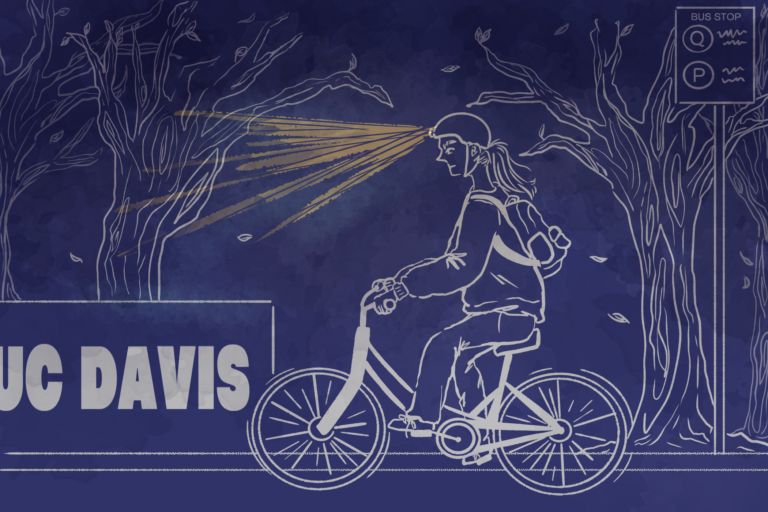
 “I live in North Davis, and I bike to and from campus on Oak Street — it’s a beautiful street during the day,” Meyer said. “But at night, anywhere that’s not on the stretch that’s right next to the high school, it’s almost completely pitch black.”

Meyer wrote a report for a class last year that looked at improving lighting in Davis. Her group proposed three options.

 “We looked into retrofitting the current lights with brighter lights, which we decided would help a little bit, but probably wouldn’t be too much of an impact on the current situation,” Meyer said. 

The report proposed for Davis to build new adaptive lighting systems across the city. There was already a roadmap for this, according to Meyer. 

“As some other cities that had implemented [similar] programs such as San Jose, they actually saved money long-term because of the energy savings from the adaptive lighting,” Meyer said. 

The city of Davis is not the only place students have issues with lighting. Tvesa Medh, a third-year psychology and cognitive science double major, and Molly Mac Farland, a fourth-year psychology major, both see lighting as something to improve on the UC Davis campus alongside downtown. 

Mac Farland took a University Writing Program (UWP) class at UC Davis and was told to report about something she viewed as an inconvenience.

 “I decided I would interview my mutual friend who works at a women’s committee on campus,” Medh said via email in a joint statement with Mac Farland. “[The friend] explained to me that her committee actually has a set aside budget to fund projects like this to increase safety on campus, so we decided to push this project further and try and get more lights installed not only around that building, but other places on campus that aren’t well-lit.”

Dark sky legislation is an important part of this issue. Davis has had a light ordinance since 1998; it was established to minimize the amount of lighting at night, which creates less light pollution and allows for a more visible night sky. 

For Meyer, adaptive lighting would not go against this ordinance, though it would mean adding more lampposts. 

“A solution like adaptive lighting can help solve that because it’s only [going to] be turned on when it’s needed by travelers,” Meyer said. 

As opposed to lights that stay on all night, adaptive lighting would only turn on occasionally. Mac Farland understood the city ordinance but expressed concern about what it meant for students’ safety. 

“It’s important for campuses to have plenty of light not only for women but anyone who walks or travels in dark areas,” Mac Farland said. “Especially where there’s a ton of young people who can be considered vulnerable at times.”

Lighting is something that has caused much debate in Davis. The hope for students like Meyer, Lee, Mac Farland and Medh who have concerns on student safety is that ongoing problems will be resolved in a timely manner. Student safety is a community-wide concern as we enter the year’s winter months and experience earlier sunsets and darker nights. 

UC Davis play “She Kills Monsters” opens Nov. 21

0

Cast members and the director reflect on how they brought the production to life


By GRACIELA TIU — features@theaggie.org
 

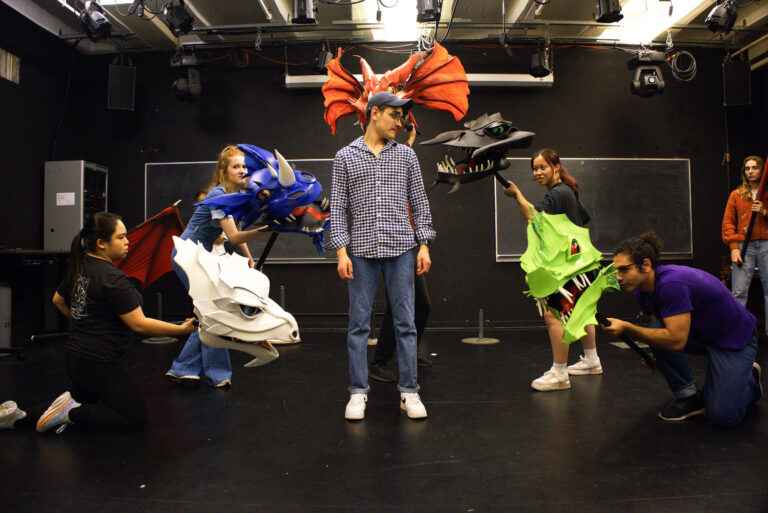
Presented by the UC Davis Department of Theatre and Dance, the play “She Kills Monsters” will have its opening night on Thursday, Nov. 21. Directed by Lucas Hatton, who received a Master of Fine Arts (MFA) degree in the dramatic arts in 2017, the production dives into topics of grief, bullying and the connection between siblings through fantasy games and the use of humor.

“[The show] has been produced frequently in colleges and universities in particular,” Hatton said. “[We] wanted a show that students would be excited about and that would be a fun theater-going experience, but not shy away from some of the more serious or important themes.”

With initial discussions about the play taking place in early 2024, auditions in April and rehearsals beginning in the fall, the cast and crew have been working hard to bring the unique show to life.

The show is a story of two sisters and the depth of their relationship. After the untimely death of the younger sister, Tilly Evans, Agnes Evans finds her sister’s notebook and discovers that her love for the game Dungeons and Dragons has brought her to a fantasy world inspired by the game.

“The play is so rich,” Hatton said. “Every night [that] I watch a run-through, there [are] new things that pop out of it. While the play has a lot of fanciful elements and some silliness, there is also an emotional truth in it in terms of the challenges and difficulties that the characters face. The way to have that resonate is to approach it with respect and honesty — allow[ing] for a journey that the characters take scene by scene and moment by moment — rather than hinting at it or doing something stylistic where it feels less sincere.”

Melanie Garcia, a second-year theatre and dance major who plays Tilly, said she hopes the show’s relatable and emotional themes will resonate with audiences.

“I hope that they take something away from it,” Garcia said. “I think it shows a lot of real topics that a lot of people shy away from because they’re just so out there and vulgar, but they are true stories [that] need to be told. So I hope that if [people] have been through those kinds of things, it’ll help them see that they’re not alone, and that other people and even fictional characters have been through things that they have also been through.”

Lana Lindley, a fourth-year theatre and dance major who plays Agnes, said the production spotlights two sisters and their meaningful connection to each other, which even traverses life and death as they journey between realms.

“She’s a very smart and independent woman; She’s 24 in the show, and she is dealing with a lot of grief after her family died,” Lindley said. “She’s a really thoughtful and considerate sister, friend and girlfriend — but because she’s dealing with the death of her family, she has a lot of grief that she’s suffering with at the same time, so her relationships are very complex.”

Lindley reflected on how exploring her character’s traits, personality and past experiences strengthened her acting.

“Playing Agnes has really challenged me as an actor,” Lindley said. “She has so many complexities [in] her personality, and it’s difficult to play on stage but in the best way possible. She’s not a simple, static character — she’s very dynamic, so it’s really fun to play.”

Garcia described how she feels the audience might relate to her character.

“I play Tilly Evans, Agnes’ little sister, and she’s very unique in her own way, but [I] also feel like a lot of people can relate to her,” Garcia said. “She’s just this little teenager that is obsessed with Dungeons and Dragons — she’s very silly and confident in herself but also has moments where you see through her facade of [being] this strong person and see who she actually is on the inside.”

Starting at the beginning of the quarter, rehearsals were from 6 to 10 p.m. on weekdays and 11 a.m. to 3 p.m. on Saturdays, with tech week — the final week before opening night — taking place from Nov. 14 to 20 and bringing additional hours to their rehearsals.

“A lot of my days, dare I say every day, have become super busy, and it’s hard, but you find ways to work around it,” Lindley said. “But it’s so exciting and rewarding, especially now that it’s almost here.”

Along with student cast members and professional technical designers, the production also features the work of assistant student crew members.

“We have faculty, who are the primary designers, and then there’s a head of the scene shop as well,” Hatton said. “Each of those areas: lighting, sound, projection and scenic, each has at least one assistant designer who is a student, and I also have a student assistant director.”

Students also had the opportunity to work with an outside professional to refine the fight scenes in the show.

“We got to work with a fight choreographer who came in from New York and that was super cool,” Lindley said. “His name is Dan, and he was so much fun to work with. It was also really cool getting to learn how to do fight scenes and how to not hurt someone.”

Lindley said spending hours working and collaborating on set brought many student cast members closer together.

“The cast has been extremely nice and friendly,” Lindley said. “We’re all super outgoing and very extroverted. I would say times in the green room, [where we] hang out either before rehearsal or during a quick break, are always fun. We’re all just on our phones but also telling each other funny things that happened during our days, and it’s a little bit of time to just debrief with each other.”

The show will run from Nov. 21 to 23 and Dec. 5 to 7, with tickets available for purchase on the UC Davis Department of Theatre and Dance website.

“Watching the run last night, I think we’ve created a really inviting and exciting world and experience,” Hatton said. “I hope that as many people come to see and enjoy this play as possible.”


Written by: Graciela Tiu — features@theaggie.org
 

Cuarto’s dear friend Constantine fosters a new student community

Our pursuits for connection in all of its obscurity


By NEVAEH KARRAKER — opinion@theaggie.org


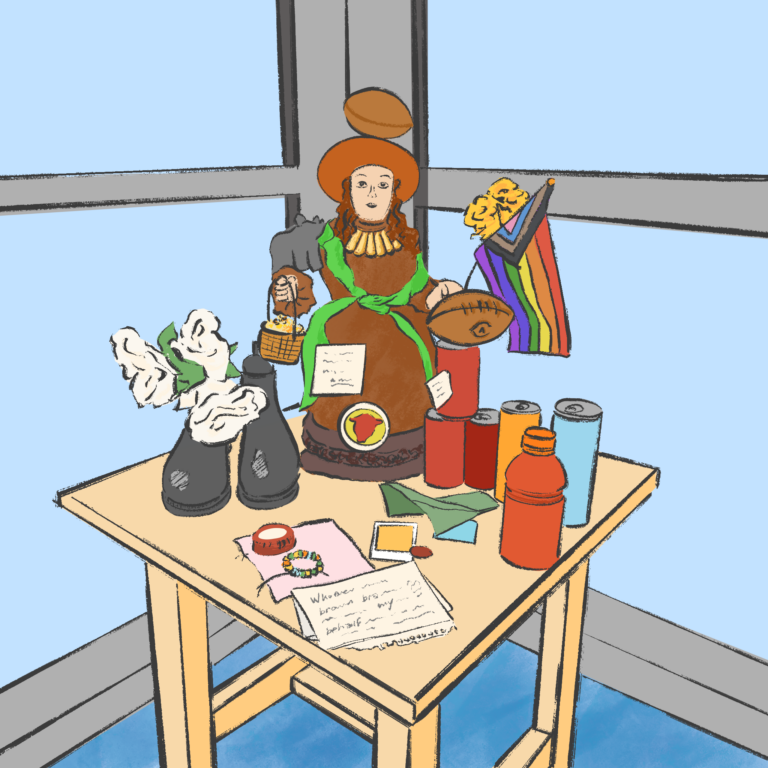
Constantine, a Roman Emperor, sheathed by dull ceramic. As remarkably as the passing of the Edict of Milan, the statuette materialized on the Cuarto dormitory steps amidst a foggy morning. The news of a gnome-sized brunette girl in a strawberry-colored hat spread through the halls faster than the swift evolution of autumn.

Almost overnight, small offerings of flags, soda cans, plastic footballs and other knick knacks encircled her blue dress. Like these offerings, student homesickness only seems to increase as the quarter progresses. Living in the dorms and moving to Davis, it’s generally the first time students have fully experienced adulthood. And with this change comes the immersion into a new culture and people. 

Unfortunately, as much as starting college is an exciting change, it is, in the end, change. No matter how good or beneficial it can be, we are inescapably resistant to it. 

This is partially because we never truly realize what we have lost until it is gone. Further,  we find ourselves reminiscing on the people we miss, the silly events we actually cherished and the dissipating feeling of belonging. Undoubtedly, as humans we are linked by the simple desire to connect — being social is a fundamental, psychological need we crave. However, when everything gets thrown up in the air due to the inevitable change we call life, we often find ourselves resorting to extreme measures. In our humble yearning for connection, it can transgress into unhealthy obsessions and idolizations. 

Constantine is thus a temporary symbol of what we all want: a way students can generate laughter and conversation. To an extent, it is a direct reflection of interactions at a lively family dinner. 

Yet, we cannot replicate what we once had. One friendship is unfortunately not going to resemble another. Similarly, Constantine cannot replicate the community first-years had in their hometown. A new one will instead unfold; It will be different, possibly unfamiliar, but it will be fulfilling. 

The reality is that it takes time to accept this. And, before we do, we might make numerous, futile attempts. For instance, while it could be an insignificant joke to give offerings to a ceramic doll, should students really be sacrificing to false idols as a way to induce friendships? Or are there more authentic methods?

The answer is clearly ambiguous. Absolutely continue to joke and discuss the influence of Constantine; after all, our dear friend does elicit an important aspect of culture — unification. However, it is important to take into account that he conversely represents our desperation and ignorance while we search for those we have the privilege to call “our people.” It demonstrates the dangers of assimilation and conformity. Thus, our endeavors of pursuing something can sometimes end up diminishing it, or worse, decreasing its inherent value. 

Nevertheless, the students in Cuarto have simultaneously demonstrated a unique phenomenon. We have the power to befriend others. The only thing that’s required of us is boldness. Someone had to decide to put Constantine on those steps, and someone had to choose to sacrifice the first offering. Hence, not only does everyone have this desire for connection, but anyone has the capability to follow through on it.

In theory, we could patiently wait for a figurative Constantine to be placed in front of us, but sitting back and doing nothing is certainly not equivalent to faith. In fact, that is borderline indolence. Rather, we need to take initiative to generate our own opportunities. Perhaps it is up to us to courageously utter the first “hello,” for we truly may never know what will result from it.


Written by: Nevaeh Karraker — nakarraker@ucdavis.edu

Disclaimer: The views and opinions expressed by individual columnists belong to the columnists alone and do not necessarily indicate the views and opinions held by The California Aggie.

Natsoulas Gallery hosts three November-only exhibits

Several unique artists bring new exhibits to Davis


By ELIZABETH BUNT — arts@theaggie.org 


The John Natsoulas Gallery, with its iconic cat statue over the front door, is a staple of the Davis art scene. The gallery always has new exhibits in rotation, hosts weekly poetry readings and artist talks and participates annually in the California Conference for the Advancement of Ceramic Art. All of these features make the Natsoulas an incredibly valuable addition to downtown Davis. Students, in particular, should make a habit of stopping by the gallery at least once a quarter to see new artwork or study in the lounge upstairs while looking out over the sculptures on the first floor. 

Currently, the Natsoulas Gallery is hosting three exhibits. These shows are only in Davis from Nov. 6 – 30, so the window to see them is short and sweet. 


Michelle Gregor: “Self-Titled”


Michelle Gregor is an American sculptor and painter based out of San Francisco. Her exhibit at the Natsoulas is a collection of her recent sculptural work, which takes the form of abstracted female bodies. For this collection, she has worked primarily in ceramics to give an abstract expressionist take on the human figure. What makes Gregor’s work unique is the coloring and texturing added to the ceramic forms. In these sculptures, she has added layer upon layer of watercolor paint to the clay’s surface to create a sense of time worn liveliness. In much of this collection, the forms and colors of the women are recognizable as features of the natural world. Several of the pieces are named after varieties of trees, many others have names that reference mythology, adding another layer to Gregor’s already multi-faceted work. 


Philippe Gandiol: “Time and Place”


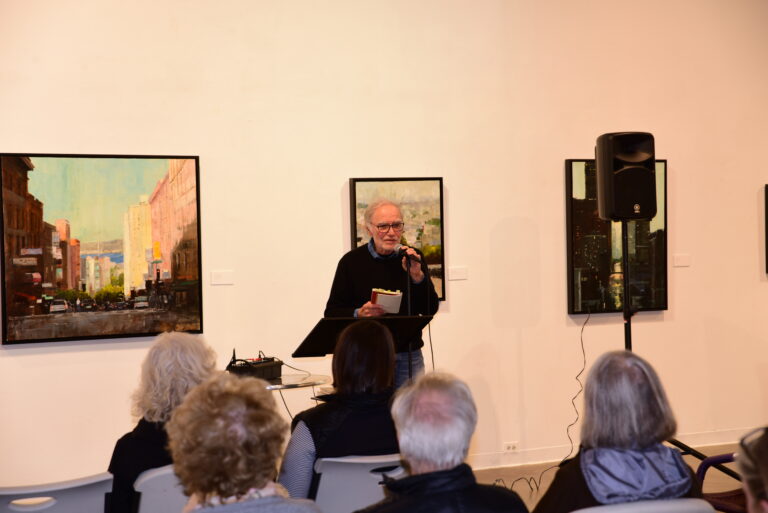
Philippe Gandiol’s exhibit “Time and Place” showcases his latest oil paintings which depict cityscapes from San Francisco to Paris and beyond. Gandiol is an award-winning painter born in France and is currently based in Northern California. This collection offers glimpses of recognizable city views, like the Golden Gate bridge peeking through San Francisco streets, captured by Gandiol’s unique style. They are familiar scenes but subdued somehow by Gandiol’s brush. The harshness of city life is hidden in his work; instead there is a subtle sense of nostalgia and longing that infuses his paintings and causes the viewer to imagine themselves walking the streets of Gandiol’s world. 


Ted Fontaine: “Chance Encounters in Other Worlds”

Ted Fontaine is no stranger to the Natsoulas Gallery. Over the past few years, the Natsoulas has hosted many exhibitions of his work, making Fontaine a consistent feature in the Davis art scene. Fontaine’s current exhibit, “Chance Encounters in Other Worlds,” is a collection of oil figure paintings. His most interesting work in this collection is his series of collage paintings. Some of these, like his 2024 work “Blindfold,” feature as many as 30 figures interspersed across the canvas but tied together by a common theme. It is in these collage pieces that Fontaine’s imagination shines through the canvas. The sheer scope and detail of each painting takes a long time to unpack; it’s entirely possible for viewers to stare at his paintings for an hour and still not catch every nuance of the greater portrait, but that is the beauty of it. 

These three exhibits complement each other well and offer visitors a wide variety of artistic styles to browse through. Anyone stopping by the Natsoulas in the next two weeks is sure to find something that strikes their fancy whether their taste lies in abstract figure sculptures, colorful surrealist paintings or charming snapshots of life in the big city. 

Written by Elizabeth Bunt — arts@theaggie.org

Design graduate student Maral Salehian brings the outdoors inside with new installation, ‘Sonic Horizons’

The UC Davis Design Museum’s November exhibit offers students a space to decompress through sensory immersion 


By SAVANNAH ANNO — arts@theaggie.org


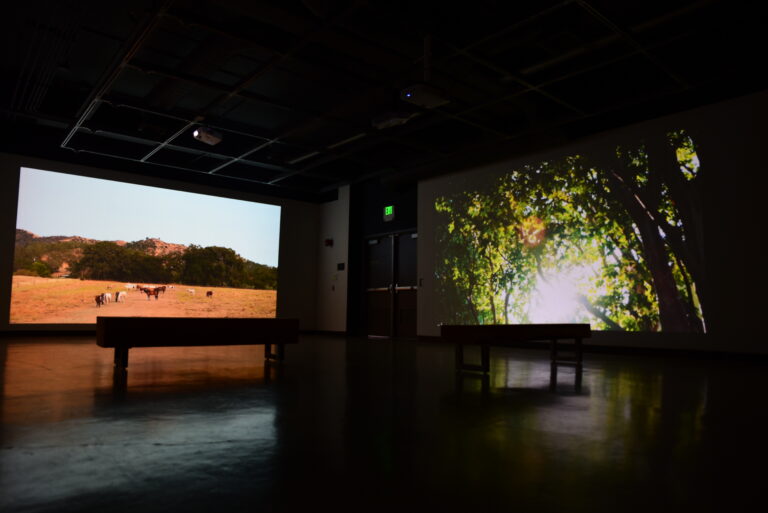
On view from Nov. 1 to 22, the UC Davis Design Museum debuted “Sonic Horizons: A Sensory Immersive Video Installation,” created by Master of Fine Arts (MFA) design graduate student Maral Salehian. This quarter marking her last at UC Davis, “Sonic Horizons” serves as an accumulation of everything the artist has learned over the last two years studying spatial and exhibition design.

“I’ve been working on this concept of bringing nature into a built-in environment since the pandemic,” Salehian said. “During lockdown, spending so much time indoors, I started to question the impact that being in our homes can have on us.”

“Sonic Horizons” consists of three different projected screens, inviting visitors to sit on benches placed in the middle of the room while each screen shifts through videos of various scenery. A melodic music track plays while visitors are shown a shifting sunset, the early morning view of a lake, grazing horses and the sun peeking through the trees all at once.

Each clip was filmed by Salehian herself, who spent at least a full day at each location collecting footage. The hardest part of creating the installation was editing down hours-long videos into clips that last just under two minutes, according to Salehian. Combining the clips together, two of the “Sonic Horizons” screens project loops of about 10 minutes, while the third screen is a shorter, singular shot of trees.

“It’s pretty hyper-local,” Salehian said. “One screen shows the view from my window, another one I filmed just outside of my house with a drone and the rest are locations still very near to Davis like Napa, Winters and Lake Berryessa.”

Stepping into the installation, visitors are met with scenery all too familiar. The landscapes are the same ones students see on walks to and from class, the view from apartment balconies or drives between Davis and the Bay Area. Everything important about California’s landscapes is summed up into three projections: the hills are golden, the water is clear and the sunset is its usual perfect mix of pink and orange.

“My purpose was to try and reconnect people with their surroundings,” Salehian said. “We often overlook the beauty of the nature that we’re so used to. We forget how healing it is.”

While the visuals are familiar, the presentation is new. With almost every clip shot through a drone positioned 100 feet above ground, Salehian offers visitors a new point of view. The choice also speaks to Salehian’s strategic process of blending the natural world with the artificial.

“There are at least three different times of day shown all at once, so it’s not how we naturally experience nature,” Salehian said. “Even the landscapes you’re seeing, like Lake Berryessa, are entirely man-made. Every single element within the exhibit is artificial.”

But in the end, artificial elements evoke natural sensations, according to Salehian. With its dreamy atmosphere and melodic music composed by Belgian artist Gert Stockmans, “Sonic Horizons” is refreshing. The installation brings back feelings of simple awe, like walking down a tree-lined street and looking up instead of down at the sidewalk, or reaching the end of a long hiking trail and finally seeing the view from its highest point.

“I see nature as the most beautiful thing in the world,” Salehian said. “Whether it’s a furniture piece or an installation, I love integrating natural elements into my design process.”

Outside of the video clips and backing soundtrack, the exhibition also includes two large benches, both made by Salehian herself. With a natural wood top and more industrial metal legs, Salehian continued to blend nature with design down to the smallest of details.

Earning her Master of Arts (MA) degree in industrial design from the University of Tehran in 2022, Salehian initially focused on furniture design in Iran before moving to Davis. Being so far from home and placed in a new environment, Salehian’s outside perspective also influenced the selection of footage for the installation.
“I came to the states two years ago, and the sky here is pretty different from where I used to live,” Salehian said. “I wanted to integrate my own unique fascination with the sky in the project as well.”

Beyond her own love for nature and desire to reconnect others with their environment is Salehian’s dedication to promoting mental well-being. In this ever-advancing, rapidly urbanizing world, Salehian aimed to create a space that could offer viewers a respite from it all. While visitors may not have had the time for an early hike or a trip to Lake Berryessa, they were able to slip into Cruess Hall in between lectures and get that same feeling.

“I got this comment from one of my friends, she said, ‘I was so stressed out about being late to your opening, but the moment that I stepped into the space I felt at ease,’” Salehian said. “I was so happy it worked. That was my goal, to make people feel calm.”

Coming to a close on Nov. 22, Salehian was also able to reflect on the installation’s month-long run and what she observed about visitors.

“Since I designed and created it myself, I never get to sit inside and truly see it,” Salehian said. “I know everything about it, so I never could have imagined that people would spend so much time in the space, maybe half an hour or more sitting and watching the loops over and over again.”

Rethinking the relationship between the digital world and the physical one, Salehian’s work harmonized the otherwise rocky relationship between nature and technology. A multi-sensory experience, “Sonic Horizons” works to create a moving depiction of our environment, reminding us to take a breath and appreciate what’s all around us.

Written by: Savannah Anno — arts@theaggie.org 


Arboretum ducks give joy to UC Davis students

0

The ducks are a symbol of community to students around campus


By AMBER WARNKE — features@theaggie.org
 

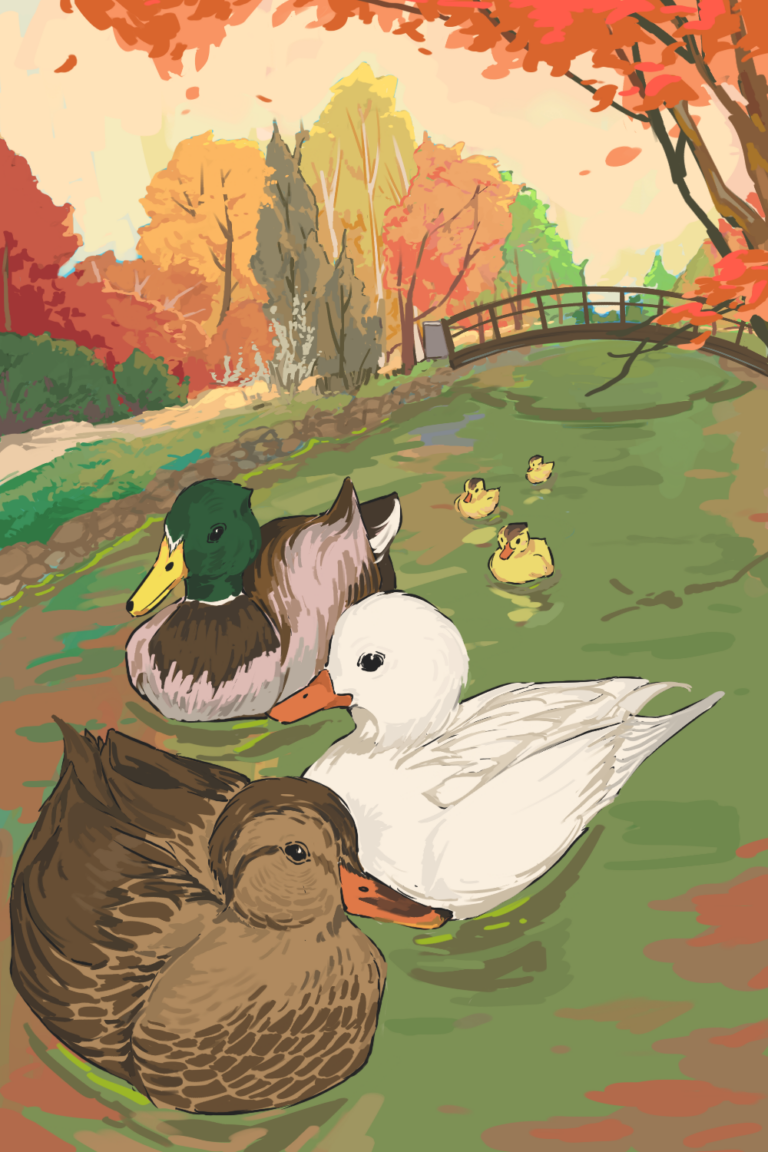
The ducks living in the Arboretum on campus have captured the hearts of students for decades, contributing to the beauty of the UC Davis campus. They also benefit the local ecology, according to John Veon, an ecology Ph.D. student with an emphasis on waterfowl and wetland ecology.

“They’re gonna be eating a lot of foods, like invertebrates and plants, but also they cycle a lot of those foods,” Veon said. “So all the nitrogen and phosphorus from the waste that they have, they’re gonna put that back in the environment and that’s positive for plant growth. They can also participate in seed dispersal, so they can eat plant seeds and move them to other locations.”

When describing the types of ducks students can spot in the Arboretum, Veon said that the ducks are “a mix.”

“A lot of them are mallards, which is one of the most common ducks in North America,” Veon said. “But they’re also crossbred. There [are] other ducks, like wood ducks, [that] I’ve seen in there. You’ll see a lot of those. And it’s not uncommon to see a few diver ducks, like ringnecks, and things that might be swimming around looking for fish.”

Jacqueline Satter, a sixth-year Ph.D. student in the ecology graduate group, commented on the origins of the Arboretum ducks.

“The Arboretum ducks are a pretty good mix of [non]-wild ducks, what I assume are released farm ducks and some companions that have joined them along the way, but we still love them,” Satter said. “They’re probably farm-influenced and genetically not really wild. They still endure a lot; ducks are ridiculously adaptable.”

Kevin Ringelman, an assistant professor in the Department of Wildlife, Fish and Conservation Biology, also discussed the Arboretum’s mix of farm and hybrid ducks.

“The ducks that you see in the Arb are mostly resident,” Ringelman said. “They live there all year round.”

Veon also shed light on how UC Davis students can help protect and support the Arboretum ducks.

“What you can do is the big one, not littering or feeding them,” Veon said. “When you start to feed them seeds, they start to associate with the fact that, ‘Oh humans are friends,’ and we don’t want to do that — because there may be context, whether it be roadways or out there in other environments where our disturbances may lead to their mortality.”

Veon says that feeding can also bring the ducks in close proximity to one another, which can transmit diseases among the population. It’s also against state law, as it can lead to duck overpopulation and pollution.

Veon suggests that students can protect the ducks by giving the wildlife space.

“Whenever you try to chase a duck or you try to handle a wild duck, they’re burning a bunch of precious energetic resources,” Veon said. “So they need that for all their little ducklings, their egg development and they need that for growing feathers every year.”

Veon continued by offering suggestions for people to do their part in enabling the ducks to happily exist in their environments for years to come.

“If you ever want to get involved in waterfowl conservation that would tangentially benefit your Arboretum ducks, [buy] a duck stamp,” Veon said. “They’re beautiful [and] there’s a whole duck art competition that happens every year. You can go to your post office and purchase one, and that goes straight to waterfowl conservation.”

Veon also shared another interesting aspect of ducks: they help form communities, especially for nature lovers.

“Ducks are really good at bringing people together,” Veon said. “People love to watch ducks. You know, people come from a variety of backgrounds, whether you’re a hunter, you’re a birder or a park goer or a hiker.”

Students often spend time relaxing in the Arboretum, which covers 100 acres and was established in 1936. The popular spot on campus gives students a chance to interact with nature and wildlife, including the ducks.

Veon explains why he thinks humans connect so much to ducks.

“I think we find them so endearing because first off, aside from being cute and fluffy and quirky, they tend to have a level of affection towards each other,” Veon said. “They’re social groups, so [they] actually rely on each other to protect each other from predators. [It] kind of gets at the social context of how we like to be, for the most part. But also, you know, there’s a sense of protection and love that they give to their offspring.”

To Hannah Clements, a fourth-year biochemistry and molecular biology major, the ducks have a special meaning due to her involvement with the UC Davis Marching Band.

“I am a member of the alto saxophone section, and each of the sections in the band have a mascot, which is usually an animal,” Clements said. “The alto mascot is a duck because when you’re bad at the alto, which most of us were at one point, it sounds like a duck quacking.”

Clements feels that the mascot of the duck serves as a reminder of the importance of the relationships she has built in Davis.

“Whenever I see a duck I think of my friends and [the] community that I built,” Clements said. “So, it’s kind of something that brings us together, and I’d say it’s just a symbol of keeping the whimsy in college, which can be hard sometimes. You realize it’s nice to be silly sometimes.”

This affection for ducks is nearly universal, according to Veon.

“They’re just so deeply attached to each other, until they’re big enough to leave the nest, as we often say about many [kids] going off to college,” Veon said.

Everything that must be said about ducks can be summarized by Clements: “Quack!”


Written by: Amber Warnke — features@theaggie.org

Small trends, large impact

Microtrends promote overconsumption in the name of encouraging individuality 


By JULIE HUANG – arts@theaggie.org


With the arrival of the holiday season comes Black Friday and other coveted end-of-year sales. In recent years, these traditional shopping events have been increasingly influenced by the rise of social media microtrends, which concern anything from clothing to wall hangings to meal choices. 

Referring to accelerated trends that revolve around specific items meant to promote the stylishness of certain niches, aesthetics and attitudes, microtrends are relevant for a couple of weeks to months at most. Then, they quietly fade into obscurity, to be forgotten and replaced by the trend cycle until they are revived for another couple of weeks by yet another microtrend with similar aesthetics. 

Due to their fast-paced nature, microtrends in their inception are often perceived as fresh and fun, offering widespread appeal to social media users who are searching for inspiration and an easy way to make a small change in their life. Some popular past microtrends include “tomato girl summer,” “vanilla girl aesthetic” and “indie sleaze,” which all primarily cater to the specific demographic of adolescent girls and young adult women who use social media. 

The driving mechanism of these microtrends lies in how they pair certain, more accessible items with idealized imaginings of wider aesthetics and lifestyles — for example, being a “tomato girl” means feeling carefree with flushed cheeks, ideally lounging somewhere off the coast of Italy. However, if a trip to the Mediterranean is out of reach, then buying a new red blush might be a worthwhile substitute. 

Microtrends thus grant people feelings of excitement and a sense of belonging to an exclusive group that is in the know, which reinforces a sense of individuality without requiring much personal effort. Picturesque visuals are presented through TikToks and other short-form content, enticing viewers to buy the associated items that will supposedly bring the vision boards on their phone screens into their real lives. The appeal of microtrends lies in their promise of bringing certain desired lifestyles into a consumer’s reality without them having to do any personal work apart from buying new things.

Many microtrends also repackage items that are otherwise plain or commonplace by giving them aesthetic names and accompanying visuals, making them newly stylish and trendy. When wearing blue nail polish can be transformed into having cutesy “blueberry nails” and doing eyeshadow in warm brown tones can be given the cozy label of “latte makeup,” it becomes clear that anything can become trend-worthy through imagination and a new rebrand. 

This movement toward romanticizing everyday activities, objects and colors can be viewed positively, as it has the potential to bring a renewed sense of joy and whimsy to more mundane objects and qualities. However, over-romanticization of the mundane can also slide into a false sense of abundance. Overexposure to microtrends can lead to the belief that nothing is completely unattainable, feeding the desire to have access to everything trending on social media. 

Large corporations have become increasingly aware of microtrends and their potential to encourage consumers to continually purchase mass-produced goods. Because the lifespan of a microtrend is excessively short, those who want to keep up with new trends must pay close attention to the trend cycle and purchase new items at a much faster rate than the traditional seasonal trend cycle. 

Although sometimes fun and exciting, consumers may fall into a cycle of making otherwise unnecessary purchases in order to maintain their feelings of excitement, as well as the sense of exclusivity that comes from participating in the popular aesthetic that switches every month. Fueled by these different factors, microtrends now support overconsumption, under the guise of promoting inspirational aesthetics that serve social media users and enrich their personal lives. 

Brands like Urban Outfitters, Zara and H&M often reference current microtrends in their marketing, which appear on the banners of online storefronts and subject lines of promotional emails, all to direct their popularity toward the prospect of profit. This utilization of microtrends in marketing reveals the relationship between the aesthetics found on social media and the mass production of goods for sale, where the latter takes direction from the former in order to assess what consumers will purchase. 

However, the short lifespan of microtrends ensures that the fast fashion items made to fill demand will undeniably become waste in a matter of weeks. As microtrends rise rapidly in popularity and then fall just as quickly, the items that are produced to sell alongside those microtrends become popular and then obsolete just as quickly as the trends they originate from.

Thus, the fleeting nature of microtrends and the ensuing mass production of cheaply made goods promote unsustainable practices that lead to excessive amounts of waste, filling landfills that pollute the environment. In continually keeping up with microtrends without considering the limits of consumption, individuals ignore their impact on the environment and send the message that sustainability is less of a priority than the short-term pleasure gained from short-term trends. 

Microtrends are unsustainable on a personal and emotional level as well. Although they seem to promise enjoyment and excitement at first, the transient nature of microtrends and the constant replacement of each trend with something new makes it hard to maintain the personal feelings of connection that require repeated use and time to develop. 

Instead of engaging with trends that consist of making purchases in order to participate, there are alternatives that can encourage the exploration of new activities without spending money. Some microtrends, such as those involving food and meal prep, can transform necessary daily tasks into a new experience, while others, such as silent walking, highlight new experiences as a possibility for making small positive changes. 

While social media engagement and mass production of cheaply manufactured goods grow increasingly intertwined, yielding disastrous effects on the environment, finding and engaging with trends that do not require spending money can be a crucial way to combat the negative effects of microtrends.        


Written by: Julie Huang — arts@theaggie.org 

Disclaimer: The views and opinions expressed by individual writers belong to the writers alone and do not necessarily indicate the views and opinions held by The California Aggie.

What the Editorial Board is thankful for this holiday season

With Thanksgiving approaching, take some time to reflect on where you can find gratitude in your life


By THE EDITORIAL BOARD


UC Davis Land Acknowledgement Statement:

We should take a moment to acknowledge the land on which we are gathered. For thousands of years, this land has been the home of Patwin people. Today, there are three federally recognized Patwin tribes: Cachil DeHe Band of Wintun Indians of the Colusa Indian Community, Kletsel Dehe Wintun Nation, and Yocha Dehe Wintun Nation. 

The Patwin people have remained committed to the stewardship of this land over many centuries. It has been cherished and protected, as elders have instructed the young through generations. We are honored and grateful to be here today on their traditional lands. 


With training for Turkey Trots, hosting family dinners and shopping Black Friday deals just around the corner, now is a better time than ever to slow down and take a moment to acknowledge all we have to be grateful for. Yes, we are living in challenging and stressful times, and there is a lot to be worried about. But despite this, it’s healthy to be grateful for what we do have and the small things that make life special. This Thanksgiving, look to your community, friends and family — they are some of the most important things in your lives. 


Chris Ponce, Editor-in-Chief: My community 

Being a Chicano in Davis, a town that is predominately white, I am grateful for places that remind me of home and that remind me of my community. 

I’m grateful for whenever a professor or stranger pronounces my last name right without me having to correct them. I’m grateful for the restaurants in Woodland that remind me of my family’s cooking. Different folklórico groups who put shows on at the Mondavi Center or in Woodland remind me of my beautiful culture and people. This quarter I took my first Chicanx studies class and it has one of the strongest senses of community I think I’ve felt in a classroom. I’m even grateful for the random student groups at the MU who sell pan dulce. I’ve spent the last three years in Davis, finding my footing and my place — I don’t know if I’ve ever perfectly escaped the culture shock in Davis. But, I have found people who come from similar backgrounds as me, with families that look like mine. To those people, my loyal friends, my lovely partner and all of my loved ones, thank you. You all help make Davis feel like it’s my home too. 

Alyssa Crevoiserat, Managing Editor: Reading

Earlier this year, I found myself revisiting an old hobby from my middle school and early high school days: reading. Yes, like most people, my love for reading fizzled out with age, and I became hyper-focused on reading “correctly.” I thought that in order to read, I had to read classic literature that would mold me into an educated and scholarly member of society. However, instead of creating a scholar, elitist reading culture created a girl who didn’t pick up a book for years. Gone were the days when I would shamelessly peruse the aisles of a bookstore looking for my next fantasy read, sharing favorite books with friends and organizing fan art on Pinterest. Reading became a chore — to the point where I would barely skim required readings for class. I’m not sure when it happened, but I realized that preventing myself from reading what I want was more embarrassing than any book I could buy. 

And while I do think I should pick up a classic or two, reading fantasy novels has been the highlight of my year. Reading has felt like having a conversation with a younger version of me — where I was reading for an escape and not to intellectualize my hobbies. Despite the haters — I’m not naming names — my poorly decorated Kindle and I have spent the year joined at the Popsocket for 45 books.


PS: Follow me on Goodreads


Madison Peters, Campus News Editor: Self-care

As cliche as it sounds, it really is hard to be positive in times like these. If you have kept up with our weekly issues, you know that there has been a lot of darkness in the world as of late, and being surrounded by these frightening headlines can be overwhelming. With that being said, I urge you all to do your best to be thankful for the moments you have to ground yourself and appreciate the little things that make you happy. 

One aspect of my life that I am thankful for is being able to take walks in the arboretum while I watch the fall colors change around me. Despite the cold weather, these moments where I can reconnect with nature and just take a second to think about anything and everything have really kept me going. I am thankful for the way that my house is turning into a home with every thrift find I decorate with and every game night my roommates and I host. Having a space where I can completely let my guard down and get cozy for the cold season ahead of us is something I will always be grateful for. On that note, I am extremely grateful to the rest of the editorial staff for supporting my journalistic endeavors through all of the breaking news and crazy scoops. As fall quarter comes to an end, I encourage everyone to do a bit of reflecting and, more than anything, enjoy the necessary break that we all deserve.

Ana Bach, Arts & Culture Editor: Simple pleasures and going the distance 

Wow, I don’t think I have truly taken the time to reflect on how rewarding this year has been until now. It’s hard to compile a short list of gratitudes, but in light of how hectic the world has been, I think what I am most grateful for boils down to things I do every day that I take for granted. From my matcha in the morning to the ability I have to move my body freely, moments within my day that help me get out of my head for a little while are what keep me sane. Audiobooks, podcasts and my Spotify Discover Weekly playlists that fill the dull silence during my morning walks around Davis. My weekly Davis Co-op trips and treating myself to a new artisan bread I have yet to try. Daily meetings with my fellow editors and being able to read the wonderful work that my writers conjure up make my appreciation for this little cow town skyrocket. Last but not least, I am thankful that my parents have supported me in every way from across the pond in Washington, DC, and that I am able to pursue my education out of state. This list is only just a glimpse into everything I value in my life and I hope you too find the joy in the little things when times are stressful. 

Katie Hellman, Science & Technology: The little things

Reflecting on what we’re thankful for has the profound ability to enrich our lives, especially with so much chaos going on in the world. Our brains are naturally wired to get stuck in negative thinking patterns, but our thoughts influence our perception of the world and our general attitude toward life — so while a bit of pessimism isn’t a bad thing, take the time to remind yourself of what brings you joy. My (non-comprehensive) list of things I’m grateful for is as follows: fuzzy socks, vanilla lattes, my sister and brother, the sound of rain, Christmas trees, the Amtrak, recorded lectures, Canadian chocolate, GPS systems, the arboretum and, of course, all the lovely people who work for The Aggie.

Maya Kornyeyeva, Opinion Editor: Living in the moment

As the season of gratitude arrives with the gentle swiftness of rain, I am reminded of the wise words of fictional debonair Albus Dumbledore, well into his hundreds, imparting wisdom on the youth of our generation: “It does not do well to dwell on dreams and forget to live.” 

This notion of forgetting to be present in a world that is continuously, irrevocably moving forwards is something that quite often afflicts me. Time and time again I get caught up in plans, in far-fetched goals and in my own tiny bubble, comfortably stuck. Thankfully, even tiny gestures remind me of the wonder of this world. From a cozy evening baking with friends to a quiet nighttime walk to get boba to the golden light of the morning greeting me as I head to work, there are instances in life that I am beyond grateful to have experienced. Then, there are my supportive friends, my wonderful coworkers (both at the CA Aggie and at Pachamama), my parents, my brother and my extended family in Ukraine, fighting each and every day for their country — I am so proud of the people in my life. As Thanksgiving comes and goes, I’m grateful for a chance to live within the present and to chase dreams while cherishing the magic of every passing moment. 

Zoey Mortazavi, Features Editor: My connections 

As I’ve biked around campus dreading my midterms, papers and other assignments, Davis’ vibrant fall colors have served as a reminder to myself that I should be grateful for where I am, as well as for where I have been. To that end, I couldn’t even think about Thanksgiving and gratefulness without mentioning my family. Extended family gatherings can be wildly stressful, but I am who I am because of my parents, siblings and entire extended family — both on my mom’s Irish side and my dad’s Iranian side. I’m so grateful to be lucky enough to be going to college to pursue a higher education; I’m grateful for my friends (as well as my Aggie coworkers, of course), who carry me through all of my struggles, grammatical and otherwise. I’m also grateful for the little things — old books, records, lighting candles, over-the-ear headphones and hot lattes during the cold months, as well as so much more I can’t think of. Recently, I’ve been especially grateful for going on drives with my friends, taking day trips and listening to the Duncan Trussell Family Hour podcast. In the wake of these tumultuous past months, occasionally doing a check-in to remind yourself what you’re thankful for can act as a saving grace — and one which I cannot recommend enough. 

Hannah Schrader, City News Editor: Family and fantasy novels

A quarter system schedule can easily allow gratitude to fall out of focus, but it’s important to recognize the abundance in our lives that persists whether we acknowledge it or not. This holiday season, I am feeling particularly grateful for friends and fantasy novels. Though it sounds corny, the unconditional love and support my friends and partner provide me are the foundation of my personhood. So for their assistance in making me a kinder, thoughtful and more confident individual, I am eternally grateful. Now onto the more substantive part of my gratitude spiel, which is the gratitude I have for books about dragon slayers and the adventures they go on. I feel grateful for the unique mental lifeline that is reading a ludicrous and poorly written work of fiction after a long day of reading research papers. I find comfort in glazing over the esoteric fantasy references knowing my tenuous understanding of the plot will have no long-term academic and career implications. In short, I have been feeling especially grateful for the tools and people in my life that give me so much to be grateful for.

Megan Joseph, Sports Editor: New adventures 

Once again, it’s that time of year — when you return home to lively family arguments, have too many slices of pie and are forced by your parents to help out in the kitchen, only to be promptly kicked out. I am eternally grateful for everything that has helped me survive this year: Google Translate, chaotic group chats with my friends and cheap flight deals. On a more personal note, I am grateful for my friends, family, health and the incredible adventures I experienced this year. I have been truly fortunate this year to travel around Europe and experience a completely different lifestyle (though I assure you, I will still be enjoying a Thanksgiving dinner feast). I am grateful for every new experience that comes my way and look forward to celebrating the holidays with my loved ones — and hopefully, even more pie.

Written by: The Editorial Board

Here are the fall 2024 ASUCD election results

Some 7 to 9% of the eligible student population voted on student senators and a constitutional privacy amendment 


By VINCE BASADA — campus@theaggie.org


Six of 10 ASUCD Senate candidates were elected to the student government’s highest legislative body and a constitutional amendment protecting privacy rights was passed in the fall 2024 ASUCD elections.

Elected as senators, in order of ranked vote share, were:

  1. Nanki Kaur, a third-year biomedical engineering and South Asian studies double major, of the Zaytuna Slate
  2. Zack Dollins, a first-year political science major, of the Voice Slate
  3. Jenna Younes, a third-year international relations major, of the Zaytuna Slate
  4. Solana Rodriguez, a second-year political science — public service major, Independent candidate
  5. Lexi Raben, a first-year environmental sciences and management major, of the Elevate Slate
  6. Umar Shaikh, a second-year political science major, of the Zaytuna Slate

All six are scheduled to be sworn in at the final senate meeting of the quarter on Dec. 5.

Constitutional Amendment #92, which enshrines the right to privacy in the ASUCD Constitution, also passed with 97.2% of the vote share.

Photo of the Mee Room on the third floor of the MU. Photo by Quinn Spooner.

ASUCD Elections Chair Sriya Batchu, a third-year environmental policy and planning major, said that the election went well overall.

“I would say it went very smoothly,” Batchu said. “[But] there were a few bumps when it came to actually marketing the election.”

The election faced some difficulties that were specific to this cycle; Veterans Day pushed the voting period into the weekend and the United States presidential election the week before may have confused some students, according to Batchu.

2,407 people voted in this quarter’s election, which accounts for 7 to 9% of the eligible voting student population, according to Batchu. Turnout was similar to last year’s fall election which was 8.87%. Turnout in the spring is generally higher; the spring elections earlier this year saw 23.7% of eligible voters participate.

“I’m really hopeful that spring elections will again be really good,” Batchu said.

Batchu, who also serves as the vice chair of the Environmental Policy and Planning Commission, noted that in the fall election, immediately before the creation of the elections chair (fall 2023), voter turnout was 4.75%. She will be stepping down from her position before the next election cycle to give someone else the opportunity to be the elections chair.

Results for the election, which closed on Nov. 16, were released on Nov. 18. Full election results and statistics can be found at elections.ucdavis.edu.

Written by: Vince Basadacampus@theaggie.org

Your Tax Dollars at Work performs at fall Couch Concert

By Jenna Lee — photo@theaggie.org 

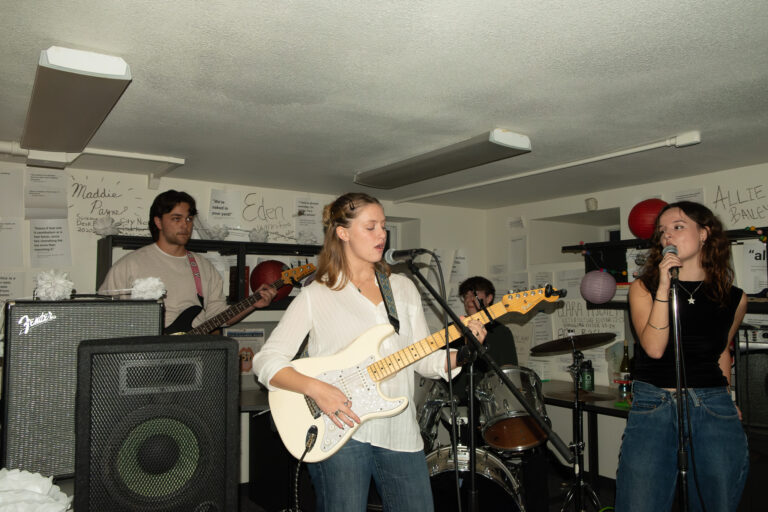
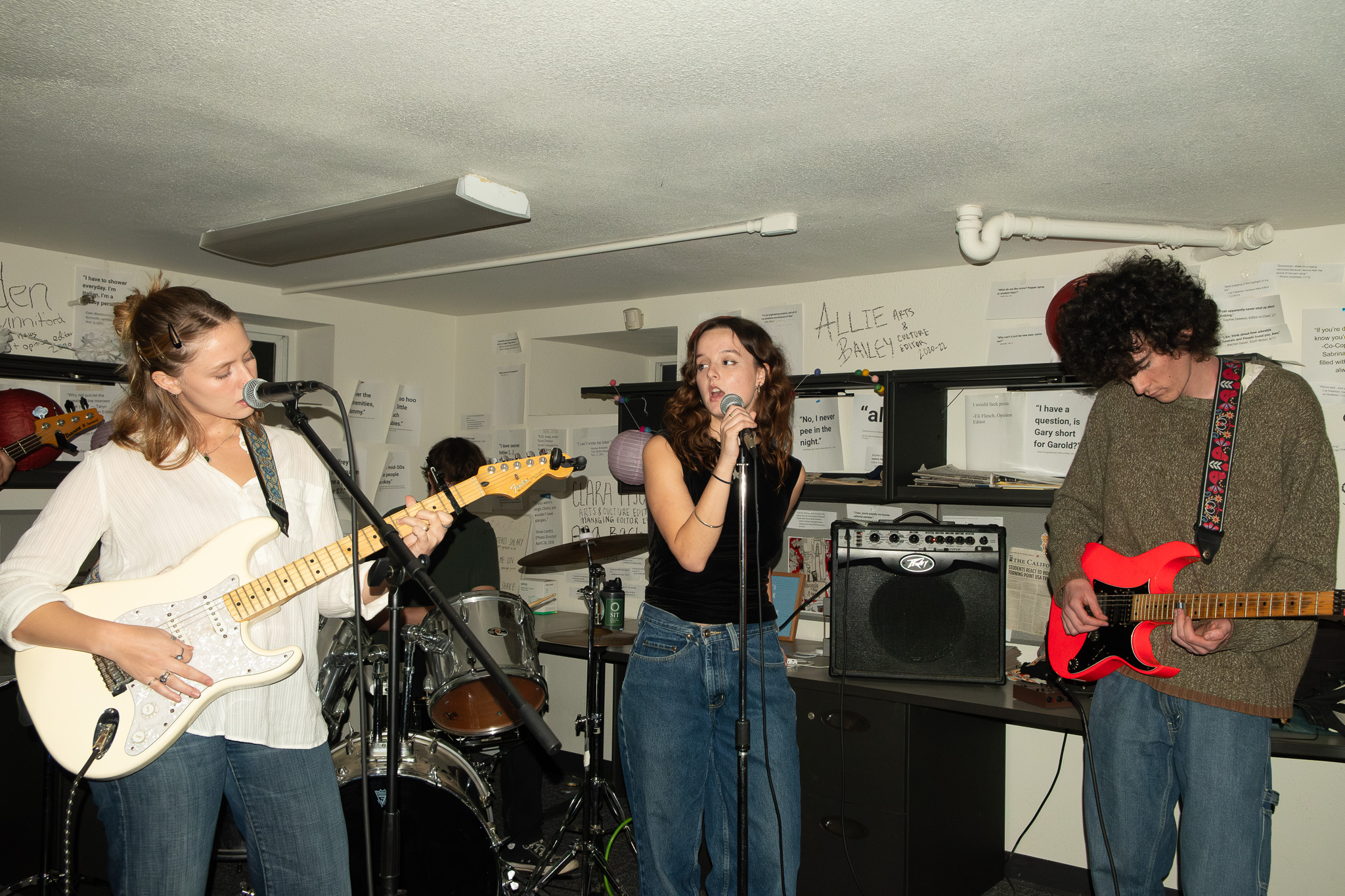
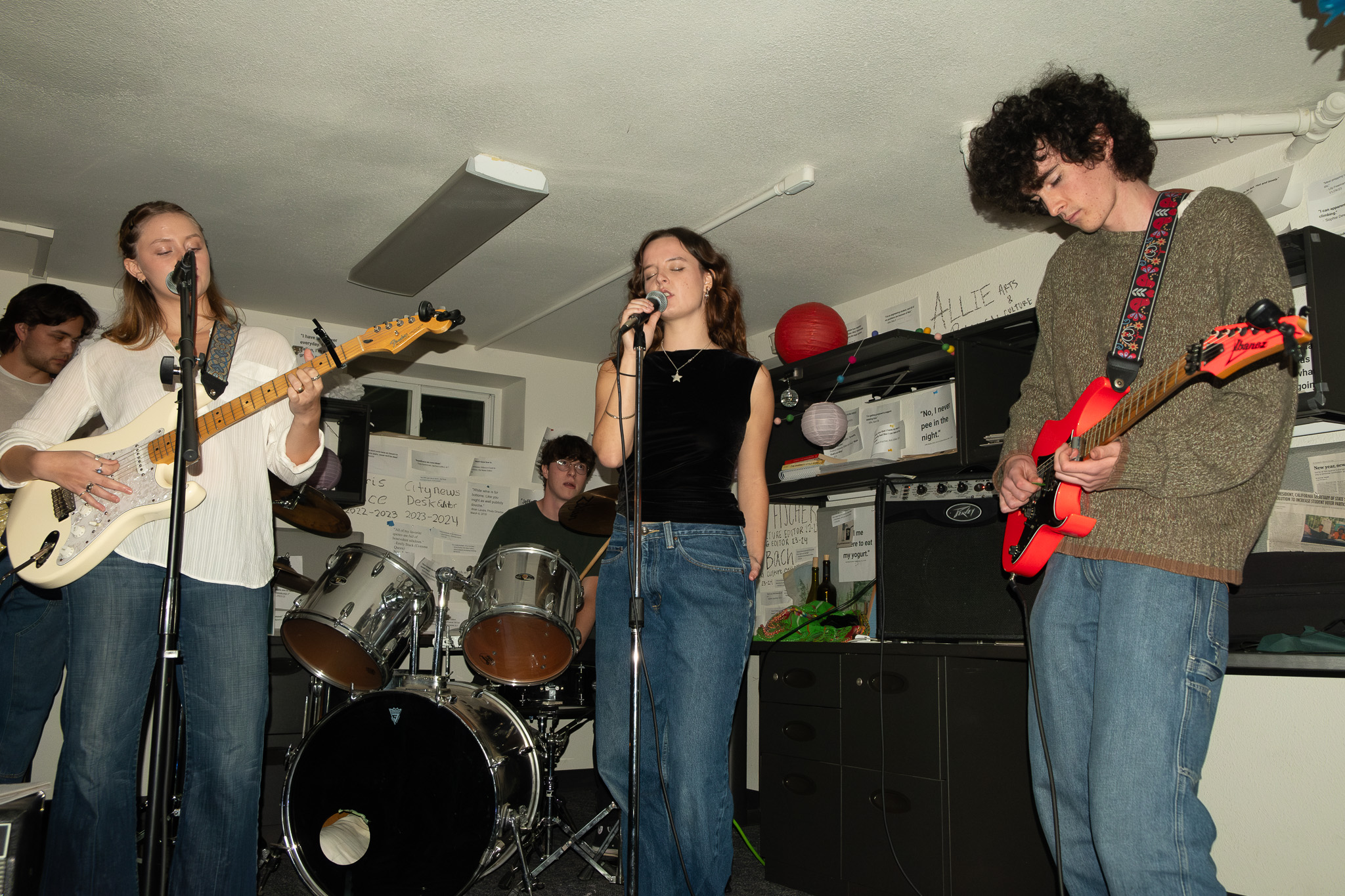
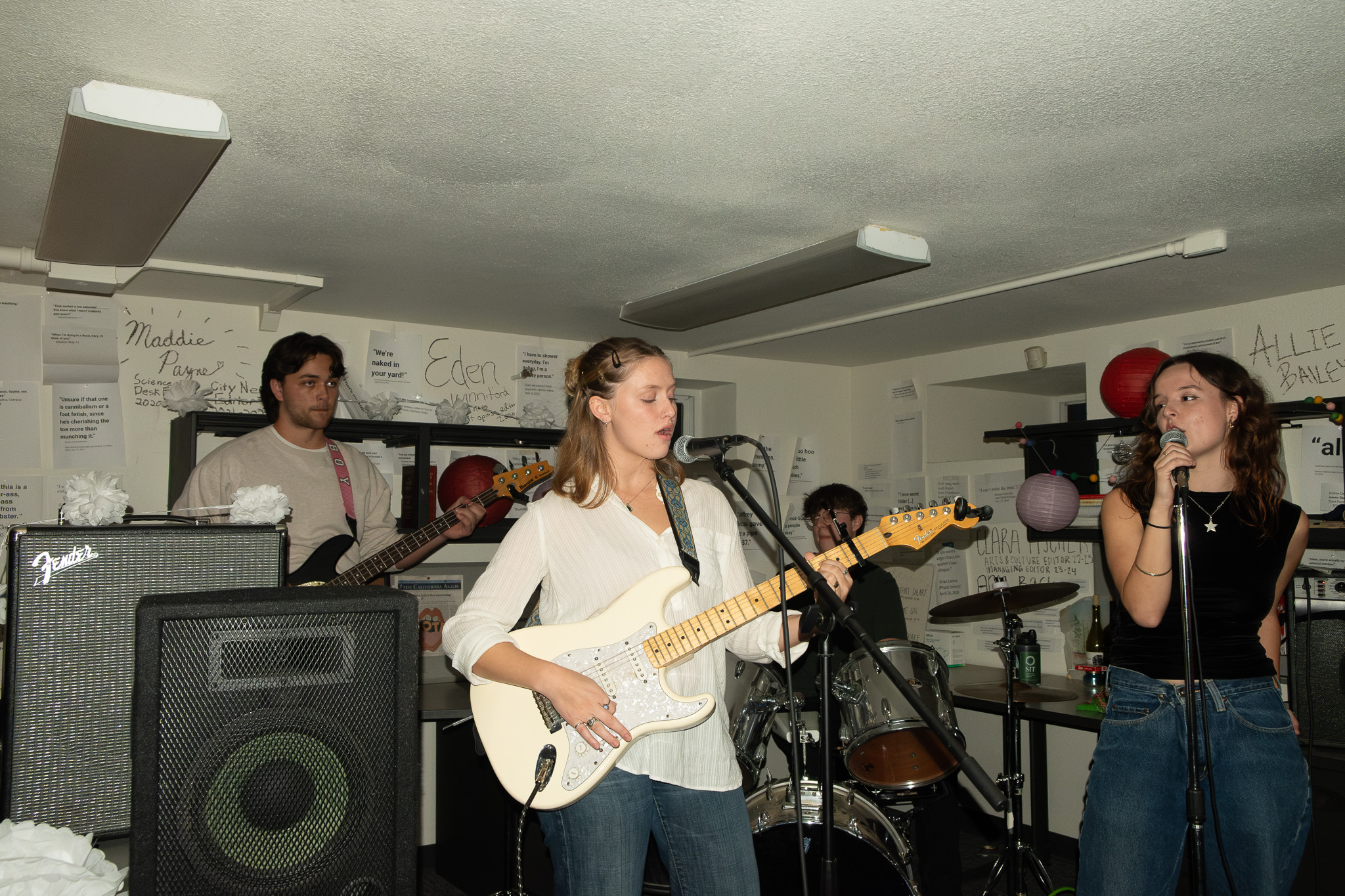
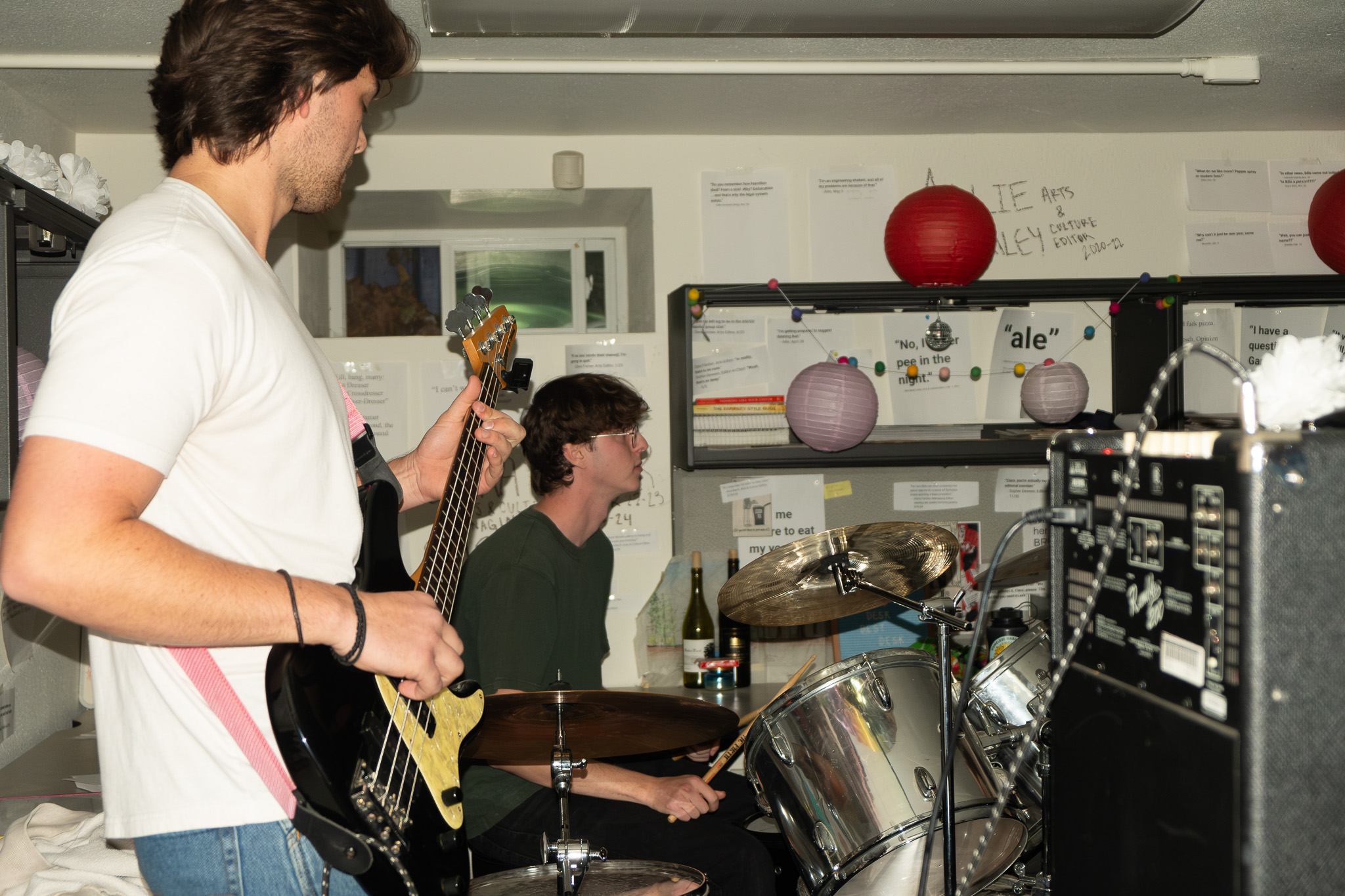
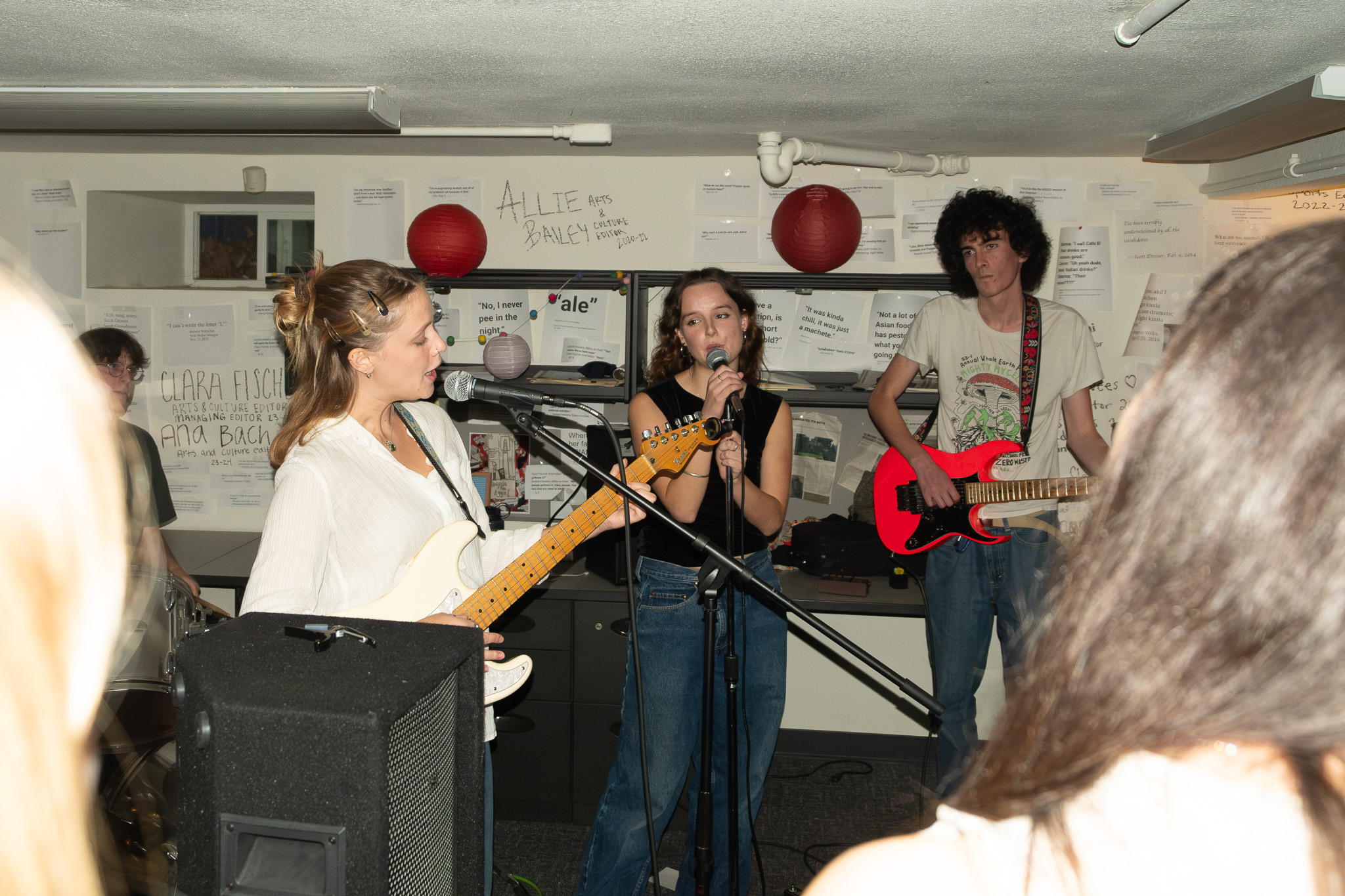
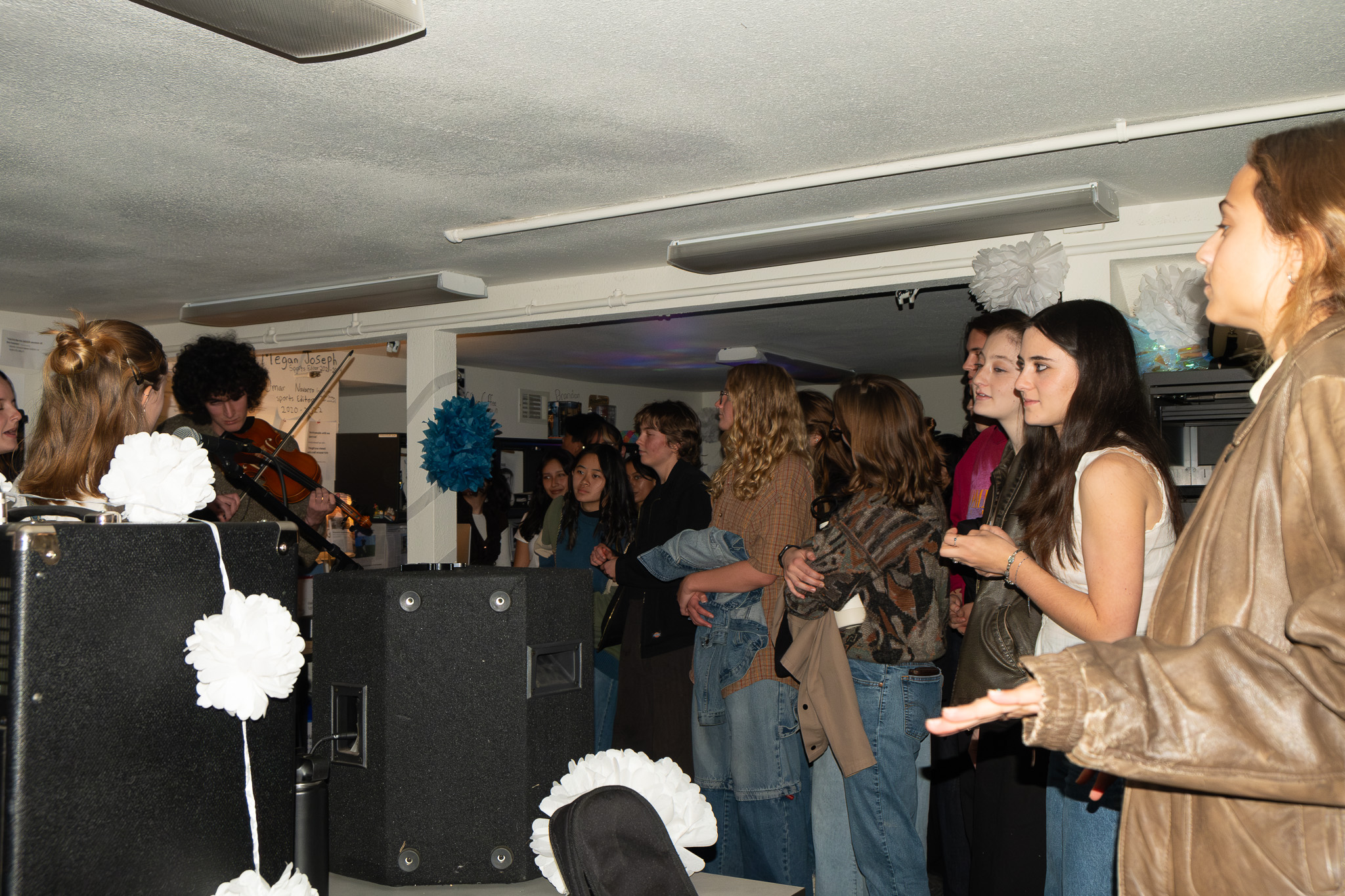
On Friday, November 15, The California Aggie hosted our fall Couch Concert, featuring local band Your Tax Dollars at Work. The band has five members: Eliza Gilligan on vocals, Patrick Farrell on bass guitar, Lev Gordon-Ferierabend on guitar and violin, Leo Hecht on drums, and Adella Kaufer on rhythm guitar and vocals. Their performance included a selection of original songs and covers, such as “Kyoto” by Phoebe Bridgers and “Fade Into You” by Mazzy Star.

Adella, Eliza and Leo perform
Your Tax Dollars at Work performs a cover of “Kyoto” by Phoebe Bridgers. (Jenna Lee / Aggie)

By Jenna Lee — photo@theaggie.org 

Upcoming art piece to honor Karim Abou Najm

On Nov. 22, the city will unveil a public art piece titled ‘Fiat Lux’ in memory of deceased student Karim Abou Najm


By HANNAH SCHRADER — city@theaggie.org


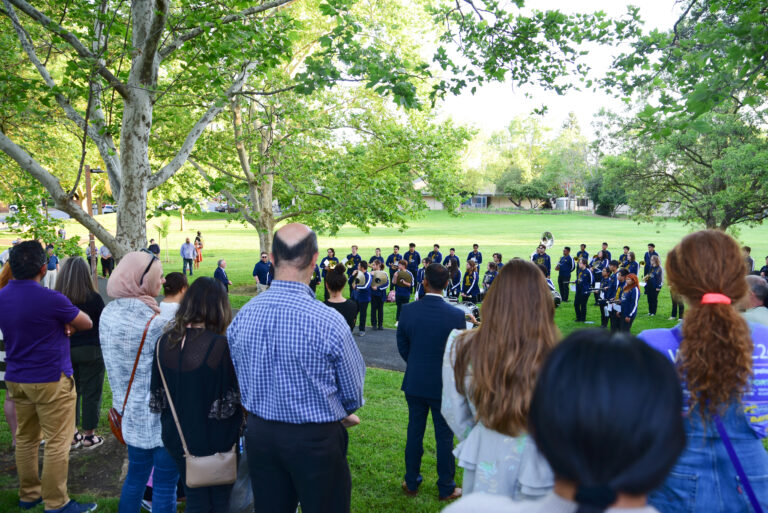
The City of Davis recently announced they will hold an event to unveil the “Fiat Lux” art piece to honor the life of former UC Davis student Karim Abou Najm. The unveiling will occur on Friday, Nov. 22,  at 4 p.m. in Sycamore Park.

“Fiat Lux” means “Let there be light” in Latin and strives to honor Najm’s kindness and creativity.

The city discussed in a press release the tragic events that led to the death of Najm, which occurred during a series of stabbings in the city.

“Abou Najm lost his life on April 29, 2023, when he was stabbed in Sycamore Park while biking home,” the press release stated. “He graduated from Davis Senior High School in 2020 and was awarded a bachelor’s degree in computer science posthumously from UC Davis in 2023.”

The press release shared more about how the art piece came together.

“Artist Nicole Beck created “Fiat Lux” that will sit atop a berm in the park that overlooks the site of the tragedy,” the press release said. “The piece is made of stainless steel and colored dichroic glass. The colors in the piece will reflect light and change color depending on the viewer’s position and ambient light conditions. The artwork embodies the qualities that made Karim an exceptional human and the kindness, innovation, creativity and warmth within the Davis community.”

The art piece was funded by community members, the university and the city’s Municipal Arts Fund, according to the press release. At the time of publication, rain is highly likely on Friday.

“The installation of “Fiat Lux” was made possible by donations from Najm’s family, friends and Davis residents, a donation from the University of California, Davis and funds from the City of Davis Municipal Arts Fund. In the event of rain, the public is invited to join the ceremony at the multi-purpose room at Robert E. Willett Elementary School at 1207 Sycamore Lane.”

For more information on the date, time or other details of the event, visit the City of Davis website.


Written By: Hannah Schrader city@theaggie.org


The ASUCD Aggie Reuse Store reopens after being closed for months

After facing hiring delays, the store will continue to provide clothing, lab coats, books and other items to the Davis community


By JESSICA YUNG — campus@theaggie.org


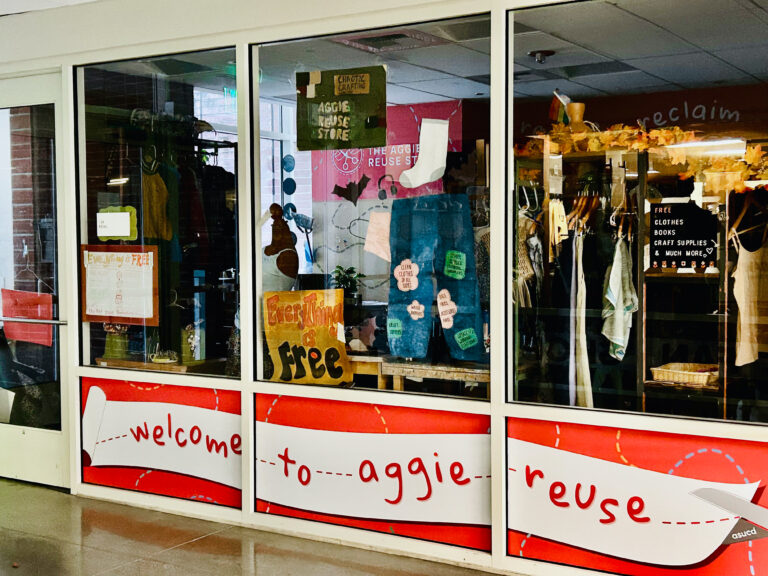
On Oct. 28, the ASUCD Aggie Reuse Store reopened after being closed for nearly half of the quarter due to hiring delays. 

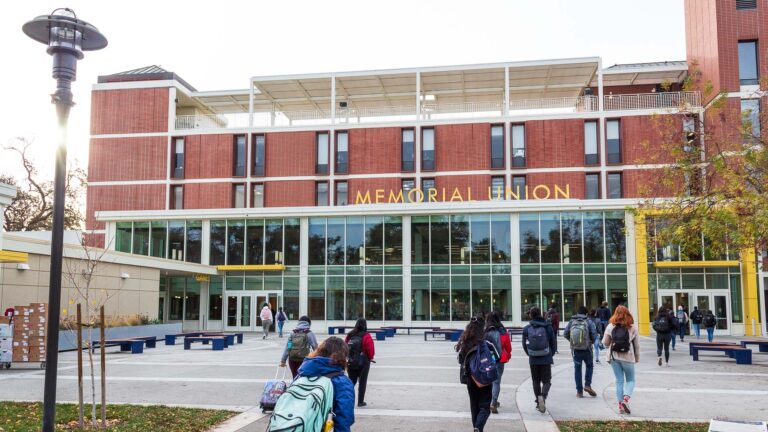
The reuse store offers secondhand goods including water bottles, shirts, pants, shoes, lab coats and various other items. The goods that the reuse store provides are free to all students and the larger community and are made available through donations. The store is located at Memorial Union #154 with new hours Monday through Friday from 10 a.m. to 4 p.m.

Kate Richards, the Aggie Reuse Store unit director and a second-year history major, expanded on the reason for the delayed opening.

“Because ASUCD hires for all their units at the same time and employs so many students on campus, it’s hard for them to process all the applications,” Richards said. 

Richards described the collaborations the store was having with a local downtown business. 

“Currently, we are partnering with Yesterday Vintage, so if you donate three or more items to Aggie Reuse you get a 15% off coupon to Yesterday,” Richards said.

The mission of the Aggie Reuse Store is to “promote sustainable fashion and creative upcycling by providing a source for basic needs to the overall community and therefore discouraging fast fashion,” according to their website.

Richards further elaborated on the goals of the establishment, including its unique and community-oriented business model.

“Aggie Reuse runs on a mutual-aid model, which means that everything is free,” Richards said. “We provide an incredibly important basic needs resource to many people living in Davis. We help alleviate any financial burdens students face. The other purpose is to try and make sustainable living accessible to everyone. There is no limit to the amount of things that people can take from the store.”

However, Aggie Reuse does have policies on their donations: “No rips, holes, [and] stains. Please wash clothes before donating,” according to their website. 

Richards further explained these donation policies in detail.

“You can stop by and drop off donations anytime we’re open,” Richards said. “We take everything we can but are unable to accept undergarments/bathing suits, large furniture, children’s clothing, technology — such as computers/phones/headphones, although we will take phone chargers or cases — and anything torn, stained or excessively dirty.” 

Mileyna Soo, a fourth-year computer science major and a sales volunteer at Aggie Reuse, discussed the store’s changes in advertising and decorations, including being featured on the Unitrans buses. 

“I just know that [the bus advertising] is a project that Aggie Reuse was working on last year, so I thought it was really cool to see it when we came back to school,” Soo said. “ I think the decorations in Aggie Reuse highlight the juxtaposition between the store and the rest of the Memorial Union. Since it’s so different, people walking by get curious and take a peek inside.”

The volunteer staff is composed of “Data Analytics, Design, Social Media, Sales, and Marketing,” and applications are open to anyone, according to the Aggie Reuse website.

Richards talked about the process of becoming a volunteer for the organization.

“We hire volunteers at the beginning of each quarter, and our spaces are almost full, but you can apply at any time, and we’ll let you know when there’s space on the team,” Richards said. “The volunteering info/application can be found on our Instagram.”

Richards encouraged anyone who is interested to reach out and join their cause.

“If you have any questions about donations, volunteering, potential collaborations or anything else, feel free to email aggiereuse@asucd.ucdavis.edu,” Richards said.


Written by: Jessica Yung- campus@theaggie.com