57 F
Davis

Davis, California

Monday, December 22, 2025
Home Blog Page 77

A neutral approach

Far from being basic, neutral colors carry a vibrance and meaning of their own 


By JULIE HUANG – arts@theaggie.org


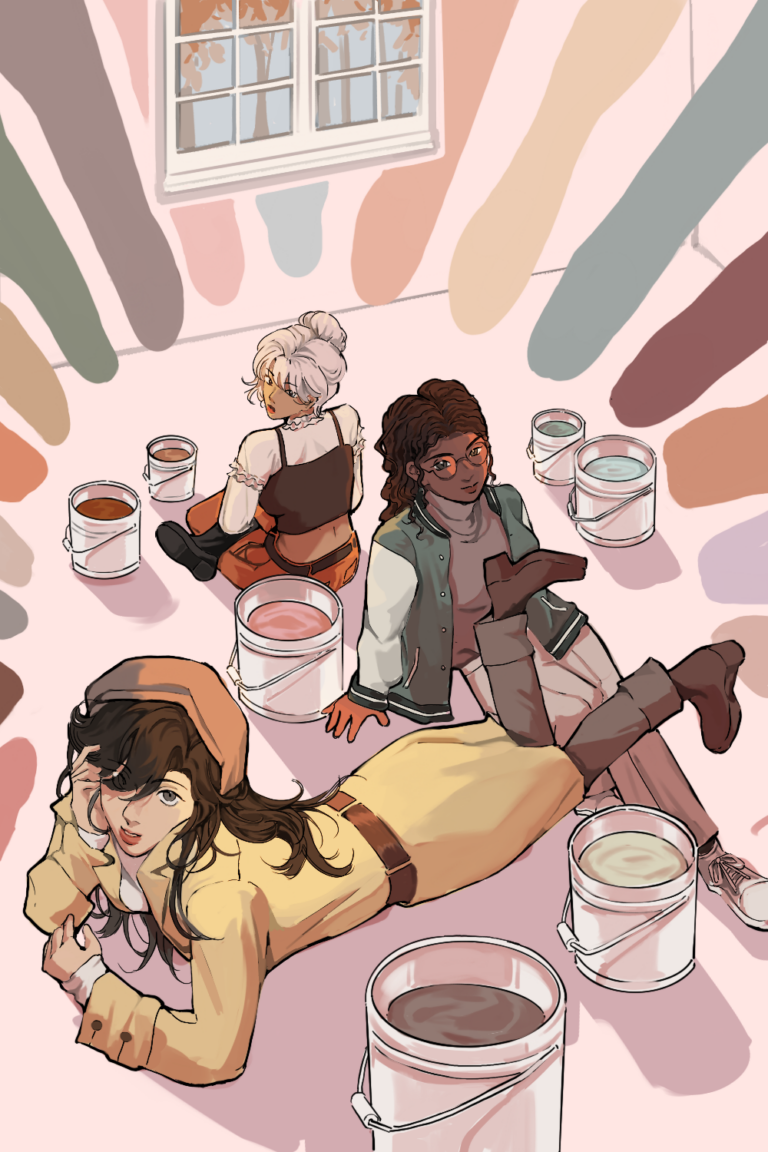
Autumn is a picture-perfect study of the best that neutral colors have to offer, as students don on cream-colored sweaters and black leather jackets while crispy brown leaves float off their branches. Far from being associated with any one period of time or place, neutrals are known for being everywhere, in everything! From clothing to home decor to web design, neutral colors are always a safe bet. 

Due to their ubiquitous nature, colors like white, brown, black and gray are often perceived as the basic choices — default options chosen when one wants to shy away from any strong feelings or messages. Though there’s some truth to these perceptions, neutral hues can be so much more than a blank slate, with the potential to convey unique feelings and moods (apart from an obvious sense of neutrality). 

To begin, black and white hues will never be irrelevant in daily life due to the universal effects of their ability to symbolize a vast range of meanings, especially when discussed as a pair of colors. Although often viewed as opposites, black and white carry similar associations of simplicity, formality, mystery and spirituality — all broad and expansive concepts that cover the color duo’s extreme range. 

Black and white on their own each convey the image of visual purity, either the absence or the totality of all colors. Together, these pristine colors have become representative of the concept of duality, discussed alongside long standing binaries of human fascination such as life and death or good and evil. 

Gray is known as black’s less-intense counterpart, but its subdued nature does not make it any less useful in daily life. When it comes to everyday objects like personal technology, kitchen appliances and automobiles, the color gray is easier than pure black to keep clean of dust and fingerprints. This practicality has also contributed to gray’s aesthetic reputation as a staple color whenever a brand identity or marketing requires a sense of unpretentious professionalism. 

Similarly to gray’s relationship with black, offshoots of white such as cream, ivory and tan may also be classified as neutrals. There is a slight variation from the ever-versatile white,  making them applicable to every aspect and setting of human life. These hues are hallmarks of exterior and interior design, from walls to furniture to rugs and lampshades. Off-white shades suit both formal and casual types of clothing, imbuing those pieces with a less intimidating version of the elegance and purity that white conveys. 

Due to the susceptibility of being stained or dirtied, there is a sort of daring in using off-white shades in clothing and personal items like bedding and rugs. Making that choice subtly asserts a sense of sophistication and serenity, making the space all the more comfortable. 

Last but not least of the neutrals, brown is the warmest in hue and in associated meanings. Linked to earthiness, stability and humility, the color brown covers the span of all that is warm and comforting. Consciously invoking these associations in personal life by choosing brown hues enhances any welcoming feelings already present, supplemented by the color’s connection to the strength and dependability of durable materials like wood and leather. Although not as iconic as black, white and their related shades, brown in its many forms is just as timeless a neutral, owing to the fact that stability, comfort and security will always be sought after and valued. 

When all is said and done, the versatility and timelessness of neutral colors may end up contributing to the popular perception that they are default choices to fall back on. However, it cannot be denied that neutrals have strong, recognizable identities of their own. They can, in fact, function as the first and best choices when it comes to creating certain moods and atmospheres. Whether standing on their own or seamlessly interacting with other colors, neutrals have the ability to bring their unique feel into any situation, time and place in a way that is anything but basic. 


Written by: Julie Huang — arts@theaggie.org 
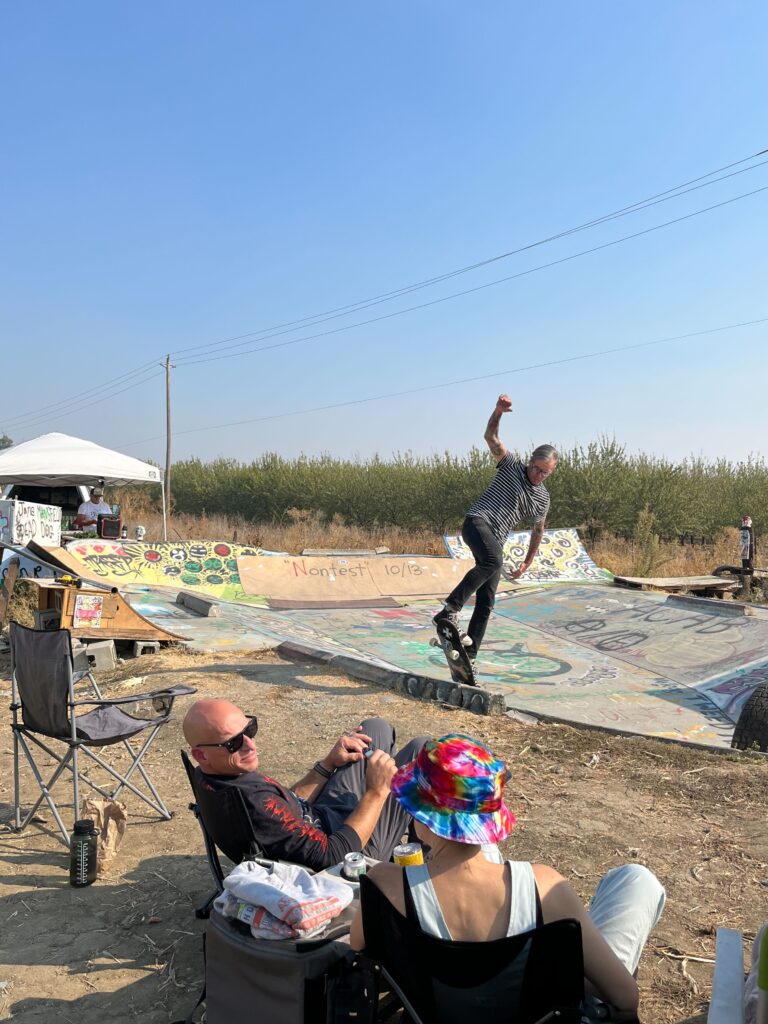
 

Davis Ditch Non-Test Skate competition returns for a fourth year

Talented skaters shred the ramps, rails and refrigerators of the Davis Ditch at an event put on by the N-Men skate group


By MATTHEW MCELDOWNEY — city@theaggie.org

The N-Men, a Sacramento skate group that has been skating since 1974, hosted their annual Non-Test skating competition on Oct. 13. Skaters of all ages gathered at the Davis Ditch to land tricks, have a good time and share their passion for the sport with other skaters from all over California. 

A Davis Ditch local, Matt Wieland, is a skater who began skating and building up the Davis Ditch since its discovery in the ‘90s. His documentary work on some of Northern California’s well-known skaters and skate groups would eventually lead to weekly skate sessions and larger community events at this Davis skate spot. 

“There are people coming from UC Davis, all over Sacramento, Winters, Vacaville, Dixon and the Bay Area, even Tracy,” Wieland said. “We are building community, that is our biggest purpose when we are out here.”

The Davis Ditch was once a quaint and remote ditch that sat beside Highway 80. The location allowed skaters to create their own scene when suitable facilities to skate were, and to some extent still are, unavailable in Davis. It has been a long time since the skaters that first discovered this spot began dropping in, and through the gradual additions made by skaters over the years, the Davis Ditch has become a testament to the craftiness and passion inherent to skating culture itself.

In anticipation of the Non-Test competition, Weiland, members of N-Men and other locals made further alterations to the Davis Ditch. Among these alterations, a refrigerator was added as an additional skate feature.

“We put in more curbs to the side, an additional ramp and the refrigerator on top,” Weiland said. 

This refrigerator would have its time in the limelight as one competitor, Santos, dropped into the Davis Ditch from the height of both the ramp and fridge. Another skater, Nicholas, would win the best trick prize by landing a trick off of the fridge.

So, as much as this year’s Non-Test was meant to promote community, equally so were each of the skaters able to put their own creativity and individuality on full display. 

In the first round, skaters were given three runs to impress the judges with as many of their best tricks within that time. The five finalists chosen out of two heats of skateboarders would then be pitted against one another with two remaining runs to make a lasting impression. An additional prize would be awarded to whoever landed the best trick while the judges tallied up the points. Without age or gender categories, teachers competed against students, rising stars against veterans and even dancers and journalists were skating together.

Hayden Gutierrez, a third-year environmental science and management major, explained how it felt to skate in this year’s competition. 

“It was very challenging to skate because it is all [Do it Yourself],” Gutierrez said. “Now [the ditch] has been made for skating, but it was not originally made for it. Nothing here is perfect. There are bumps and cracks, some things are falling apart. It is very challenging to skate, but that is why it makes skating the course so much fun.”

Competing in Non-Test allowed Gutierrez to meet many skaters in the area, and as a transfer student at UC Davis, skateboarding overall helped him settle into student life.

“At home, I have a great sense of community through skateboarding,” Gutierrez said. “So, this has made me really happy to have that in Davis.”

Gutierrez speaks for many skaters when he describes the way skateboarding allows for overcoming adversity while bringing people together. This much is also true for Luke Turner, also known as the “Impaler,” a photography teacher and the first-place winner of Non-Test. 

“Skating is not really about competition,” Turner said. “I am happy about it, but there are so many great skaters here. So, to be recognized in this way is a great honor, but I am definitely not the gnarliest skater here, there were some real rippers here.” 

As a 53-year-old skater and Davis local, Turner began skating in the Davis Ditch four years ago after rediscovering his love for skating at an older age. He was happy to be skating in the Davis Ditch with so many skateboarders and hopes more will be able to appreciate this skater-made space in the future at their skate sessions, which happen weekly on Sundays at 11 a.m.

This was especially important for Turner as the Davis Ditch, in particular, aptly showcases the adversity in the history and culture of skateboarding as a whole. As public spaces were regulated and designed to exclude their sport, Turner described the necessity for skateboarders to transform places not designed for skateboarding into places where they could. And through their ingenuity, tenacity and fun-loving passion for skateboarding, they did.

“Like they say in skateboarding, the best skater is the one having the most fun,” Turner said. “And, I had a hell of a lot of fun!”


Written by: Matthew McEldowney city@theaggie.org


Q&A with ‘Tomb Sweeping’ author Alexandra Chang kicks off Department of English’s 2024-25 Creative Writing Series

The Davis native discussed the writing process, the meaning behind the novel and her experience as an Asian American writer


By SAVANNAH ANNO — arts@theaggie.org

Published in August 2023, Alexandra Chang’s second book, “Tomb Sweeping,” is an amalgamation of voices: including tales of grocery store workers, 11-year-old girls, college graduates and even gamblers. Praised by publications like The San Francisco Chronicle, the short story collection has solidified Chang as a compelling, character-driven writer. 

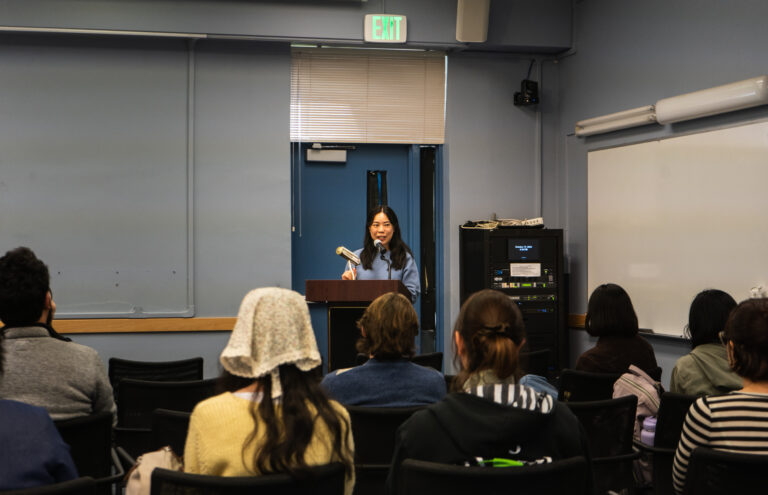
On Oct. 17, the UC Davis Department of English hosted Chang at the first installment of their annual Creative Writing Series, in which different authors are invited to read from their newest books and answer questions from audience members. 

Chang began the talk by reading an excerpt from “Flies,” a short story that details an 11-year-old girl’s experience growing up in an immigrant family with fighting parents. Before reading, Chang confirmed that despite not being explicitly stated, “Flies” actually takes place in Davis. Having grown up in the city herself, the story allowed Chang to reflect on some of her own experiences in adolescence. 

“I have a couple of stories that are told from the perspective of children, which I think has been a perspective I’ve been drawn to because there’s an ironic distance that’s oftentimes built in,” Chang said. “The reader typically knows a little bit more than the character does, because the character is a child.” 

Moderated by Assistant Professor of English Cindy Juyoung Ok, Chang went on to answer questions on various aspects of “Tomb Sweeping,” including the meaning behind its title, what the writing process was like and the book’s overall themes. 

“I took the title of ‘Tomb Sweeping’ from one of the stories,” Chang said. “It comes from the Qingming Festival, which is a traditional Chinese celebration where people go and pay respects to their ancestors. That story and that sentiment felt like it resonated with the novel’s general themes of loss and how to continue living with it.” 

Following the success of “Tomb Sweeping,” the short story collection has gone on to be taught in various Asian American Studies courses for its honest portrayal of generational divides, immigrant families and feelings of loss. Chang explained that while the themes can be received as universal by readers, the stories themselves don’t start out that way. 

“When I’m writing, I’m not thinking theoretically,” Chang said. “I’m not thinking, ‘I want to address the collective Asian American experience.’ Instead, I tend to go at it through very specific characters, who maybe have doubts brewing in their minds [in relation to their identity] and are affected by them on a day-to-day basis.”

Consisting of 15 different stories, “Tomb Sweeping,” showed the full extent of Chang’s range. Moving between different perspectives, various settings and even ages of characters, Chang also discussed what the process was like to arrange such a wide variety of tales. 

“It was the first time I had to arrange a collection, so I was thinking a lot about tone and how one story moves into the other,” Chang said. “I actually don’t read story collections front to back, but I was arranging it in a way for readers who would. I didn’t want five first-person stories in a row or five third-person stories in a row, and had to think about them all in relation to each other.” 

 Originally writing them as standalone stories, Chang fleshed out “Tomb Sweeping,” over a multi-year period. Before reaching its final form, the collection had to go through multiple rounds of editing. 

“I cut four or five stories,” Chang said. “I think cuts are good, and some stories just weren’t as solid. I actually pushed the final draft submission back a year, and so at that point I had to meet the deadline, release it and realize writing is a process.”

Chang also explained how she goes about structuring — or sometimes purposefully not structuring — stories before she begins writing them out. 

“I don’t outline,” Chang said. “I very much lean into writing as a discovery process, I like not knowing and seeing where a sentence is going to take me. Do whatever works for you in the moment that you’re writing, and whatever gives you energy.”

Letting her sentences take the lead in uncovering her stories has led Chang to pieces of writing like “Li Fan,” which relays the events of the tale to the reader in reverse. Beginning with the end, the story opens with the death of a woman the neighborhood knows as “the Asian recycling lady.” 

Sometimes heartbreaking and always thought-provoking, Chang’s “Tomb Sweeping” speaks to the complexity of relationships in the various contexts of culture, place and generation. 

A little over a year since its publication, and three years since the debut of her first novel, “Days of Distraction,” Chang lastly reflected on making peace with finishing both and looking forward to working on her next book. 

“These books, they don’t have to be perfect representations of who I am as a writer,” Chang said. “They’re just one example of who I was at that time in my life, and hopefully I’ll have other books in the future that show the evolution of who I am.” 


Written by: Savannah Anno — arts@theaggie.org 


UC Davis School of Law Professor Mary Ziegler discusses how history informs the contemporary abortion debate

0

With the election coming up, a legal historian provides insight on abortion access in the U.S. 


By LAILA AZHAR — features@theaggie.org


When Professor Mary Ziegler speaks, she speaks with precision. Widely referred to as an expert on the law as it relates to abortion and reproductive rights, she details legal facts and history off the top of her head, with her voice never losing its sharp clarity. 

Ziegler, who teaches at the UC Davis School of Law, uses her knowledge as a legal historian to elucidate abortion-related issues. She has consulted with governors and members of Congress, submitted Amicus curiae (friend-of-the-court) briefs and spoken to a dizzying amount of reporters — more than one a day, on average, and on some days as many as 12. 

Her keen insights are likely a predominant reason as to why she’s such a coveted voice. But as she describes it, she’s in the unique position of understanding the decades-long story of how we ended up in the current state of abortion access — a story that isn’t often told. 

“Historical questions wind up having a lot of present-day significance,” Ziegler said. “There are tons of people who do amazing work in this space, but a lot of it wasn’t about the history, particularly. So when people are trying to make sense of what’s happening now and why it’s happening, or where certain things began or came from, I wind up having to help with a lot of that.” 

It is precisely this gap in research that first got her involved in this line of work. As a second-year law student attending Harvard Law School, she took a course in legal history. Many of the books she read for this class were about the question of whether the law can be used to change society, and if so — how. 

“History is very helpful for addressing that,” Ziegler said. “You can’t know that in the abstract. You have to look at past examples that have worked or failed.” 

She expected to read about Roe v. Wade in this class. Judicial decisions and media discussion constantly referred to the case as a cautionary tale about backlash and the limits of courts. Yet, the case never came up. 

Ziegler asked her professor about the case’s exclusion during office hours. His answer was simple — there weren’t any books that fit the criteria. The scholarship on Roe focused primarily on what led to the case, not what came after. 

Filled with curiosity, she turned to the library archives, sifting through historical newspapers to find the answers she was looking for. Her research turned into discoveries, which turned into writing, which turned into publications. 

Today, Ziegler has written several books on abortion: “After Roe: The Lost History of the Abortion Debate,” published in 2015, details the cultural and political responses to the landmark case; “Dollars for Life: The Anti-Abortion Movement and the Fall of the Republican Establishment,” published in 2022, details the intersection of the pro-life movement and changes in campaign spending policy. 

Her upcoming book, “Personhood: The New Civil War Over Reproduction,” set to be published in April 2025, discusses how the end goal for the anti-abortion movement was never the fall of Roe; Rather, the goal has always been to have an established fetal personhood amendment.

Fetal personhood laws — which would grant fetuses and embryos the same legal rights as a person — have sprung up in the public consciousness and media discussion in recent years, notably this February when the Alabama Supreme Court held that under state law, embryos are children. 

“The book helps make sense of what’s really behind that, and where it’s going next,” Ziegler said. “If you think of the last 50 years as being about the fall of Roe v. Wade, I think the next 50 years, for Conservatives, are going to be about fetal personhood.” 

The future of abortion access is murky. A future Trump administration, Ziegler predicts, could potentially see a rightward shift of an already far-right Supreme Court, or an executive act using the Comstock Act — an 1873 law that criminalizes the mailing of anything related to procuring abortion — to prosecute those who send or receive abortion-related materials. 

In a best-case scenario, according to Ziegler, a future Harris administration could push to end the filibuster in order to advance a bill codifying abortion access. However, considering that Democrats are predicted to lose the Senate, this is unlikely to happen in the upcoming term. 

More likely, Harris would serve as what Ziegler referred to as a “firewall.” The Supreme Court can restrict abortion access regardless of who is president. Ultimately, however, it is up to the Food and Drug Administration and Justice Department to enforce these restrictions. A Harris administration, Ziegler noted, likely wouldn’t emphasize enforcing stringent abortion restrictions.

As the election draws near, the issue of abortion is on the minds of UC Davis students. 

“When it comes to matters such as abortion, being able to make my vote count includes being as educated as possible,” Cuahtemoc Martinez Marquez, a second-year international relations and psychology double major, said. “All voters should be educating themselves on what matters not just to them but to their own children, mothers and sisters.” 

Students view reproductive rights as a factor in their decision, regardless of California’s reputation as an abortion safe haven.

“Our vote has the power to affect the lives of people across the country, including those in states where access to abortion is restricted,” Layla Abedini, a second-year biological sciences major, said. “Even though we live in California, it’s an important issue to be thinking about.” 

For Ziegler, this sentiment is a crucial one for discussion, especially when in a recent case, a hospital in California turned away a patient in need of an emergency abortion because fetal cardiac activity was detected.

“[California] is not a place that affords you the ability not to care about this,” Ziegler said. “There are people you know who could be prosecuted for things depending on what happens in the election — and also, California isn’t perfect.”

The future of abortion access is unclear. But Ziegler’s understanding of the historical and legal landscape surrounding abortion and reproductive rights will continue to provide clarity on the issue. Her research serves to remind us that history is more than a record of the past — it’s a lens through which we can navigate the present.


Written by: Laila Azhar — features@theaggie.org

Campus Tours is locking students into cages for the enjoyment of prospective Aggies

Can I have a bathroom break please?


By ALLISON KELEHER — adkeleher@ucdavis.edu


I’m really popular, so I have a lot of friends roaming around campus. Specifically, I have many friends in the Campus Tours office, who have recently let me in on some shocking information. Soon, a campus job will be released on Handshake — this position will require you to remain seated in a cage for up to four hours at a time. 

At first glance, this sounds really freaky and weird. Who is locking up students? So, here’s the punchline: you are required to study for every hour that you are in the cage, pretty much like every other campus job.

Basically, the consensus from the Campus Tours administrators is that UC Davis students aren’t spending enough time actually studying. They’re not wrong. Take one loop around Shields Library and you can see people doing everything but studying. This reflects poorly on UC Davis, because we don’t look serious enough about our academics. 

So, here’s the idea. Several students will be employed by Campus Tours to study during their shifts for minimum wage. These employees will be kept in cages so that potential Aggies can envision themselves studying. 

“The purpose of the cages is so that everyone can get a good view of the subject,” one of my many friends said.

The cage will be cylindrical in shape with a small desk in the center so that prospective Aggies can get a 360-degree view of what their life will be like. 

Unfortunately, California has labor laws, which means that the subject will be released for 10 minutes during their four hour shift. This will allow the subject to visit the restroom and maybe the trough. Wait, my mistake, the subject could get something to eat. 

In order to ensure that the subjects are following their job description, there will be another job posting entitled “cage-keeper” which will be the supervisors to the cage dwellers. The cage-keeper will roam around in khaki shorts and a button-up top, monitoring the subjects in their cages. If the employees aren’t studying enough, the cage-keeper will report them and they will be terminated. In other words, the cage-keeper position requires some leadership skills, making the compensation slightly higher. 

This proposal made its way through the Campus Tours administration, and the result is that these cages will be placed in various locations around the campus to act as crucial stops in the Campus Tours. When tour guides are at work, you can see them regularly stopping to give some inspiring monologue about key locations on campus. At each of these stops, there will be several cages nearby with students studying within. This way, prospective Aggies will be able to get a good look at each attraction. I have a feeling that the cages by Shields Library will be most popular. 

My very secret source informed me that this proposal has been tested by current Campus Tours employees. They say that in one of their back offices, there’s a room with multiple prototypes of cages that haven’t made the cut for the final product. Some Campus Tours employees were asked to test each one out, and they didn’t approve of several of them. Something to do with claustrophobia. Apparently tour guides don’t like being caged up. This problem will be fixed by hiring specific cage dwellers off of Handshake so that they know what type of job they are getting into.

In my opinion, this idea is still kind of freaky and weird, but maybe I just don’t see the vision. Campus Tours has already surveyed the alumni network and they love the idea. Apparently, they used to study in cages too. Anyways, I’m currently drafting a resume so that I can be the first to apply. I need to be locked in to lock in. 


Written by: Allison Keleher — adkeleher@ucdavis.edu


Disclaimer: (This article is humor and/or satire, and its content is purely fictional. The story and the names of “sources” are fictionalized.)

To ink or not to ink

Inktober: a month-long drawing challenge for the struggling artist


By MAYA KORNYEYEVA — mkornyeyeva@ucdavis.edu


Ah, the universally feared art block. It creeps up on the best of us, looming over even the most proficient artists and slowly draining away any and all creative ideas. Art block is stubborn and not easily deterred — extending its stay for days, weeks, months and, in some of the worst cases, for years.

In the darkest moment (two weeks into fall quarter), October rolls around, and with it arrives a knight in shining armor, ready to take a stand against art block. You may have guessed it: the hero of this story is none other than Inktober. 

Inktober is a yearly tradition for many artists, founded by American illustrator Jake Parker in 2009. Each October, a brand new set of 31 words is posted to the Inktober website, featuring prompts from “grungy” to “scarecrow” (2024). The goal is to take each word and create one drawing per day, whether it’s a tiny doodle, a 20-minute sketch or a full piece. 

Many artists, like myself, prefer a specific medium or muse (focusing only on a single genre or style of art), and Inktober’s diverse list of prompts directs artists out of their comfort zone and to tune in to their imagination in a novel way. While Inktober, as per the name, signals ink or pen as the medium of choice, the daily prompts are truly up for interpretation. Many recent entries are digital rather than traditional, and artists use everything from paint to charcoal to pencil to create their drawings. 

In this way, Inktober functions as a challenge for artists to consistently practice their skills while encouraging them to think outside the box. The limit is your imagination — there is no “one right answer” when it comes to Inktober. 

Inktober is also perfectly curated for fans of the spooky side of October, those who adore sketching ghouls, fantastical creatures and creepy little goblins. It’s a Halloween lover’s paradise, but the prompt ambiguity also works to make it easily accessible and enjoyable by artists from all backgrounds and creative passions.

For instance, one artist may take the prompt “Gargoyle” (2022) and interpret the word as the typical frightening stone creature, drawing from the lens of horror and mystery. Another artist from a different background (for instance, architecture) may illustrate the gargoyle from a mathematical, sculptural point of view. A third artist in the fashion industry could take a different approach entirely, creating a costume design that emulates “gargoyle” elements by sampling gray colors, stone textures and carved patterns. 

With all this being said, no art challenge is entirely devoid of controversy. Parker recently faced severe backlash from the artist community. In a bid to protect his intellectual property, Parker copyrighted the “Inktober” challenge in 2019, urging artists to refrain from using the logo and only including the term “Inktober” as a subtitle. A year later, in 2020, Parker became the center of yet another scandal, this time concerning his alleged plagiarism of Alphonso Dunn’s instructional art book. While Parker denied plagiarizing, artists worldwide took a step back from Inktober and its controversial founder. 

Despite Inktober’s loss in popularity, the original spirit of the challenge is still present and very much alive. Since 2020, each October has been widely celebrated as a month of diligent art practice, with influential artists developing their own themed prompts and posting them on social media for their followers to explore. These new themes include “Witchtober,” “Drawtober” and “SpookTober” (to name a few), and they all function in a very similar fashion to Inktober. 

If you, like me, are fighting a losing battle against art block, don’t fear: all you need is to equip yourself with an arsenal of art challenges to practice with. You can take your prompts from Inktober, or choose any other themed list that sparks your creativity. Needless to say, you don’t have to be “good” at art — just the act of developing a casual sketching routine can help you alleviate stress and feel refreshed after a day of exhausting classes. If you’re reading this in print, feel free to take your copy of The California Aggie and cover it in spooky doodles. 


Written by: Maya Kornyeyeva — mkornyeyeva@ucdavis.edu

Disclaimer: The views and opinions expressed by individual columnists belong to the columnists alone and do not necessarily indicate the views and opinions held by The California Aggie.

Roblox’s ‘Dress to Impress’ soars in usage and helps friends connect

0

Student users discuss why they play the game, what makes it special


By GRACIELA TIU — features@theaggie.org

“Dress to Impress,” a fashion game that is a part of the online game platform Roblox, has been continuously growing in popularity, especially among younger generations. Officially released on Nov. 11, 2023, the game has had over 2.6 billion users. 

“Dress to Impress” user Nicole Miquilarena, a second-year psychology major, described the premise of the game.

“It’s a dress-up fashion game on Roblox, a platform that has many games,” Miquilarena said. “You can play with your friends or with other people; basically, you’re a model. It gives you a theme and you have to dress up to that theme with the outfits that are available.”

The game’s fun features and intricate details make it even more enjoyable to play, users like Amelia Lipcsei, a second-year mechanical and aerospace engineering major, have reported. 

“You can pick the color of the hair, nails, the color of all of the clothes, everything — and then you finish your avatar,” Lipcsei said. “You only get a certain amount of time,  and then you go on the runway, where it shows every single person’s avatar and you get to do little ‘emotes’ with your character. Then everyone votes; at the end, whoever has the most votes gets first, second or third place — or you don’t place at all.”

Users of the game have described that “Dress to Impress” is a fun bonding activity among friends.

“I feel like it’s more fun because you’re competing against each other,” Lipcsei said. “And also you can work together because they have [a feature] where you can team up and be a duo. I feel like that’s more fun because you get to actually work with them to build the outfit. But I also feel like it is fun getting to compete against them and trying to sabotage each other.”

Others admit that they only choose to participate in the game when playing with friends.

“I would say I only really play when I’m with my friends,” Liesl Steffenson, a fourth-year animal science major, said. “It’s really funny, and it’s just like a good bonding experience. It’s always fun to make outfits together and joke around.”

“Dress to Impress,” as UC Davis students have reported, can end up being a fun activity that gives players an opportunity to bring out their fashionable side.

“It’s a fun thing to do on a girl’s night, or when I’m hanging out with my friends,” Steffenson said. “It’s very fun to just be creative and come up with the stupidest stuff you can, or the best outfit you can. It definitely brings fun times and bonding with people and brings my friend group together because we’re all addicted to [playing] it.” 

The game also gives users the chance to expand on their own style and create looks that may not be part of their everyday wardrobe.

“I feel like it probably reflects my personal style a little bit, but it allows me to make outfits that I personally would never wear in public but I still think are cute,” Lipcsei said. “I just don’t have the confidence to wear those outfits out, but I feel like it allows me to know that I can build outfits that I like that I just wouldn’t go out and wear.”

Aside from the basics of the game, players also have access to features like a paid VIP option, where players can have access to different outfits, looks and more.

“There’s a VIP room that you can go in, and there are always way more [options] in there, so people make it work with the theme,” Lipcsei said. “It just gives you access to better things — they have teddy bears, little accessories and more interesting stuff like that.”

Part of the game’s allure comes from its viral presence on TikTok and other social media platforms, with many creators posting about their fun experiences with the game. “Dress to Impress” has incorporated this online culture into its updates, with a notable summer update that excited many players.

“They had a collab with Charlie XCX and they changed the game to be “brat”-themed,” Miquilarena said. “They put new outfit pieces that go with the brand that Charlie XCX is trying to cultivate right now. You could also do different poses that Charlie XCX does, there was “brat” music in the background and different “brat” colors that you could use.”

Although “brat summer” has come to a close, the game recently released its Halloween update on Oct. 19. The update includes spooky revamps to the lobby, runway and dressing room, as well as new poses, items and cosmetic looks. In addition, the update features a quest following the viral “Lana Lore,” which features an eerie hidden backstory about one of the figures in the game.

“Lana is the nail lady in ‘Dress to Impress,’ since when you’re playing, you can also do your hair and your nails,” Miquilarena said. “Apparently, there are Easter eggs in the game that hint at Lana’s backstory.”

Whether you play alone, with friends or for the sole purpose of investigating Lana’s backstory, “Dress to Impress” might be a fun pastime to help you connect with friends and tap into your inner creative side.


Written by: Graciela Tiu — features@theaggie.org

The 15th annual Art of Painting Conference united artists at John Natsoulas Gallery

Celebrating four decades of artistic innovation, the event brings together renowned painters for dialogue, reflection and creative exchange in Davis


By ALMA CULVERWELL — city@theaggie.org


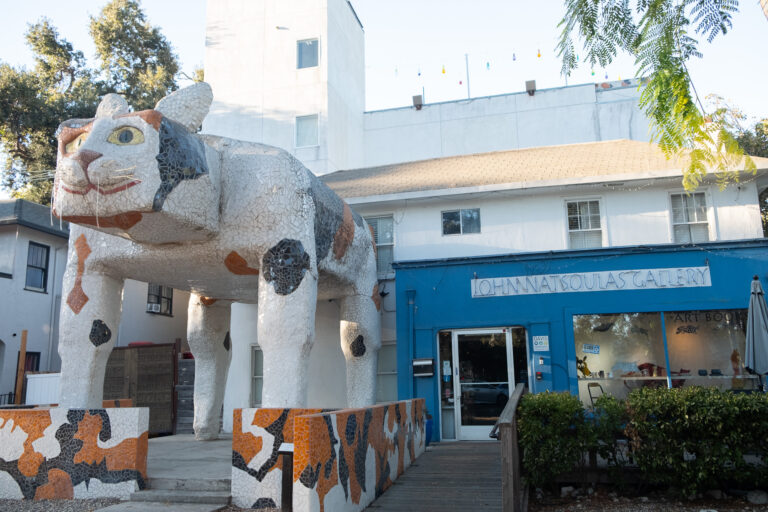
The John Natsoulas Gallery hosted its 15th annual Art of Painting in the 21st Century Conference on Saturday, Oct. 12. This event has become a significant part of the gallery’s long-standing role in the Davis community since its founding in 1986. John Natsoulas, after working with Amnesty International in East and North Africa, returned to Davis to merge his passion for humanitarian work and the arts, launching the gallery as a cultural hub for artistic exchange.

Throughout the years, the gallery has hosted numerous events, including exhibitions, festivals and conferences that highlight West Coast art, where pivotal Davis artists like Roy de Forest, Roland Petersen, Wayne Thiebaud and Robert Arneson played key roles in defining the West Coast art style. The Art of Painting Conference provides an engaging and interactive environment for artists to explore and share their experiences in a traditionally individual field.

“Many painters work alone, an isolated process that deprives the artist of thriving debate until the work is shown,” their website states. “This conference provides a unique opportunity and intimate setting to interact with top artists.”

This year’s conference provided programming from 11 a.m. to  4 p.m. and included lectures with artists Ian Harvey, Danielle Muzina and Jerad Silva as well as a panel discussion moderated by William Maul, featuring artists Patrick Siler, Maija Peeples-Bright, Laurelin Gilmore and Nimah Gobir. The event concluded with an opening reception with live music and refreshments.

The exhibition, co-curated by Natsoulas and John Seed, will be open from Oct. 2 to Nov. 2. Their exhibition gathers artists at different stages of their lives and careers, brought together by their devotion and commitment to painting. The exhibit celebrates diversity in artistic practice, ensuring the display of dynamic, thought-provoking work from all participants. This mix of emerging and established artists demonstrates the gallery’s dedication to fostering a broad spectrum of creative talent.

Written by: Alma Culverwell city@theaggie.org

Students build strength, flexibility and confidence through gymnastics

0

Davis’ Diamonds open gym provides an accessible introduction to gymnastics


By EMME DUNNING — features@theaggie.org


As the Summer Olympics graced the televisions of homes across the world, viewers marveled at the immense strength and talent of the top athletes. Gymnastics proved itself to be particularly interesting to watch, as competitors defied physics through jumps, flips, swings and more. 

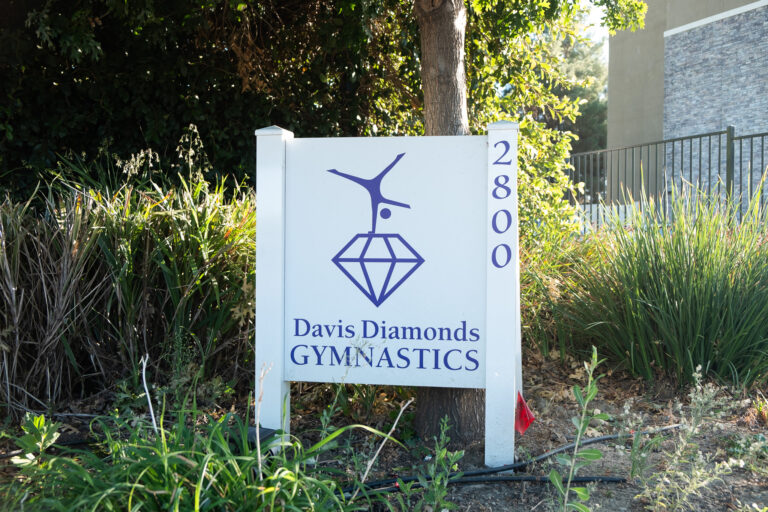
Although many enjoy watching, gymnastics is a sport that many consider to be unattainable for the average person. Davis Diamonds Gymnastics, a local gymnastics gym, is hoping to change this perception. The gym, which opened in 2002, helps budding gymnasts from preschoolers to adults develop strength, control and confidence in the gym. 

In addition to formal classes and coaching, Davis Diamonds offers an adult open gym twice a week for $15 a session. Taking place on Tuesdays and Thursdays from 7:30 to 9 p.m., the open gym gives adults at all skill levels the opportunity to try gymnastics in a safe and welcoming way. 

Jaye Duckhart, a fourth-year neurobiology, physiology and behavior major, has a special connection to gymnastics. Beginning when she was six years old, Duckhart started developing her skills in the sport from very young and went on to compete into her teenage years. 

Duckhart began working and coaching at Davis Diamonds in October of her first year at UC Davis and just celebrated her three-year anniversary at the gym. Duckhart enjoys the mental benefits of gymnastics in addition to the physical strength and flexibility it provides — a major reason she’s such a proponent of the sport. 

“When I was really young, it was just a good way to get my energy out,” Duckhart said. “It’s a good way to build strength in a fun, sustainable way — and be mindful at the same time.”

Duckhart believes that Davis Diamonds offers a great setting for beginners to learn the sport and have fun along the way.

“Davis Diamonds especially is such a comforting environment, and the coaches who coach open gyms are trained and have so much experience working with adults [who are] starting gymnastics for the first time,” Duckhart said. “All the coaches have such a wide knowledge base, and we have a huge variety of equipment. There are so many different things to try.”

Duckhart also coaches a weekly adult gymnastics class that provides more structure than an open gym, but is still a low-commitment way to learn the basics of the sport. The class takes place on Wednesdays from 6:45 to 8 p.m. and can be signed up for on a week-to-week basis.

Another coach involved in open gym is Jonathan Bryant, a UC Davis alum with a Bachelor of Science in mechanical engineering. Bryant has been coaching at Davis Diamonds since 2017 and started gymnastics when he was eight years old. He believes that open gyms can be a great introduction to the sport with little risk and no long-term commitment. 

“Don’t be afraid to ask questions,” Bryant said. “Be prepared to fall down, laugh it off and try again.” 

He also asserted that although gymnastics is an individual sport, it does not lack support and connection with other athletes. 

“Nobody is perfect, and effort is what matters most,” Bryant said. “This is a sport that offers a ton of fun, social interaction, strength and flexibility along the way. Everyone in any gym I’ve ever been in has always shared the mutual understanding that no matter the skill level, each person is on their own journey of self improvement and that this is a trial-and-error sport.”

In addition to providing a fun way to try out gymnastics for the first time, open gyms can also help athletes improve their skills in other sports. Alex Kunz, a fourth-year human development major, has taken advantage of the Davis Diamonds open gym as part of his conditioning for ski season. 

“I heard about Davis Diamonds through some friends on my ski team,” Kunz said. “I went there with the same goals of being able to use the trampolines for training but also because it’s a ton of fun to jump around with my friends as we pretended to do those same tricks on skis.”

Connor Lewis, a fourth-year biological technology major, has also seen the benefits of gymnastics to his success in competitive snowboarding. 

“We were looking for dry land ski and snowboard freestyle training,” Lewis said. “Gymnastics builds a lot of air awareness, which is super useful. Knowing where you’re at during a rotation or a flip and being able to have that feeling of when to look for a landing can really be strengthened by gymnastics just because you’re doing so many more flips and spins.”

This dry land training has proven instrumental for Lewis and Kunz, who both compete at a high level in their respective sports. 

Lewis, like others, also emphasized the welcoming environment at Davis Diamonds and encouraged beginners to give it a try. 

“There are tons of coaches and instructors [with] tons of experience that are happy to answer any questions for you,” Lewis said. “Start small, start slow and build up as you build confidence. Take it easy at first so you don’t get injured and just have fun. It’s really just a good time.” 


Written by: Emme Dunning — features@theaggie.org

Staying safe, conscientious and respectful this Halloween season

The Editorial Board urges you to be mindful of yourself and others during festivities

By THE EDITORIAL BOARD

With Halloween just around the corner, we are quickly approaching one of the scariest times of year — and not only because of the costumes. The six weeks between the start of fall quarter and Thanksgiving break are one of the most dangerous parts of the academic year.  Along with the spooky festivities, there are a lot of opportunities to make memories with your friends and peers. However, there is also a lot to keep in mind in terms of safety during this fall season. 

Halloween can be one of the most fun and festive nights of the year — but with this freedom, especially in college, comes many risks. This Halloween season, the Editorial Board urges you to be mindful of how you dress up, keep an eye on your friends and travel in groups while celebrating Halloweekend. 

Risks aside, an important thing to be mindful of during Halloween is what you’re dressing up as. Certain things should be automatic not-to-dos, with cultural appropriation at the top of the list. Cultural appropriation — when individuals dress up while adopting elements of a culture that is not their own — is extremely offensive. Halloween has been used as an excuse for people to dress inappropriately regarding other cultures for many years, so it’s important to steer clear of dressing or acting in a way that may be offensive to someone else’s heritage. 

Specific costumes or practices to avoid should be relatively self-explanatory; do your best to keep in mind that especially in a college environment, there are students from all backgrounds and cultures. Even if you think what you’re dressing up as isn’t offensive, if there’s any doubt in your mind, there’s a pretty solid chance you should rethink your costume idea. 

Many first-year students, in the wake of their first-ever round of college midterms, are drinking for the first time. Especially on the quarter system, the timing of Halloween typically falls right after midterms end. Halloween therefore tends to be a rowdier holiday for college students, so it’s crucial that you’re paying attention to the people you’re going out with. Stay hydrated if you choose to drink, and ensure that your friends are doing the same. SafeParty offers advice for students about overdose and alcohol risks, as well as resources in case of an emergency situation. 

On the same wavelength of taking safety precautions, another issue that affects college students more than almost anyone is sexual assault. 13% of all students experience some form of sexual assault; 26.4% of women and 6.8% of men in undergraduate programs experience rape or sexual assault through violence, physical force or incapacitation. To that end, ensure that you know where your friends are if you choose to attend parties during Halloween weekend. Stay with the people you came with, keep an eye on your drinks and don’t let your friends go off on any side quests — especially if they’ve been drinking.  

Once you’ve completed some of those nights out with your friends, it’s important to ensure that everyone gets home safely. Davis offers Safe Rides, a free service that will take students and staff to any residential address in the city of Davis until 3 a.m. Unitrans buses are an option until about 10:30 p.m. during the week, and many Yolobus routes are available on the weekends. Ubers and other ride-share services are also an option; assigning a designated driver within your group may also be a smart choice. 

More specifically to Davis students, be sure not to bike or scooter under the influence, for your own safety and the safety of others. Many students are unaware of the fact that they can receive a biking under the influence conviction if they’re seen biking while intoxicated. Police are certainly going to be observing students during these party-filled weekends, so don’t do anything you’ll regret that might get you into legal trouble. 

Pedestrian safety is also in serious jeopardy during Halloween, due to high amounts of drunk driving — so if you and your friends are walking home at night, be safe and be aware of your surroundings. Avoid walking late at night, especially if you’re under the influence, and instead choose alternative options to get home safely.  

Halloween has been cited as the most dangerous night of the year for child pedestrians. Though this is less applicable to young college adults, it’s still a statistic to keep in mind; drunk driving is ubiquitous on Halloween, even in small towns. If you’re walking at night, be visible, be careful and be aware. 

No matter how you’re choosing to celebrate this holiday, always remember to keep yourself and your friends safe. Stay conscientious of your surroundings and — before you make it to any Halloween parties — make sure your costume is inoffensive, fun and spooky enough for the Halloween season. 


Written by: The Editorial Board

UC Davis women’s tennis team takes a loss at their regional championships

Despite the loss, the team looks to finish their season on a high note


By Krista Hajjar — sports@theaggie.org


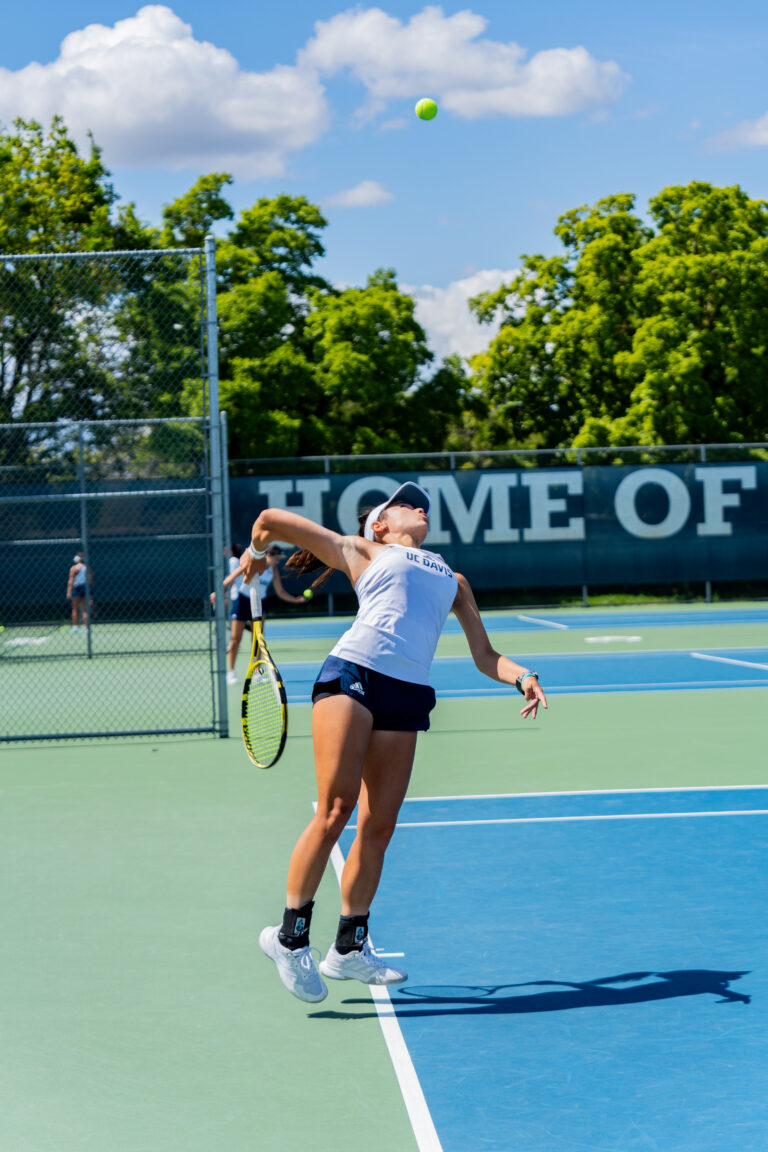
On Oct. 11, the UC Davis women’s tennis team traveled to Berkeley to compete in the Intercollegiate Tennis Association (ITA) Division I Northwest Regional Championships.

The first round of match-ups left the UC Davis Aggies with some highs and lows as two out of the five players advanced to the second round. Daisy Maunupau, a fourth-year cognitive science major, went up against the UC Berkeley California Golden Bears’ Mao Mushika in her first round. Maunupau put up a good fight, winning one game against her opponent. However, Mushika wouldn’t let up and won six games, taking the first set. The second set was an even tougher fight for Maunupau, who lost to Mushika again with a score of 0-6. 

Similar results came about for Maya Youssef, a third-year undeclared major, who also competed during the invitational. She played against UC Berkeley’s Tiziana-Marie Schomburg, who took the win from Youssef. Schomburg took the first set, winning six games against Youssef’s one. Youssef didn’t quit in the second set as she went head to head with Schomburg again, but the second set ended with Schomburg winning six games to Youssef’s four. 

The last loss for the Aggies in the first round was Isabella Bringas, a first-year undeclared major, up against Stanford University’s Valerie Glozman. Bringas faced her first loss against Glozman in the first set with a score of 0-6. She came back in the second set winning one game but ultimately lost to Glozman. 

Not all of the UC Davis team members struck out in the first round — Mika Ikemori, a second-year psychology major, advanced to the second round after playing against the Eastern Washington University Eagles’ Isabella Foshee. Ikemori and Foshee were neck in neck in the first set until Ikemor broke the tie and took the first point. The win of the first set was short-lived as Foshee came back and snatched the second set, but Ikemori came back stronger in the third set and won with a score of 6-2. 

Entering the second round, Ikemori went up against UC Berkeley’s Tiziana Marie Schomburg. She played a strong first set but ultimately lost the first with a score of 4-6. The second set didn’t work in her favor either as she lost to Schomburg again with a score of 6-0, knocking her out of the draw.

The last UC Davis player to play in the singles division and advance past the first round was Sofia Valentine, a first-year undeclared major, who went up against the University of Oregon’s Candela Aparisi. Valentine provided a strong performance and took the first set with a score of 6-0. Aparisi attempted a comeback to win the second set, but Valentine ultimately won again with a score of 6-0 and advanced to the next round. 

The Aggies focused their attention on Valentine, their final player to play her second round. She went up against UC Berkeley’s Lan Mi and ultimately lost both sets with a score of 6-1 and 6-2, cutting her off from the draw as well. 

While the Northwest Regional Championships didn’t go as planned, the UC Davis women’s tennis team is set to play again at the San José State University Hidden Duals, starting on Oct. 25. Despite their loss at this invitational, the UC Davis Aggies will aim to turn things around and come back with a victory. 


By Krista Hajjar — sports@theaggie.org 

Fall back in love with four classic romantic comedies

As temperatures cool down, here are four feel-good films to watch to keep you warm this autumn 


By AALIYAH ESPAÑOL-RIVAS — arts@theaggie.org 


While there are plenty of films to watch as you cozy up next to a fire, the rom-coms for the season of falling leaves are very few and far between. However, the ones that do take place in the fall capture the season incredibly well. As you trade your sundresses for sweaters, turn to these four films for some extra autumn comfort. 


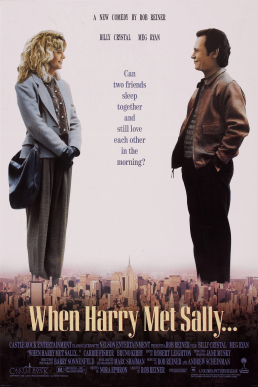
“When Harry Met Sally…” dir. Rob Reiner (1985)


The all-time classic fall rom-com is “When Harry Met Sally…” Taking place in beautiful New York City, the film follows Harry (Billy Crystal) and Sally (Meg Ryan) as two strangers who eventually form a complicated friendship on their road trip from Chicago to New York. Despite the undeniable chemistry between the two, fate and fear step in the way every moment they get close. From relationships, late-night calls to blind dates, the movie asks the question: can men and women really just be friends? This film captures scenic orange and red shots of New York City, a jazzy soundtrack and Meg Ryan’s to-die-for autumnal closet, making it just the right thing to watch as the leaves start to turn.


“Notting Hill” dir. Roger Mitchell (1999)


“Notting Hill” was the original Wattpad-fanfiction-turned-romance film. The film follows William Thatcher (Hugh Grant), a bookstore owner in London who had recently gone through a divorce. Seemingly uninterested in the prospect of new love, big time movie star Anna Scott (Julia Roberts) enters his store. With late-night walks in London, tabloid scandals, countless references to novels and stunning shots spanning multiple seasons, it’s the breathtaking film that makes you want to hop on a plane straight to the real life “Notting Hill” bookstore. Picturesque, whimsical and quaint, this rom-com is undoubtedly understated and a charming fall film. 


“To All the Boys I’ve Loved Before” dir. Susan Johnson (2018)


A newer rom-com, “To All the Boys I’ve Loved Before” encapsulates modern teenage love at its finest. The film, which is an adaptation of the book by Jenny Han, follows a hopeless romantic teenage girl named Lara Jean (Lana Condor), who adores being in love but never goes beyond just writing love letters. Unbeknownst to her, the letters somehow make their way to the doorsteps of all of her past crushes, including her sister’s boyfriend. Despite all of this madness, an opportunity presents itself when star lacrosse player Peter Kavinsky (Noah Centineo) offers to fake-date her to get the attention off of her and to make his ex-girlfriend jealous. But as seasons change, Lara Jean wonders, are her feelings changing for Peter? Stream this film on Netflix and you might just find out. 


“French Kiss” dir. Lawrence Kasdan (1995)


“French Kiss” follows Kate (Meg Ryan) who has an intense fear of flying on an airplane, but when her fiancé, Charlie (Timothy Hutton), flies to Paris and falls in love with a French girl, Kate immediately hops on a plane to win back the love of her life. This plan is suddenly derailed after Kate befriends Luc (Kevin Kline), a criminal who uses Kate to smuggle in his product. Kate’s bag is eventually stolen, losing all of Luc’s precious cargo. As the two are taken on a tumultuous journey through the beautiful scenery of Paris and Cannes, they learn their deepest secrets and vulnerabilities. While the film is a deeper cut amongst romance films, it is not one to miss out on.


While most fall films lean toward the horror genre, there is no doubt these films will give your heart the warmth it needs this fall season. From fake dating to will they won’t they, grab a blanket, a warm drink, fuzzy socks and get cozy for a movie night in as the seasons change. 

Written by: Aaliyah Español-Rivas — arts@theaggie.org 

Brain-computer interface enables speaking-impaired patients to talk again

Innovation offers introduces a new method of communication

By ARYAMAN BHATIA — science@theaggie.org


UC Davis researchers have published a study explaining their groundbreaking brain-computer interface that enables Casey Harrell — a man with amyotrophic lateral sclerosis (ALS), a nervous system disease that impairs physical functioning — to communicate effectively. This marks a significant advancement in the field of neuroprosthetics.

David Brandman, the co-director of the UC Davis Neuroprosthetics Lab, explained the scientific basis behind the invention.

“A brain-computer interface (BCI) is a device that records brain signals in people who are paralyzed and then translates those brain signals to allow people to communicate,” Brandman said. 

The research team utilized a multiple-unit recording machine to capture neural signals from the brain’s motor cortex. These signals were then translated into phonemes — the smallest unit of sound. Sergey Stavisky, the co-director of the UC Davis Neuroprosthetics Lab and assistant professor in the Department of Neurological Surgery, explained how the BCI works in people with impaired speech.

“In essence, what we’re doing is we’re bypassing the injury,” Stavisky said. “We are recording from the source — from this part of the brain that’s trying to send these commands to the muscle — and we’re translating those patterns of brain activity into the phonemes.”

As the participant in the clinical trial, Harrell had his thoughts converted into speech using a text-to-speech algorithm that utilized past recordings to resemble his actual voice.

Nicholas Scott Card, the lead author of the study, commented on the effects of the technology.

“We were able to predict the words that he was trying to say correctly about 97.5% of the time, and he could even use [the technology] in his day-to-day life to communicate with friends or families,” Card said.

The BCI works through a complex pipeline. An array of tiny electrodes records brain signals from 256 sites within the motor cortex, and these signals are processed by a recurrent neural network, which outputs a series of phoneme probabilities. A sophisticated language model is then applied, correcting potential errors and using the structure of the English language to predict the most likely words or sentences. This language model fills in potential gaps where the neural network might have misclassified a phoneme.

This innovation offers hope not only for ALS patients but for a wide range of people with communication impairments. The team’s efforts were supported by Harrell whose dedication contributed significantly to the success of the project.

“I want to give as much credit as I can to Casey [Harrell] and to his family for deciding to be part of this in the first place, and beyond that, for putting so much time, effort, blood, sweat and tears into this to help make everything possible,” Card said.


Written by: Aryaman Bhatia— science@theaggie.org


Lessons from beyond the lecture hall

Someone please tell me how to deal with my finances 


By MOLLY THOMPSON – mmtthompson@ucdavis.edu 


I was apprehensive about living off campus. I loved my dorm, I loved my roommates, I loved being on campus and not having to bike more than seven minutes to any of my classes, I loved the mischief and tomfoolery that occurs in dorm halls and I loved not having to clean the bathroom. 

Turns out, I love my apartment even more. Having couches and a TV is so nice, I’m so glad I don’t have to wear shower shoes or carry my shampoo into the bathroom every night, I like being able to cook my own food and buy my own groceries, my roommates make every day feel like an episode of “New Girl” and the 10-minute bike ride to campus is way easier than I thought it would be. 

But living in the dorms is a little simpler for a few reasons: it’s similar to a stepping stone between living at home with your parents and living alone at your own place. With the dining hall at your fingertips, you don’t have to worry about planning and sourcing meals or budgeting grocery money. You also don’t have to think about rationing your gas and electricity usage, splitting rent in a way that makes sense for your household or paying rent on time. Granted, in a dorm you still have to source your own snacks and often meals on the weekend, but moving into an apartment or a rental house comes with a lot more responsibilities than most of us have ever had to juggle before. 

It’s commonly acknowledged that our elementary education system does a pretty insufficient job of teaching us how to manage our finances, but that is truly evident when we’re suddenly faced with a whole avalanche of new monetary hurdles to jump over. Of course, this isn’t true for everyone, but I can at least speak for myself when I say that I’ve been incredibly intimidated by the task of organizing all of my bills for the first time — it’s hard to know how to line everything up so it falls properly into place. 

I think what gets me the most is not having a clear model to base my strategies off of. Everytime I feel unsure about my approach, I end up wishing there was a clear norm or outline for me to follow. But the thing about finances is that it’s incredibly individual; no single plan is going to work for everyone. I can’t follow what works for someone else because it’s likely not going to work for me. We all have different starting points, different sources of income, different needs and different values, so we’re all going to need different monetary plans. 

Money is such a taboo in our society that it’s no wonder that a lot of us struggle to figure out exactly how to organize our bank accounts. We don’t discuss it very often, so, naturally, we feel like we’re in the dark. 

In some ways, it’s a process of trial and error — a lot of things during this period of life are. At the end of the day, all we can do is our best. I have a system right now, but who knows if it’ll be practical in the long run. I try to log my purchases and keep track of my spending, but it’s easy to lose the thread and miscalculate. I try to compartmentalize everything I have to cover, but it shifts and sometimes I forget to account for one thing or another. Some weeks I spend more than I want to, and some weeks I learn that I actually do need something I tried to skip out on for the sake of my budget. Like everything in life, this is a work in progress — there’s always a learning curve. 


Written by: Molly Thompson — mmtthompson@ucdavis.edu 


Disclaimer: The views and opinions expressed by individual columnists belong to the columnists alone and do not necessarily indicate the views and opinions held by The California Aggie 


Statements made by Chancellor Gary May, Senate Bill #4 passes emergency legislation

Chancellor Gary May addressed concerns regarding the new UC protest policies


By RAGAVI GOYAL — campus@theaggie.org 


The meeting was called to order at 6:05 p.m. by ASUCD Vice President Aaminah Mohammad, followed by a roll call and reading of the UC Davis Land Acknowledgement. 

This was followed by a speech from Chancellor Gary May addressing the ASUCD Senate and others present in the room. He talked about UC Davis’ growth in the academic field, as well as increased recognition on public forums. 

May also talked about the recent publication of UC Davis’ rankings.

“Wall Street Journal just named us the No. 3 public university in the country,” May said. “We’ve got a bronze medal this year.”

May also thanked ASUCD for their role in this success as the student leadership on campus by bridging the gap between the student body and the university administration. He then went on to address concerns regarding the implementation of the UC policies on free speech and free expression on campus. 

May emphasized that freedom of expression remains a “bedrock principle” at UC Davis but mentioned that it comes with a corollary obligation to listen to the viewpoint of others and respect their rights to speak freely.

Additionally, May addressed specific misconceptions starting with the masking provision that some argued violates the right to peaceful practice of religion and/or cultural norms.

“Students, faculty and staff following policy can mask for any reason, including health or cultural or religious practices,” May said. “This policy does not affect these protections. [The] policy only restricts masking when it’s done in violation of [other] policies or to intimidate others.”

He also talked about the new identification policy which states that only those expressly designated by the university administration, including campus safety personnel, may ask for identification or removal of masks. 

May expanded on the identification policy.

 “Just as no person on campus can refuse to identify themselves following such a legitimate request, individuals may request that the university employee provide their identification when they’re making such a request,” May said. 

He ended his speech by appreciating input from ASUCD and welcoming questions or concerns from the student body in general. 

This was followed by several questions being asked by the ASUCD student body as well as some public members present in the room. The questions ranged from the collaboration of ASUCD with university administration to the protests and reported sexual and verbal assault reported on Oct. 7 on campus. Other questions about UC Davis policies and administrative plans for upcoming year were asked as well.   

After a short break, the meeting proceeded with elected officer and ex-officio reports.

This was followed by an introduction of SB #4 on the senate floor as emergency legislation in the meeting. This bill aims to reintroduce a previous senate bill (SB #99) in efforts to smoothen the process of implementing the 2024 to 2025 ASUCD Operational Budget. 

ASUCD President Gaius Ilupeju explained the provisions of this bill.

“Basically part of this bill is putting the [Housing and Transportation Advocacy Council (HTAC)] and the [Disability Justice Committee (DJC)] committees into the executive branch of ASUCD,” Ilupeju said. “So instead of being committee chairs, they’d be associate vice presidents.”

Some senators raised concerns regarding the language of the bill as well as the limited amount of time they were provided to review it. The president and internal vice president emphasized the need to pass this bill as soon as possible as otherwise it will “set the senate back with their quarterly goals.”

The meeting broke off into an unmoderated caucus for five minutes due to a lack of consensus amongst the senators. 

The bill was then voted on, and SB #4 passed by a vote of 7-3. Internal Affairs Chair Amanda Clark voiced concerns regarding SB #4 not being addressed completely to which some of the senators replied apologetically. 

The meeting concluded with a presentation from the University of California Student Association (UCSA) and approval of the past meeting minutes. 

The meeting was adjourned at 8:50 p.m.


Written by: Ragavi Goyalcampus@theaggie.org