59 F
Davis

Davis, California

Thursday, December 25, 2025
Home Blog Page 83

Davis celebrates groundbreaking ceremony for Natalie’s Corner

0

The city kicks off the construction of central park’s $2.7 million renovation project 


By MATTHEW MCELDOWNEY — city@theaggie.org


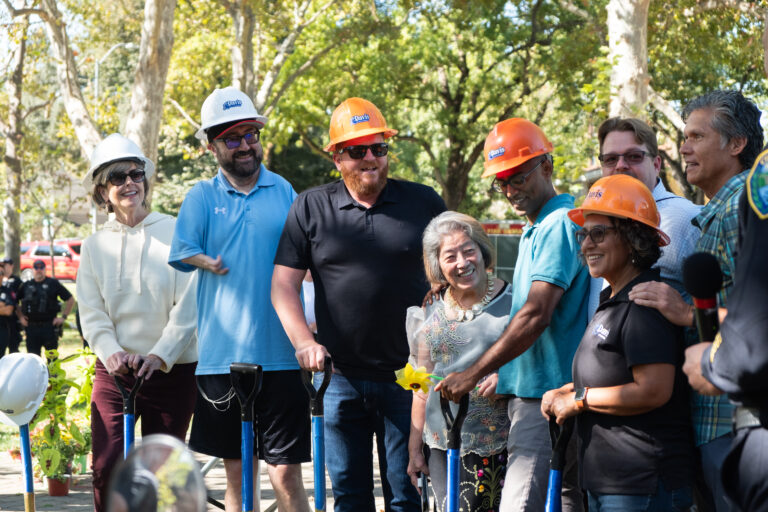
On Sept. 14, the Davis community gathered in Central Park to honor and celebrate the groundbreaking ceremony for Natalie’s Corner. The ceremony marked the beginning of a $2.7 million renovation project which was five years in the making. 

Following the death of Natalie Corona, a 22-year-old police officer who was killed in the line of duty in 2019, the city formed the committee that would be tasked with honoring her memory. The community of Davis came together to decide that the best way to honor the positivity she emanated in life was to create a space for joy and laughter. 

Through the city council, it was decided that the Central Park renovation project would add a splash pad, pollinator garden, shade structures and a picnic area. To reflect the spirit and personality of Corona, the art incorporated into Natalie’s Corner will include the enduring words and symbols from her life.

The construction of Natalie’s Corner is expected to be completed by June 2025, and it will be made free and accessible for all to enjoy during the hot Davis summer. To add to the installation, art events for the community as well as the ribbon cutting ceremony are also in the works, according to the timeline on the Natalie’s Corner official website

Lois Wolk, a former California senator, was appointed as the chair of the Natalie Corona Committee. Wolk was responsible for coordinating the committee to raise funds and to conduct outreach to local artists, businesses and non-profit organizations. 

The Natalie Corona Committee was required to raise a minimum of $174,000 in contributions to receive the $2.7 million Proposition 68 grant from the state, according to Wolk. However, the Natalie Corona Committee aims to fundraise $500,000 to help finance the art installations as well as the replacement and repair fund. Despite the costs of this ambitious renovation project, Wolk was very grateful to the Davis community for coming together to lend their support.

“Thanks to the tremendous outpour of support from the Davis community, it has been a very meaningful project to work on,” Wolk said.

The Natalie Corona Committee collaborated with the Rotary Clubs in Davis for their fundraising efforts, hosting a Touch a Truck event at the Veterans Memorial parking lot on Oct. 7. Agwest Farm Credit was among their largest donors, according to Wolk. Many of the local businesses and families from Yolo County had contributed financially to the project, which can be seen on their official website. Police and firefighter departments from as far as the Bay Area pledged their support for this project to honor the fallen officer. 

Wolk emphasized how important it was for the committee to be able to communicate who Corona was. Whether it was through words or art, the committee called upon experts and artists to do justice to the work Corona had done for the community. Hiring local ceramics artist Susan Shelton, the art of Natalie’s Corner will depict a speech made by Corona to the police academy, a tree of life theme and her favorite plant: the sunflower.

“Susan Shelton went to Natalie’s home and family to weave her story and personality into this art,” Wolk said.

The dedication on the part of the committee was matched only by the graciousness of Lupe and Merced Corona. The family had never failed to attend an event as they traveled down from Arbuckle, according to Wolk. At these events, Lupe and Merced Corona shared the joy that their daughter had brought to their lives. 


Written by: Matthew Mceldowney city@theaggie.org


Help: I think I’m possessed by a cow

0

If you know anything that can help, speak now or forever hold your silence


By MAYA KORNYEYEVA — mkornyeyeva@ucdavis.edu


 Look. I know that the following message may sound crazy. You might (perhaps rightfully) question my sanity. I urge you to cast those thoughts aside. Seriously. Toss them in a bin, cover the lid and hold it down tight. 

Anyway, here goes: I think my body is the grazing ground for a passing-by cow spirit. Now, how do I know this? Well… there have been certain alarming and rather telling signs. 

The first occurrence (dare I say, supernatural event?) occurred at noon last Friday while I was making a shortcut through the grass to get to the MU. My head was pretty empty: I had just submitted my last project for my one Summer Session 2 class. Thus, not paying attention to anything in particular, I zoned out for a little bit. 

Out of nowhere I felt this sudden, drastic desire to munch the grass. On God. I honestly never considered myself as a veggie person, but I was about to throw away all of my prejudices if someone handed me a bushel of fresh green grass. You cannot imagine the stomach-wrenching feeling that something was quite wrong — I am a human, and normal humans don’t casually plop down in the Quad and start munching on grass. 

A few seconds later the feeling passed, and by the time I had walked through the MU and toward the bus terminal, I came to the conclusion that maybe I was just hungry, or perhaps hallucinating. Probably the former. By the end of the day, it was as if the whole grass incident never happened. 

Flash forward to three days ago. That evening, I peacefully went to bed and fell asleep immediately. Suddenly it’s 3 a.m and I’m being shaken awake by my roommate, who, eyes filled with concern, informed me that I had been “moo-ing” in my sleep. Not snoring, she avidly proclaimed, but letting out a series of characteristically cow-like “moos.” At this point, I wasn’t sure what to think. Maybe I had been dreaming about being a cow, prancing in a meadow — but like I said, memory blank, no recollection. I thought it was weird and went back to sleep. 

I wish this was all I had to go on, but the instances of possession became much more drastic and frightening. Mere days ago I spent several hours walking around the living room on my hands and knees. Yesterday I purchased six barrels of hay, a cow bell and 15 assorted t-shirts (all with black and white cow spots) from TikTok Shop. That was 200 dollars of my hard-earned money, and at that point I had enough. I was packing my things to see either a psychic or a psychiatrist — literally anyone with the slightest professional ability to help me — when I realized that I should let the world know what happened to me. 

Perhaps, wandering in a UC Davis hallway, there is another tragic soul who unknowingly took in a lost cow spirit. Perhaps they, like I, have no one to turn to and nowhere to go. So, if you are reading this, please don’t brush it off as the ravings of a lunatic. This happened to me for real, and all I am asking for is some friendly advice. If you know a kind wizard, the apparition that haunts F Street or even if you just casually own a manual on exorcizing cow spirits, don’t hesitate to reach out. I am desperate to set this thing free to join the other spirit cows before the start of fall quarter; otherwise, this is going to be a rough ride.  


Written by: Maya Kornyeyeva — mkornyeyeva@ucdavis.edu

Disclaimer: The views and opinions expressed by individual columnists belong to the columnists alone and do not necessarily indicate the views and opinions held by The California Aggie.

Meet the Editorial Board

Get to know some of the people who help bring this paper together


By THE EDITORIAL BOARD


The California Aggie is the official student-run newspaper for the UC Davis community. Our paper is also the best way for students to get involved in journalism and reporting experience on campus. 

Every week we provide hard-hitting news, in-depth features and diverse opinions about the campus and local community. We publish online every day and weekly on Thursday. You can find many of our newsstands on campus and downtown for your convenience.

We have seven different desks managed by different editors that each provide unique content for our paper. The Editorial Board is also responsible for two weekly editorials that share our student opinions on important issues. Since you will be hearing our rants fairly often, here is a brief introduction to get to know us better.

Chris Ponce, Editor-in-Chief

This is my third time writing a bio for our “Meet the Editorial Board” piece and I’m still at a loss for how quick the time has passed by. This year I find myself in a new role that I am navigating with hope and excitement. During one of the first stories I covered three years ago an Aggie photographer joked that I was on my way to be Editor-in-Chief by my fourth-year. I told him that I was happy where I was. 

Since then I served as city news editor for two years, providing the campus and local community with news about crime, politics and city updates. I oversaw and wrote stories about bomb threats, the serial stabbings and local activism. In that role I understood the vital purpose The Aggie provides. In the summers I have worked for political campaigns, taking a different perspective on the issues we cover. In these roles I have learned that the voices of local communities are essential. I have learned the need for local journalism. 

We write stories that otherwise would have gone unnoticed, we provide a platform for student and professor opinions and we provide safety and crime alerts that help keep our community safe.

This is why I decided to become Editor-in-Chief, to help our paper expand and make sure that we are here to stay for years to come. I fell in love with journalism first, then I fell in love with this city and campus. As my final year moves forward, I will do what I can to do the best that I can. 

Alyssa Crevoiserat, Managing Editor 

It’s hard to pinpoint exactly when I became an editor. I’ve always been a bit of a nutcase when it comes to grammar — arguing about the Oxford comma is still my favorite pastime — but I think it all really began when I became a copy reader for The California Aggie as a first-year. Sitting in my dorm in the dark, editing the articles in suggestion mode and painstakingly awaiting the acceptance or rejection of my edits became my life’s work (on Saturdays). During my one-year tenure as a copy chief, I saw a different side of our publication: pizza trivia nights, the copy team’s attic and a which-desk-would-survive-the-hunger-games simulation. Now, I’ve graduated from suggestion mode — phew — and I can safely say that this has been the most rewarding experience of my life. 

Even after all of this, I still can’t figure out how to tell you what this role means to me. From campus events to medical innovations to city council updates, I have had the opportunity to remain educated on local current events and connect with UC Davis behind the scenes. Going into this year as the managing editor is equal parts terrifying and exciting, and I hope this year is filled with team-bonding events, long nights in the office and, most importantly, incredible journalism. I can’t wait to work with some of the most talented and passionate people I’ve ever met that make this paper all that it is and will be. And if you’re thinking about joining The California Aggie, I can’t wait to meet you, too. 

Madison Peters, Campus News Editor

The Trader Joe’s crew member-to-campus news editor pipeline is real, and I am living proof. It was my former coworker and campus news editor, Lily Freeman, who first introduced me to the wonderful world of the Cal Aggie. One day during the summer before my third year, while we were stocking the fruit and nut section, Lily approached me like a car salesman pitching the newest and fastest car on the market: “How would you like to be a volunteer writer for the school’s newspaper?” she said. At this point in my life, I had a passion for writing and storytelling but no journalism experience. I wondered if this was good enough to join such an impressive publication. However, with Lily’s reassurance (and a bit of begging), I was writing for The Aggie in a few weeks. What I didn’t know was how much it would change my life. With every article I wrote, something exciting sparked within me. Being able to talk to different students, faculty and campus organizations opened my eyes to a whole new world I was unaware of. I felt so connected to the campus community, and being able to see my name on issues and talk about important campus events gave me an unmatched sense of pride (and being able to show these articles to my mom helped my ego greatly).

Going into my second year with The Aggie and taking on the role of campus news editor is everything I would have wished for. I love seeing the passion in my fellow writers’ eyes when they pitch a new story, and being able to help them use their voices is an exceptional thing. This year, in addition to improving my journalism skills, I have a goal to make The Aggie more sustainable in terms of paper waste (woohoo!). I can’t wait to continue shining a light on all the diverse stories on campus and working with my fellow Aggies, since they are the best and kindest people I have had the pleasure of meeting!

Hannah Schrader, City News Editor

A new school year is a time for new beginnings, and of those new beginnings I am most excited to continue my time at The California Aggie but now as the editor of the city news desk. As a brief introduction, my name is Hannah Schrader and I am starting my third year here at Davis. I love reading, baking and traveling. This year I hope to produce high quality coverage of local politics, events and community affairs.

I started working for The Aggie my first year here at Davis after fervently committing to being as involved on campus as possible. It was nerve racking to start college but even more so because a very brazen 18 year old Hannah decided to attend college 2,800 miles from home. After much experimentation with clubs and programs, I had a stroke of luck when I applied to work for the California Aggie. I worked for the city news desk for a year and a half before getting the privilege of now working as the editor of the desk. Through my time at the city desk, I not only grew my knowledge of journalism but the love I had for the field at large. I must also give a big thanks to our current EIC and former city desk editor, Chris Ponce for recognizing the important role the city news desk plays in the Davis local journalism scene and his commitment to providing critical political and city coverage. The city desk taught me what it means to be a part of the Davis community, and more importantly what it means to tell the stories of the people in it. I hope to continue Chris’ legacy of providing high quality coverage and keeping the Davis community informed.

Maya Kornyeyeva, Opinion Editor

From the very beginning — and by the beginning, I mean the fourth grade — I have been in the opinion biz. That fateful year, I published a hand-printed newspaper featuring a story about ghosts (note: it was actually just heat shimmer) hiding in the fake grass of my elementary school’s soccer field, putting my evidence down on paper and proclaiming my albeit fanatical theories to the world. From that moment on, I embraced the lifestyle of a reporter, creating articles and political cartoons for my high school’s newspaper, Scot Scoop. Upon arriving at UC Davis (even before petting the cows!) I applied for the Opinion Desk at The CA Aggie, and, by some miracle, I got in. Two years and countless opinion columns about coffee later, I am here before you as the Opinion Editor for this academic school year. 

From my two years at The Aggie, I feel it is safe to say that this is one of the most passionate student hubs on campus. While at The Aggie Office, I learned trivia tidbits about the most bizarre, random stuff you can imagine. I met people with ground-breaking ideas and shared my thoughts in a judge-free space. Every meeting was filled with laughter, jokes that did (and didn’t) make sense and rants about everything from Doctor Who to surviving the apocalypse. I wouldn’t have made it here without my outstanding editors, Owen and Annabel, and I hope to lead the Opinion desk with the same dedication to free speech as they had. Oh, and of course, whip together a few more articles about coffee.  

Zoey Mortazavi, Features Editor

I unexpectedly found myself in a journalism class my junior year of high school after one of my English teachers said she thought it would be a perfect fit for me. She was right — I fell in love with it immediately and climbed the ladder of staff positions as quickly as I could, from senior staff writer to news editor to editor-in-chief by my senior year. Journalism has taught me about leadership, the importance of properly representing a campus’ population and all (way too much, actually) about meeting deadlines. Finding a shared passion for writing, discussing a community we’re all a part of and learning more about one another in the process has been one of the most rewarding experiences of being a student journalist. 

Joining The Aggie was one of my main goals going into my freshman year at Davis. I applied for a writing position for features and was able to become the assistant features editor by my third quarter. Yasmeen, last year’s features editor, taught me to appreciate and love the human perspective of feature writing. I applied to the features editor position after a year writing for the desk, hoping but not at all expecting to get it. It’s a huge privilege to be able to shine a spotlight on the diverse corners of the community that we have on our campus. Through features I have been able explore Davis on a much deeper level while covering topics like financial education, college language courses and even the importance of studying outdoors. I’m so excited to be joining the Aggie staff officially and for a year full of showcasing the people and communities that make UC Davis all that it is!

Ana Bach, Arts and Culture Editor

I never quite knew when and the exact reason why I wanted to become a writer. I’ve always had a bit of a knack for writing, keeping extensive journal entries about my day-to-day experiences even before I knew how to spell correctly. When I went to middle school, I vividly remember bonding with my seventh-grade English teacher, staying during lunchtime to debrief the books we were reading in class. My interest and love for writing were never questioned, which is why I was so easily convinced to join The Aggie by a member of my sorority, who also happened to be the Managing Editor at the time, shoutout Ms. Katie Debenedetti. From there, everything seemed to come naturally, aside from getting into the habit of rejecting the use of the Oxford comma. 

As I reflect on how I started at the Aggie, it’s been weird to think about ending my experience with something that has been such a prominent part of my life for the past three years. The countless Couch Concert planning, Culture Corner brainstorming and Lit mag layouts will never fail to impress me with the undeniable talent from Aggie and local Davis writers alike. While this final year seems so scary to confront head-on, I want my writers and fellow editors to really cherish all the time we spend together. Meetings can be long and typos are inevitable, so welcome the things that don’t go according to plan because that’s what makes up our perfectly imperfect publication. As always, I hope you all enjoy reading! 

Megan Joseph, Sports Editor 

Wow, has it already been three months? I cannot believe that summer is officially ending and a new school year is starting! For those of you who don’t know me, my name is Megan Joseph. I am just now starting my third-year here at UC Davis and could not be more excited to also start my second year as the sports editor. Over the course of last year, I have learned so much—whether it’s the inner workings of collegiate sports, handling deadline crises, or figuring out the best way to hand out newspapers. I am incredibly grateful for the experiences I have had and will continue to have here at The Aggie. 

I began here just like everyone else, as a new volunteer writer for my desk. After writing and seeing my first few articles in print, I knew I had found my place. I’ve always had a love for sports, whether it’s playing as an athlete or being a fan on the sidelines; it is one of my biggest passions. I am beyond thrilled to continue pursuing this passion and continuing to make entertaining content for everyone this year! With my incredible team of writers, I am confident that we will make this year just as amazing if not better than last year. So, stay tuned for everything sports this year on the backside of the newspaper.

Katie Hellman, Science and Technology Editor

I accredit my deep-seated love for writing to two things: spelling bees and the elementary school book fair. I could say that spelling bees helped me cultivate a fascination for the intricacies of the English vocabulary and the nuances of language, but in reality, I just realized that 1. I liked to spell, 2. It won me money and 3. I should perhaps try stringing together some words of my own. Those book fairs yielded a similar insight; I developed a particular (and thankfully short-lived) fondness for books revolving around talking dogs, and this reading passion quickly gave way to a desire to write. 

Fast forward a decade or so, and I found myself inclined to experiment with different types of writing. In high school, I loved switching between serious and satirical writing topics when given the creative liberty to do so (to the grief of my teachers), but once I entered college I figured it was time to pursue a journalistic position related to my STEM major. I thought science writing sounded cool – and so alas, I applied to be a science writer. After two quarters of that, I realized that the only thing better than writing would be telling other people what to write (kidding… mostly), and thus began my time as the Science Desk Editor during my second year. Here I am now entering my third year, and I can’t wait to return to the position and work alongside an amazingly talented group of editors, writers and artists. If you’re interested in topics like advancements in healthcare, astronomy and the environment, then keep on reading – and if you couldn’t care less, now’s the time to change that.

Written by: The Editorial Board


The Editorial Board’s guide to wellness

0

What to keep in mind when starting the academic school year


By THE EDITORIAL BOARD


Wellness is highly individualized; each and every one of us has a unique regime, set of activities or habits that keep us healthy and happy — both physically and emotionally. However, we on the Editorial Board know that school can often cast an obtrusive shadow on our wellness practices, with the constant need to prioritize classes and achieve high marks resulting in stress and sleepless nights.

As we dive deep into fall quarter, it’s important to actively pursue the hobbies and interests that bring you peace of mind, whether it’s taking a walk in the mornings, journaling or watching an episode or two of your favorite show. Making that time each day to prioritize yourself — rather than casting your needs aside in favor of doing more work — is the first healthy habit to curate this academic school year. 

A great way to go about forming this habit is sticking to a consistent routine and setting aside time in the mornings and evenings to practice self-care. Performing a simple ritual like making yourself a cup of coffee and listening to music can help you start your day feeling fresh and energized. In the evenings, sitting in bed to read a few pages of your book or writing down your favorite part of the day can ground you, taking your mind off of your to-do list as you wind down for the night. 

Another way to approach this habit is by separating your work and personal life. We cannot overstate the importance of finding a good study space away from your dorm or apartment, with access to plenty of resources and limited distractions. The optimal environment will boost your productivity, leaving you more time later in the day to spend on yourself. At UC Davis, some of our favorite study spots include the Memorial Union CoHo (with plenty of coffee and snacks), the library (which offers student tutoring and research assistance) and the TLC Writing Center (with a private and comfortable study space).

We acknowledge that financial stability and good academic standing are indispensable. However, don’t let your personal health be pushed to the side: achieve your dreams in a way that doesn’t erase what you love and who you are as a person. Furthermore, take advantage of academic counseling and mental health services on campus, go to office hours if you need advice from your professor and build a strong support network. There are so many resources available to support you, and it is perfectly normal to reach out for help when you need it. 

In a society where we are constantly judged by our achievements and work is prioritized over everything else, finding that equilibrium makes an incredible difference. Staying organized and deliberately making time to take care of your mental and physical well-being can lift some weight off your shoulders. At the end of the day, keep in mind that feeling prepared and in-tune with ourselves promotes learning and retention and, needless to say, contributes to our academic success.   

Above all, it is crucial to remember that we are defined by so much more than our grades. So, take some deep breaths, pause to appreciate the beauty of the world around you and realize that there are some things outside of your control (and that this is okay). Make wellness your top priority this quarter, and you are sure to see glowing results for both your mental health and physical well-being. 

To end with the wise words of American novelist Anne Lamott, “Almost everything will work again if you unplug it for a few minutes… including you.”


Written by: The Editorial Board

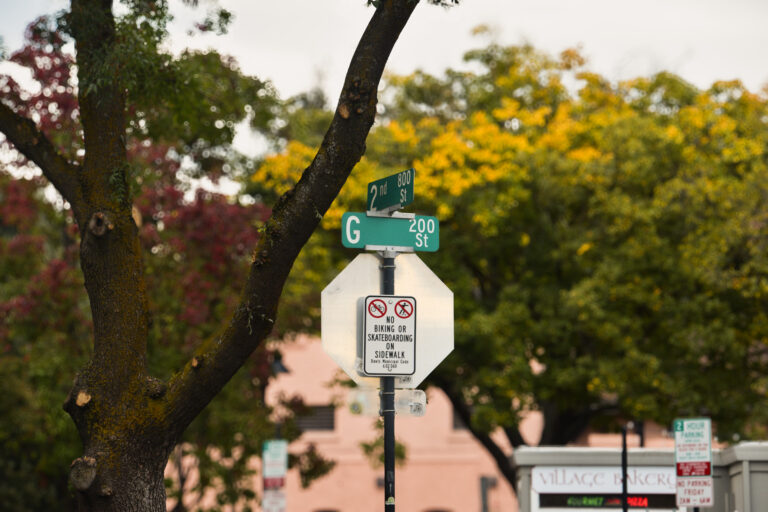
G Street Project updates

0

Construction on the G Street activation project set to start soon


By ALMA CULVERWELL city@theaggie.org 


The city of Davis recently announced that construction on the highly anticipated G Street Project will begin in the coming weeks. The G Street Project, also referred to as the G Street Activation, was made with the goal of providing a vibrant hub of activity that offers benefits to everyone in Davis. This includes businesses, residents, families and students, as described by the city in an announcement on their website. 

“The project is a community investment in the vitality of downtown Davis,” the city’s statement stated. “We hope the updated space on G Street will enhance the community and provide socializing opportunities, cultural enrichment and economic growth.” 

The G Street activation project was originally launched by the city of Davis in June 2020 in response to COVID-19, aiming to support local businesses and safely bring the community together. With construction nearing, city officials addressed several common misconceptions surrounding the project. 

Contrary to some rumors, outdoor dining and alcohol sales will still be permitted on G Street after construction concludes. These activities will continue in compliance with current State Alcoholic Beverage Control (ABC) rules, the city’s Municipal Code and other relevant regulations. Businesses on this block of G Street will need to enter into license agreements with the city to continue these services.

The new G Street area will include city-provided outdoor seating that will be available for public use. The city has ordered a variety of seating options, including moveable seating blocks, round cafe tables and bar-height seating with tabletop space. This furniture will be installed to ensure the space is ready for community use as soon as construction is complete.

Businesses interested in using specific areas of the newly developed space exclusively will be able to do so under a license agreement with the city. These businesses will be able to implement their own furnishings, such as tables, chairs, umbrellas, supplemental lights and heaters, provided they meet the city’s guidelines, which are currently being drafted.

Jenny Tan, director of community engagement for the city of Davis, explained the collaborative process between the city and local businesses that ensures the plan runs smoothly.

“The city has created an interest form for businesses that want to license a space,” Tan said. “We are continuing to work with businesses in person, by email and in meetings on this process and their needs. When businesses do well, so does the city. Our objective is a civic space that is a vibrant hub of activity offering attractions, amenities and benefits to everyone who lives in or visits Davis, including businesses, residents, families and students.”

The city is also planning to install string lights along the edge of the platform to enhance the area’s ambiance. Furthermore, the city will assess existing street lighting to ensure its functionality and will coordinate with the city’s Urban Forestry division to address any street views that may be obscured by tree branches.

Officials emphasized that the inner 20 feet of G Street between the bollards will remain an emergency vehicle access corridor and must be kept clear at all times. No furnishings will be permitted in this area to ensure the safety and accessibility for emergency personnel.

As the G Street Project moves forward, the city of Davis remains committed to engaging with local businesses and seeking additional funding sources to enhance the space further in the future. 

Construction is anticipated to wrap up around December 2024 to be followed by amenity installations and opening soon after. For more detailed information and answers to frequently asked questions, community members are encouraged to visit the G Street Project web page.

Written by: Alma Culverwell — city@theaggie.org

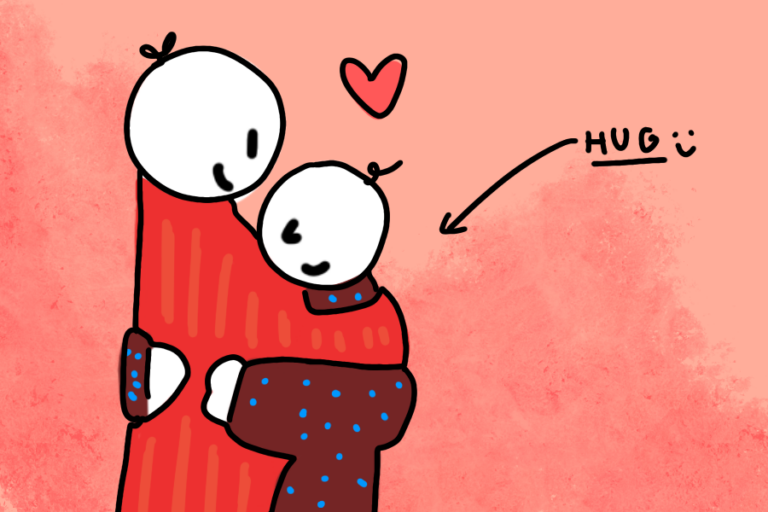
The power of a simple hug

0

Exploring the emotional and physical benefits of giving and receiving hugs


By MAYA KORNYEYEVA — mkornyeyeva@ucdavis.edu


Hugs are my absolute favorite thing in the world. There’s a number of reasons why I love them: they’re comfy, soft, stress-reducing and generally pleasant. Whenever I give or receive a hug, it truly feels as though the world melts away, and it’s just myself and the other person sharing an overwhelmingly positive emotional connection.

I know what you’re thinking: “Yes, this is fairly obvious, hugs are great.” But is there a scientific reason for this plethora of fuzzy sensations we receive from hugs? Something more than just “a happy feeling?”

 Unsurprisingly, the joint actions of giving and receiving hugs are deeply rooted in our body’s biological signals and result in numerous benefits for our physical and emotional well-being. When looking at the dimension of mental health, hugs are similar to a hot cup of tea, a good book and a fuzzy blanket; they work well to reduce stress, allowing not just our body to relax but also our mind, encouraging us to take a few seconds to pause and breathe. 

Our sense of touch is one of the most important yet often overlooked senses, and consists of two types — “fast-touch” and “slow-touch.” “Fast-touch” is responsible for quickly detecting what comes in contact with our skin, such as the hot surface of a pan or rain falling on our face. “Slow-touch” is much more subtle and activates a nerve system called c-tactile afferents. This web of nerves is responsible for processing the emotional meaning of touch. Hugs, which can last anywhere from a few seconds to minutes, are a “slow-touch” sense, affecting the c-tactile afferents and sending numerous hormones throughout your body — the most prominent being oxytocin and endorphins. 

Oxytocin, also known as the “love” hormone, plays a pivotal role in social connection. The release of oxytocin is responsible for lowering blood pressure and heart rate levels, thereby reducing anxiety and stress levels. Endorphins, on the other hand, are neurotransmitters that travel through the reward pathways of your brain to create the feeling of immediate gratification and happiness often associated with a hug. They are typically released when you are participating in an activity that you enjoy, which can be anything from exercising, cooking, doing a hobby or even eating a delicious meal. Like oxytocin, endorphins reduce stress, improve your mood and promote a sense of well-being.

That being said, hugs are also beneficial to our health in the long term. Studies demonstrate that the stress-reducing nature of hugs can help improve sleep, allowing the body to regulate your sleep-cycle better. Over time, hugs and social connection also reduce feelings of isolation and loneliness, building up your resilience to stress. In other words, the more secure you feel from hugs and regular “slow-touch” experiences, the less prone you will be to the negative effects that result from feeling stressed: your body is mobilized to bounce back stronger and more rapidly.

Of course, consent is the key ingredient to hugs, and, for that matter, any other physical contact with another person (even if it’s just a fist bump or high five). Asking first gives your partner, friend or family member a choice — a chance to agree or otherwise deny your offer. In this sense, the positive health benefits that a person receives from a hug are negated without the crucial factor of consent, so always, always keep that in mind before engaging in a hug. 

Thus, even though a hug may seem simple or inconsequential, it is actually incredibly important in reducing stress and improving mental and physical health. Hugs stimulate a wide range of positive emotions, which we often don’t experience on a daily basis. For me, one long hug is enough to lift an invisible weight from my shoulders — perhaps one that I didn’t even notice was there. 

Hugs are such an intrinsic part of human interaction. In our busy lives, we often self-sacrifice our own needs in favor of checking all the boxes on our “to-do” list. So, if you notice someone looking particularly down, give them a hug: they might really need it. 


Written by: Maya Kornyeyeva — mkornyeyeva@ucdavis.edu

Disclaimer: The views and opinions expressed by individual columnists belong to the columnists alone and do not necessarily indicate the views and opinions held by The California Aggie.

Manetti Shrem Museum presents first student-curated exhibit, with works by Dalí

0

“Light Into Density” features 15 abstract paintings from the Manetti Shrem private collection


By VINCE BASADA — campus@theaggie.org


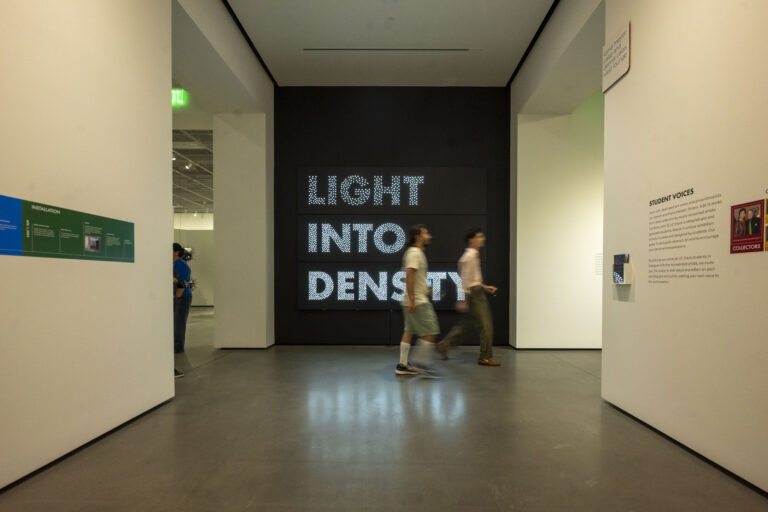
The Manetti Shrem Museum opened the 2024 Fall Season with their first ever student-curated and student-designed exhibit “Light Into Density: Abstract Encounters 1920s–1960s | From the Collection of Jan Shrem and Maria Manetti Shrem.” 

It includes 15 pieces from the museum’s namesakes with works by Francis Bacon, Salvador Dalí, Vassily Kandinsky and Joan Miró, among others. Many of the pieces have not been publicly displayed in decades.

Maria Manetti Shrem said she was excited to finally unveil the artists’ works. 

“I am so delighted this exhibition is happening after 30 years,” Shrem said in a recent press release. “It’s the first time these unparalleled works of 20th century art will be shown together.”

The exhibition was curated by students in the Fall 2023 Exhibition Practicum course led by Assistant Professor Alexandra Sofroniew. Additionally, it was designed by students in the Winter 2024 Exhibition Design course led by Professor Timothy McNeil and Associate Professor Brett Snyder.

“There’s curatorial work, organizing the objects and creating a story and narrative for the exhibition, then the design part is to visualize and bring to life that narrative for the visitor,” Sofroniew told The Aggie.

Students from Sofroniew’s class visited the San Francisco Museum of Modern Art to see the works in person before they were brought to Davis. The pieces are shared between the Manetti Shrem Museum and SFMOMA, both of which have been recipients of the Shrems’ philanthropy.

“They’re unbelievable paintings,” Sofroniew said. “Most curators in their careers at museums would not work with paintings of this caliber or value.” 

Pieces on display include Salvador Dalí’s “Les désirs inassouvis” (Unsatisfied Desires), “Skull of a Gorilla” by Francis Bacon and “Femme et oiseau” (Woman and Bird) by Joan Miró.

Sofroniew says that her class made an effort to make the exhibition accessible to museumgoers of all experience levels, especially for their fellow students. Instead of standard object labels with the history of a piece, each painting is accompanied by a quote from students and others who worked on the project about what they see and feel in each work. They hope that it will be a starting point for observers unfamiliar with abstract works to discuss the art amongst themselves.

“We [had] to make a narrative that will speak to students at UC Davis today to get them interested in these paintings and want to come to see them,” Sofroniew said. “There’s no right or wrong way to look at art or to respond to abstract art. Just say what you think about it.”

Other unique details include a conversation table for guests to talk about the art within the exhibit space which are areas that are usually placed outside to keep the viewing space quiet. Additionally a ‘Student Voices’ wall is featured with photos of all the students who contributed to the exhibit, and a title wall for the exhibition by design student Emma O’Connor, lit with LEDs and inspired by Lucio Fontana’s “Concetto Spaziale (Gold) (Spatial Concept),” one of the works on display.

Sofroniew noted that while many of the pieces were created in times of turmoil and war, the curation team wanted to focus on positive aspects and interpretations of the pieces.

“One direction could have been [to create] a quite heavy exhibition, but times are heavy now too and the world is in turmoil,” Sofroniew said. “So the students were looking for the hope in the painting and light in the darkness.”

While the exhibition has been open since Sept. 19, a public opening ceremony will take place on Sept. 29 from 12-2 p.m. with student guest curators and designers who will discuss their project. Light refreshments and live music from a UC Davis student jazz quartet will be included. 

The ceremony is part of a larger fall Season Celebration hosted by the museum on that day which will run from 10 a.m. – 5 p.m. Both the event and the exhibition are free for all to attend.

“Light Into Density” is on view from now until May 5, 2025. More information on the exhibit and the museum can be found at manettishrem.org.


Written by: Vince Basadacampus@theaggie.org


Mount Tamalpais: The birthplace of mountain biking

All-terrain origins hailing from the Bay Area


By SAVANNAH BURGER—arts@theaggie.org


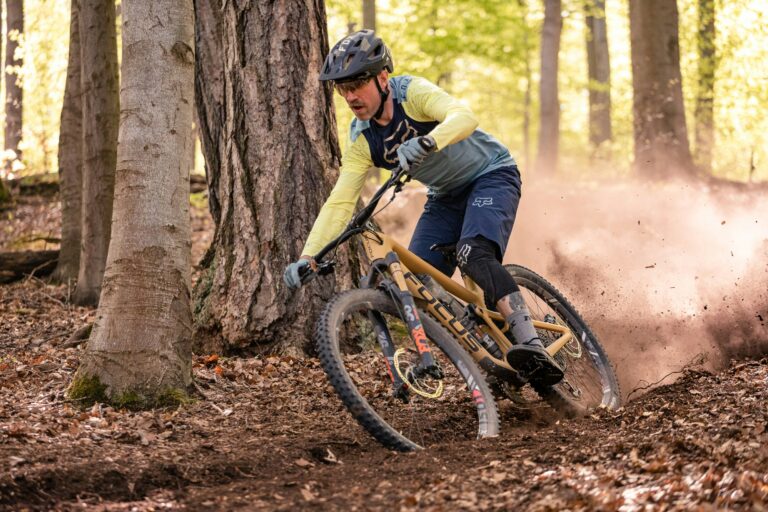
It’s safe to say that the citizens and students of Davis have a passion for everything having to do with biking. The logo for the city itself is a bicycle, and the fact of the matter is that nearly 50% of all students at UC Davis commute to campus via bike. While there are a myriad of different bikes, a common type to see around Davis is the all-terrain mountain bike. However, the mountain bike does not originate from Davis — instead just two hours west in the Bay Area.

Just north of San Francisco’s Golden Gate Bridge, the mountain bike was born in Marin County’s Mount Tamalpais. The mountain itself, also commonly referred to as “Mount Tam” for short, is a 2,571-foot behemoth of a mountain that offers miles of trails, multiple campgrounds, outdoor theater and gorgeous views of the California Bay Area. 

All around Mount Tam, there are vista points that show off San Francisco, the Pacific Ocean, Marin County, the East Bay, Mount Diablo and, with luck and good weather, the Sierra Nevada Mountains, located more than 150 miles away. Also boasting many different ecosystems — such as open grasslands, coastal redwood forests, oak woodlands, chaparral and a pygmy cypress grove — Mount Tam is the perfect destination for outdoor activities.

The same sentiment was held by a group of Marin-based teenagers known as “The Larkspur Canyon Gang.” This group of teens, among them being mountain bike legends Gary Fisher, Joe Breeze and Tom Ritchey, were busy experimenting with custom bikes specializing in off-roading. They chose the twists and turns of Mount Tam to be their testing field. 

The group made their modifications by taking 1930s Schwinn, Colson and Shelby bikes and stripping them of irrelevant parts. They then took salvaged parts from junkyards and other bikes to outfit their models with wide, knobby tires, sturdy frames and flat motorcycle handlebars. The bikes were also retrofitted with the better brakes and gears needed for riding at fast speeds down the face of Mount Tam.

These bikes, markedly the “Breezer #1” made by Joe Breeze in 1977, are thought of as the first prototypes for today’s mountain bike. These bicycles, which were affectionately referred to as “klunkers” or “ballooners,” were used by Larkspur Canyon Gang in the world’s first ever mountain bike races, named the “Repack Downhill.” Starting in 1976, the races were dubbed “Repack” due to the fact that the downhill descent on Mount Tam caused extreme speed — making the coaster brakes red-hot and vaporizing the grease. Thus, after every race, bikers would have to repack their brakes. The course that the Repack followed shoots down 1,300 feet in less than 2.1 miles — talk about extreme!

Naturally, the Repack Races became a hit, attracting riders and spectators from all over the Marin County and greater Bay Area. There was such eagerness around the races, they held the first nine in just one week. The Bay Area, and quickly more distant bike fans, became hooked. Not only was Mount Tam the home of the first modern mountain bike model, but it also played the most pivotal role in making mountain biking a heated, exciting and competitive sport. 

Since then, the sport and the mountain bike itself have taken off. Soon after the Larkspur Canyon Gang and Repack Races, the 1980s saw the wide-scale media coverage of major races, which were viewed by millions of people. Companies such as Trek, Specialized and Cannondale hit the mountain biking industry with new innovation and commercialized mountain bikes, driving their rapid evolution. 

Once the 1990s came around, mountain biking had proven itself a worldwide phenomenon. In 1996, mountain biking entered the Olympic Games in Atlanta, Georgia as an official sport, almost to the day of the 20th year anniversary of the very first Repack Race.

Today, Mount Tamalpais is still known as one of the best mountain biking destinations in California, with eight trails dedicated to mountain biking in Mount Tamalpais State Park. So, if you’re wondering how far you can push the mountain bike you ride to work or school everyday, take a little trip to Mount Tam and see what it can do on its home turf!


Written by: Savannah Burger—arts@theaggie.org 

City of Davis and Yolo County officials meet to address mutual interests and community concerns

0

Regular 2×2 committee meetings foster collaboration on public services community project and encourage public input

By ALMA CULVERWELL — city@theaggie.org

Two members of the Davis City Council and two representatives from the Yolo County Board of Supervisors recently gathered in an ongoing effort to discuss shared issues affecting both the town of Davis and Yolo County. Known as the City-Yolo County 2×2 committee, this regular meeting focuses on exchanging information rather than making formal decisions for the entities represented. 

Officials discussed key developments, including the success of the Yolo County Fair, which drew nearly 100,000 attendees, and future plans to enhance the fairground and strengthen partnerships for emergency services. The boards also addressed the rising homelessness concerns, with updated data showing an increase across the county and the need for better coordination between city and county services, especially as state agencies clear encampments. 

The Pacifico housing project resumed after finding a code workaround, with plans to convert buildings into dormitories and independent living units by July 2025. Additionally, enhancements such as more electric vehicle (EV) charging stations and energy-efficient components were considered. The board also supported including students in housing discussions and highlighted Measure T on the November ballot to address library operating costs.

This collaboration has existed for some time, and meetings typically occur every other month. The primary objective is to foster communication between the two jurisdictions to help both parties remain aligned on issues that impact the region. From smaller topics like logistical assistance at community events to greater collaborative efforts such as public library projects and shared services, the goal of these meetings is to ensure smooth, open communication and effective problem-solving.

“We’ve built a strong working relationship with each other over the years,” Jenny Tan, the community director for the city of Davis, said. “This is a time for us to discuss items of mutual interest or concern, share resources and ensure that we are responding to the needs of our community effectively.”

The meeting serves as a platform for both entities to bring up matters of local importance, assess potential challenges and explore solutions that would benefit both the city and county. However, this committee does not have decision-making authority. Instead, its function is to facilitate dialogue and information sharing, leaving official decisions to the full city council or board of supervisors. 

During the meeting, one of the key discussion points was how the city and county collaborate on both minor and significant issues. A prime example mentioned was the Walnut Park Library project, which stands as a testament to the successful collaboration between the city and county. Other initiatives discussed included public services and resources available to residents, particularly those that require coordination between the two governments.

The meeting also emphasized guaranteeing efficient public services for all residents and maximizing available resources. Both sides emphasized their commitment to community well-being, sharing insights and updates on relevant local projects.

Although no specific challenges were highlighted, officials stressed the importance of maintaining open lines of communication. 

“We’ve worked with each other for so long and across so many topics that cooperation comes naturally and easily,” Tan said, reinforcing that collaboration has become second nature for the two entities.

Public input remains a vital component of these discussions. Residents are encouraged to participate by either attending the meetings in person or submitting comments via email. During these sessions, public concerns are heard and reviewed. Depending on the issues, staff from either the city or the county may be invited to present on specific topics raised by the community.

“When we hear of things of particular interest to our community, we usually check in with each other,” Tan said. “We take concerns and input from our public seriously and try to incorporate them as much as possible.”

These meetings are designed to be transparent and open to the public, allowing residents to voice their opinions and for officials to respond. If a community issue requires further attention, it is typically escalated to relevant staff members, who then work to address the matter more comprehensively.

This ongoing collaboration between the city of Davis and Yolo County serves as a model for how local governments can work together to address shared issues while meaningfully engaging with the public.

For more information about City-Yolo County 2×2 meetings, visit the official city of Davis website.


Written by: Alma Culverwell — city@theaggie.org

UC Davis receives over $1 billion in research grants for third consecutive year

These grants fund research for programs such as social work and psychology studies


By JORDAN POLTORAK — campus@theaggie.org


UC Davis received over $1 billion in undergraduate and graduate research grants for the third year in a row. The two largest providers were the federal government providing $441 million and the state providing $237 million. 

Executive Director of Human Services at UC Davis Continuing and Professional Education Alison Book was given the largest award at $52.39 million. 

“It’s a grant that has such an impact,” Book said. “It’s designed to support social work education in California and help develop well-trained social workers who can do great work with kids and families. I’m excited that we’re one of those sites that allows that good work to happen.” 

In June of this year, UC Berkeley shut down the California Social Work Education Center (CalSWEC) after 33 years. The California Department of Social Services selected UC Davis and UC Los Angeles to house the new sites for the Title IV-E program. This program provides monetary support and professional education to undergraduate and graduate social work students.

Director of the Behavioral Neuroendocrinology Lab Brian Trainor was given a grant to continue research surrounding gender differences in response to social stress, specifically during puberty. 

“When I started the lab, we only studied male mice,” Trainor said. “Two undergraduates in my lab talked me into doing experiments with females. A few years after I was hired, the National Institute of Mental Health started asking for grant applications where they would study sex differences and particular projects related to women’s mental health. Because those undergrads talked me into doing experiments with females, we already had some data and were able to get that first grant.”

Trainor continued to study these sex differences as they related to stress when a graduate student of his helped make a breakthrough.

“Emily Wright did an experiment on juvenile mice, and she was the one that talked me into looking into puberty,” Trainor said. “This solved all the differences. Males and females respond to stress the same way until they go through puberty.”

The newest experiments will test the hypothesis that androgen receptor activation during puberty alters gene expression in the brain. This results in permanently programming neural circuits of social behavior to be less sensitive to social stress. 

Trainor said he was grateful for the opportunities he’s able to explore with his grant.

“The grant pays for everything: the researchers, the mice [and] the lab equipment,” Trainor said. “It’s exciting. Four years ago I couldn’t even imagine some of the methods we’re using.” 

Written by: Jordan Poltorak — campus@theaggie.org

Aggie Yogurt opens on 2nd street

0

This past summer the environmentally friendly frozen yogurt shop opened its doors


By ALMA CULVERWELL – city@theaggie.org


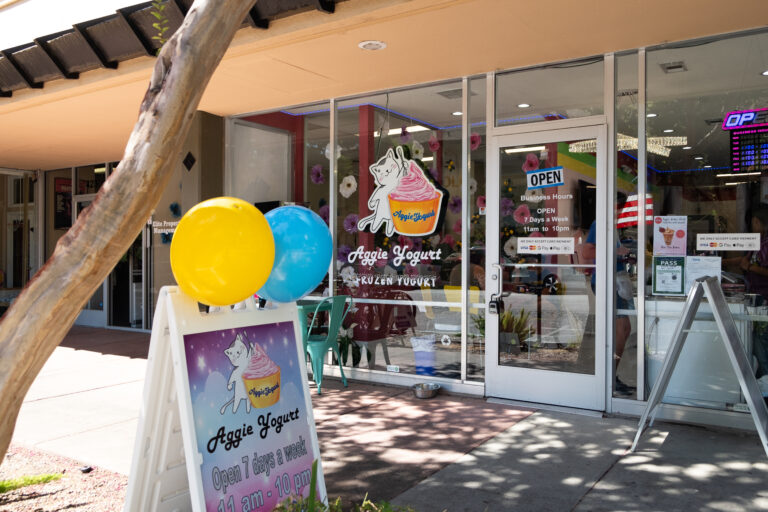
This June, Aggie Yogurt, a new frozen yogurt shop, opened its doors to the Davis community with a celebration at 425 2nd St. The store, which promises a fresh take on frozen yogurt, has gained attention for its combination of unique flavors and a strong commitment to sustainability.

Aggie Yogurt aims to be “your ultimate destination for fresh, creamy and delicious yogurt creations,” according to their website. This tagline reflects the shop’s approach of offering customers a highly customizable experience. “The vibrant and inviting shop offers a delightful array of new flavors, from Cookie Monster to Wild Strawberry, all made with the finest ingredients,” their description reads. 

The store, which prides itself on catering to a broad spectrum of dietary needs, features options for every preference. From dairy-free and gluten-free selections to low-sugar alternatives, Aggie Yogurt ensures that anyone can enjoy its frozen treats. Customers can personalize their yogurt with a wide variety of over 32 toppings, including granola, berries, nuts and sauces.

Aggie Yogurt also sets itself apart by emphasizing eco-friendly practices. The shop uses compostable cups and utensils, and it offers discounts to customers who bring their own reusable containers, helping reduce single-use plastic waste. 

Aggie Yogurt is the third frozen yogurt store to open in downtown Davis, joining longtime favorites Cultivé and Yoloberry. The frozen yogurt scene has been popular in Davis for over a decade, with both Cultivé and Yoloberry establishing themselves as staples for local families, students and visitors. Aggie Yogurt hopes to stand out by offering not only new flavor combinations but also a modern, sustainability-focused business model that resonates with the environmentally conscious population of Davis.

The shop’s opening also marks the fifth addition to the downtown area’s growing list of ice cream and novelty dessert shops, which includes Baskin-Robbins, Davis Creamery and Sweet and Shavery. With increased competition in the frozen dessert market, Aggie Yogurt is banking on its unique and eco-friendly mission to attract a loyal customer base.

Aggie Yogurt plans to continue its community outreach with special events and promotions throughout the year. The store has already announced plans to host a series of themed yogurt nights, where customers can try limited-time seasonal flavors and participate in yogurt-making workshops. To celebrate its opening, the shop has also scheduled various promotions for the month of September, offering discounts and free toppings for loyalty members.


Written by: Alma Culverwell — city@theaggie.org

Queer music artists gain in popularity and impact the LGBTQIA+ community and beyond

0

Queer listeners and Gender, Sexuality and Women’s Studies lecturer discuss the effects of queer music and its rise in the industry


By GRACIELA TIU — features@theaggie.org


Queer music artists have been making music for decades, but in recent years, they gained more attention than they have previously. This could be occurring for a multitude of reasons, but nonetheless, this shift has brought about a special impact on LGBTQIA+ listeners. Dr. Sarah Thompson, a lecturer of Gender, Sexuality and Women’s Studies at UC Davis, describes the change they feel in the industry.

“It is my perception that there has indeed been a shift in recent years, and it does feel like we are seeing more openly queer artists — in particular, more openly queer artists who are fairly popular and well-known,” Thompson wrote in an email to The California Aggie. “Queer people being in the music industry is nothing new, of course, but many artists were only publicly out (or outed) after they had achieved high levels of fame and success or even after death.”

Queer music artists have existed for years, so what exactly is different right now? Dr. Thompson describes how there is a specific and multifaceted change that is occurring that is different from past cultural shifts.

“In recent years, it seems like we have more examples of artists who are openly queer, making music from a queer perspective and achieving mainstream success (MUNA, Kehlani, Frank Ocean, etc.),” Thompson said. “Chappell Roan is perhaps the biggest example of this right now — she’s absolutely blowing up, and her music is very explicitly queer.”

Having more popular and accessible queer music artists brings more listeners to their music, which can actually have a beneficial effect on many LGBTQIA+ listeners.

“There’s certainly a lot of anecdotal evidence that for queer people, especially queer people who are young or just coming out, art that reflects their feelings and experiences can be deeply meaningful,” Thompson said. “Art helps us understand ourselves, and music in particular can feel very powerful.”

However, having more openly queer artists in the industry does not necessarily mean that they are represented or perceived as equal compared to straight artists.

“With the media, I think that by focusing on the fact that they’re queer, it honestly takes away from them as a whole,” Ava Burton, a second-year geology major, said. “I don’t think that’s fair; I think that there is definitely that subtle heteronormativity.”

Overall, this recent rise in queer artists’ visibility begs the question: what is different now compared to several years ago? 

“I think that the media is very different than it was 20 years ago,” Burton said. “I also think that it has to do with where you are, it depends on your age and also the communities you are in.”

Music listeners, especially those who are a part of the LGBTQIA+ community, also notice a difference in sounds created by queer artists. Max Wozniak, a second-year mechanical and aerospace engineering major, said music is interpreted in a deeper way.

“I feel like they just have a groove, a sound that is a lot more expressive,” Wozniak said. “That goes back to the lyrics too. They actually describe things in a very different way. Because every song about love when you’re queer is also a song about a little bit of [personal] pain.”

Wozniak also recognizes the influence queer artists have had on the music industry and performance culture as a whole.

“They’re making everything more colorful; [a lot of] the color and music for the past, like 15 years have been introduced by queer people,” Wozniak said.

Having more queer representation in music culture can also have a broader influence than just on individual listeners, impacting not just one person but their families as well.

“It’s very easy for a [child] to show [their families] a track or two, because they get shown a lot of music by children,” Wozniak said.

The rise of queer music artists in recent years demonstrates not only our society’s potential for change but also the level of influence that the queer community has on music culture overall.


Written by: Graciela Tiu — features@theaggie.org

Davis Downtown Business Association hopes to connect campus and downtown communities

Highlighting the events and organizers that play a role in connecting our campus to the city of Davis


By NOAH HARRIS — features@theaggie.org


UC Davis and downtown Davis share a certain closeness that can be hard to find in other parts of the country: the campus is directly connected to the city, and the downtown area is reachable in minutes. With many students living downtown, there is a functioning relationship that benefits both the university and the city overall. 

Some ways this connection manifests itself are through the annual Dive into Downtown, an event during first-year Aggie Orientation and the end-of-year UC Davis graduation.

There are many first-year students coming to Davis to start the new school year. This year, UC Davis expects around 9,600 new undergraduate students — a 4% increase from the previous year. After they arrive, they go through a mandatory three-day orientation program. This includes events such as a welcome rally, a football game and a campus tour. On the last day of orientation, the Dive into Downtown occurs. 

Before 2020, UC Davis’ orientation was a series of three-day programs throughout the summer, with students participating at different times. In 2020, when orientation was completely remote due to COVID-19, the current plan was put into place. This involves every first-year student participating in orientation at the same time, as well as transfer student orientation, which occurs a couple of days prior. 

Brett Lee, the current executive director of the Davis Downtown Business Association (DDBA), revealed how many students he was told attend orientation each year.

“The number they’ve used is about 3,000 transfer students and 8,000 freshmen,” Lee said. 

While there is not a specific itinerary or location in downtown for this event, it is run by the DDBA every year. Their events intend to support the economic well-being of the DBID, which are the Davis Businesses in Downtown, according to the DDBA. 

Traditionally, the event has been a simple walk through downtown with an orientation leader showing their students around and various businesses offering discounts for students to use.

Julia Carlson, a third-year orientation leader and sociology and psychology double major, explained what the role of an orientation leader is.

“We walk around, show them stores,” Carlson said. “It’s basically just to show them one of the fun parts of Davis and get them excited about living here.”

Dive into Downtown is not about potential sales and profits, according to Brett Maresca, the former executive director of the DDBA. Instead, the event is much more about interaction and creating a good first impression of the city for incoming students.  

“Realistically, it wasn’t about one day of sales, it’s really trying to create a connection with the students and more with the university,” Maresca said.

Lee had similar thoughts about the culture behind the event and discussed the importance of helping to introduce new students to the downtown area, as well as the importance of getting to know local businesses. 

“Something like [Dive into Downtown] is beneficial to the downtown businesses as well, because it introduces their business to students who in most cases will be in Davis from anywhere from two to four years,” Lee said. 

Yelena Ivaschenko, owner of the downtown store Bohème Threads and former marketing committee chair of the DDBA, said she strongly supports Dive into Downtown and its effect on the community. 

“I think it’s one of the greatest collaborations between UC Davis itself and the downtown businesses,” Ivaschenko said. “After a very slow and brutal summer where sales are impacted after students are out of town, it’s very nice.”

For many students, Dive into Downtown is not exactly considered a highlight activity. For first-years, it is scheduled for the last day of orientation, a Sunday, when many students are not in attendance due to factors such as the heat. However, Lee was optimistic about the impact this event can still make. 

“What we want to do is make it worthwhile, because we’ve all gone to some things [where] you’re like, ‘Can I get my hour back?’” Lee said. “Ultimately, we want this to be one of the favorite [orientation events].”

This event is not the only opportunity for downtown Davis to receive an influx of people. With over 12,000 degrees being handed out for graduating students, thousands of graduates and their families typically come to Davis during the summer months. 

However, graduating students in 2023 and beyond have relocated to the Golden 1 Center in Sacramento as a result of heat-related issues during the 2022 ceremony on the football field. While the Golden 1 can host a capacity of over 17,000 people, this still poses issues for downtown businesses back in Davis. 

Many have suggested that the U Center, where UC Davis sports teams play, would assist in keeping graduates and their families in Davis. The U has previously hosted graduation before it was moved to the football field.

Ivaschenko said she was sad about this loss to the community. 

“The graduation ceremony being removed from the county itself is the biggest loss, the biggest disconnection,” Ivaschenko said. “The impact is tremendous. People are not staying in Davis, we are seeing a huge decrease in sales.”

Lee said he was sympathetic to the university, but noted the community-wide reaction to this change from downtown business. 

“To have it in a temperature-controlled environment makes sense,” Lee said. “[However], a lot of the downtown businesses were very concerned when it was announced that graduation would be at the Golden 1 Center.” 

Maresca said that aside from Dive into Downtown, there are not many collaborations between downtown and UC Davis.

“We’d love to see the university put more effort into continuous connection with local businesses,” Maresca said. “The city makes this university, and the university also makes this city.”

Dive into Downtown and UC Davis graduation are two very different events. One happens at the start of the college journey and the other at the end. However, they are both opportunities to connect the university to its downtown — the hope for downtown businesses is to increase that connection in the future.


By: NOAH HARRIS — features@theaggie.org


An introduction to the Davis Farmers Market

0

New school year, same beloved farmers market


By OLIVIA HOKR — city@theaggie.org


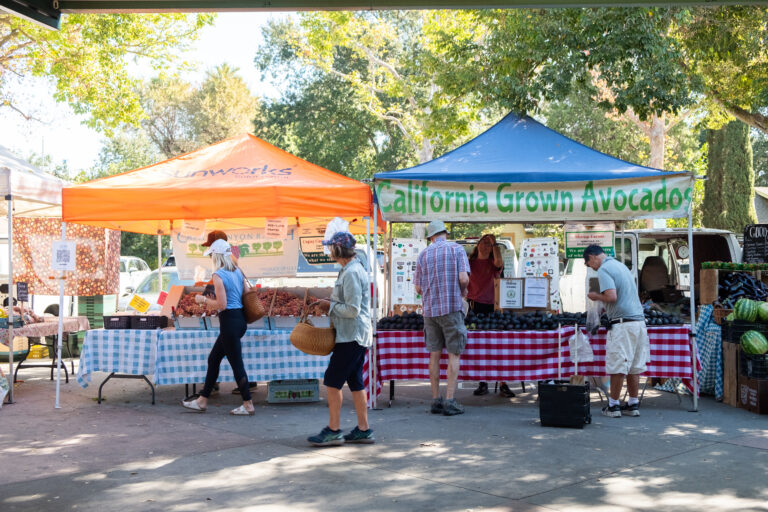
The Davis Farmers Market is a college town staple that has been around for over 50 years. Year-round, rain or shine, students and families gather in Central Park to enjoy a variety of vendors. From fresh produce to food from local restaurants to handmade accessories, the Davis Farmers Market has it all. 

The farmers market takes place at 301 C Street every Saturday from 8 a.m. to 1 p.m. From October through April it takes place on Wednesdays from 3 to 6 p.m. in addition to the Saturday hours. 

The weekly market has been recognized and awarded with more than 10 achievements since its establishment by different newspapers and magazines. Recently, three local restaurants who sell at the farmers market were featured in the premiere of Food Network’s “Best Bite in Town.” These include Handheld Sweet & Savory Pies, The Hotdogger and Zumapoke. 

“The Davis Farmers Market Cookbook,” written by Ann M. Evans, a former mayor of Davis and a co-founder of the market, includes details of the inspiring history and development. The farmers market’s website shares excerpts that describe the prevalence of community and support of local businesses. 

“The market in Davis could be a market in any town where the public good is put to the use of the people, where the surrounding soil is fertile and worked,” Evans wrote. “And where people of different faiths and purposes on the planet are willing to slow down, gather together and shop while they swap the news.”

Randii MacNear has been involved with the farmers market since 1978. After graduating college, she moved to Davis and quickly became devoted to the little market in Central Park. What began as her weekly Saturday activity turned into a career of dedication to healthy food, local businesses and building community. 

As one of the first few established farmers markets in California, the Davis Farmers Market has evolved into something so iconic to the city of Davis. At its start, the market was merely a handful of farmers selling their produce in an underdeveloped park. There are now 90 different sellers each week, 65 of which are farmers. It is estimated that over 500,000 people now come through the market every year. The farmers market brings a special sense of community and comfort to this small town for both the families and the college students. 

“It nourishes people, it gets people outside, it creates community, it gives people hope, it makes them feel happy, it smells delicious [and] kids love coming to the market,” MacNear said. “It’s just all the right things. It’s really remarkable when you think about it. It’s so simple and it’s not a new concept. We’re the only ones who are finally catching on here in the United States. All over the world the marketplace is the hub of civilization.”

MacNear is now the executive director of the market. She continues to spend her time ensuring the Davis Farmers Market remains an enjoyable and memorable experience and is committed to creating a welcoming environment that people desire to return to each week. MacNear has had the pleasure of engaging with UC Davis students weekly and hearing about their involvement with the market. 

“We love having the students there,” MacNear said. “They love the fruit, and they love to meet the farmers and the sellers. Many, many students come up to me to say, ‘I was so lonely when I came to Davis. I didn’t know anybody and I come here to the farmer’s market and I feel like I have family here.’”

The Davis Farmers Market continues to be a favorite among students who are learning to navigate their new town. It has become one of the most popular places to spend a Saturday morning with fellow Aggies. Katie Borgeson, a third-year linguistics and sociology double major, shared her loyalty for her Saturday tradition.

“The Davis Farmers Market is my favorite place on Earth,” Borgeson said. “Everywhere else I go is merely a waste of my time. I could’ve been at the Davis Farmers Market.”


Written by: Olivia Hokr — city@theaggie.org 

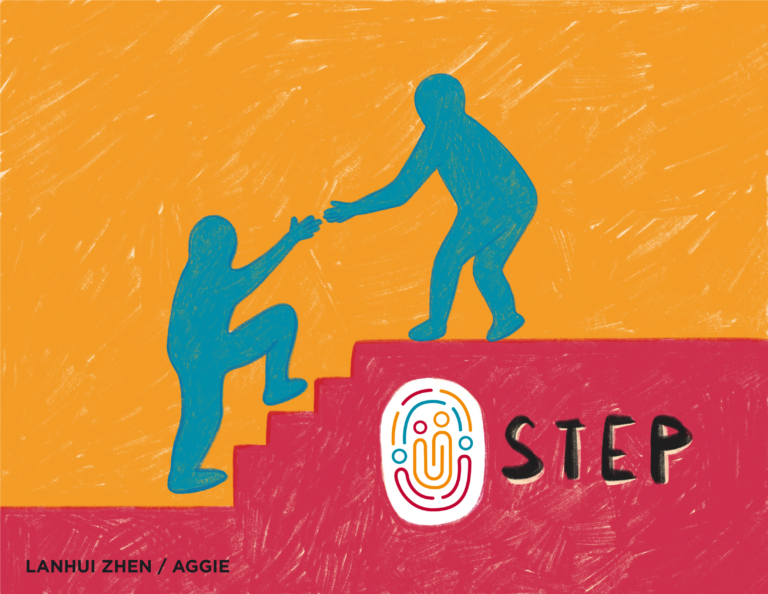
UC Davis STEP allows first-generation students to adjust to university life

0

The program takes place during the university’s Summer Session Two and allows first-generation, low-income students to adjust to campus life at no additional cost


By JORDAN POLTORAK — campus@theaggie.org


The UC Davis Special Transitional Enrichment Program (STEP) began on Aug. 3 and aligns with the university’s Summer Session Two schedule. It allows first-generation, low-income students to adjust to campus life at no additional cost and is a part of the Educational Opportunity Program (EOP).

The program begins with the summer bridge and extends for two years. The bridge portion includes attending one first-year seminar and one additional course, office hours, tutoring and STEP extracurricular activities, according to their website.

River Tuason, a third-year design major and a peer coordinator for STEP, explained the importance and goals of the program.

“It’s really vital for our students,” Tuason said. “We have 179 incoming freshmen. Each freshman has a peer mentor that has been in their shoes before. We’re here to guide them emotionally and academically.” 

Some of the academic benefits listed on the program’s website include adjustment to the pace of the quarter system and academic rigor of UC Davis as well as priority registration for the participating students’ first year of undergraduate study.

Tuason shared how the program impacted their experience at UC Davis.

“It was life-changing for me,” Tuason said. “Knowing that there are other first-generation, low-income college students and you’re all in the same boat. Having 20 peer advising counselors having our backs was really supportive.”

The freshman foundations, or first-year portion, includes participation in a First-Year Aggie Connection, meetings with a Peer Advising Counselor (PAC) and attendance at STEP and EOP events.

Lastly, the second-year success portion includes meetings with EOP staff, referrals to campus services and attending STEP events.

STEP is invite-only, so eligible students will receive the invitation in their admissions portal. The EOP center also has resources such as a lending library, career advising and testing supplies such as blue books and scantrons. 

Tuason expanded on the benefits of the program.

“We have so many events to make our first-generation students feel welcome,” Tuason said. “We tell all our students that you’re paying to be here and to use your resources. Reach out to EOP, and don’t be afraid to advocate for yourself.” 

Written by: Jordan Poltorak — campus@theaggie.org