55.7 F
Davis

Davis, California

Monday, December 22, 2025
Home Blog Page 84

UC Davis Police Department remembers 9/11 with annual stair climb event

0

The UC Davis Police Department invited attendees to climb 110 flights of stairs in the UC Davis Health Stadium to honor victims 


By RORY CONLON — city@theaggie.org


On Sept. 8, the UC Davis Police Department invited the Davis community to climb 110 flights of stairs in honor of first responders who lost their lives on 9/11. The event raised funds for the 9/11 Memorial and Museum in New York. 

Attendees were asked to arrive at 7 a.m. to climb the stairs of the UC Davis Health Stadium. Before they started, UC Davis Police Chief Joseph A. Farrow spoke to the crowd about the significance of the event. 

“I was in Washington D.C. at the Pentagon on that day, and it’s something I’ll personally never forget,” Farrow said. “This [stair climb] is for us to remember and look back on the challenges those men and women [faced] on that day in New York City.”

Robert Sotelo, a member of the Community Outreach and Engagement (CORE) Officer Program, said that 9/11 still heavily impacts the world today, 23 years later. He explained that the stair climb, which the department started hosting in 2021, is meant to be a positive tribute to lives lost. 

“[9/11] changed how everything is done — how law enforcement and fire respond, and how we can bring our country together [after] such a tragic event,” Sotelo said. “It’s empowering to people to mourn together. We don’t have to make mourning into a sad event.” 

Chanmorokoth Tiv, a member of the 321st medical detachment in the U.S. Army Reserve, said that acknowledging the sacrifices made by first responders on that day empowered her to persevere. 

“The grit and motivation they had to do their duty in such difficult conditions pushes me [to do] this stair challenge for them,” Tiv said. “If they did it and they sacrificed their lives, time and everything to save people, then I can do the same.” 

Vincent Nguyen, a member of UC Davis Police Department, said that in addition to enduring the physical toll of climbing stairs in full gear, first responders would have had to block out emotional stress to stay calm in a crisis. 

“As a regular civilian, your brain goes into your fight-or-flight response,” Nguyen said. “But as a first responder, we train not to have a flight response [so we can] run into danger.” 

For Austin Kline, an employee at McCarthy Building Companies, the stair climb brought back vivid memories of watching that day unfold. 

“My mother came into the living room crying, and I remember watching the second plane hit the tower on CNN,” Kline said. “My dad was supposed to be traveling that day, and my mother couldn’t get a hold of him. Thankfully, he was alright, but it was quite a shock.” 

Other attendees of the event were too young to have lived through that day. Ahna Meyers, a Winters Police Department cadet, was not yet born when it happened, but she participated in the climb to understand what the first responders went through. 

“I was trying to keep up and run, because I was thinking about firefighters and police officers trying to save people’s lives,” Meyers said. “I think it’s inspiring to get to [follow] in their footsteps.” 

In addition to bringing together the past and the present, the event built a bridge between first responders and the community.

Irie Nguyen, the wife of a UC Davis police recruit, said the American public doesn’t respect the contributions of law enforcement and the military enough. She said the stair climb could combat this through raising awareness and making connections. 

“Recently, a lot of law enforcement agencies have been doing a lot of community outreach, which I think is important,” Irie Nguyen said. “If you don’t interact, you get people who think [about] officers and firefighters in our military based on what they see in movies and the news.” 

Robert Sotelo said the UC Davis Police Department has been making efforts to reach out and draw more of their members from Davis residents and alumni. He estimated that the amount of people registered for the stair climb event doubled from last year. 

“We can’t do it without our community’s involvement,” Sotelo said. “We don’t want people to think it’s just the police department, and we’re only here to take care of ourselves. The university community is a lot more dynamic than that, and I think we can all be more inclusive of each other and work better together if there’s a little bit more understanding of that.” 

Officer David Barillas, a UC Davis alum, said he came from a place where law enforcement and members of the community had a difficult relationship. Barillas said the stair climb reminded him of his new place in the Davis community. 

“When you put on a badge, you’re given a privilege to serve a community — you can’t lose that vision,” Barillas said. “[Students] may be going through a hard time, whether it be financial, related to school or just feeling like [they] don’t belong here. Having a conversation and seeing their eyes light up and their smile come alive — that’s why I do this job.” 

Written By: Rory Conlon — city@theaggie.org

ASUCD — What is it?

A crash course on UC Davis’ student government


By VINCE BASADA — campus@theaggie.org


For new students and even those returning, the five-letter entity ASUCD may prove confusing in its purpose and its logo’s diverse presence on campus: from mental health posters to bus route maps. With a budget of $22 million in student funds for the 2024-25 academic year according to their website, it’s worth taking the time to understand both what ASUCD is and what it can do for you.

Firstly, the Associated Students of the University of California Davis (ASUCD) acts as both an employer of and governing body for the student population. It has two sides: the elected and highly appointed student officials who allocate funds and oversee the organization as a whole and the individual units that provide events and services for the student population. Its work can also be categorized into four pillars: basic needs/services, advocacy, media and social.

On the government side are the three ASUCD branches: Executive, Legislative and Judicial. Led by ASUCD President Gaius Ilupeju, the Executive Office is the highest representative for all student body affairs. Ilupeju acts as CEO, appointing students to oversee internal and external operations as well as a controller to oversee the budget. The Executive Office also oversees some special units, like the Student Advocate Office which helps represent students accused of academic misconduct.

“With multiple commercial units and numerous advocacy efforts, ASUCD engages with every aspect of the student experience at UC Davis,” Ilupeju wrote in a communication with The California Aggie. “This dynamic among others should prompt all students to inform themselves about what we do because when they provide feedback we can represent their interests and concerns better.”

The ASUCD Senate is the main student legislative body meeting weekly to allocate student funds to units and pass legislation on behalf of the student body. It consists of 12 senators, two additional voting members and a handful of other student officers.

The Aggie covers these meetings, which are also open to the general public. Additionally, senators host office hours and meetings for members of the student body to bring questions to them individually.

Under the Senate are a handful of student commissions and committees that help consult on legislation, including the Environmental and Policy Planning and Gender and Sexuality Commissions.

Senators are elected twice a year: once in week four of fall quarter and again in Week seven of spring quarter. The spring voting also serves as the election for the office of the ASUCD President and top executive officials.

The Judicial Branch consists of the five justices of the Judicial Council, tasked with reviewing legislation to ensure compliance with the ASUCD Constitution. They also occasionally hold hearings when ASUCD officials are accused of misconduct and failing to perform their duties, such as during last year’s executive impeachments.

On a daily basis, it is the service-providing units which students interact with the most. These include Unitrans, which is the bus transit system that runs throughout the city of Davis, the CoHo, which is the Coffee House in the Memorial Union that works to sell food at affordable prices, the Pantry, which is the campus food bank, the Entertainment Council, which puts on concerts and music festivals, and Picnic Day, which is a team of organizers of the yearly open house of the same name. The California Aggie is also an ASUCD unit, though it is managed and organized independently.

Units also make up the bulk of the ASUCD employee population. At the time of publication, the ASUCD vacancy site notes that over 1,000 students are employed at some level in the organization, though that number is certain to rise once the school year gets a running start and units and committees ramp up their operations.

Those interested in learning more about their student government or working for an ASUCD unit can visit the ASUCD website for more information. 


Written by: Vince Basada — campus@theaggie.org

A look into a lost local tradition: The Davisphere

Exploring the mysterious disappearance of a popular local concert series


By NOAH HARRIS — features@theaggie.org


As the 2022 academic year started, artists performed and families sat on the grass while retail and food vendors sold their goods. This event may not have had the history of the Davis Farmers Market or come close to the massive event that is Picnic Day, however, The Davisphere — a concert series held in Central Park in fall 2022 — was an event that aimed to make downtown Davis all the more vibrant. 

Since the end of its run two years ago, The Davisphere has not taken our community’s stage again, despite attempts in 2023 and a statement on their website claiming that it will come back for “an amazing 2024 series.” 

The first concert in 2022 was held on Sept. 1. As of now, there has been no confirmation as to when The Davisphere will happen in 2024 — however, their website claims that the event will return on a to-be-determined date. 

While some first-time events might struggle initially, The Davisphere can ultimately be considered a success. Despite having just nine events and its venue being downtown’s Central Park, the event drew a combined crowd of over 25,000 people, according to a press release. Events featured local and Bay Area musical artists such as Tainted Love, Con Brio and the Davis Spokes, a UC Davis female acapella group.

Kat Gallardo, an artist with the stage name Katgruvs, performed at The Davisphere in 2022. Gallardo has also played at local events such as Picnic Day and the Davis Cherry Blossom Festival.

“I feel like that was the biggest crowd I’ve played to in Davis,” Gallardo said. 

Funding for the event was partially achieved through seed money provided to Davis Downtown through a city of Davis grant, according to The Davisphere’s website. In an email, Jenny Tan, the director of community engagement for the Davis City Manager’s Office, indicated that the grant was about $150,000.

The Davisphere was created by the Davis Downtown Business Association (DDBA), a non-profit group that has previously put on events including walkthroughs in downtown for student orientation. The group also has a relationship with the Davis Farmers Market. 

Brett Maresca, the former executive director of the DDBA during The Davisphere, shed some light on the role that his organization takes in planning the event. 

“The DDBA put the event on, managed it, coordinated it and paid for it, with [only] some assistance,” Maresca said.

There were supposed to be five 2023 dates, according to a press release. However, four dates were canceled, leaving just one concert on Oct. 26. Later, the DDBA ultimately decided to cancel that event as well, without giving a public reason. However, a DDBA meeting from Sept. 13, 2023 provided the reasoning behind the cancellation. 

“After considering various expenses that the DDBA would incur, it seemed there would still be a $11,000 deficit,” the board meeting minutes stated. 

Maresca explained what ultimately led to the event’s cancellation in further detail. 

“When we first came out of the pandemic, there was more money available in funding,” Maresca said. “To make it sustainable and have the volunteers available to make it occur, that’s where we hit a major hurdle.”

Tan also wrote that she believes all of the funds given by the city of Davis for The Davisphere were used up in 2022. The aforementioned grant was not a recurring payment.

The lack of money, while disheartening to attendees, performers and vendors of the event, was a logical reason to cancel. 

“[The DBBA] already told the public we would have the event,” Yelena Ivashchenko, a board member and local business owner, said. “There is a lot of excitement from the public and businesses.” 

Ivashchenko, the owner of the downtown store Bohème Threads and former marketing committee chair of the DDBA, offered to donate her own money to help The Davisphere succeed. Unfortunately, the DDBA denied her offer due to a conflict of interest, seeing as she is both on the board and a local vendor. 

The last time The Davisphere was discussed was in November 2023, according to DDBA minutes. During that time, there was a proposal to create a subcommittee that “works together to raise money for The Davisphere for the year.” However, it is unknown if that subcommittee has been put in place — or if it was further discussed.

Gallardo, who was booked after a live performance at Sophia’s Thai Kitchen, was one of many local performers who thoroughly enjoyed The Davisphere. 

“It was a really incredible experience,” Gallardo said. “I would 100% love to do it again.” 

She wasn’t the only one who thought so: a follow-up survey after the event showed a nearly 90% approval rating, according to The Davis Enterprise.

For Ivaschenko, The Davisphere was beneficial from a business perspective as well. 

“It was pretty convenient for me, because if I sold out I could direct people to my store,” Ivaschenko said. “We did extend the hours of the store [during The Davisphere].” 

Ivaschenko said that events such as The Davisphere play a crucial role in attracting students downtown, which is important for combining student and local life throughout the Davis community.

The event was for more than just entertainment. A percentage of alcohol sales each week, which was hosted by downtown’s University of Beer, were given to charities such as Yolo Crisis Nursery and Davis Arts Center. These donations totaled over $4,000 in 2022.

Despite the website’s statement claiming that the event is returning on a TBD date, DDBA Executive Director Brett Lee wrote in an email that there are no plans to bring the event back for now. 

Written by: Noah Harris — features@theaggie.org

Art Mania returns to Sudwerk Brewery

The wrestling-themed art battle attracted a crowd to watch the fresh batch of contestants face off with their palettes and paints


By MATTHEW MCELDOWNEY — art@theaggie.org


Secret Spot and Sudwerk Brewery collaborated on Aug. 17 to bring Art Mania back to Davis. Following their successful Art Mania in February of this year, the owners and organizers of Secret Spot orchestrated another wrestling-themed art competition where local artists performed in front of a live audience — and were pitted against one another to win the hearts and minds of the crowd.

In each round, the contestants painted two costumed figure models for an hour with intermissions set for onlookers to gauge their progress. During this time the artists competed to win over the crowd, not only with their skills on the canvas but also through their actions to secure support at the end. Once the time was up, the organizers tallied up support for competing artists based on how much noise the audience made.

Hoping to turn the brewery into a battleground, “Kitty Venus” promised equal parts style and suffering to her opponents. 

“Major Payne” reveled in the jeers of the crowd, personifying the threat and controversy of Artificial Intelligence (AI) in creative industries and potentially raising the question: what would it mean for the arts if she had come away with the title?

As a face in the competition, “The Lawd” sought victory through his unwavering good vibes and positive outlook on life. 

Despite the pressures of a live audience and his impressive adversaries, “The Sensitive Cowboy” and his passion for horses would push him to come out and show his skills and excellent mustache. 

“A Brush with Death” may appear as your typical heel — however, her painting style is anything but predictable. 

Keeping her competitors on the backfoot, “Ctrl+Z” hoped to erase them through her relentless and meticulous painting style. She infused each of her paintings with layers and layers of emotion and pain.

Harry Greer (HG), an owner of Secret Spot and the announcer at the event, recalled some of the highlights of Art Mania’s first round, where only three artists were left standing. 

“There was this moment where ‘[The] Sensitive Cowboy’ was so overwhelmed with his painting that he threw his palette at the painting, cracking it in half,” HG said. “‘The Lawd,’ currently working on a project to paint 151 Pokémon, created a painting inspired by this passion. ‘A Brush with Death’ covered her canvas in a vibrant pink to make her characters come to life, only to slash away at them with crimson strokes.” 

These artists made an impressive effort but were narrowly beaten out by the remaining competitors: “Ctrl+Z,” “Major Payne” and “Kitty Venus.” “Ctrl+Z” with her unique painterly style, “Major Payne” with her eye-popping abstract art and “Kitty Venus” with her stylish caricatures would earn them a spot in the final round, determining the winner of the Art Mania 2 title and belt. 

“‘Ctrl+Z’ worked on the painting before covering it all up and painting over it again,” HG said. “Each time, it would be cool to see how her painting would turn out. ‘Major Payne’ as the AI, choosing to do collage for her painting, was really hilarious. At the very end, ‘Kitty Venus,’ the winner, realized that she did not have enough room on her canvas for a head for one of the models, so she took a Crayola box to tape it to the top.”

This out-of-the-box thinking set her act just above the rest in the final round and won her the Art Mania 2 championship belt. . 

Toni Rizzo, the Secret Spot co-owner and manager, said he was impressed with the local artists for their ultimate act of vulnerability to create the show they put on.

“They were so nervous and had to do so much work to pump themselves up and be there,” Rizzo said. 

While the artists were the main attraction, Rizzo said he was grateful for the stars behind the scenes, especially those at Sudwerk Brewery who helped with the set-up and provided the venue that allowed for the event to take place.  

Third Space Art Collective provided free art supplies to complete the atmosphere of Art Mania 2. As much as the competition was intended to bring Davis arts to the forefront of the city, the Davis community also came together to make Art Mania 2 the special event it was.

Rizzo and HG were also excited to announce the date for Art Mania 3 on Nov. 15 and teased the return of former Art Mania 1 and 2 contestants with a fresh twist: a battle royale showdown. 

Rizzo said he looks forward to hosting more events like this and pushing the boundaries of the local art scene in Davis. 

“I think the beauty of why me and HG do what we do is because of the risk involved, and when we have these crazy ideas, we go for it,” Rizzo said.

Written by: Matthew Mceldowney art@theaggie.org

How to start off your year right and get involved in athletics on campus

0

Come as you are and try a new sport

By MEGAN JOSEPH — sports@theaggie.org

Did you play a sport in high school or have you been interested in exploring or trying out a new sport? Well, UC Davis has just the thing for you. There are over 30 different recreational sports for students, faculty and school affiliates to get involved in through the UC Davis Rec One Sports Pass

Participants have the option between competitive teams, which compete usually once a week, or recreational teams which allow players the freedom to decide when they want to play. Both options offer players a way to stay active and connect with others. 

Additionally, players have the opportunity to compete in one of the three types of leagues for each sport: CoRec, Women and Open. All three leagues have both levels of competition but will also offer participants the chance to play with their friends no matter their gender identity. 

Leagues for each sport are about one month of competition with each team playing one game per week. At the end of the four weeks, teams will be ranked by performance and seeded for playoffs. Once in the playoffs, the teams compete for two weeks to determine the league champion. These leagues can range from 5-on-5 basketball and outdoor 8-on-8 soccer to 4-on-4 grass volleyball and 7-on-7 ultimate frisbee. 

If one month of playing for a larger league isn’t enticing to you, UC Davis also offers another type of competition called mini leagues. These competitions are essentially smaller versions of full leagues with three weeks of competition and two weeks of playoffs. Mini leagues are less strict with participation requirements and offer players an alternative to the more intense regular league games. Some of the mini leagues available are 5-on-5 tube polo, tennis and blindfold bocce ball.

On the other side of the spectrum, UC Davis also offers tournaments for many different sports. These are smaller competitions that range from a couple of hours to a couple of days. These competitions are held for various sports and activities such as spike ball, badminton and even poker palooza. In order to play in the tournaments, you must complete registration online before showing up to play.

In addition to joining leagues and playing in tournaments, UC Davis offers lessons and resources for students and affiliates to learn how to play the sport. You can join the Archery Club on Sunday mornings at 9 a.m. on Howard Field to learn the archery basics and get a chance to shoot a target with a bow and arrow. At only $10 per class for students and $20 for non-students, it’s a great way to branch out and try something new. 

Moreover, if you have ever wanted to try gymnastics, classes are taught by the UC Davis gymnastics team on Mondays from 6:15 to 8:30 p.m. at Hickey Gym. Similarly to archery, the class fee is only $10 for students and $15 for non-students. There is no limit to the amount of classes an individual can sign up for, and it is a beginner class with no experience necessary. 

Lastly, UC Davis also offers tennis lessons on Wednesdays from 6:30 to 7:30 p.m. and Fridays from 5:30 to 6:30 p.m. The class is designed for beginner and intermediate players and provides rackets to players who do not already have one. The class is also taught by teachers and coaches directly from the UC Davis tennis team and program.

So, if you are interested in trying a new activity or are looking to fine-tune sports you already play, the freedom and flexibility of intramural sports at UC Davis may make it the choice for you. 


Written by: Megan Joseph — sports@theaggie.org

It’s “Pumpkin Season”

Pumpkin as a versatile (and healthy!) fall ingredient

By MAYA KORNYEYEVA — mkornyeyeva@ucdavis.edu

Starbucks launched their famous “Pumpkin Spice Latte” (or PSL, for short) on Aug. 22, marking the beginning of the transition period away from hot, blazing summer and toward a moody, pumpkin-filled fall. 

Pumpkins — whether in their plump harvest mode or hollowed out and decorated for Halloween — have been a classic symbol of fall for centuries. Their ripeness season spans from late August to late October, which makes them a perfect fall ingredient for a wide range of recipes: from soups to cakes to syrups in coffee. 

While pumpkins are typically associated with a savory rather than sweet taste, they are scientifically categorized as fruit. The seeds found on the inside of the gourd and the fact that pumpkins grow from big yellow and orange blooms are markers of their non-vegetable nature; similar to other squashes, avocados and even tomatoes. 

Pumpkins are also packed to the brim with nutrients, including Vitamin A (great for supporting your immune system) and Vitamin C (for eye health). The flesh of the pumpkin also contains plenty of antioxidants, as well as fiber that aids in regulating cholesterol and blood pressure levels. Additionally, munching on just half a cup of pumpkin seeds supplies your body with 20 grams of protein.   

There’s something extremely comforting about cooking and baking with pumpkin. The sharp tang of spices mingling with the smell of pumpkin sauce and the creamy, sugary notes in pumpkin bread urge me to wrap up in a blanket, light some candles and read a good book. The simple yet inviting flavor profile present in pumpkin recipes is reason enough to try it out as a new ingredient in your pantry this fall season.

One of my favorite ways to use pumpkin in the fall is roasting the pumpkin seeds from the guts of my Jack-O-Lantern; washing, drying and seasoning them to taste. I love adding a little paprika and garlic powder, then tossing everything with olive oil. A quick bake in the oven and you have a crispy, healthy snack to satisfy your midday cravings. 

Another way to utilize pumpkin is by making a homemade pumpkin syrup, which may not be as bright and colorful as the Starbucks version but tastes remarkably similar. All you need is some pumpkin puree, brown sugar, vanilla extract, fall spices (an even mix of cinnamon, nutmeg, cloves, allspice and ginger) and a stovetop to simmer your syrup on. Trust me: this one turns out delicious. 

Lastly, you can’t go wrong with a pumpkin pastry. Whether it’s pumpkin pie, a loaf of pumpkin bread, pumpkin spice muffins or pumpkin cheesecake, any recipe is bound to bring the welcoming feel of fall a little bit closer. Grab some friends, head out to the pumpkin patch and pick your champion. As they say: “go big or gourd home.”


Written by: Maya Kornyeyeva — mkornyeyeva@ucdavis.edu


Disclaimer: The views and opinions expressed by individual columnists belong to the columnists alone and do not necessarily indicate the views and opinions held by The California Aggie.

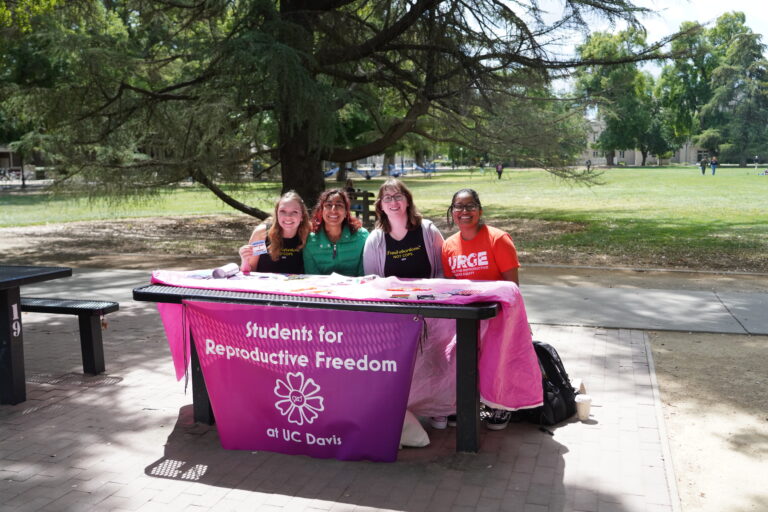
Students for Reproductive Freedom at UC Davis fights for reproductive justice and awareness in our communities

0

Members of the organization share their experiences and the impact of the group

By GRACIELA TIU — features@theaggie.org

While reproductive health issues have remained one of the most prominent topics of national political conversation throughout the last several years, students at UC Davis have been working to expand reproductive rights and promote discussion surrounding the subject. 

One student-run organization, Students for Reproductive Freedom (SRF), aims to increase campus education and awareness about reproductive health while collaborating with outside initiatives supporting reproductive rights. One of the goals of the group is to create a safe space and community for students on campus.

Aditi Hariharan, fourth-year political science and nutrition science double major, and Maren Butler, third-year human development major, are the current co-presidents of SRF. They described some of the benefits and unique aspects of their club, as well as their level of campus involvement.  

“I think the unique experience of working in reproductive justice (RJ) is creating safe spaces on campus for folks to share vulnerable stories,” Hariharan said. “In terms of the community, we’ve been in constant presence with other students; we’re always tabling at pride and other campus events.”

Adyasha Padhi, fourth-year biochemistry and molecular biology and anthropology double major, announced that alongside fostering collaboration between groups, the club will be organizing multiple events in the coming quarter, with plans to canvas in Reno in October and table individually on campus.

“Especially with elections coming up, we’ll also be tabling to increase awareness of voting and also reproductive rights and reproductive resources on campus,” Padhi said.

Members also participate in specific activities that help promote reproductive justice. Maren Butler described one of the projects the group has previously worked on where members wrote to voters through a letter-writing program.

“One of my favorite activities was letter writing,” Butler said. “We wrote in support of menstrual equity bills in California for education in public schools and access in prisons.” 

In addition to hosting future letter-writing events, SRF at UC Davis often works with other groups to make perceptible changes on campus.

“One thing that we’ve been working on for a while is making sure that everyone has access to menstrual products, and that all the pad and tampon dispensers around campus actually have pads and tampons,” Padhi said.

The group also encourages members to identify prominent issues that students are facing and how they can relate to reproductive health.

“There are so many time and financial barriers that prevent students from taking the best care of themselves that they can,” Butler said. “Whether that’s within something like RJ or more on the outskirts like housing, food, health care related or even just finding a community, I’ve noticed that’s a big issue for a lot of students on campus.”

Being a part of the organization and sharing the value of reproductive justice has also deepened connections between students. Harihan also described that being a part of the group has influenced her individual journey with student activism, giving her the confidence to speak her opinion against global policies.

“The [main] impact on myself has been becoming closer to the activists of the community,” Harihan said. “This type of work is only possible due to being in community with and respecting all the activists who came before me and all of the members of the club; it’s made us more aligned with the true vision of reproductive justice and its intersectionality.”

SRF leaders have also begun noticing what motivates young people into involvement with civic engagement, keeping these motivators in mind when planning activities for the group.

“I think young people are really excited about holding campus administrators accountable right now, especially in light of recent restrictions on free speech campus climate,” Harihan said. “I think that can translate to RJ in terms of holding administrators accountable to make medication abortion easily accessible or making contraception use also easily accessible. I think that people are just excited about local issues more in the current climate of campus.” 

So, if the topic of reproductive justice interests you, how can you get involved? According to Padhi, SRF will welcome your involvement any time of year. 

“We typically are not a club that you have to join at the beginning of the quarter,” Padhi said. “Generally, people are free to come to our meetings whenever, and they’re pretty fun!”

Once you join, you’ll have the chance to participate in educational and action-driven biweekly meetings, usually held in the evening.

“Typically there’ll be some updates about what’s happening in the reproductive world, so this can be news about different laws that are being passed, or updates about projects that we’re working on, on campus or outside of campus,” Padhi said. “Then usually we’ll transition into some sort of activity, so that could be something like letter writing [or] creating medical care kits. It could also be a panel of different professionals in the reproductive field, so they can look very different.” 

With the help of its student leaders, members and outside collaborators, SRF at UC Davis is working to be a dynamic driver of reproductive justice, fostering learning, growth and inspiration in Davis and outside communities.

Written by: GRACIELA TIU — features@theaggie.org

Davis City Council approves local shopping center and housing development

The Davis City Council authorized a proposal that would help fill vacancies in the Oakshade Town Center and an environmental review for Shriners Property


By RORY CONLON — city@theaggie.org

On Aug. 18, the Davis City Council discussed a proposal to help fill vacancies in the Oakshade Town Center and moved forward with plans for developing Shriners Property, a proposed housing project in the city. 

Jennifer Hess, the leasing agent assigned to Oakshade Town Center properties, said her organization’s “first priority” was to fill two vacant spaces left behind by OfficeMax and Rite Aid. She said an amendment to a previous size ordinance would help recruit more potential buyers. 

“The cap of 15,000 square feet is definitely limiting our options for leasing boxes that are 17,000 and 21,000 square feet,” Hess said. “We are also seeking approval to remove the grocery store restriction of 40,000 square feet. We would like to extend that [building] to allow Safeway to expand into the [former] Rite Aid space.” 

Dara Dungworth, the principal planner for the City of Davis, said that upon inspection of the proposal by the city’s staff, the size limitations should be removed for the property.

“Size limitations in this planned development should be removed to allow maximum flexibility in today’s retail and commercial market,” Dungworth said. “[Without] size requirements, there are fewer restrictions limiting potential tenants.” 

Discussion of the amendment was then opened up to public comment. Davis community member Alan Hirsch opposed moving forward with the amendment because Regency Centers, the organization that owns the shopping center, violated environmental laws. 

“They are in violation of the city tree ordinance [that there should be] 50 percent shade in 15 years,” Hirsch said. “They have trees that are dead and dying, the irrigation system is not being maintained, and the north parking lot is almost tree-free. They would need to have a plan to put the project in compliance with city code.”

Davis Vice Mayor Bapu Vaitla proposed that Regency Centers submit an arborist report regarding trees and irrigation systems, as well as a timeline for when any problems would be addressed. Hess agreed to the report and timeline but emphasized the urgency of the proposal moving forward in the meantime. 

The city council members moved to adopt staff recommendations and pass the amendment. 

Another item on the agenda was Shriners Property, a housing development located north of Covell Blvd., which is in the beginning stages of an environmental impact review. 

In compliance with the California Environmental Quality Act (CEQA) developers have to provide alternatives to a planned project to reduce negative environmental impacts. 

Dungworth’s team analyzed six possible alternatives to the existing project, which varied in housing density and acreage, based on whether they would come in 15 percent below the baseline for VMT in the city of Davis. VMT is a measure used in transportation planning to project future traffic congestion based on the number of people that live in a location. She said two of the alternative plans had the potential to reduce vehicle miles traveled (VMT). 

“Alternative [plan] four was preliminarily identified to reduce the project footprint while retaining the same amount of units,” Dungworth said. “Alternative five is an increased number of units with the same footprint of approximately 232 acres… Alternative four shows a 30 percent reduction in VMT [from the city’s baseline] and alternative five shows a 28 percent reduction.”

The council members were then asked to choose potential plans to explore in more depth. They unanimously approved examining alternative options four and five to reduce traffic congestion in Davis. 


Written by: Rory Conlon — city@theaggie.org
University of California Office of the President releases statement surrounding new policies restricting protests on UC campuses

The policies hope to set stricter guidelines for student protests have caused controversy UC Davis organizations and students 

By JESSICA YUNG — campus@theaggie.org

On Aug. 19, the University of California Office of the President (UCOP) released a statement to UC Davis students detailing new protest guidelines due to protests from the past school year and cited intentions such as ensuring the safety of campuses and balancing freedom of speech.

The statement, written by the University of California President Michael V. Drake, detailed the specific goals from these guidelines.

“Clarifying and reinforcing requirements for policies impacting expressive activities, including policies that prohibit camping or encampments, unauthorized structures, restrictions on free movement, masking to conceal identity and refusing to reveal one’s identity when asked to do so by University personnel,” the statement reads.

There will be a tiered system with a range of consequences for those who violate these new policies, according to UCOP. 

Stett Holbrook, the UCOP Communications Strategist, explained the framework for the response strategy.

“UCOP’s response framework provides guidance for a tiered response approach and the range of consequences for students, faculty or staff who violate policies or laws and how campuses may respond to activities that threaten the safety of the campus community, disrupt campus operations or impede the ability to access campus buildings, the educational process or other campus activities,” Holbrook said.

Holbrook also expanded on the consequences for anyone who breaks these policies.

“Any member of the University community who is arrested for unlawful behavior or cited for a violation of University policy must go through the applicable campus review process, such as the student code of conduct or employee disciplinary process,” Holbrook said.

One of the goals listed in the statement made by Drake states that there will be restrictions on “free movement, masking to conceal identity, and refusing to reveal one’s identity when asked to do so by University personnel.”

Student organizations have expressed concerns regarding these new proposals and their potential impact on community members and their right to protest.

On Aug. 21, the Muslim Student Association (MSA) at UC Davis and the ASUCD President, Gaius Ilupeju, released a joint statement on Instagram condemning these guidelines.

“The MSA at UC Davis irrevocably condemns this policy due to the clear health concerns, as well as its discriminatory impact on the Muslim community,” the report reads. “These concerns are shared by the ASUCD Executive Office, which will remain engaged with the University of California Office of the President and UC Davis administrators to seek clarity on the implementation of this policy and advocate on behalf of Muslims who will be affected by this decision.” 

In response to the concerns about masking policies, Holbrook said that they will distinguish between the reasons of those who will be wearing a facial covering. 

“Campus officials will distinguish between prohibited masks and those used for COVID-19 protection or other permissible reasons by evaluating the intent behind their use,” Holbrook said. “If a mask is worn in a context where the wearer is violating policies or laws, officials may determine that the mask is being used to evade identification.”

Further concerns with the UCOP statement were addressed by the United Auto Workers, UAW 4811, a union that represents more than 48,000 UC workers.

On Aug. 27, the union released a demand to bargain with UCOP. Rafael Jaime, president of UAW 4811, outlined the union’s grievances.

“As a matter within the scope of negotiations, the [university] has proposed a new policy that has a significant and consequential impact on the terms and conditions of employment for members of UAW bargaining units,” Jaime wrote. “As a result, the UAW is requesting to meet and confer over this policy, including the impact of the decisions.”

Many students are also speaking up about the controversies of the UCOP statement.

Ryan C. McMurry, a second-year Ph.D. student in linguistics and a member of UAW 4811 who participated in last school year’s protests, said that he will continue to exercise his right to protest. 

“I fully intend to strike in the future […] it is in my rights as a student and as an American citizen,” McMurry said. “I am slightly concerned about the repercussions, but I know that I am on the right side of history.”

Written by: Jessica Yung campus@theaggie.org

Letter from the editor

0

Wait, we have a student newspaper? 

Hey Reader, 

I debated opening this up with “Dear Reader,” but I wanted to keep this letter more casual. I’m sure there will be times when I need to use this platform to discuss the importance of journalism, campus issues and any other list of pressing topics — maybe in those cases I will open with “Dear Reader.” But for now I just wanted to introduce myself and our paper. 

My name is Chris Ponce, I’m a political science and philosophy double major, professional writing minor, and I’m approaching my fourth-year at UC Davis. I’m also the new editor-in-chief of The Aggie. I’m following an amazing friend and boss who left some very big shoes to fill. I hope to leave my own mark on our paper and continue our over 100-year legacy of quality student journalism. 

At The Aggie we have seven different desks; campus news, city news, opinion, features, arts, sports and science. Each of these desks provide the campus and local community with relevant information and news. During the school year we print weekly on Thursdays and post content to our website daily.

Before serving in this new role I find myself in now, I’ve been with the city news desk for my entire college career. I started off as a volunteer writer and became city news editor for the next two school years. At that desk I fell in love with the Davis community. From the local vendors to the business owners, it is the people who make Davis what it is. 

That’s the message I want to leave you with today dear reader, and I hope that the legacy of our paper can reflect that. This is a small town, but the people are anything but. Maybe you are an incoming first-year touring campus right now, maybe you, like me, are preparing for your final year; nonetheless this paper is for you. 

We shed sweat and tears not to boost our resumes or to spread gossip but we exist to serve you, the reader. From students who are new to Davis to Davisites who have called this town home for years, we exist to bring you honest, responsible journalism.  

This means that not everything we print is pretty, it also means sometimes we print things that might even make us a little uncomfortable, we are human too. But as newspapers have begun to shrink in recent years we are reminded of the responsibility that we are called to do. We exist to shine a light where there otherwise isn’t any. From the work of local and student government to activists who gather in Central Park, we shine a light. 

It wasn’t too long ago when you’d hear a student say “wait, we have a newspaper?” I like to think that has changed. Blame it on our outreach, budget, the pandemic or the state of journalism as a whole (or all of those factors) but I want to make it my goal to make sure we are known and trusted to bring you the news. 

So, that’s my pitch and that’s our paper. Whoever you may be, I hope you see what we have to offer. We will continue to do our best to defend the need for local journalism.

Best,

Chris Ponce

Editor-in-Chief

If you ever wish to reach out to me, please send me an email at editor@theaggie.org.

Pro-Palestinian encampment decamps after university does not accept demands

After seven weeks, PULP activists completely remove encampment from the Quad 

By RIVERS STOUT — campus@theaggie.org

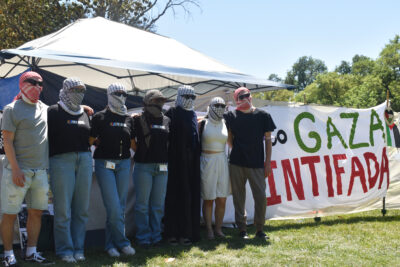
Earlier this summer, Davis Popular University for the Liberation of Palestine (PULP) announced its official decampment after more than 40 days of occupying space on the Memorial Union Quad. Overnight, the encampment completely decamped. 

The encampment began with the hopes that the administration would respond to its demands which included: Gary May’s resignation as chancellor or from Leidos — an engineering company with ties to Israel — and the university’s divestment from business and investments in Israel. The group and campus failed to reach an agreement after several meetings. 

The press conference which announced the end of the encampment was called on June 19. Stanford McConnehey, UC Davis alum and PULP media liaison, read a speech from what was once the encampment’s check-in desk.

“Despite what Palestinians give to the world, we continue to fail them,” McConnehey said. “We failed them in the 1940’s when our government wholeheartedly backed the invention of the zionist entity, and we [fail] them every day that our government facilitates, aids and abets the occupation, apartheid and genocide carried out in occupied Palestine.”

McConnehey shared the group’s stance on the UC system and their investments and how they affect what a United Nations’ report has labeled as an ”extermination” in Gaza. 

Encampment members stand for a photo in front of the encampment entrance. (Maia Zhu / Aggie)

“Just like the settler colony in which we sit, the University of California is just as complicit in the genocide of the Palestinian people,” McConnehey said. “The investments of the UC-wide endowment and pension funds and the endowments of each individual UC make the ongoing possible but profitable. People of conscience refuse this complicity being forced upon us in the name of sound investment strategy and fiduciary duty.”

UNIVERSITY RESPONSE

Meetings were held between PULP student leaders and UC Davis Foundation trustees to discuss the University of California’s investments, according to a statement from Chancellor Gary May. May discussed the impact of the conflict in his statement.

“While we decry the loss of innocent life on both sides of this war, including in Israel, we acknowledge the efforts of our students to peacefully protest the humanitarian crisis and staggering loss of life in Gaza, the West Bank and Palestine,” May said. “Protesting immense human suffering and destruction should not be conflated with hatred or intolerance.”

May said in his statement that the campus remains committed to protecting freedom of expression and keeping a safe campus environment moving forward.

“The events of the last several months have put a strain on our campus community,” May said. “However, as we reach this moment, we are grateful to all who have worked hard to maintain a campus where members of our community can peacefully express themselves. We redouble our commitment to providing a safe environment for all, protecting peaceful free expression, and assuring that our mission of teaching, research and public service continues without disruption.” 


THE OCTOBER 7TH COALITION 

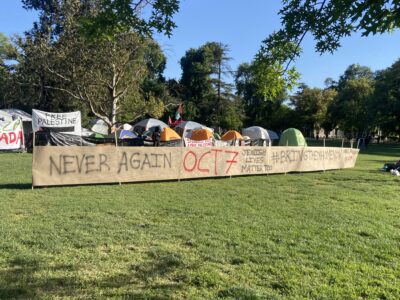
A banner erected by the Davis October 7th Coalition as a counter-demonstration to the UC Davis Popular University for the Liberation of Palestine encampment. (Aggie File)

The Davis October 7th Coalition was a group that ran counter-protests to the encampment and tried to raise awareness to the hostages remaining in Hamas captivity. A member of the organization even filed a lawsuit against the campus for its handling of the encampment. 

“For the past [seven] weeks, the encampment at UC Davis has been disrupting daily quality of life on campus for Jewish students and faculty, and everyone else not affiliated with the encampment,” the group said via email. “Finally, that is over today but not until after the academic year ended. Though our fight is not over. We filed a waste, fraud and abuse complaint with the State Capitol to reform how UC civil rights offices address complaints of antisemitism so future students can feel safe and protected.”


‘THE WAR OVER HEARTS AND MINDS’


Beshara Kehdi, a Ph.D. candidate and graduate Students for Justice in Palestine [SJP] organizer, said that while a deal wasn’t reached between organizers and the administration, they affected the public opinion.

“The war over hearts and minds has already been won,” Kehdi said. “These encampments have already won. Genocide will not be tolerated, Palesitne will be free. A reckoning is coming and justice will be served from Turtle Island to Palestine.”

McConnehey believes that UC President Michael Drake has a problematic history due to his involvement in the prosecution of the Irvine 11. The Irvine 11 refers to a group of UC Irvine students who interrupted an event featuring Israeli Ambassador Michael Oren in 2010. 

“We have to look at Michael Drake’s history at UCI to see exactly how he feels about the Arab, Muslim and Palestinian communities that are beloved by the people of conscience at the UC and in California more broadly,” McConnehey said. “Google the Irvine 11 for a history of his involvement as chancellor at UCI around Palestine and the punitive measures he took to punish people for speaking out.”

McConnehey shared that the University of California had the opportunity to engage in good faith with encampment activists but failed to engage with their demands of divestment. 

“When people feel marginalized, when they feel unheard, when they feel like they’re taking every single form of action that they are supposed to take in regards of an issue, especially when that issue is one as clear as an ongoing genocide, you cant really predict what people are going to do when they feel like the people in control of the system thats forcing complicity onto them isn’t listening, or isn’t changing direction,” McConnehey said.

Written by: Rivers Stout — campus@theaggie.org

ASUCD Senate fixes budget errors, allocates spare funds

A “misunderstanding” led to several ASUCD units budgeting for two directors rather than the singular one allowed


By VINCE BASADA — campus@theaggie.org


ASUCD Internal Vice President Aarushi Raghunathan called the May 30 Senate meeting to order at 6:14 p.m. After roll call, she read the UC Davis Land Acknowledgement.

The Senate began the meeting by rectifying an error in the budgets of several units. Several units had been approved to have two unit directors for the 2024-25 fiscal year, and she only later learned that due to payroll and personnel rules, units can only have a singular director, according to Controller Allyson Francisco.

She called the situation a “misunderstanding” between herself and ASUCD HeadQuarters Office Manager Paula Nichols, affecting the Entertainment Council, Whole Earth Festival, Aggie Reuse and the Campus Center for the Environment. These units’ directors were brought in throughout the night to rectify the issue and reopen their respective budgets, with most relocating the previously budgeted funds for a second unit director or assistant director role.

The Senate also reopened the student government budget to address a previous issue where commission chairs’ pay had not remained constant throughout the summer. The Senate amended this issue with Internal Affairs Commission (IAC) Vice Chairperson Zachary Bogglen representing commission chairs. Senator Curtis Chen also moved to increase commission chair pay to $18.50 an hour from the previously budgeted $18.00, pointing to remaining funds in the total budget.

After a short break, President Francisco Ojeda gave his spring quarter State of the Association. He started the brief speech by asking the senators present, “What is our favorite word? Impeachment.”

“Thanks for giving me time, for one last time, to have a state of the association; my last address from me to you all from the bottom of my heart,” Ojeda said.

Ojeda went on to congratulate the team behind Picnic Day for a “wonderful” celebration and the Entertainment Council for a successful Lawntopia, which he said was, “not really [his cup of] tea, [though] some people had fun.” He also acknowledged the Whole Earth Festival and said they made the right decision in moving the location to Hutchinson Field after the pro-Palestinian encampment had been set up at the event’s standard venue.

“[The] Senate should never interfere in a peaceful protest,” Ojeda said about the move.

He went on to mention the upcoming Pride Festival and The Pantry’s move to the space formerly occupied by Gunrock Gaming.

Ojeda also thanked Francisco for her work on the budget.

“While it was hectic, I think it went well and [smoothly],” Ojeda said. “It seems that needs were met this time around.”

Ojeda concluded with final remarks on the past academic year.

“I am not able to use the word ‘fun’ to describe this year,” Ojeda said. “I’d probably just use the word ‘fun’ to cut things short with you all.”

The Senate gave light applause before moving to review written reports from IAC and Housing Advising for Undergraduate Students (HAUS) before hearing the Housing and Transport Advocacy Committee (HTAC)’s quarterly report delivered by Chairperson Christina Smith, a third-year political science, public service major.

Smith noted that her team had recently transitioned into a project-based model in which volunteers individually focused on projects they were passionate about. Smith recently worked to get HAUS recognized for Davis’ Thong Hy Huynh Awards, which she called, “an excellent time,” and that, “The smile on [HAUS’] faces made [her] year.”

Smith went on to present the current projects of her team, joined at one part by Briane Abernathy, a fourth-year sociology major and HTAC student orientation liaison and tenant rights specialist. These included Abernathy’s own work in promoting bike safety and working on a new video for incoming first-years, as well as other volunteers’ projects such as increasing food diversity and getting a Yolobus line from the Memorial Union to Woodland’s Gateway Plaza.

The Senate then reviewed the written quarterly report of the Office of the Transfer Student Representative.

Following the arrival of The California Aggie Editor-in-Chief Sonora Slater, the Senate moved to approve The Aggie’s budget for the year. The unit and ASUCD had recently dissolved a Memorandum of Understanding allowing the former to absorb the latter’s debt. The proposed budget had been approved by the Media Board, though several senators had noted earlier in the night that they had issues with the budget to address with Slater. However, by the time she arrived, these senators, notably Jonathan Ng, were no longer present.

“Almost all of the money that is coming from ASUCD [for The Aggie] goes to student jobs,” Slater said after giving a brief introduction for the proposed budget, on which she worked closely with Controller Francisco.

With The Aggie facing lowering advertisement revenue, Slater noted that she was having meetings with next year’s Editor-in-Chief Chris Ponce and The Aggie’s Business Manager Laurie Pederson to discuss ways to increase revenue.

The budget was approved without contest, and the Senate entered a discussion about how to use its remaining funds. With Raghunathan’s support, mental health resources were added to the Health and Wellness line item. Senator Nur Ambaw then attempted to start a motion to increase Senate reserves, which ultimately failed.

“This year, I feel like we’ve been running out of money,” Ambaw said in defense of his motion. “I don’t think it’s right to limit senators’ potential by saying, ‘We don’t know have the money to do this.’’’

The Senate went on to amend the budget for the Club Finance Council from $113,000 to $152,000 and allocate an additional $5,000 to Cal Aggie Camp.

The budget was then briefly closed to hear the Picnic Day quarterly report, presented by Picnic Day Chairperson Bradford Martin, a third-year economics and psychology double major, and Vice-Chair Mina Saramn, a third-year statistics major. The pair say they are happy with this year’s festivities and hope to hold a “mini Picnic Day” event in fall quarter 2024.

The Senate then reopened the budget, with some $25,000 remaining to allocate. Ultimately, they would allocate $14,000 more to increasing accessibility, $9,000 for the Asian American Pacific Islander Night Market and $1,100 to executive branch special projects. With the budget finalized and complete, the Senate broke out into a short applause.

“Thank you for all your hard work,” Francisco said. “This slays. We did it.”

After public comment and ex-officio reports, the Senate moved to the introduction of new legislation: SB #92 allocating $1261.77 to the Office of Senator Ambaw for the purchase of eco-friendly water bottles. However, there was some discourse over if they were allowed to do so as Senator Ambaw had recently left the meeting on Zoom, and it was unclear if there were enough senators present to proceed with discussing legislation.

With the consent calendar passed and no previous legislation to discuss, the Senate moved to approve past meeting minutes and then to open forum. Raghunathan adjourned the meeting at 9:36 p.m.

Written by: Vince Basada campus@theaggie.org

Mondavi Center announces 2024-2025 season

This will serve as the first full season with new executive director, Jeremy Ganter


By RODRIGO VILLEGAS — campus@theaggie.org


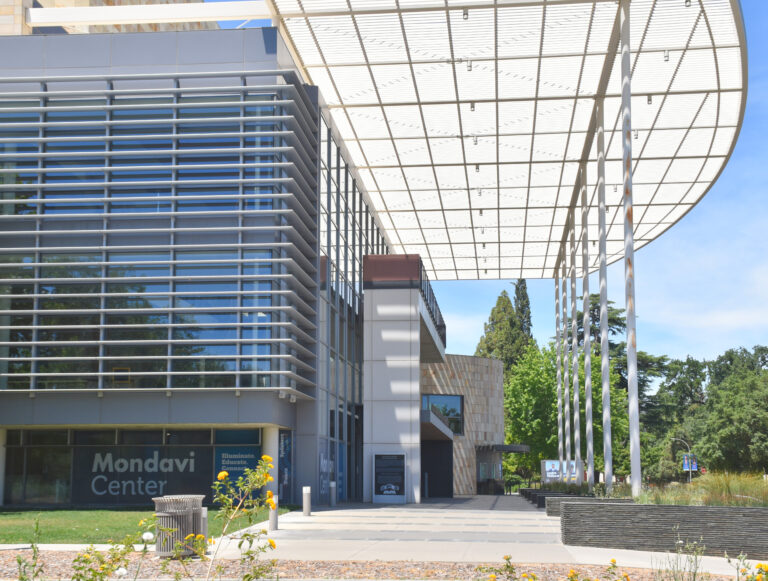
The Mondavi Center recently announced its 2024-2025 season of performances, featuring a diverse lineup of both enduring favorites and the next generation of performers. This 23rd season will also mark the first full season under Executive Director Jeremy Ganter.

Ganter originally intended to be a professional musician; however, his plans changed during his undergraduate program when he realized he did not enjoy practicing guitar for six or more hours a day. He later discovered his passion for music history — once he started working in the performing arts industry, he realized how effective he was in a backstage management role than onstage.

He started his career at the Mondavi Center as the executive assistant to the executive director in 2001. During his early career, he experienced multiple promotions until he assumed the role of director of programming and associate executive director in 2007, eventually becoming the executive director in 2023.

“What really prepared me for the job was working with our former executive director, Don Roth, for 17 years, who was a mentor to me,” Ganter said. “A lot of what prepared me to lead the organization, I learned from him.”

As the new executive director, Ganter has three main goals for the Mondavi Center: first, establishing deeper connections with university departments to expand the venue’s presence on campus; second, seeding the ground for the next generation of young artists to sustain the Mondavi Center for the next couple of decades and third, creating a diverse lineup that includes more Asian American Pacific Islander (AAPI) and Indigenous performances, as well as generally representing the diverse bodies that make up campus.

“I was able to address all of those goals with the new season,” Ganter said. “The deeper representation piece and the next generation piece are visible already in the programming. What isn’t visible yet is the deeper connections with campus departments, but by the time we start the season in September [2024], we’ll be able to publicly announce a bunch of partnerships.”

Among the 2024-2025 season lineup are favorites such as Joshua Bell, San Francisco Symphony and Terence Blanchard, as well as next-generation artists like Bruce Liu, Sean Mason and Théotime Langlois de Swarte with Les Arts Florissants. The lineup also includes groups like Cloud Gate Dance Theatre of Taiwan and Julia Keefe Indigenous Big Band to increase AAPI and indigenous representation.

Ganter expressed excitement for this season launch due to the mix of familiar and new artists for their audience. The lineup has received a positive response so far and further added to his excitement, according to Ganter.

“The response to our season launches [is] generally positive, but this one has been particularly positive,” Ganter said. “Ticket sales are well beyond what they were at this point last year.”

He further expressed his excitement about the audience’s renewed energy for live performances, which he’s witnessed during the current 2023-2024 season. Ganter considers this current season as the first “truly post-pandemic” one, because the fear of going out has nearly faded, and the Mondavi Center has experienced full houses again during performances.

“It was plausible that live performances could’ve been completely damaged by the pandemic,” Ganter said. “It was plausible that people would not come back and that we would not have enough numbers to sustain an organization like the Mondavi Center. However, this 2023-2024 season proved the power of live performance.”


Written by: Rodrigo Villegas — campus@theaggie.org

City of Davis announces annual waste collection monitoring program

The program will work to be in compliance with Senate Bill 1383


By ALMA CULVERWELL — city@theaggie.org


The city of Davis recently announced an annual waste collection monitoring program in order to ensure that the city complies with state regulations under Senate Bill (SB) 1383.

SB 1383 went into effect in January 2022 and includes specific regulations surrounding waste management, requiring all cities in California to perform a yearly contamination monitoring to establish how well waste is being sorted.

Jennifer Gilbert, the conservation coordinator for the city of Davis, explained the involved process for monitoring the city’s waste.

“The law is very specific about how cities are to perform this contamination monitoring,” Gilbert said. “Route monitoring, or lid flipping, is when a number of containers on each hauler route are visually checked for proper waste sorting. If contamination is found, the city is required to provide additional education to customers on how to properly sort waste.”

The city hired APTIM, a private company that works to enhance the quality of the environment and create sustainable and resilient communities, to help with the process. Gilbert shared the city’s reaction to the end result of last year’s trash collection.

“We were very pleased,” Gilbert said. “Last year, 81% of trash, recycling and organic containers that were checked had waste sorted correctly. Since last year was our very first year, we didn’t know what to expect. 81% is very good compared to some other cities or jurisdictions in California.”

Gilbert explained that the only shift they had to make after last year was increasing the number of “Good Job” tags.

“Last year, we ran out of ‘Good Job’ tags, because customers were sorting waste better than we expected,” Gilbert said.

Mayor Josh Chapman discussed the results of last year’s process in a press release.

“There was great success during last year’s lid flipping, which further illustrates our community’s commitment to being stewards of the environment,” Chapman said.

The waste checks serve primarily as a method of ensuring that the city of Davis community members are in compliance with the SB 1383 regulations and are not in need of further outreach or education.

“City staff have done a great job increasing the amount of outreach and education on waste sorting this year,” Chapman said. “The city of Davis has consistently been at the forefront in providing recycling and organic services to customers, and now, it is more important than ever to understand how the actions we take to reduce our carbon footprint make an impact.”

Gilbert shared her hopes for the future of waste checking and collection.

“We hope that over time, we see even lower rates of contamination,” Gilbert said. “Specifically, we hope to see fewer trash containers get tagged for containing recyclable or compostable materials.”


Written by: Alma Culverwell — city@theaggie.org

Moms for Liberty reaches settlement with Yolo County after library altercation

The group was recently awarded $70,000 after being removed from the library in August 2023


By HANNAH SCHRADER — city@theaggie.org


In a recent lawsuit settlement with Yolo County, conservative organization Moms for Liberty was awarded $70,000 and a change in library policy. The lawsuit was originally brought about after the library’s regional manager, Scott Love, removed the group from the Mary L. Stephens library in August 2023.

Love removed the group due to a speaker’s misgendering of transgender individuals during their forum in the library. However, the new library policy prohibits staff from interrupting meetings based on the content of the speech.

On Aug. 20, 2023, the Yolo County chapter of Moms for Liberty held a meeting at the Mary L. Stephens library for the first time, according to Beth Bourne, the chair of the Yolo County chapter. The group reserved a meeting room to hold a forum to discuss protecting girls’ sports in California.

This forum, called the Forum on Fair and Safe Sports for Girls, consisted of a panel of anti-trans activists who spoke on the importance of protecting girls’ sports. The speakers began to misgender transgender people, and Love shut off the projector and asked the organization to leave.

Bourne discussed the sequence of events that resulted in the group’s removal from the library.

“We were told by the librarian — he actually said before we even started the event — that there was a state policy or state law that said we would not be allowed to misgender anybody,” Bourne said. “We said before we started, ‘That’s not really true, there is no state law that says you have to use a certain kind of speech.’ And then, as we started our talk again, he interrupted us and said, ‘You’re not going to be allowed to misgender [anyone]. Transwomen are women.’”

Bourne then discussed the challenges the organization faced when pursuing the lawsuit.

“I think the hardest thing for me was the timing,” Bourne said. “I was told that it’ll be a few months before we actually would take it to the federal district court — I don’t remember which circuit it is, but it’s in the press release. But I was like, ‘Why can’t we do something this month? Why do we have to wait until, you know, February or March?’ To me it was like, I don’t have time, I want people in Davis and Yolo County to know the truth. And the truth is, girls are being impacted by sports, and we’re being silenced for having a different viewpoint.”

Bourne spoke about the difficulties of expressing viewpoints that oppose the majority opinion.

“We’re in a blue city and a blue state with a blue government,” Bourne said. “And so maybe what I’m saying isn’t what is popular in the Democratic Party right now, even though I don’t think this should even be a political issue. It should just be an issue about protecting girls and protecting children and protecting reality.”

Bourne then used an analogy to urge others to try to understand her position from the minority viewpoint.

“Let’s say you were living in, you know, Nashville, Tennessee, or I don’t know, some red city in a red state, and your views were like, ‘I want to protect trans children and trans medicine,’” Bourne said. “And then your librarian said, ‘No, you can’t talk about that.’ So you just have to put yourself in another situation.”

Chair of the Davis Phoenix Coalition Anoosh Jorjorian provided a response to the recent settlement.

“We were saddened that Moms for Liberty’s bad behavior resulted in these kinds of costs to our county,” Jorjorian said. “We recognize that the library has been put in a really difficult position of, on the one hand, needing to be a forum for free speech, and on the other hand, being forced to allow speech that is harmful and can be threatening to people who patron that library.”

Jorjorian then talked about the harmful implications of this settlement on people in marginalized communities.

“Children who are bullied have frequently sought out libraries as a safe place where they can avoid a lot of the kinds of bullying and hate speech that they are subjected to at school or just out in the community,” Jorjorian said. “Decisions like this one really threaten the library’s role as that safe place and infringes on their [duty] to be a place for all community members.”

Jorjorian discussed the broader LGBTQ+ sentiment in response to the changes brought about by this lawsuit settlement.

“I do think I speak for a lot of members of the community in how frustrated we are that Moms for Liberty [claims] to be fighting for the liberty of all, and yet their actions are consistently benefiting just themselves and harming the community at large,” Jorjorian said. “Especially when they are such a minority in this community, and their actions have negatively affected so many.”


Written by: Hannah Schrader — city@theaggie.org