53.7 F
Davis

Davis, California

Saturday, December 20, 2025
Home Blog Page 87

ASUCD Senate passes emergency resolution regarding encampment, protests on May 16

A constitutional amendment to institutionalize an ASUCD hiring committee also passed 


By SYDNEY AMESTOY — campus@theaggie.org   


The ASUCD Senate held a town hall session in the CoHo on May 16, giving students the opportunity to ask the table questions. The session was called to order at 6:20 p.m.

However, there were no questions presented from any member of the public, so senators and chairs were asked to give a brief report on their work from the quarter to those in attendance. The session was closed at 6:40 p.m., and the Senate moved to the Mee Room to call the Senate meeting to order.

The meeting was called to order at 6:56 p.m.

Next, the Senate addressed an emergency Senate Resolution, SR #10, authored by Senator Yara Kadaan. SR #10 asks the Senate to affirm the protest and demands of the Davis Popular University for the Liberation of Palestine (Davis PULP). 

“Things are developing very quickly both here on campus and in Gaza, Palestine and neighboring countries in terms of the aggression […] in the genocide that they are facing,” Kadaan said. “There is no time for us to wait, the negotiating team from the encampment is already in talks with the administration. We don’t have time to sit back and watch this happen or mull it over more, things are moving very quickly out there and we have to be caught up to it to the best of our ability.”

A vote was held to consider SR #10 as emergency legislation, which would require it to be addressed during that meeting. In the initial vote, there were seven yes’s, four no’s and two abstainments. The resolution would need a two-thirds majority to be considered an emergency, which wasn’t met in the initial vote and would push the debate on the resolution to next week’s meeting.

Internal Vice President Aarushi Raghunathan then moved the Senate to consider other legislation.

Constitutional Amendment (CA) #90, which seeks to institutionalize the hiring committee for interim senators, was discussed first. After a short debate, CA #90 passed with a vote of eight yes’s, two no’s and three abstainments. 

The meeting then moved to the quarterly report from the ASUCD Judicial Council (JC).

JC plans to update some judicial codes as positions within the council have all become paid roles. They also announced that for the remainder of spring quarter, judicial council meetings would be every Thursday on the third floor of the MU, from 5:30 to 6:30 p.m.

With the conclusion of the quarterly meeting, the Senate moved into the consideration of SB #90, which seeks to allocate $1,658.75 to the Student Health and Wellness Committee (SHAWC) for an earthquake emergency kit building event on May 31 on the MU patio. 

After brief debate regarding the possibility of not all supplies being used, SB #90 passed unanimously. 

The STEM Committee then gave its quarterly report. The committee has been trying to increase equity within STEM, sponsoring STEM-related events and posting opportunities for STEM students on their Instagram. 

As the quarterly reports concluded, the Senate moved into public discussion.

Various anonymous members of the public came to announce their disappointment in the tabling of SR #10 until next week. 

“[The Senate] tabling a piece of legislation because you want to be nitpicky and sit with it longer is not okay anymore,” one anonymous speaker said. “You have students out there [in the encampment] risking everything.”

Public speakers were given two to three minutes to voice their opinions and concerns to the table. Discussion between the public and the Senate remained focused on SR #10 and continuing the encampment in the MU Quad.

“I have been at Davis for two years, and I’ve been here way too many times, defending the fact that I deserve to be alive, that I deserve to be defended and my existence is valid,” another anonymous speaker said. “I’m sick of it. The people who said that we should table this bill for next week, you’re ignorant, you’re cowards. [Students are] sitting on the ground. They’re not showering for days. They’re skipping their classes. They’re skipping their midterms to defend the fact that Palestinians should not be genocided off the face of the earth.”

There was discussion regarding recent sweeps of other encampments by law enforcement at other schools, including recently at UC Irvine and UC Los Angeles, and the fear of something similar occurring at UC Davis.

According to Kadaan, the decision to send in law enforcement is made by the UC Regents and the UC Office of the President.

Discussion of SR #10 ultimately led to a motion to reconsider the resolution as emergency legislation, which passed unanimously.

The Senate then moved into a brief Senate discussion on the resolution.

After a call of hands to see how the table members would vote, a motion was made to pass SR #10. With a total of seven yes’s and two abstainments, SR #10 passed unanimously. 

The Senate then moved into a closed session at 10:12 p.m., with all members of the public leaving the meeting. 


Written by: Sydney Amestoy — campus@theaggie.org
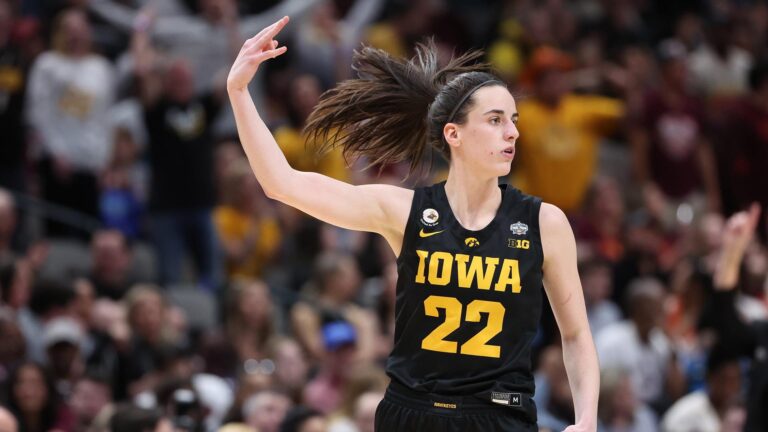
 

The rivalry and stardom of women’s basketball players

Caitlin Clark and Angel Reese are just some of the many rivaling stars


By MI’ZAUNI REESE — sports@theaggie.org


For the majority of U.S. history, men’s college and professional basketball has taken up the spotlight, with women’s sports, especially basketball, receiving a fraction of that recognition. However, with the recent rise of superstars Caitlin Clark at the University of Iowa (UI) and Angel Reese at Louisiana State University (LSU), women’s basketball has taken its moment in the spotlight. With both of these women being in the top ten overall draft picks, they are expected to make waves in the WNBA and American sports altogether.

Clark, the number one overall draft pick this season, has been making headlines far before the draft. While attending UI, Clark was able to shatter dozens of NCAA and Big Ten records during her career. With recognition for the most points scored by any college player of all time, male or female, Clark has been a player to keep an eye on.

Even after being invited to practice with the 2024 U.S. Olympic women’s basketball team leading up to the Olympics in Paris, Clark’s goal is to secure an invitation to compete. After being drafted this year to the Indiana Fever, she had the top-earning jersey for any draft pick ever in both male and female basketball.

Another star player, Angel Reese, has had a similar impact on the sport. As she and Clark’s face-offs in college brought mass coverage to women’s basketball, Reese is becoming a household name around the U.S. Bringing in many wins for LSU, Reese has been granted dozens of awards, with her most recent being the 2024 Southeastern Conference (SEC) Player of the Year. 

In her first WNBA game with the Chicago Sky she was able to put up double-digit points, an accomplishment Clark did not reach in her debut. The constant comparison between these two has brought significant attention to the sport, as fans feel that the women are exhibiting more drive and competitiveness in the sport with their constant record breaks. NBA pros have even begun to get involved and show support for the women, with Shaquille O’Neal serving as Reese’s mentor and even saying he may prefer the WNBA for entertainment.

Additionally, O’Neal advocates for the closure of the wage gap seen in the NBA versus WNBA. With Reese’s and Clark’s followings, stadiums are expected to be packed all season, especially when these two are pitted against each other. Many teams are seeking bigger venues for their games against Clark or Reese to accommodate the influx in viewership. 

However, despite this increase in support for the WNBA, the recent women’s basketball contracts are disappointing. Clark, the most anticipated player of the season, will be making a little under $340,000 over four years with her WNBA contract. Compared to her eight-year $28 million contract with Nike, this is rather insignificant, as most WNBA athletes have to rely on brand deals rather than their league contracts. 

With Reese’s contract being just under Clark’s at around $330,000 over four years, she too is being undervalued for the skill and attention she has brought to the team. Although many point to the fact that rookies make less money than veterans in the sport, NBA rookies have a minimum annual salary of $1.12 million, with their top overall draft pick earning around $10 million. 

These women have brought millions of dollars and views to collegiate basketball and soon the WNBA as they are anticipated to reshape the sport and viewer’s perception of it. Hopefully, with an increase in recognition will come an increase in salary that equates to their skill and importance.


Written by: Mi’Zauni Reese — sports@theaggie.org


Why do people wear white to graduation?

The history behind the unspoken tradition of wearing white for life milestones 


By LORENA ALVAREZ — arts@theaggie.org 


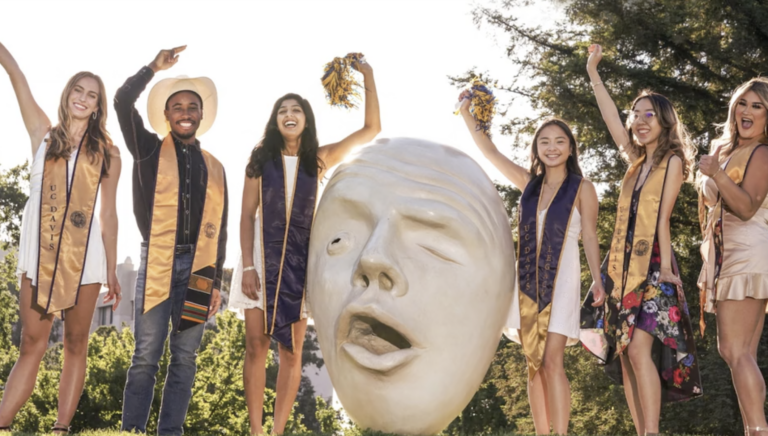
With graduation around the corner, many students are in search of the perfect white dress to pair with their stoles, cords and navy cap and gown. The question still remains though, why do graduating students put so much effort into finding the “perfect” white dress for their graduation ceremony and pictures? The Aggie decided to explore this more in-depth, piecing together the history behind the tradition of wearing white for milestones while also working in commentary from members of UC Davis’ Fashion and Design Society (FADS). 

Although wearing white to weddings is a controversial “rule,” this tradition did not begin until “1840, when Queen Victoria defied the usual practice by wearing a white dress to her wedding,” according to The Washington Post. Before Queen Victoria, wearing white to milestones was unconventional and not the standard that it is today. Queen Victoria may have set the curve for this time, but it still doesn’t fully answer the question of why graduating students across America choose to wear white for graduation today. 

Pachia Vang, the cultural studies of fashion and textile surface design: patterns and resists lecturer, spoke about the cultural meanings behind the color white. 

“White means different things in different cultures and contexts,” Vang said. “In the West, it has generally represented purity and is seen as a blank slate for new beginnings. This is why brides wear the color for weddings as they enter into new phases in their lives. We also see the color adopted as a form of feminism, worn by suffragists and continuing to influence the women in Congress today who will wear white pants suits in solidarity with one another.”

That said, Vang also acknowledged that in some cultures, white is not appropriate attire for every occasion.

“In some Asian cultures, however, white can represent death, which is also a type of new beginning,” Vang said. “These different contexts influence why people may choose to wear or not wear white for certain occasions.”

Expanding on the idea that color holds specific meanings, Julia Dang, the executive director and president of FADS and fourth-year design and English double major, noted clothing’s value.

“Fashion and clothing is your way of showing your personality and your emotions from the inside out,” Dang said. “It’s an unsustainable environment and industry, but we [FADS] push for sustainability, creativity and innovation.”

As a Vietnamese-American, Dang went on to comment on the traditional clothing practices in Vietnam, noting a story her mom told her while growing up about how she felt following her school’s dress-code.

“Traditionally when you are in school, in Vietnam, you wear an Áo dài,” Dang said. “[An Áo dài] is a traditional style white tunic dress for girls. It shows that you are capable of being feminine but also powerful in pursuing education. I remember my mom saying that If she didn’t get her dress dirty in school, she’d be like, ‘I did all of these activities, I participated in these chem experiments with my classmates, but I was still able to keep it clean.’” 

When asked why she thought many students gravitate towards white graduation dresses, Dang noted UC Davis’ school colors. 

“White matches most with UC Davis’ gold and blue,” Dang said. “White just matches best under a robe, it shows through more than other colors.”

FADS’ Chief of Internal Affairs, Irena Song, a design major with an emphasis in fashion, noted the trend’s dominance in student culture and how white dresses have become a symbol for graduation.

“When you take photos or when you’re standing next to each other, it looks very cohesive,” Song said. “When you choose one consistent color, it looks like they’re graduating. For example, when you see girls wearing white dresses around campus and see the photographer, you know they’re graduating without even needing to see their stole. The trend is for unity and to mark the occasion.” 

She continued talking about how students can add their own touch to their attire despite their choice to follow the trend, speaking about the value of wearing accessories that hold sentimental value. 

“Wearing something that feels meaningful to you, in terms of accessories, is a great way to show your personality,” Song said.

Eesha Bhagwat, one of the FADS officers and a fourth-year neurology, physiology and biology major, noted how graduates could add their unique style while still following the tradition.

“A cool thing to do would be to really go all in on the makeup and do really like out there kind of eyeshadow, like jazz it up rather than just a clean look,” Bhagwat said. 

She went on to note that wearing a white dress is a celebratory tradition that does not transcend people’s style or achievements. 

“When it comes to graduation, this moment is bigger than what you want to wear,” Bhagwat said. “You’re celebrating something you’ve worked so hard for. I hope people don’t get lost in that alone and forget that you can do what and wear whatever you want.”

While wearing white to graduation is an easy way to show unity and ensure that the attire pairs well with UC Davis’ cap and gown, graduation ceremonies are much more than just simply picking up your diploma. Graduation is a time to come together with friends and family to celebrate graduates’ accomplishments, whether that be through traditional cultural clothing or a minimalist dress. 


Written by: Lorena Alvarez — arts@theaggie.org 

‘Bridgerton’ returns for third waltz through Regency-era England

The sensational Netflix period romance series invites viewers to enjoy a brand-new love story


By NATALIE SALTER — arts@theaggie.org 


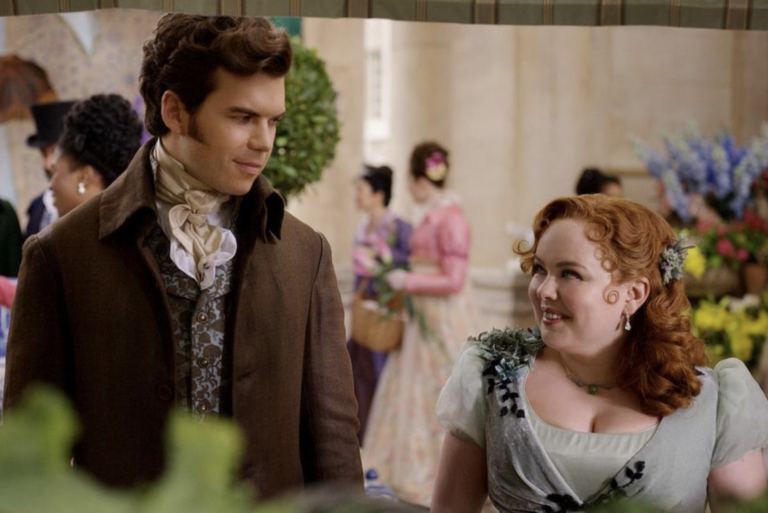
“Bridgerton” has been an icon of current pop culture since its initial break onto the scene in 2020. Since its debut, the show has aired two seasons and a spin-off mini-series and has returned this spring for a third season. Following the lives and loves of the affluent Bridgerton family, Netflix’s hit has taken a turn with each sibling as the season’s star. The first was the lovely Daphne, the second the uptight Anthony — and now, brother Colin steps into the spotlight, though perhaps the season’s true star is his best friend (and future lover) Penelope Featherington. Between Penelope’s secret life as the gossip panelist Lady Whistledown and her long-held feelings for Colin, this season has certainly been teased as one of great drama and romance. But has “Bridgerton” stuck the landing a third time?

At first glance, “Bridgerton” season three possesses all of the glamor and vibrance of its preceding installments. As always, the show is all glittering dances, pastel gowns, magnificent gardens and exquisitely adorned ballrooms. The first episode has a ball of its own, which is familiar territory, if not a little too familiar by now. Many of the show’s sharpest moments of romantic tension or most incriminating moments of drama happen on and around the ballroom floor, and without much variety in the way of dress and color, these sequences are perhaps becoming a little worn. 

It might be worth acknowledging that some of the most iconic and enjoyable moments of
“Bridgerton” — Kate Sharma and Anthony racing horses through the woods, Eloise Bridgerton shunning high society to explore feminist movements in the city’s poorer corners — happen when the show pushes itself beyond territory that is already so well known. Still, the series which once provided escapism during a global lockdown offers pleasant comfort in its resplendent sets, and the viewer who is willing to suspend their disbelief for its most audacious moments (a mishap with a hot air balloon comes to mind) will be delighted by the third season’s story. 

“Bridgerton” does not just follow its central couple but rather includes storylines for its supporting cast as well. In season three’s case, this section of the show’s runtime is a mixed bag. Second brother Benedict Bridgerton was next in line for a season, being the next book in the source material novels after Daphne and Anthony, but was pushed off in favor of Colin and Penelope. As a result, Benedict’s arc this season feels stagnant and at times downright unnecessary, as if the writers were uncertain of where to put him as the last Bridgerton sibling without a clear romance in line. 

Still, there are places where the season thrives, such as in the unexpected friendship that blossoms between Eloise and the once-mean girl Cressida Cowper. Their scenes are surprisingly delightful, and the strong-willed Eloise continues to enchant in each of her scenes. Likewise, the quiet Francesca makes her debut, and though her scenes are understated in comparison to the dramatic romances of her siblings, she still makes a lovely impression on the viewer. The preceding season’s leads Anthony and Kate hover in the background of the story in domestic bliss; Kate’s authoritative personality and clever wit inject a wonderful dose of energy into the family dynamic, and she fits in as perfectly as if she were meant to be a Bridgerton all along. 

What about the season’s stars? After two seasons of Penelope’s bashfully longing glances and Colin’s awkward obliviousness, tensions between the two have reached a head thanks to the former’s new fearsome attitude. “Bridgerton” is known to employ classic romance tropes to move along each love story, such as Daphne and the Duke’s faux relationship plot or Kate and Anthony’s relentless arguing which alchemizes into affection. This time, Penelope calls upon Colin to teach her how to find herself a husband, a setup that clearly makes way for the two to fall in love with each other instead. Though Colin and Penelope are meant to fall under the trope of “best friends to lovers,” one might argue that their supposed friendship has been lacking in its appearances on screen (in previous seasons, Penelope spends much more time laughing with her now-estranged friend Eloise, and Colin is more often found with his brothers than his childhood companion). Still, the chemistry between the actors is enough to electrify their scenes even without a solid foundation, and fans who have long awaited their tale will likely be satisfied with all the highs and lows of their romantic journey. 

Where does this leave the season as a whole? It’s difficult to say, considering that only the first four episodes of “Bridgerton” season three are released and the next four are slated for June 13. The fourth episode of this cluster leaves viewers with a shocking moment between the season leads, as a promise of even more excitement to come. As it stands, the third season of “Bridgerton” is a bumpy one, but even with its lows, the highs are high. If the second part is able to cut loose the threads that are bogging it down and truly give its central romance room to blossom and breathe, it may very well be a diamond of a season. If not, there are still plenty of Bridgerton siblings left to be wed off and plenty more chances for Netflix’s dazzling drama to shine. 

Written by: Natalie Salter — arts@theaggie.org

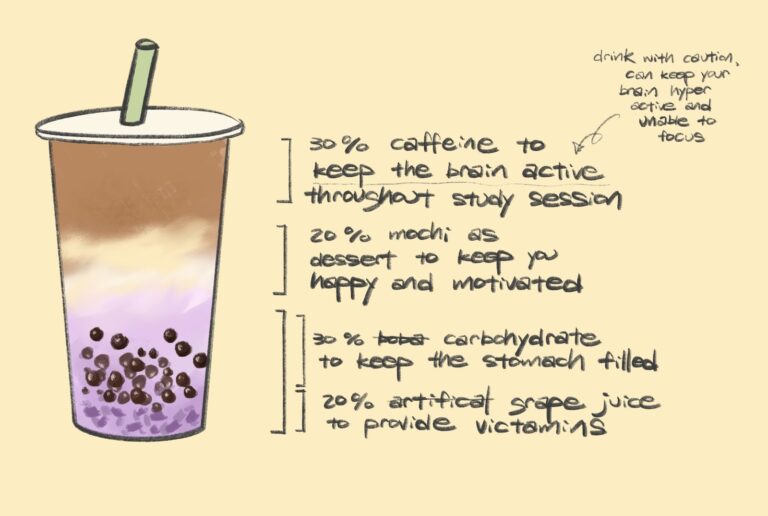
‘The Balanced Meal’

Drawn by: Lanhui Zhen –– lazhen@ucdavis.edu 

Disclaimer: (This cartoon is humor and/or satire, and its content is purely fictional. The story and names of “sources” are fictionalized.)

Understanding the history of protest in our path forward

As students across the country engage in civil disobedience in the name of Palestinian liberation, they follow in the footsteps of student leaders before them 


By EMME DUNNING — features@theaggie.org 


In the past month, college students in the United States have gained increasing attention from the public through their support of the Free Palestine movement. Students across the country have asserted their opposition to the conflict by erecting encampments, holding rallies and occupying classrooms and administrative buildings. As the UC Davis encampment enters its third week of demonstrations, we take a look back at past UC Davis protests that have paved the way. 

In the spring of 1970, U.S. involvement in the Vietnam War was at the forefront of many people’s minds. This was particularly true for college students, as young people across the nation organized rallies, sit-ins and boycotts in protest of the conflict — and UC Davis was no exception. 

Brett Stone, a UC Davis alum who was set to graduate in 1970, found this issue particularly pressing. 

“There was a tremendous amount of protesting and concern and outrage,” Stone said. “The question was — for me and my friends — what can we do? How do we express our anger? How can we make a difference?”

Their anger was twofold, as students were not only appalled by the actions of the United States in the war but also acutely aware of the direct role they were set to play come their graduation that June. 

“Once we graduated, we would be in line to go there [to enlist in the Vietnam War],” Stone said.

A UC Davis tennis player at the time, Stone decided to join a large group of UC Davis athletes in Jocks for Peace, an organization whose goal centered around the mobilization of athletes against the war in Vietnam. The group engaged in several actions aimed at educating and empowering communities to reject involvement in the war. 

One campaign involved going door to door in the neighboring town of Dixon to encourage people to write letters in protest of the war. Additionally, the UC Davis tennis team came together to pool the money allotted by the university for food at away tournaments and donate these funds to an anti-war organization, a move that garnered intense backlash. 

“The idea was to get people involved and understand what was happening,” Stone said. “We were confident that once they understood, they would realize what a horrible root this had taken. It was time to stop.”

Although the term “jock” is not necessarily associated with civil disobedience, Stone asserted that UC Davis athletes cared deeply about this issue and wanted their actions as a team to reflect that.

“For athletes in Davis, it was not business as usual,” Stone said. “That was the impetus. People saw athletes as disconnected and privileged — nothing was as important as their sports. It was our effort to change that image. Yes, athletes [were] preoccupied with their sports and their training, except when it [came] to this issue. We were sacrificing our education and our concern with ourselves and saying, ‘This is more important.’”

Despite the efforts of Stone and his teammates, two years later, in 1972, the war continued to rage. But as the U.S. war machine refused to let up, so did the student movement. Reignited by President Nixon’s invasion of Cambodia, students saw an immediate need for an escalation of their anti-war efforts. This need was, yet again, embodied by UC Davis students.

Bob Black, a city council member at the time and former UC Davis student body president, remembers the events of May 1972 vividly. 

“There was a very major uprising of students,” Black said. “There was a massive rally on the Quad.” 

This rally morphed into a march through downtown Davis, reaching numbers of up to two or three thousand, the majority of whom were UC Davis students.

In an effort to reach a larger audience and reassert a rejection of business as usual, a group of protestors blocked Interstate 80 in its path through Davis, backing up traffic for miles. 

Despite their shared anti-war goals, Black disagreed with protestors blocking the freeway. 

“To me, this seemed like not a very good way of winning middle-class hearts and minds to be against the war,” Black said. “And so I went down to the freeway. I spoke to people and I said, ‘Instead of blocking the freeway, why don’t we go up and block the railroad tracks?’”

The railroad tracks held great significance in the United States’ involvement in the war, as it was a major form of weaponry transport. In this way, Black believed that blocking the railroad tracks could make a similar statement to blocking the freeway.

Many protestors agreed, and over 100 people migrated to the railroad tracks where they effectively held the route to a standstill until their arrest nearly two days later. 

From the demonstrations of 1972 to the ones seen today, Black acknowledged the important role of student participation in social justice movements. 

“I think students can be regarded as the leadership of the future and their initial efforts to elevate public awareness and provoke the conscience of the people of America,” Black said. “I think it’s an early sign of where the generation would like to take us, and I think that’s a good thing. They’re attempting to reframe the debate as well as alter the course of public policy. It is extremely educational and fulfilling to take action as opposed to being a stand-by or a spectator.”

These sentiments of student involvement have been echoed in the years following the Vietnam War in countless issues. The United Auto Workers Union, which represents UC Davis graduate students, has embraced the importance of protesting for social change.

The Union works to protect the interests of its workers, which for strike UAW 4811 means supporting graduate students UC system-wide to secure fair wages, safe working conditions and adequate benefits. In 2022, the student-led union branch executed a UC system-wide labor strike in the name of fair wages.

Emily Weintraut, a teaching assistant and graduate student researcher in food science as well as the UAW 4811 ASE unit chair, has shown frustration with UC administrators’ lack of regard for student protests and demands. 

“As the [2022] strike went on, we stayed strong, but people got more and more surprised with how the university just didn’t seem to uphold the values that it says it does,” Weintraut said. 

She asserted that although student protestors should be commended for their efforts in ensuring their rights are upheld, it should not be their responsibility. 

“We wouldn’t have to have strike authorization votes, strikes, rallies and protests if the university would just implement the contracts correctly and would abide by the law,” Weintraut said. 

Today, the union prepares for another possible strike, this time on the grounds of safety concerns. The concerns stem from the recent actions of UC police at UC San Diego and UC Los Angeles, who the union asserts endangered the health and safety of their members in their violent response to pro-Palestine demonstrations on the campuses. 

If enacted, the strike would follow in the footsteps of many student demonstrations before it, continuing the legacy of student activism that has remained a pillar of the UC Davis community. 

Written by: Emme Dunning — features@theaggie.org

Officials urge support of affordable housing at Davis forum

City officials and housing professionals hold candid public discussion about Davis’ housing situation


By EMMA CONDIT city@theaggie.org


  On Thursday, May 16, Interfaith Housing Justice Davis hosted “Davis Housing Solutions: A Community Conversation,” serving as a public forum to tackle the important yet complicated topic of affordable housing. The evening was moderated by Mayor Josh Chapman and featured panelists from various organizations that define the state of affordable housing in Davis.

Dana Bailey of the Department of Housing and Human Services shared what Davis needs to support affordable housing. 

“I think what Davis needs is a ‘yes in my backyard’ attitude,” Bailey said.  

This idea opposes a “not in my backyard” (NIMBY) attitude, in which residents of a community support affordable housing in theory but do not want it to affect their community. 

Affordable housing can come in many forms — non-profit rental housing, affordable homeownership programs, subsidized rent programs and more. It reduces hunger, increases civic engagement and improves the overall health and quality of communities. 

Judy Ennis from the Davis Community Action Network (Davis CAN) shed light on the current dilemma the city is experiencing.

“[Davis] resisted the urge to grow,” Ennis said. “But because we did not grow, we have continued to leave people out. We are at 27% poverty. For children under 18 years old, we’re at 20% poverty. The average poverty [rate] for the state of California is 12.2%.”

Over the last 20 years, the city of Davis has experienced significant population growth, particularly due to the university. This has led to increased housing costs and a lack of housing to accommodate all of Davis’ potential residents. 

Roberto Jimenez, the chief executive officer of Mutual Housing California, shared that communities face many challenges when creating affordable housing, especially in a small city like Davis.

“The two most difficult parts of developing affordable housing are access to land Davis — and access to dollars also Davis in this case,” Jimenez said. “We’re playing three-dimensional chess trying to put all these projects together. I’ve seen projects with 14 sources of funding built into them.”

Members of ¿Un Cafecito?, a group for Spanish-speaking mothers at Davis schools, shared stories of their struggles finding affordable housing in the Davis area. For instance, to qualify for affordable housing, you must make below a certain amount of money. So, if you make slightly too much money, you will not qualify for housing. If you make below the minimum amount, there is hardly enough money for school, medical and food expenses. 

UC Davis students also experience housing insecurity at alarming rates, leading to rising concerns of affordable housing development for students. Robb Davis, the president of UC Davis’ Aggie Compass, highlighted that many students face transient housing insecurity and require affordability assistance.

“An undergraduate experience survey from 2022 found that approximately 2,400 students had been in a state of houselessness at one point during the year,” Davis said. “Many students find themselves in a vulnerability continuum.”

Throughout the evening, panelists discussed programs in Davis which can serve as a solution to this affordability issue. These programs, like Davis’ Housing Trust Fund, providing down payment assistance, increased density and new construction of affordable housing all require more support.

Jonathan London, a member of Davis CAN and professor of environmental justice at UC Davis, recommends that Davis residents employ political will in fighting for long-term affordable housing solutions.  

“Students are a key victim of lack of affordable housing,” London said. “My recommendation for students is just get really involved in city politics and really push for affordable housing. There’s 10s of thousands of students — it’s such a potential powerful voice, and so many students are affected by this issue. It could really push city politics in a progressive way.”


Written by: Emma Condit city@theaggie.org

Meet the UC Davis animals

Audrey’s guide to the critters on campus


By AUDREY ZHANG — aurzhang@ucdavis.edu


The first time I came to UC Davis, a turkey blocked my path to the information center. I looked into its eyes. In them, I saw rage, a brutal tragic past and a thirst for first-year blood. I saw my death. But there is nothing to be afraid of. UC Davis is full of wonderful animals and they have all only hurt me a little bit. 

Cheeto is my favorite — he’s the chonkiest little orange cat anyone has ever seen, and you can usually spot people spoiling him by the Physics Building. I remember the first time like it was yesterday: his fur was so soft, his paw pads were so squishy. He rolled onto his back, and the cuteness overwhelmed me. Then there was The Betrayal. I reached out to give belly rubs and he snapped. Respect everyone’s personal space. I wear these scratch marks with pride as a lesson well learned. 

Ducks are everywhere, and so are their adorable ducklings. You can usually spot them in the Arboretum, but my favorite pair is the couple hanging out at the fountain in Voorhies Hall’s courtyard. I’m their biggest fan. I’ve got about a hundred photos of the cute couple napping in the sun, though they haven’t been back since someone decided to drain the water from the fountain. How dare they get rid of the ducks’ date spot. I hope the two haven’t broken up.

Turtles dwell in the Arboretum too, though I can’t blame you if you haven’t noticed. Even a leprechaun would look at the water and say it’s way too green. A shark could be in there for all we know, and we wouldn’t be able to see it through all that algae. Maybe that’s why we have so many mosquitos. They’re my least favorite animals on campus, and the only ones that find their way into my apartment. I would cry if Cheeto graced me with his presence but no, I get discount Dracula here with a side of malaria.

Horses don’t deserve to be mentioned. Someone, not me, had to stand behind them during the Picnic Day parade. They thoughtfully left lovely brown landmines for the poor performers to dodge. Feel free to visit the Horse Barn and enact vengeance.

Last but not least, there is the humble cow. I don’t need to mention anything more. They get enough attention here as it is. 


Written by: Audrey Zhang — aurzhang@ucdavis.edu 


Disclaimer: (This article is humor and/or satire, and its content is purely fictional. The story and the names of “sources” are fictionalized.)

Mayor Chapman meets with Open Space and Habitat Commission to discuss upcoming changes

The Council Subcommittee on Commissions is gathering feedback from each city commission regarding structure adjustments 


By OLIVIA HOKR — city@theaggie.org 


On May 6, the city of Davis Open Space and Habitat Commission and Mayor Josh Chapman met with the main objective of reviewing the proposed changes to the structure and goals of the commission and its subcommittees. 

The Council Subcommittee on Commissions was tasked with the duty of reviewing each commission’s functions and structures. This also includes the consolidation of some commissions to reduce redundancy and increase effectiveness. They recently provided the recommendations for various Davis advisory commissions and have been going one-by-one to discuss these suggestions. The agreed-upon changes, which can be found in a memo from the meeting, include: the creation of new commissions, updating commissions authorizing resolutions and assigning community engagement efforts.

“We were tasked, the vice mayor and I, over a year ago to kind of step back and look at commissions in general and ways to have them be more efficient, robust input into the work we’re doing at council,” Chapman said. “We wanted to create a more succinct and focused function for each one. We tried to narrow down the overlapping scopes and put them into functions that were very specific so we didn’t have these really broad pieces.”

At their meeting, the Open Space and Habitat Commission reviewed the proposed recommendations to create more clarity among the focuses of their commission. In order to make those functions clear, the Council Subcommittee on Commissions specifically wrote out three to four primary functions of each commission. They were asked to check if the proposed scopes are clear, if they cover the expected areas and if they are manageable, according to the memo. 

Members of the Open Space and Habitat Commission had concerns regarding the redundancy of the functions, the lack of public outreach ability, the “Strategic Plan” timeline and the expectations of public engagement. There were also questions about the openness of collaboration between commissions. It was previously written out that the commission was open to working with others, according to Ramiro Cabanillas-Ledesma, a member of the commission. 

“I understand there’s an effort to define commissions more stringently than before,” Cabanillas-Ledesma said. “However, I do really like the wording previously of working cooperatively or maybe, you know, working in a different way but also that sort of emphasizes that we’re a commission who’s open to collaborating with others.”

Chapman clarified that he and his team expect commissions with mutual interests to work cooperatively together. He proposed the implementation of an overarching statement for all commissions that can express the expectation of mutual cooperation. 

After meeting with each commission, Chapman and Vice Mayor Vaitla will be working together to take into account the responses from each group. By the end of this month, the city plans to move forward with the implementation of the approved changes. 

“Once the last commission completes [the review], Vice Mayor Vaitla and I will work as a subcommittee to take that feedback and put it into a document that will come back to council on [May] 21,” Chapman said. 


Written by: Olivia Hokr — city@theaggie.org 

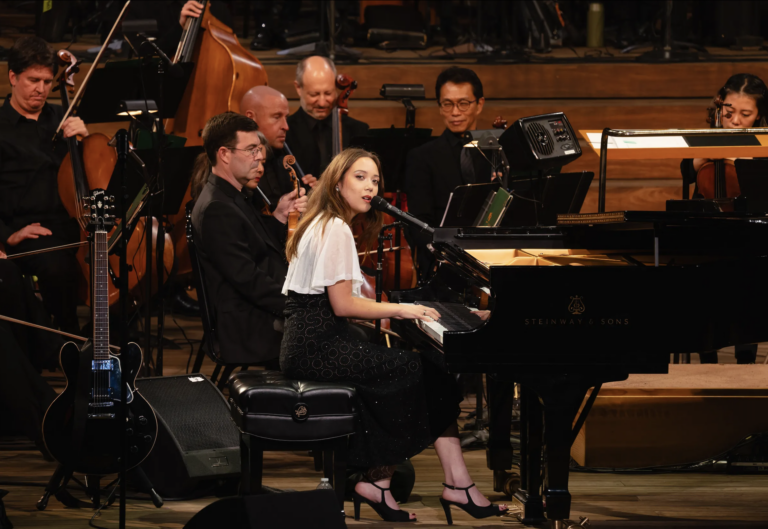
Laufey enchants on ‘Bewitched: The Goddess Edition’

Featuring four new songs, Laufey’s latest release is well worth your time


By NATALIE SALTER — arts@theaggie.org 


In September of last year, Icelandic-Chinese singer-songwriter Laufey released her long-awaited sophomore album, “Bewitched.” A beautiful blend of jazz and bedroom pop elevated with magnificent orchestral elements, the album proved Laufey’s prowess as an artist while simultaneously launching her into new levels of stardom through hits such as “From The Start.” From the playful “Dreamer” to the cinematic “California And Me (feat. Philharmonia Orchestra)” to the melancholic “Promise,” “Bewitched” shines as an album encompassing Laufey’s skills in emotional songwriting and atmospheric instrumentation. 

On April 26, Laufey returned to the spellbinding world of “Bewitched” to expand the album by four songs, crafting a new version known as “The Goddess Edition.” This extended release brilliantly captures her range as a musician, enchanting an already delightful album.

The first new track is “Bored,” a playfully crafted piece that lyrically chastises an unnamed lover for their vain self-absorption. In its sound, the song falls into Laufey’s lighter, bedroom pop-esque creations, upbeat but restrained. Instantly, Laufey demonstrates her vocal talents, her voice infectious with emotion and flowing seamlessly against the soft piano and drum-led background. 

“Trouble” follows suit in terms of its instrumentation. It is a gently composed song that reflects upon the singer’s difficulties in overcoming her feelings. Midway through the piece, Laufey’s love of jazz finds its way through a striking chorus of trumpets, bringing a pop of brightness. “Trouble” boasts relatable lyrics and a soothing rhythm, making it a pleasing backdrop to the listener’s own emotions.

Laufey shifts to try her hand at another jazz standard on “It Could Happen To You.” More fast-paced than the prior two tracks and far more jazzy, the song is an injection of energy well-placed among the more reflective tracks surrounding it. Laufey’s voice shines against the classy musical backdrop, and it is an absolute delight to listen to from start to finish. Likewise, the song’s playful nature shows that the singer shines in every direction of lyricism, and she can dance from melancholia to youthful whimsy with remarkable ease.

The final track also lends the extended album its name: “Goddess,” a withdrawn and emotionally poignant song that opens up Laufey’s most vulnerable side. A tragic listen that muses upon a toxic relationship steeped in unrealistic expectations, the artist’s hurt is felt pervasively in every note of the song’s piano. Near its end, the prior quietness of the piece is shed, allowing Laufey’s voice to stun while laced with anger and despair. Though a surprisingly sad note to leave the album on, “Goddess” is unforgettable and moves the listener time and time again.

If Laufey’s newest clutch of songs is any indication, her career is sure to only move upward. The singer teased fans that she may release an album of jazz standard covers in the future, a promising choice as “It Could Happen To You” is an absolute standout. Just as the album title suggests, Laufey is nothing short of bewitching, and she’ll continue to spellbind us in the future.

Written by: Natalie Salter — arts@theaggie.org

Behind the scenes of Whole Earth Festival’s planning and preparation process

UC Davis students work hard to plan Davis’ annual three-day music and arts festival


By GRETA FOEHR — features@theaggie.org 


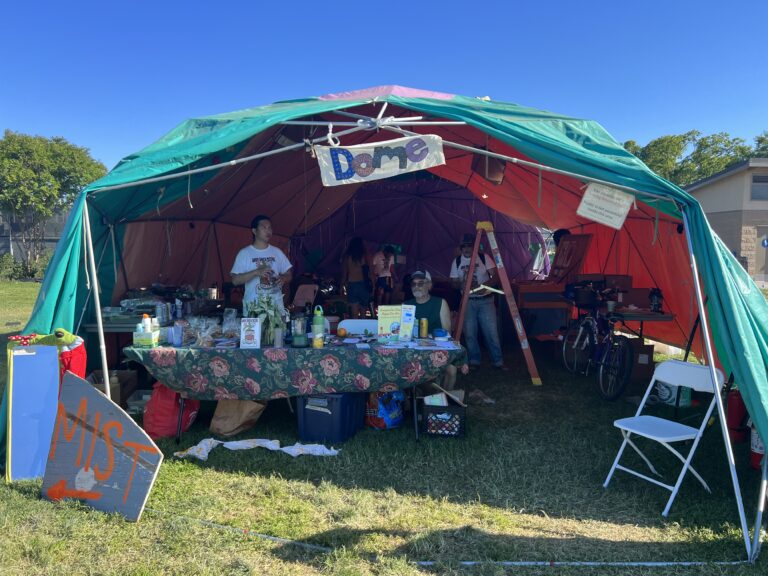
The Whole Earth Festival (WEF), a 55-year-long tradition in Davis, took place May 10 to 12. The festival featured a large variety of art vendors, food booths and two stages with live music playing for the entirety of the event.  

Jackie Allen, a third-year linguistics major who has been involved in managing WEF since their freshman year, emphasized the festival aims to be sustainable.

“We attempt to be as zero waste as we possibly can,” Allen said. “We talked to the food vendors in advance and made sure that they’re okay with using [reusable dishes provided by Segundo Dining Commons and the CoHo]. We reduce waste in that way. We also have compost and recycling stations where we sort all the trash that goes through WEF.”

Allen also said the success of the event relies on a team of students that starts working together in January to put the festival together and organizes the student and community member volunteers. 

“Volunteers make WEF possible,” Allen said. “It’s a welcoming place that really ties the community together, which I think is cool.”

This year, they had somewhere between 600 to 800 volunteers helping set up, take down and run the three-day festival. 

Nola Zimdars, a third-year design major, is a part of the student group in charge of WEF. Specifically, she designs the pamphlet that is passed out at the festival with all the bands, booths and a map of the grounds. 

“Staff is around 35 people and we have hundreds of volunteers,” Zimdars said. “There are so many hands that work together to make everything happen leading up to the festival.”

The staff has weekly meetings in the months leading up to the festival, and everyone has their own role and part of WEF that they are in charge of planning. 

“We are all such a hard working group of people who are so dedicated to cultivating community and an experience for everyone else,” Zimdars said.

For example, some students are in charge of selection, screening and communication with vendors, while others do the same with bands and food booths.

This team of students also decides the theme for WEF. 

“The theme this year is ‘Can you dig it?’ which is just a broad statement that we kind of leave up for interpretation,” Zimdars said. “‘Can you dig the Whole Earth Festival? Can you dig sustainability and community and music and art? Can you dig it?’” 

WEF sets itself apart from other music and arts festivals through its commitment to its core beliefs. Allen resonates with what WEF stands for.

“There are four main values of WEF and those are acceptance, expression, sustainability and community,” Allen said. “And honestly, WEF has been one of the best, most inspiring communities I’ve ever been a part of.”

Nonviolence is another important aspect of the WEF, and everyone who volunteers goes through a nonviolence training put on by the student organizers. 

“[Nonviolence] is an active way to de-escalate situations,” Allen said. “We try to handle uncomfortable scenarios with empathy and with appreciation for who that person is, and with respect to ourselves. [The practice of nonviolence] is de-escalatory and it’s applicable to any situation in life. You can only handle your actions and your reactions, so we just give tools and advice for how to best handle a situation that could be stressful or overwhelming.” 

Another important aspect of WEF’s operation is the transmission of knowledge between past and future members of staff. 

Mike Erickson, a Davis resident, is the sound engineer for the Cedar Stage at WEF. He has always been involved in WEF, and he even skipped his eighth-grade classes to attend the very first festival in 1969. 

“The difficulty of all student organizations has always been transmitting your knowledge,” Erickson said.

The students on staff refer to the older community members who assist them in the planning process as “old weffies.”

“Old weffies help pass along the nature of WEF and maybe the WEF magic,” Zimdars said. “It’s kind of something you have to experience face-to-face in real life. Having them come to meetings once in a while [and] having them help out with the nonviolence meetings is really important because I think otherwise the information wouldn’t be passed on as accurately. Students pass through so quickly, so [old weffies’] legacy and active participation is pretty vital.”

The collaboration and support between long-term WEF volunteers and UC Davis students makes WEF a community-building space. 

“The students planning WEF [receive] an educational value and an art value,” Erickson said. “People are working together as a whole. The community, the collective, the collective people working together.”

Erickson said the festival also challenges students to learn how to be self-sufficient.

“The students come out and use their hands to put together this festival,” Erickson said. “Whole Earth is a build-it-yourself type of thing, and if you’re going to build it yourself, you’ve got to learn how to use hand tools. And people who’ve never learned hand tools, learn how to use them and how to put them together.”

The hands-on process of planning and setting up the festival is a valuable experience for many students. Allen’s favorite part of WEF is setting up and taking down the festival with the help of many volunteers.

“It’s the most beautiful thing because we’re able to create two domes, two stages, a bunch of booths — it’s just magic,” Allen said. 

To make space for the pro-Palestine encampment in the Quad this year, the directors decided to move WEF to Russell Field. 

“Moving a whole festival in two days has been a lot, especially for our directors and logistics directors,” Allen said. “They’ve been working 32 hours, moving everything and making it work. But what is WEF without a little chaos?”

WEF is a unique, student-run, arts and music festival committed to its values, bringing both the local and visiting community together. Erickson expresses some other important learning opportunities that arise from WEF. 

“Whole Earth is an alternative to the mainstream,” Erickson said. “I think that it’s an alternative to what the administration thinks of this campus. There are a lot of students who think this campus is here to train them and prepare them to be middle corporate managers. But there are others who see it as a place to learn, to create alternatives to corporate management.”

WEF brings joy and a sense of belonging to students and community members alike. Allen shared their deep appreciation for the energy the festival creates.

“WEF is just one of the most beautiful things I’ve ever been a part of, and I feel really grateful and lucky to have gone to Davis and to have walked onto the quad and gotten involved,” Alan said.

Written by: Greta Foehr — features@theaggie.org

City of Davis Tree Commission discusses infrastructure problems from overgrown trees

At a recent meeting, commissioners and community members spoke about issues caused by poor development planning


By HANNAH SCHRADER city@theaggie.org


On April 3, the city of Davis Tree Commission held a meeting and discussed problems arising from city trees exceeding expected sizes and damaging utilities.

Cathy Busby, a local homeowner and retired UC Davis professor, spoke about a city tree with roots that have grown to damage her sewer and break her utility lines.

“The water main is going to keep breaking as long as the tree keeps growing, and Halls [Busby’s utility person] told me this repair will last a day, a month, a week, a year,” Busby said. “There [are] going to be more water breaks.”

Busby then talked about the financial challenges that these repairs have imposed on her and the problems that will arise in the future if the tree keeps breaking her utility lines.

“The roots, as he described, are growing everywhere, and Halls is like, ‘Yes, your sewer is going to keep breaking, and yes, your water main is going to keep breaking as long as that tree is growing,’” Busby said. “So in the last six months I’ve spent — I’m on a fixed income, and I’m on a pension — but I’ve spent one and a half months of my income correcting the breakages that this tree has caused to my utilities. If this keeps happening, I’m going to have to sell the house. I cannot do this repeatedly.”

Busby then spoke about a possible solution to this tree problem, which cannot be implemented because the tree damaging her utility lines is a city-planted tree that can only be removed by the city.

“The only solution is to take out the tree,” Busby said. “If the tree had been planted on the other side of my driveway, it would be fine. There’s a private tree there on the plan you showed, so there’s a private tree there that is not a tallow [tree]. I’m a retired professor on a pension, and I can’t keep living there if I keep having to do this.”

The vice-chair of the Tree Commission, John Reuter, then spoke about how this is an ongoing issue.

“On the one hand, on the petition for requesting removal, there’s a statement that we are not authorized to remove a tree that’s healthy,” Reuter said. “On the other hand, we are constantly finding cases where trees are causing damage to people’s swimming pools or causing damage to sidewalks.”

Tree Commissioner Colin Walsh continued with the discussion on the origins of this ongoing issue.

“The city planted the tree right on top of the utilities, which is the city’s responsibility that the utilities were there in the first place,” Walsh said. “Then, to add insult to injury, the city put the cable boxes right on top of it, which is what I was trying to get to. It’s a rare situation anywhere in the country that the city is the one that was responsible for the cable coming in. So this problem really was of the city’s making.”

Walsh then spoke about homeowners’ disadvantaged position when trying to resolve these kinds of issues with the city council.

“When a developer comes in and gets to talk to the city council, they sure do get lots of time at the microphone, and the council and staff are more than happy to allow the developers to interrupt even sometimes,” Walsh said. “It’s unfortunate, and I think that [homeowners] deserve a lot of respect.”

Walsh concluded his statement by discussing the broader implications of this particular homeowners issue.

“We’re basically talking about trying to correct mistakes that the city made, but there are mistakes like that all over the city, and so we could be talking about eliminating all the trees in the city,” Walsh said. “So that’s just part of the problem. What do we do about mistakes that were made in the past?”

Written by: Hannah Schrader — city@theaggie.org


Kennedy strikes again

Will RFK Jr. spoil the 2024 presidential election?


By MOLLY THOMPSON — mmtthompson@ucdavis.edu 


The Kennedys — a family so quintessentially American that Olivia Rodrigo sang praises of their “class and integrity.” But the proverbial black sheep of the group, Robert F. Kennedy Jr., is set to be on the presidential ticket this fall without the support of the rest of his famously heralded kin. In fact, the rest of the Kennedys have come out in public endorsement of President Joe Biden.​​​​ 

This wasn’t a surprising move, given that RFK’s political stance is quite misaligned from the rest of his family. He’s running as an independent  — though he initially entered the race as a democrat — and has been vocal about how he views the American two-party system as “rigged.” He’s focused his platform on environmental action, “transforming” the police, ending U.S. involvement in proxy wars, border control and immigration restriction. He’s also loudly anti-vaccine and even started a non-profit organization that spreads anti-vaccine messaging: the Children’s Health Defense. In the past, he’s spread COVID-19 conspiracy theories and misinformation as well. He’s also very focused on taking down large corporations. He blames “the corrupt merger of state and corporate power” for… a lot of the issues he identifies as central in the US today such as unhealthy food, immigration, chronic disease and more. 

The big question now is whether or not RFK’s involvement in the general election will affect the outcome; is he going to throw a wrench in the race? Historically, third parties aren’t often successful. But that’s not to say they don’t make a difference — third-party candidates often act as election spoilers, which happens when they draw enough votes away from major party candidates to affect the outcome of the election. 

One of the most notable election spoilers in recent U.S. history is Ross Perot, who won nineteen percent of the popular vote in 1992. His participation has been cited as a defining reason for Bill Clinton’s win, as experts suspected that his votes might have gone to incumbent President George H. W. Bush if Perot hadn’t been on the ticket. 

Projected votes for this year’s general election didn’t initially paint RFK as a spoiler. But as we approach November and campaigns begin in earnest, there seems to be a possibility that he could actually affect the outcome. 

The Washington Post polled four states that flipped in the 2020 election (Trump won them in 2016, Biden won them in 2020) — Georgia, Michigan, Wisconsin and Pennsylvania — to gauge the likelihood that RFK sways their outcome this year. It’s important to note that Kennedy is not currently on the ballot in all states, but he is working fervently to get his name on the ballot across the country. He recently announced his running mate to be Nicole Shanahan, which is expected to accelerate the petition process. What the Washington Post’s study found was that in two of the four states (Wisconsin and Pennsylvania), adding RFK to the mix changed the winner. In both states, polls that excluded Kennedy were evenly split between Biden and Trump, but once Kennedy was included Biden pulled ahead in Wisconsin and Trump pulled ahead in Pennsylvania. In Georgia and Michigan, Trump won in both polls but by slightly different margins. 

Disclaimer: Because we are currently still quite far away from election day, these polls are going to change dramatically. As we get closer to November, predictions will get more accurate, but they will always still be only guesses. This is especially true in today’s political climate, where the contest is so close that the outcome is incredibly difficult to predict. In fact, it’s the very reason that the race is so neck-and-neck that RFK even stands to be a spoiler. When we’re talking about just a couple of percentage points being the deciding factor, any votes cast for Kennedy that take away from one of the other candidates can make a real dent in the outcome. 

This is also only true because of our plurality winner-takes-all electoral system — we can only have one winner, so it doesn’t matter how large of a percentage the winning candidate gets as long as they get more than the other candidates. In a system of proportional representation, a minor party wouldn’t be able to sway the race one way or another because parties would win legislative seats proportional to the number of votes they received. It wouldn’t matter if a minor party took a few of the votes; the majority of the population would still be represented by the top-winning candidates. 

But in our system, the “first past the post” of 270 electoral votes wins the whole race. In an atmosphere where, for example, Biden won states like Arizona and Georgia by 0.3% of the vote in 2020, any candidate taking any small percentage of the vote can sway the race. 

RFK hasn’t been taking votes away from one candidate in particular (though some sources have cited him to be impacting one party or another more at certain points in time), and it remains unknown whether or not he’ll dig more from the voters that would have otherwise supported Biden or Trump. His following is relatively small as of today, but as we know, that’s all it takes to affect an election in our current political climate. 

So will Kennedy be a spoiler in the 2024 presidential election? We don’t know. But there’s a very real possibility that he could, a much more likely possibility than was initially posed. As frustrating as it is, the consensus is maybe. But maybe is significant — maybe is all it could take. 


Written by: Molly Thompson — mmtthompson@ucdavis.edu   

Coffee and flowers: the emergent flavor phenomena

Floral flavors serve to be transformative in the coffee beverage industry


By MAYA KORNYEYEVA — mkornyeyeva@ucdavis.edu


Coffee, as a beverage, is well-known for its versatile flavor profiles. One brew could contain notes of chocolate, spice and caramel, while the next could taste of honey, orange and plum. No single coffee bean is alike; each is shaped by the regional characteristics of the environment in which they are grown and harvested, such as soil composition, elevation, sun exposure and neighboring flora. 

With the right combination of elements, farmers can cultivate a unique coffee profile. One particular flavor note which recently experienced a surge in popularity is floral. A floral flavor gives coffee a delicate and aromatic taste, which, when cultivated as a natural tasting note in coffee, can range from lavender and rose to elderflower, peaberry and jasmine. On the other hand, a floral flavor can also be added to any type of coffee drink (like espressos, lattes, cold brews and iced coffees) through the use of flavored syrups, with some of the most common being rose and lavender. 

In fact, Peet’s Coffee recently launched its new line of lavender drinks in spring of 2023,  with Starbucks following suit in the spring of this year. While both rely on different methods of delivering that floral flavor — with Peet’s using a flavored syrup and Starbucks introducing a purple lavender powder — the drinks have garnered plenty of media attention and customer discourse. 

Why is floral coffee so popular? I believe the answer lies within the complex, unparalleled flavor, as well as its happy pairing with alternative milks such as soy, almond and oat, which have rapidly gained traction on the coffee scene in the last decade.

First and foremost, floral flavors are vastly different from what has typically been associated with coffee beverages: mainly vanilla, caramel and cocoa. Every coffee shop with an espresso machine serves some form of mocha (chocolate) beverage, along with your die-hard vanilla. However, flavors like lavender and rose typically reside in the realm of specialty coffee, where baristas experiment with anything and everything to deliver spectacular, never-before-seen flavor combinations. 

Naturally floral coffee notes also tend to appear in acidic, light to medium roasted coffees as opposed to the richer, dark roasted ones. Lighter coffees are typically less commonly produced, although the demand for this type of roast has increased quite dramatically in recent years. A reason for this shift can be credited to a lighter roast’s ability to retain smoother, less intense flavors that a lot of coffee drinkers prefer — especially if they are drinking their coffee black. Floral is one flavor attributed to light roast coffees that often appeals to tea drinkers, who find solace in the herbal flavors of the coffee.

Floral syrups are also easy to make and can be remarkably potent. The most common recipes include steeping food-safe dried petals or flower buds in equal parts hot water and sugar, and to let the flavors infuse slowly for up to several days. After draining the dried flowers, you are left with a syrup that packs a punch of sweet, perfumed flavor. 

Beyond floral flavors being a signifier of more gentle, fragrant and herbal brews, they are also delicious when coupled with alternative beverages, such as oat milk. This milk substitute in particular stands out above the rest, due to its creamy, nutty flavor profile which elevates and transforms soft flavors such as lavender. Both Peet’s and Starbucks recommend their lavender drinks paired with oat, and many other coffee shops in downtown Davis also suggest adding an alternative milk at the counter.

If you ever get a craving for a coffee that is subtly sweet and beautifully aromatic, a floral latte is sure to lift your spirits. With spring being in full swing, a floral cup of coffee is exactly the way to celebrate flavors that come straight from the colorful flowers we all know and adore. It is a unique and relatively novel trend that will soothe and tickle your tastebuds in the very best way possible. 


Written by: Maya Kornyeyeva — mkornyeyeva@ucdavis.edu

Disclaimer: The views and opinions expressed by individual columnists belong to the columnists alone and do not necessarily indicate the views and opinions held by The California Aggie.

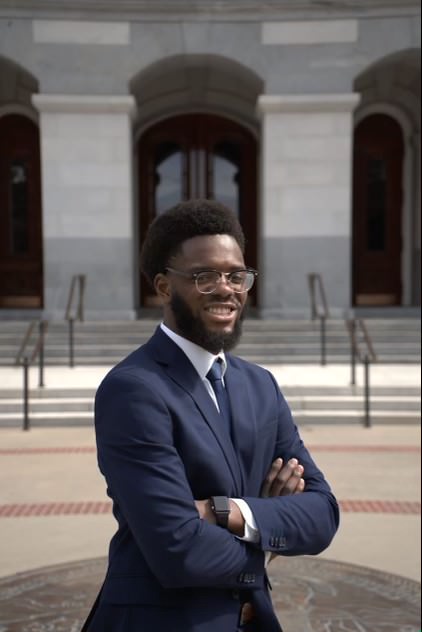
ASUCD President-elect Gaius Ilupeju discusses his goals, plans and motivations for the next academic year

Ilupeju ran unopposed and was elected ASUCD President during the spring 2024 election


By VINCE BASADA — campus@theaggie.org  


Gaius Ilupeju, the two-time ASUCD Senator and current underrepresented students officer for the UC Student Association, ran unopposed and was elected ASUCD President during the spring 2024 election. The third-year political science, public service major ran on the Forward slate alongside Aaminah Mohammad as ASUCD Internal Vice President. They campaigned on an expansive platform of student advocacy which includes, among other priorities, the establishment of a tenant union, providing resources to student workers to unionize, expanding equitable access to parking and bringing back Tipsy Taxi. Set to take office in the coming months, Ilupeju sat down with The California Aggie to talk about his campaign, his priorities and his hopes for the upcoming term.


Below is a transcript of Ilupeju’s interview with The Aggie that has been edited for length and clarity. 


Q: How are you feeling now that the election results are out?

Ilupeju: I’m feeling great. I’m really excited to get to work with everyone [who] was just elected and to represent the student body to the best of my ability. I think that there’s a lot that we can accomplish in this next year, and I am really excited to do all that.

Q: Why did you run for ASUCD President? What motivated you?

Ilupeju: I ran for president because I was really unhappy with the current state of affairs. I’ve been there for the past three years, and we continue to face the same issues frequently. I just felt like, with the experience I had, I really needed to assert myself and put myself in the position of higher leadership to direct ASUCD where I think it needs to be headed. I think that this association has historically done plenty of amazing things for students, ranging from providing entertainment, fostering community [and] ensuring that university administrators make student-centric decisions. It’s really telling, when you look at this campus, how much ASUCD has contributed to every facet of student life and just improved the quality of living for students every decade. To me, it’s really difficult to see an organization that’s capable of so much doing so little in the past several years, especially in the areas that students care about. 

Q: Could you talk a little bit about your past with ASUCD, working in student government and your time as a senator?

Ilupeju: I served two terms as a senator, and that started my freshman year. It’s the longest that any person has served as an elected member of ASUCD since the adoption of a new constitution in 1995. In both terms, I was mainly focused on improving our engagement with marginalized communities and increasing the amount of basic needs services we provide. In my first term, I really championed pushing out a basic needs survey to determine where we could set up satellite pantries in other areas of campus. That same year, we were battling [COVID-19], and there was a resurgence in January. I worked with that Senate table to facilitate conversations with administration, primarily by sending out letters to make sure that students got an extension on virtual learning. During my second term, I was realizing that we provide so many services for students, but because our outreach and engagement with them is pretty bad, […] a lot of [them] go unused. At the end of the day, it’s just a misuse of student fees if you aren’t able to provide necessary services [and] make sure that they’re accessible and visible. Once I termed out, I became more focused on my role in the UC Student Association, where I serve as the underrepresented students officer. I tried my best to learn all the ways that relationships [between students and administrators] could be used to produce positive outcomes for students here on the UC Davis campus.

Q: Have you started to think about how you want to improve ASUCD outreach and how you want to engage with students next year during your tenure?

Ilupeju: I think that we have to take steps to improve our general marketing, communications and marketing strategy. We’ve already started that by hiring a new creative director who is going to work on marketing full time, and I’m excited to work with him. Also, changing how elected officials interface [with the] student body and kind of report on what we’re doing. We need to do more, and we need to hold more events that are visible to ensure that we’re really reaching as many people as we can. We need to improve the way we interact with other student organizations, so they know that they can receive financial and logistical support from ASUCD. That comes with introducing a new culture here where people keep engagement and outreach at the forefront of everything we do. I also think that it means setting up future student leaders for success. Finding ways to explain how we make use of student fees better so we can regain student trust is paramount, because we have a lot of money at our disposal, and it all comes from student fees. We don’t do a great job of explaining how we use it or how we intend to use it once students graduate. We’re doing all these amazing projects, some of them that won’t be finished until students are out of here. I think that if [they] were aware of how we were spending their money, they would really be happy with some of these investments we’ve made. 

Q: You ran with the Forward slate, and a lot of your platforms and campaign promises focused toward advocacy for students. They include: creating a tenant’s union, expanding satellite pantry locations and looking into having free laundry for first-years, among other things. Could you talk about how you and the rest of the slate came together to focus on what you wanted to do next year?

Ilupeju: I would say the foundation of everything that we decided to run on was conversations with our peers, particularly student leaders. A lot of these student leaders represent communities who talk about certain issues like improving housing: something that’s on everyone’s mind. Access to basic needs is something that people care about. So it was really having discussions between ourselves to see what was possible through ASUCD and also what students care about. I think it’s a mixture of these two that created the platforms we decided to run on.

Q: Do you think that during your year-long tenure you will realistically be able to implement or start all of these projects?

Ilupeju: Right now, we’re in discussion about when we would want some of these things to be accomplished. We know that our platforms are a bit ambitious, and sometimes you plan as best as you can but unexpected things happen, and the university works notoriously slow. So we, first of all, plan on hiring a lot of student workers and volunteers to help make this happen, but we’re also prioritizing the things we think […] are most important. We know that some of these things take multiple years, and so we’re very much fine with setting up future student leaders to follow up with some of these goals, but making sure that we’ve at least attempted to initiate them during the academic year.

Q: How do you feel about the current presidential administration under Francisco Ojeda? It’s been marked by impeachments and a lot of notable, if controversial, developments. As the year is coming to a close, have you been able to reflect on his time in office?

Ilupeju: I feel like the Ojeda Administration faced a lot of troubles because a lot of different difficulties converged to produce an overall unsatisfactory year for a lot of people, including the executive office. I have no doubt that they genuinely wanted to provide strong leadership and advocate for students to the best of their abilities. But I do think that a lot of different events happened, a lot of them unforeseen, [which] led to an overall unsatisfactory year for many students. I think that the best that we can do after their tenure is to look critically at all the things that went wrong and work as best as we can to prevent them and ensure that this never happens again and [that] we don’t repeat some of the mistakes that were made.

Q: What do you want our readers, the voters of ASUCD and the student population as a whole to know about you and your platform moving forward? Is there something that you think they should know about next year?

Ilupeju: They should know that fixing the issues on this campus and making sure that everyone’s voice is heard is a mission that we all have to commit ourselves to. That includes people within and outside ASUCD. Unless we build a sense of community and foster a culture of accountability, none of the things that we all want will happen at all. I want the readers to know that community oriented advocacy truly is the way forward for us all.

Written by: Vince Basada — campus@theaggie.org