55.1 F
Davis

Davis, California

Saturday, December 20, 2025
Home Blog Page 88

Taylor Swift’s excessive merchandising practices are not sustainable

Consumerism drives much of the music industry and top artists must acknowledge the detrimental effects 


By CLAIRE SCHAD — cfschad@ucdavis.edu 


It is no secret that Taylor Swift’s fans are willing to do almost anything to support their favorite artist. Whether it’s spending hours in a virtual queue trying to buy concert tickets or spending thousands of dollars on merchandise, Swifties are nothing if not dedicated. However, despite Swift’s almost incomprehensible level of stardom, many people have criticized her for promoting potentially damaging norms of consumerism. 

Swift’s success, while largely due to her talent, is also undeniably dependent on the brand that she has built around herself. From vinyls and CDs to jewelry, clothing and journals, you can find almost anything on Swift’s online store. Love her or hate her, there is no denying that the brand she has created is unprecedented and impressive. But how much is too much? Is this abundance of merchandise actually good for anyone? 

Recently, Swift has come under fire from fans and fellow artists alike for her contribution to the harmful systems of consumerism. Earlier this spring, pop singer Billie Eilish called out fellow artists for releasing multiple different vinyl packages, each with “a different, unique thing, just to get you to keep buying more.” She went on to explain that this mass production of merchandise, especially multiple vinyl variants, is frustrating when artists like herself are focused on ensuring their merchandise is produced sustainably. While Eilish didn’t mention Swift by name, it was clear that she was alluding to Swift and other widely popular artists as she went on to say she was referring to “some of the biggest artists in the world.” 

Eilish’s comments are not unwarranted, Swift’s 2020 Grammy Album of the Year, “Folklore,” had nine different vinyl variants available for fans to purchase. Similarly, “1989 (Taylor’s Version)” came in five different vinyl versions, each with a different pastel color theme. 

The most recent example of Swift’s disappointing commitment to consumerist culture, however, came on April 18, with the surprise double album release of “The Tortured Poets Department.” Despite being a continuation of the original album, the second part — released just two hours after the initial album, “The Tortured Poets Department: The Anthology” was treated as a completely different album. Meaning, those who preordered vinyls and CDs would have to purchase another if they wanted all 31 songs to be included. 

As a Swiftie myself, Swift’s commitment to consumerism is frustrating. I personally don’t have any CDs or vinyls of her albums because I don’t have a need for the physical album itself as I listen to all of my music through streaming platforms. However, I can understand people wanting to have a keepsake or physical copy of the album to decorate their room. Given this, the problem is not the mere existence of physical CDs and vinyls, but rather the sheer number of variants that Swift and other artists are releasing.

By constantly releasing new variants, some with bonus songs only available on the limited edition physical copy, Swift is encouraging her fans to buy more items than they could ever possibly need. For many of her fans, this creates a situation where they get into a cycle of consumerism that normalizes the constant influx of new items, even when it is damaging to the environment, or even their financial well-being. 

Swift’s unique position of fame has given her the opportunity to switch to a more sustainable method of marketing and merchandising, yet she has failed to take advantage of it. Meanwhile, artists like Eilish have switched to more eco-friendly vinyl options made from recycled materials, they also don’t release nearly as many variants as Swift does, showcasing that it is possible to have satisfied fans while also paying mind to sustainable practices. 

In the past, Swift has showcased her power to motivate and mobilize young people to vote, so it is clear that she has the power to inflict social change. It would be encouraging to see Swift acknowledge the wastefulness of her merchandising strategy and commit to producing merchandise that is ethically and sustainably produced. She clearly has the resources to make this switch, and it is far past time for her fans to call her out for her unsustainable merchandising practices. If Swift doesn’t do it herself, we as fans must not buy into her marketing ploys. After all, does anyone really need eight vinyl variants of the same album? I don’t think so.  


Written by: Claire Schad — cfschad@ucdavis.edu 

Disclaimer: The views and opinions expressed by individual columnists belong to the columnists alone and do not necessarily indicate the views and opinions held by The California Aggie.


ASUCD Senate allocates $10,091.04 to Planet Her 3, concerns about Senate member’s problematic comments at Lawntopia addressed

The Senate also passed SB #89 which will fund the ASUCD Business Case Competition and heard quarterly reports from various ASUCD units


By MADISON PETERS — campus@theaggie.org


Internal Vice President Aarushi Raghunathan called the May 9 Senate meeting to order at 6:17 p.m. She then took roll call and read the UC Davis Land Acknowledgement.

The first item on the agenda was the confirmation of three new Internal Affair Commission (IAC) chairpeople.

Next were the confirmations for the ASUCD Housing and Transportation Advocacy Committee (HTAC). The new members proposed their various ideas on how to improve transportation accessibility and safety on campus and throughout Davis as a whole.

One new HTAC committee member proposed their Safety Cycling Project (SCP), which would involve an increase in education and traffic monitoring of cycling on campus.

“In [the] UC Davis Report in 2019 and 2022, [there was] a 43% increase in accidents involving a bike,” the member said. “One of the things I want to [implement] is once [a student] gets accepted into UC Davis, a crash course should happen about what you are getting into with biking and the rules. A very common idea happening in Canada and Washington that made a difference is cement barriers in the biking lanes. It lowered speeding and made biking more accessible and more encouraged because [people] feel safe.”

Annie Kanjamala, a third-year environmental policy and planning major, was then confirmed as the new chairperson of the Environmental Policy and Planning Commission (EPPC).

Kelly Abey, the ex-chair of EPPC, then gave her farewell speech.

“I’ve been a part of EPPC for the last three years,” Abey said. “This commission has evolved a lot over these years, and I found it very fascinating to see people come in and out of positions. I wanted to thank everyone who has been on EPPC this year and my fellow commission chairs for being very supportive.”

Next on the agenda was a presentation by Jenny Vaccari, a representative for Ombuds. Ombuds is a conflict resolution resource offered at many UCs aimed at confidential and informal problem solving, according to their website.

The Mental Health Initiative (MHI) then gave their quarterly report and discussed their Mental Health Awareness Month activities, which will be happening throughout the month of May.

After this report, the senators shifted their agenda to reconsider SB #86, which would allocate $10,816.04 to the Planet Her 3 event created by Senator Antonio.

The bill is imperative for the success of the event, but will likely drain the Senate reserves, according to Antonio.

Antonio then spoke on the importance of the bill for the Planet Her event.

“I know that this is a big sum of money, and I know that this will drain the reserve to almost nothing, but this is a really large event,” Antonio said. “We are trying our best here and this is really the lowest we can go, [so] we really hope for your support. This is likely going to be the last ASUCD event of the year, and it’s going to be one that really impacts student life in a positive way.”

Other senators expressed concerns regarding the sustainability of the decorations, and the overall cost of some of the items.

After much deliberation, the bill was passed with some amendments including canceling one of the two planned photobooths, which cut down about $789.

Next, Campus Information Technology (IT) gave their quarterly report which included details about their new ticketing system and plans to have more access points on campus to improve eduroam wifi.

Sonora Slater, editor-in-chief of The California Aggie, then gave The Aggie’s quarterly report. Issues regarding certain aspects of funding were discussed, since The Aggie budget is soon to be reviewed.

The senators read both the quarterly reports for the Coho and Unitrans.

Public comment was then opened before they moved on to the status of old legislation.

SR #8, which vows to uphold free speech on campus and condemn the delayed response by UC Los Angeles campus authorities and law enforcement after the violent attacks on pro-Palestinian protestors the night of April 30 and morning of May 1, was then passed and signed by ASUCD President Francisco Ojeda.

Additionally, SB #88, which will establish the ASUCD yearbook managing editor as a non-voting, ex-officio member of the IAC, was passed and sent to Ojeda.

The consideration of old legislation was then discussed.

SB #89, a bill that would allocate $2295.48 to the Office of Senator Binh Do in collaboration with Aggie Sports Analytics was passed. This money will fund the ASUCD Business Case Competition, a conference that will be held on June 5 from 6 p.m. to 9 p.m.

After a brief five-minute break, SB #84 was considered. This bill, submitted by Gaius Ilupeju, would amend the 2023 to 2024 ASUCD budget to transfer $5,924.27 from a portion of the Entertainment Council’s (EC) budget towards the External Affairs Vice President Special Projects Line Item.

ASUCD Controller Allyson Francisco opposed the immediate passing of this bill since it had not yet been reviewed by the Ethnic and Cultural Affairs Commission (ECAC).

The Senators voted on tabling the bill to be voted on again on May 23, and then moved into open forum.

Senator Jonathan Ng started by talking about the success of Lawntopia, but brought up controversy surrounding rude comments made by another senator about the event.

“The only incident that happened involved a member of this table [who] I will not mention by name, but they were extremely rude to the EC director and EC volunteers,” Ng said. “When asked to obey instructions by ASUCD personnel, their partner called EC volunteers ‘bitches.’ I just want everyone to be aware that this event happened, and I condemn it as disgusting behavior, especially from someone who is supposed to be representing ASUCD.”

Francisco then went on to call for better security measures at future EC events.

Ng agreed on the need for more security measures and pledged to improve these concerns at the next EC event.

Finally, the meeting was adjourned at 10:02 p.m.

Written by: Madison Peters — campus@theaggie.org

Annual Whole Earth Festival brings together artists of all kinds — ‘Can You Dig It?’

WEF honors the UC Davis value of community through a unique array of art 


By SAVANNAH ANNO and JULIE HUANG — arts@theaggie.org

From May 10 to 12, the 55th Whole Earth Festival (WEF) filled up the entirety of UC Davis’ Russell Field. Featuring live music, food and vendor booths, and a variety of different interactive spaces, the Whole Earth Festival attracts over 30,000 visitors each year. 

The festival is entirely student-run — featuring areas like the Kids, Experiential and Art Spaces, WEF organizers aim to educate visitors on topics like wellness and sustainability through creative activities. 

At this year’s Art Space, visitors were given the opportunity to interact with a wide variety of work, ranging from poetry to textiles. 

Cindy Chen, a fourth-year design major and one of the co-coordinators for the Art Space, explained the process for receiving art submissions and creating their annual outdoor art gallery. 

“When we were accepting work, we didn’t set any limits,” Chen said. “Art is not just painting. People are good at different kinds of art; we wanted to see artworks from different people and forms.” 

Receiving submissions from almost 30 different artists — both students and community members — the outdoor gallery was able to fill up six different walls of work, each set up and curated by student volunteers. 

 The space also included a table display and a free screen printing activity for visitors. Relying on close ties with their community, Jessica Wong, a second-year art studio major and the other co-coordinator for the space, was able to borrow portable screen printing bikes from a Bay Area organization that she had previously volunteered with.

“Yesterday I biked it over and it was crazy,” Chen said. “It’s terrible to bike, but it’s really good for art making.”

Designed by Wong, the Art Space screen print consisted of 12 small squares, each filled with a different symbol. Ranging from a crab to an orange slice to a shovel, the design was able to convey what the Whole Earth Festival holds most dear: celebrating nature, building community and emphasizing the importance of the arts. 

Kaya Kurtz, a second-year sustainable agriculture and food systems and sustainable environmental design double major, highlighted the benefits of participating in WEF as a student volunteer. 

“Everyone is so open and happy and just willing to share, talk and become friends,” Kurtz said. “I feel like all of the different spaces where you can volunteer are so unique, [and] it’s really interesting to see all the planning that goes into it.” 


Rosalie Sinclair, vendor and owner of Citrussloth — a business that boasts dice, paper crafts and “other goods with wellness and joy in mind” — confirmed the considerable range of hobbies, activities and creations represented at WEF. As an instructor for the UC Davis Craft Center, Sinclair was part of their yearly booth at the festival. 

“I instruct the sun catchers, fused glass, screenprinting [and] nature journaling, all sorts of classes,” Sinclair said. 

Sinclair originally saw the activity of dice making as one that only involved herself and her friends, but she decided to transform the hobby into a business after ending up with a surplus of dice. This decision has allowed her to expand her personal network and foster a deeper sense of connection with the overall Davis community. 

“I love selling them to the community,” Sinclair said. “It really helps me engage with the public a lot, especially younger people trying to find their place in Davis.”

Developing bonds within the community has consistently been a significant aspect of both Sinclair and the Craft Center’s experience with WEF. 

“We have [a booth] every year, we make the stickers for WEF and they let us come and vend,” Sinclair said. “There’s always some sort of arrangement [for] all of us and it’s a great way to build more community and work with WEF.” 

Most Craft Center course instructors are community members or graduated students, like Sinclair, while the courses themselves are available not only to students but to anyone interested in joining. This policy has helped further expand the WEF network and the personal ties between members of the community. 

“We get a lot of people [coming to the booth] wanting to take classes, especially with summer coming up as our next semester,” Sinclair said. “It makes it a lot easier for community members to get into classes when there are less students, so it’s really nice to be able to reach out, talk about it and get some new people into the center afterwards.” 

Apart from providing invaluable community space, WEF also allows its vendors to engage with their personal artistic interests in a productive manner, intertwining the values of community with their personal values and individual processes of creating art. 

“I try to make community through my art and make art more accessible for everyone that way,” Sinclair said. 

Lisa Rogers, vendor and owner of Slowdigz botanical prints, explained that her niece, a former Davis undergraduate, introduced the festival to her as a unique way to engage with her business and her interests. 

“I liked thrifting, and I love nature and hiking, so [my business] kind of combines both,” Rogers said. “I have an upcycled line, so a lot of pieces are second-hand.” 

The festival provided Rogers with a community space in which she was able to display her craft. WEF’s focus on environmental sustainability and sustainable action allowed Rogers to promote her business to a wider audience while honoring the personal values that influenced her business choices. 

“I like to [buy secondhand items and upcycle], and I like to go out into nature, and I like to garden, so [a sustainable practice] allows me to bring those two together,” Rogers said. “[My products] only use natural fibers and not any synthetic fibers or dyes.” 

Similarly, the array of products displayed at Sinclair’s booth demonstrated a range of artistic expertise and interest that hinted at the personality behind each creation.  

“I’m a big caster: I cast in resin, I cast in metal, I cast in glass,” Sinclair said. “That’s part of how I’m able to do a lot with glass, because I’m used to working with the medium. I do a lot of glass screen printing, which is my main forte.” 

Citrussloth and other vendors will also make appearances at the upcoming Davis Pride Fair and Festival on June 1, which similarly features local creatives and art booths. 

As an event designed to showcase the artistic creations and interests of individuals within the broader context of a welcoming environment, WEF encapsulates the best of the Davis community.

 “All of it comes together,” Kurtz said. “It’s fun to share the community we have and show what Davis is about.”


Written by: Savannah Anno and Julie Huang — arts@theaggie.org 


Met Gala 2024: ‘Sleeping Beauties: Reawakening Fashion’

With the theme “The Garden of Time,” many celebrities missed the mark


By AALIYAH ESPAÑOL-RIVAS — arts@theaggie.org 


On May 6, 2024, the Metropolitan Museum of Art hosted their annual Met Gala, organized by Vogue Editor-In-Chief, Anna Wintour. 

The Met Gala, otherwise known as the Costume Institute Benefit, hosts one of the most prestigious events in society, with only a small number of attendees invited each year. The gala, meant to highlight the Metropolitan Museum’s newest fashion exhibit, calls for attendees to dress to impress, incorporating the theme chosen by Wintour herself.

This year’s exhibit, “Sleeping Beauties: Reawakening Fashion,” sought to highlight rare pieces in the museum’s collection and incorporate Earth’s natural scenic beauties. As per the exhibit, the dress code for guests was “The Garden of Time,” which many interpreted literally, and for some, not at all. 

One of the most creative looks of the night came from Zendaya, coming off of the buzz from her most recent film, “Challengers.” Zendaya, who wore two outfits both by designer John Galliano, absolutely embodied the theme. 

On the other hand, her two co-stars, Mike Faist and Josh O’Connor, went for a more traditional look, experimenting with far less color than Zendaya did. Faist, who wore a simple black tux, merely incorporated the theme with a radish brooch while O’Connor wore a tux with extended tails and floral boots. 

Other noteworthy breathtaking looks came from Ariana Grande, who wore a mother-of-pearl bodice dress from Loewe, Tyla, with a dress made from actual sand by Balmain and Bad Bunny, dressed in a custom-made Maison Margiela suit. 

“Saltburn” star Barry Keoghan wore a suit that embodied Brendon Urie during the “A Fever You Can’t Sweat Out” era of Panic at the Disco. Other forgettable looks include Gigi Hadid, Jack Harlow and Kendall Jenner. 

Other than looks, the night also included a surprise performance from Grande, who sang both past hits and new songs from her latest album, “Eternal Sunshine.” Whimsical and fairy-like, Grande shocked everyone when videos of her performance were posted on social media, given the strict rule against photos and videos once inside the gala.

Additionally, many Met Gala regulars such as Blake Lively, Rihanna and Timothee Chalamet were nowhere to be seen this year. Overall, many stars left something to be desired in regards to their outfits. While there were many looks that garnered a double-take, most simply fell short. As someone who sits in her dorm watching the Met Gala in her pajamas, all I can hope for is for better looks next year, and men who aren’t afraid to defy traditional gender norms — because sticking a flower on your black tux is not enough. 

Written by: Aaliyah Español-Rivas — arts@theaggie.org

National Hockey League’s Elite 8: the remaining teams still battling for the Stanley Cup

The new Stanley Cup champion will be crowned in a little over a month 


By CAROLYN (CARI) FENN — sports@theaggie.org


With the first round of the playoffs in the National Hockey League (NHL) completed and the Super 16 now becoming the Elite 8, one team is a step closer to claiming the coveted Stanley Cup. The Elite 8 teams entering the second round of the playoffs are the Florida Panthers, the Boston Bruins, the New York Rangers, the Carolina Hurricanes, the Dallas Stars, the Colorado Avalanche, the Vancouver Canucks and the Edmonton Oilers. Of the eight remaining teams, all are ranked first or second within their division except for the Avalanche, ranked third, having beaten out the second-ranked Winnipeg Jets.

 While all the teams are vying for the coveted title of champion and the ability to hold the Stanley Cup over their head in celebration, for some, the win would be a rather monumental occasion for their franchise. For the Canucks and Panthers, this year could signify their first-ever Stanley Cup win. The Canucks have been in the NHL since 1970, and the Panthers have been in the NHL since 1993, so for both teams, a Stanley Cup win this season could end a franchise-long drought. 

Although no team has officially claimed a spot in the conference finals, many have predicted who they believe will make it to the final four from each division matchup.


Atlantic Division: A1 Florida Panthers vs. A2 Boston Bruins

Going into game three, the series between the Panthers and Bruins is tied 1-1. Despite the current tie, the Panthers are given better odds of winning the next matchup with a money line (ML) of -125, while the Bruins have an ML of +105. Additionally, of the 24 workers at ESPN who were asked to predict the winner of each division, they predicted that the Panthers would win in 23 of the 24 picks, with the most common prediction being that the Panthers would win in six

In the first matchup between the Bruins and Panthers, the Bruins won by a landslide with a final score of 5-1. The large deficit for the Bruins was due to goalie Jeremy Swayman’s impressive performance, who saved 38 shots and had an impressive save percentage of 0.947%. Although the Bruins won game one by a large margin, the Panthers didn’t allow the Bruins to celebrate for too long, as in game two, the Panthers came back and beat the Bruins 6-1. While many players contributed to the Panther’s overwhelming victory, center Aleksander Barkov, who had two goals and two assists, and center Sam Reinhart, who had four assists, were major playmakers of the night.


Metropolitan Division: M1 New York Rangers vs. M2 Carolina Hurricanes

Going into game four, the Rangers swept the Hurricanes in the series with a 3-0 lead. Even though the Rangers are currently dominating the Hurricanes in the series, the odds are rather divided on which team will win the series. Based on betting odds, the Hurricanes are favored to win the next matchup, as shown by the money line (ML) of -145, while the Rangers have an ML of +125. In contrast, of the 24 workers at ESPN who were asked to predict the winner of each division, they predicted that the Rangers would win the series in 14 of the 24 picks, with the most common prediction being that the Rangers would win in seven.

In the first and second games of the series between the Rangers and Hurricanes, the Rangers won with a final score of 4-3. Their victory in the second game came during the second overtime from a goal by center Vincent Trocheck at 7:24 minutes. In the third matchup, the Rangers again came out with a winning score of 3-2 after left-wing Artemi Panarin scored a goal in only a minute and 43 seconds into overtime. Additionally, The Rangers largely owe their win in game three to their goalie, Igor Shesterkin, who made 45 saves, which resulted in a save percentage of 0.957%.


Central Division: C1 Dallas Stars vs. C3 Colorado Avalanche

Going into game three, the series between the Stars and Avalanche was tied 1-1. While the series is anybody’s game, the Avalanche has better odds of winning the next game with a money line (ML) of -130, as the Stars have an ML of +110. Additionally, of the 24 workers at ESPN who predicted the winners of each division, the workers said that the Stars would win in 17 of the 24 picks, with the most common prediction being that the Stars would win in seven.

Following the first game, the Avalanche led the series after winning 4-3 in overtime with a goal from left-wing Miles Wood at 11:03 minutes. In the second game of the series, the Stars came back and beat the Avalanche 5-3 to prevent a 0-2 deficit in the series. Although the Stars won the game, the Avalanche were close to making a comeback when they closed the 0-4 Stars lead to 3-4 after scoring three goals in the third period. However, after opening up the goal and creating a 6-on-4 scenario to better increase their chances of making a comeback, the Stars were able to grow the deficit to 5-3 and secure their win after defenseman Esa Lindell scored on the open net.


Pacific Division: P1 Vancouver Canucks vs. P2 Edmonton Oilers

Currently, the Canucks lead the series 1-0 with at least three to possibly six more games still to follow, depending on if the Oilers can prevent the Canucks from creating a more significant lead. Between the two teams, the Oilers are viewed by many to have a better chance of winning the next game with a money line (ML) of -125 odds, while the Canucks have an ML of +105. Additionally, of the 24 workers at ESPN predictions, the workers predicted that the Oilers would win in 23 of the 24 picks, with the most common prediction being that the Oilers would win in six.

In the first game, the Canucks came back from a 4-1 deficit to win 5-4 with three goals in the last period of the game from center J.T. Miller, defenseman Nikita Zadorov, and right-wing Conor Garland. Despite it still being only the beginning of the series and the Oilers are favored to win, game one of the series has been the closest that the Oilers have come to beating the Canucks all season. In the four matchups between the Oilers and Canucks during the regular season, the Oilers lost all five games by a total margin of 21-7. Only time will tell if a similar pattern will occur in the rest of the series.  


As the competition begins to intensify, the title of champion is up for grabs for a new team this year, as the previous Stanley Cup winners, the Vegas Golden Knights, were knocked out of the race for the title during the first round of the Super 16. With multiple games left to go in the second round and the conference finals prior to the final, we will have to wait till June to learn which team will take home the coveted title.

Written by: Carolyn (Cari) Fenn — sports@theaggie.org

Davis MoMA: Fatal Laff

Original: “Mona Lisa” by Leonardo da Vinci


Drawn by: Nimra Farhan –– nfarhan@ucdavis.edu 

Disclaimer: (This cartoon is humor and/or satire, and its content is purely fictional. The story and names of “sources” are fictionalized.)

Researchers uncover chemical compound to combat crop losses

The compound disrupts the process of autophagy, a process that maintains homeostasis, in fungi


By ARYAMAN BHATIA — science@theaggie.org 


Researchers at UC Davis have published a study identifying a potent new fungicide that could revolutionize crop protection. Named ebselen, the chemical has shown remarkable efficacy in combating fungal infections in various crops. Additionally, it has demonstrated the ability to alleviate pre-existing fungal infections in rice.

Fungal pathogens wreak havoc on global crop yields.

“Annual crop losses are estimated to be USD 550 billion worldwide,” the study reads. “About 40% of the total crop loss is due to plant diseases of which loss by fungal pathogens is about USD 150 billion.” 

In the study, which was published in Nature Communications, UC Davis researchers explain how they targeted autophagy, a vital cellular recycling process crucial for fungal pathogenicity.

“We discovered that macroautophagy plays an important role in delimiting the PCD [programmed cell death] to the infection site,” the lab website reads. “Autophagy is a dynamic process conserved across eukaryotes that entails the engulfment of cellular components in double membrane vesicles called autophagosomes that are then targeted to the vacuole/lysosome for degradation or recycling.” 

According to senior author Savithramma Dinesh-Kumar, a professor of plant biology, ebselen’s efficacy lies in its ability to disrupt fungal autophagy, offering valuable insights into the development of next-generation antifungal compounds.

Using an innovative screening method based on bioluminescence, the researchers identified 30 chemicals capable of inhibiting a key enzymatic step in fungal autophagy. Among these, ebselen emerged as the most promising candidate, outperforming existing fungicides in preventing fungal growth.

By targeting this process, researchers believe they can significantly reduce fungal pathogenicity. Petri dish experiments revealed ebselen’s ability to inhibit fungal germination and growth, protecting various plant species from infection. Moreover, it showed promise in treating existing fungal infections in rice plants.

While initial tests suggest ebselen specificity in inhibiting fungal autophagy, further research is needed to assess its safety and potential cross-reactivity. The UC Davis team plans to expand their screening efforts to identify additional autophagy modulators with broader applications.

“Since autophagy is highly conserved across different organisms, including humans, more work needs to be done to test the cross-reactivity of the drug,” Dinesh-Kumar said during an interview with the UC Davis College of Biological Sciences.

The team now plans to test a larger variety of chemicals to see if they produce similar effects. 

“The chemical space is very large, and some chemical libraries have more than 50,000 compounds,” Dinesh-Kumar said. “The next step will be to screen for additional autophagy modulators that might help control not just plant fungal pathogens, but also human fungal pathogens.”


Written by: Aryaman Bhatia — science@theaggie.org 


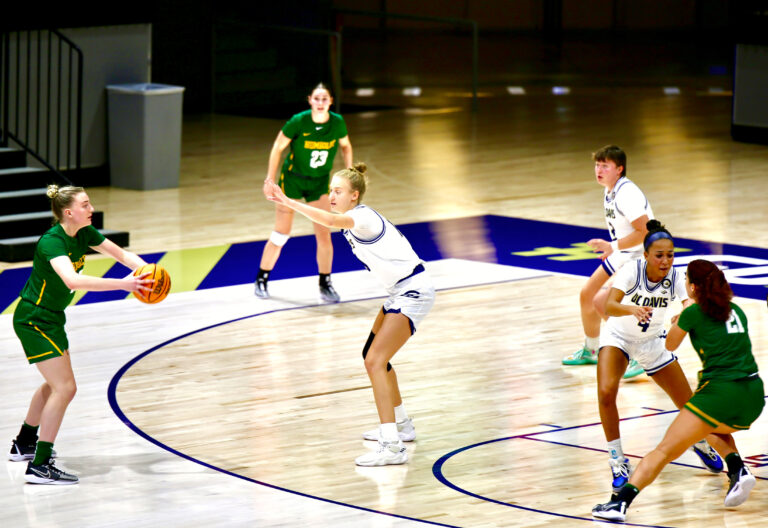
UC Davis women’s basketball team kneels for the National Anthem, shining light on Black History, Future

Aggies show that sports are about far more than just the game

By EMME DUNNING — features@theaggie.org

The UC Davis women’s basketball team has always strived for greatness. The program has secured six regular season championships since becoming an official member of the Big West Conference in 2007, including five in a row from 2017 to 2022, all under head coach Jennifer Gross. 

This past February the team set out to continue its legacy of excellence both on and off the court. Beginning with a game against UC Santa Barbara on Feb. 1 and continuing throughout the month, all members of the team and coaching staff took a knee together during the playing of the National Anthem at every home game as part of a Black Futures Month pre-game presentation.

Before the National Anthem began, a short speech written in collaboration with the players and coaches was also read aloud by a team member each night:

“We honor and remember the sacrifices, suffering and contributions of Black people to our country. We acknowledge those who have paved the way for us to continue the fight against the racial injustice that is still prevalent today. We challenge you — our family, friends and fans — to think about the ways that our community can fight discrimination and work together to build a more inclusive future through empathy, education and compassion.”

  This presentation was in solidarity with communities across the United States recognizing Black History Month, and with it a celebration of African American culture, achievements and perseverance. Cities across the nation commemorated the historic month through rallies, festivals, demonstrations and more. UC Davis, which has joined a growing movement to rebrand the month as Black Futures Month, showed support with various workshops and performances. 

Among the four UCD players who gave a speech preceding the playing of the National Anthem was fifth-year psychology and history double major, Evanne Turner, who found the presentation particularly impactful. 

“It is a piece of me,” Turner told The Aggie when reflecting on the importance of Black History Month. 

Turner led the Big West Conference in scoring in the 2022-23 season and has been named to the All-Big West First Team for both of the last two seasons. 

Although playing well is a major goal for the shooting guard, Turner wants to ensure that her legacy as a UC Davis athlete includes not only her achievements on the court, but also her commitment to social justice. 

“People should recognize you for more than just your sport,” Turner said. “You’re in the spotlight, so you need to use that platform to the best of your ability.” 

Turner and her team join a rich tradition of athletes using their platform through sports to amplify important issues. Colin Kaepernick, John Carlos, Elizabeth Williams and ​​Muhammad Ali are among these trailblazers. Historically, these athletes have endured intense backlash for their actions not only from fans, but in many cases from their own teammates and coaches. Jennifer Gross, head coach of the UCD women’s basketball team, is working hard to change this narrative. 

“Basketball players, and specifically women’s basketball players, have always been leaders when it comes to social justice issues,” Gross wrote in an email correspondence.

She added that she has “no doubt that [her] players will go on to be leaders in their respective fields where they will have the opportunity to influence systems, policies and institutions in ways that will lead to more equity for everyone.”

Gross also noted that the team’s dedication to supporting Black Futures goes far beyond the decision to kneel for the National Anthem. She highlighted initiatives including building mentoring relationships with a Sacramento elementary school, handing out informative pamphlets at home games and ensuring discussions of Black culture and history are commonplace within the team.

Long-time UC Davis women’s basketball play-by-play radio broadcaster and UC Davis alumni, Greg Wong, has seen the unique culture of the university’s women’s basketball program firsthand. 

“I don’t know if there are many other teams in the country that did something like that,” Wong said while reflecting on the team’s demonstration. 

“I think it speaks to this culture that [Gross] has built over the 13 years as head coach,” Wong continued. “[This culture] does empower their players to make these kinds of statements and have the backing of their coaches and of their community to be able to express themselves this way.”

It’s obvious that players, coaches and fans alike have taken note of the role athletes can play in social justice and movements larger than the game itself. Although Black History Month has come to a close, the UC Davis women’s basketball team’s commitment to Black Futures endures. 

Written by: Emme Dunning — features@theaggie.org

The Editorial Board seeks to inspire your weekend getaway

Take a day trip to stave off the burnout until summer break

By THE EDITORIAL BOARD

We know that sometimes you’d rather be anywhere than the top floor of Shields Library, staring at the error message in your code or at the empty page where your essay should be. We’ve all daydreamed about skipping town in the last few weeks before finals. Here’s the good news: With just a little bit of planning, you can ditch the sweaty lecture halls for a day or two and refresh. Your loyal Editorial Board has assembled our favorite day trips to inspire your mini-vacation. 

Sonora Slater, Editor-in-Chief

Was it actually the best day trip I ever took, or was it just the most recent one? During the quarter system, my brain loses all memories from more than two weeks ago, so it’s unclear. That said, I highly recommend following this exact itinerary in San Francisco the next time you need to get away.

Pick up a lavender cream cold brew at Equator Coffee on your way into the city, and stop for breakfast at the highly acclaimed Ariscault Bakery (trust me, you want a croissant). Browse a nearby bookstore — might I suggest Green Apple? — and then stroll through one of the many weekend farmers markets to collect whatever produce your heart desires. Cherries, perhaps? Snap peas? A single carrot? If you’re lucky, there will be a craft fair happening simultaneously. 

Tote your farmar haul over to a beach with a good view of the Golden Gate Bridge, turn on some music and enjoy your snack while you read your newly acquired book, people watch or collect rocks from the sand that will inevitably be less pretty once they dry out — it’s one of the great mysteries of life. The rest of the day is up to you: climb to the top of Coit Tower in Little Italy, watch a baseball game at Oracle Park or explore the California Academy of Sciences. Just make sure you catch the sunset on your drive home. 

Clara Fischer, Managing Editor

As the spring quarter of my senior year slowly draws to a close, I can’t help but feel a little extra Aggie pride. While there are many things that make our school special, one underrated aspect is its location — yes, its location, in all its farmland, Cow Town glory. Davis’ central location has allowed me to go on some really fun trips in my time here, but my personal favorite destination for a long weekend has to be Lake Tahoe. 

Tahoe is beautiful all year round, from the warmer weather and stunningly clear water of the summer seasons to the snow-capped mountains and cozy cabin vibes of winter. While the drive can be a bit strenuous, especially in the winter (don’t forget to check the weather and heed any blizzard watches!), it’s always worth the trip. If you do go, remember the golden rule of any outdoor space: leave no trace. And Keep Tahoe Blue!

Lily Freeman, Campus News Editor

In the midst of midterms and finals, I dream of spending my day sippin’ on a chilled glass of white wine. Fortunately, we live just under an hour away from one of the best places to drink wine in the world: Napa! From walking around vineyards without a care in the world to masquerading as a wine connoisseur, escaping to the countryside is the perfect way to disassociate from the stresses of being a student. Napa’s energy is rejuvenating (whether or not you partake in the drinking), with endless greenery and beautiful sunsets. 

On top of the vineyards, Napa has an adorable downtown. Local cafes, a variety of dinner restaurants and small-business boutiques make a trip there worthwhile. The Napa River runs through the town, and its waterfront is a prime place to take a nap(a) under the sun. The drive is also scenic, and if you really want an adventure, skip the highway and take the backroads the whole way there. Be careful though — spend too much time in Napa and suddenly, finals won’t matter anymore and your aspirations will shift toward viticulture and frolicking through grape fields..

Chris Ponce, City News Editor

Moving to Davis was a culture shock for me and I know it has been a similar experience for many other non-white students. There is so much to love here, yet it certainly is a change from home. This is why I’ve learned to love Woodland so much.

Sure, sure, while on the surface Woodland might seem like just another small town, it really is a gem worth appreciating. The town by far has the best Mexican food nearby (I recommend Sol Méxican Cuisine) and is just a richly different place from Davis. It’s also a quick trip — forget about going to San Francisco or Tahoe, the drive takes less than 20 minutes. The buildings in downtown Woodland feel older and more historic than Davis. They also have so many cute cafes.

 So on your next Costco trip, maybe take the time to see what else Woodland has to offer. There’s a reason I always choose to take my parents here – from the cute downtown to the superior food, Woodland is a lovely place.

Annabel Marshall, Opinion Editor

Ask yourself this: When was the last time you saw a whale? For me it was two weeks ago, along the cape of Point Reyes. Google Maps will tell you that it’s a two-hour drive from Davis to this small tourist destination on the coast (or a mere 46-hour walk). But in actuality, the journey hardly feels like any time at all — a scenic drive will take you through expansive grasslands dotted with sheep. Then the lush forests through which winds an only-slightly-nauseating road. Then sloping, freshly green hills dropping off into sea cliffs. To me, this is the classic Northern California trip — one day, four microclimates and an ocean cold enough to make you understand Baywatch in a new, less romantic light. 

My lovely housemates and I took our time on our way to Point Reyes, stopping at various road-side towns for cheese, bread and hot chocolate. We browsed bookstores and bakeries, dilly-dallied in the rain. We saw elk, cows, llamas, a fox and, of course, a whale waving to us on the shore — a gorgeous reprieve from the late weeks of spring quarter. 

Yasmeen O’Brien, Features Editor

Davis is a wonderful town and as my time here is dwindling I want to soak it up as much as I can. I’m thoroughly looking forward to spending my last couple months here, and appreciating everything this special place has to offer all over again. That being said, sometimes you just need to get away. After almost four years here, I know that schoolwork can be a lot and sometimes our small town is just too packed with familiar faces. For these ailments I recommend a weekend getaway. More specifically, heading way up north to the beautiful Humboldt County.

The redwood forests are truly enchanting and make you feel small, but like you are a part of something bigger. The rugged Northern California coastline is breathtaking and untouched. In the springtime, native flowers bloom along every inch of the green earth and the wildlife seems to come out often after a long winter. The local Redwood National Park allows you to envelop yourself in nature with some awesome hikes and viewpoints to check out. 

If you’re looking for some light, sustainable shopping or grabbing a bite to eat, Arcata is a small town in the area that I visited recently and highly recommend (one of my dearest friends grew up there!). It has a very cute downtown with a record store, thrift shop, craft stores, cafes, bakeries, restaurants and more. The area is known for its rainy weather, so check the forecast before you head up there.

Ana Bach, Arts and Culture Editor 

Per a close friend’s recommendation, I traveled to Sonoma for the first time during the summer of my freshman year. I have to say that in comparison to Napa, the quaint vibe that the area offers is one that embraces locals and visitors alike, which is why I would recommend it to anyone who is looking for a chill getaway. The historic downtown district has so many nice restaurants and parks for people-watching. If you are seeking a spot that has both great ambiance and food, the restaurant “the girl & the fig” is one of my favorite food spots, offering a French country fare experience paired with fine wines from Sonoma’s backyard. If you want a pizza to pair with your wine instead, Cafe La Haye is one of the best places in Sonoma to grab a slice. 

Aside from food, Sonoma has a bunch of cute knick-knack shops on every block. As a vintage book and retail lover, I can safely say that Sonoma will keep you intrigued with eclectic trinkets and good reads. Be sure to check out Readers’ Books next time you find yourself in the area. I know at this time of the year I am in need of a little R&R away from Davis, and Sonoma provides a calm ambiance where you can still expect to have a fulfilling day. 

Megan Joseph, Sports Editor

Summer is almost here! After what has felt like the longest school year ever, we are almost done and headed to our fun plans for the warmest months of the year. Although this also means finals are looming, there are only a few weeks left to explore the fun areas around Davis and take a break from your studying. One of my favorite day trips I have taken this year has been to Auburn where I hiked the beautiful Clementine Trail to Clementine Lake. Even though it was very hot when I went, it had amazing views and even a fun watering hole to jump into and cool off at the end. The hike itself was a moderately easy trail with a few steep areas, but it was definitely worth the trek and I cannot wait to go again. 

Just coming off the trail, Ikeda’s Market and Restaurant in Auburn is a must for their local produce, amazing burgers and addictive pies. No matter how disheveled you look after trudging through the dirt with sweat dripping everywhere, Ikeda’s doesn’t care. So, if you find yourself itching to get outside and eat a delicious burger, take the one-hour drive to Auburn and embrace the outdoors!

Katie Hellman, Science and Tech Editor

My NorCal day trip of choice is San Francisco (in full transparency, it’s also the only place I’ve ever taken a day trip to from Davis, but that’s beside the point). There are plenty of sights to see and adventures to embark on in the city — some of them are well-known, like visiting the Golden Gate Bridge, taking the ferry to Alcatraz or witnessing a sea lion serenade at Fisherman’s Wharf, but there are also some must-see hidden gems. If you find yourself in the area, it’s worth it to check out the 16th Avenue Tile Steps, stroll along Stow Lake Boathouse and — my personal favorite — grab a treat at Ghirardelli Square. San Francisco is a convenient one-and-a-half hour car ride away and its close proximity to the ocean will give you a nice break from the spring Davis heat.

This is a stressful, tumultuous time for a lot of reasons. We hope you can take time to care for yourself and your friends, whether that be a weekend getaway or just checking in via text. Take care, Aggies! 

Written by: The Editorial Board 

Godzilla remains the king of monsters, even 70 years later

Aside from toppling down cities, the Godzilla franchise implements history and social commentary 


By SAVANNAH BURGER — arts@theaggie.org


As the longest franchise in movie history boasting 38 films and counting, the Godzilla franchise has been a part of our world for multiple generations. The monster and his film series were originally created by Tomoyuki Tanaka, Ishiro Honda and Eiji Tsuburaya of the Toho Company, Ltd. Godzilla has been everywhere in worldwide pop culture throughout the last few decades, appearing in movies, TV shows, comic books, videogames and countless other forms of media. With the first film of the series, “Godzilla,” released in 1954, this year marks the franchise’s 70th anniversary. 

Many forget that the conception of Godzilla came from the conclusion of World War II, when the United States unleashed two atomic bombs over Nagasaki and Hiroshima on August 6 and 9 in 1945. This is where Godzilla was born both in the minds of creators and the canon of the Godzilla franchise. 

After the end of the war, America continued with atomic testing in the Pacific, which caused a crew of Japanese fishermen to contract radiation sickness in 1954. This tragedy is referred to as the Lucky Dragon 5 Incident and was hinted at in the first Godzilla movie, especially in the scene of Godzilla attacking a fishing boat. Released two years later, the American version of the film, which was dubbed, “Godzilla, King of the Monsters!” cut all of the scenes related to the incident so as to not paint America in a bad light. Not only this, but they added scenes with Hollywood actor Raymond Burr to attract American viewers.

Godzilla thus is understood to be the product of nuclear waste and radiation contaminating islands off the coast of Japan, morphing him into a larger-than-life, atomic radiation-breathing monster. He is a walking metaphor that represents the terror of the atomic bomb and the pain that the Japanese people suffered in the wake of the American attack.

The biology of Godzilla varies in different versions of the eras of the films. Sometimes, he is a prehistoric marine animal that resided at the bottom of the Pacific Ocean and was disturbed and altered by the Hiroshima and Nagasaki bombings. Other iterations paint Godzilla as a mutated reptile, dinosaur or some sort of amphibian, all being altered by radiation or nuclear bombing in some way.

All 38 films in the franchise belong to one of four eras. These are the Shōwa era (1954 to 1975), Heisei era (1984 to 1995), Millennium era (1999 to 2004) and Reiwa era (2016 to present). Separate from these eras but happening concurrently, there is also the group of American-made Godzilla films.

In the Shōwa era, the first four Godzilla movies portrayed the titular character as an evil force to be stopped, who attacked the innocent civilians of Japan and the friendly monster, Mothra. Following that, the character of Godzilla shifted to be more of a heroic protector. The fight scenes between Godzilla and other monsters are often humorous, and there is little to no continuity between films.

In the Heisei era, however, Godzilla’s character shifts again to be something of a serious anti-hero that provides much more social commentary than the last iterations. Throughout this era’s films, there are comments on world relations, politics, deforestation and oil production. For instance, in “The Return of Godzilla,” (1984) there is an obvious take on the then-ongoing Cold War, as the entire subplot of the movie revolves around nuclear tensions between the U.S. and the Soviet Union, with Japan acting as an intermediary, attempting to protect Godzilla from the two world powers.

Godzilla has also taken jabs at oil production, such as in the 1989 film, “Godzilla vs. Biollante.” The movie starts with scientists attempting to fuse Godzilla’s genetic material with modified plants in the hopes of creating a new source of fertility and plant growth in their barren deserts. All of this effort was directed towards the goal of shutting down oil wells and their monopoly on the economy.

In the last decade, the Godzilla “MonsterVerse” is the first Godzilla series to be made by a company other than Toho. The American film company, Legendary Pictures, is well into its era of Godzilla movies, with four films and an Apple TV series underneath their belt. 

Godzilla has always been popular in the United States. In the second half of the 20th century, Toho Company movies were aired every week on national television. This new American-produced line of media, however, has hit viewers with a new wave of Godzilla obsession. The casting of certain popular actors, such as Tom Hiddleston, Millie Bobby Brown, Brie Larson, Kurt Russel and Anna Sawai, have played a big part in MonsterVerse’s success.

70 years later, the famed Godzilla is just as, if not, more popular than he was in his debut in 1954. While he has been increasingly Americanized in some iterations of his character, the Toho Company is still making current films to remind the world of Godzilla’s tragic, atomic conception, as depicted in the 2023 film, “Godzilla Minus One.” Whether he’s on the side of humanity fighting other monsters or plowing his way through Tokyo or San Francisco, Godzilla is showing no sign of losing his status as an all-time pop culture icon.

Written by: Savannah Burger — arts@theaggie.org 

A peek into man econ majors’ strange new way of networking

Someone please tell me this happened to them too


By ALLISON KELEHER — adkeleher@ucdavis.edu 


I recently changed my major to managerial economics with an accounting minor, because I realized that I’m passionate about getting a lot of money. The transition was fairly easy, I was able to get all of my prerequisites done, and now I’m tackling the upper-division classes. What made the transition so easy was all of the helpful people in class and the advising office. 

The real help, though, was this super secret society that I joined. I can’t tell you where we meet or at what time, because I don’t even know. We find out the addy the day of, so there’s no chance of it getting out. Not that I think you would be invited even if you did figure it out — it’s a super secret and selective club.

I feel super special because I was recruited by the leader of the club. He ambushed me outside of my ARE 100A class and covered my head with a bag and dragged me away. At that moment, I thought it was the end for me. I was thinking of all of the ways that my kidnapper was going to murder me and then chop me into little pieces when he took the bag off of my head.

We were in some random classroom, and it was really dark except for one candle lit in the middle of the room. This was the recruitment ceremony. They all went around and said their favorite stocks and then it got to me, and I didn’t have an answer. Booming laughter filled the air as they all looked down upon me. As the ceremony went on, I was pretty confused, but I went along with it, because all of my professors kept telling me to network. But, to make matters worse, I also forgot my calculator that day — which made them laugh at me again. 

Anyway, the meeting ended when they told me that once the change of major form was approved on Oasis, I needed to be prepared for my initiation ceremony. I was scared of what they would do if I forgot my calculator again. I lived in fear for the few weeks following my approved change of major. I checked around every corner with a little mirror, too.

They managed to get me when I was in the library. Sadly, I was a little too locked in. I was dragged once again but this time to the Arboretum. If I wasn’t terrified, it actually would have been pretty beautiful. They had fairy lights all pinned up, and there were flowers everywhere. After I said my favorite stock, they made me use the calculator to balance some accounts. It was a little strange, but there could be worse networking events. 

Suddenly, really loud music began to play, and everyone started stomping their feet. Then I heard rustling, and as I looked above my head, there was a Patagonia vest floating. Waiting for me. I lifted my arms up into the air and let it descend onto my body.

Finally. I’m a finance bro. Time to diversify my stock portfolio. 


Written by: Allison Keleher — adkeleher@ucdavis.edu


Disclaimer: (This article is humor and/or satire, and its content is purely fictional. The story and the names of “sources” are fictionalized.)

A new era of the NBA is upon us

Insights from the 2024 NBA first round playoffs


By DIEGO CERNA — sports@theaggie.org


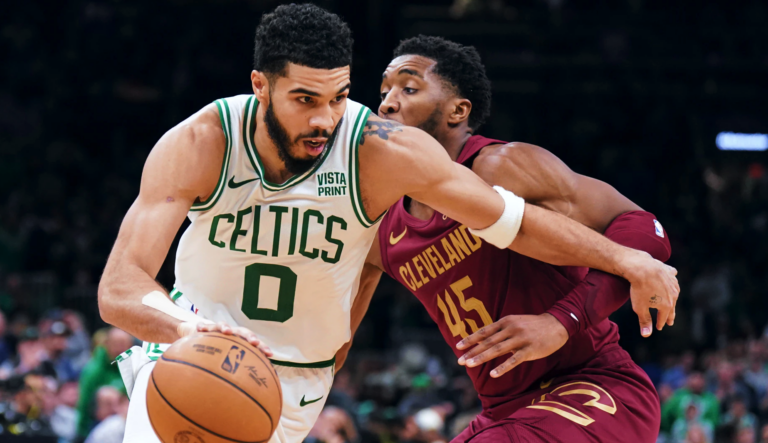
As the first round of the 2024 National Basketball Association (NBA) playoffs has come to an end, NBA fans are left to see faces they were not accustomed to before. Many of the superstar players who dominated during the 2010 to 2020 NBA era are no longer competing in the playoffs, at least for this year.

This is the first time that fans will not see Suns Forward Kevin Durant, Lakers Forward Lebron James and Warriors Point Guard Stephen Curry in a playoff series past the first round since 2005. The three superstar players combined have achieved 10 championships and seven Most Valuable Player (MVP) awards from 2010 to 2021. The three athletes are highly regarded as the faces of the NBA from the 2010’s era of basketball. 

Curry’s Warriors were the first to go in the NBA playoffs, as they lost to the Sacramento Kings in the first game of the play-in game tournament, which can make or break a team’s chance in the playoffs. This may be the last time fans see the dominant core of Curry, Forward Draymond Green and Shooting Guard Klay Thompson all in the same jersey. The trio gathered four championships from 2015 to 2022 together, cementing themselves as having one of the most dominant dynasties in sports history. 

James’ Los Angeles Lakers lost to the Denver Nuggets in five games, which makes it the second year in a row the Nuggets ended their season. The Nuggets were led by Center Nikola Jokic, who was just awarded his third MVP in the past four years.

Nuggets Point Guard Jamal Murray hit two game-winners in the series. The first game winner happened in the second game after the Lakers’ blew a 20-point lead. The other game winner occurred in game five to send the Lakers home. With James hinting at retirement being “not very far” in the future, the 21-year pro veteran may call it quits sooner rather than later. 

Durant’s Phoenix Suns were swept by the Minnesota Timberwolves in round one, suffering four straight losses. With three max contracts including Durant, Guard Devin Booker and Guard Bradley Beal, the Suns may look to make major changes to the roster and coaching personnel during the offseason

The Timberwolves, led by rising superstar Guard Anthony Edwards at just 22 years old, averaged 31 points along with eight rebounds and two steals. Some are saying that Edwards is becoming the “new face of the NBA” from his improvement over the past couple of years, and some even go as far as to say he is the next Kobe or Michael Jordan.

Other notable young teams are also on the rise. The Oklahoma City Thunder also swept the New Orleans Pelicans in four games led by MVP runner-up Shai Gilgeous-Alexander, who averaged 27.3 points per game in the series. The Thunder have the second youngest team in the NBA currently with an average player age of 25 years old. They achieved NBA history this regular season by becoming the youngest number one-seeded team ever. 

The Milwaukee Bucks, led by Forward Giannis Antetokounmpo, Point Guard Damian Lillard and Forward Khris Middleton faced an upset by the Pacers led by young star Guard Tyrese Haliburton in six games. Injuries to Antetokounmpo and Middleton may have been the deciding factor of the series. The signing of Coach Doc Rivers mid-season may not have been the best move for the Bucks, as they finished the season with a 17-19 record under Rivers after going 30-13 with former Coach Adrian Griffin. The window to win a championship with this trio may be closing faster than expected due to age, as Lillard will turn 34 entering next season while Middleton will be turning 33. 

The Los Angeles Clippers also fell far short of expectations and were handed a first round loss by the younger Dallas Mavericks led by Luka Dončić and Kyrie Irving in the sixth game. The team was led by Forward Kawhi Leonard, Forward Paul George, Guard James Harden and Guard Russell Westbrook. This is the third series Leonard has sat out hurt for some period of time in the playoffs, which once again had a huge effect on how the series turned out. With the four once superstars hitting their mid-30’s, the team may need to rebuild their core players for the future.

With the league becoming more of a fast-paced game and the offense having a larger emphasis than defense, many young and emerging stars have mainly been smaller guards than forwards or centers. 

Examples of emerging guards highlighted in the playoffs are the Knicks’ Jalen Brunson, the Pacers’ Tyrese Haliburton, the 76ers’ Tyrese Maxey, the Nuggets’ Jamal Murray, the Timberwolves’ Anthony Edwards and the Thunders’ Shai Gilgeous-Alexander. All these guards have showcased the importance of having a scoring and playmaking guard on your team, especially in the playoffs. 

Even the 2024 number one pick, the Spur’s Center Victor Wembanyama, and 2023 number two pick, the Thunders’ Center Chet Holmgren, have guard-oriented skills such as three-point shooting, ball handling skills and playmaking ability. The talent level in the NBA has increased by a substantial amount over the past decade.  

Although the stars we once knew may not be playing in following years, they have exceeded expectations for their consistency at their age. James at 39 years old became the first player in NBA history to exceed 40,000 all-time career points, which continues to increase. Curry at 36 years old continues to increase his three-point shooting record which stands at 3,747, about 774 more three-pointers than the second highest in NBA history. Durant finished with his 15th consecutive season of averaging over 25 points per game in a season (while healthy).

Curry, Durant and James look to join Team USA in the 2024 Olympics that will be held this upcoming summer in Paris, France. Along with other American superstar-caliber players, the team will look to gain their 17th gold medal in Olympic history.

Written by: Diego Cerna — sports@theaggie.org

Chess boxing — where brains meet bronze

Here’s what’s really missing from the Olympics


By MALCOLM LANGE — mslange@ucdavis.edu

Ding, ding, ding. The first round is over. Both boxers are bruised and tired. They both return to their respective corners, take a sip of water and wipe the sweat off of their moist foreheads. They both exit the ring and sit at a table facing each other. The first opponent taps the clock, which indicates that the chess game has now continued. Their goal? First to checkmate or a knock-out. This is chess boxing!

Chess boxing has risen in popularity after the pandemic alongside the growing interest in chess. Chess news and streamers hit all-time highs during the quarantine as it was a fun way to keep your mind engaged while also staying safe at home. After isolation ended, the chess fad continued but started to steadily die down. So what was the next natural step for a dying trend? Do what the Paul brothers did: start boxing. 

No, chess boxing was a thing before the pandemic — and it’s great that it still exists after the pandemic. However, it did become increasingly popular as chess influencers competed in a chess boxing tournament, with the help of famous streamer Ludwig. 

If you have never seen chess boxing, it is incredibly entertaining. Not only do you get to watch a boxing match between two people who most likely have never boxed in their lives — but you also get to watch as their chess gameplay slowly deteriorates the longer they box. However, there is a big problem. What should we do with such a fun sport now that it has started to gain some traction?

My proposal is that we make it a part of the Olympics! And yes, this is my second article about what should be added to the Olympics, but think about it. It is not only a physical challenge but a mental one as well — this way, we can see which country has the best chess player who can also beat the living daylights out of someone. We already have a bunch of silly sports in the Olympics, like regular boxing. So let’s just add the better version of the sport to the event. 

I see no real downside to this; I mean, how long does boxing stay entertaining anyway? Something that breaks up the monotonous hitting of the opponent with something that takes a different form of strategy and foresight would be a great addition to the Olympics. It truly is, in my opinion, a more difficult sport, because you can’t just be good at boxing or chess — you have to have some skill in both to make it past the first couple of rounds. 

That is why I am campaigning to get chess boxing added to the 2024 Olympics in France. I mean, it seems like the only real candidate if you ask me. What else would they add instead? Breakdancing? That would be ridicu– oh, um… This is awkward. I am now just being informed, they did in fact add breakdancing. Well… we will try again in four years. 


Written by: Malcolm Lange — mslange@ucdavis.edu


Disclaimer: The views and opinions expressed by individual columnists belong to the columnists alone and do not necessarily indicate the views and opinions held by The California Aggie. 

Even without a formal program, student journalism flourishes at UC Davis

College journalism, both inside and outside the classroom, teaches students the skills necessary for navigating an ever-changing world 


By LAILA AZHAR — features@theaggie.org 


On May 4, Columbia University’s radio station, WKCR 89.9FM, released a statement on the importance of journalism on college campuses. 

“While these last two weeks have been an intense moment for anyone on Columbia’s campus, we want to take the time to reaffirm our belief in the necessary value of student journalism,” the statement reads. “The work being done shows us just how valuable and necessary it is to listen to student voices during these times of strife.” 

The statement was put out two weeks after WKCR began covering student protests against the university’s investments in companies that profit from the Israel Palestine war and subsequent police action faced by protestors. 

When the Columbia administration restricted mainstream media outlets’ access to the campus, the journalists at WKCR used their unique position as students to continue to report on the events unfolding. 

Student journalism has played a major role in coverage of events unfolding on college campuses, as demonstrated by Columbia students and other outlets including UCLA’s Daily Bruin and the University of Texas at Austin’s The Daily Texan

The same is true at UC Davis. While our university doesn’t have an official journalism program, students interested in the field have many options to practice reporting skills. 

Those interested in written media have the opportunity to write for The California Aggie, the student-run campus newspaper, which robustly covers campus and city news. The paper reports on a wide variety of topics and is made up of seven desks: campus news, city news, opinion, features, arts & culture, science & technology and sports. Students can apply for staff or volunteer positions, which open quarterly, or submit opinion pieces to opinion@theaggie.org for consideration.

Outlets such as Davis Political Review and Her Campus at UCD also provide spaces for students interested in platforms focused around specific topics. 

Additionally, the University Writing Program offers classes specialized in journalism skills, including “Writing in the Professions: Journalism” (UWP 104C), which gives students practical experience researching, interviewing and writing articles.

Alexis Muthoga, a third-year African American studies major, is currently enrolled in UWP 104C and emphasized the class’ focus on hands-on learning. 

“I would recommend the class to people who are interested in learning how to interview and do journalistic-style writing,” Muthoga said. “Having a certain level of curiosity and interest in the subject helps you learn the most you can.” 

The class also provides a friendly space for students to get feedback on their writing. 

“The energy in here is great,” Caitlin Ware, a third-year communications major, said. “It’s upbeat and a really positive environment. When you give feedback, you have to be strict of course, but it’s still a great environment.” 

KDVS News is another example of a way students can get involved with journalism outside of the classroom. It provides a unique opportunity for students interested in broadcast journalism. The group, which is housed under campus radio station KDVS 90.3 FM, produces a bi-weekly 30-minute segment covering campus news, along with a shorter interview-focused segment titled “Keepin’ It Freeform,” which is posted on the group’s Instagram account. 

Remali De Silva, a third-year English major and the group’s news director, commented on what she hopes KDVS News will bring to reporting on the UC Davis campus. 

“We think it’s important to keep the news vibrant and different and show it in all its forms,” De Silva said.

The skills taught through practicing journalism are not solely applicable to those who want a career in journalism. George Miller, one of the UWP 104C instructors, described the ways in which practicing journalism encourages a deeper awareness of the world. 

“To make human connections, we need to be aware of what’s going [on] around us, and to be honoring life by observing it,” Miller said. “If we are patiently observing, if we’re paying attention, then we can remain curious, and we can, as writers, help to satisfy curiosity that readers have, including curiosity they didn’t even know they had.” 

Miller continued by commenting on the role of journalists in today’s technologically adept world. 

“No other form of writing invites distracted browsing to the extent that journalism does,” Miller said. “Every year, the attention span of readers, the different kinds of distraction that readers have, increases. You’re always, as a journalist, trying to get their attention and keep their attention, and you hope to do that honorably rather than through cheap falsifying tricks.”

In an era defined by information overload, the skills learned through journalism are essential for anyone navigating complex issues. As college journalism continues to play an important role in the media, journalistic opportunities provide a path for students to deepen their understanding of the world around them. 

Even without a formal program, UC Davis is still full of these opportunities for students to benefit from the lessons that journalism can teach. 


Written by: Laila Azhar — features@theaggie.org 


UC Davis at the forefront of veterinary medicine

Students majoring in the animal sciences share what sets Davis’ program apart from other universities


By ZOEY MORTAZAVI — features@theaggie.org

If there is one thing UC Davis is known for, it is the university’s deep-rooted connection to animals and farming. When many think of Davis, its association with cows and agricultural life may be some of the first things that come to mind. 

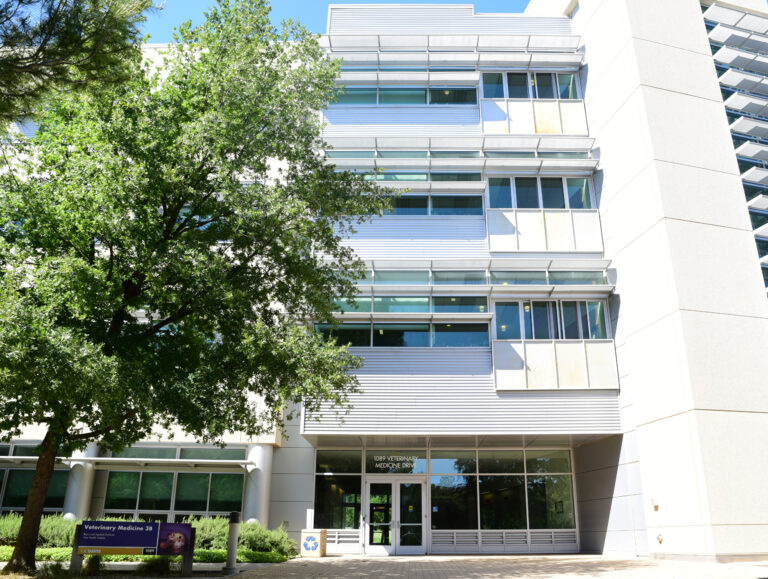
This may be because UC Davis’ Veterinary School is the No. 1 veterinary program in the United States, according to U.S. News and World Report. Davis is also ranked as the second-best program worldwide, with the first-place ranking going to the Royal Veterinary College at the University of London. 

Davis’ veterinary residency program is the nation’s largest by far, offering more than 30 specialties and hosting more than 700 students in pursuit of the Doctor of Veterinary Medicine degree, as well as other professional and graduate degrees. UC Davis undergraduate students majoring in animal sciences have reported loving the hands-on approach and interactive labs that many courses here include. 

Sadie Liu, a first-year animal science major, shared some of her experiences as a student in the Department of Animal Science.

“As an aspiring pre-veterinary student, I have absolutely loved every second of my experiences here at Davis,” Liu said. “The animal science classes and labs that I’ve taken have been incredibly hands-on and eye-opening, and I adore spending time with all the newborn animals, too.”

Liu is also the current secretary for Davis’ Veterinary Aide Club. She explained that Davis takes an interactive approach to its animal science program that helps it stand out among many other prestigious universities.  

 “I think that these interactive opportunities are truly what sets the Davis veterinary program apart from other colleges, as they not only instill scientific and technical knowledge, but also ethical and moral consideration,” Liu said. “I am so excited to continue my veterinary pursuits at Davis, and I can’t wait to see what the program teaches me next.” 

In addition to boasting a successful program, the veterinary school’s hospital aids over 50,000 patients each year and utilizes over $89 million in annual research funding. The school also celebrated its 75th anniversary in April of 2023. 

The hospital has also received approval from the American Animal Hospital Association, which is the only current organization to accredit companion animal vet hospitals like the Davis veterinary school. The hospital hosts the Veterinary Center for Clinical Trials, which provides undergraduate students with the chance to work with animals, veterinary professionals and other researchers in the field. 

Undergraduate students have expressed that the empirical lab approach at Davis is what makes the program so useful for students trying to become veterinarians. 

“I think anyone who is hoping to pursue a career in the veterinary field has heard about UC Davis’ prestige in both animal and veterinary science,” Olivia Patsch, a first-year animal science major, said. “The action-based labs really go to show why Davis has a top spot in this field. I feel like UC Davis is all about learning by doing; I’ve been exposed to so many different types of animals and different ways of applying concepts that I’ve seen in class.”

Patsch continued to discuss some of the benefits that she has observed as a part of the program as an undergraduate student. 

 “There are so many research opportunities and the professors I’ve had thus far are so caring,” she said. “There’s a pretty massive stockpile of information and resources for students to chip away at, and I’m really looking forward to my next three years here as an animal science major.”

All of the animal science programs at Davis are a subset of the university’s College of Agricultural and Environmental Sciences. The college offers 27 majors, including the animal science and animal science and management major. 

As students progress further into the animal science curriculum, many choose to apply to veterinary schools when they become upperclassmen. Students who receive their undergraduate degrees from Davis have access to the veterinary school’s resources before applying, which many consider a plus of the undergraduate animal science program.

Chloe Palarca-Wong, a fourth-year animal science major, shared her thoughts on the department as a student who is graduating this year.

“The animal science classes have been really interesting and hands-on, which is something I don’t think you can get at a lot of other schools,” Palarca-Wong said. “The highlight for me is definitely being in Davis, where there are so many opportunities to engage in veterinary medicine — there are clinics, volunteering and a lot of research options.”

 Palarca-Wong continued by explaining what makes Davis’ labs and programs unique. 

“In labs, we work with the dairy cows, sheep, pigs, goats, chickens and other animals too,” Palarca-Wong said. “It’s really cool because we’ll learn things on paper and we get to actually see and apply those concepts to the animals in-person. Another great thing is that all the professors who teach the courses and labs have their own research, and they take undergraduate students and will let you work with them, because Davis is a big research institution.” 

Universities all over the world have specialities and programs that stand out; here at Davis, the veterinary school and animal science program are the primary example of that. Davis’ program has contributed a great deal to veterinary medicine and will continue to do so for years to come as the program continues to develop, expand and flourish. 


Written by: Zoey Mortazavi — features@theaggie.org