55.1 F
Davis

Davis, California

Saturday, December 20, 2025
Home Blog Page 89

TikTok’s time is running out, but why?

Is the looming ban an infringement on free speech or a national security necessity?


By JOAQUIN WATERS — jwat@ucdavis.edu


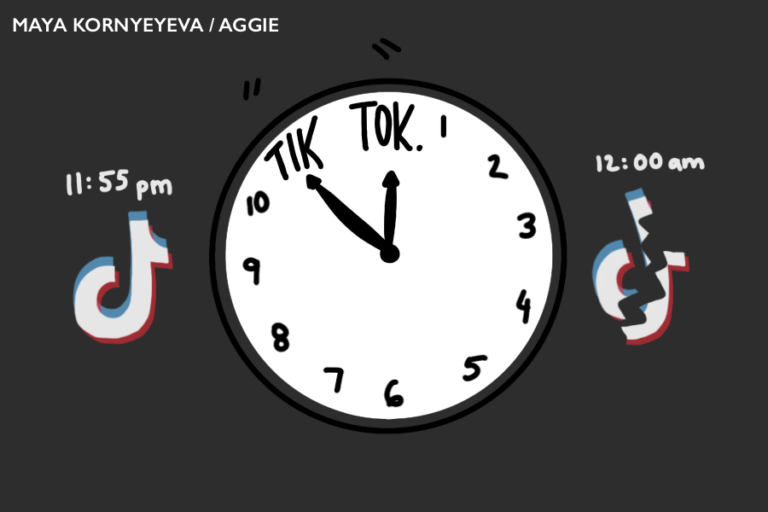
So. TikTok. For at least six years, if not going all the way back to its 2016 launch, it has been the most popular social media platform in the United States. It is a trendsetter, a ubiquitous outlet and a cultural phenomenon. And it might be off all our phones in nine months. 

For those who don’t know, the Senate and the White House have recently signed into law a controversial piece of legislation that gives ByteDance, the Chinese parent company of TikTok, nine months to sell TikTok to another company, with an additional three-month grace period should a sale be approved, or face the app’s removal in the United States. So far, ByteDance has shown no sign that it will sell — in fact, they are taking the bill to the Supreme Court to debate its legality, arguing that a United States ban would be an infringement on free speech. The truth of the matter? Well, in this author’s opinion, it’s a bit more complicated than an absolute one or the other.

Arguments in favor of banning the app in the United States all tend to lead back to potential national security concerns. TikTok does harvest huge swaths of user data — as does basically every social media platform of note, from Facebook to Instagram to X, the site formerly known as Twitter. The difference here is that those other platforms are American-based, while ByteDance (and by extension TikTok) is Chinese. The validity of these concerns continues to be heavily debated. After all, regarding data harvesting, it’s not as if the soulless lizard-people known as Mark Zuckerberg and Elon Musk are inherently more trustworthy than a board of Chinese executives. That we trust the former over the latter, even subconsciously, contains more than a whiff of xenophobia. 

But this is not to say that there are no genuine concerns regarding ByteDance’s data harvesting. The Chinese government is notoriously far more restrictive than the United States with the foreign-based content they allow. Facebook, Instagram, X and even YouTube and Google, are all banned from Chinese app stores, only accessible through virtual private networks (VPNs), because, ironically, they do not comply with China’s restrictions on data sharing and types of content shared. Meanwhile, an article in the country’s National Intelligence Law requires Chinese corporations of all types to “assist and cooperate” with their intelligence agencies. Admittedly this is a fairly vague ask, but then governments historically get away with a heck of a lot through loopholes and vagaries. It is not unreasonable to question why they are so restrictive of foreign-based companies’ data sharing while so demanding of their own companies’ compliance.

With all that said, there is also a reasonable counterargument that states that the TikTok ban would be a stepping stone on the United States’ part toward the restrictiveness of governments like China’s. Would the ban give China a taste of its own medicine regarding app restriction, or would it be one further step on our own part down the slippery slope of fascism? It’s a tough question to answer because, while there are genuine concerns in what ByteDance does with our data, there are genuine concerns from our own companies as well. Data harvesting is the trade-off for all social media platforms. How many times have we paid glib lip service to our own implicit paranoia about data sharing by joking that “our algorithms are spying on us” or that “my CIA agent isn’t gonna find much interesting on my computer, LOL?” The simple truth of the matter is that we do not know what they — our government — know, either about Chinese intelligence agencies or American ones. It may well be that ByteDance is a foreign spy tool; it may well be that Meta or X are domestic spy tools; it may well be that this whole issue is born from xenophobic paranoia. We don’t know, and until we do, it’s near-impossible to definitively give an informed answer.

What we do know is that the impact of the TikTok ban (assuming it goes through) will be enormous, and not entirely positive. There are content creators who make their livelihoods through TikTok, either as a side hustle or because they have no other options. And whatever the behind-the-scenes truth of the matter is, TikTok has, at least partially, become an outlet for artistry and free speech in the United States. Dissenters might say that it has also become an outlet for propaganda, and that isn’t untrue, but so has any platform that allows for the dispersal of a wide range of opinions. The absence of TikTok from our app stores will be keenly felt, probably even more than its arrival there in 2016 was felt.

So the question remains: will ByteDance bite (no pun intended) and sell its most profitable platform, or is TikTok’s time in the U.S. nearly up? In this writer’s opinion, the latter is more likely. Let’s face it — more than an artistic outlet or a potential security tool, TikTok is a business, and its parent company will do whatever does the least damage to that business. While a ban in the U.S. would be a blow to that business, it would not be fatal; they get the majority of their income from China. And the other question remains as well: should this happen? Well, this was a long-winded way of saying “I don’t know.” We can’t know, because we have not been given all of the information to properly make that call, so we gravitate toward the uninformed opinion that best suits our worldview, be that xenophobic paranoia or defensiveness of a platform that has brought us joy. Whichever view we embrace is entirely in our hands, but in my view, ambiguity is the most truly informed opinion as the clock winds down. Tick, tock.


Written by: Joaquin Waters — jwat@ucdavis.edu 


Disclaimer: The views and opinions expressed by individual columnists belong to the columnists alone and do not necessarily indicate the views and opinions held by The California Aggie.
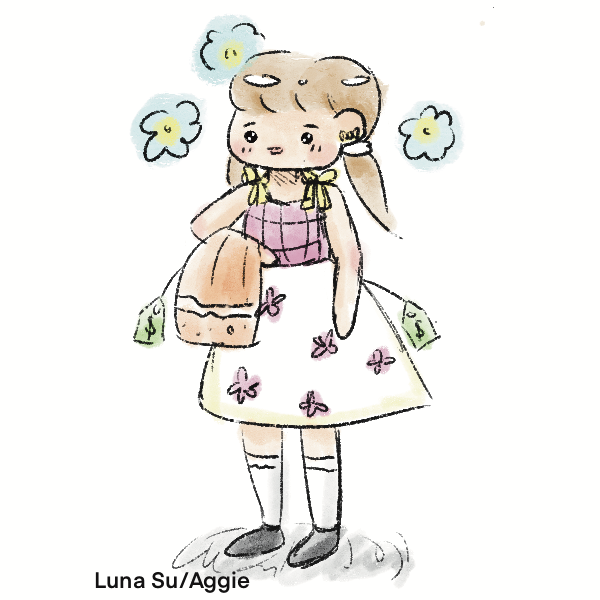

Fashion ideas to brighten up your springtime wardrobe

This spring, browse some new ideas for your daily outfits


By NATALIE SALTER — arts@theaggie.org 


Springtime is upon us, and with the change of seasons comes a new environment to get dressed up for. With temperatures ranging from delightfully cool to pleasantly warm, spring offers a variety of conditions that allow plenty of unique fashion choices to shine. If you are looking to do some spring shopping to freshen up your wardrobe or want to play around with what you already have, here is some inspiration for what looks will shine during this season.

It’s hard to beat the classics when it comes to fashion trends, and as always, floral prints will stand the test of time for yet another spring. The light, yet memorable design of these flowering pieces emulates the lively bloom of the season and brings us closer to nature. A simple floral dress or top can stand out on its own and bring an outfit to life, and there’s no better time to don flowers than during the months when they are blossoming to the fullest.

Beyond just florals, spring is the perfect time to play around with whimsical and delightful prints and patterns. Gingham is a great style for the season; likewise, if you’re fond of more playful looks, try a piece patterned with fairies, fruits, cats or anything else that’s youthful and fun. After all, springtime is associated with childlike innocence and delight, so there is no better time to open your imagination and try daringly adorable styles.

You might want to save your most saturated colors for summer, as springtime fashion thrives in the realm of pastels and neutrals. A simple white blouse paired with denim jeans or overalls is a sweetly simple look and proves that you do not need to overcomplicate your styles. Consider taking notes from the natural colors of the season: pale greens, pinks, purples, blues and cream shades evoke the lovely sights of a flower garden and pair well together in any combination. Do not be afraid to get creative with these mashups! Playing around with the pretty colors available in your closet may give you unexpectedly wonderful looks.

For chillier springtime days, consider a cardigan with a cute top or a neutral-toned jacket you are fond of. Spring’s generally warmer weather conditions mean that layering is no longer strictly necessary to create an outfit that is both cute and comfortable, but that should not stop you from playing around with the lighter layering pieces you have available to you. 

Your shoes deserve just as much attention when putting together your outfits! If you have a pair of chunky dark shoes such as Doc Martens to spare, try experimenting with their existing look by replacing their shoelaces with ribbons of your favorite color. Floral-printed Converse, pastel ballet flats and natural sandals are other cute ideas to accentuate your look. Don’t be afraid to mix and match colors and styles to craft a look that is memorable and unique. 

Lastly, one of the best ways to bring an outfit to the next level is to accessorize. On a sunny day, consider donning a shaded hat to protect yourself while also brightening your entire ensemble. If you are partial to jewelry, rings and necklaces are always a reliable styling tool; a pretty heart locket or flower-shaped ring fits the energy of spring flawlessly. 

Consider taking a shopping trip or going through your current closet to maximize your styles for this season. The most important part of dressing up is to have fun, and spring is the perfect time to embrace the most lovely and whimsical of fashions.

Written by: Natalie Salter — arts@theaggie.org

UC Davis students share support for pro-Palestinian encampments

Students comment on the worldwide college protests supporting the Palestinian cause 


By SABRINA FIGUEROA — features@theaggie.org 


As children and innocent civilians continue to be killed in Gaza, students all over the world have come together in solidarity with Palestine, opposing “complicity in the Palestinian genocide,” according to one student group at UCLA — specifically by attempting to convince their universities to fully divest from Israel. 

Columbia University’s students were the first to start a pro-Palestinian encampment on April 17, with many other universities following suit. 

UC Davis became the eighth UC campus to join the protests when Davis Popular University for the Liberation of Palestine (PULP) set up an encampment at the Memorial Union Quad on Monday, May 6.

Students — both undergraduate and graduate — make up most of the participants of the encampment at UC Davis, according to organizers, though it is open for all ages to join. The encampment offers participating individuals food, first aid, mental health resources, community and an area that creates meaningful conversation about the conflict.

Sophia Rapacon, a second-year electrical engineering major, shared her thoughts on the new Davis encampment. 

“I’ve seen people call it ‘disruptive’ to student learning, [but] I thought it was the complete opposite,” Rapacon said. “It exists only as a consistent reminder of the genocide happening in Palestine.”

Ruoda Moler, a second-year political science and psychology double major, also expressed support for the encampments.

“I think it’s great that college students are coming together in large numbers across the country to show their support for Palestine and stand up against a genocide that the entire [U.S.] government and country is turning their backs on,” Moler said. “I’m proud and happy to see that Davis has joined in the movement and I know it will make a difference.” 

Mass pro-Palestinian protests have also helped students find comfort in the fact that their peers and the younger generation are willing to fight for what they want and for their futures, according to Rapacon. 

“Encampments across U.S. campuses have shown the strength students have in their beliefs, despite what [administration] wants them to believe,” Rapacon said. “It makes me proud to be a student, to be a part of a group unafraid of expressing our values.”

Although many students see the encampments in a more positive light, another student who is involved in the encampment and who wishes to remain anonymous for safety reasons, said that for them, it’s difficult to see police and counterprotesters push back against the encampment and pro-Palestinian protests.

“Seeing the practice of the constitution take place through freedom of speech and freedom of protest be met with violence has been disheartening,” the student said. “Whether or not people agree with the cause, it’s despicable to have students be met with violence, especially while [protesters are] setting stuff up. It has been really hard to watch.” 

Violence has been enacted against pro-Palestinian protesters at campuses all across the U.S. — including UC Davis — by counterprotesters, aggressors and law enforcement. 

Two recent and violent incidents occurred on the UCLA campus in close succession. On April 30, the UCLA solidarity encampment was attacked by pro-Israel counterprotesters where, as recorded in videos, they were seen throwing fireworks into the encampment, beating students and shouting things like “second Nakba,” which refers to the ethnic cleansing, displacement and dispossession of Palestinians during the 1948 Arab-Israeli war. 

More violence ensued a couple days later, when in the early morning of May 2, UCLA Chancellor Gene Block made a decision to call in outside law enforcement. The Los Angeles Police Department then raided and cleared the encampment, shooting rubber bullets at students and arresting about 200 protesters. 

“It’s a terrible thing,” the anonymous student said. “[Police brutality] is filled with evil and hatred, and the schools simply cannot respond to matters like this. Causing harm to students who pay for your institution and [are] asking you to allocate your money somewhere that doesn’t harm people shouldn’t be an ask that is so difficult that you must cause violence amongst those groups.” 

Moler shared a similar sentiment. 

“From what I’m seeing, it seems like the protests are peaceful, and there’s no reason for police to be getting violent and arresting [students who are] exercising their right to protest and free speech,” Moler said. “There’s no reason to escalate [the situation].”

Chancellors and presidents of universities play a large role in these protests, especially with how they choose to handle them. Many — like UCLA Chancellor Gene Block and Columbia University President Minouche Shafik — have lost support over their treatment of protesters from students, faculty and even donating groups and politicians

Rapacon discussed the role of chancellors and presidents in the encampments, saying that they need to listen to their students to try and understand these protests before assuming there will be violence coming from them. 

“Chancellors have to be a funnel of learning for the larger student body, while still giving space and protection for the protesting students,” Rapacon said. “So for chancellors to call police and state troopers on their own students, who simply want to ensure the money they pay to earn a degree isn’t inadvertently funding a genocide, is traitorous.” 

The efforts of protesters have not gone unnoticed on the global stage, and protestors’ families, peers and even children in Gaza have shown them support. 

These encampments are a sign of hope, according to the anonymous student. 

“Watching students work through it and care for one another I think brings a lot of hope, in a ‘If there’s a will, there’s a way’ sort of perspective,” the student said. “It’s really amazing to see how much people will go out of their way to stand up for what they believe is right.” 

Written by: Sabrina Figueroa — features@theaggie.org

Asian American Association at UC Davis brings joy and community to students

This social club on campus welcomes undergraduates of all ethnicities and backgrounds to join in various bonding activities


By LYNN CHEN — features@theaggie.org 


The Asian American Association (AAA) at UC Davis organizes social, cultural and professional events to unify Asian American communities on campus.

Charlotte Chow, co-president of the AAA and a fourth-year science and technology, detailed the club’s purpose on campus. 

“The mission of [AAA] is to promote Asian cultural traditions and values, and to create a safe space for those looking to be in a community with other Asians,” Chow said.

Chow added that the club is not exclusive to just Asian students.

“You also don’t need to be Asian to join,” Chow said. “It’s a safe space for people in general.”

Typically, the club hosts general meetings on Thursdays and special team-bonding events on weekends. During meetings, members socialize with each other through activities such as mixers, study sessions and arts and crafts sessions. For weekend events, members get to know each other on a deeper level after picnics, bowling games and cabin trips to places outside of Davis.

A recent project the organization has been working on is a night market which will be open to the public on May 18 from 4 to 7 p.m. at the Memorial Union tables.

“It’s more like an evening market, but we’re going to have vendors there who are also Asian students trying to sell their arts and crafts,” Chow said.

Maggie Lu, a third-year nutritional biology major and the secretary of AAA, stated that at this market, people will sell crocheted items and key chains and games will be hosted for attendees.

“We’ll also be selling some baked goods,” Lu said. “We’re still working on if we want to sell other drinks and food.”

Lu explained that the inspiration behind the night market is to mimic authentic Asian night markets.

“Obviously, we can’t replicate that here — it’s a little hard — but we’re just trying to find something similar [to Asian culture] to bring to Davis,” Lu said.

Chow believes what makes AAA unique is its openness to different cultural backgrounds. 

“With this club, we’re open to everyone and like having all the different cultures and people meet together,” Chow said.“If people don’t feel comfortable going to a club specifically for them, I think AAA is a way for them to also find community with [people from] other [ethnicities].”

Claire Ng, a first-year cognitive science major, agreed with this sentiment. She describes how AAA’s strong sense of community led her to commit to the organization as a freshman.

“I got to meet AAA as they were tabling at the MU,” Ng said. “They were really nice and welcoming, and I got a really good vibe off of them.”

Based on her experience with the organization thus far, Ng believes that AAA has continued to meet her expectations as a social club.

“Every time I’m with [AAA members] and present in their meetings, it brings me a lot of joy,” Ng said. “[The club] helps me relax for an hour each week, and I have a lot of fun with them.”

The organization also focuses on educating its members about various Asian cultures. For instance, Ng describes that every week, the club spotlights a significant Asian American person from history to discuss at its meetings. On its Instagram account, @aaa.davis, the club has a series called “Word of the Day,” which showcases different cultural terms from various Asian languages.

“[AAA] really helps [members] deepen their knowledge of Asian cultures,” Ng said. “It’s also really nice to be able to connect with other Asian cultures and see how different we all are, but also how similar we all are.”

Written by: Lynn Chen — features@theaggie.org 

Culture Corner

The Arts Desk’s weekly picks for movies, music and more 


By LORENA ALVAREZ — arts@theaggie.org 


Song: “Espresso” by Sabrina Carpenter (2024)


Even if you have not listened to Sabrina Carpenter’s new song “Espresso,” you have likely heard people singing “I’m working late ‘cause I’m a singer” in passing. From its upbeat tune to its silly, flirtatious lyrics, “Espresso” is quickly becoming the song of the summer. Carpenter has been making headlines for her music and fun performances that left fans wondering what witty “Nonsense” outros she would come up with next while opening for Taylor Swift’s “Eras Tour.” Much like her flirtatious concert outros, “Espresso” depicts the self-awareness and confidence in knowing you are someone’s infatuation — someone’s caffeine addiction. The lyrics, “Now he’s thinking ‘bout me every night, oh / Is it that sweet? I guess so / Say you can’t sleep, baby, I know / That’s that me espresso,” draw listeners in because of its silly ending. While Carpenter’s iconic “that’s that me espresso” is grammatically incorrect, that playfulness is what makes “Espresso” so catchy and charismatic. 


Album: “Fine Line” by Harry Styles (2019)


Much like Carpenter’s fun and upbeat “Espresso,” Harry Styles’ album “Fine Line” embodies the feeling of a perfect summer evening. While a slower song compared to Carpenter’s, “Watermelon Sugar,” a popular track from the album, revolves around summer evenings and desire. Despite the explicit meaning, “Strawberries on a summer evenin’ / Baby, you’re the end of June / I want your belly and that summer feelin’ / Getting washed away in you,” appeals to the senses. The lyrics force its audience to imagine themselves sitting out in the sun and enjoying fresh strawberries — what a carefree summer is all about. Although “Golden” does not carry this happy message, it incorporates the same upbeat tone that is perfect for fun summer days. It discusses feelings of longing and desire; and the idea that the person behind your longing is “so golden” that you are willing to risk heartbreak if it means you get to spend the summer driving vintage convertibles and swimming in the Mediterranean Sea with them — like the music video depicts. 


Play: “A Midsummer Night’s Dream” by William Shakespeare (1600)


While Shakespeare is known for his classic love tragedies and his use of early modern English, which can oftentimes deter young readers, “A Midsummer Night’s Dream” is the perfect light-hearted comedy to read this spring. Unlike his popular tragic love stories, this short dialogue plays with the meaning of love and relationships in a mischievous way. It follows two couples who are easily manipulated into loving the wrong person. While theoretically dark, the play’s light-hearted nature consumes the text’s tone, featuring the magical world and an attempt to emphasize that any unhappiness is just a dream, not reality. This magical realm with lively manipulation and pranks fills the reader’s senses with an appreciation of nature, magic and comedy. For those who prefer to watch plays, UC Davis students can use their student log-in to access Alexander Street productions for free.


TV Show: “Dynasty” dir. Matt Earl Beesley (2017)


“Dynasty” is a drama featuring a rich powerful family with multiple businesses. As the story unfolds, the series touches on fidelity, birthright, women in the workplace, sexuality and the complexity of family relationships. While the plot is centered around Fallon Carrington, Blake Carrington’s only daughter, and her journey to become a respected businesswoman, the television show depicts the family’s adventures and hardships. While the series humanizes the rich family by depicting their personal lives and losses, the drama highlights the extent the Carringtons go to to maintain their status and success.

Written by: Lorena Alvarez — arts@theaggie.org

POV

Drawn by: Nimra Farhan –– nfarhan@ucdavis.edu

Disclaimer: (This cartoon is humor and/or satire, and its content is purely fictional. The story and names of “sources” are fictionalized.)

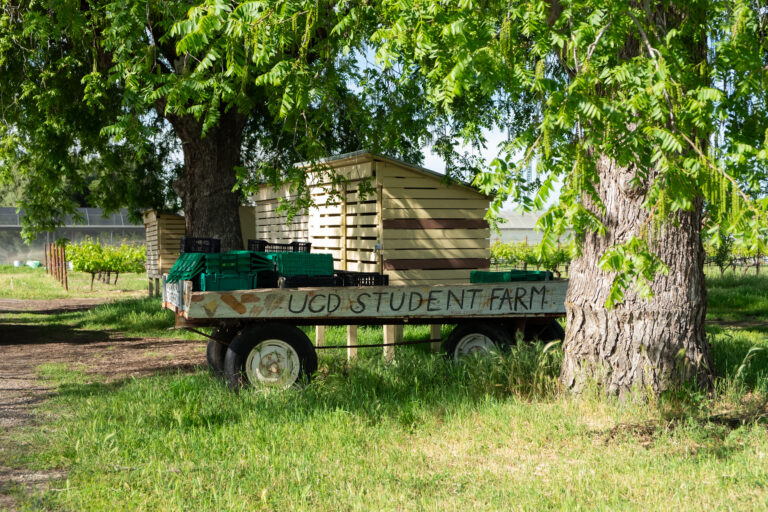
UC Davis’ Student Farm takes a multi-faceted approach to sustainability

Through a diverse range of initiatives, the farm provides opportunities for students to partake in UC Davis’ legacy of agriculture and environmentalism 


By LAILA AZHAR — features@theaggie.org 


From its beginnings as the UC Berkeley University Farm, UC Davis has been known for its emphasis on agriculture and sustainability — in fact, it was ranked first in the 2023 UI GreenMetric World University rankings of “greenest” university campuses. 

For many students, this reputation is a large part of the school’s appeal. 

“One of the first things I ever heard about UC Davis was that environmentalism played a large part in campus culture,” Temo Martinez, a first-year political science major, said. “As someone who cares a lot about sustainability, that was really important to me.” 

The Student Farm is an example of one of the many initiatives on campus that works to further students’ knowledge of agriculture and sustainability. 

Third-year sustainable agriculture and food systems major Adazsofia Lengyel is the lead student farmer and community-supported agriculture coordinator in the Market Garden program within the Student Farm. 

Lengyel first found the farm as a junior in high school, while looking around the campus with her mother. 

“I knew I wanted to be involved in farming while at Davis because of what I am studying, and this space felt like a perfect alignment of my interests, values and goals in learning about farming and sustainable agricultural systems,” Lengyel said in an email.

As their mission statement puts it, the farm’s goal is to “hold a space where students can learn, practice and model an ecologically, socially and economically sustainable agriculture and food system.”

A group of students began the farm in 1977 as a way to further their agricultural knowledge. Today, it consists of 23 acres of student-managed plots, which are home to a wide variety of programs. 

The Market Garden program teaches students about the planting, maintenance and harvest of organic fruits and vegetables. The produce grown in this garden is often sold to campus dining halls. Their farmstand, located on Ext Center Dr., sells flowers and fresh organic produce from 12 p.m. to 3 p.m. every Monday. 

The Ecological Garden program is a space to learn about small space permaculture gardening with a focus on agroecological practices. It includes a labeled “U-pick section” where visitors can pick flowers and herbs to purchase.

On the other hand, the Fresh Focus program donates produce to student centers at UC Davis to combat food insecurity. 

“Food insecurity on college campuses is such an important issue,” Claire Chen, a second-year sociology major, said. “Resources like the Student Farm are a valuable way to both spread awareness about the topic and provide resources to combat it.” 

The farm hosted a pay-what-you-can “U-Pick Organic Spinach” event, providing students with food and supporting environmental initiatives at the same time. Students were able to pick from an “unbe-leaf-able” variety of spinach, and all proceeds went toward research on the farm. 

Along with providing produce and flowers, the farm also often creates spaces to discuss topics relating to agriculture. In February they hosted a “Farm Forum” for people to voice ideas on how the Student Farm should continue functioning in the future. In March, they hosted a workshop titled “Queers and Queerness in Nature.” 

The farm’s programs contain a mix of agriculture and insightful discussion spaces on the broader context of agricultural practices. 

For Lengyel, one of the highlights of working on the farm is the community. 

“Because there is such a diverse array of identities, experiences and interests people bring, it has been an amazing space to learn from others who also love being outside and growing food for our community and ourselves,” Lengyel said. “There is such a culture of kindness, joy and learning that happens here, it is such a grounding and special place to get to be a part of.” 

As students partake in hands-on learning in the fields, they also learn a communal and holistic approach to farming, serving as a testament to UC Davis’ legacy of agricultural innovation and sustainability. 


Written by: Laila Azhar — features@theaggie.org 


Which Donna Tartt novel is her definitive work?

Examining the author’s body of work and the diversity it contains 


By JULIE HUANG — arts@theaggie.org


Donna Tartt’s body of work remains enigmatic no matter how many times one goes back to revisit it. Having penned three novels across three decades, Tartt’s characters are often the highlight of her books, jumping off the page with every detail that she adds and forming vivid portraits that color the impressions readers are left with. Yet every portrait is clearly distinct, as none of her three novels overlap much in setting and circumstances. From rich college kids engaging in questionable acts, a lonely twelve-year-old girl in Mississippi and a boy in New York City whose life is uprooted following a catastrophic accident, Tartt’s protagonists seem to occupy different spaces within her body of work. 


“The Secret History” (1992)

“The Secret History” is known among online circles, especially some parts of TikTok, for being a “dark academia” thriller that doubles as a complex character study of arrogant college students. In essence, the protagonist Richard Papen falls in with a group of beautiful, wealthy and enviable classics majors who have a lot of free time and not as many morals. Richard, as an outsider brought into that inner circle, is able to give a unique account of their strange doings with a perspective that no one else can hold, and Tartt masterfully explores his reverent but uneasy attitude toward his elevated peers. Although the novel is now decades old, “The Secret History” has become and remains for many the novel that they envision when they think of the scandal, intrigue and moral deterioration associated with dark academia and its related aesthetics. Although placing such a simple label on the novel may distill some of its nuance, it also makes the book palatable to a wider audience, a strength that helps it outshine Tartt’s next work in the public eye.   


“The Little Friend” (2002) 

Perhaps Tartt’s most intimate work, “The Little Friend” is her least known and least acclaimed novel. It follows twelve-year-old Harriet Dufresnes in 1970s Mississippi as she imagines herself a worthy detective on the hunt for her older brother’s very real murderer. The murder, having happened years before, haunts the narrative and looms like a shadow over Harriet’s upbringing and growth from child to adolescent. Far from the thrill that “The Secret History” does so well, “The Little Friend” is slow and unsettling, revealing itself not as a plot-driven tale of suspense, but rather a nuanced study of the human mind. With such an all-encompassing subject as its centerpiece, it is no wonder that “The Little Friend” ends up being too lengthy and verbose for many readers. Still, despite being less positively received than her other works, one can tell that Mississippi native Tartt takes painstaking care to stay true to the details of her birthplace in her writing, granting a clear sense of authorial affection to her sophomore work. 


“The Goldfinch” (2013)

As a Pulitzer Prize winner, “The Goldfinch” is perhaps Tartt’s most well-known and critically acclaimed novel, even having been adapted into a film of the same name. Its protagonist, Theo Decker, has been called Dickensian due to both his parental status and the desperate, strange life that he leads, 14 years of which are followed throughout nearly 800 pages. Although longer than “The Little Friend” by a significant amount, “The Goldfinch” also differs in that it changes settings and scenes quite frequently. Characters within the narrative come and go, and these changes feel reminiscent of real life, breathing fresh air into pages that might otherwise feel too heavy to bear. The novel has been lauded as a feat of storytelling, and yet it remains difficult to summarize the immense range of the places and people that it features.


Ultimately, choosing the best novel from among these three may be a pointless endeavor. It is difficult to point to any one of them and accurately claim that it sums up the entirety of Tartt’s career, as they all cover very different ground in terms of character arcs, setting and plot. The most significant common thread that can be traced among these distinct novels is the attention to detail and devotion to vivid, humanistic storytelling that Tartt embodies. 

Written by: Julie Huang arts@theaggie.org

UC Davis equestrian season comes to an end

The lead-up to NCEA and the legacy that followed


By MI’ZAUNI REESE — sports@theaggie.org


Over the last six years, the UC Davis Equestrian team has been building a stronger foundation on the principles of camaraderie, work ethic and a shared love of horseback riding. These pragmatic principles have propelled the team to the eighth seed in the nation, granting them a rather competitive position in the sports league. 

After back-to-back wins in the Eastern Collegiate Athletic Conference (ECAC) Semifinals and Championship, the Aggies earned their spot to compete in the National Collegiate Equestrian Association (NCEA) Championship for the first time in program history. Excitement circulated throughout the team as they looked forward to competing on the national stage, a goal achieved by a culmination of time, dedication and passion for the sport. They anticipated a challenging competition but looked forward to it with the intention of winning the championship.

Prior to the competition, the Aggies had one of the best seasons in UC Davis equestrian history. Besides a fantastic record and competitive team, Head Coach Jill Humphrey represented the US Equestrian at the Federation Equestre Internationale (FEI) World Cup Finals. As head coach of the Davis equestrian program, Humphrey also displayed her skills, proving her capability to coach our collegiate athletes. With it being her second season as head coach and sixth overall, the athletes were prideful of her invitation. They supported her in Florida as the athletes also competed over the April 20 weekend. 

Leading up to the competition, the Aggie equestrian team won the ECAC Championship, defending their title. Competing in flat classes for the championship by demonstrating walk, trot, and canter, the Aggies prevailed 3-2. Following flat classes, the horsemanship competition left the Aggies tied for first place with a score of three. The tied score didn’t last long as the Aggies regained the lead with a score of 6-4.  

UC Davis’ lead continued to grow as the Aggies dominated the fences and reining portions of the competition. Fourth-year communications major Maggie Franke and third-year human development major Natasha Replogle earned “Most Outstanding Players” for the conference, as Franke beat her opponent by 23, and Replogle helped earn the win in the championship. 

Coming off the ECAC Championship, the Aggies received their first invitation to the NCEAl Championship in Ocala, Florida. This competition included only the top eight teams in the nation. Taking place over the April 20 weekend, these girls made UC Davis history.

Unfortunately, the Aggies’ experience in the NCEA championship was short-lived. Their first competition was against first-seeded Texas Christian University (TCU). Starting off the competition, the Aggies were nearly swept 5-0 before fourth-year viticulture and enology major Carly Sweenet tied with NCEA First Team All-American Ashleigh Scully, preventing the initial blowout. 

After NCEA Second Team All-American fifth-year history major Macey Newkirk scored the first point for the Aggies during Reining, the Aggies began to make a comeback during the flat classes, winning the first three points. However, during the horsemanship competition, TCU secured their win, earning four of the five points, ending the Aggies’ Equestrian season. 

Although they performed well and secured their second consecutive ECAC title, the team wrapped up their 2023 to 2024 season as the eighth seed, reaching the National Championship and receiving their highest national ranking in program history. The last competition for the equestrian team reached new heights they had never reached before, with full intentions of winning the championship next season. 

Written by: Mi’Zauni Reese — sports@theaggie.org

Enjoy spring!

Drawn by: Sandhya Pfile –– sbpfile@ucdavis.edu

Disclaimer: (This cartoon is humor and/or satire, and its content is purely fictional. The story and names of “sources” are fictionalized.)

Try these campus bites between classes

Whether students are looking for a quick bite to eat before class or a fulfilling meal, on-campus restaurants offer that and more


By ELIZABETH WOODHALL — arts@theaggie.org


Spring quarter marks the end of the school year for many students. Not only are allergies at an all-time high, but the sun seems to beam a little too bright if you’re walking outside trying to catch your next class. Spring serves as the season between the cold, dark winter and the soon-to-be relaxing summer, so if you’re a student in the quarter system, you know that it’s hard to push through these last few weeks.

If you’re someone who doesn’t pack lunch — or does pack lunch but completely forgets it while rushing to catch the bus —  you know that campus food is an acquired taste. There are some spots that guarantee a satisfying meal, while others will leave you wishing you had just brought your own. When it comes to spring quarter, students are trying to get a refreshing bite to alleviate both the stress from dreadful midterms and the hot weather. Whether it’s getting an airy and light crepe from Crepe Bistro at the Silo or going to the Coffee House Swirlz Bakery for a drink, spring quarter food can serve as a nice reminder of the end of the school year. 

With three salads to choose from and several toppings to pick, the meals at The Gunrock prove to be a delightful option for anyone trying to get their vegetables in for the day. Not only are the ingredients fresh and light, but the extra protein choices — bulgogi beef, birria and grilled chicken — serve as a satisfying and inexpensive option. They’re open from Monday to Friday, 11 a.m. to 6 p.m., and have a discount of 20% for all meals from 3 p.m. to 6 p.m. every weekday. If you’re not craving a salad, definitely check out their nachos or fries. 

Crepe Bistro at the Silo is open Monday through Thursday from 9 a.m. to 4 p.m. and Friday from 9 a.m. to 3 p.m., so there are sweet and savory options available for breakfast, lunch and dinner. Ranging from $6.95 to $12.50, there’s an option for everyone. Banana Nutella is my favorite and is accompanied by a big dollop of whipped cream — a nice balance of sweet and creamy.

Silo Market Boar’s Head Deli Sandwiches have a variety of options for students looking for a fulfilling sandwich. With many rolls, proteins, cheeses and sauces to choose from, students can customize to their liking. Additionally, a fountain drink and a bag of chips are available with the sandwich if they wish to upgrade to a combo. Their vegetable options are fresh, satisfying a craving for something easy and green. Of all the options on campus, Boar’s Head Deli is the only restaurant on-campus that accepts EBT (if you ask for a cold sandwich). 

Need something nutritious to drink while you’re walking to class? Look no further than the smoothie lab located at the Coffee House Swirlz. They offer many smoothies to pick from, and all are made on the spot and have several protein and milk options. A smoothie hits the spot during a warm day, and maybe you’re not looking to have a full meal just yet, so this will be the perfect spot. 

On-campus food is an integral part of a student’s spring quarter success. It’s as easy as getting a coffee from Peet’s with friends or grabbing a meal before a scary midterm. With many on-campus options to choose from, students can have a nutritious and balanced meal before they gear up for the rest of the quarter. 


Written by: Elizabeth Woodhall — arts@theaggie.org 

Exhibit at UC Davis’ Manetti Shrem highlights the power of art, protest

“Malaquias Montoya and the Legacies of a Printed Resistance”


By EMME DUNNING — features@theaggie.org


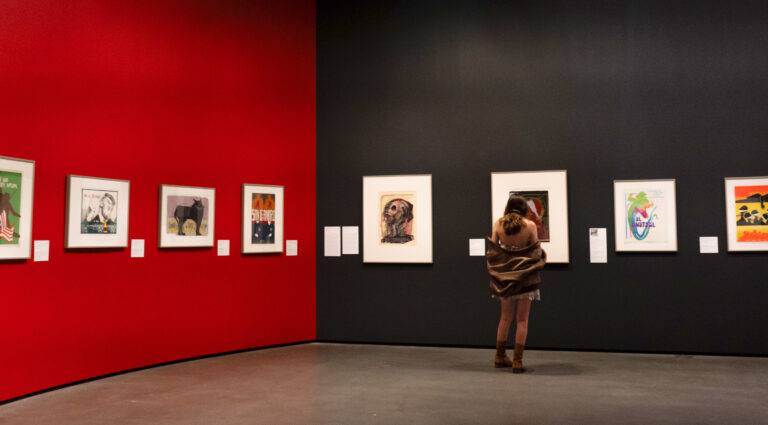
The Manetti Shrem Museum of Art is a free museum located on the UC Davis campus and a pillar of the art community in town. Its exhibitions have ranged in content from Roy De Forest’s whimsical “Habitats for Travelers” to the striking work of Mike Henderson’s “Before the Fire. Despite their differences in theme and topic, they all share a common goal — to help UC Davis students and the greater community connect, whether to the planet, to social issues or to each other. 

One such exhibit, “Malaquias Montoya and the Legacies of a Printed Resistance, has made a considerable impact on the Davis community. The display, which opened in early October 2023 and just recently came to a close in early May of this year, consisted of a collection of protest prints with topics ranging from union and labor rights to immigration and criminal justice reform. Walking through the exhibit, visitors were encouraged to spend time with each print and understand the varying causes they represented.

Among the collection were prints made by artist and UC Davis Emeritus Professor Malaquias Montoya, who played a prominent role in the creation of the exhibit itself. Montoya has an extensive background in the art community, specifically in regards to protest art. The UC Berkeley graduate has centered his work around social justice issues for decades, integrating these principles into his personal works and as his curriculum during his time as a teacher at Stanford, UC Berkeley, UC Davis and the California College of Arts and Crafts in Oakland. 

For Montoya, these prints hold a deeper meaning beyond aesthetics. In his biography, the artist noted his personal connection to the art he creates and how it serves as a form of activism and expression.

“As a Chicano artist I feel a responsibility that all my art should be a reflection of my political beliefs — an art of protest,” Montoya said. “The struggle of all people cannot be merely intellectually accepted. It must become part of our very being as artists otherwise we cannot give expression to it in our work.”

Montoya remains highly involved in art and protest in his community and is closely involved with an art space in Woodland, Taller Arte del Nuevo Amanece (TANA). The space is part of the Chicana/o studies department at UC Davis and provides both UC Davis students and Woodland community members with the resources and expertise to continue the tradition of printmaking, as well as a gallery and exhibition area to display work. 

Walter Jackson, a third-year design student at UC Davis, worked with Montoya in the summer of 2023 through an internship with the Manetti Shrem. Through this internship, Jackson was able to learn the process of printmaking first-hand at TANA and gain insight into Montoya’s rich history of printmaking.

“[Montoya] wants people to understand the deeper meaning behind what he’s printing and the art piece,” Jackson said. “He wants us to understand these issues. Though they look pretty on paper, they’re something that needs to be dealt with in the real world and we should be talking about it. He uses [art] as an expression, and I feel like that’s what we all should do. You really don’t know what kind of forms of art or projects will be implemented in the history books. He’s created something that’s a form of expression, but it’s also history.”

Historically, protest art has been integral to the success of social justice movements. The process of screen printing is unique from other forms of art in its ability to be quickly reproduced, making it ideal for use at rallies and protests where getting the word out widely and quickly is integral. 

This goal of mass production and distribution also helps to inform how the prints themselves are designed by artists before printing. For the current Manager of Visitor Experience at the Manetti Shrem Cesar Chavez, this rapid distribution is a cornerstone of the unique style.

“[The prints] were meant to be seen from 40 feet away, so it was kind of a quick thing that they could create very quickly and get out there and use, and now it is seen as art,” Chavez said. “That’s always stuck with me. When you’re trying to get the word out and you’re trying to express how you feel about a certain topic, it can be a very powerful tool to use.”

Because the prints must be identifiable and eye-catching from far distances, sharp colors and imagery are trademark features of this art medium. In contrast to the experience of seeing these prints out on the streets in a fast-moving environment, observing them in a museum setting allows patrons to take in all the details of the work and take time to understand the messages behind them. 

Sydney Makar, a third-year aerospace engineering major who recently visited the “Malaquias Montoya and the Legacies of a Printed Resistance” exhibit, took note of this unique style. 

“I saw a lot of words and colors jumping out at you,” Makar said. “The fact that so many people sat down and made entire paintings about [the causes] and put so much effort and detail really shows the emotions people feel. [This art] can allow people like myself to understand in some way how people feel about these topics.”

These prints are not just historical, either. On our own UC Davis campus, screen printing was used at a recent May Day rally for Palestine to print on dozens of shirts and posters for supporters of the cause, continuing the longstanding relationship between art and activism. Although Montoya’s exhibit has come to an end, protest prints remain an important part of social justice movements globally. 


Written by: Emme Dunning — features@theaggie.org 

‘The Tortured Poets Department’ is not what you thought it was

You know how to ball, I know too much about Taylor Swift’s new album


By MOLLY THOMPSON — mmtthompson@ucdavis.edu 


Taylor Swift may just be the most known and seen person in America right now, even in the greater Western world. She’s been incredibly central for more than a decade now, and we’ve all watched as she’s navigated her personal and public growth. Her new album “The Tortured Poets Department” is a reflective departure from some of the boundaries that defined her previous bodies of work — she’s able to be more expressive and open than ever. 

Swift has cited her storytelling as her niche in the music industry. Her albums are virtual diaries filled with notoriously autobiographical lyrics, and her vulnerability is one of the most enticing facets of her songs. She’s always been vulnerable, but she’s never been more raw than in her newest album. At every point in her career, she’s had something to protect: a relationship, a reputation, her own feelings. Now, she’s been through it all. She’s in a place where she has nothing to lose, so she doesn’t have to try and tailor her writing to “cater to all these vipers dressed in empath’s clothing.” It’s not that she’s so high and mighty that nothing can reach her — it’s that, in the past year, she’s broken out of a six-year relationship, toured the world with record-breaking shows that empirically altered society, released multiple rerecordings of her old masters, had a situationship that gone torn apart by the public, started dating another major American household name and whatever else that she hasn’t shared publicly. She doesn’t have anything that hasn’t been dissected by the media. 

The Tortured Poets Department” is built on the amalgamation of Swift’s portfolio. It’s been compared to her other albums in different ways and for different reasons (one of my personal favorite analogies is the idea that it would be the product of “Lover” and “Folklore” if they were both high), but it’s not a combination; it’s not laterally comparable. It stands apart from her other records in its maturity, it’s a learned older sister of Swift’s other records. It’s got a lot more intrinsic hindsight and retrospection — not in that it knows better, but in that it’s more jaded. 

Obviously Taylor Swift has grown up over the past five years, but listening to songs like “London Boy” and “So Long, London” back to back gives that notion an incredibly visceral meaning. “The Tortured Poets Department” looks back on all of the other albums and is comprised of what Swift learned from them and how that manifested in her life and her subsequent relationships. 

In anticipation of the new album’s release, the speculative consensus was that the tracklist would focus on Swift’s recent breakup with British actor Joe Alwyn. And while conclusions about the songs’ content are always assumptions, a greater proportion of the album seems to surround her brief relationship with “The 1975” star Matty Healy. She received a lot of flack for engaging with the controversial singer, and many people guessed that he was nothing more than a superficial fling or a rebound for her. The songs that (allegedly) came out of their relationship suggest a much deeper connection than that though —  with lyrics like, “I would’ve died for your sins / Instead, I just died inside,” and “I love you, it’s ruining my life” suggesting a deep, tormenting kind of infatuation that ended when Healy left her: “They just ghosted you / Now you know what it feels like.” 

In contrast, the songs referring to Alwyn feel more past-tense. They evoke a sense of closure; she’s put that era of her life to bed. The songs about Healy (and the few about her current boyfriend Travis Kelce) feel much more recent, like the emotions she’s currently dealing with. 

A theme that comes up in a few of the songs that reference her tryst with Healy is the role the public plays in her relationship dynamics. Of course, in any relationship that’s in the public eye, unwanted intervention from an audience is going to be a factor, but Healy is a more controversial figure than most of her previous lovers. “But Daddy I Love Him” sends a strong message that puts everyone who felt the need to comment on her choices in their place. She’s telling us all that she’s more than capable of forming her own opinions and judgements of people, and telling her to stop dating someone is unnecessary, uncalled for and inappropriate — “I’ll tell you something about my good name / It’s mine alone to disgrace.” As viewers, we can truly only see so much. We’re too far away to be able to make judgment calls that have any merit. She even calls back to the earlier point of having nothing to lose with lyrics like, “What if I roll the stone away? / They’re gonna crucify me anyway / What if the way you hold me / Is actually what’s holy?” — essentially denoting that the public is bound to find something to berate her for, so she might as well pursue someone she feels like she loves. 

One thing that I think goes overlooked are the elements of humor and irony that are woven intrinsically into the tracklist. “I’m havin’ his baby / No, I’m not, but you should see your faces” — that’s so funny. It’s easy to get caught up in her reputation as a poet and a genius lyricist and assume that everything is meant to be taken seriously, but she’s phenomenal at being self-aware and poking fun at herself, her fan base (“All the wine moms are still holdin’ out, but fuck ’em”), her peers and her partners. Even the album’s title is a little overdramatized for the sake of ironic indulgence; Alwyn once mentioned that he was in a “boys” groupchat called “The Tortured Man Club,” and if Swift is evoking a few layers of meaning with this title (as we all know she is apt to do), then it takes on a whole new level of irony. Taylor Swift is hilarious, we need to embrace it. 

The Tortured Poets Department” is catharsis. Swift said, in the lead up to its release, that it was the album she needed to write more than any other. That notion is tangible, you can hear it. She has something to say. It’s beautiful, it’s tormenting, it’s ironic, it’s raw, it’s haunting and it’s loud. It’s dense, and there’s a lot to unpack. It’s a relic that’s come out of so many layers of events and emotions and growth. 


Written by: Molly Thompson — mmtthompson@ucdavis.edu   


Take a drive down California’s Pacific Coast Highway One

A brief history and guide to some of the historical landmarks along the U.S.’s westernmost highway


By SAVANNAH BURGER — arts@theaggie.org


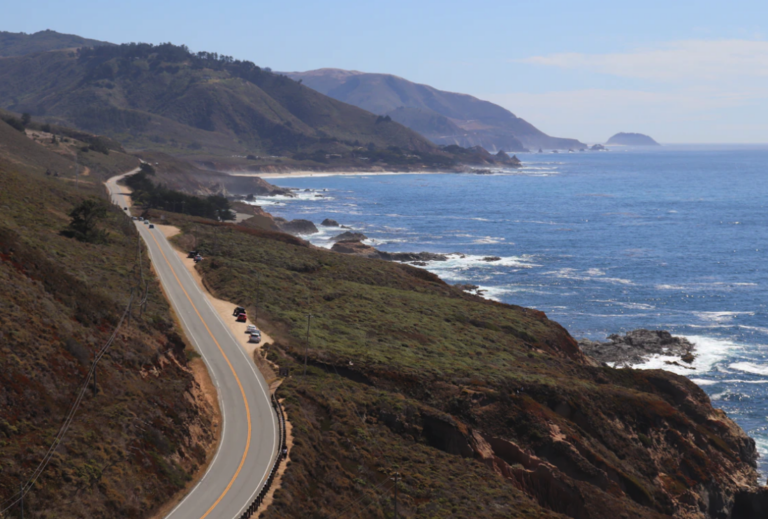
Stretching 656 miles and connecting the coastal redwoods of Northern California to the sandy beaches of Southern California, is SR 1, otherwise known as the California Pacific Coast Highway, the PCH, the Redwood Highway, the Cabrillo Highway, the Shoreline Highway, Highway One or simply just “The One.” It is the longest road in all of California and only second in length in the whole country to Montana Highway 200.

While hugging the cliffs of the coast and bordering on the edge of the Pacific Ocean, Highway One has views that can be captured by no other road. Not only this, but driving on any section of it in California almost guarantees driving past some sort of amazing or interesting historic landmark. Although, it’s important to be careful as it is known to be quite windy and only has two narrow lanes. It’s been that way ever since it’s been built.

Over a hundred years ago in the year of 1919, construction on California’s famous Pacific Coast Highway One began. The most impactful call for the making of the highway came from John L.D. Roberts, M.D. He found that it took hours to reach patients in need who were just up the coast.

As the highway was being constructed, millions of California taxpayer’s dollars funded the completion of the road. The majority of the construction was executed by the prisoners of the San Quentin Rehabilitation Center, then known as San Quentin State Prison, in return for reduced sentences and a whopping 35¢ a day. Many California locals also worked on the highway, with the most notable of them being the famous author of books such as “Of Mice and Men” and “The Grapes of Wrath,” John Steinbeck.

The highway was finally completed in 1937 after millions of cubic yards of rock were blown away with 70,000 pounds worth of dynamite sticks. Limestone was then smelted down and reused for making the concrete of the paved road. 33 bridges also came out of the construction. Although improvements to the road are always ongoing, with the greatest threat to its constitution being landslides, anyone who wants to experience once-in-a-lifetime views and memorable, historical road stops should consider taking a drive.

Highway One has so much to offer in terms of must-see excursions right along the road. Other than access to seemingly endless California beaches, marine wildlife and coastal vegetation as a part of the California Coastal National Monument, the road also boasts close access to a myriad of historical locations and landmarks.

To start off with a few locations from the southern half of the state, Highway One goes right through Huntington Beach. There, you can not only have fun in the sun, but also check out the world’s only international surfing museum, the Huntington Beach International Surfing Museum. While you’re down there, Highway One runs right next to Long Beach’s Queen Mary, the 1930s ocean liner from Scotland turned historic landmark and an allegedly haunted hotel. 

Moving north, the road carves through major California cities such as Los Angeles, Malibu and Santa Barbara. In San Luis Obispo, Highway One runs through the famous Pismo Beach. Morro Bay, just north of San Luis Obispo, is also a great stop for the Morro Strand State Beach, Morro Rock Beach and Morro Bay State Park.

San Simeon is also a good place to travel a short distance from the coast to visit the grand Hearst Castle, a historic mansion built between 1919 and 1947 that belonged to the newspaper publisher, William Randolph Hearst.

What’s a Highway One trip without going through Big Sur, enjoying the Point Sur State Historic Park, and driving over the picturesque Bixby Creek Bridge? You’ll cross it on your way to Carmel-by-the-Sea and Monterey Bay. The Monterey Bay Aquarium, one of the world’s most famous aquariums, is a must-see. The highway then runs through Santa Cruz and into the iconic Half-Moon Bay, marking its transition into redwood territory. Be sure to check out the Big Basin Redwoods State Park and Pigeon Point Light Station State Historic Park, which has the tallest lighthouse in California.

Highway One then shoots right through San Francisco, going through the Sunset District, Golden Gate Park, Richmond District and Presidio, the city’s national park. After crossing the Golden Gate Bridge, it traverses to Marin County, home of the breathtaking Golden Gate National Recreation Area and Muir Woods National Monument. Before leaving Marin, make sure to check out Point Reyes National Seashore and visit the Point Reyes Lighthouse for a chance to spy some elephant seals.

In Sonoma County, the road continues through Bodega Bay, the shooting location of Alfred Hitchcock’s infamous film, “The Birds.” The bay is also the home to UC Davis’s Bodega Marin Laboratory. Further up is the Fort Ross State Historic Park, the last Russian settlement in the United States. Just a turn off from the highway, you can walk into all of the buildings in the fort, which are made entirely of redwood.

Beyond Sonoma County, the highway traverses into Mendocino County, which boasts the unique Schooner Gulch State (Bowling Ball) and Glass Beaches. This is the last county Highway One stretches to, and it then ends by joining Highway 101. 

If you’re looking for a quality coastal road trip, Highway One is incomparable. Connecting the north and south, all California locals and visitors can head west and take a trip to the coast, breathe in the Pacific air and enjoy the windy, two-lane road that is California’s Pacific Coast Highway.


Written by: Savannah Burger — arts@theaggie.org 

California Duck Days Festival returns for another year

The Yolo Basin Foundation held its annual festival at the Yolo Bypass Wildlife Area headquarters


By HANNAH SCHRADER city@theaggie.org


The Yolo Basin Foundation celebrated local Northern California wildlife once again at its California Duck Days Festival on April 27. The festival featured a variety of activities, including wetland arts and crafts, live animals and interactive exhibits.

The California Duck Days Festival is a family-oriented event that seeks to educate children on the natural environment and wildlife in the Sacramento area. Festival goers built wooden duck boxes to create nesting opportunities, discovered invertebrate life living in wetland ponds and dissected owl pellets. Over 20 local environmental organizations were in attendance at the event.

The Yolo Basin Foundation was founded in 1990 after the Yolo Basin Working Group held a meeting that brought together local landowners and the California Department of Fish and Wildlife to discuss the proposal for the Yolo Bypass Wildlife Area. Since then, the foundation has continued bringing landowners, organizations and people together to protect thousands of acres of wetland.

Jan Smutny-Jones, the chairperson of the Yolo Basin Foundation, talked about the mission behind the Duck Days Festival.

“I feel it’s very important that children get exposed to the outdoors, to the way the world works and to how these different systems operate,” Smutny-Jones said. “And so we’re hopefully creating another generation of people who are environmentally conscious and pay attention to things […] That’s what you’ll see if you come out on Saturday: all those kids running around in our education program.”

Smutny-Jones then talked about his favorite part of the Duck Days Festival.

“I think my favorite part over the years is the enthusiasm that the children bring [to the festival],” Smutny-Jones said. “Wandering from table to table to get little stamps.”

Lindsay Weston, the vice chairperson of the Yolo Basin Foundation, talked about how the festival originally started.

“It started about 25 years ago, and it used to be over at the Veterans Memorial Center,” Weston said. “It was a three-day event, and there were a lot of field trips into the area to look at the rafters and into the wildlife area. And over time, it’s morphed — especially with COVID, the huge changes brought by COVID — that now it is really oriented to families and [is] a […] day-long event where there are all these hands-on activities.”

Weston then spoke about what she was most looking forward to at the festival this year.

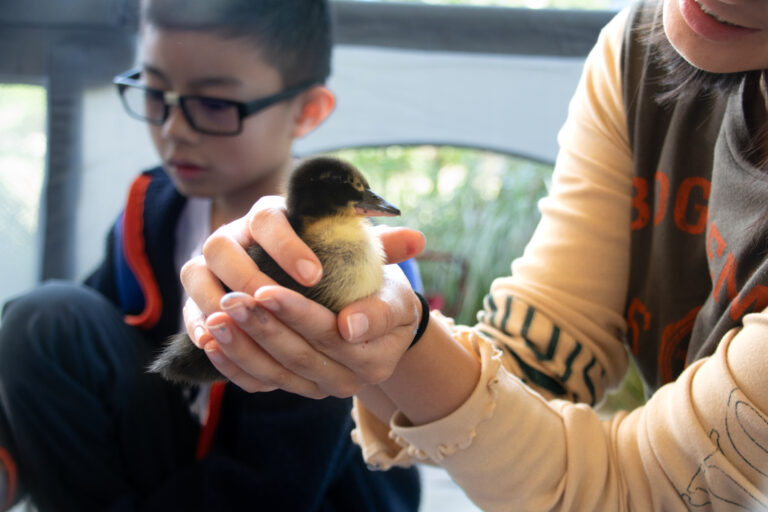
  “It’s really fun to see the enthusiasm and the awe that is generated when children get to hold baby ducklings or when they get to paint the duck decoys or when the kids look at the bats close up,” Weston said. “Obviously, you can’t handle bats, but we have an amazing bat program, and everybody is fascinated by bats. So I love seeing all the families that come in that are really enthused to learn about all these opportunities that are local and learn about the wildlife area.”

Written by: Hannah Schrader — city@theaggie.org