53.7 F
Davis

Davis, California

Saturday, December 20, 2025
Home Blog Page 90

Art is not an equation

The quest for meaning is counterintuitive to art’s true purpose


By JOAQUIN WATERS — jwat@ucdavis.edu


My favorite book I read for my high school English classes was “The Great Gatsby.” I know, I know, basic as heck, right? But hear me out. Most analyses of the book focus on the titular Gatsby, and the ways in which his rise and fall serve as an analogy for the illusory nature of the American Dream. But reading it myself, I was more interested in the POV character Nick, and the ways in which his interactions with the narrative say something about human connection — and the lack thereof — in circles of wealth. There’s a lot to unpack about that character: from how and why he allows his life to become the stage for someone else’s drama to moments of (in my reading, quite obvious) homoeroticism. 

So, I was disappointed when, despite my promptings, absolutely none of that was discussed in class. Instead, we simply parroted the same old interpretations about America and the pursuit of a goal. Then we proceeded to jot them all down in our composition notebooks and restated them in the quiz that Friday, and that was the end of it. This is not to downplay these conventional interpretations of the novel; they are widely discussed for a reason. But I believe this unwillingness to engage in less-discussed interpretations is a symptom of a wider “to the test” way of teaching art. 

We all know the drill — we’ve been through it a thousand times in a thousand different classes: find the meaning. Write it down. Repeat it on the test. Never think of it again. As if art is an equation, with a single variable to be accounted for that will shed light on everything once we uncover it. I half expect to see this on the whiteboards of half of all art classes: “Politics – Spirituality + x = ‘The Great Gatsby.’ Solve for x, and if your answer is anything but ‘The American Dream,’ you will fail this class.” 

As an English major, perhaps it does not behoove me to be saying this. After all, overanalyzing things is kind of our whole deal. But I can’t help but notice a pattern in literature classes (not all, but some) that ascribes, even subconsciously, “right” and “wrong” meanings to all pieces of writing. On some level I understand this; authorial intent is always important to keep in mind. But treating a book or a painting or a film as something to unlock rather than experience makes art so dull. It sucks all of the playfulness out of art, all of the irreverence that is so crucial to making it. Uncovering the One True Meaning of a text tells students, “Okay, that’s it. We solved it. Now put it back on the shelf, and let’s move on to the next thing.” Art is not mechanical like this — it is vitally alive, and like any living thing, it has so many depths and facets that it does not readily show.

Art is, by its very nature, purposeless. It’s not an equation, it’s not a recipe, it’s a great big mirror through which human beings project their own purpose. A work of art has meaning not in itself, but in what is reflected back in the eyes of the viewer. Some people look at the Mona Lisa and see nothing more than an unflattering portrait. Other people watch a Bugs Bunny cartoon and come away with a thesis about cultural appropriation and homoeroticism in modern America. We should not chastise people for seeing these things; we should not reject them as the “wrong” ways to look at these pieces. We should encourage them, add them to the great big pile of interpretations. Curiosity is crucial not just to art but to academia. Yet too often its early stages are defined by a gatekeeping kind of incuriosity to a fundamentally curious medium. 

In no way do I mean to suggest this is rampantly true of every art class I have ever taken. I have had plenty of professors who encourage creativity and do the exact opposite of what I have discussed here. But that just makes the negative examples stand out more. Every time I come across a joyless, mathematical approach to a joyous, messy medium, it just makes me sad. There is no One True Meaning. There are as many ways to read “The Great Gatsby” as there are people on this Earth, and that is what makes it a classic. Only bad books can be so simply reduced. 


Written by: Joaquin Waters — jwat@ucdavis.edu 

Disclaimer: The views and opinions expressed by individual columnists belong to the columnists alone and do not necessarily indicate the views and opinions held by The California Aggie.


A love letter

To the man listening to music without headphones


By AUDREY ZHANG — aurzhang@ucdavis.edu


I fell for you at first sound. The moment I saw you, ears bared, open to listening to all the world, especially to your music speaker; I could think of no other. Not even the man taking phone calls in the quiet section of the library made my face flush so red or my heart beat so fast. Tell me why it ain’t nothing but a heartache. Tell me why it ain’t nothing but a mistake. Tell me why I know the lyrics to so many songs I never willingly listened to. It’s because of you. You changed my life. I wanted it that way.

You are so considerate when you play music because now we won’t have to listen to ourselves think. I long to squeeze your neck, ahem, I mean, I long to hold your hand. Yes, your hands, your frail, delicate hands suited only to be loved and not for labor, not even to plug in your headphone jack or turn on Bluetooth. It is beneath you. No one else is so brave, to weather the storm of side glances and wrinkled noses. No one else is so intelligent, to realize that silence is a shackle and we must stick it to the Man.

My love, if your heart beats the same for me, please meet me in the Mondavi parking structure where turkeys warble and garage bands play dulcet drums almost as loud as your music. A man will be waiting for you. He will ask you to get into the car with tinted windows for a very good and romantic reason. Do not delay sweetheart!


Written by: Audrey Zhang — aurzhang@ucdavis.edu  


Disclaimer: (This article is humor and/or satire, and its content is purely fictional. The story and the names of “sources” are fictionalized.)

Aggies tee off in La Quinta to finish regular season

UC Davis men’s golf finishes fifth place in the Men’s Big West Golf Championship


By DIEGO CERNA — sports@theaggie.org


The UC Davis men’s golf team concluded their regular season by competing in the Big West Men’s Golf Championship in La Quinta, California. The tournament was held at the La Quinta Country Club Course over the span of three days from April 28 to 30. 

UC Davis won fifth place out of nine teams for the tournament, with the team also ending every round in fifth.
Lucas Carper, a fourth-year mechanical engineering major, placed in the top 10 for individual performances during the tournament. Carper placed seventh individually overall and ended with a score of 71-73-73 for all three rounds. With this championship being his last competition, Carper finished strong. 

Carper ended his collegiate career with a decorated resume, obtaining one All Big West First Team award, one All Big West Conference First Team award, one Big West Conference Individual Champion award and one Big West Conference Second Team award. 

Treed Huang and Leo Metzger, first-year undeclared majors, were right behind Carper in rankings for the Aggies. Huang played as the second-best Aggie in the tournament, tying for 18th place among the competition’s golfers. Huang also came in third for carding the most par 3’s throughout the tournament, tying five other golfers for scoring even par. 

Metzger finished third for the Aggies, tying for 24th place overall. Metzger impressively carded an eagle in the first round at the longest hole — which was 543 feet and had a par of 5. This freshman duo has continued to impress throughout the season and showcased their impressive talent on the grass over the weekend. 

To round off the lineup, fifth-year Mark Stephens and fourth-year Alejandro Nava had a very strong performance as well. Stephens tied for 30th place, while Nava tied for 34th place overall. Like Carper, this may be both Stephens’ and Nava’s last time touching the green in their collegiate careers. 

The most impressive outing for the Aggies throughout the championship was the second round, as the team improved by a total of 10 shots from the first round. 

Nava, Huang and Carper placed in the top 12 for most individual pars across all tournament players. Nava carded 35 pars out of the total 54 holes, while Huang and Carper carded 34 pars each. Stephens and Metzer didn’t finish far behind, as both carded 32 pars. 

At the end of the tournament, the Long Beach State Sharks claimed their fifth Big West Championship in their school’s history, earning the team the title of back-to-back champions from their previous championship in 2023. 

The Sharks were led by fourth-year Clay Sleeber, who finished second individually overall. Sleeber finished behind Cal State Fullerton’s fourth-year Teegan Andrew, who was crowned the Individual Big West Tournament Champion with his 14 strokes below par performance. 

Long Beach State’s victory helped them automatically qualify for the NCAA Men’s Golf Regional Rounds which will be held at the University of North Carolina’s Finley Golf Course from May 13 to 15. They set their sights on having a chance to compete in the NCAA Division 1 Men’s Golf National Championships held in Carlsbad, California, which is set to take place from May 24 to 29. 

As for the Aggies, they will say goodbye to some of their fourth-year players and show gratitude for their many contributions. The rest of the team is looking forward to their next season in hopes of redeeming this year’s loss and winning the championship next year. 


Written by: Diego Cerna — sports@theaggie.org 

ASUCD Senate unanimously passes resolution to condemn encampment attack at UCLA

It was also announced that Senator Leah Jung resigned from her position, effective immediately


By VINCE BASADA — campus@theaggie.org 


Senator Trinity Chow called the May 2 Senate meeting to order at 6:19 p.m. After roll call, she read the UC Davis Land Acknowledgement.

The Senate then heard a series of unit quarterly reports. The Pantry Unit Director Sergio Bocardo-Aguilar, a fourth-year political science major, began and spoke of The Pantry’s recent move, as well as the start of in-house data science collection and analysis.

Following Boardo-Aguilar was Student Health and Wellness Committee Chair Julia Miller, a third-year human development major. The committee only recently became an ASUCD unit, and Miller detailed continued efforts to distribute safe-sex products on campus and a survey on substance use to help the committee better understand how to serve the needs of the student population.

Miller closed by critiquing the Senate and asked them to attend the meetings of their adopted units.

“[It] is your job to overlook the legislative branch,” Miller said. “Please do that.”

Next was the report from the Sexual Assault Awareness and Advocacy Committee (SAAAC) Chair Rashita Chauhan, a fourth-year neurobiology, physiology and behavior major. Among other developments, she spoke of SAAAC’s plans to table at Lawntopia and an upcoming event in collaboration with the EDM club. 

Chauhan, after thanking the Senate for increasing SAAAC’s prospective budget for the next academic year, expressed her belief that ASUCD committee members were not being paid for as many hours as they deserved, nor given enough respect.

“[Committees] are strongly underappreciated in this association,” Chauhan said. “Committees are consistent. It’s just different from being a senator.”

Building off of Miller’s points on adopted senators, she expressed her own frustrations with the Senate. She acknowledged that Senator Jacob Klein had made an effort to attend all events but noted that senators often failed to check in with their committee chairs or stay up to date with their events and activities. 

The last quarterly report was from the Student Advocate Office (SAO), delivered by current Student Advocate Travis Haskin, a fourth-year Native American studies and political science double major. He raised concerns over a rise in Office of Student Support and Judicial Affairs (OSSJA) cases involving AI, which have resulted in the SAO hiring more staff to compensate.

“[The rise in AI cases is] an alarming indicator for what is happening within the student community,” Haskin said. 

Haskin said that the SAO is hoping to work directly with professors and academic departments to ensure students, who he says are often violating the rules when they use translation engines or grammar checkers, are fully aware of what constitutes academic dishonesty in regards to using AI-supported platforms.

Afterwards, Controller Allyson Francisco announced details on the upcoming budget hearings and owned up to a pair of errors in the prospective budget, which she promised would be rectified. The Senate then took a 30-minute recess.

After the break, the Senate quickly confirmed an External Affairs Commission (EAC) member not in attendance before moving forward two emergency pieces of legislation, SB #88 and SR #8, for consideration. 

SB #86, authorized by ASUCD Historian Kayla Lunde, a third-year environmental policy, analysis and planning major and yearbook managing editor, would establish the managing editor position as a non-voting member of the Internal Affairs Commission.

Lunde joined via Zoom to give insight into the bill, explaining that the legislation would help distinguish her two roles and help to institutionalize the yearbook, which was only revived last year. The bill passed 8-3-2, Yes-No-Abstain.

Next, the Senate discussed emergency resolution SR #8 to “uphold the principles of free speech and expression, and condemn the delayed and insufficient response from campus administration and local law enforcement to protect students from violence on the evening of April 30, 2024 and morning of May 1, 2024 at the University of California, Los Angeles.”

The resolution, co-authored by Senators Jonathan Ng and Binh Do, directly addresses the attack of a pro-Palestianian encampment by pro-Israel counter-protesters who deployed fireworks and caused several injuries, according to reporting from The Daily Bruin.

The Senate spent over an hour looking through the resolution and editing it line by line, with Ng and Do’s acknowledgment that the bill was written quickly and pushed forward in order to address the attacks in a timely fashion.

One proposed amendment clause discussed the attack of a Jewish student which occurred before the encampment attack that evening. Numerous senators expressed concerns that its inclusion and placement at the start of the resolution aligned with a narrative of victim blaming and justification for that night’s encampment.

“I’m very hesitant to add language to this bill that could even imply some justification for this [attack] happening,” Senator Yara Kaadan said. “It was very much racialized”

“When you have two very polarizing movements and things get violent, we have to be very, very particular about how we’re going to phrase this,” Senator Nur Ambaw said. “I’m just not very comfortable with the way it is being phrased right now.”

Senator Klein, who was vocal in either adapting or relocating the clause rather than deleting it altogether, said that the clause was not added with any malice and that it helped establish a chronology of the events.

The amendment was eventually voted on after senators acknowledged that everyone had decided how to vote and was removed.

After looking over final edits and resolving some issues over the sourcing of several pieces of information within the resolution, it was passed unanimously.

During open comment, Senator Chow announced that Senator Leah Jung, who was not present at the meeting, had previously handed in her resignation, effective immediately. Chow expressed the desire that those wishing to resign in the future would give greater notice.

Senator Chow adjourned the meeting at 11:06 p.m.

Written by: Vince Basada — campus@theaggie.org

Drake versus Kendrick Lamar: did Drake really outdo Kendrick with ‘Push Ups’?

This war of words has the two rappers releasing new music at a rapid pace 


By SOFIA BOZZO — arts@theaggie.org


If you are a fan of rap — or just music in general — it’s quite possible you have heard something about the recent commotion surrounding Drake and Kendrick Lamar. If not, this article serves to guide you through the complex turbulence that looms over the two superstars. 

Lamar was born and raised in Compton, California, rising to fame as a young artist during the early 2010s. He gained major traction within the rap community in 2011 when he was featured on Drake’s “Take Care” album. From that point, Lamar was regularly found drifting around the top of the Billboard music charts. 

About a year before, a young actor-turned-rapper from Canada hit the top of the charts with his 2009 single, “Best I Ever Had.” Drake has become one of the most iconic rappers of the 21st century, producing countless hits and winning five Grammys along the way.

The two rappers share the title of members of the “Big Three,” a term used in the music community to describe the three best rappers of our time: Lamar, Drake and J. Cole. 

“A decade ago, three rappers emerged at the top of their class,” Complex Magazine said. “Today, they’re each still on top of the game, and they’ve done it on their own terms. It’s why they’re referred to by many as the ‘Big 3’ of their class.” 

Despite sharing a role at the top, the title of “Big Three” may be the only thing they have in common. What began as a seemingly productive artistic relationship in 2010 has since become a major rivalry with one another, coming to a head on March 24, 2024 when Metro Boomin and Future dropped their new album, “We Don’t Trust You.” 

The album’s biggest hit, “Like That,” features Lamar and has gained a striking 213 million listens and climbing on Spotify. The beat is ultra-dynamic, and the verse is extremely catchy — yet the song’s striking popularity is only rendered fully understandable about halfway through the song when Lamar begins his feature. The feature is wrought with disses almost exclusively targeted at Drake. Lamar attacks Drake, stating “Motherfuck the big three […] it’s just big me.” 

Two weeks later, as expected, Drake released “Push Ups,” a single with cover art of Lamar’s notoriously small shoe size on the front. If that wasn’t explicit enough, Drake goes on to attack every ounce of Lamar’s career.

“You ain’t in no big three, SZA got you wiped down, Travis got you wiped down, Savage got you wiped down,” the lyrics read. 

The beat is generic and re-used, while the verse feels like a half-baked response for the sake of the traditional clap-back. Additionally, Drake released a song called “Taylor Made Freestyle” directly before “Push Ups,” featuring the voices of West Coast legends Snoop Dogg and Tupac using artificial intelligence (AI), dissing Lamar as having disrespected the West Coast rap scene. 

The use of AI in music faces a major ethical dilemma. Music is about self-expression and one’s own voice. By inserting the presumed notions of other rappers into Drake’s own conflict with Lamar, Drake cedes his artistic voice. Was the use of AI in Drake’s response a clever way to diss Lamar, or did it make him look weak and unoriginal? 

In navigating the obvious question of who “won” this intense hostility between the superstars, the quality over mere reaction was enough to light up the top charts. While Drake responded extremely quickly, and with some clever jabs at Lamar, ultimately the latter allows the purpose of music to remain intact. 

Let’s face it — Drake may have clapped back in a form only he is capable of, however, his dull verse and lackluster beat, coupled with his ethically shaky use of AI was at best mediocre. If you haven’t already, go listen to both tracks, and make up your own mind about the emerging beef between the two iconic, and dramatic, rap artists. 


Written by: Sofia Bozzo — arts@theaggie.org 


UC Davis’ Student Firefighter program discusses upcoming pancake breakfast

The SFF program grants students hands-on experience as emergency responders


By ZOEY MORTAZAVI — features@theaggie.org


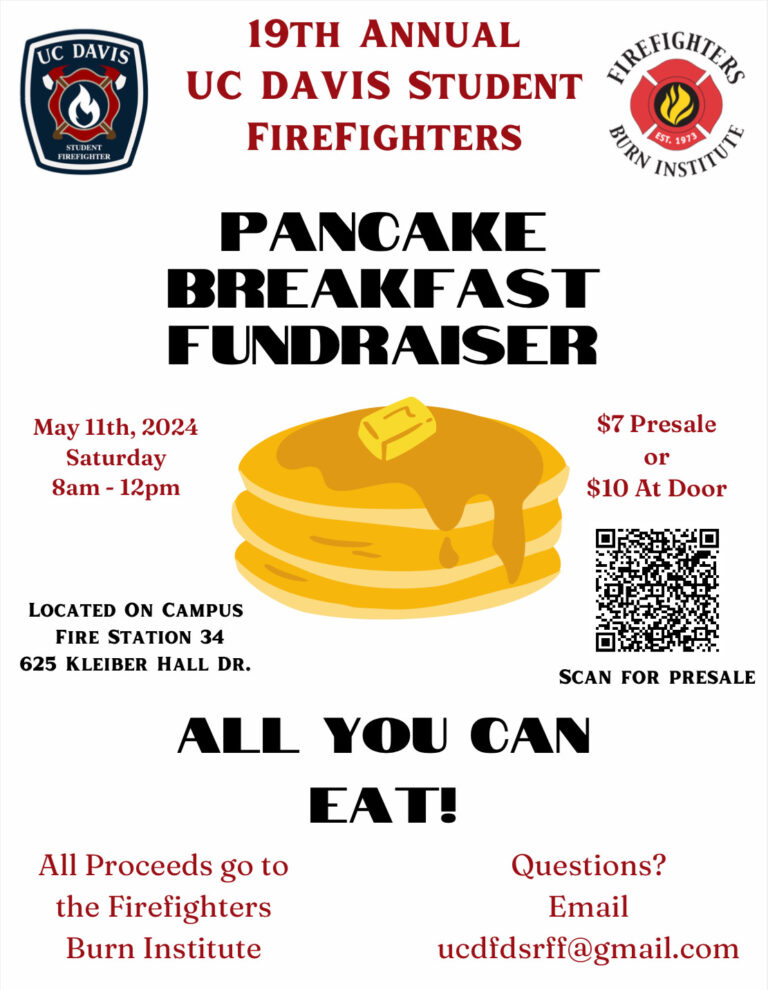
On May 11, the UC Davis Student Firefighter program is set to host its annual pancake breakfast event from 8 a.m. to 12 p.m. The event is a way for students, families and community members to gather and donate to the Firefighters Burn Institute, as well as celebrate the program. 

The event provides an all-you-can-eat breakfast for $7; all ingredients, food items and coffee are locally sourced from the UC Davis dining commons and companies such as Temple Coffee Roasters, Safeway and Volt Coffee. 

Yael Schwarz, a fourth-year sustainable environmental design major and senior student firefighter, explained the pancake breakfast’s tradition and fundraising purpose.

“This will be our 19th annual pancake breakfast event,” Schwarz said. “[It] is run, start-to-finish by student resident firefighters that are currently enrolled in the program. Every dollar that is sent to us for tickets goes directly to the Firefighters Burn Institute in Sacramento. [The Institute] helps burn victims and their families, and ensures that they have the resources they need following traumatic burn injuries. They’re entirely nonprofit and a very cool organization that we’ve been working with for the last 19 years.”  

The UC Davis Fire Department, Station 34, was first established in 1917. Originally acting as the UC Berkeley-affiliated farm school, UC Davis created its fire station in response to several fires that were damaging critical infrastructure as the school began to gain popularity. Established in 1949, the Student Firefighter Program (SFF) helped with the transition from students volunteering in the field to careers in firefighting by working as actual emergency responders. 

UC Davis student firefighters have the opportunity to train together, live together and work together at Station 34. Connor Flynn, a fifth-year English major and senior student firefighter, expressed that beyond being able to gain valuable skills from the training, he found some of his closest friendships through the program. 

“A really big thing for me, aside from the obvious appeal of the certifications and training that the program provides, is that I essentially get to live every single day with my best friends [above] the station,” Flynn said. “Everyone is super driven; I’ve been put into a community that cultivates a really wonderful environment. Everyone is really motivated and supportive — plus, we’re all great friends. We’re always having dinners together and hanging out when we’re not working.” 

Students who partake in the program must complete a six-week intensive training academy during the summer. To secure a spot in the program, students must pass a series of tests that take place at the end of the academy. The department also pays for students to receive their EMT license during the spring quarter, which is a prerequisite for the summer academy.

After completing this, students must participate in the following each month in order to receive housing at the station: one 24-hour shift, four 14-hour shifts and two training sessions. Students are financially compensated for all additional work that they complete after these mandatory monthly shifts. 

Matilda Hallowell, a third-year human development major and student firefighter, explained what she has gained from working at the station.

“The program provides the opportunity for students to actually prepare themselves for job experience, unlike a lot of on-campus clubs and organizations,” Hallowell said. “Many other on-campus opportunities give students the chance to be an employee, but many don’t provide direct hands-on experience in the field you’re interested in. Being able to actually respond to 911 calls and being able to actually work on an engine is a really unique part of the program.” 

Now, over a century since the station’s inception, the program remains intact as a way for interested students to gain hands-on experience fighting fires. Career firefighters are also hired to act as mentors to the students, a tradition that began in 1955. Six to seven career firefighters are always on call at the station and are prepared to help students with any necessary tasks. 

Firefighter Gerrit Dykzeul, one of the career firefighters at Station 34, commented on the station’s tight-knit community and the important life skills learned through the program.

“It’s not just about the fire service; it’s building these leadership skills, setting good foundations and preparing us for the world beyond, whether you choose to work in the fire service or not,” Dykzeul said. “It’s also huge to have such a good sense of community and culture that we grant here. It’s very rewarding for me now in a supervisor role; I get to see where these students go, hear good things about them from other departments and see the impact that they make on other students in the community.” 

Whether or not you’re interested in becoming a part of the SFF program, consider going out to support them on May 11 at their pancake breakfast event. It encourages community involvement, helps a charitable cause and is a surefire way to get a “taste” of the student firefighter program.


Written by: Zoey Mortazavi — features@theaggie.org

City of Davis welcomes South Korean official sister city

Leadership with Sangju, South Korea meets at the city hall meeting


By ALMA CULVERWELL city@theaggie.org 


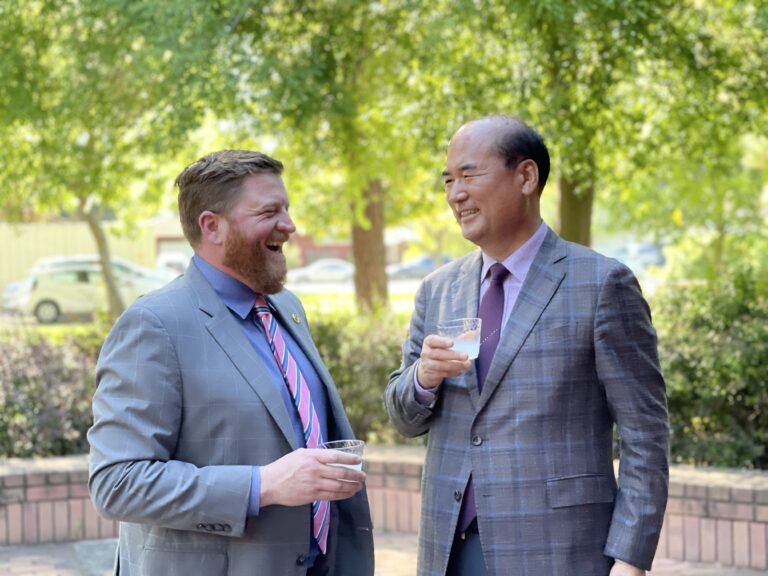
On April 19, the city of Davis welcomed Sangju, South Korea, its official sister city, at the city hall with Mayor Josh Chapman alongside Sangju Mayor Kang and Council Chairwoman Ahn. Sangju has been a sister city to Davis since 2004, but the Sangju delegation met for the first time in Davis with city leaders at city hall.

The city of Davis has several sister cities that usually share common environmental goals or other similar interests. A few other of these sister cities include: Inuyama, Japan; Uman, Ukraine; Qufu, China and more. 

“Today, the City of Davis welcomed our sister city Sangju, Korea to our community,” the city shared on Instagram. “Last year, Sangju invited a small delegation of Davis staff and council, including Mayor Josh Chapman, to Korea.”

Establishing the relationship between these two cities allows for learning from both parties, helping them gain insight on economic development, culture, education and diplomacy.

“These partnerships create opportunities for each sister city to learn in areas such as economic development, education and culture while promoting understanding, diplomacy and friendship,” the city shared in the post.

Sangju is an agricultural community located along the northwestern border of South Korea with a population of around 120,000. They are best known for their production of rice, silkworms, cocoons and dried persimmons, nicknamed “Sam Baek,” or “The Three White Things” for the popularity of these goods. 

It was originally one of the Nine Provinces during the Unified Shilla Dynasty and one of the eight provinces during the Goryeo Dynasty, according to Sangju’s city website. Soon following, it went on to become a grander city more comparable to a capital. 

The community shares several similarities with the city of Davis, including its bike friendliness, agricultural success and being home to a local university, the Sangju National University. 

“Sangju was doing research on communities with similar interests to theirs, a university, agricultural land and appreciation for biking and Davis came up with their findings,” Carrie Dyer, city community relations program manager, said. “They reached out and our friendship began.”

Sangju’s executive and legislative branches are led by officials elected by popular vote with elections held every four years.

Becoming an official sister city with Sangju has allowed both parties to gain valuable knowledge and cultural experiences. Dyer explained some past examples of how the city’s cooperation has benefitted them. 

“For a number of years now, Sangju has sent one of their employees to spend a year in Davis,” Dyer said. “They spend their time learning about our community, our school system, our government and our culture. It is an opportunity for exchange in learning. We spend time weekly learning about Sangju and in exchange they experience all that life has to offer in Davis. Every couple of years the city of Davis has a delegation visit Sangju. These delegations typically include a member of Council, a school board trustee and community members. It is an opportunity to continue to grow our sister city relationship and to learn more about Sangju and their culture. The Davis High School Culture Club also does a student exchange program with Sangju.“

Most recently, the Sangju delegation participated in the annual Picnic Day parade. Sangju Mayor Kang and Council Chairwoman Ahn rode alongside the Davis City Council in the parade on the antique firetrucks and enjoyed being part of the festivities. 

Dyer expressed that the city of Davis looks forward to many years of heightened friendship and cultural exchange with Sanju, South Korea.


Written by: Alma Culverwell — city@theaggie.org 

Aggies come out on top in series finale win against UC Santa Barbara

UC Davis softball avoids a loss in an 8-2 victory


By EMMÍA J RIVERA — sports@theaggie.org


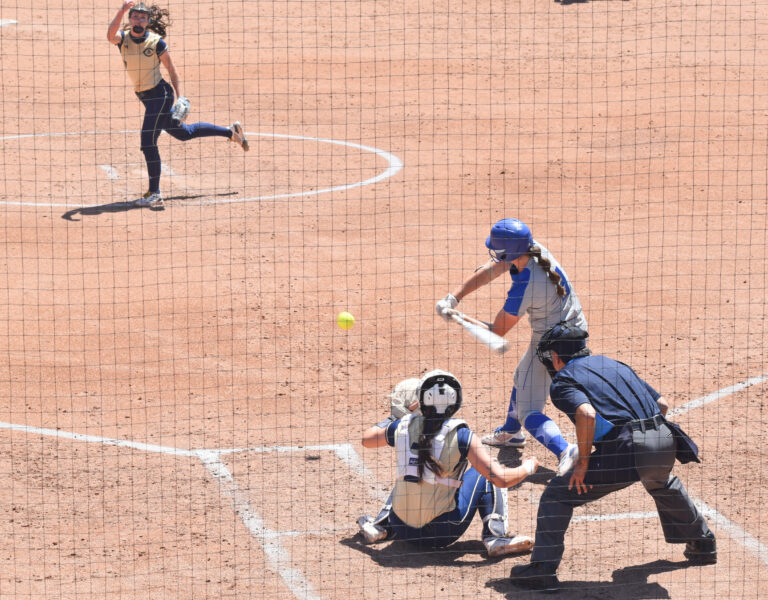
To conclude a three-game series at La Rue Field, the UC Davis softball team beat the UC Santa Barbara Gauchos, preventing another loss for the Aggies on April 27. Following two losses the day before, the Aggies arrived ready for a come-back as they took the lead in the first inning and never looked back. 

Wasting no time, Sarah Starks, a fifth-year communications major, delivered an early two-run homerun to initiate the permanent UC Davis lead. She displayed an impressive performance leading the Aggie offense and going 2-for-3 in the box with two home runs and three RBI. Behind her, Leah Polson, a fifth-year neurobiology, physiology and behavior major, went 1-for-1 (reaching a base on every hit), reaching a base three times on walks and scoring a run for the Aggies. Libbie McMahan, a fourth-year human development major, held onto the lead with a two-run base hit. Bella Holtz, a third-year math analytics major, hit a single to help the Aggies score a run, followed by another hit from Tatum Wentworth, a fourth-year human development major. The score ended 8-2 as UC Davis cruised to their first victory from this set.

UC Santa Barbara scored only two runs throughout the game, led by Alana Snow, a fourth-year who went 3-for-3 in hits, and Madelyn McNally, a fourth-year who went 2-for-3 in hits and a walk for the Gauchos. Defensively, Santa Barbara gave up nine walks, arguably the game’s ultimate difference as both teams gathered the same number of total hits.

Sarah Reineman, a fourth-year neurobiology, physiology and behavior major, was on the home mound for four innings, earning her third win of the season. She gathered three strikeouts and allowed just one run and no walks throughout the game.

Kenedi Brown, a fifth-year human development major and hurler, also made an appearance in the fifth inning to relieve Reineman of pitching. She threw three innings and gave up only one run, issuing three strikeouts and collecting her fifth save of the season. Joining a group of previous UC Davis athletes, Brown is set to tie the program’s record for total innings pitched, only a third of an inning away.

With the end of the season drawing near, the Aggies are gearing up to face Cal Poly in another three-game series in the first week of May. They are determined to improve their record before the regular season finale against the University of Hawaii, a game that could potentially be a turning point for the team.


Written by: Emmía J Rivera — sports@theaggie.org 

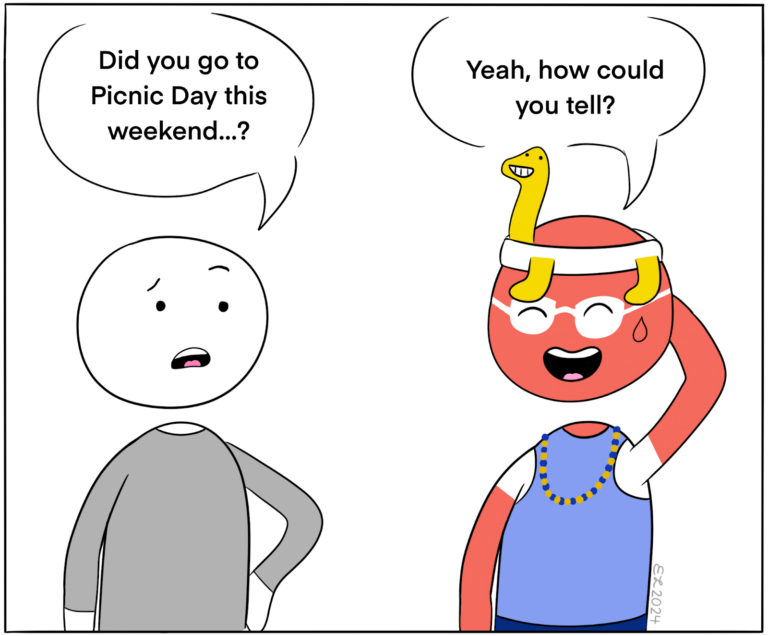
Still sunburned

Drawn by: Emma Lapidus –– eblapidus@ucdavis.edu 

Disclaimer: (This cartoon is humor and/or satire, and its content is purely fictional. The story and names of “sources” are fictionalized.)

UC Davis’ Breaking Barriers helps elders feel part of the local community

Club officers share stories about teaching technology to seniors and learning from them in the process


By SABRINA FIGUEROA — features@theaggie.org 


When we think about elders, chances are we think their wisdom is endless. As a younger generation, we will never live through their life experiences, but this is true in reverse too — they can learn from us as much as we can learn from them.

Technology, for example, is something that the younger generation has either grown up with or adapted to, but some elders have not. With instances like these, both young and older generations can learn from each other. 

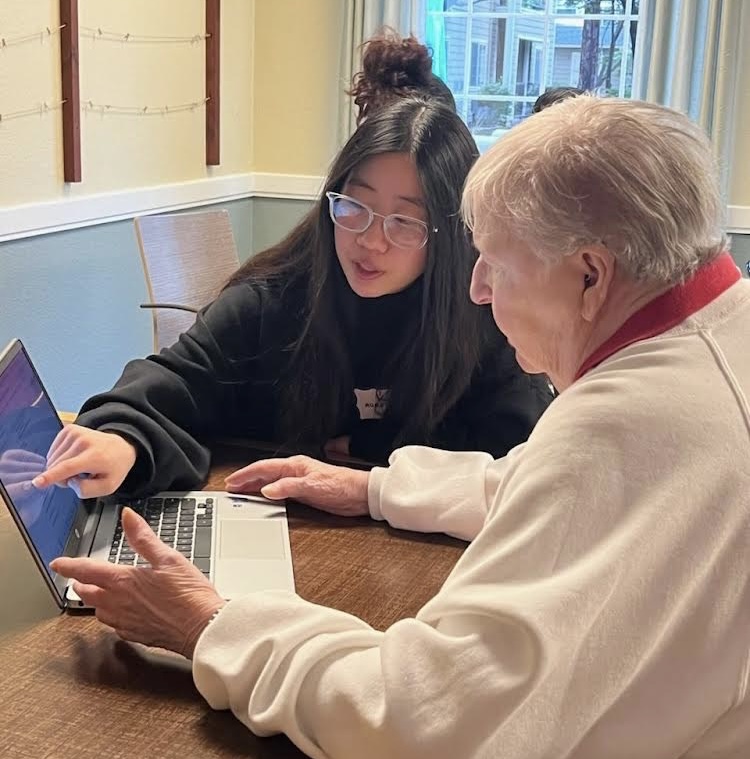
Breaking Barriers, a student organization at UC Davis established in 2020, aims to help bridge the technology gap between young and older adults while also establishing friendships and reducing loneliness for elders in the local community. 

“Our mission is to make sure we can get their questions answered about […] how to use their devices or doing new things,” Avantika Gokulnatha, the president of Breaking Barriers and third-year genetics and genomics major, said. “We want to make sure these older adults feel remembered, a part of the community and not so left behind by society.” 

The organization got their start during the COVID-19 shutdowns and shared exactly how it directly influenced their mission and goal of helping the elderly. 

“During the pandemic, all interpersonal connections became online through technology, and that excluded a lot of older adults who aren’t as technology savvy,” Gokulnatha said. “A lot of the older adults who didn’t really keep up with using phones or FaceTime got left behind during this time.” 

Gokulnatha also explained that the club was established during the lockdowns because they were finally able to grasp how large the technology gap was in our society. 

“Us as young people may not see [the isolation of elders], because we’re in school and we don’t really interact with people of other ages,” Gokulnatha said. “We don’t really understand how if we didn’t grow up with watching TV or using our phones, it would be really hard to get oriented to this rapidly changing world.”

Although the pandemic lockdowns gave them clarity and a new cause to advocate for, it also brought on challenges.

Katherine Ama, the internal vice president of Breaking Barriers and fourth-year neurobiology, physiology and behavior major, said that they weren’t initially allowed to volunteer at senior facilities in the Davis area. 

“Because elders are highly at risk of contracting COVID-19, the senior facilities’ lockdowns in Davis didn’t allow anyone from outside the facility to enter,” Ama said. 

However, now the organization is able to visit Davis nursing and senior facilities such as Atria Covell Gardens and Carlton Senior Living. They visit and provide similar services in the Sacramento area as well.

In addition to visiting, Breaking Barriers also employs different ways to connect with the elders. This includes volunteers being matched up with senior participants as pen pals, as well as technology tutoring and workshops where volunteers teach seniors new skills that will be useful to them for connecting with others online and for the workforce.

“When we do one-on-one tutoring, it’s usually older adults who are trying to learn technology skills that will help them out in the workforce,” Gokulnatha said. “So, like, learning Excel, PowerPoint or things like that. Anything that’s more specifically geared toward the workforce because these are the new skills that you need to know.”

Michelle Chan, the external vice president of Breaking Barriers and second-year neurobiology, physiology and behavior major, shared that since not every facility visit is structured around teaching technology, sometimes it’s more about connecting in real time. 

“For visits where we go to nursing homes, a lot of times those older adults are diagnosed with conditions,” Chan said. “So, their main goal isn’t really to learn about technology. Our volunteers focus on accompanying them, talking to them and bridging that social connection. The point is to get them talking to college students. A lot of them are interested in what we’re doing as well, because it reminds them of themselves when they were younger.” 

Volunteering for an organization that aims to connect generations creates a rewarding experience and reminds you that it’s all worth it, according to club members. Gokulnatha discussed her grateful connection to one of their senior participants, Jack — a big supporter of the Breaking Barriers club. 

“He’s a Black man, and he grew up in Texas,” Gokulnatha said. “He grew up during the entire segregation and desegregation events, became the first in his family to attend college, and he tells wonderful stories about himself. I think one of the most valuable things, for me, in understanding generational culture is how we can learn from people who lived in different time periods.”

The members also shared a story about a 93-year-old woman at one of the facilities they visited who went skydiving on her 90th birthday. 

“They are just such amazing people with such rich lives,” Gokulnatha said. “Once you have one person who wants to talk to you and cares about what you have to say, it really means the world to them, because they feel so forgotten.”

Ama also shared a memorable experience about the time she connected with a senior who was a writer — a playwright named Rick Foster — then later taught him how to write an email to help him practice his writing and contact his friends. 

“He would always start a sentence and then forget how to end it,” Ama said. “I could tell that he was really struggling, and he would say, ‘You probably think I’m so stupid,’ and it was really sad to hear him undervalue himself, because I learned later in the session that he had a masters in writing and a bachelors in math. I thought, ‘How could he say self-deprecating things like that? He was probably more articulate than me at my age!’”

Sometimes meaningful experiences occur during hard times — that was the case for Chan after her grandmother died, and she found comfort in a strong connection with an elderly woman named Millie. 

“Each of these individuals has such a full life that makes them who they are,” Chan said. “It’s so rare that we get to meet people that have so much wisdom and life experiences that [they] can share it with us. Talking to her made me see life in a different way. Channeling my energy into helping her and teaching her how to use technology also really helped me get over the sadness that I felt from losing my grandmother.”

Breaking Barriers is always looking for new members, no matter the quarter or time of year. If you’re interested in joining, they can be contacted through their Instagram, @breakingbarriersdavis, or email, breakingbarriersdavis@gmail.com. If their message resonates with you, that is all you need to be qualified.  


Written by: Sabrina Figueroa — features@theaggie.org

Gary May should ditch the alumni sponsors and hop on TikTok Live

I have a lot of great fundraising ideas


By ALLISON KELEHER — adkeleher@ucdavis.edu 


My tuition goes up every year, and yet this school is still supposedly short on money. Remember when Sunset Fest got canceled due to lack of funds? It’s time to act, Aggies. If we’re going to get our money up, we need to think creatively. 


I’ve had a couple of ideas including, but not limited to:

  1. Renting Gunrock out for birthday parties
  2. Hosting a year-round petting zoo with the cows 
  3. Event to pie professors in the Memorial Union (You know which ones)


However, I must say my most promising idea is to get Chancellor Gary May onto TikTok Live. I’ve seen plenty of people be successful with this endeavor — all G. May needs to do is beg for the viewers to send gifts, and then the money will come rolling in. This is exactly the edge that UC Davis has been looking for. The May Man already has micro-celebrity status here in Davis, and we need to leverage that to our advantage. He can be seen strolling the streets downtown and will get stopped by adoring Aggies for pictures and handshakes. Now, to really get his attention, you can send him a gift on TikTok Live and get a shout out.

Once we establish Gareth May’s position as a TikTok influencer, that’s when we’ll really start to make money: I’m talking sponsorships and brand deals. Brands will pay thousands for the chancellor to endorse their products. I know it. 

Eventually, Gare Bear will leverage this influencer status into full on celebrity status and will hopefully be invited to the Met Gala. Of course, he’ll be on TikTok Live at the event and, fingers crossed, will get to meet Anna Wintour — then, it will all come full circle when he wears a custom Gucci Gunrock costume. 


Written by: Allison Keleher — adkeleher@ucdavis.edu 


Disclaimer: (This article is humor and/or satire, and its content is purely fictional. The story and the names of “sources” are fictionalized.)

New innovative eco-friendly car wash opens in Davis

Sunny’s Car Wash opens first location on Mace Boulevard, offering environmentally conscious car, bike and dog wash services


By ALEXANDRA SHAPIRO city@theaggie.org 


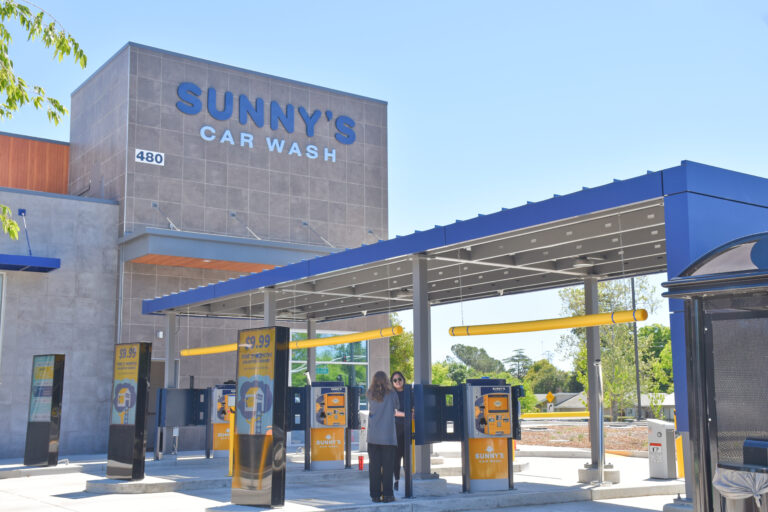
Friday, May 3 was the grand opening of Sunny’s Car Wash, a new sustainable and innovative car wash in Davis. The business is located at 480 Mace Blvd.

Evan Lyon’s journey to owning Sunny’s Car Wash is deeply rooted in his upbringing in Davis. Born and raised in Davis, Lyon was immersed in the automotive industry thanks to his family’s business.

Listening to his mother’s frustration of driving out of town to get her car washed, only to return with it dirtied again, Lyon saw an opportunity to address a local need. With the inefficiency of commercial gas station car washes came the idea for a locally owned and efficient car wash.

Despite initial skepticism from others who saw it as just another car wash, Lyon was determined to create something unique through precise planning and attention to detail.

“We took a lot of time, effort and energy to make [Sunny’s] not look or act like another normal car wash,” Lyon said.

Identifying the need in Davis was just the beginning. Sunny’s Car Wash took four and a half years from concept to reality after securing a location, dealing with permits and undergoing construction.

Securing land with automotive commercial zoning in Davis was pivotal for Sunny’s. Finding available land in Davis is challenging, yet Sunny’s team found a parcel without rezoning, thanks to supportive landowners.

Sunny’s 10-month-long construction began in June of last year.

“[We were] extremely fortunate to secure [the land] and get to where we are,” Lyon said.

Guests are welcomed at the pay station, where digital menus, helpful employees and cameras facilitate transactions. The pay station has three lanes, with one dedicated to members, and a license plate scanner that ensures swift entry of approximately three seconds.

Once pulled into the 140-foot conveyor, a Sunny’s team member will guide you in positioning your car. Advanced computer programming guarantees that every step of the wash is timed appropriately while the tunnel monitors the vehicle’s speed and dimensions. Sunny’s sensors can even detect features like roof racks and truck beds, ensuring vehicle safety. Everything has a “brain” at Sunny’s, according to Lyon.

Sunny’s Car Wash is enjoyable, with vibrant changing lights and colorful soaps and foams that make the experience exciting.

Sunny’s commitment to delivering technologically advanced washes is clear, from noise-reducing vacuum separators to precise timing switches. Premium products ensure a spot-free rinse with carefully formulated pH levels adapted for seasonal differences like pollen and bugs.

There are many amenities at Sunny’s, including interior air fresheners, a bike wash station and dog wash station fully equipped with shampoo, conditioner and a blow dryer. Sunny’s water conservation efforts make this business stand out. A sophisticated recycling system significantly reduces water waste — six 1500-gallon tanks capture and recycle water, treating it with oxygen and ozone to eliminate bacteria before it’s reused.

The tanks capture 100% of water, and up to 90% is recycled. While 120 gallons hit a car during a wash, nearly 100 gallons are saved through the recycling system.

To put this into perspective, using a garden hose for five to eight minutes emits more water than the entire process at Sunny’s. The business’ green initiative and investment in water reclamation is extremely efficient in Lyon’s vision.

“Water isn’t cheap, and it won’t get cheaper,” Lyon said.

Every aspect, from architecture to landscaping, was designed to prioritize eco-friendliness and energy efficiency. Notable features include solar panel roofing and air-powered brushes and vacuums.

To Lyon, the sun logo embodies the cheerful experience of visiting the car wash on a warm day and fits the eco-friendly theme. Sunny’s gets its name from Lyon’s yellow labrador, Sunny, and pays homage to his father.

“My dad was a huge part of this project for me,” Lyon said. “Everything from securing funding to working through entitlements, all of it. My dad was like, ‘You’re my son, and it’s yours, so it became Sunny’s.’”

The car wash offers several selective membership options. The Sunny’s Shine Club provides unlimited car washes starting at just $20 a month, with the premium “SPF 50” package offering unlimited access to all services for $40 a month. Members can add up to four vehicles to one plan for an additional $20 per vehicle, making it cost-effective for frequent washers.

Sunny’s is currently offering limited services for its grand opening, inviting people to enjoy free car washes for the first 10 days, beginning May 3.

Additionally, if you sign up for Sunny’s Shine Club now, the first month of membership is just $10, and you can add extra vehicles at the same discounted rate. 

Written by: Alexandra Shapiro city@theaggie.org 

Culture Corner

The Arts Desk’s weekly picks for music, movies and more 


By SAVANNAH ANNO and ALYSSA CREVOISERAT* — arts@theaggie.org


*Note: We are best friends.


Album: “Older” by Lizzy McAlpine (2024)


Alyssa: Lizzy McAlpine grapples with the passage of time and the impossibility of change in her third studio album “Older,” released on April 5, 2024. The instrumental build-ups, gentle humming and piano solos are woven between the lyrics of each song and come together to make this McAlpine’s most raw work to date. One of my favorite aspects of McAlpine’s writing is her storytelling — with songs like “Drunk, Running” and “Come Down Soon,” the descriptive imagery leaves listeners feeling like the relationships and heartbreak are their own. Notably, “You Forced Me To” details the guilt and pain of a one-sided relationship with haunting vocals and a layered piano composition. It is the only version of the song to exist — recorded as a demo and never changed — and almost didn’t make the cut for the album’s 14 tracks. This album has something for everyone: a college student who misses home (“Older”), a people pleaser who always lingers for too long (“Staying”) or just someone who wants to hear a good saxophone outro (“All Falls Down”). McAlpine’s newest album is all about uncovering who we are underneath layers of emotional setbacks, destructive relationships and the fear of being someone who can’t love at full capacity. If you’re looking for new music that feels like a lakeside cabin, early mornings and lonely walks, add “Older” to your list. 


Savannah: Going into the concert only knowing the lyrics to “Ceilings.” (Kidding, my favorite song off of the album is “Vortex”). 


Movie: “Challengers” dir. Luca Guadagnino (2024) 


Savannah: The number of audible gasps I let out during this movie was at least 20… each scene. If you still haven’t heard, “Challengers” follows a 10-year triangle between three pro-level tennis players. Was it a love triangle? Who knows. Director Luca Guadagnino, whose filmography includes “Bones and All” and “Call Me by Your Name,” is known for his unique portrayals of romance: raw, gritty and all-consuming. In the film, best friends Art Donaldson and Patrick Zweig find themselves drawn to tennis prodigy Tashi Duncan at the 2006 Junior US Open. Switching between the trio’s shared history as they grow into adulthood and an intense present-day match between the two men, viewers are left wondering what’s more strategic: their strategies for winning on, or off the court? Sexy, ruthless Tashi plays coach to the seemingly sensitive Art as he competes against Patrick’s undeniable charm in the biggest sports match of the year — including the real-life ones. 


Alyssa: I love tennis.


Book: “Funny Story” by Emily Henry (2024)


Alyssa: In the interest of branching out from my fantasy novel obsession, I picked up my first Emily Henry book back in February. More like women’s fiction than romance novels, Henry’s books take commonly used tropes — rivals to lovers, second chance and forced proximity — from their sometimes overused, cliche status to a borderline tear jerker. Now, fake dating takes center stage in “Funny Story” where children’s librarian Daphne and jack-of-all-trades Miles are both unceremoniously dumped by their respective partners. Daphne and Peter met through a twisted version of a meet-cute: a flying summer hat and a garbage-can fall, a story that Peter always loved to tell. About to be wed, Daphne was assured that his childhood best friend Petra (Miles’ girlfriend) was nothing to worry about — that is, until she wasn’t. With nowhere else to go, Daphne moves in with Miles, and the two decide to stop wallowing in the shared misery of their heartbreaks. As readers unravel Miles’ sunny disposition and Daphne’s reserved and practical lifestyle, they are met with a story of rekindling long-buried relationships, building unexpected female friendships and finding a home in yourself, no matter where you are. “Funny Story” certifies Henry as one of the top authors of her genre and is the perfect spring romance if you’re looking to kick your feet, laugh and cry alongside Daphne. 


Savannah: I’m still on page 62 of “Book Lovers”… and have been since March. My current read is “Massacre in Mexico” by journalist Elena Poniatowska, which you can also pick up for some variety. 


Alyssa: Pretentious. 


TV Show: “The Girls on the Bus” by Amy Chozick and Julie Plec (2024)


Savannah: We were, of course, drawn to this TV show because of its focus on journalism. More specifically, because of Melissa Benoist — star of middle-school favorites like “Glee” and “Supergirl” — as lead character Sadie McCarthy. Based on a true story, “The Girls on the Bus” shines a light on four different female reporters as they follow the campaign trail of the country’s lead presidential candidates. McCarthy, a witty political writer for the show’s version of The New York Times, is joined by seasoned, legendary journalist Grace Gordon, Gen-Z activist Lola Rahaii and conservative news reporter Kimberlyn Kendrick. Despite their differences, the four are ultimately forced to come together in order to save the country from an unfit presidential candidate. As they investigate sex scandals, financial fraud and ulterior motives, the women form an unlikely friendship, motivated by their collective need to deliver the right news to voters. Despite the more serious political drama — and the parallels to our current political state that are almost a little too on the nose — writers Chozick and Plec are able to keep the show lighthearted and laughable with sharp sarcasm, ridiculous scenarios and funny skits, like McCarthy imagining the presidential candidates on “The Bachelor.”


Alyssa: They mention the copy desk at least once. 

Written by: Savannah Anno and Alyssa Crevoiserat — arts@theaggie.org

The spotlight on women’s sports must be a movement, not a moment

Despite historical and social barriers, female athletes deserve adequate pay and attention 


By CLAIRE SCHAD — cfschad@ucdavis.edu 


Recently, women’s sports have finally been getting the attention they deserve. Whether it’s the unprecedented viewership of the Women’s NCAA basketball championship or the recent success of the Women’s Professional Hockey League, women in sports have been making headlines around the world. Despite the well-deserved news coverage that athletes like Caitlin Clark and Kamilla Cardoso are receiving, there are still steep discrepancies in the way women are treated in the sports world. 

At this year’s WNBA draft, Iowa’s Clark was picked first overall by the Indiana Fever, agreeing to a four-year contract with a base salary of $76,535 for her first year in the league. In contrast, last year’s first overall NBA draft pick, Victor Wembanyama, was given a contract by the San Antonio Spurs set to pay him $12.1 million in his rookie season. Even the lowest paid player in the NBA still makes over $1 million each year, only further demonstrating the discrepancies.  

The glaring difference in compensation for top male and female athletes has left many people criticizing the WNBA for not properly compensating their players. This criticism led the WNBA to clarify that with media partnerships and other league earnings, Clark stands to make about a half a million dollars during her rookie season, before considering outside partnerships. Even with Clark’s other WNBA earnings, it’s impossible to not see the extreme difference in compensation compared to those in the NBA. 

However, it’s not Clark we should be worrying about — as she already signed a contract with Nike featuring a signature shoe that will pay her $28 million over eight years. But rather, it’s the other lesser-known women who have worked just as hard to play professional sports but will never be offered multi-million-dollar partnerships due to a lack of media coverage. 

The salaries of female athletes are low due to a number of factors, but at the top of the list is media viewership. Overall, women’s sports bring in far fewer viewers than men’s sports, resulting in much lower revenue. Each year, the WNBA brings in just $60 million in revenue, while the NBA brings in $10 billion. While this steep difference likely results in the much lower salaries of female athletes, it is also important to take a closer look at why the revenues themselves differ so much. Is it solely because the public doesn’t watch women’s sports at the rate they do men’s, or is it something bigger?

The lack of viewership for women’s sports ultimately stems from our society that has, over the course of history, placed more value on the athletics of men than those of women. It wasn’t until relatively recently that women have had the platform to play many sports at the professional level at all. The NBA was founded in 1946, but it wasn’t until 1996 that the WNBA was established. Similarly, while a professional league was established earlier this year, women’s hockey has been struggling to maintain a league for years while the NHL has been thriving for over a century. 

Even more frustrating is the fact that many sports still don’t have professional women’s leagues available for athletes, causing many to walk away from their sport after college. While it is encouraging that women’s athletics have been gaining popularity and media coverage in recent years, it is important to look at the societal and historical structures they face.  

Despite the constant discrepancies, it’s clear that women’s sports can bring in viewership when they are given the platform to do so. The 2024 women’s NCAA basketball tournament brought in an astounding 24 million viewers this spring, more than the men’s tournament. Last year, the women’s World Cup brought in a record-breaking 1.12 billion viewers

Encouragingly, viewership for women’s sports is trending upwards, gaining millions of viewers each year. As I’ve gotten older, I’ve been able to witness the joy of female athletes gaining the attention they deserve. Whether it’s Clark in the NCAA tournament, Simone Biles in the Olympics or Megan Rapinoe in the World Cup, seeing these women front and center has brought me and millions of others immense joy. 

To ensure this trend continues and that little girls around the world see athletes like themselves represented in sports, media and broadcasting, as well as brands, need to step up their commitment to women’s sports. Without investment from large brands and media corporations, women’s sports will continue to struggle to gain the revenue needed to pay their athletes adequately. 

On a final note, I encourage you to seek out women’s sports, whether that is on TV, going to see a local professional team or checking out some of our spectacular female Aggie athletes at one of their next home appearances. After all, the female athletes are out there, but they need our support. 


Written by: Claire Schad — cfschad@ucdavis.edu 


Disclaimer: The views and opinions expressed by individual columnists belong to the columnists alone and do not necessarily indicate the views and opinions held by The California Aggie.

 

City of Davis and Bike Davis partner up to host Loopalooza for the 14th year

May being “Bike Month” can only mean one thing in Davis: completing a 12-mile bike ride


By OLIVIA HOKR — city@theaggie.org 


On Sunday, May 5, community members, families and students gathered for the annual Loopalooza bike ride through Davis. The tradition is hosted by the city of Davis and Bike Davis, who collaborate to create a fun day of cycling around the Davis bike loop. The event aims to promote safe biking while educating citizens about the bike infrastructure available in Davis. 

The Loopalooza route started at Community Park, but participants were welcome to hop in at any point of the loop, which intentionally passes through various parks and schools to show residents the bikeability of Davis. Numerous city and campus organizations provided interactive and informative stations — 11 in total, ranging from dance groups and karaoke to educational opportunities from bicycle professionals. 

Davis Senior Transportation Planner Jennifer Donofrio explained that Loopalooza was created when a group of community members, The Schools Committee, wanted to bring awareness to the safe bike routes in Davis. 

“The Schools Committee created Loopalooza, a yearly event that directs families and community members around the 12-mile Davis bike loop with fun activities set up along the way,” Donofrio said. “Participants learn that they can get from their homes to their schools and throughout the community via the Davis paths.”

Bike Davis is a non-profit organization that focuses on promoting biking in Davis through advocacy and education, working with the city to organize the event. Sanne Fettinger, a member of the Bike Davis board of directors, shared how they focus on advocating for a bike-centered community. 

“We envision Davis as a city where bicycling is the priority mode of travel, and we are committed to challenging and inspiring the citizens of Davis to reconnect with nature and their neighbors in pursuit of better health, kindred community and the pure joy of riding a bike,” Fettinger said.

Cool Davis is a non-profit organization that works with households on reducing greenhouse gas emissions and promoting sustainable living. Once a month, they are present at the Davis Farmers Market to educate the community, and they also participate in Loopalooza every year. 

The Cool Davis station along the bike loop focused on educating families and encouraging them to get out on their bikes more often. Transportation plays a major part in our greenhouse gas emissions, according to Executive Director Chris Granger. 

“We’re focused on topics related to transportation,” Granger said. “Here in Davis, over 70% of our greenhouse gasses are related to our transportation behavior, so whether or not we get in our car to do everything is huge.” 

This year’s Loopalooza had more activities, stations and food vendors than in previous years, according to Donofrio. Local businesses such as the Davis Co-op were in attendance to sell food to participants. The ASUCD Bike Barn also had a station where cyclists could talk with bike mechanics. 

“We envision a city that tirelessly promotes and preserves a comfortable, beautiful and convenient bicycle network year-round for cyclists of all ages,” Fettinger said. “We hope that the rich bicycle heritage in Davis will continue to distinguish us as the Bicycle Capital of America.”

Written by: Olivia Hokr — city@theaggie.org