53.7 F
Davis

Davis, California

Saturday, December 20, 2025
Home Blog Page 91

Unlocking childhood’s treasure trove: the nostalgia and healing magic of children’s media

Delving into the intricate ways that children’s media sparks fond memories and acts as a healing agent


By HENRY ROSENBACH — science@theaggie.org 


During an argument about imagination, a close friend once shouted, “But I’m not creative!” The argument continued until we stumbled upon a collection of essays from the Mozambican author Mia Couto. In one of them, he writes about how the former Prime Minister of Vietnam, Ho Chi Minh, could write delicate and sensitive poetry while locked in a prison. The response given by the Vietnamese leader was, “I undervalued the walls.” The importance of imagination in human development cannot be overstated. 

Tamar Kushnir, a professor and researcher at Duke University, has researched the role imagination plays in brain development. It is a crucial aspect of creativity, problem-solving and critical thinking. Imagination allows us to explore new ideas, envision alternative realities and find innovative solutions to complex problems. When we imagine things, our brains create new neural pathways, which can lead to increased cognitive abilities and improved memory retention. This is particularly important during childhood, when the brain rapidly develops and learns new skills.

Moreover, imagination can give us a sense of purpose and direction, helping us find meaning in our lives. By imagining a better future for ourselves and society, we can set goals and work towards them. This can be especially important when forming moral and societal values in a growing child. 

Returning to the enigma of Ho Chi Minh, how do our brains manage to unearth those tiny thoughts that make our souls feel at home? Kushnir’s research provides some fascinating insights. It turns out that our brains are like master weavers, constantly intertwining different ideas and experiences. Imagination is the secret ingredient that unlocks this weaving process. By blending diverse thoughts and experiences in novel ways, we can create something extraordinary and meaningful. 

Still, as society has progressed, we have embraced a harsh reality as the ruler of all our ideas, plans and dreams. However, if you take a trip back to an elementary school playground, you will likely witness a portal between the real and imaginary worlds children create. During long playtime sessions, kids conjure up fantastic worlds, mythologies and stories that can last for hours, if not days. As we grow older, we tend to lose touch with the purity of our imagination, often undervaluing the walls and limitations we create for ourselves. In the name of “progress,” we discourage children’s ability to build new universes, neglecting the importance of imagination in our lives.

Nevertheless, we still hold on to the ones that make us feel like everything is possible – cherishing the inner child within us. Adults have shown a deep appreciation for children-targeted media in recent years, more so than the kids themselves. Abby Ohlheiser from the Washington Post wrote a report in Feb. 2023 on how the cartoon “Bluey” has a significant adult fandom. The show, which premiered in 2018, features a family of anthropomorphic dogs and their daily adventures. Despite its target audience being young children, the show has struck a chord with adults worldwide.

The emotional impact of children’s media on adults is not new. Many of us have witnessed parents shedding tears at the end of films like “Toy Story 3” or “Inside Out.” Frances Dolan, a distinguished English professor at UC Davis who is widely recognized for her research in children’s literature, explained the distinctiveness of our relationship with children’s media compared to other forms of literature.

“When we study African American, Latinx or Native American literature, we expect the stories to be written by members of such communities,” Dolan said. “However, when discussing children’s literature, we’re not exploring child authors but rather the ‘hidden adults’ who write it.”

Dolan also highlighted the security aspect in children’s literature.

“People love stories that make them feel seen,” Dolan said. “We are all inadequate, and children’s literature usually provides a refuge for our insecurities. I have also observed an incredible increase in diversity in children’s books — stories highlighting kids with disabilities, anxiety and different identities. Books like this didn’t exist some decades ago, and it is so important that they are around now.” 

Digressing back to imagination and brain development, Dolan emphasized how children’s media can serve as a nostalgic element that can protect or heal our inner children. When we look at picture books or illustrated stories, different parts of our brains are activated, most significantly when healing past traumas. Children’s literature can help us re-invent and re-signify pivotal events in our lives with a broader sense of protection. Dolan explained that through their vivid imagination triggers, children’s stories can do more than review our childhood.

“[They serve] as a tool to find what should have been there,” Dolan said. 

Imagination takes an editing role in the weaving process of memory and cures some of our deepest wounds. Dolan expressed how she always observed students paying close attention to picture books during her lectures. 

“There is something magical about the three-way relationship between reader, listener and book — students appear to have a sense of protection and curiosity for them,” Dolan said. 

While usually undervalued, children’s literature has magical properties beyond childhood itself. It allows us to search for meaningful wounds in the past and present. Our favorite books as children usually activate a mechanism in our brains to supply needs that might have been neglected. Considering such a healing effect, Dolan left one last important message: “Never stop reading children’s literature […] it will make a bigger difference than you can imagine.” 

Written by: Henry Rosenbach — science@theaggie.org
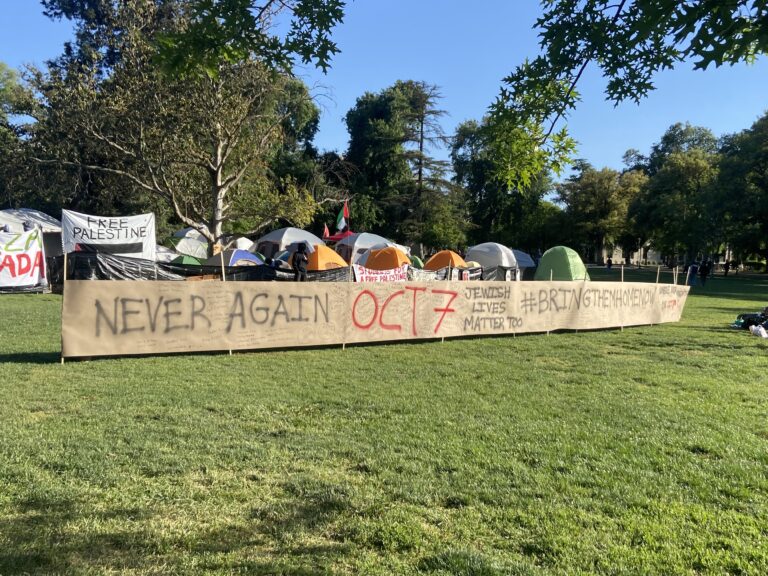
Davis October 7th Coalition stages counter-demonstration outside of Popular University for the Liberation of Palestine encampment

The coalition put up a banner that read, in part, “Jewish Lives Matter Too” and “Where were students on Oct. 7 and the Holocaust”


By VINCE BASADA and RIVERS STOUT— campus@theaggie.org

Approximately six to seven counter-protesters, largely members of the Davis October 7th Coalition, erected a banner on the afternoon of Tuesday, May 7 on the south side of the pro-Palestinian encampment facing the Memorial Union. 

The brown paper banner, spray painted on site, read, “Never again Oct. 7 // Jewish Lives Matter Too // #bringthemhomenow // Where were students on Oct. 7 and the Holocaust,” and was staked into the ground at 5:20 p.m., as witnessed by several students on the lawn.

A representative for the coalition, who asked to be identified as a Davis resident and UC Santa Barbara 2000 alum, said that the group’s actions were solely in support of Jewish students on campus and were not organized alongside any Jewish student group or club.

“We’re extremely worried about the Jewish students on this campus,” the alum said. “We want to make sure that they’re seen and they’re heard […] We care about them, and we want to keep them safe, and we’re going to continue to try to keep them safe.”

The coalition, which posted photos of the demonstration on Instagram, consists of around 200 members and includes members of the Davis community as well as UC Davis faculty, according to the alum.

The encampment, set up early Monday morning on the central Quad, was organized by the Davis Popular University for the Liberation of Palestine (PULP). The list of their demands includes: The University of California system to divest from Israel; a total academic “cultural boycott;” investment in Palestine and Arab American studies; respect for free speech and “no repression” and the resignation of Chancellor Gary May from the executive board of Leidos or as chancellor of the university. 

“Obviously, we care about all lives lost,” the alum said. “It’s important to all of us, and we just want to be able to support everyone. I don’t like seeing the Gazan lives lost. I’m sympathetic to that as well. But you can’t just have one set of messaging.”

“It’s being very close minded,” the alum said. “You know, you’re essentially trying to brainwash your population here on campus when you’re only giving one set of messaging. There’s more to it.”

Stanford McConnehey, a student at the UC Davis School of Law and media liaison for PULP, spoke on the demonstration.

“The fact that Jewish members of our community continue to use that identity to intimidate people about speaking about an ongoing genocide is not going to deter people from being horrified and wanting to end institutional complicity,” McConnehey said.

At approximately 6:45 p.m., pro-Palestinian protestors began putting up their own sign in front of the coalition’s banner, reading, “Student Intifada // End the Genocide // Divest and Disclose.” After working to pole their sign into the ground, three PULP protesters held the sign up by the stakes. PULP protestors also used umbrellas in attempts to block counter-protestors from filming.

The coalition counter-protesters took down their sign at 7:14 p.m., removing it and its stakes from the grass and rolling it up. The PULP sign remained up for some time after the coalition’s banner was taken down. The coalition hopes to repurpose their sign in the future, according to the alum. 

Written by: Vince Basada and Rivers Stout campus@theaggie.org

Researchers uncover the role of autocracies in internet censorship

Transit providers pose a threat to internet privacy and can cause serious cybersecurity issues


By ARYAMAN BHATIA — science@theaggie.org 


Researchers at UC Davis have published a paper explaining how autocracies control the internet through transit providers, which are largely unknown to the public.

“Recent years have seen an increase in governmental interference in digital communication,” the study reads. “Most research on this topic has focused on the application level, studying how content is manipulated or removed on websites, blogs or social media. However, in order for governments to obtain and maintain control of digital data flows, they need to secure access to the network infrastructure at the level of internet service providers.”

In non-autocratic states, people access content on the internet first through access providers, such as Comcast, and then to content sources, such as Facebook and Google. However, the internet in autocratic states must go through an intermediary, known as a transit provider, before people access content sources.

Alexander Gamero-Garrido, UC Davis assistant computer science professor, provides an explanation into how these transit providers are detrimental to internet privacy and decentralization. 

“The first reason is that people don’t know about them,” Gamero-Garrido said. “They don’t have a contract with users. For example, if I told you the name Level 3, which is a pretty important transit provider in the United States, you wouldn’t probably know about them because they’re just not highly publicized.”

Gamero-Garrido also mentioned that this centralization of the internet leads to cybersecurity risks.

 “It actually also creates a kind of risk to the country, because if a foreign adversary takes control of this transit network — let’s say that they run a phishing campaign — and they obtain the administrative password of [the] network administrator, then they might be able to observe or disrupt the connection to the entire country,” Gamero-Garrido said. 

Phishing is a deceptive cyberattack technique in which attackers impersonate legitimate entities to trick individuals into revealing sensitive information or performing actions that compromise security. By bringing out these statistics, the team hopes to bring changes in the centralization of the internet. 

“We hope that revealing this information will exert some pressure on the governments that are really overtly [centralizing] the infrastructure of their countries, which is exposing them to risks,” Gamero-Garrido said.

Gamerro-Garrido also stated methods to help internet users protect their privacy, including the use of Virtual Private Networks (VPNs) and proxy services, which are tools that enhance online privacy and security by encrypting internet connections and masking IP addresses.

“I think the impact on ordinary people’s lives can be enormous,” Gamero-Garrido said. “As computer scientists, we benefit a lot from the fact that our field is growing.”


Written by: Aryaman Bhatia — science@theaggie.org

UC Davis’ eighth annual Give Day raises over $4.1 million

This is one of the largest amounts ever raised by UC Davis


By JORDAN POLTORAK — campus@theaggie.org


Give Day is a 29-hour-long fundraising drive that took place from April 19 to April 20. Donors could give donations in person or by phone, and gifts would go toward funding programs such as the veterinary hospitals, UC Davis Health and the larger UC Davis campus. 

The event also overlapped with Picnic Day — the largest student-run event in the country. 

“Give Day is a university-wide project, so we start preparing for the event in October by meeting with colleagues from all over main campus and at UC Davis Health,” Andrea Elliot, director of marketing communications of the Annual and Special Gifts Program and Michelle Posey, managing executive director of the Annual and Special Gifts Program, said via email.

 The theme for this year’s fundraiser was “Reaching New Heights” — which was reflected in the over $4.1 million raised in comparison to the $3.4 million of 2023’s Give Day. 

“Many of our alumni donors want to encourage others to support our students, as well as support the areas of UC Davis that were personally meaningful to them while they were attending school here,” Elliot and Posey said via email. “They often provide challenge gifts for that purpose.” 

A challenge gift cannot be unlocked until others donate to reach the goal, causing a ripple effect. Donors are encouraged to give more in order to complete the challenge. This year, UC Davis received 214 challenge gifts nearly reaching $3 million, which was $500,000 more than the previous year.

Not only did Give Day coincide with Picnic Day, but it was also featured at “The Year of the Egghead” celebration.

“Our Give Day event t-shirts featured Stargazer [an egghead] this year, and it was pretty exciting that we got to be included in the acknowledgment of Professor Arneson’s work,” Elliot and Posey said via email.

Give Day featured events such as “Battle of the Colleges,” where the UC Davis colleges engaged in friendly competition to see which one could raise the most money. The College of Engineering came in first place with 484 gifts. The School of Veterinary Medicine and School of Law competed in “Battle of the Schools,” and the School of Veterinary Medicine emerged victorious with a total of 456 gifts.

The Give Day social media campaign encouraged those interested to become social ambassadors. Social ambassadors would share information related to Give Day on Instagram, Facebook and LinkedIn. 

“Raising money that helps create opportunities for our students and faculty is personally important to those of us who fundraise for UC Davis,” Elliot and Posey said via email. “Making a lasting impact here by helping others is what it’s all about for us.”


Written by: Jordan Poltorak — campus@theaggie.org

Bomba Fried Rice brings Davis community together with their lively shows and diverse group of musicians

Local band fosters an inclusive environment


By GRETA FOEHR — features@theaggie.org 


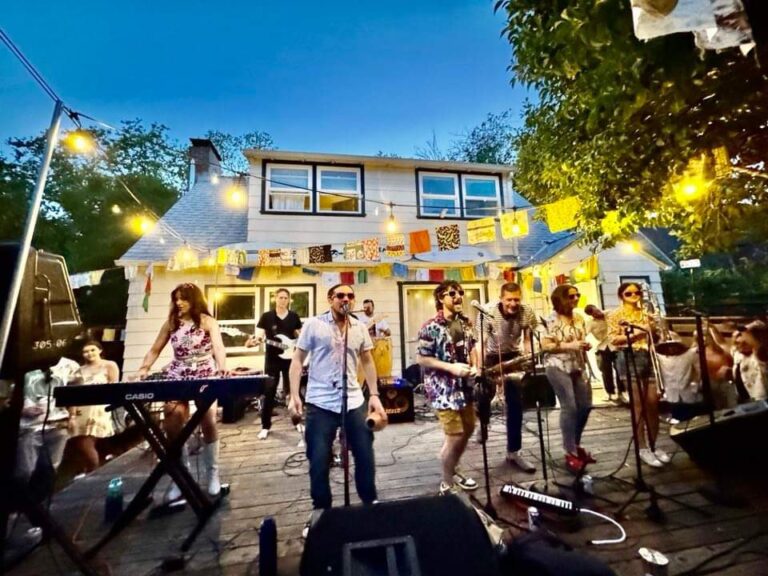
Bomba Fried Rice is a local 11-person band made up of musicians from all over the world, playing “Latin genres ranging from Salsa, Rock, Reggae, Spoken Word, Cumbia, Mambo, and Ska, merging cultures and styles of music,” according to their website

The group began in 2011 when a large collection of local musicians started gathering to play music every Friday night in a barn on 3rd Street in Downtown Davis. Juan Miranda, the band’s vocalist and Ph.D. recipient in Latin American literatures and cultures, explained that the band started as “Jamming with Latinos” and grew into what it is today. 

In 2013, they made their live debut, performing at the Davis Music Fest as a last-minute replacement for a band that canceled.

“That day, I told everybody, ‘Bring colorful stuff, dress in colors,’” Miranda said. “And the next day we were on the Sunday Enterprise.” 

Ever since then, Bomba Fried Rice has been a staple in the Davis music community and has played live at a variety of venues in and around Davis. The band is made up of musicians from Colombia, Peru, Argentina, France, Spain, Hawaii and more. 

“We are from everywhere, and I like that,” Miranda said. “It’s a mix. We started like that too.” 

Since its formation over a decade ago, the band has grown and changed — with some members remaining staples in the group and others coming and going. 

Ilse Pastor, keyboardist and UC Davis alum with degrees in cognitive neuroscience and professional writing, joined Bomba Fried Rice in 2020. 

“It was crazy how I found them, because I switched careers from neuroscience to being a full-time musician during the pandemic,” Pastor said. “One day I was like, ‘What am I?’ And then I thought, ‘I’m a pianist. I’m going to call myself a pianist.’ That same day, I went to Sophia’s [Thai Kitchen’s] Latin Night, which Miranda goes to.” 

Pastor explained how she met Miranda and became a pianist with Bomba Fried Rice. 

“[Miranda and I] were waiting at the bar, and he’s like, ‘So what are you? A student?’ I was like, ‘No, I’m a pianist.’ And then he said, ‘I need one,’” Pastor said. 

The same person who brought the original members of the band together in 2011 also founded Sophia’s Latin Night. 

Pastor also explained that because their band includes so many instruments and people with a wide variety of backgrounds, everybody in the audience can relate to somebody in the band. 

“With the amount of instruments that there are, there’s something for everybody,” Pastor said. “People also identify, because maybe they’re French, maybe they’re Colombian, maybe they’re Peruvian, maybe they’re from Hawaii or whatever […] Then it’s like they just kind of feel identified.” 

Diego Panasiti, vocalist and current Ed.D. candidate at UC Davis, emphasized that the band’s music is powerful because it resonates with a variety of people.

“It surprises people, because there are different genres of Latin music being played,” Panasiti said. “It can hit you from Peru, it can hit you from Colombia, Argentina. I’ve seen that at concerts where people just come up and [are] like, ‘I needed that, I needed to identify with a piece of your music.’ Different people from different places say that at the same time, which is cool.”

Bomba Fried Rice creates a lively and welcoming environment at all of their shows and appreciates the energy that their listeners bring. Felipe Becerra, percussion player and resident dining director at UC Davis, feels the positive energy created by the audience.

“The crowd’s always there just to have a good time,” Becerra said. “They’re not there to criticize or have an attitude, they’re just there to have a good time. So it doesn’t matter what you’re playing. Most of the time they get into it and then that energizes us. And we’re such an international band, I feel like the crowd is always so international — such a diverse kind of group all the time.” 

In describing the energy created by their live shows, Pastor recalled the band’s Cinco de Mayo show at Ruhstaller Farm in 2023.

“We started playing, and it was raining, and [the crowd] just took out all the umbrellas, and it was like, it doesn’t matter,” Pastor said. “And they all stayed and more [people] even came. It’s like all this heaviness just gets lifted, because people get into the music.” 

Luis Avila, guitar player and former bioinformatics programmer in plant sciences for UC Davis, explained why people love to come to their shows.

“[Our music is] very danceable,” Avila said. “A lot of people come because they dance, right? It’s liberating.” 

The members of Bomba Fried Rice are grateful for what Davis has given them and enjoy playing for the local community.

“It’s like family, you know? Family and friends,” Miranda said. “You always want to play for family and also new faces at the same time. So you have, like, the best of both worlds. People come and they support the band a lot. Then there’s new people and they feed [off of] each other, and we also feed [off of] them.” 

Jason Burns, the band’s bass player who was involved in UC Davis’ Whole Earth Festival in 1993, talked about the welcoming nature of Davis and how Bomba Fried Rice encapsulates that culture. 

“There [have] been times in Sacramento where I’ve tried to explain the community out here and nobody gets it,” Burns said. “It’s this sort of eternal, little, small community where people come and go from all over the world and then come back, and everybody always feels welcome or at home here for whatever reason. So it’s always like this home base, like a hub for so many people from so many places. And we definitely represent that.”

Avila agreed with Burns’ sentiment and added that the music scene in Davis is especially welcoming. 

“There’s a nice community of other bands in Davis, and we all know each other and support each other when we need a musician or something,” Avila said. “There’s also a number of venues that promote local music in Davis. That’s something we appreciate too.”

When the band started, every member proposed two songs for them to play, and they still play some of those original songs today. Now, they also write originals and are working on recording and sharing their music. 

Miranda explained the band’s process of writing their own music, referring specifically to the two singles they have released.

 “Both of the songs were poems that I recite,” Miranda said. “Then [the band] comes [in] and everybody puts their flavor to it. [It’s a] pretty open process.” 

They will be releasing a new single in the next two months and have a goal of recording four more before the end of the year, according to Avila, who is in charge of their recording process. All of the proceeds from their recent live shows have gone toward funding their recording process, and they will continue this practice in order to get their music up on streaming platforms. 

“Come to the shows! That’s how you help us a lot,” Miranda said. 

Bomba Fried Rice is playing at the Whole Earth Festival on May 11 at 8 p.m. on the Cedar Stage. Find more information about their upcoming shows through their website, bombafriedrice.com, or their Instagram, @bombafriedrice. Stream their music on Spotify or Apple Music


Written by: Greta Foehr — features@theaggie.org 

Human brains are getting larger — what does this mean for dementia risk?

UC Davis researchers found that human brain size has increased throughout the decades, which is connected to improved memory function


By MARLE LAMOUNTRY — science@theaggie.org 


It’s often said that bigger is better, and in the case of human brains, this holds true — new research has found evidence of their growing size. Researchers at UC Davis Health have found that human brain sizes have grown 6.6% more in volume when comparing data of people born in the 1970s versus the 1930s. This compelling study not only offers insight into humans’ evolutionary history but also holds significant implications for our understanding of cognitive health, especially concerning dementia prevention.

Claudia Satizabal and Sudha Seshadri of the Framingham Heart Study found that the incidence of dementia is declining. Charles DeCarli, an author of the study, as well as a professor and director of the UC Davis Alzheimer’s Disease Research Center, wanted to investigate these changes in the brain’s biology. 

“As a species, we’re getting taller, but what else has changed?” DeCarli said.

The study, published in The Journal of the American Medical Association (JAMA) Neurology, used data from the Framingham Heart Study and included data spanning as far back as the 1930s. Brain magnetic resonance imaging (MRI) scans as recent as 2019 quantified the scans, allowing researchers to analyze brain regions known to be correlated with dementia. These regions include the cortex, white matter and hippocampus.

DeCarli commented on factors that may have caused the increase in brain size.

“There are cultural changes for people born in the 1930s; they were born during the Great Depression and World War II, [and they] just came out of World War I around that time,” DeCarli said. “During the 1950s, after World War II, there was an expansion in the US population [and] social and economic boom — a fantastic period of time.”

Although genetics play a large part in brain health, other outside factors can also alter brain size. The researchers hypothesized that general enrichment in the environment, better overall health — especially concerning prenatal and postnatal care — and better food have led to the development of a “better” brain. 

Matthew Pase, an associate professor from Monash University and co-author of the study, commented on these findings.

“What we found, essentially, is that people born in later decades have bigger brains and a larger head size compared to people born in older decades,” Pase said. “It’s quite cool when you think about it, that people’s brains are getting larger.”

One challenge the researchers faced was limited patient data, which only included a population of middle-class white individuals from Framingham, Massachusetts. This limited cohort representation does not accurately represent the entire US population, making it difficult for researchers to understand if their findings apply to everyone.

Researchers’ findings of the trend of increasing human brain size indicate hopeful prospects for dementia prevention and overall cognitive well-being. By exploring the connections between brain size, environmental influences and dementia risk, researchers may be able to transform the way we understand brain health and lessen the impact of dementia.


Written by: Marle Lamountry — science@theaggie.org


Review: A review of MandRo Teahouse

Customers share their experiences and favorite sweet treats


By LORENA ALVAREZ — arts@theaggie.org 


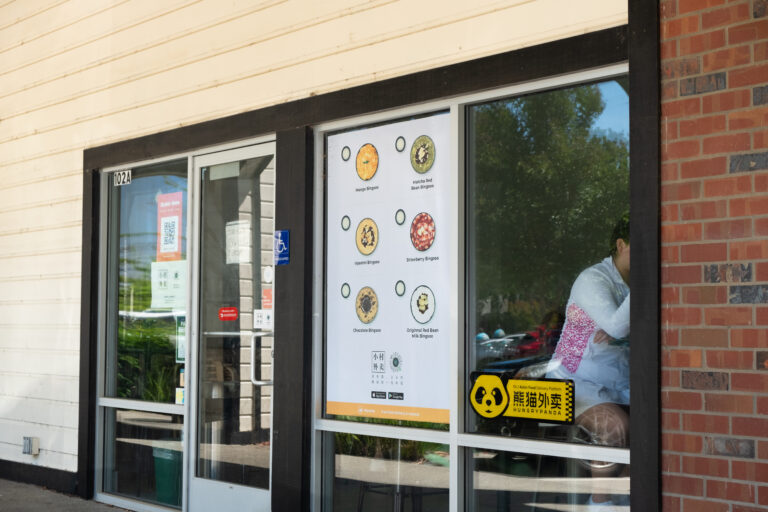
MandRo Teahouse, a Taiwanese style milk tea shop located in Westlake Plaza, is the ideal spot for refreshing treats in Davis. Their menu has something for everyone, from boba milk teas to their popular Bingsoo shaved ice and plenty of space and board games to spend time with friends. For those who want to take in the nice weather, MandRo offers ice bags, ensuring that customers can take their desserts to go if they wish to do so. 

Their hours of operation, 12:30 to 11 p.m., make their desserts and drinks the perfect refreshing midday or late-night snacks. They have a 4.9/5 rating on Doordash, with over 2,900 reviews, many of which fawn over their strawberry, mango and chocolate Bingsoo. 

When asked what sets this teahouse apart from others, Angela Feng, UC Davis alumna and dietitian nutritionist, commented on the shop’s milky taro. 

“The taro is real,” Feng said. “Usually in other boba shops, they use artificial taro powder. This one tastes like you’re drinking taro puree.”

Feng expanded on her comment, noting that it is her go-to establishment when visiting Davis.

“It’s the only boba place I would go to if I was in Davis, for sure,” Feng said. 

That said, Feng did note her disappointment with the order she received after requesting less ice.

“I asked for less ice and my cup was not filled all the way,” Feng said. “[Given the price] I don’t think they should put less liquid in the drinks when people ask for less ice.”

Kyra Kawamoto, an educator at the Marine Mammal Center, added to the conversation, noting that they charge extra for substitutions and add-ons.

“Price wise I think it’s on par,” Kawamoto said. “But once you add stuff, like for me I have to drink soy milk, [it can quickly become expensive]. And then if you want boba, that’s over $8 [total]. And I feel like toppings can really send it over, especially if it’s not a very big portion.”

While providing her drink recommendation, Kawamoto noted its superior quality. 

“I think any of their fruity or premium drinks are quite good,” Kawamoto said. “Instead of it being like a chain place where it’s kind of like a gritty or a less consistent drink or texture, here it tastes quite good.”

When asked if she would like to add anything, Kawamoto commented on the limited contact between customers and employees.

“I feel like the service can be hit or miss,” Kawamoto said. “You don’t really interact with any of the workers aside from them calling you [to pick up your order]. I think [having] one tablet [to order off of] is okay, but if there’s a long line, it’s not.”

She concluded her review by noting the shop’s atmosphere. 

“MandRo is quite spacious and seems like a hotspot,” Kawamoto said. “I think it’s also great that they offer desserts [like bingsoo], not just drinks.”

Providing another opinion about the space, Natalie Hak, a second-year psychology major, noted the establishment’s lighting. 

“I don’t like their interior because of the lighting,” Hak said. “It’s really stark white and not inviting. [But] they are open pretty late. So if you are studying quite late and you want a treat you can go there.” 

While Hak is not drawn to MandRo’s interior, she noted that they have items that she cannot find elsewhere. 

“The mango sago is my go-to order,” Hak said. “It’s really rich, but not overwhelming and it’s also really refreshing. It’s a drink I can’t really find anywhere else, so I go to MandRo.”

MandRo Teahouse’s menu items and board game options create an entertaining space for students away from school and work. For those who want to enjoy the spring season without experiencing the seasonal allergies that come with the outdoors, MandRo Teahouse has a wall-length sliding door, adding a touch of nature to the otherwise populated space.


Written by: Lorena Alvarez — arts@theaggie.org 

How I would fight Godzilla and win

One of us is a lethal weapon of mass destruction and the other is Godzilla


By AUDREY ZHANG — aurzhang@ucdavis.edu


I know what you’re thinking. How can a stunning, six-foot-five, cancer-curing college bombshell ever compete with the one cool thing that came out of nuclear armageddon? She doesn’t have a chance. And you’d be right, because that woman isn’t me. I somehow managed to pull a muscle getting out of bed this morning, but I’d still be able to make Godzilla run crying back to his underwater home. Except he can’t, because we managed to blow that up too.

I’ve done the math and it will take me approximately 1954 million years of gym rat grinding in order to bulk up enough to punch Godzilla in the face. In the meantime, there are other options.

It is just a matter of using Professor Honda’s favorite tactic — psychological warfare. Even unholy creations spawned from mankind’s mistakes need to watch out for their mental health. I’d just need to remind Godzilla that no one loves him, he wouldn’t know a good essay if it slapped him in the face and that he’s a lonely orphan loner who’s alone. He will get no closure because there are no Godzilla therapists, because there aren’t even any other Godzillas. (Again, because he’s a lonely orphan loner who’s alone.) He will try to adopt cats so that at least someone will love him, and thus be too busy to squish any more cities.

If that amazing plan fails, I simply have to post a photo of Godzilla, preferably next to a trademarked item. Then, I wait for Toho to find out and sue him into oblivion. They’ll sink anyone violating their beloved copyright so quickly, it will make the Oxygen Destroyer look like a nice bubble bath.

But let’s be real, I’m going to do none of these things. Godzilla is cool, way cooler than the people trying to bomb him for the millionth time. It didn’t work in the last 30 movies, it’s not going to work now. Next time he rises, I’m going to be asking for his autograph, and fighting on his side. You guys better watch out.


Written by: Audrey Zhang — aurzhang@ucdavis.edu


Disclaimer: (This article is humor and/or satire, and its content is purely fictional. The story and the names of “sources” are fictionalized.)

UC Davis women’s lacrosse looks ahead to PAC-12 Championships after loss to Stanford

A challenging game on Senior Day 


By LUCIENNE BROOKER — sports@theaggie.org


Amidst the hustle and bustle of Picnic Day, UC Davis women’s lacrosse took on Stanford in their final home match of the 2024 season. As crowds swarmed across the UC Davis campus and downtown Davis, many lacrosse fans made their way to the UC Davis Health Stadium to celebrate the program’s seven graduating seniors as they appeared in the last home game of their college careers.

With very few games left in the regular season, both teams were looking for a strong start to lead them to victory. However, Stanford was the first to attack as they immediately took the upper hand, scoring nine unanswered goals in the first quarter. 

The Aggies fought back with two goals to end the first quarter and were able to open the scoring in the second quarter. While third-year Grace Gerbhardt had a stellar performance, ending the match with four goals, the Cardinals stepped up their own game. 

Each time the Aggies scored, the Cardinals would respond with several goals of their own, never letting their lead fall below seven goals. The final score of the game was a tough 21-8. 

This is only the third match of the season in which the Aggies have conceded 20 or more goals, although they have also had some decisive victories themselves, including an upset win against UC Berkeley. 

With the 21-8 victory, Stanford clinched the number one seed spot for the PAC-12 tournament, which kicks off on May 1 in Los Angeles. The Cardinals have an undefeated conference record, with six straight victories. 

The Aggies will have to wait a little longer to determine their tournament position. Seeding will be finalized after their road game against the Arizona State Sun Devils on April 27. Currently, UC Davis sits at fourth in the league, with a conference record of two wins and four losses. Three other teams share this record, so the Aggies must win their final match against Arizona to be seeded high. 

This will be the lacrosse team’s last season competing in the PAC-12. Starting in the 2024-2025 season, the Aggies will join the Big 12 Conference for its inaugural women’s lacrosse season. 

While the team is looking forward to a new slate of opponents, their focus remains entirely on the culmination of the 2023-2024 season and making the most of their last PAC-12 Championship. 


Written by: Lucienne Brooker — sports@theaggie.org


‘Bend it Like Beckham’ is a queer cult classic film — but more so in its implicit coding

On its 22nd anniversary, the film’s explicit intersectional queerness and implicit sapphism stands as a celebration of its underrepresented communities 


By INDRANIL BASU — arts@theaggie.org


“Bend It Like Beckham” is a 2002 sports comedy-drama film directed by Gurinder Chadha and written by Chadha, Paul Mayeda Berges and Guljit Bindra. The film follows the story of Jess Bhamra (Parminder Nagra), who is the daughter of Sikh Punjabi immigrants in Hounslow, London. She has just graduated high school and is preparing for her elder sister’s wedding in the summer before university. Jules Paxton (Keira Knightly), a member of a local women’s amateur football team called the Hounslow Harriers, notices her skills at a local park and invites her to try out for the team.

The film’s central characters as well as the main plot are not explicitly queer, but “Bend It Like Beckham” is iconic as a queer film because of its heavily sapphic-coded relationship between Jess and Jules. Despite this, the film does explicitly deal with queerness in two subplots with positive representation.

Jess’ close friend, Tony (Ameet Chana), who is also South Asian, comes out to her about halfway through the film. Subtly but surely, when Jess and him are discussing their liking for David Beckham, the film’s namesake, Tony says, “No, Jess. I really like Beckham,” emphasizing the “really.” After a moment of connecting the dots in her mind, understanding the difference in their ways of liking him between her idolizing the star athlete as opposed to Tony’s sexual attraction toward him, Jess’ response is, “But you’re Indian!” 

This highlights the dichotomy of identities that are expected of diasporic Indians when it comes to queerness. To have an intersection in these identities, thanks to Western imposition of homophobia, is unfathomable. Therefore, having this Indian-British character portrayed as queer in 2002 was groundbreaking, especially for the rarely represented South Asian queer communities. It is quite fascinating to see how this representation didn’t pan out in more films — the film’s acknowledgment of this struggle, even in a subplot, was greatly significant.

The other subplot is Jules’ white British mother overhearing a conversation between Jess and Jules, thinking that they were involved romantically and that Jess broke Jules’ heart. She is extremely concerned that Jules is lesbian and is triggered every time Jules is hugging or “friendly-kissing” Jess, which creates situational comedy in the film. Ultimately, her queerphobia takes over, and her fears culminate in the dramatic confrontation between her and Jess in front of the entire wedding audience during her sister’s “vidai” to her in-laws. 

In front of all of them, she calls Jess a hypocrite and demands to know “how [she] could be respectful here with [her] lot” when she knows (or rather thinks) that Jess has been “kissing [her] daughter in broad daylight?” In what becomes the climactic comedic punchline of the scene, she says, “Get your lesbian feet out of my shoes!”

Pulling her mother away from further embarrassment, Jules clarifies that she isn’t a lesbian but that she and Jess were “fighting because [they] both fancied [their] coach.” She adds, “Anyways, being a lesbian is not that big of a deal.”

The two young women protagonists, despite their different backgrounds, signify with their “allyship” that their progressive views are that of the filmmaker. The film was originally supposed to have a sapphic love story between them, but due to fear of a negative reaction from the film’s Indian audience (as seen in other Indian sapphic films before then), the coach, Joe (Jonathan Rhys Meyers) was introduced as a beard (someone used by a queer person/people to have a queer relationship while presenting as heteronormative to the outside world), according to various rumors. Other than their trauma bonding, and the fact that he believed in her athletic ability when no one else would, there is no real chemistry between Jess and Joe, or even Jules — whereas we can see the chemistry between the two girls, especially through Jules’ mother’s eyes when she perceives them to be sapphic for each other.

There are many clear indications of Jess and Jules’ sapphism throughout the film: there is lots of “gay gazing” as Jules observes Jess playing football in the park; the two girls have a queer butch or tomboyish aesthetic, including bandanas, rejection of push-up bras and sportswear and we see the contrast when Jess is made to dress up for an event, or with Jules’ hyper-feminine mother.

The film is about women’s football, with shots inside the locker room of women changing with each other and in community. All of the shots of the players warming up and playing in their Adidas “trackies” have been the gay awakening for countless women who today recount the queer legacy of the film. 

It is also strewn with various sapphic references, like mention of the queer tennis player Martina Navratilova, gay icon Melanie C aka Sporty Spice and usage of their music and the iconic Bollywood courtship song “Noorie” sung by a woman. Also, the fact that the film was directed by a woman brings a feminine gaze that adds to the sapphism of the film. 

Recently, Knightly mentioned that she would love to see an actual lesbian sequel to the film, to which Chada has responded positively.

Although the film follows Jess and Jules going against their families (especially their mothers) to pursue football and then careers in professional football, to those who know the sapphic contexts and connotations of the film, or even without, the film is truly about the coming-of-age of these two women who defy gender, sexuality and cultural norms to make a place for themselves in the soccer world. 

You can find “Bend It Like Beckham” on Hulu and Disney+.

Written by: Indranil Basu — arts@theaggie.org 


Championship dreams come to an end for UC Davis women’s water polo

Aggies fall to UC Irvine in Big West Quarterfinals


By LUCIENNE BROOKER — sports@theaggie.org


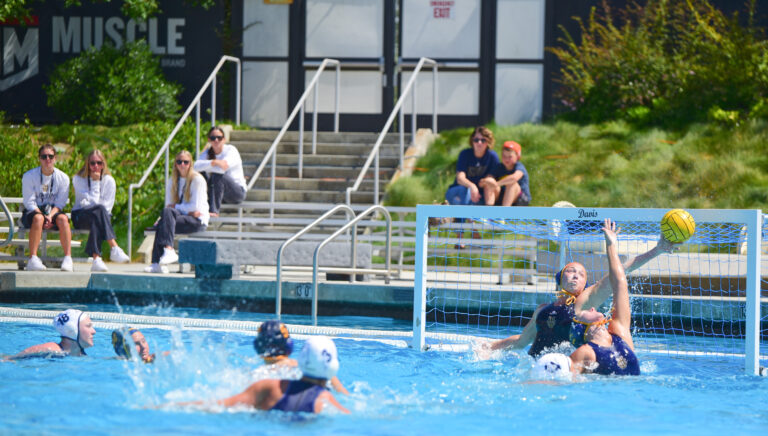
As rain clouds parted over Schaal Aquatics Center in Davis, the women’s water polo team entered the pool for their Big West Conference Quarterfinal match-up against UC Irvine. The Aggies and the Anteaters had faced off three times already during the 2024 season, with UC Irvine earning decisive victories in each match; the fourth encounter proved to be no different. 

Despite playing host for the entire tournament, the Aggies were seeded seventh out of eight teams after a rocky season. With only two conference wins, compared to five losses, the Aggies knew their road to the championship would be tough. 

In comparison, UC Irvine came into the conference tournament as the number two seed. They held a winning record of five victories and two losses in regular season play. With their stellar record, the Anteaters came into the playoffs with confidence. As the match went underway, the Aggies were able to open the scoring by jumping out to an early lead with a goal from third-year mechanical engineering major and attacker Gianna Nocetti. However, the Anteaters immediately responded to get themselves a point on the board and equalize the game. The first quarter of the match remained close, with each team scoring once more before the whistle blew. Second-year human development major and center Liberty Massman scored her 13th goal of the season. 

Moving into the second period of the match, UC Irvine saw their chance to pull ahead and take the lead, scoring three unanswered goals as soon as they hit the water. Hope wasn’t lost for the Aggies though, and Nocetti scored her second goal to cut the deficit to two going into halftime.

The third quarter was a bit more evenly matched, with each team again scoring two goals. Fourth-year communications major and utility player Grace Pelkey got on the scoreboard for the first time with Massman also converting again. Pelkey has shown her strong abilities this year finishing the season as the Aggies’ leading scorer with 37 goals. 

With only a two goal difference heading into the final quarter, the game was far from over as UC Irvine took a quick chance to restore their three goal lead. UC Davis responded with a goal by first-year undeclared major and center defender Chelsea Johnson, her 19th of the season. However, this final push didn’t prove to be enough and the Aggies were ultimately defeated 6-9.

This loss meant that the Aggies were eliminated from the Big West Conference Championship and had to remain spectators for the rest of the weekend. Semifinals took place the following day, on April 27. 

Although UC Irvine were the reigning 2023 champions, they promptly fell to third seeded Long Beach State 9-7. In the second semifinal, number one seeded University of Hawai’i defeated fourth seeded UC San Diego with a score of 17-10. 

The highly anticipated final match-up between Long Beach State and University of Hawai’i took place at noon on April 28. While Long Beach State had gotten through the tournament on a series of narrow victories, Hawai’i had been on a scoring roll they carried into the final. With a 9-5 Hawai’i win, the Rainbow Wāhine advanced to the NCAA Women’s Water Polo Championships. They are scheduled to take on Princeton on May 10. 

As for the Aggies, their season ended sooner than they had hoped, but they’ll begin to look forward to the 2025 season, hopefully taking their program one step further. 

Written by: Lucienne Brooker — sports@theaggie.org

Several organizations tabled at Student Sustainability Career Fair on April 23

The fair had a myriad of government agencies and companies present, many of which were offering positions in the sustainability field  


By RIVERS STOUT — campus@theaggie.com


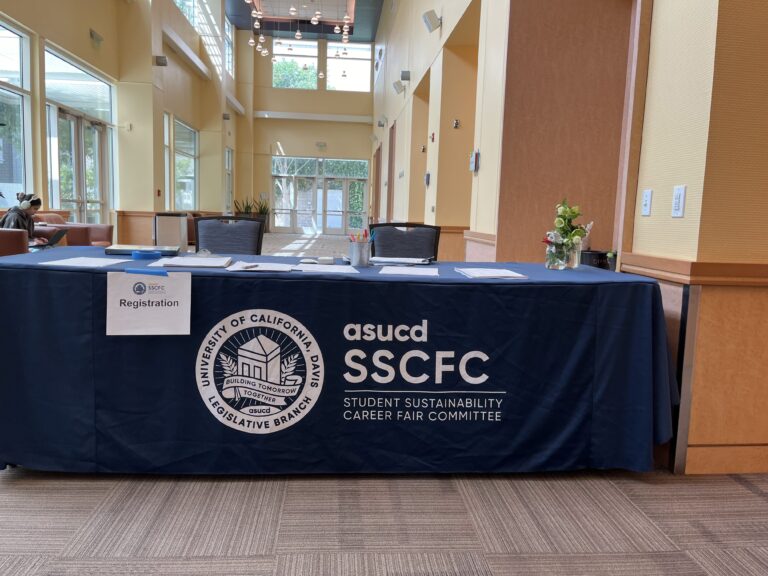
On April 23, the ASUCD Student Sustainability Career Fair (SSCF) was held at the Activities and Recreation Center Ballroom. The student-run fair is an annual event that invites companies and government agencies looking to offer jobs and internships to students.

“Our goal is to help students get exposed to environmental careers and potential job pathways,” Jordyn Kosai, chairperson of SSCF, said. “We try to get a full range [of organizations], because the environmental field is so vast.”

The fair had many employment opportunities from organizations such as the Department of Water Resources, CA Energy Commision and the Sacramento Tree Foundation. 

“[It’s important] to give students more opportunities to enter the field and job [search], [and] it’s helpful for people to know others in the field,” Kosai said. “We’re trying to expand our reach to way more student populations because the environmental field is not very diverse.”

Samantha Villegas, recruitment and outreach manager for the California Energy Commission (CEC), said that this event was important because of how many students at UC Davis are interested in energy, the environment and sustainability.

“We’re really excited to put our name out there, let students know about positions, our recruitment services, our student assistant positions and internship possibilities,” Villegas said. 

The CEC is in close proximity to Davis, being based in Sacramento. 

“We have a very inclusive and diverse environment, in all senses of the word,” Villegas said. “We have hiring positions for people from all walks of life.”

The CEC student assistant position is a paid position, and students can be placed anywhere within the commission, according to Villegas. This was one example of a job opportunity that was presented at the event.

Villegas continued with advice for students looking for work.

“Create an understanding of what your interest is and where it might lie,” Villegas said. “Always get a hold of recruiters. If you can research through their company website or LinkedIn for who their recruitment team is, it’s a really wise move as an applicant to contact them.”

Many booths were left waiting for traffic, giving those that did apply little competition. However, students who did show up were full of passion. 

“I’m really passionate about sustainability and planning specifically,” Emma Barnett, a third-year sustainable and environmental design major, said. “I’m really grateful, [and] I’m so happy all these companies came out to see what Davis has to offer.”

Many organizations who were invited to the fair were local, with positions not far from Davis. 

“UC Davis is educating a lot of amazing students in sustainability, [and] I think we’re pretty great at it compared to other places,” Barnett said. “It’s a reasonable ask for them to want to filter us into local and nearby companies so that we can help communities here in Davis.” 

Written by: Rivers Stout — campus@theaggie.org

A student’s list of fears

Drawn by: Sandhya Pfile –– sbpfile@ucdavis.edu


Disclaimer: (This cartoon is humor and/or satire, and its content is purely fictional. The story and names of “sources” are fictionalized.)

The Boneyard at Dizzy Cottage: Davis’ biggest backyard art show

Local creatives gather each month to show, sell and celebrate their work 


By SAVANNAH ANNO — arts@theaggie.org

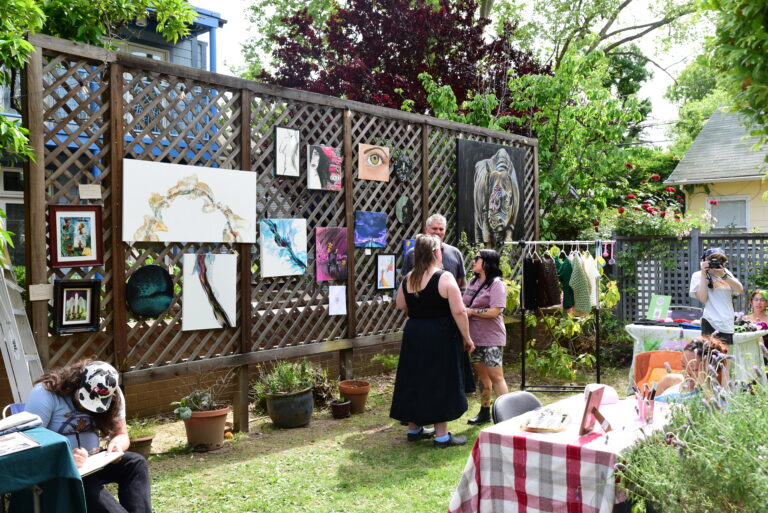
On April 27, local and regional artists gathered together to create a show, but not in a museum. Instead, they filled the space of a large backyard, hanging artwork onto the fences and setting up table displays for vendors. 

This backyard show is known as The Boneyard. Organized and led by local artist Cassidy Ruiz, The Boneyard is a Do-It-Yourself (DIY), mobile art show that officially began on Jan. 5. Being mobile, the show has been hosted at locations like Turtle House and the local Rocknasium rock climbing gym. 

The Boneyard at this month’s location, the Dizzy Cottage, featured live music, snacks and drinks. The show offered community painting where guests were encouraged to work together and paint designs onto a single, large tapestry. Towards the end of the night, the tapestry was a kaleidoscope of color: animals, abstract shapes, short messages and more littered the canvas cloth. 

Ruiz created the mobile show to provide more opportunities for local artists to display and sell their work, aiming to make gallery space more accessible. The Boneyard acts as a celebration of and space for Davis’ creativity. 

“I’ve really struggled with getting into the bigger art spaces in Davis,” Ruiz said. “There’s a lot of requirements and there’s a lot of really difficult loopholes you have to go through. With something like this [The Boneyard], you don’t need a business license, you just show up and get to do it.” 

Similar to Davis spaces like The Secret Spot and Third Space Art Collective, The Boneyard provides a platform for artists of all kinds, encouraging and welcoming diversity.

Hosting monthly events, The Boneyard is able to showcase a variety of artists and vendors. The Boneyard at Dizzy Cottage featured more than 15 makers; visitors could find jewelry, press-on nails, crocheted sweaters, keychains, stickers and more. 

One local vendor, Lydia Chang, discussed the importance of events like The Boneyard in her career as an artist. 

“I love connecting with people over art,” Chang said. “Having local events and getting to meet other artists and people in the community is really amazing. I love talking about my art and learning how people can relate to it.” 

Chang — also known as artfulyds on Etsy — creates stickers, keychains, rugs and even zines. Chang’s zines have been able to further connect her with visitors, relating to their messages on mental health, racial identity and more. 

With a variety of artists, themes and mediums, The Boneyard has something for every visitor to enjoy. 

“Everybody is so cool and unique in their own way,” Ruiz said. “Everybody brings something new to the table. What I love is that it’s all so different, we’re breaking barriers and doing something that people don’t always see” 

Ruiz hopes to expand the range of The Boneyard even further, aiming to eventually plan shows in both Sacramento and San Francisco. In the future, they aim to travel across the country — spotlighting communities of artists everywhere. 

In the upcoming months, be sure to look out for where The Boneyard is traveling next. You can catch the show next month at the Rocknasium on May 5, or at The Growing Groves’ Pride Party on June 8. 

If you’re interested in showing off your own work or being a vendor for one of The Boneyard’s events, you can visit their website and fill out a vendor application form. The show is currently accepting applications for the Pride Party at The Growing Groves until May 24, specifically looking to uplift and feature queer creators. 

Written by: Savannah Anno — arts@theaggie.org 

Davis Sunrise Rotary Club hosts screening of ‘Climate Restorers’ at Davis Veterans Memorial Center

The club gave audiences a rare opportunity to watch the series’ first episode before its full release


By MATTHEW MCELDOWNEY — city@theaggie.org


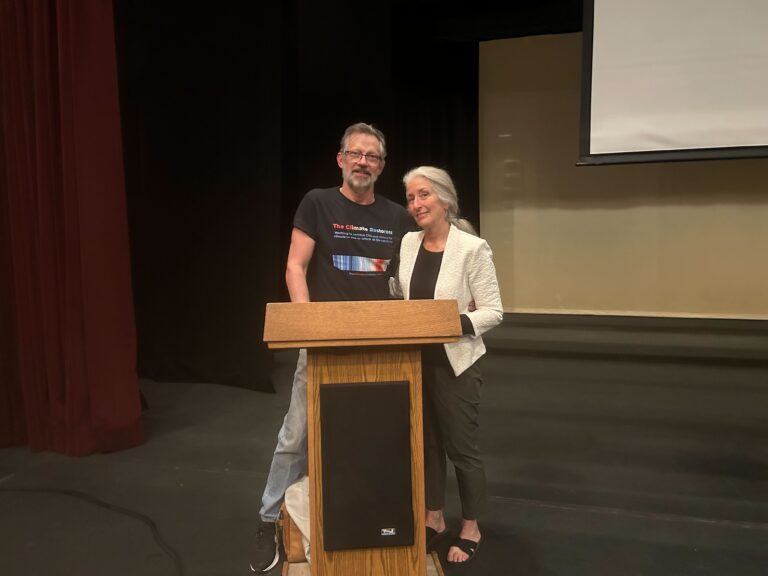
On April 24, The Environmental Committee of the Davis Sunrise Rotary Club hosted a screening for the first part of an expected four-part documentary series “Climate Restorers,” directed by John Bowey and co-produced by Phoebe Barnard, Ph.D.

The film series strives to not only educate people about the gravity of the ongoing climate crisis but also shifts this narrative to highlight the real possibility of healing the damage done to our atmosphere, ecosystems and communities. Its first episode, titled “The Only Way to Predict the Future is to Create it,” focused on counteracting the potent greenhouse gas, methane. 

The Davis Sunrise Rotary Club hosted this screening as a part of the nonprofit’s larger work around climate action and community service. Rotary, an international nonprofit service organization, coordinates acts of service to ensure more communities have things such as access to safe drinking water, healthcare for mothers and a cleaner environment. 

Frances McChesney, a chair member of the environmental committee, helps to ensure that the organization’s volunteers act and serve within the budget of the club, that they are in compliance with the bylaws of the organization as well as any directives or legislation at the federal, state and local level.

As the chair, McChesney has been a part of the environmental committee’s projects to restore natural wildlife around Putah Creek, funding a coral restoration project in Panama, advocating for environmentally conscious concrete and reducing plastic use. 

“One important thing for the environmental committee is that we continue to be a leader and help educate other clubs and people about how to protect the environment: avoiding single-use plastics, minimizing this impact where we can and the Rotary mission itself of service above self,” McChesney said. 

Having done her own share of work on climate restoration projects, including but not limited to the use of iron fertilization to promote ocean biodiversity, McChesney was excited to help host the screening of the film. 

The film was created on a small team and a thin budget, the “Climate Restorers” brings together a wide range of scientists and experts within the climate restoration field for the first time in documentary form according to Bowey.

Addressing himself to the audience before the screening, Bowey emphasizes the importance of a climate-conscious mindset.

“Too many people think of climate change as something purely subtractive,” Bowey said. 

“It makes people believe that they have to cut this and cut that, but that is not always the case.”

In short, Bowey feels that climate solutions could pave the way to new industries and introduce new and higher-quality products to consumers. The hardest hurdle to this is that change itself is uncomfortable, but at the very least it does not have to be uncertain.

The co-producer, Barnard, is an American global change scientist and a professor of conservation biology and environmental futures at the University of Washington. As co-producer, Barnard was concerned with much of the complicated science behind the film process, and thanks to her experience in policy and education, she felt very impassioned about making real changes through climate advocacy. 

Concerned by the unsustainability and lack of mobilization against the issue of climate change, she hopes that the film helps educate people on these issues, but more importantly, she hopes it is able to motivate people rather than discourage them. 

“The world really doesn’t have to be this way, and it certainly doesn’t have to end this way,” Barnard said. “But we have to understand now that we are at a certain crossroads for our civilization, and we have to take back our agency to shape our future.”


Written by: Matthew Mceldowney — city@theaggie.org