55.6 F
Davis

Davis, California

Saturday, December 20, 2025
Home Blog Page 92

How to make your Golden Gate Park visit more exciting

California’s ultimate urban park has something for everyone


By SAVANNAH BURGER — arts@theaggie.org


Looking for something fun to do in one of Northern California’s most iconic cities? San Francisco’s Golden Gate Park is the place for you! Boasting 1,017 acres, the park is 20% larger than Central Park in New York and is the third most-visited urban park in the country. There are limitless activities in the park, ranging from permanent museums to seasonal festivals and weekly concerts. This article will detail a handful of fun ways to pass the time.

First off, for anyone who hasn’t been yet, consider going to the California Academy of Sciences. Although the ticket prices are a little hefty, especially for college students with general admission ranging between $33 and $45 for adults depending on the day and time, the Academy is full of hours worth of fun.

When visiting the Academy, you can experience the underground Steinhart Aquarium, which houses tropical, amazonian and bioluminescent fish (among many others). For more wildlife, visit the Osher Rainforest, a four-story dome-encased rainforest filled with plants, butterflies, reptiles, free-flying birds and amphibians. Lastly, the Morrison Planetarium transports you to distant galaxies while the Shake House, the Academy’s infamous earthquake simulator, brings you back down to Earth with simulations of the 1906 and 1989 earthquakes. These are just a few of the things that the California Academy of Sciences has to offer.

Just next to the Academy, the Legion of Honor and de Young Museum, known as the Fine Art Museums of San Francisco, offer a swath of amazing, world-famous works of art. At both museums, general admission is $20 and the student price is only $11 (bring your student ID). When visiting, you can see breathtaking art from the likes of Aaron Douglas, Claude Monet, Georgia O’Keefe and Georges Seurat.

As far as flowers and nature go, the Japanese Tea Garden, Conservatory of Flowers and San Francisco Botanical Garden, otherwise referred to as the Gardens of Golden Gate Park, are phenomenal options. If you want to visit all three gardens for one discounted ticket price, the Gardens of Golden Gate Park Pass has a general admission price of $33. Otherwise, general admission for adults is $14 each at the Conservatory of Flowers and San Francisco Botanical Garden, with the Japanese Tea Garden ranging from $15 to $18 throughout the week.

Visiting the Japanese Tea Garden, you can witness a well-maintained Japanese-style garden, complete with pagodas, native Japanese plants, arched drum bridges, stone lanterns and koi ponds, all the while sipping on green tea in the tea house. Admission is free every Monday, Wednesday and Friday from 9 to 10 a.m. 

The Conservatory of Flowers, modeled after the Princess of Wales Conservatory in Kew, England, is a jaw-dropping and humid collection of aquatic plants, highland tropical plants, lowland tropical plants and Scarlet, the famous and rare corpse flower. Admission is free every first Tuesday of the month. 

For a more cardio-centered garden experience, the 55 acres of the San Francisco Botanical Garden has plants from Australia, California, Southeast Asia, Temperate Asia, South Africa, New Zealand, the Mediterranean, Chile and Central America. There is also the Helen Crocker Russell Library of Horticulture, which has books available for public viewing about subjects ranging from garden design to ethnobotany and sustainable agriculture. Admission is free every second Tuesday of the month and between 7:30 and 9 a.m. every day of the week.

Golden Gate Park features a variety of experiences that you can walk into free of cost. Continuing the theme of gardens, the Shakespeare Garden has over 200 species of flowers and plants, including every flower mentioned in Shakespeare’s plays and poems, hence the name. It’s also a popular venue for weddings.

You can also venture to the Dutch Windmill and Queen Wilhelmina Tulip Garden for a little taste of Holland in California. The garden features hundreds of colored tulips that bloom in early spring.

Thinking of a hike? Golden Gate Park has 33 acres of lakes, with many having trails circling them. Some of the most popular lakes to visit are Blue Heron Lake, Spreckels Lake, North Lake, Middle Lake and South Lake. Spreckels Lake is where you can see a plethora of model boats speeding across the water.

If you want to see San Francisco’s version of the Davis cows, head on over to the Bison Paddock. This meadow has been the home of a herd of bison since 1891, as the park superintendent at the time, John McClaren, was afraid of the species going extinct. They’re totally free to check out!

Lastly, if you’re into roller skating or blading, 6th Avenue Skate Park, or “Skatin’ Place” is a popular, free outdoor roller rink that has oodles of fun events for skating. One of these events is the Golden Gate Park Sunday Roller Disco Party that happens every Sunday from 12 to 5 p.m. Go to get your dance on and meet The Godfather of Skate, David Miles Jr., who brings his mobile DJ to blast his groovy jams.

Next time you have a free day or weekend, think about paying a visit to Golden Gate Park. Only a little less than an hour and a half away from Davis, the fun you’ll have will be worth the drive.


Written by: Savannah Burger— arts@theaggie.org 
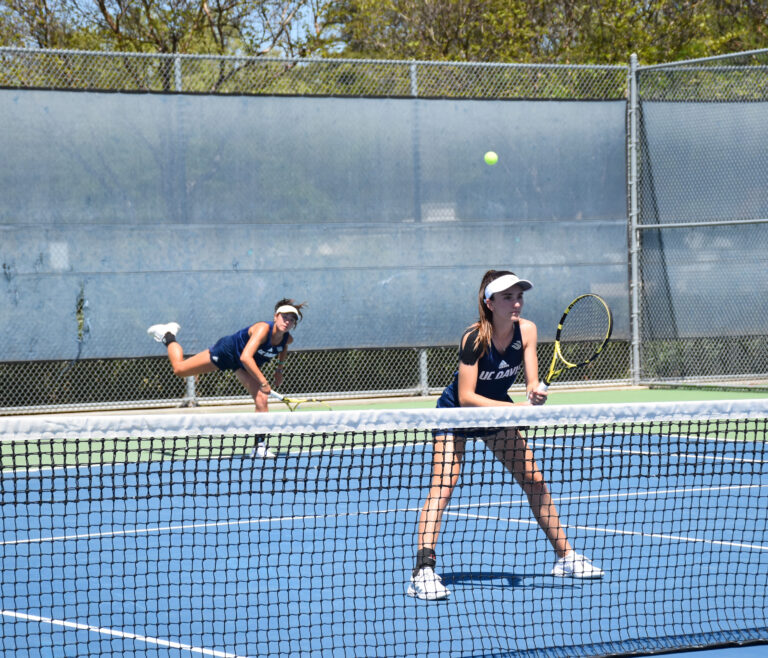
Aggies dominate on Senior Night

UC Davis women’s tennis sweeps Sacramento State 4-0


By EMMÍA J RIVERA — sports@theaggie.org 


To conclude the regular season, the UC Davis women’s tennis team went out in winning fashion as they swept Sacramento State at the Marya Welch Tennis Center on April 19. Prior to the match, the Aggies pursued a three-match winning streak, beating CSUN, Stanislaus State and Portland State. 

The first win of the day against Sac State occurred when fourth-year duo Carly Schwartzberg and Michelle Zelle won 6-4 against Mayya Gorbunova and Lou Baudouin of Sacramento State. Following the first win, fourth-year and third-year sisters Olive and Daisy Maunupau came back from a 4-1 deficit to secure a point for Davis in a tiebreak set 7-6. Additionally, Olive Maunupau continued that streak into her singles match where she took a straight set victory in her last home match as an Aggie.

Another strong performance came from second-year Kaia Wolfe, who won all of her sets after coming back from a mid-season injury. Additionally, first-year Mika Ikemori won an impressive all-set victory against Sac State’s Gorbunova. This became Ikemori’s third consecutive straight singles win and concluded the triumphant celebration for the seniors

Overall, the fourth-years were successfully commemorated for their work on the courts and concluded the season victoriously heading into the Big West Championship tournament. 

In the coming weeks, we will see if Davis can do what it takes to win and bring home the trophy.

Written by: Emmía J Rivera — sports@theaggie.org

Review: ‘Anyone But You’ proves rom-coms are a dying genre

The film was recently released on Netflix after a successful box office run in late 2023


By AALIYAH ESPAÑOL-RIVAS — arts@theaggie.org 


In the ever-evolving landscape of romance comedies, certain releases emerge as glimmers of hope, rekindling the popularity of the genre. Think back to films like “To All The Boys I’ve Loved Before,” “Crazy Rich Asians” and “Palm Springs.” Yet, amidst these films, the modern rom-com genre remains diluted with mediocrity, as most fade into obscurity right after their release. While the film “Anyone But You” initially seemed like an optimistic contender due to the buzz it received on social media, the film failed to leave a lasting impression on me.  

At the heart of any notable rom-com lies the crucial element of chemistry. Regrettably, “Anyone But You” fails to obtain this due to its lack of emotional depth and plot akin to a Wattpad story. The only defining factor that separates the film from any other rom-com is its budget, making it as forgettable as all three installments of “The Kissing Booth.”

The film follows Bea (Sydney Sweeney) and Ben (Glen Powell), two strangers who share an awkward interaction that ignites “instant sparks.” From that one interaction alone, they decide to have their first date the same day, leading to a night full of grilled cheese sandwiches, sharing secrets and sleeping together. However, when Bea leaves in the morning without telling Ben, he instantly gets defensive and tells his friend Pete how awful of a person Bea is. To his dismay, Bea overhears all of this and the two decidedly hate one another.

Flash forward to six months later, the two meet again at a bar when Bea’s sister announces she’s marrying Ben’s best friend’s sister. Following this, Bea and Ben embark to Australia, where the wedding party is forced to stay in a house together. But to no one’s surprise, the situation becomes even more awkward as both Bea and Ben’s exes are also there. Despite this, the two decide to fake a relationship to make their exes jealous. Just 40 minutes into the movie and there’s already a lovers-to-enemies plot, reappearing exes and fake dating. 

Yet Bea and Ben’s fake dating plan is horribly executed as their hatred for one another is made obvious through constant bickering which steals the spotlight from the main couple who is actually getting married. But it wouldn’t be a rom-com if there wasn’t romance, hence in the supposed climax of the film, the two realize that maybe they don’t want anyone else but themselves. Despite this, the third act brings another conflict for the two and shows how deeply flawed the two are. Ultimately, the two get together despite their differences, resulting in an ending sequence accompanied by the song “Unwritten” by Natasha Bedingfield. 

Overall, the film exemplifies Hollywood’s problem with producing rom-coms: the prioritization of star power over genuine chemistry. This isn’t to criticize Sydney Sweeney’s or Glen Powell’s acting skills per say, but their portrayal of romance falls short of convincing. It’s almost as if so much and yet so little happens in the film due to the overshadowing of their lackluster acting as a couple.

If you want a predictable rom-com with oversexualized characters that don’t compensate for their lack of connection, then this is the film for you. 


Written by: Aaliyah Español-Rivas — arts@theaggie.org 

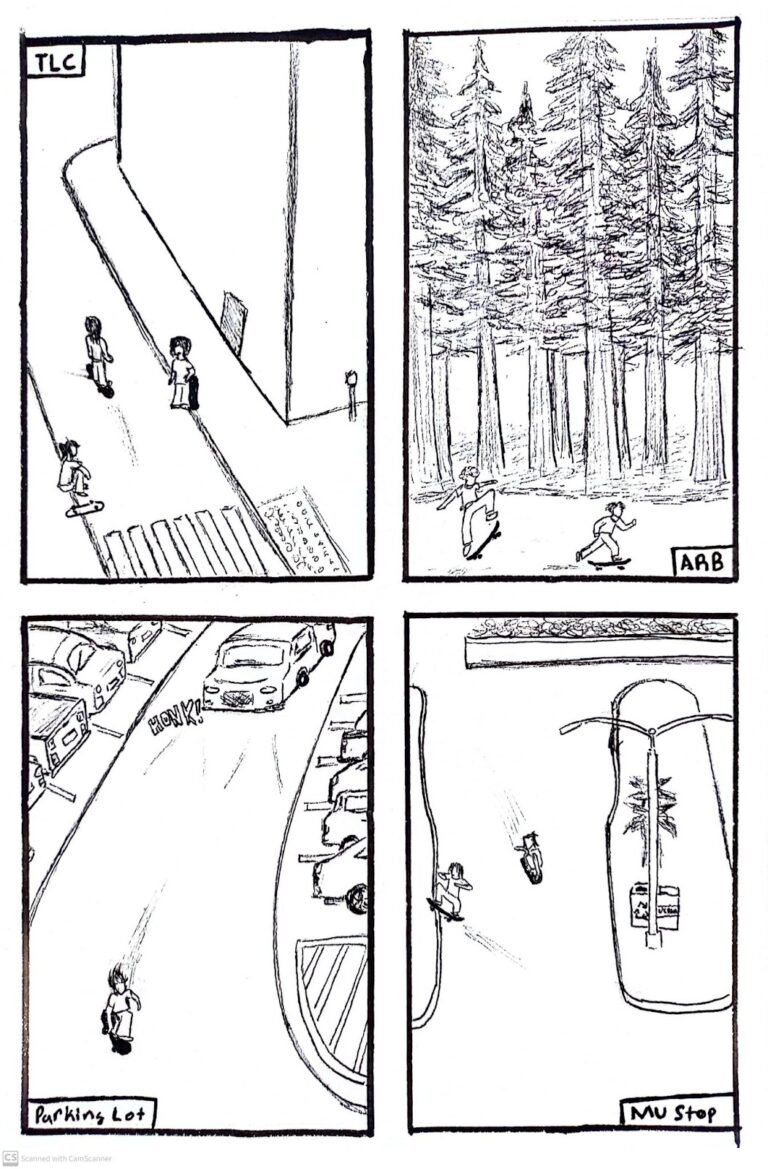
Davis on wheels

Drawn by: Nimra Farhan –– nfarhan@ucdavis.edu

Disclaimer: (This cartoon is humor and/or satire, and its content is purely fictional. The story and names of “sources” are fictionalized.)

The importance of reading in college and its positive effects on cognitive function

UC Davis students share books and advice that helped them learn to enjoy reading


By ZOEY MORTAZAVI — features@theaggie.org


It’s no secret that reading is good for your brain. In fact, getting into the habit of consistently reading can work wonders for cognitive function, memory retention, stress reduction and general brain performance. College students are often expected to keep up with extensive reading for their courses, and that can become difficult for those who aren’t accustomed to reading regularly. 

           This can also be very difficult for students majoring in the STEM fields — which many Davis students are — who take courses with the most reading they experience in college as part of the general education requirement. In this case, dense readings can definitely pose a challenge, and students are often caught by surprise at the amount and intensity of readings after starting their classes. 

UC Davis students have expressed that learning to read habitually and at a high level is crucial to balancing difficult academic subjects, especially as a new college student. 

“Since starting at Davis, I’ve taken a lot of courses about politics and global policy. It’s easy to fall behind if you’re not used to reading regularly,” Isaiah Phillips, a first-year international relations major, said. “Studying becomes way easier once you’re good at analyzing written material. Reading often can assist with that and help you succeed in your classes, even if you’re just reading books that you find interesting that aren’t necessarily academic.”

 Students at Davis who have found a love for reading discussed the books that helped them find this deeper appreciation as well as how reading has helped them in other areas of their lives. 

Molly Thompson, a first-year communications major, shared her favorite books and stressed the importance of finding reading material that speaks to your style and humor. 

“In terms of favorites, I love anything by Emily Henry and also ‘I Didn’t Know I Needed This’ by Eli Rallo,” Thompson said. “I love Emily Henry novels because they feel like more intellectual rom-coms; they’re fun and comforting but they’re also really well written.”

Thompson continued by sharing how reading can help with cultural, alongside academic, knowledge. 

“A well-read society is a well-functioning society. So much of our culture revolves around media and it’s incredibly important to be adept at interpreting it all. It’s more than just being able to read and comprehend it, it’s about having context and background knowledge and cross-cultural references to use to make sense of it,” Thompson said. “Habitual reading gives us those perspectives. It also gives us the ability to gain those perspectives. Getting good at reading for fun will allow us to also get good at reading academic writing that, while dense, is critical.”

According to the National Library of Medicine, those who read books for an average of 30 minutes per day, which is about a chapter a day, showed a survival advantage compared to those who did not read books. 

Reading regularly is also proven to strengthen our attention spans, which is a crucial skill to develop since the creation of various social media platforms. For example, TikTok and Instagram feature short video clips as people scroll through them. These 15-second to a minute clips have contributed greatly to a widespread decrease in the average attention span. 

Additionally, UC Davis students discussed the importance of practicing reading in order to gain writing skills, which are important for college students to develop early on in order to convey their ideas coherently and successfully complete rigorous writing requirements. 

Olga Muys, a second-year history major, agreed that reading has helped her writing process.

“Learning to enjoy reading and engaging with texts from an early age has absolutely helped me academically, not just in terms of my reading comprehension abilities but also in terms of writing,” Muys said. “‘Brideshead Revisited’ by Evelyn Waugh is one of my favorite books because of how immersive its language and characters are, along with how it examines themes of beauty, sexuality and spirituality.”

Muys continued by giving advice about habitual reading, no matter the kind of material you choose to read.

“I’ve always believed that the best way to learn how to write is to just read as much as you can, especially when you’re young,” Muys said. “You absorb so much about vocabulary and argument and structure, purely through osmosis, even if you’re reading something non-academic.”

As these students have discussed, there are many reasons to pick up a book and immerse yourself into a new story every now and then. There’s no need to force yourself to read books that are considered literary classics, either; the importance of getting accustomed to habitual reading is the key. 

Simply incorporating reading into your routine — even if it’s only for a couple of days each week — might just be a worthwhile investment in your cognitive development and academic performance. 


Written by: Zoey Mortazavi — features@theaggie.org

What is it like to be a commuter at UC Davis?

Students share their experiences as commuters


By SABRINA FIGUEROA — features@theaggie.org 


Running late due to packed parking garages and sleeping in your car during gaps in your schedule are just some of the many experiences in commuter culture. 

On an average weekday, 30% of UC Davis commuters drive, 19% ride the bus and 1% ride the Amtrak, according to a survey conducted by UC Davis. The commuter population is bigger than most would think, as 85% of people who attend, work or visit the university travel from somewhere off-campus.

Commuting may be a viable or efficient option for those who live close to campus — such as in surrounding cities like Sacramento or Woodland — and don’t want to fully move to the city of Davis. Or, it can simply be more affordable for students and faculty compared to living in on-campus housing or housing in the area. 

Braden Lee, a second-year mechanical engineering major, said that the major benefit of commuting comes from affordability. 

“I lived in Davis for my first year, and I haven’t really considered it again afterwards,” Lee said. “A pro of commuting to Davis is that living expenses are much cheaper than if you were to live in town. But the bad thing about that is that it takes longer to come in and out of campus.” 

As more people use their cars to get to school, the traffic in the area increases, potentially causing students to run late to class or even cost them their precious gas — which is not only expensive in California but also hurts the pockets of broke college students. 

Commuters tend to have to plan their schedules accordingly and ahead of time in order to keep themselves on track, according to  third-year biochemistry and molecular biology major Cynthia Ayala. 

“I have to plan out my schedule ahead of time,” Ayala said. “Say I have a class at like 4 p.m., I have to get ready at 2 p.m. to leave by 3 p.m., just in case there’s traffic or I need to find the hall or something. It’s an even bigger hassle when a class is at 8 a.m. and you have no other option.” 

Apart from the scheduling situation, commuters face a more serious problem in the potential for feelings of isolation from other students and a lack of school spirit. In other words, sometimes commuting takes away from the average “college experience that grants some reinvention, social life and freedom,” according to David Tzall, a licensed psychologist, in an interview with Her Campus.

“Building a social network and feeling connected to the college community can be more challenging [for commuter students] because they don’t live in the same space with their friends,” Tzall said. 

Tzall also noted that commuter students can experience mental health issues because of their off-campus status. 

“[Commuting students’ mental health] can certainly be impacted in a different way [than non-commuters’], but it can still be impacted nonetheless,” Tzall said. “A commuter student might feel more disengaged or isolated compared to those living on campus.”

Imran recalled how she feels excluded living off-campus. 

“Times where I don’t feel included are just in general,” Imran said. “A lot of people made friends in their dorms and whatnot, and I feel like I missed the opportunity entirely; that part was easy to see during [freshman] orientation especially.” 

Lee described how living off-campus has impacted his time at UC Davis.  

“It’s hard to make new friends,” Lee said. “Many of the friends I have already made were because of the time I lived on campus my freshman year. I usually feel included in the student environment the most when I participate in clubs. That’s the only way I’ve been able to make new friends.” 

A big part of commuting from off-campus or outside of Davis is also the fact that disconnection from students means feeling like you’re in isolation, according to Ayala.

“Honestly, I spend the majority of my time by myself, which isn’t necessarily bad because a lot of people struggle to enjoy their own company, and it was definitely something I had to learn how to do, but it still gets super lonely,” Ayala said. “It’s scary to think that my college years will be spent mostly alone, but sometimes you just have to make that sacrifice to get an expensive education.” 

Imran shared that the aspect of feeling disconnected and isolated from her UC Davis peers impacts the way she tries to get involved on campus and make long-lasting friendships. 

“As a commuter, I definitely feel like I need to overcompensate when it comes to being friendly at events and making an effort to talk or join leadership programs or clubs,” Imran said.

Although commuting can have both positive and negative effects on the individual, these students can always find ways to feel less isolated. 

“I think it’s still so important to not get discouraged or reject people who might want to be friends with you during classes. Basically, don’t be bitter,” Ayala said. “Join clubs, talk to random people when you feel comfortable, stay on campus for as long as your body allows, be kind and keep an open mind.” 


Written by: Sabrina Figueroa — features@theaggie.org 

Art is suffering at the hands of streaming

Video killed the radio star


By MOLLY THOMPSON — mmtthompson@ucdavis.edu 


 Our current media landscape revolves around a constant stream of content. There are more posts than a single person could ever keep up with — it would take over 18,000 years to watch every video currently uploaded on YouTube. The expectation of entertainment in the modern era is that it’s fed to us perpetually, which has changed the way that artists have to work. To keep up with our demands, they have to produce more rapidly. 

Before streaming became the primary way to access music, movies, TV shows and other entertainment, the process of creating media followed a much slower timeline. TV episodes were released on a weekly schedule instead of all at once (granted that some programs do still follow that model) and musicians took longer recesses in between album releases (granted that some still do break for greater periods of time), which meant that consumers had to wait. 

This served two major purposes. First, it allowed artists to revel in the creative process. A musician could spend multiple years developing a tracklist and could go away and marinate in their muses long enough to build a nuanced anthology. Now, artists are expected to churn out new records in succession — if they want to stay relevant, they don’t have the luxury of slowly creating a collection of songs. 

This is due, in part, to social media and how vlog-style content has become so mainstream. It’s normal for us to see creators releasing videos every single day on YouTube or even multiple times a day on short-form platforms like TikTok. We’ve become conditioned to expect content that’s released quickly and frequently, and the internet is so saturated, that we can move on and find something else to devote our attention to if we’re not getting that from a creator. 

Additionally, vlog-style content is relatively simple to produce. It doesn’t require the same level of meticulous construction that traditional media (i.e., movies and TV shows) does, which means that its value isn’t lessened by rapid production. Where this becomes an issue, though, is when we apply those expectations to traditional media — great works of art can’t be created without time. 

Vlog-style content serves its own purpose. This is not to say that it’s not valuable, but equating it to more involved mediums of production is leading to a landscape that doesn’t allow traditional artists to thrive. Because we’ve become conditioned to expect media to be released rapidly, we’ve created an atmosphere where musicians and filmmakers can’t survive if they don’t keep up; they won’t make enough money. So they try to churn out more media, but because they’re under the pressure of such a fast-paced culture, they can’t take the time to develop their art properly. We don’t allow them to indulge in the full creative process — the streaming era is harming great art. 

As for the second purpose, slower release schedules are used to build audience appreciation for the art itself. Rarity was part of what made it special; days when albums, movies or shows were released were events to look forward to. There was more of a build-up of anticipation and a celebration of the art and the artists. Consumers were forced to savor it — you couldn’t fly through a season of television all in one night; each one was special. 

Now, the industry is saturated to the point where it’s easy to move from movie to movie or from show to show without paying that much attention to its craft, which means that production companies can get away with putting less effort into what they produce. We don’t demand the same height of quality, so they don’t supply it for us. 

It’s a tandem effect: as an audience, we want more content and we want it now, so production labels have to cut quality in order to keep up. As we consume increasing amounts of content, we care less about the quality, so production labels put less effort into their projects. And it feeds back into itself; we’re left unsatisfied by subpar media, so we ask for more. Creators need to move faster to make more content, and the cycle begins anew. 

Another element is that artists don’t earn nearly as much revenue from streamed content as they do from other, more traditional distribution formats. In an atmosphere dominated by streaming, they have to release a greater quantity of content to turn a significant profit. 

Streams are also unprecedented in that, with regard to music, consumers have to listen to a certain percentage of the song for it to count as a “sale.” This leads artists to strategically orient their songs so that the catchiest, most-likely-to-get-stuck-in-your-head parts are near the beginning. If the beginning of a song doesn’t capture your attention, you might skip to the next one. Artists benefit financially from starting their songs with the hook because it draws you in, and you’ll be more inclined to listen to it in its entirety. 

This phenomenon is creating an empirical pattern in modern pop music — we’re seeing more and more songs kick off with the chorus or the hook. Sabrina Carpenter’s new single, “Espresso,” is a good example: it opens with the chorus. That’s done on purpose as introductions that slowly build up to the hook are becoming obsolete —  they don’t pay off.  

The modern era of streaming has changed the role that traditional media and entertainment play in our lives. Not only that, but it’s changing traditional media intrinsically. Media culture is moving more rapidly than ever before, and it will only continue to morph as the trend cycle moves and technology develops. The meaning of art in and of itself is malleable and constantly changing, but we’re seeing it change in new ways as streaming opens up new possibilities. 

New challenges breed creativity, so it’s true that artists are carving new spaces and innovating new ways to succeed. Streaming comes with many challenges, but many artists have been able to rise to them. The landscape is changing — not for the first time and certainly not for the last. It’s not a matter of resisting that change but of how we treat and preserve the sanctity of great art. 


Written by: Molly Thompson — mmtthompson@ucdavis.edu   


Disclaimer: The views and opinions expressed by individual columnists belong to the columnists alone and do not necessarily indicate the views and opinions held by The California Aggie.


UC Davis’ nationally-ranked Esports team builds community

The team will continue to compete in a multitude of collegiate tournaments 


By MADISON PETERS — campus@theaggie.org


The UC Davis Esports team competes in tournaments nationwide and is continuing their success as one of the top collegiate-level esports teams in the country.

The esports club is composed of 13 teams playing across eight different titles, or video games, and was created in the summer of 2021.

Kevin Deras-Guerra, a fourth-year biological sciences major and former director of the Esports team, explained what esports entail.

“[It’s] competitive gaming between college campuses,” Deras-Guerra said. “It’s more like a collection of different competitions. Depending on the title, there are different teams that colleges will levy, and then they’ll go up against each other. These [tournaments] are usually hosted by third-party competitive bodies.”

The team plays a range of titles, including Rainbow 6 Siege (R6), Rocket League, Overwatch and many more, with the most popular titles being Valorant and League of Legends, according to Deras-Guerra.

Within the Esports club, there are three subteams: the Gold Team, Blue Team and White Team. Deras-Guerra leads the Gold Team, which he describes as the equivalent of an A team in other sports, for R6.

Darren Son, a fourth-year art major and the R6 Gold Team starter, elaborated on his experience with the team.

“My favorite part about being [on] an esports team is the feeling of everyone working towards the same goal,” Son said. “Everyone is putting their effort into it and making connections within the team. I also love meeting new people from other teams we compete against. It’s a great way to find people who have the same interests.”

UC Davis Esports has competed and placed within the top 25 teams at a variety of national tournaments. In recent years, they were announced as tournament winners of both the 2023 University of California Esports Invitational and the 2023 Skyline Gaming Inaugural Season. They also placed fifth at the Colonial Bash Charity Tournament for Pittsburgh Food Bank. 

At their peak in fall of 2023, UC Davis Esports placed 19th in the nation and according to Deras-Guerra, they are a top 20 school overall in collegiate esports.

The team is currently hosting Moogie’s Valorant Throwdown, the first Valorant tournament they have orchestrated. Anyone who wishes to see the local area network (LAN) final round of the tournament can observe it at Cruess Hall on June 1.

The team is also preparing for their next big tournament, the West Coast Clash, which will be hosted by San Jose State University, according to Deras-Guerra.

Although they receive some funding from the university, the team is largely self-funded and has paid up to $3,000 out of pocket to attend their tournaments.

Deras-Guerra detailed what it takes to be a pro gamer.

“I really think it just comes down to game time, to be honest,” Deras-Guerra said. “It really is a mental thing. You focus on what you want out of the game and if you decide that you want to dedicate the time to it and you want to do it consistently, then that’s just what it takes. I think I put in four hours daily, at minimum, and that’s what I’ve been doing for four years. I’ve seen the improvement out of it, but a lot of people obviously can’t commit that time to it […]I think that’s a big contributing factor to how people get into [competitive gaming].”

The esports team also preaches diversity and inclusion for gamers of all backgrounds. The White team hosts an annual Women in Esports Bootcamp, which, according to an article by Jeff E. Heiser, is intended to open a safe space for women and non-binary players to learn more about esports and get introduced to the gaming industry. 

The UC Davis Esports website affirms these values.

“We are a sports club dedicated to developing a safe and inclusive environment for UC Davis gamers,” the website reads. “[We] believe that everyone has a chance to be involved in esports, regardless of their background or identity. Here, we are proud to manage diverse competitive teams, host inclusivity events and establish safe spaces in esports.”

Brian Crittendon, a fifth-year communications major and the R6 Gold Team starter, expressed the overall importance of esports on campus.

“It is extremely important to have an esports scene on campus,” Crittendon said. “Esports has proven that it’s here to stay and I think that offering a real way to experience it is invaluable.”

Besides just the competitive levels, Deras-Guerra said that esports is a rapidly growing industry including jobs such as tournament administration, production media, finance and various other positions.

Son shared these sentiments and commented on the significance of campus esports in the midst of its growing industry.

“As gaming and esports [grow] bigger, it is crucial to have esports on campus,” Son said. “It is a place where people can come and connect with others in person rather than online. It builds a sense of community on campus and overall gets people together.”


Written by: Madison Peters — campus@theaggie.org


2024 NFL draft recap

Some of the biggest winners and losers of this year’s draft

By CAROLYN (CARI) FENN — sports@theaggie.org

Over three days and seven rounds, 257 names were called and given the chance to live out their dreams of playing in the National Football League (NFL). The NFL draft not only gave players the chance to possibly accomplish a dream but also helped the teams fill out their big needs. In the end, some general managers (GM) did better than others at creating a draft class that filled their team’s necessities.

Winner: Philadelphia Eagles

GM Howie Roseman has once again drafted a rather strong class of players for the Eagles franchise. Despite the Eagles entering the draft with only eight draft spots, they ended up with nine rookies thanks to Roseman’s trades throughout the three-day event. 

On the first day, they had the No. 22 pick in the draft and were able to fill the Eagles’ biggest need with Quinyon Mitchell, a cornerback from the University of Toledo. Mitchell was ranked as the best cornerback in the draft and was the No. 8 overall prospect. Additionally, he is the first round-one cornerback pick for the Eagles since Lito Sheppard in 2002. While it is surprising that Mitchell fell to the No. 22 pick, the quarterback-heavy first round worked in the Eagles’ favor. 

The Eagles effectively addressed their needs during days two and three of the draft with one of their best picks happening in the second round. Cornerback Cooper DeJean, who the Eagles selected No. 40 overall is viewed as being one of the top-10 steals of the NFL draft by ESPN. The Eagles knew they needed cornerbacks entering the draft and secured two of the best with DeJean and Mitchell. 

Overall, going into the draft the Eagles knew what spots they needed to fill and ended up succesfully filling those. Roseman has set up the Eagles for potential success for this upcoming season and the next with their new and future prospects.

Loser: Atlanta Falcons

The viral video of Falcons GM Terry Fontenot talking to team owner Arthur Blank after selecting University of Washington Quarterback (QB) Micheal Penix Jr. in the first round speaks volumes as to why the Atlanta Falcons are considered to be one of the least successful teams in the draft. 

  While drafting one of the best-ranked quarterbacks in the draft at No. 8 would seem like a great move for some, for the Falcons it is very odd because of their deal with QB Kirk Cousins. Just this offseason during free agency the Falcons signed Cousins to a four-year, $180 million deal. While Penix is a great QB and has the potential to be very successful in the NFL, obtaining a QB was far from needed for the Falcons with their recent multi-million deal with Cousins. The Falcons, who have not made it to the postseason since 2017, needed a cornerback and more defensive line players but instead wasted the No. 8 pick on a position they did not need this upcoming season. 

While the Falcons filled some of their needs with their second and third-round picks, they wasted a potential game changing first-round pick on a great quarterback that was not a necessity. If anything, the Falcon’s first-round pick makes fans wonder what is going to happen next between Cousins and Penix as they fight to be the starting QB. 

Winner: Chicago Bears

  With the Chicago Bears’ draft picks this year, it seems the Bears might be on track to transform their losing franchise into a winning one. In the first round alone, they had draft picks at the No. 1 and No. 9 spots and they did not disappoint with their selections. 

For their first pick, the Bears unsurprisingly selected University of Southern California QB Caleb Williams who is viewed to be the franchise-changing QB that the Bears have been searching for for years. Williams has been described by some as being a “generational talent” and one of the best QBs to come out of the draft in the last 10 years. While this is a bold statement to make, as the last 10 years have included players like Patrick Mahomes and Joe Burrow, his college stats make the claim understandable.  

With the No. 9 pick, the Bears also selected University of Washington wide receiver Rome Odunze. While Odunze was ranked third among the wide receivers in the draft, it is believed that he and Williams will be a powerful duo for the Bears. 

Overall, the Bears GM Ryan Poles’ trade last year to give the Panthers the No. 1 pick for Wide Receiver DJ Moore and even more draft picks this year have worked out in their favor. While it is unclear if their two number-one picks will perform as highly as they are expected, the amazing draft decisions might turn the Bears franchise around.

Loser: Las Vegas Raiders

The Las Vegas Raiders began the draft with a questionable first-round pick. For the 13th pick, the Raiders selected tight end Brock Bowers from the University of Georgia. Although Bowers was the best tight end available in the draft, filling that position was unessential for the Raiders as last season they selected tight end Michael Mayer in the second round. This year, the Raiders’ biggest needs were a quarterback, offensive tackle and cornerback. 

Over days two and three, the Raiders began to draft players that fit their needs such as offensive tackle Delmar Glaze from the University of Maryland at No. 77 overall and center back Decamerion Richardson from Mississippi State University at No. 112 overall. However, the team never addressed their need for a long-term quarterback as all six quarterbacks viewed as potential franchise saviors were taken before the Raiders’ 13th pick. 

Overall, even though the Raiders drafted players to help in positions they needed, they didn’t effectively use their top picks for positions they required, instead opting to wait for later rounds to fill their needs. While their draft class is solid, it is far from being the best of the 32 NFL teams. 

Although it is easy to look at a team’s draft class and claim that some teams “won” the draft and others “lost,” no one will truly know until all these players take the field. Some of the first-round picks become flops while some last-round picks become saviors of a franchise. Until these players take the field in the upcoming season in September 2024 we won’t know what picks will change the trajectory of a franchise for the better or worse. 

Written by: Carolyn (Cari) Fenn — sports@theaggie.org

UC Davis Sheepmowers hold climate change poetry campaign throughout April

The goal of the campaign was to generate words and poems from students that will appear in a mural on campus in fall 2024


By BENJAMIN CARRILLO — campus@theaggie.org 


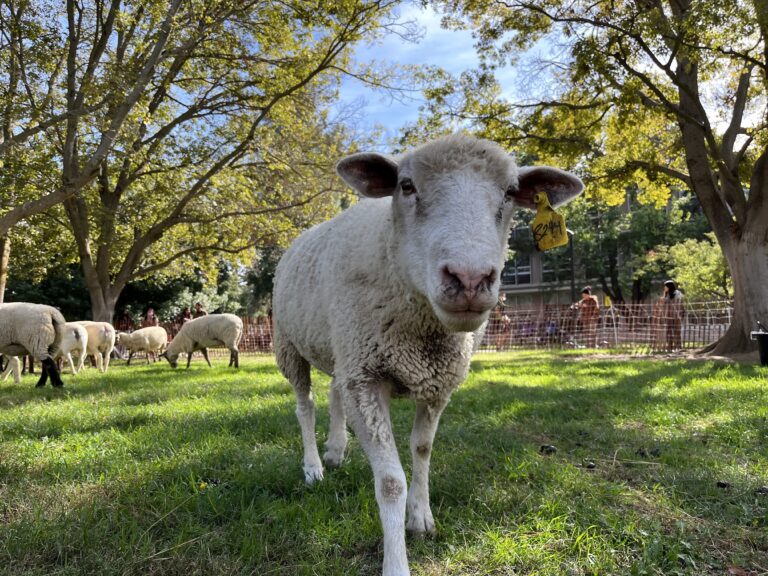
The UC Davis Sheepmowers — an organization whose purpose is to raise awareness about alternative energy sources for cutting grass — ran a campaign throughout April where students could write words that remind them of climate change to form a word cloud. This climate poetry event would then inspire a mural that the Sheepmowers hope to create by fall 2024. 

Abby Sanders, a third-year community and regional development major, is a research assistant for the Sheepmowers and spoke on why climate poetry was the inspiration for the event.

“Campus is going through a big shift right now with green energy,” Sanders said. “The Sheepmowers are a big part of that, being a big thing on campus that people will visit and [will] raise awareness to this [topic].”

Haven Kiers, a UC Davis associate professor in the Department of Landscape Architecture and the founder of the Sheepmowers, said that the organization began as an experiment to see how sheep compete against lawn mowers. 

“This started when I read about other countries using [sheep] as substitutes for lawn mowers,” Kiers said. “I thought this was a really cool way of being sustainable and thought more about how we’re an agriculture school, and we have sheep. Why not use the sheep we have and see how they are at mowing lawns?”

Kiers continued on about the fundamental principles of the Sheepmowers.

“We found that students’ mental health has been better with the sheep,” Kiers said. “Overall, just having the sheep creates an atmosphere that’s more positive [on campus].”

The sheep also do a great job at keeping the lawn shorter, according to Kiers. 

“[We are] trying to highlight the invisibility of who’s doing the labor, and seeing the sheep as mowers is really interesting,” Kiers said. “[It starts] a conversation about the aesthetic and sustainability of the sheep as opposed to a typical lawn mower.”

The word cloud campaign aimed to inspire poems and ultimately a mural that will go up in the Sheepmowers’ honor. 

“It started with crowdsourcing to come up with the words,” Kiers said. “We asked students and local Davis schools to say what words they think of when they think of climate change.” 

Then, the Sheepmowers spray-painted the sheep with those words and allowed them to roam freely in a fenced-off area on campus from April 24 to 26.  

“Based on where the sheep [were] standing, you’d write a poem,” Kiers said. “At the end, we’d create some sort of publication of the poems and then a mural with the most moving and inspiring poems and words.” 

Kiers also discussed the goals beyond just the mural and what she envisions for Sheepmowers’ future. 

“Because [we will eventually have] our own sheep, I’d love to eventually go to high schools, parks and events and just bring this show on the road,” Kiers said. “The idea is that we will eventually partner with the Green Care Lab to get our own sheep and to travel all around California with them to show off our purpose and raise awareness about alternative energy systems as a whole.” 

The entire Sheepmowers organization strongly urges students to come visit the sheep whenever they see them around campus. They can typically be found grazing on grassy fields throughout campus.


Written by: Benjamin Carrillo — campus@theaggie.org


Student organizers set up encampment for Palestine in Memorial Union Quad

The group has a list of five demands, one of which is calling for Chancellor Gary May to resign from Leidos


By CHRIS PONCE — campus@theaggie.org 


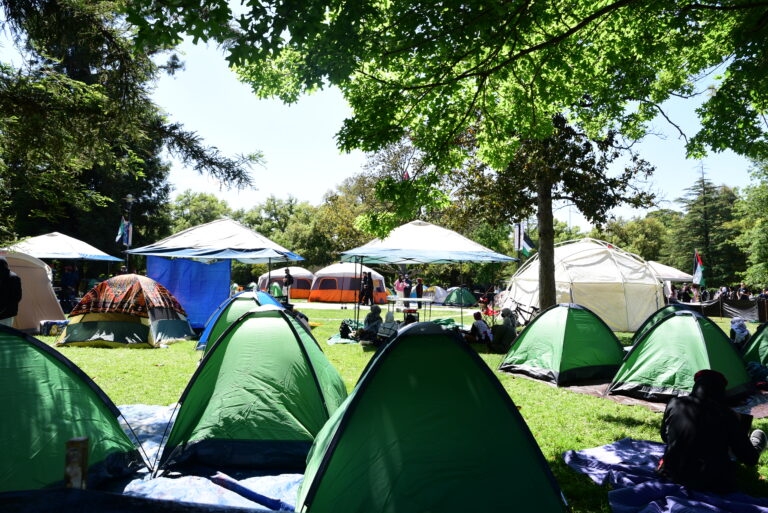
On the morning of Monday, May 6, Davis Popular University for the Liberation of Palestine (PULP) organizers set up tents and canopies in the center of the Memorial Union Quad to protest for Palestine. 

The group, which now joins several other college campuses, has a list of five demands that they are asking the university to address. The demands include: The University of California system divesting from Israel; a total academic “cultural boycott”; investing in Palestine and Arab American studies; respect for free speech and “no repression” and Chancellor Gary May either resigning from his position on the executive board of Leidos or as chancellor of the university. 

“We want to focus on what’s happening in Palestine, in Gaza and the West Bank, so we’re in solidarity there [with the other campuses],” a media coordinator with PULP, who at this time asked to remain anonymous, said. “It is a UC-wide demand, because we want the biggest reach possible. We want to end this genocide.”

May is on the board of Leidos, a company that works with the Israeli Ministry of Defense and which PULP has expressed criticism for. The coordinator discussed the group’s demand for May to resign from the company.

“That is not our top demand right now,” they said. “It is definitely something that is important to us, because [he’s] the chancellor, and we don’t want him to be on the board of a company that’s involved in the genocide happening, but our top demand is divestment.”

On Feb. 16, the ASUCD Senate passed a measure to boycott and divest from corporations “complicit in human rights violations against Palestinians amidst the ongoing genocide in Gaza.” While the Senate divested, the coordinator shared that the group’s goal is for the whole University of California system to divest. 

“We were really happy about that — it took a lot of organizing work and so we were really excited that was able to happen,” they said about the ASUCD divestment. 

The coordinator said that the group wants more students to turn out for the encampment, and they hope to stay put until their demands are met. They also shared their frustration with the United States’ involvement in the violence in Gaza.

“It’s been really upsetting to see our college campuses and the United States government accept what’s happening,” the coordinator said. “The U.S. is sending military aid to a country that is occupying an Indigenous population, and it’s hard to watch and not try to do something to change that.”

With the death toll of Palestinian lives surpassing 30,000, the coordinator shared that they hope students pay attention to the situation in Rafah.

“Look at what’s happening in Rafah, people are being displaced there,” they said. “Please don’t forget that’s why we are all doing this. This isn’t just about students on college campuses. It’s about what’s happening in Palestine and what’s been happening in Palestine. This is the moment where students can really make some change.”


Written by: Chris Ponce — campus@theaggie.org 

Senators hear antisemitism training, discuss ASUCD elections

Unitrans representative also discusses potential collaboration between different ASUCD units and the buses 


By JORDAN POLTORAK — campus@theaggie.org


The April 25 meeting was called to order at 6:23 p.m. by Vice President Aarushi Raghunathan following a roll call and land acknowledgment.

Senators Jacob Klein and Gabriel Gaysinsky presented a training on antisemitism to the Senate. The presentation was broken into three segments which included explaining Jewish identity, defining antisemitism and addressing common misconceptions regarding antisemitism. 

“[Antisemitism is] a certain perception of Jews, which may be expressed as hatred towards Jews,” Gaysinsky said. “Jews make up only three percent of California’s population but make up 8.6% of hate crimes. Nationwide, Jewish people are two percent of the population yet are the target of 60 percent of religious hate crimes.” 

Gaysinsky asked for examples of left-wing and right-wing antisemitism.

 “In the spaces I’m in, as a left-wing person, I have to educate people on left-wing antisemitism, because there is so much misinformation about Israel and Palestine,” Senator Yara Kaadan said. “People unknowingly engage in antisemitic rhetoric. People across the political spectrum are not immune to bigotry including antisemitism.” 

Gaysinsky then discussed misconceptions regarding antisemitism. 

“[It is] uniquely pervasive, because it is seen as punching up and punching down at the same time,” Gaysinsky said. “We are seen as both oppressors of non-white people as an entire community and also diluting and replacing the white race at the same time. If you’re confused, good, so am I.”

“Not everything about an entire community can fit in 20 slides,” Klein said. “This is meant to serve as a continuous dialogue, and we are always open to talk about this.” 

External Affairs Vice President Celene Aridin then read public comments regarding budget concerns and criticism of lack of transfer student representation in the Senate. 

Senator Dani Antonio responded. 

“The OTSR [Office of the Transfer Student Representative] is doing valuable work,” Antonio said. “They have been planning events, reaching out to transfers and lobbying. Transfers do see it. In terms of representation, the OTSR has hosted events surrounding that, to get more people on the table who are transfers to have that representation.”

Then, ASUCD Elections Officer Sriya Batchu made an announcement that the election turnout was 17.3% at the time of the meeting. 

“These are the highest numbers since COVID,” Batchu said. “I would love to get the numbers as high as we can — help us end off strong.”

Next, Jonah Messinger, the advertising sales representative for Unitrans, presented his proposal for a “Moo-vin Moo-seum.” The bus chosen for this would feature a bus wrap advertising ASUCD and the artwork inside the bus. 

“The possibilities are unlimited for this project,” Messinger said. “All of the growth and expansion of this project will be tied to ASUCD. It directly engages students and people are going to want to be engaged. The Unitrans buses provide high visibility for ASUCD to show what they provide for the Davis community.”

Aridin responded. 

“Besides art, play KDVS in the background as a way to plug in some of our units,” Aridin said. “To incorporate [The] Pantry and Basic Needs, put resources on the bus. These things will make it iconic. Think big, because this is something worth the investment.” 

The new legislation introduced was SB #84, which transfers $5,000 from the Entertainment Council to Black and Arab student organizations. These funds would be used for the Empowered Arab Sisterhood Banquet and Black Student Union’s end-of-year BBQ. 

Lastly, the table moved into an open forum where Kaadan asked what to do if an ASUCD worker had been wrongfully terminated for political beliefs. The 30-minute ASUCD lawyer was suggested. 

The past meeting minutes were approved, and the meeting adjourned at 7:49 p.m.

Written by: Jordan Poltorak — campus@theaggie.org

With ‘two years left,’ we have to embrace technology to survive climate change

We must remain realistic as we fight to reverse global warming 


By MAYA KORNYEYEVA — mkornyeyeva@ucdavis.edu


Recently, the United Nations (UN) Climate Chief Simon Stiell announced that “humans only have 2 years to save the world,” a prediction that paints irreversible climate change as practically inevitable. I met this announcement, to no surprise, with anxiety, fear and a great amount of speculation: what exactly is going to happen in two years, and how are we supposed to adapt to this new deadline?

Given the fact that climate change is the No. 1 source of concern in the modern world, with over a million people in the 2021 UN global climate poll labeling it as a “global emergency,” progress towards a sustainable future is moving along much more slowly than anticipated. 

Carbon emissions — one of the biggest contributors to air pollution, plastic production and global warming — aren’t being decreased in a way that is radical enough to make a significant and long-lasting impact before the end of the decade. A global capitalist economy continues to contribute to the over-consumption of non-renewable materials, which pile up in the streets, in parks and on beaches, filling the oceans with plastic. Money, yet again, is winning over the very real and crucial need to reform society in a sustainable way.

However, the last several years have proved incredibly fruitful in creating new, progressive technology for environmentally-conscious farming and agricultural practices. Intermixed and often hidden behind news stories of dark predictions and climate-induced natural disasters are dozens of studies about new food technology, from climate-resistant crops to urban farming. 

Focus has been dedicated to food production and management, and I would like to highlight some of the most important and innovative steps forward based on research beginning at the start of the decade and spanning over the last four years. 

The first and most curious new technology is an Artificial Intelligence (AI)-powered raspberry-picking robot, which allows scientists to reduce food waste and pick the ripest berries at the best times (night and early morning). Because raspberries are extremely fragile, the robotic machine preserves the berries by picking them with a soft, silicone-coated arm, which creates cushioning during harvest. I find this to be a very creative approach to ensuring that nothing goes to waste while also saving farm workers long, physically demanding labor.

Another unique approach to agriculture is vertical farming, a system that is being pioneered in Dubai at a growth center called the “GigaFarm.” This 31,000-square-foot tower of vertical growing spaces has already replaced up to 1% of food imports in the United Arab Emirates (UAE) and produces three million kilograms of fresh produce annually as of 2022. This concept focuses on land as the central constraint of agriculture. It attempts to consolidate ground for farming into a vertical rather than horizontal orientation, essentially to “save space” for other uses such as housing an increasing population. The facility includes technologies that transform waste streams (such as food scraps and sewage) into fertilizer, water and energy. Scientists at the “GigaFarm” also use sensors to monitor humidity, plant growth, light and temperature, as well as hydroponics to water the crops and a combination of compost and coconut fibers instead of soil. 

Finally, there’s salicornia, a type of succulent plant that thrives in marshes and saline water. This unique plant can be used both as a source of biofuel and as food for consumption, which is a major step forward. As freshwater is becoming scarcer in our warming world, freshwater crops are likely to become expensive and unsustainable, allowing for salicornia and other saline-based crops to lead the way. 

These and similar new agricultural technologies are something that we collectively need to focus on now that reversing climate change seems to be out of the question. A mere two years doesn’t give us enough time to realistically pass political reform on environmental issues. What we can do is put time and resources into developing new tech that will allow us to survive and thrive in a world that has passed “the point of no return.” 

Don’t get me wrong — as a globally connected community, our primary goal should still be to do everything we can to stop irreversible climate change. However, given the unattainability of completely reversing our current emissions and energy usage by 2026, we must start critically considering alternative solutions to problems that will arise in the future. This includes sustainable agricultural practices that aim to make farming easier in a potentially inhospitable environment, as well as distribution systems to ensure food security for at-risk communities. 

Whatever path we choose to take, the time to act is now. It’s crucial that we continue researching, exploring and advocating for sustainable legislation, procedures and practices that can create a safety cushion for our future. 


Written by: Maya Kornyeyeva — mkornyeyeva@ucdavis.edu

Disclaimer: The views and opinions expressed by individual columnists belong to the columnists alone and do not necessarily indicate the views and opinions held by The California Aggie.

Culture Corner

The Arts Desk’s weekly picks for music, movies and more


By NATALIE SALTER — ncsalter@theaggie.org


Song: “Super Shy” by NewJeans (2023)


K-pop girl group NewJeans took the world by storm in the summer of 2022 with their debut single “Attention,” and since then, they’ve continued to stun with an assortment of catchy and creatively composed hits defining a new yet memorable career. On “Super Shy,” NewJeans are as bright as ever, with their playful voices bringing a refreshing and infectious beat to life. Combined with standout choreography and a colorful music video, it’s the perfect song to have on repeat this spring and summer. You’ll find yourself just having to sing along, and it’s a gateway drug to the iconic and iridescent world that is NewJeans’ music.


Film: “How To Lose A Guy In 10 Days” dir. by Donald Petrie (2003)

All bets are on in the iconic “How To Lose A Guy In 10 Days,” a romantic comedy starring Kate Hudson and Matthew McConaughey that has proven to be a timeless classic of the genre. Beauty and lifestyle journalist Andie Anderson (Hudson) takes on a challenge for her newest article: to drive away an interested guy as a what-not-to-do advice piece for hopeful romantics. Her target is Ben Barry (McConaughey), a charming executive who has made a bet of his own to make a woman fall in love with him before an approaching gala. A hilarious tale of love and misfortune ensues, with Andie and Ben realizing what started as a game may be more serious than they initially intended. It’s romantic, charming and has plenty of humor, making it a worthy watch for your next movie night.

Book: “A Day of Fallen Night” by Samantha Shannon (2023)

In a stunning prequel to “The Priory of the Orange Tree,” author Samatha Shannon welcomes readers back into a lush and diverse fantasy universe filled with magic, culture and wonderment. This time, the story follows a series of mothers and daughters across the world’s various nations and each of their struggles to grow together and individually. Despite their distance in culture and country, the stories of these women intersect, and the ways in which they affect each other shape the course of history forevermore. Shannon is a master at character depth and complex, emotionally nuanced relationships. Furthermore, the enchanting universe she has crafted for readers to explore is endlessly fascinating and easy to fall in love with. With this dazzling prequel, Shannon has proved herself a rising master of the fantasy genre, and her works are absolutely worth your while.


Album: “A Night at the Symphony” by Laufey & The Iceland Symphony Orchestra (2023)


The captivatingly talented Laufey, who has already enchanted listeners with her marvelous voice and lyrical prowess, has paired with the Iceland Symphony Orchestra to craft a gorgeous live album befitting of her brilliant career. Composed of Laufey’s own original songs and her covers of classic jazz standards, the orchestral touch that the Iceland Symphony Orchestra brings to this album takes the music to the next level. It’s a delightful listen from start to finish, with the orchestra’s magnificent instrumentals and Laufey’s unforgettable vocals coming together to create a truly magical musical experience. The album is a wonderfully crafted look at Laufey’s career so far, and if its quality is any indication, her future is just as bright.

Written by: Natalie Salter — arts@theaggie.org

This election cycle, ‘Bitch’ was on the ballot

Two UC Davis students discuss their unique ASUCD Senate campaign


By EMME DUNNING — features@theaggie.org


Editor’s Note: The candidates were interviewed and this article was written prior to the ASUCD elections. Both Dhilena Wickramasinghe and Amrita Julka were elected to the Senate table. 


Chances are, if you’re a woman, you’ve been called a bitch at some point in your life. The term is an all too common insult, often aimed at women who hold leadership roles. 

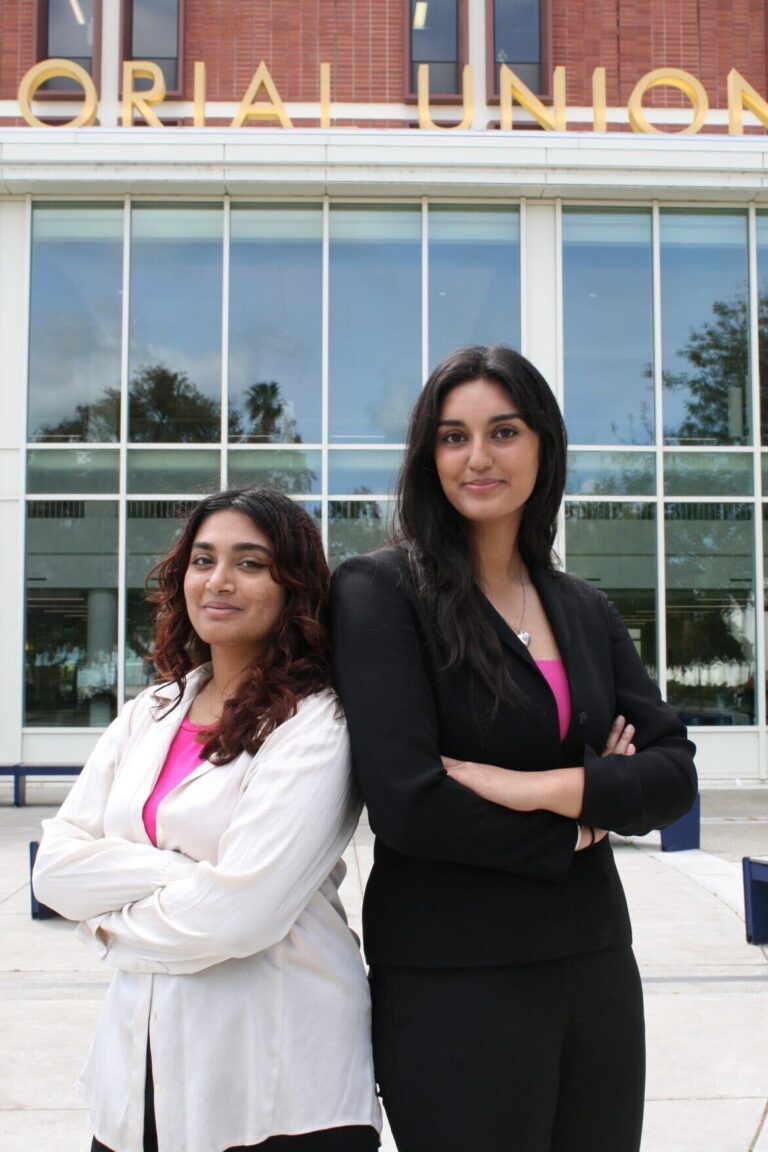
Dhilena Wickramasinghe, a second-year sociology major, and Amrita Julka, a first-year political science major, are embracing their identities as bitches. The pair ran for open spots in the ASUCD Senate under a slate poignantly titled, “Bitch.” As prominent women in student government, Wickramasinghe and Julka have personal experiences with the struggles associated with being women in leadership. 

“Women are constantly called bitches for advocating for themselves, for standing up for what is right and just trying to seek higher positions of power in general,” Wickramasinghe said. “Naming our slate ‘Bitch’ is kind of a punch back. We’re women, we’re proud to be women and we are reclaiming the power that is trying to be taken from us when men call us that word.” 

Although supporting women holding positions of power is a priority for the pair, Wickramasinghe’s slate partner Julka noted that this election is particularly important in terms of the need for adequate representation.

“[Our campaign] comes at a crucial time because all the women who are currently serving on the Senate are leaving,” Julka said. 

Due to the small number of women running for Senate, Julka worries about the possibility of a Senate without representation for women, and the impacts this may have on ASUCD as a whole.

 “There is a very high chance that women will not be represented fairly on the Senate table for next year. That’s why we’re focusing so much on this ‘women in charge, women empowerment move,’” Julka said. 

Julka and Wickramasinghe both currently serve on committees within ASUCD, which they feel has helped strengthen their understanding of the campus’ needs and informed the priorities outlined in their campaigns. Although they share a vision of making the ASUCD Senate more equitable overall, they also hold their own distinct views and priorities within their respective campaigns. 

Wickramasinghe, a current member of the Sexual Assault Awareness and Advocacy Committee, hopes to continue advocating for sexual health resources in a senatorial role. In their campaign statement, Wickramasinghe outlined initiatives supporting this goal, including increasing access to sexual health products in different locations around campus and ensuring sexual health education workshops are inclusive of the needs of the LGBTQ+ community. In addition, she hopes to advocate for diversity awareness and increase knowledge surrounding protections for student activists. 

Julka, who serves as a committee member on the Student Health and Wellness Committee, wants to ensure Aggies have adequate resources to support their well-being, including expanding access to menstrual and contraceptive products on campus and giving students more options for gender-neutral restrooms across campus. Additionally, she hopes to allocate money toward supporting minority groups such as first-generation, transfer and veteran student populations to ensure they feel supported academically and socially at UC Davis. 

Apart from her stated campaign priorities, Julka also recognizes the need for more transparency within ASUCD and, if elected, would implement transparency and accountability initiatives to ensure the Senate body works effectively with and for the students of UC Davis. 

“I think accountability for [the] Senate is a huge thing that we want to work on,” Julka said. “Each senator has adopted units and committees that they are required to attend meetings for, but unfortunately that does not happen a lot of the time. They just aren’t showing up. Our units, commissions and committees play such a huge role for our legislative body, and by not going to those meetings it is doing the student body a huge disservice. I’d definitely like to work on holding senators accountable for going to [these] meetings.”

Wickramasinghe echoed this sentiment, highlighting that as students pay a considerable $85 per quarter fee for ASUCD, they should be able to easily understand and utilize the resources they fund. 

“We’re giving so much money to [ASUCD] and I think ASUCD themselves should be more transparent and be promoting themselves more to the student body, and students should be able to know what they’re paying for as well,” Wickramasinghe said. 

The “Bitch” slate has been endorsed by many organizations and individuals across campus, including Dani Antonio, a current ASUCD senator and the pairs’ slate manager. 

Antonio, a third-year psychology major, played an integral role in establishing the “Bitch” slate following her decision not to run again for her ASUCD Senate position.

“I wanted to make sure that the candidates who were women and who were running for the same goals and values as me had the same support that I had when I was running,” Antonio said. “I decided to reach out to [Wickramasinghe] and [Julka] and see if they were interested in being in a slate with each other, and a slate called ‘Bitch’ at that.”

Ensuring informed and passionate women are adequately represented in the ASUCD Senate was a major factor for Antonio when deciding to support the “Bitch” slate. 

“If we lack representation at the table, other student voices aren’t gonna be heard. With women for example — menstrual equity, sexual reproductive health, student safety — all of these issues revolve around women, and if we don’t have voices to represent that on the table then they’re just gonna get lost. They’re not even just silenced, they’re fully going to be neglected,” Antonio said. 

“I think it’s super important that there are not only women on the table, but there are multiple women of different backgrounds, different priorities, different advocacies and specialties,” Antonio said. “As a senator, you shouldn’t be advocating for something you don’t know anything about and what I love about my candidates is that they’re both very well-educated on the things that they are running on.”

In the male-dominated field of politics, the “Bitch” slate believes women’s representation is immensely important. If elected to the ASUCD Senate, Wickramasinghe and Julka would have the opportunity to play a vital role in embodying informed representation for the UC Davis community.

Written by: Emme Dunning — features@theaggie.org