59.1 F
Davis

Davis, California

Wednesday, December 24, 2025
Home Blog Page 872

News in Brief: Davis City Council votes to place water rate initiative on June 2014 ballot

0

Davis City Council members unanimously voted on Feb. 11 to place an initiative on the June 2014 ballot that will ask voters to decide if they think the city’s water rates are fair and legal.

Water rates are scheduled to increase over the next five years to help pay for Davis’ $106 million share of the Woodland-Davis surface water project. The first of the rate increases became effective on May 1, 2013, and the most recent increase was Jan. 1.

Three options were presented to City Council at the Feb. 11 meeting by City Attorney, Harriet Steiner. They could refer the initiative to staff for analysis of impacts on the city, adopt the initiative without change, which would repeal the rate increases or put the initiative on the June 2014 ballot for voters to decide on.

Supporters of the surface water project urged City Council members to put the initiative on the ballot, seeing that as the most effective option.

“The most important thing is to move forward quickly. Delays will cost citizens millions of dollars,” said Jane Runquist, water project supporter.

Robb Davis, a candidate for City Council, said putting this on the ballot would help clear up a lot of confusion surrounding the water rates issue.

“You have to put this on the ballot, some members of the community are trying to roll back what was a decision of the whole community,” Davis said.

Nancy Price, a member of the group that wrote the initiative said putting it on the June ballot is the most most efficient option because it goes to the ratepayers immediately.

Price added that only those who pay water bills were allowed to vote on Measure 1 in March 2013; renters did not get to vote.

Putting the initiative on the June ballot allows for a citywide vote and renters, many of whom are students, will have a voice in whether or not they approve the rates. Under the new rates renters are being billed directly for the water rates, when before it was typically not a separate charge.

“Students who live in Davis have a right to vote on the rates. The rate structure still needs to be examined for fairness and affordability,” Price said. “If this passes the city has the opportunity to revisit the rate structure.”


— Paayal Zaveri
 

News in Brief: Davis Dance Marathon raises $4,000 for UC Davis Children’s Hospital

0

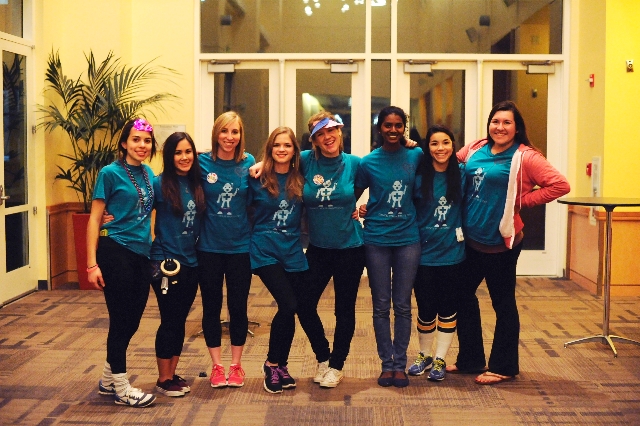
The Davis Dance Marathon was held on Feb. 22 in the ARC Ballroom from 6 p.m. to 2 a.m. The event raised more than $4,000, which will be donated to the UC Davis Children’s Hospital in Sacramento.

Although the benefit did not reach its fundraising goal of $10,000, Davis Dance Marathon Committee member Alagu Chidambaram said she and her fellow committee members hope to raise more in the next month.

“The Donor Drive page is still open for a month so people can still collect donations,” Chidambaram said. “All of that still goes towards our total, so we definitely want to see [the total] increase.”

According to Michelle Thompson, associate director of development for the Children’s Miracle Network at the UC Davis Children’s Hospital, donations are still being accepted until March 24 at 6 p.m.

Thompson said the money raised will go towards therapy and equipment to help the children.

“It helps support life-changing research, child life programs such as art and music therapy and much needed equipment for the hospital to save and improve as many lives as possible,” Thompson said.

Although attendance at the marathon was lower than last year, committee member Emily Summerlin was pleased with the outcome of the event.

“We put on a great event, we just didn’t have as great a turnout as we would have wanted,” Summerlin said. “We had a solid group of dedicated dancers who stayed until the end.”

Chidambaram echoed Summerlin’s thoughts and said event logistics had no real complications.

“Everything ran smoothly as far as the organization side of it,” Chidambaram said. “It all ran really well. About 150 people attended, which is not as much as last year, but it was probably due to conflicting schedules.”

There were performances from several campus groups and items were raffled throughout the night.

“All the entertainment went really well,” Chidambaram said. “All the bands were incredible and it was really nice to see all the different talent that is on campus. We gave away Wal-Mart gift cards, a toaster oven, hospital related T-shirts and bags. Ubisoft gave away two gift baskets — one was “Assassins’ Creed,” and one was “Just Dance.”

According to Chidambaram, the marathon had overwhelming volunteer support.         “We had a lot of volunteers,” Chidambaram said. “The main organizations that volunteered were Operation Smile, Delta Epsilon Mu and Delta Sigma Pi. They were incredible; they were amazing.”

Summerlin appreciated the help of the marathon’s sponsors.

“We have a lot of food, entertainment and music sponsors backing us and we are so thankful for all of them,” Summerlin said.

The Davis Dance Marathon Committee will start planning for next year’s event during Spring Quarter. It is looking for event volunteers and for people to join the committee itself, for several committee members are graduating, according to Chidambaram and Summerlin.

“We are so proud of our fundraiser and we can’t wait to welcome new Aggies to the DDM family for next year’s planning,” Summerlin said.

The website to donate is helpmakemiracles.org/event/DavisDM/.

— Jordyn May

City of Davis proposes sales tax increase

0

The City of Davis has found itself facing a daunting revenue problem, and is proposing to solve the problem with spending cuts and a sales tax increase.

“The increased funding, should the measure pass, would generate approximately $3.7 million annually and would be used to help address a structural deficit in the city’s budget,” said Kelly Stachowicz, the deputy city manager of the City of Davis.

This $5.1 million deficit has been caused by Davis Waste Removal  franchise fees, increases in other resource expenditures, personnel-related fee increases and several paid benefits outside of the city administration’s control.

Several internal attempts have been made to decrease this structural imbalance without creating any drawbacks to the wallets of the public. Over the past several years, the City of Davis has made $11 million in spending cuts, and has reduced 22 percent of its workforce since 2008. However, these efforts have not raised sufficient revenue.

The City Council, Council Subcommittee and a more specific Revenue Focus Group have been considering options, hoping to represent the Davis community as a whole. These factions have come to a general understanding that the City of Davis requires greater revenue.

According to the City of Davis 2014-15 Budget Presentation, an increased revenue would be part of a larger economic development effort working towards the goals of the city. This would include an improved administrative framework, long-term city financial planning and eliminating the need to ask citizens for money in the near future.

“Consistent with the presentation, the funds will be used toward long-term city obligations as well as utility and infrastructure costs. In concert with this effort, the city is working on a focused economic development strategy compatible with Davis values,” said Yvonne Quiring, assistant city manager and administrative services director for the City of Davis.

The current sales tax in the City of Davis is 8 percent, which is lower than the sales tax rate in Woodland and Sacramento. The goal of the June 2014 measure is to raise the sales tax in one-eighth cent increments, leading up to an eventual 8.5 or 8.75 percent.

The UC Davis on-campus sales tax functions under a different sales tax value, 7.5 percent. Because of this, on-campus stores would not be affected by the City of Davis sales tax increase.

“The impact of the proposed sales tax increase on students would be dependent on the extent to which they make purchases in the City of Davis,” said Julia Ann Easley, senior public relations representative for strategic communications at UC Davis. “UC Davis Stores charges the sales tax applicable for each of its locations. The downtown Davis store charges 8 percent. The campus stores charge 7.5 percent. The Sacramento store has yet another rate.”

According to the California Board of Equalization (BOE), the government sector for tax administration, California sales tax is imposed on all California retailers and applies to all sales of tangible personal property in the state. The sales tax is then paid directly to the BOE by the retailer.

To sell for a profit, a retailer is required to have a sales permit. Even though consumers at the Davis Farmers Market or Flea Market may not pay sales tax for their purchases, the retailers are still obligated to pay the government for the sales tax that the customer would have paid.

There are certain exceptions to sales tax, including food products, medical oxygen delivery systems, aircraft fuel for immediate consumption, feed analysis tags, wheelchairs, deep sea-fishing watercrafts, nonreturnable containers and foliar land fertilizer.

“Taxes based on percentage of retail prices are, economically speaking, a relatively low-impact way for governments to raise money,” said Spence Petersen, a fourth-year managerial economics major. “Now, 8.75 percent is a relatively high number compared to 8.5 percent in Sacramento and 8.25 percent in Woodland. Undoubtedly, this will draw some business outside Davis borders, but I don’t see it being any significant amount.”

The sales tax increase would pass with an electorate majority vote, and would become effective Oct. 1. The funding would cover public facilities, pools, park maintenance and further community outreach. Additionally, it could be expanded to include repair, rehabilitation and replacement of city and public property.

“If the measure does not pass, the city will need to determine what cuts to make to address the budget shortfall. If spread evenly across departments, those cuts approximate 12.5 percent of each budget; if public safety is excluded from cuts, the percentage rises to about 25 percent,” Stachowicz said.

In the event of too much money being generated, the excess revenue could result in building up General Fund reserves, or an early termination of the sales tax increase.

There are multiple options for the inclusion of a Parks Tax increase within the long-term plan for sales tax increase, as well as continued City of Davis reductions and operational changes.

The main goal of the sales tax increase is to alleviate the strain of the monetary deficit on the City of Davis, in the hopes that the more cooperative and supportive the community, the more they will benefit. All students and community members of age are encouraged to vote.

New legislation aims to improve response, prevention measures for sexual violence on campuses

0

New legislation that would require colleges and universities to adopt “victim-centered” response and prevention measures for sexual violence on campuses in California was announced in a press conference presented by Sen. Kevin de Leon (D-Los Angeles) on Feb. 10.

SB 967, co-authored by Sen. Hannah-Beth Jackson, (D-Santa Barbara), and State Rep. Bonnie Lowenthal, (D-Long Beach), would develop policies to encourage greater protection and services for victims, as well as education and intervention in the broader campus society. SB 967 will apply to all higher education institutions in California.

The bill would establish “affirmative consent” as the standard for deciding whether or not consent had been given by the given by the complaint in a campus investigation.

The California Coalition Against Sexual Assault (CALCASA) is in support of this legislation and the policies that it will enforce for higher education institutions in California.

Public Affairs and Communications Associate for CALCASA Shaina Brown said the victim-centered approach will serve California students, ensuring that they receive adequate resources. She said CALCASA is “enthusiastic for [the] legislation and working with them closely to get the language informed by organizations.”

Young women from advocacy programs on college campuses surrounded legislators at the Feb. 10 press conference. Sarah Yang, co-president of the Women’s Health Initiative and a fifth-year neurobiology, physiology and behavior major, presented a speech at the press conference following de Leon.

According to Yang, this bill encompasses the things her organization wants to do and she feels this is what the campus needs for awareness. The Women’s Health Initiative’s primary goal is to “support women in terms of gaining health resources and dealing with projects that have to do with awareness of campus.”

de Leon said that the current campus culture in higher education “stigmatizes survivors, not the perpetrators [and] sexual assaults are just too common and we need to fundamentally change that.”

Sofie Karasek, a student at UC Berkeley who said that she was sexually assaulted two years ago, was present at the press conference and emphasized the need for a “victim-centered” approach. Karasek was one of nine students in higher education to file a federal complaint last year alleging that Berkeley had mishandled student reports of sexual assault on campus.

According to the victim advocate for the UC Davis Campus Violence Prevention Program (CVPP), Jacquelynn Lira, it is difficult to determine how SB 967 will affect the UC Davis community specifically.

“The federal legislation called Violence Against Women Act (VAWA) that was passed echoes many of the provisions of SB 967 stated in VAWA, including provisions to expand requirements from a focus on sexual assault on campus to more include domestic/dating violence and stalking,” Lira said.

New requirements are currently being implemented at UC Davis, and include calculating the incidence of domestic/dating violence and stalking in the Annual Clery report, requiring that campuses make available education on these topics for new staff and students, and requiring the University’s Title IX office to investigate instances of domestic/ dating violence and stalking the same way they do to sexual assault, according to Lira.

“CVPP looks forward to the opportunity to expand on the current education and prevention programs [they] have, and continue to work one-on-one with student dealing with issues around sexual assault, domestic/dating violence and stalking,” Lira said. “CVPP appreciates the attention that SB 967 as well as other legislation that has come before it brings to this important issue.”

Mother Falcon soars into town

0

On Feb. 28, Mother Falcon and Tom Brosseau will perform at the City of Davis Veterans’ Memorial Theater, presented by the Davis Live Music Collective (DLMC).

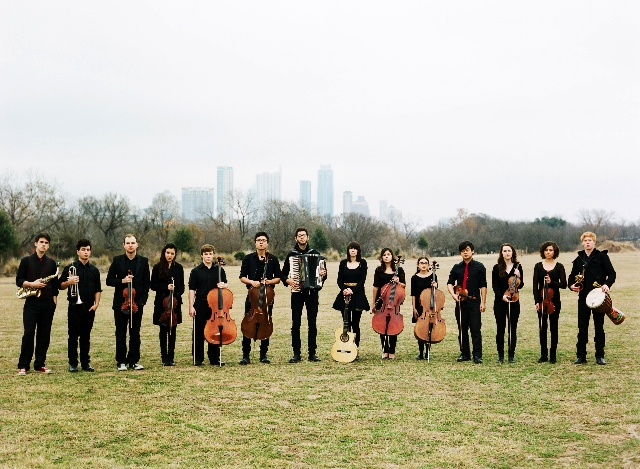
At first glance, Mother Falcon is less of an indie pop/rock band and more of a chamber orchestra. Their numbers seem overwhelming — ranging flexibly from 12 to 18 or more members — but every instrument expertly intertwines to form complex and modern melodies accentuated with strong lyricism.

Opener Tom Brosseau is a folk singer/songwriter on tour for his seventh studio LP Grass Punks, released under the Davis-based label Crossbill Records.

The past year has been good to Mother Falcon; their sophomore album You Knew was released last August, with critical acclaim from the Washington Post and National Public Radio (NPR). They subsequently toured and performed for the fourth time at South by Southwest Music Festival (SXSW), their popular show garnering Mother Falcon a spot on NPR Music’s “Bob Boilen’s 15 Essential Moments From SXSW 2013.” They will be performing at SXSW again on March 15.

Tamir Kalifa, a multi-instrumentalist, plays the accordion for Mother Falcon. He is a photojournalist by day.

“South by [Southwest] is always a whirlwind rush of madness and silliness,” Kalifa said. “Once we’re back in Austin, we’re also going to be the backup band for Kelly Pratt for his project Bright Moments. That’s a really exciting project on the horizon.”

Mother Falcon’s newest release, to be available on March 18, is a cover album of Radiohead’s 1997 OK Computer. Mother Falcon’s version, MF Computer, consists of classically-rooted reconstructions of the iconic record.

“I like how different [MF Computer] is from the original recording,” Kalifa said. “Radiohead is one of my favorite bands. We’re very influenced by Thom Yorke’s [frontman of Radiohead] vocals and melodies. It was fun to get a chance to digest it more, on a very subtle and nuanced level.”

Aside from touring, Mother Falcon also hosts Music Laboratory, a summer camp for middle and high school orchestra students. Next summer will mark Music Laboratory’s third year.

“It’s truly the highlight of our career as musicians,” Kalifa said. “We split the kids up into different bands, and the objective is to come up with a song by the end of the week. Over that week, we encourage them to be as bold and creative and collaborative as possible.”

The Davis Live Music Collective, who will be presenting the show, is a nonprofit organization founded in 2011. Run by volunteers, the collective focuses on expanding the live music scene in Davis.

“It’s a great model to encourage bands to stop in between Portland and San Francisco,” said Danny Tomasello, member of DLMC and director of the Davis Music Festival. “It’s got a house show feel in regular venues. We put on four shows a year, one of those being the Davis Music Festival.”

The Davis Music Festival will be held on June 21. Few details have been released as of yet, but many new ideas are in the works for the festival’s fourth year.

“We’re scaling back from last year, we’re shooting for around 40 bands,” said Sara Eley, Davis Music Festival’s second-in-command. “We will still be doing the typical downtown Davis takeover, just like in past years. Something new we’re going to do this year is a Friday Night Kickoff Show series, and on Sunday we’ll be doing a hangover brunch at Delta of Venus.”

DLMC have presented many other independent artists, including Richard Buckner and Elephant Revival.

“I’ve seen a lot of shows,” Eley said. “Mother Falcon has such an impressive presence and sound. It’s really beautiful and overwhelming, at times.”

The concert is open to all ages. Doors open at 7:30 p.m. Advance tickets are $12.50 and can be purchased at Armadillo Music or online at davislivemusic.com. Admission is $15 at the door.


News in Brief: City Manager Steve Pinkerton to leave position, recruitment for new city manager begins

0

On Feb. 12, City of Davis City Manager Steve Pinkerton announced that he would be leaving his post to accept a position as the general manager of the Incline Village General Improvement District. Pinkerton has held the position of city manager of the City of Davis since 2011.

Pinkerton’s last day will be April 25, according to a press release from the City of Davis. City Council will begin the search for a replacement as well as an interim city manager to fill the position from the end of April until a permanent replacement is appointed.

According to City Council member Dan Wolk, the appointment of both the interim city manager and the new city manager will be done by the City Council. The City Council plans to employ Ralph Anderson and Associates, the recruitment firm that was used in the employment of Pinkerton. However, no contract has been proposed yet.

Wolk said that it is the City Council’s preference to engage an interim city manager that is not a current employee of the City of Davis.

“The hiring of the city manager is arguably the most important decision a City Council has to make,” Wolk said.

When it comes to the criteria the council is looking for, Wolk said that it is essential that whomever they pick must be knowledgeable, work well with the council, city employees and community and they have to have a clear vision for the city.

According to a statement released by the City of Davis, the recruitment for a new city manager will begin as soon as possible. However, the final decision will not be made until after the June 2014 elections. This means the current City Council will not be making the final decision.

“We have a lot of these challenges that we are faced with as a community, certainly Steve’s leaving makes it even more challenging, but of course whoever comes in will be capable of handling those challenges. I have no doubt that we will find someone good,” Wolk said.

In working with the City Council, Pinkerton has navigated budgetary shortfalls as well as implemented projects for economic development in the City of Davis.

“I have enjoyed living and working in the dynamic environment of the Davis community over the past two and a half years. Despite unrelenting budget challenges, I believe we have made significant inroads toward ensuring that residents can continue to enjoy a high quality of life. I know the City Council and city staff will continue to build on these efforts of the past few years,” Pinkerton said.

— Sydney Cohen

Dining commons hold vegetarian cooking competition

0

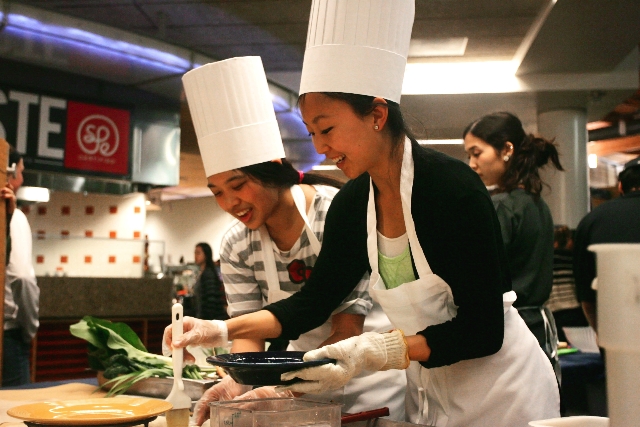
On Feb. 24, the UC Davis Dining Commons hosted the Green Chef Challenge. Teams of students, each representing one of the three dining commons — Cuarto, Segundo and Tercero — competed to craft a vegetarian dish using produce from the Student Farm.

At 6 p.m., the secret ingredient was revealed: fennel. The teams had an hour and a half to craft their dish before they were whisked away to Segundo for judgment. On March18, the winning dish will be featured as an entrée in the dining commons.

“I’m really competitive,” said Amanda Nieh, a fourth-year clinical nutrition major. “As soon as I heard ‘cooking competition,’ I knew I wanted to do this.”

Nieh, a contestant on Segundo’s team, said she has plenty of experience cooking — she also holds a job as a teaching kitchen assistant at the Student Wellness Center. Nieh said she saw an advertisement for the event during one of her visits to the dining commons.

“They said you don’t have to be a chef, you can just sign up,” Nieh said. “No experience required.”

To help level the playing field, each team received guidance from a sous chef (kitchen under-chef). According to Ben Thomas, sustainability manager of UC Davis Dining Services, the sous chefs were present only to offer techniques and advice.

“We really try to make it equal and fair,” Thomas said. “We want to let the students lead the development of the dishes.”

Around 6:30 p.m., students flooding into Segundo stopped to watch the contestants chopping vegetables behind the tables cluttered with cutting boards and bowls, while Thomas stood by to inform the curious onlookers.

Thomas said the Green Chef Challenge started in 2011. He explained how a group of students involved with various sustainable food projects wanted to put on a fun event to call attention to their efforts. Following the success of the television show “Iron Chef,” he said they came up with the Green Chef Challenge. In this case, the competition specifically uses seasonal produce.

The Green Chef Challenge also makes an effort to use only local foods, according to Nicole Lesnett, a fifth-year international relations major and ground coordinator for the campus’ dining services.

“The Student Farm is as local as you could possibly get for food,” Lesnett said.

She said the Student Farm has been around since 1977, but only grew large enough to supply the dining commons as early as 2011. As ground coordinator, her job includes transporting produce from the Student Farm to the dining services.

She explained that this closer source of food means significantly less emissions and lower costs for transportation. However, she said the Student Farm still only has six marketable acres of year-round produce.

“When the winning dish is featured in a month from now, it isn’t guaranteed that it’s all coming from this student farm,” Lesnett said. “The sheer volume [of the order] might require more than the farm grows.”

Despite this limitation, she said an effort will still be made to order produce from local sources. However, she said each dining common has different standards.

“Everything in the Cuarto salad bar, usually, is food that’s in season,” Lesnett said. “That’s part of being sustainable.”

Even during winter, she said, Cuarto provides vegetables appropriate for the season, whereas Segundo and Tercero will use out of season vegetables like cherry tomatoes and corn.

Therefore, she said the dishes made at the Green Chef Challenge might encourage a greater percentage of local food use.

Joanna Wirkus, a fourth-year clinical nutrition major, nutrition intern with dining services and one of the event’s judges, said she was excited to see how teams would combine the Student Farm ingredients.

Wirkus, Jianna Robertson, a student programmer for sustainability in student housing, and Raoul Adamchak, Market Garden and CSA coordinator of the Student Farm, were this quarter’s judges, and just before 7:30 p.m., the Cuarto and Tercero teams arrived to present their dishes.

Before the competition, Nieh said she isn’t the type to use a recipe — she’d prefer to use what’s there and throw it together. Her team’s dish, “Veggie Bao,” reflected that style: she said they sautéed all their vegetables and stuffed them into balls of pizza dough baked with egg wash. They topped the dumplings with tahini sauce and added a side of pickled fennel.

Tercero presented their “Curry Potato Pancakes,” featuring a vegetable curry, marinated tofu and a garnish of pickled fennel with onions.

Cuarto’s ‘Fennelicious Frittata’ sat upon grilled flatbread topped with a carrot and dill salad, with a side of roasted beet chutney. After the judge’s scores were added up, Cuarto’s dish won first place, with just a few points more than Segundo’s.

Thomas said to look out for the next Green Chef Challenge, planned for Spring Quarter. He said the sous chefs will work with new teams to keep things fresh and, of course, there will be a new secret ingredient.

UC Davis beer brewing documentary wins award in Hollywood

0

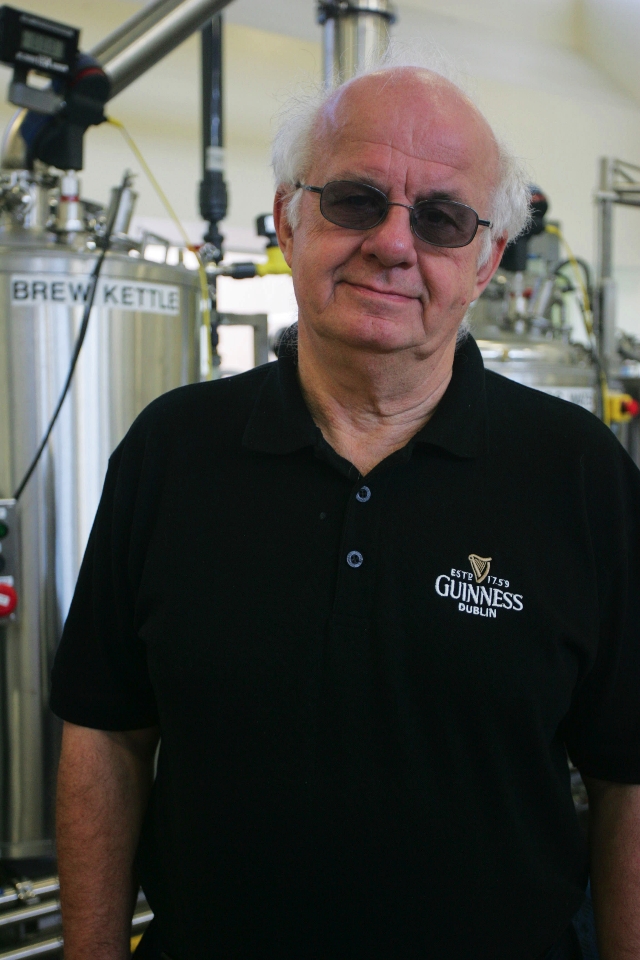
This year’s winner of the TASTE award for Best Mini-Film or Documentary is “The Art and Science of Beer” starring UC Davis’ own, Professor Charles Bamforth.

Bamforth said the award winning film was one of two short documentaries on beer brewing at UC Davis, both commissioned by the University of California Office of the President.

“The Office of the President was commissioning some films to illustrate what goes on in the University of California as a whole. They selected two topics from Davis and we were one of them,” Bamforth said.

He also said that he was not able to attend the awards ceremony in Hollywood because he was busy teaching, which he mentioned was his favorite aspect of his career.

“It never gets old, there’s always a new angle on it,” Bamforth said. “There’s always the joy of seeing the smile on people’s faces as they get it, and the realization that some of these people are going to go on and be successful brewers.”

Bamforth is a professor of malting and brewing sciences at UC Davis. He said he has been dubbed by his students “the pope of foam,” a name by which he is addressed in the documentary. He pointed to his research focus on beer foam as the inspiration for his nickname.

“I’ve been working on bubbles for a long time and we’ve probably done more research on the head on beer than anybody else,” Bamforth said.

Foam is one aspect that Bamforth said emphasizes beer as an art on top of being a science.

“We’ve done a lot of work to confirm absolutely that people drink with their eyes,” Bamforth said. “Most beer drinkers, most civilized beer drinkers, will put their beer in a glass, and if the beer’s got a foam on it they say it looks good. And if the beer’s not got a foam on it they say ‘what the hell is wrong with the beer?’”

But the art of beer does not begin and end with foam. Bamforth speaks of an entire culture surrounding beer, and points out that everything from the appearance to the actual drinking contributes to its consideration as an art.

“It’s an art form as far as it speaks to a quality of life. It’s not just the science of making the beer, it’s the imagery of that beer, it’s the presentation of the beer [and] it’s the circumstances of which you drink it,” Bamforth said.

Nor is the art simply part of the finished product. Ted Kizor graduated from UC Davis in spring 2013 with a degree in viticulture and enology, and he is a former student of Bamforth, completing both lower and upper division brewing classes under the professor. He noted that the art starts in the very beginning of the brewing process.

“Writing beer recipes is an endless art. Whether you’re playing with adjuncts, or differing the ratios of various hops or even deciding which water chemistry is going to help you make the best beer — it is an art,” Kizor said.

Kizor went on to say that the features of beer that can be considered art rely heavily on the science behind brewing.

“Most people don’t drink a beer at a bar and wonder if it has an invisible haze or what the oxidation level was at bottling, but you do notice how it smells, looks, tastes and feels,” Kizor said. “How are you going to measure those changes? How are you going to be sure that you have a consistent product? What are your standards of quality? That’s where the science comes in.”

Even speaking of beer as an art form, Bamforth does not want people to underestimate the contributions of beer to the scientific community.

“I know full well over the years what brewing has done for society, in terms of science,” Bamforth said. “A lot of the fundamental work that is applied in day to day life came out of the brewing industry.”

The documentary comments on both the art and science, which Bamforth said come together in complicated ways to form a finished product.

“It was basically me talking about the process from the mill to the finished product, and hopefully convincing people just how complex this production is, this production of beer,” Bamforth said. “A lot of people seem to think that brewing is somehow simple and straightforward, but it isn’t. It’s a whole bunch of different sciences that come together, and anyone that’s taken the upper division brewing classes pretty much knows that brewing ain’t simple.”

Jason Porter is a graduate student in food science at UC Davis and can be seen brewing in the background of the documentary. He said that brewing is a mix of all subjects from biology and engineering to history and law. He mentioned Bamforth as an inspiration for joining the business of brewing and that he’s glad to be working with beer.

“It’s something fun; it’s something you can enjoy,” Porter said.

Bamforth said that he is glad to have been a part of the documentary and emphasized his goal of exposing people to the message of beer, and its usefulness in teaching.

“I’m pleased that it actually does allow us to point out to people that this is a serious topic but it is [also] a fun thing and a great way to learn science,” Bamforth said.

Marsh double homicide trial hearing on Feb. 28

A Yolo County Superior Court Judge is set to rule as to whether Daniel Marsh’s alleged confession of the April 14, 2013 murders of an elderly Davis couple, Oliver Northup and Claudia Maupin, should be part of the upcoming trial process.

The motion to suppress the alleged confession was filed by deputy public defenders Ron Johnson and Andrea Pelochino on Feb. 6. They claim that Marsh was taken to the Davis Police Station under false pretenses before being questioned by Davis Police Detective Ariel Pineda and FBI Agent Chris Campion about the murders.

Yolo County prosecutors say this bid to get rid of the alleged admission should be denied because law enforcement officers did not use false pretenses or coercion to elicit the confession, according to the Davis Enterprise.

“(T)he defendant decided to confess because he believed it was pointless to resist in light of all the evidence against him, not because of any promises of leniency,” said Assistant Chief Deputy District Attorney, Michael Cabral in an opposition motion.

Marsh was arrested on June 17 and is charged with two counts of first-degree murder, along with the special-circumstance allegations of multiple murders, torture and lying in wait. He is being tried as an adult. Marsh has pleaded not guilty to the charges and is currently in custody at Yolo County Juvenile Hall.

A hearing is scheduled for Friday Feb. 28 at 9 a.m. and Marsh’s trial is set to begin the week of March 10.

— Paayal Zaveri

ASUCD announces results for Winter 2014 Elections

At 12:30 p.m. on Feb. 21, Eric Renslo, ASUCD Elections Committee Chair, announced the results of ASUCD’s Winter 2014 Elections in Wellman 6.

Measure 1, also known as the “Save the Aggie” measure, passed with 72.92 percent  voter approval. The measure received 27.11 percent voter turnout, exceeding the 20 percent needed for the fee referendum to be considered valid.

Renslo then announced the results for the ASUCD senate elections. In order one to six, senate candidates Azka Fayyaz (S.M.A.R.T.), Robyn Huey (S.M.A.R.T.), Nicholas Sanchez (S.M.A.R.T.), Amelia Helland (NOW), Artem Senchev (Independent) and Eugenia Chung (NOW) were elected to the senate table.

Next, Renslo presented the results for the presidential election. Armando Figueroa (S.M.A.R.T.) and Maxwell Kappes (Independent) were elected ASUCD president and vice president, respectively.

For more information, go to elections.ucdavis.edu.


— Scott Dresser


Elements of ecological research come together at Giedt Hall

0

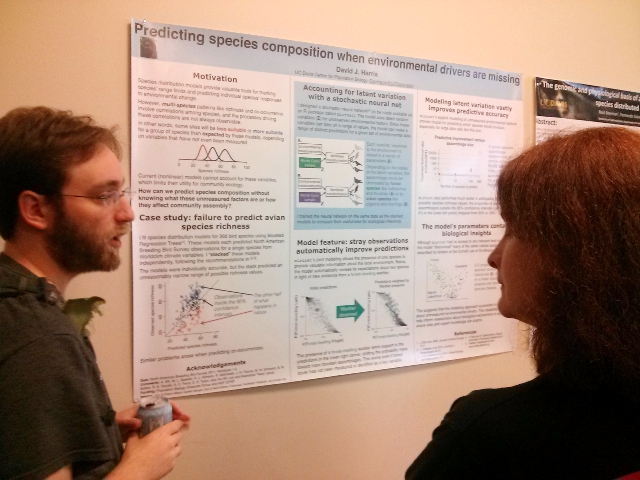
Ranked as one of the best ecology graduate programs in the world, the UC Davis Graduate Group in Ecology (GGE) showcased their scientific research at the seventh annual Graduate Student Symposium in Ecology on Feb. 15.

The symposium was funded by the Graduate Student Association, the Coastal Marine Sciences Institute and the Graduate Group in Ecology, and close to 100 undergraduates, graduate students and faculty members attended. They gathered at Giedt Hall to tune in on topics ranging from marine ecology to population biology presented by 11 UC Davis graduate students in GGE.

“One of our main goals is to ignite collaborations that don’t exist yet,” Katie Eskra, an ecology graduate student and a primary organizer of the event, said. “There are people studying ecology from different graduate groups and this is a way to collaborate together.”

The GGE includes students studying a wide range of topics, from forestry and atmospheric sciences to hydrology and entomology. To advance future discussion, Eskra encouraged attendees to share their experiences in the field with one another throughout the course of the day.

“What are people’s high points and low points in ecology?” Eskra asked the audience.

Eskra explained that although students may be pursuing different projects from one another, there could be commonalities between the research challenges and successes they face, thus serving as a topic of discussion.

After the event, student presenters received feedback and answered questions regarding their research presentations. Having been involved in the planning of the symposium for several years, Eskra believes that the event has grown substantially over time.

“This is really a neat thing to be a part of, ” Eskra said. “There were a bunch of volunteers involved including undergrads, teachers [and] the community.”

Apart from the volunteer effort, the Ecology Graduate Student Association chose which graduate students would present at the event. The group also contributed to the logistics of the symposium, including setup, choosing a keynote speaker and securing event funding.

“When I found out that keynote speaker was Mark Bertness, I became really excited and jumped in to help schedule and run the website,” said ecology graduate student Matt Whalen. “Mark is a master of designing meaningful experiments to confront problems in ecology.”

Dr. Bertness, an American ecologist and chair of the Department of Ecology and Evolutionary Biology at Brown University, was introduced by Whalen as a pioneer in the field of ecology for over three decades.

Although there were initial concerns about whether Dr. Bertness would be able to attend the symposium due to severe weather, he was able to present his recent research from his lab about salt marshes.

Growing up on the West Coast in Tacoma, Wash., Bertness developed an interest in natural history at an early age as he recalled spending most of his childhood roaming the beach. After graduating as a chemistry major, Bertness never considered that he would find a career in ecology.

After reading various studies in ecology to guide his work as a chemist, Bertness discovered Robert Paine, a premier ecologist and retired professor emeritus of zoology at the University of Washington.

“Out of college, I worked as a chemist on the fungicide to save California potato crops,” Bertness said. “Once I met Bob [Paine], I thought this is what I want to do. I want to be Bob Paine,” Bertness said.

Eventually, Bertness went on to study hermit crabs in Panama and was hired by Brown University. As a professor at Brown for over 30 years, Bertness explained the uniqueness of the university in that it values undergraduate education as much as research.

“I don’t feel I have a job, but a calling,” Bertness said. “I have worked all over the world doing research in Europe, Chile, the Gulf and I’ve had a charmed life because I found something that I loved that I could focus on.”

Although it may take time to find the ‘perfect’ career for some, Bertness uses his personal experience to encourage all students to find out exactly what it is they really want to do in college.

“Identify what you love, forget about practicality and just focus on doing that and make it happen,” Bertness said.

Similarly, Grace Ha, a graduate student in ecology and one of the symposium chairs, explained that the symposium not only allows students to discover cutting edge research on campus, but also assists in career exploration.

“Davis is one of the best places to study ecology in the world and why not take advantage of that resource?” Ha said.

Eskra, Farlin and Ha agreed that more students are discovering ecology, citing an overall increase in undergraduate attendance this year with 47 pre-registered students. Ha said the symposium helps the various ecology groups on campus form relationships with one another.

“Davis has a lot of fantastic researchers, but there are so many different departments and a bit of a disjoint between groups,” Ha said. “The symposium fosters dialogue between different communities.”

While the symposium primarily focuses on ecological work, Farlin explained that the group wanted to incorporate other aspects of creativity and innovation. Along with the multiple research presentations and posters, dozens of photographs and pieces of artwork lined the walls of Giedt Hall.

“By and far the symposium essentially showcases the breadth and depth of work done by ecology graduate students,” Farlin said. “However, we also wanted to include other groups and had an art and photography contest.”

The art and photography contest was open to the general public and the contest winners went home with cash and gift card prizes.

“Our goal is to showcase the breadth and quality of ecological research being done by graduate students at UC Davis,” Whalen said. “The symposium provides a forum and comfortable, academic setting for people to get together.”


Aggies hope to strike gold at home, on the road

0

Teams: UC Davis at Long Beach State; vs. Hawai’i

Records: Aggies, 10-13 (5-5); 49ers, 13-11 (5-5); Rainbow Wahine, 12-10 (6-4)

Where: Walter Pyramid — Long Beach, Calif.; ARC Pavilion — Davis, Calif.

When: Thursday, Feb. 20 at 7 p.m.; Saturday, Feb. 22 at 2 p.m.

Who to watch:

Junior guard Kelsey Harris has been one of the key offensive threats for the Aggies as of late. She has passed the 10-point mark four times in the past five games, only barely missing the mark against Cal Poly on Jan. 30., with eight points.

The transfer from Iowa State has really found a home at UC Davis after sitting out the 2012-13 season due to transfer rules. Harris is averaging 11.6 points, 4.3 rebounds and 1.4 assists per game this season and has been efficient in her scoring. Her 42.9 percent field goal shooting is fifth on the team, and her 40.6 percent shooting from beyond the arc is good enough for second on the team.

Harris’ ability to space the floor and provide constant scoring has been key for the Aggies this season, who have needed another consistent offensive option besides star junior forward Sydnee Fipps. Harris’ ability to take some of the scoring pressure off of Fipps will be critical if the Aggies have any hope of finishing the season well and going far in the Big West Conference playoffs.

Did you know?

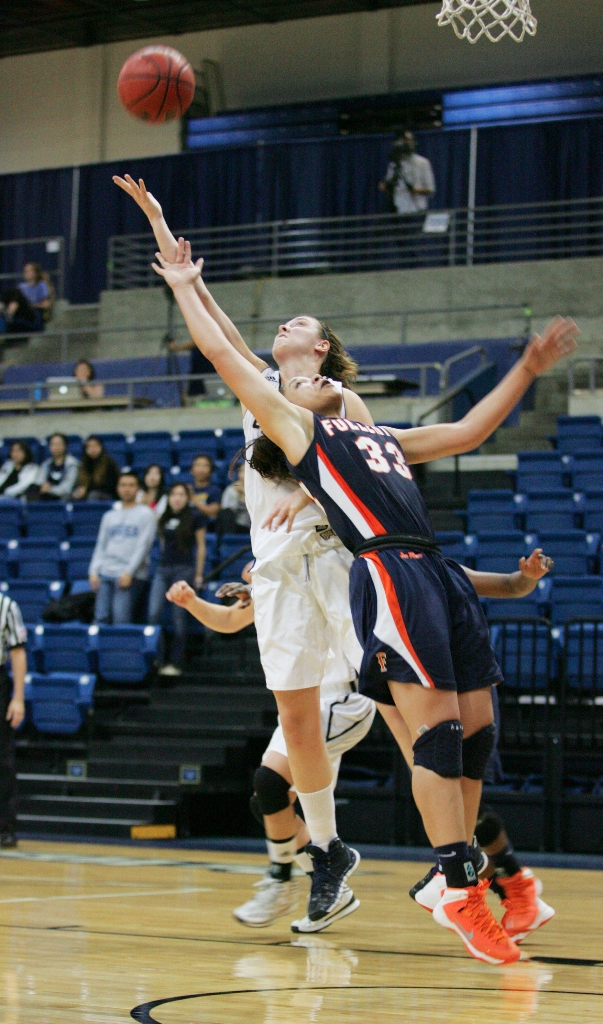
Junior forward Sydnee Fipps scored 20 points on seven of 12 shooting from the field against Cal State Fullerton on Feb. 20. This marked the fourth consecutive game which Fipps has scored 20 points.

The 20-point game against the Titans allowed Fipps to move up on the UC Davis all-time scoring list, tying herself for 13th place. With six more regular season games this year, the Aggies hopes that they can ride Fipps’ hot hand to victory.

Preview:

After only playing one game last week, instead of the usual two, the Aggies should be well rested and ready to play against Long Beach State and Hawai’i.

However, it is not all sunshine and rainbows for UC Davis, as it is struggling to regain some momentum after suffering a tough 65-62 loss to Cal State Fullerton on Feb. 13, as well as a tough 79-73 overtime loss at the hands of UC Irvine only a few days earlier.

After starting off red-hot in conference play, soaring to a third-place standing, the now sixth-placed Aggies have cooled off considerably. Going 2-3 in the last five games, including losing two games in a row, has somewhat put a damper on the excellent play of Fipps as well as the emergence of players like Harris, sophomores forward Alyson Doherty and guard Molly Greubel.

The Long Beach State game will be a perfect opportunity for the Aggies to regain their mojo. After defeating the 49ers in a close 63-60 game at the ARC Pavilion on Jan. 11, UC Davis will need to take its talents on the road to secure a regular season sweep of the 49ers.

The 49ers are led by the scoring of guard Raven Benton, who is averaging 13.3 points per game, and the playmaking of guard Hallie Meneses, who is second in the Big West with 4.4 assists per game. Both Benton and Meneses struggled in the last meeting with the Aggies, as they only combined for 14 points on four of 14 shooting from the field as well as having eight turnovers in comparison to their two total assists. Hopefully, they struggle again on Feb. 20.

As for Hawai’i, the Aggies suffered a tough 64-50 loss to the Rainbow Wahine on Jan. 23. This matchup is a chance for UC Davis to gain a little bit of revenge. However, in order for the Aggies to get sweet payback, they will need to slow down star forward Kamilah Jackson. Jackson has led the Rainbow Wahine in points and rebounds for the past three seasons, and is once again accomplishing this feat with 15.5 points and 9.7 rebounds per game.

The matchup between Jackson and Doherty will be key if the Aggies hope to get a win against a tough Hawai’i team and boost their stock as they head into the Big West tournament. The game will tip off on Feb. 22 at 2 p.m. in the Pavilion.

— Kenneth Ling

Stephen Petronio Company performs, talks at Mondavi Center

0

The Stephen Petronio Company will be on campus from Feb. 25 to 28, performing various choreographic pieces during their stay.

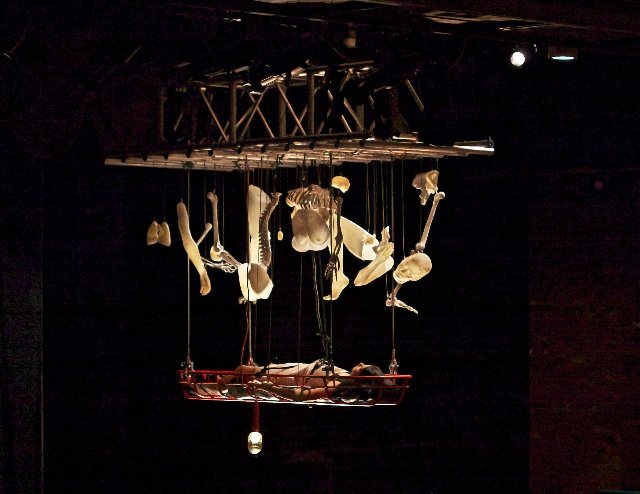
On Feb. 25, 26 and 27, the company will perform excerpts from some of their works such as Underland, which features music composed by Nick Cave. On Feb. 26, Stephen Petronio will take part in a Chancellor’s Colloquium Q&A. The week will end with a full performance of the company’s recent work Like Lazarus Did.

Like Lazarus Did is a piece about resurrection, starting with a funeral and ending with a rebirth. It features music by Son Lux, who reworked the vocal songs of slaves.

Don Roth, the executive director of the Mondavi Center, was taken with Like Lazarus Did when he first saw it, immediately deciding that he wanted to present it.

“What’s beautiful about modern dance like this is that there’s a connection between the lyrics of the music and the dancing,” Roth said. “It’s more abstract than just a play on words, though. The movements onstage express the feeling of the words.”

Gino Grenek, who has been dancing with the Stephen Petronio Company since 1999, worked alongside Petronio while he was conceptualizing Like Lazarus Did. He has danced in it since its premiere in 2013.

“For Like Lazarus Did, we explored the mythology of resurrection, and not necessarily in the biblical sense,” Grenek said in a phone interview. “We looked at resurrecting material from the past 30 years of the company. When people think of resurrection, it’s usually a heavy concept but this piece has a lot of lightness and joy as well.”

Davalois Fearon, a dancer who has been with the company for eight years, appears in several sections of Like Lazarus Did, although she is introduced after the first 20 minutes.

Fearon also had strong words for Petronio’s creative process.

“I was able to see how Stephen can sculpt images onstage,” Fearon said in a phone interview. “He can see the big picture. He has a good idea for putting things together in a way that I would never think to do.”

Grenek also said she admired Petronio’s ability to work with dance ensembles.

“The company is full of extraordinary dancers, but we don’t think of ourselves as soloists,” Grenek said. “We’re unique talents but we approach our pieces as an ensemble. They’re about watching a group of incredibly talented artists go on a journey and take the audience with them.”

The Chancellor’s Colloquium on Wednesday will feature Petronio having a conversation with Ralph Hexter, provost and executive vice chancellor of UC Davis.

“The Colloquium might help people get insights into what Stephen has done and why as well as how he is as a person,” Roth said.

Roth believes that Like Lazarus Did will have wide appeal.

“I think it will be very easy for someone who is not familiar with modern dance to get,” Roth said. “Students will enjoy it. People will enjoy the sense of movement and how it communicates. I highly recommend it.”

Like Lazarus Did will be performed on Friday, Feb. 28 at 8 p.m. The exhibition performances will be held on Feb. 25 through 27 at 8 p.m. The Chancellor’s Colloquium will be held on Feb. 26 at 4 p.m.

New businesses open in downtown Davis

Pachamama
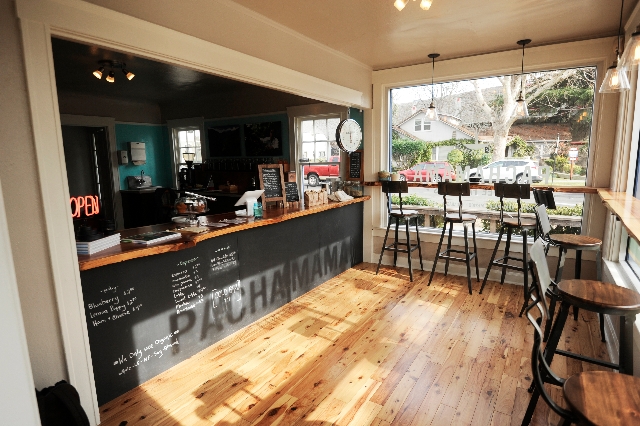
Pachamama Coffee is owned by small-scale farmers and therefore distinguishes itself from the many other coffee shops in Davis.

Pachamama Coffee Cooperative, on 521 First St., was established in Davis in 2001. Nicolas Brown, the co-founder, was studying at the UC Davis Medical School, and he decided that Davis was the perfect place for a global cooperative of coffee farmers. He saw that Davis was at the crossroads of several important movements — farm-to-fork, grower cooperatives, organic agriculture, viniculture and specialty coffee.

“Pachamama goes beyond the [conventional] model of fair/direct trade by organizing farmers as owners of their own brand and distribution. By roasting, branding and selling their best coffee, farmers are capturing a much [greater] percentage of the market value of their crop,” said Thaleon Tremain, current CEO of Pachamama in Davis.

There are no other international coffee cooperatives in the U.S. Pachamama currently represents over 100,000 families in Africa and Latin America.

The goal of Pachamama’s coffee is to create a more dynamic and sustainable supply chain. In 10 years, there may well be a significant shortage of high quality coffee on the world market because demand is growing faster than the supply.

The concept of this is similar to a farmers market. For instance, people who shop at the Davis Farmers Market deal directly with farmers, not middlemen. As a result, the farmers get more money and are able to successfully produce more organic food.

Usually in the coffee industry, farmers are “price-takers,” meaning they have no choice but to accept current market prices for their commodity, in spite of production costs. The “price-makers,” such as Nestlé or other large corporations, purchase a majority of the global coffee supply, and therefore significantly control the market price for coffee. However, at Pachamama, the farmers have the freedom to set prices.

“There is no better place in America for coffee farmers to open a cafe. The local Davis community really cares about sourcing organic food directly from farmers,” said Mollie Moisan, director of outreach at Pachamama Coffee.

Every item on the menu is certified organic. The organization believes that is what keeps customers coming back.

“I’ve been to Pachamama’s a couple times and it’s pretty amazing. I’m definitely coming here more. You literally can’t go wrong with anything on the menu. My favorite is the Pacha Cold Brew. It’s the bomb,” said Shyamal Sheth, a first-year biological sciences major.

Krush Burger
Krush Burger, a burger joint that also operates several food trucks, opened in early February in The Marketplace in North Davis near West Covell Boulevard. It is located at the space once held by Rostini’s Italian Kitchen.
“We have tested the market and Davis has a good community with more families and will provide steady business,” said CEO Davin Vculek.
The current locations in Sacramento are in an urban, industrial area that only gets thriving business during lunch hours from workers; therefore, the restaurant hits a number of slow periods.
“Even though Davis is a college town, we will be able to thrive without college students,” Vculek said.
The restaurant will offer 12 microbrews, which will be “satisfying to people looking to have a good time and wanting to relax.” According to Vculek, Krush Burger’s success is due to the options they offer customers — different concepts and mix-and-match options instead of one burger.

Lee’s Deli
Lee’s Deli, a sandwich shop and Chinese restaurant, opened up at University Mall in late August 2013.

Lee’s Deli started in San Francisco in 1983 as a simple sandwich shop. From there, it expanded to 14 restaurants in San Francisco, all the way from Menlo Park to the Financial District.

Lee’s Deli chose to expand to the Davis location in order to reach into the Sacramento market.

“The reason we are successful is because our food is not shipped in frozen. Every item is cooked fresh. We also have a variety of salad, Chinese food, sandwiches, drinks, snacks, cronuts and even food for breakfast. We have food for practically every meal of the day,” said Joe Tejada, an employee at Lee’s Deli.

Most people come in during lunchtime from noon to 2 p.m., and it is a mix from college students to residents.

“Food is by the pound and it is 50 percent off after 9 p.m. The most popular items on the menu are orange chicken, peppered fish with soy sauce, dim sum, dumplings, shu mai and pork buns,” Tejada said.

Raise the Wage Davis hosts kick-off campaign

Raise the Wage Davis, a grassroots campaign, kicked off their initiative to raise the minimum wage in Davis to $15 per hour on Jan. 31.

The group has submitted their initiative to the City of Davis to get it on the November 2014 ballot. The next step, according to Neil Ruud, communications director of the campaign, is to collect signatures to ensure the measure’s place on the ballot.

“$15 per hour is just enough to be self sufficient to the point where you wouldn’t have to take assistance,” said Bernie Goldsmith, the campaign co-chair.

Goldsmith said that the cost of living in Davis is at a point at which $15 per hour isn’t even enough for a family with one child.

Goldsmith and Ruud said that movements to raise the minimum wage in cities across America were their inspiration for bringing a movement to Davis.

“We’re not political experts but we know what it’s like to be working poor,” Goldsmith said.

The way the bill is structured is similar to others of its kind in different cities in that is adjusts the minimum wage over time. If the bill were to pass in November of 2014, the minimum wage would go up to $11 per hour in December 2014, $13 per hour the following July and to $15 per hour in January 2016.

“This will win because it is for everyone and if the people vote then they will win,” Goldsmith said.

Sean Rycraft, campaign co-chair, said that people could expect the prices to go up if the minimum wage were to be raised. He said that when San Francisco raised the minimum wage, prices increased by three percent. “But that’s not different than any other year. Are you going to notice if [the price] of your burrito goes from $5 to $5.15?” Rycraft said.

According to research from the Fiscal Policy Institute, small businesses actually grew 29 percent faster on average in states with higher minimum wages than the federal minimum between 1998 and 2003.

“What’s interesting for Davis [is] it’s very small and the restaurant population is highly independent. More than half are doing annual sales of less than $500,000 and most are making profit margins of 1 to 5 percent on average; this could devastate the restaurant community in Davis,” said Angie Pappas, spokeswoman for the California Restaurant Association.

According to Pappas, on average, labor takes up one-third of a restaurant’s costs. If that cost were to almost double many restaurants would likely go under.

“If it’s a small independent mom and pop it’s going to be really difficult for them to keep their doors open and that’s the reality of the situation in Davis,” Pappas said.

Brandon Kuhens, who works two minimum wage jobs, one being a cook for the UC Davis Dining Commons and the other as a cook for Original Steve’s Pizza, said that he has to work two minimum wage jobs just to get by.

Kuhens said that it has been increasingly difficult for him to be able to live in Davis because of the rising rent prices.

“It’s tough to be able to afford rent in this town, it’s ridiculous really,” Kuhens said.

Although Kuhens said he does think the minimum wage needs to be raised he doesn’t think that it has to be raised to $15 per hour. He said he thinks that anywhere from $11 to $13 would be adequate.

Goldsmith said that this bill “touches on things that are wrong with this country right now.”