59.1 F
Davis

Davis, California

Wednesday, December 24, 2025
Home Blog Page 871

UC Davis experts weigh in on global warming

We have all heard about the foreboding effects of global warming. Global warming is happening, and its ramifications affect everything from increased natural disaster probabilities to food decline and shortage. The facts are all around us: California’s drought, rising sea water and the Intergovernmental Panel on Climate Change’s report stating scientists are 95 percent certain that mankind is the “dominant cause.” So how can we fix our planet?

Dr. Anthony Wexler, who is the director of the UC Davis Air Quality Research Center and a member of three departments at UC Davis (mechanical and aerospace engineering, civil and environmental engineering and land, air and water resources) offered his opinion on the crisis.

“The reality is we aren’t doing nearly enough. One of the best ways we could reduce global warming is by imposing taxes on carbon emissions which would stay until there was a noticeable decrease. Such a tax would have to be extended to both imported and exported goods, based on how much greenhouse gas emission was associated. Taxing imports in this way would be necessary to enact some degree of global contribution,” Wexler said.

Reduction methods often target different options for lowering carbon emissions, though more drastic reversal techniques have been discussed. Geoengineering — basically engineering the planet — is one option that encompasses climate engineering, which could, in theory, reverse the effects of global warming.

Dr. Bryan Weare, a professor for the Department of Land, Air and Water Resources at UC Davis whose research interests include global climate change, weighed in on the option of geoengineering.

“The proposed changes that could reverse global warming, like adding reflecting material to the stratosphere, are very questionable and potentially dangerous,” Weare said.

Many scientists and researchers are wary of the geoengineering option for good reason, as there is a high degree of uncertainty. Both Wexler and Weare agree on the potential risks of geoengineering options.

“Mankind has had lifetimes of experience with bridge building, for example. We have learned how to build bridges by physics, engineering and architecture; but we have also learned through trial and error, we learn through our mistakes. We do not have any experience with planet fixing, and if we mess up our planet there will not be a second chance,” Wexler said.

Simpler strategies have been suggested, and have proven to be effective reduction plans. Green belts are, in essence, reserved land for wildlife, never to be developed. Such land use provides a variety of purposes, including the preservation of natural landscape in urban areas, cleaner air quality and the assurance of habitats for plants and animals.

Dr. Bruce Burdick, a UC Davis Medical School graduate and environmental enthusiast, elaborated on what should be done.

“We should implement a green belt around every city with more than two million people. This will make cities more like London, which has such a low per capita greenhouse gas emission and lower water consumption in comparison to Sacramento’s urban sprawl,” Burdick said.

What can we, as students, do to inspire world policy and opinion change? There is nothing wrong with starting small; spreading awareness can begin anywhere to any audience.

One particular solution that applies particularly to our UC Davis campus was suggested by Dr. Wexler.

“Work with campus to draw an aesthetically pleasing blue line on all campus buildings. This line will represent where the water level could be when the Greenland and Antarctic ice sheets melt,” Wexler said.

In the past, such melting of the Antarctic ice sheets added 65 feet of water to sea level. Davis, at 52 feet above sea level, would be covered in approximately 13 feet of water.

Global warming is present in our lives today, and we must change the way we live to ensure both the future integrity of our own lives and the lives of future generations. Researchers, legislators and citizens of the world all need to work together to help the earth. There is no “right” way to go about fixing global warming, but whatever the plan is, it needs to be implemented and supported worldwide. Whether it is by decreasing carbon emissions, geoengineering or simply spreading awareness, everyone has their place in this fight.

 

UC Davis study finds antibacterial soaps may have health risks

Germs, bacteria, microbes, parasites and viruses — we all want to stay away from them, especially during the dreaded flu season. To do so, we often rely on antibacterial soaps to give us peace of mind that our hands are squeaky clean. However, a UC Davis study in collaboration with University of Colorado found that triclosan, a chemical found in antibacterial soaps like Dial, may impair muscle function. Because triclosan has been a concern for both human and environmental health, the researchers evaluated the effects of this common household item on muscle activity in a series of experiments with mice and fish.

“Triclosan weakens skeletal and cardiac muscle contraction by interfering with molecular signals that link the electrical impulses at the surface of the muscle cell to the release of calcium from inside the muscle cell. Interfering with the release of calcium inside muscle cells is absolutely essential for contraction,” said Dr. Isaac Pessah, professor and chair of the Department of Molecular Biosciences at the UC Davis School of Veterinary Medicine and the principal investigator of the study.

Through test tube experiments the researchers discovered that the effects triclosan had on mice and fish were alarming. Within the first 20 minutes of exposure to the chemical, the mice had a 25 percent reduction in heart function. Within 60 minutes of exposure, mice also had an 18 percent reduction in grip strength, which is commonly measured to observe the effects of drugs and neuromuscular disorders. The fathead minnows — small fish that were exposed to the chemical in the water for seven days — had reduced swimming activity compared to the control groups.

“We do not know the extent to which this [skeletal and muscle impairment] happens in humans exposed to triclosan,” said Dr. Kurt Beam, professor of physiology and biology at the University of Colorado School of Medicine.

Although triclosan was originally used to prevent bacterial infections from spreading in hospitals, it is now also commonly found in trash bags, toys, clothes, carpets, bedding, deodorants, mouthwashes and toothpastes. The chemical has also become detectable in waterways, aquatic organisms, human blood, urine and breast milk.

When asked how and why triclosan became readily available for household use, Pessah postulated that the chemical added a value to consumer products.

“[There is] the mindset that antibacterials like triclosan ‘protect your health’ more than plain soap and water and good hygiene,” Pessah said.

According to Dr. Nipavan Chiamvimonvat, professor of cardiovascular medicine at the UC Davis School of Medicine, this study has helped to raise awareness of the widespread use of triclosan.

“Additional studies are urgently required to further assess the short and long-term effects of the compound in human health,” Chiamvimonvat said.

Department of Theater and Dance presents The Grapes of Wrath

2

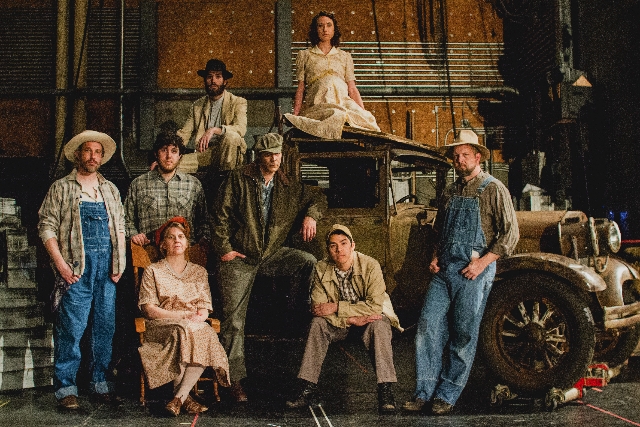
With performances beginning March 6 and going on through March 16, the UC Davis Department of Theatre and Dance will be presenting Frank Galati’s adaptation of John Steinbeck’s novel The Grapes of Wrath.

Directed by Granada Artist-in-Residence Miles Anderson, the play’s plot of a farmer family escaping the Dust Bowl to California is dramatized by both original and traditional American folk music of the time.

Anderson, whose previous acting and directing experience includes the Old Globe Shakespeare Festival in San Diego and the Royal Shakespeare Company, explained that his interest in directing The Grapes of Wrath comes from Davis’ proximity to the setting of the novel and his passion for American theatre and folk music.

“I thought not only is it the 75th anniversary of the novel, but it’s also a tale of a family that migrates to this part of California, 150 miles south in Salinas, where Steinbeck lived,” Anderson said. “The Frank Galati play has plenty of country music which I really enjoy, and [directing The Grapes of Wrath] is something I’ve wanted to do — direct Americans in a classic American play.”

Anderson expressed that his own upbringing and mother’s struggle with poverty in Southern Rhodesia (now known as Zimbabwe) informed his directing of the play, and he considers his parents and his own life events to be influential in his directorial vision.

“I think [my mother’s stories of poverty] are bound to certainly subconsciously influence my vision of the play, [such as in] the parting of a son leaving his mother off to the wide world,” Anderson said. “I [also] can relate to a man losing his job and his dignity … [The Joad family in the play] knows hard times but they owned 80 acres and kept themselves fed and had respectability … and overnight they lose everything.”

Musical director and doctoral candidate Alex Stalarow collaborated with Anderson in selecting songs from the public domain and creating original songs with lyrics lifted from the Steinbeck novel itself.

“[Director Miles Anderson] was insistent that music be an important part from the get-go for a lot of different reasons, [ … including] to express the ambience of the ’30s through music because there’s such a strong musical aesthetic to the time,” Stalarow said.

The play features the instrumentation of three musicians. Stalarow notes that they play a diegetic role in the play, as they are involved in and telling stories of the plot.

Members of the company sing throughout the play, primarily spiritual hymns. Stalarow said he feels confident that the music’s powerful and seamless presence in the play will move the audience.

“The aesthetic we’re going for is certainly an earnest sound coming from the characters rather than all trained vocalists … [The music is] really well integrated into the rhythm of the play and woven into the transitions nicely. In some of the more dramatic moments we’ve used music cinematically to really push the emotions, and I think it will render those moments even more powerfully. And yeah, it’s going to make you cry,” Stalarow said.

Actor and doctoral candidate John Zibell plays the lead role of Tom Joad. He notes that the powerful tone of the play feels epic and even operatic in its grand depiction of simple, common events.

“[The play is] sung in such an epic, operatic way. Acting in [The Grapes of Wrath] is a mix between huge emotions and plain simple everyday actions — peeling potatoes, fetching some water, fixing the truck — but the consequences of these things are huge, as it considers the oppression of other humans,” Zibell said.

Zibell said he finds certain aspects of his role to be challenging, acting as the introverted, quiet Tom Joad.

“The biggest challenge is that Tom Joad is extremely different from me. I’m extremely expressive and he’s quiet, so trying to find that quiet spirit as an introverted kind of character has been different. Another thing is trying to be intimate and vulnerable when 20 others are building a migrant camp on stage,” Zibell said.

Anderson explained how he allows the actors freedom to develop into their roles, which he feels has produced great results.

“More and more I like them to bring me something and mold into something that’s acceptable to me, and I’m blessed with a wonderful company; they’re thin-skinned, people who [bring] emotions to the forefront — those are [the people] who I want to work with. Also, they seem to be enjoying themselves, and that’s what it’s all about,” Anderson said.

The Grapes of Wrath will be performed in the Main Theater in Wright Hall. Tickets are $17/$19 for general admission, $12/$14 for students, children and seniors and can be purchased online at tickets.mondaviarts.org or by phone at (530) 754-2787. For more information, please visit theaterdance.ucdavis.edu.


Mandatory kill switch technology bill enters California State Senate

Californians may be seeing some extra security on their phones if San Francisco District Attorney (DA) George Gascón’s bill passes. Cell phone theft has risen to become a global pandemic and Senate Bill (SB) 962 intends to address that.

Due to rising smartphone thefts, a mandatory kill switch may be put on every device by 2015.

“SB 962 will require any smartphone or tablet in California to include a technological solution that renders the essential features of the phone inoperable when stolen,” said Max Szabo, legislative affairs and policy manager at the office of DA Gascón.

Those behind the bill hope that the ability to turn stolen smartphones into bricks may deter thieves from stealing them in the first place. The idea is to get rid of the incentive (the resellability) to greatly reduce theft, therefore saving people from being victimized.

The specific technology behind the kill switch would be up to the companies. By not having one universal kill switch technology, there is hope that it will be even more difficult for people to infiltrate.

A current roadblock for this bill is the mobile carriers. As it turns out, they have a lot to lose if it passes.

“We’ve seen estimates as high at $7.8 billion that the big four carriers are making every year through the sale of smartphone insurance … I tend to not believe that corporations are inherently evil, but I do believe that that they seem to lack motivation in this case,” Szabo said.

According to Szabo, consumer reports estimated 1.6 million Americans had their smartphones stolen in 2012. Despite the amount of victims, the carriers are still hesitant to give in to a bill that would take away a huge chunk of their profit.

Back in September, when Apple released iOS 7, they included the software for Activation Lock. It is a part of the Find My iPhone technology which allows you to secure your device remotely and keep anyone from erasing or reactivating it without your Apple ID and password. It can used for iPads, iPhones and iPod Touches and can be turned on by going to iCloud.

This is very similar to what a kill switch might look like. However, Apple’s Activation Lock is not on every Apple device nor is it on every smartphone. With the probability that only a few devices have this technology, people may still try to steal.

Why is this necessary if a similar app already exists? According to Martyn Williams, a senior correspondent with IDG News Service, if a sophisticated criminal gets hold of your current phone, they can wipe it themselves and reinstall the operating system. In doing this, they will remove the ability to render your device useless.

The bill would put this technology on a deeper level than software, on the firmware level, so it can’t be undone in the same way as the app.

“If all phones have it, the idea is that the incidence of theft should go down because criminals will know that while they steal the phone it will probably be switched off, and in that case it is less than useless,” Williams said.

Another reason is that it would be switched on by default on every phone. Many existing devices have similar technology, but it is off by default and you have to request your carrier to have it turned on. Not many people know that this technology exists so they don’t use it. With this bill it will be the consumer’s choice whether they wish to turn off the ability to use the kill switch, but it is important that they have the choice.

By having the kill switch on by default, thieves will be less likely to steal phones that can receive the kill signal. They won’t be able to resell these phones on the black market so the bill makers hope they will simply stop stealing phones.

However, there are some fears that this technology will be misused.

“A lot of people are very upset about the idea that the government will be able to switch off [their] phone. The bill wouldn’t allow the U.S. government to switch off people’s cell phones,” Williams said.

Though some are uncomfortable, the choice of whether to use this technology or not may give the bill some support even from the wary.

Even if the bill passes, some Aggies don’t think it will change anything.

“I don’t think this will make a difference. Once they steal the phone, they could put something in the phone to make it resistant to [the kill signal],” said Sartaj Sangha, a second-year biomedical engineering major.

However, the bill makers think they will see a drastic fall in smartphone theft and also see this trend extending across the country and even worldwide.

“A strong possibility with this bill is that cell phone companies are not going to want to do one phone for California and one phone for every other state, so if the California bill actually gets through it could bring this technology into phones that are sold across the United States,” Williams said.

Tune In: Feb 27, 2014

0

Katy Perry v. Taylor Swift

Charming female pop artists are always coming and going, always redefining what “pop” is and always duking it out with each other not only to top the charts, but also to gain the admiration of fans.

In the ’60s, Aretha Franklin and Barbra Streisand went head to head. In the ’80s, Madonna took on Whitney Houston as things began sounding a little funkier and more dance-influenced. By the time the early 2000s rolled around, Britney Spears and Christina Aguilera were in a deadlocked battle over who would become the greater teen pop star.

Whenever I hang out with my nine and 13-year-old cousins, the two girls make a point to inform me which artists they’re into. Usually these artists are female, and usually my cousins’ tastes reflect what is trending in American popular culture. I can discern from their opinions that two female artists in particular have been dominating modern female pop music lately.

The artists: Taylor Swift and Katy Perry.

These two women match up similarly in many ways. They both have released at least three albums in the past four years, they are both currently in their 20s and, most importantly, they both have sold millions of album copies during their young careers. But which of these two women has made a bigger impression? Who “wins” the battle?

Let’s look at their differences before we answer that.

For one, Katy seems to incorporate sexuality in her song topics and music video outfits more than Taylor does. Several of her albums also contain the infamous “Parental Advisory, Explicit Content” sticker.

The song “I Kissed a Girl” is a good example of her positive and proud attitude towards her sexual identity. In songs like “California Gurls,” she sings about “sex on the beach” and “freaking in a jeep,” while the music video depicts her lying nude on a candy cloud — she depicts sexual behavior in a fun and lighthearted way.

Katy Perry could certainly be considered not only a musical icon, but a behavioral icon as well. I, unlike many, personally don’t find a problem with her singing about sex or kissing other girls because, above sexuality, she promotes the idea of being yourself. You can tell from her smile and the joyful energy in her voice that she is having a good time and enjoying herself.

In comparison, Taylor Swift represents the more traditional “good girl” image in the pop industry. Right around Katy’s release of “I Kissed a Girl,” Taylor released songs like “Fifteen,” which tells the story of an innocent high school freshman dealing with best friends and heartbreak, and “The Best Day,” the story of a young girl tormented by her friends, who finds peace in spending the day with her mother.

It’s easy to be charmed by Taylor Swift’s sweet, innocent-sounding voice and the laugh she includes in many of her songs (“Hey Stephen”). She, like Katy Perry, has an energy and joy that is infectious, and certainly makes her young listeners happy. She simply does so in a more conservative way than Katy.

Evidently, the themes and lyrical content featured in Taylor Swift and Katy Perry’s songs differ between the two artists. And the instrumentals in their music are no different; the two artists’ musical sound totally reflects their independent styles and personas.

Katy Perry’s music is far more electronic and typically sounds like something one could hear at a club. Songs like “Wide Awake” and “E.T.” feature techno-like beats and certainly facilitate a party type of atmosphere. Her songs also contain a faster-paced energy than Taylor’s, and are no doubt catchy.

But that’s not to say that Taylor’s aren’t; she just has a more acoustic and folk-like sound. “Enchanted” is a slow, romantic song that exemplifies this — I couldn’t imagine a song that would sound weirder in a club. Taylor’s songs are ideal for a nice bike ride, Sunday drive or walk through a garden.

So … who is the dominant female pop artist? I would argue Katy Perry because her instrumental sound contains more variety. They both make great music though, just music with different types of energy. In some situations I prefer T-Swift, in some I prefer Katy Perry. But that’s one of the great things about music; you don’t need to have a number one — you can have it all.

News in Brief: External Affairs organizes Art in the Air

0

ASUCD’s External Affairs Commission is organizing “Art in the Air,” an event that will bring painting to the Quad on March 6.

The event will have students create paintings for local businesses who have sponsored the event. All proceeds will go toward the Cal Aggie Camp, which benefits underprivileged children.

The event was borrowed from Pastels on the Plaza, a similar event that has been held in Arcata, Calif. since 1987.
Amelia Helland, a member of the External Affairs Commission and a fourth-year statistics major, is one of the main organizers of the event.

“We ask downtown businesses to donate their money,” Helland said. “In exchange we’ll hook them up with design and art students who will volunteer time and talent to work with the business to design an ad that they’ll paint on the Quad on the day of the event.”

Azka Fayyaz, a second-year economics major, is also organizing the event with Helland.

“The purpose of ‘Art in the Air’ is for students to be able to see that they are part of a larger community at UC Davis, which is the goal of the External Affairs Commission,” Fayyaz said.

The event was initially planned for Fall Quarter but ended up being rained out.

“That was the only real challenge we faced,” Fayyaz said. “It was really a blessing in disguise because it allowed us to plan more and tell more people about it. Except for the rain, everything has been in our favor.”

Helland hoped that several local businesses would sponsor the event.

“I just started getting the signups on Friday,” Helland said. “Hopefully we’ll get Delta of Venus, Pluto’s and Whole Foods. We’re asking really all of the local businesses. We’re going to go crazy next week.”

Fayyaz was proud of the work the External Affairs Commission has put into the event.

“We were able to put more groundwork into this campaign because we had more time and more commissioners helping us plan the event,” Fayyaz said. “The experience has really allowed the commission to bond over this and fulfill our duty.”


— John Kesler


The Art Theatre of Davis presents Three Sisters

0

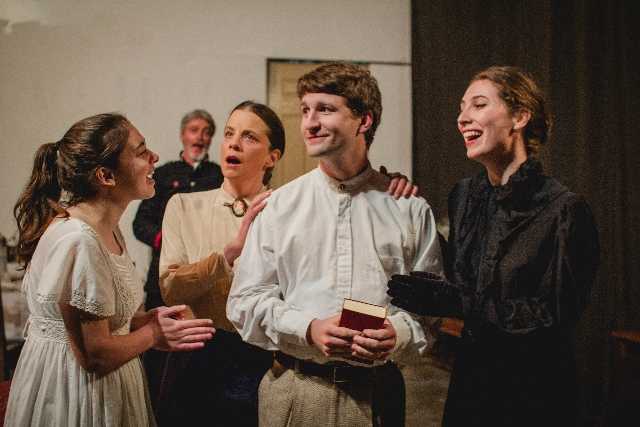
The Art Theatre of Davis is set to present their production of Anton Chekhov’s Three Sisters on Feb. 28. This up-and-coming theater company’s first play ever will be held at Third Space on Olive Drive.

The Art Theatre of Davis (ATD) was founded by SUNY Purchase College and Antioch College graduate and Davis native Timothy Nutter in fall 2013. The idea for the group sprouted when Nutter decided he wanted to bring his passion for acting and dance to Davis. Upon discovering Third Space, Nutter realized the venue was an optimal space for theatrical creation.

After deciding to found ATD, Nutter chose to focus the group’s work on a genre he considers “modern classics.” This means the group’s aim is to perform work from 19th and 20th-century playwrights of the western writing tradition. Ania Mieszkowska, assistant director for ATD’s production of Three Sisters, noticed the lack of modern classics in the Yolo County/Sacramento regions, and hopes to fill this theatrical gap.

“You can see Shakespeare, musical theatre, ballet and opera, but there’s a lot of writers from the late 19th and early 20th centuries — people like Oscar Wilde, George Bernard Shaw, Anton Chekhov, etc. — whose work doesn’t seem to get performed terribly often [in Yolo County/Sacramento],” Mieszkowska said.

The company has received a lot of talent and outreach from the Yolo County/Sacramento community. ATD is currently making last-minute touches to their production of Chekhov’s Three Sisters and are attempting to keep it true to the author’s original intentions. Nutter, along with the help of a local Russian interpreter, has translated the script to keep it as close to its original meaning as possible.

The cast of Three Sisters is made up of local talents including UC Davis history professor Baki Tezcan, UC Davis Shields Library employee Adam Siegel and local award-winning actress Scarlet O’Connor. ATD has received over $3,000 in donations for their upcoming production as well as numerous props and costume donations from theater-loving citizens in the Davis community.

ATD also faces the task of molding Third Space into a believable theater stage. The owner of the venue has granted the company permission to make whatever changes (permanent or temporary) they’d like to the space in order to help their play come to life.

Matthew Harral, ATD’s technical director, is looking to build a permanent stage that will be versatile enough to host many forms of art. The changes he makes to the venue are meant to cater to Nutter’s interpretation of Three Sisters but be vague enough to benefit Third Space as a whole.

“I’ve been trying to stay fairly faithful to the idea that the changes I make are not theater specific,” Harral said. “If I leave any improvements behind, I want to make sure they are beneficial for other kinds of events at Third Space.”

All of the work being put into the production is for the purpose of staying true to, perhaps, Chekhov’s most famous play. The story follows three sisters at the turn of the 19th century in Russia. The sisters are of aristocratic class, but suffer from existential crises. The play ultimately questions the meaning of life, the purpose of love and family and the slow destruction of the upper class in 19th and 20th-century Russian society.

Nutter and Mieszkowska said that they believe that modern classic playwrights speak to current modern society more so than Shakespeare and other pre-modernist era writers. Nutter said Three Sisters speaks to the philosophies of our lives today and hopes those who attend the production connect to the play.

“This is a play full of love and people struggling to find a way to live their lives successfully. It’s about people finding the [many and complex] obstacles they run into [as they lead their lives], and for that reason they don’t know why life isn’t working out. They can’t understand everything, which is a beautiful question for everyone to think about and learn from,” Nutter said.

Tickets are $15 for adults and $10 for students, children and seniors. To purchase tickets and for other ATD inquiries, you can send an email to art.theatre.of.davis@gmail.com. The play will run from Feb. 28 to March 16 from Thursday to Sunday. Friday and Thursday shows will start at 7 p.m. while Saturday and Sunday shows vary. You can contact Third Space at (530) 341-0540 for show time specifics.

Students struggle to make ends meet

2

Editor’s note: Elizabeth has requested The Aggie to withhold her last name.

Two students sit in the same lecture. One is worried about his upcoming fraternity event, the other about where her next meal will come from.

Elizabeth, a fourth-year psychology major, recalled instances in which she had gone without food for a couple of days, and how heavily it impacted her school performance.

Students typically come to college to create a better future for themselves through education; however, while some students have the ability to work or come from families that are able and willing to support them, other students risk hunger just to make ends meet.

Elizabeth is a veteran transfer student who will be graduating this year, but she is also a single mom with two kids, ages six and eight. She commutes every day to UC Davis from Woodland while her kids are at school, and said she has gone hungry to feed them in times of extreme trouble.

“When I first transferred, my benefits, financial aid and my GI bill were lagging, and I didn’t have enough money to buy food for a month. I did things like buy bread from the dollar store and when I needed to, I went hungry for a few days,” Elizabeth said.

According to Elizabeth, the stresses of wondering if she could feed herself and her children had been anxiety-inducing, but she still doesn’t like asking for help. When things were especially bad, she got food from The Pantry, the UC Davis student-run food bank, but has yet to go on CalFresh, the food stamp program.

“There’s a very strong negative attitude towards asking for and needing help. It’s as if you think that you must have done something to deserve being in this type of situation,” Elizabeth said. “There’s an emotional reaction.”

Elizabeth said she takes every opportunity to save money. She receives about $4,000 from financial aid a quarter, minus her fees from SHIP (UC Davis health insurance). From her GI bill, she gets about $2,100 a month.

“My neighbor is really good about sharing the food that she gets with me, so I typically spend about $50 a week on groceries for the three of us, because I usually buy stuff like milk and cheese,” Elizabeth said.

Until recently, CalFresh benefits were given out in the form of actual coupons, and could be considered embarrassing to pull out in a grocery store.

“It took a long time to pull the right ones out, and the cashier had to stand there trying to figure out which coupons were the right ones for what you were buying,” Elizabeth said. “It felt like everyone in the store was staring at you, and you were holding up the line.”

Now, however, CalFresh benefits come in an EBT card that swipes in the card reader and looks just like a credit card. But Elizabeth has still tried to keep from going onto the program, something she attributes to her time in the military.

“In the military, there’s an attitude that you have to make things work or you have to suffer. Some people have been a part of the working class or the working poor for their entire lives,” Elizabeth said. “But if you’re taught as a child that you shouldn’t ask for help, it feels like you’re dying if you do. It’s like you failed at life.”

Elizabeth has considered trying to get a job on the side, but she explained that any money that she could make wouldn’t be enough to cover how much it would cost to put her children into day care for the time that she was at work.

She hopes to get a job after her June graduation, but said she worries that managers won’t want to hire someone with military experience. She added that the adage “Heaven doesn’t want me but hell is worried that I’ll take over,” rings true in this instance.

Many students are eligible for CalFresh or food stamp benefits, but are not aware of it. Though some might not consider themselves to be impoverished to the point of hunger, using CalFresh benefits to pay for some or all of their groceries may allow them to allocate money elsewhere.

The Community Food & Justice Coalition, an organization that promotes access to healthy food by partnering with organizations at many levels, has found that often people are uninformed about the ways they can find food.

“There are many resources available for people suffering from food insecurity that are often not taken advantage of,” said Armando Nieto, executive director of the Community Food & Justice Coalition.

The Pantry’s budget documents for 2013 and 2014 say that 27 percent of students said that they have skipped meals to save money “occasionally,” and another 11 percent said that they skip meals to save money “somewhat often.”

“Students unable to support their basic health may suffer academically as a result,” said Don Saylor, the District Two Yolo County supervisor.

According to Saylor, the rising costs of tuition combined with living on their own may leave a number of students with empty pocketbooks at the end of the week, making them unable to buy groceries.

“We have such agricultural abundance, but we also have people in the community who are not able to share in the abundance,” Saylor said. Saylor also stated that while food insecurity is a global problem, it should not be in an area that is so rich in resources

There are many factors in place to determine whether or not you can receive CalFresh benefits, and you can do a basic check of your eligibility online at mybenefitscalwin.org.

Even if students are not eligible for CalFresh benefits, they can find help at The Pantry, located at 21 Lower Freeborn. The Pantry is supported by various on-campus and community organizations, such as the Yolo County Food Bank.

With a valid UC Davis student ID, students can take up to three items per day, and the pantry offers toiletry options in addition to food.

Students who are interested in receiving food from the pantry can visit Monday through Friday from 9 to 11 a.m., and Monday through Thursday from 4 to 6 p.m.

Watts Legal: Feb. 27, 2014

0

Question: I’ve got a professor who says a bunch of crazy things in class. It’s super offensive, not to mention borderline racist, and I wanted to record him. I haven’t decided what I’d do with the video, but I’ve seen a lot of hidden camera footage on YouTube, so I’m wondering if it’s legal to record him. I’ve heard that I can’t record someone without their permission because of wiretapping laws. Can I record a professor and put him on YouTube if he’s saying racist stuff?

-Anonymous,

Davis, CA

Answer:

By filming your professor, you would run into more copyright problems than privacy problems.

First, some background on the right to record.

As you hopefully know, free speech is protected by the California and U.S. Constitutions. The Constitution’s First Amendment — or as I like to call it, the Best Amendment — protects your freedom to speak by restricting the government’s ability to impose limits on speech.

Part of our ability to speak comes from our ability to gather information. No one disputes that there’s a free speech right to report on a war protest or publishing an article about a city council meeting. But it’s hard for NBC to report on a war protest if they can’t attend the protest or film the protesters. It’s equally difficult for the Davis Enterprise to accurately quote City Council members if its reporters are banned from recording council meetings. Or as the Seventh Circuit Court of Appeals said in ACLU v. Alvarez, “The right to publish or broadcast an audio or audiovisual recording would be insecure, or largely ineffective, if the antecedent act of making the recording is wholly unprotected.”

Filming a protest and recording a council meeting are protected by the First Amendment.

Let’s turn to the professor example.

On a public university campus, most places are public, and filming would be fine as long as it does not interfere with the purpose of the forum. Think of the Quad, the eating areas of the CoHo or a student lounge. In those areas, you’re mostly free to film, just like you are free to pass out flyers or speak to people. People speaking in public areas have very little expectation of privacy, so most privacy laws are irrelevant. And the government interest in restricting speech in a public area is dwarfed by the public’s interest in maintaining the right to free speech.

But in a classroom, there is a strong government interest in making sure class is not interrupted. The University’s powers to limit speech become stronger, although the privacy considerations are still irrelevant, since the professor is making statements to a large audience.

And even in classrooms, restrictions on free speech must comply with the First Amendment, which means those restrictions must be clearly defined. As the Supreme Court said in Grayned v. City of Rockford, a rule complies with the First Amendment only if it provides “fair notice to those to whom (it) is directed.” Your professor might have some rule in the syllabus that says no one can film his lecture. That would be a clear cut example of a “clearly defined” rule. Vaguer rules, like university-wide bans on “harassment” or “intimidation,” which a sensitive professor might try to use against you, would probably not ban videorecording. There’s actually a case on appeal right now, O’Brien v. Welty, that will decide whether a law banning “harassment” and “intimidation” can be used to stop students from recording professors.

Putting aside any restrictions in the student conduct code or the professor’s syllabus, there is still a possible copyright problem. The University might argue that it owns the copyrights to lectures delivered by professors in the scope of their regular teaching duties. They could try to sue you just as if you had been caught bootlegging a Broadway production of Cats or Wicked.

But unlike pirating Cats and Wicked, there’s a fair use argument here — and fair use is a defense to claims of copyright infringement. You are attempting to record something newsworthy and use it for commentary. You are not trying to compete with the professor, and you are not using his entire lecture — both of which make it more likely that this would qualify as fair use. For the same reasons Jon Stewart and Stephen Colbert can broadcast brief clips of the O’Reilly Factor without the permission of Fox News, you could argue that you used only as much of the lecture as you needed in order to make your point.

In the end, it’s a close call, and it depends in part on what rules, if any, your professor put in the syllabus.


Daniel is a Sacramento attorney, former Davis City Council candidate and graduate of UC Davis School of Law. He’ll answer questions sent to him at governorwatts@gmail.com or tweeted to @governorwatts.

Meet your representatives: Kriti Garg and Shehzad Lokhandwalla

0

senators_2_MishaVelasquez

Name: Kriti Garg
Major: Double major in community and regional development and international relations
Position: Ethnic and Cultural Affairs Commission Chair
Year: Third year

1. What did you want to be when you were a child?
I wanted to be a teacher for forever. For the longest time, I also wanted to be a National Geographic Magazine photographer because I wanted to travel and I like to take photos and I didn’t want to have to write. And for a while I wanted to write children’s books and illustrate them. I also wanted to be a journalist at one point. Overall, the theme of everything that I’ve ever wanted to do growing up has been telling people stories.

2. What is one of the biggest lessons you’ve learned throughout your life?
One of the many big things that I’ve learned is that everyone has a story and everyone’s own story is being written. It shapes the way that they think and the way that they interact with the world.

3. If you could be one character from a book, who would it be?
I think I would want to be Ramona Quimby. Pretty much every book I was into when I was little had a really strong woman or girl as the main character. Ramona Quimby just kind of stood out to me because she was just really caring and loving and spunky and a go-getter. Even though I’m not going to clomp on cans like she did, I go out there and I will ask the tough questions, I am not afraid to do the hard work, I will not stand down to anyone.

4. What is your favorite holiday and why?
One celebration that is particularly meaningful to me is Diwali. It’s a Hindu festival and it is loosely translated as “Festival of Lights,” and different people celebrate in different ways. My experience with the holiday is that it is very family oriented and it is a way to connect back to my culture and my family’s religion. It is so centered around family. Being here in the United States, we don’t really have extended family in the area. Our family friends that we have known for a decade or 25 years make up our family. It is really nice to get together over this holiday and appreciate them. My mom makes a whole bunch of fabulous food and tons of sweets and we light candles all over the house. We go to the temple, which is something I don’t do regularly, and call family in India.

5. If you could change anything about yourself what would it be?
I feel like I was going to say impulsivity. But, impulsivity is a part of who I am and how I interact with the world and it has done me some great things. I was going to say not be so rambly, but it helps me to get my thoughts out. I don’t know, I feel like I’m not perfect, but I like who I am.

6. What about UC Davis has changed you or helped you the most?
The students I’ve met here and my peers have opened my eyes to things that I didn’t even know they needed to be open to. You know how there’s that whole thing about how people will go to the new yoga class at the gym and they’ll be like, “My muscles hurt where I didn’t even know I had muscles?” I feel like my mind has done that and I feel like with all the mentorship and friendships, I mean honestly I’ve met lifelong friends here and people who I would never imagined would be part of my life and their thoughts and ways of thinking and life experiences have all impacted me, so it’s kind of like that whole gym thing. My mind has been exposed to change in ways that I didn’t even know were there to change.


Name: Shehzad Lokhandwalla
Major: Computer science
Position: ASUCD Senator
Year: Third year

1. What did you want to be when you were a child?
I wanted to be a U.N. secretary general and followed the U.N. a lot when I was little because my sister was studying international law. She was very obsessed with the U.N. and I shared the same passion as her.

2. What is one of the biggest lessons you’ve learned throughout your life?
I have learned that whenever you have a doubt the answer is always no.

3. If you could be one character from a book, who would it be?
Snowball, the pig from Animal Farm. Snowball is my favorite character. He is very evil and very sly, but he’s very smart too and he gets everything done. I’m not that evil, but I like his character.

4. What is your favorite holiday and why?
There are a lot of great holidays I can think of, but I would say India’s Independence Day on Aug. 15. Back in India we have a lot of salvation and it means so much to India because we were under the queen’s rule for so many years. It means so much to me to be independent and free. I value that a lot.

5. If you could offer one piece of advice to UC Davis students, what would it be?
I can’t remember the movie, but if you want something go get it — I think it’s by Will Smith.

6. If you could go on vacation anywhere in the world, where would you go?
I have been a lot places around the world, I’ve traveled a lot, but the only thing I can think of is home. So I would want to go back home. I’ve been to almost every continent, I’ve been to 41 countries. The one thing that comes to mind right now is home, I miss home. So I would go home. Home is back in India, not back in The Colleges.

7. If you could ask your future self one question, what would it be?
Why did you run for senate? Big mistake.

8. What about UC Davis has changed you or helped you the most?
It has empowered me a lot. In India, not a lot of students are empowered. When I came to the U.S., I felt like I had a lot of freedom and power to do a lot of things. I feel very powerful and I feel I [can] bring any change I want to campus; obviously if that change is achievable, I can bring any change I want. The feeling of empowerment is amazing.

This week in senate

0

Vice President Bradley Bottoms presided over the weekly senate meeting on Feb. 20. The meeting was called to order at 6:14 p.m. Senator Ryan Wonders was absent.

The senate confirmed the new Gender and Sexuality Commission Chair, Robert Helfend.

The meeting moved into public discussion. Senate directed multiple questions to Eric Renslo, chair of the Elections Committee. Renslo spoke of issues that occurred in the first few hours of elections with voters accidentally abstaining on the Measure One vote.

Associate Vice Chancellor Milton Lang presented on the campus climate talks and the rollout of a new system for reporting hate or bias incidents and crimes, which are criminal acts resulting in physical or verbal injury. He spoke of a marketing campaign to make the protocol more widely recognized.

Lang emphasized that making UC Davis a safer place is “a working project.”

He expressed the need for the student body to keep providing input and said that he will hold “dialogues on a consistent basis.”

Lang said that over the next few quarters, there will be action to train and educate staff and faculty on how to deal with hate or bias incidents.

Afterward, Lang and ASUCD Business Manager Janice Corbett presented on future training for ASUCD leaders, such as senators and unit directors.

“We want to help them be the professionals they want to become,” Lang said.

Corbett said that students will be trained in human resource practices and professional interpersonal skills.

Senator Pamela Nonga expressed a desire to train students not studying economics in financial literacy to make them better understand budgets and finances.

After a 10 minute break, the meeting moved to unit director reports. Senator Jonathan Mitchell did not return.

AggieTV Director Anna Oh reported that the AggieTV staff is working to establish live streaming capabilities to live stream events, such as senate meetings.

Oh said that she established a creative department and it will start making more short films. She also gave an update on the status of the new cameras AggieTV purchased last year, as well as a revenue update. With new cameras, AggieTV can start to increase prices for its services to clients to match the higher quality of its work.

The meeting then moved into committee reports, in which senators reported the status of various committees and their projects.

After committee reports, the meeting moved into consideration of old legislation.

Senate reviewed various pieces of legislation: Senate Resolution (SR) 14, which condemns “harmful group-targeted responses to the 2014-15 UC calendar changes and future calendar changes,” passed unanimously (with the abstention of senators Wonders and Mitchell, who were absent). The resolution demands more transparency from the UC Regents regarding system-wide changes and calls on the University to communicate with students more and to clarify the UC Policy for Addressing Religious Holiday Conflicts with Residence Hall “Move-In” Days.

Senator Gareth Smythe introduced SR X and motioned to make it “urgent” because it had not gone through the proper legislative process. SR X calls on UC Davis and its student body to implement a drought action plan in addition to an ad campaign to encourage students to take action. It passed with nine votes in favor and three abstentions.

Senate Bill (SB) 44 passed unanimously. This bill makes the International Undergraduate Student Committee a permanent committee within the ASUCD Senate.

SB 40 was then considered and passed unanimously. SB 40 changes the ASUCD Bylaws so that a senator’s compensation is not affected by his or her attendance to senate meetings. Prior to this, the Bylaws implied that senators could miss senate meetings without consequence.

SB 46, which would have required the ASUCD president to provide reasoning for each bill he or she signs, failed with four votes in favor, five against and three abstentions.

SB 47, the center of much debate in the meeting, neither failed nor passed. Senator Miles Thomas authored SB 47, and it would have called for greater transparency within the ASUCD Senate by holding a special town-hall type senate meeting once a quarter. It will be rewritten and reintroduced to senate in the future.

At the meeting’s end, Thomas called for a censure of Senator Ryan Wonders, who was absent. A censure “states the ASUCD Senate’s disapproval of the general behavior of an individual,” and a censured official or senator is “encouraged to resign from their [sic] position.” No one seconded the motion. Thomas said he will go through the proper process to file his censure.

After debating, Senator Mariah Watson asked if a censure of every current ASUCD senator would be possible, to which Internal Affairs Commission Chair Spencer McManus answered yes.

The meeting was adjourned at 1:25 a.m.

Police Briefs: Feb. 27, 2014

0

Wednesday 2/19

Tough (fortune) cookie
Someone on Arthur Street called 911 to say, “There will be violence.”

Wishy-washy
An unknown subject is continually putting up someone’s windshield wipers during the day on Wintun Place.

Saturday 2/22

Press charges
On Vassar Drive, someone’s roommate invited three people into the residence who claimed to be selling magazines, but kept asking questions about how many people lived in the residence and how much things cost.

Tricks are for kids
A group of kids kept prank-calling a business on L Street, making threats to come and kill everyone.

Up to scratch
Someone was trying to park on Third Street and accidentally scratched someone’s car. When he went to get a pen and paper to leave a note the vehicle was gone, so he wanted to leave his information.

Monday 2/24

Face the consequences
On Denison Drive, a known subject has been hacking the reporter’s Facebook account, posting and altering things without the reporter’s permission.

Vagina: OurStories to discuss gendered violence in UC Davis community

1

With bold voices on a stage, Vagina: OurStories will unveil personal narratives about the gendered violence experiences of UC Davis students.

Sponsored by the Women’s Resources and Research Center (WRRC) and inspired by Eve Ensler’s famous 1996 play The Vagina Monologues, this year’s event will be the third incarnation of the play to raise awareness of gender issues in the Davis community, and raise funds to benefit local organizations against gendered violence. It will take place from March 1 to March 2 at the Davis Veterans Memorial Theatre.

“It’s important to talk about how gender violence isn’t just something you see on the news, it’s happening in Davis, and to the people around you and even closest to you,” said Lamia Hajani, producer of Vagina: OurStories, second-year political science and women and gender studies double major. “In places like Davis, we have a tendency to un-localize things and make them outside of us, but the point of V-Stories is to bring that uncomfortability in and make us realize that these marginalized people should be given a voice so they are not silenced and their experiences don’t go unheard.”

Students of the WRRC planning committee first hosted the original Vagina Monologues play in 2011, performed by an all-women-of-color cast. They then changed the theme in 2012 to be called Vagina: HerStories to express the social stigma of the word ‘vagina’ and localize the issues to the Davis community. Since 2013, the theme has been shifted to Vagina: OurStories to encapsulate a range of gender issues and ‘vagina’ as an identity and metaphor.

Proceeds from the event will go to Justice Now, an Oakland, Calif. teaching law clinic devoted to address the needs of women prisoners by offering legal assistance, counseling, training and campaigning strategies.

“The way that V-Stories has been set up is that it’s not just a performance, but it’s also a benefit,” Hajani said. “For Justice Now, the sterilization of women in prison [is] one thing people might not know about, but it is a local cause. We want people to feel empowered to go for a cause, take part in the discussion and at the same time help end gendered violence in some format.”

The narratives to be expressed range from traumatic experiences such as sexual, psychological and physical abuse to critiques of social binaries between femininity and masculinity, inclusion and exclusion, self-identification and the social construct of beauty.

According to second-year communication and psychology double major and a co-director of Vagina: OurStories Holly Ryborz, the development of community within the group has fostered a welcoming environment, given that such topics are not widely discussed.

“We try to make a space with V-Stories that is very supportive and very open,” Ryborz said. “We check in and check out at every rehearsal because a lot of these pieces are very heavy and emotionally take their toll. It’s very important to be able to talk about how you feel, what’s going on and it’s an awesome space to have for the cast members who are performing emotionally heavy pieces.”

Fourth-year community and regional development major and Vagina: OurStories actor Christina Nguyen said being involved in the event has been challenging but communal, and has inspired her to want a welcoming environment for all people.

“I truly appreciate the space [provided by the cast] as one of the people who are performing and being able to unpack a lot of the emotion that goes with performing,” Nguyen said. “But, it shouldn’t be confined to just these spaces where we feel safe. We need to have this out where everyone can have that and not just a select few who are part of this show. That’s something I hope we can move towards on campus and beyond.”

Third-year psychology major and a Vagina: OurStories writer Tiffany Shem also sees the importance of comfort when expressing these issues.

“I think the reason people feel hesitant to speak about [these issues] in the first place is that they don’t feel safe or comfortable doing so,” Shem said. “By having Vagina: OurStories and the support of other people, [it] is really comforting to know we aren’t alone in this.”

Hajani said the purpose of Vagina: OurStories is overall awareness and understanding from the community, which she admits could be difficult to engage given many pervading stereotypes in popular discourse.

“It’s a matter of being able to inform and educate people, so if someone walks by [our posters] and starts making fun of Vagina: OurStories for having the word ‘vagina,’ we can talk about it and tell them what it’s about,” Hajani said. “‘Vagina’ isn’t a funny word and to us it’s a metaphor, it’s about resistance and being aware of these resilient people who are facing gendered violence.”

Shem also said that as a writer, she wanted to challenge the spheres of dialogue she had encountered in the past, and though she and a few other writers will not be performing their own piece she felt connected with the performers’ representation of her story.

“I have heard a lot of discussions from people about how we don’t need feminism, how we have already reached gender equity and how gender violence is a thing of the past or it’s really rare, but [that’s because] those voices are silenced,” Shem said. “As a writer, it was empowering knowing I can make a difference and change the way people view gender violence.”


UC Student Association pushes for reform of Master Plan for Higher Education

0

The Master Plan for Higher Education, developed in 1960 by the UC Regents and the State Board of Education, intended to make higher education accessible to all proficient students.

Since then, increased competition among students, increased tuition, financial divestment from education, low retention rates and the changing roles of the various collegiate systems have kept the plan from being upheld.

Across California, student leaders are trying to raise awareness among legislatures of the plan’s deficiencies in order to get a reformation on the table.

“It’s very clear that however well-intentioned the Master Plan is, 53 years have passed since it was written, and a lot of circumstances have changed,” said Dillan Horton, the ASUCD director of Student Affairs. “We need to update the Master Plan under the current circumstances.”

The UC Student Associations of Davis, Santa Barbara and San Diego have passed resolutions in support of the reform. The graduate association of UC Santa Cruz has also passed the resolution.

On Feb. 24, Henry Y. Tang, the chancellor of UC Santa Barbara, came out in support of reforming the Master Plan, according to Kareem Aref, the statewide president of the University of California Student Association (UCSA).

There have been pushes for reform in the past, but many of them have resulted in reviews of the Master Plan, which were largely ineffective, according to Harley Litzelman, the external director of Lobby Corps at UC Davis and a first-year sociology and communications double major.

“I would like to see some executive professionals within higher education, at the administrative level recognize that this 50-year-old plan doesn’t just need revision or reassignment,” Litzelman said. “We need a redrafted master plan. A plan that is both preservative of the original virtues, but also confronts many of the new challenges in higher education.”

If the plan were to be redrafted, it could be provide a basis for real legislative action and command a lot of attention from the regents which could require implementation of the recommendations, according to Litzelman.

While the intentions of the plan have been to provide higher education for all, cuts in government funding from universities have resulted in increased student fees and tuition, Litzelman said.

The UCSA is currently campaigning for an oil severance pact and divestment from prisons, either of which could allow some funds to be allocated back into education through the Master Plan for Higher Education, Aref said.

Litzelman said that due to the increasing competitiveness of California universities, seats will probably continue to be filled, but that the result will be a decreasingly diverse student population.

“You’re antagonizing the minorities in order to fill these classrooms,” Litzelman said. “How can you call yourself a public service if that’s the case?”

The plan divides California’s institutions for higher education into three specific categories: UCs (University of California), CSUs (California State University) and CCCs (California Community College).

UCs were meant mostly for research, CSUs for direct application to the working world and CCCs as feeders for students to get some lower level work done before moving into either a UC or CSU.

But according to Horton, there are students falling through the cracks in these systems.

“Students aren’t as able as they used to be to move through that process and have access to an affordable education,” Horton said. “With the cost changes in the UC system over the years, there are certain groups of students who aren’t able to benefit.”

While there is some funding provided to low-income students, the middle chunk of students is largely unsupported, according to Horton.

Retention rates are also a big issue, according to Litzelman. There is a school of thought that believes that low retention rates are evidence of high standards, but Litzelman said that doesn’t promote higher public education.

In the past, there have been two authorities on higher education, the Coordinating Council for Higher Education (CCHE) and the California Postsecondary Education Committee (CPEC). Since the plan’s initiation in 1960, both of these groups have been disbanded, according to David Kuwabara, ASUCD Lobby Corps director and a third-year managerial economics major.

“They weren’t able to make accurate policy recommendations. It’s as if you were writing your own grades on your report card,” Kuwabara said. “But now, the institutions are … stepping on each others’ toes as they try to navigate a changing system.”

CPEC was defunded by California Gov. Jerry Brown in 2011 as a line item budget veto, with no recommendations for a different administrative body given, according to Litzelman.

“While the agency wasn’t totally effective, it was an abrasive move to eliminate an agency without intent to replace,” Litzelman said.

According to Litzelman, it seemed like Gov. Brown wanted the different segments (UC, CSU, CCC) to take responsibility for themselves, in an attempt to “reduce the size of government.”

While the exact principles of the reformed Master Plan are still to be debated, change needs to happen, according to Aref.

“Our real focus is centered around the state refocusing on higher education and reprioritizing [higher education],” Aref said. “I’d like to believe that one day we’ll be able to reach a point where higher education is completely accessible.”

Solano Park, Orchard Park Apartments to close for redevelopment

0

Solano Park and Orchard Park Apartments are set to close for redevelopment because of their antiquity. The many structural replacements required for both buildings make renovation too costly.

Orchard Park, located in the northwest corner of UC Davis, is to close July 31, while the demolition of Solano Park, in southeast Davis, is scheduled for July 31, 2016.

The complexes have been known to provide affordable housing with spacious grass areas and community environments for full-time student families and their children since the 1960s.

Current plans for the redevelopment of Orchard Park, which will be completed by fall 2016, include student family and single graduate apartments for 500 students, as well as additional units for transitioning faculty and staff. A Graduate Student Assistant Association member and the Graduate Student Assistant to the Chancellor were asked to join the project committee. Costs for the Orchard Park project are still unknown.

“There isn’t a published cost for the replacement of Orchard Park, as these costs are still is determined as we continue negotiations with University Student Living,” said Ramona Hernandez, director of Financial and Business Services of Student Housing. “The project is subject to UC Board of Regents’ approval in May, and at that time the projected cost will be publicized.”

To maintain affordability for student-families and graduate students, Student Housing is working with Real Estate Services to negotiate with third-party developers including University Student Living and Yackzan Group. With the goal of keeping rent below market prices, rent prices will still be higher than the current apartment complexes. According to the Student Housing website, however, costs would be much higher if the properties were to be built and operated by the University of California as opposed to a third party.

Chantelise Pells, a Ph.D. candidate in geography and Solano Park resident, expressed her concerns about the community’s closure.

“It’s not going to have the same open green space; it’s going to be more condensed with basically just buildings and parking,” Pells said. “It’s not quite the same atmosphere, environment or community vibe as we presently have.”

Solano residents met three weeks ago with the new developers and were told the projected rent cost was $1,400 a month, up from the current monthly rate of $906. This significant increase in rent has caused further worry for graduate student-mothers, who said that the projected rent cost would be 95 percent of their salaries as grad student employees.

Jamiella Brooks, a fifth-year Ph.D. candidate in the French Department, said her experience at Solano has been drastically different than that at her previous home in North Davis.

“The fact that they have open spaces, they have community events every month and a space that really lives itself to having neighbors and having a feel of what we do as a community has become such an integral part of my life that I think I would have definitely left Davis a long time ago if I didn’t find my place here,” Brooks said.

Its close location to campus and family-friendly environment have also contributed to the success of being a full-time student and mother.

“I was able to nurse my baby every three hours and be at the playground with the other moms also nursing their children in between classes, and I know this is something that would be entirely lost if this environment is demolished,” said Solano resident Sara Petrosillo, a fourth-year English Ph.D. candidate.

Both Orchard Park and Solano Park serve integral roles in the lives of UC Davis students.

“The community that Solano and Orchard Park build have extended out to the community of Davis itself and there are people who have decided to stay in Davis, pretty much because of the precedent that they’ve experienced in Solano Park,” said Sarah Haughn, a fifth-year creative writing graduate student.

Student Housing encourages Orchard Park residents to move to Solano Park before Orchard’s summer closing and to email studenthousing@ucdavis.edu with the subject line “ATTN: Pat Rott” for alternative housing options.