53.5 F
Davis

Davis, California

Tuesday, December 23, 2025
Home Blog Page 879

UC Davis study finds little difference in efficacy of donor tissue based on age

Much like other parts of the body, parts of the eye can be transplanted. Unfortunately, there are cornea shortages around the world. In order to better this situation, UC Davis’ Dr. Mark Mannis and his multicenter research team conducted 10 years of fieldwork that compared the longevity of corneas from older donors to corneas from younger donors in transplant recipients.

“The study confirmed the fact that older tissue functions just as well as younger tissue,” said Mannis, UC Davis professor, chair of the UC Davis Eye Center and co-principal investigator of the cornea study.

This is the largest corneal study ever done. For 10 years it compared the corneal clarity of donors ages 66 and above to donors under the age of 66. At the five-year mark the success rate of younger tissue to older tissue was the same.

“Whether it was a younger donor or an older donor we saw an 86 percent chance of success,” Mannis said.

At 10 years after the transplants, the results were mostly the same. The only differences were seen at the extreme ends of the study; patients given corneas under the age of 30 had slightly better results while those given corneas over the age of 75 were slightly worse. Those in the 40 to 60 year range had virtually identical results.

“[The cornea is] the front surface of the eye, and is really important for our vision. It functions like the lens of a camera: it does a whole lot for focusing the image correctly on the retina (which is like the film in a camera; where the light gets turned into signals for the brain to interpret). So, to do those things, it has to be very clear and smooth, and have the correct curvature,” said Ken Britten, professor of neurobiology, physiology and behavior, in an email interview.

Due to its location at the very forefront of the eye, it can be subject to damage.

“Anytime you have a body part that’s exposed to the environment it is susceptible to all kinds of injury … Its shape can become deformed or become opaque and the light rays can’t get through. But anything that would either deform the image or block the image from being projected to the back of the retina is a reason to have the cornea replaced,” said Martin Usrey, professor of neurology.

When it is damaged, sight can become severely blurry and things like reading can become nearly impossible. Also, pain or discomfort can be a problem since pain fibers are densely packed in the cornea, according to Usrey.

The donor shortages have origins in many practices doctors use to choose corneas for their patients. Age matching is the process where a doctor tries to match the patient’s age to that of the donor.

“Surgeons were concerned that older donor tissue might not function as well as younger donor tissue,” Mannis said.

Both of these practices are unnecessary according to the study’s findings and create a severe deficit in available corneas.

As one could imagine, corneas are hard to come by since they can only be harvested from deceased donors. The pool of eligible donors also diminishes if they have any disease that could potentially be transferred to the recipient. Older donors are much more common so favoritism toward the rare, young donors diminish the availability for younger transplant recipients who will need their new corneas to last their lifetime.

The U.S. supplies all the corneas for domestic surgeries as well as exporting them for many surgeries abroad. If doctors continue to only depend on younger corneas, there will not be enough to meet the needs of the American public, let alone the world. Thus, these findings have international benefits; they are meant to “debunk some of the myth about what tissue is suitable and to help make tissue more available for transplants all over the world,” Mannis said.

Corneal transplants have been around for over 100 years and it can greatly improve the quality of life of the transplant recipient. They are a very special tissue to replace and are rarely rejected by the recipient’s immune system.

“I think corneal transplants are wonderful … The procedure has restored sight in countless numbers of people,” said Arnie Sillman, emeritus professor in the Department of Neurobiology, Physiology and Behavior.

This study’s findings can even further expand the reach of corneal transplants and sight to more people.

If someone opts to donate their corneas at death, they can have a donor sticker put on their driver’s license. They must also inform their family of their wishes. This is because eye banks need family consent in order to harvest the tissue, whether someone has a donor sticker or not.

Rise Up! Campaign raises money for Typhoon Haiyan relief

0

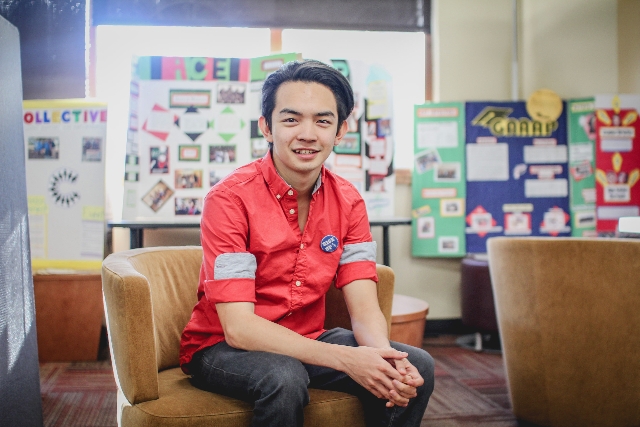
In response to the recent Typhoon Haiyan, Filipino organizations across campus have come together to kick off the Rise Up! Campaign.

Only three months ago, the deadliest typhoon in the history of the Philippines took over 6,000 lives, according to the nation’s government. Approximately 11 million people have been affected by the catastrophe, and the country is still recovering from the extreme impact.

During the weekend following the typhoon, multiple students at UC Davis, including fifth-year history major Kirby Araullo, were quick to extend their hands in support.

After reaching out to Filipino organizations and clubs on campus, Araullo attended a meeting with all of the presidents of the seven main Fil-Am (Filipino-American) community groups.

During the meeting, Angelica Singson, Kirby Araullo and Robyn Huey were designated to be the main coordinators of the Rise Up! relief efforts for Typhoon Haiyan.

“I have worked with relief efforts before at my junior college back in 2009 when another typhoon happened,” Araullo said.

Shortly before Typhoon Haiyan hit the Philippines, the 7.2 magnitude Bohol earthquake shook the same affected region.

As the nation was in the process of recovering from the drastic earthquake, the Fil-Am community was working to plan a Bohol earthquake relief fundraiser.

With the synergistic impacts of both the earthquake and typhoon, Araullo set out to find a way to combine the relief efforts.

“I set up a Go Fund Me page to begin fundraising and that is kind of how Rise Up! started,” Araullo said. “At first it was the UCD Fil-Am Typhoon Haiyan/Bohol Earthquake Relief Effort, which is a really long name. I wanted to make it shorter so that it was easier and catchier for people to remember.”

Araullo also mentioned that the phrase “Rise Up!” is rooted in the notion of the Aggie community rising up to support Typhoon Haiyan survivors.

As the external coordinator of Rise Up!, Araullo specifically works in outreach to connect with other campus organizations.

Araullo has joined forces with Robyn Huey, a third-year landscape architecture major and the community mentorship advocacy coordinator of BRIDGE, Pilipino/a Outreach & Retention. Along with working as one of the main coordinators of the Rise Up! Campaign, Huey has helped Araullo to publicize and advocate.

Immediately after Typhoon Haiyan, Huey organized a community dialogue in the Student Community Center to discuss the typhoon. Over 100 people gathered in support, and media sources like KCRA and AggieTV documented the event.

However, Huey said that one of the primary obstacles in effectively running the campaign is planning a relief effort through organizations that are busy with other events.

“While we have many passionate students and leaders who want to do more for relief efforts, we also have a responsibility to maintain our work as students and our role as board members and officers of various organizations,” Huey said.

Although it may be difficult to combine several student organizations in this effort, Yee Xiong, ASUCD Senator and a third-year Asian American studies and design double major, has advocated for student government involvement with the campaign.

“I was with Kirby that weekend when Typhoon Haiyan hit the Philippines, and when I saw how much he was affected and wanted to coordinate a relief effort to help the survivors of Typhoon Haiyan, I immediately gave him my full support,” Xiong said. “I wanted to act as a resource for him and the rest of the campaign coordinators to provide them with anything that might have helped.”

Along with ASUCD, Araullo and those involved with the campaign collaborated with alumni, administration and faculty alike.

“A lot of UCD alumni were active in organizing their own relief efforts outside of Davis,” Araullo said.

Recently, Araullo also met with Vice Chancellor of Student Affairs Dr. Adela de la Torre, to discuss the campaign and planning strategies.

Initially, the campaign set its goal at $5,000, but set a higher target shortly after. As of last December, the campaign has raised $5,837 through a combination of cash and online donations.

“Our goal is to reach $33,000 — it seems like an impossible thing to do but if each UC Davis student donated one dollar to the campaign, we would easily reach our goal,” Xiong said.

The majority of the monetary donations have been collected through donation jars located at the Cross Cultural Center and Student Recruitment and Retention Center.

All of the funds will be sent to NAFCON (National Alliance for Filipino Concerns) which works closely with grassroot organizations in the Philippines.

Araullo works with professor of Asian American studies Robyn Rodriguez, and due to her close ties with NAFCON, Araullo decided they were the best option for handling donations.

According to Araullo, government corruption and the current politics of the Philippines also factored into their final decision to not send funds directly to the government.

“There were a lot of issues during the typhoon because the government was just not doing their job and has not been accountable,” Araullo said. “So that is why we chose NAFCON.”

Through joining with NAFCON, an opportunity eventually blossomed for Araullo. With the organization’s assistance, Araullo is preparing to embark on a health mission trip to the Philippines in the spring.

“I wanted to go last quarter and be there to physically help, but I had finals,” Araullo said. “If we have actual Davis students who had experienced the area that was affected, it would be more convincing for administration, faculty and other students to donate and help Rise Up!”

Two months after the disaster, thousands of displaced individuals are in need of support, and Xiong said that she believes Araullo’s motivation to go on a health mission stems from his eagerness to help out.

Additionally, Araullo shared his interest in filmmaking and plans to document the current state of the nation during his trip. He is also hoping that he can create a documentary and hold a screening for the cause on campus.

In terms of the Rise Up! Campaign, Araullo is in the midst of discussing the potential of a benefit concert in the spring.

“Just be on the lookout for upcoming events,” Araullo said. “Right now, the least students can do is spread the word.”

Although Araullo said there is much to accomplish, he believes the Rise Up! Campaign will persist in raising awareness to the ongoing issue that has altered the lives of so many people.

“Self-education of the situation in the Philippines is also important, as many students during the community dialogue brought up questions about the political and cultural dynamics and how they relate to relief efforts from abroad,” Huey said. “Understanding which organization to donate money to is important in making sure efforts have the greatest effect possible.”


Latin Americanisms: Taco Philosopher

0

Tacos are an important part of my life. You might even — if you were so inclined — call me something of a taco philosopher. Now a taco philosopher ponders the deeper questions of taco existence. What size tortilla is best? What is the ideal cilantro/onion ratio? And of course, the question which still keeps me up at night and which has confounded taco theorists since the dawn of the taco: salsa verde or salsa roja?

But nowadays, other, more pressing metaculinary questions keep me sleepless and away from pleasant taco-filled dreams. Namely, why is Davis such a terrible taco town?

Now I know some Davisites may take issue with my framing of the question. And I certainly don’t mean for this to be an unfair attack or snobby takedown of Davis taco culture, or the many taco dispensers which make their home in Davis for that matter. But I do intend to shine an unapologetic light on the path to taco nirvana. And folks, pardon the tough love but it sure as hell is not a path found in Davis.

For one, if you are frequenting a Mexican restaurant which prepares in any shape or form the monstrosity that is carne asada fries, you can rest assured that this is in no way a Taco Philosopher-endorsed taqueria. This puts me in a perilous position and limits my options drastically given that most taquerias in the States have shunned tradition in favor of cultural pragmatism i.e. profits. There is nothing wrong with this on the face of it, and while I may seem to be overly critical I nevertheless sympathize with these business owners. They craft these unholy creations because no matter their cultural allegiance, at the end of the day they’re a business first and foremost, and American college kids for whatever reason enjoy a side of fries mixed in with their serving of steak and cheese. Mexican culinary traditions be damned!

But why then this undying love for the taco? After all it’s a quite simple and ordinary being: a corn tortilla (not flour, obviously), some meat — popular options include carne asada, al pastor, the slightly more exotic cabeza (head meat), lengua (tongue), tripas (tripe i.e. guts) — cilantro and diced onions, and to top it off a nice dressing of salsa, be it salsa de tomatillo, salsa de jitomate, what have you — the salsa is not the issue here. This compendium of deliciousness is what comprises the existence of what Mexicans collectively refer to as the taco — keeping in mind that there are variations of the taco; add-ons if you will (it all gets very complicated).

Now on to what a taco isn’t. A taco is not bathed in sour cream. A taco is not sprinkled with cheddar cheese (there should be no yellow colors in the taco). A taco does not come in a hard-shell tortilla. A taco should, but does not necessarily have to be, accompanied by a Mexican lager — beer snobs rejoice (Corona can be ignored; better options are Pacifico and Modelo, which are quite good). And finally, but most importantly, a taco should be referred to as a taco, not a taquito — that is an entirely different being — not a burrito, and certainly not a chalupa, for that is a wooden boat.

My call is not to shun these neighborhood institutions but to supplement them with more daring acts of culinary exploration. Maybe give a taco truck in Sacramento a visit (the mobile aspect, while potentially off-putting, only increases the authenticity given the hustle and bustle nature of a place like Mexico City), order some tacos de lengua, work your way up to tacos de sesos.

Food is a major component of culture and can reveal a lot about a people’s traditions and ways of being. The taco is as symbolic as it is delicious. It’s a marriage of Mexican ingenuity and historical tradition. It’s a synthesis of Indian, European and Middle Eastern traditions (much like Mexico herself), which borrows as much from the Lebanese kebab as it does from German sauerkraut. The same might be said of the Mexican-American fusion resulting in carne asada fries. But I’ll leave those philosophical investigations for the carne asada fries philosophers. I am sure our theoretical jousting will be both tasty and fruitful.


If you also share this writer’s dislike for carne asada fries, you can find a friend in JORGE JUAREZ at jnjuarez@ucdavis.edu.

#SaveTheAggie: Vote yes on Measure 1

0

The California Aggie is asking for your help.

We are introducing a referendum to the student body to add $3.10 per quarter to student fees in a campaign that we’re calling “Save The Aggie.”

As the situation stands, our college newspaper doesn’t have enough money to make it to next year. This is The Aggie’s 99th year in publication, and if we don’t receive a major cash boost soon, it won’t live to see 100.

The Aggie makes 100 percent of its revenue off of advertisements, and is one of the few financially-independent university papers — we don’t get funded by ASUCD or student fees. But due to the deflation of the advertising industry and the ever-changing nature of journalism, The Aggie is seeing less and less money every year, just like many other newspapers across the country.

Since the 2006-07 school year, we have been using up our reserves to stay afloat, eliminating resources and cutting positions, jobs and salaries. This is due not only to the depleted advertising industry but also the adverse effects of year-to-year editor and manager turnover. It’s hard for student business managers to have long-term financial visions for the newspaper when they’re just trying to make it through the year, or even the quarter. There’s only so much a bunch of 20-something college kids can handle.

That’s why, in the model of other successful UC publications, we’ll be using the money to hire two full-time professionals to manage our finances over an extended amount of time, a move the most successful ASUCD units have also pursued.

We also hope to increase staff salaries, to compensate and motivate some of the most stressed-out students you’ll ever stumble upon (we overachievers flock to each other). For what essentially amounts to a full-time job, editors and managers get paid a bountiful two dollars an hour. Fun fact: we probably spend more weekday hours in the office than we do in the sunlight.

Another fun fact: all those articles you read in the paper? Their authors don’t receive a cent for them. That’s right, we don’t even have enough money to pay our writers, let alone our photographers, artists and graphic designers. It’s no surprise then that our staff has dwindled over the years — there’s a very small percentage willing to put in long hours for little-to-no pay.

There’s an ocean of talent out there, we just need to bait our hooks right — with an esteemed and award-worthy college newspaper. We see this referendum as an opportunity for an amazing transition for The Aggie — not only to save it, but to make it better.

Once we’ve covered the basics, we’ll be selecting a business and development manager, expanding our online and new media presence, publishing two or more times a week, running issues over summer sessions, paying writers and photographers, increasing editor pay to maybe even four dollars an hour (wow!), hiring and paying assistant managers, applying for awards and so much more.

So why do you need all this for your campus newspaper?

Because when shit hits the fan, we’re there in hazmat suits. Our reporters are out interviewing students on the Quad as they get pepper sprayed. Our photographers are at Murder Burger at one in the morning when there’s an armed suspect on the loose. Our staff members are the watchdogs for ASUCD.

$3.10: that’s less than the price of a CoHo burrito. Think about it: one burrito a quarter can pay for student salaries, a bi-weekly paper, more online content and a school newspaper you can be even more proud of. Not to mention that it’s a paltry price in comparison to predetermined fees, such as the $93 a quarter you pay for UC Davis Athletics.

The Aggie’s staff and supporters are fully prepared to embarrass the hell out of ourselves in getting this referendum passed. We’re changing our profile pictures and making announcements in our classes. We’re flagging down random people to ask them if they’ve heard about the referendum. We’re literally changing our middle names to “#SaveTheAggie.”

OK, just kidding on that last one. Not literally, that would require money — and, as previously stated, we have none.

But what we have plenty of is determination, solid work ethics and a strange, severe love for our little windowless office in 25 Lower Freeborn, known to all us sunlight-deprived staffers as “The Basement.” And if you care about anything that has to do with us — our paper, our purpose, our stale bagel that’s been hiding in the roof tiles for an uncomfortably unknown amount of time — vote yes on Measure 1, our referendum to save The Aggie.

Voting happens online at elections.ucdavis.edu/ from Tuesday Feb. 18 at 8 a.m. to Friday Feb. 21 at 8 a.m. We’ll be where we always are — bumping swivel chairs against each other in The Basement, typing with one hand and crossing our fingers with the other.


Literary Lessons: Dating Candide

0

If you are looking to be impressive, but do not want to put in a lot of effort, I have the book for you. Voltaire’s Candide is short, exciting and, heck, a fancy-schmancy historical figure like Voltaire wrote it so it’s the perfect literary reference for any snobby dinner party. What is also awesome about it is that it’s an honest-to-goodness wonderful book. It’s no Being and Nothingness, no War and Peace and definitely no Ulysses. It is just a solid and riveting novel that makes reading classic literature more enjoyable and less like homework. It also has a lot of applicable life lessons for any era, especially when it comes to dating advice.

In short, Candide works at a palace and has a big crush on an aristocratic girl, Cundegone. A revolution then goes down, followed by general havoc for about 100 pages until everyone decides that simple is better and becomes farming hippie folk. Oh, and every time you’re 110 percent sure someone is dead, they are not.

I have noticed that these days, love has lost its permanence. It seems that when we love others we imagine them to always be how they currently are, and we try not to think about them changing in some unsavory way. Unfortunately, the bane — or maybe the miracle — of existence is that we do not stay young, adventurous and youthful forever. For those older students, you may even be realizing it now. “Why do my knees hurt?” “Am I too old to have pastel lilac hair?” Moreover, just as we will not stay wrinkle-free and bangin’ forever, neither will our loved ones.

Candide fell in love with Cundegone because as far as one can ascertain from Voltaire’s writing, she was hot. I imagine her with a curvy ’50s pinup bod. However, although he fell in love with her during her prime, he stayed in love with her. And let me tell you something, by the end of the book she was missing a leg and had a degenerative skin condition, and was generally not looking too great.

I am all for living in the moment, but the next time you are on a date, maybe ponder this: if this other person looked completely different, would I be on this date? This is a fair question, because if you end up with this other person, in about 30 years, they are going to look completely different.

Or maybe ponder this: if I had a complete change in my social stature and wanted to do something revolutionarily different with my life, would this other person come along? This is also a fair question, because in 30 years, you are most likely not going to be doing anything near what you imagine you are going to be doing right now.

Life changes and people change, but if you want a bit more depth in your relationships, you might want to read Candide. It is so easy to be superficial these days. Everything is photoshopped, ridiculously attractive people apparently are the only people who exist — at least that’s what my TV tells me — and going to loud parties to get wasted seems to be preferable to sitting around and talking with others. Worse, having relationships via text and Facebook is a completely viable option.

Candide had it easy in a sense. Yes, it may have been a more difficult historical period in a lot of more crucial-to-survive kind of way, but in the ability to find real love it was much easier. He knew that things were going to be different, but it didn’t matter.

Maybe I’m getting nostalgic for an era that I never experienced, but loving someone as they lose limbs and social standing and parts of their face seems like an anachronism in today’s world. On the other hand, maybe this kind of love is still alive; it’s just not interesting enough to show on TV or in a magazine. “Celebrity Falls In Love and Stays With Companion Forever” doesn’t have quite the same ring to it as “Celebrity Cheats on Husband of Two Weeks.”

I’m not sure if life imitates art, or art imitates life. What I can say, however, is that either way I am feeling a little worried about the future of dating and love in our society. Maybe the stress of midterms is getting to me, but where did all the Candides go?


To fantasize about the Enlightenment with EREN KAVVAS, you should email her at ebkavvas@ucdavis.edu.


Aggies hope to break .500 over two-game homestand

0

Teams: UC Davis at Cal State Northridge; at UC Irvine

Records: Aggies (11-13); Matadors (11-12); Anteaters (14-9)

Where: The Pavilion — Davis, Calif.

When: Thursday, Feb. 6 at 7 p.m.; Saturday, Feb. 8 at 7 p.m.

Who to watch:

Rarely should Aggie fans come to see other teams play. But, UC Irvine is an exception to the rule. The very tall reason for this treason is the Anteaters freshman center Mamadou Ndiaye who stands at 7’6”.

Ndiaye towers over all of his teammates, including 7’2” freshman center Ioannis Dimakopoulos and 7’0” sophomore center Conor Clifford. Oh, and he happens to be pretty good at basketball too, averaging 8.6 points, 6.2 rebounds and 3.2 blocks while shooting a ridiculous 77.5 percent from the field.

If nothing else gets you moving, come see the Aggies play on Feb. 8 just to watch the Anteater big man who wears size 19 shoes and can touch the rim without jumping.

Preview:

The last time that UC Davis and Cal State Northridge met this season, the Matadors came away with the victory.

While the Aggies’ offense played admirably in that game, the defense failed, a trend that has become all too common this season.

The Matadors shot over 62 percent from the field, including 41.7 percent from beyond the arc, and sank 22 out of their 23 free throws.

Throughout the season, the trio of junior forward Stephen Maxwell, junior guard Stephan Hicks and senior guard Josh Greene have given opposing teams fits. They are combining to average more than 48 points per game, over two-thirds of the team’s points. Against UC Davis, they scored 65 points while shooting 60 percent from the field.

To have a better outing against this squad, the Aggies will have to force the other Matadors into scoring roles, while rebounding better than they have thus far in the season. This shouldn’t prove to be too difficult as they have found a rare opponent that does not hold a significant size advantage.

UC Davis did a solid job defensively in a recent road game against Cal Poly, holding the Mustangs to 58 points on 30 percent shooting from beyond the arc. This was followed, however, by allowing UC Santa Barbara to dominate them to the tune of 82 points on 53.7 percent shooting. The second contest included Gaucho’s junior forward Alan Williams posting 27 points and 20 rebounds.

“The guys have played well on defense throughout the last two weeks at practice, we just needed that effort to show up on game day to earn a positive result,” head coach Jim Les said.

The Aggies will have to ignore their tough road loss and channel the defensive energy they held against Cal Poly to pull out a win against Cal State Northridge.

UC Irvine has a much more well-rounded squad as far as scoring the ball. No player averages 13 points per game, but they still manage to average more points per game than the Aggies.

Scarier yet, the Anteaters make 47.9 percent of their shots, good for No. 28 in all of Division I basketball. They also grab 10 more rebounds per game than UC Davis, led by the trio of seven-foot players previously mentioned.

If UC Irvine has a statistical weakness, it is extremely tough to find.

They did, however, struggle mightily against UC Santa Barbara several games ago, shooting just 35.7 percent from the field and losing by 20 points. They were outrebounded by eight and were forced into 13 turnovers.

Leading scorer, freshman guard Luke Nelson shot just 9-21 from the field, including 6-15 from beyond the arc.

If the Aggies can figure out what the Gauchos did to fluster UC Irvine, while shooting lights out from beyond the arc, they will have a chance to steal the game.

That being said, the Anteaters seem to simply have too much size for the Aggies and will likely overpower the defense for an away victory.

— Ryan Reed

Letter to the Editor: Regarding Class Sizes

2

As a professor at UC Davis, I have witnessed over the years the saga of UC budget cuts, tuition hikes and increased pressures on departments to teach larger numbers of students. Teaching assistants have become the frontline instructors for our large undergraduate classes at this university. I write as a faculty member in support of their campaign for a new contract, one that will guarantee the quality and accessibility of a UC education.

In my Department of Art and Art History, our graduate students in art history rely on teaching assistant (TA) appointments as their primary form of fellowship support, and we are hard pressed to offer even half-time TA employment to them. We are not alone; UC’s average yearlong graduate funding offer is nearly $5,000 less than that of any competing university, according to an Academic Senate report, when accounting for California’s high cost of living (http://www.ucop.edu/student-affairs/_files/gradsurvey_2010.pdf). So that we can extend financial support to as many of our students as possible, most of our TAs in art history are paid at 25-percent time, a remuneration that amounts to less than the typical rent for one adult in Davis, according to the Living Wage Calculator.

We in art history grapple with large teaching workloads and multiple classes. We benefit from talented, conscientious and hard-working TAs. However, when our TAs have only 10 hours a week to serve 40-60 students, those TAs only barely cover the minimal weekly requirements of attending lectures, completing readings, preparing and leading sections, let alone giving individual attention and feedback on papers. Such constraints hardly make ideal learning conditions for the undergraduate students in those classes.

Departments who do not meet the expectations to teach ever-larger classes face budget cuts and cuts to the number of sections they can offer. As fewer TAs serve more students, it seems this campus will regrettably — and inevitably — move toward only the most superficial education at what is supposed to be one of the nation’s top public universities.

This Monday and Tuesday, Feb. 10 and 11, the UC Student-Workers’ Union (including TAs, Readers and Tutors) will be bargaining on the UC Davis campus for a new contract for TAs. Among many other things, they are demanding higher wages and more input on class sizes. Unfortunately, UC refuses to even consider TA input on class sizes, arguing that class sizes are not part of TA working conditions — a refusal which TAs say is unlawful and constitutes an Unfair Labor Practice.

I ask that you support our campus’s TAs by speaking on behalf of them or simply attending their bargaining session. You can sign up at: tinyurl.com/testifydavis.

Diana Strazdes

Department of Art and Art History


Guest Opinion: Cal Grant B, Taxpayers, More Moolah

0

It’s not exactly easy to keep up with legislation. There’s a whole lot of political jargon and confusing legalese. Not to mention after sitting through class all day, it’s not the most riveting read. However, it’s crucial that we keep up with legislation that directly affects us as both students and taxpayers. So let’s buckle down for a minute and look at something important, shall we?

Let’s talk funding a college education — something I imagine is close to many of our hearts. Moolah, dough, greenbacks — you get my drift. We fork out a lot of it to attend university, as do California’s taxpayers. There’s not a single public university student who doesn’t have their education partially underwritten by the California taxpayers. It only makes sense that we make sure we are getting the maximum benefit from that investment.

Today I want to draw your attention to two bills, SB 798 and SB 174, both of which aim to increase the under-funded Cal Grant B Access Awards for over 170,000 California students.

When the Cal Grant B Access Award was first established in 1969, the amount granted per student for the year was $960. In a perfect world in which the grant had kept up with inflation and the growth in student expenses, it would currently be awarding students around $5,900 per year. It’s not doing that. Forty-five years later the amount has grown to only $1,550 per year, and it doesn’t take an economics major to see that doesn’t even come close to keeping up with inflation.

Basically, these two bills seek to leverage federal dollars to help offset the skyrocketing college costs. SB 798 would establish a College Access Tax Credit Fund, the contribution  which would return to taxpayers a percentage of that contribution in the form of a tax credit.

For instance, an individual or a corporation gives, say, one dollar to the College Access Tax Credit Fund. In turn, California gives the taxpayer a 60¢ credit for the $1 donation and the College Access Fund retains 40¢ of the original donation. Then, good ole’ Uncle Sam gives the taxpayer a deduction for their charitable donation to the state (about 15¢). So the taxpayer is only out of pocket about 25¢, but there is a credit in the College Access Fund. That’s not very scary, certainly doable, and also optional.

SB 174 would then draw upon this credit fund to supplement the Cal Grant B program to increase the maximum reward from $1,550 to $5,000 (Take that inflation; we’re gaining on you). The Franchise Tax Board predicts that the College Access Tax Credit Fund would net over $500 million the first year at no cost to the state.

College graduates are the future innovators, educators, engineers, doctors, executives, etc., that help make California the eighth largest economy in the world. And as a college student, I can also personally testify that we’re pretty awesome. SB 798 and SB 174 have wide support from student groups, and have received bipartisan support in both houses. These bills are currently being read in the legislature as urgency statutes, meaning that these programs will go into effect immediately upon passage if they receive a two-thirds majority support. It’s not in our nature to stay silent — make sure your voice of support is heard alongside.

If you’re looking to get involved or stay up-to-date on student relevant legislation (who am I kidding? Of course you are!), follow us at facebook.com/ASUCDLobbyCorps — we’ll try to make it as fun and painless as possible.

Allison Butler

Communications Assistant, ASUCD Lobby Corps

akbutler@ucdavis.edu

Four Aggies in double figures lift UC Davis past UC Santa Barbara, 82-70

0

After a tough loss at Hawai’i, UC Davis women’s basketball team headed back to Davis and had two Big West Conference games last week with varying results. The Aggies fell to first-place Cal Poly with the score of 81-72 on Jan. 30 but with an exciting 82-70 victory on UC Santa Barbara on Feb. 1 at the Pavilion.

UC Davis’ first matchup was with the Cal Poly Mustangs, who are currently ranked first place in the Big West standings with a 13-8 overall and 7-1 in conference play. The Aggies started strong in the first half; with seven early points by sophomore Alyson Doherty, UC Davis gained a 16-10 lead six minutes into the game.

However, back-to-back field goals and three-pointers by Cal Poly’s Molly Schlemer, Kristen Ale and Nwamaka Ofodu helped the Mustangs push out a 20-3 run, which gave them a 30-19 lead midway through the half.

The Aggies once bounced back by scoring 11 points to climb within two points to tie the game with three minutes to play in the half. Although freshman Taylor McGuire made a three-pointer buzzer beater, the Mustangs eventually went up by eight points, thanks to a 9-0 burst in the last three minutes, to end the first half.

In the second half, the Mustangs came out strong and extended the lead to as many as 12 points. UC Davis was once closed to within 63-62 with 6:51 to play after a layup by McGuire and a three-pointer by junior Kelsey Harris, but the Mustangs soon answered with an 8-2 run. The Aggies eventually lost the game with the score of 81-72.

Forward Doherty scored a team-high 20 points to go with a team-high six rebounds. Junior Sydney Fipps added 15 points and five rebounds. Cal Poly’s Schlemer picked up a game-high 26 points. Both teams shot well in this game. Cal Poly shot 53.6 percent from the field, whereas UC Davis shot 47.4 percent overall.

After losing two games consecutively, UC Davis aimed to gain a victory from the matchup with the UC Santa Barbara Gauchos, who also lost two-games straight and had a 1-5 conference record before this game.

The Gauchos got off to a strong start, pushing out an 11-point lead after back-to-back buckets by Melissa Zornig with seven minutes into the half. But soon the Aggies bounced back by scoring a 17-7 run to tie the game at 27-27 with 4:57 to play in the half.

In the rest of the first half, both teams traded buckets, and with a pair of free throws by Doherty, the Aggies went up by one to end the half 35-34. UC Davis shot 40.9 percent from the field while UC Santa Barbara shot 35.5 percent.

Guard Harris shot a three-pointer to open the second half, and all the players got off a hot hand, pushing out a 17-8 run and extending the lead to 52-42 with 13:28 to play.

The Gauchos continued to chip away and eventually closed to within 58-53 with 7:18 to go; however, back-to-back layups by Fipps and Doherty and a three-pointer by Harris helped keep the Gauchos away.

The Aggies kept their lead till the end of the game, and they eventually won over the UC Santa Barbara Gauchos with a score of 82-72. UC Davis improved to 9-11 on the season and 4-3 in Big West play.

Forward Fipps scored 21 points and reached 1,000 career points. Doherty continued her good form by adding a game-high 23 points and eight rebounds. Harris finished with 14 points and sophomore Celia Marfone scored 12 points to go with seven rebounds.

The Aggies will head back to the road to face second-place Cal State Northridge on Feb. 6, and will visit UC Irvine on Feb. 8.

— Janet Zeng

In Transition: C-C-Senioritis

0

As a transfer student, I only have two years at UC Davis. The filing period for graduation began a few days ago and I don’t feel ready to graduate just yet. Which is surprising — I always assumed I’d just feel “ready” to move on when the time came.

I assumed I’d be ready to take all of the skills I’ve acquired and make use of them in the real world. I figured I’d be sick of writing research papers and spending hours upon hours studying for midterms and finals in the library. I thought that senioritis would just hit me and I’d be ready to graduate.

But that doesn’t seem to be the case here. I don’t feel ready and I don’t want to leave.

I guess I feel like I’ve just started to settle in. I finally know where most of the buildings on campus are, the best places to eat downtown and I feel like I’ve just now gotten used to Davis — its wonderful quirks and secrets.

I’m getting to know all my classmates and teachers and learning how to adjust to the (insane) quarter system. I’ve settled into my job, found an internship I enjoy and love writing for The Aggie.

I’m not ready to give all that up just yet — which seems odd to me, considering how satisfactory it was to graduate from high school and community college.

I absolutely could not wait to get out of high school. Sure, I was only going to be moving on to community college, but still — I couldn’t wait to get the hell out of there.

I was sick of the bell schedule. Sick of feeling like I had more important things to do than go to class. Sick of constantly working my butt off knowing that none of it would really matter.

By the beginning of my senior year of high school, I was done. Senioritis hit me and that was it. I was ready to leave and move on. I was excited to make a big change and (begin to) embark upon my college education.

And during my preliminary college education, I had senioritis within my first semester of community college.

And I spent three years there, all patiently awaiting those final weeks. I counted down the days until graduation. I gleefully sent out my announcements and said goodbye to my peers.

So why can’t I do that now?

After many hours of pondering, countless forced-grin smile-and-nod responses to “Oh you’re graduating? Isn’t that exciting?” and fleeting weeks passing me by, I’ve come to a few conclusions.

Firstly, no one in their right mind would say that they felt ready to graduate after only their sophomore year of college, so at least I know I’m not alone. It would be unnatural to want to leave at this point.

Secondly, of course my transition from high school to community college, and community college to UC Davis didn’t seem as scary as this … I had that cool “comfort zone” thing going on. I knew exactly where I was going and what I would be doing. Again, that’s not the case here. I have no idea what I’m doing (please don’t tell my parents).

Lastly, there’s a big difference between senioritis as defined by “I’m sick of” as opposed to “I’m not ready for.” Sure, leave the semantics of defining “senioritis” to the English major, but it makes sense.

I’m not sick of school. I’ve just started to settle in to UC Davis and am now planning out my career options …? It’s weird.

Though I might be apprehensive to graduate, I’m not unprepared. I’ve held a steady job since I was 16, been taking college classes for five years and have lived on my own for the past two years now. I’m prepared enough to do this, I’m just scared.

But they say that life begins outside your comfort zone and I guess it’s about time I started listening. So with this column and my application to file for graduation complete: L’Chaim! Here’s to being scared, having no idea what we’re doing, and loving every step of it!


To step into the unknown with SARAH MARSHALL, email her at smmarshall@ucdavis.edu.


Mondavi Center presents San Francisco Symphony

0

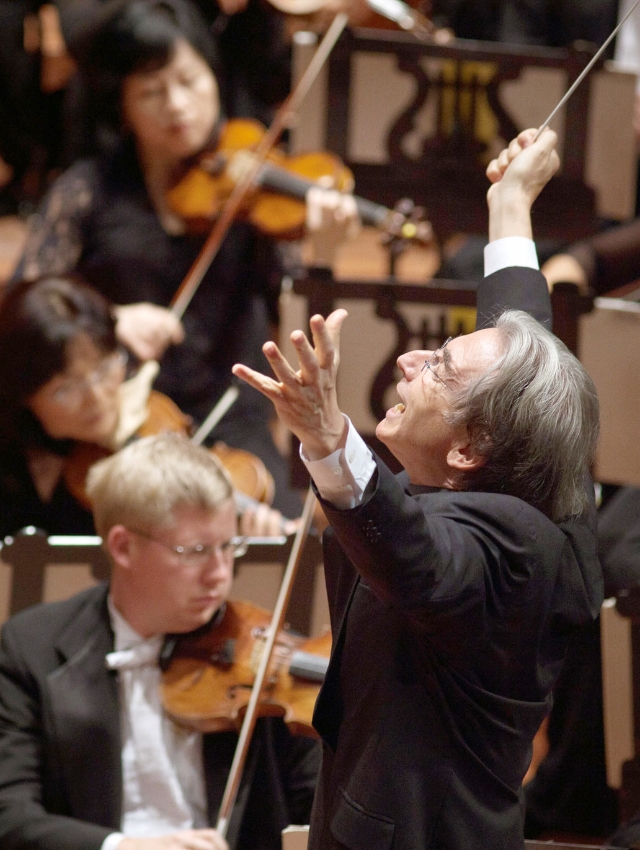
On Feb 13., the San Francisco Symphony (SFS) will travel to the Mondavi Center for a performance that features the Sibelius Violin Concerto and Tchaikovsky’s Symphony No. 4.

Led by guest conductor Jaap van Zweden, the symphony’s two pieces hope to inspire audiences particularly when they face the darkest depths of winter, whether literal or emotional.

Second violinist Chunming Mo connects with the Sibelius Violin Concerto, which reflects Sibelius’ Finnish national identity but also contemplates the nature of the region.

“Sibelius was a Finnish composer from the late Romantic period, and music played an important role in his Finnish identity. He used the violin as a medium as he mused on nature, such as snow and winter, and about his country. It evokes very beautiful imagery,” Mo said during a phone interview.

Mo relishes in the chance to perform under the guest conductorship of Jaap van Zweden, whose own career began with playing the violin.

“The composer [of the piece] itself is a violinist usually, and the certain techniques when you compose a piece come out more clearly [by having previous violin-playing experience]. Being a violinist, he [van Zweden] is able to see what works and what doesn’t among everyone — the orchestra, the soloists and especially the violinists,” Mo said.

Professor Christian Baldini, director of the UC Davis Symphony Orchestra, said as a community, we are very fortunate to have the San Francisco Symphony perform, considering it is one of the “world’s great orchestras.”

In an email response, he wrote that music, particularly the live music of the symphony’s performances, can speak to us in unimaginable ways that can resonate with us throughout our lives.

“The most wonderful thing about music is that it accompanies you all your life, whether in sad, exuberant, happy, exciting or terrifying moments,” Baldini said. “Music can always be with you. Music communicates a message, whether consciously or subconsciously. Listening to a CD or your iPod is great, but experiencing live musicians performing for you right in front of you is a remarkable, powerful experience.”

The symphony’s principal trumpeter Mark Inouye happens to be a native of Davis, and also attended UC Davis for two years as a civil engineering major before transferring to the Juilliard School. His performances at the Mondavi with SFS remind him of his fond memories at UC Davis, but also of how much the campus has changed.

“We used to play in Freeborn Hall. I honestly never thought there would be a great auditorium at UC Davis. [The Mondavi Center] is a great facility. It’s on campus, and as a performer, it sounds great,” Inouye said.

Inouye looks forward to performing Tchaikovsky’s Symphony No. 4, both for its great writing of brass instruments and also for the way he hopes the audience can connect with it.

“It has great writing for brass and trumpet. The trumpet plays a primary role in the modus of the piece; every time the trumpet arrives, it’s a startling part of the music. The way I feel, everyone that listens to this piece can connect with it,” Inouye said.

Tickets range from $10 for students to $94 for regular admission, and can be purchased online at mondaviarts.org or at the Mondavi ticket office.

Sustainable Agriculture: Seed Basics

0

For their size, it’s impressive how much confusion seeds cause. “Haven’t we been genetically engineering seeds for years?” “Don’t GMOs occur on their own in nature?” These are common questions people less familiar with plant science might ask. In order to understand the politics of seeds, it is imperative that everyone involved in the debate has a common understanding of basic seed biology. Otherwise, the debate rages without moving anywhere.

Debates about genetically engineered seeds, the intellectual property of such seeds and the socioeconomic impact on people who feed themselves from seeds they’ve sown is crucial. Informed debate on such topics is essential if we are to make informed decisions at the personal and policy levels.

In my own experience, many hot-tempered debates about the politics of seeds end in me realizing that the person I am conversing with lacks an understanding of the biology behind what we are supposedly arguing about. Thus, this column will be the first of a pair. This week, I will clarify the biology of seed breeding, and next week I will offer my arguments for regionally-based breeding programs as opposed to GMOs.

First, let’s clarify the difference between genetically engineered, hybrid, heirloom and open-pollinated varieties. Many people incorrectly posit that mankind has been genetically engineering plants for millennia. This statement has one foot in reality and the other in ignorance.

It is true that people have bred plants for thousands of years. The indigenous peoples of Mesoamerica and the Middle East exerted intentional selective pressures — purposely saving seeds from useful plants — in order to develop foods and materials that suited their needs. This is considered conventional breeding. People still do it today.

Conventional breeders work in labs and in garden plots as we speak, selecting the most suitable seeds to save. This process can be sped up through hybridization depending on the end product one is hoping to achieve.

Gregor Mendel, the father of modern genetics, gave us the Mendel square that helped us figure out what the probability of having a blue or brown-eyed baby was. Mendel was a pea fanatic, and he is credited with being one of the earliest European scientists to experiment with intentionally crossing pea plants to produce a desired offspring. This process is called hybridization.

Where traditional breeding and hybridization start to differ is in the behavior of their seed. Traditionally-bred varieties are bred to be stable and open-pollinated; or rather, their seed will grow out to resemble its parent plants. Hybrid plants, however, are bred for hybrid vigor; the first seed will produce exceptionally well the first time you plant it, but the favorable characteristics will begin to wane each generation thereafter.

Hybrid varieties were introduced to the U.S. markets in 1951, much to the delight of some plant breeders and home gardeners. Hybrid seeds, however, never replaced open-pollinated varieties completely, because they required gardeners and farmers to purchase new seeds each season. Many felt this was an unnecessary cost.

Many small growers continued planting and saving their favorite seeds, which we now call heirloom varieties. For a variety to be considered heirloom, it must have been cultivated before 1951, the birth year of commercial hybrids. The seeds inside the juicy heirloom tomatoes you see at the Farmers Market were developed in our grandparents’ youth.

As technology progressed throughout the second half of the century, hybridization became more sophisticated, and techniques for modifying the specific genome of a plant were developed. Genetic engineering deals with organisms at the DNA level. By looking at an organism’s genome, scientists have begun to replace, alter and add genetic information between species. These seeds are then patented as intellectual property by the companies that produce them, and they become commodities which can be bought by consumers and protected by patent laws.

Open-pollinated, heirloom varieties function at the scale of a population, whereas hybrids function at the scale of selected individuals within a population. Genetically engineered varieties function not at the population or individual scale, but at the level of a gene. These differences are crucial, and the terms should not be mistaken for each other.


For more biological clarifications on seeds, email ELLEN PEARSON at erpearson@ucdavis.edu.


Severe flu virus season hits California

1

This year’s flu season has seen an alarming number of deaths in California. The number of confirmed influenza deaths has increased by 52 as of Jan. 31 to a total of 147 confirmed deaths in the state of California. An additional 44 deaths are still under investigation by the California Department of Public Health (CDPH).

“The increasing number of influenza-related deaths points to the severity of this flu season,” said Dr. Ron Chapman, director of the CDPH.

The CDPH reported that the total number of deaths reported for the entire 2012-13 influenza season was 106.

The CDPH does not have any recorded influenza-related deaths in Yolo County for this season, but that does not mean that immunizations and precautions are not necessary. The CPDH has a reported 15 deaths from the neighboring Sacramento County, which is the second to Los Angeles County, which has the largest amount of deaths in any county in California.

“What is very concerning this influenza season is that the influenza is disproportionately affecting those younger and healthier individuals under the age of 65,” said Beth Gabor, a representative with the Yolo County Health Department.

According to the Yolo County Health Department, the predominant flu virus this flu season is the H1N1. The health department also said that in 2009, the H1N1 virus did not follow the traditional flu season, but it is still too early to tell just how long the season will last.

This means that all those healthier and younger individuals under the age of 65 who might not think that a flu shot is necessary might be wrong, and might possibly be at a higher risk for the flu.

“The flu shot has been effective so far, although it is still possible to get the flu even though you have been vaccinated. The vaccine greatly reduces the risk of becoming ill with the strains of influenza virus,” said Stephanie Nardini, a family nurse practitioner and urgent care manager with the UC Davis Student Health and Counseling Services,

Although the City of Davis recognizes that California has been hit hard by the influenza epidemic, they have not acted on the outbreak.

“No changes have been made in response to the influenza epidemic,” said Brian Mickelson, transportation manager for the City of Davis.

Mickelson said nothing will be altered in regard to City of Davis’ public transportation routes or policies. That means that all the routes for Unitrans at UC Davis will remain the same as well.

The Yolo County Health Department held a free flu vaccine clinic on Feb. 5, in partnership with the West Sacramento Fire Department and the City of West Sacramento. Additionally, local healthcare providers throughout the county are still offering vaccinations for the flu season.

Gabor said that the free flu vaccination clinic that was held on Feb. 5 may not necessarily be the last mass clinic. She said if there is a need for vaccinations, mass clinics would be scheduled.

The Yolo County Health Department has regularly scheduled  immunization clinics on Mondays, located at 137 N. Cottonwood St. in Woodland. Vaccinations at the clinic are $10, but all those who want the shot regardless of financial status will be able to receive the shot.

UC Davis Student Health Center experts say in addition to being vaccinated, it is also very important to practice disease prevention habits to prevent infection.

The U.S. Centers for Disease Control and Prevention recommend that individuals should avoid close contact with sick people, and stay home for at least 24 hours. If sick, limit contact with others, cover nose and mouth with a tissue when coughing or sneezing and wash hands often with soap and water. For those who already have the flu, UC Davis Student Health experts said that getting the flu shot will not help their current illness, because it takes approximately two weeks to get the maximum protection for the flu vaccine.

Experts maintain that getting a flu shot is the best way to prevent illness, and it is important to get a shot as soon as possible.

“Teleconferences have been consecutively held for the last month [and] the purpose of these conferences is to provide the most up-to-date information concerning influenza activity in the state of California,” said Norma Arceo, a public informant officer with the CDPH.

Additional information and resources about the current influenza season may be found at CDPH.CA.gov or CDC.gov.

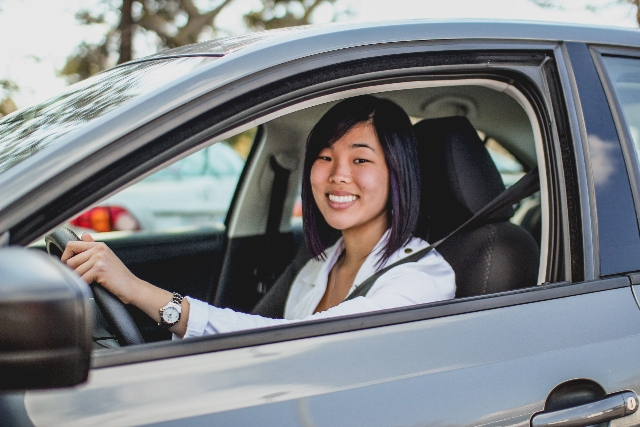
Students drive to college degrees

Fourth-year English major Seychelle Steiner said she listens to trashy radio shows more than her fellow students might.

Steiner, like many Aggies, doesn’t actually live in the college town of Davis itself. Since her second year in college, Steiner has been commuting daily to classes from her home in Sacramento.

“I have an 8 a.m. discussion, so I wake up at 5:30 in order to get everything ready, get breakfast and leave at 6:45 in the morning,” Steiner said. “ Yes, I’m on campus really early, but I do that in case there is traffic or an accident.”

Since much of Davis is occupied by college students, many community members are not aware of the large student population that does not live locally.

“To me, Sacramento is so close, so it’s not that big of a deal,” Steiner said. “I don’t think there should be any judgment against commuting, it’s more curiosity than animosity. I think people are curious about how it works.”

Students may live outside of Davis for many reasons, including for financial and medical issues, job commitments and personal preferences.

“For me, the main benefit would be financially,” said fourth-year English major Cameron Taylor, who has been commuting since his first year. “Davis is a really expensive city, comparatively speaking.”

Driving from Shingle Springs, near Folsom, Taylor commutes to and from UC Davis about an hour each way, depending on the traffic situation.

“The actual commute is not great and it takes a lot of getting used to. I don’t think people realize how much an hour-long commute twice a day takes out of you,” Taylor said. “During my freshman year, I’d get to school and I would be exhausted, but at this point, it’s a lot better.”

In high school, Taylor’s parents gave him the option of living at home while attending UC Davis for four years, or living locally and going to community college before coming to university.

“I don’t regret it, because getting out of college and looking at my finances, I am so much happier,” Taylor said. “[But] I think I might have missed something about the college experience spending most of my time away.”

Although the definition of a ‘college experience’ varies amongst students, many agree that the social aspect of being at a university constitutes a large part of it.

“I think that your academics and studies are very important in college, but it’s also good to make friends and get involved in student organizations,” said second-year economics major Sharanya Balasubramanian. “Making it a point to get to know people in your classes and people that are interested in the same things that you are interested in is also a big part of college life.”

Balasubramanian recently started commuting from Rancho Cordova this past September. She said the 25-mile distance from campus was a large transition after a year of living in the Segundo residence halls on campus.

“Initially it was very weird to see my friends once a week and not every day. You really have to make an effort to set aside time for friends,” Balasubramanian said. “Before, it wasn’t a conscious effort, it just kind of happened. I make an effort because I don’t want to fall away from college life.”

Without having the freshman residence hall experience, Taylor said he has made friends just by being aware of students around him.

“Being open to interacting with people is important. What really helped me was to be receptive to other people talking to me,” Taylor said.  “Try to be spontaneous.”

Steiner said she has found the most success making friends with similar-minded people in her classes.

“I have lots of friends within my major; especially with the small workshops I do in creative writing and honors,” Steiner said. “I’d rather get to know people that way because we have common interests and it kind of works out.”

For Balasubramanian, commuting has made her value her time more, specifically when it comes to managing her academics while maintaining her social life.

“As a commuting student, I do spend a couple hours on the road everyday, so that makes me realize I have less time to do school work,” Balasubramanian said. “Commuting has made me more focused and efficient, and I try to waste not as much time anymore.”

By living away from Davis, many student commuters face less distractions than a college campus generally brings.

“If the student is more focused on having friends, but also really interested in having good grades, commuting is awesome because it forces you to have the time to do that,” Steiner said.

Overall, those who commute feel their reasons for doing it outweigh any negatives.

“I really like having accessibility to school and friends here [and] having my own personal space and having my family close by,” Steiner said. “I don’t have any complaints. If I did, I’d be living in Davis.”

Dead Arts Society gets creative

1

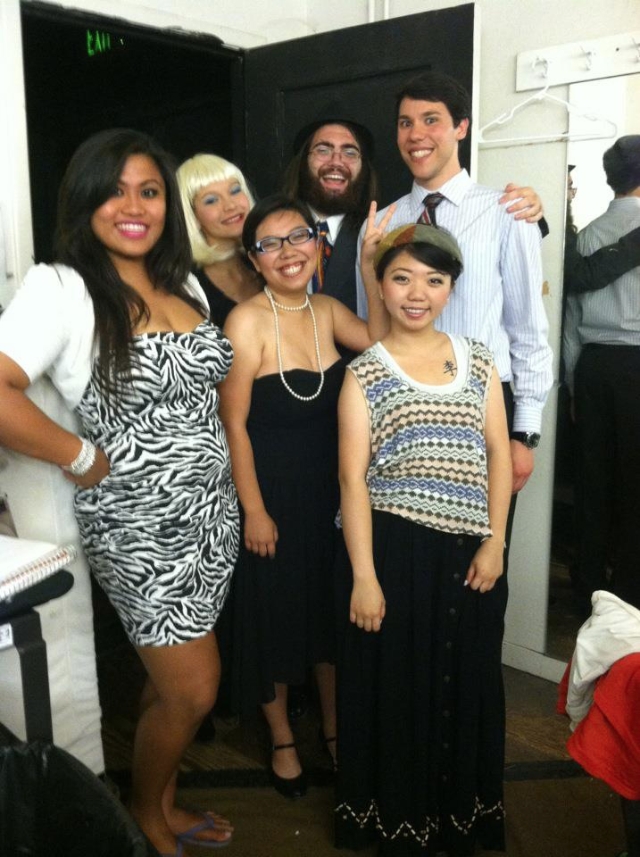
Do you have a secret inner performance artist just waiting to break free? Whether you’re an amateur or distinguished veteran of the spotlight, the Dead Arts Society at UC Davis believes you should be able to experience theatre and artistically express yourself.

The Dead Arts Society (DAS) is one the many unique student-run clubs on campus. DAS focuses on dramatic art and aims to create low-budget original productions that utilize a diverse group of students from UC Davis. The club performs plays, musicals, short scenes, choreography, poetry, songs and any other type of performing art, as long as they’re original pieces of work by students who have attended DAS workshops.

DAS was founded in 2010 by UC Davis alumna Jenny Adler. Adler created the club for students who wanted to take part in the performing arts but didn’t have the time to practice for school productions. The typical stage production expects up to 30 hours a week and students who have other time commitments often have to miss out on the opportunity to perform. When Adler created DAS, she cut down commitment to only three to six hours a week.

The shorter time commitment proves quite doable for many busy students and the club draws a wide range of majors and talents who have a passion for performance art. The group prides itself on working with students of all experience levels and does its best to include as many people who are interested in theatre arts as possible.

Second-year English major Leah Daugherty acts and writes for DAS and has come to enjoy the creatively open atmosphere of the group.

“It [DAS] is a safe, supportive, creative space for anyone interested in making art and friends,” Daugherty said in an email. “My favorite parts of being in DAS are the camaraderie and seeing original pieces performed. That’s what’s really exciting, seeing these scripts come to life.”

DAS has three showcases a year, one per quarter (excluding Summer Session). The first two showcases in Fall and Winter Quarters are mostly short scenes occasionally intermixed with music and poetry. The Spring Quarter showcase consists of one-acts, full-length musicals and/or full-length plays.

The group is currently preparing for their winter showcase and have been hosting workshops for prospective writers. Writing workshops are Mondays and Thursdays in Wright Hall, Lab B. All students who wish to have their writing performed must attend at least two workshops to get second opinions on their pieces.

Third-year psychology major Kazia Hart is the secretary of DAS and said that she enjoys the fact that anyone who is interested in writing can have their work produced. DAS also offers directorial meetings for students who wish to try their hand at directing.

“We have a directors meeting where each director chooses a piece (or pieces) they’d like to direct,” Hart said. “We then hold auditions and anyone is welcome to audition, but we especially encourage students to try out. We try and include as many people as possible in the productions.”

Though most of the work reviewed often come in the form of plays or musicals, all types of performance art are accepted for the showcase. The purpose of this is to create an open-door policy in which all artists are allowed to express themselves, whether it is through dance, theatre, poetry, singing or anything else one might consider performance art.

Fourth-year English major Audrey Shih has been a part of DAS since her first year at UC Davis. She said she finds the group a place of friendship and has therefore kept it prevalent in her life.

“Everyone is so humble. There’s no elitism that comes with being a part of this club because we literally accept anyone and everyone who wants to join,” Shih said in a phone interview. “We provide a safe and welcoming space for those who want to experiment with all aspects of theatre. It’s not just a club for new, first time actors; it’s a club for new directors, dancers/choreographers, songwriters, stage managers, etc.”

Auditions for DAS’s upcoming showcase were held Feb. 5 and another will be held Feb. 6. The Winter Showcase will be held on March 10 in Wright Hall, Lab A. Doors open at 7:30 p.m and entry is free. For more information about auditions or becoming a part of DAS, you can contact them at deadartssociety@gmail.com.